• Home
  • About Me
  • The List
  • THE LIST (2016 Update)
  • THE LIST (2017 Update)
  • THE LIST (2018 Update)
  • THE LIST (2019 Update)
  • THE LIST (2020 Update)
  • THE LIST (2021 Update)
  • THE LIST (2022 Update)
  • Top Twelves and More
  • The End Credits Song Hall of Fame

Rhyme and Reason

~ Poetry Meets Film Reviews

Rhyme and Reason

Category Archives: Blindspot

2018 Blindspot Pick #2: Yi Yi (2000)

20 Tuesday Feb 2018

Posted by sgliput in Blindspot, Movies, Poetry, Reviews, Writing

≈ Leave a comment

Tags

Drama, Foreign, Romance

See the source image

What is life
But fate’s plaything,
Where some men die while others cling
To watch new youths discover truths
They could have learned from listening?

What is life
But joy in wait,
A chance to show the few who hate
That love profound can still surround
If one will only demonstrate?

What is life
But one big slog
Reminding you you’re just a cog
In systems built to cover guilt
And stoke the nearest demagogue?

What is life
But bittersweet
In every breath and each heartbeat,
As memories refuse to freeze,
A former friend in full retreat?

What is life
But grief, concerns,
And happiness all taking turns?
Each person braves their own such waves
Until at last each human learns
What is life.
____________________

MPAA rating: Not Rated (the number of F-words in the subtitles and fleeting nudity might warrant an R, but it’s really more of a PG-13)

Finally, a critically acclaimed “masterpiece” of world cinema that doesn’t require the quotation marks! In my limited forays into international filmmaking, I’ve found that just because critics laud a movie, that doesn’t mean it will actually be any good (for example, The Assassin *shudder*). In addition to celebrating the Chinese New Year with a Chinese movie, I added Yi Yi to my list of Blindspots this year because I was curious to see whether it deserved its renown as “one of the major films of the 21st century” and “the third most acclaimed film of the 21st century among critics,” according to Wikipedia. Thankfully, it does, and even if it’s not destined to be among my personal favorites, I am 100% behind its status as one of the all-time greats.
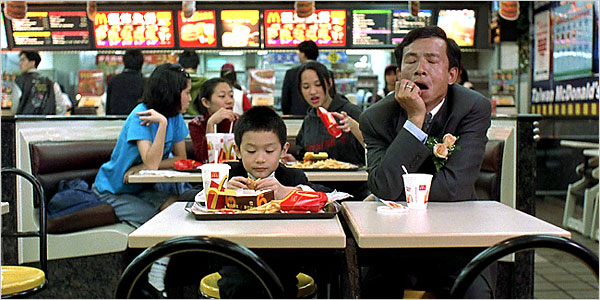
See the source image

Translated as A One and a Two…, but more literally as One One or One by One, Yi Yi is hard to describe in a way that doesn’t make it sound incredibly dull, since it’s about the everyday life of the Jian family of Taipei and runs for 2 hours and 53 minutes.  Yet, I was surprised at how engaging a three-hour movie about everyday life could be, thanks largely to a deep and insightful script from writer/director Edward Yang and several diverse characters that are relatable on multiple levels.

The Jians include the father NJ (famed director Wu Nien-jen), who must deal with both a high-risk business deal and an unexpected run-in with a former lover; the mother Min-Min (Elaine Jin), who suffers a midlife crisis; their teenage daughter Ting-Ting (Kelly Lee), who enters a love triangle with her best friend; their young son Yang-Yang (Jonathan Chang), who gets bullied at school; and the perpetually unlucky brother-in-law A-Di, who gets caught between two strong-willed women. It’s a film of both broad plot strokes (NJ’s self-doubt and potential affair, A-Di’s money troubles) and more minor vignettes (Yang-Yang’s photography, the birth of A-Di’s son) that nonetheless feel vital in getting to know the large cast.

See the source image

The grandmother of the family is only briefly active at the beginning, spending most of the film in a coma and serving as an ingenious sounding board for her family, who are told to talk to her in hope of her recovery. Those who sit by her bedside bare their inner doubts more fully than anywhere else, such as Ting-Ting’s guilt over whether she’s to blame for her grandmother’s condition, and NJ even compares it to prayer, not knowing for sure how much the listener is hearing.

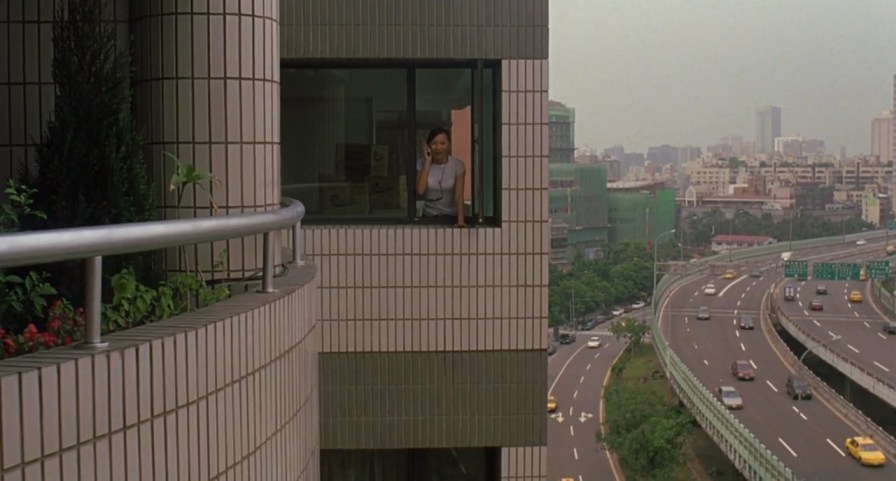
Despite its apparent simplicity, Edward Yang’s direction is also worth praising, not only in its composition but in its economy. Scenes are kept wide with very few close-ups. Long extended takes are the rule, with no scene or edit being wasted, yet the camera is fairly static. It doesn’t follow the characters around but allows events to play out off-screen, often letting us see part of what’s happening through reflections in windows and mirrors, which provides both visual interest and a strong sense of place.
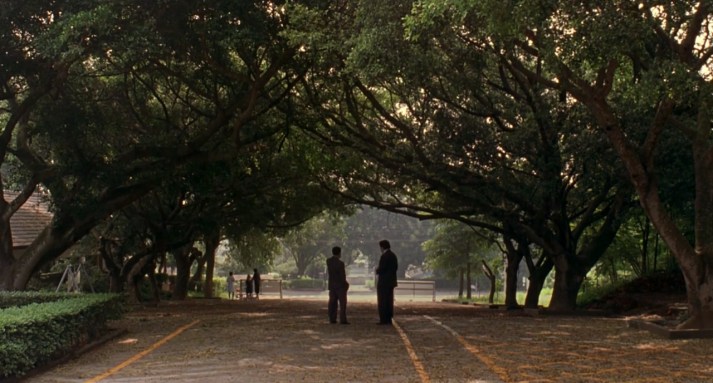
See the source image

Even masterpieces can have room for improvement, though, and Yi Yi is no different. While its mundaneness is part of its charm, the pacing does lag several times, and there are many scenes that could have been trimmed to shave off perhaps a half hour from the runtime. It takes an investment of time and patience to sit through, yet I can say it’s a rewarding experience, even if its full power is only half understood when the credits roll. There are highs and lows, joys and sorrows, laughter and tears, both a marriage and a funeral, history repeating itself and wisdom coming from the mouth of babes. The film is mostly warm and gentle, never judging the characters and their flaws, yet the wisdom of right decisions shines against the foolish passion of mistakes. I don’t know that I’ll make the time to watch it again, but it will still live in my mind as a genuinely great film.

Best line: (Fatty, Ting-Ting’s boyfriend) “Life is a mixture of sad and happy things. Movies are so lifelike; that’s why we love them.”
(Ting Ting) “Then who needs movies? Just stay home and live life!”
(Fatty) “My uncle says ‘we live three times as long since man invented movies.’”
(Ting Ting) “How can that be?”
(Fatty) “It means movies give us twice what we get from daily life. For example, murder—we never killed anyone, but we all know what it’s like to kill. That’s what we get from the movies…. It’s only one example; there are other things. Like he also said, ‘There’s no cloud, no tree that isn’t beautiful, so we should be too.’”


Rank: List Runner-Up


© 2018 S.G. Liput
537 Followers and Counting


2018 Blindspot Pick #1: All Is Lost (2013)

04 Sunday Feb 2018

Posted by sgliput in Blindspot, Movies, Poetry, Reviews, Writing

≈ Leave a comment

Tags

Disaster, Drama

See the source image

It isn’t easy to admit
That all my effort was in vain.
I’m not the type to whine and quit,
And seldom do I dare complain.
I gave my all;
I fought the squall;
I beat my chest at each downfall,
Until my lowest point was hit,
My lowest while still staying sane.

Don’t pity me, who did decide
To hold to life long as I could.
Perhaps I’ll fathom, once I’ve died,
That all this effort did no good.
But till my end
By God is penned,
With my own fate I must contend.
All is lost, yet still I tried,
As all beset by struggle should.
____________

MPAA rating: PG-13 (for brief language)

Well, I’m kicking off this year’s Blindspot series a bit late, but what’s a few days’ difference? I was nonetheless eager to see how my Blindspot picks this year would measure up to last year’s, especially since my #1 last year (Shuffle) was the first one I saw. I had high hopes for All Is Lost as well, due to its simple survival narrative that I knew would have echoes of Cast Away. Yet, while those echoes are present and the film overall is well executed, I was rather disappointed in the end product.

All Is Lost is notable for being essentially a one-man show, in which Robert Redford is the sole actor on screen in a straightforward survival tale of man vs. nature. Credited as “Our Man,” Redford barely speaks throughout (though there were a few more words than I was expecting), instead reacting to the various maritime dangers that plague him as a lone sailor, from destructive debris to vicious storms. It’s a credit to Redford’s acting ability that he can hold a movie completely on his own while in his seventies, and his nameless protagonist remains admirably calm through much of his travail, finding clever survival solutions others might not think of while also doing an inexplicable action now and then (like going up on deck in a storm for reasons I didn’t quite grasp).

See the source image

As an acting showcase for Redford and a no-frills survival story, All is Lost delivers reasonably well, with an understated Golden Globe-winning score and convincing effects and aquatic photography to create the man’s seafaring isolation. But somehow I expected more. My VC pointed out right away that we’re given no details about Our Man, no background or reason to care about him other than that he’s in the plight he is. Again, it’s easy to point to other isolation movies for comparison: In Cast Away or Life of Pi (both favorites of mine), we get to know the main characters before they’re thrown to the elements, strengthening our sympathy because we see what they’ve lost and what brought them to their predicament. Even with an oddly vague opening voiceover, we know literally nothing about “Our Man” except his immediate circumstances; that was likely the successful intent, but it doesn’t keep me as invested as those other films.

Plus, there’s the simple fact that the film was rather boring. I probably shouldn’t have tried to watch it after a long day at work, but I stuck with it still. My Redford-loving VC, on the other hand, gave up after a half hour, despite the fact she once thought she’d be happy watching Robert Redford read the phone book. (I guess that would have more dialogue, though.) I’m sure the lack of dialogue is more realistic, but there’s a reason Tom Hanks had a volleyball to talk to in Cast Away. Wilson allowed for greater character engagement, just as Richard Parker the tiger did in Life of Pi, which also benefited from a consistent voiceover narration. They gave us a glimpse into the mindset of the human character, while Our Man’s actions don’t really reveal anything about him, even though his story is propelled by action and reaction alone. Redford evokes his growing desperation and despair, but those emotions only go so far. Without fully engaging with the character, we’re simply watching what any competent person would do in this situation, and that detachment was a bit of a letdown.

See the source image

I can’t impugn Redford’s acting ability or the production values since All Is Lost does what it means to do expertly. It just wasn’t as involving as other survival stories. And it’s not solely because of the sparse dialogue either, nor the lack of character development alone. The Red Turtle held my attention with literally no dialogue at all, while Dunkirk was absolutely thrilling with hardly any character backgrounds. I guess it’s the combination of its monotonous pace and surface-only protagonist that made it feel wanting compared with more engaging films of its genre. While my VC might disagree, it’s by no means a bad film, just one I can’t see myself spending time on again.

Best line: (part of opening lines) “I’m sorry. I know that means little at this point, but I am. I tried; I think you would all agree that I tried. To be true, to be strong, to be kind, to love, to be right. But I wasn’t. And I know you knew this… in each of your ways. And I am sorry. All is lost here, except for soul and body, that is, what’s left of them, and a half day’s ration.”


Rank: Honorable Mention


© 2018 S.G. Liput
536 Followers and Counting


My 2018 Blindspot Picks

14 Sunday Jan 2018

Posted by sgliput in Blindspot, Movies

≈ 9 Comments

Tags

Lists

I enjoyed the majority of my Blindspot Picks from last year, so I definitely want to continue with this fun monthly series. After pondering what movies I’ve been meaning to see, I’ve picked a fairly diverse collection of goodies (hopefully), a few based on recommendations and others simply sources of curiosity. Some of these I can’t wait to finally watch. I’ve also got a shortlist of other films I could have picked, and I’m hoping I can watch some of those along the way too. Thus, in alphabetical order, here are my Blindspots for 2018. (It’s interesting that the first five start with the first five letters of the alphabet. Not intentional, of course.)


All is Lost (2013)

See the source image


Boyhood (2014)

See the source image


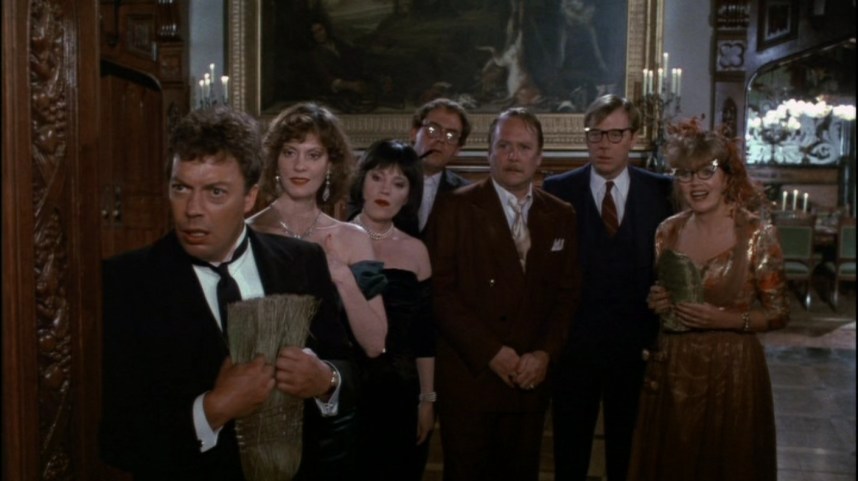
Clue (1985)

 See the source image


Dear Zachary: A Letter to a Son about His Father (2008)

 See the source image


Eternal Sunshine of the Spotless Mind (2004)

 See the source image


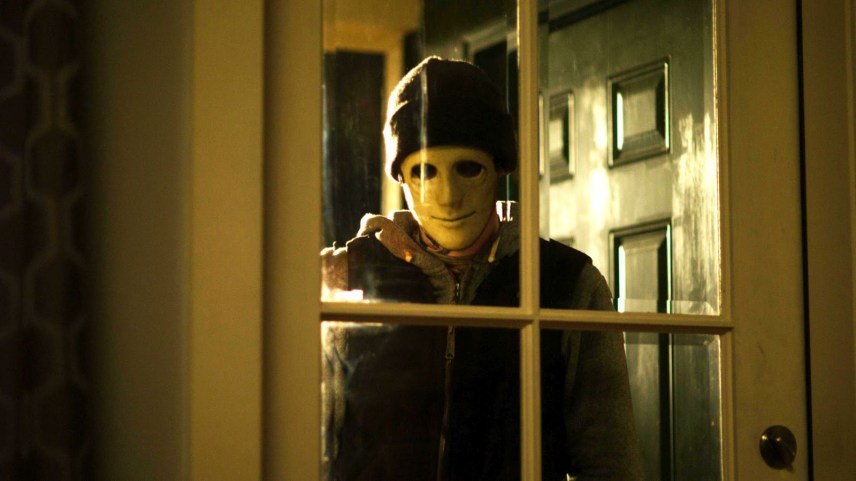
Hush (2016)

 See the source image


Into the Forest of Fireflies’ Light ( or Hotarubi no Mori e) (2011)

 See the source image


Pan’s Labyrinth (2006)

 See the source image


The Sandlot (1993)

 See the source image


Some Like It Hot (1959)

 See the source image


Sunshine (2007)

See the source image


Yi Yi (2000)

See the source image


2017 Blindspot Ranking

10 Wednesday Jan 2018

Posted by sgliput in Blindspot, Movies, Writing

≈ 5 Comments

Tags

Lists

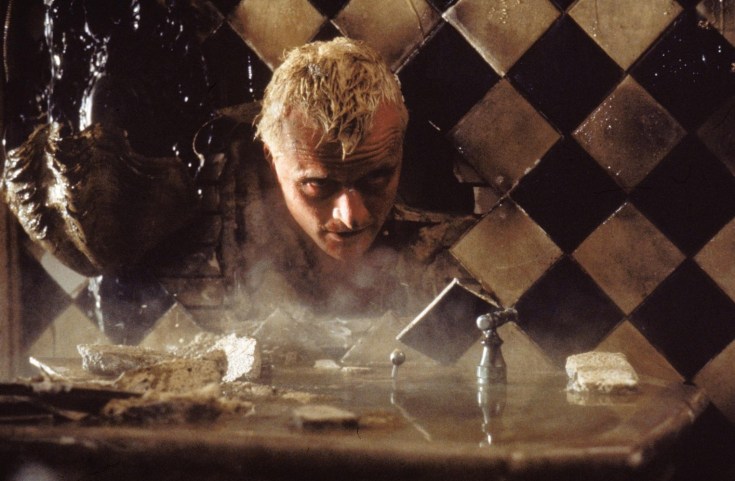
As 2018 starts, it’s about time to decide on my Blindspot picks for the year. After seeing others taking part, I just started following this fun series last year, choosing twelve films that I’d been meaning to see and watching one a month for the year. For the most part, I enjoyed my 2017 picks, three of which made my Top 365 List, but I thought I’d do an official ranking before announcing my 2018 picks later this week. So here’s how the 2017 Blindspots stacked up, ranked worst to best, along with some nice short comments on each (since you can just read the review if you’re really curious).


  1. Blade Runner

See the source image

Great visuals, largely boring narrative


  1. An American in Paris

See the source image

Amazing dance numbers (a tad overlong though), paper thin plot


  1. Imitation of Life

See the source image

Important film dealing with race, some subplot weaknesses


  1. Darby O’Gill and the Little People

See the source image

Underrated and charming Disney classic, wish I’d seen it as a kid


  1. In Your Eyes

See the source image

Unique and slightly weird romance that mostly works


  1. Donnie Darko

See the source image

Still trying to process this dark sci-fi tale, strong performances and soundtrack


  1. Giovanni’s Island

See the source image

Tragic anime drama clearly echoing Grave of the Fireflies, touching ending


  1. The Help

See the source image

Fantastic acting from all involved, won’t look at chocolate pie the same way


  1. Hear Me

See the source image

Really charming Taiwanese rom com mostly in sign language (made the List mainly for being paired with A Silent Voice)


  1. Cinema Paradiso

See the source image

Moving Italian classic that appeals to one’s love of film


  1. Saving Private Ryan

See the source image

Gruesome but hard-hitting war drama, not a casual watch but indeed one of the greatest war movies ever


  1. Shuffle

See the source image

Lean and fascinating time travel story, worthy of much greater recognition


2017 Blindspot Pick #12: Cinema Paradiso (1988)

28 Thursday Dec 2017

Posted by sgliput in Blindspot, Movies, Poetry, Reviews, Writing

≈ 5 Comments

Tags

Drama, Romance

See the source image

The world might keep more hope and zeal,
Might waver closer to ideal,
Might capture greater curb appeal
If life were like the movies.

Our friends might longer stay our friends,
Our enemies might make amends,
Our chances rise for happy ends
If life were like the movies.

But no, they’re not, we’re often told.
Such dreams decay as we grow old.
And yet they never lose their hold;
That’s why we watch the movies.
_____________________

MPAA rating: PG (should perhaps be PG-13, though the director’s cut is R)

It’s time now for my final Blindspot of the year, the Italian classic Cinema Paradiso (or to use the Italian title, Nuovo Cinema Paradiso). I’ve been curious about this film for a while since it seems that everyone who sees it loves it to pieces, not least of all Cinema Parrot Disco, who named her blog after it. Of the three different versions that are apparently floating around, I watched the original international release of 123 minutes, as opposed to the 155-minute Italian release or the 173-minute director’s cut. Even apart from the long list of accolades that were listed prior to the film’s actual start, I undoubtedly recognize why it is hailed as such a classic, but it also left me a tad perplexed simply because I wanted to absolutely love it but instead just really, really, really liked it. That is to say, it didn’t quite bridge the tiny gap between fondness and favorite, but fondness isn’t too shabby.

See the source image

Told mostly in flashback, Cinema Paradiso is at its heart a coming-of-age tale about a young boy named Salvatore (Salvatore Cascio), who is enamored of his post-war Italian village’s local theater, the Nuovo Cinema Paradiso, and constantly pesters the big-hearted projectionist Alfredo (Philippe Noiret). Their bond is the sweetest aspect of the whole story. Despite Alfredo’s tendency to make hyperbolic threats while waving his hands around as Italians do, his affection for young “Toto” is unmistakable, from teaching him how to operate the projector to encouraging him to seek out bigger things than their rural village.

The town at large is also full of colorful characters, from the rich man who spits on the poorer folks from the theater balcony to the crazy tramp who claims the entire town square as his own. It’s a community of mischievous lads, indignant priests, and avid movie lovers, perhaps idealized by Salvatore’s nostalgia, but still feeling dynamic and genuine. It’s also a look at an era long past. While many today scorn the old black-and-white films of yesteryear, Cinema Paradiso shows a time when they thrilled the whole neighborhood, where theaters erupted with laughter and chair-stealing mobs would form if they were denied their latest favorite. Film itself is a prominent character here, a reminder of how magical it once was, how dangerous it could be, and how beloved it still is.

See the source image

Deserving Winner of the Academy Award for Best Foreign Language Film, Cinema Paradiso is full of moments designed to make you smile and even tear up by the end, and it presents them with good humor and romantic sweetness that never loses its honesty. With such strong performances, appealing sentimentality, and sincere love of film, it’s hard to pin down why it didn’t quite affect me the way I was hoping. I can’t really point to anything specific, aside from perhaps its length or the less-than-satisfying romance aspect, but I also feel that my appreciation will only grow if I see it again. It’s easily a five-star movie and an affecting tribute to the magic of film.

Best line:  (Alfredo, to Salvatore) “Get out of here! Go back to Rome. You’re young, and the world is yours. I’m old. I don’t want to hear you talk anymore. I want to hear others talking about you…. Whatever you end up doing, love it. The way you loved the projection booth when you were a little squirt.”


Rank: List Runner-Up


© 2017 S.G. Liput
523 Followers and Counting


2017 Blindspot Pick #11: Giovanni’s Island (2014)

01 Friday Dec 2017

Posted by sgliput in Blindspot, Movies, Poetry, Reviews, Writing

≈ Leave a comment

Tags

Animation, Anime, Drama, History

See the source image

‘Tis futile to wish our lives never to change,
To stay in the bliss of a child’s outlook.
We’re always disturbed by the new and the strange,
Priorities puzzled as they rearrange,
Things hardly confined to the page of a book.

The friends that we make and the loved ones we lose
Accompany us just as far as they can.
And when we have finally paid all our dues
And traveled the path that each person must choose,
Perhaps we will see ‘twas all part of a plan.
____________________

MPAA rating: Not Rated (probably PG)

Boy, just like with Donnie Darko, finding a copy of this film for my Blindspot was harder than I thought, hence why I’m a day late for this November pick. I’m always on the lookout for emotional anime films, and Giovanni’s Island promised to have something of the tragic quality of Grave of the Fireflies, which still makes me cry every time I see it. Giovanni’s Island undoubtedly borrows from the 1988 film and actually reminded me of several others as well, from the Russian exile of Doctor Zhivago to the childish friendship disrupted by war of The Boy in the Striped Pajamas. It also draws explicit inspiration from the Japanese novel Night on the Galactic Railroad, which is apparently a great classic in Japan, though it’s not surprising if most are unfamiliar with it. Some knowledge of that story might help one’s understanding of certain scenes in the movie. (It does have an anime adaptation too, which is dream-like, very slow, full of symbolism and Christian references, and might have vaguely influenced The Polar Express.)

See the source image

The first parallel to Night on the Galactic Railroad is the names of the two brothers who live in a small fishing village in the far northern Japanese islands toward the close of World War II. Junpei (nicknamed Giovanni) and Kanta (nicknamed Campanella) draw their Italian-sounding names from the main characters of the book, a favorite in their family, which ignites their fascination with both the stars and trains. While the villagers expect the Americans to take control after the war is lost, it’s instead the Soviets, who waste no time in establishing themselves and commandeering the Japanese homes and school building. Despite being driven from their house, young Giovanni and Campanella befriend a Russian girl named Tanya, but the conflict and stresses of the adults around them soon strain their relationship and send the brothers away from their beloved island into the unknown.

Despite being produced by Production I.G., the same studio behind Ghost in the Shell, the animation in Giovanni’s Island is different from their other works. The sketched environments and setting details are masterful, and one scene of a front-lit toy locomotive passing between two rooms showed an amazing attention to light and shadow. The character animation, on the other hand, wasn’t bad, but I found it somewhat distracting at times. Despite all anime sharing similarities of style, character design can vary significantly, and it’s a distinction that can be very subjective with its appeal. It’s not as if it was ugly (like One Piece, in my opinion), but the look of the characters sometimes brought me out of the story, though I did get used to it with time.

See the source image

There’s a lot to enjoy about Giovanni’s Island, particularly scenes designed to tug at the heartstrings. In an early scene, the school building is divided between the Russian and Japanese children, and each classroom sings their own national songs to try to drown the other out, while each room later sings the other’s song. Similarly, Giovanni becomes quite close to Tanya, and though the language barrier is barely addressed, it was encouraging to remember that children’s interactions are so much simpler than adults harboring resentment and hate. Another touchstone seemed to be Empire of the Sun, as the two siblings are soon separated from their father and cast into the harsh post-war realities of internment camps, all seen through the eyes of a child. The parallels to Grave of the Fireflies are blatant toward the tearful end, though there are differences, such as the fact that Giovanni and Campanella are never completely abandoned, at least accompanied by their teacher and uncle most of the way. Despite the similarities, it’s not a complete ripoff since the familiarly tragic end also draws from Night on the Galactic Railroad, along with several wondrous dream sequences that recreate scenes from the book.

Giovanni’s Island has plenty of moving drama, some of it probably seen before, but it presents it with warmth and sincerity, as well as grief. It didn’t make me cry like Grave of the Fireflies, but the final scene brought me close. I’m just a sucker for those kinds of poignant death-transcending reunion scenes, so it ended on a high note for me. I also enjoyed a repeated musical cue I recognized as “Those Were the Days,” a Mary Hopkins hit from the ‘60s, which recycled the tune of a traditional Russian folk song, making its use in the film more authentic. A somber tale of loss and survival that never becomes objectionable, Giovanni’s Island may combine elements from better films, but they’re combined beautifully nonetheless.

See the source image

Also, you can click here for a somewhat less rosy review from Rachel of Reviewing All 56 Disney Animated Films and More!, who also had this as her November Blindspot.

Best line:  (Giovanni, when asked what Night on the Galactic Railroad is about) “When people die, they rise up into the heavens and become stars in the night sky. Those countless stars fill the sky, shining brightly and eternally, and we live our lives down here, basking in their light. That’s what the story is about.”


Rank: List Runner-Up


© 2017 S.G. Liput
517 Followers and Counting
 

2017 Blindspot Pick #10: Donnie Darko (2001)

14 Tuesday Nov 2017

Posted by sgliput in Blindspot, Movies, Poetry, Reviews, Writing

≈ 3 Comments

Tags

Drama, Mystery, Sci-fi, Thriller

See the source image

I’m crazy, they say,
Since I see things that they
Cannot see, know, or even believe.
I’m crazy, although
I know which domino
Will destroy all that we now perceive.

I’m crazy, of course,
There’s no spirit or force
That could show me the things I have seen.
I’m crazy, perhaps,
But when things do collapse,
Maybe then they’ll all know what I mean.
_________________

MPAA rating: R (for language throughout and brief violence)

Well, it’s about time I got to see this movie. Considering its cult popularity, I’m surprised how hard it was to find a copy through my usual sources, a search that delayed this review as my intended October Blindspot. So now that I’ve watched Donnie Darko, what do I think of it? I’m honestly not sure! I can’t pin down exactly how I feel about this independent favorite. Not since Cloud Atlas has a film left me so befuddled, but at least that movie impressed me enough to know I liked it.

See the source image

Along with October Sky, Donnie Darko helped establish Jake Gyllenhaal as a rising star of the early 2000s, and they certainly proved his range.  While his Homer Hickam in October Sky was all starry-eyed inspiration, Donnie Darko is a rebellious and mentally troubled teen who is told the world will end by a man in a demonic bunny costume. You can’t get much more different than that! Although I much prefer October Sky, Donnie Darko is consistently, um…I guess the word is interesting. I found myself engrossed in what would happen next simply because I wanted to know what the heck was going on with this teenage malcontent and his delusions of a bunny man named Frank.

There are a lot of disparate elements and compelling side characters in Donnie Darko, and I’m not convinced they all come together as they should. There’s Donnie’s budding romance with the new girl in class (Jena Malone). There’s a local motivational speaker (Patrick Swayze) whose positivity methods are derided. There’s a committed English teacher (Drew Barrymore) whose literature choices are denounced by the self-righteous gym teacher (Beth Grant). There are a bullied oriental girl who Donnie sympathizes with and a senile old woman (Patience Cleveland) who keeps checking her mailbox and once wrote a book on time travel. And in the midst of all this is Donnie, antisocial, prone to cynical outbursts, and a regular with his hypnotherapist (Katharine Ross). A special mention too for Jake’s sister Maggie Gyllenhaal as his sister in the movie as well. It may seem like I just listed all the characters for no reason, but that’s kind of how I felt watching the movie, as if each of these characters only mattered when they interacted with Donnie and didn’t go anywhere without him.

See the source image

Surrounded by a general sense of gloom, Donnie’s visions are intriguing as we wonder whether they’re real or just a product of paranoid schizophrenia, and there are plenty of memorable scenes, whether from Donnie’s sardonic barbs, the dreamy moments of destruction, or the well-utilized soundtrack with songs from Tears for Fears, Duran Duran, and Echo and the Bunnymen. (Get it, Bunnymen? It is set in 1988, after all.) I had a vague idea of how it would end, but I’ll admit that one scene totally shocked me and the final scenes were unexpectedly poignant, even as I wasn’t sure how much I really understood.

Donnie Darko is a lot of things at once: an angsty teen drama, a sci-fi thriller version of Harvey with psychological underpinnings and brilliant foreshadowing, a critique on holier-than-thou hypocrites, a black comedy with some weirdly funny dialogue. That bizarre Smurf conversation could only come from an independent movie. As I came to terms with my belief that the plot only makes sense if it’s all a delusional premonition in Donnie’s head, I did some research and found that there’s a much more complicated backstory with tangent universes and manipulated dead that isn’t really touched on in the film (at least the theatrical version I saw) but offers plenty of food for thought in trying to justify this overly complicated version of events. I guess it all comes down to the fact that what ends up happening had to happen, but I think the real “why” to this convoluted tale is only really known to writer-director Richard Kelly.

See the source image

I’m not decided on how much I actually liked Donnie Darko, but it certainly got me thinking, which is always welcome. I can see why it earned a cult following, at least among those who enjoy the effort of trying for it all to make sense.

Best line (or at least the one I got a kick out of): (Emily, to her sister Susie) “Beth’s mom said the boys’ locker room was flooded and they found feces everywhere.”   (Susie) “What are feces?”   (Emily) “Baby mice.”   (Susie) “Aww.”


Rank: List Runner-Up?


© 2017 S.G. Liput
517 Followers and Counting


Cartoon Comparison / 2017 Blindspot Pick #9: Hear Me (2009) / A Silent Voice (2016)

15 Friday Sep 2017

Posted by sgliput in Blindspot, Movies, Poetry, Reviews, Writing

≈ Leave a comment

Tags

Animation, Anime, Cartoon Comparisons, Comedy, Drama, Foreign, Romance

Image result for hear me film

Image result for a silent voice film

Whispered rumors, mocking humor,
Overhearing words of spite,
Talk of blame and guilt and shame,
Made all the worse because they’re right—
Oh, to shut such voices out,
Unkindness barely out of sight.

Those with ears, now let them hear,
But if they can’t, do words turn rude?
Is absence of respect and love
The norm when barriers are viewed?
Perhaps it’s best the deaf don’t hear
Unkindness at such amplitude.

Those who fear the scorn they hear
May hide in deafness self-imposed,
Just as those who never chose
Their handicap can feel exposed.
Yet all who rise must recognize
Life’s eyes and ears should not be closed.
______________________

MPAA rating for Hear Me: Not Rated (should be PG)
MPAA rating for A Silent Voice: Not Rated (could be PG but probably PG-13)

In honor of  September being Deaf Awareness Month, I thought it appropriate to combine my monthly Blindspot Hear Me as a Cartoon Comparison with the anime film A Silent Voice, both of which are about a relationship between a boy and a young deaf girl. I thought to combine their reviews before I’d even seen them, but now that I have, the truth is that they’ve got far more differences than similarities. Hear Me is a Taiwanese romantic comedy with the unique distinction of being mostly in sign language, while A Silent Voice is a poignant tale of a bully’s emotional journey toward forgiveness, with romance staying on the back burner. (I thought they were both Japanese until I saw Hear Me was from Taiwan.) Yet both do address issues of deaf people and how others relate to them.

I’ll start with my Blindspot pick Hear Me, which intrigued me when I heard it was mostly in sign language. That probably won’t please anyone who doesn’t enjoy subtitles, but it makes for some very unique conversations, some of them quite dramatic yet communicated with only hands and facial expression rather than voice. Eddie Peng (who just appeared this year in The Great Wall) plays Tian Kuo, a delivery boy for his parents’ restaurant, who meets a girl named Yang Yang (Ivy Chen) at the public pool while her sister trains for the Deaflympics. Since he knows sign language, he freely converses with her over time, and their relationship goes through some familiar highs and lows, with deafness as a potential complication for their future together.

Image result for hear me film

Let me just say that Hear Me has abundant charm, thanks largely to Eddie Peng, whose goofy, lovestruck antics and faces shine through even without words. There is dialogue too, in Chinese, mainly for the humorous exchanges between Tian Kuo and his bossy mother, but sign language and relative quiet are the rule rather than the exception here. The romance is also refreshingly wholesome, with the most suggestive moment just Tian Kuo seeing Yang Yang’s feet while she’s changing, which gives him a nosebleed. (It’s funny, I’ve seen that happen in anime, but this suggests that it’s something that actually happens to Asian people when they get excited.)

Hear Me actually focuses on the dual relationships of Tian Kuo and Yang Yang, as well as Yang Yang and her deaf sister Xiao Peng (Yanxi Chen). After Tian Kuo offends his crush by disrespecting her meager income, his efforts to win her back may bring to mind John Cusack’s desperation in Say Anything, just instead of holding a boom box outside of her window, he dresses as a tree and gives her a coin bank shaped like a bird. Really similar, see? The humor comes from Tian Kuo’s side, while Yang Yang and her sister face more dramatic issues, like craving independence despite being deaf. Yang Yang earns all the money, while her sister focuses on competing as a swimmer, but when her performance suffers, Xiao Peng comes to regret and resent her own dependence on her sister, climaxing in an all-hand heart-to-heart between them.

Image result for hear me film

Hear Me makes the most of its unique sign-language dialogue, which serves the story rather than being just a gimmick. I liked how a misunderstanding was cleverly prolonged, as well as the few reminders of Yang Yang’s Christianity, since her absent father is said to be a missionary to Africa. It may not be a laugh riot, but there were definitely funny moments, especially a hilariously awkward scene where Tian Kuo’s parents sing his praises to his girlfriend. The central relationship also featured several of those heartwarmingly romantic moments that made Hear Me a pleasure to watch.

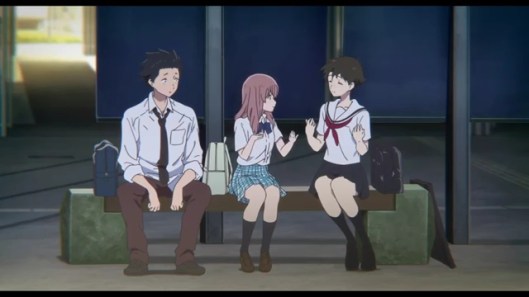
Now for A Silent Voice, or as its Japanese title Koe no Katachi translates, The Shape of Voice. While it received many accolades, A Silent Voice suffered somewhat from bad timing, being released just a month after last year’s mega-hit Your Name in Japan. (Incidentally, both were nominated for Japan’s Best Animated Feature Academy Award, but neither one won. That honor went to In This Corner of the World, which I’ll get to at some point.)  Whereas Hear Me was a romantic comedy with some moments of drama, A Silent Voice is much more dramatic in its young-adult setting and is bound to make sensitive viewers reach for the tissues more than once.

Image result for a silent voice film

The film starts with the carefree elementary school life of Shōya Ishida, who is dumbfounded at the arrival of a new student, a girl named Shoko Nishimiya who reveals through writing in her notebook that she cannot hear. While the other students are civil enough at first, the situation quickly devolves into bullying, led by Ishida. These scenes remind you how cruel kids can be and easily make your heart break for Nishimiya, who endures it all with quiet patience, still thinking the best of her classmates. When she finally is forced to change schools, the blame for her departure quickly falls on Ishida, and he takes her place as the class scapegoat and bully target. Fast forward several years to Ishida in high school, and his marginalization has only deepened, even making him consider suicide, until he tries to seek out Nishimiya and make amends.

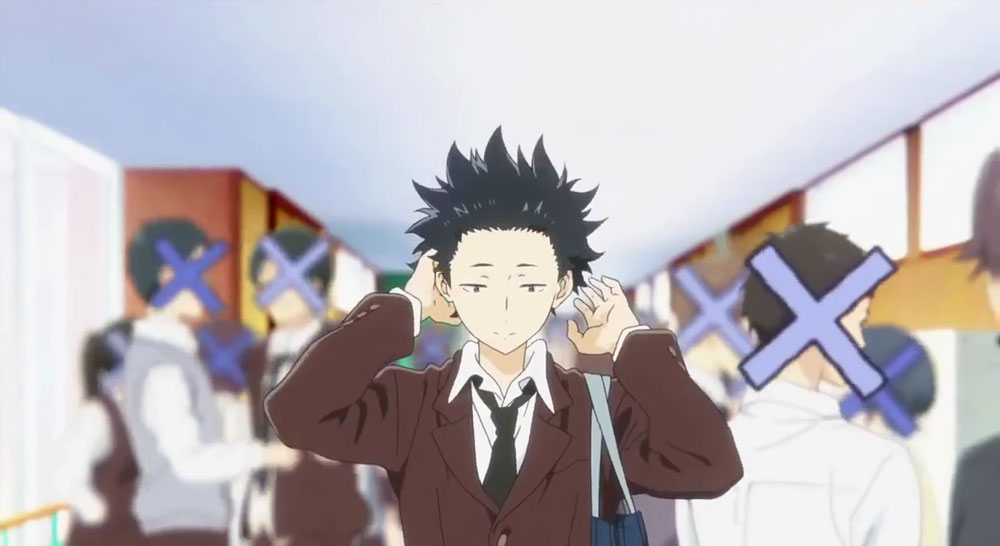
A Silent Voice makes the uncommon choice of first portraying its main character as a bully, the kind whose maliciousness seems normal to them but traumatic to their target. Yet the same person we dislike from the outset grows into a source of sympathy as he tries desperately to put that childish cruelty behind him. I loved the creative choice of placing X’s over the faces of his fellow classmates, marking them as people he has no chance or desire of knowing, as literal “unfriends.” These X’s become a brilliant way of visualizing Ishida’s mental state and his chances of relationships with others; when he lets his guard down, actually noticing and treating someone else as a person or vice versa, the X falls from their face and allows him a chance at a friend.

Image result for a silent voice film ending

The relationship between Ishida and Nishimiya is touching on multiple levels. They’re both broken people with agonizingly low self-esteems, Ishida because he considers his past offenses unforgivable, Nishimiya because she blames herself for any trouble around her and believes she somehow deserves it, always apologizing for everything. It’s amazing how easily she seems to accept Ishida after what he did, but it’s the mere effort of communicating with her that she values most. Also perceptive are their interactions with the friends they make and how they respond to the bullying: one girl still sees Nishimiya as insincere and worthy of her harassment, while another views herself as completely innocent, even though she watched Nishimiya’s persecution and did nothing. These bullying themes and Ishida himself meant much to me because I too have been on both sides; I was picked on by an older classmate for a time and I did the same myself, something I still regret despite it happening only once. Ishida doesn’t approach Nishimiya with any set goals of how to make it up to her, but he tries to build the relationships he once helped destroy, something any repentant bully would wish they could do as well.

Kyoto Animation has a reputation for excellence, from the popular Haruhi Suzumiya franchise to the highly anticipated Violet Evergarden, and A Silent Voice is proof of the studio’s talents. The animation is painterly with its luminous, pastel palette, and, even if some of the artsy editing makes it unclear at first what just happened in the nonlinear storyline, it looks gorgeous throughout. The abundant use of symbolism and some ambiguous scenes (like the very first and last shots) also make it a film worth analyzing and hearing others analyze. I still consider Your Name the best anime of last year, but A Silent Voice is quite simply a beautiful film that wears its emotions on its sleeve. Anytime it threatens to dip into teen melodrama, it’s revived by a sweet moment or heart-tugging conversation. I laughed out loud twice, I actually cried “No!” at one harrowing part, and the final scene gives me tearful chills every time I see it.

Image result for a silent voice fireworks scene

Going into these two movies, I really expected them both to be List Runners-Up, as so many movies I’ve seen recently have been. On its own, Hear Me probably would be a Runner-Up, but A Silent Voice earns its way onto my List and gives me an excuse to add Hear Me as a tie. Both approach their deaf subjects with great sensitivity, stressing that they are relatable people in search of the same relationships we all crave. Hear Me had far more sign language than A Silent Voice, which didn’t really bother to translate with subtitles when it was used, but both are excellent features for Deaf Awareness Month and are well worth seeing any other month, for that matter.

Best line from Hear Me: (Tian Kuo’s father, of his mother) “She’s got a knife for a mouth and tofu for a heart.”

Best line from A Silent Voice: (Kawai, a sort-of friend) “Everyone suffers in their life. But it’s like that for everyone, right? So you have to love the bad parts of yourself too and move forward.”


Rank for both: List-Worthy (tie)


© 2017 S.G. Liput
507 Followers and Counting


2017 Blindspot Pick #8: Darby O’Gill and the Little People (1959)

29 Tuesday Aug 2017

Posted by sgliput in Blindspot, Movies, Poetry, Reviews, Writing

≈ Leave a comment

Tags

Classics, Disney, Family, Fantasy, Romance

Darby O'Gill and the Little People (1959) - Alternate Ending ...

That jolly ol’ Darby O’Gill
At the pub would be drinking his fill,
Earning chuckles and yawns
Telling of leprechauns,
Half-believed out of simple good will.

Not caring what doubters may think,
Darby’d go home at last with a wink,
To natter and sing
With the leprechaun king,
And together they too shared a drink.
_________________

MPAA rating: G

Live-action Disney movies tend to fall into two categories: childhood-shaping classics (Mary Poppins, Homeward Bound, Swiss Family Robinson) and severely lame duds (The Shaggy Dog, The Million Dollar Duck, The Computer Wore Tennis Shoes). I wasn’t sure which one Darby O’Gill and the Little People would fit in, but I’d gladly place it in the first group, though I doubt this obscure little gem is shaping many childhoods nowadays.

Darby O'Gill and the Little People (1959) Review |BasementRejects

Apparently based on two books by Herminie Templeton Kavanagh, Darby O’Gill feels as genuinely Irish as The Quiet Man but with a more fantastical basis in Irish folklore. Albert Sharpe is a folksy joy as Darby, a good ol’ boy and father of young Katie (Janet Munro of Swiss Family Robinson) in the town of Rathcullen, who loves to recount his stories of leprechaun interactions with everyone at the local pub. They may only half-believe him, but he’s still a beloved member of the community, which sticks up for him against the mocking of the local brute Pony Sugrue (Kieron Moore), who reminded me a lot of Gaston in Beauty and the Beast, just as Darby is like a more respected version of Maurice. After his job is handed off to a younger man (Sean Connery, so young he barely looks or sounds like the Connery I know), Darby has another run-in with the king of the leprechauns Brian Connors (Jimmy O’Dea) and finagles three wishes that might not turn out as he’d hoped.

Darby O’Gill and the Little People has a lot of the charm of other Disney movies from that era, just with a healthy Irish zest that makes you want to dance a jig and crave shepherd’s pie. At times, the Irish brogues are a little thick to fully understand without subtitles, but for the most part, it adds to the authenticity, as does the music, which consists only of a sweet little ballad and an epic but slightly overlong fiddle dance. The special effects, for the most part, are also well-done, consisting mostly of shrinking the leprechauns to be only as tall as Darby’s knees, a visual trick that reminded me of the miniaturized hobbits in The Lord of the Rings. Also effective is the more dated creation of a ghostly banshee and death-coach-driving dullahan; Disney movies have their fair share of nightmare fuel, but I can easily see one scene in particular terrifying the very young.

Image result for darby o'gill and the little people banshee

Most people may not have seen or even heard of Darby O’Gill and the Little People, but that’s a bit of a shame. Where else can you get to see Sean Connery croon about his sweetheart? I especially liked the good-natured rivalry between Darby and Brian and the twist at the end that builds nicely on what came before and rounds it out for a satisfying end. If it were a modern movie, I’d say that Darby O’Gill doesn’t quite do enough with its fanciful concept, perhaps because the special effects could be better utilized, but as an Irish jaunt from yesteryear, it’s an underrated Disney classic that may well have earned placement on my List if I’d seen it as a kid.

Best line: (Darby, of his daughter Katie) “She should be the caretaker. She’s got a tongue would clip a hedge.”

Rank: List Runner-Up

© 2017 S.G. Liput
506 Followers and Counting

2017 Blindspot Pick #7: In Your Eyes (2014)

30 Sunday Jul 2017

Posted by sgliput in Blindspot, Movies, Poetry, Reviews, Writing

≈ 2 Comments

Tags

Drama, Fantasy, Romance

Image result for in your eyes film

Loneliness can be your lot
And leave you empty and distraught,
Even when alone you’re not
In daily life’s ordeal.
For life seems like an afterthought
When no one else knows how you feel.

But then the loneliness can fade,
No longer stressed, no more afraid,
When love more real cuts through charade,
And lonely souls are paired.
For newer joys are worth the trade
When feelings, thoughts, and love are shared.
_____________________

MPAA rating: Not Rated (could have been PG-13, but more R due to periodic profanity and some sensuality)

I chose In Your Eyes as one of my Blindspots because of the positive reviews I’d seen from some of my fellow bloggers, and my interest was further piqued by comparisons to last year’s anime hit Your Name. Whereas Your Name involves two strangers actually switching bodies, In Your Eyes features a telepathic (or more accurately, empathic) link between two random people on opposite sides of the country. Based on a decades-in-the-making screenplay by Joss Whedon and directed by Brin Hill, this supernatural romance certainly has its odd parts but incorporates a lot of what I love about the genre.

Image result for in your eyes michael stahl-david film

The two leads are played by Cloverfield’s Michael Stahl-David and Ruby Sparks’ Zoe Kazan, the former as a New Mexico parolee named Dylan and the latter as a New Hampshire trophy wife named Rebecca. Little do they know that they have shared a mental link since childhood, when one’s sledding accident somehow affected them both, but suddenly, it becomes strong enough to allow them to converse with each other and see what the other is seeing. I was a bit annoyed at first that there was no explanation or trigger to the sudden strengthening of their bond, aside from “Why not?” But then I recalled that Your Name didn’t have a very clear reason either, so it’s perhaps best to just roll with it since these cosmic movie connections are hard to clarify in reality.

Despite being separated for most of the film, Kazan and Stahl-David have engaging chemistry to spare. Their long-distance conversations feel natural to us since it’s as if they’re talking on the phone, but to everyone else, it looks like they’re talking to themselves or suffering bizarre outbursts that elicit worry and sideways glances from those nearby. (My VC actually thought it was stupid that they kept talking to each other out loud with no thought to how crazy they looked to others.) As with Taki and Mitsuha in Your Name, they learn a lot about each other, from past stresses to present foibles, through the rare opportunity of vicariously witnessing the other’s life. I especially liked how one tends to comment on what’s happening to the other, a voice in the head they have to try to ignore, like the hologram Al from Quantum Leap.

Image result for in your eyes zoe kazan film

Also worth noting are the direction and cinematography, which infuse many scenes with a luminous quality that enhances the enchantment of their unusual bond. The contrasting settings also heighten the distance between them, from Dylan’s orange desert to Rebecca’s blue-tinged snowscapes. The editing does well in visualizing their shared feelings, culminating in a bizarre but sensual bedroom scene. (Is there even a word for that? Long-distance intimacy?)

As much as I enjoyed both the romance and fantasy aspects, I must admit I didn’t love In Your Eyes quite as much as I’d hoped. It isn’t just the lack of explanation or the oddness of the very concept. The climax builds to a satisfying final scene, but all the events leading up to it are left open-ended, making me think there will be lots of unaddressed bumps on the road to a happy ending. Plus, as good as In Your Eyes is, I think Your Name did a similar story better, just as it did with The Lake House. Even so, In Your Eyes deserves a lot more attention than the few bloggers who have tried to promote it. For any fan of unorthodox romance or extramundane relationships, it’s definitely worth your time.

Best line: (Rebecca, realizing who she’s talking to the first time) “Wait, you’re real. You’re a real person!”   (Dylan) “Oh, that’s the sweetest thing anybody’s said to me all day.”


Rank: List Runner-Up


© 2017 S.G. Liput
497 Followers and Counting


← Older posts
Newer posts →

Recent Posts

  • We Didn’t Start 2025 (Recap)
  • NaPoWriMo 2025 Recap (Finally)
  • Sonic the Hedgehog 3 (2024)
  • It Happened One Night (1934)
  • Spellbound (2024)

Recent Comments

associatesofshellymann's avatarassociatesofshellyma… on My Top Twelve La La La So…
Kit's avatarKit Nichols on Bonnie and Clyde (1967)
lifelessons's avatarlifelessons on Look Back (2024)
Carol Jackson's avatarCarol Jackson on The Thief of Bagdad (1940…
Stephen's avatarStephen on Love Story (1970)

Archives

  • January 2026
  • December 2025
  • May 2025
  • April 2025
  • March 2025
  • February 2025
  • January 2025
  • December 2024
  • May 2024
  • April 2024
  • March 2024
  • February 2024
  • January 2024
  • December 2023
  • November 2023
  • October 2023
  • September 2023
  • July 2023
  • June 2023
  • May 2023
  • April 2023
  • March 2023
  • February 2023
  • January 2023
  • December 2022
  • November 2022
  • October 2022
  • September 2022
  • August 2022
  • July 2022
  • June 2022
  • May 2022
  • April 2022
  • March 2022
  • February 2022
  • January 2022
  • December 2021
  • November 2021
  • October 2021
  • September 2021
  • August 2021
  • July 2021
  • June 2021
  • May 2021
  • April 2021
  • March 2021
  • February 2021
  • January 2021
  • December 2020
  • November 2020
  • October 2020
  • September 2020
  • August 2020
  • July 2020
  • June 2020
  • May 2020
  • April 2020
  • March 2020
  • February 2020
  • January 2020
  • December 2019
  • November 2019
  • October 2019
  • September 2019
  • August 2019
  • July 2019
  • June 2019
  • May 2019
  • April 2019
  • March 2019
  • February 2019
  • January 2019
  • December 2018
  • November 2018
  • October 2018
  • September 2018
  • August 2018
  • July 2018
  • June 2018
  • May 2018
  • April 2018
  • March 2018
  • February 2018
  • January 2018
  • December 2017
  • November 2017
  • October 2017
  • September 2017
  • August 2017
  • July 2017
  • June 2017
  • May 2017
  • April 2017
  • March 2017
  • February 2017
  • January 2017
  • December 2016
  • November 2016
  • October 2016
  • September 2016
  • August 2016
  • July 2016
  • June 2016
  • May 2016
  • April 2016
  • March 2016
  • February 2016
  • January 2016
  • December 2015
  • November 2015
  • October 2015
  • September 2015
  • August 2015
  • July 2015
  • June 2015
  • May 2015
  • April 2015
  • March 2015
  • February 2015
  • January 2015
  • December 2014
  • November 2014
  • October 2014
  • September 2014
  • August 2014
  • July 2014
  • June 2014
  • May 2014
  • April 2014
  • March 2014
  • February 2014
  • January 2014
  • December 2013

Categories

  • Blindspot
  • Blogathon
  • Christian
  • Movies
  • Music
  • NaPoWriMo
  • Poetry
  • Reviews
  • TV
  • Writing

Meta

  • Create account
  • Log in
  • Entries feed
  • Comments feed
  • WordPress.com

Recent Posts

  • We Didn’t Start 2025 (Recap)
  • NaPoWriMo 2025 Recap (Finally)
  • Sonic the Hedgehog 3 (2024)
  • It Happened One Night (1934)
  • Spellbound (2024)

Recent Comments

associatesofshellymann's avatarassociatesofshellyma… on My Top Twelve La La La So…
Kit's avatarKit Nichols on Bonnie and Clyde (1967)
lifelessons's avatarlifelessons on Look Back (2024)
Carol Jackson's avatarCarol Jackson on The Thief of Bagdad (1940…
Stephen's avatarStephen on Love Story (1970)

Archives

  • January 2026
  • December 2025
  • May 2025
  • April 2025
  • March 2025
  • February 2025
  • January 2025
  • December 2024
  • May 2024
  • April 2024
  • March 2024
  • February 2024
  • January 2024
  • December 2023
  • November 2023
  • October 2023
  • September 2023
  • July 2023
  • June 2023
  • May 2023
  • April 2023
  • March 2023
  • February 2023
  • January 2023
  • December 2022
  • November 2022
  • October 2022
  • September 2022
  • August 2022
  • July 2022
  • June 2022
  • May 2022
  • April 2022
  • March 2022
  • February 2022
  • January 2022
  • December 2021
  • November 2021
  • October 2021
  • September 2021
  • August 2021
  • July 2021
  • June 2021
  • May 2021
  • April 2021
  • March 2021
  • February 2021
  • January 2021
  • December 2020
  • November 2020
  • October 2020
  • September 2020
  • August 2020
  • July 2020
  • June 2020
  • May 2020
  • April 2020
  • March 2020
  • February 2020
  • January 2020
  • December 2019
  • November 2019
  • October 2019
  • September 2019
  • August 2019
  • July 2019
  • June 2019
  • May 2019
  • April 2019
  • March 2019
  • February 2019
  • January 2019
  • December 2018
  • November 2018
  • October 2018
  • September 2018
  • August 2018
  • July 2018
  • June 2018
  • May 2018
  • April 2018
  • March 2018
  • February 2018
  • January 2018
  • December 2017
  • November 2017
  • October 2017
  • September 2017
  • August 2017
  • July 2017
  • June 2017
  • May 2017
  • April 2017
  • March 2017
  • February 2017
  • January 2017
  • December 2016
  • November 2016
  • October 2016
  • September 2016
  • August 2016
  • July 2016
  • June 2016
  • May 2016
  • April 2016
  • March 2016
  • February 2016
  • January 2016
  • December 2015
  • November 2015
  • October 2015
  • September 2015
  • August 2015
  • July 2015
  • June 2015
  • May 2015
  • April 2015
  • March 2015
  • February 2015
  • January 2015
  • December 2014
  • November 2014
  • October 2014
  • September 2014
  • August 2014
  • July 2014
  • June 2014
  • May 2014
  • April 2014
  • March 2014
  • February 2014
  • January 2014
  • December 2013

Categories

  • Blindspot
  • Blogathon
  • Christian
  • Movies
  • Music
  • NaPoWriMo
  • Poetry
  • Reviews
  • TV
  • Writing

Meta

  • Create account
  • Log in
  • Entries feed
  • Comments feed
  • WordPress.com

Blog at WordPress.com.

Is this your new site? Log in to activate admin features and dismiss this message
Log In
  • Subscribe Subscribed
    • Rhyme and Reason
    • Join 814 other subscribers
    • Already have a WordPress.com account? Log in now.
    • Rhyme and Reason
    • Subscribe Subscribed
    • Sign up
    • Log in
    • Report this content
    • View site in Reader
    • Manage subscriptions
    • Collapse this bar