• Home
  • About Me
  • The List
  • THE LIST (2016 Update)
  • THE LIST (2017 Update)
  • THE LIST (2018 Update)
  • THE LIST (2019 Update)
  • THE LIST (2020 Update)
  • THE LIST (2021 Update)
  • THE LIST (2022 Update)
  • Top Twelves and More
  • The End Credits Song Hall of Fame

Rhyme and Reason

~ Poetry Meets Film Reviews

Rhyme and Reason

Category Archives: Blindspot

2017 Blindspot Pick #6: Saving Private Ryan (1998)

02 Sunday Jul 2017

Posted by sgliput in Blindspot, Movies, Poetry, Reviews, Writing

≈ 2 Comments

Tags

Action, Drama, History, War

Image result for saving private ryan

They ran up the hills and across hostile plains.
They learned from their drills and embarked on campaigns.
They slogged through the mud and up bullet-chewed shores.
They spilled others’ blood while they dropped by the scores.

These teachers and writers and miners supplied
Their service as fighters for duty or pride.
They risked life and limb, often lost one or both,
And faced dangers grim that weren’t part of the oath.

They left homes and holes to attack assumed foes.
They charged foolish goals they were told to oppose.
They braved likely death where the angels don’t tread
And gave their last breath with both courage and dread.

Some died on the field, and some died in the tent,
And some made survival their cause to repent.
And most dwell, years past their first sojourn to war,
In graveyards amassed for the ones they fought for.

They stormed into hell, not for heaven’s demand,
But blistered and fell for their nation to stand.
And though you and I fathom not their nightmares,
How deep our thanks lie for the gift that is theirs.
_____________________

MPAA rating: R

Of all my Blindspot Picks this year (I know this one for June is a couple days late), Saving Private Ryan was the one I was most nervous about watching. There’s a reason I hadn’t yet watched this widely acclaimed classic from Steven Spielberg, namely its reputation as one of the more graphic war movies, which as a rule, I usually try to avoid. Yet after enduring the harsh battle scenes of Hacksaw Ridge and still loving it, as well as the current patriotic timing between the D-Day anniversary (June 6) and July 4, now seemed like the right time to finally give Saving Private Ryan a chance. I’m glad I did.

Image result for saving private ryan

Most of what I’d heard of Saving Private Ryan centered on the first thirty minutes, the brutal re-creation of the Normandy invasion. Indeed it’s an impressively intense experience to sit through, even if it’s still only a fraction of what the soldiers involved actually had to endure, among them my own paternal grandfather. It also feels fiercely comprehensive in its depiction of the battlefield, following Tom Hanks’s Captain John Miller from the assault boats up the bullet-riddled beaches under constant enemy fire. The men’s reactions to the nightmarish setting range from terrified and dazed to angry and vengeful, particularly as the repeated attempts to save the wounded prove horrifically futile. There are no cuts away to generals talking or planning or anything to take the viewer out of the moment, and it’s epic and immersive. As for the notorious violence, it’s comparable to the battle scenes of Hacksaw Ridge, though perhaps a bit less constant in its bloodshed than the worst Hacksaw Ridge scenes.

Yet, even beyond the intense opening, the rest of the film has plenty of strengths as well, the strongest of which has to be Tom Hanks. Hanks has always been good in everything I’ve seen of his, and he gives an outstanding performance here, easily worthy of an Oscar, for which he was only nominated. As Captain Miller, he’s a competent leader willing to fulfill his duty, even when his superiors send him on a foolhardy mission into enemy territory to retrieve the titular Private Ryan (Matt Damon), whose loss of his three brothers in battle has earned him a sympathy ticket home. Yet Miller isn’t as tough as nails as he tries to act, sometimes amused at hearing his men guess at his mysterious past, sometimes letting his desperation and grief amidst all the violence show through. Hanks is the touchstone for the whole film, which is important when the rest of the men under him aren’t as distinguishable, at least at first. The film’s long runtime of 2 hours and 49 minutes helps the other men under him stand out a bit, such as Barry Pepper’s praying sniper or Edward Burns’ hothead who rebels at risking lives for the sake of one man. (Until the end credits, I really thought Burns was Ben Affleck for some reason.) Even if I couldn’t keep up with most of their names, all the actors do an excellent job, including Damon, Burns, Tom Sizemore, Giovanni Ribisi, and Vin Diesel. Speaking of characters, I was especially delighted to see a very young Nathan Fillion (Castle, Firefly) as a different Private Ryan and (major Lost alert!) Jeremy Davies as timid interpreter Upham, which is such a strong role for him that I’m surprised this film didn’t make him a more sought-after star.

Image result for saving private ryan

Along the cross-country search for Private James Francis Ryan are individual encounters that convey so much of the horror, callousness, and sacrifice. At one point, Miller’s men rummage through dog tags of the deceased, joking and bantering as if they’re playing cards, only to be reminded that they’re essentially sorting through men’s stolen lives. Later, Upham defends a German prisoner whom the others want to kill, only for his naively righteous motivations to be starkly challenged by the ruthlessness of war. (The way this subplot plays out is like the opposite of a similar aspect of the 2003 film Saints and Soldiers.)  And through it all is the question of whether Private Ryan is worth all the trouble of saving. Does offering Ryan’s mother a little comfort in her grief warrant putting other men’s mothers through the same? How can one man live up to the sacrifices made to rescue him?

Saving Private Ryan is undoubtedly one of Steven Spielberg’s greatest achievements, yet oddly enough, while the film runs through a range of emotions, one of the strongest for me was anger. Why? Because how on God’s blue marble did Shakespeare in Love beat this for Best Picture?!?!?! I mean, really, there is no contest as to which film is grander, better told, and all-around more significant. In my opinion, that has to be the worst Best Picture decision the Academy has ever made, worse even than the La La Land debacle from this past year. I’m sorry, but Saving Private Ryan is clearly the true Best Picture of 1998. At least, Spielberg won Best Director, alongside Oscars for Cinematography, Sound Mixing, Film Editing, and Sound Effects Editing.

Despite all this praise for Saving Private Ryan, I’m left divided on how exactly to rank it on my Top 365 List at the end of the year. As with Hacksaw Ridge, I loved the story, acting, script, patriotic message, and production values, but the violence is a big drawback for me, mainly in diminishing its watchability. While the violence is important for effectively re-creating the savagery of battle, I still feel that sprays of blood and severed limbs are unnecessarily gruesome tools in a filmmaker’s arsenal. At one point, someone is literally blown apart by a bomb they don’t throw away for some reason; I couldn’t tell who it was or why they didn’t chuck the explosive, making the scene unnecessary except for shock value. I just feel that this would have been a slightly more accessible film if it had been edited to avoid some of the gore; I know my aversion to violence puts me in the movie-watching minority, but there must be others who avoid films like this for the same reasons I did (like my VC, who still refuses to see it). Ultimately, though, its strengths far outweigh that personal negative, so I’ll have to figure out later where exactly on my list such a film deserves to be.
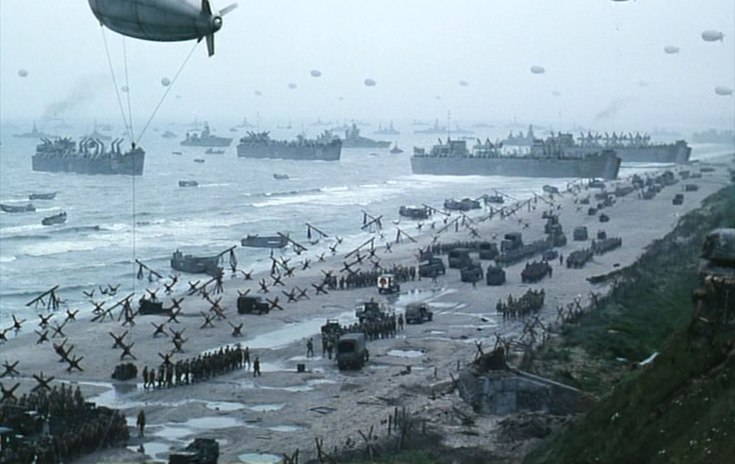
Image result for saving private ryan normandy

I have no hesitation in confirming that Saving Private Ryan really is among the best war films ever made. The cinematography and explosive battles augment its epic storytelling while never ignoring the human cost and casualties, and it captures the complicated mess of war, such as casting a disapproving eye at the vengeful cruelty done by Americans while reminding us that self-righteousness is rarely rewarded in battle. The strongest performances by Hanks and Davies should have earned them both Oscars. I can’t say I’d watch Saving Private Ryan often, due to its length and intensity, but few films are better suited for July 4 viewing.

Best line: (Captain Miller, to Private Reiben, who wants to kill a prisoner) “You want to leave? You want to go off and fight the war? All right. All right. I won’t stop you. I’ll even put in the paperwork. I just know that every man I kill, the farther away from home I feel.”


Rank: List-Worthy


© 2017 S.G. Liput
491 Followers and Counting
 

2017 Blindspot Pick #5: Blade Runner (1982)

28 Sunday May 2017

Posted by sgliput in Blindspot, Movies, Poetry, Reviews, Writing

≈ 4 Comments

Tags

Action, Drama, Sci-fi, Thriller

Image result for blade runner film

Darkly do the raindrops fall
Upon society’s withdrawal,
No innocence on which to land,
A wet and distant reprimand
On social rust and moral dusk and nobody who cares to feel.

Remember purer days of light?
They pale to darkness’ appetite,
For dark is omnipresent here
And only dreams escape the drear,
Mere memories that spark unease when we mistrust if they are real.
__________________

MPAA rating: R

There’s always bound to be movies out there that others hail as classics and you just don’t see the appeal. That’s Blade Runner for me. I picked it as one of my Blindspots this year because it’s been hailed as one of the greatest science fiction films of all time and its sequel Blade Runner 2049 is due out this October, returning Harrison Ford to one of his many iconic roles. Yet I found the story of Rick Deckard’s hunt for human-like replicants immensely lacking in both pacing and human interest, even as I recognized why it has become so well-respected.

Image result for blade runner film
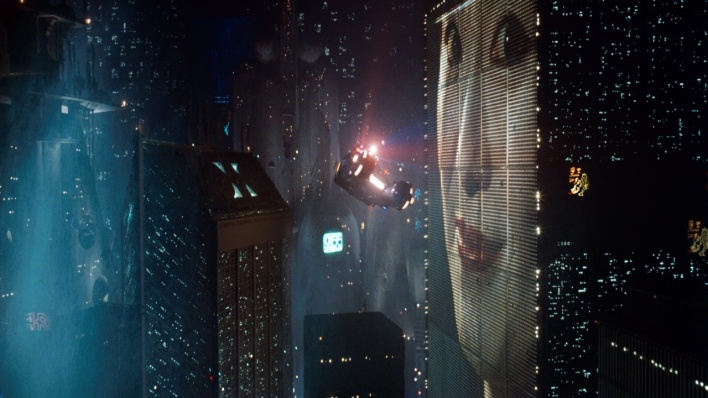
Based off a Philip K. Dick novel and directed by Ridley Scott following his hit with Alien, Blade Runner is often cited as a touchstone and forerunner for the cyberpunk and neo-noir genres, thanks to its grimy rain-soaked visuals of a future Los Angeles. With flying police cars traversing the neon-lit cityscape, I could clearly see this film’s influence on the likes of Minority Report, Ghost in the Shell, and The Matrix. Ghost in the Shell is perhaps the clearest borrower, also boasting a cerebral plot about man-made androids questioning their humanity, so there’s no denying Blade Runner’s impact on the style of much modern sci-fi. The non-digital effects hold up remarkably well, and the cinematography really heightens the bleak otherness of this particular dystopia.

If only this adeptly stylized world were worth spending time in. For all its technical finesse and shadowy cinematography, the strangeness of this future was a turn-off for me, with some of the surreal posturing of its characters reminding me of Dune from two years later. Whereas Dune was dragged down by a surplus of exposition, though, Blade Runner could have benefited from more, with far too many drawn-out scenes left in tedious silence. (I saw Ridley Scott’s Final Cut, but I understand the original theatrical version has a noir-style narration. Honestly, my curiosity about that difference is probably the only thing that would get me to watch Blade Runner again.) It’s a highly visual film, but the visuals weren’t enough to overcome a lackluster story.

Image result for blade runner film

The actors are all decent for the most part, with Harrison Ford playing a good tenacious policeman but never making much of an impression. Likewise, Sean Young as the femme-fatale love interest fills her role in the noir plot, but there’s not much to her thinly written character or to anyone else’s for that matter. Rutger Hauer is perhaps the most memorable as the main villain, Roy Batty, a murderous replicant who seeks to lengthen the programmed four-year lifespan for himself and his fellow rogues (Brion James, Joanna Cassidy, Daryl Hannah). Yet we never get to know the replicants any more than the human characters, and their plight is only half-felt with any sympathy by the end. Batty’s final scenes are also bizarrely anticlimactic after he chases Deckard like Hannibal Lecter on crack.

I recognize a lot of potential depth to the story, with themes of what makes us human, the unreliability of memories, the moral questioning of doing one’s job, and the despair and anger toward the arrogance of a creator (which Scott also incorporated into Prometheus). Yet none of these themes are compelling or explored with any depth, and the intentional ambiguity of several scenes only heightened their underdeveloped potential. Blade Runner is a film such that I can see how critics could watch it repeatedly and wring profound merit from its narrative, but its reputation as a masterful classic is more merit than this slow story deserves, in my opinion.

Image result for blade runner film roy batty

Owing its R rating to only two scenes (one with nudity, one uncomfortably violent), Blade Runner was quite the disappointment, especially because I typically love science fiction. (I’m not alone too; my equally sci-fi-loving VC was bored and uninterested by the halfway point.) I just don’t understand how a style-over-substance film like this is labeled a masterpiece, when far more entertaining tales, like In Time or Surrogates, are written off as sci-fi hack jobs. The letdown has also spoiled much of my interest in the upcoming sequel, though I’m still curious to see Denis Villeneuve’s take on this world, after the intellectual emotion of last year’s Arrival. Blade Runner is a grittily surreal blending of future and noir, with admirable effects and cinematography and an unmistakable impact on science fiction to come, but it’s also proof that just because something shapes a genre doesn’t necessarily make it a masterpiece.

Best line: (Tyrell, Roy’s designer) “The light that burns twice as bright burns half as long, and you have burned so very, very brightly, Roy.”


Rank: Dishonorable Mention


© 2017 S.G. Liput
487 Followers and Counting


2017 Blindspot Pick #4: The Help (2011)

21 Friday Apr 2017

Posted by sgliput in Blindspot, Movies, NaPoWriMo, Poetry, Reviews, Writing

≈ 6 Comments

Tags

Drama

Image result for the help 2011

(Today’s NaPoWriMo prompt was for a poem based on overheard speech, such as the hearsay that servers are likely to notice.)


“The pie’s not sweet enough today.”
“It’s all her fault, you know.”
“They can’t expect us all to stay
With riffraff like them, though.”

I overhear the gossipers,
Who prattle and complain,
That such-and-such was never hers
Or   blank   was such a pain.

They talk as if I am not here,
Invisibly at hand,
A ghost to serve and disappear
But not to understand.

I’m not to chafe or take offense,
When they discuss my worth
Or tease and joke at my expense
To all the listening earth.

But I’ve a mouth, as well as ears,
I will not undersell.
A ghost who disappears but hears
Has many tales to tell.
__________________

MPAA rating: PG-13

Films like The Help are the highest form of chick flick. All the important characters are women, but instead of focusing on romantic exploits (though there’s a little of that), this adaptation of Kathryn Stockett’s hit novel raises its sights higher to matters of race, prejudice, and personal courage, all with an entertainingly light touch.

It starts out in rather uncomfortable territory, as the women of Jackson, Mississippi, gossip and gab as Southern 1960s housewives apparently did, while treating their hired black maids as second-class citizens. Social bigwig Hilly Holbrook (Bryce Dallas Howard) extols the merits of “separate but equal” in full view of the women’s maids, including Aibileen (Viola Davis) and Minny (Octavia Spencer), even going so far as to start an initiative for separate home bathrooms for the help. It’s a prime portrait of racist whites at their most passive-aggressive and a frustrating one at that for two different reasons: (1) the irritation that such treatment was once commonplace and (2) the fact that this is how all white southerners of that era will be remembered, which wasn’t necessarily true for all. (My grandmother, for instance, surely had some prejudice natural to the time and place, but it never extended to treating black people with such condescension.) Only Emma Stone’s “Skeeter” Phelan has any compunction about the rampant contempt on display and has the inclination to do something about it, namely writing a book from the perspective of “the help.”

Image result for the help 2011

It’s in the second half that all the characters and their relationships come full circle, from Hilly getting some mortifying retribution to Skeeter earning the trust and cooperation of the maids, who overcome their justified fears to provide their untold two cents. The book becomes not only a potential meal ticket for Skeeter’s aspirations but a pressure valve for her interviewees, who for the first time are able to talk about their memories and grievances openly. While people like Hilly give the maid-ma’am relationship a bad name, the film often presents the positive connections between the help and the helped with a sweet intimacy: Skeeter found confidence and encouragement in her mother’s housemaid (Cicely Tyson); Minny offers cooking instruction and an open heart and ear to a supposedly trashy outcast in need of help (Jessica Chastain); and Aibileen’s bond with her mistress’s toddler is a stronger mother/daughter attachment than the child’s real one.

The Help features a surprising balance between comedy and drama, sometimes laden with tearjerking emotion, other times giving the audience every reason to whoop with scandalous satisfaction. It swings freely from reminders of the tumultuous racial situation of the time to inspiring maxims and chuckle-worthy pranks. What grounds this wide range of material is the universally superb cast. Every performance excels, with Octavia Spencer’s tenacity and surplus of attitude earning her a Best Supporting Actor Oscar, for which Jessica Chastain was also nominated. Though Viola Davis didn’t win her Best Actress nomination, she’s easily the best actress here and brings the same master-class acting that proves her win for Fences was long overdue. While the black actresses steal the show, Alison Janney is another standout as Skeeter’s overbearing but conflicted mother, and as the one unbiased white character, Emma Stone continues to make me an ever bigger fan of hers.

Image result for the help 2011

Now that I’ve seen The Help, I absolutely consider it among the best films of 2011 and deserving of its Best Picture nomination, but it doesn’t quite cross that little line in my head to qualify as one of my favorites overall. I don’t think it’s the woman-centric narrative or white guilt or anything like that; it’s simply a film I respect and enjoyed but only to a point. The depiction of the racism of Southern communities is perhaps too easy a stereotype, reflecting modern sensibilities toward villainous, backward-thinking whites of the period, even if it has some basis in truth. Aside from this, though, The Help is an expertly acted testimonial for untold stories and the courage to tell them.

Best line: (Skeeter’s maid Constantine) “Every day you’re not dead in the ground, when you wake up in the morning, you’re gonna have to make some decisions. Got to ask yourself this question: ‘Am I gonna believe all them bad things them fools say about me today?’ You hear me? … All right? As for your mama, she didn’t pick her life. It picked her. But you, you’re gonna do something big with yours. You wait and see.”

VC’s best line: (Skeeter’s mom Charlotte) “Courage sometimes skips a generation. Thank you for bringing it back to our family.”


Rank: List Runner-Up


© 2017 S.G. Liput
473 Followers and Counting


2017 Blindspot Pick #3: An American in Paris (1951)

26 Sunday Mar 2017

Posted by sgliput in Blindspot, Movies, Poetry, Reviews, Writing

≈ 6 Comments

Tags

Comedy, Drama, Musical, Romance

Image result for an american in paris film

It’s magical in Paris,
At least in film and book,
Where painters dance
And find romance
And anyone can cook.

Real Paris may be different;
But skyline stars still shine,
Where love can stir
And dreams occur;
That Paris can be mine.
____________

MPAA rating:  All (easily a G)

I do have a soft spot for musicals, but for some reason, I’d never gotten around to watching what many consider one of the pinnacles of classic musical cinema. Luckily, it’s one of my Blindspots. An American in Paris combines some of the best aspects of the genre, particularly Gene Kelly’s dancing and George Gershwin’s music, but there’s something lacking too.

I’d only ever seen the famous dance scene that serves as the film’s centerpiece, and since that is largely symbolic, I wasn’t sure what to expect as far as a plot. Kelly plays struggling artist and American expat Jerry Mulligan, who lives contentedly in Paris while periodically displaying his paintings on the street. Much to his surprise, he attracts the attention of wealthy socialite Milo Roberts (Nina Foch), who volunteers to sponsor his talent, even if Jerry’s not sure she’s doing so solely out of the goodness of her heart. After a bit of love at first sight, he seeks to woo a young Parisian (Leslie Caron), who is torn between love and loyalty. It’s a good thing Kelly is so darn likable because his character is a bit of a jerk at times, such as how he pursues his love interest without a thought to the other woman accompanying him, but for the most part, Kelly’s natural charisma engages wonderfully with his costars.

Image result for an american in paris film

While the plot works well enough, the musical numbers overshadow the story connecting them, and the fact that most of the Gershwin songs were previously written and don’t have much bearing on what’s going on makes them feel a bit disjointed. They shouldn’t feel like this, but the songs are padding for an uninspired plot, even if they’re the best aspects of the film. I honestly could have skipped the storyline and simply watched the musical numbers, which would make for a great montage but not exactly a great film.

There’s still some superlative style to this Vincente Minnelli-directed lark, from the personable introduction to the three main male characters to the show-stopping pageantry of the songs. One dream sequence with Oscar Levant as Jerry’s unemployed pianist friend may be one of those filler numbers, but it employs some visual trickery that was likely very innovative at the time. And, having heard a good deal of Gershwin in Mr. Holland’s Opus, it was nice to see one of its original visual accompaniments.

Image result for an american in paris film

An American in Paris may be a beloved classic, but it’s nowhere near the level of Kelly’s Singin’ in the Rain. The plot is a charming but average romance that completely ignores and offers no closure to the side characters, and even the grand 17-minute tap dance/ballet climax set to Gershwin’s title music ran too long and threatened to lose my interest at times. I don’t want to knock it too hard, but there are much better musicals than the Best Picture of 1951. Still, the musical scenes should easily put a smile on anyone’s face, and I can watch Gene Kelly’s effortless talent any day.

Best line: (Jerry) “Back home, everyone said I didn’t have any talent. They might be saying the same thing over here, but it sounds better in French.”


Rank: List Runner-Up


© 2017 S.G. Liput
457 Followers and Counting


2017 Blindspot Pick #2: Imitation of Life (1934)

21 Tuesday Feb 2017

Posted by sgliput in Blindspot, Movies, Poetry, Reviews, Writing

≈ 1 Comment

Tags

Drama

Image result for imitation of life 1934


Minorities of different skin
Have often dreamed of fitting in,
And none should stand opposed.
But in attempts of reaching par,
One should not give up who they are.
The hope of changing what has been
Means not the past should be disposed.

To shed yourself to fit the crowd
Will leave foundations disavowed,
And such will lead to shame.
It should be easy fitting in,
Regardless of one’s origin,
But in your act of standing proud,
The rest of us can do the same.
______________

MPAA rating: Approved (should be G)

I picked Imitation of Life as one of my Blindspot picks because I had started to see it a while ago, and for whatever reason never got past the first scene. It wasn’t for lack of interest, though, and in honor of Black History Month, I’m glad I finally returned to this unique tale of a friendship between a white businesswoman and her black maid-turned-business-partner. It’s based on a Fannie Hurst novel released just a year before and had a remake with Lana Turner in 1959.

Image result for imitation of life 1934

One interesting aspect of both the 1934 and 1959 version is the downplaying of African Americans in the marketing. Claudette Colbert as the ambitious Bea Pullman gets top billing, but based on the poster above, you may not be able to tell that the story deals with issues of race and identity. Opposite Colbert is Louise Beavers as Delilah, a sincere black mother in search of work to support herself and her uncommonly light-skinned daughter Peola. After Bea agrees to hire her as a housekeeper, Delilah’s recipe for pancakes (waffles in the book) gives Bea the idea to open a pancake restaurant in Delilah’s name, taking some plucky financial risks to do so.

First off, I know how hard it is to open a business; I once owned a hot dog cart that was sadly short-lived. Seeing Bea’s seemingly easy success with her pancake restaurant was strangely both satisfying and sickening. Was it really that easy back then? If so, why does it have to be so hard nowadays?! I tried to enjoy Bea’s booming business vicariously, especially since she then goes on to sell the pancakes as a mix, making millions, with the logo of “Aunt” Delilah’s smiling face clearly echoing the Aunt Jemima brand. Oh, man, do you know how long my mom has wanted to package her chili as a mix? Sigh… Sorry, I’ve got to stop being jealous of a movie.

Image result for imitation of life 1934

Considering Delilah’s servile attitude (volunteering to rub Bea’s feet, for instance), it might be easy to knock her as a stereotype and to criticize Bea for milking Delilah for her own benefit without even asking, but Delilah is working and profiting with her all along the way and has the fame of the brand’s name and logo honoring her. Delilah remains loyal to Bea, wishing to live with her even after she has enough money for her own home, and though the arrangements reflect the social norms of the day (Bea’s bedroom upstairs, Delilah’s downstairs), it’s clear that the two women are good friends, regardless of race.

Beyond the initial restaurant storyline are two subplots dealing with Peola’s shame at her black heritage and Bea’s blossoming romance that is complicated by her own daughter. Peola’s story is what makes Imitation of Life unique. Because her father was also light-skinned, Peola can pass as white, but Delilah’s presence instantly labels her black and causes Peola to resent her own mother. At times, Delilah seems rather dense, embarrassing Peola when she should know by then how her daughter feels, yet it’s understandable for Delilah to want Peola to accept who she is and where she came from. Delilah’s earnest counsel that being black is nothing to be ashamed of feels like the heart of the film’s message, one that seemed ahead of its time in the ‘30s and was likely an encouragement for African Americans at the time. The other subplot with Bea’s daughter (Rochelle Hudson) and gentleman caller (Warren William) is less interesting but also carries somewhat the theme of someone being fixated on their feelings and needing to accept reality.

Image result for imitation of life 1934

The trailers that did highlight the black actors featured reviews stating that Louise Beavers delivers the best performance by a black actress up to that time, and I don’t doubt that to be true. In her emotional scenes, Beavers is just as good or better than Colbert, and it’s unfortunate that her race was the probable reason she didn’t receive an Oscar nomination. (Colbert won Best Actress that year but for It Happened One Night.) Fredi Washington is also excellent as the 19-year-old Peola, a role that fit her perfectly since Washington was also a light-skinned African American who had trouble finding work due to her conflicting race and appearance.

Boasting a 100% on Rotten Tomatoes, Imitation of Life has some powerful scenes pertaining to racial identity and a good story and characters besides, but the resolution felt lacking, again mainly in relation to the plot about Bea’s boyfriend. A few moments are also dragged down by the acting conventions of the time, such as the very fake child acting of the first scene. It may not be a repeatably watchable classic, but for its treatment of interracial friendship and personal identity, it’s an important film nonetheless.

Best line: (Delilah, to Peola) “Ain’t nothing to be ashamed of, daughter dear. Meet your cross halfway. It won’t be near so heavy. Go amongst your own. Quit battlin’. Your little head’s sore now from buttin’ against stone walls. Open up and say, ‘Lord, I bows my head.’ He made you black, honey. Don’t be tellin’ Him His business. Accept it. Do that for your mammy, for your mother, dear.”

Rank: Honorable Mention

© 2017 S.G. Liput
451 Followers and Counting


2017 Blindspot Pick #1: Shuffle (2011)

31 Tuesday Jan 2017

Posted by sgliput in Blindspot, Movies, Poetry, Reviews, Writing

≈ Leave a comment

Tags

Drama, Fantasy, Mystery, Thriller

Image result for shuffle kurt kuenne


Life is hard enough in order,
Each day in succession gone,
Until one day we look behind and see mistakes a plenty,
And all in twenty-twenty.

It might seem harder out of order,
Jumping years to days thought gone,
But might that give our stubborn minds a little new perspective
And make us more reflective?

Our destinies are ours to order,
Rampant chances till they’re gone,
And some forget fulfillment rests on what we each will do.
The question is, will you?
_________________

MPAA rating: PG-13

Since I’m new to this Blindspot series and a notorious procrastinator, of course I waited to the last day of the month to review my first Blindspot pick, but I surely did choose a good one to start with in Shuffle. I have my good friend MovieRob to thank for recommending this time travel puzzler after he became a big fan of independent director Kurt Kuenne. I see why, because Shuffle combines so much of what I love about the time travel genre with a unique and compelling story.

Shuffle is as lean a narrative as I’ve seen, diving right into the tale of a man displaced within his own lifetime with every scene adding something to the plot. From the first moments, Lovell Milo explains to a psychiatrist that every time he falls asleep (which is often), he awakens on a different day in his life, sometimes as an old man, sometimes as a child, or anywhere in between. It takes an exhausting toll on him, and he has no idea why it’s happening, explaining away potential plot holes with the mystery that he “just knows” certain facts about himself, such as his age at every jump in time. While he’s tempted to despair at this seemingly endless headache, different strangers at certain points urge him to “pay attention” because there’s something to learn from all this, and indeed there is.

Image result for shuffle kurt kuenne

There are a lot of touchstones or spiritual predecessors one could point to with Shuffle, and they’re a pantheon of great stories. The choppy editing and sudden shifts in place and time might recall Christopher Nolan’s Memento, though Shuffle is much easier to follow and much more rewarding. The theme of redemptive second chances brings to mind A Christmas Carol and It’s a Wonderful Life, and the time travel jumps echo the great sci-fi elements of Quantum Leap, The Time Traveler’s Wife, and the Star Trek: Voyager episode “Before and After,” where Kes periodically lives her life backwards. I also loved the fleeting moments of prayer, where Lovell pleads desperately with God for help, though in a general sense, like how Quantum Leap’s Sam Beckett recognizes that there must be a higher power directing his experiences.

One of the most impressive aspects of Shuffle is how well it was made on what was clearly a small budget. The production values are obviously limited, which is felt on occasion, but it’s often covered quite nicely. A behind-the-scenes featurette revealed that the same living room was used as an all-purpose set for most of the interior scenes, but I couldn’t tell at all. Unlike so many small-budget films, the acting and script are also above average, with special attention to revealing plot points gradually as Lovell learns of them and never getting lost amid the flurry of time leaps. The actors aren’t big-name stars (unless you watch the TV show Bones), but everyone involved provides good performances, even the child actors and especially T. J. Thyne as Lovell.

Image result for shuffle t. j. thyne

Again, a big thank-you to Rob for his recommendation; it being an under-the-radar film that had trouble getting noticed before becoming a festival hit, I doubt I’d ever have seen Shuffle otherwise. My VC loved it as well, proving this is a film that deserves far more recognition. There’s a lot to admire about this film, from its structure and subtle foreshadowing to individual emotional scenes that just might put a lump in your throat. Stylistic choices also add visual interest, such as the backlighting that often imparts a luminous quality to certain scenes, and the color brightness changes depending on the timeframe. The director’s cut is apparently all in black-and-white, but I preferred the usage of color, particularly in the final scene.

I’ve read that many people disliked the ending, thinking it veers into overly satisfying territory, but I thought the whole final act was beautiful, a couple creative choices notwithstanding. In its testament of hope, Shuffle still acknowledges that mistakes and heartache can’t always be undone, but how we react to them can make the difference between a life fulfilled and a life wasted.

Best line: (Lovell’s mother, when he’s a grown man) “It seems like just yesterday, he was eight.”   (Lovell) “Actually, that was two days ago.”


Rank: List-Worthy


© 2017 S.G. Liput
448 Followers and Counting


Newer posts →

Recent Posts

  • We Didn’t Start 2025 (Recap)
  • NaPoWriMo 2025 Recap (Finally)
  • Sonic the Hedgehog 3 (2024)
  • It Happened One Night (1934)
  • Spellbound (2024)

Recent Comments

associatesofshellymann's avatarassociatesofshellyma… on My Top Twelve La La La So…
Kit's avatarKit Nichols on Bonnie and Clyde (1967)
lifelessons's avatarlifelessons on Look Back (2024)
Carol Jackson's avatarCarol Jackson on The Thief of Bagdad (1940…
Stephen's avatarStephen on Love Story (1970)

Archives

  • January 2026
  • December 2025
  • May 2025
  • April 2025
  • March 2025
  • February 2025
  • January 2025
  • December 2024
  • May 2024
  • April 2024
  • March 2024
  • February 2024
  • January 2024
  • December 2023
  • November 2023
  • October 2023
  • September 2023
  • July 2023
  • June 2023
  • May 2023
  • April 2023
  • March 2023
  • February 2023
  • January 2023
  • December 2022
  • November 2022
  • October 2022
  • September 2022
  • August 2022
  • July 2022
  • June 2022
  • May 2022
  • April 2022
  • March 2022
  • February 2022
  • January 2022
  • December 2021
  • November 2021
  • October 2021
  • September 2021
  • August 2021
  • July 2021
  • June 2021
  • May 2021
  • April 2021
  • March 2021
  • February 2021
  • January 2021
  • December 2020
  • November 2020
  • October 2020
  • September 2020
  • August 2020
  • July 2020
  • June 2020
  • May 2020
  • April 2020
  • March 2020
  • February 2020
  • January 2020
  • December 2019
  • November 2019
  • October 2019
  • September 2019
  • August 2019
  • July 2019
  • June 2019
  • May 2019
  • April 2019
  • March 2019
  • February 2019
  • January 2019
  • December 2018
  • November 2018
  • October 2018
  • September 2018
  • August 2018
  • July 2018
  • June 2018
  • May 2018
  • April 2018
  • March 2018
  • February 2018
  • January 2018
  • December 2017
  • November 2017
  • October 2017
  • September 2017
  • August 2017
  • July 2017
  • June 2017
  • May 2017
  • April 2017
  • March 2017
  • February 2017
  • January 2017
  • December 2016
  • November 2016
  • October 2016
  • September 2016
  • August 2016
  • July 2016
  • June 2016
  • May 2016
  • April 2016
  • March 2016
  • February 2016
  • January 2016
  • December 2015
  • November 2015
  • October 2015
  • September 2015
  • August 2015
  • July 2015
  • June 2015
  • May 2015
  • April 2015
  • March 2015
  • February 2015
  • January 2015
  • December 2014
  • November 2014
  • October 2014
  • September 2014
  • August 2014
  • July 2014
  • June 2014
  • May 2014
  • April 2014
  • March 2014
  • February 2014
  • January 2014
  • December 2013

Categories

  • Blindspot
  • Blogathon
  • Christian
  • Movies
  • Music
  • NaPoWriMo
  • Poetry
  • Reviews
  • TV
  • Writing

Meta

  • Create account
  • Log in
  • Entries feed
  • Comments feed
  • WordPress.com

Recent Posts

  • We Didn’t Start 2025 (Recap)
  • NaPoWriMo 2025 Recap (Finally)
  • Sonic the Hedgehog 3 (2024)
  • It Happened One Night (1934)
  • Spellbound (2024)

Recent Comments

associatesofshellymann's avatarassociatesofshellyma… on My Top Twelve La La La So…
Kit's avatarKit Nichols on Bonnie and Clyde (1967)
lifelessons's avatarlifelessons on Look Back (2024)
Carol Jackson's avatarCarol Jackson on The Thief of Bagdad (1940…
Stephen's avatarStephen on Love Story (1970)

Archives

  • January 2026
  • December 2025
  • May 2025
  • April 2025
  • March 2025
  • February 2025
  • January 2025
  • December 2024
  • May 2024
  • April 2024
  • March 2024
  • February 2024
  • January 2024
  • December 2023
  • November 2023
  • October 2023
  • September 2023
  • July 2023
  • June 2023
  • May 2023
  • April 2023
  • March 2023
  • February 2023
  • January 2023
  • December 2022
  • November 2022
  • October 2022
  • September 2022
  • August 2022
  • July 2022
  • June 2022
  • May 2022
  • April 2022
  • March 2022
  • February 2022
  • January 2022
  • December 2021
  • November 2021
  • October 2021
  • September 2021
  • August 2021
  • July 2021
  • June 2021
  • May 2021
  • April 2021
  • March 2021
  • February 2021
  • January 2021
  • December 2020
  • November 2020
  • October 2020
  • September 2020
  • August 2020
  • July 2020
  • June 2020
  • May 2020
  • April 2020
  • March 2020
  • February 2020
  • January 2020
  • December 2019
  • November 2019
  • October 2019
  • September 2019
  • August 2019
  • July 2019
  • June 2019
  • May 2019
  • April 2019
  • March 2019
  • February 2019
  • January 2019
  • December 2018
  • November 2018
  • October 2018
  • September 2018
  • August 2018
  • July 2018
  • June 2018
  • May 2018
  • April 2018
  • March 2018
  • February 2018
  • January 2018
  • December 2017
  • November 2017
  • October 2017
  • September 2017
  • August 2017
  • July 2017
  • June 2017
  • May 2017
  • April 2017
  • March 2017
  • February 2017
  • January 2017
  • December 2016
  • November 2016
  • October 2016
  • September 2016
  • August 2016
  • July 2016
  • June 2016
  • May 2016
  • April 2016
  • March 2016
  • February 2016
  • January 2016
  • December 2015
  • November 2015
  • October 2015
  • September 2015
  • August 2015
  • July 2015
  • June 2015
  • May 2015
  • April 2015
  • March 2015
  • February 2015
  • January 2015
  • December 2014
  • November 2014
  • October 2014
  • September 2014
  • August 2014
  • July 2014
  • June 2014
  • May 2014
  • April 2014
  • March 2014
  • February 2014
  • January 2014
  • December 2013

Categories

  • Blindspot
  • Blogathon
  • Christian
  • Movies
  • Music
  • NaPoWriMo
  • Poetry
  • Reviews
  • TV
  • Writing

Meta

  • Create account
  • Log in
  • Entries feed
  • Comments feed
  • WordPress.com

Blog at WordPress.com.

Is this your new site? Log in to activate admin features and dismiss this message
Log In
  • Subscribe Subscribed
    • Rhyme and Reason
    • Join 814 other subscribers
    • Already have a WordPress.com account? Log in now.
    • Rhyme and Reason
    • Subscribe Subscribed
    • Sign up
    • Log in
    • Report this content
    • View site in Reader
    • Manage subscriptions
    • Collapse this bar