• Home
  • About Me
  • The List
  • THE LIST (2016 Update)
  • THE LIST (2017 Update)
  • THE LIST (2018 Update)
  • THE LIST (2019 Update)
  • THE LIST (2020 Update)
  • THE LIST (2021 Update)
  • THE LIST (2022 Update)
  • Top Twelves and More
  • The End Credits Song Hall of Fame

Rhyme and Reason

~ Poetry Meets Film Reviews

Rhyme and Reason

Tag Archives: Romance

It Happened One Night (1934)

01 Thursday May 2025

Posted by sgliput in Movies, NaPoWriMo, Poetry, Reviews, Writing

≈ Leave a comment

Tags

Classics, Comedy, Romance

(For Day 30 of NaPoWriMo, the prompt was for a poem about hearing a band or song throughout one’s lifetime. Based on a scene from this film, I went with the classic “The Man on the Flying Trapeze,” so the poem can be sung to that tune.
This might be the end of the month, but I’ve missed I think three days so I’ll be catching up before calling it quits.)

Remember that song we sang on the bus
When life was just you and me and not us?
My voice was drowned out by the crowd (‘twas a plus),
But yours, like a bell, had me reeling.

I hear it, years later, but clearly
To the sound of cans dragging behind.
The bouquet had been thrown, and we weren’t on our own,
And we sang with our voices combined.

Oh, we warble it still on the road all the time,
And though my voice borders on audial crime,
You still sound as sweet as you did in your prime.
So one more time, honey, with feeling!
_________________________

MPA rating: Approved (G-level)

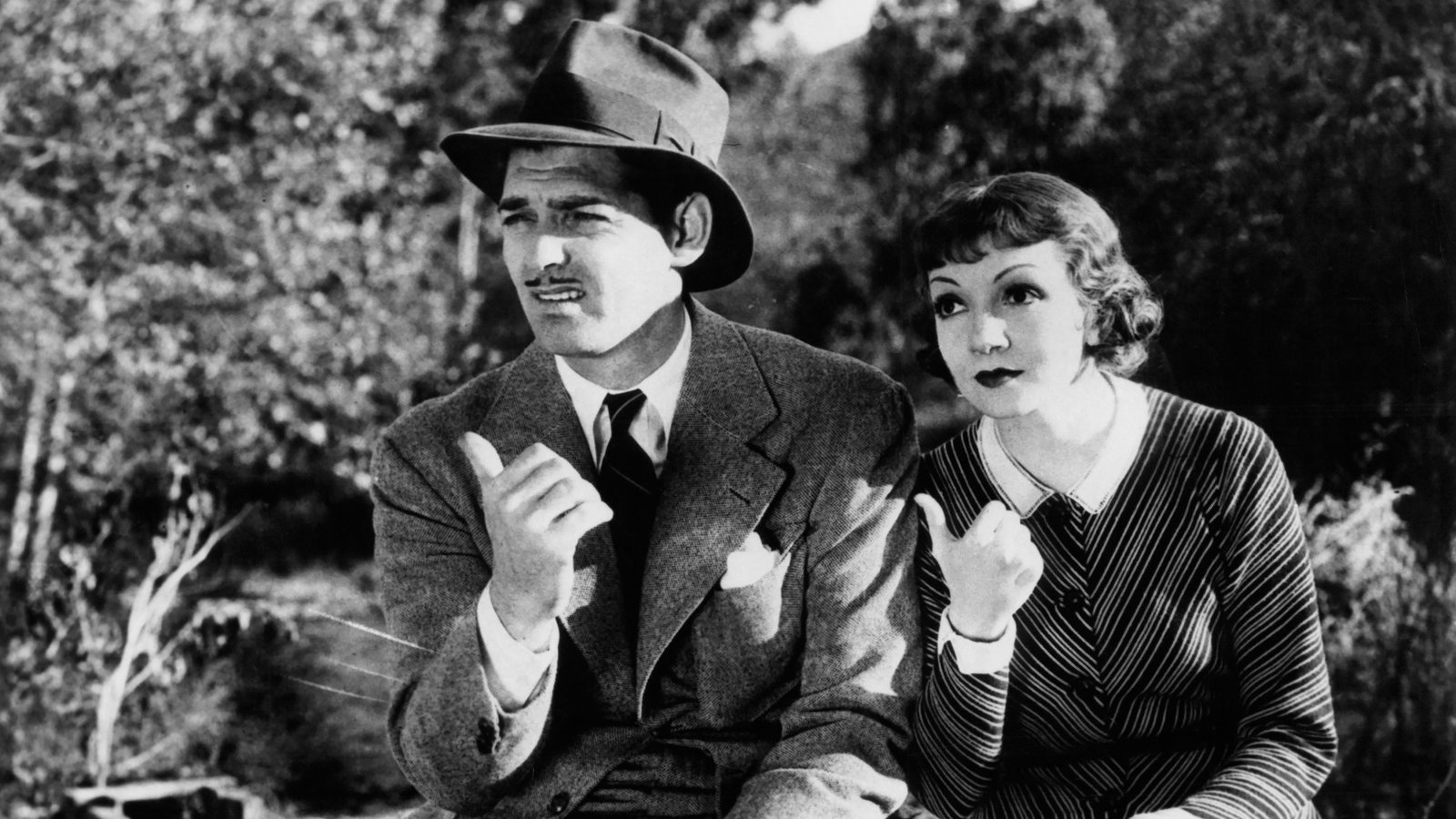
Another Oscar-season showing from TCM, It Happened One Night is still fondly regarded today as a Frank Capra classic, so I was curious if the Best Picture winner of 1934 would hold up and, for the most part, it does. Claudette Colbert plays spoiled heiress Ellie Andrews, who elopes against her father’s wishes and then goes on the lam as he puts up a reward for her return. She is found by beleaguered newspaper reporter Peter Warne (Clark Gable), who helps her in exchange for covering her story, and the two gradually grow closer along their travel misadventures. Both actors also won Oscars, as did the screenplay and Capra as director.
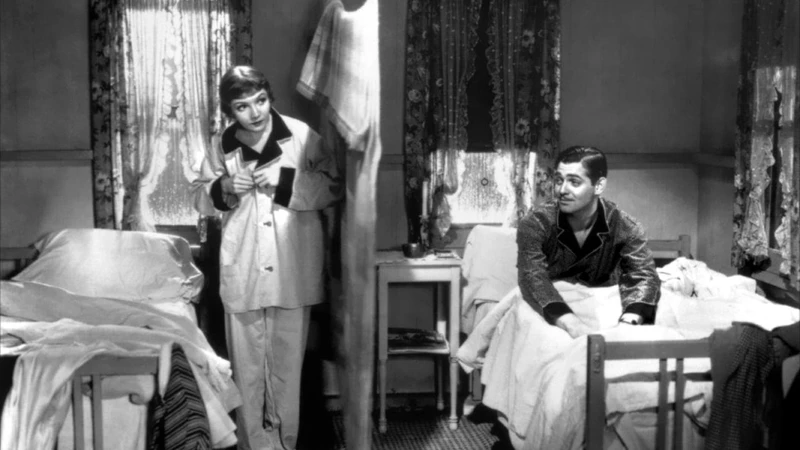
Any film this old is going to be somewhat dated, but the banter between Peter and Ellie feels more natural than a lot of other repartee from the era, like the flowery dialogue of Double Indemnity or the pretentious quips of The Philadelphia Story. It’s fun to watch the beauty Colbert humbled by the travails of being on the road, while Gable bears the bulk of the film’s charm on his back, proving it was second nature for him to play an appealing rogue even five years before Gone with the Wind. From the running joke of “the walls of Jericho” to Colbert’s famous hitchhiking scene, the film stays amusing without going silly with its screwball comedy, and I was surprised by a scene toward the end that was blatantly borrowed by Spaceballs, a testament to its influence. While I didn’t think It Happened One Night rose to the level of greatness I’ve seen critics ascribe to it, it’s an excellent early rom com that further proves the talents of Gable and Capra.

Best line: (Ellie’s father Alexander, to Peter) “Do you love her?”
(Peter) “A normal human being couldn’t live under the same roof with her without going nutty! She’s my idea of nothing!”
(Alexander) “I asked you a simple question! Do you love her?”
(Peter) “Yes! But don’t hold that against me, I’m a little screwy myself!”

Rank: List Runner-Up

© 2025 S.G. Liput
807 Followers and Counting

The Gorge (2025)

20 Sunday Apr 2025

Posted by sgliput in Movies, NaPoWriMo, Poetry, Reviews, Writing

≈ Leave a comment

Tags

Action, Horror, Romance, Sci-fi, Thriller

(Happy Easter to all! For Day 20 of NaPoWriMo, the prompt was for “a poem informed by musical phrasing or melody,” with the suggestion of rewriting a song’s lyrics. I’ve done that plenty of times before, so I considered the theme of long-distance relationships and rewrote the irregular lyrics of “Spitting Off the Edge of the World” by the Yeah Yeah Yeahs and Perfume Genius, which was prominently used in this film.)

Distance, not too far
To meet your eyes.
Though I know where you are,
And you likewise,
Must, must wishes on a star
Be squandered on this expanse
That spans our hearts?
I’ll never mind the gap in between
Your heart and mine.
Standing on a cliff,
I see your sign.
I’ll never mind the gap in between
Earth and its star.
Never mind what if;
It’s not so far.

Lover, I wait and watch
With bated breath.
If you shoot, I won’t dodge
A welcome death,
But if you can stand the thirst,
That suffering deserves quite a dance,
Our favorite parts.
I’ll never mind the gap in between
Your heart and mine.
Standing on a cliff,
I see your sign.
I’ll never mind the gap in between
Earth and its star.
Never mind what if;
It’s not so far.
I’ll never mind the gap in between
Souls biding time,
Standing on a cliff
That’s worth the climb.
___________________________

MPA rating: PG-13

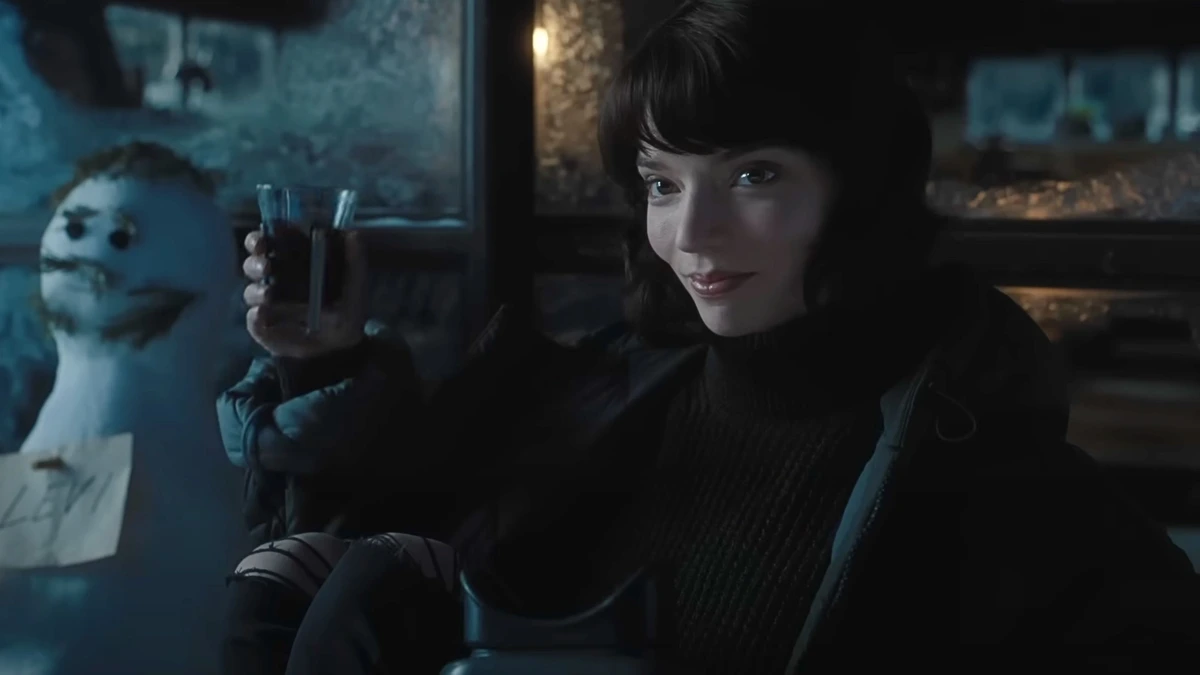
It’s unfortunate that films deserving of a theater release can easily be overlooked when only available behind the walls of a particular streaming service. Luckily, Apple TV+ is among my subscriptions, allowing me to watch The Gorge, which caught my interest just from the trailer (which gives way too much away, in my opinion; don’t watch it first). Directed by Scott Derrickson of Sinister and Doctor Strange fame, the film stars Miles Teller and Anya Taylor-Joy as a pair of world-weary snipers, one American and one Lithuanian, who are tasked with guarding remote outposts on either side of a deep and mysterious gorge. Despite the pit between them and orders not to communicate, they gradually develop a relationship, even as the secrets at the bottom of the gorge threaten to emerge.

I’ll say up front, as many critics have complained, that the premise of The Gorge does take a massive amount of suspension of disbelief. The secrecy around the giant hidden trench begs a lot of logistical questions (like how many giant pieces of paper did the eastern side keep in stock?), and the action of the latter half, often putting Derrickson’s horror roots to good use, does strain credulity. Yet this is one of those cases where I just didn’t mind, thanks in large part to Teller and Taylor-Joy, who share a remarkable chemistry and one of the steamiest dance scenes in recent memory (set to that wonderfully atmospheric Yeah Yeah Yeahs song). Taylor-Joy especially has never looked better, so maybe I just have a new celebrity crush. The Gorge is popcorn entertainment sadly relegated to small-screen streaming, a far-fetched but very watchable mashup of genres that I highly recommend.

Best line: (actually quoting T.S. Eliot) “Only those who will risk going too far can possibly find out how far one can go.”

Rank: List Runner-Up

© 2025 S.G. Liput
806 Followers and Counting
Bonnie and Clyde (1967)

19 Saturday Apr 2025

Posted by sgliput in Movies, NaPoWriMo, Poetry, Reviews, Writing

≈ 1 Comment

Tags

Classics, Drama, History, Romance, Thriller

(For Day 19 of NaPoWriMo, the prompt was for a story poem “in the style of a blues song or ballad,” and the mention of crimes and murder ballads brought to mind this classic.)

The money could run and the tellers could hide,
But that meant fun for Bonnie and Clyde.
Never was a danger from which they shied.
Ride or die were Bonnie and Clyde.

The banks would quail at the loss of pride,
Left in the trail of Bonnie and Clyde.
Withdrawals like theirs couldn’t be denied;
Ride or die were Bonnie and Clyde.

Warn all the wimps and stay inside
If you get a glimpse of Bonnie and Clyde.
Quick with a trigger and wild-eyed,
Ride or die were Bonnie and Clyde.

Gotta get caught to be cuffed and tried,
And they were not, not Bonnie and Clyde.
Famed and feared both far and wide,
Ride or die were Bonnie and Clyde.

King and queen of the homicide,
None came between ol’ Bonnie and Clyde.
Couldn’t last long till they lost their stride;
Ride and die did Bonnie and Clyde.
_______________________

MPA rating: R (for violence, though closer to PG-13 by today’s standards)

I saw Bonnie and Clyde more out of deference for its reputation than personal interest, since I’m not typically a fan of crime films known for their violence. (This was before the passing of Gene Hackman that made the recent watch even more worthwhile.) But I was very pleasantly surprised.

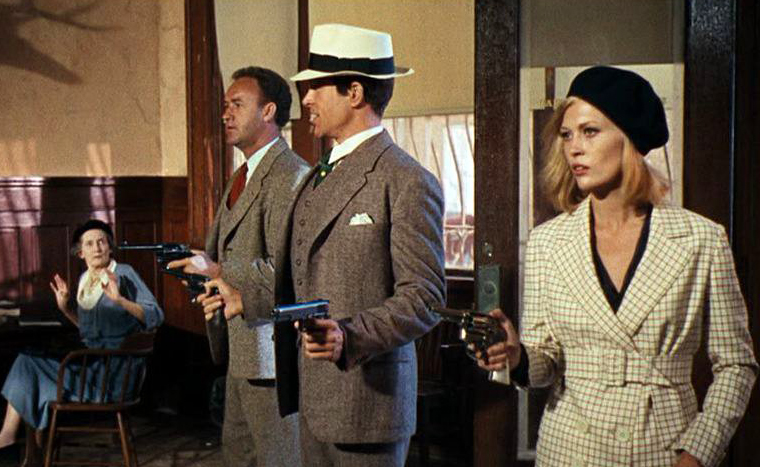
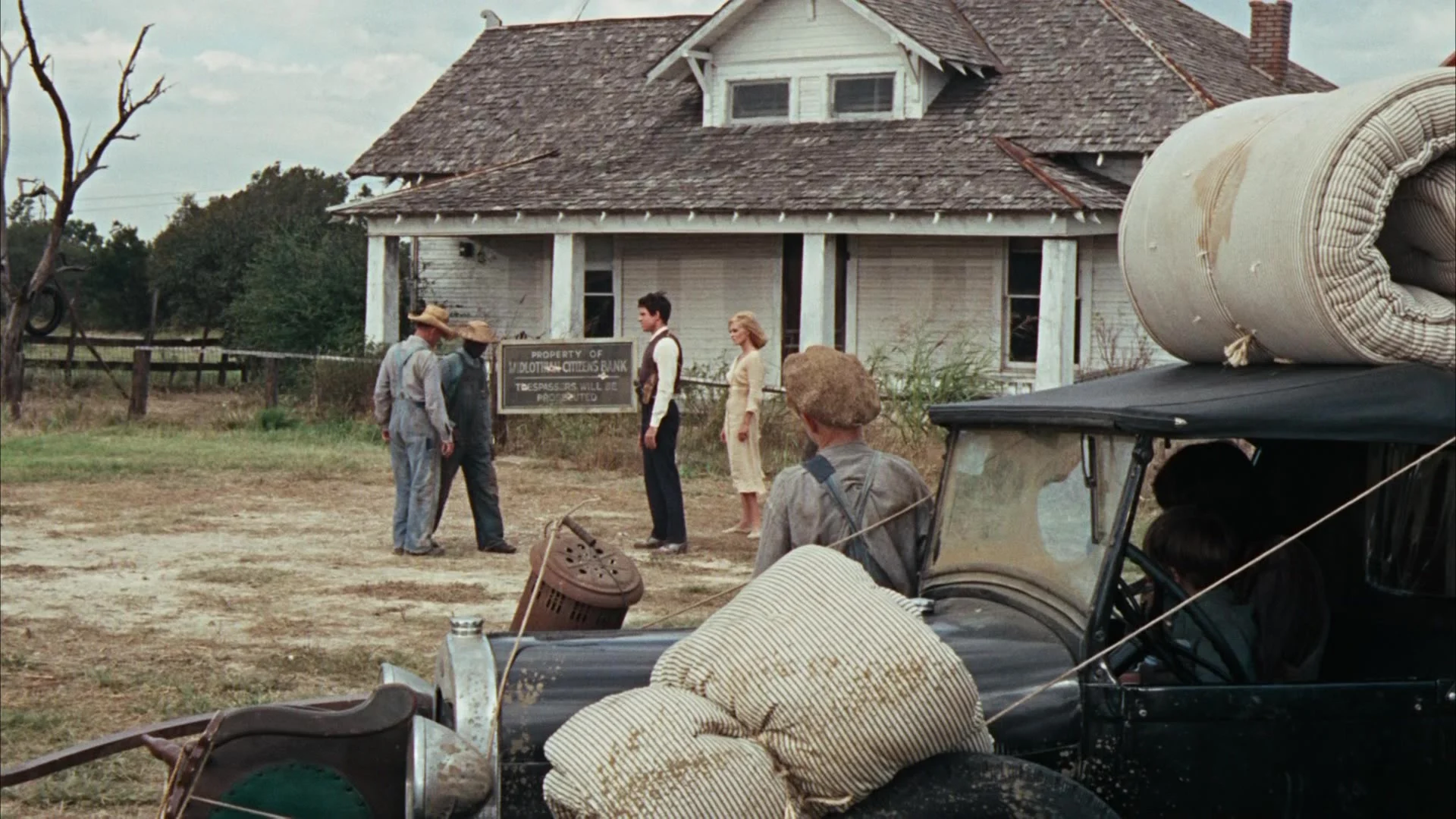
Faye Dunaway’s Bonnie Parker and Warren Beatty’s Clyde Barrow are quintessential anti-heroes, earning sympathy with their romantic chemistry and Depression-relevant targeting of banks yet allowing their bad choices to spiral further and further into infamy. They eventually form a gang with Clyde’s brother Buck (Hackman), Buck’s excitable wife Blanche (Estelle Parsons), and a mechanic accomplice C. W. Moss (Michael J. Pollard), terrorizing the countryside and evading the law, for a while at least.

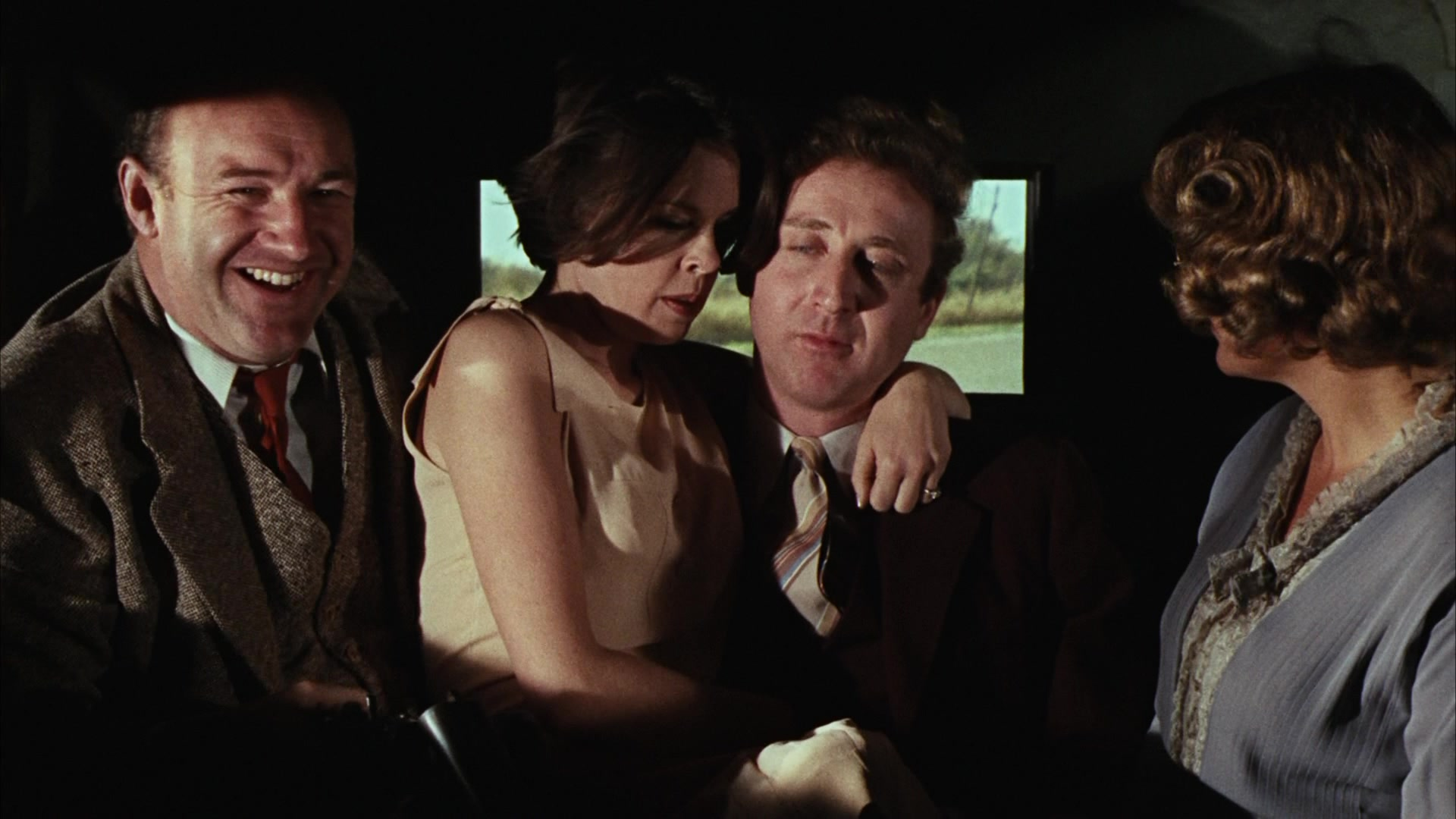
The film is full of little moments that make the characters more than one-dimensional villains, like the head-butting between Bonnie and Blanche or the brief kidnapping of a young couple (including Gene Wilder in his film debut) that reveals Bonnie’s aversion to any reminder of death. Bonnie’s brief reunion with her mother (Mabel Cavitt, a local extra chosen for the role) especially brings home how much their crime spree has ruined a chance at a normal life, something with which they may never have been satisfied anyway. I also quite liked the inclusion of a poem the real Bonnie Parker wrote about themselves, which would have made my Poems in Movies list had I known about it then.

Bonnie and Clyde is famous for its taboo-breaking depiction of violence, though it’s quite tame compared with even TV shows these days, and it serves the story well, especially in the famous final scene. The film is also beautifully shot, and all the major performances excel and were Oscar-nominated, though Estelle Parsons (probably the weakest link) was the only one to win, along with the cinematography. Combining history, romance, and tragedy, Bonnie and Clyde certainly deserves its status as a classic.

Best line: (Clyde, responding to Bonnie’s poem) “You know what you done there? You told my story, you told my whole story right there, right there. One time, I told you I was gonna make you somebody. That’s what you done for me. You made me somebody they’re gonna remember.”

Rank: List Runner-Up

© 2025 S.G. Liput
806 Followers and Counting
Marty (1955)

17 Thursday Apr 2025

Posted by sgliput in Movies, NaPoWriMo, Poetry, Reviews, Writing

≈ Leave a comment

Tags

Classics, Drama, Romance

(Yes, I missed yesterday’s post, but I have the poem and will catch up when I have a little extra time for the review. Meanwhile, for Day 16 of NaPoWriMo, the prompt was for a poem pairing a place with a particular song, so I went with “Unchained Melody,” a favorite of my parents, which came out the same year as this film.)

Out on the sidewalk outside a dance hall,
A man and a woman were side by side,
Lonely surrounded by strangers.
Romance was on the minds of all,
But these two were done, undanced, untried,
Fated to stay as mere strangers.

A slow dance was drifting outside to the street,
“Unchained Melody,” and the mood was set,
The cars and dogwalkers be damned.
And somehow shared bitterness came to be sweet,
Though little had changed in their lives as yet.
The morning could still leave them damned.

But streetlamps were candlelight under that tune;
The concrete gave way to a dance floor below,
And they didn’t mind being passed over.
Their loneliness withering under the moon,
They would have been happy to bask in its glow
And play that song over and over and over.
_________________________

MPA rating: Approved (G)

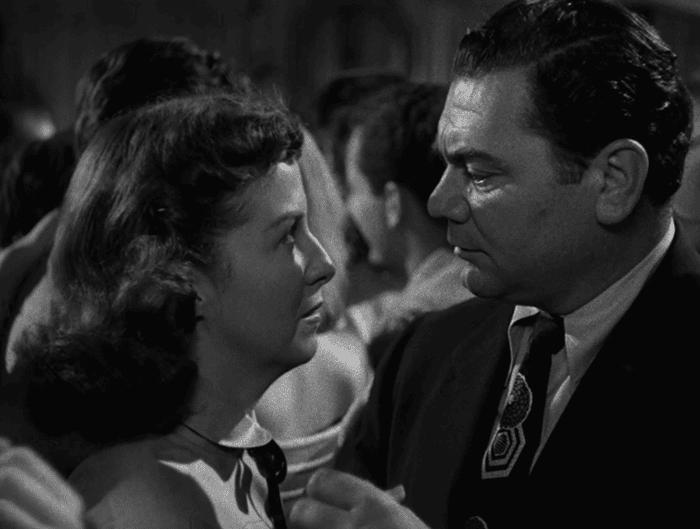
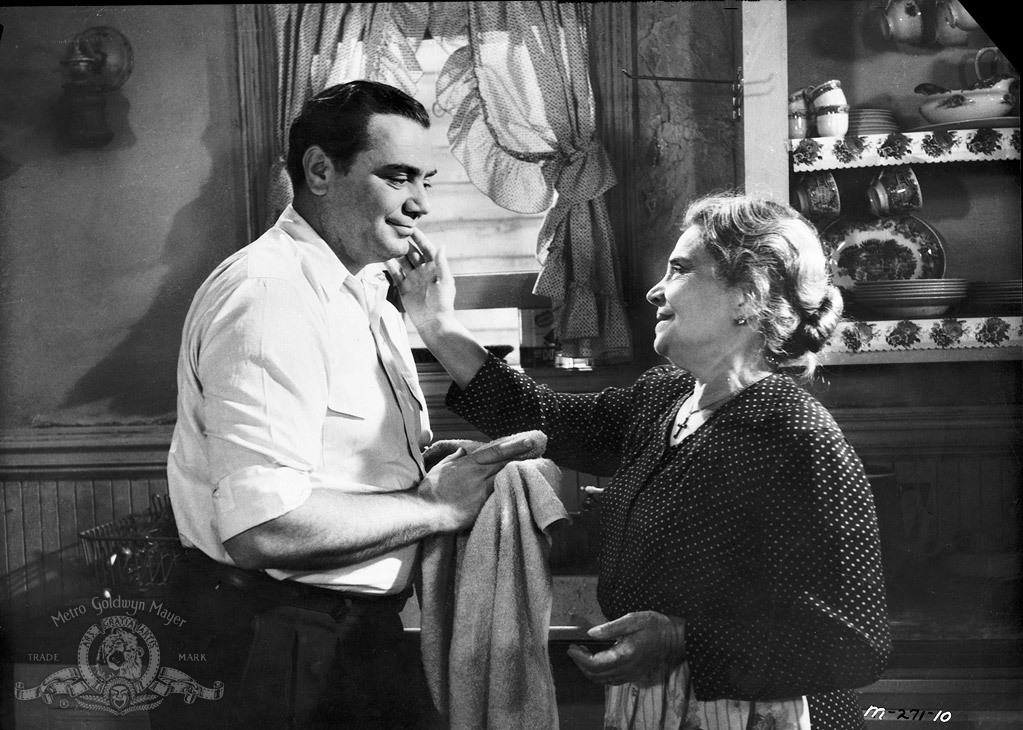
Modern dating is rough, as many will acknowledge who have been burnt out by dating apps, ghosting, and a general feeling of being unwanted. I know people who feel hopeless when it comes to finding love and scoff at encouragement, and I’ve had moments of despair myself. Yet it’s important to keep in mind that such feelings are not a new phenomenon and were represented quite poignantly in the Best Picture winner of 1955 Marty. Ernest Borgnine plays the title character, a homely butcher who has resigned himself to the single life. At the urging of his very Italian mother (Esther Minciotti), Marty reluctantly agrees to go to a local ballroom and connects with a woman named Clara (Betsy Blair), shy and similarly despondent as she is consistently regarded as a “dog” by her dates. Against all expectations, these two “dogs” wonder if they have found the person for whom they’ve been waiting.

Known to me previously as the answer Herb Stempel was forced to get wrong in Quiz Show, Marty is such a short and simple romance. It has no clever twists or enemies-to-lovers tension, just a sweet and meaningful date between two people close to giving up. Borgnine is a perfect lead here, his workaday looks and expressive face serving the character well and deservedly winning him a Best Actor Oscar, while Blair shares a cutely understated chemistry with him, reflective of the fact these two just met yet are hoping that their hopes have been answered. From the unexpected finding of love to the need to defend it when others scorn it, Marty is that welcome reminder that even old films can be utterly relatable.

Best line (though I really love the final scene): (Marty, to Clara) “See, dogs like us, we ain’t such dogs as we think we are.”

Rank: List Runner-Up

© 2025 S.G. Liput
805 Followers and Counting
The Thief of Bagdad (1940)

13 Sunday Apr 2025

Posted by sgliput in Movies, NaPoWriMo, Poetry, Reviews, Writing

≈ 1 Comment

Tags

Action, Classics, Drama, Family, Fantasy, Romance

(For Day 12 of NaPoWriMo, the prompt was a doozy: a multi-section poem drawing from myths and legends featuring rhyme and mixed formal and informal language. So, with this film in mind, I mused on what to do if offered three wishes by a genie.)

Wish 1

To access wishes, surely I
Must be in dire straits myself.
Trapped within a tomb of stone
Or stranded on an icy shelf,
Marooned upon an isle alone
Or chained in jail, condemned to die.

For my first wish, therefore, I must
Escape the fate that brought me here,
Wish myself above the ground
Or make what threatens disappear,
Unstuck, unbound, uncooked, undrowned,
Ideally somewhere I can trust.

Wish 2

My second wish
Depends on much.

Has the djinn at least been kind,
Or left half of me behind?

Am I truly free from harm,
Or acquired a new alarm?

Am I not falling from the sky
With no faculty to fly?

Is my friend in peril somewhere?
Do I like them enough to care?

Does the djinn insist on rules,
Like no death or love or ghouls?

And, unlike the foolish herds,
Am I careful with my words?

If yes to all above,
Then I guess I’ll side with love
For my friend who’s so in need
And ensure they’re also freed.
Aren’t I nice? I am indeed.

Wish 3

Assuming both my prior wishes
Haven’t spiraled far awry,
Now that I’m not about to die,
I have an epic choice ahead.

The world is mine to seize and form.
With but a wish, I’d gain renown,
A merry harem, a sultan’s crown,
A sorcerer or god instead.

In place of a dark lord or queen,
The world will love me and despair!
I’m kidding, no, I wouldn’t dare,
But I have to end this with a bang.

Hypnosis, health, wisdom, wealth?
Would they be subject to some twist?
I wish I knew the perfect wish
To satisfy me… dang.
_________________________

MPA rating: Approved (a likely G)

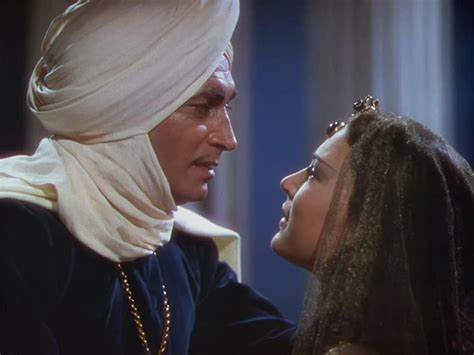
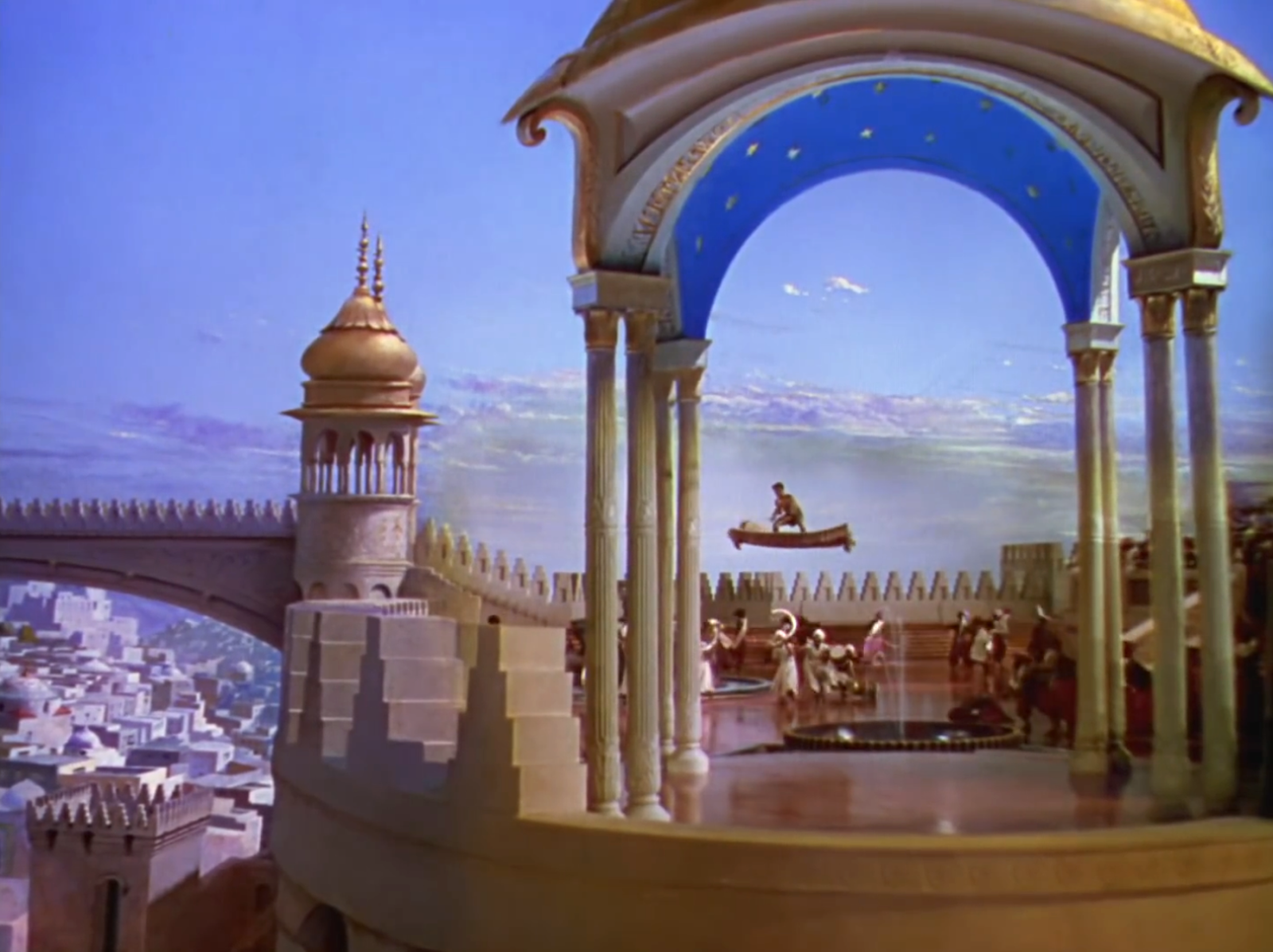
Having grown up with The Wizard of Oz, I’ve loved it from the start, viewing its dated or hokey elements as charming rather than a detraction, and I suspect the same would be true for The Thief of Bagdad, had it been an old childhood favorite as well. Boasting 100% on Rotten Tomatoes, this fantasy adventure draws elements from the One Thousand and One Nights to tell a partially non-linear tale of the betrayed Prince Ahmad of Bagdad (John Justin) and his wily friend/thief Abu (young Indian actor Sabu) as they fight against the evil vizier Jaffar (Conrad Veidt) and save a princess (June Duprez).

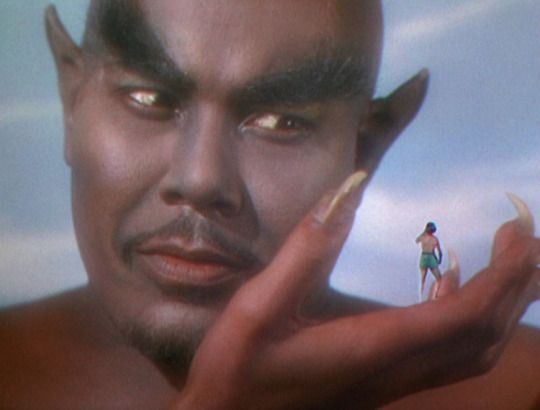
It was especially amusing to see how many aspects of Disney’s Aladdin were borrowed directly from this film. Sharing a name with Aladdin’s monkey, Abu flees a crowd with stolen food in an early scene, instantly bringing to mind the opening number from the animated film. In addition, you have a vizier named Jaffar/Jafar, a weak-minded sultan (Miles Malleson) who loves toys and is looking to give his daughter in marriage, a sheltered royal sneaking out of the palace to mingle with the common folk, and a genie and magic carpet aiding the heroes. The Djinn/genie (Rex Ingram) is quite different, though, more malevolent and helping Abu grudgingly, and there are plenty of other differences to set it apart.

Sabu and Justin make an appealing heroic team, while Veidt has an excellent Vincent Price-like coldness that made him a popular villain actor at the time. Of course, it’s a bit odd that most of the main roles (save for Sabu) are clearly white actors surrounded by Middle Eastern extras and settings, but I suppose that’s just due to the time period. The sets and props really add to the world-building, and the film is known for pioneering the first use of bluescreen/greenscreen to place Sabu within the extravagant special effects sequences of the latter half. While The Thief of Bagdad starts off a bit awkwardly before the plot gets rolling, it’s a genre classic that deserves wider appreciation as an entertaining fantasy of Old Hollywood.

Best line: (the Djinn, to Abu) “You’re a clever little man, little master of the universe, but mortals are weak and frail. If their stomach speaks, they forget their brain. If their brain speaks, they forget their heart. And if their heart speaks [laughing], they forget everything.”

Rank: List Runner-Up

© 2025 S.G. Liput
805 Followers and Counting

Camelot (1967)

12 Saturday Apr 2025

Posted by sgliput in Movies, NaPoWriMo, Poetry, Reviews, Writing

≈ Leave a comment

Tags

Drama, Fantasy, Musical, Romance

(I may be late, but not defeated! For yesterday’s Day 11 of NaPoWriMo, the prompt was for a poem that incorporates song lyrics as a refrain, so I drew from a certain musical and went with the suggested example of a villanelle.)

King and kingdom may yet fall,
But my fealty shall remain.
No, never could I leave you at all.

Laughter may yet leave this hall,
Pleasured memories turned pain.
King and kingdom may yet fall.

Our first meeting, I recall,
Was joy God only could ordain.
No, never could I leave you at all.

Peter may yet pillage Paul,
Men and what they stood for slain.
King and kingdom may yet fall.

How’d we get here, warts and all?
Is our love a common bain?
No, never could I leave you at all.

Trapped in adoration’s thrall,
Let the legends mourn the reign.
King and kingdom may yet fall.
No, never could I leave you at all.
_____________________________

MPA rating: G

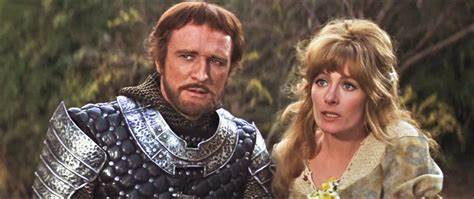
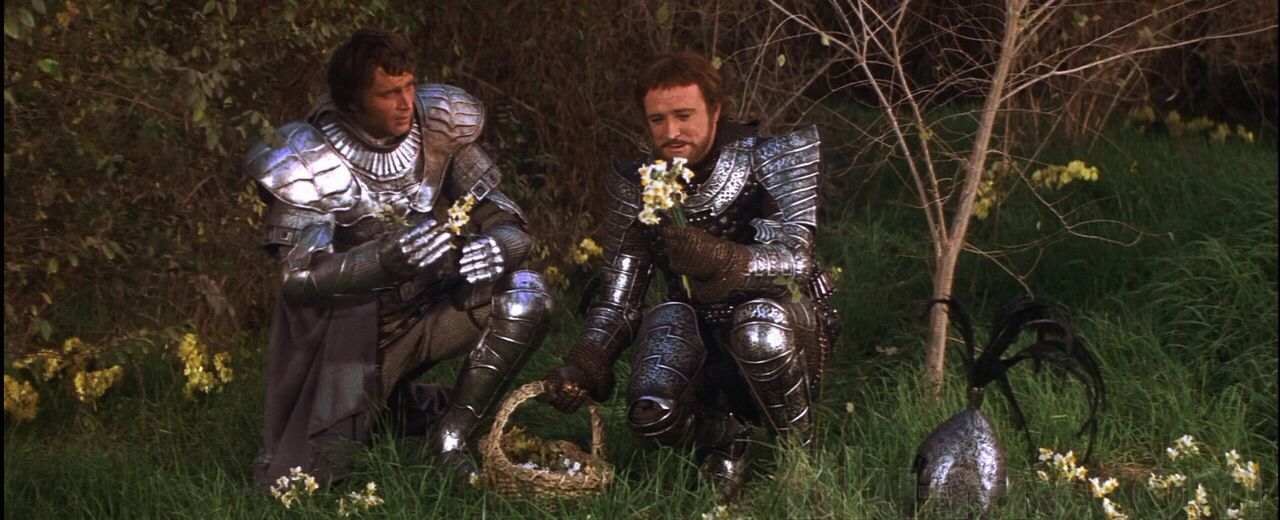
I love musicals, even long musicals like Les Misérables. Yet even I have a limit, and somehow Camelot was too much even for me. Based on the 1960 Lerner and Loewe stage musical, Camelot adapts the King Arthur legend, particularly the creation of the Knights of the Round Table and the doomed love triangle between Arthur (Richard Harris), Guenevere (Vanessa Redgrave), and Lancelot (Franco Nero, with Gene Merlino dubbing his singing voice). 

All the events of the legendary scandal are well-portrayed: Lancelot’s boastful self-regard with the skill to back it up, the gradual transition of Guenevere disdaining and then falling for him, Arthur’s exasperation as he tries to overlook the uncomfortable rumor that everyone but he acknowledges, the corruptive role of Mordred (David Hemmings) in bringing Arthur’s idealistic kingdom low. Much of it is laudable, particularly an insightful script and the Oscar-winning score, production design, and costumes bringing Arthurian myth to life, yet it’s also dully self-indulgent at three hours long, in stark need of a skillful editor yet still leaving out songs from the stage version.

While Redgrave is a bewitching Guenevere and her eventual real-life husband Nero is dashing (if a bit insufferable) as Lancelot, Richard Harris is a strangely mixed bag as Arthur: sometimes, he’s excellent at embodying the king’s charm and deepening desperation while other times have him feeling too frivolous and unregal. It’s funny to think of him growing up to play the more Merlin-like role of Dumbledore, but he was indeed a singer too, known for the original version of “MacArthur Park.” His first number “I Wonder What the King is Doing Tonight” is a good representative of the film’s lack of imaginative staging, as Arthur just dips around some tree branches; Lerner’s lyrics are delightful, yet there’s little in the way of visual interest for the songs. As a poet, I certainly enjoyed the wordplay of “The Lusty Month of May” and “Take Me to the Fair,” but the film around the musical numbers, from its stolid pacing to the strain at an inspiring ending, sadly doesn’t rise above its flaws in my book.

Best lines: (Arthur) “I can’t quite remember all that Merlyn taught me, but I do remember this. That happiness is a virtue. No one can be happy and wicked. Triumphant, perhaps, but not happy.”
and
(young Arthur) “What’s the best thing for being sad?”  (Merlin) “The best thing for being sad is to learn something.”

Rank: Honorable Mention

© 2025 S.G. Liput
805 Followers and Counting
Cocktail (1988)

07 Monday Apr 2025

Posted by sgliput in Movies, NaPoWriMo, Poetry, Reviews, Writing

≈ Leave a comment

Tags

Comedy, Drama, Romance

(For Day 7 of NaPoWriMo, the prompt was for a perhaps outlandish poem explaining “why you are not a particular piece of art,” so I went a bit more cocky and risqué than usual.)

I can’t compare to a well-mixed drink,
Although I go down smooth.
I’m too impassioned to be Old-Fashioned,
But I can also soothe.

The life of a humble bartender
Is only as good as his roll.
The patrons need us for margaritas
So they can lose control.

Complexity is ecstasy,
So savor them, no rush.
Why, try my Mai Tai, and I swear
More than the sky will blush.

I’ll sling in Singapore, slide in mud,
And blow like a Hurricane too.
My expertise is in daiquiris
Or a Slow Comfortable Screw.

My Russians might, both black and white,
Remove your power of speech,
Till you taste some sherry, scream Bloody Mary,
And ask for Sex on the Beach.

Between the Sheets, sour or sweet,
Wallbangers, never wetter –
My cocktails, girl, are works of art,
But let’s face it… I’m better.
________________________

MPA rating:  R (mainly language)

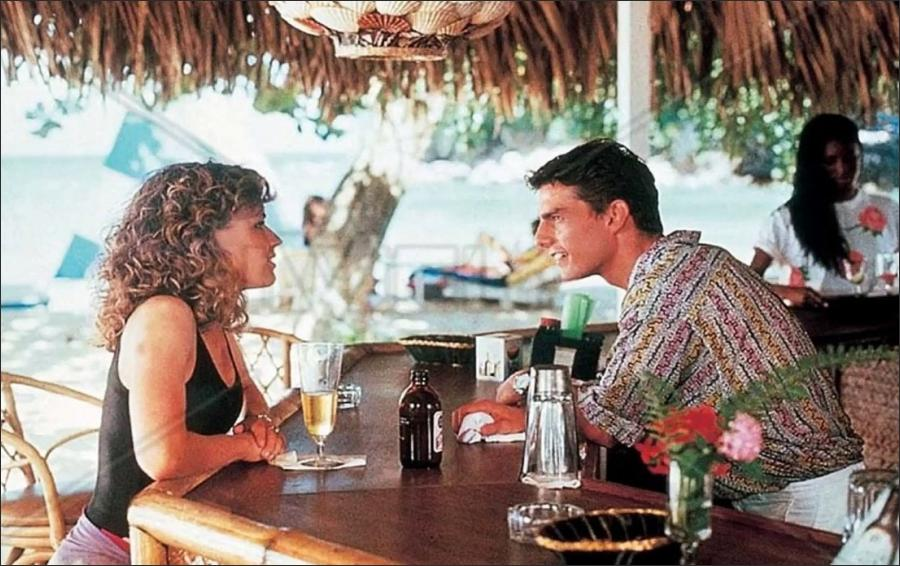
In the long and storied career of Tom Cruise, Cocktail is considered one of the low points, what with its Razzie win for Worst Picture, but it’s not as big a misfire as I thought it might be. Cruise plays self-motivated Brian Flanagan, who takes up flair bartending after his dreams of entering the business world in the big city are dashed. Trained by Australian mentor/rival Doug Coughlin (Bryan Brown), Brian flaunts his natural charisma to get ahead, even to the detriment of his island romance with Jordan (Elizabeth Shue, lovely as always).

As reflected by the film’s financial success in the face of negative reviews, Cocktail is quite entertaining, in no small part due to Cruise himself, who went to bartending school to learn the flipping and throwing tricks seen in the movie. (He even recites a few poems as part of the show.) His and Brown’s characters are frustratingly self-centered for most of the film, though not without consequence, yet there’s still an appeal to want them to succeed. I think the film mainly falls apart toward the end, where its tonal shift from tragedy to crowd-pleaser happens way too fast and saps the film’s themes of their power. Even if Cocktail isn’t Cruise’s finest hour, there are far worse Razzie winners out there; plus, it’s nice to think that he bounced right back with Rain Man later that same year.

Best line: (Brian) “I’m willing to start at the bottom.”  (Job interviewer) “You’re aiming too high.”

Rank:  Honorable Mention

© 2025 S.G. Liput
805 Followers and Counting

Love Story (1970)

14 Friday Feb 2025

Posted by sgliput in Movies, Poetry, Reviews, Writing

≈ 2 Comments

Tags

Drama, Romance, Tearjerker

When I held your hand on the long walk home,
In the white twilight of a snowglobe’s gloam,
It warmed me through with the glow of you,
And I thrilled at the thought the world hadn’t a clue
Of the prize I held and the eyes I knew.
You tightened your grip; I tightened mine too,
Lest this moment should end.

When I held your hand as our vows were said,
I meant every word from the day we wed.
A promise once made some are prone to let fade,
But the sight of my bride is a terrible trade,
And your arm in my own as the rice was thrown
Had me feeling somehow young yet grown.
Alas that that moment should end!

When I held your hand after work that day,
Both our eyes had bags that were there to stay.
For richer or poorer, a bitch or a snorer,
A job that was either a bore or a horror,
Your grip reassured that the day was endured
For someone worth holding with barely a word,
Lest even this moment should end.

When I held your hand in the hospital bed,
I fondled your fingers from pallor to red.
You squeezed as a bluff to insist you were tough,
As I thought I had not held your hand near enough.
Why had I always let go first before?
You loosened your grip, but I tightened mine more,
Lest all of our moments should end.
________________________

MPA rating: PG (more like a PG-13)

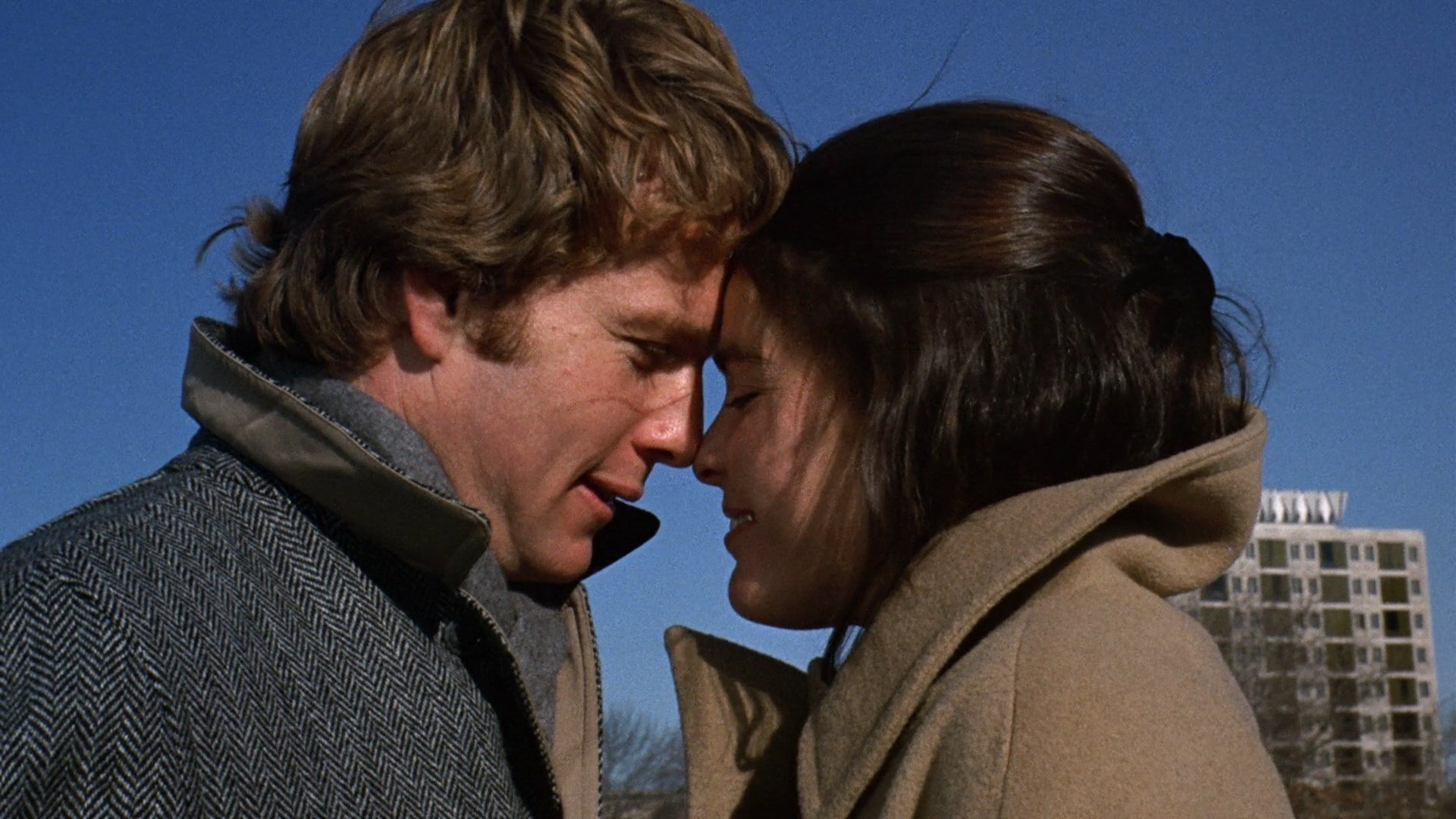
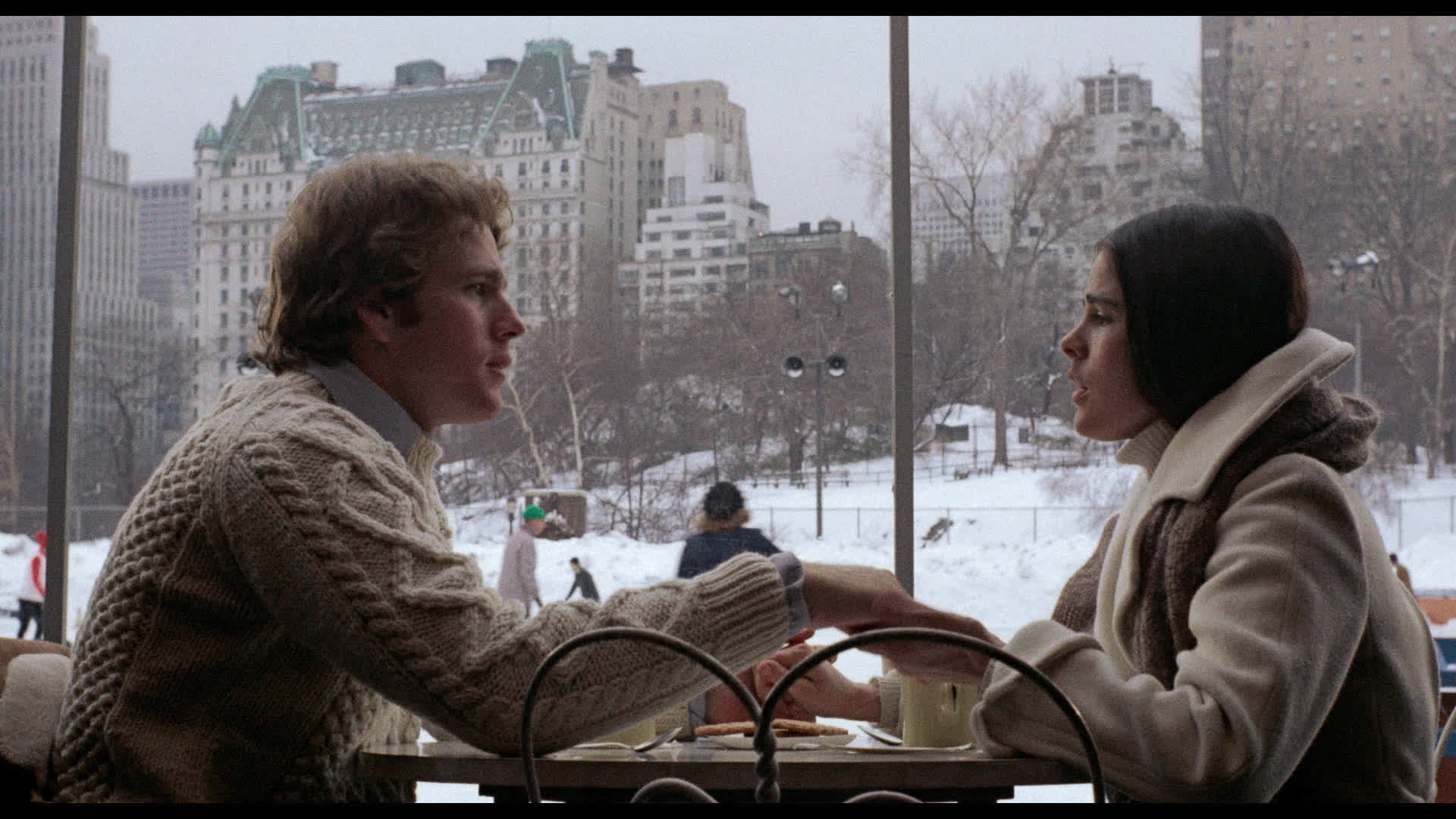
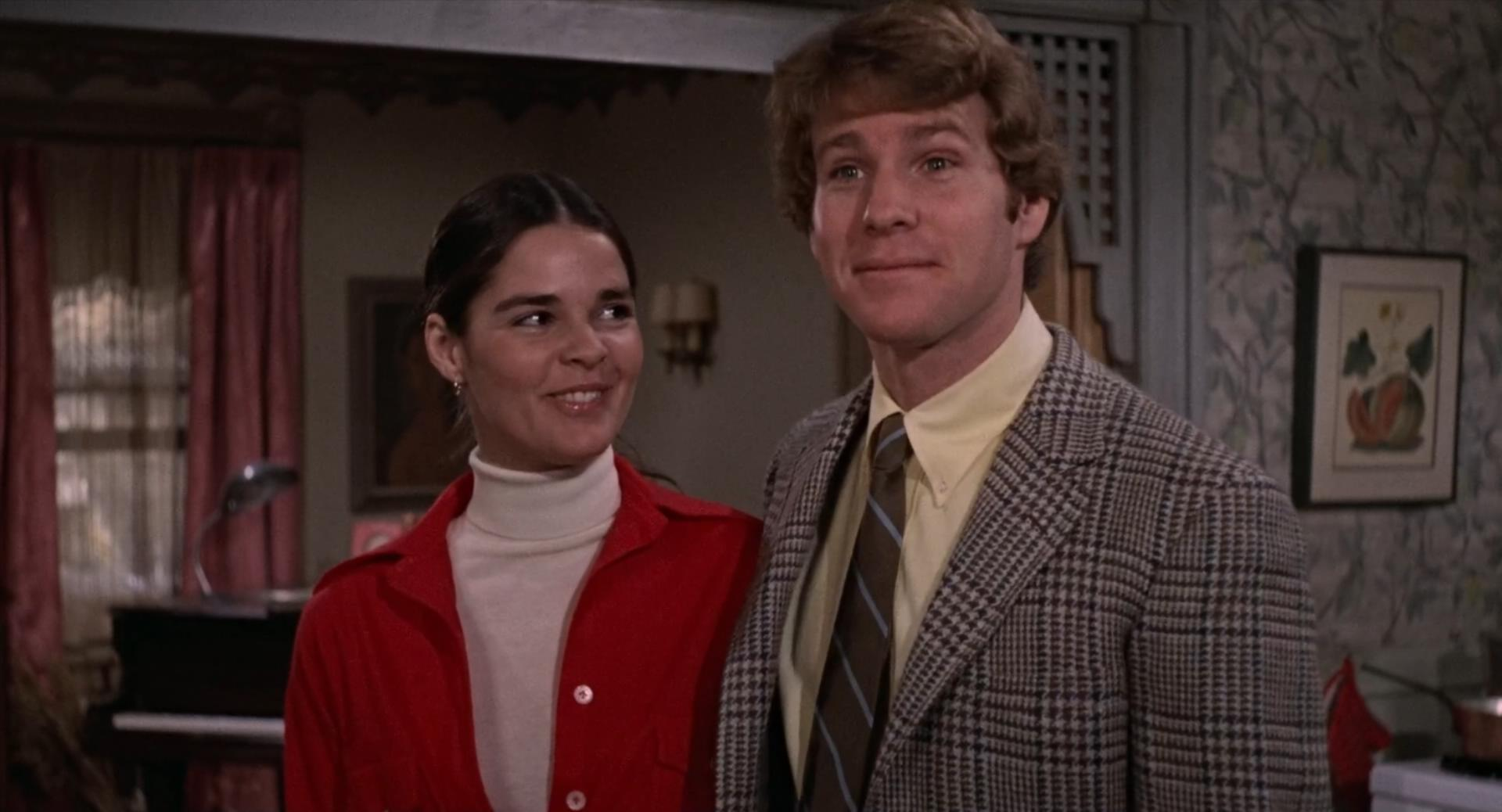
There are romances, and then there are romantic tragedies, and Love Story has a strong claim as the epitome of the latter. Written by Erich Segal, who also penned a bestselling novel based on his screenplay ten months before the film’s release (the book was published on Valentine’s Day no less), Love Story is a film I only knew from reputation. I still chuckle at the reference to its most famous line in What’s Up, Doc? when Ryan O’Neal’s character replies to “Love means never having to say you’re sorry” with “That’s the dumbest thing I ever heard.” Yet, regardless of the quality of its quotable relationship advice, I was pleasantly surprised at how engrossing this iconic melodrama is.

O’Neal plays wealthy Harvard student Oliver Barrett IV, who starts a relationship with the working-class Radcliffe student Jenny Cavilleri (Ali MacGraw), after a meet-cute born out of mutual antagonism. Despite the contrasts between them and the open disapproval of Oliver’s imperious father (Ray Milland), the two dive headlong into love and marriage, only for disease to sunder what no man could.

With the known melodrama in mind, I wasn’t expecting to especially like Love Story, and Ali MacGraw’s casually scornful Jenny didn’t seem like the kind of character to change my mind. But when paired with O’Neal, her abrasive qualities are matched by his stubborn charm, not-quite-opposites whose attraction is palpable. Even if I’m not a fan of their spurning of religion, to the humorous distress of Jenny’s Catholic father, the pair is easy to root for, making the eventual tragedy hit all the harder. Much has been said of the unrealistic beauty of Jenny even as she’s supposedly on her deathbed, but I wouldn’t say it took me out of the movie too much. While not above some deserved mockery at times, Love Story managed to live up to its genre-defining name, paving the way for the likes of The Fault in Our Stars and We Live in Time and jerking tears and jeers with the best of them.

Best line: (Oliver’s opening voiceover) “What can you say about a twenty-five-year-old girl who died? That she was beautiful and brilliant? That she loved Mozart and Bach, the Beatles, and me?”

Rank:  List Runner-Up

© 2025 S.G. Liput
801 Followers and Counting
Elemental (2023)

27 Saturday Apr 2024

Posted by sgliput in Movies, NaPoWriMo, Poetry, Reviews, Writing

≈ 1 Comment

Tags

Animation, Comedy, Family, Pixar, Romance

(For Day 27 of NaPoWriMo, the prompt was for an American sonnet, which is described as just a sonnet with “fewer rules.” For some reason, I couldn’t bring myself to abandon rhyme entirely, so I defaulted to the Shakespearean form, albeit in iambic heptameter.)

If opposites attract, then why are opposites so cruel?
If different groups can get along, we marvel at the sight.
So why is concord the exception rather than the rule,
The urge to differ stronger than the wisdom to unite?
We see the danger first, for every difference is a threat,
A threat to what is “normal,” our bubble near the pin.
Imagining the worst of people we have never met,
We need the reassurance never needed from our kin.
Then there are bad impressions left by others of their kind.
If one is bad, then all are bad, all nuances be damned!
Yet we have evil brothers too; by them are we maligned
And earn a matching stigma, the traded hateful brand.
If history could be erased enough to meet anew,
Then maybe opposites could prosper, just like me and you.
______________________________

MPA rating:  PG

Pixar isn’t quite the guaranteed powerhouse it once was, and with the easy availability of Disney+, its films are no longer must-sees at the theater. To be honest, I still haven’t gotten around to seeing Luca or Turning Red since they just felt like lesser efforts based on the trailers. But Soul proved the studio had some of its old magic, and Elemental is thankfully a confirmation of that.

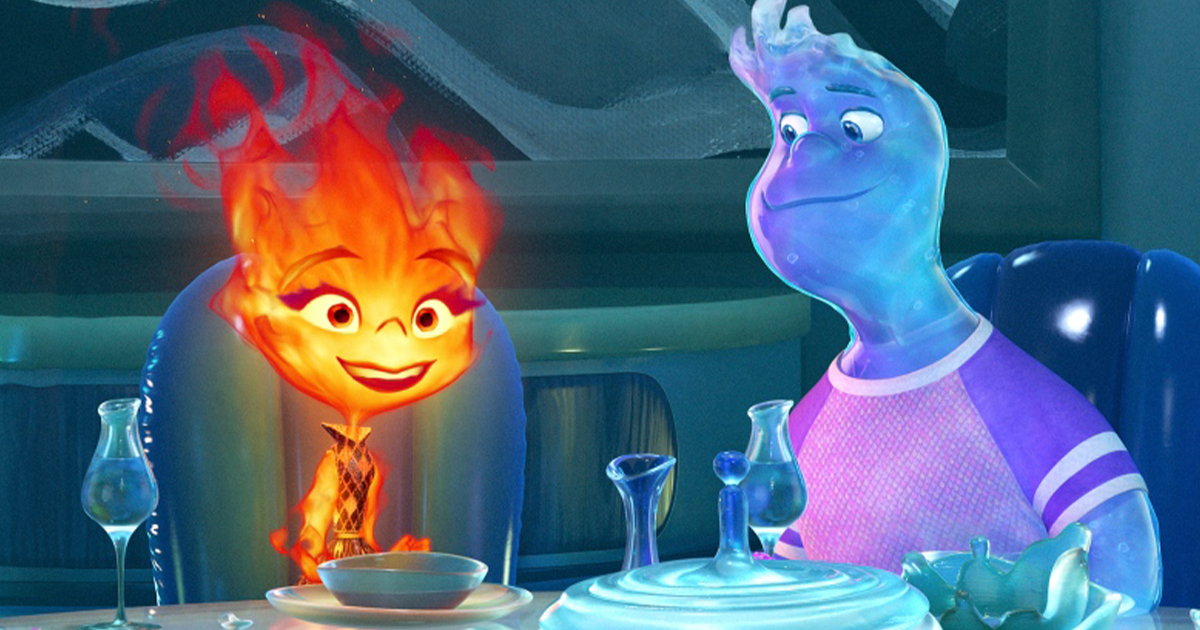
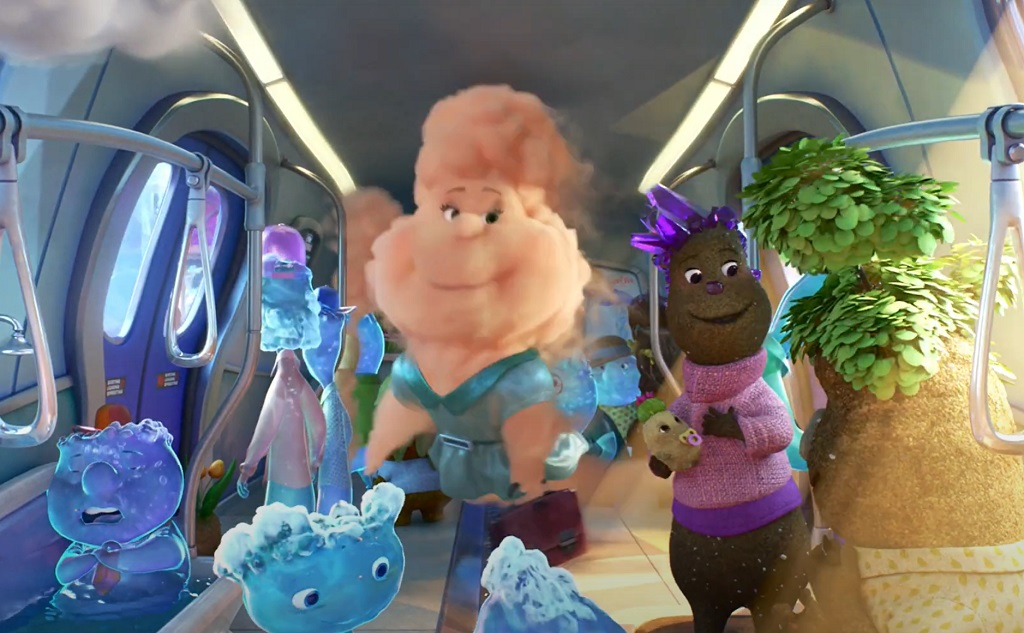
Continuing their time-honored tradition of anthropomorphized otherworlds, Elemental breathes life into the four classical elements – fire, water, earth, and air. In the metropolis of Element City, the citizens made of water, earth, and air have a well-established rapport living alongside each other, while fire elementals Bernie and Cinder Lumen (Ronnie del Carmen, Shila Ommi) are met with hostility moving there from Fire Land (represented as analogous to East Asia, likely director Peter Sohn’s ancestral Korea). Nevertheless, they establish a thriving store in the city’s Fire Town district, which their daughter Ember (Leah Lewis) hopes to inherit one day. After an unceremonious meet cute with the watery Wade Ripple (Mamoudou Athie), the two contrasting elements start to fall for each other, despite their natural differences and familial pressures.

While Pixar has featured love stories before, like WALL-E or the beginning of Up, Elemental is the first of their films to embrace the rom-com formula, hinging its success on the chemistry of lead characters Ember and Wade, and thankfully, they make a cheer-worthy couple. With its excess of elemental puns, the film might have relied too heavily on stereotypes, Ember with her fiery temper and Wade with his sappy sensitivity making him cry at the drop of a hat. Yet the two prove to be more than one-note with their relatable stresses around family responsibility or awkward anxiety.

Likewise, the film finds subtleties in its very obvious racism metaphor of fire as the outsider element. In a way, it’s understandable why fire people are viewed skeptically; fire burns plants, boils water, and is generally destructive. That hostility has affected how Ember’s father Bernie behaves toward the world, harboring resentment toward the water that is similarly destructive toward his kind. When both sides foster prejudices or barriers they feel are justifiable, it is no easy feat to break the cycle of bias, and Ember and Wade themselves have doubts about how their connection could even work. Yet it’s still a bond worth the effort.

Like Cars, I can’t deny that there are aspects of this fantasy world that strain credulity of how things work (how many fire people die if they forget an umbrella when near the city’s water train?), but what is presented is full of fun and bustling imagination. The beautifully fluid animation allows these elemental characters to do all kinds of funny and non-human actions, from slipping through cracks to melting and reshaping glass, and every scene is full of world-building details that make this universe a visual marvel.

I particularly liked how Elemental didn’t feel the need to have a traditional villain. Societal and familial expectations (and random accidents) are enough of a source of conflict, allowing for timely immigrant parallels and room for growth on all sides. Though it may be missing something from Pixar’s golden age when I was growing up, Elemental most definitely recalls those classics and thrives on its own visionary and romantic charm.

Best line: (Ember, voicing the unhealthy mindset of many an immigrant kid) “The only way to repay a sacrifice so big is by sacrificing your life too.”

Rank:  List-Worthy

© 2024 S.G. Liput
796 Followers and Counting

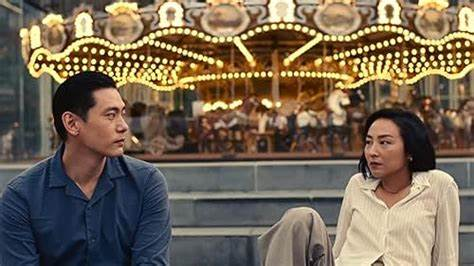
Past Lives (2023)

25 Thursday Apr 2024

Posted by sgliput in Movies, NaPoWriMo, Poetry, Reviews, Writing

≈ 2 Comments

Tags

Drama, Romance

(For Day 25 of NaPoWriMo, the prompt was for a poem inspired by the Proust Questionnaire, so often incorporated into interviews. I latched onto the question “What is your greatest regret?” which ties in nicely with this film.)

Who am I?
I’ve had many years
To answer that question that rings in our ears.
I’ve grown used to moving, to not sitting still,
Though I’m not sure if that’s merely habit or skill.
I’ve learned a new language; I write in it well,
But still love yukgaejang and savor the smell.
I met someone kind, and the two of us… fit,
Despite once agreeing we hate to commit.
I’ve settled, but not like the second-best good,
Like dust that’s done flying and lands where it should.
Yet still I remember how close we once were,
Before parting ways for our lives to occur.
Who would you be to me, staying nearby
In that time before I answered
Who am I?
____________________________

MPA rating:  PG-13

Although it won no major awards during this past Oscar season, I noticed a general sentiment among cinephiles that Past Lives was one of the best films of 2023, often ranked above the heavy hitters like Oppenheimer. It’s a small and tender drama that eschews bombast, and while it didn’t appeal to me as much as some, it certainly deserves praise all the same.

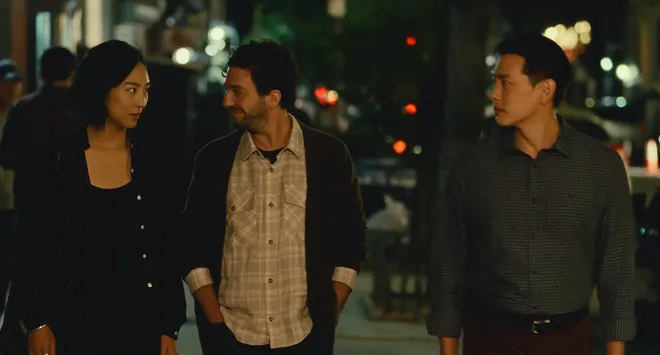
The directorial debut of Celine Song, who based it partially on her own experiences, Past Lives follows Na Young and Hae Sung from their time as childhood friends in Korea to their falling away when Na Young moves to the United States, eventually reuniting years later. During their time apart, Na Young, going by the Americanized name Nora (Greta Lee), meets and marries a fellow writer named Arthur (John Magaro). With the visit of Hae Sung (Teo Yoo), Nora finds herself torn between the life she has embraced and the life that might have been.

The greatest strength of Past Lives is its realism. The way the two childhood friends lose touch and periodically reconnect has an authentic quality, reflecting how much distance can affect the course of our relationships. There is surely an alternate-universe version of this movie full of melodramatic tension between Nora’s white husband and Korean beau, perhaps a torrid affair and a showy following of her heart. But that’s not this film.

Arthur is actually surprisingly cordial toward Hae Sung, even when being excluded as the other two speak in Korean, and Nora herself acknowledges how much she has in New York – home, career, husband – to hold her there. Yet in their frank conversations touching on time lost and the differences between East and West, there is a clear chemistry between them, a spark that Nora would surely like to follow if not for that all-important realism. Past Lives is a lovely snapshot of people already beyond their crossroads but willing to glance behind, potentially slow and boring for the uninterested yet insightful and elegant in its minimalistic love story.

Best line: (Nora’s mom) “It’s true that, if you leave, you lose things, but you also gain things too.”

Rank:  List Runner-Up

© 2024 S.G. Liput
794 Followers and Counting

← Older posts

Recent Posts

  • We Didn’t Start 2025 (Recap)
  • NaPoWriMo 2025 Recap (Finally)
  • Sonic the Hedgehog 3 (2024)
  • It Happened One Night (1934)
  • Spellbound (2024)

Recent Comments

associatesofshellymann's avatarassociatesofshellyma… on My Top Twelve La La La So…
Kit's avatarKit Nichols on Bonnie and Clyde (1967)
lifelessons's avatarlifelessons on Look Back (2024)
Carol Jackson's avatarCarol Jackson on The Thief of Bagdad (1940…
Stephen's avatarStephen on Love Story (1970)

Archives

  • January 2026
  • December 2025
  • May 2025
  • April 2025
  • March 2025
  • February 2025
  • January 2025
  • December 2024
  • May 2024
  • April 2024
  • March 2024
  • February 2024
  • January 2024
  • December 2023
  • November 2023
  • October 2023
  • September 2023
  • July 2023
  • June 2023
  • May 2023
  • April 2023
  • March 2023
  • February 2023
  • January 2023
  • December 2022
  • November 2022
  • October 2022
  • September 2022
  • August 2022
  • July 2022
  • June 2022
  • May 2022
  • April 2022
  • March 2022
  • February 2022
  • January 2022
  • December 2021
  • November 2021
  • October 2021
  • September 2021
  • August 2021
  • July 2021
  • June 2021
  • May 2021
  • April 2021
  • March 2021
  • February 2021
  • January 2021
  • December 2020
  • November 2020
  • October 2020
  • September 2020
  • August 2020
  • July 2020
  • June 2020
  • May 2020
  • April 2020
  • March 2020
  • February 2020
  • January 2020
  • December 2019
  • November 2019
  • October 2019
  • September 2019
  • August 2019
  • July 2019
  • June 2019
  • May 2019
  • April 2019
  • March 2019
  • February 2019
  • January 2019
  • December 2018
  • November 2018
  • October 2018
  • September 2018
  • August 2018
  • July 2018
  • June 2018
  • May 2018
  • April 2018
  • March 2018
  • February 2018
  • January 2018
  • December 2017
  • November 2017
  • October 2017
  • September 2017
  • August 2017
  • July 2017
  • June 2017
  • May 2017
  • April 2017
  • March 2017
  • February 2017
  • January 2017
  • December 2016
  • November 2016
  • October 2016
  • September 2016
  • August 2016
  • July 2016
  • June 2016
  • May 2016
  • April 2016
  • March 2016
  • February 2016
  • January 2016
  • December 2015
  • November 2015
  • October 2015
  • September 2015
  • August 2015
  • July 2015
  • June 2015
  • May 2015
  • April 2015
  • March 2015
  • February 2015
  • January 2015
  • December 2014
  • November 2014
  • October 2014
  • September 2014
  • August 2014
  • July 2014
  • June 2014
  • May 2014
  • April 2014
  • March 2014
  • February 2014
  • January 2014
  • December 2013

Categories

  • Blindspot
  • Blogathon
  • Christian
  • Movies
  • Music
  • NaPoWriMo
  • Poetry
  • Reviews
  • TV
  • Writing

Meta

  • Create account
  • Log in
  • Entries feed
  • Comments feed
  • WordPress.com

Recent Posts

  • We Didn’t Start 2025 (Recap)
  • NaPoWriMo 2025 Recap (Finally)
  • Sonic the Hedgehog 3 (2024)
  • It Happened One Night (1934)
  • Spellbound (2024)

Recent Comments

associatesofshellymann's avatarassociatesofshellyma… on My Top Twelve La La La So…
Kit's avatarKit Nichols on Bonnie and Clyde (1967)
lifelessons's avatarlifelessons on Look Back (2024)
Carol Jackson's avatarCarol Jackson on The Thief of Bagdad (1940…
Stephen's avatarStephen on Love Story (1970)

Archives

  • January 2026
  • December 2025
  • May 2025
  • April 2025
  • March 2025
  • February 2025
  • January 2025
  • December 2024
  • May 2024
  • April 2024
  • March 2024
  • February 2024
  • January 2024
  • December 2023
  • November 2023
  • October 2023
  • September 2023
  • July 2023
  • June 2023
  • May 2023
  • April 2023
  • March 2023
  • February 2023
  • January 2023
  • December 2022
  • November 2022
  • October 2022
  • September 2022
  • August 2022
  • July 2022
  • June 2022
  • May 2022
  • April 2022
  • March 2022
  • February 2022
  • January 2022
  • December 2021
  • November 2021
  • October 2021
  • September 2021
  • August 2021
  • July 2021
  • June 2021
  • May 2021
  • April 2021
  • March 2021
  • February 2021
  • January 2021
  • December 2020
  • November 2020
  • October 2020
  • September 2020
  • August 2020
  • July 2020
  • June 2020
  • May 2020
  • April 2020
  • March 2020
  • February 2020
  • January 2020
  • December 2019
  • November 2019
  • October 2019
  • September 2019
  • August 2019
  • July 2019
  • June 2019
  • May 2019
  • April 2019
  • March 2019
  • February 2019
  • January 2019
  • December 2018
  • November 2018
  • October 2018
  • September 2018
  • August 2018
  • July 2018
  • June 2018
  • May 2018
  • April 2018
  • March 2018
  • February 2018
  • January 2018
  • December 2017
  • November 2017
  • October 2017
  • September 2017
  • August 2017
  • July 2017
  • June 2017
  • May 2017
  • April 2017
  • March 2017
  • February 2017
  • January 2017
  • December 2016
  • November 2016
  • October 2016
  • September 2016
  • August 2016
  • July 2016
  • June 2016
  • May 2016
  • April 2016
  • March 2016
  • February 2016
  • January 2016
  • December 2015
  • November 2015
  • October 2015
  • September 2015
  • August 2015
  • July 2015
  • June 2015
  • May 2015
  • April 2015
  • March 2015
  • February 2015
  • January 2015
  • December 2014
  • November 2014
  • October 2014
  • September 2014
  • August 2014
  • July 2014
  • June 2014
  • May 2014
  • April 2014
  • March 2014
  • February 2014
  • January 2014
  • December 2013

Categories

  • Blindspot
  • Blogathon
  • Christian
  • Movies
  • Music
  • NaPoWriMo
  • Poetry
  • Reviews
  • TV
  • Writing

Meta

  • Create account
  • Log in
  • Entries feed
  • Comments feed
  • WordPress.com

Blog at WordPress.com.

Is this your new site? Log in to activate admin features and dismiss this message
Log In
  • Subscribe Subscribed
    • Rhyme and Reason
    • Join 814 other subscribers
    • Already have a WordPress.com account? Log in now.
    • Rhyme and Reason
    • Subscribe Subscribed
    • Sign up
    • Log in
    • Report this content
    • View site in Reader
    • Manage subscriptions
    • Collapse this bar
 

Loading Comments...