• Home
  • About Me
  • The List
  • THE LIST (2016 Update)
  • THE LIST (2017 Update)
  • THE LIST (2018 Update)
  • THE LIST (2019 Update)
  • THE LIST (2020 Update)
  • THE LIST (2021 Update)
  • THE LIST (2022 Update)
  • Top Twelves and More
  • The End Credits Song Hall of Fame

Rhyme and Reason

~ Poetry Meets Film Reviews

Rhyme and Reason

Tag Archives: Classics

It Happened One Night (1934)

01 Thursday May 2025

Posted by sgliput in Movies, NaPoWriMo, Poetry, Reviews, Writing

≈ Leave a comment

Tags

Classics, Comedy, Romance

(For Day 30 of NaPoWriMo, the prompt was for a poem about hearing a band or song throughout one’s lifetime. Based on a scene from this film, I went with the classic “The Man on the Flying Trapeze,” so the poem can be sung to that tune.
This might be the end of the month, but I’ve missed I think three days so I’ll be catching up before calling it quits.)

Remember that song we sang on the bus
When life was just you and me and not us?
My voice was drowned out by the crowd (‘twas a plus),
But yours, like a bell, had me reeling.

I hear it, years later, but clearly
To the sound of cans dragging behind.
The bouquet had been thrown, and we weren’t on our own,
And we sang with our voices combined.

Oh, we warble it still on the road all the time,
And though my voice borders on audial crime,
You still sound as sweet as you did in your prime.
So one more time, honey, with feeling!
_________________________

MPA rating: Approved (G-level)

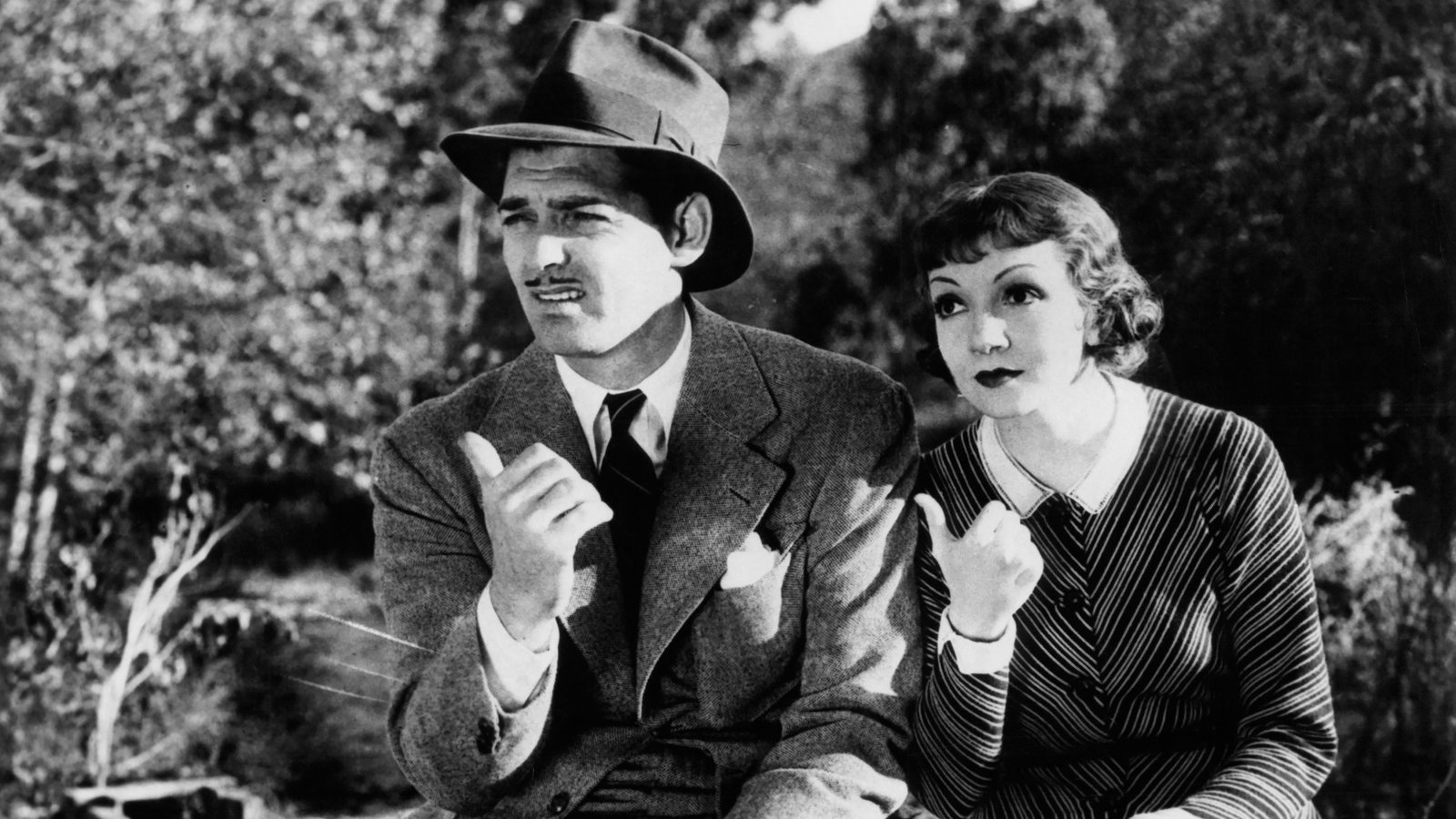
Another Oscar-season showing from TCM, It Happened One Night is still fondly regarded today as a Frank Capra classic, so I was curious if the Best Picture winner of 1934 would hold up and, for the most part, it does. Claudette Colbert plays spoiled heiress Ellie Andrews, who elopes against her father’s wishes and then goes on the lam as he puts up a reward for her return. She is found by beleaguered newspaper reporter Peter Warne (Clark Gable), who helps her in exchange for covering her story, and the two gradually grow closer along their travel misadventures. Both actors also won Oscars, as did the screenplay and Capra as director.
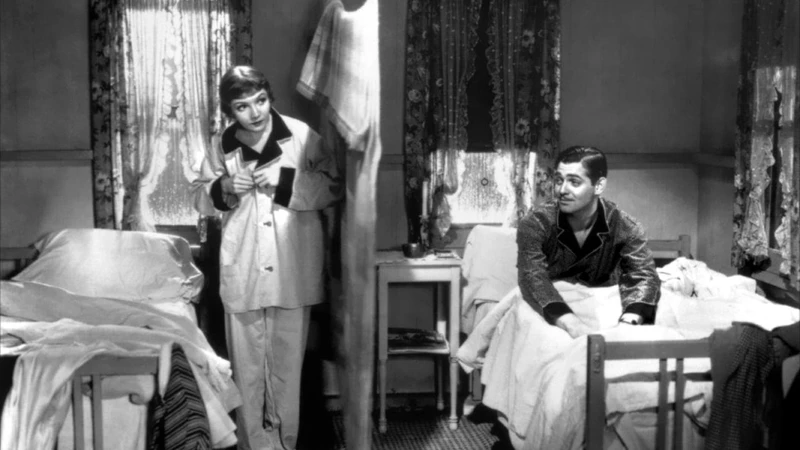
Any film this old is going to be somewhat dated, but the banter between Peter and Ellie feels more natural than a lot of other repartee from the era, like the flowery dialogue of Double Indemnity or the pretentious quips of The Philadelphia Story. It’s fun to watch the beauty Colbert humbled by the travails of being on the road, while Gable bears the bulk of the film’s charm on his back, proving it was second nature for him to play an appealing rogue even five years before Gone with the Wind. From the running joke of “the walls of Jericho” to Colbert’s famous hitchhiking scene, the film stays amusing without going silly with its screwball comedy, and I was surprised by a scene toward the end that was blatantly borrowed by Spaceballs, a testament to its influence. While I didn’t think It Happened One Night rose to the level of greatness I’ve seen critics ascribe to it, it’s an excellent early rom com that further proves the talents of Gable and Capra.

Best line: (Ellie’s father Alexander, to Peter) “Do you love her?”
(Peter) “A normal human being couldn’t live under the same roof with her without going nutty! She’s my idea of nothing!”
(Alexander) “I asked you a simple question! Do you love her?”
(Peter) “Yes! But don’t hold that against me, I’m a little screwy myself!”

Rank: List Runner-Up

© 2025 S.G. Liput
807 Followers and Counting
Bonnie and Clyde (1967)

19 Saturday Apr 2025

Posted by sgliput in Movies, NaPoWriMo, Poetry, Reviews, Writing

≈ 1 Comment

Tags

Classics, Drama, History, Romance, Thriller

(For Day 19 of NaPoWriMo, the prompt was for a story poem “in the style of a blues song or ballad,” and the mention of crimes and murder ballads brought to mind this classic.)

The money could run and the tellers could hide,
But that meant fun for Bonnie and Clyde.
Never was a danger from which they shied.
Ride or die were Bonnie and Clyde.

The banks would quail at the loss of pride,
Left in the trail of Bonnie and Clyde.
Withdrawals like theirs couldn’t be denied;
Ride or die were Bonnie and Clyde.

Warn all the wimps and stay inside
If you get a glimpse of Bonnie and Clyde.
Quick with a trigger and wild-eyed,
Ride or die were Bonnie and Clyde.

Gotta get caught to be cuffed and tried,
And they were not, not Bonnie and Clyde.
Famed and feared both far and wide,
Ride or die were Bonnie and Clyde.

King and queen of the homicide,
None came between ol’ Bonnie and Clyde.
Couldn’t last long till they lost their stride;
Ride and die did Bonnie and Clyde.
_______________________

MPA rating: R (for violence, though closer to PG-13 by today’s standards)

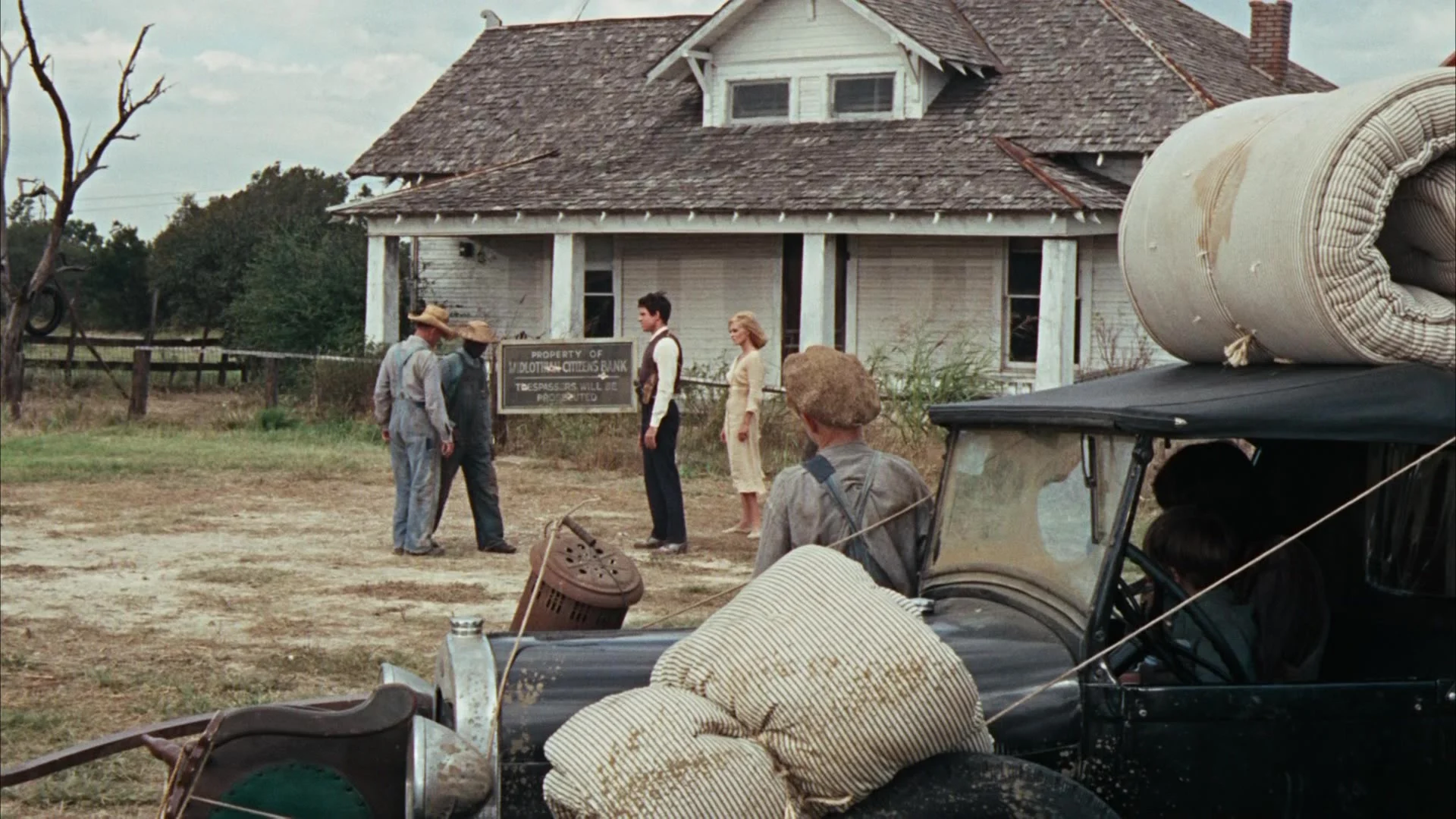
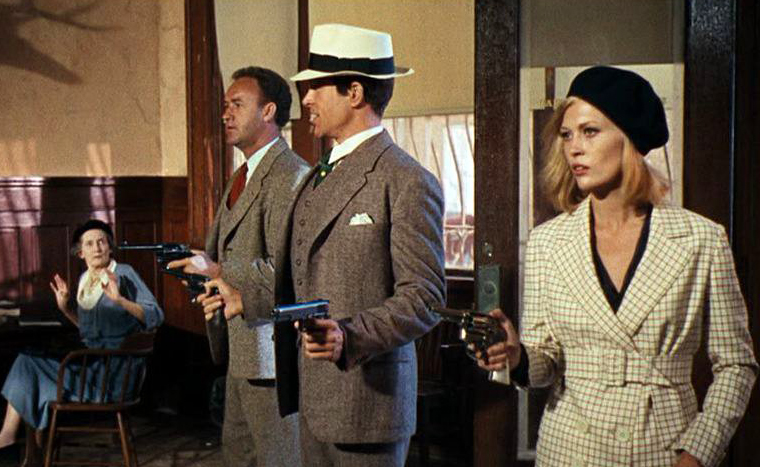
I saw Bonnie and Clyde more out of deference for its reputation than personal interest, since I’m not typically a fan of crime films known for their violence. (This was before the passing of Gene Hackman that made the recent watch even more worthwhile.) But I was very pleasantly surprised.

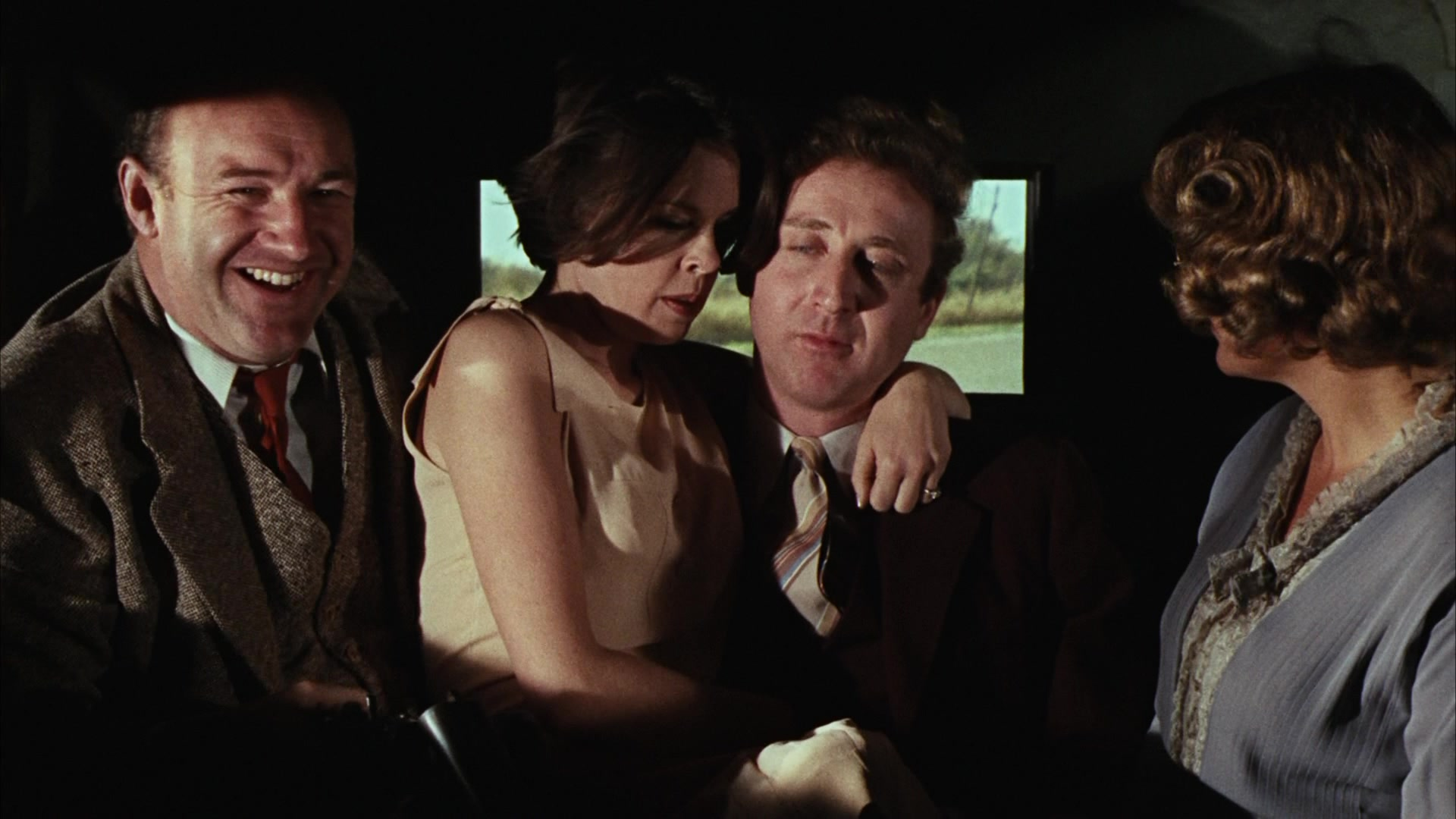
Faye Dunaway’s Bonnie Parker and Warren Beatty’s Clyde Barrow are quintessential anti-heroes, earning sympathy with their romantic chemistry and Depression-relevant targeting of banks yet allowing their bad choices to spiral further and further into infamy. They eventually form a gang with Clyde’s brother Buck (Hackman), Buck’s excitable wife Blanche (Estelle Parsons), and a mechanic accomplice C. W. Moss (Michael J. Pollard), terrorizing the countryside and evading the law, for a while at least.

The film is full of little moments that make the characters more than one-dimensional villains, like the head-butting between Bonnie and Blanche or the brief kidnapping of a young couple (including Gene Wilder in his film debut) that reveals Bonnie’s aversion to any reminder of death. Bonnie’s brief reunion with her mother (Mabel Cavitt, a local extra chosen for the role) especially brings home how much their crime spree has ruined a chance at a normal life, something with which they may never have been satisfied anyway. I also quite liked the inclusion of a poem the real Bonnie Parker wrote about themselves, which would have made my Poems in Movies list had I known about it then.

Bonnie and Clyde is famous for its taboo-breaking depiction of violence, though it’s quite tame compared with even TV shows these days, and it serves the story well, especially in the famous final scene. The film is also beautifully shot, and all the major performances excel and were Oscar-nominated, though Estelle Parsons (probably the weakest link) was the only one to win, along with the cinematography. Combining history, romance, and tragedy, Bonnie and Clyde certainly deserves its status as a classic.

Best line: (Clyde, responding to Bonnie’s poem) “You know what you done there? You told my story, you told my whole story right there, right there. One time, I told you I was gonna make you somebody. That’s what you done for me. You made me somebody they’re gonna remember.”

Rank: List Runner-Up

© 2025 S.G. Liput
806 Followers and Counting
Marty (1955)

17 Thursday Apr 2025

Posted by sgliput in Movies, NaPoWriMo, Poetry, Reviews, Writing

≈ Leave a comment

Tags

Classics, Drama, Romance

(Yes, I missed yesterday’s post, but I have the poem and will catch up when I have a little extra time for the review. Meanwhile, for Day 16 of NaPoWriMo, the prompt was for a poem pairing a place with a particular song, so I went with “Unchained Melody,” a favorite of my parents, which came out the same year as this film.)

Out on the sidewalk outside a dance hall,
A man and a woman were side by side,
Lonely surrounded by strangers.
Romance was on the minds of all,
But these two were done, undanced, untried,
Fated to stay as mere strangers.

A slow dance was drifting outside to the street,
“Unchained Melody,” and the mood was set,
The cars and dogwalkers be damned.
And somehow shared bitterness came to be sweet,
Though little had changed in their lives as yet.
The morning could still leave them damned.

But streetlamps were candlelight under that tune;
The concrete gave way to a dance floor below,
And they didn’t mind being passed over.
Their loneliness withering under the moon,
They would have been happy to bask in its glow
And play that song over and over and over.
_________________________

MPA rating: Approved (G)

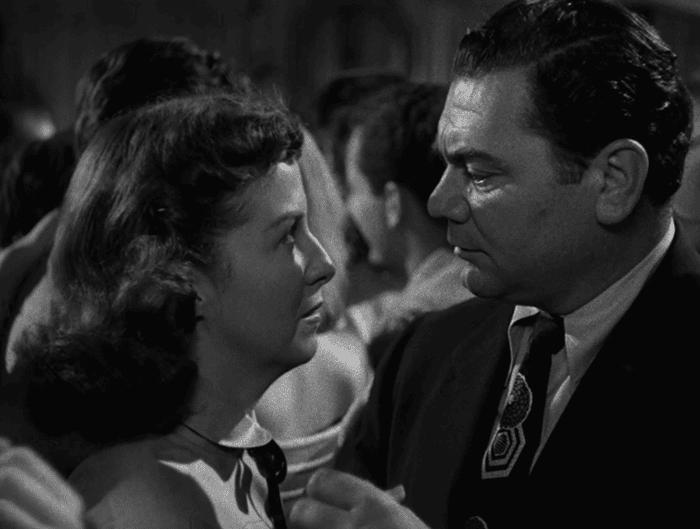
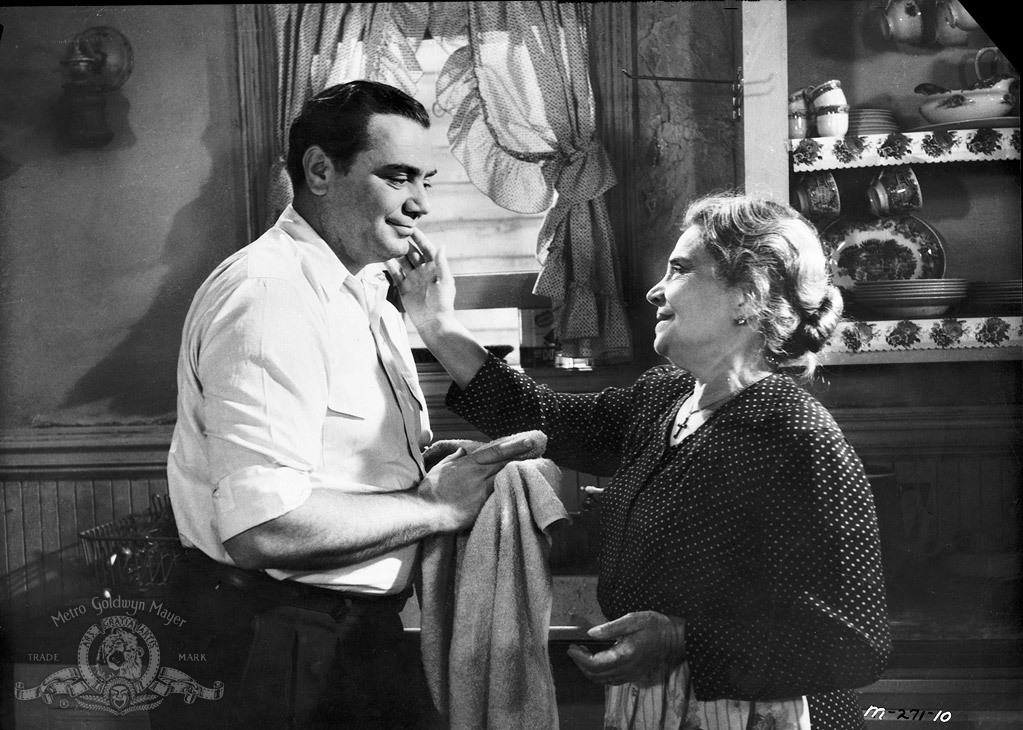
Modern dating is rough, as many will acknowledge who have been burnt out by dating apps, ghosting, and a general feeling of being unwanted. I know people who feel hopeless when it comes to finding love and scoff at encouragement, and I’ve had moments of despair myself. Yet it’s important to keep in mind that such feelings are not a new phenomenon and were represented quite poignantly in the Best Picture winner of 1955 Marty. Ernest Borgnine plays the title character, a homely butcher who has resigned himself to the single life. At the urging of his very Italian mother (Esther Minciotti), Marty reluctantly agrees to go to a local ballroom and connects with a woman named Clara (Betsy Blair), shy and similarly despondent as she is consistently regarded as a “dog” by her dates. Against all expectations, these two “dogs” wonder if they have found the person for whom they’ve been waiting.

Known to me previously as the answer Herb Stempel was forced to get wrong in Quiz Show, Marty is such a short and simple romance. It has no clever twists or enemies-to-lovers tension, just a sweet and meaningful date between two people close to giving up. Borgnine is a perfect lead here, his workaday looks and expressive face serving the character well and deservedly winning him a Best Actor Oscar, while Blair shares a cutely understated chemistry with him, reflective of the fact these two just met yet are hoping that their hopes have been answered. From the unexpected finding of love to the need to defend it when others scorn it, Marty is that welcome reminder that even old films can be utterly relatable.

Best line (though I really love the final scene): (Marty, to Clara) “See, dogs like us, we ain’t such dogs as we think we are.”

Rank: List Runner-Up

© 2025 S.G. Liput
805 Followers and Counting
The Thief of Bagdad (1940)

13 Sunday Apr 2025

Posted by sgliput in Movies, NaPoWriMo, Poetry, Reviews, Writing

≈ 1 Comment

Tags

Action, Classics, Drama, Family, Fantasy, Romance

(For Day 12 of NaPoWriMo, the prompt was a doozy: a multi-section poem drawing from myths and legends featuring rhyme and mixed formal and informal language. So, with this film in mind, I mused on what to do if offered three wishes by a genie.)

Wish 1

To access wishes, surely I
Must be in dire straits myself.
Trapped within a tomb of stone
Or stranded on an icy shelf,
Marooned upon an isle alone
Or chained in jail, condemned to die.

For my first wish, therefore, I must
Escape the fate that brought me here,
Wish myself above the ground
Or make what threatens disappear,
Unstuck, unbound, uncooked, undrowned,
Ideally somewhere I can trust.

Wish 2

My second wish
Depends on much.

Has the djinn at least been kind,
Or left half of me behind?

Am I truly free from harm,
Or acquired a new alarm?

Am I not falling from the sky
With no faculty to fly?

Is my friend in peril somewhere?
Do I like them enough to care?

Does the djinn insist on rules,
Like no death or love or ghouls?

And, unlike the foolish herds,
Am I careful with my words?

If yes to all above,
Then I guess I’ll side with love
For my friend who’s so in need
And ensure they’re also freed.
Aren’t I nice? I am indeed.

Wish 3

Assuming both my prior wishes
Haven’t spiraled far awry,
Now that I’m not about to die,
I have an epic choice ahead.

The world is mine to seize and form.
With but a wish, I’d gain renown,
A merry harem, a sultan’s crown,
A sorcerer or god instead.

In place of a dark lord or queen,
The world will love me and despair!
I’m kidding, no, I wouldn’t dare,
But I have to end this with a bang.

Hypnosis, health, wisdom, wealth?
Would they be subject to some twist?
I wish I knew the perfect wish
To satisfy me… dang.
_________________________

MPA rating: Approved (a likely G)

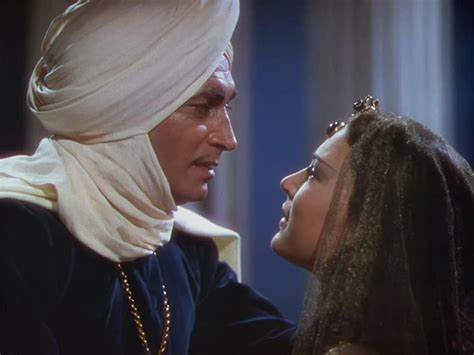
Having grown up with The Wizard of Oz, I’ve loved it from the start, viewing its dated or hokey elements as charming rather than a detraction, and I suspect the same would be true for The Thief of Bagdad, had it been an old childhood favorite as well. Boasting 100% on Rotten Tomatoes, this fantasy adventure draws elements from the One Thousand and One Nights to tell a partially non-linear tale of the betrayed Prince Ahmad of Bagdad (John Justin) and his wily friend/thief Abu (young Indian actor Sabu) as they fight against the evil vizier Jaffar (Conrad Veidt) and save a princess (June Duprez).

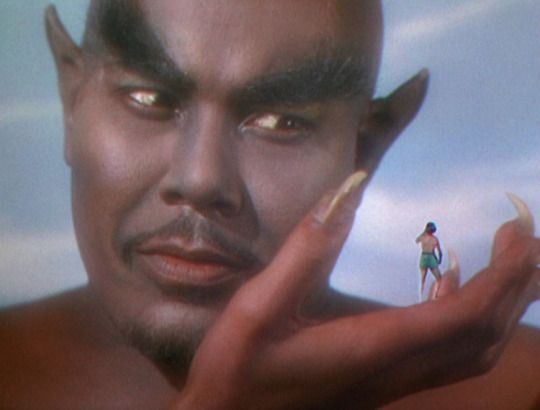
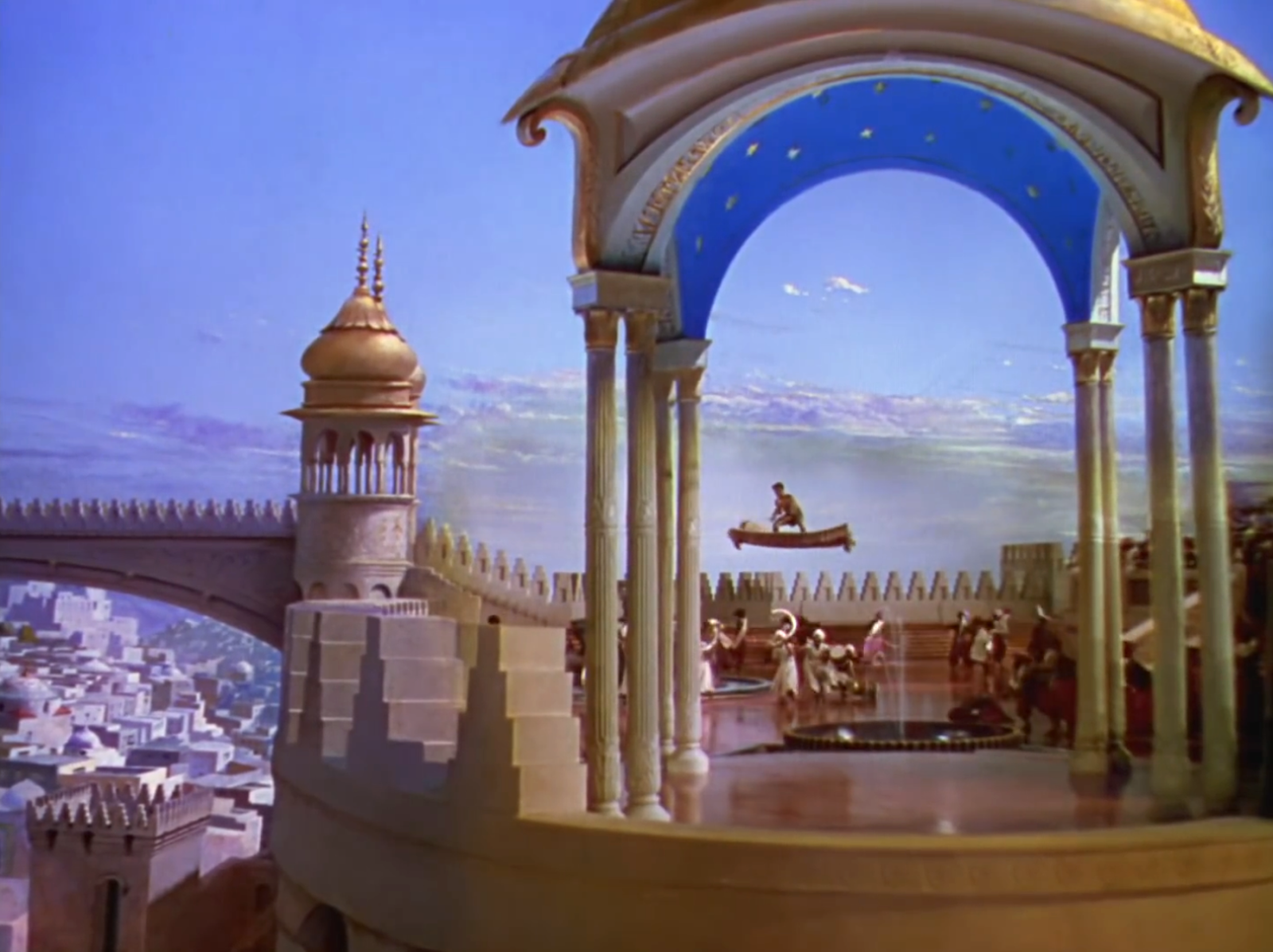
It was especially amusing to see how many aspects of Disney’s Aladdin were borrowed directly from this film. Sharing a name with Aladdin’s monkey, Abu flees a crowd with stolen food in an early scene, instantly bringing to mind the opening number from the animated film. In addition, you have a vizier named Jaffar/Jafar, a weak-minded sultan (Miles Malleson) who loves toys and is looking to give his daughter in marriage, a sheltered royal sneaking out of the palace to mingle with the common folk, and a genie and magic carpet aiding the heroes. The Djinn/genie (Rex Ingram) is quite different, though, more malevolent and helping Abu grudgingly, and there are plenty of other differences to set it apart.

Sabu and Justin make an appealing heroic team, while Veidt has an excellent Vincent Price-like coldness that made him a popular villain actor at the time. Of course, it’s a bit odd that most of the main roles (save for Sabu) are clearly white actors surrounded by Middle Eastern extras and settings, but I suppose that’s just due to the time period. The sets and props really add to the world-building, and the film is known for pioneering the first use of bluescreen/greenscreen to place Sabu within the extravagant special effects sequences of the latter half. While The Thief of Bagdad starts off a bit awkwardly before the plot gets rolling, it’s a genre classic that deserves wider appreciation as an entertaining fantasy of Old Hollywood.

Best line: (the Djinn, to Abu) “You’re a clever little man, little master of the universe, but mortals are weak and frail. If their stomach speaks, they forget their brain. If their brain speaks, they forget their heart. And if their heart speaks [laughing], they forget everything.”

Rank: List Runner-Up

© 2025 S.G. Liput
805 Followers and Counting
Freaks (1932)

10 Thursday Apr 2025

Posted by sgliput in Movies, NaPoWriMo, Poetry, Reviews, Writing

≈ Leave a comment

Tags

Classics, Drama, Horror

(For Day 10 of NaPoWriMo, the prompt was for a poem that incorporates alliteration and wordplay, two of my favorite devices.)

The freaks reek (it’s in the name),
Reek of pity, guilt, and shame,
Of all those shattered might-have-beens
Their parents might have held for them.

Anomalies aren’t animals,
Just popular improbables,
While others claim it isn’t cruel
To void for them the Golden Rule.

Abnormalcy (abnormal, see?)
Says, hey, how great can normal be
When normal people tend to hate
The things to which they can’t relate?

Unusual, peculiar, odd,
Yet don’t all share the image of God?
Suggesting human value might
Be more than limbs or average height.

Normalcy can’t stand the thought
That there are lives it fathoms not,
Chained to common, standard, same…
But freaks are free (it’s in the name).
________________________

MPA rating: Not Rated (a strong PG)

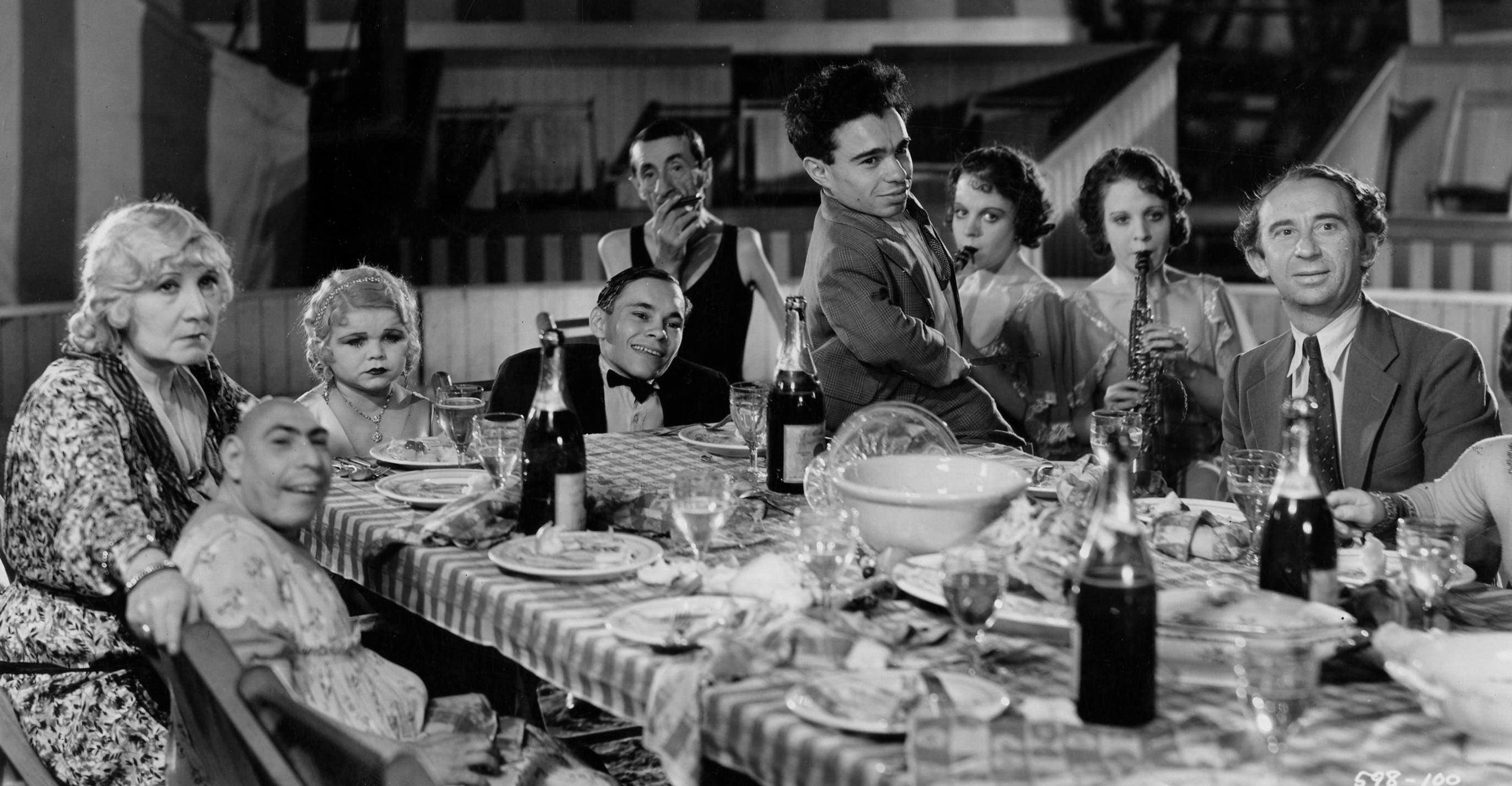
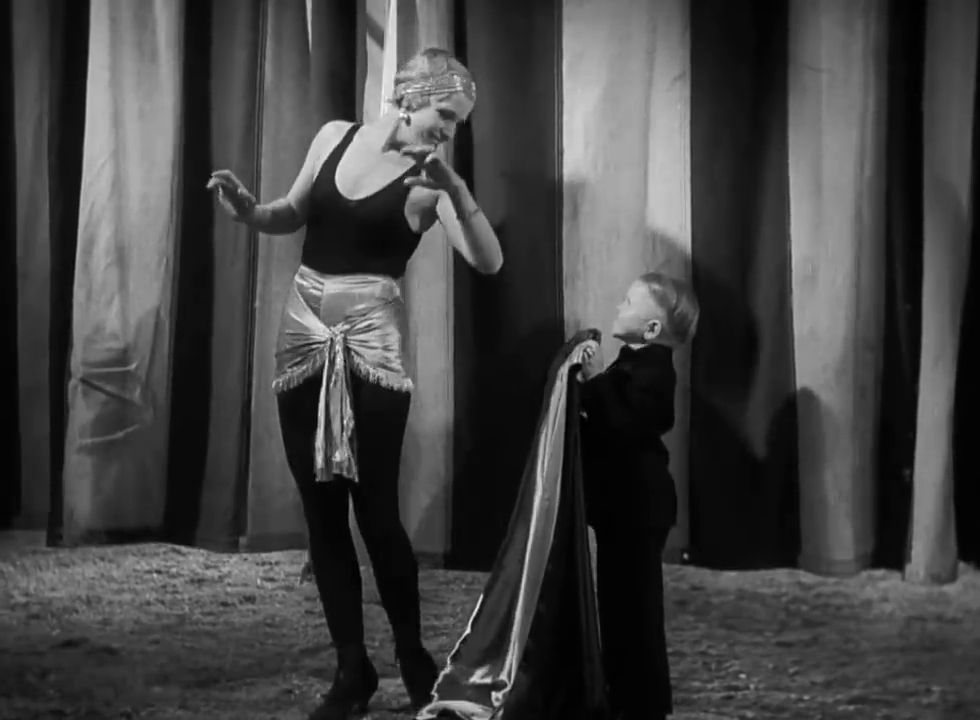
I was familiar with Tod Browning’s pre-Hays Code horror classic Freaks, if only for its immortal chant of “one of us,” but I never sat through the short one-hour film until recently. It was notorious from the start for its portrayal of circus freaks played by actual sideshow performers with real disabilities, from a pair of little people (siblings Harry and Daisy Earles of the Doll family, who also played Munchkins in The Wizard of Oz) to conjoined twins (Daisy and Violet Hilton) to a legless “Half-Boy” (Johnny Eck) walking with his arms. In the film, one of the dwarfs Hans is targeted by the scheming trapeze artist Cleopatra, who seduces him for his money, fooling the circus freaks until it’s made clear that she is not “one of them.”

While the film doesn’t shy from depicting the grotesquerie of sideshow oddities and wringing horror from it, it’s surprisingly empathetic for its time, presenting them as actual people with hopes, relationships, and emotions, living life despite their limitations. It’s Cleopatra, the beautiful but undeniable villain of the tale, that voices disgust toward her fellow circus members, so her comeuppance feels more like a cautionary tale than mere exploitation. It was odd for me watching the climax of the film since I really thought I had seen clips of it but didn’t remember that it all happened in a driving rain storm, making it even more memorable, one would think. Owing to its pre-Code daring, Freaks is more notable than the typical product of its time, both creepy and compassionate in equal measure.

Best line: (the celebrating freaks) “We accept you, one of us! Gooble Gobble!”

Rank: List Runner-Up

© 2025 S.G. Liput
805 Followers and Counting
The Private Life of Henry VIII (1933)

09 Wednesday Apr 2025

Posted by sgliput in Movies, NaPoWriMo, Poetry, Reviews, Writing

≈ Leave a comment

Tags

Classics, Drama, History

(For Day 8 of NaPoWriMo, the prompt was for a ghazal, typically a love poem formed by couplets ending with the same word and a self-reference at the end.)

Rich as king and rollicking, I share my heart too easily;
Men may fill the chess board, but I do so love a woman.

The loyal kind that hold the faith despite the politics and pleas,
The kind that seize the title of queen – I do so love a woman.

The flirty kind that mince around, ambition mixed with delicacy,
Wise enough to not lose one’s head – I do so love a woman.

The selfless kind that give and give, but take themselves whene’er they flee,
And haunt your thoughts they once had filled – I do so love a woman.

The clever kind, whose minds outshine their outer physiognomy,
Who play to win to men’s chagrin – I do so love a woman.

The gorgeous kind who cannot help but capture every heart they see,
But don’t go keeping secrets, no… I do so love a woman.

The pious kind who care so true and stay unto the end with thee,
No doubt they’re blessed to outlive the rest – I do so love a woman.

My senses fail with a sweet female, the face, the grace, the repartee…
Come now, Henry, how can one choose that single, perfect woman?
_______________________________

MPA rating: Passed (pretty much G)

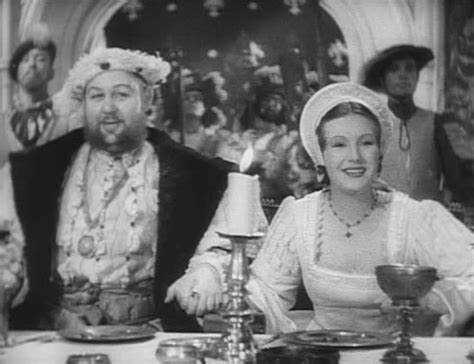
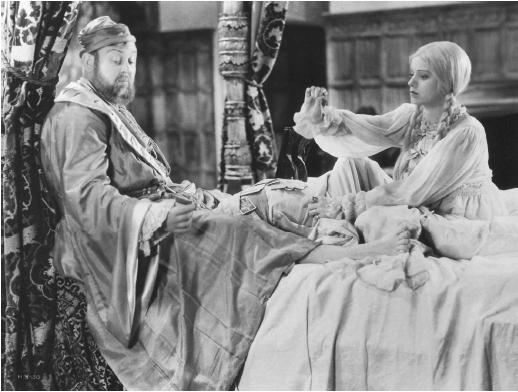
The older a film is, the harder it can be to cling to one’s claimed status as a cinefile, but there are still worthwhile movies among the overacting and poor sound quality common to the early era. Charles Laughton’s Oscar-winning role as the title king in The Private Life of Henry VIII did much to shape the popular image of Henry as gluttonous, immature, and volatile, and, while I understand not all of it is historically accurate, he does make for a quintessential portrayal of the infamous monarch.

Leaving Catherine of Aragon as a footnote, the film starts with the execution of Anne Boleyn (Merle Oberon) before cycling through the doomed Jane Seymour (Wendy Barrie), the shrewd Anne of Cleves (Elsa Lanchester), the adulterous Katherine Howard (Binnie Barnes), and finally the uptight Catherine Parr (Everley Gregg). Anne of Cleves gets the best interactions as she proves to be a match of wits with Henry in an ever more expensive card game, while Laughton’s anguished reaction to the revelation of Howard’s cheating is surprisingly poignant, making you almost forget about the real Henry’s rampant unfaithfulness. With its age very apparent, though, The Private Life of Henry VIII is more of a one-time watch than a potential favorite; I’d rather listen to the soundtrack of Six any day.

Best line: (Henry VIII) “Love is drunkenness when one is young. Love is wisdom when one is at my age.”

Rank: Honorable Mention

© 2025 S.G. Liput
805 Followers and Counting
The Stratton Story (1949)

06 Sunday Apr 2025

Posted by sgliput in Movies, NaPoWriMo, Poetry, Reviews, Writing

≈ Leave a comment

Tags

Classics, Drama, Sports

(For Day 6 of NaPoWriMo, the prompt was to describe a flavor using certain words, and… I wasn’t feeling it, so here’s an off-prompt submission.)

There’s one way to heaven, but many ways to hell,
And if you arise, it doesn’t matter how you fell.
The darkness is sticky, not easy to dispel;
Tragedies stay in it, and those are sure to sell.
But winners find a constant, corny light in which to dwell.
Those are both the options; what story will you tell?
__________________________

MPA rating: Approved (a solid G)

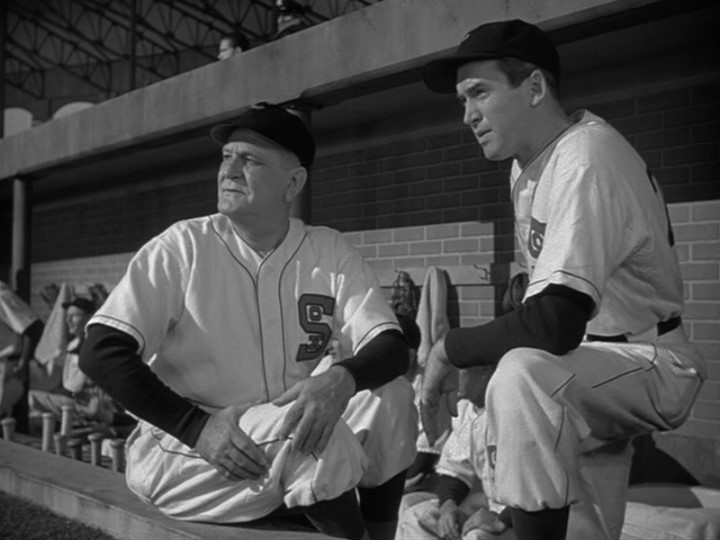
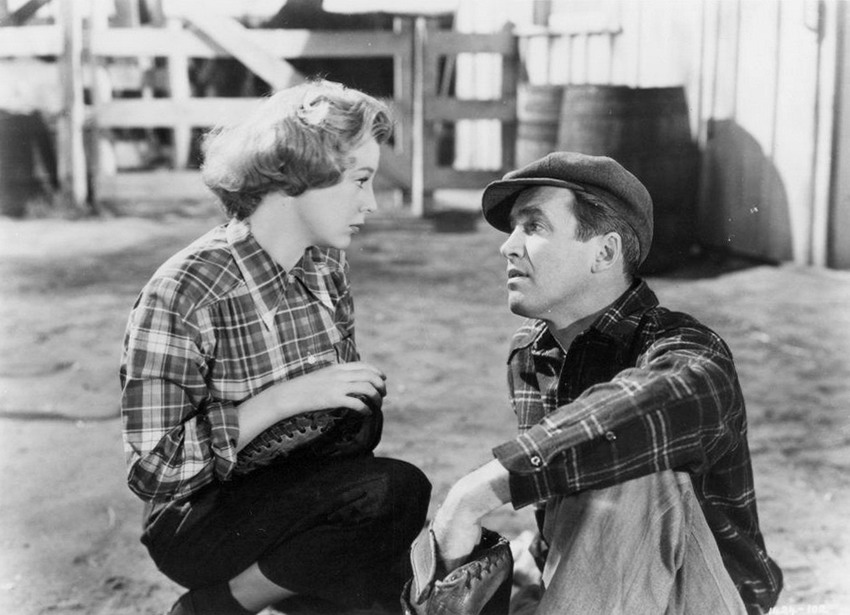
I already knew from The Glenn Miller Story that Jimmy Stewart and June Allyson shared winning chemistry, so it’s no surprise that that held true in the first of their three film romantic pairings The Stratton Story. Based on the life of MLB pitcher Monty Stratton, the film chronicles his early talent in rural Texas that caught the attention of a wandering scout (Barney Wile), his Major League success as he wooed his eventual wife Ethel (Allyson in fine girl-next-door form), and the hunting accident that halted his career but led to an inspiring comeback.

Stewart is never less than appealing as a poor boy making good despite the reservations of his mother (Agnes Moorehead), though the first half of the film alone doesn’t leave much of an impact. The second half, dealing with Monty’s injury and recovery, is painfully realistic in showing his depressive struggle, but the upswing is pure based-on-a-true-story inspiration that won the film an Oscar for Best Motion Picture Story. While not as well-known in the baseball movie pantheon, The Stratton Story deserves to be.

Best line: (Ethel, trying to encourage Monty from his despair) “Nothing’s really changed. You’re still the same fella I’ve always been in love with. I’ve made out much worse than you. You lost your leg, but I lost you.”

Ranking: List Runner-Up

© 2025 S.G. Liput
804 Followers and Counting

A Patch of Blue (1965)

05 Saturday Apr 2025

Posted by sgliput in Movies, NaPoWriMo, Poetry, Reviews, Writing

≈ Leave a comment

Tags

Classics, Drama

(For Day 4 of NaPoWriMo, the prompt was for a poem about living with a piece of art, which made me imagine what a blind person might think of a painting on the wall.)

My eyes cannot see; believe me, I’ve tried
To get even traces of color or light.
It’s something so simple for everyone else
But such a high hurdle for me.
There hangs in my bedroom a frame, rather wide;
I walk by and feel it sometimes to my right.
Where others see picture, I know only shape,
Floating before me mysteriously.

They say it’s a seascape and try to describe,
But surely mere words aren’t enough to compare.
The angle, the shadows, the ambient mood –
It’s more than just waves upon sand.
I’ll never quite fathom this image’s vibe,
But I can imagine what’s possibly there.
And maybe reality can’t hold a candle to
What I can see with my mind and my hand.
________________________

MPA rating: Approved (should be PG)

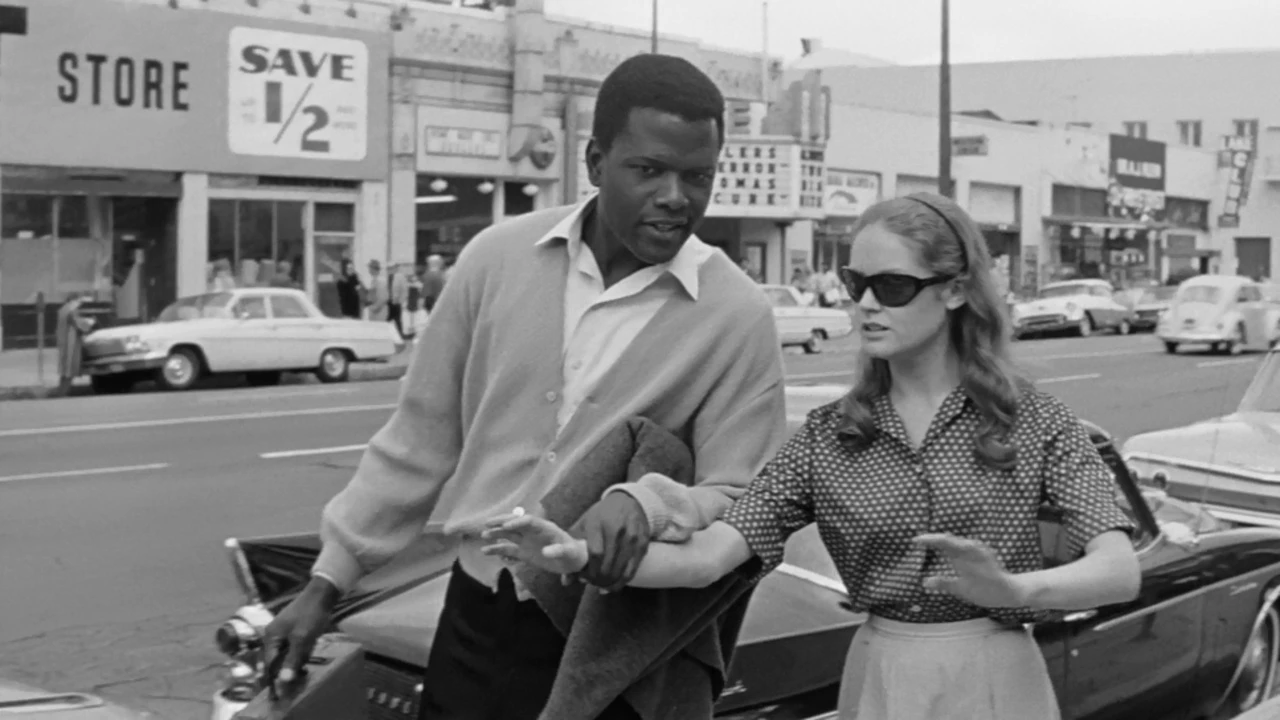
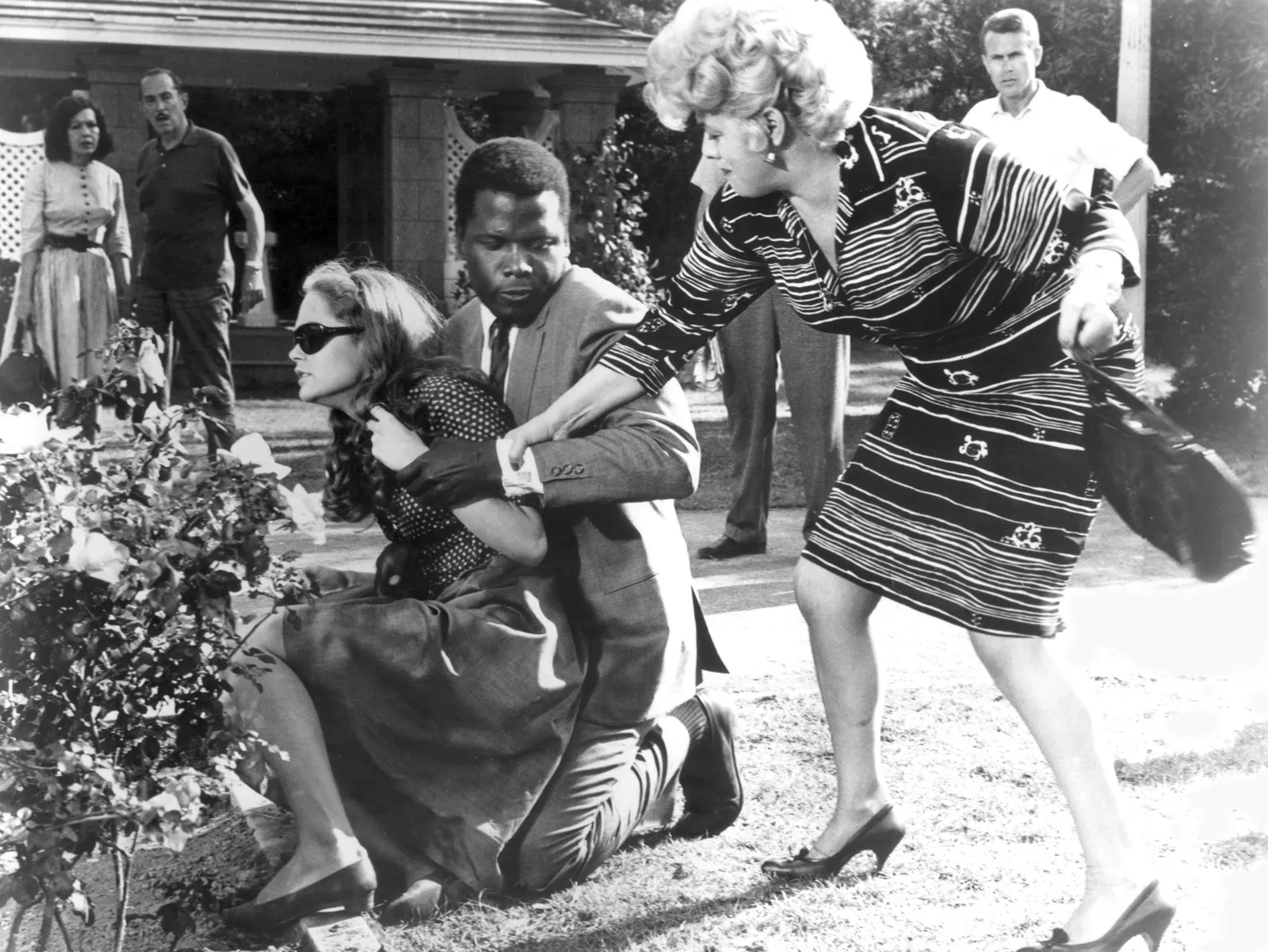
Set in between his more acclaimed roles in Lilies of the Field and In the Heat of the Night, A Patch of Blue is a less famous Sydney Poitier film but yet another thought-provoking showcase of his acting talent, as well as that of Shelley Winters and young ingénue Elizabeth Hartman. Hartman plays a blind girl named Selina, kept as little more than a servant by her abusive mother (Winters, who won her second Oscar) and drunkard grandfather (Wallace Ford in his final film before his death), with no attempt to introduce her to the wider world. After convincing them to let her spend time in a park, she meets friendly office worker Gordon (Poitier), whose unseen skin color matters far less than the kindness he shows her, leading her to want more out of her sheltered life.

Domestic abuse is hard to watch, even in movies, and the belittling cruelty Selina endures at the hands of her own family is no exception. Between Hartman’s naive innocence and Poitier’s natural charm, their growing bond is very sweet as a stark contrast to her home life, even though Gordon is keenly aware of the racial stigma (and age difference) standing in the way of romance between them. Ultimately, things play out encouragingly but realistically, highlighting that simple caring can transform someone’s life.

Best line: (Selina) “I think you’re beautiful!”
(Gordon, smiling) “Beautiful? Most people would say the opposite.”
(Selina) “Well, that’s because they don’t know you.”

Ranking:  List Runner-Up

© 2025 S.G. Liput
804 Followers and Counting

Guys and Dolls (1955)

17 Wednesday Apr 2024

Posted by sgliput in Movies, NaPoWriMo, Poetry, Reviews, Writing

≈ Leave a comment

Tags

Classics, Comedy, Musical, Romance

(For Day 17 of NaPoWriMo, the prompt was for a poem inspired by a piece of music and sharing its title. But being rather late and tired, I instead decided to honor International Haiku Poetry Day and keep this entry short.)

Bets and debts galore
Wring romance from selfishness.
Gambling pays off.
________________________

MPA rating:  Approved (should be PG)

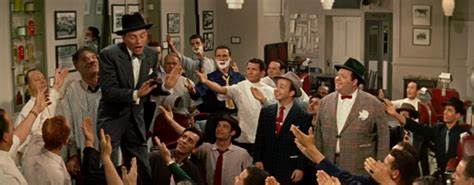
Out of the many many musicals from the Golden Age of Hollywood, there are a select few that became institutions in my house growing up, the likes of The Music Man, Singin’ in the Rain, and The Wizard of Oz. As I work on my own musical project, I read a book recently about the merits of various musical productions, and the author had tremendous respect for Guys and Dolls, Frank Loesser’s ‘50s-streetwise adaptation of two Damon Runyon short stories. It was a show/film I had never bothered to seek out, at least until his glowing recommendation.

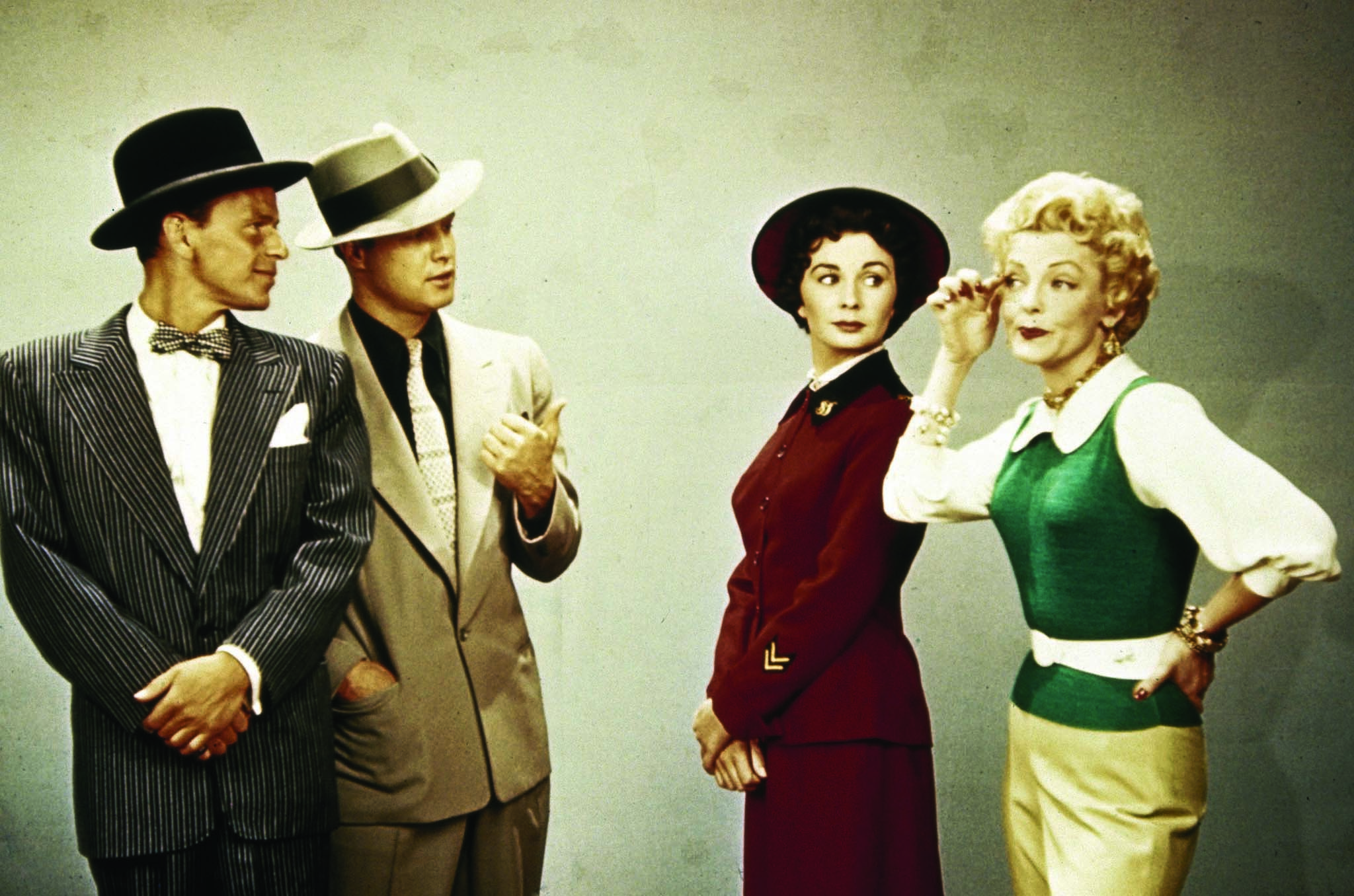
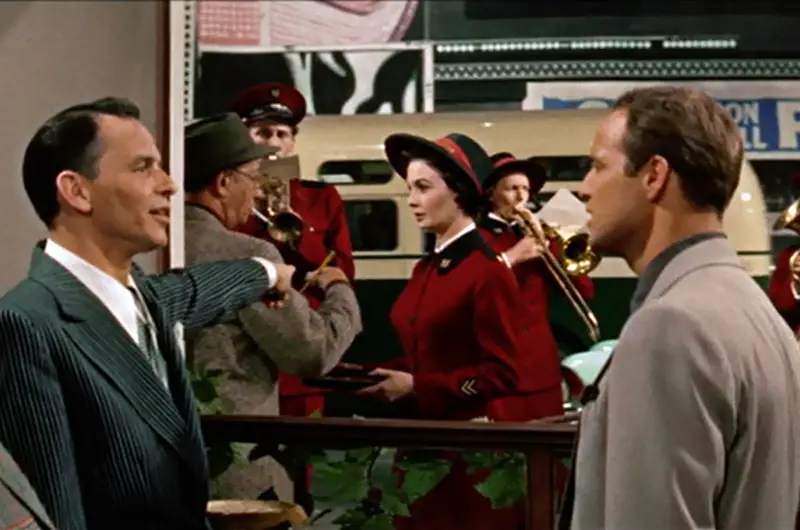
The plot focuses on two couples, gamblers Nathan Detroit (Frank Sinatra) and Sky Masterson (Marlon Brando) and their would-be lady loves, nightclub singer Miss Adelaide (Vivian Blaine, reprising her stage role) and evangelist Sergeant Sarah Brown (Jean Simmons). Evading his fiancee’s marriage hopes and trying to scrape together enough money for a secret craps game venue, Detroit bets Masterson that he can’t woo the self-righteous Sarah Brown into a Cuban dinner date, even as she struggles to save her urban mission from closure. Naturally, none of the plans go quite as anticipated.

The book I read praised Guys and Dolls as theatrical plotting at its best, with composer Frank Loesser and book writers Jo Swerling and Abe Burrows masterfully weaving two storylines that depended on each other for resolution. With its idiosyncratic dialogue and shifting focus, I can see the reason for the veneration on a technical level, but I do think the two stories aren’t equally interesting. While Sinatra nails the crooning as expected (his character given more singing opportunities than on stage, I understand), I didn’t really care about his plight of scheduling a gambling venue while being a commitment-fearing jerk toward his long-suffering lover Adelaide (whose voice is also rather grating).

I much preferred the parallel story of Sky Masterson and Sarah Brown. I hadn’t seen Brando in a romantic role before, much less singing, but he had quite the swagger back then, and Simmons is wonderful as the priggish believer who gradually lets her hair down a little. Their banter and romance are the best part of the film, along with Loesser’s array of classic showtunes like “Luck Be a Lady,” “Sit Down, You’re Rockin’ the Boat,” and the title song. I think I’ve developed a soft spot for Sarah’s “If I Were a Bell” especially. Yet despite its good points, Guys and Dolls suffers from being overlong and only half-interesting, weakened further by an oddly rushed ending. It’s a bona fide classic, but some parts are more classic than others.

Best line: (Detroit, urging his friend to speak at the mission) “Southstreet, give your testimony.”   (Benny Southstreet) “I plead the fifth commandment.”

Ranking:  List Runner-Up

© 2024 S.G. Liput
792 Followers and Counting

Great Expectations (1946)

01 Monday Apr 2024

Posted by sgliput in Movies, NaPoWriMo, Poetry, Reviews, Writing

≈ 2 Comments

Tags

Classics, Drama

(For Day 1 of NaPoWriMo, the prompt was to write a plot summary of a novel you haven’t read in a long time. This blog began with writing movie plot summaries in verse, so this felt like going back to my roots.)

There once was a boy born to low expectations,
And Pip was his name, not that anyone cared.
Unfortunate orphans resigned to their stations
Could rarely progress, limitations Pip shared.

One day in the country, a convict caught Pip
And bade him to aid him in getting away.
So Pip held his tongue, no alarm or hot tip,
And Magwitch escaped with a debt yet to pay.

Soon Pip was a guest at Miss Havisham’s mansion,
Where dust covered her and her old bridal dress.
She treated the boy like a half-approved grandson,
While her ward Estella approved even less.

But though Pip was taunted, he fell quite in love
With Estella and grieved when he left her employ.
He grew into manhood, and, as if from above,
A mystery patron supported the boy.

He found he had money, a gentleman rising,
But who is behind all these kindly donations?
I’d tell you the twists that you might find surprising,
But I’d hate to spoil your great expectations.
__________________________

MPAA rating: Approved (basically G)

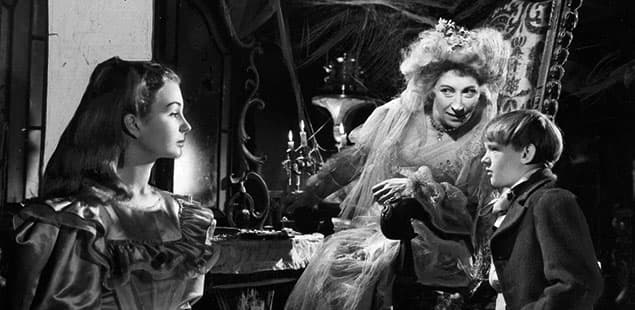
I was thinking I hadn’t bothered to review an older film in a while, and, luckily, this month’s first prompt pointed me toward this 1946 classic from director David Lean. I remember reading an abridged version of Charles Dickens’ novel Great Expectations, but I had largely forgotten the plot except for a boy named Pip and a dusty spinster named Miss Havisham. So watching this movie was like a trip to the library, conjuring up a rags-to-riches tale with distinguished British aplomb.

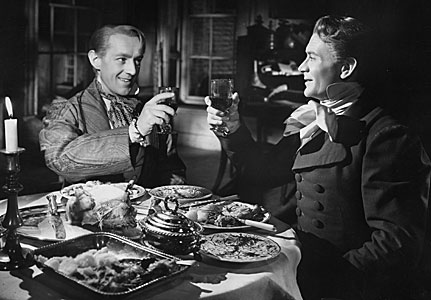
I won’t go into the plot since it’s above, but I will praise the unexpected actors who showed up, including a young John Mills as the older Pip, a young Alec Guinness as Pip’s friend Herbert (his first of six collaborations with Lean), and a very young Jean Simmons as the child Estella. Finlay Currie is especially good as the convict Magwitch, able to seem both threatening and sympathetic as needed, while Martita Hunt as Miss Havisham brings a vaguely creepy craftiness to the part, especially when surrounded by her dark, cobweb-covered mansion. The main complaint for me would be the character of Estella, whose insulting tsundere treatment of Pip gives little reason to like her or want the besotted Pip to end up with her. Despite the romance not really landing, Lean’s Great Expectations is an admirable Dickens adaptation.

Best line: (Mr. Jaggers, the lawyer) “Take nothing on its looks; take everything on evidence. There is no better rule.”

Rank:  Honorable Mention

© 2024 S.G. Liput
790 Followers and Counting

← Older posts

Recent Posts

  • We Didn’t Start 2025 (Recap)
  • NaPoWriMo 2025 Recap (Finally)
  • Sonic the Hedgehog 3 (2024)
  • It Happened One Night (1934)
  • Spellbound (2024)

Recent Comments

associatesofshellymann's avatarassociatesofshellyma… on My Top Twelve La La La So…
Kit's avatarKit Nichols on Bonnie and Clyde (1967)
lifelessons's avatarlifelessons on Look Back (2024)
Carol Jackson's avatarCarol Jackson on The Thief of Bagdad (1940…
Stephen's avatarStephen on Love Story (1970)

Archives

  • January 2026
  • December 2025
  • May 2025
  • April 2025
  • March 2025
  • February 2025
  • January 2025
  • December 2024
  • May 2024
  • April 2024
  • March 2024
  • February 2024
  • January 2024
  • December 2023
  • November 2023
  • October 2023
  • September 2023
  • July 2023
  • June 2023
  • May 2023
  • April 2023
  • March 2023
  • February 2023
  • January 2023
  • December 2022
  • November 2022
  • October 2022
  • September 2022
  • August 2022
  • July 2022
  • June 2022
  • May 2022
  • April 2022
  • March 2022
  • February 2022
  • January 2022
  • December 2021
  • November 2021
  • October 2021
  • September 2021
  • August 2021
  • July 2021
  • June 2021
  • May 2021
  • April 2021
  • March 2021
  • February 2021
  • January 2021
  • December 2020
  • November 2020
  • October 2020
  • September 2020
  • August 2020
  • July 2020
  • June 2020
  • May 2020
  • April 2020
  • March 2020
  • February 2020
  • January 2020
  • December 2019
  • November 2019
  • October 2019
  • September 2019
  • August 2019
  • July 2019
  • June 2019
  • May 2019
  • April 2019
  • March 2019
  • February 2019
  • January 2019
  • December 2018
  • November 2018
  • October 2018
  • September 2018
  • August 2018
  • July 2018
  • June 2018
  • May 2018
  • April 2018
  • March 2018
  • February 2018
  • January 2018
  • December 2017
  • November 2017
  • October 2017
  • September 2017
  • August 2017
  • July 2017
  • June 2017
  • May 2017
  • April 2017
  • March 2017
  • February 2017
  • January 2017
  • December 2016
  • November 2016
  • October 2016
  • September 2016
  • August 2016
  • July 2016
  • June 2016
  • May 2016
  • April 2016
  • March 2016
  • February 2016
  • January 2016
  • December 2015
  • November 2015
  • October 2015
  • September 2015
  • August 2015
  • July 2015
  • June 2015
  • May 2015
  • April 2015
  • March 2015
  • February 2015
  • January 2015
  • December 2014
  • November 2014
  • October 2014
  • September 2014
  • August 2014
  • July 2014
  • June 2014
  • May 2014
  • April 2014
  • March 2014
  • February 2014
  • January 2014
  • December 2013

Categories

  • Blindspot
  • Blogathon
  • Christian
  • Movies
  • Music
  • NaPoWriMo
  • Poetry
  • Reviews
  • TV
  • Writing

Meta

  • Create account
  • Log in
  • Entries feed
  • Comments feed
  • WordPress.com

Recent Posts

  • We Didn’t Start 2025 (Recap)
  • NaPoWriMo 2025 Recap (Finally)
  • Sonic the Hedgehog 3 (2024)
  • It Happened One Night (1934)
  • Spellbound (2024)

Recent Comments

associatesofshellymann's avatarassociatesofshellyma… on My Top Twelve La La La So…
Kit's avatarKit Nichols on Bonnie and Clyde (1967)
lifelessons's avatarlifelessons on Look Back (2024)
Carol Jackson's avatarCarol Jackson on The Thief of Bagdad (1940…
Stephen's avatarStephen on Love Story (1970)

Archives

  • January 2026
  • December 2025
  • May 2025
  • April 2025
  • March 2025
  • February 2025
  • January 2025
  • December 2024
  • May 2024
  • April 2024
  • March 2024
  • February 2024
  • January 2024
  • December 2023
  • November 2023
  • October 2023
  • September 2023
  • July 2023
  • June 2023
  • May 2023
  • April 2023
  • March 2023
  • February 2023
  • January 2023
  • December 2022
  • November 2022
  • October 2022
  • September 2022
  • August 2022
  • July 2022
  • June 2022
  • May 2022
  • April 2022
  • March 2022
  • February 2022
  • January 2022
  • December 2021
  • November 2021
  • October 2021
  • September 2021
  • August 2021
  • July 2021
  • June 2021
  • May 2021
  • April 2021
  • March 2021
  • February 2021
  • January 2021
  • December 2020
  • November 2020
  • October 2020
  • September 2020
  • August 2020
  • July 2020
  • June 2020
  • May 2020
  • April 2020
  • March 2020
  • February 2020
  • January 2020
  • December 2019
  • November 2019
  • October 2019
  • September 2019
  • August 2019
  • July 2019
  • June 2019
  • May 2019
  • April 2019
  • March 2019
  • February 2019
  • January 2019
  • December 2018
  • November 2018
  • October 2018
  • September 2018
  • August 2018
  • July 2018
  • June 2018
  • May 2018
  • April 2018
  • March 2018
  • February 2018
  • January 2018
  • December 2017
  • November 2017
  • October 2017
  • September 2017
  • August 2017
  • July 2017
  • June 2017
  • May 2017
  • April 2017
  • March 2017
  • February 2017
  • January 2017
  • December 2016
  • November 2016
  • October 2016
  • September 2016
  • August 2016
  • July 2016
  • June 2016
  • May 2016
  • April 2016
  • March 2016
  • February 2016
  • January 2016
  • December 2015
  • November 2015
  • October 2015
  • September 2015
  • August 2015
  • July 2015
  • June 2015
  • May 2015
  • April 2015
  • March 2015
  • February 2015
  • January 2015
  • December 2014
  • November 2014
  • October 2014
  • September 2014
  • August 2014
  • July 2014
  • June 2014
  • May 2014
  • April 2014
  • March 2014
  • February 2014
  • January 2014
  • December 2013

Categories

  • Blindspot
  • Blogathon
  • Christian
  • Movies
  • Music
  • NaPoWriMo
  • Poetry
  • Reviews
  • TV
  • Writing

Meta

  • Create account
  • Log in
  • Entries feed
  • Comments feed
  • WordPress.com

Blog at WordPress.com.

Is this your new site? Log in to activate admin features and dismiss this message
Log In
  • Subscribe Subscribed
    • Rhyme and Reason
    • Join 814 other subscribers
    • Already have a WordPress.com account? Log in now.
    • Rhyme and Reason
    • Subscribe Subscribed
    • Sign up
    • Log in
    • Report this content
    • View site in Reader
    • Manage subscriptions
    • Collapse this bar
 

Loading Comments...