I hope we won’t be spotted. I hope it’s safe to stay. With every hour More we cower, The more I feel like prey.
I hear the sounds approaching. I fear their origin, The smell of death Upon its breath As hope is wearing thin. __________________
MPA rating: R (for violence and language)
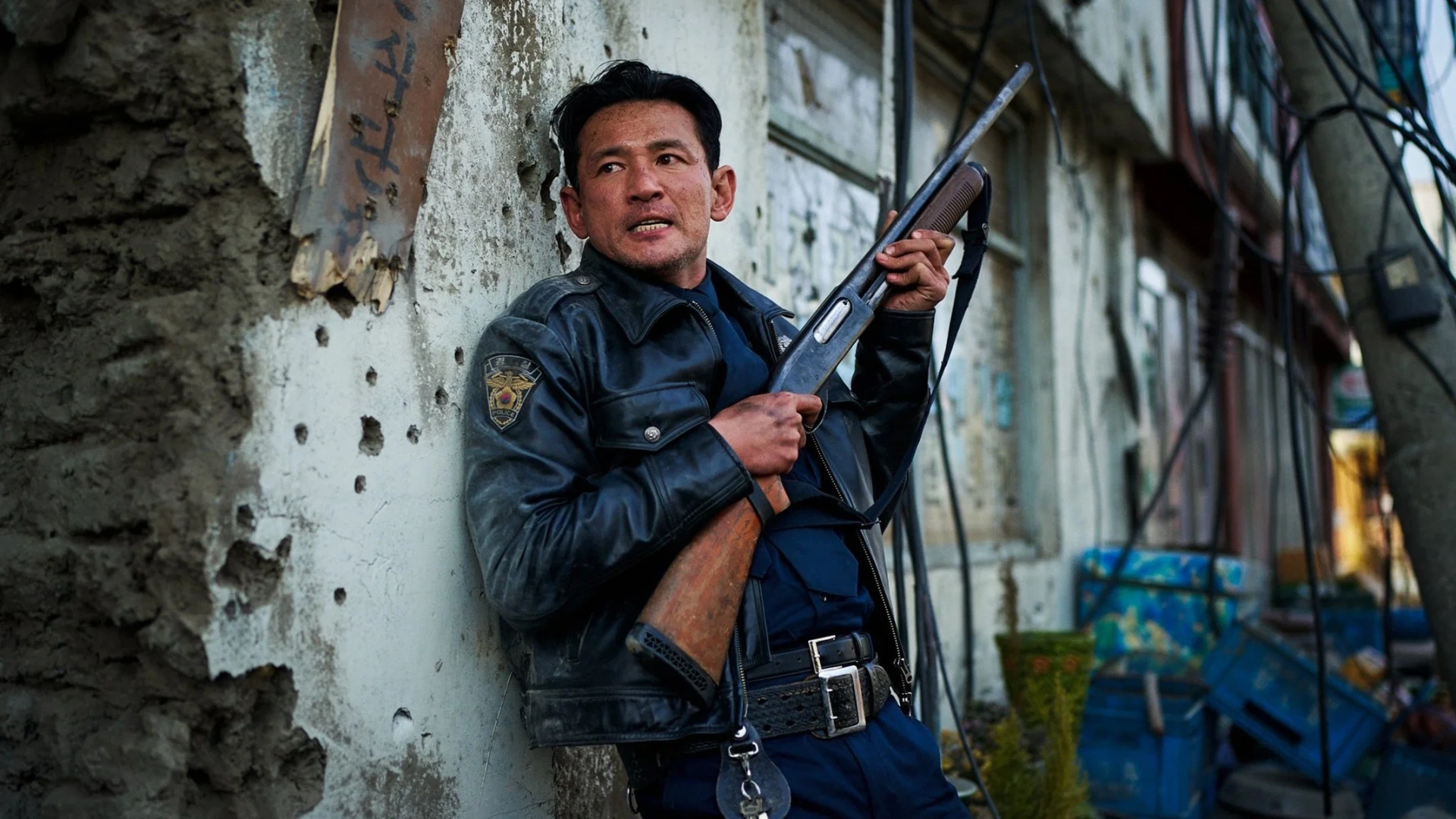
I’m torn on whether I should catch up on a pretty deep backlog of films or focus on new releases, so I might as well alternate. One of several Korean imports in recent months, Hope is the latest film from acclaimed director Na Hong-jin, an apocalyptic alien invasion thriller that boasts the highest budget yet for a Korean film. Set in the (surprisingly heavily armed) rural village of Hope Harbor near the DMZ, police chief Ko Bum-seok (Hwang Jung-min) goes from investigating a mysterious dead cow to fighting for survival against a giant creature wreaking havoc on the town, with bigger implications as the scope of the danger spreads.
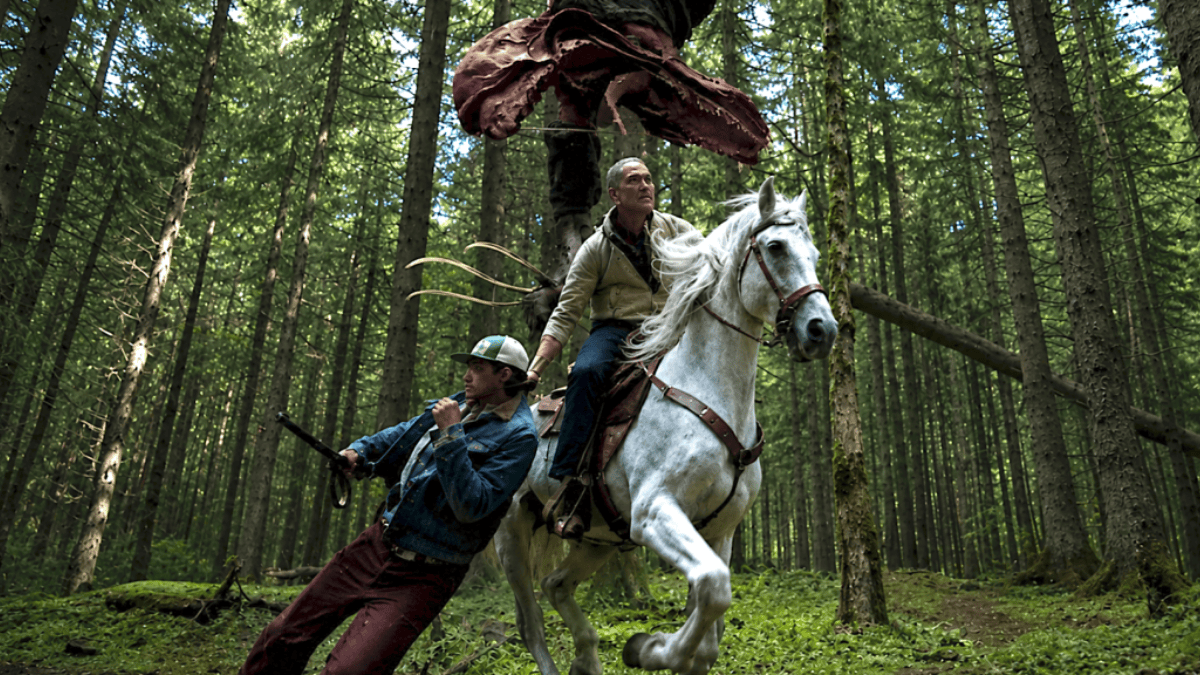
Despite an overlong runtime of over 2½ hours, Hope’s pace rarely falters, with the extended sequences of alien carnage being the main attraction. Whether it’s navigating narrow village streets or battling in beautiful green forests, the action is consistently thrilling and shot fluidly to capture the right balance of tension and movement, with echoes of Attack on Titan and Predator. Once seen, the monsters themselves suffer a bit from imperfect CGI, but they have a unique biology and thick hide that make them a particularly dangerous adversary for mere humans. Special mention is deserved by Jung Ho-yeon as a rookie cop with a truly badass introduction and Zo In-sung as a hunter with especially impressive plot armor.
The main drawback for Hope is that it is very obviously incomplete; it might as well be called Hope: Part One for all the closure it gives to… anything. After an exciting chase scene that gets a bit repetitive, something big and catastrophic happens for reasons unknown, and it just ends. There’s a sort of twist in the final moments that indicates the alien perspective will become more important, which could be really interesting in a sequel, which is supposedly already written but yet to be greenlit. But as the film stands now, it offers little beyond the action (admittedly very skillful, intense action) and a suggestion of a larger story that we may never see. One can only hope that a worthy Part Two will come eventually.
(For Day 25 of NaPoWriMo, the prompt was for a poem about an experience with live music. Considering most of this thriller takes place at a concert, it seemed like the obvious choice.)
A thrill runs through the crowd and me, For I am the crowd in part. Here to laud our artist’s art Dance and sing with all our heart, Scream their name till they depart, Loud is the crowd and me.
No telling who’s here in the crowd and me, Obscurity safe in swarm. Stay in the median; stick to the norm; Cheer when they look at you gladly conform. This is your cover from out of the storm, Shrouded in crowd and me.
A drop in the ocean, the crowd and me, Where malice is easily hid. I’m like that guy, that girl, that kid, So in the know, I’m off the grid, And nobody knows the things I did, Proud in the crowd and me. _________________________
MPA rating: PG-13
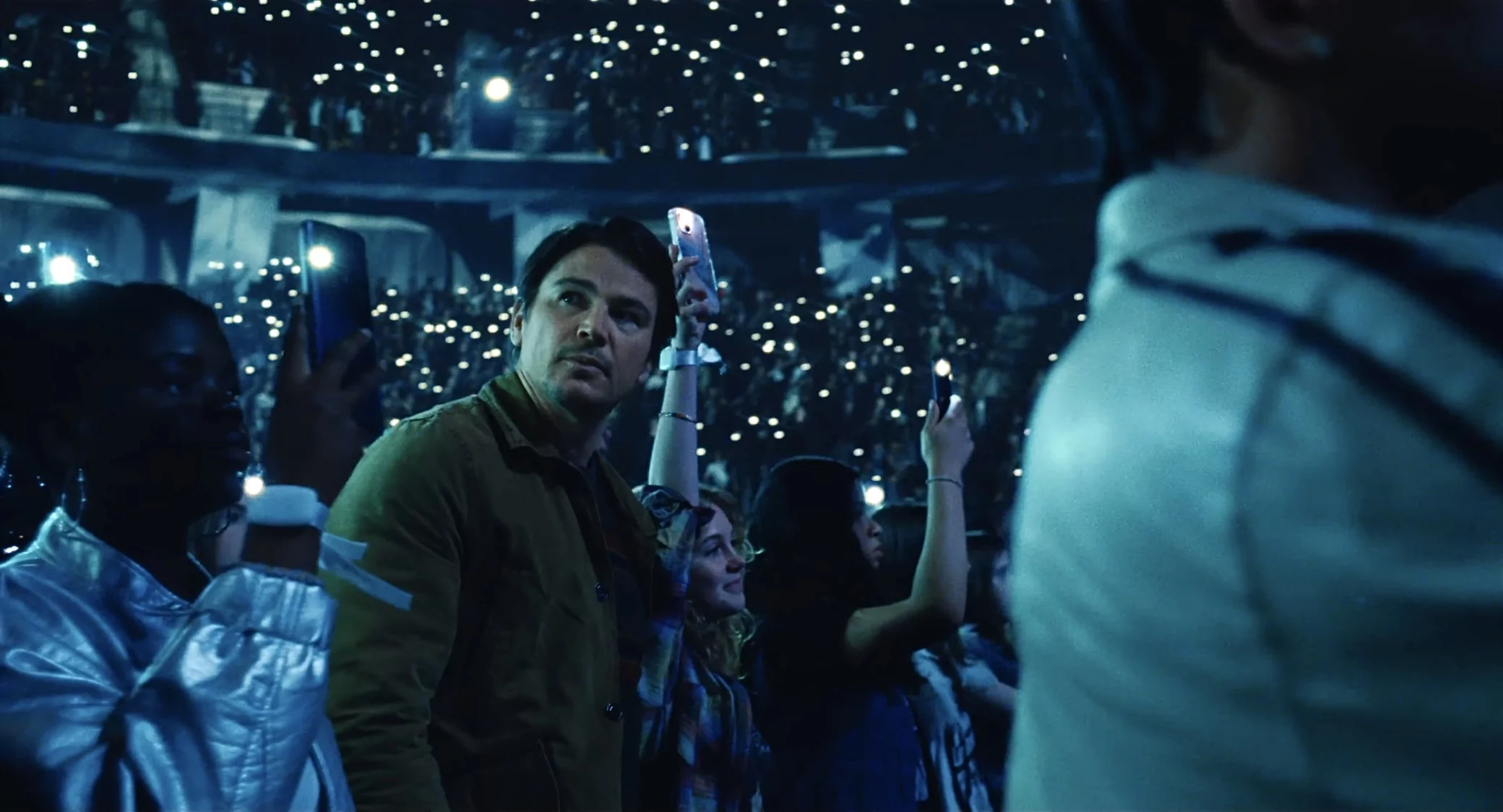
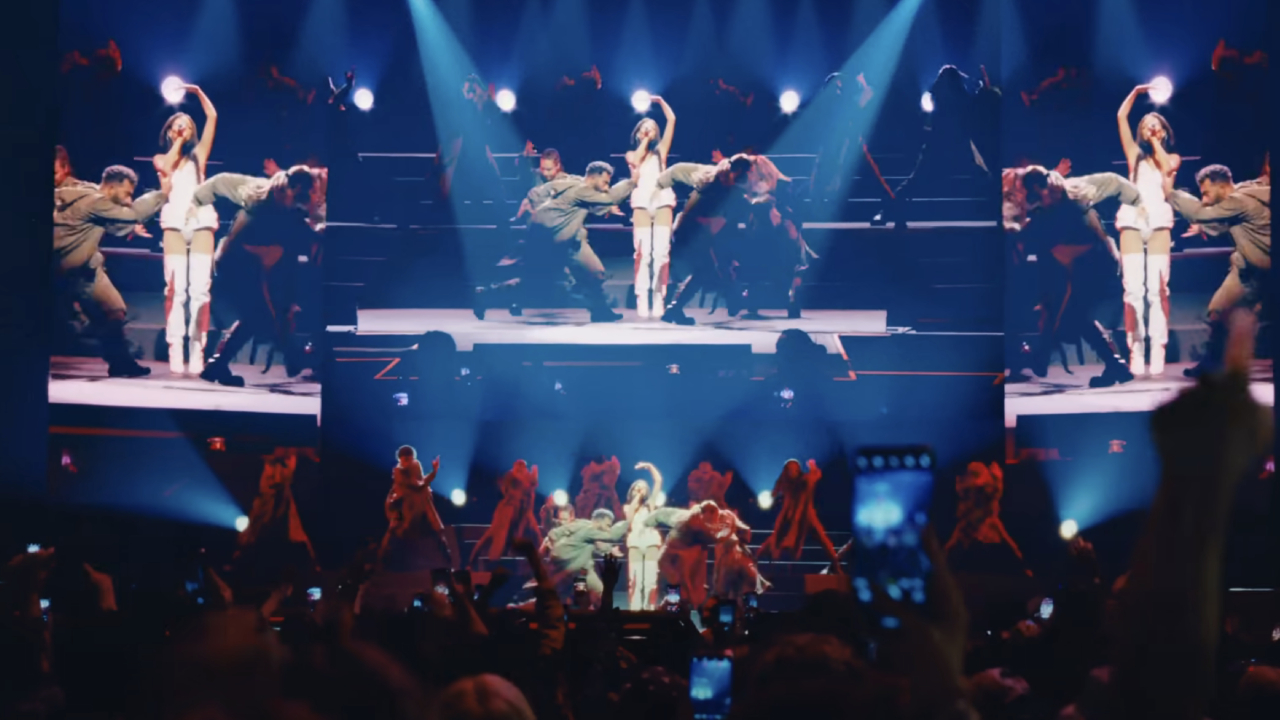
M. Night Shyamalan had such a slump after his initial success that any film better than his low points is a welcome treat in my reckoning. In Trap, a Philadelphia fireman named Cooper (Josh Hartnett) takes his teen daughter Riley (Ariel Donoghue) to a massive concert by her favorite pop star Lady Raven (the director’s daughter Saleka Night Shyamalan). While there, he notices increased police presence and learns that the event is intended to capture the serial killer known as “the Butcher,” and since Cooper is the Butcher, he is forced to get creative in escaping.
Seeing Trap the first time in theaters was a fun watch, if a bit far-fetched, and I recall discounting the more vocal criticism I heard against it. Then watching it again with a family member made me notice just how… artificial the dialogue is. Cooper’s interactions with his daughter, a fellow parent, and various people he fools all feel stilted in a way that is likely owed to Shyamalan’s weakness as a writer, but it also kind of works in this context since Cooper’s whole life of normalcy is a facade meant to keep others away from his psychopathic secret. And Hartnett really sells the character, managing that stilted charm and shifting on a dime to darker intentions beneath, the kind of psycho performance that proves an actor’s chops.
Despite that mixed benefit of the script, the film still hinges on a lot of suspension of disbelief with how trusting everyone is and how easily Cooper manages to evade authorities. It’s also a blatant nepo commercial for Shyamalan’s daughter’s pop music career, but I can’t really fault him for wanting to give her the Taylor Swift treatment. Luckily, she is quite talented, and the background of original pop songs gives the film a memorably unique setting. I’ll admit on the second watch that Trap is yet another flawed Shyamalan thriller with unfulfilled potential, but it’s still decently entertaining and, for me, shows his quality is thankfully on the upswing.
(For Day 21 of NaPoWriMo, the prompt was for a poem describing an abnormal version of an event as if it’s normal, so I took an outsider’s view of a wild party.)
The neighbors had another party last night. I saw from a distance and rolled my eyes. I got a nice view of each head light As all of the guests rolled in. It didn’t take long for the hahs and guffaws, The drunken cheers and smoky highs. They probably broke some local laws, But, hey, I was used to the din.
And then, as usual, the screams began, The frenzied shrieks of “Eek, he’s dead!” It must be some weird game they plan For when the tension loosens. Threats were yelled and shots were fired, But I just tried to go to bed. I checked in the morning, sore and tired. More cops… what a nuisance…. ________________________
MPA rating: R (for frequent language and brief violence)
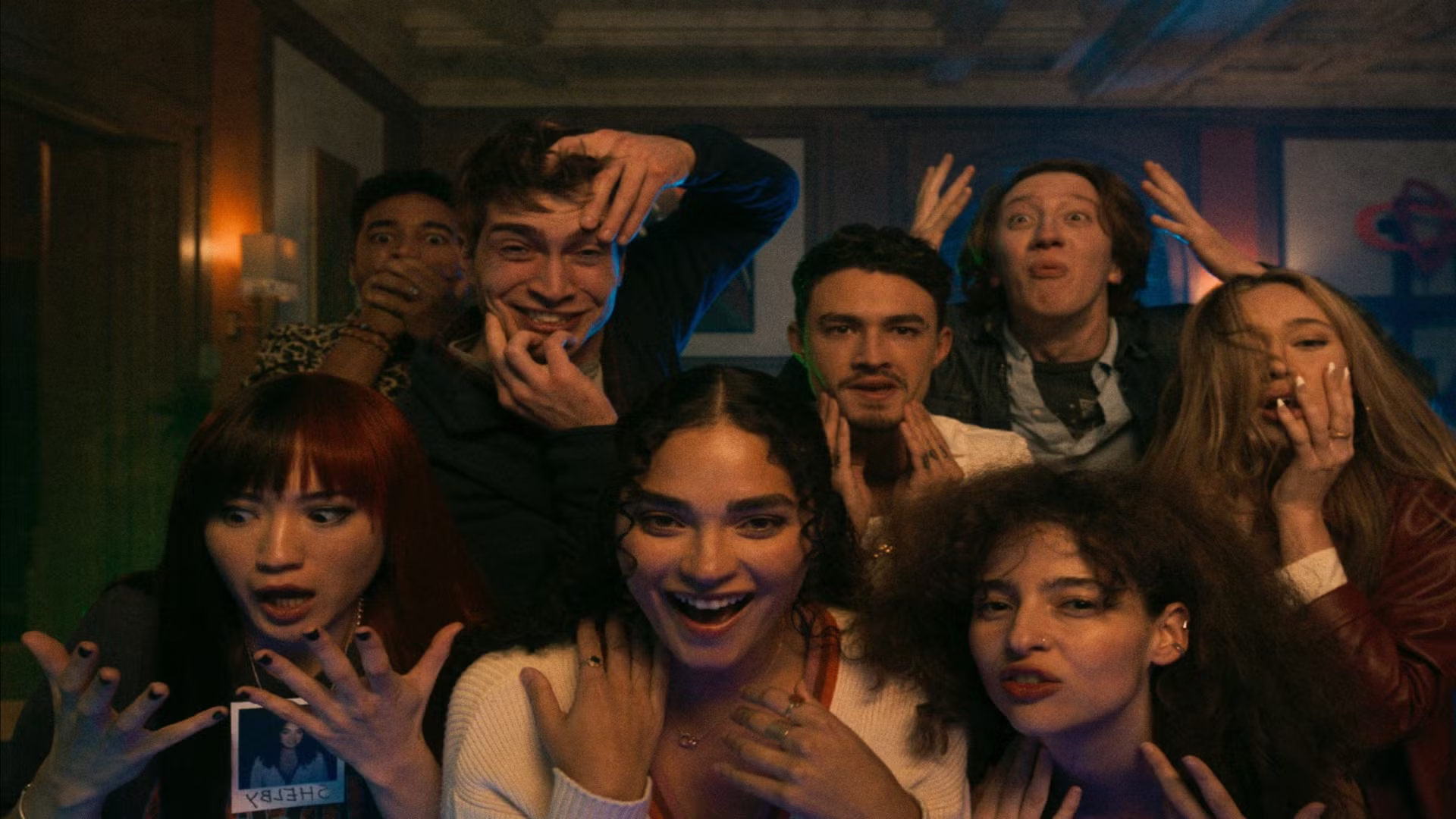
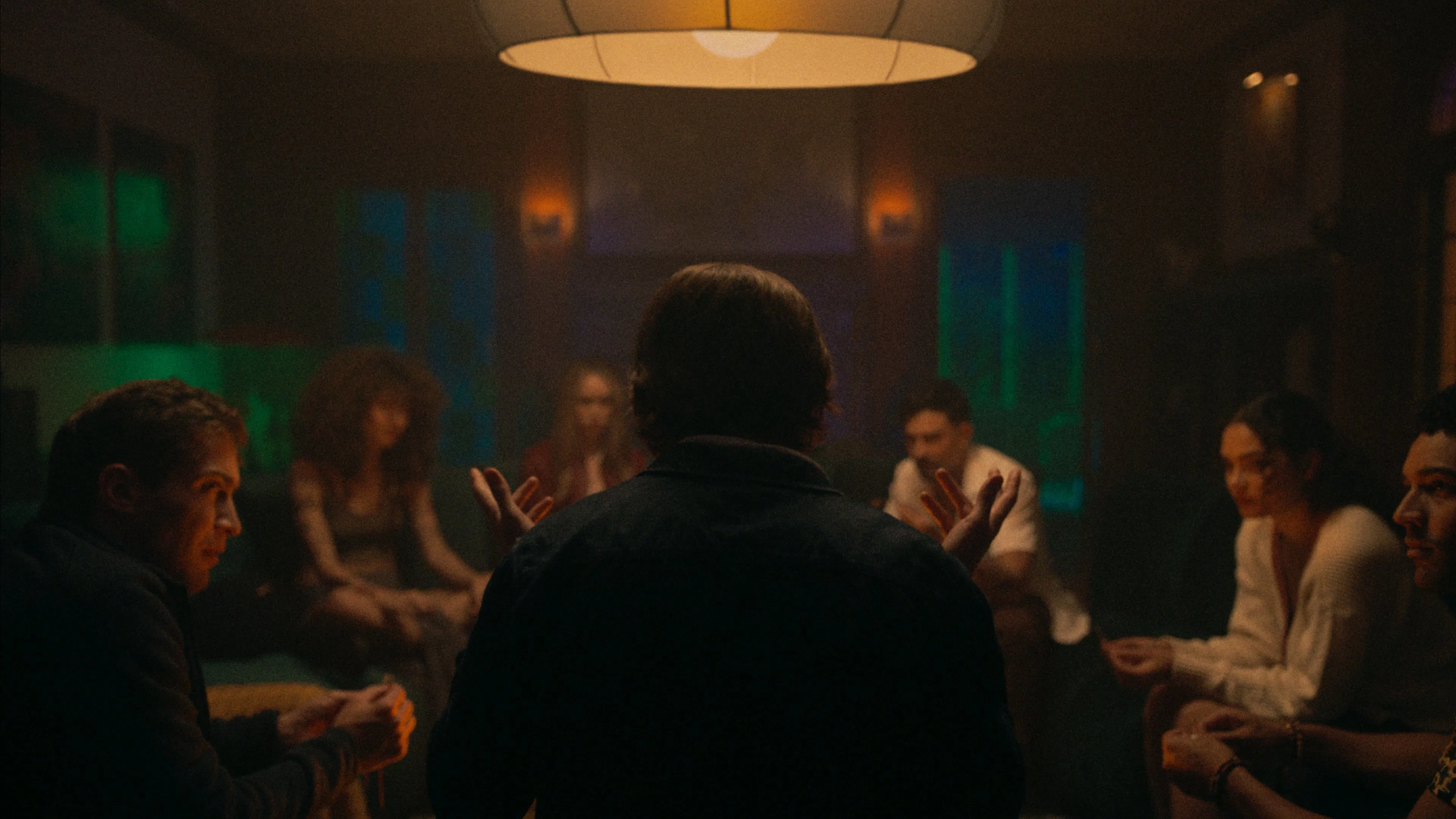
I’ve always been fascinated with the idea of body swaps; when I was growing up, they always made for especially fun cartoon episodes (and you’d be surprised at how many there are). So a film with multiple body switches at its core had my interest from the get-go. A group of seven college friends reunite after eight years for a pre-wedding party at a remote mansion. To their surprise, an estranged pal of theirs named Forbes (David Thompson) shows up as well, bearing a mysterious device and inviting them to play a game in which they all trade bodies and then must guess who is who. When an accident leaves, shall we say, fewer bodies to go around, chaos breaks out as their weird fun transforms into competing self-preservation.
It’s What’s Inside gets a lot of mileage out of its uniquely trippy take on a timeworn concept, even if it can be confusing to keep the ensemble cast straight as they swap bodies and sometimes lie about who they really are. There’s initial interest from the idea of being one’s own friend temporarily and how that can affect one’s self-esteem and ambitions, but, once the shoe drops, the second half is a twisting whirlwind of intrigue and backstabbing that makes for a wild ride. I had some reservations about the ending, though, particularly how one character is punished excessively for more of an interpersonal offense, but It’s What’s Inside was still a fun watch exploring the dangers of body-swapping.
(Happy Easter to all! For Day 20 of NaPoWriMo, the prompt was for “a poem informed by musical phrasing or melody,” with the suggestion of rewriting a song’s lyrics. I’ve done that plenty of times before, so I considered the theme of long-distance relationships and rewrote the irregular lyrics of “Spitting Off the Edge of the World” by the Yeah Yeah Yeahs and Perfume Genius, which was prominently used in this film.)
Distance, not too far To meet your eyes. Though I know where you are, And you likewise, Must, must wishes on a star Be squandered on this expanse That spans our hearts? I’ll never mind the gap in between Your heart and mine. Standing on a cliff, I see your sign. I’ll never mind the gap in between Earth and its star. Never mind what if; It’s not so far.
Lover, I wait and watch With bated breath. If you shoot, I won’t dodge A welcome death, But if you can stand the thirst, That suffering deserves quite a dance, Our favorite parts. I’ll never mind the gap in between Your heart and mine. Standing on a cliff, I see your sign. I’ll never mind the gap in between Earth and its star. Never mind what if; It’s not so far. I’ll never mind the gap in between Souls biding time, Standing on a cliff That’s worth the climb. ___________________________
MPA rating: PG-13
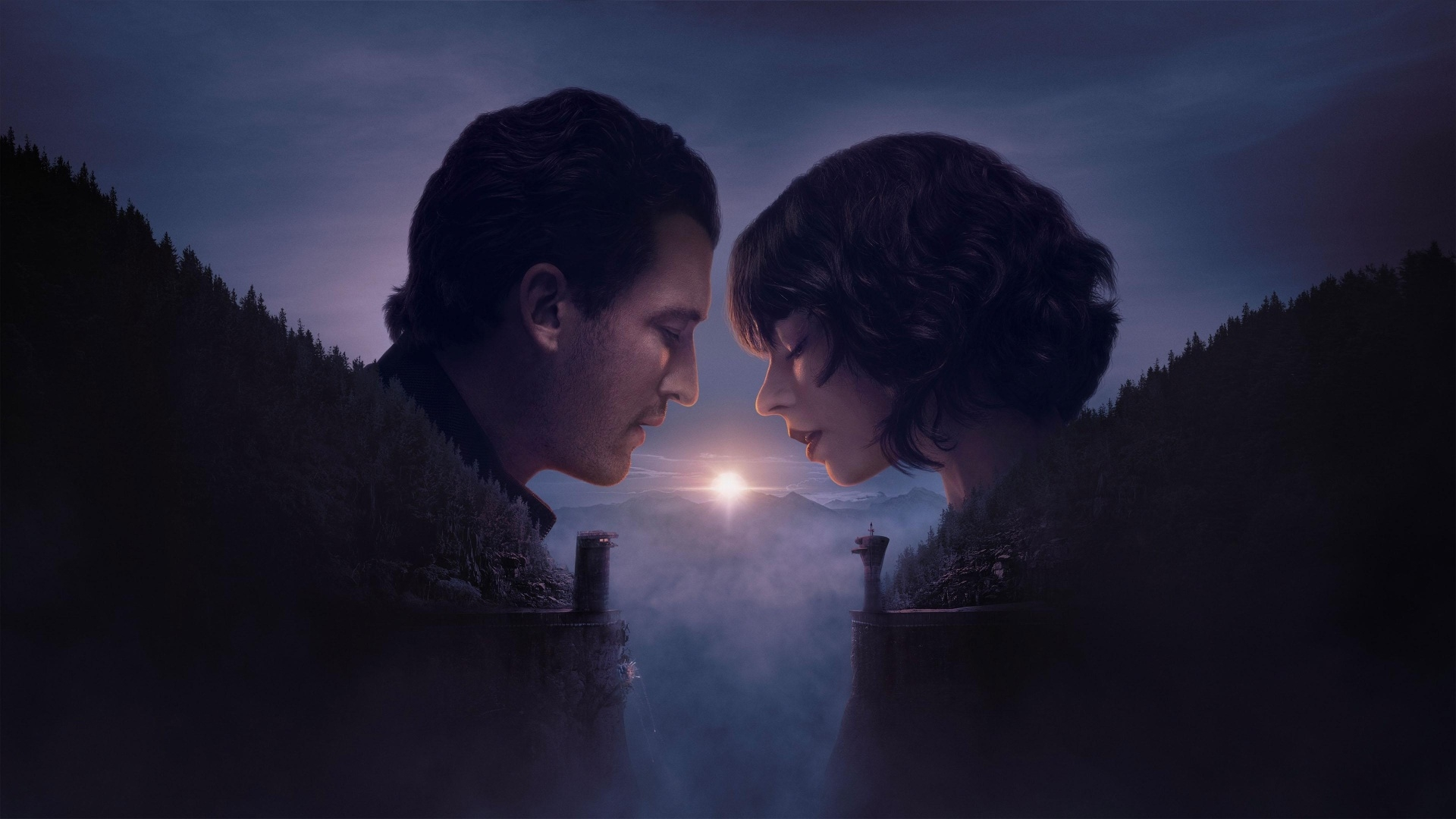
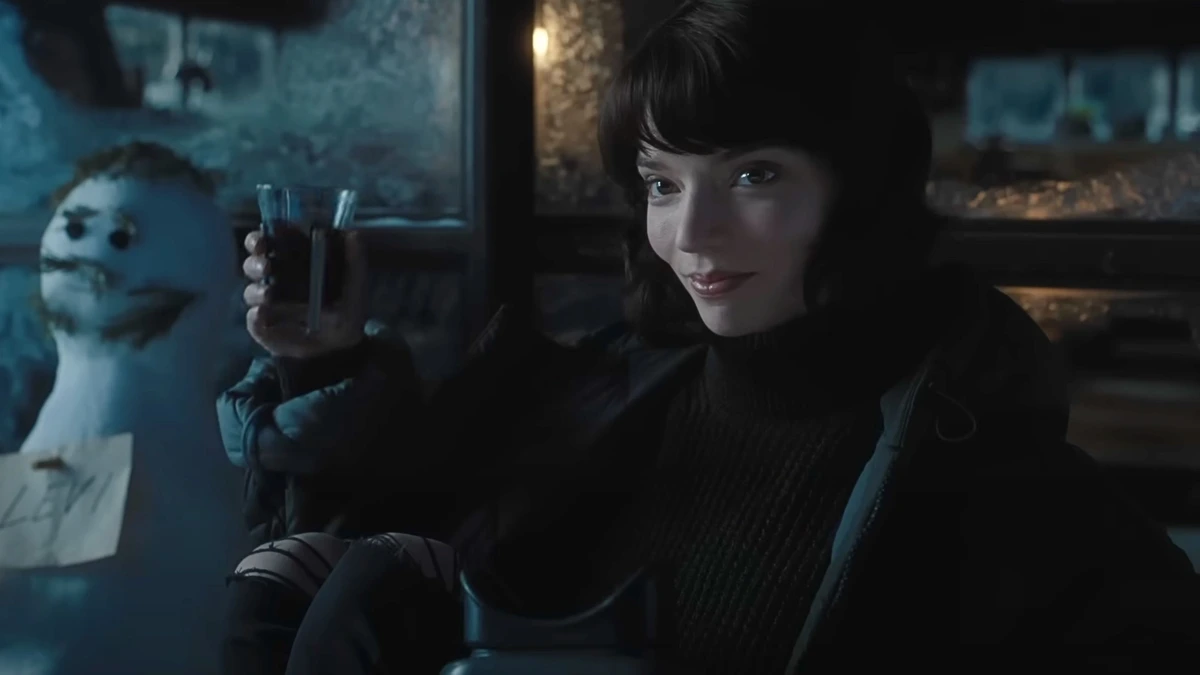
It’s unfortunate that films deserving of a theater release can easily be overlooked when only available behind the walls of a particular streaming service. Luckily, Apple TV+ is among my subscriptions, allowing me to watch The Gorge, which caught my interest just from the trailer (which gives way too much away, in my opinion; don’t watch it first). Directed by Scott Derrickson of Sinister and Doctor Strange fame, the film stars Miles Teller and Anya Taylor-Joy as a pair of world-weary snipers, one American and one Lithuanian, who are tasked with guarding remote outposts on either side of a deep and mysterious gorge. Despite the pit between them and orders not to communicate, they gradually develop a relationship, even as the secrets at the bottom of the gorge threaten to emerge.
I’ll say up front, as many critics have complained, that the premise of The Gorge does take a massive amount of suspension of disbelief. The secrecy around the giant hidden trench begs a lot of logistical questions (like how many giant pieces of paper did the eastern side keep in stock?), and the action of the latter half, often putting Derrickson’s horror roots to good use, does strain credulity. Yet this is one of those cases where I just didn’t mind, thanks in large part to Teller and Taylor-Joy, who share a remarkable chemistry and one of the steamiest dance scenes in recent memory (set to that wonderfully atmospheric Yeah Yeah Yeahs song). Taylor-Joy especially has never looked better, so maybe I just have a new celebrity crush. The Gorge is popcorn entertainment sadly relegated to small-screen streaming, a far-fetched but very watchable mashup of genres that I highly recommend.
Best line: (actually quoting T.S. Eliot) “Only those who will risk going too far can possibly find out how far one can go.”
(For Day 19 of NaPoWriMo, the prompt was for a story poem “in the style of a blues song or ballad,” and the mention of crimes and murder ballads brought to mind this classic.)
The money could run and the tellers could hide, But that meant fun for Bonnie and Clyde. Never was a danger from which they shied. Ride or die were Bonnie and Clyde.
The banks would quail at the loss of pride, Left in the trail of Bonnie and Clyde. Withdrawals like theirs couldn’t be denied; Ride or die were Bonnie and Clyde.
Warn all the wimps and stay inside If you get a glimpse of Bonnie and Clyde. Quick with a trigger and wild-eyed, Ride or die were Bonnie and Clyde.
Gotta get caught to be cuffed and tried, And they were not, not Bonnie and Clyde. Famed and feared both far and wide, Ride or die were Bonnie and Clyde.
King and queen of the homicide, None came between ol’ Bonnie and Clyde. Couldn’t last long till they lost their stride; Ride and die did Bonnie and Clyde. _______________________
MPA rating: R (for violence, though closer to PG-13 by today’s standards)
I saw Bonnie and Clyde more out of deference for its reputation than personal interest, since I’m not typically a fan of crime films known for their violence. (This was before the passing of Gene Hackman that made the recent watch even more worthwhile.) But I was very pleasantly surprised.
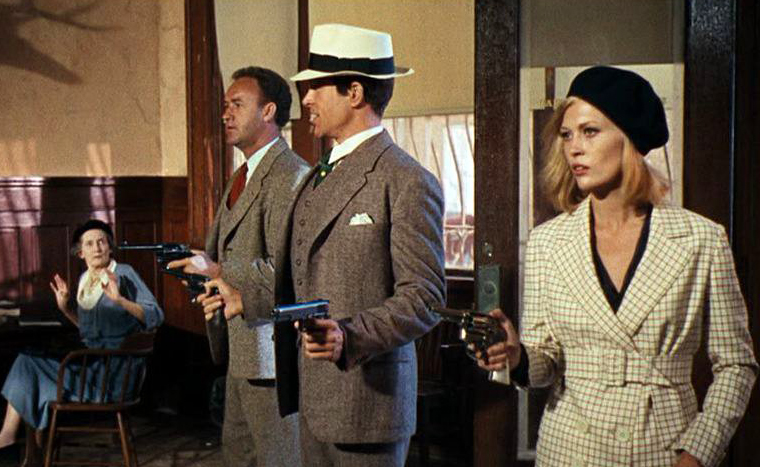
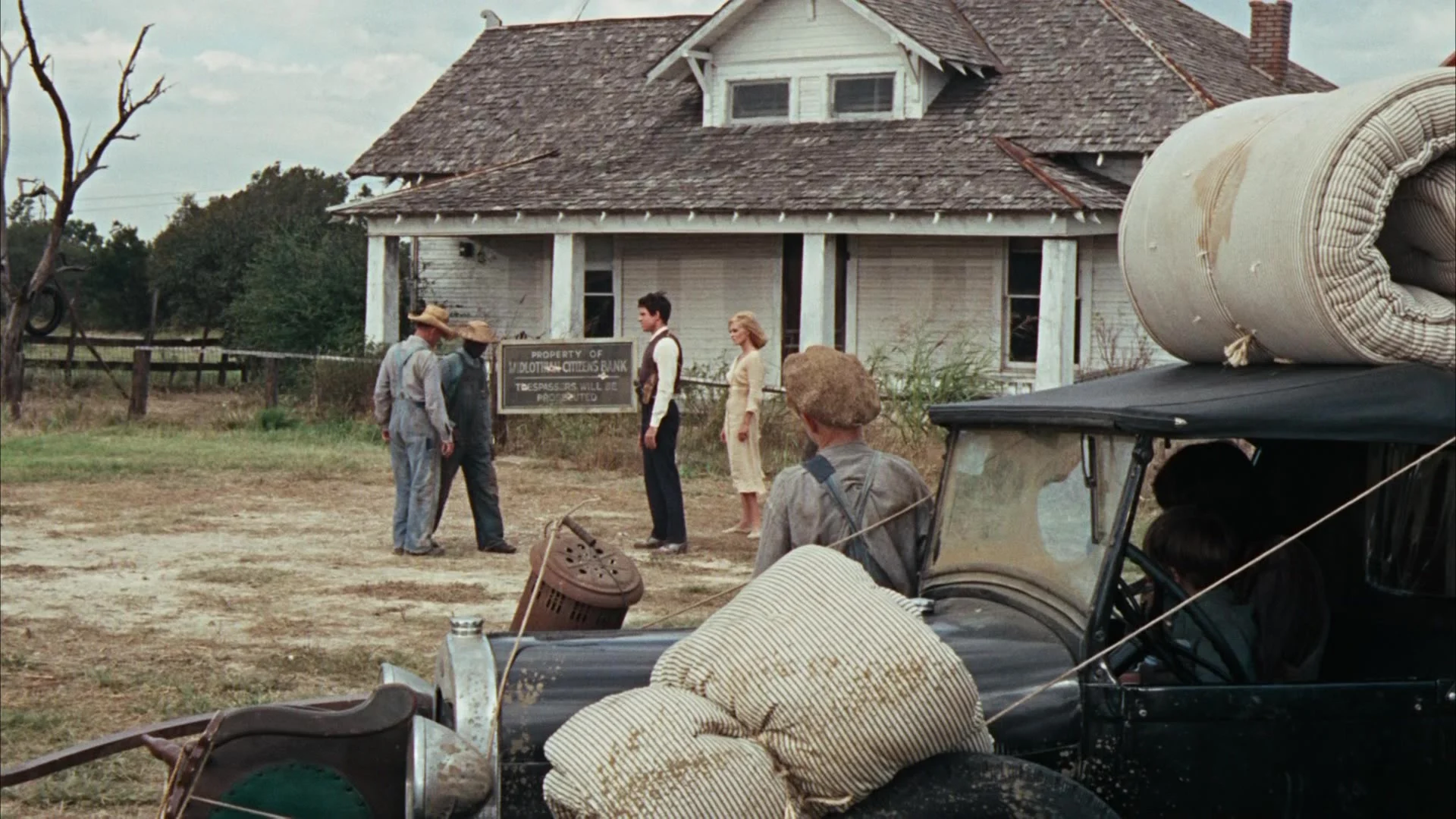
Faye Dunaway’s Bonnie Parker and Warren Beatty’s Clyde Barrow are quintessential anti-heroes, earning sympathy with their romantic chemistry and Depression-relevant targeting of banks yet allowing their bad choices to spiral further and further into infamy. They eventually form a gang with Clyde’s brother Buck (Hackman), Buck’s excitable wife Blanche (Estelle Parsons), and a mechanic accomplice C. W. Moss (Michael J. Pollard), terrorizing the countryside and evading the law, for a while at least.
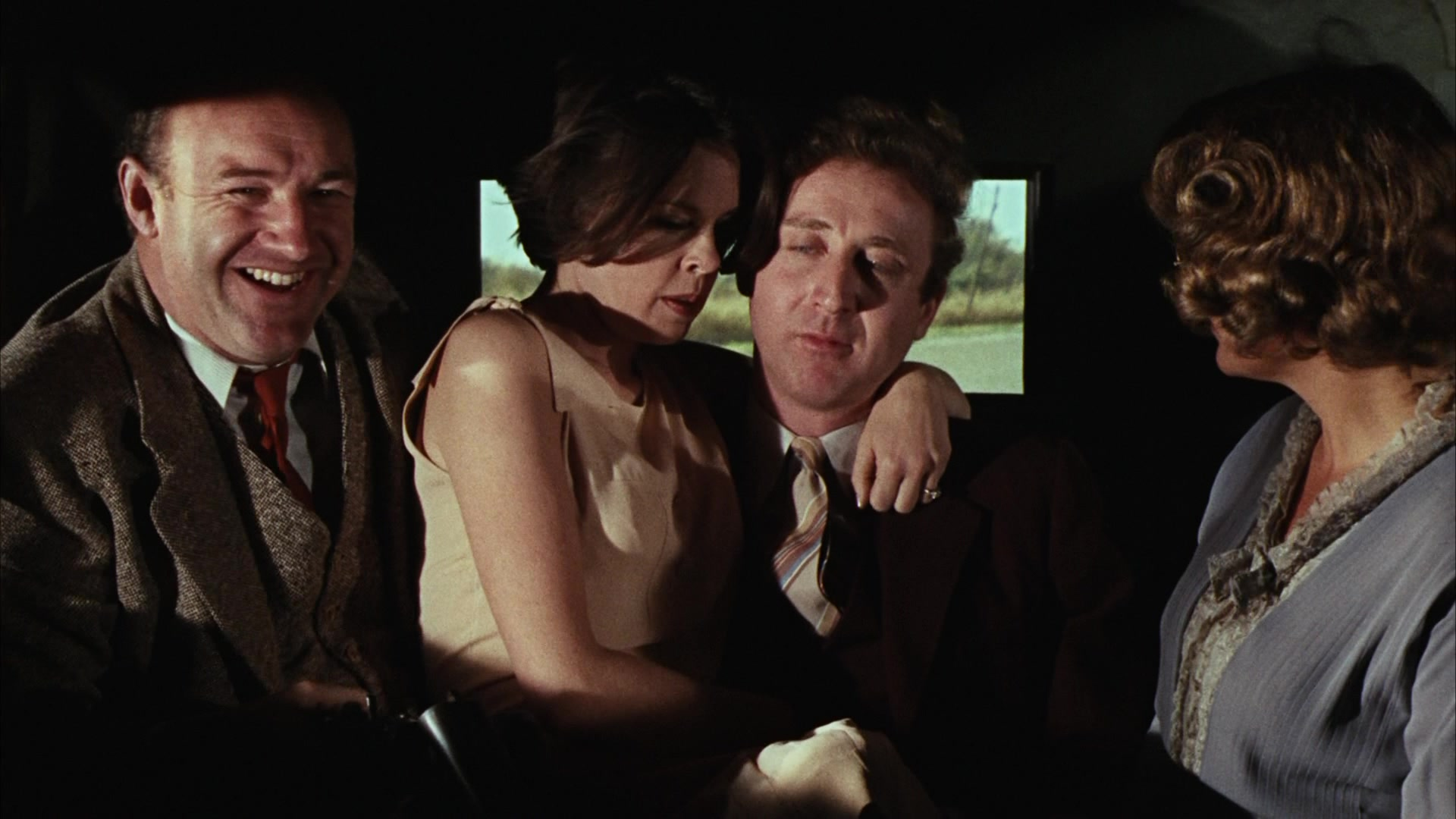
The film is full of little moments that make the characters more than one-dimensional villains, like the head-butting between Bonnie and Blanche or the brief kidnapping of a young couple (including Gene Wilder in his film debut) that reveals Bonnie’s aversion to any reminder of death. Bonnie’s brief reunion with her mother (Mabel Cavitt, a local extra chosen for the role) especially brings home how much their crime spree has ruined a chance at a normal life, something with which they may never have been satisfied anyway. I also quite liked the inclusion of a poem the real Bonnie Parker wrote about themselves, which would have made my Poems in Movies list had I known about it then.
Bonnie and Clyde is famous for its taboo-breaking depiction of violence, though it’s quite tame compared with even TV shows these days, and it serves the story well, especially in the famous final scene. The film is also beautifully shot, and all the major performances excel and were Oscar-nominated, though Estelle Parsons (probably the weakest link) was the only one to win, along with the cinematography. Combining history, romance, and tragedy, Bonnie and Clyde certainly deserves its status as a classic.
Best line: (Clyde, responding to Bonnie’s poem) “You know what you done there? You told my story, you told my whole story right there, right there. One time, I told you I was gonna make you somebody. That’s what you done for me. You made me somebody they’re gonna remember.”
(For Day 9 of NaPoWriMo, the prompt was for a rhyming poem with varying line lengths, so I thought exploring time might be a good theme.)
The stone on which the house in which the chair in which I sit Has witnessed quite a bit. While flesh is quick to disappear, The bedrock lives in centuries; It waits for ice to yield to sea to yield to continental sheer And waits for errant meteors or yet another global freeze, Eroding into dust and grit, Chipped and thawed and trod and split, Ground and pressed and layered deep and never asking “what’s the year?” Giving purchase to the dirt, the firm foundation of the trees, Until at last, I came to rest Here. ____________________
MPA rating: PG-13
I love the idea of 65 more than I do 65 itself. I can absolutely picture the pitch meeting for the concept of aliens stumbling upon Earth in prehistoric times and being met by a dinosaur-filled death trap in the same way humans imagine inhospitable exoplanets. But it’s all in the execution, and 65 (named for the number of millions of years ago) somehow makes that thrilling notion feel ho-hum.
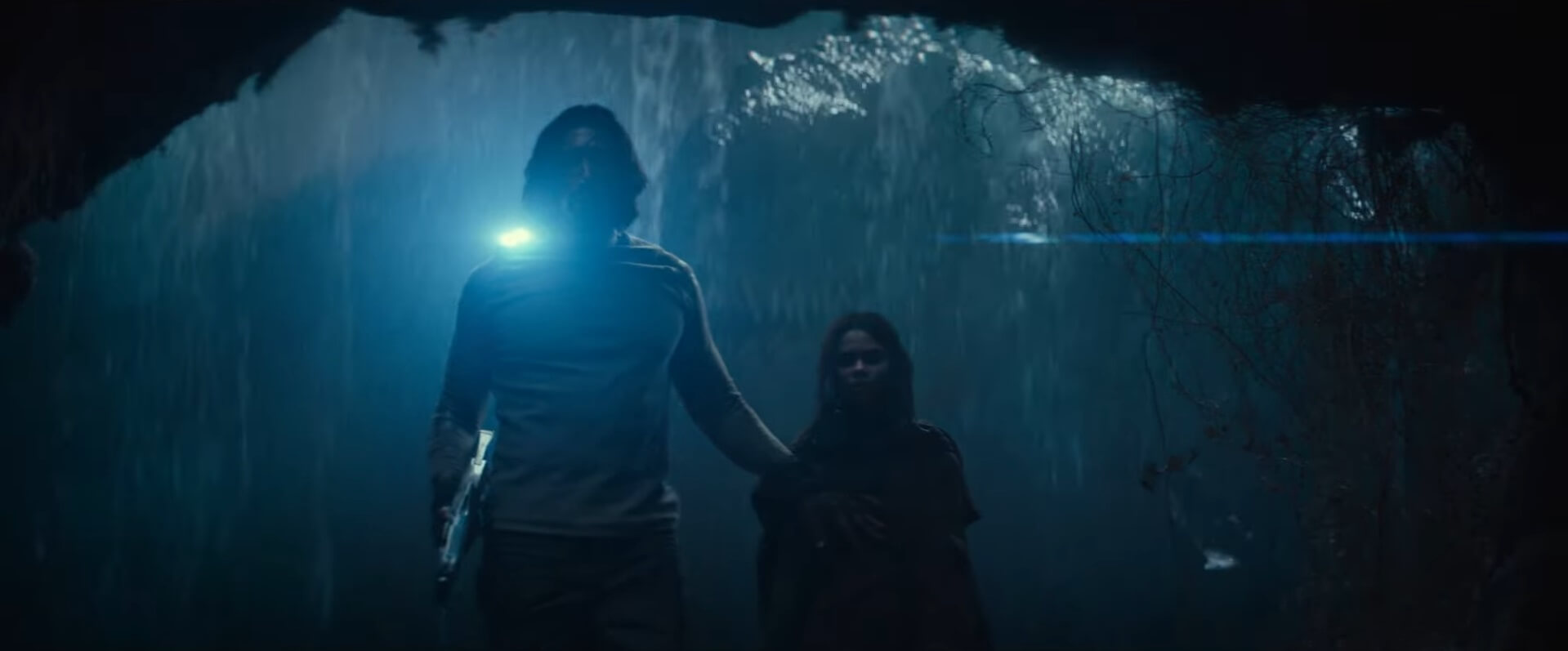
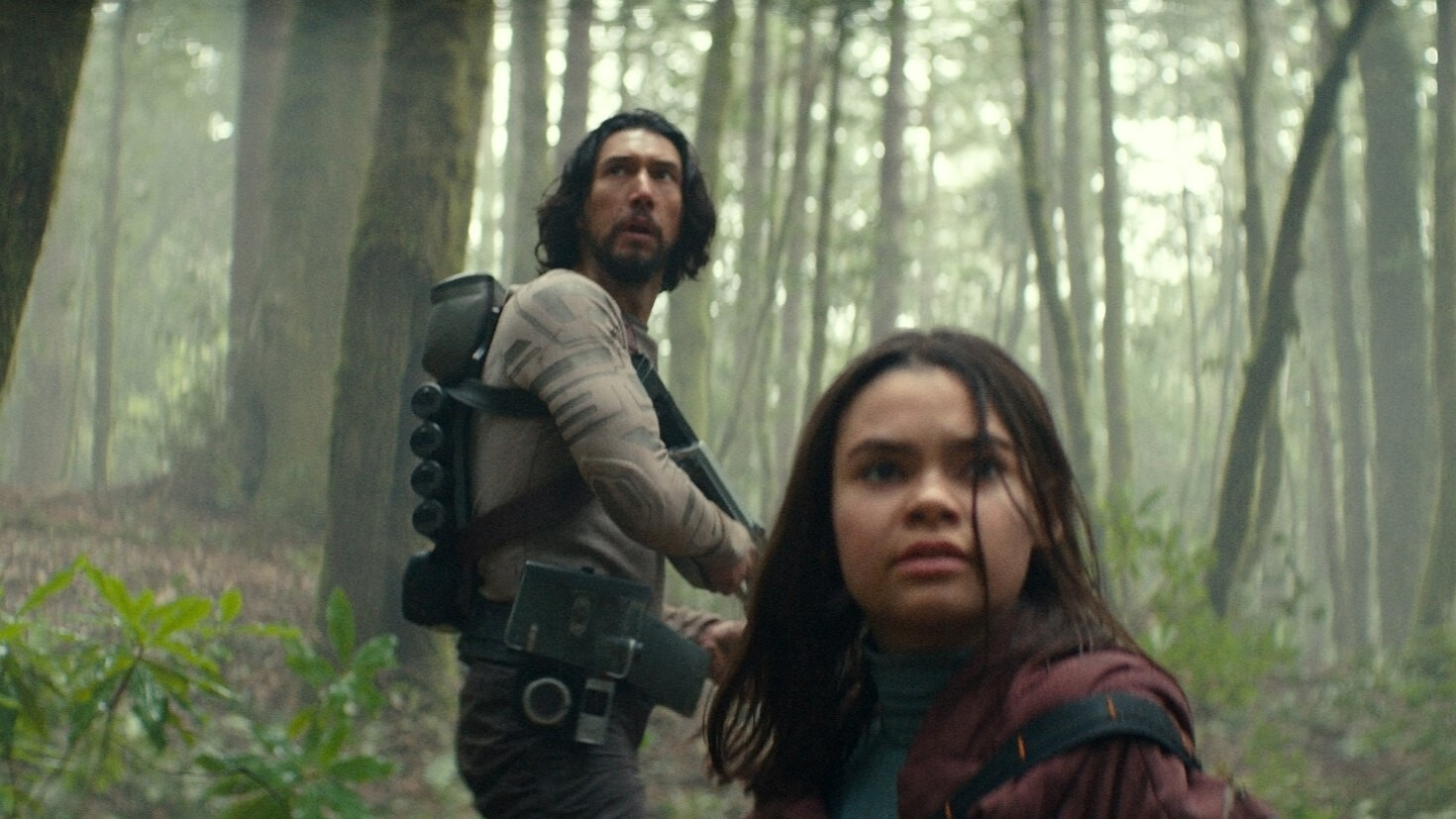
Adam Driver is serviceable as the main character Mills, a grieving father who left his sick daughter to pilot a space expedition, only for the ship to crash-land with only him and a young girl (Ariana Greenblatt) surviving. What follows is rather paint-by-numbers as they fight or evade dinosaurs and grow closer in their shared loss. There’s nothing particularly wrong with the plot or effects-heavy action, and it makes for a decent watch; it just never rises above a slightly futuristic Jurassic Park knock-off. Maybe films like Jurassic Park or King Kong have simply made dinosaurs less scary than they should be, at least when viewed from the comfort of our living rooms.
Best line: (Nevine, Mills’ daughter) “I know that you’re leaving. And I know it’s because of me.” (Mills) “No. It’s not because of you, it’s for you.”
(For Day 2 of NaPoWriMo, the prompt was for a poem that directly addresses someone and includes elements like an unusual simile and an anachronism. As you may guess, the addressee here is some WWII Nazis taken by surprise.)
I say, chaps, don’t gawp at me like you’re in shock; You knew this was coming (or should have at least). You can’t go around gobbling up the whole bloc And starting up wars on the west and the east.
It truly was only a matter of time Before some resourceful dissenters arrived To answer each war crime with, well, even more crime Until your dear Reich has been quite unalived.
You looked oh so smug in your grey uniforms, That swastika bent like a crime scene in chalk, But you lie with the devil, then you get the horns, A regular arsenal, loaded and cocked.
So don’t be so stunned by the Colt in your face; It’s not so irregular when you come to it. There’s action that’s needed when Nazis give chase, And always somebody, like us, who will do it. ____________________
MPA rating: R (for strong violence)
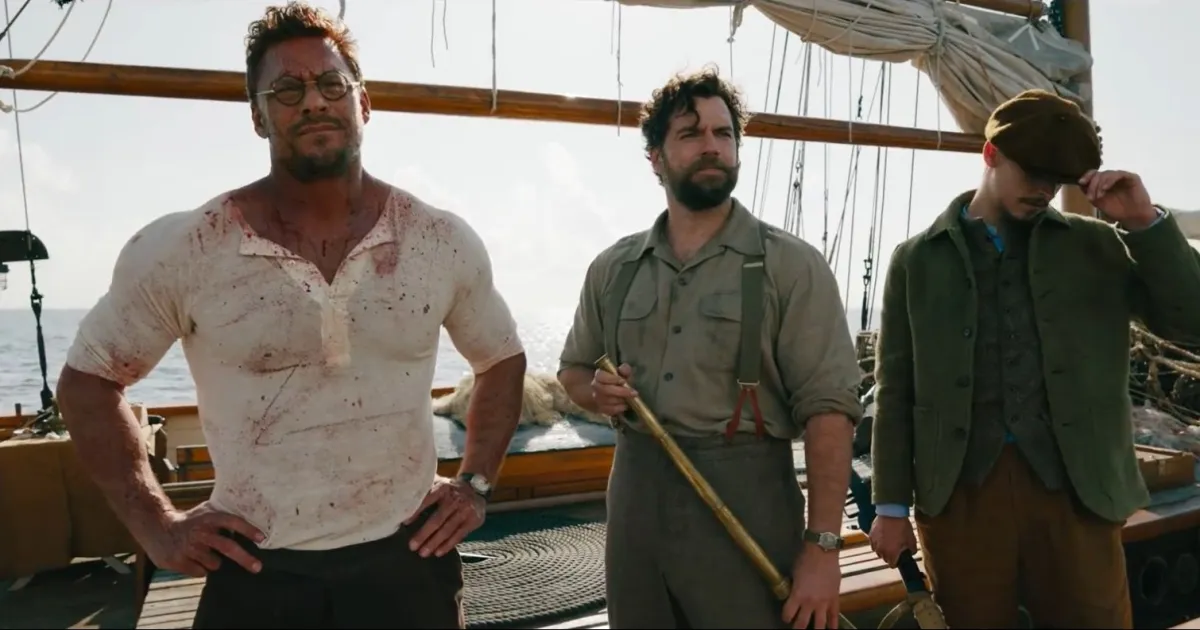
Based on a Damien Lewis book about Churchill’s secret Special Operations Executive (SOE), The Ministry of Ungentlemanly Warfare sees director Guy Ritchie leaning into that cinematic axiom that Nazis make the best villains and by extension the best victims. At the height of World War II, debonaire commando Gus March-Phillips (Henry Cavill) is recruited by one Brigadier Gubbins (Cary Elwes) and tasked with forming an elite espionage team to target Nazi operations with sabotage and guerilla warfare. Joined by a savage Dane (Alan Ritchson), an expert frogman (Henry Golding), and others, the team sets out to destroy an Italian supply ship in what would be known as Operation Postmaster.
The history of the SOE and the feats of the real-life war heroes are undoubtedly interesting, but this is obviously the Hollywood version of events. The film revels in its chance to dispatch Nazis with every sharp instrument at hand, yet, despite the danger involved, the action is so one-sided that there’s rarely any suspense for the fates of the main characters. That’s a shame too, because Cavill has an effortless charisma as the leader of the pack, complemented by the cool but ferocious Ritchson, and their characters might have shone even more with a slightly less glamorized script.
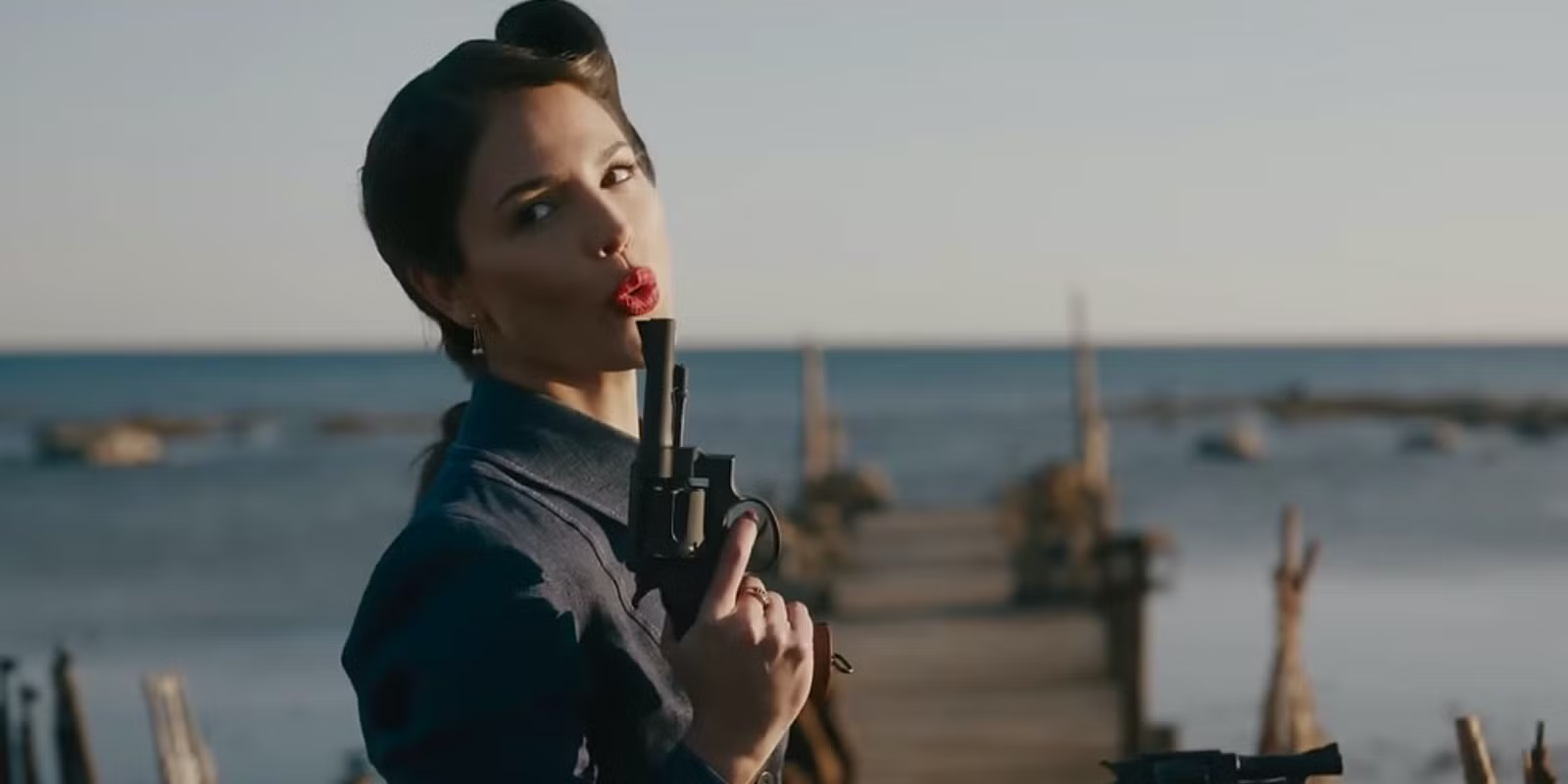
The Ministry of Ungentlemanly Warfare makes popcorn entertainment out of an under-publicized chapter of WWII history, and it does so reasonably well. From the undercover seductions of Eiza González to the shoot-em-up carnage of a tropical rescue mission, it’s sometimes brutal fun, but it also feels like empty calories in a way such intriguing history shouldn’t.
Best line: (Churchill) “If Hitler isn’t playing by the Rules, then neither shall we?”
(For Day 29 of NaPoWriMo, the prompt was for a poem inspired by one of the ten vocabulary words compiled by Merriam-Webster from various Taylor Swift songs, including incandescent, clandestine, Machiavellian, cardigan, elegy, altruism, self-effacing, albatross, antithetical, and mercurial. With more time, I might have liked to tackle using all ten, but I settled on the word clandestine for now.)
Their agents are clandestine So normal folk can rest in The peace that comes from ignorance and bliss. Not knowing we need saving, We carry on behaving. Don’t tell the targets just how near the miss.
The villains and the heroes, The neutral ones and zeroes, They trade their blows for country, cash, or crown. I doubt the average person Will mind if conflicts worsen As long as they will simply… keep it down! __________________________
MPA rating: PG-13
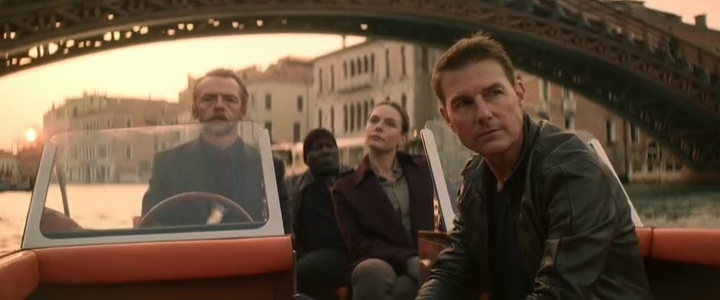
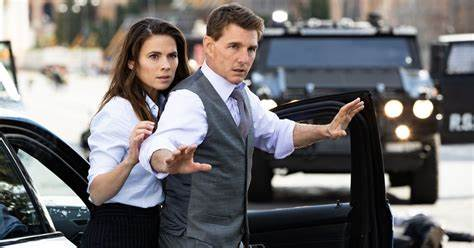
I’ve been behind the curve when it comes to the Mission: Impossible franchise, only realizing how good it was in recent years. Thus, this seventh installment in the Tom Cruise juggernaut is the first one that I was lucky enough to see in theaters. And as is the case ever since the third movie found the franchise’s stride, Dead Reckoning Part One is another winning spy thriller making full use of Cruise’s willingness for death-defying stunts.
After a Russian submarine is sunk by its own torpedo, world leaders are informed of a rogue A.I. known as the Entity, capable of manipulating any computer system. The Entity would be a game changer for whatever government procures the two-part key that can control it, so Ethan Hunt (Cruise) and his friends Luther (Ving Rhames), Benji (Simon Pegg), and the now fugitive Ilsa Faust (Rebecca Ferguson) take it upon themselves to ensure it is destroyed to preserve the global balance of power. With its predictive capabilities, the A.I. is always a step ahead of them as they contend with a self-serving thief (Hayley Atwell) and Ethan’s old nemesis (Esai Morales).
Ethan Hunt is no stranger to “going rogue,” but it’s an interesting change for him to willingly defy his government’s agenda to obtain the Entity because he doesn’t trust it in anyone’s hands, as opposed to the myriad times he’s been set up by a villain. It’s becoming cliché for A.I. to be made scary as it runs amok, and it’s perhaps unrealistic how the Entity pulls strings, seeming omniscient but not infallible, yet it works well as a change of pace from the typical terrorist or corrupt IMF agent that usually battles Hunt’s team, though Morales’ Gabriel still provides that too.
(Non-specific spoilers here) While I liked how characters from previous films were brought back, a part of me is disappointed with how the film handles a particular character, apparently having little idea what to do with them except sacrifice them for the sake of drama. And it’s clear that Hayley Atwell is meant to be the new blood for the team. While that narrative intent is unmistakable, I can’t be too mad because Atwell is a breath of fresh air, a great female foil to Ethan as they match wits until she is drawn deeper into this world of espionage than she expected. Considering Ethan let Michelle Monaghan slip through his fingers already, I think the two of them make an excellent pair.
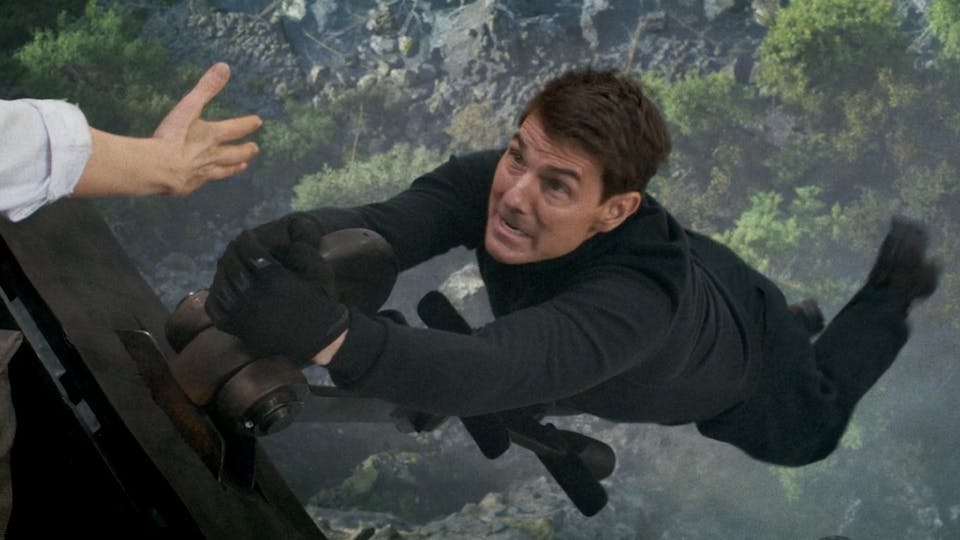
And we mustn’t forget the action. Whether it’s a car chase through Rome or a free-for-all aboard the Orient Express, the stunts and skirmishes never disappoint, including Cruise’s well-documented motorcycle jump off of an Alpine cliff, though the train climax that follows is even better, in my opinion. It’s unfortunate that the Mission: Impossible hype has waned, leaving this Part One of a two-part story a box-office disappointment, but I sincerely hope it can bounce back even stronger (perhaps with a tighter runtime) because Cruise and this series clearly still have gas in the tank.
Best line: (Ethan, to Gabriel) “If anything happens to them, there’s no place on Earth where you or your God [the Entity] will be safe from me. There’s no place where I won’t go to kill you. THAT is written.”
Rank: List-Worthy (joining the rest of the series)
(For Day 28 of NaPoWriMo, the prompt was for a sijo, a Korean form similar to the haiku but with longer lines of 14 to 16 syllables, for a total of 44 to 46 syllables. It seems like a tricky form to get right, but I tried my best with the six-line format, ending up with 45 syllables. And of course, I had to pair it with a Korean film.)
For the dead, we spare no thought, Heedless without a gutted grave. The shells we humans wear Serve us well before our final molt. What remains is not you, not me; May it never crave your fear. ____________________________
MPA rating: Not Rated (a light R seems about right)
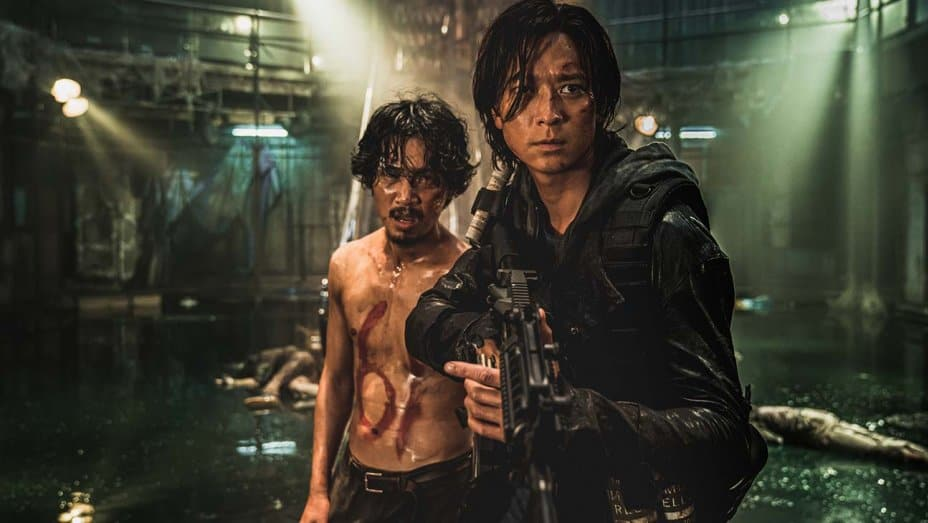
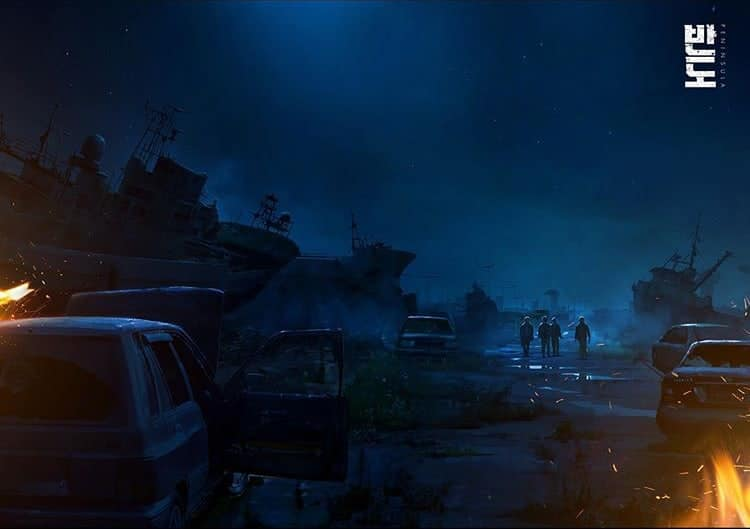
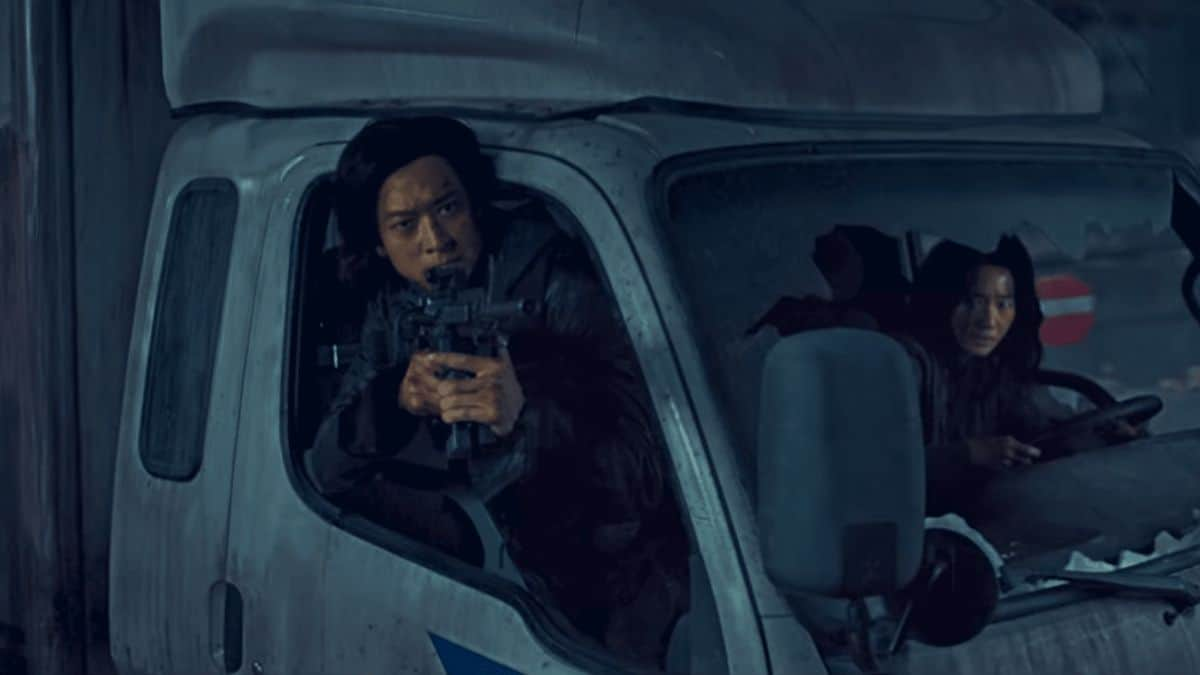
Train to Busan was an anomaly for me, a Korean zombie film that I genuinely loved as it showcased character growth and action over gross-out horror so common to the genre. The animated prequel Seoul Station only reinforced its predecessor’s uniqueness, since that was merely another exercise in apocalyptic nihilism. So I was cautious in approaching Peninsula, the standalone sequel set in the same zombie-infested South Korea as Train to Busan. While it feels more like the zombie dystopias I tend to avoid, Peninsula proved to be a pleasant surprise.
Four years after South Korea was overrun by fast-moving zombies and sealed off from the rest of the world, former Marine officer Jung-seok (Gang Dong-won) is haunted by the day his world fell apart, losing his sister and nephew in the undead chaos. When he and his bitter brother-in-law (Kim Do-yoon) are approached by mobsters to return to Korea, they sneak back into the desolated Incheon to retrieve a truck with $20 million, only to be confronted by both zombie hordes and a violent rogue military unit that has taken control of the wasteland. With a handful of resourceful survivors (Lee Jung-hyun, Lee Re), Jung-seok must outmaneuver both living and dead to find a way off the peninsula.
At first glance, Peninsula has many of the familiar trappings of the zombie movie: swarming hordes, abandoned cityscapes, evil humans acting worse than the zombies. One thing I liked about Train to Busan was that it was comparatively less violent than others of its genre, owing to the fact that the characters didn’t have access to bloodletting weapons like guns or swords. In contrast, Peninsula has no shortage of guns, making it more of a conventional shoot-em-up actioner, though it at least doesn’t turn into a full-on gorefest.
So, as many middling reviews have pointed out, this sequel doesn’t match the original for creativity or emotional payoff, but it comes closer than I would have expected. While Jung-seok doesn’t have quite the selfless character arc of Seok-woo in the first film, the way his guilt motivates him to do better still becomes poignant by the end, and the story presents a satisfying karma of evil or selfish characters getting their due. Plus, despite the “conventional actioner” complaint earlier, the action is thrilling throughout, particularly a fantastic, Mad Max-level car chase toward the end.
Though Peninsula is more violent and less inspired than its forerunner, I was glad to find that it is not a complete departure from what made Train to Busan so good. Zombie movies are such a well-worn format by now that there needs to be something to set new installments apart, and I can certainly get behind car chases, heist thriller elements, and an emotional core.
(For Day 24 of NaPoWriMo, the prompt was to borrow a line from an existing poem and take it in a different direction. Since this film has a direct connection to the poem “Lucy Gray” by William Wordsworth, I decided to start with the same opening line and use the same form.)
Oft I had heard of Lucy Gray: Her story nearly myth. We had few tales to light our day Or dreams to bargain with.
Dear Lucy Gray endured the Games, That much is widely known, But as to any other claims, They’re whispered when alone.
I’ve heard details that she was friend To Coriolanus Snow, The man who every year will end Our children as a show.
It makes me worry how a man Could dull his very heart. Was Lucy Gray part of his plan? And did it fall apart?
I cannot say, but still I hear Of rumors in the night, That Lucy Gray just may appear And offer us a light.
I wonder who awaits that more, The tyrant or the slave. We all have things we’re waiting for Along the road we pave.
Such stories make me want to pray For nigh unlikely things, To hail another Lucy Gray And see what change she brings. ________________________
MPA rating: PG-13
While The Maze Runner and Divergent struggled to match its success, there’s something about the world of The Hunger Games that stands out among young adult dystopia franchises. The concept of children being forced to kill each other for entertainment is not without precedent (ahem, Battle Royale), but the journey of Katniss Everdeen from tribute to freedom fighter is a special blend of sci-fi action and frighteningly plausible barbarism, with just the right amount of hope. It’s a testament to Suzanne Collins’s book series and their film adaptations that the world they create is able to sustain a prequel without it feeling like a cheap cash grab. Let’s just be glad it’s not a whole new trilogy.
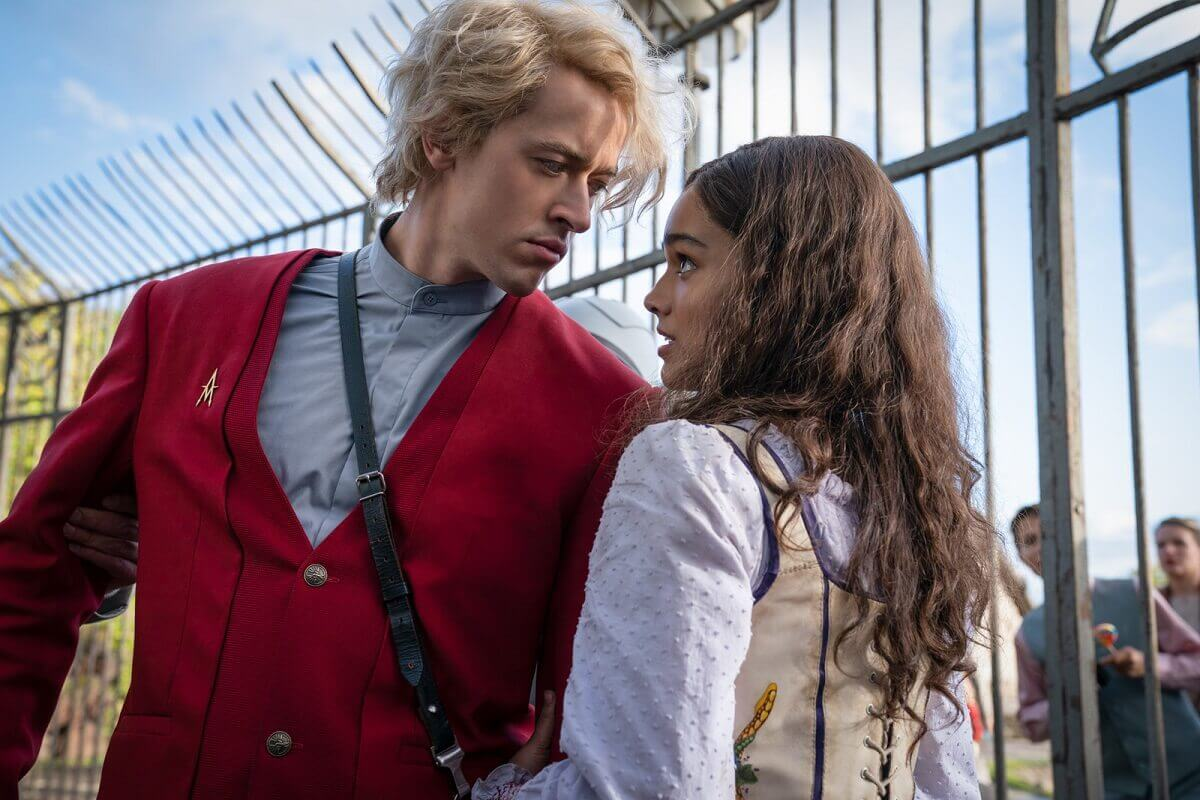
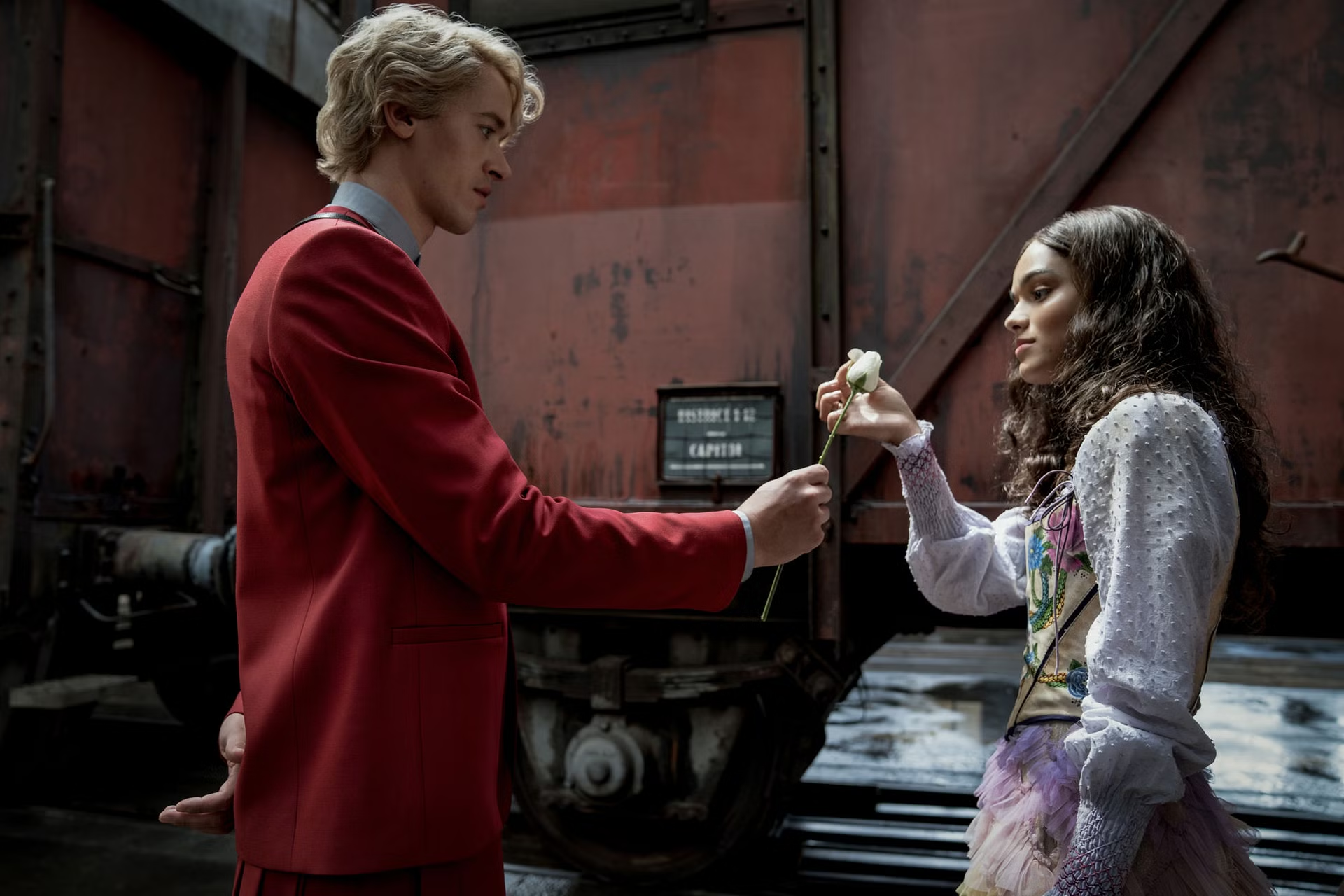
As advertised, The Ballad of Songbirds & Snakes is the origin story of Coriolanus Snow, the tyrannical villain played by Donald Sutherland in the original series. Proving that even dictators were young and hot once, “Coryo” is played here by Tom Blyth, who gives the future despot a fitting ambiguity between his tender side with his remaining family (Hunter Schafer, Fionnula Flanagan) and his growing ambition to rise above his peers. At the behest of the inventor of the Hunger Games (Peter Dinklage), the Capitol’s Academy class must serve as mentors for the upcoming Games, with Snow paired with District 12 musician Lucy Gray Baird (Rachel Zegler, never quite as compelling as Jennifer Lawrence). Eager to prove himself to the ruthless Head Gamemaker (Viola Davis), Snow conspires to keep Lucy Gray alive for both their sakes.
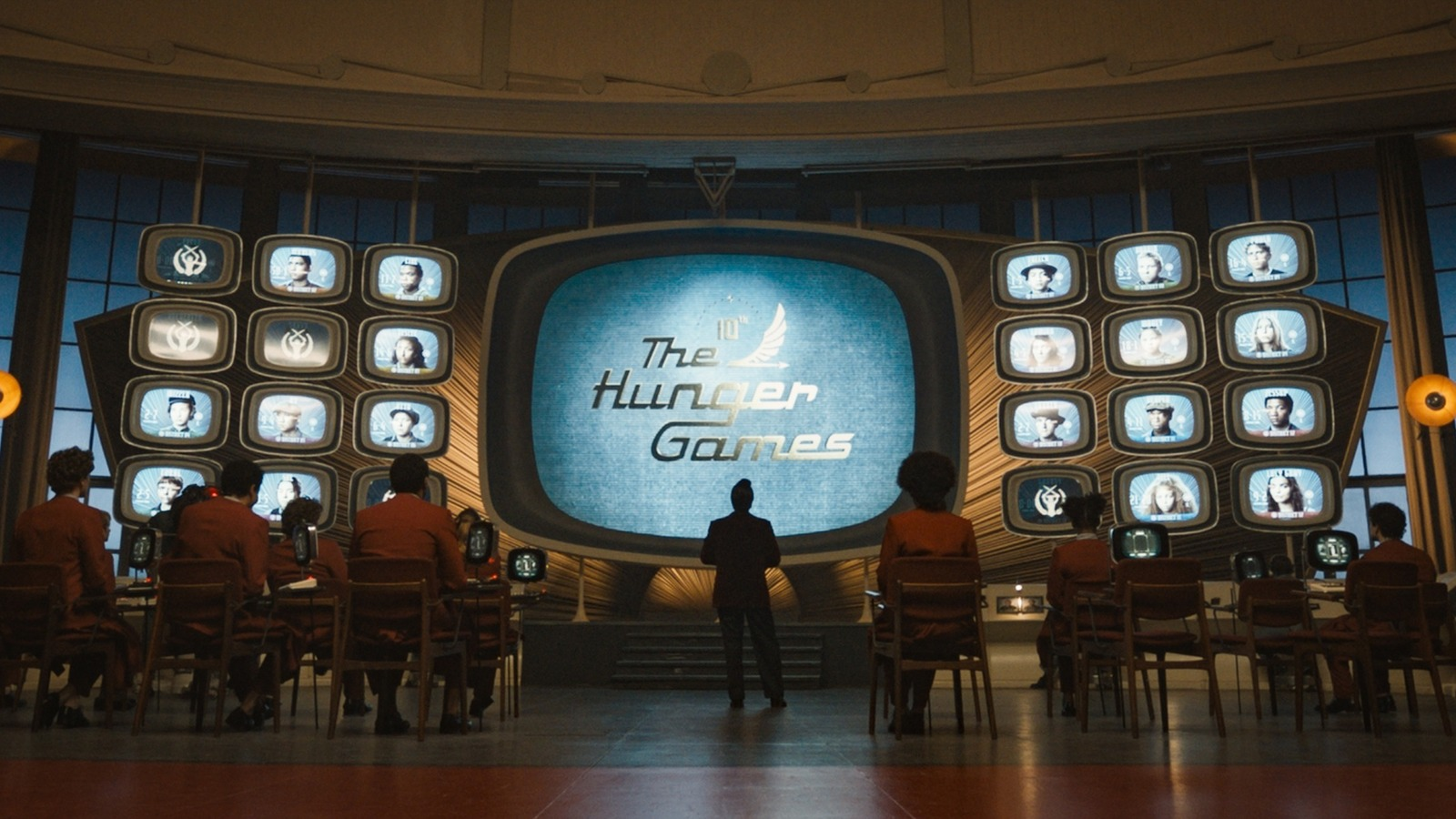
The first Hunger Games featured the 74th annual contest, so the pipeline of reaping children and training them into gladiator combat had been efficiently honed over decades by that point. In the prequel, it’s only the 10th Hunger Games, with the devastating war that prompted their creation still seared into most people’s memories. I found it fascinating to see the process Katniss experienced still in its infancy, with less refined technology and growing pains like defective drones for delivering resources to the arena. Being a tribute was not always glitz and glamor before the fighting began, and there were even vocal critics of the Games’ brutality, such as Snow’s close friend Sejanus (Josh Andrés Rivera).
The plot is broken up into three sections, and it does feel odd that the always thrilling Games make up more of a middle climax, kind of like the bomb testing in Oppenheimer, leaving the rest of the film to be potentially dull by comparison. Thus, it depends how interesting you find subtle treachery and questionable loyalties whether the latter third holds up without the action. I for one did still enjoy Snow’s gradual slide into Machiavellian deceit, as well as the little fan-service references to the other films. As for the ending, I don’t blame anyone for feeling unsatisfied by its open-ended lack of resolution, but the connection to Wordsworth’s “Lucy Gray” helped me appreciate its poetic mystique.
I mulled over how I would rank all the films with this new addition, and it would probably come in fourth, ahead of only Mockingjay – Part 1. (I loved how that film’s great “Hanging Tree” song found its origin in this film too.) That ranking speaks more to the strength of the other three movies since The Ballad of Songbirds & Snakes has plenty of merits, including a strong tragic character arc, great actors adding to the story’s gravitas, and welcome development of the history and lore of Panem. It’s certainly the most musical of the series, with Rachel Zegler flexing her singing chops perhaps too often, but I didn’t mind that. It’s hard to say how well the film works for uninitiated audiences, but this ballad is an insightful expansion for franchise fans like me.
Best line: (Lucy Gray Baird, to her captors) “Nothing you can take from me was ever worth keeping.”
Rank: List-Worthy (joining the rest of the series)