I hope we won’t be spotted. I hope it’s safe to stay. With every hour More we cower, The more I feel like prey.
I hear the sounds approaching. I fear their origin, The smell of death Upon its breath As hope is wearing thin. __________________
MPA rating: R (for violence and language)
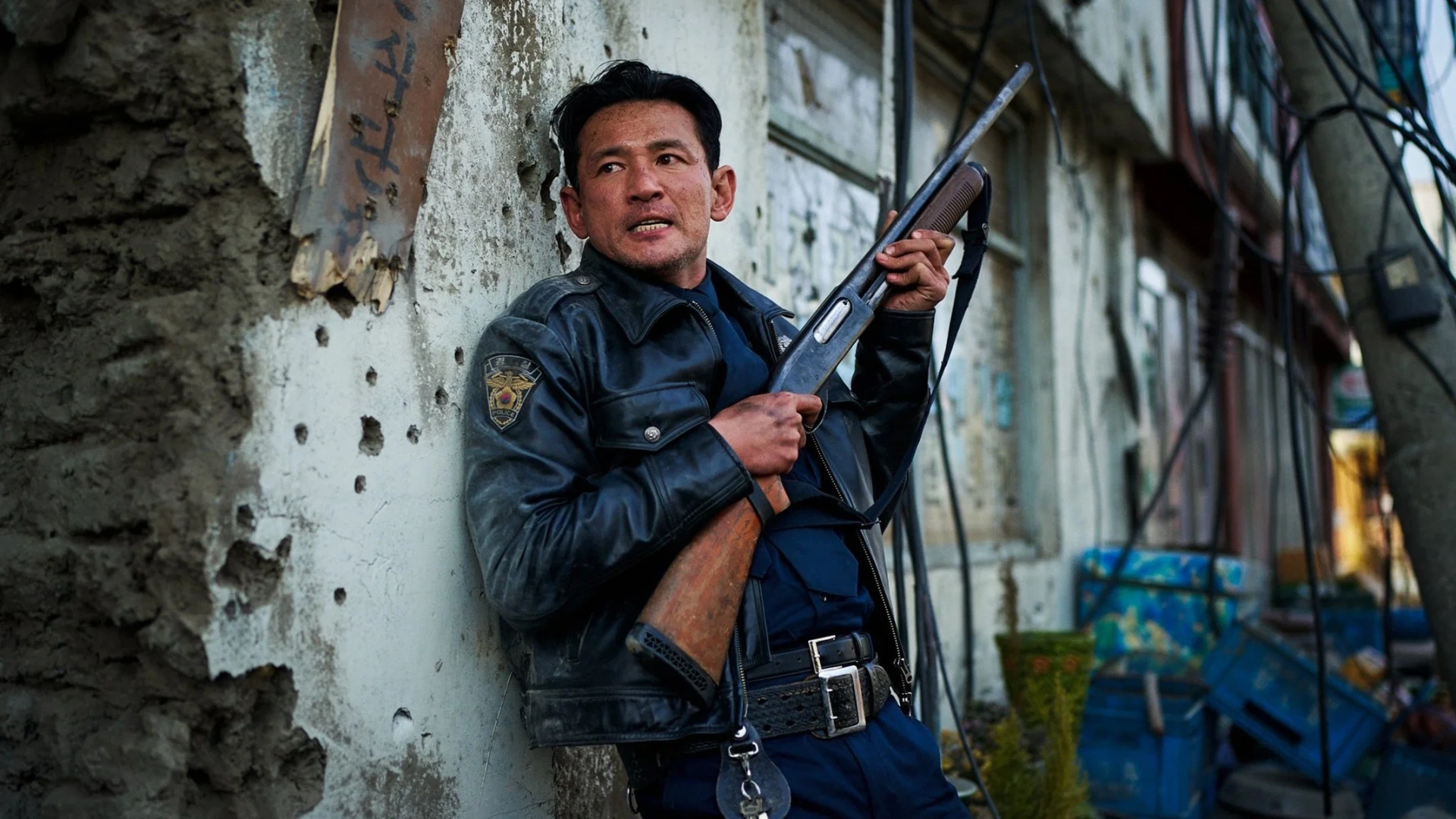
I’m torn on whether I should catch up on a pretty deep backlog of films or focus on new releases, so I might as well alternate. One of several Korean imports in recent months, Hope is the latest film from acclaimed director Na Hong-jin, an apocalyptic alien invasion thriller that boasts the highest budget yet for a Korean film. Set in the (surprisingly heavily armed) rural village of Hope Harbor near the DMZ, police chief Ko Bum-seok (Hwang Jung-min) goes from investigating a mysterious dead cow to fighting for survival against a giant creature wreaking havoc on the town, with bigger implications as the scope of the danger spreads.
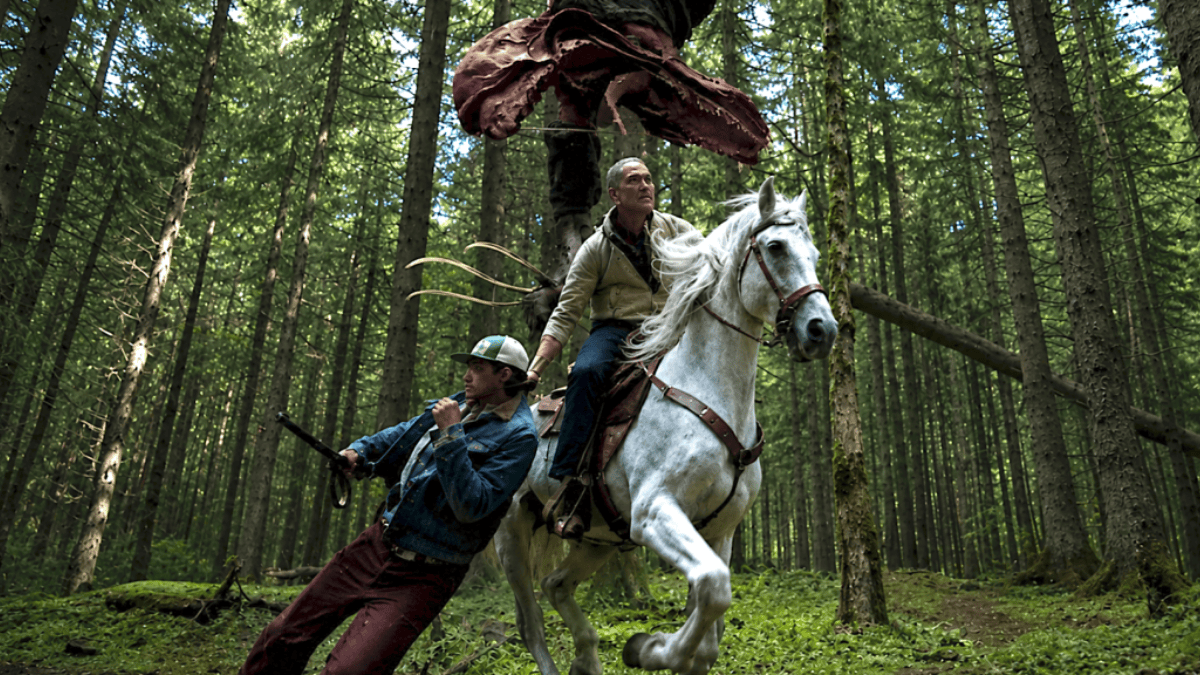
Despite an overlong runtime of over 2½ hours, Hope’s pace rarely falters, with the extended sequences of alien carnage being the main attraction. Whether it’s navigating narrow village streets or battling in beautiful green forests, the action is consistently thrilling and shot fluidly to capture the right balance of tension and movement, with echoes of Attack on Titan and Predator. Once seen, the monsters themselves suffer a bit from imperfect CGI, but they have a unique biology and thick hide that make them a particularly dangerous adversary for mere humans. Special mention is deserved by Jung Ho-yeon as a rookie cop with a truly badass introduction and Zo In-sung as a hunter with especially impressive plot armor.
The main drawback for Hope is that it is very obviously incomplete; it might as well be called Hope: Part One for all the closure it gives to… anything. After an exciting chase scene that gets a bit repetitive, something big and catastrophic happens for reasons unknown, and it just ends. There’s a sort of twist in the final moments that indicates the alien perspective will become more important, which could be really interesting in a sequel, which is supposedly already written but yet to be greenlit. But as the film stands now, it offers little beyond the action (admittedly very skillful, intense action) and a suggestion of a larger story that we may never see. One can only hope that a worthy Part Two will come eventually.
(For Day 23 of NaPoWriMo, the prompt was for a poem focusing on birdsong. For some reason, I went with a bird of prey’s screech instead of the more pleasant bird sounds. It’s not even that applicable to this film, though there is a bird of prey in it. I’m also sick, which is why I missed yesterday, so I’ll have to catch up later.)
The cry of a bird of prey, Sharp, shrill shriek, Looking down from the sky, Strong far above the weak, Razor talons, knife beak.
Eyes follow every move, Sharp, skilled sight, Spotting each potential meal, Every morsel worth a bite, So unlucky lacking flight.
The dive of a bird of prey, Sharp, still stop, Then down, down, angle steep, Silent in its violent drop, Reaper of the flesh crop. ___________________
MPA rating: PG
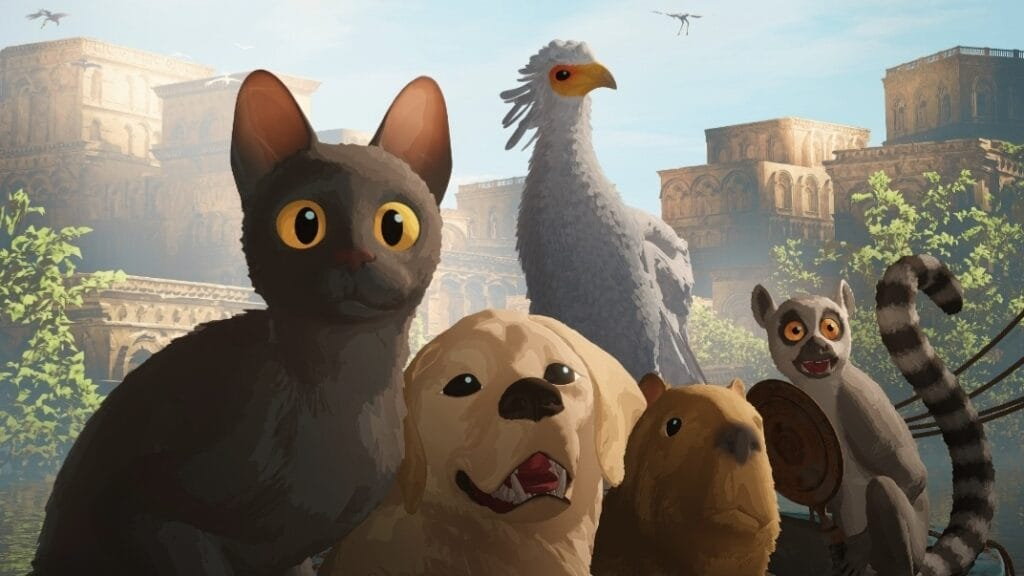
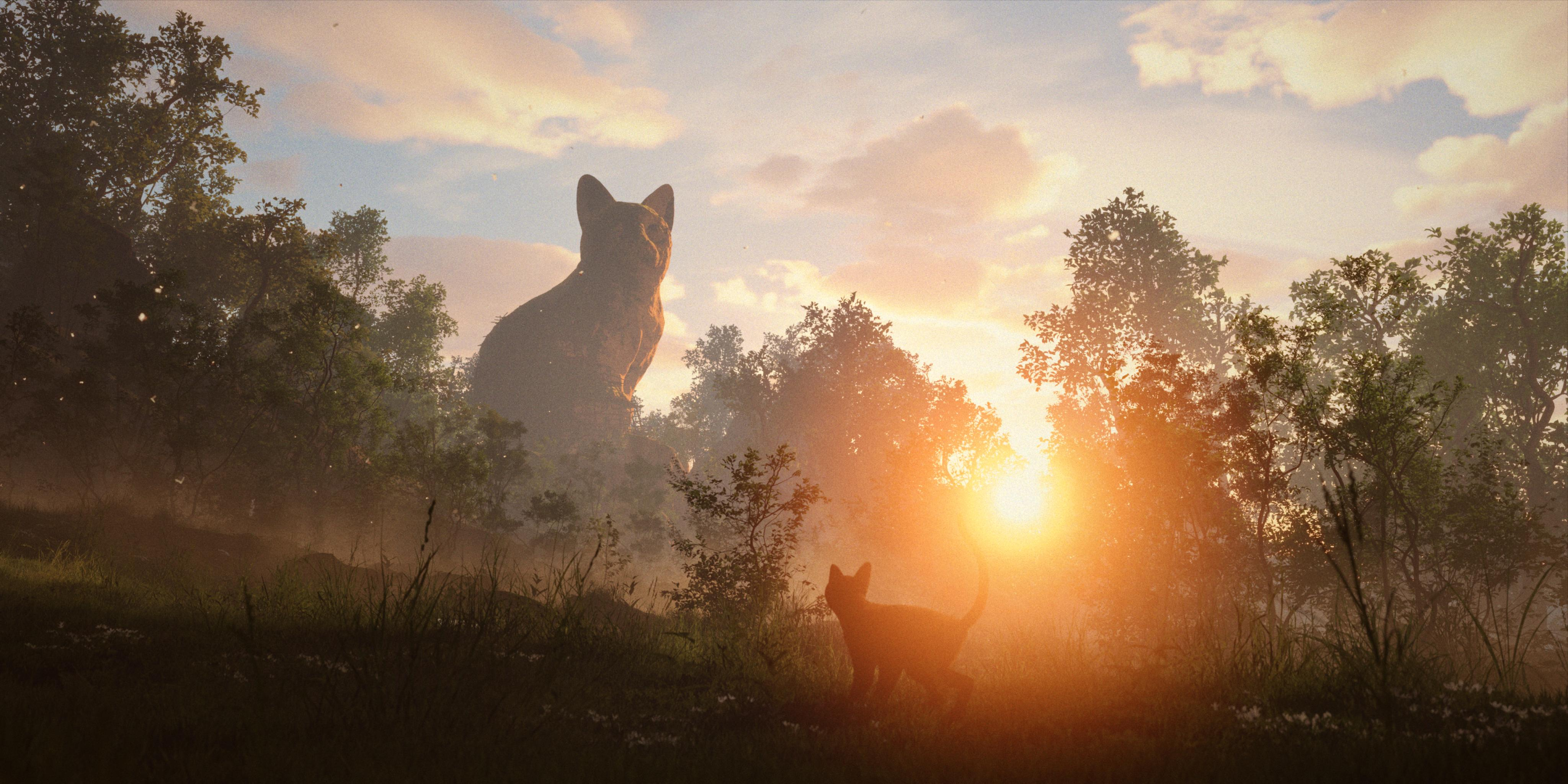
As a cat lover and a fan of serious animation, the trailer alone was enough to interest me in Flow, the little Latvian film that could, and did win the Oscar for Best Animated Feature. Told through a small collection of animal characters entirely without words, the story depicts an increasingly catastrophic flood and the way the wildlife handle their shared struggle for survival. It particularly follows a dark gray cat, who ends up sharing a boat Life-of-Pi-style with a capybara, a lemur, a Labrador Retriever, and a secretary bird.
The wordless interactions between the animals transcend language and are brilliantly rendered via the dynamic animation, surprisingly using only free Blender software, and, without any explanation of what is happening, the viewer is simply along for the ride, taking each danger as it comes with the animals. And despite an absence of human characters, the animals manage to represent human traits without being outright anthropomorphized, such as the lemur’s fascination with shiny things that triggers grief when it loses its possessions to the rising tides. Though a supernatural turn toward the end felt confusingly out of place, Flow is a fascinating adventure in the tradition of silent films, short, sweet, and visually magical; it’s a fine animated film, but I still contend The Wild Robot should have won instead.
(For Day 14 of NaPoWriMo, the prompt was for a poem of at least ten lines featuring anaphora, or starting each line with the same word. Such repetition is a good way of setting the rhythm, and the word “north” seemed only appropriate for this animated journey.)
North – the direction I’m going. North to the ends of the earth. North where the blizzard is blowing. North to prove my own worth.
North where the polar bear shivers. North where all hotheads are cooled. North where aurora-light quivers. North where the sky is bejeweled.
North where the sea is unstable. North where the glacier ice looms. North where presumption is fatal. North where the icebergs are tombs.
North where the sun is unblinking. North where the ocean is heaving. North has my wiser side thinking… North – the direction I’m leaving For home. _________________________
MPA rating: PG
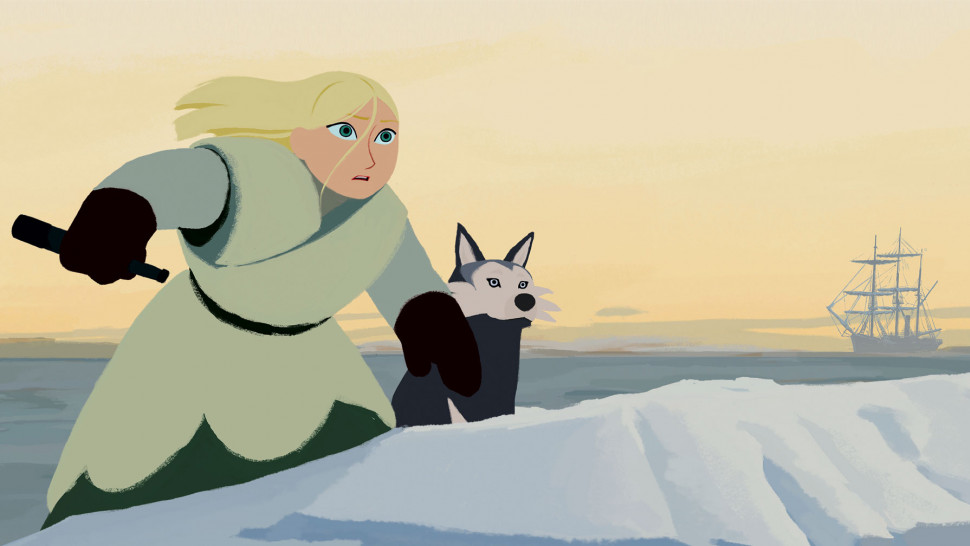
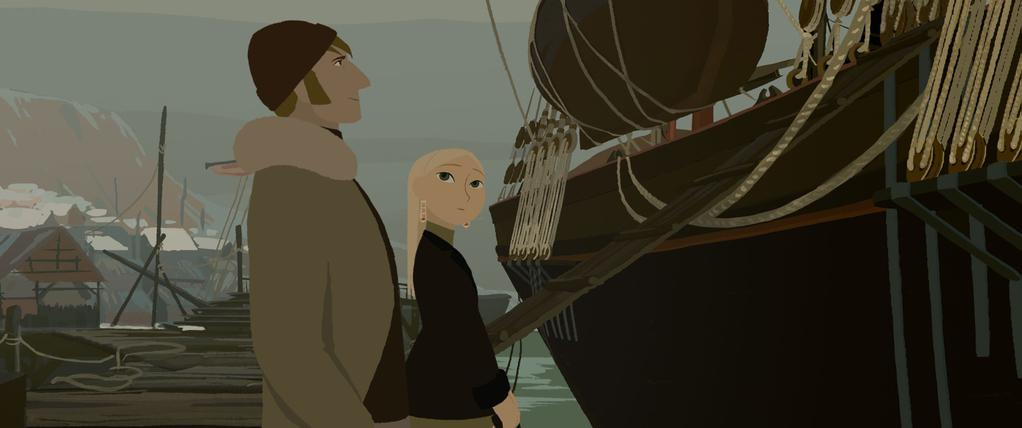
Unless the Academy happens to nominate one for Best Animated Feature (i.e., Persepolis, Ernest and Celestine, I Lost My Body, last year’s Robot Dreams), most people are probably unaware of animated films from overseas. Anime has its built-in fanbase, but there are plenty of low-profile international cartoons out there worth attention. Long Way North, a French-Danish production from director Rémi Chaye, is a prime example.
In 1882, young Russian aristocrat Sasha (Christa Théret) idolizes her explorer grandfather, who disappeared on a voyage to the North Pole, and while all the search parties have come up empty, she believes she knows how to locate his specially designed ship. Leaving her life of comfort and social expectations, she makes her way north, intent on convincing a crew to take her into the harsh and forbidding Arctic Circle.
Long Way North has a simple plot with little in the characterization that hasn’t been seen before, but the film executes its story flawlessly. Sasha is an admirable protagonist, able to prove her mettle alongside the hardened sailors while also receiving a Captains Courageous-style eye-opening to the harsh realities of the laboring class. The lineless animation style has a gorgeous simplicity to its colors and shadows, and I loved the true-to-life depictions of breaking through ice floes while navigating the half-frozen ocean. Long Way North may not stand out next to the big dogs of animation, but it’s a lovingly crafted indie adventure.
(For Day 9 of NaPoWriMo, the prompt was for an ode to an everyday object. While it may not be in everyone’s house, I’m sure many have a manuscript or poems or drawings they’re too nervous to share with the world, so I addressed this irregular sonnet to them.)
You mock me, you pile of papers, You unread manuscript, hiding in the corner. You say “Am I not fruit of all your labors? Am I not worth another pair of eyes? Is it better to be a cipher than a mourner, Lest someone dare to share or criticize? I’ll outlive you, your fear and blushing cheeks; I’ll wait till someone else will spy my corner And read what you had guarded from critiques And grieve its author’s sad, unknown demise.” I know that’s what you’re saying as time flies, The time that’s killing me and stalling you. The world can’t know what’s missing till it peeks, Until the shy apply for their debut. ____________________
MPA rating: Not Rated (should be PG for some drama but quite clean)
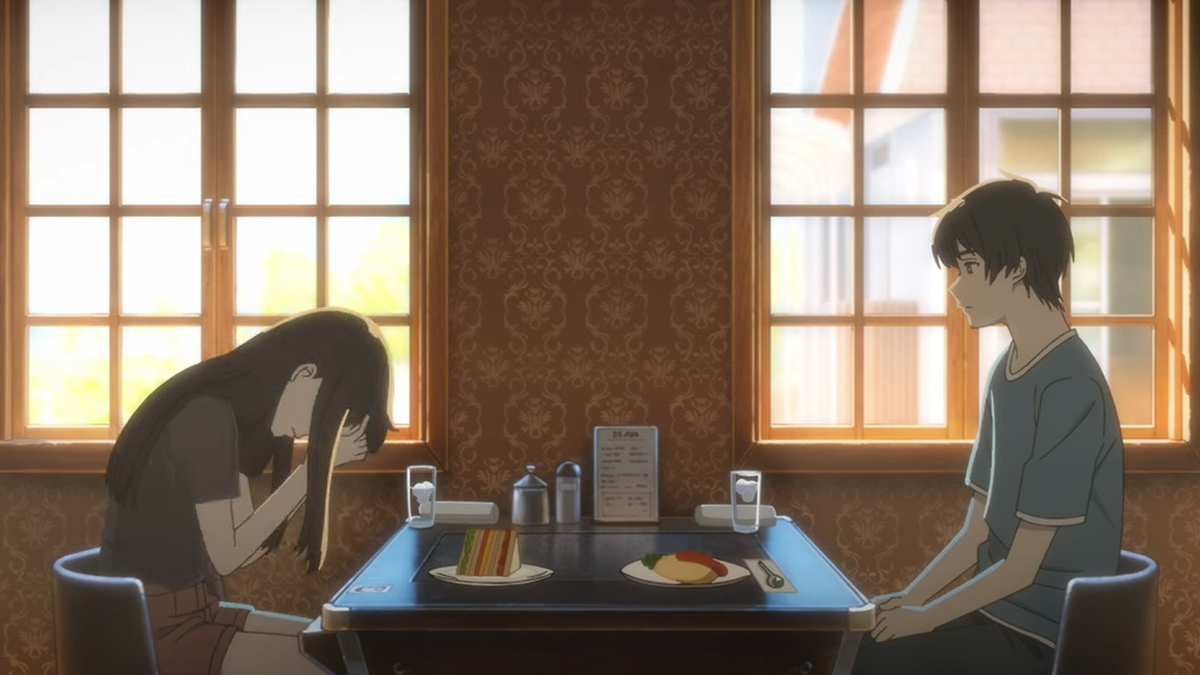
While not every international run can be on the level of Your Name or The Boy and the Heron, I am quite glad that smaller anime films are getting at least a limited release in American theaters, even if it takes a year to get here. The Tunnel to Summer, the Exit of Goodbyes may have a rather cumbersome title, but it’s one of the better under-the-radar anime movies, with appealing animation and a nice short runtime to deliver its poignant themes.
Kaoru is a high school student living in quiet grief with his abusive father, and he forms a bond with equally aloof transfer student Anzu, a budding manga artist unsure of her own talent (and inspiring the poem above). The two happen upon the fabled Urashima tunnel, which can supposedly grant a person’s greatest wish for a price. Mirroring the Urashima namesake, which is basically the equivalent of Rip Van Winkle in Japanese folklore, they discover that time passes differently inside the tunnel, where glowing trees line a watery path to their distant wish. After performing experiments on the tunnel’s strange properties, the duo must decide whether their wishes are worth giving up on their current life.
While there are plenty of films with this same romance-plus-supernatural storyline, I liked the natural progression of both, as the two main characters are actually smart about testing the temporal phenomenon, while also growing closer in the process. Though it can’t quite compare in scale or artistry, the film had some similarities to Your Name, and I suspect fans of one will also enjoy the other. It may be largely predictable, but The Tunnel to Summer, the Exit of Goodbyes is a lovely little movie to satisfy fans of star-crossed romance.
(For Day 4 of NaPoWriMo, the prompt was to draw inspiration from the quirky natural phenomena detailed in the 1958 book The Strangest Things in the World, such as “Uganda’s Miniature Dinosaur,” “Enigma of Evolution,” “The World’s Biggest Sneeze,” and “The Forest that Time Forgot.” What could be stranger than a dinosaur in the present day?)
We talk of chickens, geckos, gators Like they’re mini-dinosaurs, DNA perpetuators Winning evolution’s wars.
Look at what they’ve lost, however, Dwindling to humans’ scale. Those survivors truly clever Never would have grown so frail.
Something dodged the diminution, Surely kept its ancient reign, Some enigma evolution Cannot fathom to explain.
The biggest teeth to leave man shaken, Biggest sneeze and appetite, The biggest ire none should waken, Gorged on centuries of spite.
Where this scourge of sighs is lurking, Deep where time itself forgot, None can say; its guise is working. Pray it never leaves the spot. ___________________________________
MPA rating: PG-13
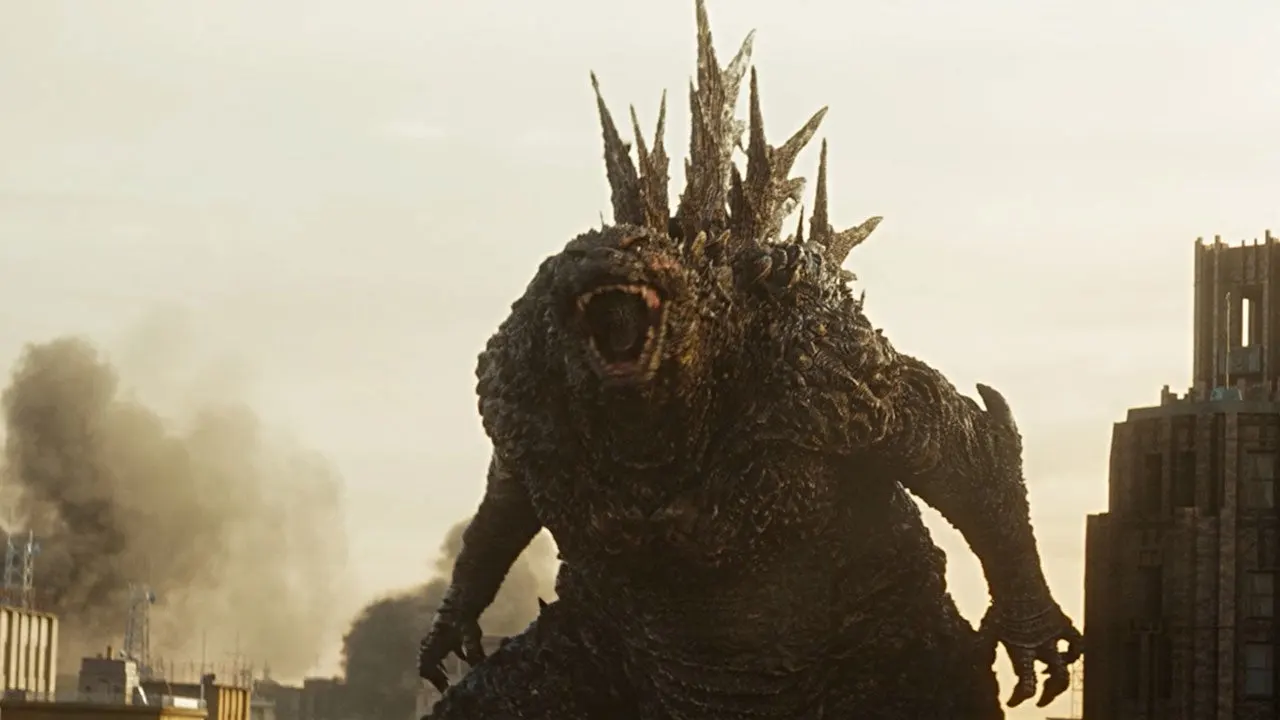
If someone had told me last year that one of my favorite films from 2023 would be a Godzilla movie, the 37th Godzilla movie at that, I would never have believed it. I’ve only seen a handful of the more modern versions of the beloved monster, including two of Legendary Pictures’ American films and Hideaki Anno’s Shin Godzilla. The latter film was praised by fans upon release, who indicated it was a step above the typical cheesy destruction of the older movies, and while it was good, it still had some cringey effects and lackluster scenes. So when similar rumbles of “dude, this is good” started to spread about Godzilla Minus One, I didn’t fully believe them. Yet as weeks passed, practically everyone who saw it seemed to be singing its praises until I finally relented and caught a late screening of the black-and-white rerelease, Godzilla Minus One/Minus Color. And I must admit, dudes, it is good.
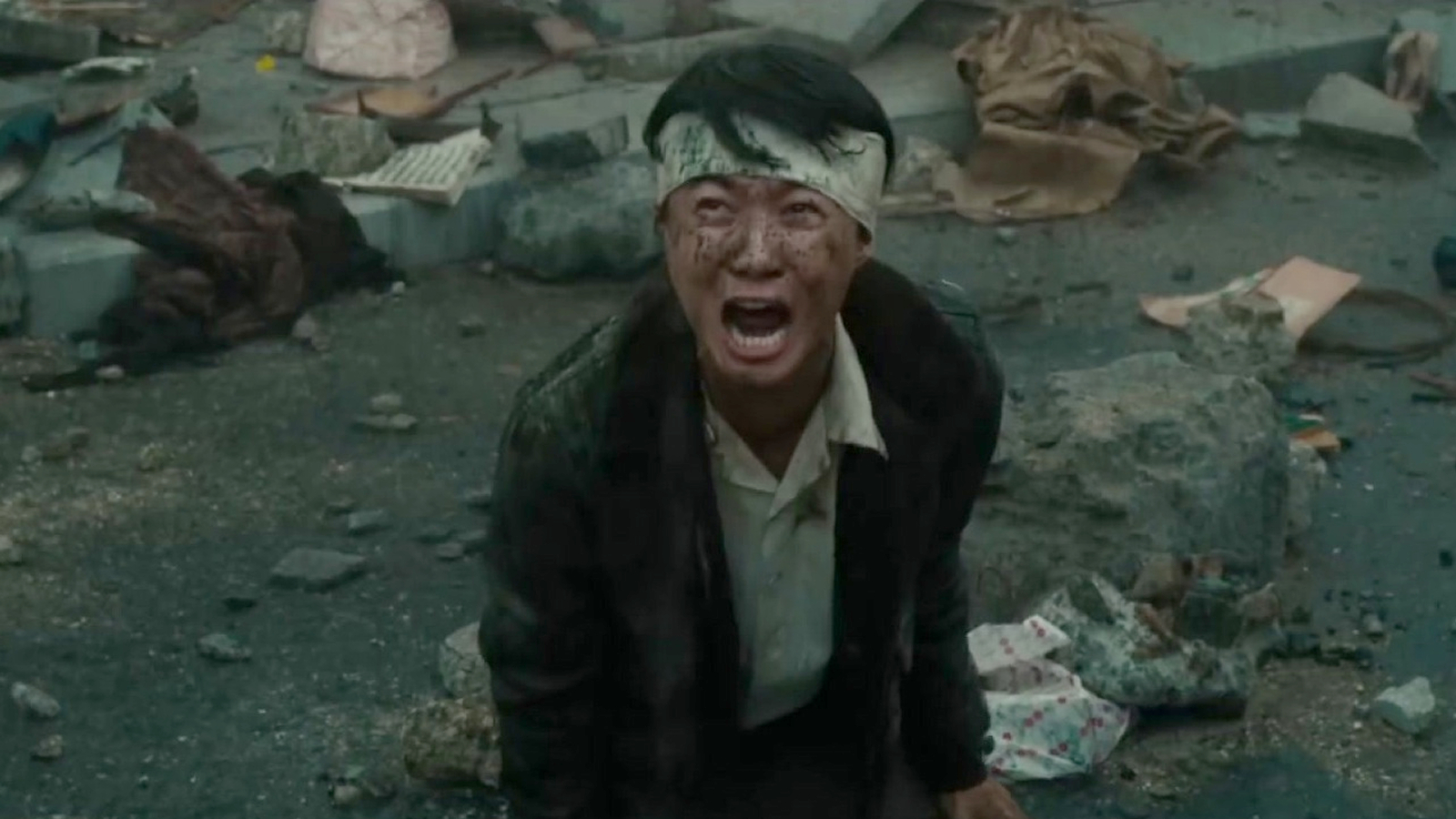
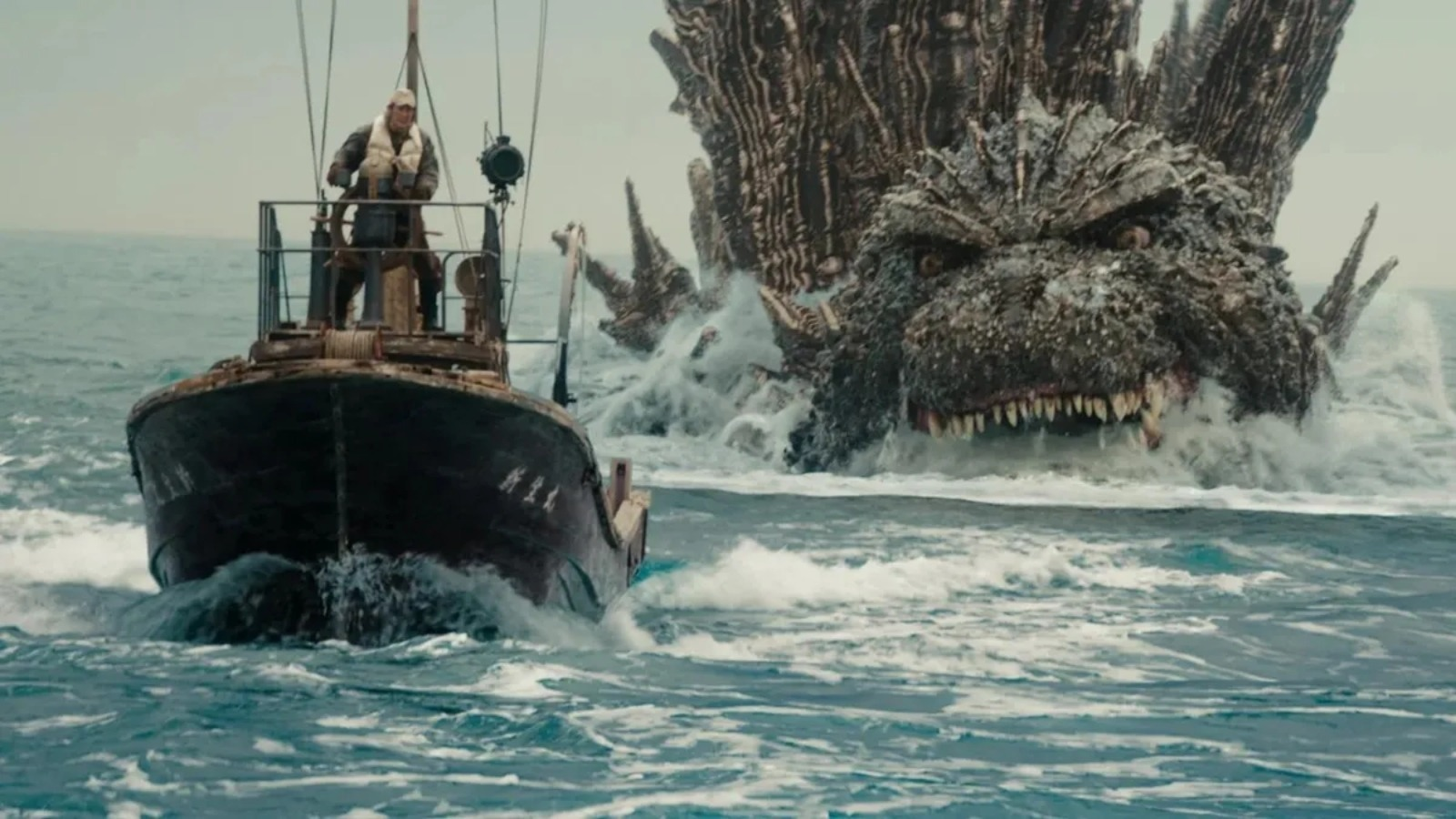
In contrast to the worldwide monster-hunting organizations of other Godzilla movies, Minus One goes back to the creature’s roots, representing the threat of nuclear destruction in Japan shortly after the end of World War II. Yet allegory and disaster porn can only carry a film so far, and this film finally manages to tell a compelling human story in the shadow of its titan. That story belongs to Kōichi Shikishima (Ryunosuke Kamiki), a kamikaze pilot who bears the shame of having survived what should have been glorious death for his country. After yet another close encounter saddling him with even greater survivor’s guilt, he returns to civilian life, trying to pick up the pieces of his hometown devastated by the war. With time, he finds a semblance of normalcy alongside a woman (Minami Hamabe) and a little girl (Sae Nagatani), lone survivors like him, yet his PTSD strains his relationships and self-worth. When he and a crew of mine disposal sailors encounter a certain overgrown lizard, the survival of both his nation and makeshift family are threatened.
It’s hard to pin down why Minus One succeeds where others are “just another Godzilla movie.” Usually, they throw in a threatened family to garner audience sympathy, but it never goes as deep as Shikishima’s trauma and the natural way he bonds with others while grappling with it. Beyond that, Godzilla himself is far from a zipper-backed suit, but a hulking CGI monstrosity that becomes genuinely scary as we see the scale of destruction he can muster, with innocent civilians utterly powerless beneath him. He’s truly a monster and a force of nature, hardly the benevolent protector from the American version. While I tend to think Guardians of the Galaxy Vol. 3 deserved the prize a little more for the extent of its CGI, I was not upset when Godzilla Minus One managed to win the Oscar for Best Visual Effects, a first for Japan reflecting how impressive the film is despite a piddling budget compared with Hollywood’s blockbusters.
If ever a film proved how a good story and characters can refresh a well-trodden franchise, Godzilla Minus One deserves that claim. Its themes of survival and endurance denounce the culture of death that Japan had become during the war, and put Shikishima’s struggle on a level beyond a single man’s battle. The ending even brought a tear to my eye, and I’ve heard stories from others who said they wept in the theater. A crowdpleaser to rival any American production, Minus One was the biggest pleasant surprise the cinema has given me in a while, and even if I consider it a fluke for the Godzilla series (please don’t let a sequel ruin things!), I’m grateful for it.
Every life is a movie in pre-pre-production, Awaiting the blockbuster stars and bestsellers. We live building lives that await deconstruction, In hopes we’ll get one of the good storytellers.
The artists and soldiers and key politicians, The dazzling minds are all ripe for the picking. They’ll woo the awards with their subtle omissions And screw their renown to the places worth sticking.
But what of us peasants who lack reputations, In search of that hook of the story to sell it? I think even your life is worth celebrations. My friends, it depends upon how well you tell it. _______________________
MPAA rating: Not Rated (PG-13 seems right, due to some sexual content)
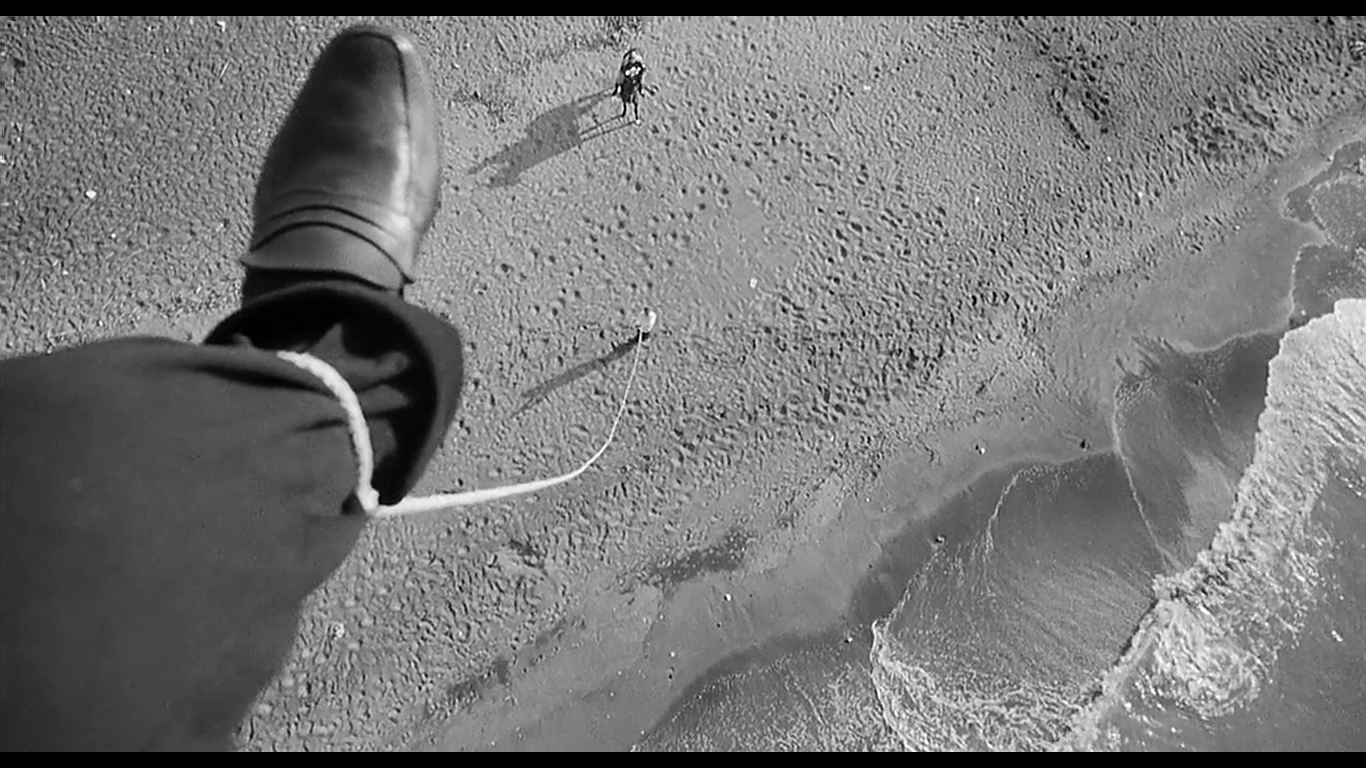
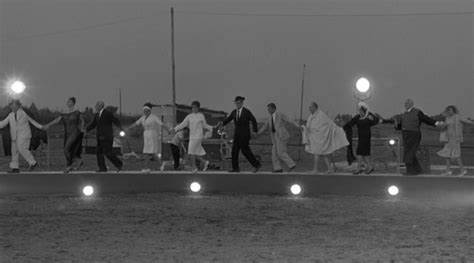
I included Federico Fellini’s 8½ on last year’s Blindspot list for the same reason as I watched 2001 or Bicycle Thieves, because it’s one of those films that any self-proclaimed cinephile is supposed to see. Sitting through two-plus hours of an Italian director’s introspection and daydreaming isn’t exactly my idea of a good time, but 8½ has had such an impact on these kinds of life-summarizing stories that it’s worth watching if only for historical value. And, this being my first foray into Fellini’s filmography, I can certainly appreciate his eye for framing and innovative non-linear structure, fueled by self-analysis and dream logic.
The avant-garde plot follows Fellini’s self-insert, Italian director Guido Anselmi (Marcello Mastroianni), as he struggles to focus on directing an ambitious sci-fi opus that increasingly mirrors his own life and churning emotions. It weaves in and out of Guido’s past and present, particularly his relationships with various women, from his mistrusting wife (Anouk Aimée) and her level-headed friend (Rosella Falk) to Guido’s brazen mistress (Sandra Milo) and a prostitute known as La Saraghina (Eddra Gale), who danced for him and his friends when he was a child. Throughout the runtime, Guido wrestles with his strained relationship with the Catholic Church, the weight of expectation for his increasingly expensive film project, and what he wants out of female love, the last theme epitomized in an extended sequence where he fantasizes a harem of all the women in his life worshiping him before inevitably rebelling against his tyranny.
I know I’m supposed to fawn over Fellini and how his filmmaking is a surreal monument of life affirmation (which I suppose it is), but I must admit that I also found it rather boring and self-absorbed, the kind of art meant for critics rather than the common man. There is still plenty to appreciate, particularly the script’s incisive musings on the creative process and the final scene that makes a lovely metaphor for life itself, which has been emulated by other life-encapsulating features like All That Jazz. Perhaps I just wasn’t in the right frame of mind to fully connect with the artistry of 8½; it’s the sort of film that I’m glad to have seen but don’t plan to rewatch any time soon.
Best line: (Guido, to his dream harem) “My dears, happiness consists of being able to tell the truth without hurting anyone.”
“Parting is such sweet sorrow,” Said the bard through Juliet. It’s bittersweet Till next we meet Lest you or I forget.
But sweetness fades with waiting While bitter amplifies. By fits and starts, Two hostage hearts Will wear new love’s disguise.
And when the parting’s ended And our hearts meet again, The memory Still sweet can be But only as ‘twas then. _____________________
MPA rating: Not Rated (PG-13 seems right)
I’ll admit that October does seem a little late to start on that Blindspot series I announced back in January, but I at least haven’t waited this long to start watching them. I have already seen five of them, but my reviews have been painfully slow in coming. I need to get better at carving out time for them and not being afraid to keep them short. Since I’ve been knee-deep in writing a musical, it seems only right to kick off the Blindspot reviews with an acclaimed foreign musical called Les Parapluies de Cherbourg, or The Umbrellas of Cherbourg.
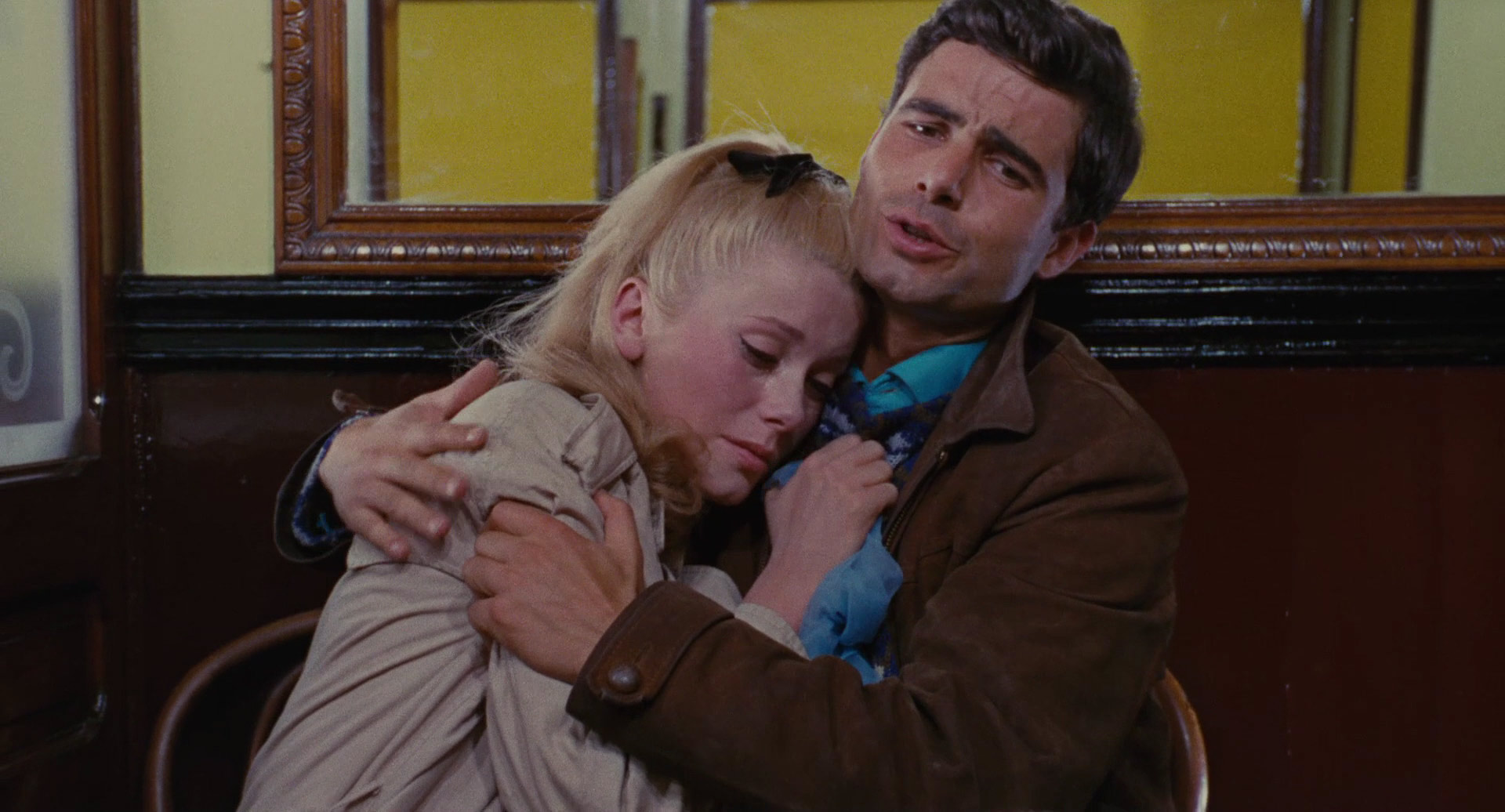
Sung-through entirely in French, the film follows two young lovers, mechanic Guy (Nino Castelnuovo) and umbrella store clerk Geneviève (Catherine Deneuve), whose swooning rendezvous are kept secret from Geneviève’s busybody mother (Anne Vernon). Yet their budding romance is foiled by Guy’s being drafted to fight in the Algerian War. As Geneviève’s mother impresses on her the importance of marrying well, the young girl is faced with a difficult choice and a heartbreaking regret.
I can certainly see why The Umbrellas of Cherbourg is so beloved among cinephiles and stands as one of the quintessential bittersweet romances. While opera had its own long-standing tradition, an original, sung-through musical was quite a novelty for the time and an artistic risk that might not have paid off with lesser artists. But Michel Legrand’s haunting melodies add a tender beauty to the sung dialogue, which would be rather mundane if just spoken. A behind-the-scenes featurette was quite interesting as Legrand was interviewed about his initial struggles developing a theme for each character, an important element of musical writing. I was impressed to learn that all the actors were lip-syncing to other singers’ voices, considering how well Deneuve and Castelnuovo acted in line with their “singing.”
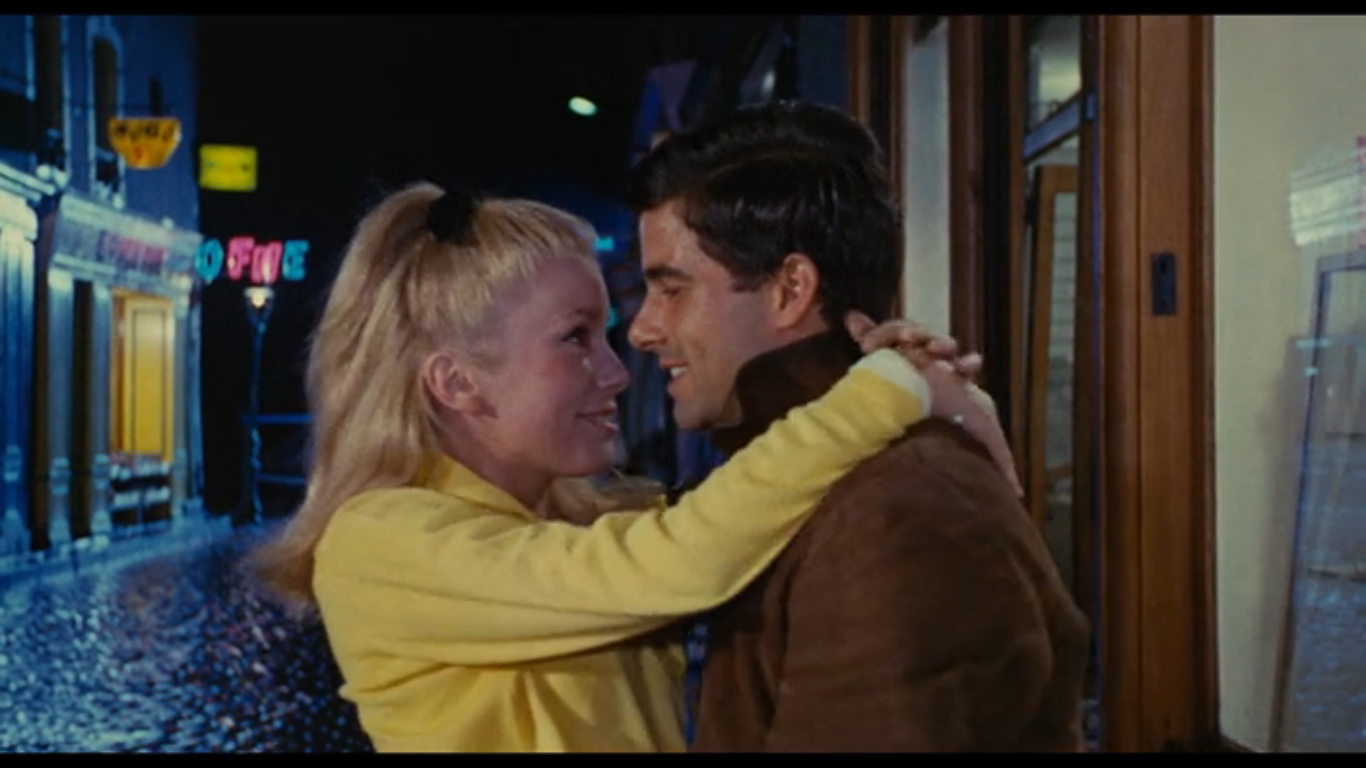
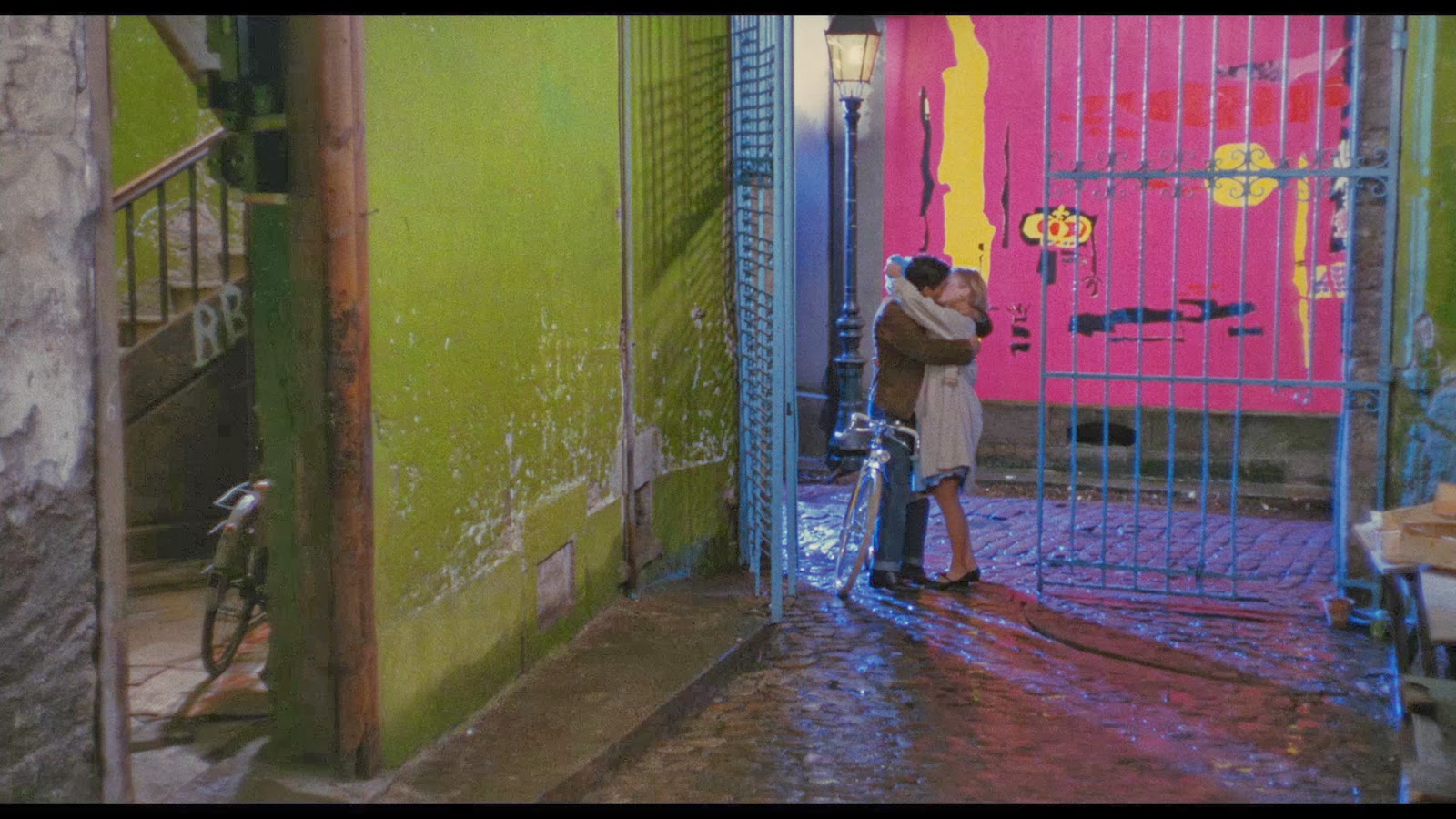
While the music is key to the film’s fame, even earning a Best Original Song Oscar nomination for “I Will Wait for You,” the parting song between Guy and Geneviève (also somehow getting noms for both Original and Adapted Score), the sets and cinematography deserve just as much praise. Considering director Jacques Demy’s previous two films were in black and white, the colors here are as vivid and impressive as Dorothy stepping into Oz, like an interior designer’s wet dream. The rooms and stores have brightly variegated walls that often look freshly painted, Geneviève’s yellow jacket pops against the rainy blue streets, and every choice of paint, costume, and wallpaper feels intentional for the background to accent the scene and give it an iconic look. Rarely does the use of color feel so integral to a film’s identity and success, making the lack of any technical Oscar nominations feel criminal.
If I’m being totally honest, the music tends to sound the same after a while, lacking variety that would keep the middle section from getting rather monotonous and boring. The film’s interest and emotion are highest at the beginning and end, and its final scenes especially have a superb bittersweetness that clearly went on to inspire other films like La La Land. Ultimately, The Umbrellas of Cherbourg feels like a film everyone ought to see at least once, making it a perfect Blindspot pick, but it’s not the kind of musical I’d want to rewatch often or one I would recommend to those musical-haters out there (you know who you are). Even if its narrative loses steam, it is impressive art for both ear and eye and a laudable trailblazer for musical cinema.
Best line: (Geneviève) “Mother, he’s leaving. He’ll be away for two years. I can’t live without him. I’ll die.” (her mother, Madame Emery) “Stop crying. Look at me. People only die of love in movies.”
(I had a rough day yesterday and missed Day 21 of NaPoWriMo, but I thought I’d try doubling up this weekend instead. Yesterday’s prompt was for a poem describing an abstract noun, using short lines and a made-up word. I chose Strength.)
I am strong Because I cannot afford To be weak.
The weight of My people’s hopes, The yoke Of all my foes, The burden of Love to defend Have tempered Me Like steel.
But still I only wish To wake to laughter In the aftermorn, To kiss with No farewell, To let my power Be still.
Strength I bear That I may not Bear it forever. __________________________
MPA rating: Not Rated (should be R for violence, which is fitting, right?)
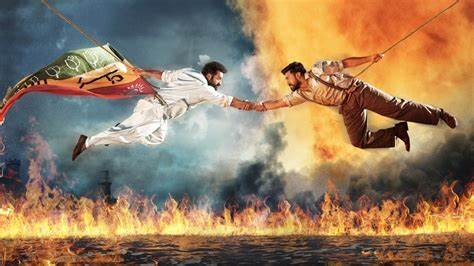
After recently watching Satyajit Ray’s Apu Trilogy, which marked a turning point in Indian cinema back in the 1950s, it was mind-blowing to see how far the country’s filmmaking has come with 2022’s RRR. I know Bollywood has a reputation for over-the-top spectacle, but this was my first introduction to the modern wow factor that Indian films have to offer. (Considering its wide distribution on Netflix, I doubt I’m alone there.) RRR follows two real-life Indian freedom fighters in the 1920s, telling a completely fictitious what-if story about them meeting and teaming up against the evil British empire. In American Revolution terms, I like to describe it as the Indian equivalent of “What if Ethan Allen and Francis Marion became bros and singlehandedly decimated the redcoats?”
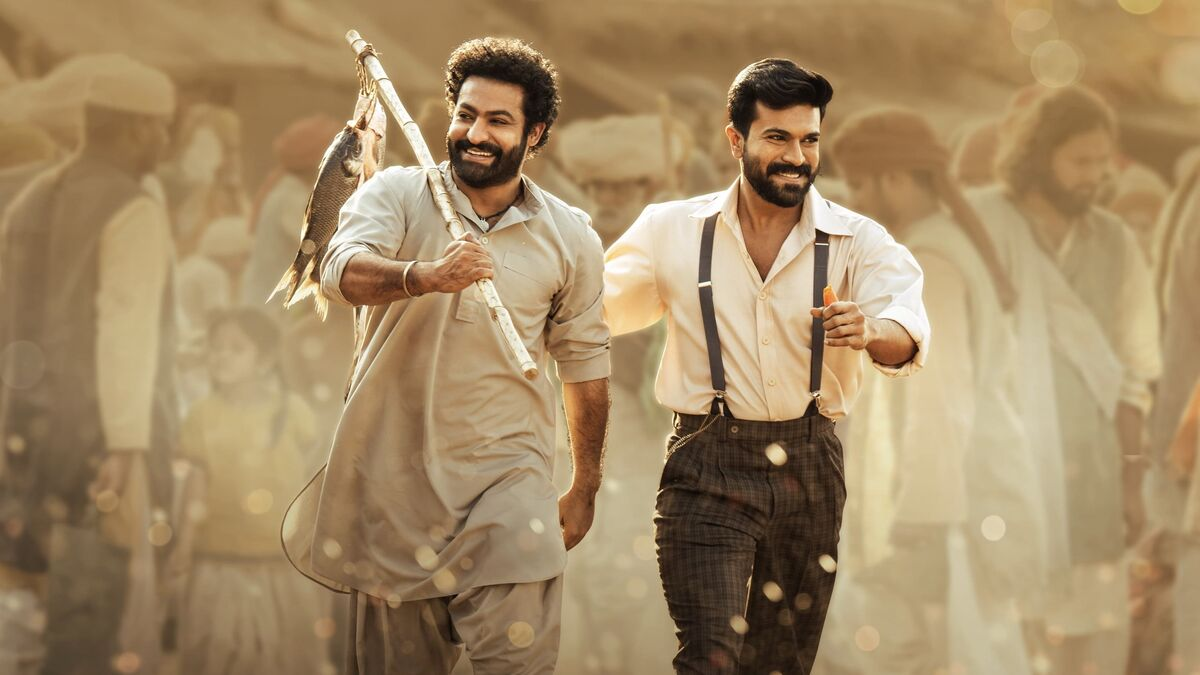
Standing for Rise Roar Revolt (in English at least), RRR is the kind of epic that Hollywood just doesn’t make anymore, if it ever did, boasting an everything-goes narrative that makes it hard to classify. It’s heavy on the action but also has room to be a romance, a historical drama, a buddy film, and a musical. The supremely handsome Ram Charan plays A. Rama Raju, a member of the Delhi imperial police force trying to rise through the ranks. N.T. Rama Rao Jr. plays Komaram Bheem, a protector of the Gond tribe who goes undercover in Delhi after the British governor (Ray Stevenson) and his cruel wife (Alison Doody) abduct a young girl named Malli. Thus, the two initially meet and become good friends, not knowing they are on opposite sides, Bheem seeking to rescue Malli while Raju aims to capture him to earn favor with the British.
RRR is a lot. Boasting superhero-level stunts and CGI animals to rival Hollywood, the film looks amazing, albeit replete with slow-motion interludes to highlight the emotion or absurdity of the action. In that vein, it is also anything but subtle. The villainous Brits are cartoonishly evil without any nuance at all, save for the kind Jenny (Olivia Morris) who somehow becomes a love interest for Bheem despite neither of them understanding the other’s language. The film relishes in its own excess, from the rippling muscles of its often shirtless leads to the extravagant and lengthy action scenes that include one man taking on an entire angry mob and a free-for-all battle with tigers and deer invading a posh banquet. Honestly, some of the coolest moments almost feel like parody with how outrageous they are.
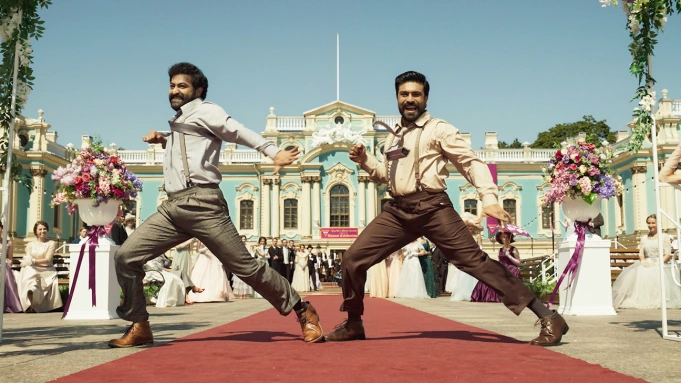
Yet there’s something refreshing about how RRR wears its cinematic heart on its sleeve, like the montage of Raju and Bheem bonding over their shared buffness, which brought to mind the ancient brotherhood of Gilgamesh and Enkidu. That kind of epic clash of good and evil with a cast of thousands was much more common in old Hollywood when epics were a common genre, so it’s interesting to see such large-scale heroics from a foreign perspective. And the film often uses its excess quite effectively, especially in the instantly iconic dance-off to the song “Naatu Naatu,” which won a deserved Oscar for Best Original Song and was one of the best movie moments of last year.
Aside from some brutal violence, the worst thing about RRR is its length. I was able to convince my VC to watch it (and she liked it), but only by breaking it up into three parts. At a little over three hours, it can feel more like a miniseries than a movie, so I would recommend that; basically, take a break whenever someone is caught by the British. RRR is epic in every sense of the word, and its mainstream success will likely open the door for more Americans, me included, to explore further what Indian cinema has to offer.
Best line: (Raju’s father) “He [the governor] said that an Indian’s life is not worth a bullet. So how will this bullet earn its value? When it comes out of your gun and pierces an Englishman’s heart.”
On foreign roads, I may be led, No guarantees of food or bed; I might be kept, a bitter pill, By duty or against my will; I may delay on land or foam, But still I’ll know the way back home.
On dying hopes I may depend, But they’ll be with me to the end. For be it distance, sickness, wars That separates my heart from yours, I know no matter where I roam, Our love remains my road back home. ___________________________
MPA rating: G
I would never have even heard of The Road Home if it hadn’t been suggested to me by fellow movie-loving blogger Chris of Movies and songs 365. Sorry it took years to finally put it on my Blindspot list as incentive, but a big thanks for the recommendation! With the exception of Crouching Tiger, Hidden Dragonand Yi Yi, Chinese cinema is unexplored territory for me, and while action and wuxia are more likely to make a splash with western moviegoers, it’s nice to be reminded of low-key romantic dramas like The Road Home, which can be easily overlooked.
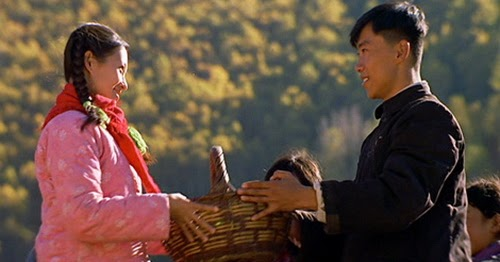
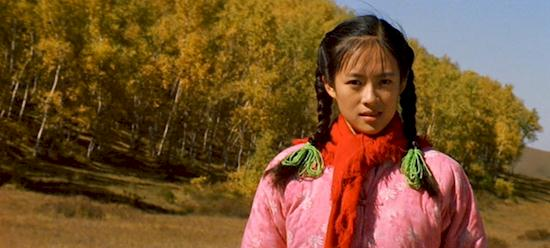
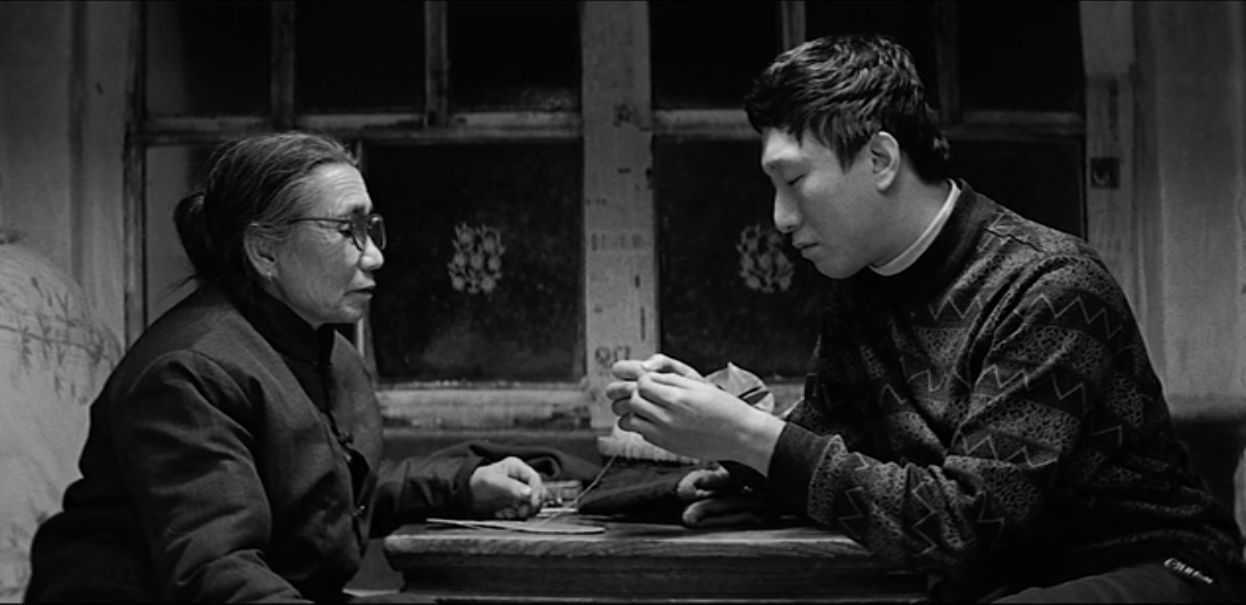
After his father dies, a young man (Sun Honglei) returns home to his rural village and widowed mother, who insists on a traditional on-foot procession to bring her husband’s body back home, since he died in a nearby city. While weighing whether to honor her logistically difficult request, the man reminisces about his parents’ well-known love story and how his mother Zhai Di (Zhang Ziyi of Crouching Tiger fame, in her first major role) first met his schoolteacher father Luo (Zheng Hao). In a creative choice also used in The Phantom of the Opera, the modern time period is presented in black-and-white while the flashbacks to 1950s China shift to bright color, showing how much more vivid Di’s memories are compared with her present-day grief.
The Road Home thrives on its simplicity and the nostalgia of young hearts fluttering after each other. Ziyi is luminous as the young Di, who longs for the village’s new schoolteacher and subtly finds ways to make her affection known. I would say there’s a bit too much of that distant flirting, with far too many repetitive shots of Di staring googly-eyed at her love, which eventually feel like padding for the already short runtime. Still, the performances are excellent, shifting from sentimentality to devoted worry when Luo is taken away by the Chinese government. The film’s real power comes at the end, though, when the impact of one rural schoolteacher on the community is made evident in a show of caring that would make Mr. Holland’s Opus proud.
The Road Home is perhaps too simple a tale to get much notice in a cinematic landscape crowded by superheroes and CGI space battles, but it’s a refreshingly human account of young love. As mentioned, some of the longing looks could have been edited out, and I rather wish we had gotten to see at least a little bit of the happy life that Di and Luo had together, instead of just its preface and epilogue. What we do see, though, is a warm and sweet reminder that our parents or grandparents loved deeply long before we came along.
Best line: (older Di, to her son) “Your father’s gone. He used to worry about you. Our children must leave home. We can’t keep you here forever. As parents, we let you go, but we never stopped worrying. Your father missed you so.” (Yusheng, the son) “Please don’t cry.” (Di) “With your father gone, it’s hard not to feel lonely.” (Yusheng) “I know.” (Di) “You must work hard and make a good life.”
(Today’s NaPoWriMo prompt was to write five answers to the same question, leaving it up to the reader to decide what question they answer.)
That I could catch her eye again, Somewhat wiser than before, And notice what she wore more.
That I could hold my hasty tongue From its urge to disagree, To help her in persuading me.
That I could catch her by surprise And earn a smile unforeseen And bask in sharing dopamine.
That I could hold her close once more To compensate for every shrug And drown my flaws in that one hug.
That I could part with my control And sanction her to take the wheel, Of both my car and how I feel. __________________________
MPA rating: Unrated (mostly PG-13-level content but some sex scenes bring it close to R)
Parasite certainly opened doors for other Asian imports to win over the Academy, since it would have been hard to imagine Drive My Car entering the race for Best Picture even a few years ago. A nearly three-hour meditation on grief, language, and regret, it is undoubtedly a “critic movie,” but one that would normally be resigned to the Best International Film category, which it did win at the most recent Oscars ceremony. While I would have preferred Tick, Tick …Boom!to take its place (or that of Don’t Look Up), something must have swayed the nominee voters, and indeed Drive My Car boasts a unique and indefinable poignance that is felt cumulatively rather than from any single scene.
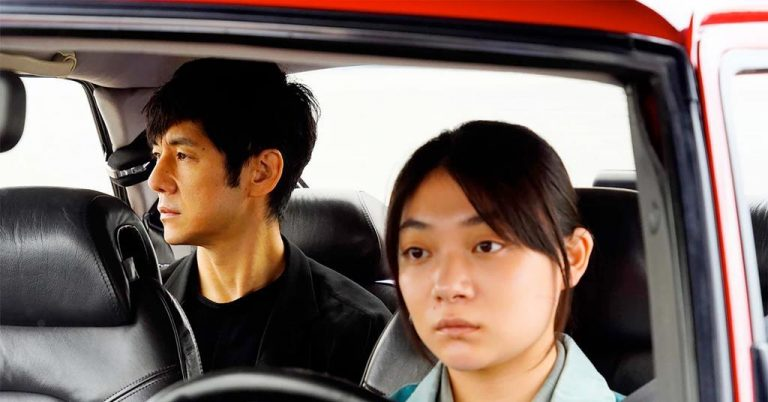
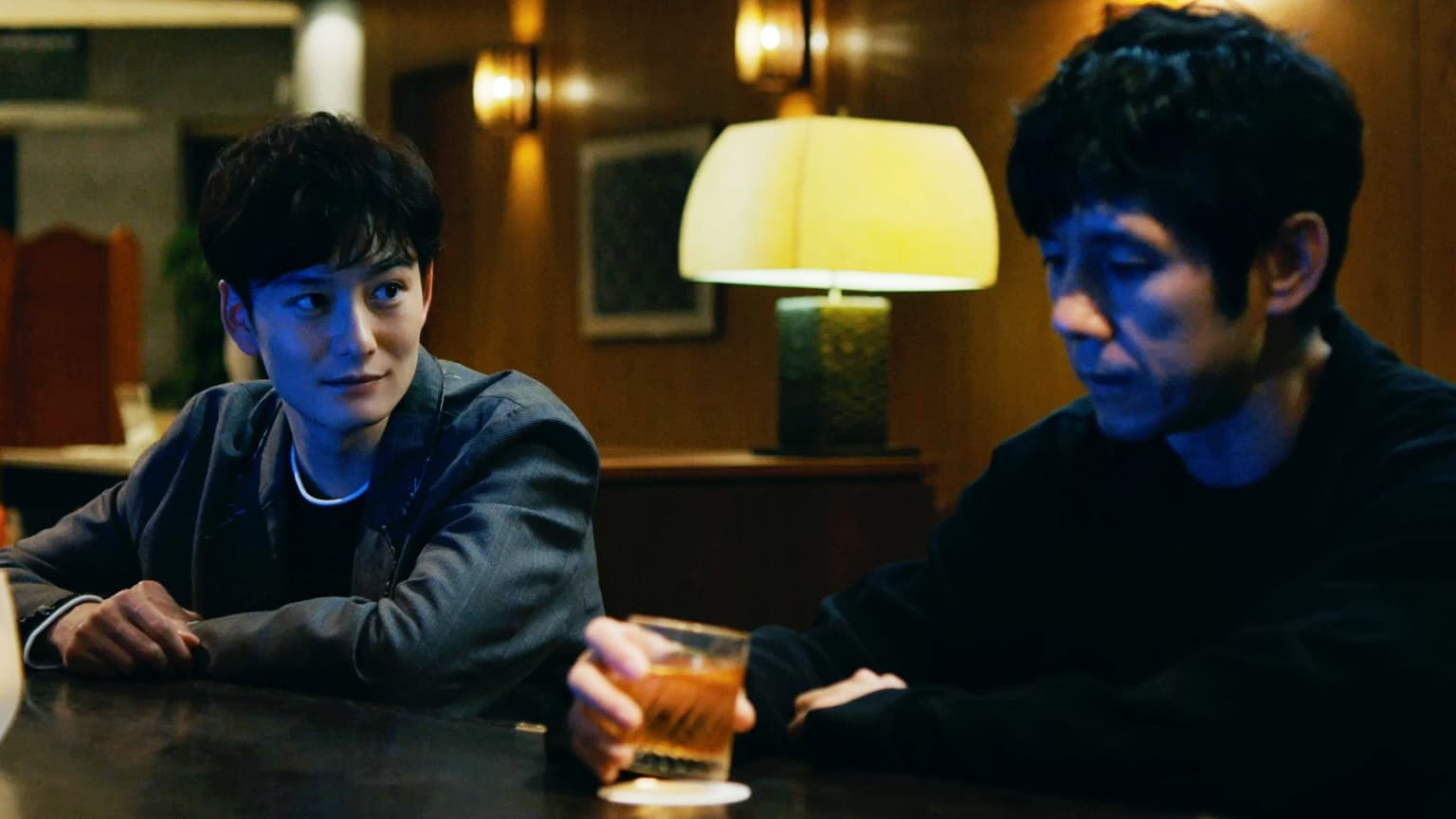
Based on a few short stories by unconventional Japanese author Haruki Murakami, the actual events of the film could have fit into half the time but are extended by heavy conversations and a naturally unhurried pace. Yūsuke Kafuku (Hidetoshi Nishijima) is a theater director and actor known for putting on multilingual productions in which the actors speak different languages, all of which are shown as subtitles on a screen above the stage. After he discovers that his screenwriter wife (Reika Kirishima) is cheating on him, he comes home one night to find her dead of a sudden stroke. A couple years later, he visits Hiroshima to put on a production of the play Uncle Vanya by Chekhov, which includes a young actor (Masaki Okada) who he believes was his wife’s lover. While Kafuku is quite attached to his red 1987 Saab, he is required by contract to accept a driver, a young woman named Misaki Watari, with whom he develops a gradual bond of shared grief.
If someone were to ask what Drive My Car is about, I wouldn’t know exactly where to start. The description above is literally what it is about, yet it hardly captures the complex emotions on display, the pregnant pauses, the subtle assessments, the heady metaphors that live only in the eloquent soliloquies. Kafuku’s wife introduces a running narrative about a girl obsessed with a boy she likes, and the direction of that tale alone is loaded with potential interpretations while remaining rather opaque as well. Kafuku’s conversations with the actor who also loved his wife defy expectations with how one would expect rivals to regard each other, and the gentle, heartbreaking catharsis that Kafuku and Watari share near the end is too measured and serene to feel at all melodramatic or forced.
All that being said, this is a film that prioritizes subtlety and is not meant to be watched if you’re at all feeling sleepy. The whole first third of the film with his wife could have been left out (the opening credits don’t start until 41 minutes in), yet it provides some needed context when Kafuku listens to a tape of his wife’s voice so that he can practice his lines while Watari drives him. The actual play rehearsals are rather fascinating, pulling in Chekhov’s somber yet hopeful themes while humanizing the actors, including a mute woman who uses Korean sign language and shares an extremely understated yet moving “climax” of sorts with Kafuku during the performance of Uncle Vanya. There are also a host of shrewd details that film enthusiasts can pick apart, like the way the film’s setting of Hiroshima ties into its theme of lasting trauma.
I’m not necessarily against “critic movies” when they have a worthwhile story or execution, and here the execution and dialogue certainly overshadow the story. I can still appreciate and admire a long, acclaimed foreign drama, like 2000’s Yi Yi, for example, and Drive My Car is a film that becomes more than the sum of its parts. Restrained yet intellectually passionate, it’s a melancholy plunge into the depths of the human experience, and while not conventionally entertaining, those with patience will walk away with plenty to think about.
Best line: (Lee Yoon-a, performing from Uncle Vanya in sign language) “We’ll live through the long, long days, and through the long nights. We’ll patiently endure the trials that fate sends our way. Even if we can’t rest, we’ll continue to work for others both now and when we have grown old. And when our last hour comes, we’ll go quietly. And in the great beyond, we’ll say to Him that we suffered, that we cried, that life was hard. And God will have pity on us. Then you and I, we’ll see that bright, wonderful, dreamlike life before our eyes. We shall rejoice, and with tender smiles on our faces, we’ll look back on our current sorrow. And then at last, we shall rest. I believe it. I strongly believe it from the bottom of my heart. When that time comes, we shall rest.”