• Home
  • About Me
  • The List
  • THE LIST (2016 Update)
  • THE LIST (2017 Update)
  • THE LIST (2018 Update)
  • THE LIST (2019 Update)
  • THE LIST (2020 Update)
  • THE LIST (2021 Update)
  • THE LIST (2022 Update)
  • Top Twelves and More
  • The End Credits Song Hall of Fame

Rhyme and Reason

~ Poetry Meets Film Reviews

Rhyme and Reason

Tag Archives: Anime

The Lord of the Rings: The War of the Rohirrim (2024)

27 Sunday Apr 2025

Posted by sgliput in Movies, NaPoWriMo, Poetry, Reviews, Writing

≈ Leave a comment

Tags

Action, Animation, Anime, Drama, Fantasy

(For Day 27 of NaPoWriMo, the prompt was for a poem focusing on a detail of a painting, but I think I’ll go off-prompt today and cover a movie I’ve been meaning to review for a while.)

The legends that matter endure through time.
The others are lost with a final breath,
Were not so luck’ly preserved in rhyme,
And died an unremembered death.

What could have saved the tales so lost?
A copied scroll or a memorized line?
What bade a once-loved myth be tossed
Ere passing history’s finish line?

What wonders, horrors, joys, and fears
Have gone extinct with fossils none?
The stories mute for want of ears…
I wish I could read oblivion.
___________________

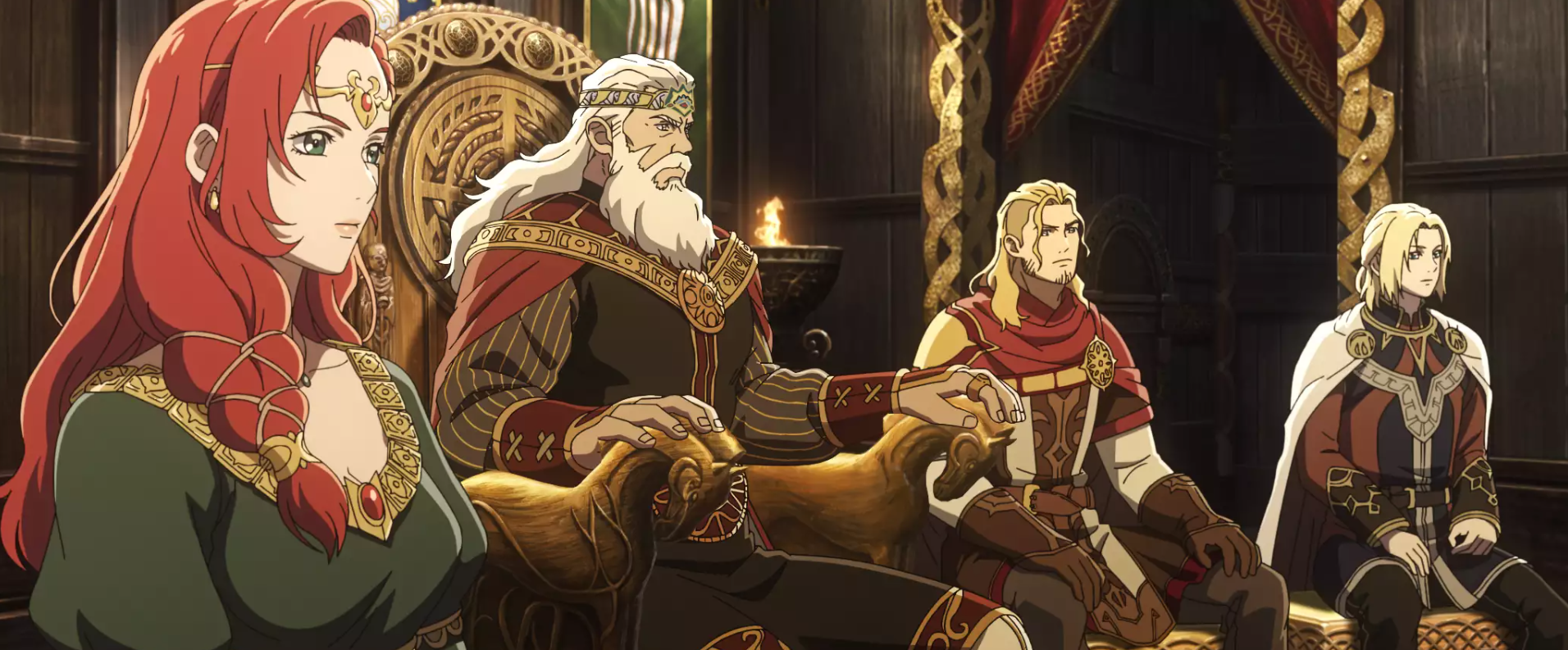
If you imagine a Venn diagram with anime fandom and Lord of the Rings fandom as the two circles, I would be squarely in the middle of the shared area. Therefore, an anime spin-off film set a couple hundred years before The Fellowship of the Ring was right up my alley from the start. Focusing on one of the legendary tales of the horse-riding nation of Rohan, the story follows Princess Héra (Gaia Wise), daughter of King Helm Hammerhand (Brian Cox), as she defends her nation from the invasion of Wulf (Luke Pasqualino), a former friend bent on vengeance.
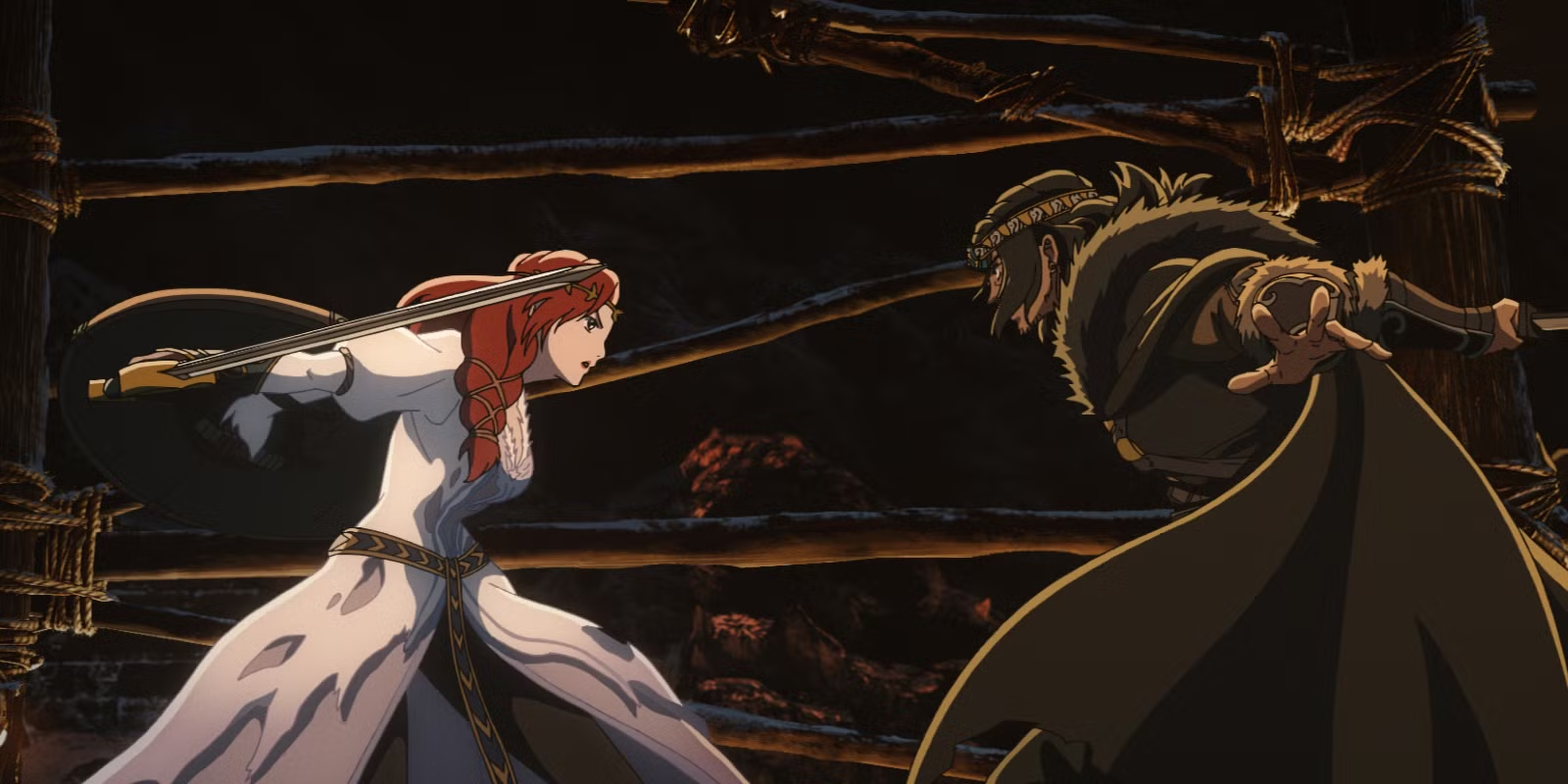
The most common criticism I heard about War of the Rohirrim was about the choppy animation, and yes, character movement is a bit stilted at times, particularly at the beginning. Even using a 3D rotoscope-like technology, Sola Entertainment as a studio can’t match the butter-smooth animation of MAPPA or Science Saru, so we can only imagine how different the style might have been in the hands of a different studio. But the animation is still good throughout and even excels in the big action moments, and best of all, the style compliments Peter Jackson’s version of Middle-earth with some outstanding backgrounds and scenery. (Besides, the previous standard for LotR animation was Rankin/Bass or Ralph Bakshi, and this is still a cut above those.)

Beyond the animation, I’ve heard all the complaints, from the plot being too long, the characters one-note, the story being basically female-forward fan fiction since Héra isn’t even named in the Tolkien appendices from which the plot was drawn (and the film doesn’t explain why she was supposedly left out of the official history). And yet, I really liked this movie, my inherent love of the franchise winning out over all else. None of those grievances detracted from the experience of being able to visit Middle-earth again, with Howard Shore’s Rohan theme setting the epic mood and some hype-worthy set pieces bringing the action. A friend who saw it with me thought it went too anime at times, with clearly human characters pulling off superhuman feats as if they were elves, but I saw such moments perhaps as embellishments, considering the story is told as a legend of Rohan by the narrating voice of Eowyn (Miranda Otto). I also thought Héra was a good example of a “strong female character,” by simply rising to the challenge set before her rather than harping about gender differences or whatnot, similar to Miyazaki’s Nausicaä, who was cited as an influence by Wise.
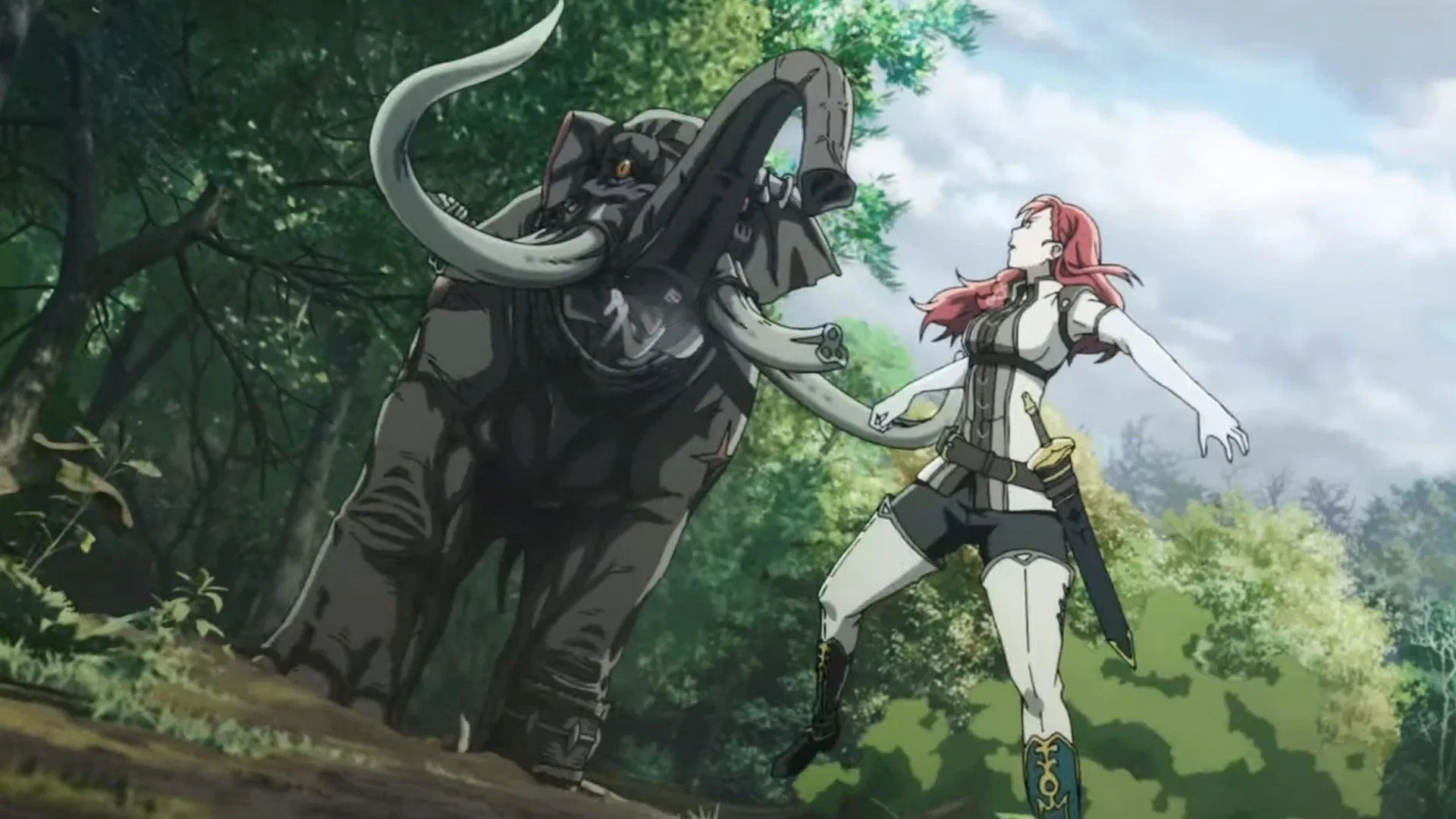
All in all, The War of the Rohirrim is an epic story that continues the tradition of Peter Jackson’s world. Even if it was simply an expendable side project so New Line could hold onto the Tolkien rights, that just makes the care and quality that was put into it that much more impressive. It broke my heart then that, whether due to disinterest or poor marketing, the film flopped last December, failing to even earn back its budget. I don’t deny that it had room to be better with smoother animation or more interesting dialogue, but it met my high expectations for a Middle-earth movie and, in my opinion, deserved better.

Rank: List-Worthy

© 2025 S.G. Liput
807 Followers and Counting
Look Back (2024)

18 Friday Apr 2025

Posted by sgliput in Movies, NaPoWriMo, Poetry, Reviews, Writing

≈ 1 Comment

Tags

Animation, Anime, Drama, Tearjerker

(For Day 17 of NaPoWriMo, the prompt was for a poem about friendship, drawing inspiration from the works of surrealist painters and friends Remedios Varo and Leonora Carrington, like this one perhaps. And what better to pair it with than a film about two female artist friends.)

It’s wonderful and harrowing,
Widening and narrowing,
To know that someone better
Is looking o’er your shoulder,

Better at your chosen art,
Finishing the things you start,
Being there to urge you better,
Fire from a smolder.

Admiration in their eyes,
Even as you fantasize
How to match their passion better
Eye-to-eye beholder.
____________________

Rating: 13+ (about a PG)

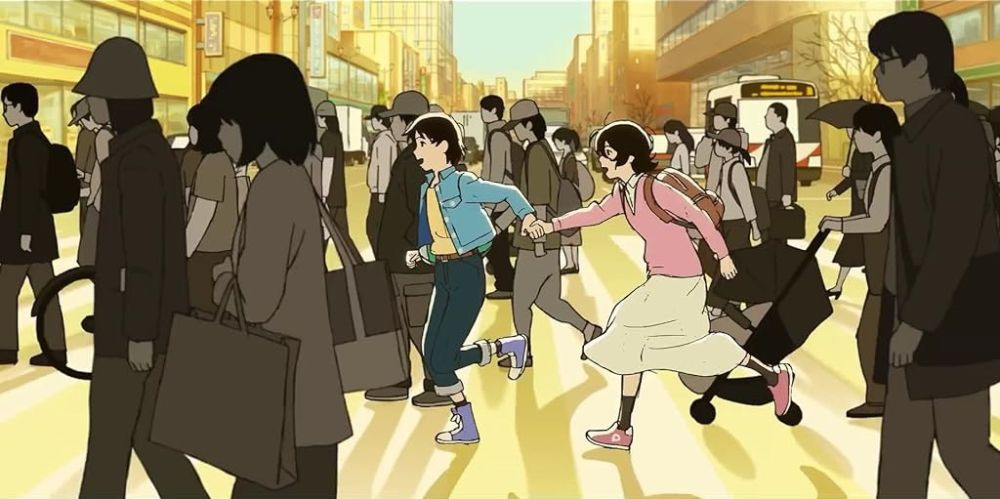
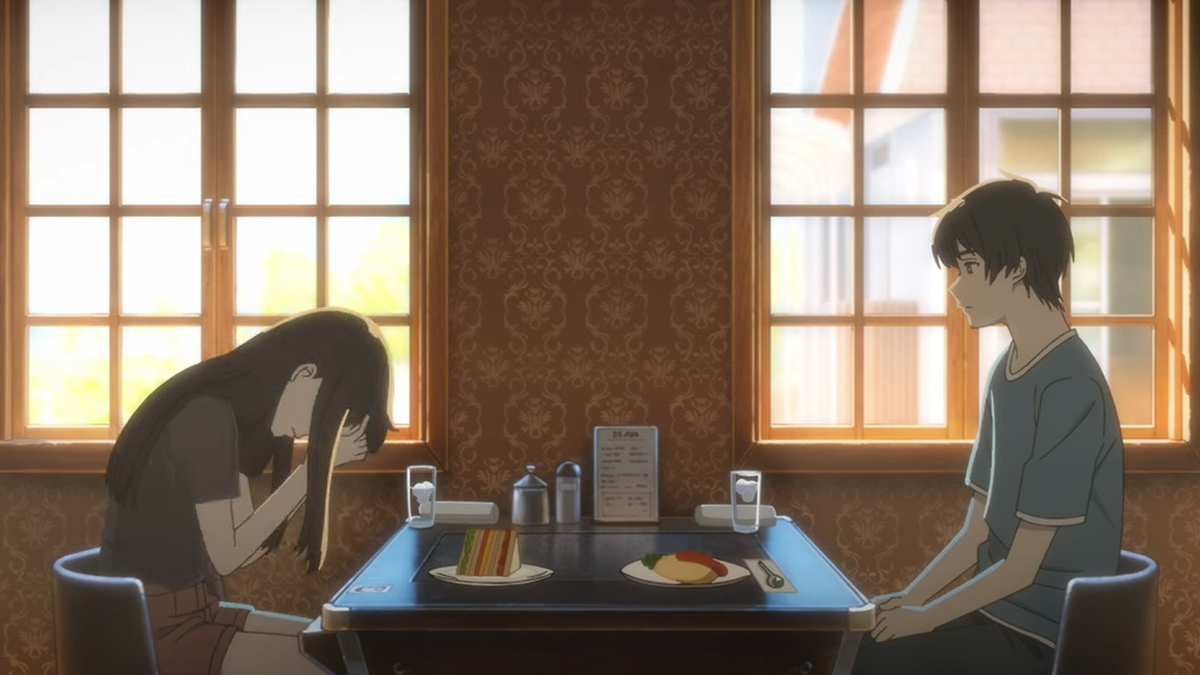
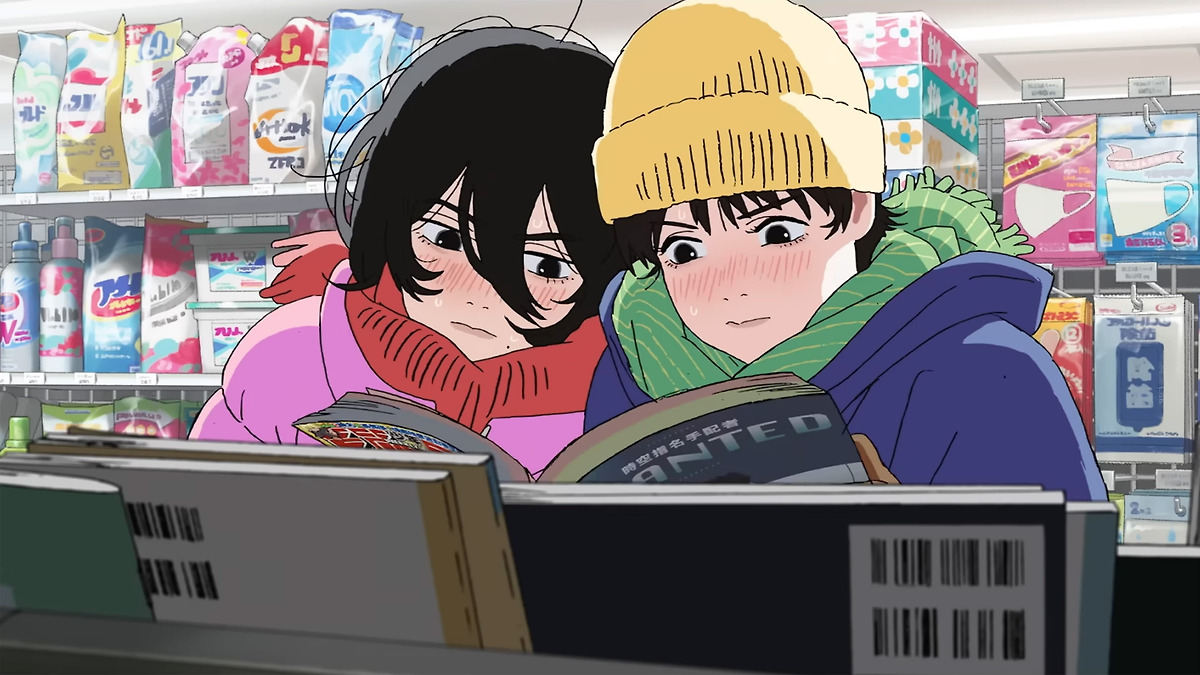
Imagine if Quentin Tarantino directed Terms of Endearment or David Cronenberg produced Brian’s Song. That’s the kind of bewildering tonal shift reflected by manga artist Tatsuki Fujimoto, best known for the dark and gory Chainsaw Man, also creating Look Back, a one-shot manga volume adapted into this hour-long tearjerker with a 100% Rotten Tomatoes score.

Grade-schooler Ayumu Fujino (Yuumi Kawai) revels in the praise she gets as her class’s resident artist, drawing short manga strips for the school paper, so she is shocked when another girl named Kyomoto seems more talented than her. This spurs her to improve her drawing even more, and eventually the two girls form a collaborative friendship, working together on mangas throughout high school and driving each other to improve. That drive eventually breaks apart their partnership and leads to unforeseen tragedy.

No doubt pulling in personal experience and sorrow over the 2019 Kyoto Animation attack, Look Back certainly proves Fujimoto’s range as a writer. The story may be short and simple, but that only makes its mastery of emotional and visual storytelling even more impressive. Set to a moving score by Haruka Nakamura, a flurry of gorgeously drawn montages manage to depict so much in such little time: the obsession of practicing to fend off fears of inferiority, a growing friendship as Fujino helps the shy Kyomoto out of her shell, the glow of passion and success yielding to business as usual. By the time the story shifts into a brief what-if scenario, every reminder of the early scenes becomes a reason to sob, as well as be inspired. Despite its limited runtime, it’s a touching masterpiece.

Best line: (Fujino) “Keep your eyes on my back, and you’ll grow too.”

Rank: List Runner-Up

© 2025 S.G. Liput
805 Followers and Counting

The Colors Within (2024)

01 Tuesday Apr 2025

Posted by sgliput in Christian, Movies, NaPoWriMo, Poetry, Reviews, Writing

≈ Leave a comment

Tags

Animation, Anime, Drama, Family, Musical

(For Day 1 of NaPoWriMo, the prompt was to use a new-to-me music or art term, so I opted for the film-appropriate term chroma – “the intensity of a given color.”)

I wonder sometimes what I can see
That nobody else can.
How would I know? How would you know?
Isn’t it normal for such to be so?
Isn’t it true we rely on our eyes
To fill in the gaps that are left by the wise?
What differs is mystery.

I wonder sometimes what I can hear
That nobody else can.
Could I be wrong? Is that a song?
And is there someone who might sing along?
If I can only hit half of the notes,
Who hears the other half, voice in our throats?
Maybe they’ll lend me an ear.

I wonder sometimes what I can try
That nobody else can.
What can I play? What can I say
That’s more than a fact we agree on today?
I have a private monopoly on
The unwritten song, the image undrawn,
And the chroma of my sky.
_________________________________

MPA rating:  PG

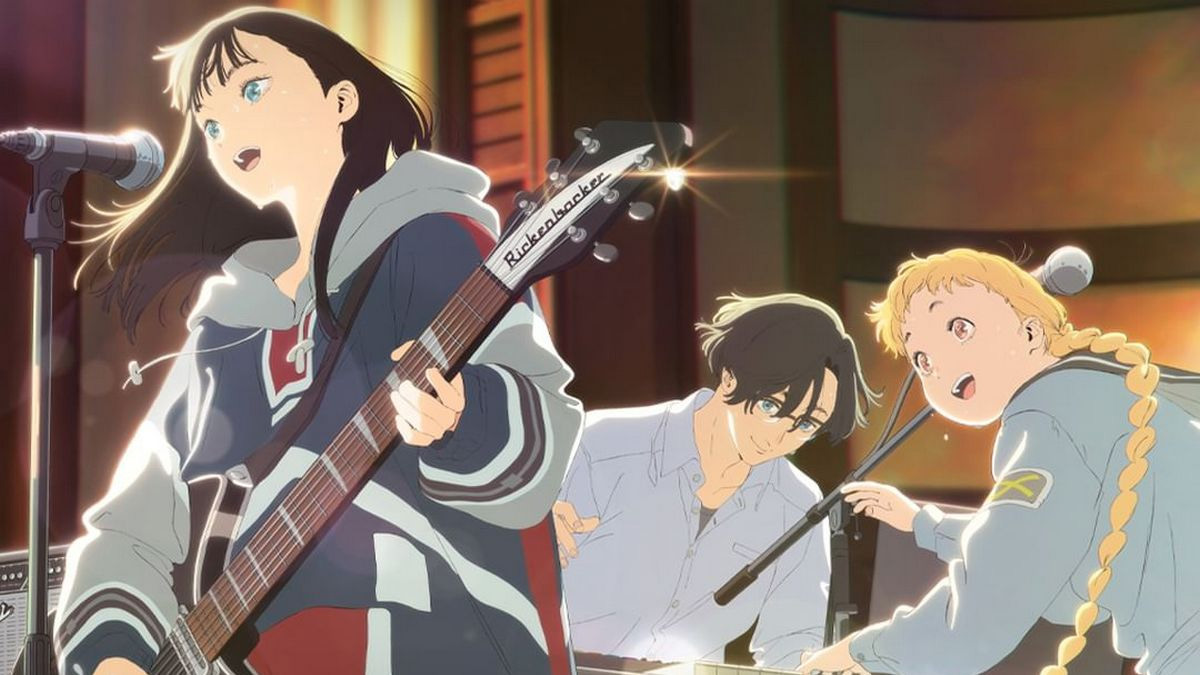
Considering how long we had to wait and catch up on anime films sometimes years after their release, it’s a special modern treat for fans like me to be able to see them in American theaters only months after their Japanese premiere, complete with a choice of English dub or subs. I caught the English dub of The Colors Within back in January, comparatively soon after its August 2024 release in Japan, and it did not disappoint. Directed by Naoko Yamada of A Silent Voice fame, this low-key high school drama is a gentle-hearted tribute to music’s power to foster friendship and self-discovery.

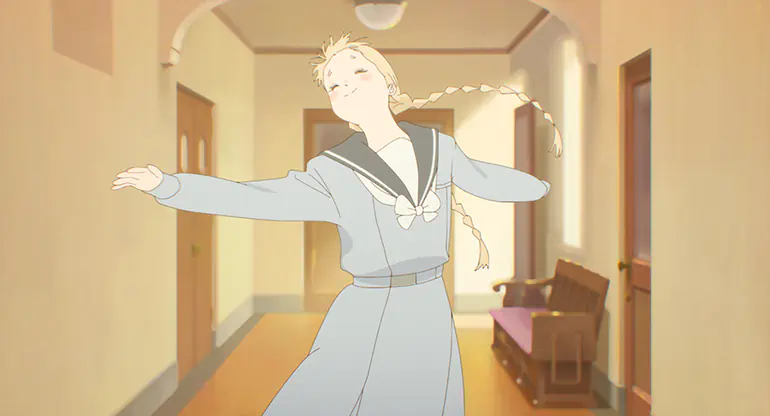
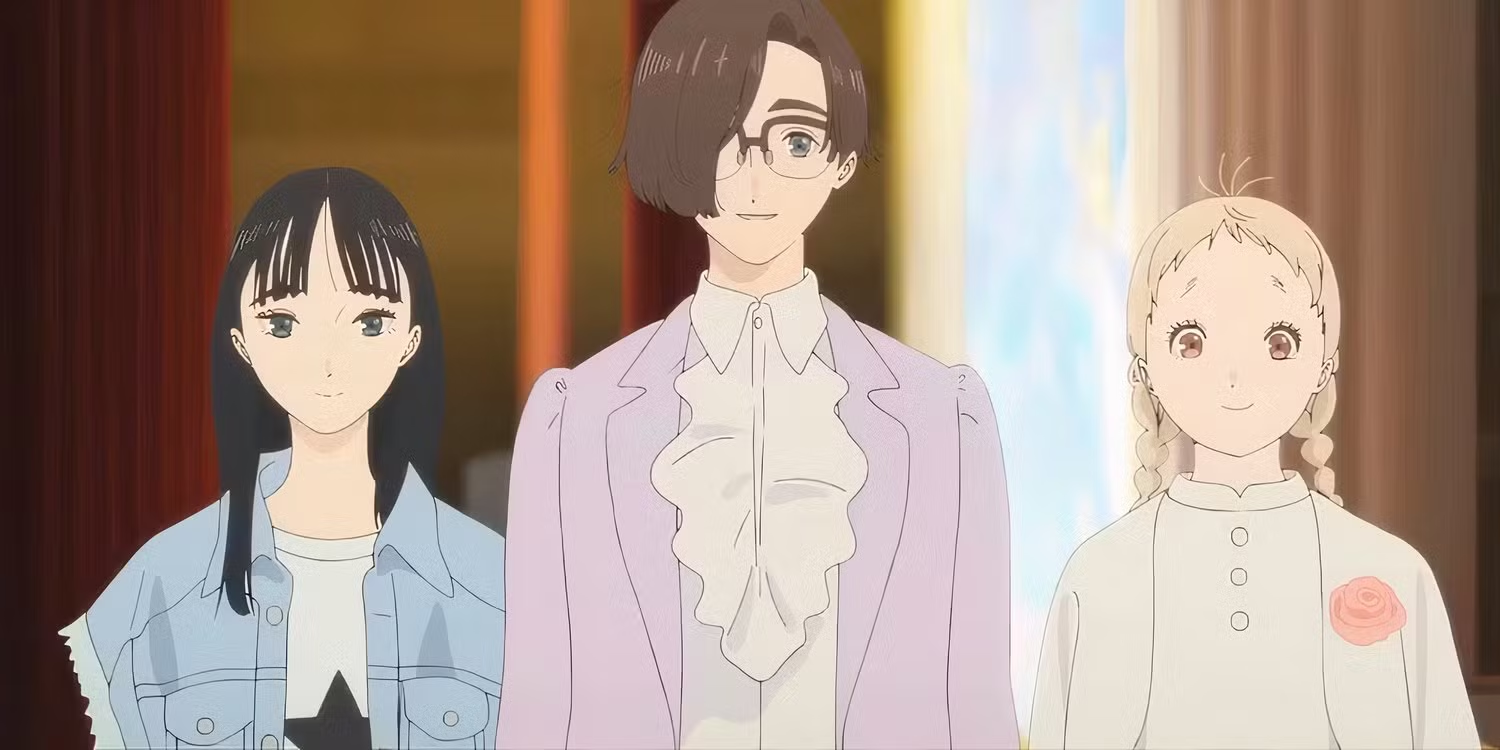
Set in a Catholic girls boarding school, the film follows ingenuous student Totsuko Higarashi, who experiences a visual synesthesia where she sees people in specific colors, often awestruck by an invisible beauty that no one else can appreciate. Drawn to an especially stunning blue coming from fellow student Kimi, Totsuko’s interest in her leads to the two stumbling into forming a band with a local boy and instrument collector named Rui. As the trio practice in secret and write their own songs, they endeavor to work through their individual personal and family struggles.

The Colors Within is a thoroughly sweet film, where the conflict stays at the level of contending with school rules and familial expectations, and there’s a special delight to be found in the creative joy the three teens derive from their simple musical ambitions. Totsuko’s wide-eyed experimentation with lyrics and notes and the collaboration of the three as they bond are enough to spark anyone’s curiosity to maybe start a band of their own (if only it was that easy). And the result of their teamwork is three outstanding songs, courtesy of musician Kensuke Ushio, two of them catchy pop tunes and one peaceful and ethereal. Going above and beyond, the excellent dub even translated the songs into English, with Kimi’s voice actor Kylie McNeill showcasing the singing chops she also brought to 2021’s Belle.

One unique element to The Colors Within is its earnest portrayal of Catholicism. Totsuko prays frequently and worries about going to confession after lying, Rui plays a moving rendition of the “Tantum ergo” on a theremin, and the nuns teaching at the girls’ school are largely presented as affectionate and supportive rather than strict caricatures. While not really a plot focus, it’s nice to see Christianity shown in a positive light as simply a part of the characters’ lives, even informing Totsuko’s song lyrics performed near the end.

As for the animation, director Yamada has traded in her prior collaborations with Kyoto Animation for the equally acclaimed studio Science Saru, known for highly dynamic animations like Ride Your Wave or last year’s hit series Dandadan. Compared with those, The Colors Within is far more grounded, full of pastel softness and painterly details, highlighted at times by the more abstract colors that Totsuko is able to see on those around her.

All in all, The Colors Within is a coming-of-age charmer. Totsuko’s fascination with Kimi could be read as a budding girl crush, but considering the setting and air of innocence, I thought it was more of a wholesome friendship. As someone working on song lyrics and basic tunes of my own for my musical, I related to the band members gradually developing their style, and the climactic performance of the end product was a joy of sight and sound. Totsuko’s character development may be ultimately on the thin side, but the colors on display here are beautiful.

Ranking:  List Runner-Up

© 2025 S.G. Liput
802 Followers and Counting

The Boy and the Heron (2023)

18 Thursday Apr 2024

Posted by sgliput in Movies, NaPoWriMo, Poetry, Reviews, Writing

≈ Leave a comment

Tags

Animation, Anime, Drama, Fantasy

(For Day 18 of NaPoWriMo, the prompt was for a poem in which the speaker desires to become someone or something else. With reincarnation featured in this movie, it seemed like a good fit.)

I’ve lived in fire, lived in water,
Lived as someone else’s daughter.
What can I be? What have I been?
How can I hope to choose again?

I have been loved from sky to sea,
But have I loved as selflessly?
Always been given, and it’s been heaven,
Lifting my heart like tender leaven.

How shall I live and love again
Back in the realm of mortal men?
Given new life, I’ll give to another.
I want to be someone else’s mother.
_________________________

MPA rating:  PG-13

Hayao Miyazaki and Studio Ghibli have an astounding track record of instant classics, they boast an unparalleled reputation in the animation industry, and yet they are not infallible. Despite its many accolades, including the Academy Award for Best Animated Feature, The Boy and the Heron is quite possibly the weakest film of Miyazaki’s catalog, an unfocused fantasy that is both too much and not enough.

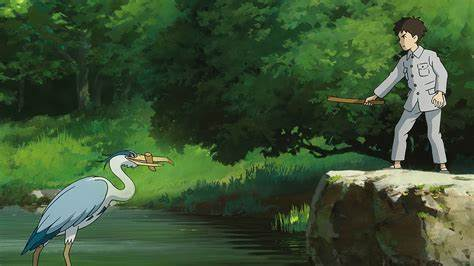
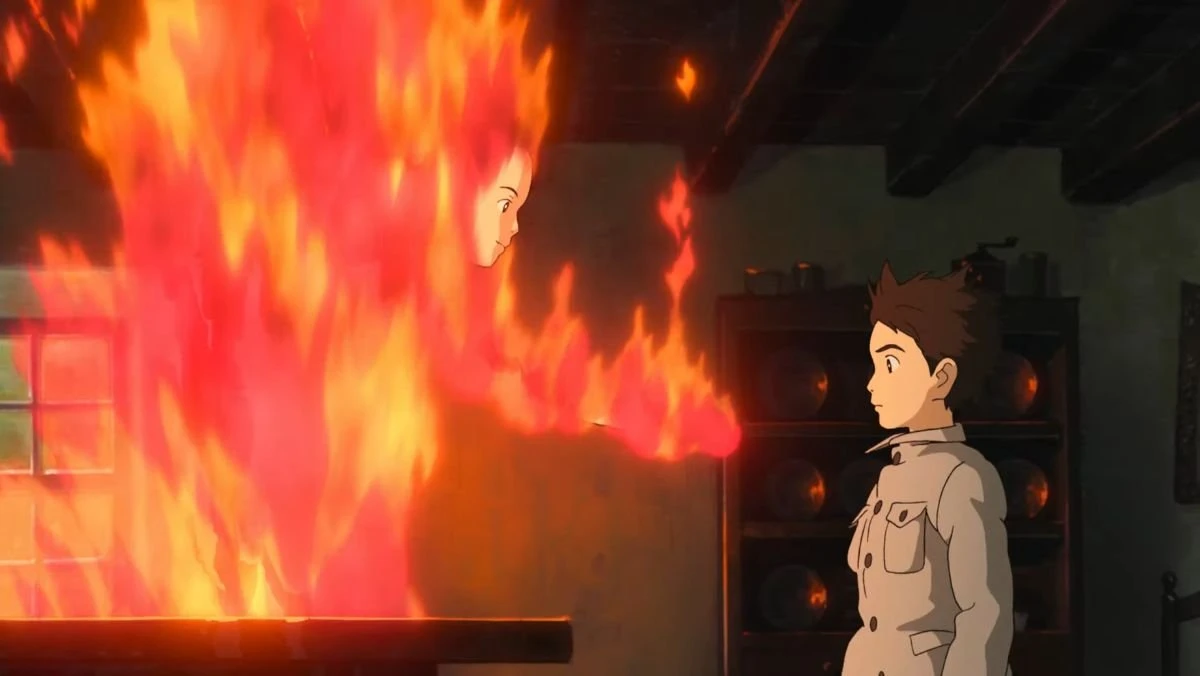
Taking its Japanese title How Do You Live? from a 1937 coming-of-age novel referenced in the film, the story begins similar to The Lion, The Witch, and the Wardrobe, with young Mahito Maki reeling from World War II and being brought to the countryside for safety. His mother lost in a hospital fire, he has no choice but to accept things as his father promptly marries her sister and moves him to a country estate. Mahito is drawn to a mysterious tower nearby, and a heron begins harassing him. When his pregnant aunt/stepmother disappears, the boy is led into a fantastical and very bird-oriented world as he commits to bringing her back while sorting out his conflicted feelings.

Ten years since his last film The Wind Rises, Miyazaki clearly had no shortage of ideas for his trademark imagination, but combining all of them into one fantasy world wasn’t the best move. After a rather long and boring prologue in the real world, Mahito’s introduction to the other dimension is a cavalcade of randomness, with a forbidden tomb, swarming pelicans, the butchering of a giant fish, and a representation of reincarnation, none of which really adds anything to Mahito’s story and feels more like padding to reinforce the world’s strangeness. There are also some other characters who have wandered in from the real world, yet they seem to fit right in, with magic powers and knowledge of how things work that Mahito lacks, making its rules further unclear. And the film keeps adding rules and characters right up to the end, making for a jumbled climax followed by a final scene that weirdly just… ends.

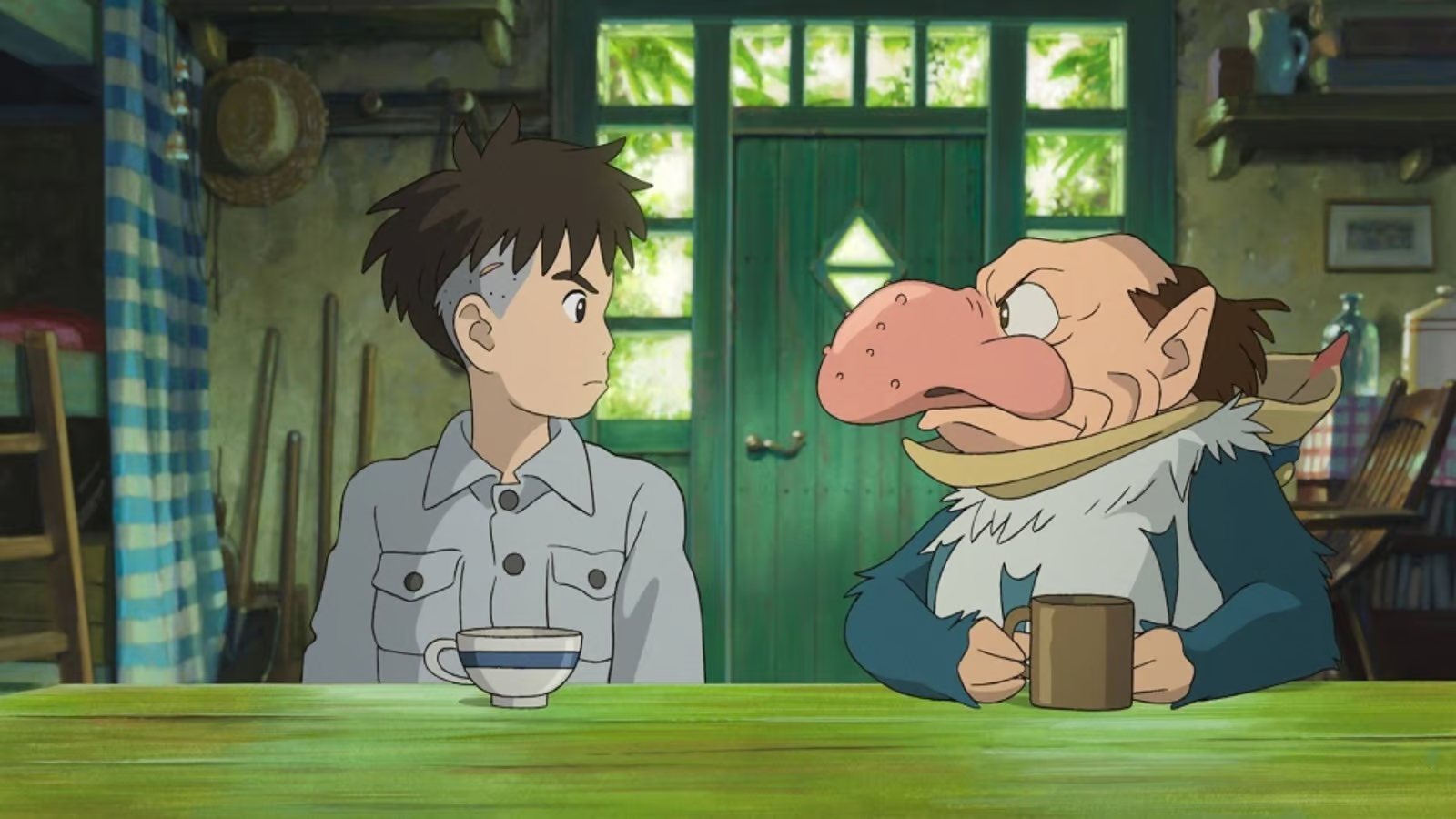
Of course, The Boy and the Heron does have its merits too, chief among them the gorgeous hand-drawn animation with that impeccable Ghibli style we haven’t seen in years. I enjoyed the middle section where Mahito teams up with a pyrokinetic girl and the little man who’s been wearing the heron like a suit, and the ending does have some touching themes involving family and personal choice. I only saw the English dub, and I have to applaud the star-studded voice cast, including Christian Bale, Dave Bautista, Gemma Chan, and especially Robert Pattinson sounding nothing like himself as the gremlin-like heron man.

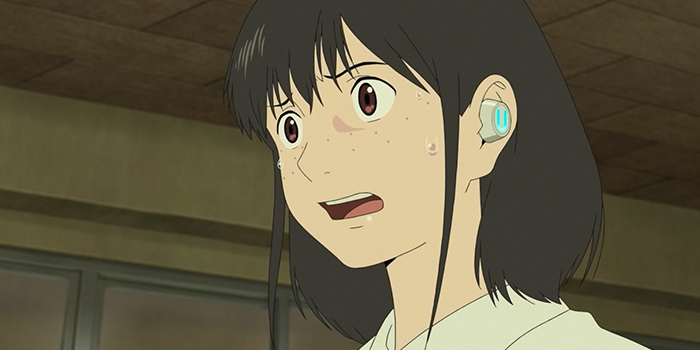
Does it feel nice to have another Miyazaki film a decade after we thought his career was over? Sure. Did it deserve an Oscar? Nope, certainly not over Across the Spider-Verse, no matter what the Academy and critics say. Heck, The Boy and the Heron wasn’t even the best anime film I saw last year; I preferred Makoto Shinkai’s Suzume, and that wasn’t his strongest movie either. (Oddly, both films have a scene where characters’ true feelings of resentment bubble up to the surface in an outburst and then it’s never addressed again.) I won’t deny The Boy and the Heron its good points, especially visually, and it’s impressive how well it has performed with its experimental lack of initial promotion, coasting on the Miyazaki and Ghibli name, but I’m hoping the director can manage one more film that will hopefully end his career on a higher note.

Rank:  Honorable Mention

© 2024 S.G. Liput
792 Followers and Counting

The Tunnel to Summer, the Exit of Goodbyes (2022)

09 Tuesday Apr 2024

Posted by sgliput in Movies, NaPoWriMo, Poetry, Reviews, Writing

≈ Leave a comment

Tags

Animation, Anime, Drama, Fantasy, Foreign, Romance

(For Day 9 of NaPoWriMo, the prompt was for an ode to an everyday object. While it may not be in everyone’s house, I’m sure many have a manuscript or poems or drawings they’re too nervous to share with the world, so I addressed this irregular sonnet to them.)

You mock me, you pile of papers,
You unread manuscript, hiding in the corner.
You say “Am I not fruit of all your labors?
Am I not worth another pair of eyes?
Is it better to be a cipher than a mourner,
Lest someone dare to share or criticize?
I’ll outlive you, your fear and blushing cheeks;
I’ll wait till someone else will spy my corner
And read what you had guarded from critiques
And grieve its author’s sad, unknown demise.”
I know that’s what you’re saying as time flies,
The time that’s killing me and stalling you.
The world can’t know what’s missing till it peeks,
Until the shy apply for their debut.
____________________

MPA rating: Not Rated (should be PG for some drama but quite clean)

While not every international run can be on the level of Your Name or The Boy and the Heron, I am quite glad that smaller anime films are getting at least a limited release in American theaters, even if it takes a year to get here. The Tunnel to Summer, the Exit of Goodbyes may have a rather cumbersome title, but it’s one of the better under-the-radar anime movies, with appealing animation and a nice short runtime to deliver its poignant themes.

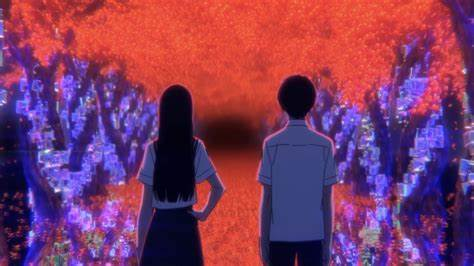
Kaoru is a high school student living in quiet grief with his abusive father, and he forms a bond with equally aloof transfer student Anzu, a budding manga artist unsure of her own talent (and inspiring the poem above). The two happen upon the fabled Urashima tunnel, which can supposedly grant a person’s greatest wish for a price. Mirroring the Urashima namesake, which is basically the equivalent of Rip Van Winkle in Japanese folklore, they discover that time passes differently inside the tunnel, where glowing trees line a watery path to their distant wish. After performing experiments on the tunnel’s strange properties, the duo must decide whether their wishes are worth giving up on their current life.

While there are plenty of films with this same romance-plus-supernatural storyline, I liked the natural progression of both, as the two main characters are actually smart about testing the temporal phenomenon, while also growing closer in the process. Though it can’t quite compare in scale or artistry, the film had some similarities to Your Name, and I suspect fans of one will also enjoy the other. It may be largely predictable, but The Tunnel to Summer, the Exit of Goodbyes is a lovely little movie to satisfy fans of star-crossed romance.

Rank:  List Runner-Up

© 2024 S.G. Liput
792 Followers and Counting

Suzume (2022)

29 Saturday Apr 2023

Posted by sgliput in Movies, NaPoWriMo, Poetry, Reviews, Writing

≈ 2 Comments

Tags

Animation, Anime, Drama, Fantasy, Meet 'em and Move on, Romance

(For Day 28 of NaPoWriMo, the prompt was for an index-like poem, so I chose the word “door” as my index word for a pair of haikus, since doors are so prominent in this film.)

Opens and closes;
Keep in or keep out; slam it;
Lock it; lose the key.

Don’t dare to open;
Outside the gates; slipping through;
Miss the other side.
____________________

MPA rating: PG

In the same way cinephiles look forward to the next Christoper Nolan or Quentin Tarantino movie, anime fans eagerly await the advent of the next Makoto Shinkai film. I was excited to finally see his latest called Suzume in the theater, months after its Japanese premiere, and it had everything Shinkai does well: pouring rain, desperate running, eye-popping cataclysms, poignant reunions, all rendered in some of the most gorgeous animation this side of KyoAni. Yet it’s hard to forget that everything he creates will inevitably be compared to Your Name, the record-breaking blockbuster that put Shinkai on the international map. It’s a tough comparison, but Suzume still excels at the same kind of emotion-backed fantasy.

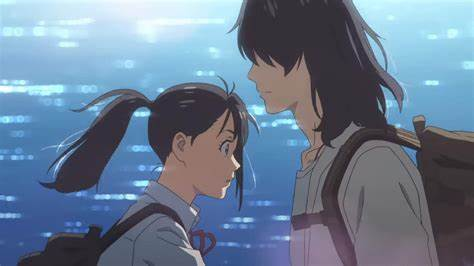
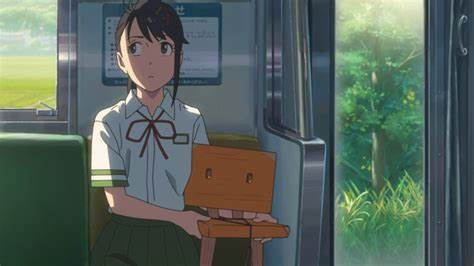
Suzume (Nanoka Hara), the title character, is a rural high school girl who directs an attractive visitor named Sota (Hokuto Matsumura) to some nearby ruins for which he is searching. When she follows out of curiosity, she discovers that a long-dormant evil has started breaking into our world to cause disasters, using doorways in abandoned areas as gateways that must be closed. When Sota is inexplicably cursed and transformed into… ahem, a chair, Suzume runs away from home to help him complete his mission, further complicated by a mischievous talking cat. (I loved a brief reference to Whisper of the Heart when the cat is spotted on a train.)

I’ll admit the chair part is a little hard to take seriously at first, especially since it forever labels this movie as “the one where a girl falls in love with a chair.” But if you roll with it, the object does take on greater meaning as a precious heirloom for Suzume, and there’s fun to be had with the absurdity of it. As the plot becomes a buddy road trip across Japan (a “meet-‘em-and-move-on” as I call them), it’s a little hard to believe how many people seem fine with supporting a runaway girl and letting her continue on her way. Yet it’s also an opportunity to take a peek into various lives she passes, which I always enjoy.

It’s interesting that two anime in the same year (this film and Drifting Home) both put a focus on the large number of abandoned areas throughout Japan, including a ferris wheel specifically, places that were once full of life and now have only echoes of what was. True to Shinkai form, the emotions grow with time, and even if Suzume and Sota ultimately just met, the bond and distress born from their relationship are highly affecting at the film’s emotional high points.

Even if I recognize the film’s faults, like the rather thin story fueled by contrivance, Shinkai just has a captivating style that is easy to get sucked into, aided by striking visuals and iconic music by the band Radwimps, his frequent collaborator. If Suzume had come out before Your Name and Weathering with You, I think I would love it more without the comparison, but I can’t quite say it’s better than them while sharing the same DNA. It did surpass Weathering with You to become the fourth highest-grossing Japanese film ever (right behind Your Name), so Shinkai still has enormous box office draw. It would be nice if he can step a little further out from under his own shadow, but I’m still very much a fan.

Rank: List Runner-Up (might go up with time)

© 2023 S.G. Liput
785 Followers and Counting

Drifting Home (2022)

23 Sunday Apr 2023

Posted by sgliput in Movies, NaPoWriMo, Poetry, Reviews, Writing

≈ Leave a comment

Tags

Action, Animation, Anime, Drama, Fantasy, Netflix

(For Day 23 of NaPoWriMo, the prompt was for a poem in numbered sections about a place I no longer visit as much. The best example I could think of was my old elementary school, so I imagined the various places abandoned and nostalgic.)

I
I remember they filed in one at a time,
Students alert to the school bell’s chime.
My classroom became their knowledge base,
And I kept them all safe in my walls’ embrace.
I was their path
To history, math,
The parts of the cell, and the subjective case.
Those who I held left smarter by far,
But now I do wonder where all of them are.

II
I remember they joined me at tables so long
That both ends could easily sing their own song.
They pulled out their lunches so lovingly packed
Or else I provided whatever they lacked.
I was their meal,
Their chance to be real,
To trade and upgrade and get caught in the act.
The hungry were happy and brought up to par,
But now I do wonder where all of them are.

III
I remember they ran with unparalleled glee
To climb on my monkey bars, wild and free.
My stretches of rubber mulch, bordered by sand,
Gave them their chances to fall and crash-land.
I was their play,
The peak of their day,
A time to recess from the teacher’s command.
I was the source of both smile and scar,
But now I do wonder where all of them are.
_____________________________________

MPA rating: PG

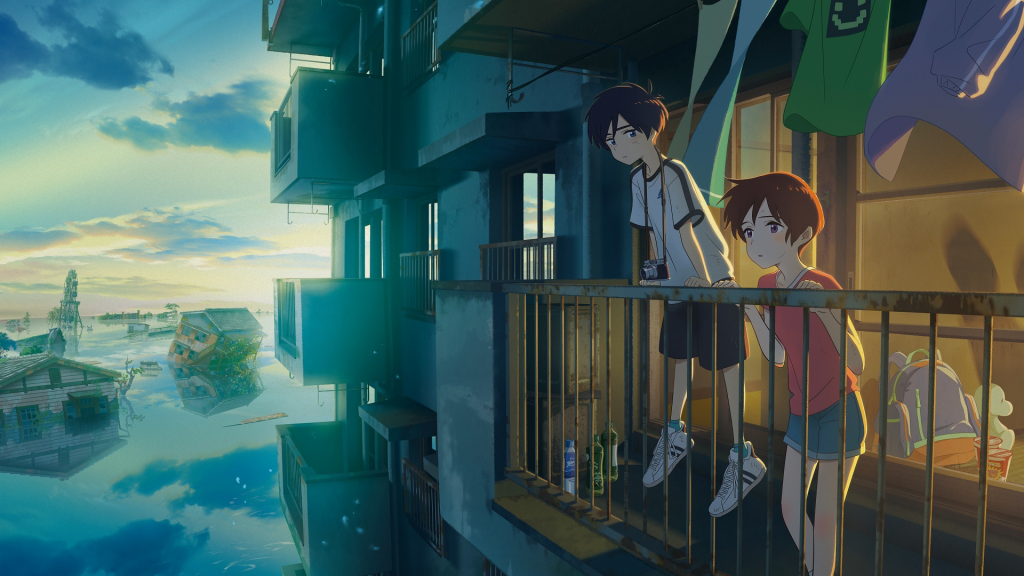
While Makoto Shinkai and Mamoru Hosoda are the biggest names in anime films, there are plenty of other studios in the mix, such as Studio Colorido, which has an ongoing partnership with Netflix. With films like A Whisker Away and Drifting Home, they bring some welcome Ghibli-esque fantasy to the streaming service. In Drifting Home, a group of children go exploring in the abandoned apartment building where Kosuke and his childhood friend Natsume used to live with Kosuke’s grandfather. After the two have an argument, the building somehow ends up floating in the middle of the ocean, forcing the kids to survive off what they can scavenge.

While the premise could have become mere escapism for the children, the story actually puts them in real danger, with limited resources and a crumbling structure as their only refuge from the sea. The characters themselves are not anything special and sometimes grating, though the conflict between Kosuke and Natsume carries weight as they both reacted differently to the death of Kosuke’s grandfather, a loss which haunts their relationship and perhaps the apartment itself.

Beyond the survival aspects and interpersonal drama, a prominent theme involves the inherent grief of buildings and structures that were once full of life and activity but have become abandoned over time. It’s an interesting concept of a place having its own form of sorrow and passing away. Drifting Home may not stand out as much as other anime films, but it’s a lovely smaller effort highlighting how we connect to the places we grow up.

Rank: List Runner-Up

© 2023 S.G. Liput
784 Followers and Counting

Her Blue Sky (2019)

21 Thursday Apr 2022

Posted by sgliput in Movies, NaPoWriMo, Poetry, Reviews, Writing

≈ Leave a comment

Tags

Animation, Anime, Drama, Fantasy, Romance

(Today’s NaPoWriMo prompt was rather detailed, to “recall someone you used to know closely but are no longer in touch with, then a job you used to have but no longer do, and then a piece of art that you saw once and that has stuck with you over time. Finally, close the poem with an unanswerable question.” I decided to adapt the prompt to the viewpoint of a character from this film.)

He made me laugh until the day
He made me cry and went away.
Though where he’s gone I cannot say,
I like to think he rues that day.

My sister worked me to the bone
When she was young and trouble-prone,
But now that she is nearly grown,
I hate to think of her alone.

I still recall the song he played,
And when my sister can be swayed,
She plays and makes me wish he’d stayed.
Why can’t I let the memories fade?
_______________________________

MPA rating:  Not Rated (a tame PG-13)

While modern anime films are dominated by Mamoru Hosoda and Makoto Shinkai (plus the plethora of films based on existing properties), there are some underrated original gems that don’t get as much attention as they should. Her Blue Sky is yet another example of the poignancy so easily captured by writer Mari Okada, known for emotion-heavy tearjerkers like The Anthem of the Heart and Maquia: When the Promised Flower Blooms. This one doesn’t really aim for tears as those do, but it certainly appeals to one’s sense of nostalgia and the regret that comes with looking back at how much we change over the years.

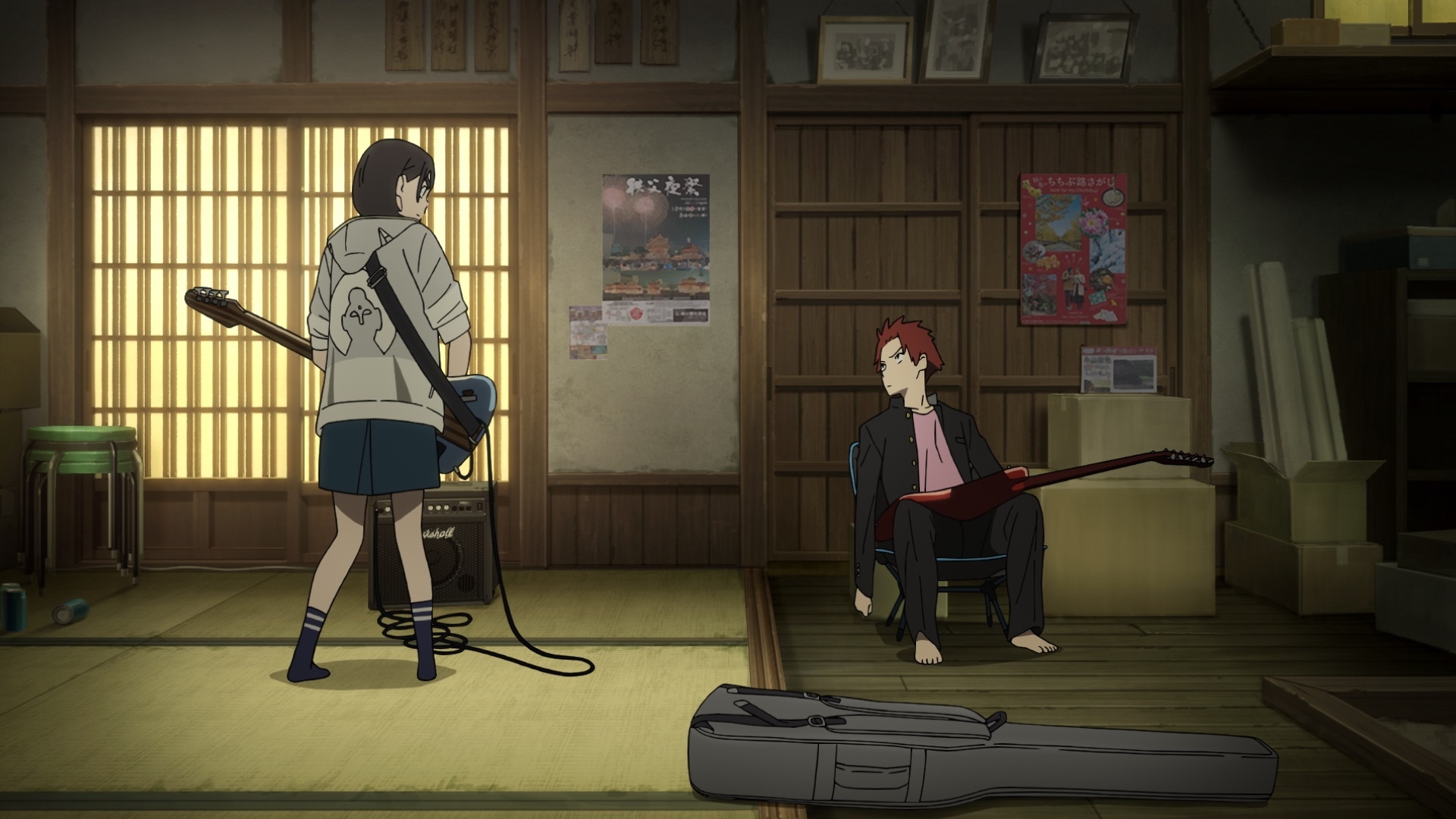
Set in the mountainous Chichibu area (where Okada was born herself), the film focuses on a young bassist named Aoi and her older sister Akane, who has cared for Aoi alone for the last thirteen years, choosing this responsibility over running off to Tokyo with her musician boyfriend Shinno. As a music festival approaches, Aoi remembers her fondness for Shinno and is shocked when he appears in her shed, looking exactly as he did thirteen years ago. While she suspects he is a ghost, the arrival of a grown, still-living Shinno back to town catches them off-guard, and the difference between his optimistic younger self and jaded older self puts both sisters through the emotional ringer.

While some may be disappointed at the lack of explanation for the supernatural elements, especially during a climactic sequence that is both delightfully touching and a little silly-looking, Shinno’s younger self is supposedly an ikiryō, a Japanese spirit that can manifest from a living person, a bit of interesting folklore I didn’t know, much like the 1970s song “Gondhara,” which features prominently in the film. The animation is a treat, with particular detail afforded to the instrument-playing, which is so often obscured to avoid the effort of animating authentic performances, and I’ve always enjoyed the character designs of this creative team, who previously worked on shows like Toradora.

While Aoi’s moody teenager shell may seem pretentious at first, her relationship with her sister is strained but quite sweet, as are the interactions with Shinno as she questions her feelings toward her sister’s ex. Thankfully, it all wraps up in a satisfying end, which is surprising since much of that end is only suggested in still images during the end credits. Her Blue Sky isn’t very easy to find and doesn’t even have an English dub yet, but it’s a small and tender drama of music and sisterhood that is worth seeking out.

Rank: List Runner-Up

© 2022 S.G. Liput
767 Followers and Counting
Belle (2021)

16 Saturday Apr 2022

Posted by sgliput in Movies, NaPoWriMo, Poetry, Reviews, Writing

≈ Leave a comment

Tags

Action, Animation, Anime, Drama, Family, Musical, Romance, Sci-fi

(Good Friday and work obligations sadly made me miss yesterday, but I’m back on the wagon. Today’s NaPoWriMo prompt was for a curtal sonnet, an 11-line sonnet variant from Gerard Manley Hopkins.)

In the realm of cyberspace I hide,
Comforted by anonymity.
My flesh-self is content behind its smokescreen.
Robed in pixels, I can roam with pride,
Finding other introverts to agree,
Minorities like ghosts in the machine.

Life from womb to here has left me wincing;
Life since logging on is fancy-free,
Far easier to spurn the cruel and mean.
I’m someone else, and boy, am I convincing,
As you’ve seen.
________________________

MPA rating:  PG

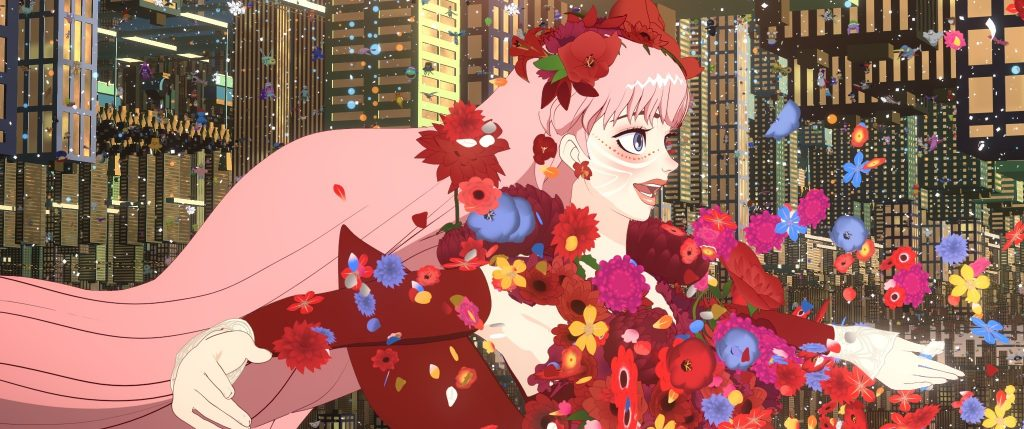
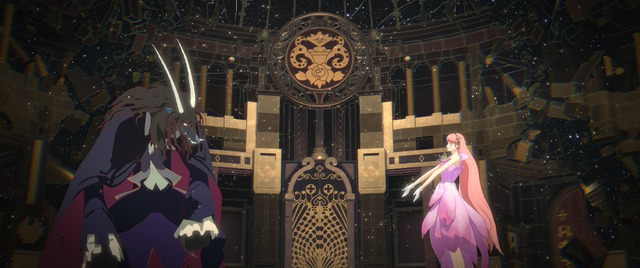
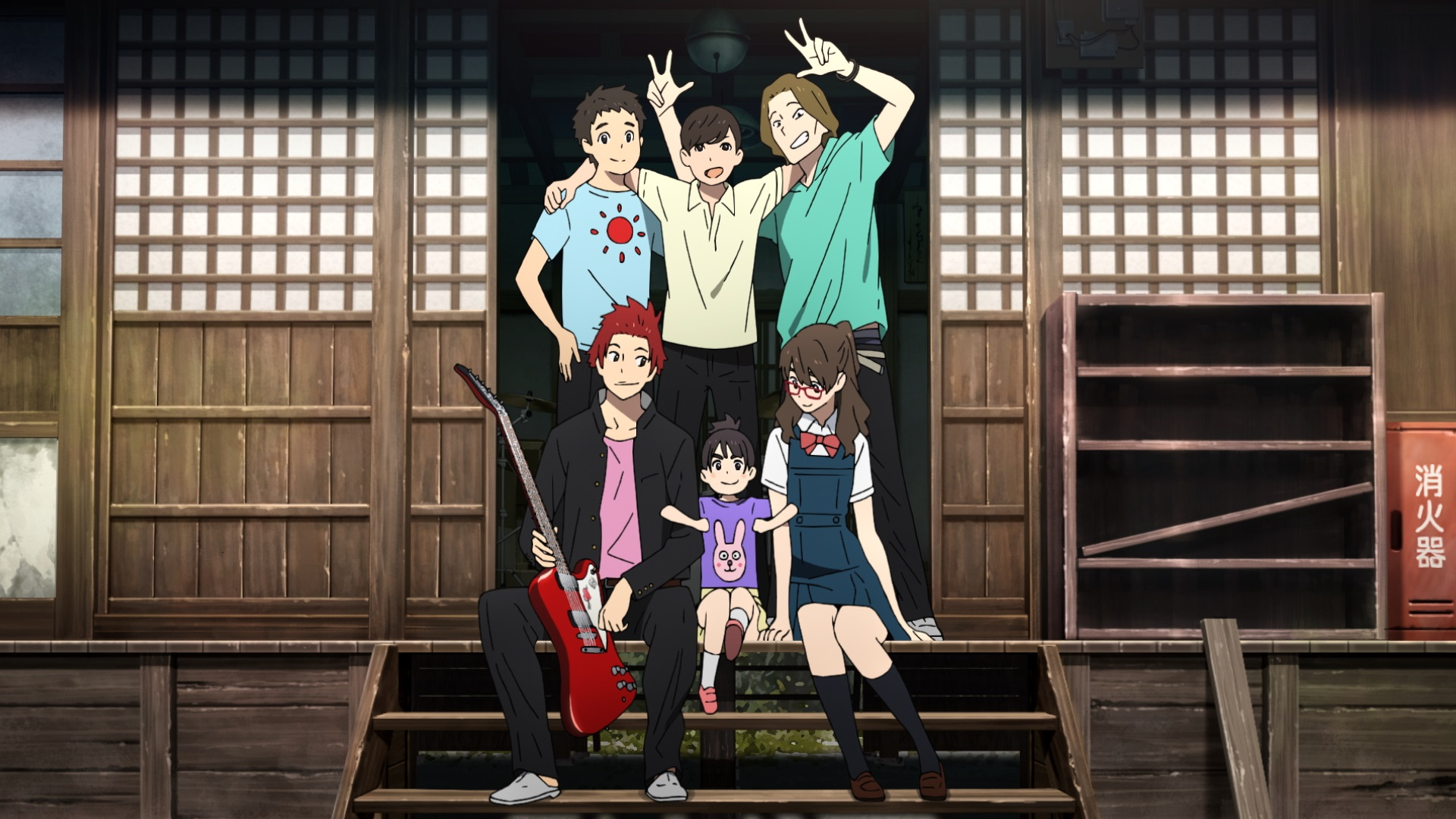
In anime circles, a new film from Mamoru Hosoda is an event. From Summer Wars to Wolf Children to the Oscar-nominated Mirai, he’s proven to be one of the most skilled anime directors around, and Belle promised to be yet another win. A modern riff on Beauty and the Beast fusing music and social media, the film garnered a fourteen-minute standing ovation at Cannes, making me wonder if it was just a case of no one wanting to be the first to stop clapping. Belle is another strong film in Hosoda’s oeuvre, but, like Encanto, it’s also proof that a film can be good while also being deeply flawed.

In the near-future of Belle, a digital world called U has become the most popular metaverse for people across the globe to interact with avatars somehow extrapolated from their own biometrics, resulting in an array of bizarre appearances ranging from babies to superheroes to literal hands with a face on it, which no one seems to object to. Suzu is a self-conscious high school student still haunted by her mother’s death, but when she logs into U as the beautiful Bell (which is what Suzu means), she finds that the anonymity allows her to sing again and, much to her surprise, become a celebrity. As she deals with the flurry of differing opinions that come with fame, she grows curious about the aggressive avatar known as the Beast, whose unknown identity is hunted by U’s authorities.

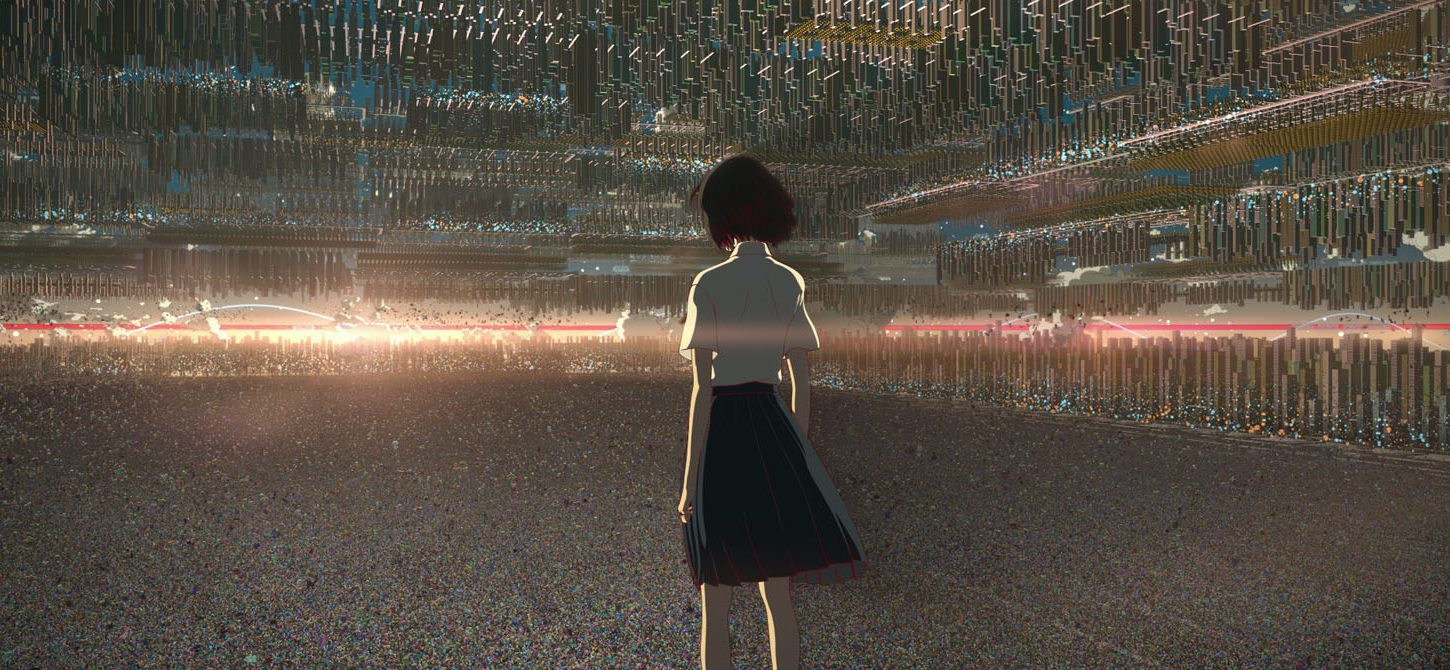
Hosoda is no stranger to virtual worlds, having previously worked with the concept in Digimon and Summer Wars, so it’s no surprise that the world of U is dazzling, an eye-popping blend of 3D and 2D animation, thanks in part to backgrounds from Cartoon Saloon. It’s easily Hosoda’s most visually resplendent and imaginative film that still carries his calling cards (he must have a thing for flying whales). The bad thing about U is that so much of it is left unexplained. While OZ in Summer Wars had several clear real-world applications, the avatars in U are never shown doing much more than floating around and commenting, though there are concerts and fighting tournaments, I suppose. Plus, it’s never clear how the real-world users are interacting with the virtual world; at some points, it’s as if their avatars are mirroring their real body’s movements, but is it like Ready Player One-style mechanics? There’s mention of sharing the senses of their avatars, so how can they see both U and the real world when logged in? Questions like that just require a suspension of disbelief that divorces the virtual and real worlds for the sake of the story.

The virtual world is ostensibly the main fantastical draw of the film, but I honestly enjoyed the parts in the real world more. The high school romance drama is nothing unusual for the genre, but the relatable supporting characters are an endearing bunch, particularly during a laughably awkward love confession. It was also a nice subversion to reveal the usually unsympathetic popular girl as a genuinely caring friend. However, the real world is also where the story falters toward the end. The revelation of the Beast’s identity is a powerful moment that speaks to the trauma of hidden abuse, yet it’s a reality for which the film doesn’t really have an answer. One culminating sacrifice hits an emotional high, but Suzu’s efforts afterward are unrealistic and absent of any long-term solution.

Belle has a lot of impressive elements in service to a somewhat half-baked plot, and the Beauty and the Beast parallels are rather incidental to the main story. Its vision of social media feeding frenzies and the online experience are timely and well-executed, while Suzu’s journey to understand the meaning of selflessness is suitably moving as well. And though the songs sometimes feel shoehorned in, I must give props to their quality, including the English recordings for the dub, and I think that the climactic “A Million Miles Away” would have been a worthy nominee for a Best Song Oscar if the Academy would look around more. Belle may not match the likes of Wolf Children, but it lives up to Summer Wars and exceeds Mirai, in my opinion. The visual splendor on display largely overshadows the plot issues, just as long as you don’t think about it too much.

Rank:  List Runner-Up

© 2022 S.G. Liput
765 Followers and Counting
Violet Evergarden: The Movie (2020)

03 Thursday Feb 2022

Posted by sgliput in Movies, Poetry, Reviews, TV, Writing

≈ Leave a comment

Tags

Animation, Anime, Drama, Romance

See the source image

I wear a weak smile
With weights on each end.
I faithfully labor
And greet every neighbor
To be a bulwark
On which all can depend.

Yet what I have lost
Haunts that which I’ve found.
Like one stubborn ember,
Your face I remember,
A past that burned bright
Upon life’s battleground.

They say what I know,
That I have to move on.
I still love the trace
That remains of your face.
I doubt it will ever
Be totally gone.
_________________________

MPA rating:  Not Rated (should be PG-13 for some violent flashbacks and heavy emotional themes)

Although I love anime, I’m often not sure how to review films based on anime series. For example, Demon Slayer: Kimetsu no Yaiba – The Movie: Mugen Train was literally the highest grossing movie of 2020 worldwide, smashing records and becoming the first non-Hollywood film to top the global box office. Yet I don’t really know what to say about it. Because it’s a feature-length middle chapter for the Demon Slayer series, it’s hard to recommend it to those unfamiliar with the show, since a full appreciation of the film depends on some familiarity. It was exciting, eye-popping, a good continuation, and apparently a real tearjerker for some (not me), but its attachment to an ongoing TV series limits its appeal in my view. I feel the same for other anime films based on series, from the Steins;Gate sequel to the growing number of My Hero Academia features, which typically end up feeling decent but unnecessary.

See the source image

Obviously, that’s not always the case. I’ve sung the praises of The Disappearance of Haruhi Suzumiya, which built beautifully on its original show, and Cowboy Bebop: The Movie, which stands on its own just as well. I suppose it’s easier when a film comes after a show ends, rather than in the middle of its run. Anyway, it should indicate my high regard for Violet Evergarden: The Movie that I’m reviewing it at all, beyond making it List-Worthy.

For those unfamiliar with Violet Evergarden, it’s a show from Kyoto Animation based on a popular light novel series about a girl in a fictional semi-Victorian country where gas lamps exist alongside advanced prosthetic limbs. Utilized as a lethal child warrior during a horrific war, the girl is taken in by a Major Gilbert, who gives her the name Violet and hates using her on the battlefield, despite her effectiveness. In the midst of a major victory, both of them are severely injured, and the Major is lost and presumed dead. With the war over, Violet is sent to a friend of the Major’s who runs a post office, and she gradually eases into the more peaceful life of typing letters for others, a job called an Auto Memory Doll (basically a transcriptionist with a typewriter). While struggling to understand simple concepts like love and pining for the Major, she meets an array of customers who help her grow as a person.

See the source image

The short 13-episode series itself is quite good, with strong characters and emotions, but its greatest strengths are the glorious, Oscar-caliber score and drop-dead gorgeous animation. It’s honestly some of the finest, most detailed animation out there, and almost any single frame could be hung on a wall as a work of art. I will say that the script can be weak at times, often ascribing great profundity to the letters Violet writes even when they’re more earnest than deep. But the film’s poignant themes grow more affecting with time, and the largely stand-alone tenth episode remains one of the most tear-jerking episodes of television imaginable. Even the thought of it makes me want to cry. The studio could have left the show alone or stopped after the spin-off film called Eternity and the Auto Memory Doll, which falls under that “decent but unnecessary” status that I mentioned before. But the studio decided to cap off the series with a finale film, despite delays from the infamous arson attack and COVID, and I’m glad they did because it’s everything I could have wanted in a conclusion (hello, 100% Rotten Tomatoes score).

It was a canny choice to frame the story as a retrospective investigation, with a young woman from decades in the future looking back on the tale of Violet Evergarden, and the woman’s connection to that moving tenth episode had me close to sobbing right from the start. The film soon jumps back to Violet’s time, after she has grown into the most popular Doll in the city, though her thoughts remain with her long-lost Major Gilbert. After accepting a job from a sick boy in the hospital who wants her help to write letters to his family once he is gone, Violet and her boss learn of evidence that Gilbert might be alive on a distant island, and they go in search of her beloved.

See the source image

There were many ways that the film could have gone wrong. Would they pull a fake-out and say it wasn’t Gilbert? Would it be a tired amnesia scenario? But the way it plays out is both touching and makes sense for the characters, highlighting Gilbert’s guilt from the war and how much Violet has grown apart from him. The eventual climax is a massive tug to the heartstrings, and I felt like the film was effective in encapsulating the overarching story and its emotions, even for those who may not have watched the series. (Even so, I certainly recommend watching the show first for the full context and emotional punch.)

I’ve always thought that the concept of an Auto Memory Doll seemed odd and quaint, like something that would be unrealistic in the real world, though that view is likely shaped by the prevalence of modern literacy and easy communication methods. The film actually addresses that head-on, with the advent of the telephone threatening the entire Doll profession. One shot of a lamplighter gazing up at a newfangled electric streetlight perfectly captured the theme of technological progress. I suppose the job of writing letters for others could be compared to something like the Pony Express, short-lived but memorable, and while the story could have been antagonistic toward such progress, it manages to show the positive aspects of both the telephone and letter-writing in, of course, the most poignant way possible.

See the source image

I can see how someone cynical could easily view Violet Evergarden with detachment and scoff at its overly melodramatic qualities. It can lay on the tragedy pretty thick at times and certainly falls under that category of anime that intentionally aim to bring the audience to tears, like Angel Beats, To Your Eternity, or anything from Mari Okada. But if you can truly connect with Violet’s journey to understand love, it’s well worth tears, and I like the fact that I’m not too jaded to be moved by it. I liked the series on its own, but Violet Evergarden: The Movie took the series’ strengths and elevated them with a near-perfect culmination of all that came before and left me with a precious lump in my throat. I feel sorry for those who don’t give anime a chance, because stories like this transcend the medium to be great films, period.

Best line:  (Daisy, the woman learning about Violet) “If there’s something I can’t tell them in words, maybe I could tell them in a letter. I want to finally tell them my true feelings. We don’t know how long we have, so I need to tell them while I still have time.”

Rank:  List-Worthy

© 2022 S.G. Liput
752 Followers and Counting
← Older posts

Recent Posts

  • We Didn’t Start 2025 (Recap)
  • NaPoWriMo 2025 Recap (Finally)
  • Sonic the Hedgehog 3 (2024)
  • It Happened One Night (1934)
  • Spellbound (2024)

Recent Comments

associatesofshellymann's avatarassociatesofshellyma… on My Top Twelve La La La So…
Kit's avatarKit Nichols on Bonnie and Clyde (1967)
lifelessons's avatarlifelessons on Look Back (2024)
Carol Jackson's avatarCarol Jackson on The Thief of Bagdad (1940…
Stephen's avatarStephen on Love Story (1970)

Archives

  • January 2026
  • December 2025
  • May 2025
  • April 2025
  • March 2025
  • February 2025
  • January 2025
  • December 2024
  • May 2024
  • April 2024
  • March 2024
  • February 2024
  • January 2024
  • December 2023
  • November 2023
  • October 2023
  • September 2023
  • July 2023
  • June 2023
  • May 2023
  • April 2023
  • March 2023
  • February 2023
  • January 2023
  • December 2022
  • November 2022
  • October 2022
  • September 2022
  • August 2022
  • July 2022
  • June 2022
  • May 2022
  • April 2022
  • March 2022
  • February 2022
  • January 2022
  • December 2021
  • November 2021
  • October 2021
  • September 2021
  • August 2021
  • July 2021
  • June 2021
  • May 2021
  • April 2021
  • March 2021
  • February 2021
  • January 2021
  • December 2020
  • November 2020
  • October 2020
  • September 2020
  • August 2020
  • July 2020
  • June 2020
  • May 2020
  • April 2020
  • March 2020
  • February 2020
  • January 2020
  • December 2019
  • November 2019
  • October 2019
  • September 2019
  • August 2019
  • July 2019
  • June 2019
  • May 2019
  • April 2019
  • March 2019
  • February 2019
  • January 2019
  • December 2018
  • November 2018
  • October 2018
  • September 2018
  • August 2018
  • July 2018
  • June 2018
  • May 2018
  • April 2018
  • March 2018
  • February 2018
  • January 2018
  • December 2017
  • November 2017
  • October 2017
  • September 2017
  • August 2017
  • July 2017
  • June 2017
  • May 2017
  • April 2017
  • March 2017
  • February 2017
  • January 2017
  • December 2016
  • November 2016
  • October 2016
  • September 2016
  • August 2016
  • July 2016
  • June 2016
  • May 2016
  • April 2016
  • March 2016
  • February 2016
  • January 2016
  • December 2015
  • November 2015
  • October 2015
  • September 2015
  • August 2015
  • July 2015
  • June 2015
  • May 2015
  • April 2015
  • March 2015
  • February 2015
  • January 2015
  • December 2014
  • November 2014
  • October 2014
  • September 2014
  • August 2014
  • July 2014
  • June 2014
  • May 2014
  • April 2014
  • March 2014
  • February 2014
  • January 2014
  • December 2013

Categories

  • Blindspot
  • Blogathon
  • Christian
  • Movies
  • Music
  • NaPoWriMo
  • Poetry
  • Reviews
  • TV
  • Writing

Meta

  • Create account
  • Log in
  • Entries feed
  • Comments feed
  • WordPress.com

Recent Posts

  • We Didn’t Start 2025 (Recap)
  • NaPoWriMo 2025 Recap (Finally)
  • Sonic the Hedgehog 3 (2024)
  • It Happened One Night (1934)
  • Spellbound (2024)

Recent Comments

associatesofshellymann's avatarassociatesofshellyma… on My Top Twelve La La La So…
Kit's avatarKit Nichols on Bonnie and Clyde (1967)
lifelessons's avatarlifelessons on Look Back (2024)
Carol Jackson's avatarCarol Jackson on The Thief of Bagdad (1940…
Stephen's avatarStephen on Love Story (1970)

Archives

  • January 2026
  • December 2025
  • May 2025
  • April 2025
  • March 2025
  • February 2025
  • January 2025
  • December 2024
  • May 2024
  • April 2024
  • March 2024
  • February 2024
  • January 2024
  • December 2023
  • November 2023
  • October 2023
  • September 2023
  • July 2023
  • June 2023
  • May 2023
  • April 2023
  • March 2023
  • February 2023
  • January 2023
  • December 2022
  • November 2022
  • October 2022
  • September 2022
  • August 2022
  • July 2022
  • June 2022
  • May 2022
  • April 2022
  • March 2022
  • February 2022
  • January 2022
  • December 2021
  • November 2021
  • October 2021
  • September 2021
  • August 2021
  • July 2021
  • June 2021
  • May 2021
  • April 2021
  • March 2021
  • February 2021
  • January 2021
  • December 2020
  • November 2020
  • October 2020
  • September 2020
  • August 2020
  • July 2020
  • June 2020
  • May 2020
  • April 2020
  • March 2020
  • February 2020
  • January 2020
  • December 2019
  • November 2019
  • October 2019
  • September 2019
  • August 2019
  • July 2019
  • June 2019
  • May 2019
  • April 2019
  • March 2019
  • February 2019
  • January 2019
  • December 2018
  • November 2018
  • October 2018
  • September 2018
  • August 2018
  • July 2018
  • June 2018
  • May 2018
  • April 2018
  • March 2018
  • February 2018
  • January 2018
  • December 2017
  • November 2017
  • October 2017
  • September 2017
  • August 2017
  • July 2017
  • June 2017
  • May 2017
  • April 2017
  • March 2017
  • February 2017
  • January 2017
  • December 2016
  • November 2016
  • October 2016
  • September 2016
  • August 2016
  • July 2016
  • June 2016
  • May 2016
  • April 2016
  • March 2016
  • February 2016
  • January 2016
  • December 2015
  • November 2015
  • October 2015
  • September 2015
  • August 2015
  • July 2015
  • June 2015
  • May 2015
  • April 2015
  • March 2015
  • February 2015
  • January 2015
  • December 2014
  • November 2014
  • October 2014
  • September 2014
  • August 2014
  • July 2014
  • June 2014
  • May 2014
  • April 2014
  • March 2014
  • February 2014
  • January 2014
  • December 2013

Categories

  • Blindspot
  • Blogathon
  • Christian
  • Movies
  • Music
  • NaPoWriMo
  • Poetry
  • Reviews
  • TV
  • Writing

Meta

  • Create account
  • Log in
  • Entries feed
  • Comments feed
  • WordPress.com

Blog at WordPress.com.

Is this your new site? Log in to activate admin features and dismiss this message
Log In
  • Subscribe Subscribed
    • Rhyme and Reason
    • Join 814 other subscribers
    • Already have a WordPress.com account? Log in now.
    • Rhyme and Reason
    • Subscribe Subscribed
    • Sign up
    • Log in
    • Report this content
    • View site in Reader
    • Manage subscriptions
    • Collapse this bar
 

Loading Comments...