• Home
  • About Me
  • The List
  • THE LIST (2016 Update)
  • THE LIST (2017 Update)
  • THE LIST (2018 Update)
  • THE LIST (2019 Update)
  • THE LIST (2020 Update)
  • THE LIST (2021 Update)
  • THE LIST (2022 Update)
  • Top Twelves and More
  • The End Credits Song Hall of Fame

Rhyme and Reason

~ Poetry Meets Film Reviews

Rhyme and Reason

Tag Archives: Romance

The Inn of the Sixth Happiness (1958)

08 Sunday Oct 2017

Posted by sgliput in Movies, Poetry, Reviews, Writing

≈ Leave a comment

Tags

Biopic, Classics, Drama, History, Romance

Image result for the inn of the sixth happiness

Some may wish five happinesses
On both traveler and friend:
The hope for wealth from their successes,
And a long life ere the end.

Third, may good health cause increase,
And virtue fortify your soul,
And lastly, may you die in peace,
Having met your every goal.

Though five would fill most purposes,
A sixth and final happiness
I wish to all, but what it is
Is up to each of us to guess.
____________________

MPAA rating: PG

Ingrid Bergman is one movie star who hasn’t been much on my classic film radar, aside from Casablanca and Gaslight (which are great). To remedy that, I decided to check out one of her later roles in the semi-epic The Inn of the Sixth Happiness, in which she plays Gladys Aylward, a real-life missionary to China who rose to fame with her humanitarian efforts during the Sino-Japanese War of the 1930s.

I call it a semi-epic because, though it doesn’t quite boast the sweeping storytelling of Ben-Hur or Doctor Zhivago, there’s enough of it in Aylward’s decades-long mission that the magnitude of her story rises above others of its day. At the beginning, Aylward displays an indomitable passion for China, feeling it is where God has called her for His purposes, and at her own expense and peril, she journeys there to join an already established missionary (Athene Seyler). There in Yang Cheng, they open an inn for travelers, whose hunger for stories they plan to meet with the Bible, but many difficulties stand in the way, from uncooperative leaders to the obvious language barrier. And even when she earns the trust and love of the people, Aylward’s commitment to China also puts her in harm’s way when the Japanese invade in the years leading up to World War II, and she takes it upon herself to lead a hundred orphans to safety.

Image result for the inn of the sixth happiness

While The Inn of the Sixth Happiness doesn’t quite make my List, it’s the kind of film that might have if I’d seen it long ago and built it up in my head as a classic. (That is how it works sometimes.) There’s much to love about it, not least of all is Bergman’s performance as Aylward. Even if she looks and sounds nothing like the woman she’s playing (just one of the film’s many historical liberties), she certainly captures her commitment and love for the Chinese people. Like Mother Teresa, she goes to serve as both servant and example rather than force conversion on the people. She doesn’t merely go to China for a couple years to fulfill a duty; instead, she immerses herself in the land and culture, even becoming a Chinese citizen, and dedicates her entire life to her mission of love and social reform. It is this kind of Christian commitment that is most persuasive, and when she does find success and respect in the eyes of both the Chinese and her fellow missionaries, it’s immensely satisfying and touching. I’ve even heard reports that playing such a godly woman led Ingrid Bergman to become a Christian.

Strong supporting roles are filled by Curt Jurgens as a half-Chinese colonel and love interest and Robert Donat (his last film role before his death) as the local mandarin of Yang Cheng. Of course, neither actor is Chinese, leading to retroactive criticisms of the film for whitewashing, but they both are excellent still, especially Donat, and they’re not at all insulting like Mickey Rooney’s caricature in Breakfast at Tiffany’s. Plus, the vast majority of the cast are still played by Chinese actors, including many children from a Chinese community in Liverpool. Especially affecting is the commitment of Aylward’s two Chinese helpers who assist her along the way, as well as an emotional scene between Aylward and one of her adopted Chinese daughters.

Image result for the inn of the sixth happiness

It’s not without its flaws, from an overlong runtime to some loose ends that are left unresolved by the end. Plus, it’s up to each viewer how much the historical changes bother you; Aylward herself wasn’t a fan of the film’s depiction of her or Curt Jurgens’ character. Yet the mountainous setting adds a good deal of authenticity to Aylward’s travails, aided by terrific cinematography, and even if director Mark Robson was the only member of the production to earn an Oscar nomination, the quality of the performances and overall film seem deserving of far more. The Inn of the Sixth Happiness isn’t strongly evangelical, still being a Hollywood production, but the faith of its subject is unmistakable and inspiring.

Best line: (Aylward) “You have to interfere with what you feel is wrong, if you hope to make it right.”


Rank: List Runner-Up


© 2017 S.G. Liput
514 Followers and Counting


Cartoon Comparison / 2017 Blindspot Pick #9: Hear Me (2009) / A Silent Voice (2016)

15 Friday Sep 2017

Posted by sgliput in Blindspot, Movies, Poetry, Reviews, Writing

≈ Leave a comment

Tags

Animation, Anime, Cartoon Comparisons, Comedy, Drama, Foreign, Romance

Image result for hear me film

Image result for a silent voice film

Whispered rumors, mocking humor,
Overhearing words of spite,
Talk of blame and guilt and shame,
Made all the worse because they’re right—
Oh, to shut such voices out,
Unkindness barely out of sight.

Those with ears, now let them hear,
But if they can’t, do words turn rude?
Is absence of respect and love
The norm when barriers are viewed?
Perhaps it’s best the deaf don’t hear
Unkindness at such amplitude.

Those who fear the scorn they hear
May hide in deafness self-imposed,
Just as those who never chose
Their handicap can feel exposed.
Yet all who rise must recognize
Life’s eyes and ears should not be closed.
______________________

MPAA rating for Hear Me: Not Rated (should be PG)
MPAA rating for A Silent Voice: Not Rated (could be PG but probably PG-13)

In honor of  September being Deaf Awareness Month, I thought it appropriate to combine my monthly Blindspot Hear Me as a Cartoon Comparison with the anime film A Silent Voice, both of which are about a relationship between a boy and a young deaf girl. I thought to combine their reviews before I’d even seen them, but now that I have, the truth is that they’ve got far more differences than similarities. Hear Me is a Taiwanese romantic comedy with the unique distinction of being mostly in sign language, while A Silent Voice is a poignant tale of a bully’s emotional journey toward forgiveness, with romance staying on the back burner. (I thought they were both Japanese until I saw Hear Me was from Taiwan.) Yet both do address issues of deaf people and how others relate to them.

I’ll start with my Blindspot pick Hear Me, which intrigued me when I heard it was mostly in sign language. That probably won’t please anyone who doesn’t enjoy subtitles, but it makes for some very unique conversations, some of them quite dramatic yet communicated with only hands and facial expression rather than voice. Eddie Peng (who just appeared this year in The Great Wall) plays Tian Kuo, a delivery boy for his parents’ restaurant, who meets a girl named Yang Yang (Ivy Chen) at the public pool while her sister trains for the Deaflympics. Since he knows sign language, he freely converses with her over time, and their relationship goes through some familiar highs and lows, with deafness as a potential complication for their future together.

Image result for hear me film

Let me just say that Hear Me has abundant charm, thanks largely to Eddie Peng, whose goofy, lovestruck antics and faces shine through even without words. There is dialogue too, in Chinese, mainly for the humorous exchanges between Tian Kuo and his bossy mother, but sign language and relative quiet are the rule rather than the exception here. The romance is also refreshingly wholesome, with the most suggestive moment just Tian Kuo seeing Yang Yang’s feet while she’s changing, which gives him a nosebleed. (It’s funny, I’ve seen that happen in anime, but this suggests that it’s something that actually happens to Asian people when they get excited.)

Hear Me actually focuses on the dual relationships of Tian Kuo and Yang Yang, as well as Yang Yang and her deaf sister Xiao Peng (Yanxi Chen). After Tian Kuo offends his crush by disrespecting her meager income, his efforts to win her back may bring to mind John Cusack’s desperation in Say Anything, just instead of holding a boom box outside of her window, he dresses as a tree and gives her a coin bank shaped like a bird. Really similar, see? The humor comes from Tian Kuo’s side, while Yang Yang and her sister face more dramatic issues, like craving independence despite being deaf. Yang Yang earns all the money, while her sister focuses on competing as a swimmer, but when her performance suffers, Xiao Peng comes to regret and resent her own dependence on her sister, climaxing in an all-hand heart-to-heart between them.

Image result for hear me film

Hear Me makes the most of its unique sign-language dialogue, which serves the story rather than being just a gimmick. I liked how a misunderstanding was cleverly prolonged, as well as the few reminders of Yang Yang’s Christianity, since her absent father is said to be a missionary to Africa. It may not be a laugh riot, but there were definitely funny moments, especially a hilariously awkward scene where Tian Kuo’s parents sing his praises to his girlfriend. The central relationship also featured several of those heartwarmingly romantic moments that made Hear Me a pleasure to watch.

Now for A Silent Voice, or as its Japanese title Koe no Katachi translates, The Shape of Voice. While it received many accolades, A Silent Voice suffered somewhat from bad timing, being released just a month after last year’s mega-hit Your Name in Japan. (Incidentally, both were nominated for Japan’s Best Animated Feature Academy Award, but neither one won. That honor went to In This Corner of the World, which I’ll get to at some point.)  Whereas Hear Me was a romantic comedy with some moments of drama, A Silent Voice is much more dramatic in its young-adult setting and is bound to make sensitive viewers reach for the tissues more than once.

Image result for a silent voice film

The film starts with the carefree elementary school life of Shōya Ishida, who is dumbfounded at the arrival of a new student, a girl named Shoko Nishimiya who reveals through writing in her notebook that she cannot hear. While the other students are civil enough at first, the situation quickly devolves into bullying, led by Ishida. These scenes remind you how cruel kids can be and easily make your heart break for Nishimiya, who endures it all with quiet patience, still thinking the best of her classmates. When she finally is forced to change schools, the blame for her departure quickly falls on Ishida, and he takes her place as the class scapegoat and bully target. Fast forward several years to Ishida in high school, and his marginalization has only deepened, even making him consider suicide, until he tries to seek out Nishimiya and make amends.

A Silent Voice makes the uncommon choice of first portraying its main character as a bully, the kind whose maliciousness seems normal to them but traumatic to their target. Yet the same person we dislike from the outset grows into a source of sympathy as he tries desperately to put that childish cruelty behind him. I loved the creative choice of placing X’s over the faces of his fellow classmates, marking them as people he has no chance or desire of knowing, as literal “unfriends.” These X’s become a brilliant way of visualizing Ishida’s mental state and his chances of relationships with others; when he lets his guard down, actually noticing and treating someone else as a person or vice versa, the X falls from their face and allows him a chance at a friend.

Image result for a silent voice film ending

The relationship between Ishida and Nishimiya is touching on multiple levels. They’re both broken people with agonizingly low self-esteems, Ishida because he considers his past offenses unforgivable, Nishimiya because she blames herself for any trouble around her and believes she somehow deserves it, always apologizing for everything. It’s amazing how easily she seems to accept Ishida after what he did, but it’s the mere effort of communicating with her that she values most. Also perceptive are their interactions with the friends they make and how they respond to the bullying: one girl still sees Nishimiya as insincere and worthy of her harassment, while another views herself as completely innocent, even though she watched Nishimiya’s persecution and did nothing. These bullying themes and Ishida himself meant much to me because I too have been on both sides; I was picked on by an older classmate for a time and I did the same myself, something I still regret despite it happening only once. Ishida doesn’t approach Nishimiya with any set goals of how to make it up to her, but he tries to build the relationships he once helped destroy, something any repentant bully would wish they could do as well.

Kyoto Animation has a reputation for excellence, from the popular Haruhi Suzumiya franchise to the highly anticipated Violet Evergarden, and A Silent Voice is proof of the studio’s talents. The animation is painterly with its luminous, pastel palette, and, even if some of the artsy editing makes it unclear at first what just happened in the nonlinear storyline, it looks gorgeous throughout. The abundant use of symbolism and some ambiguous scenes (like the very first and last shots) also make it a film worth analyzing and hearing others analyze. I still consider Your Name the best anime of last year, but A Silent Voice is quite simply a beautiful film that wears its emotions on its sleeve. Anytime it threatens to dip into teen melodrama, it’s revived by a sweet moment or heart-tugging conversation. I laughed out loud twice, I actually cried “No!” at one harrowing part, and the final scene gives me tearful chills every time I see it.

Image result for a silent voice fireworks scene

Going into these two movies, I really expected them both to be List Runners-Up, as so many movies I’ve seen recently have been. On its own, Hear Me probably would be a Runner-Up, but A Silent Voice earns its way onto my List and gives me an excuse to add Hear Me as a tie. Both approach their deaf subjects with great sensitivity, stressing that they are relatable people in search of the same relationships we all crave. Hear Me had far more sign language than A Silent Voice, which didn’t really bother to translate with subtitles when it was used, but both are excellent features for Deaf Awareness Month and are well worth seeing any other month, for that matter.

Best line from Hear Me: (Tian Kuo’s father, of his mother) “She’s got a knife for a mouth and tofu for a heart.”

Best line from A Silent Voice: (Kawai, a sort-of friend) “Everyone suffers in their life. But it’s like that for everyone, right? So you have to love the bad parts of yourself too and move forward.”


Rank for both: List-Worthy (tie)


© 2017 S.G. Liput
507 Followers and Counting

 

The Red Turtle (2016)

08 Friday Sep 2017

Posted by sgliput in Blogathon, Movies, Poetry, Reviews, Writing

≈ 7 Comments

Tags

Animation, Drama, Fantasy, Foreign, Romance

Image result for the red turtle film

Shall I sit here all alone
And wait for death to call me home?
Now that I am stranded here,
Have worth and meaning flown?

Shall I push uphill my stone
And watch it roll back down and groan
And wish that life had chanced to veer
Somewhere less sorrow-prone?

Perhaps I’ll work myself to bone
And die unloved and thus unknown,
But if somebody could appear
And comfort give to persevere,
I’d gladly bear my daily stone
With one to call my own.
_________________

MPAA rating: PG

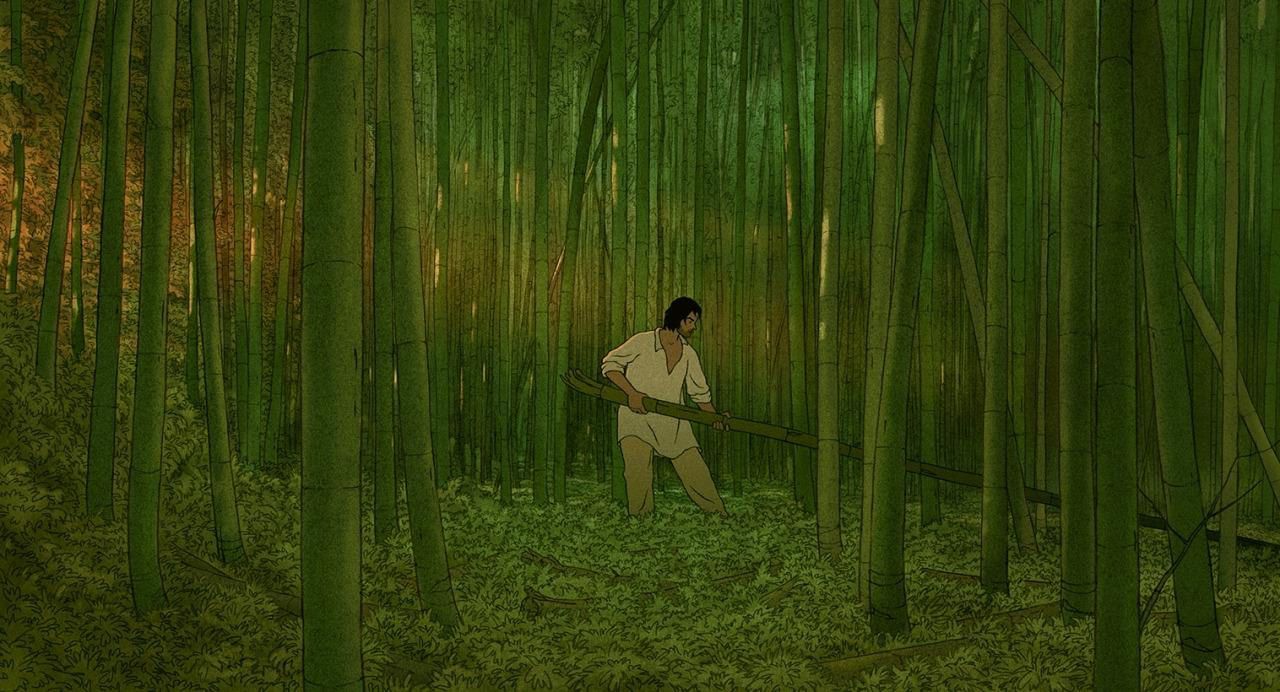
This review is my contribution to the Colours Blogathon hosted by Catherine of Thoughts All Sorts, focusing on all manner of movies with colorful titles. I chose The Red Turtle not only for the color in its name, but because I was curious about this feature-length silent film that earned an Oscar nomination for Best Animated Feature when Your Name didn’t. Now that I’ve seen it, I completely agree that it deserved such an honor because this story of a shipwrecked man stranded on an island is a piece of cinematic art. So many cartoons these days rely on hyperactive humor that something like The Red Turtle is an anomalous reminder that animation can offer compelling stories without jokes or even words through simple mastery of the medium, allowing silence to make it universal.

Image result for the red turtle film

The beautifully simple animation is the product of a collaboration between Dutch director Michaël Dudok de Wit, winner of the 2001 Animated Short Film Oscar for the lovely Father and Daughter, and the not-yet-defunct Studio Ghibli. I’m still surprised at Ghibli’s involvement because The Red Turtle has no resemblance to anime, except maybe in the attention to natural detail, yet I’m reminded that anime is not limited by the usual big-eyed style. The Oscar-winning short film La Maison en Petits Cubes has a European aesthetic similar to The Red Turtle, but, despite the French name, it was a Japanese production. So you could say that The Red Turtle is a best of both worlds, combining the visual imaginations of its animators in a surprisingly accessible, almost watercolor style.

Silent animation is usually the realm of short films, and it must have been a risk to protract what could have been vastly shortened to a feature-length story. Those with short attention spans will likely be bored by the third raft-making attempt, but the patient should find the narrative rewarding in its ambiguity. As with Cast Away, actions speak louder than words, and the painterly animation is so superb in its simplicity that I was rarely bored. It’s all in the details, like the humorous characterization of the crabs watching the man’s efforts or the lush island greenery swaying in the breeze, and the realistic water is worth particular praise, whether serene on the horizon or violent in its outbursts.

I don’t want to say much about the actual plot since it’s best experienced with the intended visuals to tell the story, but it very much fits its description as a fable, a seemingly straightforward tale that can be appreciated on its surface or on a deeper, more symbolic level. The Red Turtle itself remains something of an enigma, even as it becomes a profoundly important part of the castaway’s life, infusing the film and its ending with a bittersweet emotion that is strongly felt, if not fully understood.

Image result for the red turtle film

So, yes, The Red Turtle is absolutely Oscar-worthy and, if not for last year’s hefty competition, might well have won. Why couldn’t a film like this come out in 2006 or 2011, when Disney/Pixar wasn’t a shoo-in? I suppose I can now turn my blame on My Life as a Zucchini (the only nominee I haven’t yet seen) for Your Name’s lack of nomination last year because The Red Turtle is more than deserving. Despite its slow narrative that could have been a short film, it’s a piece of modern art that is becoming rarer and rarer in the world of feature-length animation.

Best line:  (the man’s only line) “Heeeeey!”


Rank: List Runner-Up


© 2017 S.G. Liput
506 Followers and Counting


2017 Blindspot Pick #8: Darby O’Gill and the Little People (1959)

29 Tuesday Aug 2017

Posted by sgliput in Blindspot, Movies, Poetry, Reviews, Writing

≈ Leave a comment

Tags

Classics, Disney, Family, Fantasy, Romance

Darby O'Gill and the Little People (1959) - Alternate Ending ...

That jolly ol’ Darby O’Gill
At the pub would be drinking his fill,
Earning chuckles and yawns
Telling of leprechauns,
Half-believed out of simple good will.

Not caring what doubters may think,
Darby’d go home at last with a wink,
To natter and sing
With the leprechaun king,
And together they too shared a drink.
_________________

MPAA rating: G

Live-action Disney movies tend to fall into two categories: childhood-shaping classics (Mary Poppins, Homeward Bound, Swiss Family Robinson) and severely lame duds (The Shaggy Dog, The Million Dollar Duck, The Computer Wore Tennis Shoes). I wasn’t sure which one Darby O’Gill and the Little People would fit in, but I’d gladly place it in the first group, though I doubt this obscure little gem is shaping many childhoods nowadays.

Darby O'Gill and the Little People (1959) Review |BasementRejects

Apparently based on two books by Herminie Templeton Kavanagh, Darby O’Gill feels as genuinely Irish as The Quiet Man but with a more fantastical basis in Irish folklore. Albert Sharpe is a folksy joy as Darby, a good ol’ boy and father of young Katie (Janet Munro of Swiss Family Robinson) in the town of Rathcullen, who loves to recount his stories of leprechaun interactions with everyone at the local pub. They may only half-believe him, but he’s still a beloved member of the community, which sticks up for him against the mocking of the local brute Pony Sugrue (Kieron Moore), who reminded me a lot of Gaston in Beauty and the Beast, just as Darby is like a more respected version of Maurice. After his job is handed off to a younger man (Sean Connery, so young he barely looks or sounds like the Connery I know), Darby has another run-in with the king of the leprechauns Brian Connors (Jimmy O’Dea) and finagles three wishes that might not turn out as he’d hoped.

Darby O’Gill and the Little People has a lot of the charm of other Disney movies from that era, just with a healthy Irish zest that makes you want to dance a jig and crave shepherd’s pie. At times, the Irish brogues are a little thick to fully understand without subtitles, but for the most part, it adds to the authenticity, as does the music, which consists only of a sweet little ballad and an epic but slightly overlong fiddle dance. The special effects, for the most part, are also well-done, consisting mostly of shrinking the leprechauns to be only as tall as Darby’s knees, a visual trick that reminded me of the miniaturized hobbits in The Lord of the Rings. Also effective is the more dated creation of a ghostly banshee and death-coach-driving dullahan; Disney movies have their fair share of nightmare fuel, but I can easily see one scene in particular terrifying the very young.

Image result for darby o'gill and the little people banshee

Most people may not have seen or even heard of Darby O’Gill and the Little People, but that’s a bit of a shame. Where else can you get to see Sean Connery croon about his sweetheart? I especially liked the good-natured rivalry between Darby and Brian and the twist at the end that builds nicely on what came before and rounds it out for a satisfying end. If it were a modern movie, I’d say that Darby O’Gill doesn’t quite do enough with its fanciful concept, perhaps because the special effects could be better utilized, but as an Irish jaunt from yesteryear, it’s an underrated Disney classic that may well have earned placement on my List if I’d seen it as a kid.

Best line: (Darby, of his daughter Katie) “She should be the caretaker. She’s got a tongue would clip a hedge.”

Rank: List Runner-Up

© 2017 S.G. Liput
506 Followers and Counting

The Glenn Miller Story (1954)

20 Sunday Aug 2017

Posted by sgliput in Movies, Poetry, Reviews, Writing

≈ Leave a comment

Tags

Biopic, Classics, Drama, Musical, Romance

Image result for the glenn miller story

(Best sung to “Little Brown Jug”)

Music once was full of brass;
Dance halls dripped with the sound of class.
Rock and roll had yet to grow,
But folks all knew Glenn Miller, though.

Ha, ha, ha, what a sound,
The kind to make Miller’s band renowned!
Ha, ha, ha, songs that stay,
The kind today’s elevators play!
__________________

MPAA rating: G

My mom has been urging me to check out more Jimmy Stewart movies lately, which I don’t mind since he’s one of my favorite actors, with a natural likability rivaling Tom Hanks. My latest exploration of his filmography is The Glenn Miller Story, which I hadn’t thought to see before because I didn’t know who Glenn Miller was. I’m sorry for my youthful ignorance now because it’s really an excellent role for Stewart and focuses on a style of music I rarely consider.

Image result for the glenn miller story

For those like me who may recognize Glenn Miller’s name but don’t know who he was, he was a big band leader in the 1930s and ‘40s whose band’s famous recordings include “Moonlight Serenade,” “In the Mood,” and “Pennsylvania 6-5000.” I was familiar with almost all of these songs, especially “Little Brown Jug,” which I learned to play on piano as a kid, but because most of them don’t have lyrics, they’re typically relegated to background music, making them recognizable but not necessarily known. Yet before rock and roll got off the ground in the ‘50s, this jazzy orchestra music ruled the dance halls of America, and like Stewart’s Lindbergh biopic The Spirit of St. Louis, it was made at a time when people still remembered these pre-war events.

The film recounts Glenn’s early struggles, such as repeatedly pawning his trombone in between shows, and his eventual rise to stardom, always in search of “the sound” that would set his band apart. It also focuses on his romance with Helen Burger (June Allyson), whose initial wariness of Glenn’s rootless vocation melts into wholehearted support of his dream. Stewart is his usual lovable self, letting his charm overshadow his character’s frequent inconsiderate treatment of others, which is more out of preoccupation than malice. He also does a fine job pretending to play the trombone. Allyson, though, almost outshines him, bringing considerable warmth to the usual encouraging spouse role and making me like her as an actress even more than I already did from Good News. I was also surprised to see a young Harry Morgan of M*A*S*H fame, and an abundance of famous musicians who knew Miller cameo and perform, though due to that youthful ignorance I mentioned, I only recognized Louis Armstrong.

Image result for the glenn miller story

What I especially liked about The Glenn Miller Story is that it didn’t fall into the problem I usually have with musical biopics. Most biographical films like this (think Ray, for instance) typically leave me with a more negative impression of its subject than I had before, exposing marital infidelity and drug use that taint their public image. It may be true, but it’s sad. Glenn Miller doesn’t do that, probably due to when it was made, instead depicting the music and romance of its title character without aiming to blemish his legacy. If I had a greater love for the big band style, this movie would easily make my list, but even if it just misses the cut, I greatly enjoyed its story and lead performances. My mom likes it even more, since she grew up with her parents listening to this kind of music, and it always puts a big, nostalgic smile on her face to hear it again. I feel bad now for putting off seeing it and not knowing of the talented Glenn Miller.

Best line: (Helen, several times) “Honestly!”  (I’ll think of this movie now every time I hear that.)


Rank: List Runner-Up (a very high one)


© 2017 S.G. Liput
506 Followers and Counting


2017 Blindspot Pick #7: In Your Eyes (2014)

30 Sunday Jul 2017

Posted by sgliput in Blindspot, Movies, Poetry, Reviews, Writing

≈ 2 Comments

Tags

Drama, Fantasy, Romance

Image result for in your eyes film

Loneliness can be your lot
And leave you empty and distraught,
Even when alone you’re not
In daily life’s ordeal.
For life seems like an afterthought
When no one else knows how you feel.

But then the loneliness can fade,
No longer stressed, no more afraid,
When love more real cuts through charade,
And lonely souls are paired.
For newer joys are worth the trade
When feelings, thoughts, and love are shared.
_____________________

MPAA rating: Not Rated (could have been PG-13, but more R due to periodic profanity and some sensuality)

I chose In Your Eyes as one of my Blindspots because of the positive reviews I’d seen from some of my fellow bloggers, and my interest was further piqued by comparisons to last year’s anime hit Your Name. Whereas Your Name involves two strangers actually switching bodies, In Your Eyes features a telepathic (or more accurately, empathic) link between two random people on opposite sides of the country. Based on a decades-in-the-making screenplay by Joss Whedon and directed by Brin Hill, this supernatural romance certainly has its odd parts but incorporates a lot of what I love about the genre.

Image result for in your eyes michael stahl-david film

The two leads are played by Cloverfield’s Michael Stahl-David and Ruby Sparks’ Zoe Kazan, the former as a New Mexico parolee named Dylan and the latter as a New Hampshire trophy wife named Rebecca. Little do they know that they have shared a mental link since childhood, when one’s sledding accident somehow affected them both, but suddenly, it becomes strong enough to allow them to converse with each other and see what the other is seeing. I was a bit annoyed at first that there was no explanation or trigger to the sudden strengthening of their bond, aside from “Why not?” But then I recalled that Your Name didn’t have a very clear reason either, so it’s perhaps best to just roll with it since these cosmic movie connections are hard to clarify in reality.

Despite being separated for most of the film, Kazan and Stahl-David have engaging chemistry to spare. Their long-distance conversations feel natural to us since it’s as if they’re talking on the phone, but to everyone else, it looks like they’re talking to themselves or suffering bizarre outbursts that elicit worry and sideways glances from those nearby. (My VC actually thought it was stupid that they kept talking to each other out loud with no thought to how crazy they looked to others.) As with Taki and Mitsuha in Your Name, they learn a lot about each other, from past stresses to present foibles, through the rare opportunity of vicariously witnessing the other’s life. I especially liked how one tends to comment on what’s happening to the other, a voice in the head they have to try to ignore, like the hologram Al from Quantum Leap.

Image result for in your eyes zoe kazan film

Also worth noting are the direction and cinematography, which infuse many scenes with a luminous quality that enhances the enchantment of their unusual bond. The contrasting settings also heighten the distance between them, from Dylan’s orange desert to Rebecca’s blue-tinged snowscapes. The editing does well in visualizing their shared feelings, culminating in a bizarre but sensual bedroom scene. (Is there even a word for that? Long-distance intimacy?)

As much as I enjoyed both the romance and fantasy aspects, I must admit I didn’t love In Your Eyes quite as much as I’d hoped. It isn’t just the lack of explanation or the oddness of the very concept. The climax builds to a satisfying final scene, but all the events leading up to it are left open-ended, making me think there will be lots of unaddressed bumps on the road to a happy ending. Plus, as good as In Your Eyes is, I think Your Name did a similar story better, just as it did with The Lake House. Even so, In Your Eyes deserves a lot more attention than the few bloggers who have tried to promote it. For any fan of unorthodox romance or extramundane relationships, it’s definitely worth your time.

Best line: (Rebecca, realizing who she’s talking to the first time) “Wait, you’re real. You’re a real person!”   (Dylan) “Oh, that’s the sweetest thing anybody’s said to me all day.”


Rank: List Runner-Up


© 2017 S.G. Liput
497 Followers and Counting


Sense and Sensibility (1995)

19 Monday Jun 2017

Posted by sgliput in Movies, Poetry, Reviews, Writing

≈ 4 Comments

Tags

Drama, Romance

Image result for sense and sensibility 1996

Sense is essential for keeping one grounded,
But too much can leave one a bit too well-rounded.
Sensibility’s fancies are quick to believe,
But too much can leave one a bit too naïve.
A good balanced blending of both can perchance
Improve one’s approach to both life and romance.
___________________

MPAA rating: PG

This is another review that could be considered a VC pick, since my VC has been expecting a review of Sense and Sensibility for a while, but this is also a personal resolve for me to finally review this movie before I forget about it. Yes, I’ve seen Sense and Sensibility twice before and could have reviewed it sooner if the details of its plot weren’t so quick to vacate my brain. It’s a shame really that I find it so forgettable because it truly is an excellent adaptation of Jane Austen’s first novel, thanks to the elegant but accessible Oscar-winning screenplay by Emma Thompson, who also stars as Elinor Dashwood.

Image result for sense and sensibility 1996

Elinor and her sister Marianne (fresh-faced Kate Winslet), along with their mother and younger sister, are brought low from wealth to relative poverty when their father’s inheritance all goes to their unsympathetic half-brother. While they make a home in the cottage of some annoyingly garrulous distant relatives, the Dashwood sisters face the hopes and crushing disappointments of 18th-century romance while employing their contrasting approaches to love, namely Elinor’s sense (realism) or Marianne’s sensibility (romanticism).

The entire production has the authenticity of a classic, from the sophisticated costumes to the rolling English countrysides to Ang Lee’s spare but graceful direction (his first English-language feature). Likewise, all the players fill their roles gracefully, especially Thompson and Winslet, who were both nominated for acting Oscars. Alan Rickman also outdoes himself as the thoroughly sympathetic Colonel Brandon, shedding his Hans Gruber-ness with the ease of a seasoned actor. Even Hugh Laurie makes a nice if brief impression as a grumpy husband whose irritability is a humorous contrast to the exuberance of his wife (Imelda Staunton). The only one who seems out of his element is Hugh Grant as Elinor’s semi-beloved Edward Ferrars. While the character is meant to be a bit wooden and “sedate,” Grant captures that stiffness so well that he seems a little too awkward at times.

Image result for sense and sensibility hugh grant

Despite this and even with a potentially ungainly number of characters to keep up with, Sense and Sensibility’s characters are what I most remembered, whereas what actually happens to them, while alternately sad, sweet, or surprisingly funny at the time, just doesn’t make much of an impression once the credits are done. I’m not sure why either, since I easily recognize it as a well-acted incarnation of Jane Austen sensibilities. True, Austen’s stories have never been among my favorites in style or substance, but a good movie is a good movie. Even if it doesn’t live long in the memory for me personally, Sense and Sensibility is still an admirable rendition of this Austen classic.

Best line: (Colonel Brandon, of Marianne) “She is wholly unspoilt.”
(Elinor) “Rather too unspoilt, in my view. The sooner she becomes acquainted with the ways of the world, the better.”
(Colonel Brandon) “I knew a lady very like your sister, the same impulsive sweetness of temper, who was forced into, as you put it, a better acquaintance with the world. The result was only ruination and despair. Do not desire it, Miss Dashwood.”


Rank: List Runner-Up


© 2017 S.G. Liput
491 Followers and Counting

VC Pick: Funny Lady (1975)

19 Friday May 2017

Posted by sgliput in Movies, Poetry, Reviews, Writing

≈ Leave a comment

Tags

Biopic, Comedy, Drama, Romance

Image result for funny lady film

It’s easy being funny
When you’re wallowing in money
With your sweet and faithful honey
Waiting lovingly at hand,
But when assets aren’t as runny
And the outlook’s less than sunny,
Not as much is fun or funny,
As the jokers understand.

Though life enjoys unveiling
Every foible, flaw, and failing,
Making efforts unavailing,
One’s good humor perseveres,
So while waiting, maybe wailing,
For a way to smoother sailing,
It’s important and unfailing
To keep laughing through the tears.
____________________

MPAA rating: PG (PG-13 is better due to language)

When I first saw Barbra Streisand’s Oscar-winning performance in Funny Girl, I wasn’t aware she had reprised the role of Fanny Brice in Funny Lady seven years later. It took my VC to suggest seeing this less prestigious follow-up, and honestly it proves that Hollywood’s fondness for unnecessary and unsatisfying sequels is nothing new.

Following the sad conclusion of Funny Girl, where Brice’s marriage to Nicky Arnstein (Omar Sharif) broke up amid financial tension and scandal, Funny Lady sees Brice solid in her stardom but struggling for work like everyone else due to the Great Depression. Enter James Caan as smooth-talking songwriter and showman Billy Rose, whose ego dwarfs Fanny’s diva mentality to the point that he advertises her as part of his new show without even asking her first. Annoyed but somehow charmed, she agrees, and their working relationship gradually turns to romance.

I can’t say that Streisand and Caan aren’t good in their roles, but they had hardly any chemistry, in sharp contrast to Sharif’s allure in the first film. Fanny’s songful suggestion that her second relationship is better thus feels hollow when their bond seems founded on the fact that they can simply yell at each other without either taking it personally.

Image result for funny lady film

I suppose Funny Girl’s tragic romance had more impact because it was preventable, torn apart by Nicky’s pride opposite Fanny’s success; here, Billy Rose’s huckster personality seemed inevitably fated for marital friction and infidelity, and it’s no surprise when things fall apart again. Worsening matters is Fanny’s confrontation with her first husband (Sharif returns), where she confesses to starry-eyed naiveté in the face of his selfishness. It may be true, but it’s not empowering as she intends it to be; instead, it’s sad that all of her romances were doomed from the start, robbing her of even the memory of a happy love life.

Aside from Streisand’s intermittent comedic skits, what makes Funny Lady watchable is the musical numbers, though there are far fewer show-stopping numbers than the first film, and none are as memorable as “People” or “Don’t Rain on My Parade.” In fact, it’s ironic that the best number goes not to Streisand, but to Ben Vereen as one of Fanny’s vaudeville cohorts, an exuberant rendition of “Clap Hands! Here Comes Charley!” that made me wish the rest of Vereen’s performance hadn’t been cut out before release. I’m actually rather surprised the film earned five Oscar nominations, including Cinematography, Score, and Original Song. If you enjoyed Funny Girl or are a fan of Streisand or Caan, Funny Lady may be worth your time, but don’t expect a feel-good classic.


Rank: Honorable Mention


© 2017 S.G. Liput
482 Followers and Counting


Good News (1947)

10 Wednesday May 2017

Posted by sgliput in Movies, Poetry, Reviews, Writing

≈ 4 Comments

Tags

Classics, Comedy, Musical, Romance

I was featured on The Classic Movie Marathon link party

Image result for good news 1947

I’ve good news and bad news for those still alone,
Who pine for somebody to love as their own.
The good news is that there is someone for you,
Who’s hoping there’s someone for them to love too.
They’re out there, out somewhere, far off or close by;
You’re made for each other, as tales testify.

The bad news is that things may get in the way,
Like not recognizing true romance at play.
In not waiting long enough, you might pick wrong,
And they may do likewise, not where they belong.
Beware the missed moments and chances you shirk;
Your own asininity may be at work.

So keep an eye out for that promised soul mate,
And you may have good news to soon celebrate.
___________________

MPAA rating: Approved (an easy G)

After enjoying the compilation of classic MGM musical numbers in That’s Entertainment! and its Part II, I had to satisfy my curiosity over at least one of the featured films that caught my eye. The educational setting and youthful dance scenes of Good News made me think of it as a forerunner to High School Musical, and indeed that’s what it is. Just as Grease predated High School Musical, Good News anticipated Grease, and its romantic entanglements backed by buoyant musicality are still entertaining all these decades later.

Image result for good news 1947

While those later films were set in high school, though, Good News takes place at Tait College, the kind of carefree movie college where studies take a backseat to parties and football games. Peter Lawford plays the ever-confident athlete Tommy, while June Allyson fills the role of the mousy school librarian Connie, both of whom discover each other when Lawford’s smitten hotshot tries to impress the gold-digging it-girl, played by Patricia Marshall. The wholesome interactions between romance-seeking students brought to mind the original Archie comics, even incorporating a jealous bully named Beef (as opposed to Moose) who makes up part of an adjacent love triangle.

The story may remind you of many imitators since, but Good News is good clean fun, though I understand it’s a remake of a racier Pre-Code version from 1930. The best part is clearly the musical scenes, many of which feel like lesser-known classics, like “The Best Things in Life Are Free” or “Lucky in Love,” which benefits from the smooth voice of Mel Tormé.  Between the lyrical cleverness (“The French Lesson”) and the exuberant dancing (“Pass That Peace Pipe,” which was nominated for a Best Song Oscar), Good News has tuneful talent and charm to spare.

Best line: (Tommy, when chided on speaking French) “Guess I can’t help it, Poochy. Language comes easy to me. I’ve only been in class five days, and already I speak like a native. I don’t know of what country, but, uh, like a native.”


Rank: List Runner-Up


© 2017 S.G. Liput
480 Followers and Counting


About Time (2013)

30 Sunday Apr 2017

Posted by sgliput in Movies, NaPoWriMo, Poetry, Reviews, Writing

≈ 5 Comments

Tags

Comedy, Drama, Fantasy, Romance

Image result for about time film 2013

(Today’s final NaPoWriMo prompt of the month was for a poem about something that happens over and over. Following the theme of this time-travel charmer, I applied that to the hypothetical potential of living life repeatedly.)


Days and weeks and months repeat,
The same in name but each one new,
But wouldn’t it be quite the treat
To start them over and redo?

When in the mood for favorite foods,
Just think back to your grandest meal,
And when your second course concludes,
You’re free for thirds whene’er you feel.

When life becomes mundane or glum,
Just jump back to your fondest thrill,
A theme park ride or concert’s thrum
Or Wordsworth-worthy daffodil.

And how sought-after to rewind
To change regrets to words unsaid,
Slips untripped and frauds declined,
And dominoes unplummeted!

The twists and weaves of life one-way
Are seldom smooth to navigate,
But wouldn’t life, upon replay,
Have less distress to complicate?
___________________

MPAA rating: R (except for 5 F-words, there’s little reason this couldn’t be PG-13)

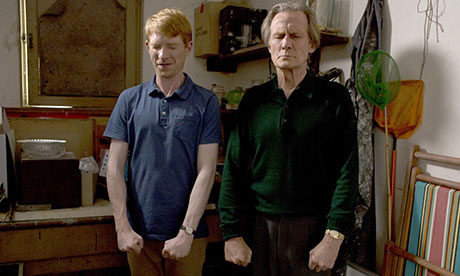
Rachel McAdams must have a thing for time travelers. Only four years after playing the titular Time Traveler’s Wife opposite Eric Bana, she again fell in love with a man possessing inherent time-traveling abilities, this time Domhnall Gleeson, in 2013’s About Time. Whereas the first film was bittersweet drama, About Time takes its subject in a lighter rom-com direction; for instance, the time-jumping ability that was random and uncontrollable in The Time Traveler’s Wife is little more than a super-powered perk in About Time, an inherited trait for only the men in the Lake family.

Image result for about time film 2013

When Tim Lake (Gleeson) is called into his father’s study on his twenty-first birthday to be told a family secret, I can think of many worse revelations than being told you can now travel back along your own lifetime. Being rather awkward, one of Tim’s first thoughts is to win himself a girlfriend with his newfound ability, and after a less than successful attempt with the lovely Margot Robbie, he moves to London and seeks out his soul mate. All of this is done with a delightful comedic touch that makes Tim and his eccentric family feel real and lovable, and when Mary (McAdams) comes on the scene via a winsomely literal “blind date,” it’s clear from the first moments that love is inevitable…as long as time travel doesn’t get in the way.

I can’t remember the last time I was so thoroughly charmed by a movie. Well, maybe I do; it was probably La La Land, which is a more prestigious film all around, but both of them left me smiling and touched in a way most modern films don’t anymore. The repartee and chemistry between Tim and Mary put them up there with my favorite screen couples, even apart from the time travel aspect, which often adds some comedic wish fulfillment, undoing those little gaffes we all want to live over. In addition to Gleeson and McAdams, Bill Nighy delivers both warmth and pathos as Tim’s more experienced father, and his fellow Pirates of the Caribbean bad guy, Tom Hollander (almost unrecognizable with a beard), is likably sardonic as Tim’s first London friend.

Image result for about time film 2013

As much as I loved it, I won’t claim that About Time is without flaws, such as a poorly explained revision that Tim performs when one of his time-altering good intentions goes awry. Likewise, I’ve heard a common complaint that the film doesn’t follow its own time travel rules and pays less attention than others of its genre to continuity and the butterfly effect. Yet, even these issues that would normally annoy me (like in The Lake House) couldn’t detract from a highly enjoyable romance or its bittersweet denouement. It’s a smartly written and delightful story worth going back in time to watch all over again.

Best line: (Tim) “There’s a song by Baz Luhrmann called ‘Sunscreen.’ He says worrying about the future is as effective as trying to solve an algebra equation by chewing bubble gum. The real troubles in your life will always be things that never crossed your worried mind.”


Rank: List-Worthy


© 2017 S.G. Liput
477 Followers and Counting


← Older posts
Newer posts →

Recent Posts

  • We Didn’t Start 2025 (Recap)
  • NaPoWriMo 2025 Recap (Finally)
  • Sonic the Hedgehog 3 (2024)
  • It Happened One Night (1934)
  • Spellbound (2024)

Recent Comments

associatesofshellymann's avatarassociatesofshellyma… on My Top Twelve La La La So…
Kit's avatarKit Nichols on Bonnie and Clyde (1967)
lifelessons's avatarlifelessons on Look Back (2024)
Carol Jackson's avatarCarol Jackson on The Thief of Bagdad (1940…
Stephen's avatarStephen on Love Story (1970)

Archives

  • January 2026
  • December 2025
  • May 2025
  • April 2025
  • March 2025
  • February 2025
  • January 2025
  • December 2024
  • May 2024
  • April 2024
  • March 2024
  • February 2024
  • January 2024
  • December 2023
  • November 2023
  • October 2023
  • September 2023
  • July 2023
  • June 2023
  • May 2023
  • April 2023
  • March 2023
  • February 2023
  • January 2023
  • December 2022
  • November 2022
  • October 2022
  • September 2022
  • August 2022
  • July 2022
  • June 2022
  • May 2022
  • April 2022
  • March 2022
  • February 2022
  • January 2022
  • December 2021
  • November 2021
  • October 2021
  • September 2021
  • August 2021
  • July 2021
  • June 2021
  • May 2021
  • April 2021
  • March 2021
  • February 2021
  • January 2021
  • December 2020
  • November 2020
  • October 2020
  • September 2020
  • August 2020
  • July 2020
  • June 2020
  • May 2020
  • April 2020
  • March 2020
  • February 2020
  • January 2020
  • December 2019
  • November 2019
  • October 2019
  • September 2019
  • August 2019
  • July 2019
  • June 2019
  • May 2019
  • April 2019
  • March 2019
  • February 2019
  • January 2019
  • December 2018
  • November 2018
  • October 2018
  • September 2018
  • August 2018
  • July 2018
  • June 2018
  • May 2018
  • April 2018
  • March 2018
  • February 2018
  • January 2018
  • December 2017
  • November 2017
  • October 2017
  • September 2017
  • August 2017
  • July 2017
  • June 2017
  • May 2017
  • April 2017
  • March 2017
  • February 2017
  • January 2017
  • December 2016
  • November 2016
  • October 2016
  • September 2016
  • August 2016
  • July 2016
  • June 2016
  • May 2016
  • April 2016
  • March 2016
  • February 2016
  • January 2016
  • December 2015
  • November 2015
  • October 2015
  • September 2015
  • August 2015
  • July 2015
  • June 2015
  • May 2015
  • April 2015
  • March 2015
  • February 2015
  • January 2015
  • December 2014
  • November 2014
  • October 2014
  • September 2014
  • August 2014
  • July 2014
  • June 2014
  • May 2014
  • April 2014
  • March 2014
  • February 2014
  • January 2014
  • December 2013

Categories

  • Blindspot
  • Blogathon
  • Christian
  • Movies
  • Music
  • NaPoWriMo
  • Poetry
  • Reviews
  • TV
  • Writing

Meta

  • Create account
  • Log in
  • Entries feed
  • Comments feed
  • WordPress.com

Recent Posts

  • We Didn’t Start 2025 (Recap)
  • NaPoWriMo 2025 Recap (Finally)
  • Sonic the Hedgehog 3 (2024)
  • It Happened One Night (1934)
  • Spellbound (2024)

Recent Comments

associatesofshellymann's avatarassociatesofshellyma… on My Top Twelve La La La So…
Kit's avatarKit Nichols on Bonnie and Clyde (1967)
lifelessons's avatarlifelessons on Look Back (2024)
Carol Jackson's avatarCarol Jackson on The Thief of Bagdad (1940…
Stephen's avatarStephen on Love Story (1970)

Archives

  • January 2026
  • December 2025
  • May 2025
  • April 2025
  • March 2025
  • February 2025
  • January 2025
  • December 2024
  • May 2024
  • April 2024
  • March 2024
  • February 2024
  • January 2024
  • December 2023
  • November 2023
  • October 2023
  • September 2023
  • July 2023
  • June 2023
  • May 2023
  • April 2023
  • March 2023
  • February 2023
  • January 2023
  • December 2022
  • November 2022
  • October 2022
  • September 2022
  • August 2022
  • July 2022
  • June 2022
  • May 2022
  • April 2022
  • March 2022
  • February 2022
  • January 2022
  • December 2021
  • November 2021
  • October 2021
  • September 2021
  • August 2021
  • July 2021
  • June 2021
  • May 2021
  • April 2021
  • March 2021
  • February 2021
  • January 2021
  • December 2020
  • November 2020
  • October 2020
  • September 2020
  • August 2020
  • July 2020
  • June 2020
  • May 2020
  • April 2020
  • March 2020
  • February 2020
  • January 2020
  • December 2019
  • November 2019
  • October 2019
  • September 2019
  • August 2019
  • July 2019
  • June 2019
  • May 2019
  • April 2019
  • March 2019
  • February 2019
  • January 2019
  • December 2018
  • November 2018
  • October 2018
  • September 2018
  • August 2018
  • July 2018
  • June 2018
  • May 2018
  • April 2018
  • March 2018
  • February 2018
  • January 2018
  • December 2017
  • November 2017
  • October 2017
  • September 2017
  • August 2017
  • July 2017
  • June 2017
  • May 2017
  • April 2017
  • March 2017
  • February 2017
  • January 2017
  • December 2016
  • November 2016
  • October 2016
  • September 2016
  • August 2016
  • July 2016
  • June 2016
  • May 2016
  • April 2016
  • March 2016
  • February 2016
  • January 2016
  • December 2015
  • November 2015
  • October 2015
  • September 2015
  • August 2015
  • July 2015
  • June 2015
  • May 2015
  • April 2015
  • March 2015
  • February 2015
  • January 2015
  • December 2014
  • November 2014
  • October 2014
  • September 2014
  • August 2014
  • July 2014
  • June 2014
  • May 2014
  • April 2014
  • March 2014
  • February 2014
  • January 2014
  • December 2013

Categories

  • Blindspot
  • Blogathon
  • Christian
  • Movies
  • Music
  • NaPoWriMo
  • Poetry
  • Reviews
  • TV
  • Writing

Meta

  • Create account
  • Log in
  • Entries feed
  • Comments feed
  • WordPress.com

Blog at WordPress.com.

  • Subscribe Subscribed
    • Rhyme and Reason
    • Join 814 other subscribers
    • Already have a WordPress.com account? Log in now.
    • Rhyme and Reason
    • Subscribe Subscribed
    • Sign up
    • Log in
    • Report this content
    • View site in Reader
    • Manage subscriptions
    • Collapse this bar