• Home
  • About Me
  • The List
  • THE LIST (2016 Update)
  • THE LIST (2017 Update)
  • THE LIST (2018 Update)
  • THE LIST (2019 Update)
  • THE LIST (2020 Update)
  • THE LIST (2021 Update)
  • THE LIST (2022 Update)
  • Top Twelves and More
  • The End Credits Song Hall of Fame

Rhyme and Reason

~ Poetry Meets Film Reviews

Rhyme and Reason

Tag Archives: Romance

Starter for 10 (2006)

28 Friday Apr 2017

Posted by sgliput in Movies, NaPoWriMo, Poetry, Reviews, Writing

≈ 2 Comments

Tags

Comedy, Drama, Romance

Image result for starter for 10 film

(Today’s NaPoWriMo prompt was to employ Skeltonic verse, or short lines with rapid-fire, tumbling rhymes, which are always fun.)


A know-it-all
With quick recall
Will stand tall
Next to egos small
Because he knows
The stuff that goes
Toward beating those
On trivia shows,
Like sporting pros
And ratios,
Obscure logos
Of studios,
And poems and prose
And names of clothes
And things that few
Would say they knew
Unless they too
Enjoyed a clue
Or fact review
Like me and you;
At least I do.
__________

MPAA rating: PG-13

Every now and then, there’s a movie that just appeals to your interests specifically, and Starter for 10 appealed to mine. I had heard this British film starring James McAvoy had something to do with trivia, in this case the University Challenge TV show of the 1980s, and within the first few minutes, I felt this was a film for me, thanks to my personal love for shows like Jeopardy! Now I just had to hope the rest didn’t ruin it, and despite some inconsistencies along the way, it was an enjoyable little film all the way through.

Image result for starter for 10 2006

Many people have fond memories of those ‘80s films full of stars before they were famous, you know, Stand By Me, The Outsiders, Taps, Red Dawn, and the like. But it makes sense that other generations would have the same kind of films, and Starter for 10 is one for the 21st century, even if it’s set in the 1980s. As McAvoy’s trivia-crazed freshman Brian goes off to college for the first time, I was surprised at how many actors I recognized. His two mates at home are Dominic Cooper and James Corden, while his two potential love interests at college are Alice Eve and Rebecca Hall, not to mention Benedict Cumberbatch as the uptight captain of the University Challenge team, again playing someone who believes himself to be the smartest person in the room. I was actually chuckling at their very presence together after seeing them all in the franchise films that have since earned them greater recognition (Eve and Cumberbatch in Star Trek into Darkness, Cooper and Hall and Cumberbatch in the Marvel Cinematic Universe, Cumberbatch and Mark Gatiss in Sherlock). I never expected to see a fight between Howard Stark and Doctor Strange, much less for Stark to win while Professor X watches in horror. It’s like a huge retroactive crossover! Or not.

Aside from the pleasure of seeing these young stars in their early roles, there are a lot of worthwhile themes here, ranging from infatuation and responsibility to academic honesty and learning from personal mistakes. Brian’s experience at college felt very realistic, both for good and ill, such as how he suddenly absorbs all manner of liberal causes and how the drama of college itself can often get in the way of one’s education.  The humor can be hit-and-miss at times (one “meet-the-parents” scene was very awkward), but it made me laugh more than most comedies these days, further helped by a strong ‘80s soundtrack, most of which I’d never heard before. (I’m not too familiar with The Cure; sorry, Britain!)

Image result for starter for 10 2006

I suppose I especially identified with Brian himself, and along with Shizuku from Whisper of the Heart, he’s probably the movie character in which I most see myself. He’s committed to being as clever as he can, learning things like literature, history, and why people like jazz. (Just watch La La Land for that answer.) He finds more excitement in the mental stimulation of a trivia challenge than a pointless drinking party, and through his interactions with his mother, friends, and girlfriends, he’s still trying to figure himself out and overcome his mistakes. McAvoy is a great fit for him, even if he desperately needs a haircut, and the rest of the cast help give potentially shallow characters more depth than expected and match the early talent that would eventually make many of them household names. Similar to 2015’s Paper Towns, Starter for 10 has its imperfections and clumsy moments, but it’s a charming film that I connected with and which left me smiling by the end.

Best line: (Brian’s mom) “The people who really care about you don’t mind if you make mistakes. It’s what you do next that matters.”


Rank: List-Worthy


2017 S.G. Liput
477 Followers and Counting


Chocolat (2000)

27 Thursday Apr 2017

Posted by sgliput in Movies, NaPoWriMo, Poetry, Reviews, Writing

≈ 9 Comments

Tags

Comedy, Drama, Romance


Image result for chocolat film

(Today’s NaPoWriMo prompt was to focus on the sense of taste, so I had to go with one of the greatest foods known to man.)


Dear Chocolate, Chocolate, friend of mine,
How sweetly do you intertwine
With fruit or nuts, desire or fear,
A comfort in my worries drear,
A flavorful apotheosis
Of the highest form of sweet!

From pickiness when I was young,
I never spurned you from my tongue.
At holidays made consummate
And in between, dear Chocolate,
Your need’s my daily diagnosis,
My closest friend that I can eat.
_____________________

MPAA rating: PG-13

By all accounts, Chocolat is a film I should love. I am an admitted chocolate addict, and I love lighthearted romances with its kind of charm, especially when they have the added emotional depth this one retains. Yet for all its strengths and five Oscar nominations, I was more annoyed than charmed by Chocolat.

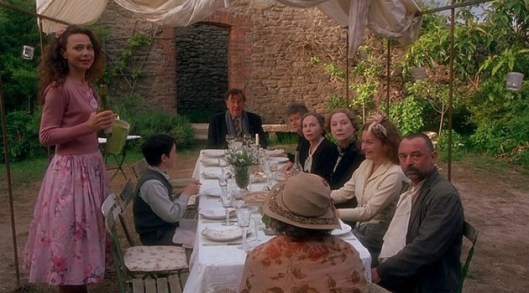
The story centers on a wandering chocolatier named Vianne (Juliette Binoche) and her young daughter, who move to a quiet and staunchly religious French village to open a chocolate shop. The problem is that they do so just as Lent begins, and Vianne’s atheist disregard for this traditional season of self-denial inevitably draws the ire of the town’s mayor Reynaud (Alfred Molina). Yet nothing can halt the power of chocolate, and Vianne’s natural charisma slowly wins over many of the town’s residents, as well as a member of a visiting gypsy band (Johnny Depp).

Image result for chocolat filmThere’s much to enjoy about Chocolat, not least its whimsical tone and Rachel Portman score, and the full appeal of a mostly excellent cast. Binoche is infectious with her passion for chocolate and catering to others’ unacknowledged needs, while Depp displays a sweet and romantic allure he doesn’t usually get to show off in his weirder roles. Best of all is Oscar-nominated Judi Dench as Vianne’s landlady and first chocolate convert, whose cynicism and desire to reconnect with her grandson make this among her best roles and certainly worthier of an Oscar than her short appearance in Shakespeare in Love. Chocolate itself is also very much a star, and Vianne’s creations should make any chocoholic’s mouth water, which is why it placed #7 on my Candy in Movies list.

Yet all these positives only make the film’s religious vilification more frustrating. Perhaps it’s because I do fast for Lent every year, but I couldn’t root for Vianne’s campaign to make the townspeople yield to their temptations. I was hoping instead her business could survive until Lent was over, but no, Lent and fasting are seen as obstacles to be overcome, repression to be vanquished. The film’s characters, writers, and probably Joanne Harris, on whose novel the film is based, clearly misunderstand sin and the meaning of Lent, that personal abstinence is meant to bring its adherents closer to God by their sacrifice. There should be no conflict here if Vianne had not come during Lent, but instead, the people of the village seem to view any and all pleasure as a sin, whether it’s during Lent or not. Their indulgent awakening would have been more heartening if Lent and the Church weren’t scapegoats to spoil everyone’s fun. Molina’s Reynaud is the embodiment of the town’s religious stricture, even if he does have a rare humanizing moment or two. The turning point of his own surrender to “temptation” is a wholly ridiculous scene that most reminded me of a SpongeBob SquarePants episode called “Just One Bite,” where Squidward yields to his craving for Krabby Patties, a scene which (now that I think about it) was probably inspired by Chocolat. Yet what’s funny in a cartoon just felt strange and absurd in a film like this.

Image result for chocolat film

Chocolat would have been better as simply a Mary Poppins-ish tale of Vianne helping the town, such as how she inspires an abused wife to escape from actual oppression, but its antagonism was misplaced. Every time I started enjoying Chocolat, it kept reminding me that “chocolate good, religious oppression bad,” and while I wholeheartedly embrace the former point, the latter kept spoiling it for me. The fine acting and passion for one of the best foods ever invented are clearly key to Chocolat‘s appeal, but it could have been so much better if religion and tradition weren’t depicted as such finger-wagging killjoys.

Best line: (the village priest, giving a sermon) “I’d rather talk about [our Lord’s] humanity. I mean, you know, how He lived His life, here on Earth. His kindness, His tolerance… Listen, here’s what I think. I think that we can’t go around measuring our goodness by what we don’t do. By what we deny ourselves, what we resist, and who we exclude. I think… we’ve got to measure goodness by what we embrace, what we create… and who we include.”


Rank: Dishonorable Mention


© 2017 S.G. Liput
475 Followers and Counting


In Time (2011)

25 Tuesday Apr 2017

Posted by sgliput in Movies, NaPoWriMo, Poetry, Reviews, Writing

≈ 5 Comments

Tags

Action, Drama, Romance, Sci-fi, Thriller

Image result for in time film

(Today’s NaPoWriMo prompt was to explore a small, defined space, so I chose the inescapable meaning of the inside of a clock.)


Consider the crevices closed in a clock,
Where gears in their constant cacophony grind,
So sealed in their space,
Yet they turn the clock’s face,
As all the world runs, lest it be left behind
While the gears click the future away.

A tiny black hole occupies every clock,
To suck in the seconds and minutes and years.
Mankind put it there
In that pocket of air
And lives with the ticking of time in his ears,
While the gears we encased
And the fears of life’s waste
Even now click the future away.
_________________

MPAA rating: PG-13

Oh, I do love science fiction! I love how it creates worlds that take social or technological change to a futuristic extreme that would be very unlikely to happen but is still fascinating to think about. I love how it makes absurd what-if scenarios believable and relatable. And lastly, I love the fact that I seem predisposed to like it, even if critics were not so kind. A prime example of all these points is In Time, a dystopian thriller about a world where time has become currency and everyone above twenty-five years old has stopped aging but also has a clock on their arm counting down their remaining lifetime.

Image result for in time film

Proving again that he’s not just a singer, Justin Timberlake plays Will Salas, a worker in the poorest “time zone” called Dayton, who may eke by with less than 24 hours on his clock each day but has a natural inclination toward helping others. (Like The Hunger Games, there are twelve zones or districts, with 12 being the poorest.) When a chance encounter with a rich 105-year-old from New Greenwich leaves Will with over a century on his arm, Will sets out for both some enrichment and revenge, later joined by a wealthy magnate’s rebellious daughter Sylvia (Amanda Seyfried).

The film is conceptually cool from the start, literalizing throwaway phrases like “living paycheck to paycheck,” “don’t waste my time,” and of course “time is money,” but the idea is also well executed, such as the visual oddity of everyone looking twenty-five, even mothers and grandmothers. The ever-present arm clocks are always counting down, lending an urgency to quite a few last-second close calls, and time-stealing gangsters and Cillian Murphy as a Javert-like devoted policeman keep the plot unpredictable, even as it leans from straight sci-fi to a sort of heist film. Will and Sylvia also remain sympathetic in their Bonnie-and-Clyde style stick-ups by becoming time-reclaiming Robin Hoods against the none-too-subtle big bad elites.

Image result for in time film cillian murphy

I can’t speak to the alleged copyright infringement on a certain Harlan Ellison story or the supposed similarities with director/writer Andrew Niccol’s past work Gattaca (which I’ve yet to see), but In Time is yet another sci-fi film that I seem to have enjoyed far more than its Rotten Tomatoes score of 36% would indicate. One touchstone I can point to is 2009’s Surrogates, another critical failure with a brilliant premise about a massive social evolution that is left in doubt by the end. Neither film is perfect, but both were disparaged by critics for reasons that I simply don’t understand. It can be easily read as a rebellion dream against the one-percenters, but with ideas aplenty, good performances, and some memorably thrilling scenes, In Time is an underrated sci-fi that may one day get the notice it deserves as a cult classic.

Best line: (rich man Philippe Weis) “In the end, nothing will change, because everyone wants to live forever. They all think they have a chance at immortality, even though all the evidence is against it. They all think they will be the exception. But the truth is: For a few to be immortal, many must die.”   (Will) “No one should be immortal, if even one person has to die.”


Rank: List-Worthy


© 2017 S.G. Liput
474 Followers and Counting


Passengers (2016)

23 Sunday Apr 2017

Posted by sgliput in Movies, NaPoWriMo, Poetry, Reviews, Writing

≈ 6 Comments

Tags

Drama, Romance, Sci-fi, Thriller

Image result for passengers 2016

(Today’s NaPoWriMo prompt was for a double elevenie, a pair of five-line, eleven-word poems with a particular form.)


Loneliness
Becomes bearable
When in pairs.
There’s no need for
Crowds.

Togetherness
Becomes suspect
When trust dissolves.
Love’s no place for
Doubts.
___________________

MPAA rating: PG-13

I must be more forgiving than most when it comes to science fiction (or more critical, considering I hate 2001), but Passengers seems to have gotten an unfair amount of criticism, even if the complaints aren’t necessarily wrong. It’s simply a case where one flaw is considered by many to ruin the film as a whole, when there are really far more positives than negatives.

While hurtling through space on a 120-year journey to a distant colony, Jim Preston (Chris Pratt) is awakened from hibernation by a malfunction and is understandably distraught when he learns that there are 90 years ahead of him. After a year of loneliness with only an android bartender (Michael Sheen), his nightmare becomes an Adam-and-Eve dream come true when Aurora (Jennifer Lawrence) is also awakened to keep him company. The pairing of Chris Pratt and Jennifer Lawrence was a main selling point for the film, and their chemistry doesn’t disappoint, pooling the natural appeal that both actors have earned from their past roles. Also laudable are the futuristic set design and magnificent space-faring effects, which may bring to mind Interstellar or Gravity but are no less impressive. Add in an Oscar-nominated score from Thomas Newman (who still has never won, for some reason), and there’s an eye-popping sci-fi romance worth enjoying.

Image result for passengers 2016

But wait…there’s something wrong here, and I suppose I should issue a SPOILER WARNING to discuss it further. It’s surprising that Aurora never suspects this on her own, but Jim in his desperation woke her from stasis himself! It doesn’t matter how conflicted he was about it or how understandable his hopelessness was; to her mind and to many a viewer’s, what he did was tantamount to murder, condemning Aurora to an unfulfilled life, which she’s not quick to forgive.

My VC went so far as to not understand why Aurora stayed so angry, thinking that a life alone with Chris Pratt wouldn’t be so bad, right? As for me, I don’t deny the gravity of Jim’s crime, but I didn’t have a problem with how it was resolved. He’s punished and shunned for what he did, but did anyone think that two lonely people could stay mad for ninety years? The eventual forgiveness seems inevitable, but I’m sorry that some found that to be manipulative on the filmmakers’ part. The reconciliation would have surely been more gradual and painful if things had stayed as they were after Aurora discovered the truth, but the way things play out stresses just how much the two need each other, reigniting the romance that had thankfully already been established before the reveal.

Image result for passengers 2016

I understand and even somewhat share the objections I’ve heard from others about the potentially creepy implications of Jim’s actions, but they don’t ruin the film for me. I actually took more issue with the rather prosaic and unproductive way it ends than with anything that came before. As a fan of science fiction and of Pratt and Lawrence, I found this combination of the three to be an engaging genre romance, flaws and all.

Best line: (Aurora) “You can’t get so hung up on where you’d rather be, that you forget to make the most of where you are.”


Rank: List Runner-Up


© 2017 S.G. Liput
473 Followers and Counting


Blast from the Past (1999)

18 Tuesday Apr 2017

Posted by sgliput in Movies, NaPoWriMo, Poetry, Reviews, Writing

≈ 2 Comments

Tags

Comedy, Romance

Image result for blast from the past film

(Today’s NaPoWriMo prompt was for a poem featuring neologisms, or made-up words, many of which I tried inventing for whimsical effect.)


The heretoformer days of yore
Were full of quagdaries,
Of warnage, gorenage, carnivornage,
One or all of these,
And outsurvivors just assumed
They’d die from some disease.

They had no Twitterbook or texts
Or cell addictophones,
Or paramiscellania
Composed of silicones,
And no one knew of superstuds
Or Indiana Jones.

But if, from previosity,
By tempochronic means,
One telebeamed to present day
With us and all our screens,
They’d probably scramaddle back
To centuries with teens!
_________________

MPAA rating: PG-13

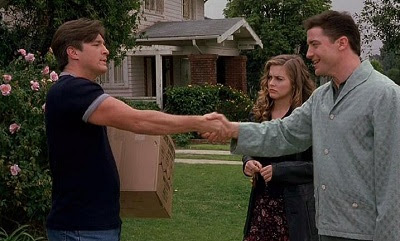
At the height of Brendan Fraser’s golly-gee persona fostered by the likes of George of the Jungle and Dudley Do-Right, he put that image to good use in the thoroughly amusing Blast from the Past. When overly paranoid genius Dr. Calvin Webber (Christopher Walken) builds a super-stocked bunker at the height of the Cuban Missile Crisis, a freak accident makes him and his wife (Sissy Spacek) believe that nuclear war has broken out, and they wait through the fallout for, oh, about 35 years. Of course, life goes on above them, and when they venture out into the depraved new world, their 35-year-old homeschooled son Adam (Brendan Fraser) gets to see the world for the first time.

Granted, it’s a silly concept and treats themes like cabin fever and social change with a decidedly blithe mood, but if you can accept the overlooked-for-decades bunker idea, the comedy never becomes too absurd or unbelievable. Perhaps the best aspect of this fish-out-of-water generational satire is that it doesn’t portray the Webbers and their early ‘60s values as backwards or outdated (like Pleasantville, for example), not even their Christian faith and righteous indignation toward profanity. Instead, most of the humor comes from the contrast between their wholesome naiveté and the big, bad modern world of 1999, like when Calvin’s first encounter with a street walker makes him think the earth is overrun by mutants.

Image result for blast from the past sissy spacek
Fraser plays Adam with happy-go-lucky gusto, finding a much-desired girlfriend in Alicia Silverstone’s cynical Eve. The film’s respect toward nostalgia for the good-old days is plain in Eve’s gradual transition from thinking Adam’s crazy to admiring his sense of chivalry and innocence. As a whole, the film entertains by finding the humor in how things change over the years without mocking the past or present too harshly. I was also thunderstruck by the sudden appearance of a very young Nathan Fillion, three years before Firefly, making me wish for a less under-played showdown between Mal Reynolds and Rick O’Connell. While a sheltered boy locked in a room for years has dramatic potential (as in Room), Blast from the Past makes the situation consistently funny; it’s a refreshing and clever trifle of a comedy, one that made me miss the good-old days of Brendan Fraser’s heyday.

Best line: (Eve’s friend Troy, of Adam) “You know, I asked him about that. He said, good manners are just a way of showing other people we have respect for them. See, I didn’t know that. I thought it was just a way of acting all superior. Oh, and you know what else he told me?”
(Eve) “What?”
(Troy) “He thinks I’m a gentleman and you’re a lady.”
(Eve) “Well, consider the source! I don’t even know what a lady is.”
(Troy) “I know, I mean I thought a “gentleman” was somebody that owned horses. But it turns out, his short and simple definition of a lady or a gentleman is someone who always tries to make sure the people around him or her are as comfortable as possible.”
(Eve) “Where do you think he got all that information?”
(Troy) “From the oddest place: his parents. I mean, I don’t think I got that memo from mine.”


Rank:  List Runner-Up


© 2017 S.G. Liput
471 Followers and Counting


Bright Star (2009)

17 Monday Apr 2017

Posted by sgliput in Movies, NaPoWriMo, Poetry, Reviews, Writing

≈ Leave a comment

Tags

Biopic, Drama, History, Romance

Image result for bright star 2009

(Today’s NaPoWriMo prompt was for a nocturne, a poem inspired by the nighttime, which I applied to the elegiac notes of a film about the poet John Keats.)


Do you see the stars in their scattered arrays,
Content to fluoresce and to wait between days?
Do you hear the leaves when they flap in the wind,
In summer so teeming, in harvest-time thinned?
Do you feel the stillness of worlds at their rest,
Of closed morning glories and birds in their nest?

I witness these wonders you once wrote about,
Before disease meddled to snuff your light out.
Distractions of day help my memories melt,
But when night becalms them, your absence is felt.
I’ll dream of you here, and though Heaven is light,
I hope you still cherish the joys of the night.
__________________

MPAA rating: PG

I thought it was about time I reviewed the film that placed #4 on my Top 12 Poems in Movies list. Bright Star is a film for poets and about poets, one that translates tender word to screen in the form of an intimate period piece. John Keats has never been among my favorite poets, but this film makes him more than a mere authorial name, chronicling his romance with Fanny Brawne during the final years of his short life.

Image result for bright star 2009 keats and brawne

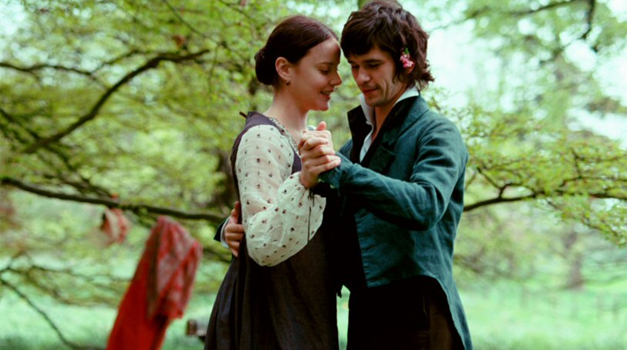
Director and writer Jane Campion of The Piano fame was blessed with two outstanding leads in Abbie Cornish and Ben Whishaw, known as the latest Q in the James Bond franchise and as the voice of Paddington Bear. Cornish plays Brawne with some early traces of women’s lib in her attitude, proud of her fashion creations and her ability to earn a living from them. On the opposite side of the self-sufficiency spectrum is Whishaw’s Keats, whose chosen profession as a poet is decidedly unprofitable, especially when his published poem Endymion flops. The two aren’t sure that their harmless flirting should continue any further, especially when Keats’s roommate and fellow poet Charles Brown (Paul Schneider) competes with Brawne for his friend’s attention. Soon, however, their romance begins in earnest, with swooningly passionate and eventually tragic results.

The early 19th-century costumes and details are elegantly faithful to the period and somewhat reminiscent of films based on the works of Keats’s contemporary Jane Austen.  Another point of comparison might be 1998’s Shakespeare in Love, also based on a literary figure and his love affair, but whereas that film was mostly fictitious and overrated, Bright Star has a greater biographical basis and instills passion into the mundane. No sex scenes are needed to accentuate Keats’s and Brawne’s relationship; it’s in their woodland walks and love letters that their fervent affection is felt. I especially loved one symbolic part that became a microcosm of doomed romance itself, as Brawne fills her bedroom with butterflies while exulting at every letter from Keats only for disenchantment to set in as the butterflies inevitably die.

Image result for bright star 2009 keats and brawne

Bright Star holds much poetic appeal, not only by quoting many of Keats’s works but by voicing his and Brown’s opinions on the nature of poetry and the writing process. “It ought to come like leaves to a tree, or it better not come at all,” says Keats at one point. The quiet tone may be too slow and melancholy for some, but Bright Star makes the most of its poignant themes, graceful cinematography, and brilliant cast, with Cornish and Schneider especially nailing the most emotional moments. It’s not quite among my favorite films ever, but it’s an underrated gem that I’ll always be fond of and one all fans of poetry ought to see.

Best line: (John Keats) “A poem needs understanding through the senses. The point of diving into a lake is not immediately to swim to the shore but to be in the lake, to luxuriate in the sensation of water. You do not work the lake out; it is an experience beyond thought. Poetry soothes and emboldens the soul to accept the mystery.”  (Fanny Brawne) “I love mystery.”


Rank: List Runner-Up


© 2017 S.G. Liput
471 Followers and Counting


Love and Mercy (2014)

10 Monday Apr 2017

Posted by sgliput in Movies, NaPoWriMo, Poetry, Reviews, Writing

≈ 2 Comments

Tags

Biopic, Drama, History, Romance

Image result for love and mercy film

(Today’s NaPoWriMo prompt was for a personal portrait of someone special, like someone who is a picture of unselfish love.)


Some people are draining and take what they can
Till you’re not sure how your acquaintance began,
But some, if you’re lucky, replace what you’ve lost
And give and love further, not counting the cost.

She’s one of those people, those angels on earth,
Who don’t get the credit or gold that they’re worth.
Where others step back in repulsion or fear,
She’ll take two steps forward, concerned and sincere.

When I was convinced I was flawed to my core,
She gave me the hope that I still could be more.
When I came to learn happiness can’t be bought,
She showed me that lonely need not be my lot.

Such lessons are simple, but we the unwise,
With no one to teach us, are quick to trust lies.
If all were like her, by such love overrun,
The clouds of this world could be scattered to sun.
__________________

MPAA rating: PG-13

It’s become something of a cliché for musical biopics to portray the rise and fall of their subjects, often lessening our opinions of them in the process, but Love and Mercy is just as concerned about its star rising again as it is about the initial fall. Brian Wilson of the Beach Boys is played by two different actors, Paul Dano as Wilson in the mid-1960s and John Cusack as his older 1980s self. Instead of depicting the two time periods one after the other, they alternate in advancing their stories of a man whose talent and success weren’t enough to conquer his demons on his own.

Both actors and storylines have their strengths. Dano does an outstanding job at representing Wilson at his most creative, tired of his usual surf music and eager to experiment on his personal pet project, which becomes 1966’s Pet Sounds. Here we get a rare look at a musician’s creative process that goes beyond just thinking up lyrics; the laborious spontaneity of the recording studio and a personal piano brainstorm of “Good Vibrations” capture the spirit of Wilson’s musical genius, which was challenged by his family and sadly marred by drugs and a wrongly diagnosed mental disorder.

Image result for love and mercy film

Beyond the artistic insights of Dano’s parts, the film’s emotional core lies in the relationship between Cusack’s older Wilson and Melinda Ledbetter (Elizabeth Banks), who meet while Wilson is under the controlling care of Dr. Eugene Landy (domineering Paul Giamatti). My VC had trouble understanding why Melinda would have any interest in Wilson, who is presented as acting strange and unstable from Landy’s overmedication. Yet that is what makes Banks and the real-life Melinda so admirable: she wasn’t a gold-digger or an opportunist like Landy. She had every reason and right to leave Wilson to his fate, but she instead became his way out and transformed his life for the better through her love and perseverance, laudably brought to life by Banks. She’s the kind of patient, positive influence that we wish for all troubled souls to find, even if they rarely do. Taking a line from Wilson himself, God only knows what he’d be without her.

Love and Mercy is marred somewhat by the psychedelic miasma of the drug scenes, which is compounded at times by the nonlinear storyline and both Brians’ odd behavior. It isn’t how I’d want all biopics to be told, but for something unique in an all-too-familiar genre, Love and Mercy harnesses the talents of its subject and its actors for an ultimately inspiring tale of professional and personal salvation.

Best line: (1980s Brian, to Melinda) “I want you to leave, but I don’t want you to leave me.”


Rank: List Runner-Up


© 2017 S.G. Liput
466 Followers and Counting


2017 Blindspot Pick #3: An American in Paris (1951)

26 Sunday Mar 2017

Posted by sgliput in Blindspot, Movies, Poetry, Reviews, Writing

≈ 6 Comments

Tags

Comedy, Drama, Musical, Romance

Image result for an american in paris film

It’s magical in Paris,
At least in film and book,
Where painters dance
And find romance
And anyone can cook.

Real Paris may be different;
But skyline stars still shine,
Where love can stir
And dreams occur;
That Paris can be mine.
____________

MPAA rating:  All (easily a G)

I do have a soft spot for musicals, but for some reason, I’d never gotten around to watching what many consider one of the pinnacles of classic musical cinema. Luckily, it’s one of my Blindspots. An American in Paris combines some of the best aspects of the genre, particularly Gene Kelly’s dancing and George Gershwin’s music, but there’s something lacking too.

I’d only ever seen the famous dance scene that serves as the film’s centerpiece, and since that is largely symbolic, I wasn’t sure what to expect as far as a plot. Kelly plays struggling artist and American expat Jerry Mulligan, who lives contentedly in Paris while periodically displaying his paintings on the street. Much to his surprise, he attracts the attention of wealthy socialite Milo Roberts (Nina Foch), who volunteers to sponsor his talent, even if Jerry’s not sure she’s doing so solely out of the goodness of her heart. After a bit of love at first sight, he seeks to woo a young Parisian (Leslie Caron), who is torn between love and loyalty. It’s a good thing Kelly is so darn likable because his character is a bit of a jerk at times, such as how he pursues his love interest without a thought to the other woman accompanying him, but for the most part, Kelly’s natural charisma engages wonderfully with his costars.

Image result for an american in paris film

While the plot works well enough, the musical numbers overshadow the story connecting them, and the fact that most of the Gershwin songs were previously written and don’t have much bearing on what’s going on makes them feel a bit disjointed. They shouldn’t feel like this, but the songs are padding for an uninspired plot, even if they’re the best aspects of the film. I honestly could have skipped the storyline and simply watched the musical numbers, which would make for a great montage but not exactly a great film.

There’s still some superlative style to this Vincente Minnelli-directed lark, from the personable introduction to the three main male characters to the show-stopping pageantry of the songs. One dream sequence with Oscar Levant as Jerry’s unemployed pianist friend may be one of those filler numbers, but it employs some visual trickery that was likely very innovative at the time. And, having heard a good deal of Gershwin in Mr. Holland’s Opus, it was nice to see one of its original visual accompaniments.

Image result for an american in paris film

An American in Paris may be a beloved classic, but it’s nowhere near the level of Kelly’s Singin’ in the Rain. The plot is a charming but average romance that completely ignores and offers no closure to the side characters, and even the grand 17-minute tap dance/ballet climax set to Gershwin’s title music ran too long and threatened to lose my interest at times. I don’t want to knock it too hard, but there are much better musicals than the Best Picture of 1951. Still, the musical scenes should easily put a smile on anyone’s face, and I can watch Gene Kelly’s effortless talent any day.

Best line: (Jerry) “Back home, everyone said I didn’t have any talent. They might be saying the same thing over here, but it sounds better in French.”


Rank: List Runner-Up


© 2017 S.G. Liput
457 Followers and Counting


La La Land (2016)

01 Wednesday Mar 2017

Posted by sgliput in Movies, Poetry, Reviews, Writing

≈ 12 Comments

Tags

Comedy, Drama, Musical, Romance

Image result for la la land film


[Can be sung to “Audition (Fools Who Dream)”]

Many will scoff at
The goals that are not yet fulfilled.
Dreams without backers
Are subject to slackers
And thoughts that they’re too hard to build.

“No” to the doubts that press,
Weathered by hopefulness.
Those that will roll their eyes
Are in for a grand surprise.

A lone aspiration
Is ripe for frustration,
As all true successes know.
The chances we fumble
May help keep us humble
With more than one right way to go.

Hard is the road our dreams set,
Bumpy and lined with regret.
Still, where they lead we must go,
Only one outcome to know.
_______________

MPAA rating: PG-13 (for a lone F-word, that’s it)

In the past, I’ve never given Oscar nominees the attention many bloggers do (I still haven’t seen half the nominees from 2015), but this year I had the unique pleasure of watching all but one of the Best Picture nominees in the theater, thanks to a great special with Regal. You can’t beat nine movies for $35! Thus, with the benefit of hindsight, I’ll be reviewing all of them in the days ahead, except for Moonlight, which I skipped only for it to end up winning, and I’ve already posted my thoughts on Arrival and Hidden Figures.

For my first post-Oscars review, I’ll cover the very last film I watched, which was actually during the Oscar ceremony. La La Land rose so quickly as a critical darling that many have pushed back or at least rolled their eyes at it, and reading so many such opinions, I had already given in to the consensus that it’s overrated. And yet…I loved it. I enjoyed all of the nominees this year, but rarely have I walked out of the theater as satisfied as I did with La La Land. Unfortunately, as soon as I came to the decision that it deserved Best Picture, that infamous mix-up gave the honor to Moonlight, for what could have been politically motivated reasons (I do still have yet to see it). While I was angry at the time and had to remind myself it doesn’t matter in the grand scheme of things, I’m glad at least that La La Land won other awards it deserved and that I got to enjoy it on the big screen.

Image result for la la land film

I should state that I love musicals. While many were trashing Les Misérables, I was singing its praises, and La La Land hearkens back to the classic MGM musicals for which I recently found greater appreciation from the documentary That’s Entertainment! It’s true that La La Land isn’t a Broadway musical with constant showstoppers, though the very first scene should impress any music lover and I enjoyed the modern style of a concert headlined by John Legend. Even if it’s not a typical musical toward the end, Justin Hurwitz’s Oscar-winning music, the jazz in particular, is a constant presence and almost a character unto itself. Often, it’s without words, like the classic dance numbers of yesteryear.

The story itself centers on two aspiring creatives: Emma Stone’s Mia came to Hollywood to be an actress but endures a barista job on the studio lot, while Ryan Gosling’s Sebastian is obsessed with classic jazz, wishing to preserve its purity in his own nightclub one day. Their initially cold run-ins with each other melt into romance as they both share their unique passions and encourage each other toward their dreams. The plot may seem familiar, owing much to the likes of A Star Is Born and Roman Holiday, but it’s made vibrant by the charm and chemistry of the two leads and the nostalgia they wear on their sleeves. The screenplay is actually rather self-aware of its Hollywood setting (“They worship everything, and they value nothing”), and themes that apply to creative types abound: How far should one go in sacrificing what they love in service of present needs? How much rejection are we willing to take before throwing in the towel? Is a dying art worth saving if even one devout advocate remains? As Mia insists, “People love what other people are passionate about,” and there’s passion here to spare, even if you don’t think you’re a fan of jazz or musicals in general.

Damien Chazelle’s Oscar-winning direction and camerawork are truly phenomenal as well. I’m a sucker for long, uninterrupted shots, and the fluidity of the camera helps one feel in the moment, whether it’s singers cavorting on a freeway or a disgruntled couple tap-dancing together on an L.A. overlook. Ryan Gosling and the ever-lovely Emma Stone may not be professional singers or dancers, but they show great commitment to their roles. Stone’s emotional scenes leave no doubt as to her Best Actress win, and the fact that Gosling learned how to play jazz piano for this film is astounding, considering how often and skillfully he tickles the ivories.

Image result for la la land film

As corny or clichéd as it sounds, La La Land is a true reminder of the magic of movies. Several scenes left me awed and enchanted, especially Mia’s one-take audition song, which deserved the Best Song Oscar much more than “City of Stars.” (I no longer blame La La Land for keeping Sing Street from a song nomination. That’s on “The Empty Chair.”) Yet it’s not all joy and magic; there’s struggle too and, like Arrival, that beautiful emotion called bittersweet. La La Land is honest enough to admit that life is rarely like a movie, but wouldn’t it be grand if it were?

In my opinion, 2016 bore one of the strongest batches of Oscar nominees in recent memory, and there was no single film that was clearly best. Some extolled the deep sci-fi of Arrival; others disliked it but preferred the power of Hacksaw Ridge; still others loved the sad realism of Manchester By the Sea or the emotion of Moonlight or Lion. In my case, I loved La La Land, and while I may be temporarily flying high only for my initial admiration to lapse eventually, I suspect it will continue to be a fond favorite of mine. As Mia’s audition song states, this film is for “the ones who dream,” and I’m one of them.

Best line: (Sebastian, explaining his lack of progress) “I’m letting life hit me until it gets tired. Then I’ll hit back.”


Rank: Top 100-Worthy


© 2017 S.G. Liput
451 Followers and Counting


Version Variations / VC Pick: A Star Is Born (1937, 1954, 1976)

27 Monday Feb 2017

Posted by sgliput in Movies, Poetry, Reviews, Writing

≈ 9 Comments

Tags

Drama, Musical, Romance, VC Pick, Version Variations

Image result for a star is born 1937

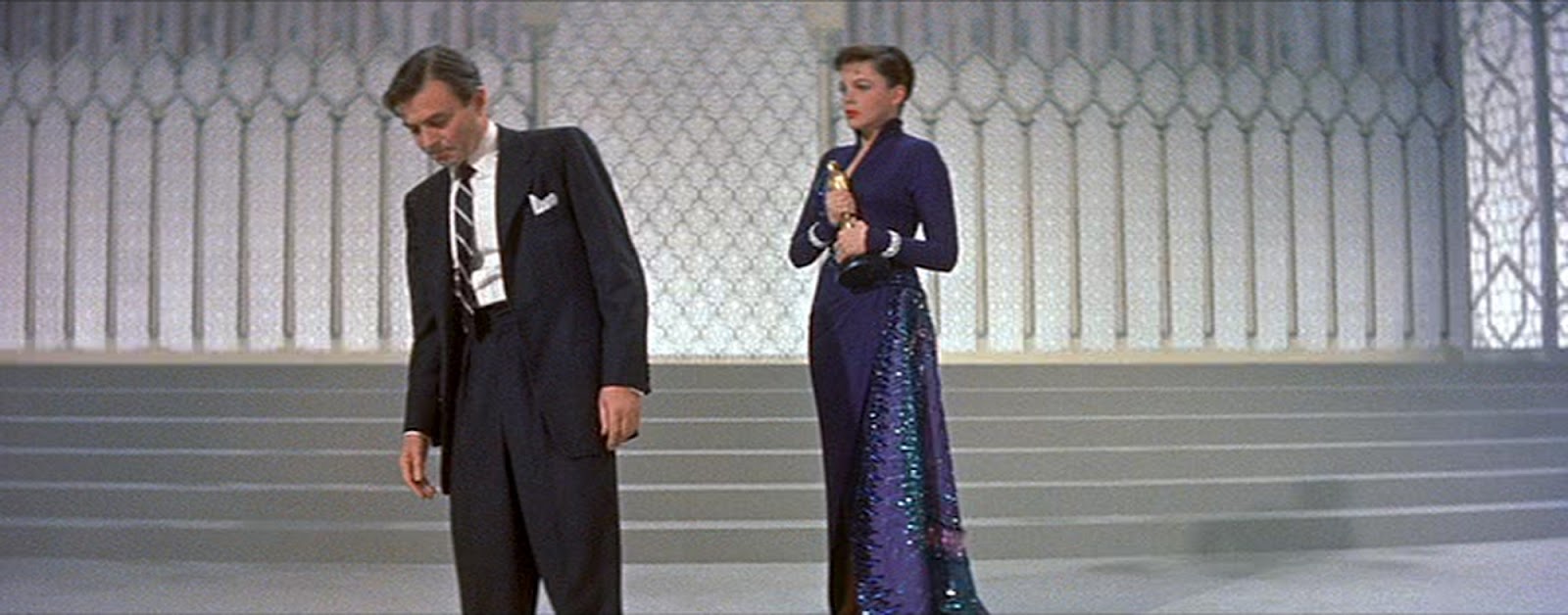
Image result for a star is born norman maine oscar

Image result for a star is born 1976 grammy


For every star to glory born
And lifted from obscurity,
Another sinks to dark and scorn,
An endless cycle now well-worn
But no less pitifully.

Some seek, some flee the weight of fame,
For which so many mourn.
They love the players, hate the game,
Who lose the lights around their name
That more stars may be born.
_________________

MPAA rating for 1937 version: Not Rated (should be PG)
MPAA rating for 1954 version: PG
MPAA rating for 1976 version: R (mainly for language)

My VC has been urging me to review the 1976 version of A Star Is Born, one of her favorites with Barbra Streisand, and I saw it as an opportunity to compare all three movies of the same name in a long overdue Version Variation review. It’s a Hollywood story that has become well-known through repetition, earning a remake every twenty years or so. The original was in 1937 with Janet Gaynor and Fredric March; the second retooled the tale as an epic musical with Judy Garland and James Mason; and the third is my VC’s favorite, another musical with Streisand and Kris Kristofferson. Ironically, I believe I was exposed to each of them in backwards order and enjoyed the story more the further back I went. And to anyone who thinks this story is too old to be relevant over forty years after the last version, there is yet another remake in the works for next year, starring Bradley Cooper and Lady Gaga. Time will tell how that compares with the others, but let’s take a look at the similarities and differences between the past versions.

What every incarnation of A Star Is Born has in common is the central story of an ambitious female newcomer who catches the eye and support of a celebrity with a reputation for being difficult, and as her star rises, his fades with heartbreaking results. While the necessity for the existence of a remake is always questioned, A Star Is Born is one case where every new version updated it for the times in completely understandable ways. The 1937 film had Hollywood as its setting, with Janet Gaynor’s Esther Blodgett dreaming of rising from a country girl to a starlet of its Golden Age. Judy Garland’s version is also about Hollywood but at the height of its musical phase; Garland’s Blodgett is already an established singer, and it’s her voice that prompts Mason’s Norman Maine to help her to shoot for something bigger through the studio system. By 1976, Streisand’s version ignores Hollywood in favor of the rock-and-roll scene of the ‘70s; the voice of her renamed Esther Hoffman catches the ear of not a movie star but rock star John Norman Howard (Kristofferson). All three films see Esther and her self-destructive benefactor share wedded bliss that is sadly short-lived, and the final scenes, while handled in different ways, are essentially the same.

Image result for a star is born 1937

Let’s start with the original 1937 film. It was the last one I saw, and knowing how unimpressed I usually am with dated movies of its era, I watched it more for the sake of comparison than for personal interest. Yet, surprisingly, I found it to be the best version of them all, which I suppose should be expected of the original work. The first A Star Is Born has no music like the other two, and thus the story is more boiled down to the basics of its plot, without the often unnecessary window-dressing of a musical number. In doing so, it also includes important details left out in the 1954 version, such as the origin of Esther’s screen name Vicki Lester.

Above all, the original’s greatest asset that the other two can’t match is its script, pointed and eloquent in just the right measure. While it received seven Oscar nominations, including the honor of being the first color film to be nominated for Best Picture, it’s no surprise that its one win was for Best Writing (plus an honorary award for its color photography). One important character that is totally absent from later versions is Esther’s Grandmother Lettie, played with witty spunk by May Robson. It’s her grandmother that gives Esther the initial encouragement to become a star, and her shrewd counsel at both the movie’s beginning and end may be my favorite bit of grandmotherly wisdom on film. All of the other performances are outstanding, with not one devolving into overacting, and Gaynor and March deserved their acting nominations, even if they didn’t win. (On a side note, I thought it interesting that Lionel Stander, who plays the studio’s unsympathetic publicity manager, sounded exactly like Harvey Fierstein’s raspy voice. I doubt there’s any relation, but it would be funny if Fierstein played the same role in the next remake.) Dated or not, the original A Star Is Born is the best, as its 100% Rotten Tomatoes score attests, and it has somewhat changed my views on prejudging a film based on its age.

Image result for a star is born 1937 lettie

As for the 1954 version with Judy Garland, Esther is presented not as an aspiring nobody but as the lead singer of a musical ensemble, whose performance at a gala is interrupted by Norman Maine’s drunken antics. (Danny McGuire, her friend from the original, becomes her bandmate in this version.) Won over by her voice, Norman invites her to stay in Hollywood for a screen test, and after some bumps in the road, she becomes a star of musical cinema. Many scenes, especially in the second half, are recreated from the first film, often word for word, such as the studio head’s visit to Maine in a sanitarium or Esther’s intervention when her husband is about to be sent to jail. What the remake adds is a surfeit of musical numbers, ranging from small personal songs to lavish song-and-dance routines. One sketch detailing Esther’s supposed rise to stardom plays out like Judy Garland’s version of Gene Kelly’s “Broadway Melody” number in Singin’ in the Rain.

All the additional music helps the remake stand apart from its predecessor, but with essentially the same story, it’s hard not to feel that the extended scenes of choreography are merely padding to warrant its somewhat tiresome three-hour runtime. Like Janet Gaynor before her, Judy Garland was nominated for Best Actress but lost to Grace Kelly that year, a snub that was widely criticized, but I can understand. As marvelous as she was as a singer, Garland never struck me as a great actress, and I found her most emotional scenes rather forced, the kind of dated acting that Gaynor actually avoided in the earlier version. Another odd discrepancy is that the original film is still intact, but portions of the 1954 film have been lost and recreated with still photographs. Even if Garland’s incarnation has some drawbacks, it’s still entertaining in the musical department, and, nailing the suave but broken sides of the character, James Mason plays probably the best Norman Maine role of all three films.

Image result for a star is born 1954

And now the moment my VC has been waiting for, Barbra Streisand and the oh so handsome Kris Kristofferson in the 1976 retelling of A Star Is Born! Since this is the greatest departure from the original film, I’ll start with what my VC loves about it, particularly the music. She’s always loved Streisand’s voice, if not her personally, and like Judy Garland before her, Streisand was the premier singer/actress of the time. (Whether Lady Gaga is for our generation has yet to be seen.) The whole soundtrack is updated to excellent classic rock standards, and unlike the previous version, Streisand’s film won an Oscar for Best Song, the theme “Evergreen,” which rather pales in comparison with the more dynamic showstoppers, like “The Woman in the Moon.” Both she and Kristofferson are also quite good in their acting roles, though not in any award-worthy way, an opinion on which my VC vehemently disagrees with me.

I do wish I could like this version as much as she does, but it has even more problems than the ’54 film. For one, the great script of the original is nowhere to be found, despite clear echoes of the earlier films’ events, like Norman interrupting Esther’s award ceremony (here the Grammys rather than the Oscars). Perhaps the most frustrating aspect for me is Kristofferson’s character of John Norman Howard. Like the previous Norman Maines, he’s a drunken, self-destructive jerk at times, whose behavior is harder to understand here. He frequently makes terrible decisions, even when not drunk; for instance, this is the only version where he cheats on Esther, and while my VC insists there’s a deep motive behind it of self-resentment on his part, I’m afraid I just don’t see it. His final act of the film is also perplexing; in the other versions, it is because Norman fears Esther will throw everything away on him, while here, he has a chance at a comeback but refuses to take it for supposedly the same reason.

Image result for a star is born 1976

All three versions of A Star Is Born have their strengths: the shrewd dialogue of the original, the sprawling musical numbers of Garland’s incarnation, the bittersweet and passionate ending of Streisand’s (the only one to actually end with a performance). While my VC’s favorite is not mine, it did give me a reason to check out the others, the first of which is now among my favorite films from the 1930s. This story of Hollywood success, love, and loss has proven its staying power, and although I’m always dubious about remakes, this is one tale that can support further retellings.

Best serious line (from the 1937 version): (Grandmother Lettie) “Tragedy is a test of courage. If you can meet it bravely, it will leave you bigger than it found you. If not, then you will have to live all your life as a coward, because no matter where you may run, you can never run away from yourself.”

Best funny line (from the 1937 version): (Esther’s aunt) “Of course, no one ever listens to me!”   (Grandmother Lettie) “They do if they’re within ten miles of ya.”


Rank for the 1937 version: List-Worthy
Rank for the 1954 version: List Runner-Up
Rank for the 1976 version: Honorable Mention


© 2017 S.G. Liput
451 Followers and Counting

 

← Older posts
Newer posts →

Recent Posts

  • We Didn’t Start 2025 (Recap)
  • NaPoWriMo 2025 Recap (Finally)
  • Sonic the Hedgehog 3 (2024)
  • It Happened One Night (1934)
  • Spellbound (2024)

Recent Comments

associatesofshellymann's avatarassociatesofshellyma… on My Top Twelve La La La So…
Kit's avatarKit Nichols on Bonnie and Clyde (1967)
lifelessons's avatarlifelessons on Look Back (2024)
Carol Jackson's avatarCarol Jackson on The Thief of Bagdad (1940…
Stephen's avatarStephen on Love Story (1970)

Archives

  • January 2026
  • December 2025
  • May 2025
  • April 2025
  • March 2025
  • February 2025
  • January 2025
  • December 2024
  • May 2024
  • April 2024
  • March 2024
  • February 2024
  • January 2024
  • December 2023
  • November 2023
  • October 2023
  • September 2023
  • July 2023
  • June 2023
  • May 2023
  • April 2023
  • March 2023
  • February 2023
  • January 2023
  • December 2022
  • November 2022
  • October 2022
  • September 2022
  • August 2022
  • July 2022
  • June 2022
  • May 2022
  • April 2022
  • March 2022
  • February 2022
  • January 2022
  • December 2021
  • November 2021
  • October 2021
  • September 2021
  • August 2021
  • July 2021
  • June 2021
  • May 2021
  • April 2021
  • March 2021
  • February 2021
  • January 2021
  • December 2020
  • November 2020
  • October 2020
  • September 2020
  • August 2020
  • July 2020
  • June 2020
  • May 2020
  • April 2020
  • March 2020
  • February 2020
  • January 2020
  • December 2019
  • November 2019
  • October 2019
  • September 2019
  • August 2019
  • July 2019
  • June 2019
  • May 2019
  • April 2019
  • March 2019
  • February 2019
  • January 2019
  • December 2018
  • November 2018
  • October 2018
  • September 2018
  • August 2018
  • July 2018
  • June 2018
  • May 2018
  • April 2018
  • March 2018
  • February 2018
  • January 2018
  • December 2017
  • November 2017
  • October 2017
  • September 2017
  • August 2017
  • July 2017
  • June 2017
  • May 2017
  • April 2017
  • March 2017
  • February 2017
  • January 2017
  • December 2016
  • November 2016
  • October 2016
  • September 2016
  • August 2016
  • July 2016
  • June 2016
  • May 2016
  • April 2016
  • March 2016
  • February 2016
  • January 2016
  • December 2015
  • November 2015
  • October 2015
  • September 2015
  • August 2015
  • July 2015
  • June 2015
  • May 2015
  • April 2015
  • March 2015
  • February 2015
  • January 2015
  • December 2014
  • November 2014
  • October 2014
  • September 2014
  • August 2014
  • July 2014
  • June 2014
  • May 2014
  • April 2014
  • March 2014
  • February 2014
  • January 2014
  • December 2013

Categories

  • Blindspot
  • Blogathon
  • Christian
  • Movies
  • Music
  • NaPoWriMo
  • Poetry
  • Reviews
  • TV
  • Writing

Meta

  • Create account
  • Log in
  • Entries feed
  • Comments feed
  • WordPress.com

Recent Posts

  • We Didn’t Start 2025 (Recap)
  • NaPoWriMo 2025 Recap (Finally)
  • Sonic the Hedgehog 3 (2024)
  • It Happened One Night (1934)
  • Spellbound (2024)

Recent Comments

associatesofshellymann's avatarassociatesofshellyma… on My Top Twelve La La La So…
Kit's avatarKit Nichols on Bonnie and Clyde (1967)
lifelessons's avatarlifelessons on Look Back (2024)
Carol Jackson's avatarCarol Jackson on The Thief of Bagdad (1940…
Stephen's avatarStephen on Love Story (1970)

Archives

  • January 2026
  • December 2025
  • May 2025
  • April 2025
  • March 2025
  • February 2025
  • January 2025
  • December 2024
  • May 2024
  • April 2024
  • March 2024
  • February 2024
  • January 2024
  • December 2023
  • November 2023
  • October 2023
  • September 2023
  • July 2023
  • June 2023
  • May 2023
  • April 2023
  • March 2023
  • February 2023
  • January 2023
  • December 2022
  • November 2022
  • October 2022
  • September 2022
  • August 2022
  • July 2022
  • June 2022
  • May 2022
  • April 2022
  • March 2022
  • February 2022
  • January 2022
  • December 2021
  • November 2021
  • October 2021
  • September 2021
  • August 2021
  • July 2021
  • June 2021
  • May 2021
  • April 2021
  • March 2021
  • February 2021
  • January 2021
  • December 2020
  • November 2020
  • October 2020
  • September 2020
  • August 2020
  • July 2020
  • June 2020
  • May 2020
  • April 2020
  • March 2020
  • February 2020
  • January 2020
  • December 2019
  • November 2019
  • October 2019
  • September 2019
  • August 2019
  • July 2019
  • June 2019
  • May 2019
  • April 2019
  • March 2019
  • February 2019
  • January 2019
  • December 2018
  • November 2018
  • October 2018
  • September 2018
  • August 2018
  • July 2018
  • June 2018
  • May 2018
  • April 2018
  • March 2018
  • February 2018
  • January 2018
  • December 2017
  • November 2017
  • October 2017
  • September 2017
  • August 2017
  • July 2017
  • June 2017
  • May 2017
  • April 2017
  • March 2017
  • February 2017
  • January 2017
  • December 2016
  • November 2016
  • October 2016
  • September 2016
  • August 2016
  • July 2016
  • June 2016
  • May 2016
  • April 2016
  • March 2016
  • February 2016
  • January 2016
  • December 2015
  • November 2015
  • October 2015
  • September 2015
  • August 2015
  • July 2015
  • June 2015
  • May 2015
  • April 2015
  • March 2015
  • February 2015
  • January 2015
  • December 2014
  • November 2014
  • October 2014
  • September 2014
  • August 2014
  • July 2014
  • June 2014
  • May 2014
  • April 2014
  • March 2014
  • February 2014
  • January 2014
  • December 2013

Categories

  • Blindspot
  • Blogathon
  • Christian
  • Movies
  • Music
  • NaPoWriMo
  • Poetry
  • Reviews
  • TV
  • Writing

Meta

  • Create account
  • Log in
  • Entries feed
  • Comments feed
  • WordPress.com

Blog at WordPress.com.

  • Subscribe Subscribed
    • Rhyme and Reason
    • Join 814 other subscribers
    • Already have a WordPress.com account? Log in now.
    • Rhyme and Reason
    • Subscribe Subscribed
    • Sign up
    • Log in
    • Report this content
    • View site in Reader
    • Manage subscriptions
    • Collapse this bar