• Home
  • About Me
  • The List
  • THE LIST (2016 Update)
  • THE LIST (2017 Update)
  • THE LIST (2018 Update)
  • THE LIST (2019 Update)
  • THE LIST (2020 Update)
  • THE LIST (2021 Update)
  • THE LIST (2022 Update)
  • Top Twelves and More
  • The End Credits Song Hall of Fame

Rhyme and Reason

~ Poetry Meets Film Reviews

Rhyme and Reason

Tag Archives: Romance

VC Pick: Saturday Night Fever (1977) / Staying Alive (1983)

14 Wednesday Mar 2018

Posted by sgliput in Movies, Poetry, Reviews, Writing

≈ Leave a comment

Tags

Drama, Musical, Romance, VC Pick

See the source image

See the source image

Though we may think our minds are broad,
Aware of worlds beyond our own,
We all are uniformly flawed
In being tunnel vision-prone.

We often only grasp this fact
When dreams we barely comprehend
Provoke our minds. How we react
Determines where our path will end.
_________________________

MPAA rating for Saturday Night Fever: R (but there’s a PG version too)
MPAA rating for Staying Alive: PG

I wasn’t looking forward to watching Saturday Night Fever because I had a feeling it would be a lot like my VC’s last pick Dirty Dancing, a movie where I’ve seen all the best parts with little interest in the connective tissue. Yet she really wanted me to see its critically ravaged sequel Staying Alive (yes, SNF had a sequel), which I knew nothing about and of course had to watch the first movie to fully understand.  Now that I’ve seen both, conventional wisdom would say I should love Saturday Night Fever and deride its cheap sequel, but apparently I missed that convention. My feelings aren’t that strong on either one, but my sympathies are definitely flipped from the critical consensus I’ve seen.
See the source image

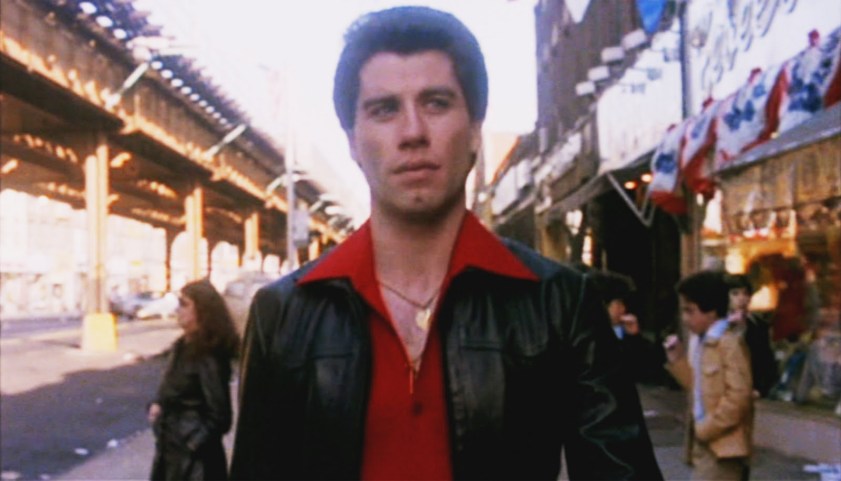
As far as Saturday Night Fever, it fit my expectations to some extent. I had seen all the best parts already, but they’re still iconic for a good reason, especially the dancing prowess of Tony Manero (John Travolta in his star-making role). The soundtrack is one of the catchiest ever, full of high-pitched Bee Gees and even disco-fied classical music, all of which adds to the overwhelming ‘70s-ness of the whole production. Few movies capture their contemporary time and place so completely as Saturday Night Fever does, from the wide-collared shirts and weirdly high-heeled shoes to the background details like the posters of Rocky and Farrah Fawcett on Tony’s bedroom wall. Its status as a snapshot of a decade makes it significant, in a way that comes off as transportive rather than dated.

Knowing already the basic plot, I was mainly concerned that Saturday Night Fever would be too much like a certain movie I love to hate, John Travolta’s other lifestyle-snapshot film Urban Cowboy (worst movie ever, by the way). It has a lot in common, with its young Travolta protagonist being a self-absorbed punk who prefers to spend his nights drinking and playing his money away. Yet while Urban Cowboy seemed perfectly content with its white-trash carousing, Saturday Night Fever is at least self-aware about it. It rings bitingly true when Tony’s dance partner Stephanie (Karen Gorney) calls him “a cliché. You’re nowhere, on your way to no place.”

See the source image

I could appreciate how Tony wakes up to how narrow and directionless his existence is, but the film gets bumpy on its way there. For one thing, I watched the R-rated original (I didn’t know there was a PG edited version until afterward) and was shocked at the amount of profanity, proving that the ‘70s were hardly better on that front than nowadays, perhaps worse. Tony’s friends are consistently scuzzy throughout as well, and by the time they were taking turns raping his wannabe girlfriend in the backseat of a car, I realized how much I wasn’t liking this movie. As I said, I recognized Tony’s experiences as a gritty and all-too-realistic journey to rock-bottom, which is often the only way to start improving, but outside of the music, it was hardly a journey I’d want to take again.

And then there’s Staying Alive, the 1983 sequel that has a 0% on Rotten Tomatoes. I don’t think it deserves such scorn because it was a far more enjoyable film to watch; you just have to embrace the way the original’s ‘70s drama has been largely replaced with ‘80s cheesiness. It all depends on how you approach it; I loved looking at the iMDB reviews, which swing wildly from 1/10 terrible reviews and 10/10 glowing ones. Travolta’s performance is also pretty comparable to the first movie, so I don’t know why he’d get an Oscar nomination for one and a Razzie nomination for the other.

See the source image

Directed by Sylvester Stallone, Staying Alive features Travolta’s return as Tony Manero; the only other returning cast member is Tony’s very Italian mother (Julie Bovasso), though I understand a few other cameos were cut. Instead of dancing for fun in Brooklyn, Tony has instead moved to Manhattan to become a modern dancer on Broadway. The Bee Gees are still on hand for the soundtrack, but there’s a decidedly more ‘80s vibe to the music, rounded out by several great additions by the director’s brother Frank Stallone, who also has a small role. The glitzy strobe-lit dance floor has been replaced by synchronized on-stage athleticism that sees Tony leaping through lens flares and showing off a lot more muscle than in Saturday Night Fever.

Some may miss the grittiness of the original, but when Tony points out that he’s quit swearing, smoking, and drinking, I see it as a genuine personal improvement, not just a way to segue from R to PG. Of course, he’s still got a long way to go, particularly in his treatment of women. He’s still the same ladies’ man who can’t recognize the good thing he’s got with his fellow dancer and girlfriend Jackie (Cynthia Rhodes), choosing instead to continually pursue proven diva Laura (Finola Hughes). It’s frustrating how oblivious he is at times, getting jealous when Laura cheats on him and never considering what he’s doing to Jackie, but at least he comes around eventually. It’s true that Staying Alive hardly feels like a sequel to Saturday Night Fever, but I don’t think it’s that bad a film. The music and choreography aren’t as memorable as its predecessor, but they’re still impressive, even if the big number at the end grows dull with how long and overproduced it is.

See the source image

I’d gladly watch Staying Alive again, while Saturday Night Fever I think I’d only watch the PG version and only if I was in the mood for something depressing. The main reason I like Staying Alive more is how it does build on the first film. Saturday Night Fever was all about waking Tony up to his directionless lifestyle but didn’t get to show much after he comes to his senses. Staying Alive shows how he struggles to improve, put his talent to good use, and make something of himself, which is a more laudable purpose, despite the decline in nuance. When Tony struts along in his very first scene of SNF, he’s showing off mere bravado; when the same scene is echoed in Staying Alive, he actually has a reason to strut.

Best line from Saturday Night Fever: (Tony) “There’s ways of killing yourself without killing yourself.”
Best line from Staying Alive: (Tony, jealous of Jackie’s friend Carl) “Don’t worry. She’s in good hands.”   (Carl) “And what are you, Allstate, pal?”   (Tony) “Yeah, you want disability?”


Rank for Saturday Night Fever: Honorable Mention (barely)
Rank for Staying Alive: Honorable Mention (but higher)


© 2018 S.G. Liput
539 Followers and Counting


VC Pick: Dirty Dancing (1987)

27 Tuesday Feb 2018

Posted by sgliput in Movies, Poetry, Reviews, Writing

≈ 2 Comments

Tags

Drama, Musical, Romance, VC Pick

See the source image

Innocence, it might be said,
Lasts only till our first romance.
When youthful hearts begin to dance
And steal more than a passing glance
And seize (they think) their only chance
Without a thought to circumstance,
Naiveté is shed,
Adulthood in its stead.

For whether it concludes in shame
Or love that lasts a lifetime still,
A heart that’s met another’s will
And tried a second heart to fill
And felt the pain and seized the thrill
Of deeper love, for good or ill,
Will never be the same
As when their first love came.
___________________

MPAA rating: PG-13

Sometimes a movie is so iconic that you feel like you’ve seen it even when you’ve only seen the highlights. Dirty Dancing fits that mold because, although I’ve seen every dance scene and the entire ending before, I hadn’t watched it all the way through, despite my VC’s persistence. Now that I finally have… well, I was just fine with the highlights.

See the source image

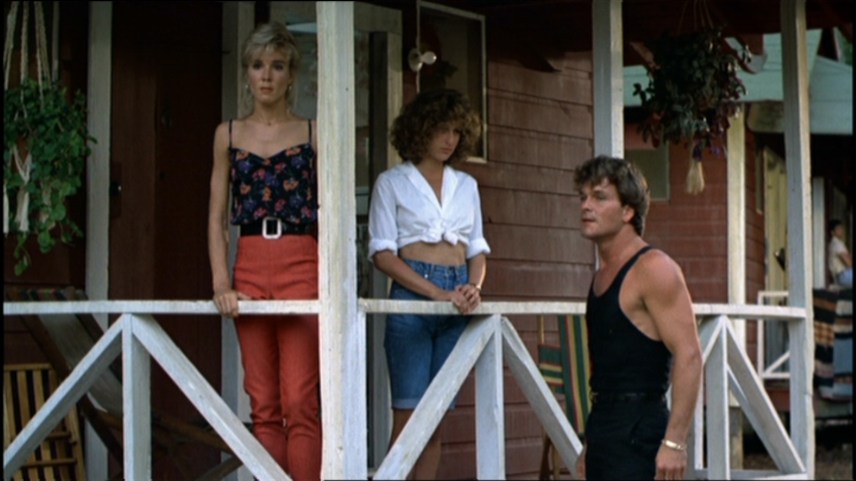
Before I anger any of its many ardent fans, it’s not that I disliked Dirty Dancing; it’s just that I’d already seen all the best parts. Maybe if I’d seen those classic moments as part of the whole for the first time, I’d appreciate the whole more. As it was, my viewing was essentially to fill in the gaps. I got to see how exactly “Baby” (lovely Jennifer Grey) arrived on vacation at the distinguished Kellerman’s mountain resort in 1963. I got to find out how she first met the ruggedly handsome dance instructor Johnny Castle (Patrick Swayze). And of course, I got to enjoy the cheesy but romantic quotes and the dance numbers so classic they’re still being parodied to death (like in this recent Super Bowl ad—priceless!).

But there were also things that detracted along the way, like the fact that the whole reason Baby and Johnny perform together is so she can cover for his other partner Penny (Cynthia Rhodes) who gets an abortion. The distress of her botched abortion is done tastefully enough, but what really bugged me is how Baby starts her sexual relationship with Johnny right afterward. She doesn’t know him that well at this point, and Penny literally just told her that the one who got her pregnant seemed different and true before he abandoned her. I know infatuation can be both strong and stupid, but the way Baby dives in without considering that the same thing could happen to her felt downright foolish.

See the source image

Of course, lucky for her, Johnny is a good guy, or at least trying to be better, and Grey and Swayze have such chemistry together that I can see why a lot of female viewers wouldn’t give it a second thought. Sort of like how the final dance number, set to the Oscar-winning “(I’ve Had) The Time of My Life” is so timelessly satisfying that no one minds how hastily and conveniently everything wraps up with a little bow. With its dance-fueled passion and exceptional soundtrack of ‘60s hits and two original songs, it’s easy to see why Dirty Dancing is popular. For me, though, the highlights are better than the whole.

Best line: (Baby) “Me? I’m scared of everything. I’m scared of what I saw, I’m scared of what I did, of who I am, and most of all I’m scared of walking out of this room and never feeling the rest of my whole life the way I feel when I’m with you.”


Rank:  Honorable Mention


© 2018 S.G. Liput
538 Followers and Counting


2018 Blindspot Pick #2: Yi Yi (2000)

20 Tuesday Feb 2018

Posted by sgliput in Blindspot, Movies, Poetry, Reviews, Writing

≈ Leave a comment

Tags

Drama, Foreign, Romance

See the source image

What is life
But fate’s plaything,
Where some men die while others cling
To watch new youths discover truths
They could have learned from listening?

What is life
But joy in wait,
A chance to show the few who hate
That love profound can still surround
If one will only demonstrate?

What is life
But one big slog
Reminding you you’re just a cog
In systems built to cover guilt
And stoke the nearest demagogue?

What is life
But bittersweet
In every breath and each heartbeat,
As memories refuse to freeze,
A former friend in full retreat?

What is life
But grief, concerns,
And happiness all taking turns?
Each person braves their own such waves
Until at last each human learns
What is life.
____________________

MPAA rating: Not Rated (the number of F-words in the subtitles and fleeting nudity might warrant an R, but it’s really more of a PG-13)

Finally, a critically acclaimed “masterpiece” of world cinema that doesn’t require the quotation marks! In my limited forays into international filmmaking, I’ve found that just because critics laud a movie, that doesn’t mean it will actually be any good (for example, The Assassin *shudder*). In addition to celebrating the Chinese New Year with a Chinese movie, I added Yi Yi to my list of Blindspots this year because I was curious to see whether it deserved its renown as “one of the major films of the 21st century” and “the third most acclaimed film of the 21st century among critics,” according to Wikipedia. Thankfully, it does, and even if it’s not destined to be among my personal favorites, I am 100% behind its status as one of the all-time greats.

See the source image

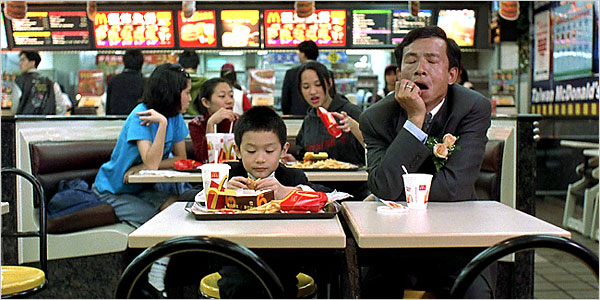
Translated as A One and a Two…, but more literally as One One or One by One, Yi Yi is hard to describe in a way that doesn’t make it sound incredibly dull, since it’s about the everyday life of the Jian family of Taipei and runs for 2 hours and 53 minutes.  Yet, I was surprised at how engaging a three-hour movie about everyday life could be, thanks largely to a deep and insightful script from writer/director Edward Yang and several diverse characters that are relatable on multiple levels.

The Jians include the father NJ (famed director Wu Nien-jen), who must deal with both a high-risk business deal and an unexpected run-in with a former lover; the mother Min-Min (Elaine Jin), who suffers a midlife crisis; their teenage daughter Ting-Ting (Kelly Lee), who enters a love triangle with her best friend; their young son Yang-Yang (Jonathan Chang), who gets bullied at school; and the perpetually unlucky brother-in-law A-Di, who gets caught between two strong-willed women. It’s a film of both broad plot strokes (NJ’s self-doubt and potential affair, A-Di’s money troubles) and more minor vignettes (Yang-Yang’s photography, the birth of A-Di’s son) that nonetheless feel vital in getting to know the large cast.

See the source image

The grandmother of the family is only briefly active at the beginning, spending most of the film in a coma and serving as an ingenious sounding board for her family, who are told to talk to her in hope of her recovery. Those who sit by her bedside bare their inner doubts more fully than anywhere else, such as Ting-Ting’s guilt over whether she’s to blame for her grandmother’s condition, and NJ even compares it to prayer, not knowing for sure how much the listener is hearing.

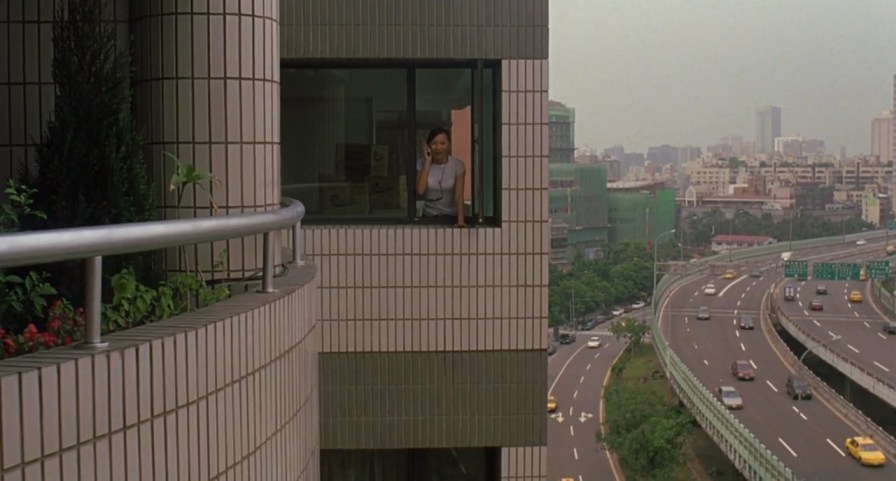
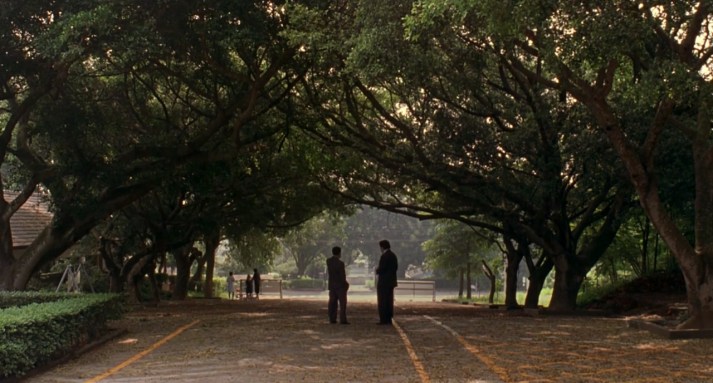
Despite its apparent simplicity, Edward Yang’s direction is also worth praising, not only in its composition but in its economy. Scenes are kept wide with very few close-ups. Long extended takes are the rule, with no scene or edit being wasted, yet the camera is fairly static. It doesn’t follow the characters around but allows events to play out off-screen, often letting us see part of what’s happening through reflections in windows and mirrors, which provides both visual interest and a strong sense of place.

See the source image

Even masterpieces can have room for improvement, though, and Yi Yi is no different. While its mundaneness is part of its charm, the pacing does lag several times, and there are many scenes that could have been trimmed to shave off perhaps a half hour from the runtime. It takes an investment of time and patience to sit through, yet I can say it’s a rewarding experience, even if its full power is only half understood when the credits roll. There are highs and lows, joys and sorrows, laughter and tears, both a marriage and a funeral, history repeating itself and wisdom coming from the mouth of babes. The film is mostly warm and gentle, never judging the characters and their flaws, yet the wisdom of right decisions shines against the foolish passion of mistakes. I don’t know that I’ll make the time to watch it again, but it will still live in my mind as a genuinely great film.

Best line: (Fatty, Ting-Ting’s boyfriend) “Life is a mixture of sad and happy things. Movies are so lifelike; that’s why we love them.”
(Ting Ting) “Then who needs movies? Just stay home and live life!”
(Fatty) “My uncle says ‘we live three times as long since man invented movies.’”
(Ting Ting) “How can that be?”
(Fatty) “It means movies give us twice what we get from daily life. For example, murder—we never killed anyone, but we all know what it’s like to kill. That’s what we get from the movies…. It’s only one example; there are other things. Like he also said, ‘There’s no cloud, no tree that isn’t beautiful, so we should be too.’”


Rank: List Runner-Up


© 2018 S.G. Liput
537 Followers and Counting


The Big Sick (2017)

14 Wednesday Feb 2018

Posted by sgliput in Movies, Poetry, Reviews, Writing

≈ 2 Comments

Tags

Comedy, Drama, Romance

See the source image

How can you know that it’s love close at hand
And deeper romance than the rest understand
Until there is distance to feel
The pain of the parting, detachment’s demand,
The grief that goodbye makes more real?

Things taken for granted, more often than not,
Are prized more profoundly than we would have thought.
Their value is only revealed
When losing such treasures leaves lovers distraught,
Confessing what once was concealed.
___________________

MPAA rating: R (solely for language)

A happy Valentine’s Day to all, and in the spirit of love, I thought I’d review one of the best romantic comedies of recent years.

See the source image

Unfortunately, I don’t know how to review The Big Sick without sounding like a complaining puritan. It’s certainly one of the best films of 2017 and one worth recommending to others, but I suppose I’ll get my objections out of the way first. (Sorry to any who disagree, but please hear me out or skip the next two paragraphs.) As much as I enjoyed it, the amount of profanity really disappointed me, despite the fact that I usually ignore it. It’s impossible to escape the F-word these days since it’s now an ingrained part of everyday speech for the apparent majority of people, and it’s no longer as offensive as it once was. Yet more than two (if I’m correct) can still give a movie an R rating, and the simple truth is that The Big Sick did not need to be R. There’s no violence or nudity, but there are stretches where every noun has to be preceded by F-ing. Why? Could they not think of some better adjective? It’s not so much offensive to me as it is annoying and not reflective of the creativity in the rest of the script.

This is why I don’t watch much Tarantino or Scorsese, but usually R-rated films like theirs have more than just objectionable language. Here, the frequent language is the only thing that makes it R, and that annoys me because not only would I rather not hear it but it limits the audience. This is an extremely worthwhile film that I think everyone, even older kids and teenagers, could greatly appreciate, if it weren’t for the language (though that probably doesn’t stop most kids these days either). Despite what writer/star Kumail Nanjiani says, the F-word is not inherently funny, and there are plenty of good and clean rom coms that have proved how unnecessary it is.

See the source image

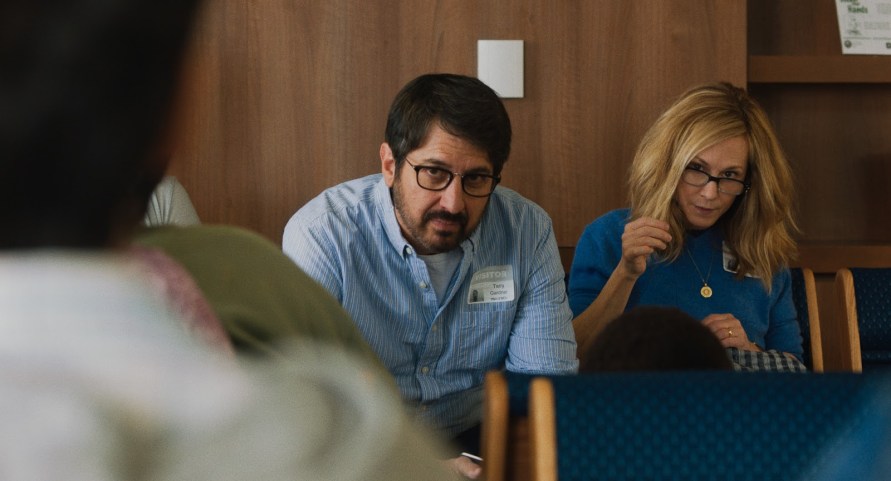
So there, I’ve had my rant, and I will now praise The Big Sick as if the language weren’t there. Without it, the script is a brilliant balance of funny and poignant, drawing both from Kumail’s job as a stand-up comedian and from his first-hand brush with tragedy. It was written by Nanjiani and his wife Emily V. Gordon (both now nominated for Best Original Screenplay) and based off of their own experiences, with Nanjiani playing himself and Zoe Kazan as Emily. After their initial meeting at a comedy club and a series of charming dates, their romance hits a snag due to Kumail’s traditional Pakistani family, who keep trying to coax him into an arranged marriage. When things seem over between them, Emily suddenly falls ill and is placed in a medically induced coma, leaving Kumail to decide how much he really cares for her while also getting to know her worried parents Terry and Beth (Ray Romano, Holly Hunter).

I suppose the best thing about The Big Sick is its authenticity, both in its dialogue and performances, the kind that can find amusement in a 9/11 joke yet quickly acknowledge its inappropriateness. It’s easy to believe that this is based on a true story, and Kumail’s connection with Emily is entirely natural, as is the older coupling of Romano and Hunter, whom I’m glad to see getting such strong roles. I loved the way that Hunter’s dislike of Kumail (based solely on how Emily had described their break-up) slowly melted into fondness, helped along by the ever-likable Romano. Even Kumail’s comedy seemed like an honest work-in-progress, since he repeatedly has to tell people when he’s joking. The realness extends to the end as well, where things don’t wrap up as quickly and easily as one might have hoped, yet strong themes of forgiveness, faithfulness, and sincerity are fostered in more satisfying ways than one.

See the source image

Perhaps it was Romano’s presence, but I couldn’t help but notice traces of Everybody Loves Raymond in Kumail’s family dynamics, particularly with his overbearing but loving mother. The Muslim family is depicted in a largely relatable and sympathetic way, contrasted no less sympathetically with Kumail’s agnosticism, and one heated conversation between Kumail and his parents feels like a talk that many traditional immigrants might have with their more free-thinking children.

So yes, I was able to look past the language and recognize The Big Sick as the outstanding film it is. I’m just sorry that others with similar objections (such as my VC) might not. I’ve overlooked such objectionable content before, which is why I’m still awarding it a List-Worthy ranking. As much as I wish it were cleaner, I can’t help but admire the total package.

Best line: (Kumail) “You’ve never talked to people about 9/11?”
(Terry) “No, what’s your, what’s your stance?”
(Kumail) “What’s my stance on 9/11? Oh, um, anti. It was a tragedy; I mean, we lost nineteen of our best guys.”
(Beth) “Huh?”
(Kumail) “That was a joke, obviously. 9/11 was a terrible tragedy. And it’s not funny to joke about it.”


Rank: List-Worthy


© 2018 S.G. Liput
536 Followers and Counting


VC Pick: The Mountain Between Us (2017)

19 Friday Jan 2018

Posted by sgliput in Movies, Poetry, Reviews, Writing

≈ Leave a comment

Tags

Drama, Romance, VC Pick

See the source image

Higher than most men would dare,
The mountains stand in sparser air
To touch the blue abyss above
And tempt mankind’s desire to share
In their ambitious love.

Yet those who underestimate
The mountain’s ever lofty state
Will find what awed from lower heights
Can rapidly retaliate,
To prove how beauty bites.
_________________

MPAA rating: PG-13

Since I’m the bigger movie fan, it’s unusual for my VC to watch a movie in the theater before me, but The Mountain Between Us was so clearly her kind of movie that she did and I just now caught up. Kate Winslet and Idris Elba in a gradual romance? Stunning mountain scenery? Survival story based on a book she had to read beforehand? Yep, definitely her kind of movie.

See the source image
That doesn’t necessarily mean it’s not my kind of movie too. The survival story and romance work hand in hand as Ben (Elba) and Alex (Winslet) go from sharing a chartered plane to braving the elements together after their pilot (Beau Bridges) has a stroke midflight, crashing them in the gorgeous but treacherous Rockies. While it could be said that they help each other survive, the bulk of the helping comes from Ben, who’s a doctor luckily enough, but as the two disagree on how to respond to their predicament, it quickly becomes clear that they need someone else to rely on (aside from the dog).

Maybe you’ve had this experience where you watch a movie with someone who’s read the book and mentions throughout all the differences between them, how so-and-so was actually married or she was injured much worse or there’s a whole subplot and twist they left out. It’s hard to say whether that helps or hurts the viewing experience, but thanks to my VC, I at least feel like I read Charles Martin’s novel vicariously. I do wonder, though, why they let Elba keep his British accent while Winslet hid it. One thing the book didn’t have is the actual scenery on display, and the Canadian Rockies where filming took place are among our favorite places to behold in awe, at least in pictures (hopefully in person one day, though maybe not by charter plane).

See the source image
The Mountain Between Us isn’t an objectively great movie nor an awards contender, but it gets three things very right: the casting, the setting, and the end. When you’re watching high-caliber actors go a little schmaltzy in such breathtaking environs, it’s easy to appreciate the tale for what it is, especially when it sticks the landing.

Best line: (Ben, who later questions this) “The heart’s nothing but a muscle.”


Rank: List Runner-Up


© 2018 S.G. Liput
533 Followers and Counting


Testament of Youth (2014)

17 Wednesday Jan 2018

Posted by sgliput in Movies, Poetry, Reviews, Writing

≈ Leave a comment

Tags

Biopic, Drama, History, Romance, War

See the source image

How keenly and eagerly do wars begin,
When winners and losers have yet to be picked,
Before its true horror and hardship set in
And man is reminded how great is its sin!
The world returns ever, a careless addict,
To battle and blood, as the wise can predict.

Each new generation discovers firsthand
The truth only mastered when foolishness dies.
It cannot be scheduled; it cannot be planned;
It comes only when the naïve understand
That war is a futile and grave exercise.
Then do the innocent fools become wise.
___________________

MPAA rating: PG-13

Alicia Vikander broke onto most people’s radars with 2015’s Ex Machina and her Oscar-winning role in The Danish Girl, but Testament of Youth not long before them should not be forgotten. Based on the same-titled World War I memoir by Vera Brittain, Testament of Youth features the kind of lead performance that makes one wonder why it didn’t get more awards attention. As Brittain herself, Vikander plays an early feminist whose academic dreams are dashed by the onset of war and its unforeseen tragedies.

See the source image

I’d never heard of Vera Brittain or her apparently famous memoir before this movie, but that’s why I love well-done adaptations that introduce me to new and worthwhile stories. Early on, Brittain is a relatively carefree girl whose greatest challenge is convincing her father to let her go to Oxford. Thanks to the intervention of her brother Edward (Taron Edgerton in one of his first roles) and a sympathetic professor (Anna Chancellor), she is able to attend her dream school, right as she’s also finding love with one of Edward’s friends, Roland (Kit Harington of Game of Thrones fame). Before long, though, the Great War begins, and when all her male friends enlist, Vera’s priorities shift as well, compelling her to join the war effort as a nurse, first on the home front and later in France.

Testament of Youth may seem like your typical beautifully mounted British period piece, and if you don’t like beautifully mounted British period pieces, you might find it boring. Yet the cinematography is sumptuous and the acting of everyone involved stellar, with Vikander in particular embodying the wartime transformation of the nation as she develops from a naïve schoolgirl who advocates her brother joining the military to a war-weary mourner reeling from all that was lost. There are times when it seems to be treading familiar ground, such as a shot lifted straight from Gone with the Wind, but a scene where Vera declares to a vengeful crowd the best way to respond to the defeated Germans is especially powerful. While the end could have been depressing as heck, there are glimmers of hope as she discovers how to move beyond misfortune.

See the source image

As far as style, the closest thing I can compare Testament of Youth to is the John Keats biopic Bright Star, which also imbues a tragic true romance with a poignant beauty and literary passion. The anti-war themes center on loss and empathy, which is strongly endorsed through Brittain’s nurse experiences, as when she cares for both British and German soldiers as if they were her own brother or fiancé. Whether you’ve heard of it or not, Testament of Youth is a prime choice the next time you’re in the mood for a beautifully mounted British period piece.

Best line: (Vera’s college partner Winifred Holtby) “All of us are surrounded by ghosts. Now we need to learn how to live with them.”


Rank: List Runner-Up


© 2018 S.G. Liput
530 Followers and Counting


2017 Blindspot Pick #12: Cinema Paradiso (1988)

28 Thursday Dec 2017

Posted by sgliput in Blindspot, Movies, Poetry, Reviews, Writing

≈ 5 Comments

Tags

Drama, Romance

See the source image

The world might keep more hope and zeal,
Might waver closer to ideal,
Might capture greater curb appeal
If life were like the movies.

Our friends might longer stay our friends,
Our enemies might make amends,
Our chances rise for happy ends
If life were like the movies.

But no, they’re not, we’re often told.
Such dreams decay as we grow old.
And yet they never lose their hold;
That’s why we watch the movies.
_____________________

MPAA rating: PG (should perhaps be PG-13, though the director’s cut is R)

It’s time now for my final Blindspot of the year, the Italian classic Cinema Paradiso (or to use the Italian title, Nuovo Cinema Paradiso). I’ve been curious about this film for a while since it seems that everyone who sees it loves it to pieces, not least of all Cinema Parrot Disco, who named her blog after it. Of the three different versions that are apparently floating around, I watched the original international release of 123 minutes, as opposed to the 155-minute Italian release or the 173-minute director’s cut. Even apart from the long list of accolades that were listed prior to the film’s actual start, I undoubtedly recognize why it is hailed as such a classic, but it also left me a tad perplexed simply because I wanted to absolutely love it but instead just really, really, really liked it. That is to say, it didn’t quite bridge the tiny gap between fondness and favorite, but fondness isn’t too shabby.

See the source image

Told mostly in flashback, Cinema Paradiso is at its heart a coming-of-age tale about a young boy named Salvatore (Salvatore Cascio), who is enamored of his post-war Italian village’s local theater, the Nuovo Cinema Paradiso, and constantly pesters the big-hearted projectionist Alfredo (Philippe Noiret). Their bond is the sweetest aspect of the whole story. Despite Alfredo’s tendency to make hyperbolic threats while waving his hands around as Italians do, his affection for young “Toto” is unmistakable, from teaching him how to operate the projector to encouraging him to seek out bigger things than their rural village.

The town at large is also full of colorful characters, from the rich man who spits on the poorer folks from the theater balcony to the crazy tramp who claims the entire town square as his own. It’s a community of mischievous lads, indignant priests, and avid movie lovers, perhaps idealized by Salvatore’s nostalgia, but still feeling dynamic and genuine. It’s also a look at an era long past. While many today scorn the old black-and-white films of yesteryear, Cinema Paradiso shows a time when they thrilled the whole neighborhood, where theaters erupted with laughter and chair-stealing mobs would form if they were denied their latest favorite. Film itself is a prominent character here, a reminder of how magical it once was, how dangerous it could be, and how beloved it still is.

See the source image

Deserving Winner of the Academy Award for Best Foreign Language Film, Cinema Paradiso is full of moments designed to make you smile and even tear up by the end, and it presents them with good humor and romantic sweetness that never loses its honesty. With such strong performances, appealing sentimentality, and sincere love of film, it’s hard to pin down why it didn’t quite affect me the way I was hoping. I can’t really point to anything specific, aside from perhaps its length or the less-than-satisfying romance aspect, but I also feel that my appreciation will only grow if I see it again. It’s easily a five-star movie and an affecting tribute to the magic of film.

Best line:  (Alfredo, to Salvatore) “Get out of here! Go back to Rome. You’re young, and the world is yours. I’m old. I don’t want to hear you talk anymore. I want to hear others talking about you…. Whatever you end up doing, love it. The way you loved the projection booth when you were a little squirt.”


Rank: List Runner-Up


© 2017 S.G. Liput
523 Followers and Counting
 

Serendipity (2001)

24 Sunday Dec 2017

Posted by sgliput in Movies, Poetry, Reviews, Writing

≈ 4 Comments

Tags

Christmas, Comedy, Romance

See the source image

The incidence of miracles is far too low these days.
Coincidence is cited now, when “accidents” amaze,
But when it seems that chance is too unlikely an excuse,
We start to dream of destiny and what it might produce.

Call it what you will, my friends: coincidence or fate,
Or more precisely, Providence that makes our courses straight.
Though some may call it all a crock, a universe of chance,
When once you glimpse the grand design, ‘tis more than happenstance.
____________________

MPAA rating: PG-13

Around Christmas, I tend to watch traditional movies I’ve seen a million times (It’s a Wonderful Life, Miracle on 34th Street, The Polar Express, etc.), so I wasn’t sure at first what would be best for the season. Then, I remembered that Serendipity begins and ends at Christmastime, making it a good fit for a Christmas Eve post. Somehow, I thought that most rom coms since the ‘90s just weren’t worth my time, but Serendipity surprised me as a wholly charming and enjoyable member of a genre that deserves a better reputation.

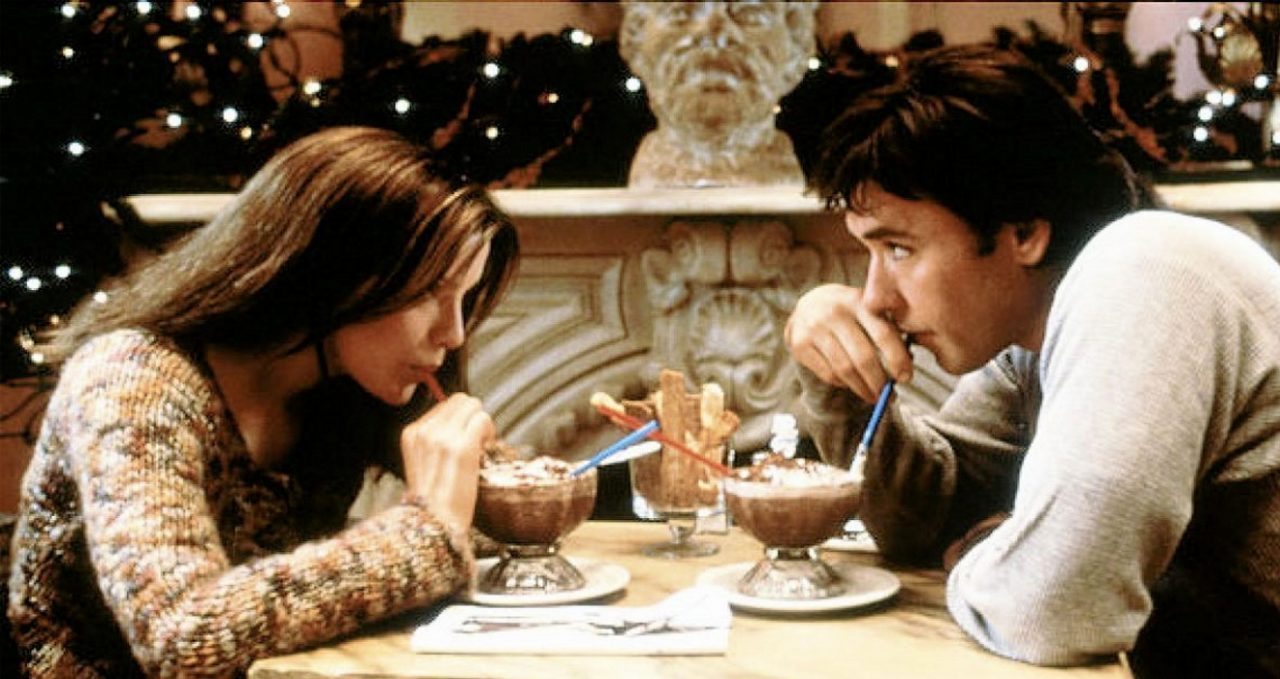
It begins with a classic meet-cute for Jonathan Trager (John Cusack) and Sara Thomas (Kate Beckinsale), both Christmas shoppers after a pair of gloves at Bloomingdale’s. Despite already having partners, there’s an instant connection as they have dessert together at a restaurant called Serendipity 3, and while Jonathan is quick to acknowledge it, Sara is more hesitant and unconvinced that they were “destined” to meet. Using a dollar bill, a book, and an elevator, she decides to test fate a bit too far, and the two potential lovebirds go their separate ways. Fast forward a few years, and both of their relationships have progressed to engagement. Yet, there’s also a gnawing sense of what-could-have-been, and they both decide to search out what might be destiny.

See the source image

No romantic comedy can be successful without two appealing leads, and Cusack and Beckinsale have marvelous chemistry together, that hard-to-define bond that simply either works or doesn’t. It definitely works here, and I could see how their short time together at the beginning could give them pause on whether this stranger might be “the one.” Beckinsale is lovely as always, though for some reason, even with his sweetly obsessive role in Say Anything, neither I nor my VC thought of Cusack as a romantic lead, yet he affably fills the kind of role that could have gone to Tom Hanks a few years earlier.

The dialogue may not be on the level of Nora Ephron’s, but there’s a good number of chuckles along the way as Jonathan and Kate go on a scavenger hunt for clues as to where their mystery lover might be. Eugene Levy puts in an amusingly offbeat side role, while Jeremy Piven and Molly Shannon are perfect companions in trying to keep the two star-crossed lovers relatively grounded. The themes of fate vs. coincidence are nicely laced throughout as well, sometimes for comedy (“Maybe the absence of signs is a sign!”) but also in more thoughtful ways, especially how the audience gets to see connections and near-misses that the characters don’t.

See the source image

I wasn’t sure exactly how much I liked Serendipity at first. One minorly major complaint was in how Jonathan and Sara’s other love interests are treated. Usually, this kind of movie shows that the initial relationship is doomed from the start, making the breakup inevitable, but while that is the case with Sara and her weird fluting boyfriend, Jonathan’s alternative girl is a little too viable a match, making me feel sorry for her by the end. I thought that might be a deal-breaker for me in deciding Serendipity’s ranking, but after seeing it a second time with my VC (who also enjoyed it), it’s a minor complaint in an otherwise satisfying romance. Predictable but very watchable, it falls a bit short of my absolute favorite rom coms, but I’ve come to value any movie that leaves me smiling by the end.

Best line: (Jonathan’s friend Dean) “If you want to improve, be content to be thought foolish and stupid.”


Ranking: List-Worthy


© 2017 S.G. Liput
522 Followers and Counting


A Merry Christmas to all and to all a good night!

It Could Happen to You (1994)

19 Sunday Nov 2017

Posted by sgliput in Movies, Poetry, Reviews, Writing

≈ Leave a comment

Tags

Comedy, Drama, Romance

See the source image

“If I won the lottery,” so many say.
“If I won the lottery,” oh, what a day!
“The things I would buy and the bills I could pay,
The dreams I could fill and the places I’d stay!”
And that’s why so many will plead and will pray
For six random numbers confirming their luck.

If you won the lottery, what would you do?
If you won the lottery, would it change you?
Dreams can be marvelous when they come true
But often result in more pain than you knew.
While waiting for fortune and fame to break through,
Enjoy life a bit before you’re money-struck.
(And then make it count when you do make a buck.)
_________________

MPAA rating: PG

There’s something refreshingly old-fashioned about It Could Happen to You. For a ‘90s rom-com with Nicolas Cage and Bridget Fonda, I can easily envision a 1940s version with Jimmy Stewart and June Allyson. (It’s easy for me to picture them together after The Glenn Miller Story.) There’s a wholesomeness here that you just don’t see nowadays, strengthened by the “Once upon a time” fairy tale narration by Isaac Hayes.

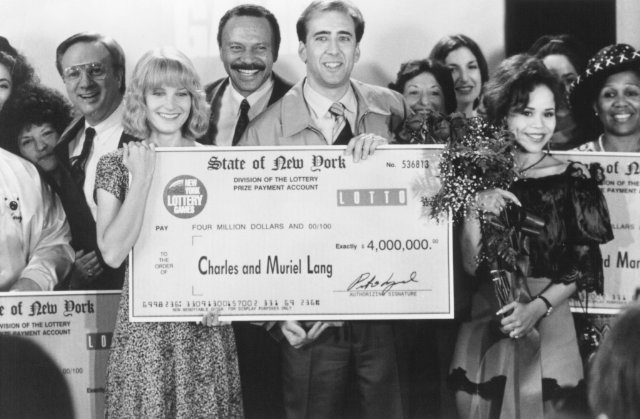
For all his nuttier roles, Cage is admirably down-to-earth as responsible NYPD officer Charlie Lang, who’s beloved of the whole neighborhood except for his critical wife Muriel (Rosie Perez). Strapped for cash at a diner one day and too upstanding to not leave a tip, he promises down-and-out waitress Yvonne (Bridget Fonda) that he’ll split his lottery ticket with her if he wins. Lo and behold, he does, much to Yvonne’s delight and Muriel’s chagrin. Everyone uses their newfound fortune differently, and it doesn’t take long to see Charlie and Yvonne deserve each other far more than greedy Muriel or Yvonne’s also-greedy husband (a barely recognizable Stanley Tucci).

See the source image

Based on and greatly exaggerating a real life story from ten years prior, It Could Happen to You begins with a universal what-if question of winning the lottery and extends that to ask whether Charlie should uphold his promise and how best to wield such riches. We as the audience may not be as humanitarian as Charlie and Yvonne, who freely share their wealth with the less fortunate, but we’re hopefully not as heartless as the scheming Muriel. Most people probably fall somewhere between the two extremes, but seeing them side by side reminds us just how laudable a Charlie or an Yvonne is in this selfish world. Yvonne even points out that, as decent people, they seem to be “freaks” in a place like New York City, but the end suggests that there are far more lovers of decency than the news headlines would have us believe.

Despite having an all-around charm to it, I must admit that It Could Happen to You isn’t very strong in the comedy department. I don’t remember laughing once, though Cage and Fonda largely made up for that with their sweet chemistry. On the other hand, Rosie Perez’s grating voice made her excessively unpleasant, as if the courtroom scenes with her calculating lawyer weren’t enough. Don’t you hate those scenes where some devious lawyer twists the facts to paint the worst possible picture of an innocent defendant who’s too inarticulate to escape being backed into a corner? I do, so the film’s second half was a tad annoying before it bounced back to satisfying.

See the source image

With the classic tune “Young at Heart” sung by both Frank Sinatra and Tony Bennett, the film evokes a vaguely similar tone as Sleepless in Seattle but could have used a more humorous script. Still, lacking much profanity or objectionable content, it’s a reminder that Hollywood once did PG-rated romances just as well as the R-rated ones. Fonda and Cage have rarely been so appealing, and the end is likely to leave you with a smile.

Best line: (Charlie, about Muriel) “It’s like we’re on two different channels now. I’m CNN, and she’s the Home Shopping Network.”


Rank: Honorable Mention


© 2017 S.G. Liput
517 Followers and Counting


No Game No Life: Zero (2017)

15 Sunday Oct 2017

Posted by sgliput in Movies, Poetry, Reviews, Writing

≈ 2 Comments

Tags

Action, Animation, Anime, Drama, Fantasy, Romance, War

Image result for no game no life zero film

Is life not a game
Where there’s no one to blame
If the rules seem unfair
And the ends are the same?

You’re tempted to quit,
Raise your hands in forfeit,
For the game doesn’t care
Where the losers will sit.

But wait! None will mind
The misfits of mankind,
For the arrogant player
Is conveniently blind.

Who heeds the has-been
When his triumphs begin?
Those who haven’t a prayer
In the game can still win.
_____________________

MPAA rating: PG-13

Although I’ve come to really enjoy anime movies over the last several years, I’d never seen an anime film in the theater. Thus, it was a special treat to see No Game No Life: Zero on the big screen, especially with it being such a visually spectacular film. After being impressed by the trailers for months before its July opening in Japan, I thought for sure I’d have to wait perhaps a year before I’d get to see an American release, so I’m grateful to Sentai Filmworks and Fathom Events for distributing the English dub so quickly.

I wouldn’t doubt that non-anime fans have no idea what No Game No Life is. It’s a series of Japanese light novels, but most in the West would know it from the anime adaptation that is surprisingly popular for having only a single twelve-episode season. It centers on the gaming prowess of eighteen-year-old Sora and his eleven-year-old stepsister Shiro, two genius-level shut-ins who are transported by the god of games Tet to a fantasy world where all conflicts are decided by wagering on games of any kind. Humanity (known as Imanity in this world) is the lowest and least powerful of all the fantasy races, so Sora and Shiro take it upon themselves to lift up the humans and conquer the world through the likes of chess, word chain, and first-person shooters. Just as WarGames fans say “Shall we play a game?”, No Game No Life fans say “Aschente,” the mutual pledge before starting a game.

Image result for no game no life zero film

The show itself is played mainly for laughs and to marvel at the Sherlock-level strategy and foresight the siblings command even when at a disadvantage, but it boasts a broader fantasy appeal too, especially with unseen backstory about a horrific war that only ended when Tet became god and made the world game-centric. The characters and situations are quite entertaining for the most part, though No Game No Life isn’t among my favorite series for one simple reason: fan service. There’s plenty of sexual harassment, near-nudity, and risqué humor, mainly from Sora, and while much of it is funny, a lot is just uncomfortable and annoying. Plus, I’m not usually a fan of the kind of anime with silly faces and exaggerated reactions (I know that’s the majority of anime), which is why I lean more toward dramatic series or movies, which are usually easier to take seriously.

That’s why I was so eager to see No Game No Life: Zero, a film centering on an extended flashback of the pre-Tet war, a subject which lends itself to much more drama and emotion, and indeed the film is a complete contrast from the humorous tone of the series. (By the way, the Zero in the title seems to be an example of the naming convention for works that are connected yet somehow separate from an established series [e.g. Fate/Zero, Steins;Gate 0, etc.].) No Game No Life is notable, and sometimes disliked, for its hypersaturated colors, boasting more bright hues than a Crayola factory, and while the movie retains the same style, it limits its palette more to complement the darker storyline. Instead of the shiny fantasy land into which Sora and Shiro are literally dropped, this war-torn world 6000 years earlier is dominated by reddened skies and skin-burning ash, leaving no doubt as to humanity’s desperation, caught in the crossfire between the more powerful magical races. Just look at the contrast between the worlds below, the first from the show, the second from the film.

Image result for no game no life disboard

Image result for no game no life zero movie

Although there’s still a lot left unseen, the film wonderfully expands our knowledge of the war, showing us why the modern-day races still hate each other. Jibril, an immortal angel-like creature called a Flugel, was one of the best characters on the show, conceited and charming at the same time, but her appearance in the film fits the description of an “angel of death,” proving that those memories of slaughter she fondly reminisces about in the show were not exaggerated. The film also intentionally echoes the series with its “new” character designs. Riku, the leader of the remaining humans, looks a lot like Sora, just as Shuvi, an Ex Machina android intent on learning the value of the human heart, looks much like Shiro. (They’re even voiced by the same voice actors in the excellent English dub that I saw.) The main design difference may be that their hair colors are reversed, but these new characters have their own personalities and griefs that set them apart from their later incarnations, and instead of a brother and sister relationship, theirs is destined for love. I will say it takes a certain amount of disconnect from the series to accept a romance between two characters who look like the siblings we know, but the film spends a good amount of time developing their relationship, even if it starts on a very awkward note.

The trailers mainly focused on the romance angle and an epic fight between Shuvi and Jibril, but I was glad to see that the movie does explain the war’s formerly vague resolution. Instead of the explicit games of the series, the game concept, along with humanity’s struggle, becomes more of a running theme as the characters engage in a literal game of “Global Thermonuclear War.” Some have complained about the pacing of the movie’s final third, but that’s where I thought it truly found its stride and consistently impressed. I loved the way victory is snatched from apparent defeat, utilizing the fact that the Ex Machina are a lot like the Borg from Star Trek, and the sad circumstances became sublimely bittersweet by the end. It spoke to how the most important people in history often remain unsung heroes, their names sometimes only remembered by God.

Image result for no game no life zero

No Game No Life: Zero was a pleasure to watch in the theater, especially because it elevated the series it was based on, focusing on the fantasy with just a taste of the original’s humor and chucking the unnecessary fan service. (There’s still some stylized nudity, but it’s more forgivable here.) The animation is particularly stunning, especially during that epic battle I mentioned, and the score beautifully enhanced the emotions of each scene, with the lovely ending theme “There Is a Reason” earning entrance into my End Credits Song Hall of Fame.  By the end, as the film tied itself directly into where the series left off, I even found myself feeling surprisingly nostalgic and fond for a show I thought I only moderately liked. Many think this film is a prelude for a potential second season, and the movie will certainly strengthen that hope. No Game No Life may be a series I wouldn’t quite recommend to everyone, but, with the right background information, this movie is. (By the way, I’ve included the first teaser trailer down below to give a taste of the awesome animation and music.)

Best line: (Riku) “Yes, humans are fools, but it takes a great fool to not let that foolishness get themselves killed.”

Rank: List Runner-Up

© 2017 S.G. Liput
516 Followers and Counting

← Older posts
Newer posts →

Recent Posts

  • We Didn’t Start 2025 (Recap)
  • NaPoWriMo 2025 Recap (Finally)
  • Sonic the Hedgehog 3 (2024)
  • It Happened One Night (1934)
  • Spellbound (2024)

Recent Comments

associatesofshellymann's avatarassociatesofshellyma… on My Top Twelve La La La So…
Kit's avatarKit Nichols on Bonnie and Clyde (1967)
lifelessons's avatarlifelessons on Look Back (2024)
Carol Jackson's avatarCarol Jackson on The Thief of Bagdad (1940…
Stephen's avatarStephen on Love Story (1970)

Archives

  • January 2026
  • December 2025
  • May 2025
  • April 2025
  • March 2025
  • February 2025
  • January 2025
  • December 2024
  • May 2024
  • April 2024
  • March 2024
  • February 2024
  • January 2024
  • December 2023
  • November 2023
  • October 2023
  • September 2023
  • July 2023
  • June 2023
  • May 2023
  • April 2023
  • March 2023
  • February 2023
  • January 2023
  • December 2022
  • November 2022
  • October 2022
  • September 2022
  • August 2022
  • July 2022
  • June 2022
  • May 2022
  • April 2022
  • March 2022
  • February 2022
  • January 2022
  • December 2021
  • November 2021
  • October 2021
  • September 2021
  • August 2021
  • July 2021
  • June 2021
  • May 2021
  • April 2021
  • March 2021
  • February 2021
  • January 2021
  • December 2020
  • November 2020
  • October 2020
  • September 2020
  • August 2020
  • July 2020
  • June 2020
  • May 2020
  • April 2020
  • March 2020
  • February 2020
  • January 2020
  • December 2019
  • November 2019
  • October 2019
  • September 2019
  • August 2019
  • July 2019
  • June 2019
  • May 2019
  • April 2019
  • March 2019
  • February 2019
  • January 2019
  • December 2018
  • November 2018
  • October 2018
  • September 2018
  • August 2018
  • July 2018
  • June 2018
  • May 2018
  • April 2018
  • March 2018
  • February 2018
  • January 2018
  • December 2017
  • November 2017
  • October 2017
  • September 2017
  • August 2017
  • July 2017
  • June 2017
  • May 2017
  • April 2017
  • March 2017
  • February 2017
  • January 2017
  • December 2016
  • November 2016
  • October 2016
  • September 2016
  • August 2016
  • July 2016
  • June 2016
  • May 2016
  • April 2016
  • March 2016
  • February 2016
  • January 2016
  • December 2015
  • November 2015
  • October 2015
  • September 2015
  • August 2015
  • July 2015
  • June 2015
  • May 2015
  • April 2015
  • March 2015
  • February 2015
  • January 2015
  • December 2014
  • November 2014
  • October 2014
  • September 2014
  • August 2014
  • July 2014
  • June 2014
  • May 2014
  • April 2014
  • March 2014
  • February 2014
  • January 2014
  • December 2013

Categories

  • Blindspot
  • Blogathon
  • Christian
  • Movies
  • Music
  • NaPoWriMo
  • Poetry
  • Reviews
  • TV
  • Writing

Meta

  • Create account
  • Log in
  • Entries feed
  • Comments feed
  • WordPress.com

Recent Posts

  • We Didn’t Start 2025 (Recap)
  • NaPoWriMo 2025 Recap (Finally)
  • Sonic the Hedgehog 3 (2024)
  • It Happened One Night (1934)
  • Spellbound (2024)

Recent Comments

associatesofshellymann's avatarassociatesofshellyma… on My Top Twelve La La La So…
Kit's avatarKit Nichols on Bonnie and Clyde (1967)
lifelessons's avatarlifelessons on Look Back (2024)
Carol Jackson's avatarCarol Jackson on The Thief of Bagdad (1940…
Stephen's avatarStephen on Love Story (1970)

Archives

  • January 2026
  • December 2025
  • May 2025
  • April 2025
  • March 2025
  • February 2025
  • January 2025
  • December 2024
  • May 2024
  • April 2024
  • March 2024
  • February 2024
  • January 2024
  • December 2023
  • November 2023
  • October 2023
  • September 2023
  • July 2023
  • June 2023
  • May 2023
  • April 2023
  • March 2023
  • February 2023
  • January 2023
  • December 2022
  • November 2022
  • October 2022
  • September 2022
  • August 2022
  • July 2022
  • June 2022
  • May 2022
  • April 2022
  • March 2022
  • February 2022
  • January 2022
  • December 2021
  • November 2021
  • October 2021
  • September 2021
  • August 2021
  • July 2021
  • June 2021
  • May 2021
  • April 2021
  • March 2021
  • February 2021
  • January 2021
  • December 2020
  • November 2020
  • October 2020
  • September 2020
  • August 2020
  • July 2020
  • June 2020
  • May 2020
  • April 2020
  • March 2020
  • February 2020
  • January 2020
  • December 2019
  • November 2019
  • October 2019
  • September 2019
  • August 2019
  • July 2019
  • June 2019
  • May 2019
  • April 2019
  • March 2019
  • February 2019
  • January 2019
  • December 2018
  • November 2018
  • October 2018
  • September 2018
  • August 2018
  • July 2018
  • June 2018
  • May 2018
  • April 2018
  • March 2018
  • February 2018
  • January 2018
  • December 2017
  • November 2017
  • October 2017
  • September 2017
  • August 2017
  • July 2017
  • June 2017
  • May 2017
  • April 2017
  • March 2017
  • February 2017
  • January 2017
  • December 2016
  • November 2016
  • October 2016
  • September 2016
  • August 2016
  • July 2016
  • June 2016
  • May 2016
  • April 2016
  • March 2016
  • February 2016
  • January 2016
  • December 2015
  • November 2015
  • October 2015
  • September 2015
  • August 2015
  • July 2015
  • June 2015
  • May 2015
  • April 2015
  • March 2015
  • February 2015
  • January 2015
  • December 2014
  • November 2014
  • October 2014
  • September 2014
  • August 2014
  • July 2014
  • June 2014
  • May 2014
  • April 2014
  • March 2014
  • February 2014
  • January 2014
  • December 2013

Categories

  • Blindspot
  • Blogathon
  • Christian
  • Movies
  • Music
  • NaPoWriMo
  • Poetry
  • Reviews
  • TV
  • Writing

Meta

  • Create account
  • Log in
  • Entries feed
  • Comments feed
  • WordPress.com

Blog at WordPress.com.

  • Subscribe Subscribed
    • Rhyme and Reason
    • Join 814 other subscribers
    • Already have a WordPress.com account? Log in now.
    • Rhyme and Reason
    • Subscribe Subscribed
    • Sign up
    • Log in
    • Report this content
    • View site in Reader
    • Manage subscriptions
    • Collapse this bar