• Home
  • About Me
  • The List
  • THE LIST (2016 Update)
  • THE LIST (2017 Update)
  • THE LIST (2018 Update)
  • THE LIST (2019 Update)
  • THE LIST (2020 Update)
  • THE LIST (2021 Update)
  • THE LIST (2022 Update)
  • Top Twelves and More
  • The End Credits Song Hall of Fame

Rhyme and Reason

~ Poetry Meets Film Reviews

Rhyme and Reason

Tag Archives: History

In This Corner of the World (2016)

24 Tuesday Apr 2018

Posted by sgliput in Movies, NaPoWriMo, Poetry, Reviews, Writing

≈ 5 Comments

Tags

Animation, Anime, Drama, Foreign, History, Romance, War

See the source image

(Today’s NaPoWriMo prompt was for a hopeful elegy, so I wrote mine about the mourning of a way of life.)


What’s almost as sad as a person’s death
Is the death of the way that they lived.

They once woke up, knowing what their day
Would likely hold,
And they’d watch unfold
A normal we’d say
Was strange and old,
But they took pride
And personified
A life that bloomed till the world went cold.

Disasters sudden or a cancer slow
Or new breakthroughs
Would cause them to lose
What was status quo.
They could not refuse,
For who can tell
A dead bloom, “Get well,”
When its winter’s come and it’s paid its dues?

But people live on, like roots that remain
For new blooms to rise
Once the former dies
And forgets the pain
Of its sad demise.
Our ways of life fade
Daily and are remade.
Remember that grief is short-lived for the wise.
___________________

MPAA rating: PG-13

And the number of award-worthy animated films of 2016 just keeps on growing. When I heard that a crowdfunded project called In This Corner of the World had beaten out Your Name and A Silent Voice for Japan’s Best Animated Feature award, I rolled my eyes that anything could top those two emotional hits. I still would have preferred one of them to win, but I can now at least see why In This Corner of the World would deserve to win. (It’s also further proof that the American Academy can’t seem to recognize an award-worthy animation if it hails from another country.)

Set before, during, and after the Hiroshima bombing of August 6, 1945, this Japanese period drama has a slice-of-life charm and simplicity that endures the ever-looming shadow of death. In many ways, it is reminiscent of Grave of the Fireflies (a painful favorite of mine), yet while that film is essentially grief and desperation from start to finish, In This Corner of the World uses its long runtime to show the daily life of its characters and how the approaching war changed that way of life for the sake of survival.

See the source image

It begins with the childhood of Suzu Urano, an often absent-minded artist who grows up in an idyllic seaside town close to Hiroshima. After receiving an offer of marriage from a man she doesn’t know, she hesitantly leaves her own family to marry into the Hojo family in Kure, a Navy dockyard about an hour away by train. There is a wealth of humorous vignettes as Suzu adjusts to her new surrounding and family members, including a short-tempered sister-in-law and her daughter, and many aspects of their daily life are steeped in Japanese culture, from the fashioning of kimonos and later pants to the preparation of traditional field-to-table meals, which require resourcefulness once wartime rationing is implemented. From amusing asides and sweet romantic moments, the tone gets more and more serious and even dire as the war gets closer, the bombing raids become more frequent, and we the audience wait for the inevitable bomb to drop, wondering how it will affect Suzu and her loved ones.

The abrupt editing of all those vignettes does contribute to a sometimes unfocused storyline that puts certain details in doubt, and a few forays into Suzu’s imagination left me confused as to whether surrounding scenes were supposed to be real or not. Yet such negatives don’t detract too much from the humane power of the whole. Perceptive details and lovely snapshots abound, notably a post-war scene where the town’s lamps are uncovered (no longer in fear of air raids) and one by one shine into the night. The animation is not your typical anime style, with more of a gentle, hand-drawn impressionism that can be reminiscent of either a comic strip or a museum piece, depending on the tone of the scene. It’s surprisingly effective in its consistency depicting both Suzu’s carefree early life and the grief-stricken toll of war, and the filmmakers put great and laudable care into re-creating the pre-bomb city of Hiroshima accurately.

See the source image

Once again, I’m torn on how to rank what is clearly a great film, trying to judge my personal opinion of it. It’s absolutely worthy of Japan’s top animation prize, and I can see why they would opt for the more historically significant choice, even over the box-office juggernaut that was Your Name. Despite its winsome animation and gradually developed poignancy, it didn’t bring me close to tears like Your Name or A Silent Voice or Grave of the Fireflies, which matters to me as a way of measuring the emotional impact. Even so, I feel like I’m growing fonder of this film the more I think about it. Perhaps its ultimate ranking is a wait-and-see. It requires some patience, but I highly recommend In This Corner of the World for its touching civilian-level view of World War II.

Best line: (Suzu, comparing her current life to a dream) “I don’t want to wake up because I’m happy to be who I am today.”   (Shusaku, her husband) “I see. The past and the paths we did not choose, they’re like a dream.”


Rank: List Runner-Up (for now)


© 2018 S.G. Liput
564 Followers and Counting
 

Darkest Hour (2017)

20 Friday Apr 2018

Posted by sgliput in Movies, NaPoWriMo, Poetry, Reviews, Writing

≈ 1 Comment

Tags

Drama, History, Triple A, War

See the source image

(Today’s NaPoWriMo prompt was for a poem featuring rebellion, so I took inspiration from Winston Churchill’s tenacity in resisting the German onslaught in World War II.)


An animal fights never so hard
As when its den, its nest, its yard,
Its hole or burrow, lair or hollow
Is assaulted, threatened, scarred.
It’s then they most are on their guard.

If they defend their home so well,
Then we as humans must rebel
Against invasion, no persuasion
To assuage our raising hell
To screen and shield our citadel.

The brightest day requires no grit
When we are free to relish it.
The darkest hour tests our power
And our backbone not to quit,
For rebel lairs dare not submit.
____________________

MPAA rating: PG-13

Were you expecting the 2011 alien invasion movie set in Russia? If so, psych! Get with the times because I already reviewed that two days ago (and it’s The Darkest Hour, by the way). No, this is last year’s Winston Churchill biopic, which is more likely the film people will associate with the words Darkest Hour (no The), not only because it’s more recent but because it’s a fantastic movie.

See the source image

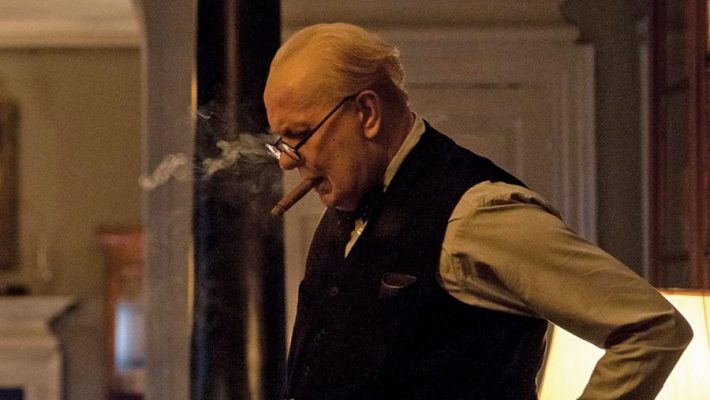
While Christopher Nolan’s Dunkirk depicted the famous rescue of the British army across the English Channel and Their Finest used it as propaganda back on the home front, Darkest Hour looks at the same events from the perspective of the leadership and politicians. An English political drama could very easily have made the proceedings eminently dry and boring, but that’s hardly the case when there’s an actor of Gary Oldman’s caliber in top form. His Oscar-winning performance as Winston Churchill is exceptional, one of those roles of a lifetime that he truly melts into, so that he’s hardly distinguishable from the real-life figure he plays, thanks also to the Oscar-winning makeup. From his droll habits and bearing to his brilliantly delivered speeches, it’s no wonder critics and audiences alike were saying, “Just give him the Oscar he so clearly deserves.”

Even the most acclaimed biopics so often leave me with a lessened opinion of their subjects, but Darkest Hour manages to show Churchill “warts and all,” so to speak, and still leave no doubt as to why he is considered such a great leader. In his very first scene, he’s at his worst, roaring at a fresh-faced, new secretary (Lily James) over minor annoyances, only to be calmed down by his loving and encouraging wife (Kristin Scott Thomas). The rest of the film serves to soften that intimidating figure we first see, as he buckles under the weight of the wartime decisions he faces and stands resolute in the face of overwhelming odds.

See the source image

It was interesting to see how naively Churchill’s fellow leaders believed they could sue for peace even while war and destruction were upon them, and I was surprised at how unpopular Churchill was among his own Conservative party. Did the way he was described as someone with one hundred ideas a day, four of them good and the rest dangerous, remind anyone else of Donald Trump? Honestly, there were several scenes where it was as if they were describing the sitting U.S. President. “One never knows what’s going to come out of your mouth next. Something that’ll flatter, something that’ll wound,” says King George VI, played by Ben Mendelsohn (since I suppose Colin Firth was busy). Considering Churchill’s dictation habits, I can’t help but wonder if a modern Churchill would be tweeting in the privy as well.

Beyond the outstanding acting, the rest of the production is equally praiseworthy, such as the realistic sets and the way the dates change onscreen to make clear that events are happening within mere days of each other. Joe Wright’s direction is elegant but straightforward, and the script intelligent and witty in equal measure, providing welcome humor to lighten various scenes while also stressing the desperation of Britain’s situation. There’s some disappointment when you realize a great scene or two was fabricated, such as a voice-of-the-people sequence in the London subway, but the high degree of historical accuracy is only part of Darkest Hour’s strength.

See the source image

It’s a testament to the power of oratory and a portrait of a great man under fire, not covering his whole life but the tension-filled days and weeks that helped define the course of his life and of the world. I’m tempted to rank it as a tie with The Iron Lady, another well-acted film about a great British prime minister that won its lead an Oscar, but I think Darkest Hour is a tad stronger overall and indeed one of the best films of 2017.

Best line (there are so many): (Churchill) “Those who never change their mind never change anything.”


Rank: List-Worthy


© 2018 S.G. Liput
562 Followers and Counting


The Man Who Invented Christmas (2017)

10 Tuesday Apr 2018

Posted by sgliput in Movies, NaPoWriMo, Poetry, Reviews, Writing

≈ Leave a comment

Tags

Biopic, Christmas, Comedy, Drama, Family, History

See the source image

(Today’s NaPoWriMo prompt was for a poem featuring simultaneity, where more than one thing happens at the same time, a concept I applied to a writer’s creative process.)


The writer sat in the market square,
But that’s not all he did.
He bade “Good day” to Mrs. Wise
And fed the pigeons gathered there
And made a cat jump with surprise
And watched the vendors sell their wares.
To outward eyes,
He just sat there,
But that’s not all he did.

The mind inside the writer’s head
Was hard at work within,
Populating worlds unwritten,
Raising heroes from the dead,
Lads in love and lasses smitten,
Tales of kings that none had read,
Smiles to fit in,
Tears to shed,
And all unseen within.

So though he seemed to waste the day,
Just sitting as he did,
The writer had done no such thing.
He watched the world at work and play
And gleaned its ample offering
To shape what only he could say.
His loitering
Seemed like delay,
But that’s not all he did.
__________________

MPAA rating: PG

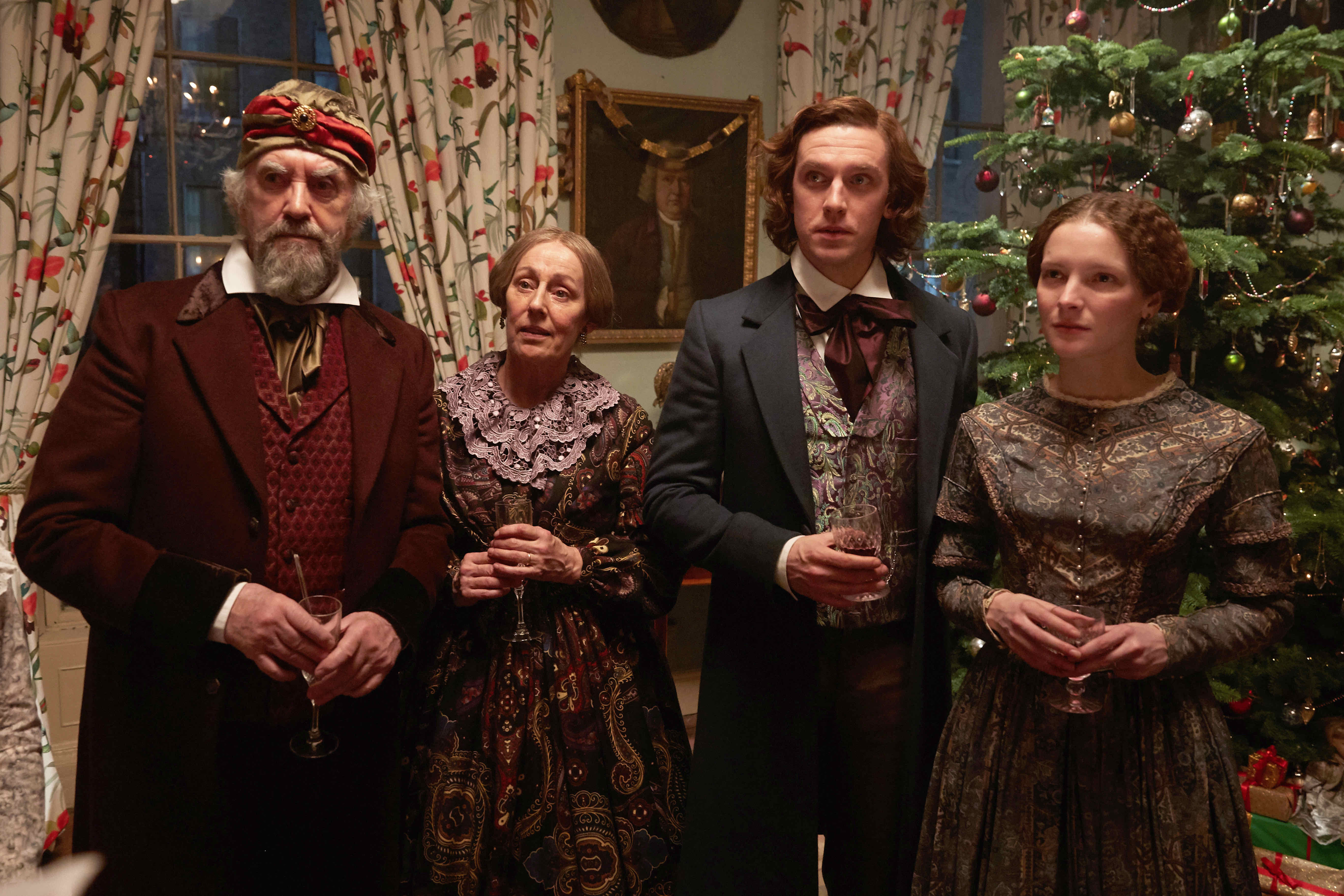
Considering how much I love A Christmas Carol and movies about literature, I was excited for The Man Who Invented Christmas, a yuletide biopic about Charles Dickens’ tumultuous writing of his most famous work. While I liked it quite a bit, I wonder if my hopes were too high since it wasn’t the instant classic I had thought it might be. I can’t say I was disappointed since it lived up to its trailer at least, but it didn’t surpass any of my expectations either.

See the source image

Dickens, played by Dan Stevens, hits a wall when his fame and fortune are diminished by three commercial flops in a row. After contending with writer’s block, the sight of a rich man’s funeral gives him the seed of an idea, and what the world will eventually know as A Christmas Carol speedily develops in his mind as he rushes to get it written and printed in time for Christmas sales. Along the way, he contends with his spendthrift father (Jonathan Pryce), his own past trauma, and his characters mentally coming to life, including a critical Scrooge (Christopher Plummer).

I must say that Stevens is outstanding, playing Dickens with just the right amount of ego and eccentricity, the way we imagine many creative geniuses might have been. When he entertains his children with random voices, I could imagine Robin Williams playing this role thirty years ago. Likewise, I loved the visualization of his creative process, as he interacts with characters only he can see, only to have them vanish when he is all-too-often interrupted. The story also provides a glimpse into Dickens’ difficult childhood, offering insights into what made him the ambitious but compassionate man he was, and it was interesting to see how his original plan for an unhappy ending yielded to others’ hopes and beliefs that even the worst men can change.See the source imageSo, yes, I did enjoy it, including its lesson of forgiveness and the reminder of how Dickens shaped the Christmas holiday we know today, which was not as vigorously celebrated back then. I suppose the weakest aspect was Pryce as Dickens’ father John, whose good nature is undermined by drunkenness and financial waste as he mooches off his son. Despite John’s good intentions, I didn’t blame Charles much for snapping at him at one point, and it didn’t seem entirely right that Charles is in the wrong and apologizes with little change seen on his father’s part.
Despite that objection, I’ll still gladly watch The Man Who Invented Christmas if it comes on TV around Christmastime to enjoy its well-acted, wholesome glimpse into the mind of a great author. I’m just a little sad that there was something lacking, which will make me more likely to just watch some version of A Christmas Carol instead of the story behind it.


Rank: List Runner-Up


© 2018 S.G. Liput
552 Followers and Counting


The Greatest Showman (2017)

01 Sunday Apr 2018

Posted by sgliput in Movies, NaPoWriMo, Poetry, Reviews, Writing

≈ 9 Comments

Tags

Biopic, Drama, Family, History, Musical, Romance

See the source image

(Today’s NaPoWriMo prompt was for a poem about a secret shame or secret pleasure, and this recent film’s subject seemed to fit the bill perfectly.)

 
I know I shouldn’t like it. It’s offensive and uncouth,
So say the few who rule opinion rather than the truth.
It’s liable to rock the boat that should be left alone
And make me think the world has wider interests than my own.

It’s odd and loud and so lowbrow that it will never be
Completely free of grievances and animosity,
And those who claim approval for a thing condemned so far
Will lose esteem as others deem them equally bizarre.

I know I shouldn’t like it, based on cruel analysis,
The kind that glares and does not care how personal joy is.
But if I say I like it, surely I won’t be alone;
There’s always some who won’t succumb to sanctions set in stone.
__________________

MPAA rating: PG

I love musicals, and I don’t really understand people who don’t. When catchy music, a compelling story, and strong performances combine, it’s sheer magic, and even one or two out of the three can still be darn entertaining. I had high hopes for The Greatest Showman, and this is one of those rare cases where a movie met and exceeded my expectations.

See the source image

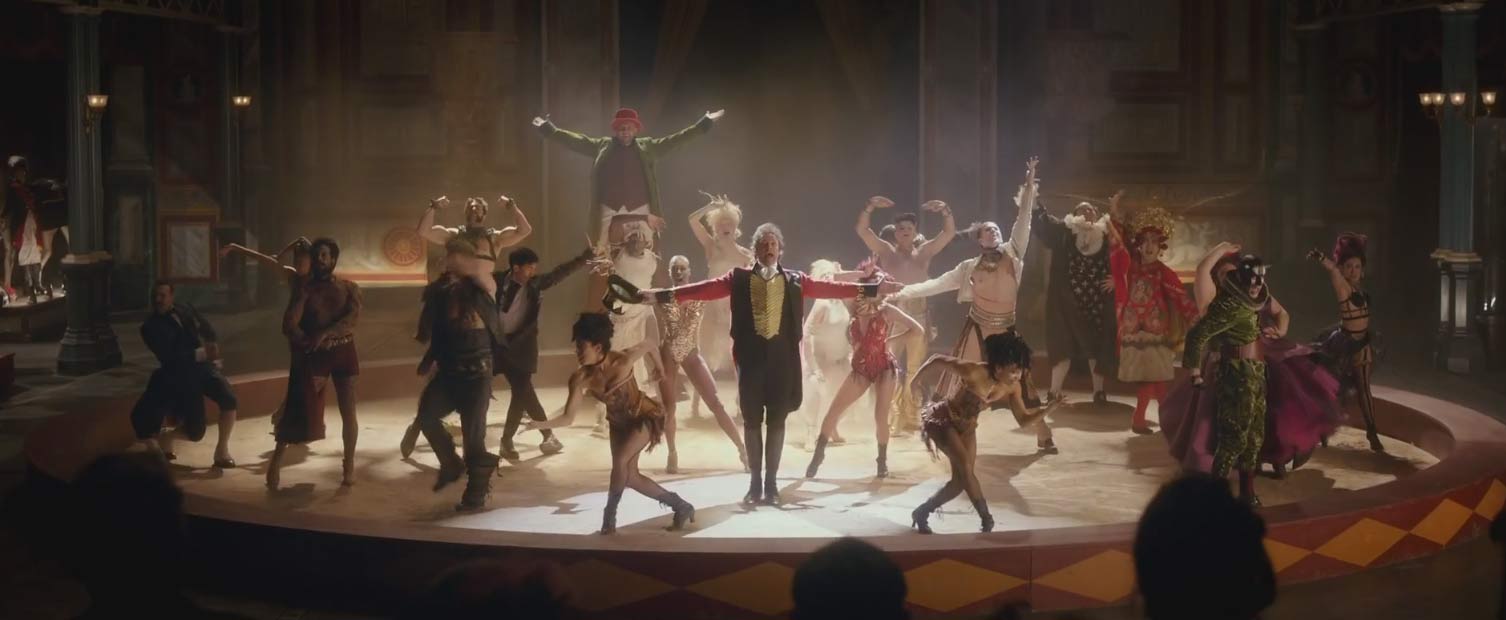
The film tells the fictionalized story of P.T. Barnum (Jackman), from his humble beginnings as a tailor’s son to his romance with the well-to-do Charity Hallett (Michelle Williams) to his risky efforts to open a museum of the odd and unusual. Barnum’s ploys draw the ire of savage critics, and he endeavors to appeal to both the common man with his circus and the judgmental elite with a new right-hand man (Zac Efron) and a European opera star (Rebecca Ferguson).

I have no idea how true-to-life the film’s events are, and my guess would be probably not very. I’ve always thought of Barnum as an unabashed huckster taking advantage of people’s willingness to be fooled, and that’s certainly part of Jackman’s character. Yet he’s also depicted here as a devoted family man, and his profiting off of his circus of “freaks” also resulted in a newfound confidence and home for those who society had rejected. Jackman’s Barnum strikes a good balance between user and empowerer, and the film is wholly supportive of him and his sideshow, so engagingly in fact that its historical accuracy (or lack thereof) doesn’t detract one bit from the entertainment value.

See the source image

Having loved both Les Miserables and High School Musical, it was wonderful seeing Jackman and Efron back in musical mode, joined by Williams and Efron’s fellow Disney Channel alum Zendaya as their respective love interests. Yet as good as its stars are, The Greatest Showman soars on the strength of its music, courtesy of Broadway duo Pasek and Paul, who just won an Oscar last year for La La Land’s lyrics and a Grammy and Tony for the show Dear Evan Hansen. I’d already heard the biggest numbers “The Greatest Show” and “This Is Me” (Golden Globe winner and Oscar nominee for Best Song), but I wanted to experience the rest of the soundtrack firsthand as part of the movie. Those two are wonderful with “The Greatest Show” (uninterrupted) probably being my favorite, but the whole soundtrack is electric. I was dancing in my seat during “Come Alive” and “From Now On,” and the exuberant choreography only added to the infectious joy. I could recognize first-time director Michael Gracey’s experience with music videos, since even a barroom conversation between Jackman and Efron is given rare visual flair, though the reliance on CGI at times does crack the illusion a little.

It seems strangely fitting that The Greatest Showman’s real-life success mirrors its subject. Many critics have complained about inspirational fakery, and it currently has an inexplicable 55% on Rotten Tomatoes. Audiences, on the other hand, know a good thing when they see it, and as Barnum himself says, they don’t care if they’re being fooled when they’re happy. It’s easy to criticize something as shallow, but does it really matter if you genuinely enjoyed it? There’s such a thing as a guilty pleasure, but I feel no guilt for loving The Greatest Showman in all its inspirational, misfit-embracing, crowd-pleasing glory. It’s a wholesome spectacle I can’t wait to see again and, after the acclaim of last year’s La La Land, hopefully a sign that original movie musicals are becoming popular again. (Can someone please adapt Wicked or Hamilton now?)

See the source image

Best line: (Barnum) “Hyperbole isn’t the worst crime. Men suffer more from imagining too little than too much.”


Rank: Top 100-Worthy


© 2018 S.G. Liput
547 Followers and Counting

A very Happy Easter to everyone!


Testament of Youth (2014)

17 Wednesday Jan 2018

Posted by sgliput in Movies, Poetry, Reviews, Writing

≈ Leave a comment

Tags

Biopic, Drama, History, Romance, War

See the source image

How keenly and eagerly do wars begin,
When winners and losers have yet to be picked,
Before its true horror and hardship set in
And man is reminded how great is its sin!
The world returns ever, a careless addict,
To battle and blood, as the wise can predict.

Each new generation discovers firsthand
The truth only mastered when foolishness dies.
It cannot be scheduled; it cannot be planned;
It comes only when the naïve understand
That war is a futile and grave exercise.
Then do the innocent fools become wise.
___________________

MPAA rating: PG-13

Alicia Vikander broke onto most people’s radars with 2015’s Ex Machina and her Oscar-winning role in The Danish Girl, but Testament of Youth not long before them should not be forgotten. Based on the same-titled World War I memoir by Vera Brittain, Testament of Youth features the kind of lead performance that makes one wonder why it didn’t get more awards attention. As Brittain herself, Vikander plays an early feminist whose academic dreams are dashed by the onset of war and its unforeseen tragedies.

See the source image

I’d never heard of Vera Brittain or her apparently famous memoir before this movie, but that’s why I love well-done adaptations that introduce me to new and worthwhile stories. Early on, Brittain is a relatively carefree girl whose greatest challenge is convincing her father to let her go to Oxford. Thanks to the intervention of her brother Edward (Taron Edgerton in one of his first roles) and a sympathetic professor (Anna Chancellor), she is able to attend her dream school, right as she’s also finding love with one of Edward’s friends, Roland (Kit Harington of Game of Thrones fame). Before long, though, the Great War begins, and when all her male friends enlist, Vera’s priorities shift as well, compelling her to join the war effort as a nurse, first on the home front and later in France.

Testament of Youth may seem like your typical beautifully mounted British period piece, and if you don’t like beautifully mounted British period pieces, you might find it boring. Yet the cinematography is sumptuous and the acting of everyone involved stellar, with Vikander in particular embodying the wartime transformation of the nation as she develops from a naïve schoolgirl who advocates her brother joining the military to a war-weary mourner reeling from all that was lost. There are times when it seems to be treading familiar ground, such as a shot lifted straight from Gone with the Wind, but a scene where Vera declares to a vengeful crowd the best way to respond to the defeated Germans is especially powerful. While the end could have been depressing as heck, there are glimmers of hope as she discovers how to move beyond misfortune.

See the source image

As far as style, the closest thing I can compare Testament of Youth to is the John Keats biopic Bright Star, which also imbues a tragic true romance with a poignant beauty and literary passion. The anti-war themes center on loss and empathy, which is strongly endorsed through Brittain’s nurse experiences, as when she cares for both British and German soldiers as if they were her own brother or fiancé. Whether you’ve heard of it or not, Testament of Youth is a prime choice the next time you’re in the mood for a beautifully mounted British period piece.

Best line: (Vera’s college partner Winifred Holtby) “All of us are surrounded by ghosts. Now we need to learn how to live with them.”


Rank: List Runner-Up


© 2018 S.G. Liput
530 Followers and Counting


2017 Blindspot Pick #11: Giovanni’s Island (2014)

01 Friday Dec 2017

Posted by sgliput in Blindspot, Movies, Poetry, Reviews, Writing

≈ Leave a comment

Tags

Animation, Anime, Drama, History

See the source image

‘Tis futile to wish our lives never to change,
To stay in the bliss of a child’s outlook.
We’re always disturbed by the new and the strange,
Priorities puzzled as they rearrange,
Things hardly confined to the page of a book.

The friends that we make and the loved ones we lose
Accompany us just as far as they can.
And when we have finally paid all our dues
And traveled the path that each person must choose,
Perhaps we will see ‘twas all part of a plan.
____________________

MPAA rating: Not Rated (probably PG)

Boy, just like with Donnie Darko, finding a copy of this film for my Blindspot was harder than I thought, hence why I’m a day late for this November pick. I’m always on the lookout for emotional anime films, and Giovanni’s Island promised to have something of the tragic quality of Grave of the Fireflies, which still makes me cry every time I see it. Giovanni’s Island undoubtedly borrows from the 1988 film and actually reminded me of several others as well, from the Russian exile of Doctor Zhivago to the childish friendship disrupted by war of The Boy in the Striped Pajamas. It also draws explicit inspiration from the Japanese novel Night on the Galactic Railroad, which is apparently a great classic in Japan, though it’s not surprising if most are unfamiliar with it. Some knowledge of that story might help one’s understanding of certain scenes in the movie. (It does have an anime adaptation too, which is dream-like, very slow, full of symbolism and Christian references, and might have vaguely influenced The Polar Express.)

See the source image

The first parallel to Night on the Galactic Railroad is the names of the two brothers who live in a small fishing village in the far northern Japanese islands toward the close of World War II. Junpei (nicknamed Giovanni) and Kanta (nicknamed Campanella) draw their Italian-sounding names from the main characters of the book, a favorite in their family, which ignites their fascination with both the stars and trains. While the villagers expect the Americans to take control after the war is lost, it’s instead the Soviets, who waste no time in establishing themselves and commandeering the Japanese homes and school building. Despite being driven from their house, young Giovanni and Campanella befriend a Russian girl named Tanya, but the conflict and stresses of the adults around them soon strain their relationship and send the brothers away from their beloved island into the unknown.

Despite being produced by Production I.G., the same studio behind Ghost in the Shell, the animation in Giovanni’s Island is different from their other works. The sketched environments and setting details are masterful, and one scene of a front-lit toy locomotive passing between two rooms showed an amazing attention to light and shadow. The character animation, on the other hand, wasn’t bad, but I found it somewhat distracting at times. Despite all anime sharing similarities of style, character design can vary significantly, and it’s a distinction that can be very subjective with its appeal. It’s not as if it was ugly (like One Piece, in my opinion), but the look of the characters sometimes brought me out of the story, though I did get used to it with time.

See the source image

There’s a lot to enjoy about Giovanni’s Island, particularly scenes designed to tug at the heartstrings. In an early scene, the school building is divided between the Russian and Japanese children, and each classroom sings their own national songs to try to drown the other out, while each room later sings the other’s song. Similarly, Giovanni becomes quite close to Tanya, and though the language barrier is barely addressed, it was encouraging to remember that children’s interactions are so much simpler than adults harboring resentment and hate. Another touchstone seemed to be Empire of the Sun, as the two siblings are soon separated from their father and cast into the harsh post-war realities of internment camps, all seen through the eyes of a child. The parallels to Grave of the Fireflies are blatant toward the tearful end, though there are differences, such as the fact that Giovanni and Campanella are never completely abandoned, at least accompanied by their teacher and uncle most of the way. Despite the similarities, it’s not a complete ripoff since the familiarly tragic end also draws from Night on the Galactic Railroad, along with several wondrous dream sequences that recreate scenes from the book.

Giovanni’s Island has plenty of moving drama, some of it probably seen before, but it presents it with warmth and sincerity, as well as grief. It didn’t make me cry like Grave of the Fireflies, but the final scene brought me close. I’m just a sucker for those kinds of poignant death-transcending reunion scenes, so it ended on a high note for me. I also enjoyed a repeated musical cue I recognized as “Those Were the Days,” a Mary Hopkins hit from the ‘60s, which recycled the tune of a traditional Russian folk song, making its use in the film more authentic. A somber tale of loss and survival that never becomes objectionable, Giovanni’s Island may combine elements from better films, but they’re combined beautifully nonetheless.

See the source image

Also, you can click here for a somewhat less rosy review from Rachel of Reviewing All 56 Disney Animated Films and More!, who also had this as her November Blindspot.

Best line:  (Giovanni, when asked what Night on the Galactic Railroad is about) “When people die, they rise up into the heavens and become stars in the night sky. Those countless stars fill the sky, shining brightly and eternally, and we live our lives down here, basking in their light. That’s what the story is about.”


Rank: List Runner-Up


© 2017 S.G. Liput
517 Followers and Counting


The Zookeeper’s Wife (2017)

17 Friday Nov 2017

Posted by sgliput in Movies, Poetry, Reviews, Writing

≈ Leave a comment

Tags

Biopic, Drama, History

Image result for the zookeeper's wife

Animals hold no ill will
Like we humans when we kill.
Animals cannot relate
To we who brand and scorn and hate.

Life is simple in their eyes,
Where we confuse and compromise,
Yet, when all the world grows cruel,
Survival is our common rule.

Man can treat his fellow man
Far worse than other creatures can.
Likewise, mankind stands apart
In sharing greater depths of heart.
______________________

MPAA rating: PG-13

There are some movies that, no matter how well made they are, just tend to fall into the second tier of their genre. The Zookeeper’s Wife is one such film, yet another historical drama based on true events of endangered Europeans dealing with the Nazi occupation and risking all to help Jews during the Holocaust. Such films are guaranteed to be emotional and impactful as they strive to emulate Schindler’s List, but although I haven’t been able to bring myself to watch Schindler’s List for comparison, I can tell that The Zookeeper’s Wife likely won’t win any Oscars, if its March release date wasn’t already a hint.

Image result for the zookeeper's wife

Jessica Chastain as Antonina Żabiński is the titular wife to Johan Heldenbergh’s zookeeper Jan Żabiński, both of whom happily run the Warsaw Zoo in the days leading up to the German invasion. As someone who has always enjoyed visits to the zoo, I enjoyed the scenes with the diverse animals, which are charmingly natural, as if it’s perfectly normal in this family to cuddle with a white lion cub. Of course, those scenes are quickly upended by Nazi bombers who decimate the city and many of the exhibits, leaving released camels and big cats to add to the chaos. These scenes and the deaths that result can be distressing for animal lovers, but the film doesn’t dwell on the animals themselves for long, as the zoo is promptly emptied by Hitler’s chief zoologist Lutz Heck (Daniel Bruhl). Without a zoo to care for, the Żabińskis turn their attention to the impounded Jews of the Warsaw Ghetto, choosing to take part in an Underground Railroad to help them to safety and hide them in the zoo.

All three of the main actors do excellent work here, particularly Chastain, fake accent and all. While his character is far more actively involved in the resistance movement, smuggling Jews from the ghetto in a garbage truck, Heldenbergh is oddly sidelined at times, hence why the film isn’t called The Zookeeper. Having played a Nazi before in Inglourious Basterds, Bruhl is respectably menacing in his romantic advances toward Antonina, which she humors for the sake of keeping him off the scent of her hidden friends. When he does catch on, his jilted fury is frighteningly unpredictable during a heart-in-the-throat scene toward the end. While some details are given at the end, I do wish there was a little more information about what became of the Żabińskis afterward.

Image result for the zookeeper's wife

There’s little negative to say about The Zookeeper’s Wife. My VC read the book and found this to be an admirable adaptation, despite certain changes. The music, the locations, the moments of shocking inhumanity and heartening empathy are all commendably effective, but not quite as involving as they would seem on paper. It’s ultimately more encouraging than some of its devastating cousins, perhaps owing to the restraint afforded by its PG-13 rating. There is no shortage of Holocaust movies, and considering how easily mankind forgets, even today, there need to be many more, so The Zookeeper’s Wife deserves to be seen, even if it’s not one of the stand-outs of the group.

Best line: (Antonina) “You can never tell who your enemies are or who to trust. Maybe that’s why I love animals so much. You look in their eyes, and you know exactly what’s in their hearts. They’re not like people.”


Rank: List Runner-Up


© 2017 S.G. Liput
517 Followers and Counting


The Inn of the Sixth Happiness (1958)

08 Sunday Oct 2017

Posted by sgliput in Movies, Poetry, Reviews, Writing

≈ Leave a comment

Tags

Biopic, Classics, Drama, History, Romance

Image result for the inn of the sixth happiness

Some may wish five happinesses
On both traveler and friend:
The hope for wealth from their successes,
And a long life ere the end.

Third, may good health cause increase,
And virtue fortify your soul,
And lastly, may you die in peace,
Having met your every goal.

Though five would fill most purposes,
A sixth and final happiness
I wish to all, but what it is
Is up to each of us to guess.
____________________

MPAA rating: PG

Ingrid Bergman is one movie star who hasn’t been much on my classic film radar, aside from Casablanca and Gaslight (which are great). To remedy that, I decided to check out one of her later roles in the semi-epic The Inn of the Sixth Happiness, in which she plays Gladys Aylward, a real-life missionary to China who rose to fame with her humanitarian efforts during the Sino-Japanese War of the 1930s.

I call it a semi-epic because, though it doesn’t quite boast the sweeping storytelling of Ben-Hur or Doctor Zhivago, there’s enough of it in Aylward’s decades-long mission that the magnitude of her story rises above others of its day. At the beginning, Aylward displays an indomitable passion for China, feeling it is where God has called her for His purposes, and at her own expense and peril, she journeys there to join an already established missionary (Athene Seyler). There in Yang Cheng, they open an inn for travelers, whose hunger for stories they plan to meet with the Bible, but many difficulties stand in the way, from uncooperative leaders to the obvious language barrier. And even when she earns the trust and love of the people, Aylward’s commitment to China also puts her in harm’s way when the Japanese invade in the years leading up to World War II, and she takes it upon herself to lead a hundred orphans to safety.

Image result for the inn of the sixth happiness

While The Inn of the Sixth Happiness doesn’t quite make my List, it’s the kind of film that might have if I’d seen it long ago and built it up in my head as a classic. (That is how it works sometimes.) There’s much to love about it, not least of all is Bergman’s performance as Aylward. Even if she looks and sounds nothing like the woman she’s playing (just one of the film’s many historical liberties), she certainly captures her commitment and love for the Chinese people. Like Mother Teresa, she goes to serve as both servant and example rather than force conversion on the people. She doesn’t merely go to China for a couple years to fulfill a duty; instead, she immerses herself in the land and culture, even becoming a Chinese citizen, and dedicates her entire life to her mission of love and social reform. It is this kind of Christian commitment that is most persuasive, and when she does find success and respect in the eyes of both the Chinese and her fellow missionaries, it’s immensely satisfying and touching. I’ve even heard reports that playing such a godly woman led Ingrid Bergman to become a Christian.

Strong supporting roles are filled by Curt Jurgens as a half-Chinese colonel and love interest and Robert Donat (his last film role before his death) as the local mandarin of Yang Cheng. Of course, neither actor is Chinese, leading to retroactive criticisms of the film for whitewashing, but they both are excellent still, especially Donat, and they’re not at all insulting like Mickey Rooney’s caricature in Breakfast at Tiffany’s. Plus, the vast majority of the cast are still played by Chinese actors, including many children from a Chinese community in Liverpool. Especially affecting is the commitment of Aylward’s two Chinese helpers who assist her along the way, as well as an emotional scene between Aylward and one of her adopted Chinese daughters.

Image result for the inn of the sixth happiness

It’s not without its flaws, from an overlong runtime to some loose ends that are left unresolved by the end. Plus, it’s up to each viewer how much the historical changes bother you; Aylward herself wasn’t a fan of the film’s depiction of her or Curt Jurgens’ character. Yet the mountainous setting adds a good deal of authenticity to Aylward’s travails, aided by terrific cinematography, and even if director Mark Robson was the only member of the production to earn an Oscar nomination, the quality of the performances and overall film seem deserving of far more. The Inn of the Sixth Happiness isn’t strongly evangelical, still being a Hollywood production, but the faith of its subject is unmistakable and inspiring.

Best line: (Aylward) “You have to interfere with what you feel is wrong, if you hope to make it right.”


Rank: List Runner-Up


© 2017 S.G. Liput
514 Followers and Counting


Dunkirk (2017)

06 Friday Oct 2017

Posted by sgliput in Movies, Poetry, Reviews, Writing

≈ 1 Comment

Tags

Action, Drama, History, Thriller, War

Image result for dunkirk film

In desperate times, the desperate strive
To conquer odds and just survive,
A second, minute, hour away
To die or live another day.

Is this success, to scrape on through,
To call retreat as foes pursue?
Is it defeat to slip away
To live and fight another day?
_____________________

MPAA rating: PG-13

Dunkirk was one of my most anticipated movies this year, and Christopher Nolan delivered. And what he delivered is a war movie unlike any other, one that uses his penchant for time manipulation in order to provide a comprehensive and visceral glance at the Dunkirk evacuation, which until now wasn’t nearly as known as it should have been.

Image result for dunkirk film mark rylance

Minimally explained by a couple words on the screen, the film takes place in three different time frames: a week for the soldiers stranded on Dunkirk’s beaches as they desperately seek rescue, a day for a small civilian vessel on its way across the English Channel to help, and an hour for a lone RAF pilot (Tom Hardy) as he defends evacuees from German bombers. The movie bounces around between time frames so frequently that it’s easy to confuse the chronology of events that play out faster in one timeline than another, but it also becomes a sort of epic puzzle as the three stories converge toward the end.

Dunkirk is far from a head trip, though; it’s a non-stop adrenaline rush. From the first moments where silence is shattered by sudden gunfire, the nerves are constantly put on edge. I wouldn’t doubt that Dunkirk is a shoo-in for technical Oscars, like Sound Editing: augmented by Hans Zimmer’s escalating score, the gunshots and the blaring drone of incoming bombers are deafening (my theater had excellent speakers), lending the audience a taste of the shell shock felt by the soldiers of Dunkirk.

Image result for dunkirk film

It’s amazing how relentless the suspense is across all three stories. Hardy’s midair dogfights are thrillingly authentic, especially with the knowledge that real period planes were used rather than CGI re-creations, while Mark Rylance embodies civilian determination as the skipper of the small boat Moonstone, offering brave wisdom while dealing with a panicky survivor (Cillian Murphy). The most unnerving scenes go to the British young men on Dunkirk’s stark, wind-swept beaches, particularly Fionn Whitehead as our touchstone in that time frame. We barely get to know any of the soldiers, which also include Aneurin Barnard and a quite solid Harry Styles, but their desperation is palpable as they search for any boat in the storm. One scene of a torpedo attack is a whirl of watery chaos; not since Titanic has a ship sinking been so riveting.

On technical merit, the film is practically flawless, but there were a few things that held it back from total perfection, for me at least. Aside from the potential confusion of the three time frames, I suppose I prefer war movies to have a bit more character development. I never really learned any of the characters’ names or backgrounds, and the beach-bound soldiers have precious little to say to each other, although I’m sure it was likely intentional to focus more on their immediate actions rather than backstory and dialogue. A few moments also left me confused as to people’s reasoning, like when soldiers on an endangered boat insist that someone should get off or when one character seems to choose capture by the enemy over joining the evacuation. One tiny bit of improved editing might also have better shown that a waterlogged boat was actually at sea rather than just surrounded by the incoming tide. Plus, Nolan’s focus for the film was clearly the desperation of everyone involved, and while heroism has its triumphant moments, the desperation tends to overwhelm it and leave little room for any religious aspect of the story, like the day of prayer in Britain beforehand or the miraculous storm that kept the German army at bay.

Image result for dunkirk film mark rylance

I quite agree with the consensus that Dunkirk is one of the great war movies of all time, and its beach setting makes comparisons to Spielberg’s Saving Private Ryan inevitable. While I think Saving Private Ryan is a better film overall, I will say that I appreciated Dunkirk’s comparative restraint. There are no severed limbs or sprays of blood, and the intensity of the war scenes is not diminished one bit. Yet perhaps that’s due to a difference in directorial intention. I loved Nolan’s explanation he gave in an interview, stating that Saving Private Ryan showed the horror of war with scenes to make you want to turn away, while Nolan wanted to make a film of suspense that “you can’t take your eyes off.” In that, he succeeded, and even if it’s not quite perfect, even if I still consider Inception Nolan’s best work, Dunkirk is a brilliantly executed, well-acted, edge-of-your-seat piece of immersive history.

Best line: (Rylance’s Mr. Dawson) “He’s shell-shocked, George. He’s not himself. He might never be himself again.”


Rank: List-Worthy


© 2017 S.G. Liput
514 Followers and Counting


The Letters (2014)

05 Tuesday Sep 2017

Posted by sgliput in Christian, Movies, Poetry, Reviews, Writing

≈ Leave a comment

Tags

Biopic, Drama, History

Image result for the letters film

Blessed are the selfless, though hidden they may be.
Blessed are the quiet; their thoughts the Lord will see.
Blessed are the pious, who do not seek renown.
Blessed are the few who suffer thorns their earthly crown.
Blessed are the holy ones, who rarer get each year,
For even in the darkest world, their light we will revere.
____________________

MPAA rating: PG

After watching The Letters last night, I figured it couldn’t be a coincidence that I happened to watch a movie about Mother Teresa on the one-year anniversary of her canonization as a saint. That’s why I hurried to write a review for today, the anniversary of her death, known in the Catholic Church as her Feast Day. A passion project of director William Riead, The Letters is one of the better faith-based films of recent years, a tribute to a woman of unparalleled holiness.

The Letters takes its inspiration and name from the many letters Mother Teresa wrote to her spiritual confidante Father Celeste Van Exem (Max von Sydow), who describes her story to Rutger Hauer as an investigator into Teresa’s cause for canonization. English actress Juliet Stevenson does a marvelous job (and feigns a convincing accent) as Mother Teresa herself, whose compassion for the poor outside her convent’s gates led her to petition for permission to leave the cloister and serve the unwashed masses of Calcutta, India. Over the years, despite her well-publicized sanctity, she also endured feelings of abandonment by God that have been called a “dark night of the soul,” a cross other saints have carried as well.

Image result for the letters  mother teresa film

The Letters has received mostly negative critical reviews, but I don’t find that surprising, considering how Christian films tend to be more appreciated by their target audience than by secular viewers. Yet The Letters doesn’t seem concerned with proselytizing, just as Mother Teresa didn’t approach the Indian communities to win converts. It’s a testimony of her commitment to God and to helping others, and while some have tried to cast aspersions on her motivations and methods, I find nothing wrong with a wholly positive view of a woman who dedicated her life to serving the poor. Perhaps some people wanted a darker, more challenging view instead of a shiny biopic of a saint at work. After all, most would probably prefer to watch the latest gruesome death on Game of Thrones than the inspiring rescue efforts to aid the Hurricane Harvey victims. Yet positivity and holiness deserve their day, and a movie like The Letters presents them as truly admirable.

That’s not to say that The Letters is perfect. It does have better acting and production values than some Christian films, but the beginning jumps about in time and place a bit confusingly. Plus, the initial confrontations with Indian Muslims urging Teresa to leave seemed rather half-hearted, rarely making it feel that she was actually in danger. Even with these caveats, The Letters is pure inspiration, revealing Mother Teresa’s spiritual turmoil that has only increased Christians’ veneration of her. With so much wrong in the world, sometimes just watching a selfless hero in action, an example to aspire to, is enough to stir the soul and make us want to serve where we can more faithfully.


Rank: List Runner-Up


© 2017 S.G. Liput
506 Followers and Counting


← Older posts
Newer posts →

Recent Posts

  • We Didn’t Start 2025 (Recap)
  • NaPoWriMo 2025 Recap (Finally)
  • Sonic the Hedgehog 3 (2024)
  • It Happened One Night (1934)
  • Spellbound (2024)

Recent Comments

associatesofshellymann's avatarassociatesofshellyma… on My Top Twelve La La La So…
Kit's avatarKit Nichols on Bonnie and Clyde (1967)
lifelessons's avatarlifelessons on Look Back (2024)
Carol Jackson's avatarCarol Jackson on The Thief of Bagdad (1940…
Stephen's avatarStephen on Love Story (1970)

Archives

  • January 2026
  • December 2025
  • May 2025
  • April 2025
  • March 2025
  • February 2025
  • January 2025
  • December 2024
  • May 2024
  • April 2024
  • March 2024
  • February 2024
  • January 2024
  • December 2023
  • November 2023
  • October 2023
  • September 2023
  • July 2023
  • June 2023
  • May 2023
  • April 2023
  • March 2023
  • February 2023
  • January 2023
  • December 2022
  • November 2022
  • October 2022
  • September 2022
  • August 2022
  • July 2022
  • June 2022
  • May 2022
  • April 2022
  • March 2022
  • February 2022
  • January 2022
  • December 2021
  • November 2021
  • October 2021
  • September 2021
  • August 2021
  • July 2021
  • June 2021
  • May 2021
  • April 2021
  • March 2021
  • February 2021
  • January 2021
  • December 2020
  • November 2020
  • October 2020
  • September 2020
  • August 2020
  • July 2020
  • June 2020
  • May 2020
  • April 2020
  • March 2020
  • February 2020
  • January 2020
  • December 2019
  • November 2019
  • October 2019
  • September 2019
  • August 2019
  • July 2019
  • June 2019
  • May 2019
  • April 2019
  • March 2019
  • February 2019
  • January 2019
  • December 2018
  • November 2018
  • October 2018
  • September 2018
  • August 2018
  • July 2018
  • June 2018
  • May 2018
  • April 2018
  • March 2018
  • February 2018
  • January 2018
  • December 2017
  • November 2017
  • October 2017
  • September 2017
  • August 2017
  • July 2017
  • June 2017
  • May 2017
  • April 2017
  • March 2017
  • February 2017
  • January 2017
  • December 2016
  • November 2016
  • October 2016
  • September 2016
  • August 2016
  • July 2016
  • June 2016
  • May 2016
  • April 2016
  • March 2016
  • February 2016
  • January 2016
  • December 2015
  • November 2015
  • October 2015
  • September 2015
  • August 2015
  • July 2015
  • June 2015
  • May 2015
  • April 2015
  • March 2015
  • February 2015
  • January 2015
  • December 2014
  • November 2014
  • October 2014
  • September 2014
  • August 2014
  • July 2014
  • June 2014
  • May 2014
  • April 2014
  • March 2014
  • February 2014
  • January 2014
  • December 2013

Categories

  • Blindspot
  • Blogathon
  • Christian
  • Movies
  • Music
  • NaPoWriMo
  • Poetry
  • Reviews
  • TV
  • Writing

Meta

  • Create account
  • Log in
  • Entries feed
  • Comments feed
  • WordPress.com

Recent Posts

  • We Didn’t Start 2025 (Recap)
  • NaPoWriMo 2025 Recap (Finally)
  • Sonic the Hedgehog 3 (2024)
  • It Happened One Night (1934)
  • Spellbound (2024)

Recent Comments

associatesofshellymann's avatarassociatesofshellyma… on My Top Twelve La La La So…
Kit's avatarKit Nichols on Bonnie and Clyde (1967)
lifelessons's avatarlifelessons on Look Back (2024)
Carol Jackson's avatarCarol Jackson on The Thief of Bagdad (1940…
Stephen's avatarStephen on Love Story (1970)

Archives

  • January 2026
  • December 2025
  • May 2025
  • April 2025
  • March 2025
  • February 2025
  • January 2025
  • December 2024
  • May 2024
  • April 2024
  • March 2024
  • February 2024
  • January 2024
  • December 2023
  • November 2023
  • October 2023
  • September 2023
  • July 2023
  • June 2023
  • May 2023
  • April 2023
  • March 2023
  • February 2023
  • January 2023
  • December 2022
  • November 2022
  • October 2022
  • September 2022
  • August 2022
  • July 2022
  • June 2022
  • May 2022
  • April 2022
  • March 2022
  • February 2022
  • January 2022
  • December 2021
  • November 2021
  • October 2021
  • September 2021
  • August 2021
  • July 2021
  • June 2021
  • May 2021
  • April 2021
  • March 2021
  • February 2021
  • January 2021
  • December 2020
  • November 2020
  • October 2020
  • September 2020
  • August 2020
  • July 2020
  • June 2020
  • May 2020
  • April 2020
  • March 2020
  • February 2020
  • January 2020
  • December 2019
  • November 2019
  • October 2019
  • September 2019
  • August 2019
  • July 2019
  • June 2019
  • May 2019
  • April 2019
  • March 2019
  • February 2019
  • January 2019
  • December 2018
  • November 2018
  • October 2018
  • September 2018
  • August 2018
  • July 2018
  • June 2018
  • May 2018
  • April 2018
  • March 2018
  • February 2018
  • January 2018
  • December 2017
  • November 2017
  • October 2017
  • September 2017
  • August 2017
  • July 2017
  • June 2017
  • May 2017
  • April 2017
  • March 2017
  • February 2017
  • January 2017
  • December 2016
  • November 2016
  • October 2016
  • September 2016
  • August 2016
  • July 2016
  • June 2016
  • May 2016
  • April 2016
  • March 2016
  • February 2016
  • January 2016
  • December 2015
  • November 2015
  • October 2015
  • September 2015
  • August 2015
  • July 2015
  • June 2015
  • May 2015
  • April 2015
  • March 2015
  • February 2015
  • January 2015
  • December 2014
  • November 2014
  • October 2014
  • September 2014
  • August 2014
  • July 2014
  • June 2014
  • May 2014
  • April 2014
  • March 2014
  • February 2014
  • January 2014
  • December 2013

Categories

  • Blindspot
  • Blogathon
  • Christian
  • Movies
  • Music
  • NaPoWriMo
  • Poetry
  • Reviews
  • TV
  • Writing

Meta

  • Create account
  • Log in
  • Entries feed
  • Comments feed
  • WordPress.com

Blog at WordPress.com.

  • Subscribe Subscribed
    • Rhyme and Reason
    • Join 814 other subscribers
    • Already have a WordPress.com account? Log in now.
    • Rhyme and Reason
    • Subscribe Subscribed
    • Sign up
    • Log in
    • Report this content
    • View site in Reader
    • Manage subscriptions
    • Collapse this bar