• Home
  • About Me
  • The List
  • THE LIST (2016 Update)
  • THE LIST (2017 Update)
  • THE LIST (2018 Update)
  • THE LIST (2019 Update)
  • THE LIST (2020 Update)
  • THE LIST (2021 Update)
  • THE LIST (2022 Update)
  • Top Twelves and More
  • The End Credits Song Hall of Fame

Rhyme and Reason

~ Poetry Meets Film Reviews

Rhyme and Reason

Tag Archives: History

The Founder (2016)

17 Thursday Aug 2017

Posted by sgliput in Movies, Poetry, Reviews, Writing

≈ 4 Comments

Tags

Biopic, Drama, History

Image result for the founder film

The founders and dreamers and takers of risk
Are known for success
And their tirelessness
And refusal to heed the world’s stubborn “tsk, tsk.”

Yet no success came without stumbles and loss,
And when a dream bleeds,
It plants cynical seeds
Just waiting to sprout when the dreamer is boss.

When dreams do pay off and the struggle is won,
The dreamer may find,
As he glances behind,
Regret hanging over the great deeds he’s done.
___________________

MPAA rating:  PG-13 (for brief language, could otherwise be PG)

Based on its December release and strong central performance, The Founder was clearly aiming to be Oscar material, but even if that didn’t happen, it’s still a well-wrought peek into the history of an icon. McDonald’s is such a mainstay of American culture that it’s hard to imagine a time without those “Golden Arches” on every other corner, which is appropriately what Ray Kroc envisioned when he had the idea to revolutionize the food industry. Then again, did he revolutionize it or simply spread the change and reap the glory? The movie itself can’t quite decide on a definitive answer.

From the very beginning, it’s easy to sympathize with Kroc (Michael Keaton, in fine form), a washed-up milkshake machine salesman whose past attempts at scoring the next big thing have been nothing but fiascoes. After enduring the drawbacks of the drive-in (which I didn’t even know had such negatives back then), a visit to San Bernardino, California, introduces him to the very first McDonald’s, the immensely popular brainchild of Mac and Dick McDonald. It was strange watching Ray see fast-food conveniences that are commonplace today for the very first time, things like eating out of paper or receiving your order within minutes. It’s a reminder of just how game-changing the McDonald brothers’ idea was, and Ray recognizes its potential immediately and dives head first into his new goal of franchising the heck out of it.

Image result for the founder film

Because the title is The Founder and not The Founders, Ray’s eventual takeover of the company should come as no surprise. Yet, watching it with my VC, I was struck by how objectively the film presents Ray’s machinations and how differently my VC and I viewed his actions. We both empathized with Kroc’s early business failings and aspirations, especially when he convinces Dick and Mac to franchise and employs other down-and-out everymen like himself, giving them a chance that didn’t come as easily for him. It’s also hard to argue with his success, sprouting new McDonald’s locations throughout the Midwest, albeit with some bumps along the way.

Yet at some point, a line is crossed between admirable enterprise and predatory ambition, and it’s an ambiguous boundary that could be different for each viewer. I thought he was pushing a bit too far when he started going around Dick and Mac’s orders, frustrated at their constant negativity toward his big ideas. My VC, on the other hand, sympathized with Ray far longer and thought that the McDonalds were a little too naïve and standing in the way of expansion and profit, especially since they weren’t taking the risk Ray was. I can’t say she’s wrong since it comes down to how hard-hearted each of us thinks the world of business should be, though we both agree there’s still a point when Kroc’s cutthroat philosophy goes too far, even extending into his marriage and personal life. This dichotomy of runaway creative success and regrettable corporate backstabbing reminded me a lot of The Social Network, especially with its dubious but visionary real-life subject.

Image result for the founder filmDirected by The Blind Side’s John Lee Hancock, The Founder is an entertaining look at how a pioneering burger joint became an institution, made more unique by its moral ambivalence. Keaton excels as Kroc, with just the right amount of car salesman charisma to make him relatable and explain his marketing success, and the rest of the actors offer commendable support, especially Nick Offerman and John Carroll Lynch as Dick and Mac, respectively. It does make me wonder how the current McDonald’s Corporation felt about the film, since it doesn’t steer away from the ruthlessness of its self-proclaimed founder. The Founder is both a success story and a tale of loss, one that charted a new course for the restaurant industry and properly records what was lost along the way.

Best line: (Ray, quoting a motivational recording he listened to) “Nothing in this world can take the place of good old persistence. Talent won’t. Nothing’s more common than unsuccessful men with talent. Genius won’t. Unrecognized genius is practically a cliché. Education won’t. Why, the world is full of educated fools. Persistence and determination alone are all-powerful.”


Rank: List Runner-Up


© 2017 S.G. Liput
505 Followers and Counting


Deepwater Horizon (2016)

16 Sunday Jul 2017

Posted by sgliput in Movies, Poetry, Reviews, Writing

≈ Leave a comment

Tags

Action, Disaster, Drama, History, Thriller

Image result for deepwater horizon film

(Can be sung to “The Wreck of the Edmund Fitzgerald”)

The waves lapped the pipes, the sea’s unavailed gripes,
At the feet of Deepwater Horizon,
And no one on board thought this rig of reward
Would be one to have a surprise on.

The oil down below had had nowhere to go
Till a tube tapped the well of the ocean.
And well it had stayed under instruments made
To ensure there was no upward motion.

Till caution was dropped, and the great bubble popped
And laid waste to Deepwater Horizon,
Where before the rig’s throb, busy men on the job
Never thought they would meet their demise on.

Like ink swiftly bled, the well’s sable soul spread
On the waves of the ocean surrounding,
Although the crew tried as eleven men died
And the fire and spill were confounding.

When the morning sun’s light showed the gulf dark as night
Stretching out from Deepwater Horizon,
No worse oil spill from the maw of man’s drill
Had anyone ever laid eyes on.
_______________________

MPAA rating: PG-13 (for intensity and frequent obscenities)

From The Day After Tomorrow to 2012 to Geostorm later this year, so many disaster movies focus on wildly improbable worldwide catastrophes that it’s easy to forget how visceral a real-life disaster can be. Deepwater Horizon may follow the trend of making a movie about any recent event of media significance (like Patriot’s Day, also from director Peter Berg and star Mark Wahlberg), but it’s far from a cash-grab and uses that genuine intensity to remind audiences of just how bad the 2010 BP oil spill was at its start.

Image result for deepwater horizon film

The first half has the workaday detail of a documentary, with much resemblance to the docudrama credibility of Captain Phillips. I can’t speak to how close the film is to the actual events, but the re-creation of the Deepwater Horizon rig is entirely convincing and never once had me doubting the truth of what was shown. There’s not an abundance of character development, but it’s easy to identify with the everyman likes of Wahlberg, Gina Rodriguez, and Kurt Russell as the supervisor fondly called “Mr. Jimmy.” True, the beginning threatens to get dull with all the technical jargon, but there’s the constant threat of what we know will happen. And that culmination doesn’t disappoint.

When the actual disaster starts, the explosions rarely let up, and it’s a thrilling and incendiary experience, of course from the comfort of one’s living room. It never was tainted by easily recognizable CGI, and it well deserved its Oscar nominations for Visual Effects and Sound Editing. Even if most of the casualties don’t have the emotional impact of similar films, the loss of life is stressed by the end, with a rare focus on each and every victim before the credits. After the intensity of the accident itself, I also welcomed the relieved prayer that followed the survivors’ escape; it was a believable religious aspect often lacking from other disaster flicks.

Image result for deepwater horizon film

Deepwater Horizon offers a cinematic thrill while also making you dislike BP executives more than you thought you did, personified by the smarmy, corner-cutting manager played by John Malkovich, who’s good as usual but a bit overly snide. Like Wahlberg’s character, I wondered if he was on medication. Thanks to its potent realism before, during, and after the calamity, well-executed from start to finish, I’d say Deepwater Horizon is one of the best disaster films of recent years.


Rank: List Runner-Up


© 2017 S.G. Liput
496 Followers and Counting


2017 Blindspot Pick #6: Saving Private Ryan (1998)

02 Sunday Jul 2017

Posted by sgliput in Blindspot, Movies, Poetry, Reviews, Writing

≈ 2 Comments

Tags

Action, Drama, History, War

Image result for saving private ryan

They ran up the hills and across hostile plains.
They learned from their drills and embarked on campaigns.
They slogged through the mud and up bullet-chewed shores.
They spilled others’ blood while they dropped by the scores.

These teachers and writers and miners supplied
Their service as fighters for duty or pride.
They risked life and limb, often lost one or both,
And faced dangers grim that weren’t part of the oath.

They left homes and holes to attack assumed foes.
They charged foolish goals they were told to oppose.
They braved likely death where the angels don’t tread
And gave their last breath with both courage and dread.

Some died on the field, and some died in the tent,
And some made survival their cause to repent.
And most dwell, years past their first sojourn to war,
In graveyards amassed for the ones they fought for.

They stormed into hell, not for heaven’s demand,
But blistered and fell for their nation to stand.
And though you and I fathom not their nightmares,
How deep our thanks lie for the gift that is theirs.
_____________________

MPAA rating: R

Of all my Blindspot Picks this year (I know this one for June is a couple days late), Saving Private Ryan was the one I was most nervous about watching. There’s a reason I hadn’t yet watched this widely acclaimed classic from Steven Spielberg, namely its reputation as one of the more graphic war movies, which as a rule, I usually try to avoid. Yet after enduring the harsh battle scenes of Hacksaw Ridge and still loving it, as well as the current patriotic timing between the D-Day anniversary (June 6) and July 4, now seemed like the right time to finally give Saving Private Ryan a chance. I’m glad I did.

Image result for saving private ryan

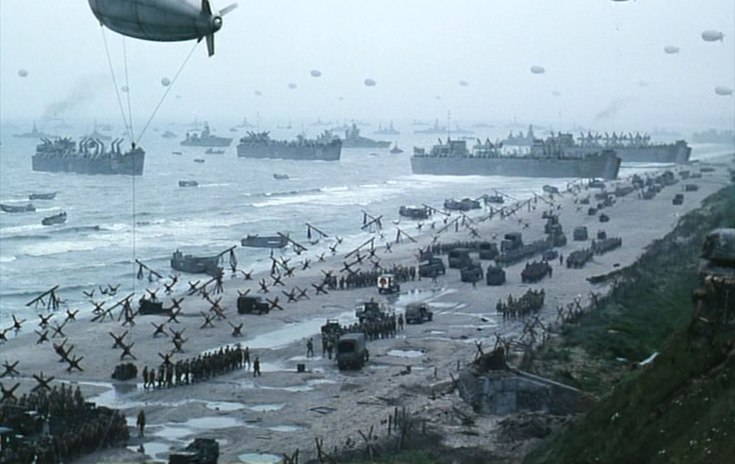
Most of what I’d heard of Saving Private Ryan centered on the first thirty minutes, the brutal re-creation of the Normandy invasion. Indeed it’s an impressively intense experience to sit through, even if it’s still only a fraction of what the soldiers involved actually had to endure, among them my own paternal grandfather. It also feels fiercely comprehensive in its depiction of the battlefield, following Tom Hanks’s Captain John Miller from the assault boats up the bullet-riddled beaches under constant enemy fire. The men’s reactions to the nightmarish setting range from terrified and dazed to angry and vengeful, particularly as the repeated attempts to save the wounded prove horrifically futile. There are no cuts away to generals talking or planning or anything to take the viewer out of the moment, and it’s epic and immersive. As for the notorious violence, it’s comparable to the battle scenes of Hacksaw Ridge, though perhaps a bit less constant in its bloodshed than the worst Hacksaw Ridge scenes.

Yet, even beyond the intense opening, the rest of the film has plenty of strengths as well, the strongest of which has to be Tom Hanks. Hanks has always been good in everything I’ve seen of his, and he gives an outstanding performance here, easily worthy of an Oscar, for which he was only nominated. As Captain Miller, he’s a competent leader willing to fulfill his duty, even when his superiors send him on a foolhardy mission into enemy territory to retrieve the titular Private Ryan (Matt Damon), whose loss of his three brothers in battle has earned him a sympathy ticket home. Yet Miller isn’t as tough as nails as he tries to act, sometimes amused at hearing his men guess at his mysterious past, sometimes letting his desperation and grief amidst all the violence show through. Hanks is the touchstone for the whole film, which is important when the rest of the men under him aren’t as distinguishable, at least at first. The film’s long runtime of 2 hours and 49 minutes helps the other men under him stand out a bit, such as Barry Pepper’s praying sniper or Edward Burns’ hothead who rebels at risking lives for the sake of one man. (Until the end credits, I really thought Burns was Ben Affleck for some reason.) Even if I couldn’t keep up with most of their names, all the actors do an excellent job, including Damon, Burns, Tom Sizemore, Giovanni Ribisi, and Vin Diesel. Speaking of characters, I was especially delighted to see a very young Nathan Fillion (Castle, Firefly) as a different Private Ryan and (major Lost alert!) Jeremy Davies as timid interpreter Upham, which is such a strong role for him that I’m surprised this film didn’t make him a more sought-after star.

Image result for saving private ryan

Along the cross-country search for Private James Francis Ryan are individual encounters that convey so much of the horror, callousness, and sacrifice. At one point, Miller’s men rummage through dog tags of the deceased, joking and bantering as if they’re playing cards, only to be reminded that they’re essentially sorting through men’s stolen lives. Later, Upham defends a German prisoner whom the others want to kill, only for his naively righteous motivations to be starkly challenged by the ruthlessness of war. (The way this subplot plays out is like the opposite of a similar aspect of the 2003 film Saints and Soldiers.)  And through it all is the question of whether Private Ryan is worth all the trouble of saving. Does offering Ryan’s mother a little comfort in her grief warrant putting other men’s mothers through the same? How can one man live up to the sacrifices made to rescue him?

Saving Private Ryan is undoubtedly one of Steven Spielberg’s greatest achievements, yet oddly enough, while the film runs through a range of emotions, one of the strongest for me was anger. Why? Because how on God’s blue marble did Shakespeare in Love beat this for Best Picture?!?!?! I mean, really, there is no contest as to which film is grander, better told, and all-around more significant. In my opinion, that has to be the worst Best Picture decision the Academy has ever made, worse even than the La La Land debacle from this past year. I’m sorry, but Saving Private Ryan is clearly the true Best Picture of 1998. At least, Spielberg won Best Director, alongside Oscars for Cinematography, Sound Mixing, Film Editing, and Sound Effects Editing.

Despite all this praise for Saving Private Ryan, I’m left divided on how exactly to rank it on my Top 365 List at the end of the year. As with Hacksaw Ridge, I loved the story, acting, script, patriotic message, and production values, but the violence is a big drawback for me, mainly in diminishing its watchability. While the violence is important for effectively re-creating the savagery of battle, I still feel that sprays of blood and severed limbs are unnecessarily gruesome tools in a filmmaker’s arsenal. At one point, someone is literally blown apart by a bomb they don’t throw away for some reason; I couldn’t tell who it was or why they didn’t chuck the explosive, making the scene unnecessary except for shock value. I just feel that this would have been a slightly more accessible film if it had been edited to avoid some of the gore; I know my aversion to violence puts me in the movie-watching minority, but there must be others who avoid films like this for the same reasons I did (like my VC, who still refuses to see it). Ultimately, though, its strengths far outweigh that personal negative, so I’ll have to figure out later where exactly on my list such a film deserves to be.

Image result for saving private ryan normandy

I have no hesitation in confirming that Saving Private Ryan really is among the best war films ever made. The cinematography and explosive battles augment its epic storytelling while never ignoring the human cost and casualties, and it captures the complicated mess of war, such as casting a disapproving eye at the vengeful cruelty done by Americans while reminding us that self-righteousness is rarely rewarded in battle. The strongest performances by Hanks and Davies should have earned them both Oscars. I can’t say I’d watch Saving Private Ryan often, due to its length and intensity, but few films are better suited for July 4 viewing.

Best line: (Captain Miller, to Private Reiben, who wants to kill a prisoner) “You want to leave? You want to go off and fight the war? All right. All right. I won’t stop you. I’ll even put in the paperwork. I just know that every man I kill, the farther away from home I feel.”


Rank: List-Worthy


© 2017 S.G. Liput
491 Followers and Counting


Eddie the Eagle (2016)

05 Monday Jun 2017

Posted by sgliput in Movies, Poetry, Reviews, Writing

≈ 2 Comments

Tags

Biopic, Drama, History, Sports

Image result for eddie the eagle film

From way up here, my view is clear,
And all the world extends below.
They wait to see if this wannabe
Deserves this chance and vertigo.

Yet no one thought this soaring spot
Could be achieved by such as me.
They patronized and minimized
My every try and cut me free.

But not this time, this chance sublime,
Unmarred by how they’ve criticized;
I’m flying higher than critics desire
And won’t the scolders be surprised!

I don’t compare in skill or flair
With medalists, but I aspire.
That goal sincere has brought me here.
Now just to land, and I’ll retire.
___________________

MPAA rating: PG-13 (could almost be PG)

One of the most pleasant surprises from last year was how the story of an apparent goofball from the 1988 Winter Olympics exceeded its by-the-numbers genre to become one of the most uplifting films of the year. Inspirational sports dramas are a dime-a-dozen, but I wouldn’t hesitate to call Eddie the Eagle the best underdog story since the 1993 classic Rudy.

That comparison extends to the plucky protagonist whose dogged refusal to give up overshadows his relative lack of athletic ability. Eddie Edwards (Taron Egerton) has dreamed since childhood of going to the Olympics, despite the repeated failures of his clumsy practice runs. All the familiar ingredients are here: a father (Keith Allen) who thinks Eddie’s dreams are a waste of time, an authority figure (Tim McInnerny) who disparages Eddie and does all he can to block the irrepressible upstart,  an embittered coach (Hugh Jackman) who grudgingly agrees to mentor the young dreamer. It’s all so potentially cliché, and yet it’s all done so well, thanks in large part to the unironic exuberance of Egerton as Eddie himself.

Image result for eddie the eagle film

Eddie’s journey is a constant struggle that never seems to faze him, or at least doesn’t keep him down for long. In many ways, he glides along on unrealistic goals and loopholes, choosing to compete as an Olympic ski jumper when he discovers that Great Britain hasn’t had one since the 1920s. If it gets him to the Olympics, it doesn’t matter if he’s completely inexperienced. Yet it’s his unabashed spirit that earns some much-needed sympathy along his way and convinces disgraced former competitor Bronson Peary to coach and support him. Ordinarily, the coach would be the one encouraging his protégé, but Eddie needs no outside encouragement and instead lightens the drunken cynicism of his trainer.

It’s an important development toward the end that Eddie recognizes that his jubilation in the face of apparent failure can be seen as the antics of a fool and addresses those concerns head-on. Ultimately, as the film and a quote from the founder of the Olympics state, it doesn’t matter that Eddie’s best efforts still come up short, just as it didn’t matter that Rudy’s moment of truth was only a single touchdown: the very act of participating and doing one’s best is admirable, and it’s no wonder that Eddie’s tenacious joy and determination captured the hearts of spectators.

Image result for eddie the eagle film

It helps too that the film is designed to be as crowd-pleasing as possible, with a good deal of humor and a deliciously ‘80s soundtrack with well-placed song staples from the time, like Van Halen’s “Jump.” Egerton and Jackman imbue their familiar character types with likable personalities, Egerton lovably nerdy and Jackman ruggedly cool, and are easy to root for. By the film’s breath-holding climax (which surely looks ridiculous to those not in the moment), I was cheering alongside the characters with the biggest smile a movie has given me in some time. Plus, except for some brief sexual dialogue, the film is refreshingly family-friendly and free of profanity.

It’s true that the core story of Eddie the Eagle is far from original and ends on Eddie’s most positive moment with no mention of the fact that his next three attempts to reach the Olympics failed due to eligibility changes. Thus, its inspirational bias may seem contrived to some, but when a film is this uplifting and joyous, who cares? Eddie the Eagle takes its genre and flies high with it.

Best line: (quoting Pierre de Coubertin, the founder of the Olympics) “The most important thing is not the victory but the struggle.”


Rank: List-Worthy


© 2017 S.G. Liput
487 Followers and Counting


Bright Star (2009)

17 Monday Apr 2017

Posted by sgliput in Movies, NaPoWriMo, Poetry, Reviews, Writing

≈ Leave a comment

Tags

Biopic, Drama, History, Romance

Image result for bright star 2009

(Today’s NaPoWriMo prompt was for a nocturne, a poem inspired by the nighttime, which I applied to the elegiac notes of a film about the poet John Keats.)


Do you see the stars in their scattered arrays,
Content to fluoresce and to wait between days?
Do you hear the leaves when they flap in the wind,
In summer so teeming, in harvest-time thinned?
Do you feel the stillness of worlds at their rest,
Of closed morning glories and birds in their nest?

I witness these wonders you once wrote about,
Before disease meddled to snuff your light out.
Distractions of day help my memories melt,
But when night becalms them, your absence is felt.
I’ll dream of you here, and though Heaven is light,
I hope you still cherish the joys of the night.
__________________

MPAA rating: PG

I thought it was about time I reviewed the film that placed #4 on my Top 12 Poems in Movies list. Bright Star is a film for poets and about poets, one that translates tender word to screen in the form of an intimate period piece. John Keats has never been among my favorite poets, but this film makes him more than a mere authorial name, chronicling his romance with Fanny Brawne during the final years of his short life.

Image result for bright star 2009 keats and brawne

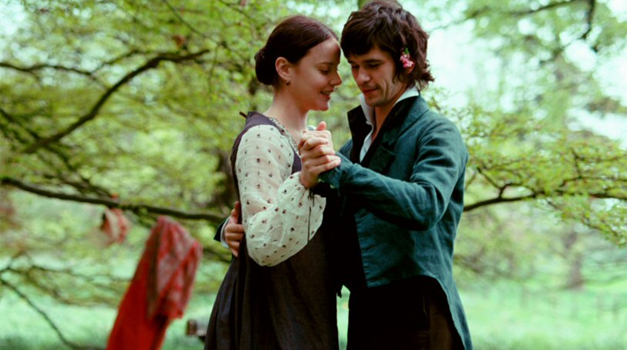
Director and writer Jane Campion of The Piano fame was blessed with two outstanding leads in Abbie Cornish and Ben Whishaw, known as the latest Q in the James Bond franchise and as the voice of Paddington Bear. Cornish plays Brawne with some early traces of women’s lib in her attitude, proud of her fashion creations and her ability to earn a living from them. On the opposite side of the self-sufficiency spectrum is Whishaw’s Keats, whose chosen profession as a poet is decidedly unprofitable, especially when his published poem Endymion flops. The two aren’t sure that their harmless flirting should continue any further, especially when Keats’s roommate and fellow poet Charles Brown (Paul Schneider) competes with Brawne for his friend’s attention. Soon, however, their romance begins in earnest, with swooningly passionate and eventually tragic results.

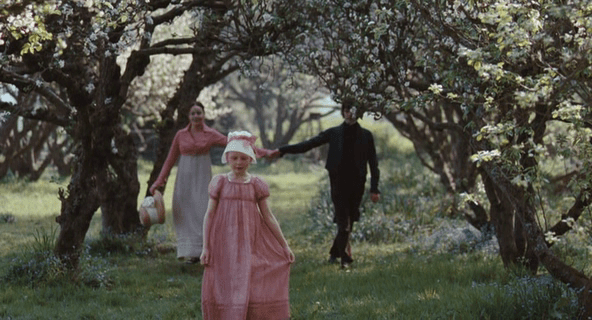
The early 19th-century costumes and details are elegantly faithful to the period and somewhat reminiscent of films based on the works of Keats’s contemporary Jane Austen.  Another point of comparison might be 1998’s Shakespeare in Love, also based on a literary figure and his love affair, but whereas that film was mostly fictitious and overrated, Bright Star has a greater biographical basis and instills passion into the mundane. No sex scenes are needed to accentuate Keats’s and Brawne’s relationship; it’s in their woodland walks and love letters that their fervent affection is felt. I especially loved one symbolic part that became a microcosm of doomed romance itself, as Brawne fills her bedroom with butterflies while exulting at every letter from Keats only for disenchantment to set in as the butterflies inevitably die.

Image result for bright star 2009 keats and brawne

Bright Star holds much poetic appeal, not only by quoting many of Keats’s works but by voicing his and Brown’s opinions on the nature of poetry and the writing process. “It ought to come like leaves to a tree, or it better not come at all,” says Keats at one point. The quiet tone may be too slow and melancholy for some, but Bright Star makes the most of its poignant themes, graceful cinematography, and brilliant cast, with Cornish and Schneider especially nailing the most emotional moments. It’s not quite among my favorite films ever, but it’s an underrated gem that I’ll always be fond of and one all fans of poetry ought to see.

Best line: (John Keats) “A poem needs understanding through the senses. The point of diving into a lake is not immediately to swim to the shore but to be in the lake, to luxuriate in the sensation of water. You do not work the lake out; it is an experience beyond thought. Poetry soothes and emboldens the soul to accept the mystery.”  (Fanny Brawne) “I love mystery.”


Rank: List Runner-Up


© 2017 S.G. Liput
471 Followers and Counting


Risen (2016)

16 Sunday Apr 2017

Posted by sgliput in Christian, Movies, NaPoWriMo, Poetry, Reviews, Writing

≈ Leave a comment

Tags

Biblical, Drama, History, Mystery

Image result for risen 2016 film

(Happy Easter to all! Today’s NaPoWriMo prompt was for a poem inspired by letter-writing, so I rhymed up a letter that the main character of this movie might have written by the end.)


Dear Lucius, please forgive
My sudden absence. I yet live,
But returning to my former life I simply cannot do.
I was Tribune, son of Mars,
And have weathered many scars,
But such were merely physical and all I ever knew.

I’ve seen many crucifixions;
I had no need for predictions.
Every broken, bloody body had its final resting place,
Till one random victim slain
The chosen grave could not contain.
I’ve never seen a man whom even death could not erase.

I doubted, how I doubted,
And was adamant about it;
I have seen and known too much to trust the supernatural.
I don’t expect you to believe,
For true faith I’ve yet to achieve,
But life can never be the same when it has known a miracle.

-Clavius
_________________

MPAA rating: PG-13

While all the other posts for NaPoWriMo have been decided mostly by the prompt, I knew there was no other recently seen film to review on Easter than Risen, the most prominent of the three Jesus movies from 2016 (the others being The Young Messiah and Last Days in the Desert). Risen was considered a spiritual sequel to The Passion of the Christ, picking up essentially where Mel Gibson’s film left off and focusing on the events of Jesus’ resurrection. Instead of merely showing the Biblical story as many previous films have, Risen differentiates itself for the better by applying an outsider’s view, specifically in the fictional character of Tribune Clavius (Joseph Fiennes).

Image result for risen 2016 film

Somewhat like 1953’s The Robe, the crucifixion is seen through the eyes of a Roman when Pontius Pilate sends Clavius to keep the crowds in check at Jesus’ execution. Clavius has never even heard of this man, and he absorbs all the reports and promises of his supernatural return with the mind of a pagan skeptic, putting his faith in Mars, the god of war. When the body of Jesus disappears, he is commissioned by Pilate to track it down and put all the rumors and worries to rest. Clavius’ investigations may not be strictly Biblical, but it makes sense that the authorities’ first response would be to disprove the resurrection with physical evidence, a search that is made surprisingly gripping by the urgency of the mission. The interviews Clavius conducts with the likes of Joseph of Arimathea and Bartholomew give him an idea of what Jesus’ followers are like, steadfast and often giddy with hope, and some of the side characters provide some excellent acting. The account of one of the unnerved guards from the tomb is especially well-delivered.

While Risen strives to be a cut above other faith-based films, it falls into the familiar mold by the end. Its similarities to The Passion of the Christ mainly consist in the use of the Hebrew name Yeshua for Jesus, and it does reimagine certain details with gritty zeal, but it doesn’t really follow The Passion’s sterling example of “show, don’t tell.” The film’s depiction of the resurrected Jesus (Cliff Curtis) felt rather insubstantial, quick to vanish without explanation, and the events following the resurrection are compressed to the point that the disciples seem to have barely a day with their Lord, much less forty. The ending is also ambiguously wrought and not in any satisfying way.

Image result for risen 2016 film

I liked Risen quite a bit, from its impressive re-creation of Roman warfare to its admirable performances, and it’s a film I would gladly watch again to celebrate the Easter season. It is let down by a weak second half, but it’s not as preachy or trite as some faith-based efforts, and unlike similar films, the script employs dialogue befitting the ancient world. Even if it doesn’t match the emotional impact of The Passion, Risen is a worthwhile story that stresses the life-changing significance of the Resurrection.

Best line: (Clavius) “I cannot reconcile all this with the world I know.”   (Yeshua) “With your own eyes you’ve seen, yet still you doubt. Imagine the doubt of those who have never seen. That’s what they face.”


Rank: List Runner-Up


© 2017 S.G. Liput
470 Followers and Counting


Empire of the Sun (1987)

15 Saturday Apr 2017

Posted by sgliput in Movies, NaPoWriMo, Poetry, Reviews, Writing

≈ 2 Comments

Tags

Drama, History, War

Image result for empire of the sun film

(Today’s NaPoWriMo prompt was for a poem about the middle of something, so I applied that theme to another film about sudden and distressing circumstances.)


The peace we always took for granted vanishes, no warning paid,
And thoughts and fears and new frontiers take precedence as comforts fade.
This change of fortunes must be fleeting, say the victims who pretend.

Keep the faith, a little longer, don’t give up, our angels cheer;
Those who dare say, “Halfway there,” but that just means to persevere,
For how are we to know the middle when we cannot see the end?

Some are born to dream in darkness; some are born to bear its weight;
Some are born, it seems, to mourn with equal chance to hope or hate.
They all survive on how they face experiences no one should.

The start of hardship can unsettle, and its end can overwhelm,
What one endures between assures the rest of us who’s at the helm.
The middle of a tragedy reveals the evil and the good.
__________________

MPAA rating: PG (should be PG-13)

Empire of the Sun has never had the same reputation as Steven Spielberg’s other films. No one I know quotes famous lines or references famous scenes from it, but even Spielberg’s less prominent films confirm him as a consummate filmmaker, whether he’s directing fun actioners or serious historical narratives like this one. Little attention is usually paid to China during World War II, much less the foreigners living there at the time, but Empire of the Sun takes inspiration from J.G. Ballard’s semi-autobiographical novel, tracing one British boy’s survival story through the hardships of war.

Image result for empire of the sun film

While the cinematography, score, and direction are awe-inspiring in their epic scope, this film belongs to Christian Bale, whose first major performance as the teenage Jamie Graham has to rank among the finest child actor performances ever. He runs the full gamut of emotions, from his spoiled brat ways as a well-to-do schoolboy in Shanghai to his ever more desperate attempts at clinging to normalcy in the wake of being separated from his parents and forced to survive in an uncaring land. He nails the euphoria and admiration of a boy obsessed with the glory of war planes (“Cadillac of the sky!”), as well as the shock and sorrow of witnessing the loss of everything he held dear. A lesser performance couldn’t have supported such a long movie, but Bale distinguished himself early as a strong and versatile performer.

The always great John Malkovich also pops up intermittently as Basie, an American whose experience and leadership cause Jamie to latch onto him as an anchor amidst the chaos, even if he doesn’t recognize Basie’s repeated selfishness. Joe Pantoliano, Nigel Havers, and Miranda Richardson also do good work in supporting roles along Jamie’s journey, and apparently Ben Stiller was in it too, though I don’t remember seeing him.

Spielberg provides sharp contrast between Jamie’s privileged upbringing and the native squalor surrounding it—an early scene has a convoy of Britishers headed to a costume party besieged by the destitute masses—and the fall from status of Jamie and his fellow moneyed class is hard-felt as they are soon reduced to fighting over a potato or else starving to death. Jamie, or Jim as Basie calls him, displays surprising adaptability in the face of all the desperation, but the casualties of war eventually overcome him in tragic fashion, claiming his innocence as one of their number. In many ways, it reminded me of Grave of the Fireflies from the following year by putting a struggling boy through a wartime hell no child should have to endure.

Image result for empire of the sun film

Empire of the Sun is an epic with a pitying eye on the civilian cost of war and boasts a singular star performance to deliver both the hope and the heartbreak of its story. Its 2½-hour length is a bit of a bear at times, accentuating the duration of Jamie’s trials but testing the audience’s patience as well. It’s really the only fault I can point to to justify it not being List-Worthy, and it’s hard to believe it wasn’t nominated for Best Picture or Director that year. It’s not as watchable as most of Spielberg’s filmography, but it’s one of his grander, more illustrious works.

Best line: (Basie, in the Japanese internment camp) “It’s at the beginning and end of war that we have to watch out. In between, it’s like a country club.”


Rank: List Runner-Up


2017 S.G. Liput
470 Followers and Counting


12 Years a Slave (2013)

14 Friday Apr 2017

Posted by sgliput in Movies, NaPoWriMo, Poetry, Reviews, Writing

≈ 2 Comments

Tags

Drama, History

Image result for 12 years a slave film

(Today’s NaPoWriMo prompt was for a humorous four-line clerihew about a famous person, but in light of today being Good Friday, I went more of a serious route and reviewed a film with suffering as a major theme.)


Solomon Northup
Would not give his worth up.
At dignity’s theft,
He survived with what was left.
_______________

MPAA rating: R

When 12 Years a Slave won Best Picture back in 2013, I was struck by one critic’s statement that it was the first major film focusing on American slavery. I found that hard to believe, but the more I tried to think of a previous example, the more I realized he was right. Roots opened the eyes of television audiences back in 1977, but cinematic slavery seems always to have been in the background (Gone with the Wind, for example), centering more on white characters. There have been so many films about the struggles of African Americans during Reconstruction and the Civil Rights Era that their pre-Civil War history has surprisingly been overlooked, at least in the movies.

Image result for 12 years a slave film

Directed by Steve McQueen (the director, not the actor), 12 Years a Slave is all the more potent due to its historical source, the real-life memoir of Solomon Northup (Chiwetel Ejiofor), a free black man from New York who was kidnapped and sold into slavery in 1841. Overnight, Solomon goes from a respected member of the community to a piece of property labeled “Platt,” and his agonizing journey represents a comprehensive survey of the slave experience, ranging from the humiliation of the auction house to plantation masters both kind and cruel. His first master William Ford (Benedict Cumberbatch) treats his slaves fairly yet does not recognize the moral dissonance between his Christian beliefs and slave-dependent lifestyle, epitomized by the delivery of his Sunday sermon competing with the wails of a grieving mother. Still, Ford is a saint next to Solomon’s next owner, Edwin Epps (Michael Fassbender), a hard-hearted brute who takes pleasure in raping his favorite and most productive slave Patsey (Lupita Nyong’o, who deservingly won a Best Supporting Actress Oscar).

For years, films have grieved hearts and minds with Civil Rights-Era racism, behavior that is still seen as a holdover from the days of slavery, but it’s even more shocking to see the real thing, the undiluted cruelty and unrestricted control over human lives that were an unquestioned institution in the South before the Civil War. Multiple scenes are carefully crafted gut-punches that intentionally drag on to heighten their inhumanity: as punishment for fighting back on one occasion, Solomon is trussed up by the neck with his feet barely touching the ground, while his fellow slaves filter outside, too fearful to help him. In one astounding and brutal shot filmed without cuts, Epps forces him to repeatedly whip Patsey over a mere bar of soap. Through all this, Ejiofor delivers the performance of a lifetime, and even if the timing of what happens when during the twelve years is not documented, the years are felt in Solomon’s troubled gazes of ever-increasing despair and desperation.

Image result for 12 years a slave film

For me, 12 Years a Slave is somewhat similar to The Passion of the Christ, mainly in its depiction of heartless savagery (including a prominent whipping) that makes it a film to appreciate as significant but by no means something to enjoy watching. All the performances are outstanding, though I would have thought Ejiofor deserved an Oscar even more than Nyong’o (who would have believed he’d lose to Matthew McConaughey?), and Fassbender’s wholly detestable role as Epps nearly threatened to destroy my personal regard for the actor. (It was cool, as well, to see Ejiofor alongside Cumberbatch three years before their pairing in Doctor Strange.) While some scenes are reminiscent of Roots, 12 Years a Slave is more mature and intense in its depiction of violence and rape, and the sense of misery and loss is constant, even after the emotional release toward the end. The portrayal of Christianity is also less than positive, illustrating how it was often used to justify slavery, but such representations are somewhat mitigated by the more sympathetic faith of a visiting abolitionist (Brad Pitt). While I’m not entirely convinced that all the powerfully poignant scenes add up to a masterpiece, 12 Years a Slave is an important piece of historical cinema and a long overdue look at a subject many might want to forget.

Best line:  (Epps, debating with the abolitionist) “I bought ’em. I paid for ’em.”
(Bass) “Well, of course you did, and the law says you have the right to hold a n*****. But begging the law’s pardon, it lies. Suppose they pass a law taking away your liberty, making you a slave. Suppose.”
(Epps) “That ain’t a supposable case.”
(Bass) “Laws change, Epps. Universal truths are constant. It is a fact, a plain and simple fact, that what is true and right is true and right for all. White and black alike.”


Rank: List Runner-Up


2017 S.G. Liput
469 Followers and Counting


Big Eyes (2014)

12 Wednesday Apr 2017

Posted by sgliput in Movies, NaPoWriMo, Poetry, Reviews, Writing

≈ Leave a comment

Tags

Biopic, Drama, History

(Today’s NaPoWriMo prompt was for a poem featuring alliteration, one of my favorite poetic tools, which I employed with abandon.)

“She stares her sadness through my soul,”
The mother in the market said.
“This youth is yearning to be whole,”
The art collector commented.

“This portrait proves the painter’s skill,”
The masses mused with untrained eye.
“This artless amateur’s a shill,”
The critics coughed to clarify.

Like Mona Lisa’s murky mien,
Those sightly saucers still entreat,
With varied views from clerk or queen,
Depending on the eyes they meet.
________________

MPAA rating: PG-13

I’m not the biggest fan of Tim Burton and his penchant for macabre weirdness. In fact, James and the Giant Peach and Charlie and the Chocolate Factory are the only films of his that I can say I really like, and even then with reservations (Big Fish and Batman were all right too). He’s still a talented enough director that a step away from his comfort zone of weirdness could produce something to my liking, and Big Eyes is just that. It’s a Tim Burton film that proves that his style need not be synonymous with grotesque.

While they’re not as prevalent nowadays, most people have probably seen those paintings of big-eyed waifs staring mournfully ahead, but I wasn’t aware of the story of fraud behind them. Amy Adams plays Margaret Keane, who after divorcing and moving to San Francisco with her daughter, meets the incredibly charismatic Walter Keane (Christoph Waltz). After bonding a bit on their mutual love for painting, they marry, only for Walter’s promotion of Margaret’s work to reveal his looseness with the truth. While the idea of him technically “stealing” her work and claiming to be the artist seems hard to believe, it happens gradually and credibly, the result of Walter’s charm and Margaret’s timidity. It’s a lie that quickly grows out of control, with Margaret churning out new works from a secret studio and Walter becoming ever more passionate in protecting the lie. The way it plays out in the end is a testament to the truth always coming to light, and how it does is made more satisfying by the fact that it actually happened that way.

While Big Eyes is unlikely to be counted among the best films “based on a true story,” it’s solid all the way around, particularly in the casting of its two leads. Amy Adams excels in the role of a diffident artist struggling to work up her nerve, while Waltz brings the same gregarious magnetism that won him two Oscars, making Walter an amiable if unctuous fellow from the start who gets nastier with time. The mix of their two personalities makes the tale believable, and the film does give credit to Walter for his brilliant marketing strategies in disseminating the paintings. Burton presents it all in a pleasantly eccentric but straightforward style, only veering into odd territory a couple times with a hallucination had by an over-stressed Margaret. Burton obviously prefers his beloved macabre subjects, but for those like me who view them with more appreciation than enjoyment, a film like Big Eyes is a welcome change.

Best line: (Ruben, an art dealer) “Why are their eyes so big?”  (Walter) “Eyes are the windows to the soul!”


Rank: List Runner-Up


© 2017 S.G. Liput
467 Followers and Counting

Love and Mercy (2014)

10 Monday Apr 2017

Posted by sgliput in Movies, NaPoWriMo, Poetry, Reviews, Writing

≈ 2 Comments

Tags

Biopic, Drama, History, Romance

Image result for love and mercy film

(Today’s NaPoWriMo prompt was for a personal portrait of someone special, like someone who is a picture of unselfish love.)


Some people are draining and take what they can
Till you’re not sure how your acquaintance began,
But some, if you’re lucky, replace what you’ve lost
And give and love further, not counting the cost.

She’s one of those people, those angels on earth,
Who don’t get the credit or gold that they’re worth.
Where others step back in repulsion or fear,
She’ll take two steps forward, concerned and sincere.

When I was convinced I was flawed to my core,
She gave me the hope that I still could be more.
When I came to learn happiness can’t be bought,
She showed me that lonely need not be my lot.

Such lessons are simple, but we the unwise,
With no one to teach us, are quick to trust lies.
If all were like her, by such love overrun,
The clouds of this world could be scattered to sun.
__________________

MPAA rating: PG-13

It’s become something of a cliché for musical biopics to portray the rise and fall of their subjects, often lessening our opinions of them in the process, but Love and Mercy is just as concerned about its star rising again as it is about the initial fall. Brian Wilson of the Beach Boys is played by two different actors, Paul Dano as Wilson in the mid-1960s and John Cusack as his older 1980s self. Instead of depicting the two time periods one after the other, they alternate in advancing their stories of a man whose talent and success weren’t enough to conquer his demons on his own.

Both actors and storylines have their strengths. Dano does an outstanding job at representing Wilson at his most creative, tired of his usual surf music and eager to experiment on his personal pet project, which becomes 1966’s Pet Sounds. Here we get a rare look at a musician’s creative process that goes beyond just thinking up lyrics; the laborious spontaneity of the recording studio and a personal piano brainstorm of “Good Vibrations” capture the spirit of Wilson’s musical genius, which was challenged by his family and sadly marred by drugs and a wrongly diagnosed mental disorder.

Image result for love and mercy film

Beyond the artistic insights of Dano’s parts, the film’s emotional core lies in the relationship between Cusack’s older Wilson and Melinda Ledbetter (Elizabeth Banks), who meet while Wilson is under the controlling care of Dr. Eugene Landy (domineering Paul Giamatti). My VC had trouble understanding why Melinda would have any interest in Wilson, who is presented as acting strange and unstable from Landy’s overmedication. Yet that is what makes Banks and the real-life Melinda so admirable: she wasn’t a gold-digger or an opportunist like Landy. She had every reason and right to leave Wilson to his fate, but she instead became his way out and transformed his life for the better through her love and perseverance, laudably brought to life by Banks. She’s the kind of patient, positive influence that we wish for all troubled souls to find, even if they rarely do. Taking a line from Wilson himself, God only knows what he’d be without her.

Love and Mercy is marred somewhat by the psychedelic miasma of the drug scenes, which is compounded at times by the nonlinear storyline and both Brians’ odd behavior. It isn’t how I’d want all biopics to be told, but for something unique in an all-too-familiar genre, Love and Mercy harnesses the talents of its subject and its actors for an ultimately inspiring tale of professional and personal salvation.

Best line: (1980s Brian, to Melinda) “I want you to leave, but I don’t want you to leave me.”


Rank: List Runner-Up


© 2017 S.G. Liput
466 Followers and Counting


← Older posts
Newer posts →

Recent Posts

  • We Didn’t Start 2025 (Recap)
  • NaPoWriMo 2025 Recap (Finally)
  • Sonic the Hedgehog 3 (2024)
  • It Happened One Night (1934)
  • Spellbound (2024)

Recent Comments

associatesofshellymann's avatarassociatesofshellyma… on My Top Twelve La La La So…
Kit's avatarKit Nichols on Bonnie and Clyde (1967)
lifelessons's avatarlifelessons on Look Back (2024)
Carol Jackson's avatarCarol Jackson on The Thief of Bagdad (1940…
Stephen's avatarStephen on Love Story (1970)

Archives

  • January 2026
  • December 2025
  • May 2025
  • April 2025
  • March 2025
  • February 2025
  • January 2025
  • December 2024
  • May 2024
  • April 2024
  • March 2024
  • February 2024
  • January 2024
  • December 2023
  • November 2023
  • October 2023
  • September 2023
  • July 2023
  • June 2023
  • May 2023
  • April 2023
  • March 2023
  • February 2023
  • January 2023
  • December 2022
  • November 2022
  • October 2022
  • September 2022
  • August 2022
  • July 2022
  • June 2022
  • May 2022
  • April 2022
  • March 2022
  • February 2022
  • January 2022
  • December 2021
  • November 2021
  • October 2021
  • September 2021
  • August 2021
  • July 2021
  • June 2021
  • May 2021
  • April 2021
  • March 2021
  • February 2021
  • January 2021
  • December 2020
  • November 2020
  • October 2020
  • September 2020
  • August 2020
  • July 2020
  • June 2020
  • May 2020
  • April 2020
  • March 2020
  • February 2020
  • January 2020
  • December 2019
  • November 2019
  • October 2019
  • September 2019
  • August 2019
  • July 2019
  • June 2019
  • May 2019
  • April 2019
  • March 2019
  • February 2019
  • January 2019
  • December 2018
  • November 2018
  • October 2018
  • September 2018
  • August 2018
  • July 2018
  • June 2018
  • May 2018
  • April 2018
  • March 2018
  • February 2018
  • January 2018
  • December 2017
  • November 2017
  • October 2017
  • September 2017
  • August 2017
  • July 2017
  • June 2017
  • May 2017
  • April 2017
  • March 2017
  • February 2017
  • January 2017
  • December 2016
  • November 2016
  • October 2016
  • September 2016
  • August 2016
  • July 2016
  • June 2016
  • May 2016
  • April 2016
  • March 2016
  • February 2016
  • January 2016
  • December 2015
  • November 2015
  • October 2015
  • September 2015
  • August 2015
  • July 2015
  • June 2015
  • May 2015
  • April 2015
  • March 2015
  • February 2015
  • January 2015
  • December 2014
  • November 2014
  • October 2014
  • September 2014
  • August 2014
  • July 2014
  • June 2014
  • May 2014
  • April 2014
  • March 2014
  • February 2014
  • January 2014
  • December 2013

Categories

  • Blindspot
  • Blogathon
  • Christian
  • Movies
  • Music
  • NaPoWriMo
  • Poetry
  • Reviews
  • TV
  • Writing

Meta

  • Create account
  • Log in
  • Entries feed
  • Comments feed
  • WordPress.com

Recent Posts

  • We Didn’t Start 2025 (Recap)
  • NaPoWriMo 2025 Recap (Finally)
  • Sonic the Hedgehog 3 (2024)
  • It Happened One Night (1934)
  • Spellbound (2024)

Recent Comments

associatesofshellymann's avatarassociatesofshellyma… on My Top Twelve La La La So…
Kit's avatarKit Nichols on Bonnie and Clyde (1967)
lifelessons's avatarlifelessons on Look Back (2024)
Carol Jackson's avatarCarol Jackson on The Thief of Bagdad (1940…
Stephen's avatarStephen on Love Story (1970)

Archives

  • January 2026
  • December 2025
  • May 2025
  • April 2025
  • March 2025
  • February 2025
  • January 2025
  • December 2024
  • May 2024
  • April 2024
  • March 2024
  • February 2024
  • January 2024
  • December 2023
  • November 2023
  • October 2023
  • September 2023
  • July 2023
  • June 2023
  • May 2023
  • April 2023
  • March 2023
  • February 2023
  • January 2023
  • December 2022
  • November 2022
  • October 2022
  • September 2022
  • August 2022
  • July 2022
  • June 2022
  • May 2022
  • April 2022
  • March 2022
  • February 2022
  • January 2022
  • December 2021
  • November 2021
  • October 2021
  • September 2021
  • August 2021
  • July 2021
  • June 2021
  • May 2021
  • April 2021
  • March 2021
  • February 2021
  • January 2021
  • December 2020
  • November 2020
  • October 2020
  • September 2020
  • August 2020
  • July 2020
  • June 2020
  • May 2020
  • April 2020
  • March 2020
  • February 2020
  • January 2020
  • December 2019
  • November 2019
  • October 2019
  • September 2019
  • August 2019
  • July 2019
  • June 2019
  • May 2019
  • April 2019
  • March 2019
  • February 2019
  • January 2019
  • December 2018
  • November 2018
  • October 2018
  • September 2018
  • August 2018
  • July 2018
  • June 2018
  • May 2018
  • April 2018
  • March 2018
  • February 2018
  • January 2018
  • December 2017
  • November 2017
  • October 2017
  • September 2017
  • August 2017
  • July 2017
  • June 2017
  • May 2017
  • April 2017
  • March 2017
  • February 2017
  • January 2017
  • December 2016
  • November 2016
  • October 2016
  • September 2016
  • August 2016
  • July 2016
  • June 2016
  • May 2016
  • April 2016
  • March 2016
  • February 2016
  • January 2016
  • December 2015
  • November 2015
  • October 2015
  • September 2015
  • August 2015
  • July 2015
  • June 2015
  • May 2015
  • April 2015
  • March 2015
  • February 2015
  • January 2015
  • December 2014
  • November 2014
  • October 2014
  • September 2014
  • August 2014
  • July 2014
  • June 2014
  • May 2014
  • April 2014
  • March 2014
  • February 2014
  • January 2014
  • December 2013

Categories

  • Blindspot
  • Blogathon
  • Christian
  • Movies
  • Music
  • NaPoWriMo
  • Poetry
  • Reviews
  • TV
  • Writing

Meta

  • Create account
  • Log in
  • Entries feed
  • Comments feed
  • WordPress.com

Blog at WordPress.com.

  • Subscribe Subscribed
    • Rhyme and Reason
    • Join 814 other subscribers
    • Already have a WordPress.com account? Log in now.
    • Rhyme and Reason
    • Subscribe Subscribed
    • Sign up
    • Log in
    • Report this content
    • View site in Reader
    • Manage subscriptions
    • Collapse this bar