• Home
  • About Me
  • The List
  • THE LIST (2016 Update)
  • THE LIST (2017 Update)
  • THE LIST (2018 Update)
  • THE LIST (2019 Update)
  • THE LIST (2020 Update)
  • THE LIST (2021 Update)
  • THE LIST (2022 Update)
  • Top Twelves and More
  • The End Credits Song Hall of Fame

Rhyme and Reason

~ Poetry Meets Film Reviews

Rhyme and Reason

Tag Archives: History

First Man (2018)

24 Monday Jun 2019

Posted by sgliput in Movies, Poetry, Reviews, Writing

≈ Leave a comment

Tags

Biopic, Drama, History

See the source image

Space is a place where dreams are sent,
And there they wait for man’s ascent.
They wait and know that man was meant
To problem-solve, defy, invent,
And once the atmosphere is rent,
They’ll welcome us and our event
And say our effort was well-spent.

Space is a place of ill intent
That never gave man its consent
To test and dare and circumvent
The earth’s frontiers which won’t relent.
It waits to challenge and prevent
Man’s mystifying discontent,
So resolute and heaven-bent.

Space can hold wonders and laments,
Our certain death or will to thrive.
All these things it represents;
We’ll know for sure when we arrive.
_______________________

MPAA rating:  PG-13

Having loved La La Land, I was eagerly awaiting director Damien Chazelle’s next feature, especially when I learned it would be about Neil Armstrong and the moon landing. Both my mom and I have a special tie to the space program, since my grandfather worked for NASA and worked on the Apollo missions. When we heard some mixed reviews, we assumed that those naysayers just weren’t very interested in the space program, but our personal connection would be enough to overcome any faults. I wish that were true, because, as much as we wanted to love First Man, it was a bitter disappointment for my family.

See the source image

I’ve always enjoyed movies about space, whether it’s Gravity, The Right Stuff, or Apollo 13, not to mention any number of sci-fi films, yet I haven’t been so bored by one since Marooned. First Man had a tough job in detailing the life and work of a man who was famously laconic and understated, and while Ryan Gosling’s portrayal of Neil Armstrong is both of those things, he doesn’t add enough to the blank face and muted reactions to keep Armstrong from seeming just dull. The same goes for Claire Foy as his long-suffering wife Janet; she outshines Gosling with a few emotional fireworks, but their final scene together is a weird conclusion of emotional constipation, which also doesn’t mention their eventual divorce.

As for its portrayal of the space program, First Man does feature some riveting moments that showcase Armstrong’s levelheadedness and which haven’t been put to film before, such as a close call during one of his experimental test flights or the near disaster of Gemini 8. (I don’t recall the Apollo 1 fire being re-created before now in as much detail either.) The problem is that Chazelle chooses to focus on the claustrophobia of these moments by giving most of them a first-person, shaky-cam view that stays inside the cockpit, rarely letting us see what’s happening outside the spacecraft. It’s a clear artistic choice that gets old fast, and while I heard the moon landing itself makes it all worth it, there was nothing particularly special about that scene either. I appreciated its silent poignancy, but I was also distracted by the bizarre absence of stars. What makes it more bizarre is that I looked back at actual Apollo 11 photos, and there were no stars visible there either! Did I just never notice the black emptiness of space? Why wouldn’t there be stars? I realize that gripe is no longer the movie’s fault, but it still puzzles me on an astrophysical level.

See the source image

The subject may be historic, the casting may be full of recognizable faces, and the filmmaking pedigree may be impressive, but First Man was an unfortunate misfire for me. Compared with La La Land, it’s certainly a testament to Chazelle’s range as a director, but all those pluses just couldn’t overcome a weak script that didn’t spark enough interest in its potentially prosaic subject. And considering the visual extravaganzas that took place in Avengers: Infinity War and Ready Player One, it makes no sense to me that this would win the Oscar for Best Visual Effects. I wanted to like it, and I still think a great movie could be made about Armstrong and Apollo 11, but sadly First Man is not it.

Best line:  (Armstrong) “I don’t know what space exploration will uncover, but I don’t think it’ll be exploration just for the sake of exploration. I think it’ll be more the fact that it allows us to see things. That maybe we should have seen a long time ago. But just haven’t been able to until now.”


Rank:  Dishonorable Mention


© 2019 S.G. Liput
635 Followers and Counting


2019 Blindspot Pick #4: The Longest Day (1962)

06 Thursday Jun 2019

Posted by sgliput in Blindspot, Movies, Poetry, Reviews, Writing

≈ 4 Comments

Tags

Action, Classics, Drama, History, War


See the source image

“Damn the torpedoes.” “Remember the Maine!”
“Remember the Alamo!” was the refrain
Of the boys and the men
Who fought time and again,
Who offered their country their blood and their pain.

And on June the sixth of 1944,
Such men charged the beaches of Normandy’s shore.
They leaped from the sky
Knowing well they could die,
And waded through carnage that had been their corps.

The weather unfriendly, the Germans less so,
The struggle brought many a foe and friend low.
The Allies that day
Put their grit on display,
And paid a debt we who are living still owe.
_____________________

MPAA rating: G (should be at least PG)

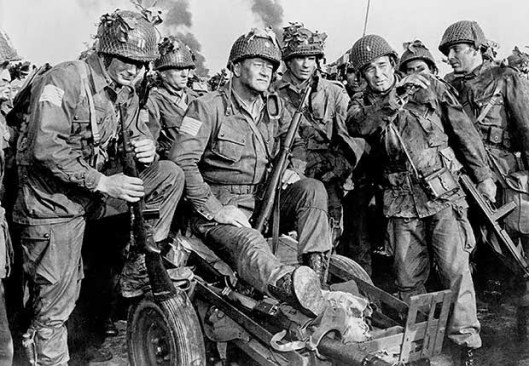
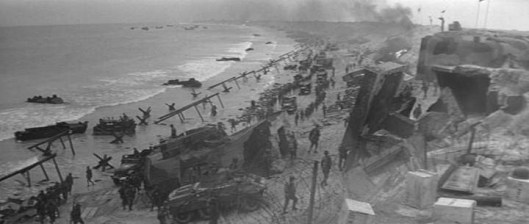
About two years ago, I reviewed Saving Private Ryan, one of that year’s Blindspots, so it seemed only fitting to review another Blindspot pick about D-Day on June 6, the day the world was saved by the Allied forces. The Longest Day may be an older film, but its re-creation of the struggle on the beaches of Normandy is more expansive than Spielberg’s and well worthy of being ranked among the great war movies of all time.

While Saving Private Ryan had a focused plot with developed characters, The Longest Day is much more concerned with the broader history of the D-Day landings: the cautious planning, the German belief that no invasion would come that June, the watching of weather reports, the confusion of battle, and the plethora of individual stories, most of which have a basis in truth. At nearly three hours long, it might have been called The Longest Movie, yet it’s rarely boring. It may take two thirds of its runtime to reach the point that Saving Private Ryan begins, but it offers much more insight into the strategy and planning that went into the assault and the various efforts of the Americans, British, French, paratroopers, and French civilians, as well as the German side, all presented realistically with dialogue in their native tongue.

See the source image

Saving Private Ryan may be known for its battle scenes, but The Longest Day is no slouch either, depicting the invasion on an impressively epic scale. After the ships hit the beaches, there are a number of jaw-dropping aerial tracking shots that offer an incredible view of the battlefield, and without CGI, I can only imagine the work that went into creating such carefully orchestrated scenes. The fact that many of the cast and crew actually saw action on D-Day and contributed their first-hand accounts, along with many of those who are actually depicted in the film, only adds to the authenticity of the production, something no film in the future could hope to match.

The one thing The Longest Day doesn’t have is clearly defined characters, despite a cast jam-packed with stars of the day. It may have won deserving Oscars for its cinematography and special effects, but there’s a reason it didn’t get any acting nominations, simply because there’s not enough for any one actor to do.  John Wayne, Henry Fonda, and Robert Mitchum are probably the biggest stars, but you’ll likely recognize the names or faces of Red Buttons, Jeffrey Hunter, Roddy McDowall, Rod Steiger, Richard Burton, Sean Connery, and Peter Lawford, to name only a few. With such a who’s who of talent, it was just a tad disappointing that we spend so little time with any of them, sometimes only a single scene, and don’t always find out what became of them. Yet this is a film about the events rather than the people (the name and rank labels are more for context than for actually keeping track of the characters), and there’s nothing wrong with that, especially with so many triumphant, sad, or ironic episodes throughout that are worth telling but don’t necessarily warrant a movie of their own.

See the source image

My own grandfather was among the men who stormed the beaches of Normandy, and films like Saving Private Ryan and The Longest Day really help me as a detached viewer to appreciate the sacrifices of what was truly the Greatest Generation. As for which film is better, I’m torn. Saving Private Ryan held much more visceral emotion but largely through extreme violence I usually steer clear of; for normal viewing, I think I prefer The Longest Day’s presentation of bloodless action that still denotes the grand and hellish reality of war. Both have their place, one raw and poignant, the other detailed and comprehensive, and I’m grateful to have finally seen both through this Blindspot series. One ship commander tells his men, “You remember it. Remember every bit of it, ’cause we are on the eve of a day that people are going to talk about long after we are dead and gone.” Thanks in part to films like this, he’s absolutely right.

Best line: (said by both an American and a German, an insightful contrast) “Sometimes I wonder which side God is on.”


Rank: List-Worthy (tied with Saving Private Ryan)


© 2019 S.G. Liput
633 Followers and Counting


VC Pick: Patton (1970)

27 Monday May 2019

Posted by sgliput in Movies, Poetry, Reviews, Writing

≈ Leave a comment

Tags

Biopic, Classics, Drama, History, VC Pick, War

See the source image

What wins wars?
It’s a question hard to answer
That no army can refuse.
For if every side could answer it,
No side would ever lose.

What wins wars?
Some would say that it’s commitment
Or resolve to reach the goal.
But commitment breeds fanaticism
If it lacks control.

What wins wars?
Some would point to their resources,
Which are squandered easily.
Some would point to perseverance
Or to strength or bravery.

What wins wars?
All of these are necessary,
But they’re not the final trade.
There’s a risk to every battle;
There’s a price that must be paid.

What wins wars?
‘Tis the soldiers wielding courage
And the strength to persevere,
Those committed to their country,
Without whom we’d not be here.
__________________

MPAA rating:  GP/PG (more of a PG-13 for language)

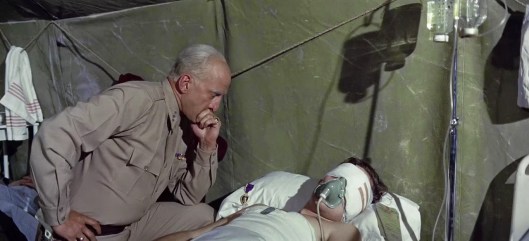
My VC has been urging me to review Patton for some time now, and I figured Memorial Day was the perfect time for this World War II biopic. Patton benefits from an Oscar-winning performance from George C. Scott and the Oscar-winning screenplay from none other than Francis Ford Coppola, who interestingly credits this film’s success with his being allowed to direct The Godfather.

See the source image

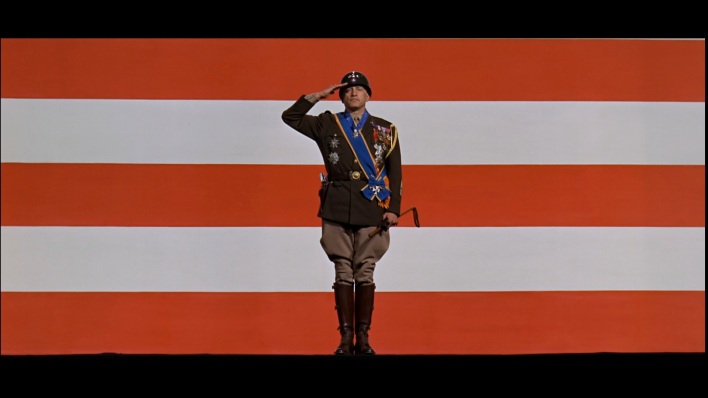
While other actors are good, including Karl Malden as General Omar Bradley, this movie lives and dies by the effectiveness of Scott in the title role, and from the first iconic speech he delivers in the film’s opening, speaking to the troops in front of an enormous American flag, he embodies General George S. Patton’s patriotic resolve and uncompromising will. The score is similarly iconic, providing perfect accompaniment to Patton’s military ambitions, and certain scenes are distinctly memorable, like Patton’s slapping of a shell-shocked soldier or his shoot-off with a swooping enemy plane.

All that said, war movies from the ‘70s aren’t what they are today. While I’m grateful for the lack of extreme content, there’s not much action, with the focus instead on Patton as a character. That’s hardly a bad thing, but at nearly three hours, the plot loses steam at times and didn’t need to be that long. I also found it odd that the film stopped short of Patton’s unexpected death in a car accident, not even mentioning it in an ending footnote.

See the source image

As a fan of history, though, I found Patton a great character study of one of America’s greatest generals, providing insight into his lesser known activities as well, such as his passive role in the D-Day invasion and his many difficulties with censoring himself in interviews. He was a monstrous warmonger to some and a nationalist hero to others, a dichotomy of characterizations that the film embraces in equal measure. Considering its balanced treatment and biographical importance, I can see why it won Best Picture that year, in addition to Best Director, Original Screenplay, Film Editing, Sound, Art Direction, and Actor (which Scott famously refused). It also reminded me that Patton himself was a poet, so I ought to add this film to my list of poems used in movies. It’s a bit too long and slow to watch often, but it definitely ranks among the greatest war biopics.

Best line: (Patton) “Now I want you to remember that no bastard ever won a war by dying for his country. He won it by making the other poor dumb bastard die for his country.”


Rank: List Runner-Up


© 2019 S.G. Liput
632 Followers and Counting


VC Pick: Wyatt Earp (1994)

07 Thursday Mar 2019

Posted by sgliput in Movies, Poetry, Reviews, Writing

≈ Leave a comment

Tags

Biopic, Drama, History, VC Pick, Western

See the source image

When the dust of the town seems to tremble with dread
As it blows and remembers becoming blood red
The last time that many a cowardly head
Ducked down as a bully drew near,

When fingers are itchy and tempers are short,
When fight makes you foolish and flight makes you sport,
And no one is willing, in street or in court,
To hazard their life and career,

When violence is common and wounds are left raw,
And only a few have the courage to draw,
It’s they who must lay down an unbending law
And clear the frontier of its fear.
_______________________

MPAA rating: PG-13

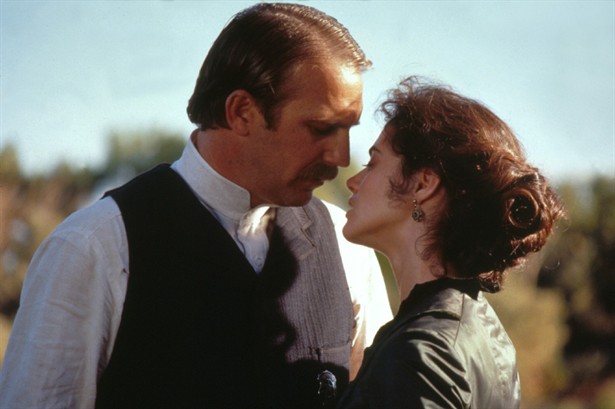
It’s been far too long since I gave my dear Viewing Companion (VC) a chance to pick a movie, and after her choice of Tombstone several months ago, she wanted to compare it to Kevin Costner’s competitor Wyatt Earp. Released just a year after Tombstone, which centered solely on the events surrounding the famous gunfight at the O.K. Corral, Wyatt Earp sought to differentiate itself by painting a much broader picture of Wyatt’s entire life, from his childhood to his later years.

See the source image

For anyone wondering up front, Tombstone is easily the better film (albeit more violent), as the Rotten Tomatoes scores of both will attest. Whereas Wyatt Earp is expansive and rambling, with the O.K. Corral as just another event among many in Earp’s life, the limited scope of Tombstone makes it much more focused, as well as an hour shorter than Wyatt Earp’s exorbitant three-hour-plus runtime. (Honestly, it might have worked better as the miniseries it was originally planned to be.)

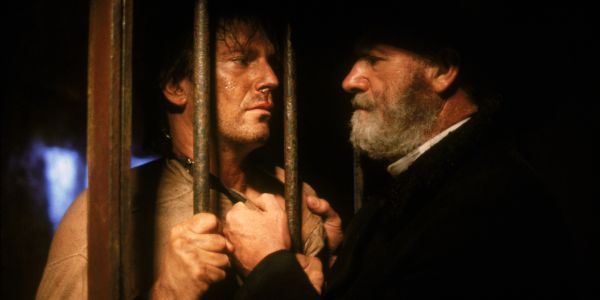
But all that’s not to say that Wyatt Earp doesn’t have its merits. My VC called it “an admirable attempt” at presenting Earp’s full story, and it did give more insight into what formed him into the cold and fearless lawman he became. Story elements like his tragic first marriage or how his father (Gene Hackman) saved him from a particularly low period in his life certainly add to his character, with details Tombstone didn’t have the time or inclination to include. Plus, the performances are solid throughout with an all-star cast to rival that of Tombstone. I must mention the Lost alert for Jeff Fahey as Ike Clanton, but many will also recognize Mark Harmon, Jim Caviezel, Bill Pullman, JoBeth Williams, Isabella Rossellini, Catherine O’Hara, Tom Sizemore, Adam Baldwin, and Tea Leoni. And I mustn’t forget Dennis Quaid as the TB-ridden Doc Holliday, with Quaid’s commitment evident in how gaunt and sickly-looking he became for the role.

See the source image

Everyone does a fine job in the acting department, but again they rarely compare with their Tombstone counterparts. As well as Quaid does, he’s no match for Val Kilmer’s career-best role as Holliday, just as Kurt Russell overshadows Costner, though I can see Costner’s darker interpretation being more true to history. The friendship between the two of Earp and Holliday is definitely better defined and presented in Tombstone.

Yet it’s mainly in the comparison that Wyatt Earp falls short; on its own, it’s still a good film with more than a few strong moments exemplifying Earp’s tough-as-nails persona. James Newton Howard’s sweeping score also elevates it as a western. If you can get Tombstone out of the back of your mind, Wyatt Earp proves to be a comprehensive and well-produced history lesson, with plenty of creative license that acknowledges how history becomes legend.

Best line: (Doc Holliday) “Dave Rutabaugh is an ignorant scoundrel! I disapprove of his very existence. I considered ending it myself on several occasions, but self-control got the better of me.”


Rank: Honorable Mention


© 2019 S.G. Liput
608 Followers and Counting


2019 Blindspot Pick #2: Selma (2014)

03 Sunday Mar 2019

Posted by sgliput in Blindspot, Movies, Poetry, Reviews, Writing

≈ Leave a comment

Tags

Drama, History

See the source image

Down the street, there marched a throng,
Arm in arm to right the wrong
Of rights unequal for so long.

Their very presence was a cause
Of hate for some, for some applause,
But hate had hold upon the laws.

These laws to justice were opposed,
And so they marched and re-exposed
The rights the Founders first proposed.

Change is born from word and deed,
From marching feet and wounds that bleed,
And truth we may not want but need.
____________________________

MPAA rating: PG-13 (for street violence and language)

I had wanted to review Selma in February in honor of Black History Month, but as usual this year, I’m a little late. At least now I’m on track with the whole one-Blindspot-per-month schedule. As I expected when I chose it as a Blindspot, Selma turned out to be an ideal choice for Black History Month, covering an important period of the civil rights movement and offering a compelling portrayal of the man behind so much of it, Dr. Martin Luther King, Jr.

See the source image

David Oyelowo plays Dr. King, and I’m still shocked that he wasn’t even nominated for a Best Actor Oscar that year. It’s a career-defining performance that reminded me of Gary Oldman’s turn as Winston Churchill in Darkest Hour, in that it presented a great man and what made him great while depicting his low moments and acknowledging his imperfections. Oyelowo especially excels in the reenactments of King’s impassioned and eloquent speeches, and the supporting cast is equally stellar, from Carmen Ejogo as his long-suffering wife to Tom Wilkinson as a grudgingly helpful President Johnson. The whole ensemble contributes to an engagingly personal history lesson, from established actors like Tim Roth and Oprah to then-newcomers who have become more well-known in the years since, such as Lakeith Stanfield and Tessa Thompson.

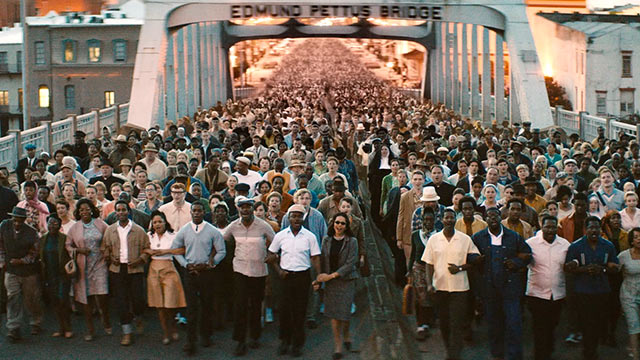
My VC thought Selma had the slight feel of a TV movie, and some critics have nitpicked its historical accuracy, but more often than not, Selma felt to me like watching real, immediate history, which is the best compliment that can be offered to a historical drama. It presents uncomfortable truths tastefully, such as the doubts surrounding King’s potential adultery, and shows the horrors of hate and prejudice in ways that are powerful but not graphic. While King certainly preaches, the film doesn’t too much, letting its story develop its themes, such as non-violence; for example, King’s assertions that their efforts need to be noticed by white America are fulfilled when the Selma march is joined by white religious leaders and supporters from across the country, lending greater numbers and prominence to the event.

See the source image

I don’t know why it took so long for me to watch Selma, but I’m glad I did, even if I’m left annoyed that it didn’t get more Oscar love that year. (It did win Best Original Song for “Glory,” which ironically was the one thing I didn’t care for, not being a fan of rap.) The only criticism I have is that it might be hard to keep track of all the characters if you’re unfamiliar with the history. Nevertheless, this feels like an essential film for not just black history but American history. With its laudable lead performance and rousing conclusion, Selma deserves to be ranked among the greatest historical films.

Best line: (Dr. King) “Our lives are not fully lived if we’re not willing to die for those we love, for what we believe.”


Rank: List-Worthy


© 2019 S.G. Liput
608 Followers and Counting


2018 Blindspot Pick #8: Dear Zachary: A Letter to a Son About His Father (2008)

28 Sunday Oct 2018

Posted by sgliput in Blindspot, Movies, Poetry, Reviews, Writing

≈ 2 Comments

Tags

Documentary, History


See the source image

A normal day, no thought of death—
Till one call makes me catch my breath,
And all at once, the world I knew
Is marred by news that can’t be true.

It seems just yesterday we spoke,
And just this morning both awoke,
And now before the day’s complete,
It’s only one whose heart can beat.

“Why?” is foremost in my mind,
Which can’t be answered by mankind.
We only know one evildoer
Dared to make good people fewer.

Once anger, blame, and heartache fade,
And all my searchings have been prayed,
My memories of you remain,
And love of them must keep me sane.
_______________________

MPAA Rating:  Not Rated (a few F words, but most of the content is PG-13 level)

I haven’t had much time for anything other than school lately, but I don’t want to forget about my Blindspot picks this year. Some of them, and quite a few others I’ve seen since starting this blog, I owe to MovieRob. His seemingly non-stop movie-watching/reviewing has introduced me to plenty of hidden gems (many of which I’ve still yet to see), but when he ranked a documentary called Dear Zachary among his favorite films of all time, I knew I had to check it out. Plus, I loved director Kurt Kuenne’s time-hopping Shuffle, another MovieRob recommendation and my favorite Blindspot from last year, so I was curious to explore his previous work.

As some may know, I’m not the biggest fan of documentaries in general, since they’re often well-executed and informative but never have as much entertainment value as a normal movie. Even if it was the best doco ever made, I’d pick a feature film every time if I had the choice (which is why I grade them as a simple “Thumbs Up” or “Thumbs Down”). That being said, Dear Zachary is probably the best documentary I’ve seen, simply because of how engaging it is. This is not a true-life story to watch casually, vaguely absorbing facts as they’re doled out. No, this film strikes deeper because of what a personal project it was for its director and how its focus evolved during filming.

See the source image

Handling everything from music to editing, Kurt Kuenne originally wanted to memorialize his lifelong friend Andrew Bagby, who was murdered after breaking up with the clearly unstable Shirley Turner. Once in custody, Turner announced she was pregnant with Andrew’s son Zachary. To eventually introduce Zachary to the father he’d never know, Kuenne traveled the country to gather interviews with Andrew’s friends and extended family, all of whom attest to what a special and loving man he was. If the story had ended there, it might never have been released to the public, probably remaining a personal collection of bittersweet video recollections.

Yet, as I said, the film’s focus deftly shifts from Andrew to Zachary to Andrew’s long-suffering parents, who face a lengthy legal battle with Shirley, the details of which I won’t spoil. Through it all, Kuenne’s narration manages to be both objective in stating the facts and deeply impassioned about the loss of his friend. His editing sometimes borders on too frantic, spitting out details a bit too fast to keep up, but it imbues the account with an urgency that never lets the viewer’s attention lag. Between his commentary and the heartbreaking interviews with Andrew’s parents, it’s easy to share their heartache at how things turned out and their anger at the miscarriages of justice they endured.

See the source image

Watching Kuenne’s meticulous recap of this tragedy, I couldn’t help but admire his devotion to his departed friend, who I felt I knew well by the end. If I were to suffer the same fate as Andrew Bagby, I’m not sure there would be the same outpouring of grief from friends and relatives, close and distant, but Andrew clearly left behind a legacy that Kuenne captured beautifully. Yet Dear Zachary is as much a love letter to Andrew’s parents as to Andrew himself, representing their Job-like patience and resolve with clear affection. Between the drama of the unfolding crime story and the profoundly personal heartache it leaves, I certainly see why MovieRob is so fond of it. It’s criminal that the Academy didn’t even deign to give it a nomination for Best Documentary. Even if documentaries aren’t my preferred cup of tea, this one is too good to miss.


Rank: Thumbs Way Up


© 2018 S.G. Liput
592 Followers and Counting


Midway (1976)

04 Wednesday Jul 2018

Posted by sgliput in Movies, Poetry, Reviews, Writing

≈ Leave a comment

Tags

Classics, Drama, History, War

See the source image

History tells us when battles were fought
And whether they meant more than others or not,
But those who once knew them
And had to live through them
Experienced more than the lessons now taught.

A few passive words on a page about war,
Discussing the facts of who died and what for,
Are hardly precise
To recount sacrifice
Or the bloody-badged heroes on some foreign shore.

It’s hell, they say; so, we imagine the worst
From comfortable couches, no terror, no thirst,
So free to be blind
That we must be reminded
That freedom must be paid in sacrifice first.
________________________

MPAA rating: PG (PG-13 would be better due to frequent profanity)

I couldn’t let July 4th pass without reviewing a patriotic war movie, and since I’d seen it once a long time ago, Midway seemed ripe for a rewatch. One of the last big war films of yesteryear, Midway distinguishes itself less in the story department than in its in-depth overview of the battle and its sprawling cast of famous faces.

See the source image

If you’re looking for some gritty war story with non-stop explosions, this isn’t the film for you. Midway is far more interested in the build-up and strategy of the battle and spends most of its 132-minute runtime on the set-up. Certainly by the end, there are scout planes being sacrificed and battleships defending themselves with barrages of skyward gunfire, but we also get to see how the Americans deciphered Midway as the coded Japanese target, how unexpected illnesses and bad luck brought certain players to the fore, and how each side endeavored to figure out the others’ movements before it was too late. All the background information isn’t exactly boring, but it can get a bit dry…yeah, that’s the word. Yet what it lacks in dynamic entertainment, it makes up for in the sense of getting a comprehensive reenactment of how events played out at a time when the American forces were still on the defensive and sorely in need of a victory.

Midway’s greatest strength is its multitude of familiar actors. Just reading the cast list is a who’s who of both big-name stars of the time and some stars to be: Charlton Heston as Captain Garth and the de facto main character, Henry Fonda as Admiral Nimitz, Robert Mitchum as Vice Admiral Halsey, Hal Holbrook, James Coburn, Glenn Ford, Cliff Robertson, Glenn Corbett, Robert Wagner, Erik Estrada, Tom Selleck, and Dabney Coleman (five years before starring with Henry Fonda again in On Golden Pond). That’s not to say all of them get much time to shine in their cameos; I’m not sure Robert Wagner even spoke at all, but it’s always fun to try and pick out someone you might recognize. Of course, not being as familiar with TV of the ‘60s and ‘70s as my mom or grandfather (who loved this movie), I’m no doubt missing out on the full “look-it’s-so-and-so” experience.

See the source image

In addition to all the western actors is a collection of pretty much every actor of Japanese descent known to American audiences back then (except Mako; where the heck was Mako?), most notably Toshiro Mifune of Rashomon and Seven Samurai fame as Admiral Yamamoto, whose voice was oddly dubbed by Paul Frees. There’s also James Shigeta of Die Hard, Pat Morita of The Karate Kid, Robert Ito of Quincy, M.E., and quite a few others I’m sure I’ve seen on M*A*S*H before. Unlike modern war movie trends, all the Japanese characters speak convenient English, but there’s no effort to demonize them beyond some references to Pearl Harbor. They are simply the opposing side in this life-and-death game of Battleship. Questions of prejudice are raised with the romance of Edward Albert as Heston’s son who falls in love with a Japanese girl (Christina Kokubo), but that story doesn’t get much closure by the end and is present simply to add some human interest to the film.

It’s interesting to note that, despite being a box office hit, Midway is something of a black sheep among war classics, largely because it borrowed many scenes from other films, perhaps to save money on a budget that likely went to casting its prestigious stars. The graininess of certain shots clearly marks them as actual footage, but many of the actual battle scenes are from films like Tora! Tora! Tora!, Away All Boats, and Battle for Britain (at least according to Wikipedia), which now makes me curious to see all those films and spot what was borrowed. Even if its parts were cobbled together to some extent, Midway thrives on its star power and paints both a broad and detailed picture of a decisive World War II battle.

See the source image

On this 4th of July, whether you celebrate it or not, I want to wish all my readers, both foreign and domestic, a Happy Independence Day! Let freedom ring!

Best line: (Admiral Nimitz, after the battle) “It doesn’t make any sense; Admiral Yamamoto had everything going for him: power, experience, confidence. Were we better than the Japanese or just luckier?”


Rank: List Runner-Up


© 2018 S.G. Liput
584 Followers and Counting


For the Love of Spock (2016)

15 Friday Jun 2018

Posted by sgliput in Movies, Poetry, Reviews, TV, Writing

≈ Leave a comment

Tags

Biopic, Documentary, History, Sci-fi

See the source image

Ideas are born and met with scorn
More often than embraced.
It’s hard to tell what might do well
Or else end up disgraced.

That’s why the rise of one franchise
Can be a wondrous thing
When someone’s pitch can find its niche
And gain a following.

Ideas sow seed while sponsors lead,
But icons call for skill,
For one who spans the dreams of fans
To live and prosper still.
__________________

MPAA rating: Not Rated (should be PG-13 for 2 F-words)

I don’t typically watch and review documentaries, but as a lifelong fan of Star Trek, I couldn’t pass up a celebration of Leonard Nimoy and his most iconic role. Funding through Kickstarter, For the Love of Spock  is unique in that Nimoy himself was actually involved in its production until his death in 2015, and his son Adam Nimoy not only finished the doco but turned it into a moving retrospective of his father and their rocky relationship.

See the source image

I love Spock. Who doesn’t love Spock? Whether it’s Nimoy in the original series and films or Zachary Quinto in J.J. Abrams’ reboots, the half-human, half-Vulcan science officer of the Enterprise is a both compelling and surprisingly lovable character, even with his famous emotional reserve. For the Love of Spock dives into the original man behind the ears, from his early acting days to his musical and artistic pursuits to how he and his family reacted to the sudden stardom that Mr. Spock foisted upon them.

Apart from Nimoy and his son, there are a plethora of celebrity interviews that provide commentary of Nimoy’s life, whether the experiences of co-stars like William Shatner and George Takei or the geeky influence he imparted to Neil deGrasse Tyson, Jim Parsons, and J.J. Abrams. It’s a brilliantly edited encapsulation of all that Nimoy and Spock have given popular culture and boasts the emotional resonance of the loss of a legend and some surprising stories of how that legend developed, such as the Jewish origin of Spock’s “Live long and prosper” hand gesture. (You probably can’t see, but I’m doing it right now.) Occasionally, it’s also very funny, as when it recaps Nimoy singing “The Ballad of Bilbo Baggins,” which is possibly the biggest what-the-heck moment I’ve seen all year and which I had to include below.

See the source image

As I said, I don’t often watch documentaries, but I’ve liked the few I’ve seen, with For the Love of Spock up there among the best. I use a simpler “Thumb” system for docos since they’re harder for me to compare to narrative films, but this is undoubtedly worth Two Thumbs Up. Perhaps certain periods aren’t covered in as much detail, like the original films or Nimoy’s first autobiography I Am Not Spock, but Star Trek geeks and semi-geeks alike will find plenty to enjoy.


Rank: Two Thumbs Up


© 2018 S.G. Liput
582 Followers and Counting

Only the Brave (2017)

31 Thursday May 2018

Posted by sgliput in Movies, Poetry, Reviews, Writing

≈ Leave a comment

Tags

Biopic, Disaster, Drama, History, Thriller

See the source image

In its hearth, the fire crackles,
Warms us from its tabernacle,
And it sinisterly cackles,
Jailed in generosity.

“Soon,” it says between its spitting,
“It won’t be just logs I’m splitting.
Homes and dreams will be more fitting
Feeding my ferocity.

“While I bide here, curbed and cringing,
Brothers have I elsewhere singeing,
None to stop their brutal, binging,
Burning bellicosity.

“Few can stop me once I’ve started,
Once from prison I’ve departed.
Brace your brave and lionhearted
For my animosity.”
______________________

MPAA rating: PG-13

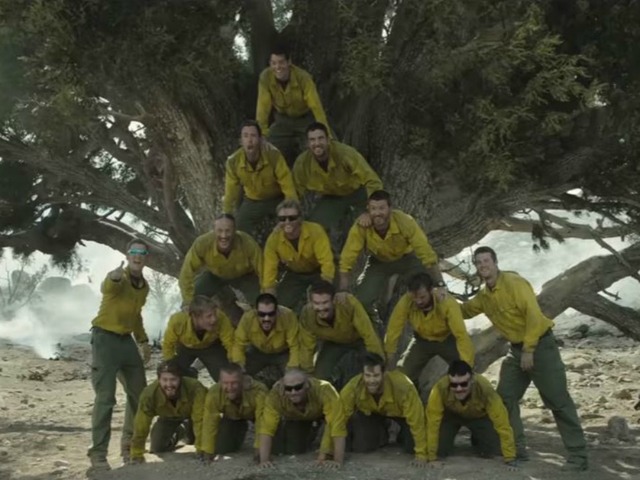
Yes, I’m reviewing another disaster movie, but whereas The Hindenburg was about a major historical incident, Only the Brave focuses on a much more down-to-earth disaster which can affect anyone: wildfires. Though I’ve been told only you can prevent them, it’s real-life heroes who do the actual work of keeping them at bay once they get out of control, and one such group of heroes were the Granite Mountain Hotshots, a firefighting team from Prescott, Arizona.

See the source image

Josh Brolin plays Superintendent Eric Marsh, who believes in his intuition and experience enough to rally his own team of certified Hotshots, firefighters who would be on call to answer both local and national fire emergencies. To that end, he recruits both old friends and new blood, including Brendan McDonough (Miles Teller), a loser by all definitions who finds in this new job a chance to renew his pathetic life. The training, teasing, and camaraderie that come with the Hotshot certification are quite comparable to what you see in military movies, and the successes and failures are likewise felt deeply. McDonough’s second chance at life is also inspiring alongside the ambitions of Marsh, who sees himself in the younger man’s struggles.

The effects recreating infamous fires are brilliantly done, while the excellent cast provide both likable characterization and insight into the methods and struggles of the firefighting business, including the toll it takes on their family, such as Jennifer Connelly as Marsh’s long-suffering wife. I suppose my only complaint (Spoiler!) is that I didn’t know what kind of movie Only the Brave would become by the end and was thus unprepared for a certain tragic turn of events. Those aware of the true story surely knew going in, but let’s just say this is as much a memorial movie as it is a disaster one, and it caught me off-guard, which isn’t even really a criticism since it does both very effectively. It’s a well-acted tribute to the kind of heroism that is all too often overlooked.

See the source image

Best line: (Duane) “You gotta ask yourself, ‘What can I live with, and what can I die without?’”


Rank: List Runner-Up


© 2018 S.G. Liput
574 Followers and Counting


VC Pick: The Hindenburg (1975)

27 Sunday May 2018

Posted by sgliput in Movies, Poetry, Reviews, Writing

≈ 3 Comments

Tags

Disaster, Drama, History, Mystery, Thriller, VC Pick

See the source image

Surely luxury entails
Safety in its fine details.
Once you’re paying through the nose
You need not doubt the practiced pros.

Once your travel’s well along,
Who’d dare think something might go wrong?
How could pride descend to panic?
Ask the Hindenburg and Titanic.
_________________

MPAA rating: PG

One of the many disaster movies of the 1970s, The Hindenburg will never go down as one of the best of its genre, but it’s by no means among the worst either, despite the pretty scathing reviews it has endured over the years. My VC happens to be quite fond of it, and while her appreciation dwarfs my own, I still consider it a solid film made memorable by its spectacular climax.

See the source image

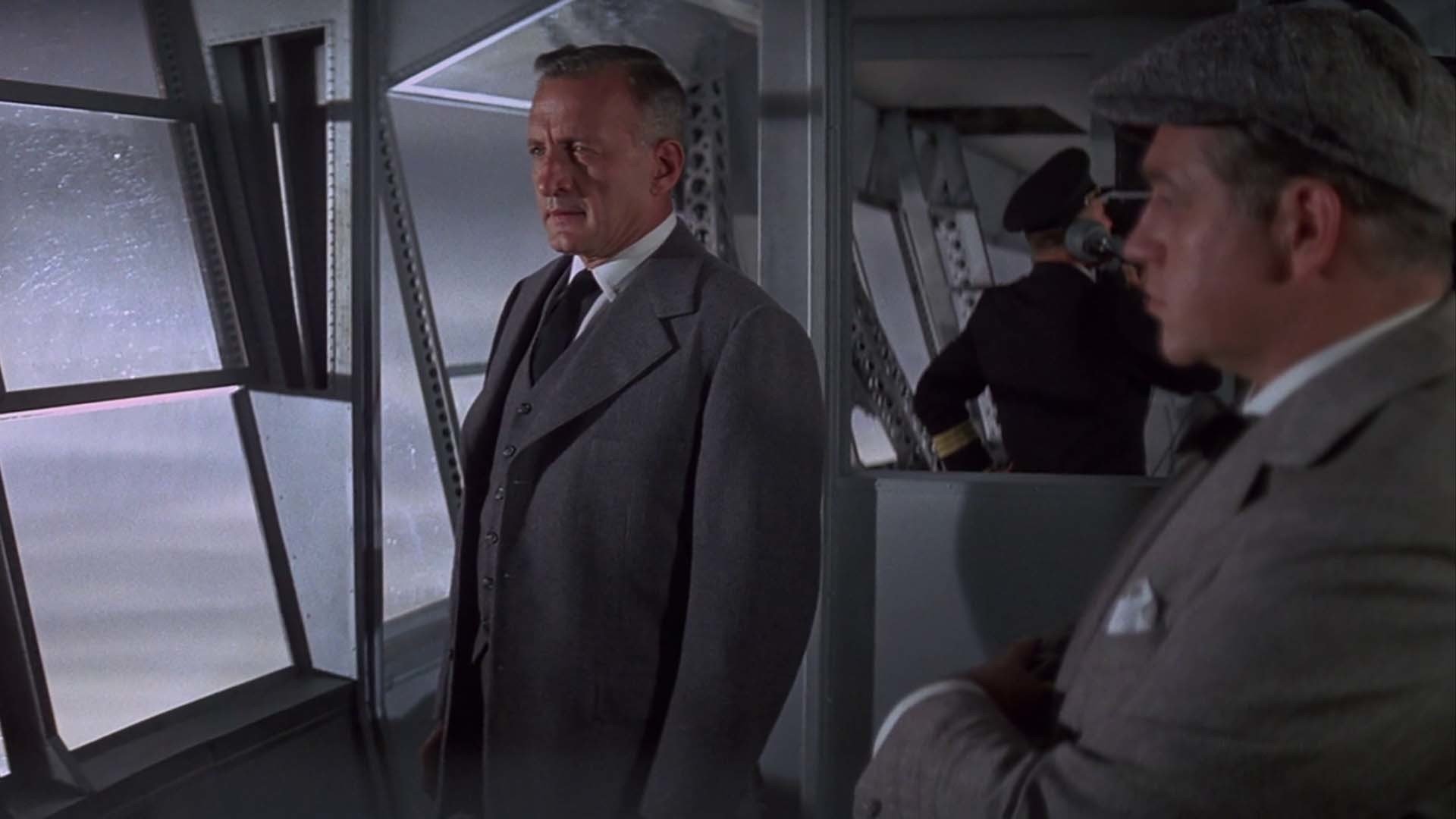
One thing everyone should know going in is that this movie is historically inaccurate on many fronts, despite a largely faithful re-creation of the airship itself and a collection of characters based on real people. The main character is Colonel Franz Ritter (George C. Scott), a decorated German air officer who is tasked by Goebbels with preventing a threatened attack on the Nazis’ prize zeppelin, which flies with highly flammable hydrogen rather than helium. While many theories have been proposed on what caused the Hindenburg’s destruction, the movie goes the resistance conspiracy route, which has never been proven but works as a potential reason for what happened.

Scott does well as usual, and the fact that he plays a Nazi is mitigated by his distaste for the regime in light of some recent tragedies. The rest of the cast is full of recognizable names and faces, all of whom are suspects in Ritter’s investigation, including Anne Bancroft as a countess he knows, a young William Atherton as an airship crewman, and René Auberjonois and Burgess Meredith as a pair of gamblers. Having watched a lot of Everybody Loves Raymond recently, I also spotted two recurring stars in Katherine Helmond as a passenger and Charles Durning as the Hindenburg’s captain.

See the source image

The build-up during the zeppelin’s flight, as Ritter scrutinizes everyone’s motives and opportunity, is unavoidably slow, but the tension does grow as the voyage comes to its historical end. The suspense is a lot like Titanic in that you know generally what will happen and are just waiting for the shoe to drop, and it’s worth it when it does. The Oscar-winning effects are dated but still impressive, and the re-creation of the accident is chaotic and brilliant as the screen fades to black-and-white and seamlessly works in real footage of the Hindenburg’s crash, ending with the iconic radio recording of a terrified onlooker. It’s a case where the last ten minutes makes the rest worthwhile, but you could also just watch the last ten minutes, sacrificing context to save time. Either way, despite being in a film full of historical liberties, it’s an excellent disaster sequence, which alone ought to disprove this film’s harsher critics.

Best line: (Captain Lehmann, ironically as they set off) “I’m to go to Washington to get us helium.”   (Ritter) “I wish we had it this trip.”


Rank: Honorable Mention


© 2018 S.G. Liput
574 Followers and Counting
 

← Older posts
Newer posts →

Recent Posts

  • We Didn’t Start 2025 (Recap)
  • NaPoWriMo 2025 Recap (Finally)
  • Sonic the Hedgehog 3 (2024)
  • It Happened One Night (1934)
  • Spellbound (2024)

Recent Comments

associatesofshellymann's avatarassociatesofshellyma… on My Top Twelve La La La So…
Kit's avatarKit Nichols on Bonnie and Clyde (1967)
lifelessons's avatarlifelessons on Look Back (2024)
Carol Jackson's avatarCarol Jackson on The Thief of Bagdad (1940…
Stephen's avatarStephen on Love Story (1970)

Archives

  • January 2026
  • December 2025
  • May 2025
  • April 2025
  • March 2025
  • February 2025
  • January 2025
  • December 2024
  • May 2024
  • April 2024
  • March 2024
  • February 2024
  • January 2024
  • December 2023
  • November 2023
  • October 2023
  • September 2023
  • July 2023
  • June 2023
  • May 2023
  • April 2023
  • March 2023
  • February 2023
  • January 2023
  • December 2022
  • November 2022
  • October 2022
  • September 2022
  • August 2022
  • July 2022
  • June 2022
  • May 2022
  • April 2022
  • March 2022
  • February 2022
  • January 2022
  • December 2021
  • November 2021
  • October 2021
  • September 2021
  • August 2021
  • July 2021
  • June 2021
  • May 2021
  • April 2021
  • March 2021
  • February 2021
  • January 2021
  • December 2020
  • November 2020
  • October 2020
  • September 2020
  • August 2020
  • July 2020
  • June 2020
  • May 2020
  • April 2020
  • March 2020
  • February 2020
  • January 2020
  • December 2019
  • November 2019
  • October 2019
  • September 2019
  • August 2019
  • July 2019
  • June 2019
  • May 2019
  • April 2019
  • March 2019
  • February 2019
  • January 2019
  • December 2018
  • November 2018
  • October 2018
  • September 2018
  • August 2018
  • July 2018
  • June 2018
  • May 2018
  • April 2018
  • March 2018
  • February 2018
  • January 2018
  • December 2017
  • November 2017
  • October 2017
  • September 2017
  • August 2017
  • July 2017
  • June 2017
  • May 2017
  • April 2017
  • March 2017
  • February 2017
  • January 2017
  • December 2016
  • November 2016
  • October 2016
  • September 2016
  • August 2016
  • July 2016
  • June 2016
  • May 2016
  • April 2016
  • March 2016
  • February 2016
  • January 2016
  • December 2015
  • November 2015
  • October 2015
  • September 2015
  • August 2015
  • July 2015
  • June 2015
  • May 2015
  • April 2015
  • March 2015
  • February 2015
  • January 2015
  • December 2014
  • November 2014
  • October 2014
  • September 2014
  • August 2014
  • July 2014
  • June 2014
  • May 2014
  • April 2014
  • March 2014
  • February 2014
  • January 2014
  • December 2013

Categories

  • Blindspot
  • Blogathon
  • Christian
  • Movies
  • Music
  • NaPoWriMo
  • Poetry
  • Reviews
  • TV
  • Writing

Meta

  • Create account
  • Log in
  • Entries feed
  • Comments feed
  • WordPress.com

Recent Posts

  • We Didn’t Start 2025 (Recap)
  • NaPoWriMo 2025 Recap (Finally)
  • Sonic the Hedgehog 3 (2024)
  • It Happened One Night (1934)
  • Spellbound (2024)

Recent Comments

associatesofshellymann's avatarassociatesofshellyma… on My Top Twelve La La La So…
Kit's avatarKit Nichols on Bonnie and Clyde (1967)
lifelessons's avatarlifelessons on Look Back (2024)
Carol Jackson's avatarCarol Jackson on The Thief of Bagdad (1940…
Stephen's avatarStephen on Love Story (1970)

Archives

  • January 2026
  • December 2025
  • May 2025
  • April 2025
  • March 2025
  • February 2025
  • January 2025
  • December 2024
  • May 2024
  • April 2024
  • March 2024
  • February 2024
  • January 2024
  • December 2023
  • November 2023
  • October 2023
  • September 2023
  • July 2023
  • June 2023
  • May 2023
  • April 2023
  • March 2023
  • February 2023
  • January 2023
  • December 2022
  • November 2022
  • October 2022
  • September 2022
  • August 2022
  • July 2022
  • June 2022
  • May 2022
  • April 2022
  • March 2022
  • February 2022
  • January 2022
  • December 2021
  • November 2021
  • October 2021
  • September 2021
  • August 2021
  • July 2021
  • June 2021
  • May 2021
  • April 2021
  • March 2021
  • February 2021
  • January 2021
  • December 2020
  • November 2020
  • October 2020
  • September 2020
  • August 2020
  • July 2020
  • June 2020
  • May 2020
  • April 2020
  • March 2020
  • February 2020
  • January 2020
  • December 2019
  • November 2019
  • October 2019
  • September 2019
  • August 2019
  • July 2019
  • June 2019
  • May 2019
  • April 2019
  • March 2019
  • February 2019
  • January 2019
  • December 2018
  • November 2018
  • October 2018
  • September 2018
  • August 2018
  • July 2018
  • June 2018
  • May 2018
  • April 2018
  • March 2018
  • February 2018
  • January 2018
  • December 2017
  • November 2017
  • October 2017
  • September 2017
  • August 2017
  • July 2017
  • June 2017
  • May 2017
  • April 2017
  • March 2017
  • February 2017
  • January 2017
  • December 2016
  • November 2016
  • October 2016
  • September 2016
  • August 2016
  • July 2016
  • June 2016
  • May 2016
  • April 2016
  • March 2016
  • February 2016
  • January 2016
  • December 2015
  • November 2015
  • October 2015
  • September 2015
  • August 2015
  • July 2015
  • June 2015
  • May 2015
  • April 2015
  • March 2015
  • February 2015
  • January 2015
  • December 2014
  • November 2014
  • October 2014
  • September 2014
  • August 2014
  • July 2014
  • June 2014
  • May 2014
  • April 2014
  • March 2014
  • February 2014
  • January 2014
  • December 2013

Categories

  • Blindspot
  • Blogathon
  • Christian
  • Movies
  • Music
  • NaPoWriMo
  • Poetry
  • Reviews
  • TV
  • Writing

Meta

  • Create account
  • Log in
  • Entries feed
  • Comments feed
  • WordPress.com

Blog at WordPress.com.

  • Subscribe Subscribed
    • Rhyme and Reason
    • Join 814 other subscribers
    • Already have a WordPress.com account? Log in now.
    • Rhyme and Reason
    • Subscribe Subscribed
    • Sign up
    • Log in
    • Report this content
    • View site in Reader
    • Manage subscriptions
    • Collapse this bar