
• Home
  • About Me
  • The List
  • THE LIST (2016 Update)
  • THE LIST (2017 Update)
  • THE LIST (2018 Update)
  • THE LIST (2019 Update)
  • THE LIST (2020 Update)
  • THE LIST (2021 Update)
  • THE LIST (2022 Update)
  • Top Twelves and More
  • The End Credits Song Hall of Fame

Rhyme and Reason

~ Poetry Meets Film Reviews

Rhyme and Reason

Tag Archives: Romance

Guys and Dolls (1955)

17 Wednesday Apr 2024

Posted by sgliput in Movies, NaPoWriMo, Poetry, Reviews, Writing

≈ Leave a comment

Tags

Classics, Comedy, Musical, Romance

(For Day 17 of NaPoWriMo, the prompt was for a poem inspired by a piece of music and sharing its title. But being rather late and tired, I instead decided to honor International Haiku Poetry Day and keep this entry short.)

Bets and debts galore
Wring romance from selfishness.
Gambling pays off.
________________________

MPA rating:  Approved (should be PG)

Out of the many many musicals from the Golden Age of Hollywood, there are a select few that became institutions in my house growing up, the likes of The Music Man, Singin’ in the Rain, and The Wizard of Oz. As I work on my own musical project, I read a book recently about the merits of various musical productions, and the author had tremendous respect for Guys and Dolls, Frank Loesser’s ‘50s-streetwise adaptation of two Damon Runyon short stories. It was a show/film I had never bothered to seek out, at least until his glowing recommendation.
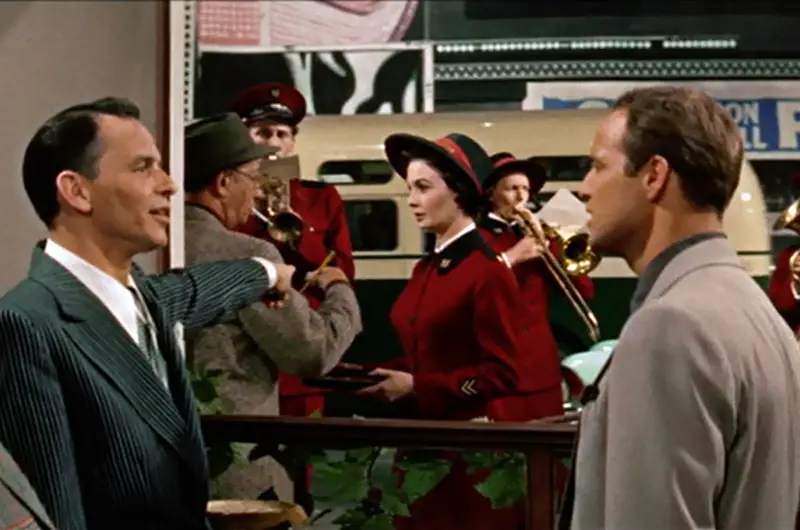
The plot focuses on two couples, gamblers Nathan Detroit (Frank Sinatra) and Sky Masterson (Marlon Brando) and their would-be lady loves, nightclub singer Miss Adelaide (Vivian Blaine, reprising her stage role) and evangelist Sergeant Sarah Brown (Jean Simmons). Evading his fiancee’s marriage hopes and trying to scrape together enough money for a secret craps game venue, Detroit bets Masterson that he can’t woo the self-righteous Sarah Brown into a Cuban dinner date, even as she struggles to save her urban mission from closure. Naturally, none of the plans go quite as anticipated.

The book I read praised Guys and Dolls as theatrical plotting at its best, with composer Frank Loesser and book writers Jo Swerling and Abe Burrows masterfully weaving two storylines that depended on each other for resolution. With its idiosyncratic dialogue and shifting focus, I can see the reason for the veneration on a technical level, but I do think the two stories aren’t equally interesting. While Sinatra nails the crooning as expected (his character given more singing opportunities than on stage, I understand), I didn’t really care about his plight of scheduling a gambling venue while being a commitment-fearing jerk toward his long-suffering lover Adelaide (whose voice is also rather grating).

I much preferred the parallel story of Sky Masterson and Sarah Brown. I hadn’t seen Brando in a romantic role before, much less singing, but he had quite the swagger back then, and Simmons is wonderful as the priggish believer who gradually lets her hair down a little. Their banter and romance are the best part of the film, along with Loesser’s array of classic showtunes like “Luck Be a Lady,” “Sit Down, You’re Rockin’ the Boat,” and the title song. I think I’ve developed a soft spot for Sarah’s “If I Were a Bell” especially. Yet despite its good points, Guys and Dolls suffers from being overlong and only half-interesting, weakened further by an oddly rushed ending. It’s a bona fide classic, but some parts are more classic than others.

Best line: (Detroit, urging his friend to speak at the mission) “Southstreet, give your testimony.”   (Benny Southstreet) “I plead the fifth commandment.”

Ranking:  List Runner-Up

© 2024 S.G. Liput
792 Followers and Counting
The Tunnel to Summer, the Exit of Goodbyes (2022)

09 Tuesday Apr 2024

Posted by sgliput in Movies, NaPoWriMo, Poetry, Reviews, Writing

≈ Leave a comment

Tags

Animation, Anime, Drama, Fantasy, Foreign, Romance

(For Day 9 of NaPoWriMo, the prompt was for an ode to an everyday object. While it may not be in everyone’s house, I’m sure many have a manuscript or poems or drawings they’re too nervous to share with the world, so I addressed this irregular sonnet to them.)

You mock me, you pile of papers,
You unread manuscript, hiding in the corner.
You say “Am I not fruit of all your labors?
Am I not worth another pair of eyes?
Is it better to be a cipher than a mourner,
Lest someone dare to share or criticize?
I’ll outlive you, your fear and blushing cheeks;
I’ll wait till someone else will spy my corner
And read what you had guarded from critiques
And grieve its author’s sad, unknown demise.”
I know that’s what you’re saying as time flies,
The time that’s killing me and stalling you.
The world can’t know what’s missing till it peeks,
Until the shy apply for their debut.
____________________

MPA rating: Not Rated (should be PG for some drama but quite clean)

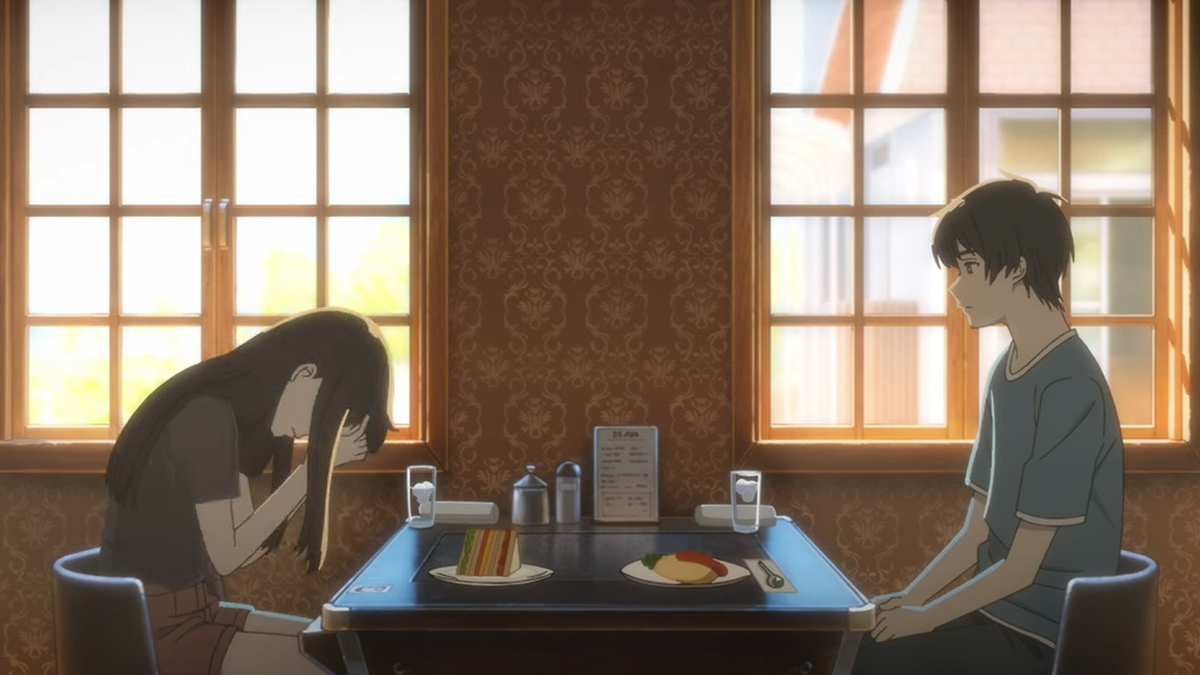
While not every international run can be on the level of Your Name or The Boy and the Heron, I am quite glad that smaller anime films are getting at least a limited release in American theaters, even if it takes a year to get here. The Tunnel to Summer, the Exit of Goodbyes may have a rather cumbersome title, but it’s one of the better under-the-radar anime movies, with appealing animation and a nice short runtime to deliver its poignant themes.

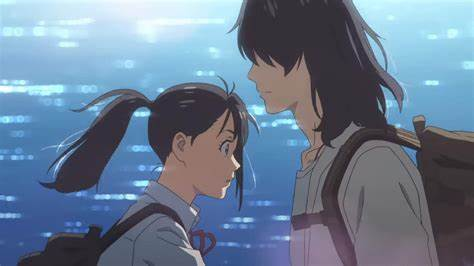
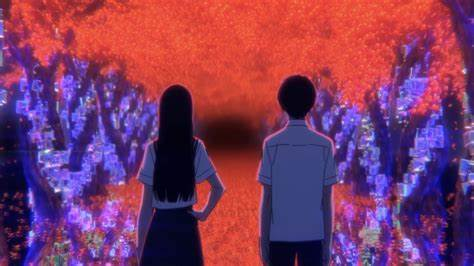
Kaoru is a high school student living in quiet grief with his abusive father, and he forms a bond with equally aloof transfer student Anzu, a budding manga artist unsure of her own talent (and inspiring the poem above). The two happen upon the fabled Urashima tunnel, which can supposedly grant a person’s greatest wish for a price. Mirroring the Urashima namesake, which is basically the equivalent of Rip Van Winkle in Japanese folklore, they discover that time passes differently inside the tunnel, where glowing trees line a watery path to their distant wish. After performing experiments on the tunnel’s strange properties, the duo must decide whether their wishes are worth giving up on their current life.

While there are plenty of films with this same romance-plus-supernatural storyline, I liked the natural progression of both, as the two main characters are actually smart about testing the temporal phenomenon, while also growing closer in the process. Though it can’t quite compare in scale or artistry, the film had some similarities to Your Name, and I suspect fans of one will also enjoy the other. It may be largely predictable, but The Tunnel to Summer, the Exit of Goodbyes is a lovely little movie to satisfy fans of star-crossed romance.

Rank:  List Runner-Up

© 2024 S.G. Liput
792 Followers and Counting
2023 Blindspot Pick #4: Jerry Maguire (1996)

06 Tuesday Feb 2024

Posted by sgliput in Blindspot, Movies, Poetry, Reviews, Writing

≈ Leave a comment

Tags

Comedy, Drama, Romance

When you’re on top of the world,
It’s a long way down,
And heavy is the haughty head that’s lost its crown.

When people fall from favor
And drink a bitter cup,
They’re likely to do anything to climb back up.

When rugs are pulled from under
Someone in mid-fall,
They start to prize stability (or alcohol).

When people face their falling,
They break or crack or bounce.
You don’t know which ahead of time, but that’s what counts.
____________________________________

MPA rating: R (for language and one sex scene)

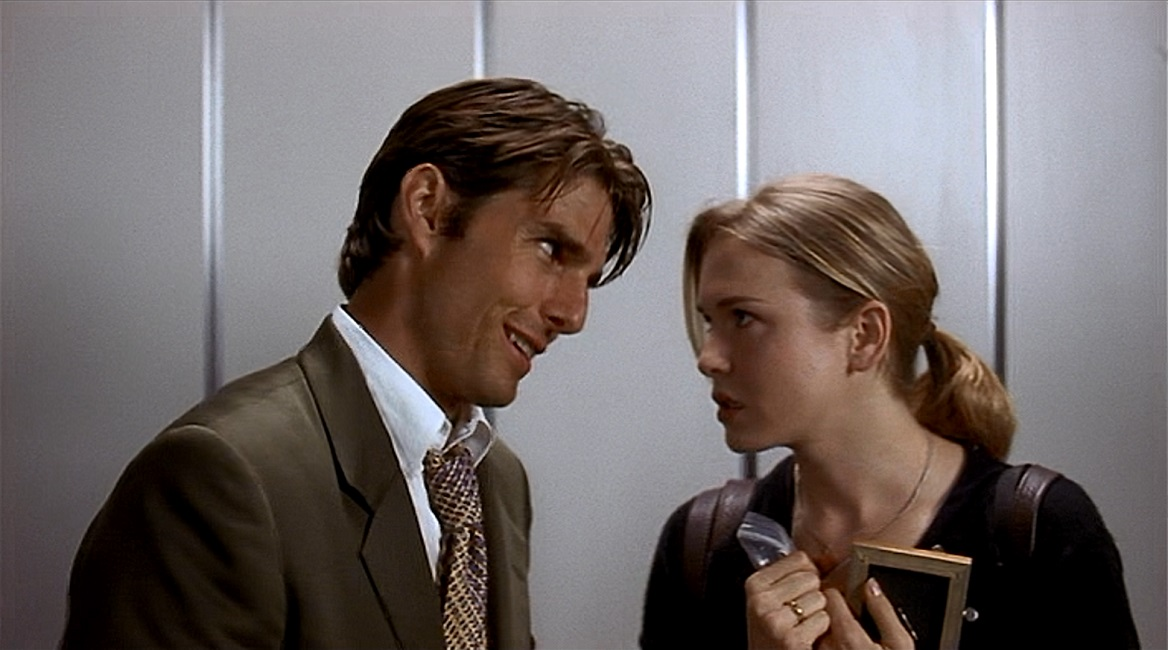
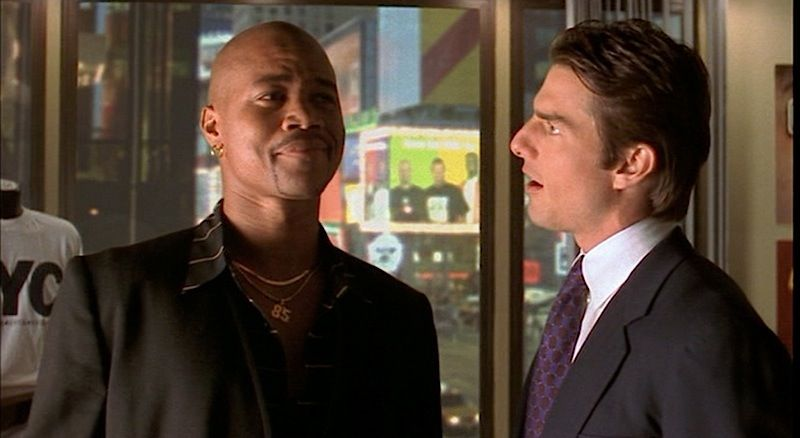
I don’t know why I can’t seem to spit out reviews like I used to, but I’m finally back to continue last year’s overdue Blindspot series. It feels like movies nowadays don’t quite leave the same cultural impact as they once did, with famous lines that everyone recognizes, though there are still some (Hunger Games and Endgame come to mind). Jerry Maguire is the poster child of such an impact, a 1990s rom com that introduced not one but at least three iconic lines into pop culture. So it seemed only right that I should learn the context of the likes of “Show me the money!” and “You complete me,” the Tom Cruise hit that won Cuba Gooding, Jr. an Oscar and showcased the cutthroat world of sports agents.

Being a big fan of writer-director Cameron Crowe’s later film Elizabethtown, I was able to recognize how he recycled elements of Jerry Maguire into that film, which may have factored into why it wasn’t as well received. The set-up is essentially the same: a young hotshot excelling in his field is suddenly brought low by a misjudgment on his part that costs him his job and his shallow girlfriend. The difference is that most of that happens to Orlando Bloom within the first ten minutes of Elizabethtown, while the self-destruction of Maguire (Cruise) is far more gradual, as his attempt at reawakening his conscience leaves him with only one loyal client in football player Rod Tidwell (Gooding) and one sympathetic employee in Dorothy Boyd (Renee Zellweger in her breakout role).

In place of Kirsten Dunst’s manic pixie dream girl in Elizabethtown, Dorothy is a far more down-to-earth presence, a working single mother whose romantic relationship with Jerry carries more nuance while also being a bit hard to read at times. I feel like Bonnie Hunt’s role as her supportive sister is rather overlooked as well. Through all the lows and highs, from arguments over Rod’s obstinate demands to the uncertainty of dating a single mother and how to balance his devotion to both, Tom Cruise proves himself to be a winning leading man yet again, with a natural charisma that leaves no doubt as to how Jerry became such a superstar in his field. I do find it funny, though, that Cruise still hasn’t won an Oscar, while Gooding, Zellweger, Crowe, and fellow co-star Regina King have all gotten their golden statue eventually.

I can certainly see why Jerry Maguire was a hit, with an effective Cameron Crowe script full of passion and personality for its star power to embody, as well as a great soundtrack and plenty of fun cameos. Even though I see why the earlier film is more critically acclaimed, I can’t help but prefer Elizabethtown, which is more unrealistically quirky but also more streamlined in its character arc and generally cleaner and funnier. Maybe it’s just that I’m not into sports, but I’m still glad to have finally seen this ‘90s classic. It completes me (or at least my Blindspot list).

Best line (that I didn’t know originated in this movie): (Jerry, begging Rod to be more agreeable) “Help me help you.”

Rank:  List Runner-Up

© 2024 S.G. Liput
785 Followers and Counting

Journey to Bethlehem (2023)

25 Monday Dec 2023

Posted by sgliput in Christian, Movies, Music, Poetry, Reviews, Writing

≈ Leave a comment

Tags

Biblical, Comedy, Drama, Family, Musical, Romance

Merry Christmas, everybody!

____________________

At the turning of the centuries,
Though no one knew it then,
A babe was born to save the world,
Incarnate God. Amen!

But surely you have heard all this;
By now it might be trite,
The midnight clear, the first Noel,
That timeworn silent night.

It’s easy for familiar truths,
Traditions every year,
To not have quite the gleam they bore
When times were more sincere.

Perhaps we may have changed with time,
But truths stand hard and fast.
Traditions, like God’s promises,
Are comfort, for they last.

Although we know them all by heart,
We need reminding still,
That what the carols advertise
Rings true and always will.
____________________________

MPA rating: PG

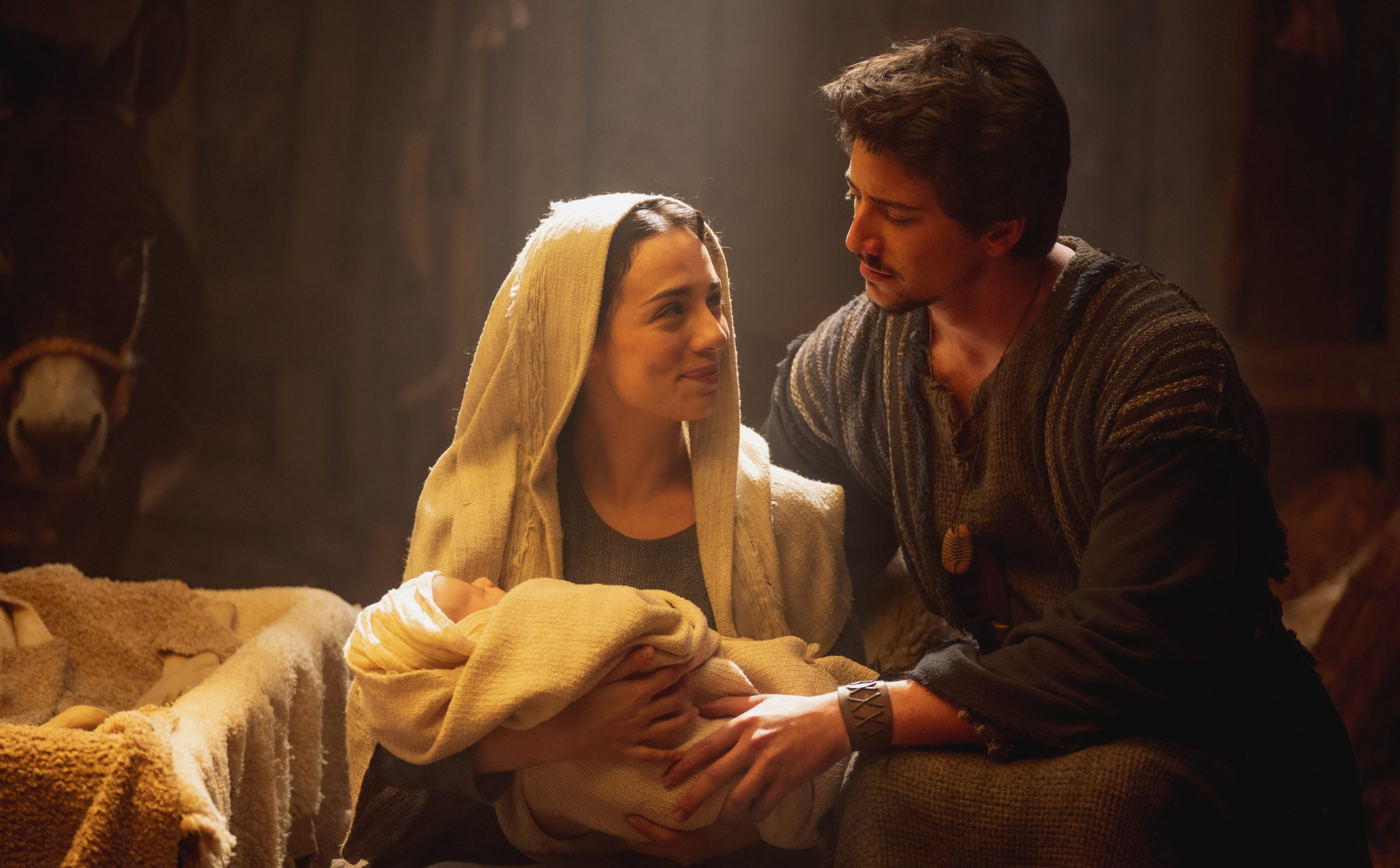
To complete this trilogy of musical posts, here’s a more recent release from this year. I feel like someone, assumedly director and songwriter Adam Anders, watched The Nativity Story and thought to himself, “This would be even better as a musical” and then made it so. Journey to Bethlehem takes the well-trodden Biblical story of Jesus’ birth and injects a pop-music sensibility that both adds entertainment value while also slightly watering it down.

From the second song, in which Mary is bemoaning her expected role of marrying someone she’s never met, I thought that this was like the High School Musical version of the Christmas story, so I felt vindicated when I read that Anders co-wrote the script with Peter Barsocchini, who also wrote all three HSM movies (of which I remain a fan). So the character types and conflicts are all too familiar, yet the actors make the most of them, with Fiona Palomo as Mary and Milo Manheim (a recent Disney star from the Zombies franchise) as Joseph having an easy chemistry and excellent songs both together and solo. The soundtrack delivers on many levels, some better than others, but highlights include the opening title song and “Mother to a Savior and King,” which explores Mary’s own self-doubt. And I mustn’t forget Antonio Banderas as King Herod, who seems to be having fun mugging through his one song “Good to Be King.”

The plot of Journey to Bethlehem was clearly tweaked from the Biblical record to add peril to the climax and to better space out the musical numbers, so I can understand the decisions on a pure story basis.  Yet it felt at times like I was trying to keep track of how many deviations there were from the established narrative. In this film, Herod tries to ignore Rome’s census order but is persuaded to use it solely as a means to find the mother of the foretold Messiah, leading to several close calls where it’s assumed Mary would be immediately recognized as such if she were to be caught. It was also surprising to give a redemption arc to Herod’s son Antipater (Joel Smallbone of the band For King and Country), who gets one of the best songs as well.

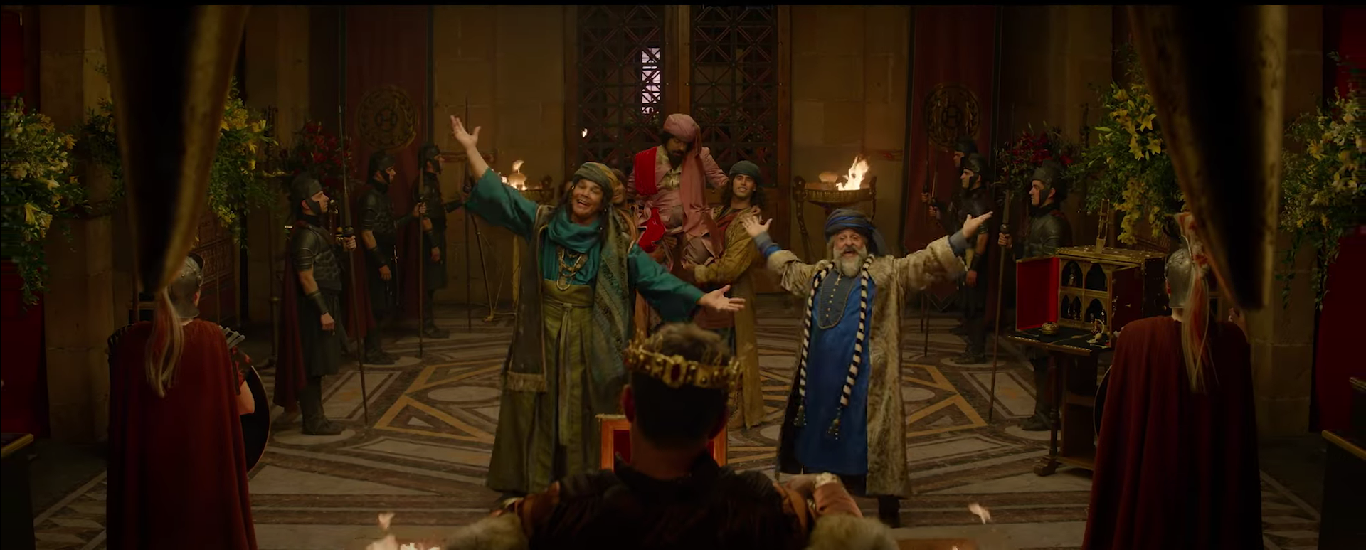
Likewise, the wise men, here a trio of bickering comic relief figures (Rizwan Manji, Geno Segers, Omid Djalili), come to Herod even before the census or Jesus’ birth and then leave for Bethlehem (which isn’t far from Jerusalem) to hang out with the shepherds for months perhaps so that they also are witnesses to the heavenly angel chorus. Plus, there are odd omissions, like the absence of Mary’s acceptance of the role declared by Gabriel (Christian rapper Lecrae) during the Annunciation scene or the inclusion of Zechariah’s muteness without any subsequent depiction of his son’s birth.

Yet for all the little things that nagged at me, Journey to Bethlehem is still an entertaining Christmas film, and I never got the sense that the changes were intentionally trying to subvert or undermine the meaning behind the story, which is refreshing. It also boasts impressive costumes and choreography that are far better than they would have been if this were made ten or fifteen years ago. It’s proof of how far Christian films have come. While I’m not quite sure if this movie rises to the level of a perennial classic to watch every Christmas, it’s still a laudable version of the Nativity with a soundtrack that deserves appreciation even outside its target audience.

Rank:  List Runner-Up

© 2023 S.G. Liput
785 Followers and Counting

2023 Blindspot Pick #1: The Umbrellas of Cherbourg (1964)

15 Sunday Oct 2023

Posted by sgliput in Blindspot, Movies, Music, Poetry, Reviews, Writing

≈ Leave a comment

Tags

Drama, Foreign, Musical, Romance

“Parting is such sweet sorrow,”
Said the bard through Juliet.
It’s bittersweet
Till next we meet
Lest you or I forget.

But sweetness fades with waiting
While bitter amplifies.
By fits and starts,
Two hostage hearts
Will wear new love’s disguise.

And when the parting’s ended
And our hearts meet again,
The memory
Still sweet can be
But only as ‘twas then.
_____________________

MPA rating:  Not Rated (PG-13 seems right)

I’ll admit that October does seem a little late to start on that Blindspot series I announced back in January, but I at least haven’t waited this long to start watching them. I have already seen five of them, but my reviews have been painfully slow in coming. I need to get better at carving out time for them and not being afraid to keep them short. Since I’ve been knee-deep in writing a musical, it seems only right to kick off the Blindspot reviews with an acclaimed foreign musical called Les Parapluies de Cherbourg, or The Umbrellas of Cherbourg.

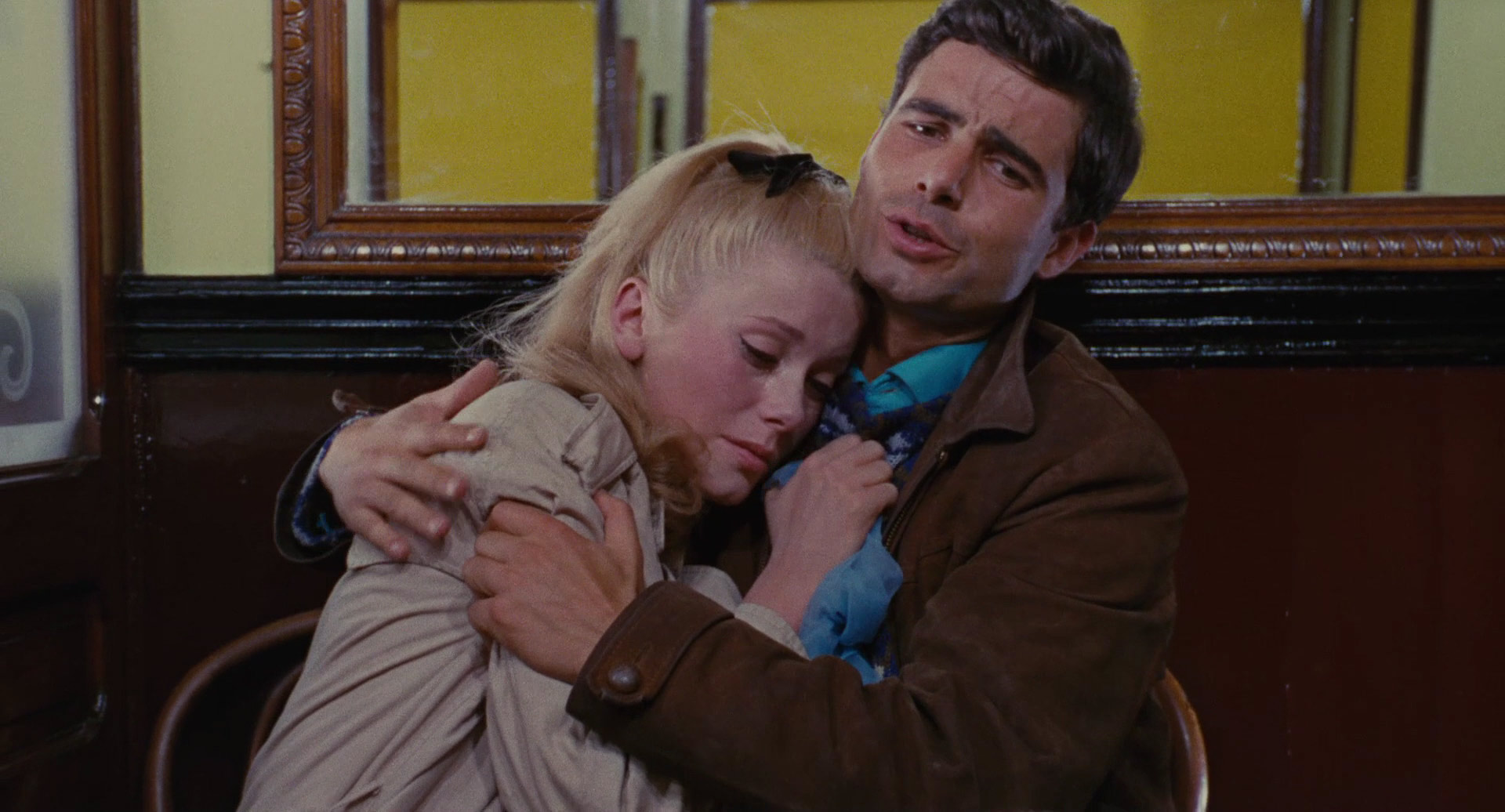
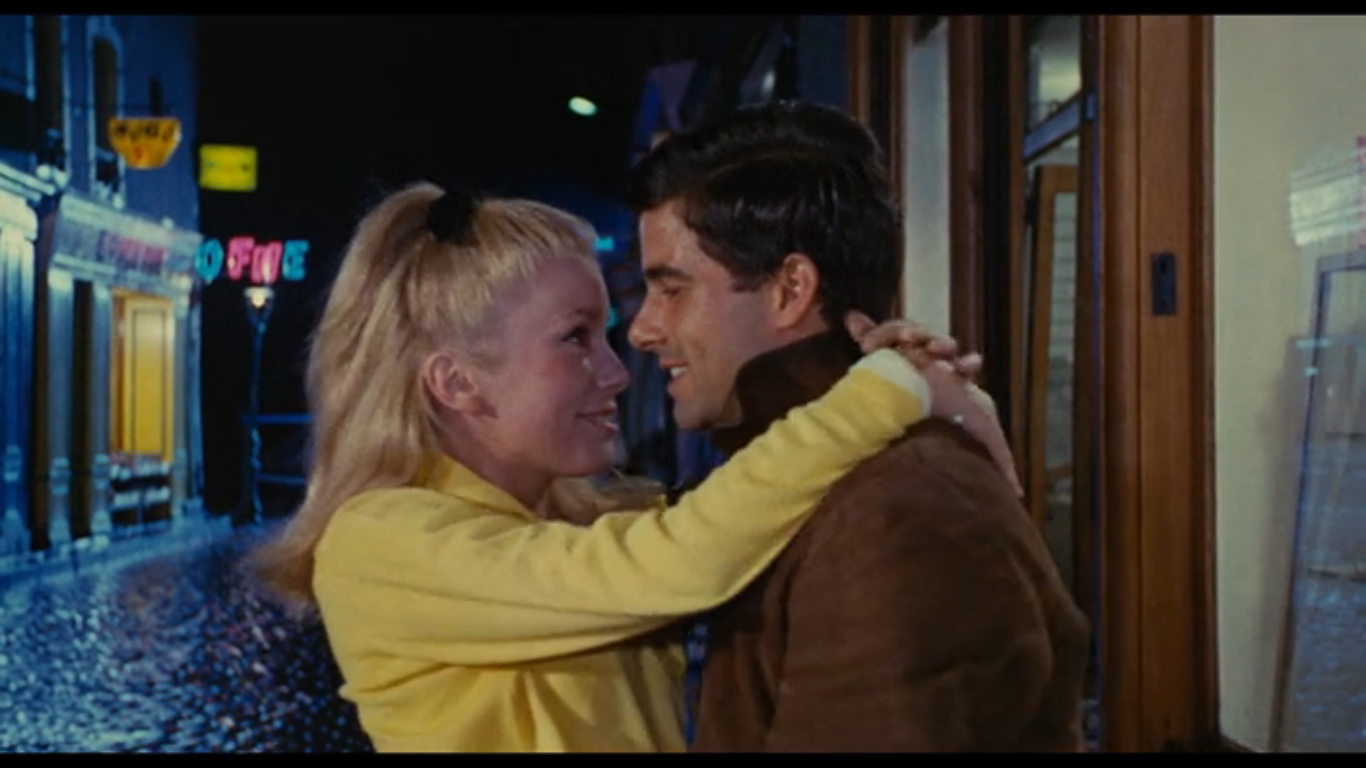
Sung-through entirely in French, the film follows two young lovers, mechanic Guy (Nino Castelnuovo) and umbrella store clerk Geneviève (Catherine Deneuve), whose swooning rendezvous are kept secret from Geneviève’s busybody mother (Anne Vernon). Yet their budding romance is foiled by Guy’s being drafted to fight in the Algerian War. As Geneviève’s mother impresses on her the importance of marrying well, the young girl is faced with a difficult choice and a heartbreaking regret.

I can certainly see why The Umbrellas of Cherbourg is so beloved among cinephiles and stands as one of the quintessential bittersweet romances. While opera had its own long-standing tradition, an original, sung-through musical was quite a novelty for the time and an artistic risk that might not have paid off with lesser artists. But Michel Legrand’s haunting melodies add a tender beauty to the sung dialogue, which would be rather mundane if just spoken. A behind-the-scenes featurette was quite interesting as Legrand was interviewed about his initial struggles developing a theme for each character, an important element of musical writing. I was impressed to learn that all the actors were lip-syncing to other singers’ voices, considering how well Deneuve and Castelnuovo acted in line with their “singing.”

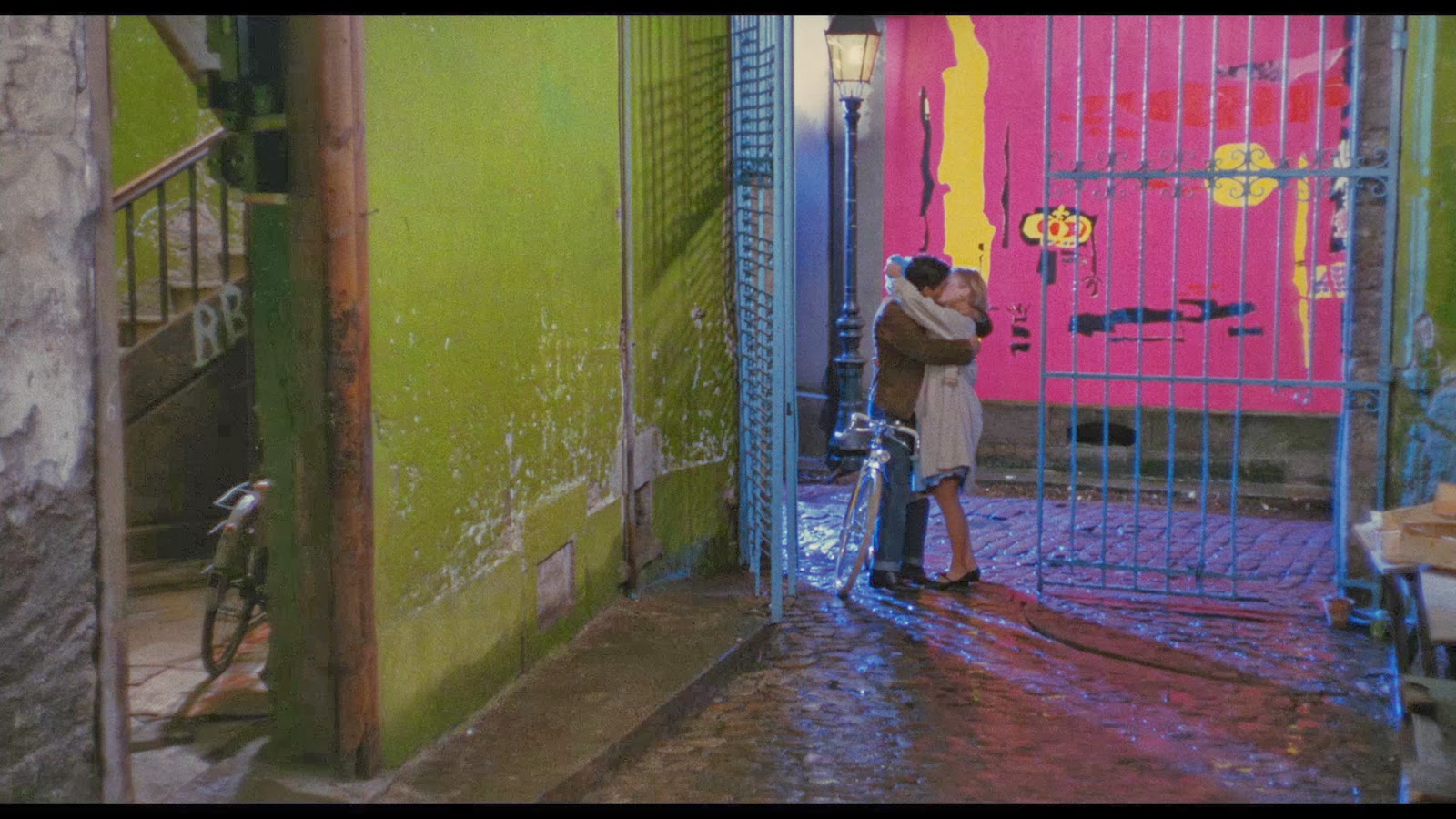
While the music is key to the film’s fame, even earning a Best Original Song Oscar nomination for “I Will Wait for You,” the parting song between Guy and Geneviève (also somehow getting noms for both Original and Adapted Score), the sets and cinematography deserve just as much praise. Considering director Jacques Demy’s previous two films were in black and white, the colors here are as vivid and impressive as Dorothy stepping into Oz, like an interior designer’s wet dream. The rooms and stores have brightly variegated walls that often look freshly painted, Geneviève’s yellow jacket pops against the rainy blue streets, and every choice of paint, costume, and wallpaper feels intentional for the background to accent the scene and give it an iconic look. Rarely does the use of color feel so integral to a film’s identity and success, making the lack of any technical Oscar nominations feel criminal.

If I’m being totally honest, the music tends to sound the same after a while, lacking variety that would keep the middle section from getting rather monotonous and boring. The film’s interest and emotion are highest at the beginning and end, and its final scenes especially have a superb bittersweetness that clearly went on to inspire other films like La La Land. Ultimately, The Umbrellas of Cherbourg feels like a film everyone ought to see at least once, making it a perfect Blindspot pick, but it’s not the kind of musical I’d want to rewatch often or one I would recommend to those musical-haters out there (you know who you are). Even if its narrative loses steam, it is impressive art for both ear and eye and a laudable trailblazer for musical cinema.

Best line: (Geneviève) “Mother, he’s leaving. He’ll be away for two years. I can’t live without him. I’ll die.”  (her mother, Madame Emery) “Stop crying. Look at me. People only die of love in movies.”

Rank: List Runner-Up

© 2023 S.G. Liput
782 Followers and Counting

Suzume (2022)

29 Saturday Apr 2023

Posted by sgliput in Movies, NaPoWriMo, Poetry, Reviews, Writing

≈ 2 Comments

Tags

Animation, Anime, Drama, Fantasy, Meet 'em and Move on, Romance

(For Day 28 of NaPoWriMo, the prompt was for an index-like poem, so I chose the word “door” as my index word for a pair of haikus, since doors are so prominent in this film.)

Opens and closes;
Keep in or keep out; slam it;
Lock it; lose the key.

Don’t dare to open;
Outside the gates; slipping through;
Miss the other side.
____________________

MPA rating: PG

In the same way cinephiles look forward to the next Christoper Nolan or Quentin Tarantino movie, anime fans eagerly await the advent of the next Makoto Shinkai film. I was excited to finally see his latest called Suzume in the theater, months after its Japanese premiere, and it had everything Shinkai does well: pouring rain, desperate running, eye-popping cataclysms, poignant reunions, all rendered in some of the most gorgeous animation this side of KyoAni. Yet it’s hard to forget that everything he creates will inevitably be compared to Your Name, the record-breaking blockbuster that put Shinkai on the international map. It’s a tough comparison, but Suzume still excels at the same kind of emotion-backed fantasy.

Suzume (Nanoka Hara), the title character, is a rural high school girl who directs an attractive visitor named Sota (Hokuto Matsumura) to some nearby ruins for which he is searching. When she follows out of curiosity, she discovers that a long-dormant evil has started breaking into our world to cause disasters, using doorways in abandoned areas as gateways that must be closed. When Sota is inexplicably cursed and transformed into… ahem, a chair, Suzume runs away from home to help him complete his mission, further complicated by a mischievous talking cat. (I loved a brief reference to Whisper of the Heart when the cat is spotted on a train.)

I’ll admit the chair part is a little hard to take seriously at first, especially since it forever labels this movie as “the one where a girl falls in love with a chair.” But if you roll with it, the object does take on greater meaning as a precious heirloom for Suzume, and there’s fun to be had with the absurdity of it. As the plot becomes a buddy road trip across Japan (a “meet-‘em-and-move-on” as I call them), it’s a little hard to believe how many people seem fine with supporting a runaway girl and letting her continue on her way. Yet it’s also an opportunity to take a peek into various lives she passes, which I always enjoy.

It’s interesting that two anime in the same year (this film and Drifting Home) both put a focus on the large number of abandoned areas throughout Japan, including a ferris wheel specifically, places that were once full of life and now have only echoes of what was. True to Shinkai form, the emotions grow with time, and even if Suzume and Sota ultimately just met, the bond and distress born from their relationship are highly affecting at the film’s emotional high points.

Even if I recognize the film’s faults, like the rather thin story fueled by contrivance, Shinkai just has a captivating style that is easy to get sucked into, aided by striking visuals and iconic music by the band Radwimps, his frequent collaborator. If Suzume had come out before Your Name and Weathering with You, I think I would love it more without the comparison, but I can’t quite say it’s better than them while sharing the same DNA. It did surpass Weathering with You to become the fourth highest-grossing Japanese film ever (right behind Your Name), so Shinkai still has enormous box office draw. It would be nice if he can step a little further out from under his own shadow, but I’m still very much a fan.

Rank: List Runner-Up (might go up with time)

© 2023 S.G. Liput
785 Followers and Counting
Notting Hill (1999)

25 Tuesday Apr 2023

Posted by sgliput in Movies, NaPoWriMo, Poetry, Reviews, Writing

≈ Leave a comment

Tags

Comedy, Romance

(For Day 25 of NaPoWriMo, the prompt was for a love poem with a flower, a parenthetical statement, and unusual line breaks, a la e. e. cummings.)

That face is a face the world should see,
Plastered on billboards,
Far and wide. Let them come and sing your
Praise, brag they saw you (or
At least tried), throw their roses and carnations
At your feet, as I would mine,
And banish any doubt that you are anything but
Meant to shine.

In a perfect world, such laud would be yours,
Yet here you are,
With me
Instead.
An imperfect world your grace endures,
And yet perfection
Still
You spread
To me.
__________________________

MPA rating: PG-13

Growing up, I was introduced more to the Nora Ephron side of ‘90s romantic comedies, like Sleepless in Seattle or You’ve Got Mail, and I love them dearly. But I do wonder if I had grown up with their British equivalents if they would be as dear to my heart. Notting Hill is a prime example of a rom com I saw only recently yet seems to have a prominent place in the genre. Featuring Hugh Grant and Julia Roberts in their prime, the film plays like a fairy tale reversal of Pretty Woman, with Roberts as the wealthy elite falling for a down-on-their-luck commoner.

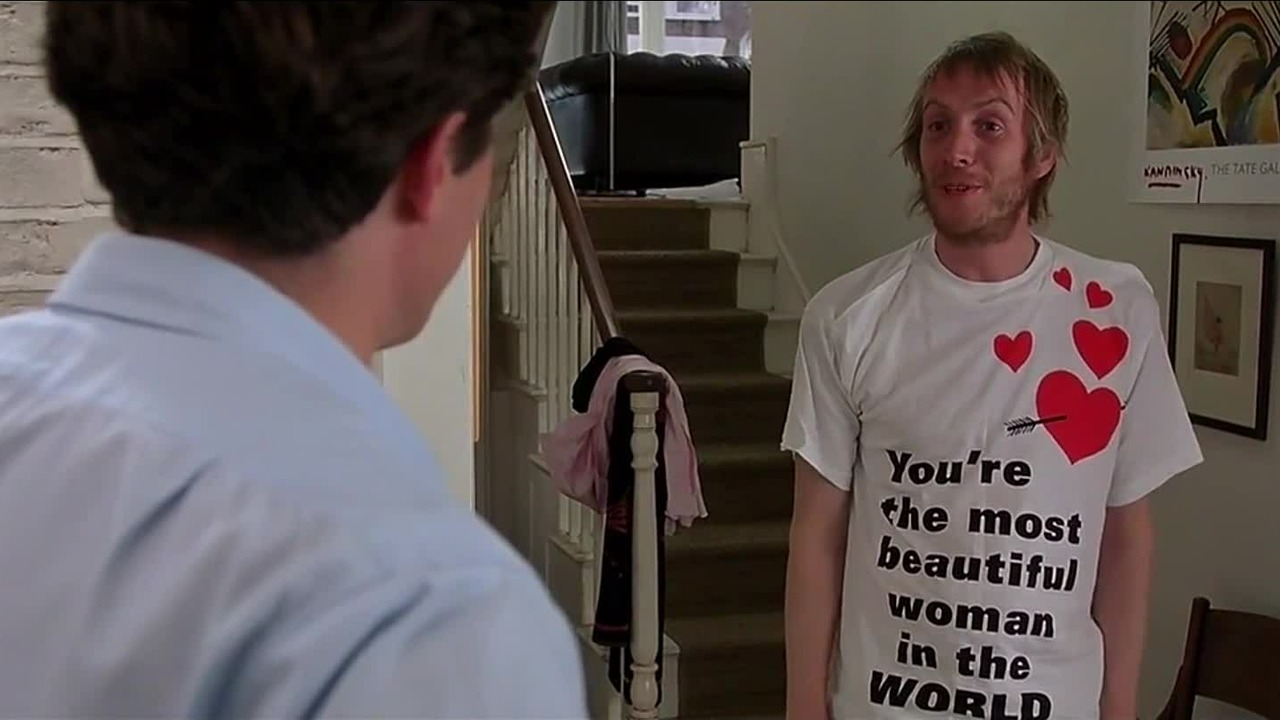
William Thacker (Grant), owner of a struggling travel bookshop in the titular London neighborhood, is surprised when famous actress Anna Scott (Roberts) wanders into his store. Through happenstance and curiosity, the two connect, yet they are chagrined by the aggressive paparazzi and the growing doubt that their different stations in life could support a relationship. The film is an excellent example of writer Richard Curtis’s strengths, like quirky but relatable side characters and an earnest romantic climax, though thankfully with less of the intermittent crudeness of Love Actually.

Both leads are excellent and share an effortless chemistry, Roberts with her million-dollar smile and Grant with his self-deprecating air and diffident line delivery that heighten his everyman role. Rhys Ifans is also a stand-out as William’s ribald roommate Spike, who meanders around their flat as walking comic relief. While the film’s romantic development and sense of humor are rather low-key, making it not quite as memorable as others in the genre, it does have some brilliant moments, like a masterful tracking shot/time lapse where William walks through all four seasons while Notting Hill bustles around him. With its nostalgic soundtrack and feel-good boy-meets-girl romance, Notting Hill makes me want to explore other rom coms of the era that might also be favorites-in-the-making.

Best line: (William) “I live in Notting Hill. You live in Beverly Hills. Everyone in the world knows who you are; my mother has trouble remembering my name.”   (Anna) “I’m also just a girl, standing in front of a boy, asking him to love her.”

Rank: List Runner-Up

© 2023 S.G. Liput
785 Followers and Counting

RRR (2022)

22 Saturday Apr 2023

Posted by sgliput in Movies, NaPoWriMo, Poetry, Reviews, Writing

≈ 2 Comments

Tags

Action, Drama, Foreign, Musical, Romance

(I had a rough day yesterday and missed Day 21 of NaPoWriMo, but I thought I’d try doubling up this weekend instead. Yesterday’s prompt was for a poem describing an abstract noun, using short lines and a made-up word. I chose Strength.)

I am strong
Because
I cannot afford
To be weak.

The weight of
My people’s hopes,
The yoke
Of all my foes,
The burden of
Love to defend
Have tempered
Me
Like steel.

But still
I only wish
To wake to laughter
In the aftermorn,
To kiss with
No farewell,
To let my power
Be still.

Strength I bear
That I may not
Bear it forever.
__________________________

MPA rating:  Not Rated (should be R for violence, which is fitting, right?)

After recently watching Satyajit Ray’s Apu Trilogy, which marked a turning point in Indian cinema back in the 1950s, it was mind-blowing to see how far the country’s filmmaking has come with 2022’s RRR. I know Bollywood has a reputation for over-the-top spectacle, but this was my first introduction to the modern wow factor that Indian films have to offer. (Considering its wide distribution on Netflix, I doubt I’m alone there.) RRR follows two real-life Indian freedom fighters in the 1920s, telling a completely fictitious what-if story about them meeting and teaming up against the evil British empire. In American Revolution terms, I like to describe it as the Indian equivalent of “What if Ethan Allen and Francis Marion became bros and singlehandedly decimated the redcoats?”

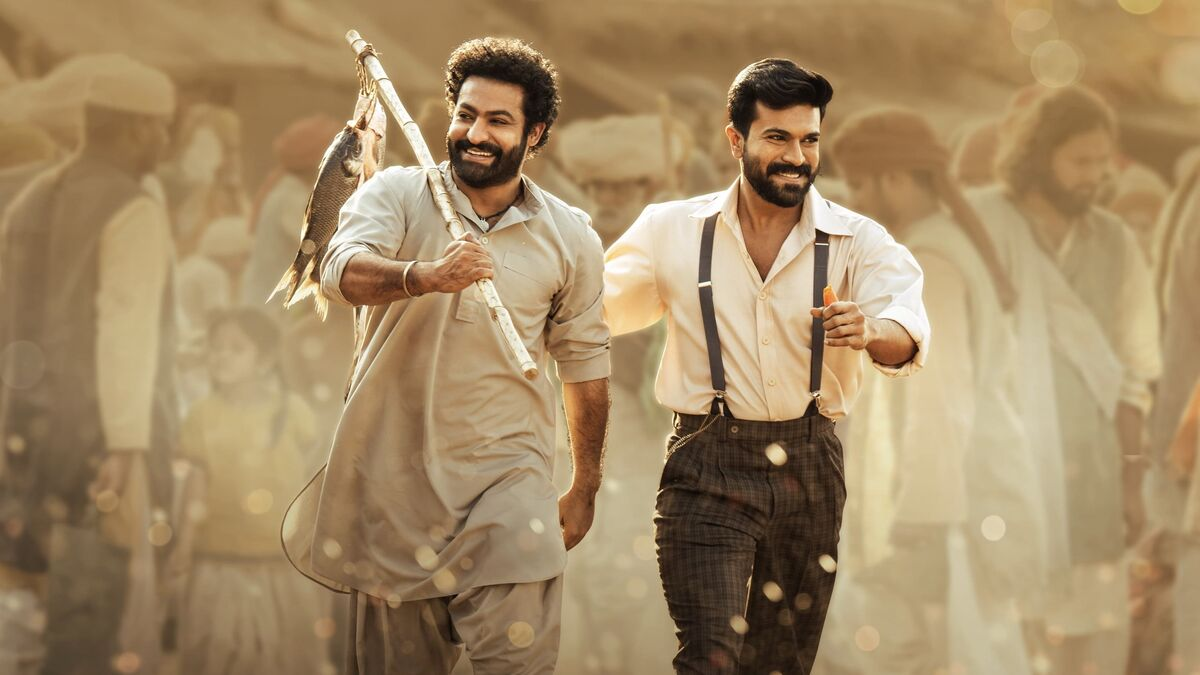
Standing for Rise Roar Revolt (in English at least), RRR is the kind of epic that Hollywood just doesn’t make anymore, if it ever did, boasting an everything-goes narrative that makes it hard to classify. It’s heavy on the action but also has room to be a romance, a historical drama, a buddy film, and a musical. The supremely handsome Ram Charan plays A. Rama Raju, a member of the Delhi imperial police force trying to rise through the ranks. N.T. Rama Rao Jr. plays Komaram Bheem, a protector of the Gond tribe who goes undercover in Delhi after the British governor (Ray Stevenson) and his cruel wife (Alison Doody) abduct a young girl named Malli. Thus, the two initially meet and become good friends, not knowing they are on opposite sides, Bheem seeking to rescue Malli while Raju aims to capture him to earn favor with the British.

RRR is a lot. Boasting superhero-level stunts and CGI animals to rival Hollywood, the film looks amazing, albeit replete with slow-motion interludes to highlight the emotion or absurdity of the action. In that vein, it is also anything but subtle. The villainous Brits are cartoonishly evil without any nuance at all, save for the kind Jenny (Olivia Morris) who somehow becomes a love interest for Bheem despite neither of them understanding the other’s language. The film relishes in its own excess, from the rippling muscles of its often shirtless leads to the extravagant and lengthy action scenes that include one man taking on an entire angry mob and a free-for-all battle with tigers and deer invading a posh banquet. Honestly, some of the coolest moments almost feel like parody with how outrageous they are.

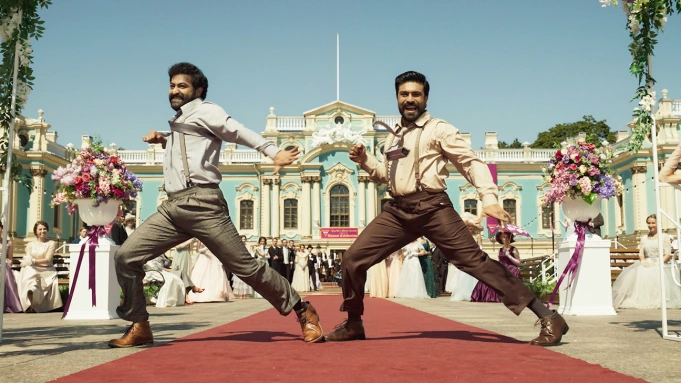
Yet there’s something refreshing about how RRR wears its cinematic heart on its sleeve, like the montage of Raju and Bheem bonding over their shared buffness, which brought to mind the ancient brotherhood of Gilgamesh and Enkidu. That kind of epic clash of good and evil with a cast of thousands was much more common in old Hollywood when epics were a common genre, so it’s interesting to see such large-scale heroics from a foreign perspective. And the film often uses its excess quite effectively, especially in the instantly iconic dance-off to the song “Naatu Naatu,” which won a deserved Oscar for Best Original Song and was one of the best movie moments of last year.

Aside from some brutal violence, the worst thing about RRR is its length. I was able to convince my VC to watch it (and she liked it), but only by breaking it up into three parts. At a little over three hours, it can feel more like a miniseries than a movie, so I would recommend that; basically, take a break whenever someone is caught by the British. RRR is epic in every sense of the word, and its mainstream success will likely open the door for more Americans, me included, to explore further what Indian cinema has to offer.

Best line: (Raju’s father) “He [the governor] said that an Indian’s life is not worth a bullet. So how will this bullet earn its value? When it comes out of your gun and pierces an Englishman’s heart.”

Rank: List Runner-Up

© 2023 S.G. Liput
784 Followers and Counting
Thor: Love and Thunder (2022)

10 Monday Apr 2023

Posted by sgliput in Movies, NaPoWriMo, Poetry, Reviews, Writing

≈ Leave a comment

Tags

Action, Comedy, Romance, Sci-fi, Superhero

(For this Easter Sunday of NaPoWriMo, the Day 9 prompt was for a straightforward sonnet about love, which has plenty of room for exploration. I decided to explore one of the weightier themes from this superhero film with “Love” in the name.)

From modern film to Jesus on the cross,
‘Tis clear that sacrifice is love most plain,
For those who benefit feel more than loss
But flattered gratitude to ease the pain.
While many lovers may well entertain
A chance to prove their love to that extreme,
They must feel all their efforts are in vain
When death creeps in with no intent or scheme,
No bullet to prevent, no dark regime,
No clear and present danger to oppose.
What can one do when bladder, brain, bloodstream
Wreak sabotage where no mere hero goes?
Sometimes only our presence soothes the hour
When sacrifice is not within our power.
___________________________

MPA rating:  PG-13

I am very forgiving when it comes to the Marvel Cinematic Universe. I would defend the likes of Thor: The Dark World or Eternals when people badmouth them, and while Marvel’s overall quality does vary, I consider the brand remarkably consistent in entertainment value. Perhaps my natural affection for the MCU delayed my actual feelings for Thor: Love and Thunder, because I remember calling it a good movie when walking out of the theater last year. Yet the more I thought of it and especially after watching it again, I have to admit it:  Thor: Love and Thunder is the first Marvel film I outright dislike. That’s not an especially unusual opinion, considering its generally poor fan reception, but it’s the first time I’ve agreed with the criticisms to this extent.

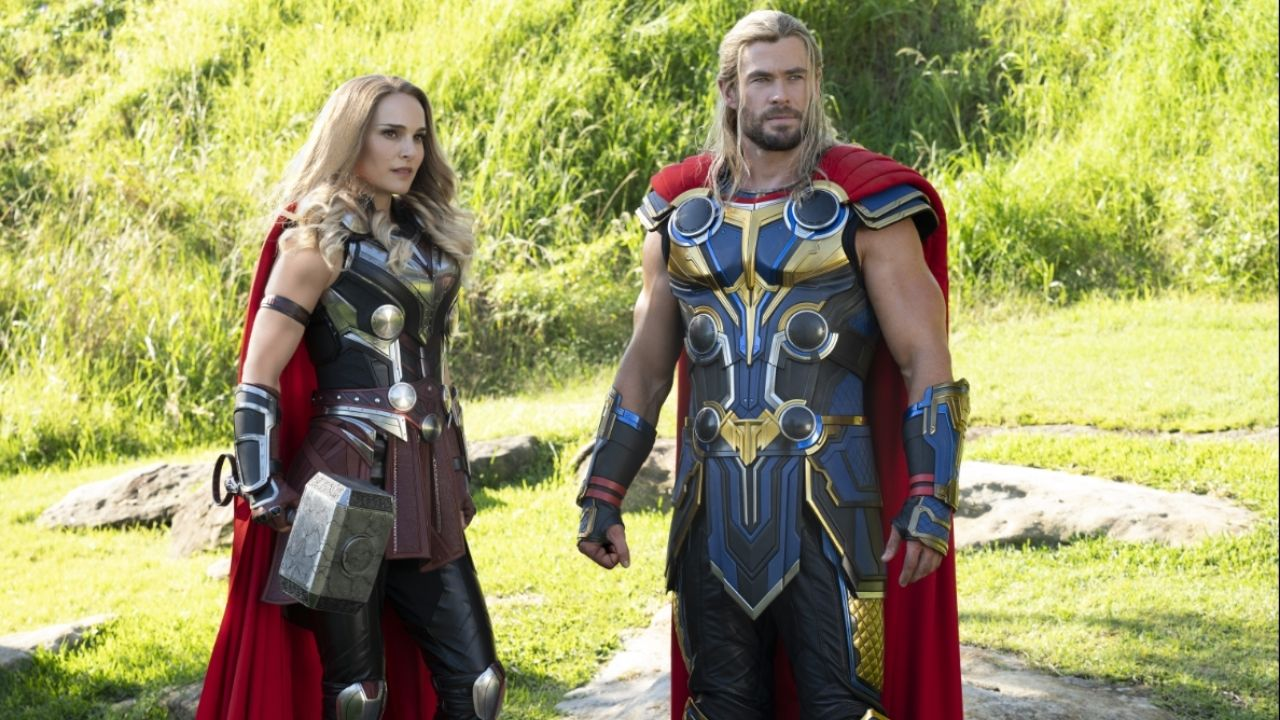
There’s nothing wrong with the basic plot of the film, which aimed to reunite Chris Hemsworth’s Thor with his old girlfriend Jane Foster (Natalie Portman) after her nearly decade-long absence from the franchise. Jane is suffering from stage four cancer and seeks out the broken pieces of Thor’s hammer Mjolnir, which grants her the powers of Thor (as “Mighty Thor”) and heals her when in her superpowered state. The two Thors must then rescue Asgardian kids from Gorr the God Butcher (Christian Bale), a deity-hating menace plotting to eliminate all gods.

There are traces of good ideas, notably in the action scenes with Gorr, one of which is a moon-wide slugfest with eldritch creatures all rendered in black and white. Bale is unrecognizable and downright creepy in the villainous role, yet he emotes all the grief and rage of a character whose faith was shattered beyond saving. Likewise, Portman handles her emotional moments well, even if it’s ultimately sad that her character was brought back just to deepen Thor’s sense of loss.

Those few positive points indicate the issue: the film is at its best in the serious moments, which are too much of a contrast with its otherwise silly atmosphere. Considering how many films and heartaches Thor has been through, writer-director Taika Waititi seems intent on keeping him a goofball, which worked well in Ragnarok, but the constant comedy isn’t as easily sustained here (though admittedly I chuckled at the screaming goats every time). From Thor’s first big scene “saving” an alien shrine by destroying it, he doesn’t act like the veteran hero he should be by this point. That’s just one example of the film’s lack of consistency, which also affects Jane’s story, as when Mjolnir, meant to help Jane fight off the cancer, somehow ends up hurting her instead. Plus, Tessa Thompson’s Valkyrie is barely of use, while the role of stony sidekick Korg (Waititi himself) has been over-promoted to narrator status.

The film’s biggest misstep for me is the second-act visit to Omnipotence City, a realm of gods from across cultures and planets. Considering the first Thor was careful to clarify that Thor and the Asgardians were not actual gods but just wielders of alien powers and advanced technologies, this film muddies the waters enormously and begs the question “What is a god in the MCU?” We see the cowardly Zeus (a meh Russell Crowe), future threat Hercules (Brett Goldstein), and various other deities of all shapes and sizes, so it seems that all “gods” exist in this world except the one God of the Bible, the one that Captain America invoked in The Avengers. Then there’s the fight scene with Zeus’s guards, who leak an excessive amount of gold blood as Thor’s crew battle them. It would be a distressingly gory scene if the blood were red, but does that mean gold blood is a sign of a god? Thor and other Asgardians have shed red blood before, so are they somehow not gods like the others? The whole sequence adds little to the plot, sort of confirms Gorr’s negative opinion of gods in general, and irked me deeply with the questions it raises with no intention of answering them.

Thor: Love and Thunder is a decent superhero film on its own, so I’d probably watch it again, but it’s a glaring failure as a would-be conclusion to at least part of Thor’s story. Many revisions might have buffed out some of the plot flaws, improved the discordant tone, and found better uses for the characters, like the Guardians of the Galaxy who essentially are given a glorified cameo at the beginning, again contrasting with what the end of Endgame seemed to promise. I hope Hemsworth will return as Thor again with a tighter and more serious story, treating this as just a speedbump to something more satisfying. Even if I appreciate what they were going for with this film’s ending, Thor deserves better.

Best line: [Who am I kidding? Of course, it’s the screaming goats.]

Rank: Honorable Mention (barely)

© 2023 S.G. Liput
784 Followers and Counting
I hope everyone had a happy Easter!

Three Thousand Years of Longing (2022)

02 Sunday Apr 2023

Posted by sgliput in Movies, NaPoWriMo, Poetry, Reviews, Writing

≈ 1 Comment

Tags

Drama, Fantasy, Romance

(For Day 2 of NaPoWriMo, the prompt was to write surrealist answers/examples for various words and string them together into a poem. While my answers might be more flowery than surreal, I used the words thunder, mercurial, longing, ghost, miracle, and elusive for the lines below, while also including ties to this rather surreal film.)

A god that sobs when left behind.
A wedding ring in a drawer, unworn.
A king-size bed, half-cold at night.
A margin note for readers unborn.
An artifact forgotten yet found.
A smile in the eyes to match the mouth.
_____________________

MPA rating:  R (for violence, sex, and nudity, not constant but rather blatant)

When I saw the trailer for Three Thousand Years of Longing, it was bizarre and bombastic, seemingly in keeping with the director of Mad Max: Fury Road, George Miller himself, and I thought that Everything Everywhere All at Once might have a worthy competitor for weirdest film of the year. Yet one must remember that Miller also wrote and produced Babe, so he’s clearly a filmmaker with range. Based on the short story “The Djinn in the Nightingale’s Eye” by A. S. Byatt, Three Thousand Years of Longing is indeed an odd film, spanning the millennia of a genie’s life, yet it’s far more pensive and wistful even than the trailer might indicate. Yes, there is a scene where a man’s head drips off his body and turns into a giant fly, but that’s more of the exception rather than the rule when it comes to this film’s brand of fantastical.

The framing story belongs to British scholar Alithea Binnie (Tilda Swinton), a lonely soul who sees only metaphor in the tales of ancient myth and magic and so is surprised when a huge, wispy figure emerges from a bottle she bought in a Turkish bazaar. It is a Djinn (Idris Elba), and while he desires to grant Alithea the expected three wishes, she is more cautious than most. Instead, she listens to the Djinn’s stories of what brought him to his present bottle, anecdotes of repeated tragic romance, cruel kings, twists of fate, and unwise wishes, all of it leading to the shared bond of their overlapping stories and a wish of her own.

It’s hard to say whether Three Thousand Years of Longing is my kind of movie. This kind of weaving of episodic threads together into universal themes of love and loneliness certainly appeals to me, and Swinton and Elba are a brilliant unlikely pair as they evoke their quiet mutual longing for what seems unreachable. Yet the film also relishes in short bursts of excess, which contrast more with the main plot than the Doof Warrior’s flaming guitar did in Fury Road, and they feel more unnecessary as the plot takes some uncomfortable turns, like a brief section dedicated to a prince’s fetish for an obese harem.

George Miller deserves his label from the trailer as a “mad genius.” The film looks amazing with its stylized flashbacks and lavish production, and yet below all the indulgence, it retains a genuinely emotional core, like the subtle comparison drawn between the Djinn’s centuries of self-soothing trapped in his bottle and Alithea trying to convince herself she’s content being alone. And I was admittedly impressed to learn how much actual Turkish history was incorporated into the narrative. Yes, even the prince with the fat harem (look up Ibrahim the Mad). From its fantastical mixing of history and mythology to its surprisingly tender denouement, Three Thousand Years of Longing may lack cohesion, but it has style and originality to spare, which is becoming increasingly rare these days.

Best line: (Alithea) “Love is a gift. It’s a gift of oneself given freely. It’s not something one can ever ask for.”

Rank: List Runner-Up

© 2023 S.G. Liput
784 Followers and Counting
← Older posts
Newer posts →

Recent Posts

  • We Didn’t Start 2025 (Recap)
  • NaPoWriMo 2025 Recap (Finally)
  • Sonic the Hedgehog 3 (2024)
  • It Happened One Night (1934)
  • Spellbound (2024)

Recent Comments

associatesofshellymann's avatarassociatesofshellyma… on My Top Twelve La La La So…
Kit's avatarKit Nichols on Bonnie and Clyde (1967)
lifelessons's avatarlifelessons on Look Back (2024)
Carol Jackson's avatarCarol Jackson on The Thief of Bagdad (1940…
Stephen's avatarStephen on Love Story (1970)

Archives

  • January 2026
  • December 2025
  • May 2025
  • April 2025
  • March 2025
  • February 2025
  • January 2025
  • December 2024
  • May 2024
  • April 2024
  • March 2024
  • February 2024
  • January 2024
  • December 2023
  • November 2023
  • October 2023
  • September 2023
  • July 2023
  • June 2023
  • May 2023
  • April 2023
  • March 2023
  • February 2023
  • January 2023
  • December 2022
  • November 2022
  • October 2022
  • September 2022
  • August 2022
  • July 2022
  • June 2022
  • May 2022
  • April 2022
  • March 2022
  • February 2022
  • January 2022
  • December 2021
  • November 2021
  • October 2021
  • September 2021
  • August 2021
  • July 2021
  • June 2021
  • May 2021
  • April 2021
  • March 2021
  • February 2021
  • January 2021
  • December 2020
  • November 2020
  • October 2020
  • September 2020
  • August 2020
  • July 2020
  • June 2020
  • May 2020
  • April 2020
  • March 2020
  • February 2020
  • January 2020
  • December 2019
  • November 2019
  • October 2019
  • September 2019
  • August 2019
  • July 2019
  • June 2019
  • May 2019
  • April 2019
  • March 2019
  • February 2019
  • January 2019
  • December 2018
  • November 2018
  • October 2018
  • September 2018
  • August 2018
  • July 2018
  • June 2018
  • May 2018
  • April 2018
  • March 2018
  • February 2018
  • January 2018
  • December 2017
  • November 2017
  • October 2017
  • September 2017
  • August 2017
  • July 2017
  • June 2017
  • May 2017
  • April 2017
  • March 2017
  • February 2017
  • January 2017
  • December 2016
  • November 2016
  • October 2016
  • September 2016
  • August 2016
  • July 2016
  • June 2016
  • May 2016
  • April 2016
  • March 2016
  • February 2016
  • January 2016
  • December 2015
  • November 2015
  • October 2015
  • September 2015
  • August 2015
  • July 2015
  • June 2015
  • May 2015
  • April 2015
  • March 2015
  • February 2015
  • January 2015
  • December 2014
  • November 2014
  • October 2014
  • September 2014
  • August 2014
  • July 2014
  • June 2014
  • May 2014
  • April 2014
  • March 2014
  • February 2014
  • January 2014
  • December 2013

Categories

  • Blindspot
  • Blogathon
  • Christian
  • Movies
  • Music
  • NaPoWriMo
  • Poetry
  • Reviews
  • TV
  • Writing

Meta

  • Create account
  • Log in
  • Entries feed
  • Comments feed
  • WordPress.com

Recent Posts

  • We Didn’t Start 2025 (Recap)
  • NaPoWriMo 2025 Recap (Finally)
  • Sonic the Hedgehog 3 (2024)
  • It Happened One Night (1934)
  • Spellbound (2024)

Recent Comments

associatesofshellymann's avatarassociatesofshellyma… on My Top Twelve La La La So…
Kit's avatarKit Nichols on Bonnie and Clyde (1967)
lifelessons's avatarlifelessons on Look Back (2024)
Carol Jackson's avatarCarol Jackson on The Thief of Bagdad (1940…
Stephen's avatarStephen on Love Story (1970)

Archives

  • January 2026
  • December 2025
  • May 2025
  • April 2025
  • March 2025
  • February 2025
  • January 2025
  • December 2024
  • May 2024
  • April 2024
  • March 2024
  • February 2024
  • January 2024
  • December 2023
  • November 2023
  • October 2023
  • September 2023
  • July 2023
  • June 2023
  • May 2023
  • April 2023
  • March 2023
  • February 2023
  • January 2023
  • December 2022
  • November 2022
  • October 2022
  • September 2022
  • August 2022
  • July 2022
  • June 2022
  • May 2022
  • April 2022
  • March 2022
  • February 2022
  • January 2022
  • December 2021
  • November 2021
  • October 2021
  • September 2021
  • August 2021
  • July 2021
  • June 2021
  • May 2021
  • April 2021
  • March 2021
  • February 2021
  • January 2021
  • December 2020
  • November 2020
  • October 2020
  • September 2020
  • August 2020
  • July 2020
  • June 2020
  • May 2020
  • April 2020
  • March 2020
  • February 2020
  • January 2020
  • December 2019
  • November 2019
  • October 2019
  • September 2019
  • August 2019
  • July 2019
  • June 2019
  • May 2019
  • April 2019
  • March 2019
  • February 2019
  • January 2019
  • December 2018
  • November 2018
  • October 2018
  • September 2018
  • August 2018
  • July 2018
  • June 2018
  • May 2018
  • April 2018
  • March 2018
  • February 2018
  • January 2018
  • December 2017
  • November 2017
  • October 2017
  • September 2017
  • August 2017
  • July 2017
  • June 2017
  • May 2017
  • April 2017
  • March 2017
  • February 2017
  • January 2017
  • December 2016
  • November 2016
  • October 2016
  • September 2016
  • August 2016
  • July 2016
  • June 2016
  • May 2016
  • April 2016
  • March 2016
  • February 2016
  • January 2016
  • December 2015
  • November 2015
  • October 2015
  • September 2015
  • August 2015
  • July 2015
  • June 2015
  • May 2015
  • April 2015
  • March 2015
  • February 2015
  • January 2015
  • December 2014
  • November 2014
  • October 2014
  • September 2014
  • August 2014
  • July 2014
  • June 2014
  • May 2014
  • April 2014
  • March 2014
  • February 2014
  • January 2014
  • December 2013

Categories

  • Blindspot
  • Blogathon
  • Christian
  • Movies
  • Music
  • NaPoWriMo
  • Poetry
  • Reviews
  • TV
  • Writing

Meta

  • Create account
  • Log in
  • Entries feed
  • Comments feed
  • WordPress.com

Blog at WordPress.com.

Is this your new site? Log in to activate admin features and dismiss this message
Log In
  • Subscribe Subscribed
    • Rhyme and Reason
    • Join 814 other subscribers
    • Already have a WordPress.com account? Log in now.
    • Rhyme and Reason
    • Subscribe Subscribed
    • Sign up
    • Log in
    • Report this content
    • View site in Reader
    • Manage subscriptions
    • Collapse this bar
 

Loading Comments...