• Home
  • About Me
  • The List
  • THE LIST (2016 Update)
  • THE LIST (2017 Update)
  • THE LIST (2018 Update)
  • THE LIST (2019 Update)
  • THE LIST (2020 Update)
  • THE LIST (2021 Update)
  • THE LIST (2022 Update)
  • Top Twelves and More
  • The End Credits Song Hall of Fame

Rhyme and Reason

~ Poetry Meets Film Reviews

Rhyme and Reason

Tag Archives: Animation

Time of Eve (2010)

23 Saturday Apr 2016

Posted by sgliput in Movies, NaPoWriMo, Poetry, Reviews, Writing

≈ 6 Comments

Tags

Animation, Anime, Drama, Sci-fi


(Today’s NaPoWriMo prompt was to write a sonnet, which can be considered an essay in verse. Thus, I chose a Spenserian sonnet inspired by a fascinating film well worth an essay or two.)


As God made Man in image same as He,
For years mankind has tried the same rare feat,
Creating sculpture, doll, and effigy,
And now most recently the great conceit
Of making human service obsolete
With robots meant to wear a human guise.
Can such attempts end only in defeat?
If not, has playing God been ever wise?
As children, we may gaze deep in their eyes,
Intent on some faint flicker of a soul;
While lack of one should come as no surprise,
Perhaps it’s but too much under control.
Within and out, this can of worms we dread,
And yet progress proceeds full steam ahead.
__________________

MPAA rating: Not Rated (should be PG)

Time of Eve was a series of six fifteen-minute Japanese animations released online from 2008 into 2009, which were then combined with slight additions into a 2010 film. It also is one of the most thought-provoking entries in the robot genre and an exceptional example of speculative fiction, allowing its themes to play out in an advanced world that remains decidedly plausible.

As the opening sentences explain, “in the future, probably Japan” (which is undoubtedly Japan, based on all the signs and names), “’humanoid robots’ (androids) have come into common use.” Their uses range from office duties to making coffee, and they are often owned by a family and treated more like an appliance than a maid, with their passive expressions and a glowing holographic ring above their heads distinguishing them from their masters. After studying the memory logs of his houseroid Sammy, highschooler Rikuo notices a mysterious log labelled “Are you enjoying the Time of Eve?,” a repeated question with the same uncertain mystique as “Who is John Galt?” When Rikuo tracks down the location of the log with his friend Masaki, who protests too much that he doesn’t own a robot, they discover the titular café, where a sign prominently declares that no one may discriminate between humans and robots here.

Over the course of several days, the boys visit and get to know the regular patrons, all lacking the holographic ring, in this gray zone flouting governmental robot laws: the cordial barista Nagi, whose enforcement of the rule doesn’t really extend beyond annoyed warnings; outgoing Akiko; a pair of lovers Koji and Rina; the grandfatherly Shimei and young Chie; and discreet Setoro, who often just reads in the corner. As Rikuo gets to know these customers, analyzing their personalities and actions to see if they are machine or human, his own opinions are challenged. When robots begin acting on their own, can they really be considered nothing but tools? If they can be considered even close to being human, is not the constant prejudice shown them worth opposing? Rikuo is at first troubled and then intrigued by what the café represents, and knowing Isaac Asimov’s Three Laws of Robotics about how robots must protect and obey humans, he explores how his robotic acquaintances manage to test their independence with humans and each other.

While most of the story has a straightforward focus on Rikuo, his explorations are clearly part of a bigger whole. The enigmatic Ethics Committee is a persistent presence with TV ads warning against the over-personalization of robots, and constant peer pressure from friends and the danger of being labeled a robo-freak often guilt people from even thinking to thank machines for their help. One of the creative choices that makes Time of Eve special is what it doesn’t explain. Key plot points are often hinted at early with merely a brief scene or still (which rewards repeat viewings), while clues about forces in the background supporting or resisting the Ethics Committee are left intentionally ambiguous. It’s the stuff of fan theories, but the filmmakers give just enough information that the uncertainty adds to rather than detracts from the story.

The narrative’s emotional involvement crept up on me with profound emotions hidden behind even a small smile, and the challenging of Rikuo’s views also challenged my own. While I personally don’t think that robots will progress to the point of sentience, the world is well on its way to trying. Just recently, Chinese scientists created a realistic-looking female robot named Jia Jia, prompting Ethics Committee-style headlines that included words like disturbing and creepy. If androids should ever reach the level of humanity seen in Time of Eve, I might even be open to considering them people, though the idea of a soul is a different debate. Still, there would be a line at which only truly human-like machines would earn my sympathy, yet Time of Eve challenges that too, suggesting that even primitive intelligences are worthy of pity or comfort. Even if real-life robotics never reaches that point (and I hope it doesn’t), the questions raised by this animated tale have remained with me.

Time of Eve: The Movie is not much different from the series, simply tying the episodes together, but small additions provide a little more clarity to the original’s ambiguity. It may not have the action and fantasy of other anime, but within its subdued tone and handsomely intimate animation, its provocative themes surpass many better-known titles. In fact, though I’ve already compiled my Top 12 Anime List, I think Time of Eve would now replace Princess Mononoke as my #12 favorite. In addition to the cogent sci-fi drama, I also liked the small touches of humor, some of it awkward, some of it genuinely funny, especially a great moment at the end that lightens up the most poignant scene. It even ends in my favorite Neverending Story-style fashion, suggesting further stories for another time and (at least in the series) adding a barely visible question mark to The End. There’s no shortage of robot movies, from Short Circuit to A.I.: Artificial Intelligence, Bicentennial Man to Ex Machina, but Time of Eve ranks up there with the best.

Best line: (Official Ashimori, quoting another barely seen character) “Preconceptions distract from the truth.”


Rank: List-Worthy


© 2016 S. G. Liput

383 Followers and Counting


Persepolis (2007)

16 Saturday Apr 2016

Posted by sgliput in Movies, NaPoWriMo, Poetry, Reviews, Writing

≈ 6 Comments

Tags

Animation, Drama, History


(Today’s NaPoWriMo prompt involved writing a poem based off of answers to an almanac questionnaire. In this case, question subjects like “Childhood dream,” “lover,” “hometown memory,” and “today’s news headline” brought to mind this animated drama.)


A culture builds a person
In a way they cannot hide.
By fine degrees, their memories
Instill a private pride.

I’m proud of where I come from,
And I love the U.S.A.,
But others feel an equal zeal
For countries far away.

I hear news full of chaos,
And my sense of pity grows,
For other nations have frustrations
Worse than Western woes.

Yet, being sympathetic,
I must not presume their shame:
Despite the vultures, other cultures
In the midst of flame
Have dignity and pride to be
Both different and the same.
________________

MPAA rating: PG-13

I’ve stated before that I love animation that can tackle mature themes without wallowing in mature content. This is why I’m often drawn to anime and why I admire 2007’s Persepolis, which lost the Best Animated Feature Oscar (barely but deservedly) to Pixar’s Ratatouille.

The Iranian Revolution isn’t the first topic I’d think of for a cartoon, but Iranian expatriate Marjane Satrapi translated her personal experiences first into a French comic/graphic novel and then into this feature film. She did so not only with insight and honesty but with the perfect reason for siding with animation over live-action: that animated characters are far more universal in appeal and connection, allowing audiences worldwide to relate to something that is not inherently “foreign.” She succeeded. Her childhood home in Tehran seems like any number of world cities, and her personal tastes in movies and music (Bruce Lee, Iron Maiden, etc.) remind us that pre-Revolution Iran wasn’t entirely different from the West. (I liked how the young Marji enjoyed ABBA until her friends guilted her into considering them uncool. My mom has mentioned that it was much the same with her in 1970s America.)

Thus, when the actual revolution takes place, bringing Islamic fundamentalists to power, the sudden forced changes to the culture are understandably jarring, as women are compelled to wear head scarves while alcohol and all things Western are banned. While my knowledge of the politics of the time is limited, I was intrigued by how Marjane’s opinions were formed by her parents and dissident uncle, who opposed the Shah but were also persecuted by the new government. The sequence of events reminded me of the Russian revolution in Doctor Zhivago, particularly when Marji’s mother comments, “Well, whatever the outcome is, it can’t be worse than the Shah.” The shortsightedness of revolutions is still an issue today and just one of the many thought-provoking facets of Persepolis.

Marjane’s rebellious spirit eventually forces her to move to Europe, where she grows into a wayward young woman. Her activities range from communing with thoughtless anarchists to unsuccessful love affairs, and while much of it is rather depressing, the storytelling manages to incorporate a smart mix of profundity (such as the wisdom of Marji’s grandmother, a sterling example of an honorable elder) and amusement (such as Marjane’s post-breakup rant against her ex, which resembles and predates a similar scene in (500) Days of Summer).

Satrapi has insisted her graphic novel should be called a comic book, and though it’s more mature than many animations, in several ways Persepolis is a cartoon. The black-and-white simplicity of the flashbacks (which is the majority of the film) is usually realistic, but sometimes reactions are exaggerated, dreams become surreal, or certain scenes are hyperbolized as only animation can. Other times, serious moments are reduced to silhouettes, like a deadly flight from police across rooftops.

While the ending is both fitting and disappointingly melancholy, what comes before is not without its shortcomings. The depiction of the Islamic government is clearly negative, but the overall political message remains muddled from varied character opinions and a dream sequence associating Karl Marx with God. Though not too profane, some of the language is also a tad harsh, and the PG-13 rating is deserved. (There’s also an odd preoccupation with Marjane’s grandmother’s breasts, which are discussed three separate times, perhaps because of a distinct memory she had.) Persepolis is a wholly unique animation, a coming-of-age tale that views a tumultuous time through the eyes of both a child and a young woman, whose subsequent real-life success makes it that much more praiseworthy.

Best line: (Marjane) “We were so eager for happiness, we forgot we weren’t free.”


Rank: List Runner-Up


© 2016 S. G. Liput

380 Followers and Counting


Coraline (2009)

07 Thursday Apr 2016

Posted by sgliput in Movies, NaPoWriMo, Poetry, Reviews, Writing

≈ 3 Comments

Tags

Animation, Fantasy, Horror


(Today’s NaPoWriMo prompt was a tritina, which has three set words to end each line in a pattern of ABC, CAB, BCA, and a final line with all three words in it. I decided to use the form for a creepy effect.)


Hark to the promise of pleasure and play.
Heed all the whispers that bid you come in.
Enter and leave your old world at the door.

Rest and don’t fret at the slow-closing door.
We’re glad that you had a good reason to play.
It’s been quite a while since a human came in.

I told you, don’t worry about the way in,
Or out for that matter; I’ve hidden the door.
It’s time that we all wear a smile and play.

I’m so glad the door brought in someone to play.
___________________

MPAA rating: PG

While I enjoy various kinds of animation, stop-motion isn’t my favorite. I love Chicken Run, but I’m less dazzled by the more macabre usages of this kind of puppetry, like The Nightmare before Christmas. That being said, stop-motion does lend itself to an unnatural movement perfect for creepiness, and Coraline utilizes this uncanny quality judiciously. From the first masterful shots of needle-composed fingers sewing up a little girl’s doll, it’s clear that experts of both animation and spookiness have put their craft on display.

Based on Neil Gaiman’s novel and with a Roald Dahl sensibility, Coraline first applies its technical finesse to the real world, as Coraline Jones (Dakota Fanning) and her parents move into a ramshackle apartment building. Coraline explores the neglected gardens and meets the eccentric neighbors and ultimately becomes bored and disgruntled at her surroundings. Then she finds a mysterious door which leads to an alternate universe where everything dull and mundane in the old world is bright and colorful and fun. Her Other Mother (Teri Hatcher) and Other Father are everything she wishes her parents could be, except they have buttons for eyes, and she has second thoughts when they want to sew buttons on her eyes.

Coraline cleverly manifests how a dream can so easily segue into a nightmare. Everything is fun and innocent at first (although some cartoon nudity goes a bit far), but as soon as Coraline becomes wise to her Other Mother’s sinister plans, the wondrous quickly turns monstrous. This disquieting wonderland is a perfect outlet for the animation, and many of the stunts and deft camerawork make one wonder how the filmmakers accomplished so much fluidity within the confines of tiny detailed models.

Perhaps because Tim Burton wasn’t involved, Coraline’s dark fantasy won me over, making it probably my favorite of the creepy genre of stop-motion animation. Some of the characters are still unnecessarily weird for my taste, but the central adventure has a winning blend of awe and fright that will make children think twice about too-good-to-be-true reveries.

Best line: (Other Mother, to Coraline) “They say even the proudest spirit can be broken…with love.”


Rank: List Runner-Up


© 2016 S. G. Liput

375 Followers and Counting


Cartoon Comparisons: Metropolis (1927) / Metropolis (2001)

20 Sunday Mar 2016

Posted by sgliput in Movies, Poetry, Reviews, Writing

≈ 2 Comments

Tags

Animation, Anime, Drama, Sci-fi


Up and up they build the tower;
Up and up ambition leads.
Further down, foundations sour
As equality recedes.

Bitter grows the patient base
And richer grows the wealthy crest.
Neither’s happy with their place,
And both believe that they know best.

Social dangers of the past
Are pains mankind will not outgrow.
In the future, race and caste
Are rifts we still must overthrow.
____________________

MPAA rating for 1927 Metropolis: Not Rated (should be PG)
MPAA rating for 2001 Metropolis: PG-13

This will be the beginning of a new feature called Cartoon Comparisons, in which I will compare and contrast a live-action and animated film that share plot elements or source material. I didn’t realize it at the time, but my first stab at this was my double review of Ordinary People and Colorful, after which I discovered several other pairs of films to consider. For this Cartoon Comparison, I’ll be tackling the silent-era German classic Metropolis and the 2001 anime adaptation, also called Metropolis.

I haven’t seen a great many silent films, but most seem to be relatively short so as not to overstay their welcome. Fritz Lang’s Metropolis, at least in its most restored version, clocks in at nearly 2½ hours, a daunting runtime that’s long by talkie standards. Until recently, my only exposure to Metropolis was in Queen’s music video for “Radio Ga Ga,” which shows many of the film’s most impressive special effects, expansive skylines with tiny moving vehicles and floating ships that still beg the question “How did they do that in the 1920s?!” The art deco set design is consistently impressive so that even if some viewers start getting bored, architectural enthusiasts shouldn’t. Being familiar with only the film’s visual style, I was surprised at the high-minded plot, which includes a despotic industrialist, his sympathetic son Freder, a peace-urging love interest named Maria, and a mad scientist who creates a robot to become Maria’s evil doppelganger.

The film clearly owes its classic status to its interesting story and memorable imagery, but the usual complaints and conventions of black-and-white silent pictures apply, even more than usual due to its length. When characters are in love or shock, they hold their hands over their heart; when they’re tired, they conspicuously wipe their brow; when they’re scared, they practically have a seizure. Brigitte Helm does double duty as both the demure, angelic Maria and her wicked robot copy, who indulges in weirdly reptilian movements and is over-literally equated with the Whore of Babylon.

Despite the silent-era excesses (like most of the men wearing lipstick), many elements still hold resonance. Some are visually striking, such as Maria being chased by a flashlight’s glow, the flooding of the worker city, and the climactic fight with shades of The Hunchback of Notre Dame. One of the most notable social aspects was the tension between the poor working class and the wealthy elite, led by Freder’s father. The evil Maria takes advantage of the oppressed workers to incite riots and impulsive fury, which cause more problems and grief than they fix. Even in 1927, before Hitler’s Germany or more recent threats of rioting, Metropolis served as a warning against blind proletarian rage in favor of understanding on both sides. It’s a drawn-out, melodramatic test of one’s patience but one ultimately worthy of all the critical appreciation.

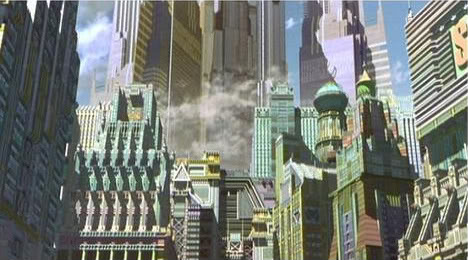
Now for the 2001 anime film of the same name. This Metropolis is based on the 1927 film but has its roots in a 1949 manga of the same name, which has little-to-no connection with Fritz Lang’s story. There’s still a bustling metropolis, parallels to the Tower of Babel, a mad scientist, societal turmoil, and a robotic girl, but despite some set design toward the end that pays homage to the original film, the story is its own. Other similarities are owed to the film’s production team. Many of the cartoonish character designs with big eyes and bigger noses seem as if they had been plucked from Astro Boy, due to the involvement of Tezuka Productions, which was founded by Astro Boy’s creator. In addition, the script was written by Katsuhiro Otomo, which explains traces of his cult favorite Akira, such as the distinct character motivations, political uprising amid catastrophic danger, and runaway power resulting in eye-popping destruction.

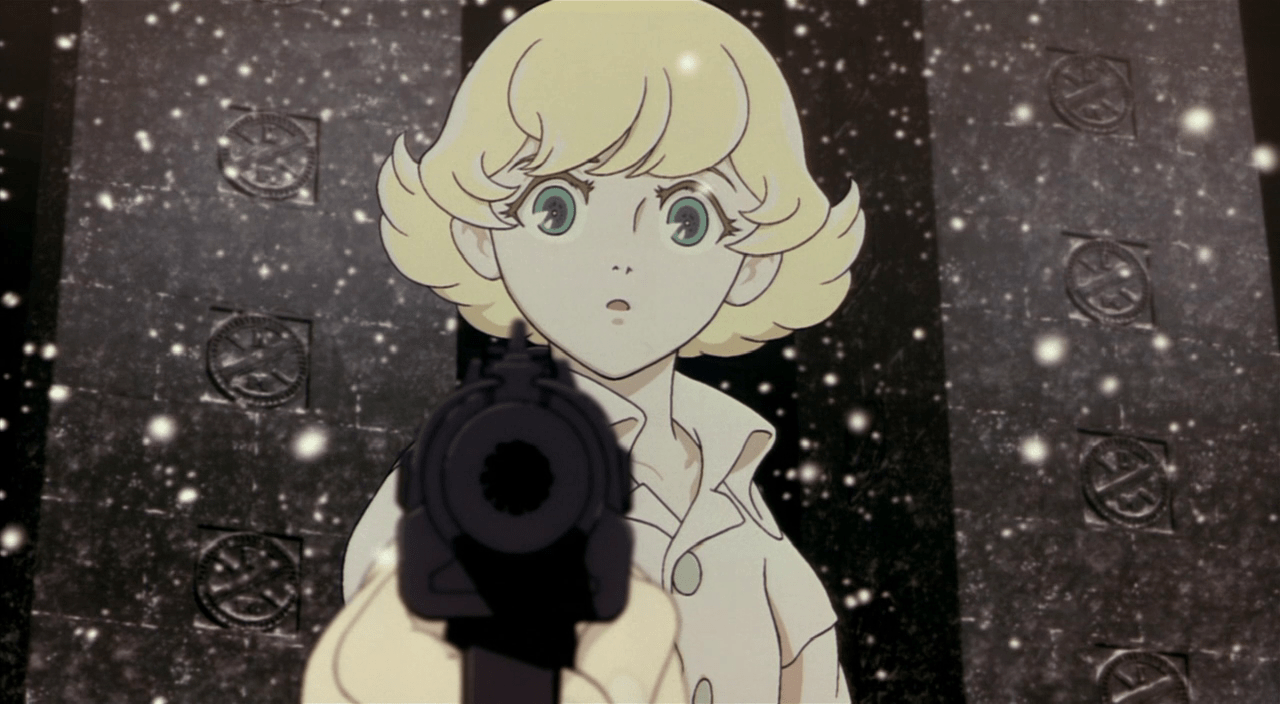
The Metropolis anime still has the social tension between classes, but this becomes secondary to the tension between humans and machines. It is robots who are relegated to the lowest levels of Metropolis, and distrust of machines runs rampant. Instead of a robotic harlot to sow dissent, the central android is a young girl named Tima, commissioned by a power-hungry duke but found first by a detective’s nephew who believes her to be human. The duke’s adopted son vows to hunt her down even as she questions her own identity.

This version of Metropolis is unlikely to leave anyone bored, and the animation is as polished and spectacular as any anime I’ve seen, albeit with a more sci-fi sheen than the films of Studio Ghibli. As a fan of futuristic cityscapes, Roger Ebert even called it “one of the best animated films [he’d] ever seen.” Like the original Metropolis, much of its power lies in the visuals: enormous fish swimming through the transparent wall of a high-rise office, a threatening stand-off as snow begins to fall, and especially the explosive climax set to a bizarrely fitting Ray Charles song.

Like Akira, Metropolis was meant to be a game-changer for anime, and the skill on display does not disappoint. What it lacks is a bit more focus on characters. The villain’s machinations are left rather vague, while the key relationship between the boy and the robot girl could have used more depth. I liked how their bond was tested, but by the end, the closing scenes don’t seem quite as optimistic as they try to be. These complaints are still quibbles, since the characters are still more engaging than in Akira.

It’s no surprise that a film with so much more action, color, and sound is far more entertaining than a silent picture from 1927. Lang’s Metropolis was the forerunner, the seed of so many other futuristic films since, while the animated Metropolis is like the vibrant blooming of its influence on animation worldwide. Both are must-sees for fans of science fiction cinema.

Best line from the 1927 Metropolis: (the closing title card, echoing Maria) “The mediator between head and hands must be the heart!”

Best line from the 2001 Metropolis: (Atlas) “It’s our emotions. They vibrate, and all we can do is move forward within that amplitude. But without affirming them, we can’t survive.”


Rank: Both List Runners-Up


© 2016 S. G. Liput

369 Followers and Counting


When Marnie Was There (2014)

21 Sunday Feb 2016

Posted by sgliput in Movies, Poetry, Reviews, Writing

≈ Leave a comment

Tags

Animation, Anime, Drama, Family, Mystery


Out in the marsh where the sandpipers wade
And the reeds allow breezes to bend every blade,
Visions appear in the moonlight and fade
And leave witnesses with a curious scare.

Some think they’re nothing but eyes playing tricks,
And others fear ghosts have escaped from the Styx,
But some explore further with sorrows to fix
And find answers they didn’t know would be there.
___________________


MPAA rating: PG


Studio Ghibli has been crafting outstanding animations for the last three decades, and now that co-founder Hayao Miyazaki is officially retired (again), it looks as if its present hiatus may be permanent. Before the hiatus, though, the studio gave us one more Ghibli gift in When Marnie Was There. Is it among the best Ghibli has to offer? No, but it still has a magical and earnest quality that can hold fast with the likes of Porco Rosso and The Secret World of Arrietty (also directed by Hiromasa Yonebayashi).

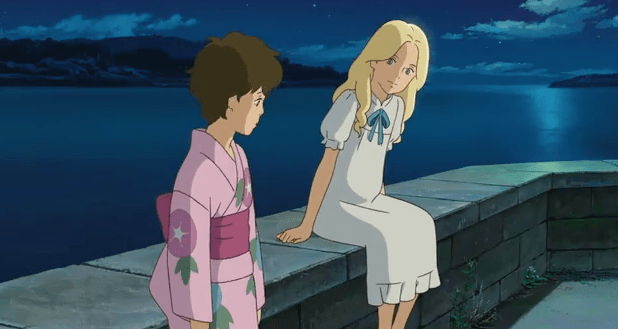
Based on Joan G. Robinson’s 1965 YA novel, which is one of Miyazaki’s favorites, When Marnie Was There is also one of Ghibli’s more mature works, not in a graphic sense like Princess Mononoke, but in an emotional sense. Anna (voiced by Hailee Steinfeld in the English dub) is a deeply troubled girl who keeps all of her griefs inside. As she says, she hates herself, for having asthma, for not fitting in at school, for not feeling at home with her foster parents. When she is sent to the countryside to live with friendly relatives, she remains uncomfortably stoic until she encounters a rundown mansion and the mysterious blonde girl Marnie (Kiernan Shipka) who only appears to her. When Anna crosses the tidal marsh to the mansion, she seems to step back in time, and their friendship grows, allowing Anna to regain her emotions and her self-confidence.

Many Ghibli films are leisurely paced, and this is no exception. The beginning takes time in establishing the characters: the nosy but nice would-be friend, the laconic neighborhood fisherman, the habitual painter fond of Marnie’s mansion. This community is merely a quaint backdrop for the central friendship and mystery between Anna and Marnie. The slowness of the mystery taxes the patience more than the film overall, but luckily there is a payoff, even if the line between dreams and reality becomes more ambiguous over time.

Some comments on the film have considered the girls’ bond in a romantic context with words like “infatuation,” and there were times that I was wondering where exactly their relationship was going. By today’s standards, when two twelve-year-olds meet secretly and dance in the moonlight and express their love, romance is assumed over friendship, while the opposite probably would have been true in the past. Perhaps modern sensibilities have colored people’s perceptions, like the humorous assumptions on Sherlock or the way some people mistake Sam and Frodo’s brotherly camaraderie in The Lord of the Rings for longing. Ultimately, the girls are meant to be only friends, yet the solving of the mystery reveals that their connection is indeed deeper than first thought. Actually, the revelation casts certain scenes in a much more tender and meaningful light, with subtle psychological details unseen in most Ghiblis. (Note the doll that Anna holds during a painful flashback.)

Though it’s not obvious at first, Anna’s greatest misery is being ignored or not wanted. Even the nicest people who seem to pay her attention are easily distracted, leaving her with nothing but personal distaste. Is Marnie merely the subconscious product of her desire for attention or a supernatural answer to it? By the end, it doesn’t really matter. Wishing to belong is nothing new in family films, but When Marnie Is There supplies a satisfying reply with more realistic resonances than most. With so much emotional depth, it’s unfortunate that the film’s visual style can’t quite match it. It has its fair share of memorable Ghibli-style scenes (a moonlit rowboat, wading through a rising tide), but its beauty just doesn’t compare with their best. Though Marnie has earned a nomination for Best Animated Feature, Inside Out is still a shoo-in. Despite this, When Marnie Is There is a bittersweet swan song for one of the great animation studios.

Best line: (Anna, watching her classmates) “In this world, there’s an invisible magic circle. There’s an inside, and an outside. Those people are inside the circle, and I’m outside.”


Rank: List Runner-Up


© 2016 S. G. Liput

364 Followers and Counting


The Book of Life (2014)

27 Wednesday Jan 2016

Posted by sgliput in Movies, Poetry, Reviews, Writing

≈ Leave a comment

Tags

Animation, Comedy, Family, Fantasy, Musical, Romance


Life is full of love and song
For those with both within their hearts;
But why must death and sleep be different
From their former counterparts?

Grief will mark a soul’s departure
Here on earth where all lives cease;
But from grief comes celebration
In another life of peace.
__________________
 

MPAA rating: PG


While Pixar has been rumored to be working on a project called Coco about the Mexican Day of the Dead (supposedly for a 2017 release), Reel FX and 20th Century Fox Animation beat them to the punch with 2014’s The Book of Life. This inventively animated romance starts out with a frame story reminiscent of The Princess Bride, with a confident museum guide recounting a story to a collection of rowdy schoolkids, who interject their occasional thoughts and worries as the tale progresses.

While these kids have a more typical cartoon human appearance, the characters in the tale being told are intentionally modeled as wooden puppets, with visible joints but no strings. This aesthetic combines with the off-kilter animation to give the CGI film a stop-motion aspect, not unlike The Lego Movie. The story itself follows three childhood friends, Manolo Sanchez (Diego Luna), Maria (Zoe Saldana), and Joaquin (Channing Tatum), who are destined to grow up into a love triangle. Just as viewers often debate who will get the girl in any number of series, the trio attract the attention of the two rulers of the afterlife, the lovely La Muerte of the Land of the Remembered and the bitter Xibalba of the Land of the Forgotten. Ron Perlman as Xibalba seems knowingly reminiscent of Hades in Hercules as he makes a game-changing bet with his counterpart as to which boy will marry Maria.

The Book of Life has a lot of positives. The animation is frequently enchanting and the characters surprisingly personable. While the characterization sometimes falters, I liked how one suitor was clearly meant as Maria’s soul mate, but the other was still given a chance to be heroic rather than being turned into a villain. The film also offers a uniquely positive view of death, treating it not as the end but as a second stage to reunite with loved ones and join in one big fiesta.

On the other hand, these same themes of death strike me as problematic. The depiction of the afterlife rings with Mexican culture but is entirely irreligious, as is the notion that our departed loved ones live on in happiness only as long as we remember them. The film’s conflict makes a point of noting that, without anyone to remember them, the dead will pass into the hellish Land of the Forgotten, which makes me wonder why no one is bothered by the fact that this will happen anyway within a few generations. I don’t remember my great-great-great grandfather; that doesn’t mean he’s not in Heaven. This idea of the afterlife is meant as a secular comfort but not a lasting one.

The Book of Life is also marred by tired clichés about being oneself against an overbearing parent; some awkwardly out-of-left-field pop songs, as if it’s trying to emulate Shrek; and oddly by the same animation I praised earlier. When I first saw the animation style, it reminded me of the Nickelodeon show El Tigre: The Adventures of Manny Rivera (picture below), and sure enough, director Jorge Gutierrez was also that show’s creator and apparently just translated the animation from 2D to 3D. While it works most of the time, certain scenes look strangely cheap with elaborate mustaches and protuberant noses that aren’t even trying for realism.

Here I go again, sounding all critical as if I dislike anything with flaws. Not so. The Book of Life rises as a delightful, energetic, and uniquely cultural change of pace from the usual stylings of Disney and DreamWorks while not coming off as low quality. Its themes of family and life and telling our own stories are commendable, and I enjoyed it, as I think most fans of animation will.

Best line: (one of the distraught schoolkids) “What is it with Mexicans and death?!”


Rank: List Runner-Up


© 2016 S. G. Liput

360 Followers and Counting


My Top Twelve Anime Films

18 Friday Sep 2015

Posted by sgliput in Movies, Reviews, Writing

≈ 19 Comments

Tags

Animation, Anime, Foreign, Lists

After last week’s Opinion Battle, I noticed that many movie reviewers perhaps have not had much exposure to anime beyond the few Studio Ghibli films that have gained acclaim outside Japan. Thus, I thought my next list would cover my favorite anime (which is just another word for a Japanese cartoon. Cue debate.)

I myself have had a varied history with anime. I grew up with the usual kids’ stuff like Pokémon and Yu-Gi-Oh! and Dragon Ball Z, but it just blended into all the animated TV shows I watched and never stood out to me as something different. Then came Spirited Away, and when it won the Oscar for Best Animated Feature in 2002, my parents and I decided to watch it pay-per-view. Nothing had prepared us for just how bizarre and, well, foreign it was (seriously, green decapitated heads rolling around?), and though I don’t recall my exact reaction other than “it was weird,” my parents totally turned their backs on anime overall. They still haven’t fully recovered.

It wasn’t until years later that a review of Grave of the Fireflies prompted me to give anime another try, and its moving and realistic story contrasted so greatly with Spirited Away that it gave me a new respect for what this genre could accomplish. A marathon of Ghibli films followed, and now I have enough favorite anime to make up a list like this. I don’t know how many like me there are, but I’m one of those people who would sooner watch an animated movie than a live-action one, and anime fits into that category. While it’s not my favorite genre, it’s among my most watchable.

I will say that I’m rather particular about my anime, and the kind I watched as a kid with all the yelling and exaggerated faces and reactions no longer appeals to me. None of the films below nor any Ghibli film I’ve seen carry these clichés, and I think they are better for it. Thus, here are my top twelve anime, and I hope that someone adventurous out there will give them a try as I did. You might find a new favorite too.

#13/Runner-Up: Princess Mononoke (1997), Studio Ghibli, directed by Hayao Miyazaki
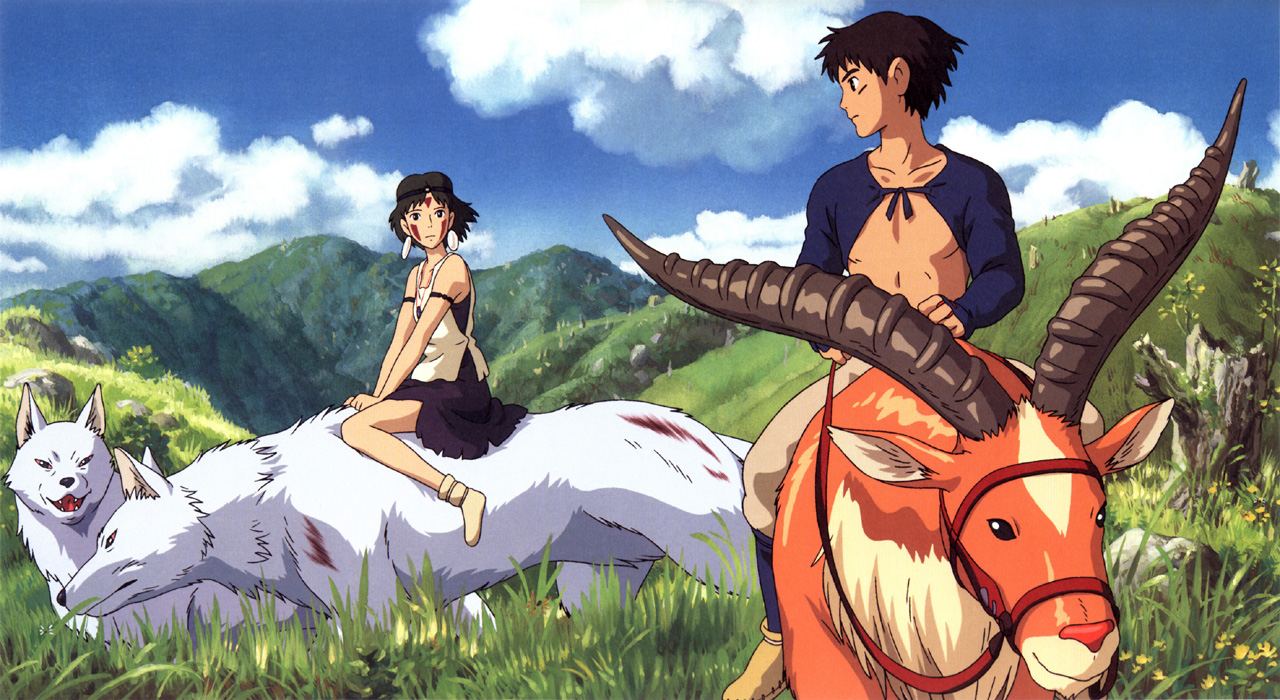
This is another film that I was not prepared for, in particular the violence. No other Ghibli film is like it and very few reviews mention how violent it is so I was shocked when heads and limbs started flying. However, when I eventually looked past this graphic element, I saw the story and artwork are amazing, and that the actual violence is a small part of the long running time. I cannot think of another animated film that I could easily call an epic, but Princess Mononoke fits that mold, as it follows Prince Ashitaka on a quest to cure a demon’s curse and restore peace to warring humans and forest gods. The pagan mythology is heavy, but the engrossing action and ambiguous characterization are exactly what made Miyazaki so famous. If only he’d left out the unnecessary violence…. (The English dub includes Claire Danes and Billy Bob Thornton.)

#12: Time of Eve (2010), Studio Rikka, directed by Yasuhiro Yoshiura

A more recent watch that displaced by previous #12, Time of Eve is a six-part web series that was combined into a thought-provoking movie about androids in the near-future. A high school student named Rikuo has always taken robots for granted as nothing more than appliances, but when he discovers a café where robots and humans are treated the same, this legal and moral gray area and its diverse patrons make him question his preconceptions about androids. Episodic and subtle, with much of the bigger picture left to the imagination, this sensitive drama will keep viewers pondering its themes long after the credits roll.

#11: Patema Inverted (2013), Purple Cow Studio, directed by Yasuhiro Yoshiura

While its premise may seem similar to the 2012 live-action film Upside Down, Patema Inverted is still a dazzling piece of work. After an experiment with the earth’s gravity goes awry and sends much of the world’s people falling into the sky, a colony of survivors live underground, despised as “inverts” by the “normal” people above…I mean, below…I mean…you know what I mean. The uncertainty of what’s up and what’s down is part of its appeal. Incredible shifting perspective shots give the viewer an idea of what different characters are seeing, and the core romance between two oppositely gravitated kids provides the heart of this sci-fi. Even if certain aspects are hard to understand, thinking about them exercises the mind (or at least it did mine). I haven’t seen Upside Down, but I’ve heard it didn’t fulfill its potential; Patema Inverted does.

#10: The Wind Rises (2013), Studio Ghibli, directed by Hayao Miyazaki

While Miyazaki’s work has been universally praised, it’s all much more appealing to the eyes and imagination than to the heart. He changed that with his final film, The Wind Rises. More down-to-earth than his fantasy films, it nonetheless flies high as it depicts the life and dreams of Jiro Horikoshi, the real-life designer of the Japanese Zero plane. The film carries some real emotional weight as Jiro falls in love and is forced to balance his engineering goals with the inevitable tragedy of loss. It’s one of the sweetest anime romances I’ve seen and an example of how creativity can lead to destruction. (The English dub includes Joseph Gordon-Levitt and Emily Blunt.)

#9: The Castle of Cagliostro (1979), Tokyo Movie Shinsha, directed by Hayao Miyazaki

Here we jump from Miyazaki’s last film to his first. The Castle of Cagliostro may seem dated compared with other more popular anime, but its entertainment value outweighs much of the competition. The James-Bond-style adventure follows the exploits of gentleman thief Lupin III as he infiltrates a European castle and crosses a dangerous count to rescue a princess and uncover a counterfeiting operation. Just one among many Lupin films, Cagliostro stands out thanks to Miyazaki, who made the main characters more likable and exhibited his early craftsmanship.

#8: Cowboy Bebop: The Movie (2001), Bandai Visual Company/Sunrise/Bones/Destination Films, directed by Shinichiro Watanabe


Cowboy Bebop is hailed as one of the greatest anime shows ever, and its follow-up movie delivered more of the same awesomeness. Set between episodes 22 and 23 of the show (right before plot threads started wrapping up), the film fits into the episodic nature of the show as just one more adventure for the futuristic bounty hunters aboard their ship, the Bebop. Thus, it’s fairly accessible to newcomers and doesn’t require prior knowledge of the characters. When a terrorist releases a biological weapon on heavily populated Mars, the astronomical bounty on his head attracts Spike, Jet, and Faye to follow his trail. With elements of film noir and crime thrillers, this film boasts stylish action and music, despite its intermittent frank violence. Just watch the opening scene to get an idea of the coolness that is Spike Spiegel.

#7: The Girl Who Leapt through Time (2006), Madhouse, directed by Mamoru Hosoda

A favorite among viewers branching out from Studio Ghibli, The Girl Who Leapt through Time is a sensitive coming-of-age tale mixed with the perks of time travel. When Makoto Konno has the worst day of her life, including being hit by a train (a reeeally bad day!), she awakes to find she has the ability to leap back and forth through time. Juvenile antics give way to unfortunate consequences, and even if plot holes abound, the film excels in both its romance and sci-fi aspects. The end of this film always leaves me with a happy feeling.

#6: Wolf Children (2012), Studio Chizu/Madhouse, directed by Mamoru Hosoda

A darling among many anime reviewers, Wolf Children is an undeniably sweet family drama, one that balances cuteness with the pains of growing up. Combining the joys and trials of parenthood with werewolves may not have been an obvious mix, but Hosoda did an excellent job here. Despite the werewolves, the story is in no way a horror; after a college student named Hana falls in love with a mysterious man, and even after she learns he is half wolf, they share a brief but touching romance reminiscent of the beginning of Up. Most of the film, though, is about how Hana raises their two children Ame and Yuki, trying to hide their wolf side while wishing only the best for them. The ending may be rather disappointing, but the majority of Wolf Children is beautiful.

#5: Children Who Chase Lost Voices (2011), CoMix Wave Films, directed by Makoto Shinkai

I don’t care for much of Shinkai’s past work (e.g. 5 Centimeters Per Second), but once he stopped focusing on abstract feelings and actually told a worthwhile story, he hit this one out of the park. Also known as Journey to Agartha, this movie combines all the best elements of Studio Ghibli’s films into an exciting and occasionally moving adventure. After young Asuna meets an enigmatic boy named Shun, she embarks on a quest to a fantasy world deep under the earth, led by her progressively obsessed teacher in search of lost love. The whole film is about saying goodbye in different ways, and it features subtle morals, thrilling action, and some of the most gorgeously detailed animation I’ve come across.

#4: Nausicaä of the Valley of the Wind (1984), Topcraft/Tokuma Shoten/Nibariki/Hakuhodo, directed by Hayao Miyazaki

This is the film that skyrocketed Miyazaki’s career and directly led to the formation of Studio Ghibli. Nausicaä is both a slightly preachy cautionary tale about pollution and an intriguing post-apocalyptic adventure. Nausicaä herself is a princess, whose peaceful valley is threatened by rival kingdoms vying for both power and a way to halt the spreading of a poisonous forest and its humongous insectoid inhabitants. A lot happens and a lot isn’t fully explained because the story is just part of Miyazaki’s much longer manga (Japanese comic), which he wrote specifically so he could convince producers to finance this film. It was a hit and remains an anime classic with one of my favorite movie scores. (The English dub includes Uma Thurman and Patrick Stewart.)

#3: Laputa: Castle in the Sky (1986), Studio Ghibli, directed by Hayao Miyazaki

Miyazaki’s very next film manages to edge out its more acclaimed forerunner. Laputa: Castle in the Sky (or just Castle in the Sky) was the first film after Studio Ghibli’s formation and my favorite of Miyazaki’s. Set in a high-flying steampunk landscape, it joins likable engineer’s assistant Pazu with young Sheeta, who floats down from the sky with a glowing crystal. Fleeing from air pirates and government agents intent on obtaining her crystal, they race to the ancient floating island of Laputa and the secret power it contains. The score is phenomenal, the characters endearing, and the setting and action stunning. Even my anime-despising mom said it was “pretty good”; Castle in the Sky is a perfect introduction for Studio Ghibli newbies. (The English dub includes Anna Paquin and Mark Hamill.)

#2: Grave of the Fireflies (1988), Studio Ghibli, directed by Isao Takahata

Though other 1988 films like My Neighbor Totoro and Akira seem to get more attention, Grave of the Fireflies is the standout anime of the year and the decade. It’s strange to rank it among my favorites since it’s a deeply depressing tragedy that tears me up inside every time. I used to cry at the drop of a hat when I was younger, but Fireflies is the only film that still makes me sob bitterly. It tells the story of siblings Seita and Setsuko, orphaned after a World War II bombing, who must survive on their own and ultimately fail. It’s not a spoiler since the first scene reveals this fact, but the recounting of how it happened is utterly heartbreaking. Grave of the Fireflies is an emotional powerhouse about the loss of innocence and the cost of war.

#1: Whisper of the Heart (1995), Studio Ghibli, directed by Yoshifumi Kondō

My #1 is probably no surprise for anyone who saw my choice for last week’s Opinion Battle, and I highly doubt that many others would rank it as I would. This is a strictly personal choice (my parents didn’t see its appeal); certainly everyone has a film that speaks to them, even if it’s to them alone, and this one spoke to me. It’s simple and a bit slow, without the fantasy of other Ghiblis, but its realism is part of its appeal. Schoolgirl Shizuku develops a gradual relationship with Seiji, and the two of them encourage each other to follow their dreams and talents. Shizuku wishes to be a writer, and the inspiration she receives has encouraged me as well. Between the creative use of “Country Roads, Take Me Home” (one of my favorite songs) and the gentle, youthful drama, Whisper of the Heart is one of my go-to films for inspiration. (The English dub includes Brittany Snow and Cary Elwes.)

Runners-Up:

Akira (1988), directed by Katsuhiro Otomo – Definitely not for kids and a bit weak on characters, but the influential animation is still amazing all these years later.

Brave Story (2007), directed by Koichi Chigira – Not a lot of explanations, but this likable video-game-style quest features elements of Spirited Away and Children Who Chase Lost Voices.

The Boy Who Saw the Wind (2000), directed by Kazuki Omori – Clearly drawing inspiration from Mizazaki’s films, this adventure fantasy also seems like an influence on Avatar: The Last Airbender.

The Cat Returns (2002), directed by Hiroyuki Morita (Ghibli) – Somewhat of a follow-up to Whisper of the Heart, like a story that Shizuku would write; I’d like it even more if the connection had been made plainer.

Colorful (2010), directed by Keiichi Hara – Like Ordinary People meets Quantum Leap.

From Up on Poppy Hill (2011), directed by Goro Miyazaki (Ghibli) – Young romance mingles with a defense of knowledge and the past in this period piece.

Howl’s Moving Castle (2004), directed by Hayao Miyazaki (Ghibli) – Imaginative fantasy about a cursed girl and a self-centered wizard with a great voice cast (Christian Bale, Billy Crystal) and the best Ghibli animation yet IMO

Interstella 5555: The 5tory of the 5ecret 5tar 5ystem (2003), directed by Kazuhisa Takenouchi – An extended Daft Punk music video that wears thin over time but will easily please Daft Punk fans

Kiki’s Delivery Service (1989), directed by Hayao Miyazaki (Ghibli) – Sweet and simple tale of a young witch coming of age

Millennium Actress (2001), directed by Satoshi Kon – A slightly confusing journey through Japanese cinema and the search for the unattainable; so-so animation but a beautifully evocative ending

Ponyo (2008), directed by Hayao Miyazaki (Ghibli) – Inspired by The Little Mermaid; a cute fantasy for the younger set

Porco Rosso (1992), directed by Hayao Miyazaki (Ghibli) – An old-school story of a hard-boiled pilot in the 1920s cursed with the head of a pig

Paprika (2006), directed by Satoshi Kon – Imaginatively surreal and moderately disturbing, this was a clear forerunner of Inception, and at least one elevator scene seems to have been directly borrowed from this mature sci-fi

The Secret World of Arrietty (2010), directed by Hiromasa Yonebayashi (Ghibli) – Simple but endearing tale based on The Borrowers

Spirited Away (2001), directed by Hayao Miyazaki (Ghibli) – Yes, I saw it again and liked it more, but it’s still very weird and not for anime newcomers

Steamboy (2004), directed by Katsuhiro Otomo – Weak on story but spectacular with the detailed steampunk visuals and much more family friendly than Akira

Summer Wars (2009), directed by Mamoru Hosoda – An entertaining balance between extended family drama, digital smackdowns, and social commentary on our Internet culture

Also, a special mention for My Neighbor Totoro, a family film that has many fans, though I’m not one of them. Its lack of plot just isn’t for me, but anyone exploring anime should still give it a try.

Now that I’ve gotten this list out, I can get off my recent anime kick, but I hope that someone out there finds a new favorite here.
Ordinary People (1980) / Colorful (2010)

13 Sunday Sep 2015

Posted by sgliput in Movies, Poetry, Reviews, Writing

≈ 5 Comments

Tags

Animation, Anime, Drama, Triple A

So many reasons to throw in the towel,
To give up the ghost or abandon all hope.
Most are ignored with a tear or a scowl,
But some pile up on the few who can’t cope.
Life can be cruel, like the people who fill it,
But there are more ways to improve it than death.
Life can be bright for the people who will it,
Who see all the reasons to take their next breath.
_______________

Ordinary People’s Rating: R (for language)
Colorful’s Rating: PG-13 (for thematic material)

I haven’t done a double review since my comparison of I Am Legend and World War Z, and I thought it was about time for another, especially because I’ve found two similar films of late. It may seem odd to compare an Oscar-winner from 1980 with a recent anime film that few outside of Japan have heard of, but both movies share a particularly moving brand of family drama, depicted through the experiences of a suicidal boy.

Ordinary People marked the directorial debut of Robert Redford and also confirmed that Mary Tyler Moore could handle much more dramatic roles than her comedic TV persona. A favorite of my VC’s and what I term a AAA movie (because it’s All About the Acting), the Best Picture winner of 1980 features Timothy Hutton as Conrad Jarrett, a troubled boy who seems perfectly ordinary on the outside, as does his encouraging father (Donald Sutherland) and distant mother (Moore). He’s part of the choir, he’s on the swim team, and his parents go to dinner parties. Yet behind this ordinary façade lie demons that led him to try to take his own life. Through the insight of a psychiatrist (Oscar nominee Judd Hirsch), feelings of guilt and love are exposed like a raw nerve, and his relationships are both strengthened and strained by his coming to terms with the past. The powerful scenes between Conrad and Dr. Berger won Hutton a Best Supporting Actor Oscar and foreshadowed similar psychiatric purging in films like Good Will Hunting. In addition, the tension between Conrad and his glacial mother is both pitiable and realistic, especially for those who have endured similar indifference from a parent. While trauma endures and relationships are not all wrapped up cleanly with a bow by the end, there is hope that happiness and recovery are attainable for those who can let go of the past. (It was also interesting seeing early roles for Adam Baldwin and [Lost alert] Fredric Lehne.)

Colorful, which was nominated as an Excellent Animation of the Year at the 2010 Japanese Academy Awards, begins with an unnamed sinful soul in the afterlife being given a second chance. He is to be placed in the body of a boy named Makoto who committed suicide and will be given a limited time to make amends for his own past sins while learning why Makoto killed himself. This Quantum Leap-inspired premise is consistently intriguing as the new Makoto struggles to adapt to his new environment while being somewhat guided by an invisible “angel” of sorts (similar to the hologram Al). He learns that his mother had an affair and that his middle school crush is no better morally, and bullying played a role as well. Whereas Ordinary People pits the mother against the son, here it is “Makoto” who will not forgive his mother, always believing the worst of her and of most people, until he begins to look past himself.

Unlike Ordinary People, though, Colorful has some very apparent flaws, mainly in the character interactions. While the rotoscoped backgrounds are quite realistic, many conversations are strangely stilted in ways that go beyond the average English dub, particularly in scenes with an awkward girl who won’t leave Makoto alone. Yet, while I was considering writing the film off for its weaknesses, its poignant strength sneaked up on me. The pacing is slow and sometimes dragged out, but tension often emerges in quiet ways, in contrast to the emotional fireworks of Ordinary People. Characters that initially seem odd or distant turn out to have much more depth, and the eventual familial catharsis was disarmingly powerful. Despite its faults, Colorful boasts the kind of emotions that would probably earn acting Oscars if adapted properly to live action.

While these two films may seem very different visually, both Ordinary People and Colorful feature ultimately life-affirming messages in the wake of attempted suicide. While the former explores survivor guilt and loveless parents, the latter depicts the difficulty of forgiveness and the cost of infidelity. Both are beautiful films in their own way as they highlight how ordinary families cope with tragedy and how a single friend can make an enormous difference in one’s life.

Best line (from Ordinary People): (Dr. Berger) “A little advice about feelings, kiddo: don’t expect it always to tickle.”

Rank for Ordinary People: List-Worthy
Rank for Colorful: List Runner-Up

© 2015 S. G. Liput

338 Followers and Counting

Inside Out (2015)

01 Wednesday Jul 2015

Posted by sgliput in Movies, Poetry, Reviews, Writing

≈ 4 Comments

Tags

Animation, Comedy, Drama, Family, Pixar

Every girl and every boy
Has Sadness, Anger, Fear, and Joy
(Disgust as well) within their minds
To guide them through their days.
They form and file memories,
And inside Riley, all of these
Are touched by Joy, who always finds
The silver lining’s rays.

Though Joy insists on keeping her
As happy as they always were,
A touch of Sadness now in spots
May not be such a shame.
When Riley moves against her will,
And Sadness starts her off downhill,
The world of Riley’s inner thoughts
Will never be the same.
_____________________
While other people have been eagerly awaiting adult fare like Jurassic World, Mad Max: Fury Road, and Batman vs. Superman, I’ve been looking forward to Inside Out, hoping that it would be a return to the Pixar excellence to which moviegoers had become accustomed. I’m happy to say, it is. I’m trying to not let other critics’ positive reviews color my opinion, but I really am thrilled that Pixar has bounced back from the good-not-great status of Brave and the disappointment of Cars 2.

A movie about personified emotions in the control center of the mind—as original as it sounds, there have been similar concepts before, like the nearly forgotten ‘90s sitcom Herman’s Head, but whereas such ideas are usually reserved for comedy, Inside Out delves deeper, putting the emotion in emotional. Within the head of 12-year-old Riley Anderson, all her emotions work together most of the time—Joy (Amy Poehler), Sadness (Phyllis Smith), Anger (Lewis Black), Disgust (Mindy Kaling), and Fear (Bill Hader, in full Flint Lockwood mode)—and everyone but Sadness has a clearly defined role to play in guiding Riley’s actions. While this cast could have been one-note, epitomizing singular, often negative feelings, they all contribute to Riley’s personality and work well as characters due to their concern for her overall well-being (despite some poor decisions), not to mention the wisely chosen voice cast (many of which hail from Saturday Night Live or The Office).

While Riley’s external world involves a tempestuous move from Minnesota to San Francisco, her inner world endures even more distressing changes, worsened by the separation of leader Joy and downer Sadness from their psychological Headquarters. Having included too many spoilers in my past reviews, I want to tread lightly with this one and leave the film’s full impact for the fresh viewer. Suffice to say, Inside Out is a journey through the psyche that casual viewers can enjoy on the surface and analysts can pick apart to find ever more engaging layers of nuance and symbolism underneath.

When I first heard the film’s concept, I was a bit perplexed by the choice of five emotions because not every experience or feeling is so clear-cut. Yet children’s emotions are far simpler and more distinct than those of adults; the filmmakers know this well and use this very fact as the driving conflict in the film (there is no villain), since Riley is in the formative years of young adulthood. What is the cause of children suddenly needing “alone time” or deriving more frustration than enjoyment from past pleasures? How would mood swings, depression, dreams, or sarcasm be visualized in this uniquely Pixar mindscape? The film’s explanations for questions like these are eye-opening, as is the role of multiple emotions in shaping our deepest memories and impressions, yet much of it is metaphorical, implicit, and never heavy-handed in its interpretation. Here’s an example of one of the many questions prompted by the film’s themes: While certain crises seem cataclysmic at the time, perhaps these tragedies are merely an inevitable step toward maturity, though they’re no less regrettable. You’ll understand when you see it.

Compared with Pixar’s other classics, Inside Out can hold its ground with favorites like Ratatouille, Up, and Monsters, Inc. (the latter two also directed by Pete Docter), and even if the film doesn’t quite reach the heights of The Incredibles or Finding Nemo, it has the potential to grow in stature with further viewing. I already love it more now than right after I saw it. The animation is a modern marvel, such as the energy-infused substance of the emotions’ bodies and the orb-filled labyrinth of Long-Term Memory. One random danger in particular seemed like an excuse for the animators to indulge in some visual fun, despite the fact that no kid will understand its cerebral implications. (I’m not sure I do.) Inside Out may not be Pixar’s funniest adventure, but there are still quite a few laugh-out-loud moments and imaginative silliness, such as a few unexpected movie references and the way that seemingly random gags come together ingeniously during the climax. It’s a stunning balance of humor, head, and heart.

As many critics have stated, there’s also a good deal of poignancy, particularly for parents recalling their children’s childhoods. While I don’t fit that category, I admire the presence of a close nuclear family and was still touched deeply by a certain selfless act toward the end. I have a long and storied history of crying at animated movies, from Tarzan to Brother Bear, but few films can extract a tear from me anymore. Inside Out did, and that made it a special experience for me. After watching the film, I was left with the pensive, bittersweet glow of a film worth seeing many more times. My Joy and Sadness must have been holding hands. Thank you, Pixar. It’s good to have you back in force.

Best line: (Fear) “We didn’t die today; I call that an unqualified success!”

Rank: List-Worthy

© 2015 S. G. Liput
323 Followers and Counting

Big Hero 6 (2014)

19 Friday Jun 2015

Posted by sgliput in Movies, Poetry, Reviews, Writing

≈ 3 Comments

Tags

Action, Animation, Comedy, Drama, Family, Sci-fi, Superhero

Though Hiro Hamada has bots on the brain
And uses his genius for fun and for gain,
His brother impresses
That cooler successes
Result from hard work to assist those in pain.

The huggable Baymax, Tadashi’s creation,
Is there for young Hiro through grief and temptation.
When evil arises,
His crew improvises,
Inventing a tech-fitted team transformation.

Revenge and respect struggle in good and bad,
And heroes are born from the hopes of a lad.
To overcome grief
And a merciless thief,
New bonds must be forged to replace what he had.
_______________

Rating: PG

After so-so CGI attempts like Bolt and The Wild and vastly improved near-classics like Tangled and Wreck-It Ralph, it’s now safe to say that Disney animation has found its stride. As an animated superhero film, Big Hero 6 doesn’t just copy The Incredibles but succeeds as a unique and entertaining fusion, of Disney storytelling and Marvel action, of Californian and Japanese culture, of soft-bellied caretakers and hard-edged vigilantes.

Too often lately, animated films give so little away in the trailers that it’s hard to get excited about a film we know little about. Thus, while I was tempted to see Big Hero 6 in the theater, I opted to wait for the DVD, a decision I now regret. It has everything you could want in an animated superhero tale. The animation is crisp and detailed, and the characterization of Hiro and his friends is smooth and effortless, elements that serve to heighten the tension and appeal of the action sequences. It’s rare nowadays, but I found it refreshing that every character (aside from the villain) was smart and likable, with the stand-out being the film’s mascot Baymax, that marshmallow man whose endearing innocence and literalness manage to keep the superhero team grounded. Again, I was pleased at how fond I became of this lovable sidekick, sort of like how I was surprised that Olaf was one of the best aspects of Frozen. The character designs and voice acting are perfect, especially for Hiro, Go Go, and hilarious Aunt Cass, and once the fully powered team assembles, the action occasionally approaches an Avengers level of awesomeness, offering new angles and even the unwritten rules of car chases. In addition, the film passed my personal test for animated films, in that I immediately wanted to see it again.

With mind-controlled microbots, experimental wormholes, and unexplained kite turbine things floating above the city (seriously, what were those things? Wind power?), this is obviously not the real world, if the culture-clash of San Fransokyo wasn’t a clear enough hint. Yet the film’s moral speaks to very real emotions of grief, anger, bitterness, and letting go. Hiro’s relationship with his brother Tadashi defines his goals for the future, and despite the holes in his heart, it is encouraging and touching how Baymax manages to fill them. While the film overall is refreshingly original, the core bond between Hiro and Baymax has recognizable resonances with The Iron Giant, and anyone who enjoyed one will most likely love the other. (At one point, I almost expected to hear “You go; I stay,” but that would have been too obvious a connection.) Big Hero 6 also completes an unexpected trilogy of films in which James Cromwell plays the father of some great advancement in robotics, the other two being I, Robot and Surrogates.

While the film’s science is clearly comic-bookishly advanced, certain up-and-coming real-world technologies were included as goals to strive for, such as the idea of a soft care robot or the 3D printer that Hiro uses to create everything from robot parts to costumes. It’s been said that the “geeks” and “nerds” are the ones who change the world, and this film is part of a growing trend to put animated nerds in the heroic spotlight (like Hiccup’s reading in How to Train Your Dragon or Flint’s inventing in Cloudy with a Chance of Meatballs). Big Hero 6 is a home-run for Disney animation, which has now firmly planted itself above DreamWorks and just short of Pixar. From the funny and sweet short film Feast before it to the unexpected after-credits scene that cements this as a Marvel movie, Big Hero 6 is a super hit from start to finish and deserved its Oscar win.

Best line: (Aunt Cass, having prepared hot wings) “All right, get ready to have your face melted! We are gonna feel these things tomorrow, you know what I’m saying?”

VC’s best line: (Baymax, referring to the cat) “Hairy baby, hairy baaaby!”


Rank: List-Worthy

© 2015 S. G. Liput

319 Followers and Counting

← Older posts
Newer posts →

Recent Posts

  • We Didn’t Start 2025 (Recap)
  • NaPoWriMo 2025 Recap (Finally)
  • Sonic the Hedgehog 3 (2024)
  • It Happened One Night (1934)
  • Spellbound (2024)

Recent Comments

associatesofshellymann's avatarassociatesofshellyma… on My Top Twelve La La La So…
Kit's avatarKit Nichols on Bonnie and Clyde (1967)
lifelessons's avatarlifelessons on Look Back (2024)
Carol Jackson's avatarCarol Jackson on The Thief of Bagdad (1940…
Stephen's avatarStephen on Love Story (1970)

Archives

  • January 2026
  • December 2025
  • May 2025
  • April 2025
  • March 2025
  • February 2025
  • January 2025
  • December 2024
  • May 2024
  • April 2024
  • March 2024
  • February 2024
  • January 2024
  • December 2023
  • November 2023
  • October 2023
  • September 2023
  • July 2023
  • June 2023
  • May 2023
  • April 2023
  • March 2023
  • February 2023
  • January 2023
  • December 2022
  • November 2022
  • October 2022
  • September 2022
  • August 2022
  • July 2022
  • June 2022
  • May 2022
  • April 2022
  • March 2022
  • February 2022
  • January 2022
  • December 2021
  • November 2021
  • October 2021
  • September 2021
  • August 2021
  • July 2021
  • June 2021
  • May 2021
  • April 2021
  • March 2021
  • February 2021
  • January 2021
  • December 2020
  • November 2020
  • October 2020
  • September 2020
  • August 2020
  • July 2020
  • June 2020
  • May 2020
  • April 2020
  • March 2020
  • February 2020
  • January 2020
  • December 2019
  • November 2019
  • October 2019
  • September 2019
  • August 2019
  • July 2019
  • June 2019
  • May 2019
  • April 2019
  • March 2019
  • February 2019
  • January 2019
  • December 2018
  • November 2018
  • October 2018
  • September 2018
  • August 2018
  • July 2018
  • June 2018
  • May 2018
  • April 2018
  • March 2018
  • February 2018
  • January 2018
  • December 2017
  • November 2017
  • October 2017
  • September 2017
  • August 2017
  • July 2017
  • June 2017
  • May 2017
  • April 2017
  • March 2017
  • February 2017
  • January 2017
  • December 2016
  • November 2016
  • October 2016
  • September 2016
  • August 2016
  • July 2016
  • June 2016
  • May 2016
  • April 2016
  • March 2016
  • February 2016
  • January 2016
  • December 2015
  • November 2015
  • October 2015
  • September 2015
  • August 2015
  • July 2015
  • June 2015
  • May 2015
  • April 2015
  • March 2015
  • February 2015
  • January 2015
  • December 2014
  • November 2014
  • October 2014
  • September 2014
  • August 2014
  • July 2014
  • June 2014
  • May 2014
  • April 2014
  • March 2014
  • February 2014
  • January 2014
  • December 2013

Categories

  • Blindspot
  • Blogathon
  • Christian
  • Movies
  • Music
  • NaPoWriMo
  • Poetry
  • Reviews
  • TV
  • Writing

Meta

  • Create account
  • Log in
  • Entries feed
  • Comments feed
  • WordPress.com

Recent Posts

  • We Didn’t Start 2025 (Recap)
  • NaPoWriMo 2025 Recap (Finally)
  • Sonic the Hedgehog 3 (2024)
  • It Happened One Night (1934)
  • Spellbound (2024)

Recent Comments

associatesofshellymann's avatarassociatesofshellyma… on My Top Twelve La La La So…
Kit's avatarKit Nichols on Bonnie and Clyde (1967)
lifelessons's avatarlifelessons on Look Back (2024)
Carol Jackson's avatarCarol Jackson on The Thief of Bagdad (1940…
Stephen's avatarStephen on Love Story (1970)

Archives

  • January 2026
  • December 2025
  • May 2025
  • April 2025
  • March 2025
  • February 2025
  • January 2025
  • December 2024
  • May 2024
  • April 2024
  • March 2024
  • February 2024
  • January 2024
  • December 2023
  • November 2023
  • October 2023
  • September 2023
  • July 2023
  • June 2023
  • May 2023
  • April 2023
  • March 2023
  • February 2023
  • January 2023
  • December 2022
  • November 2022
  • October 2022
  • September 2022
  • August 2022
  • July 2022
  • June 2022
  • May 2022
  • April 2022
  • March 2022
  • February 2022
  • January 2022
  • December 2021
  • November 2021
  • October 2021
  • September 2021
  • August 2021
  • July 2021
  • June 2021
  • May 2021
  • April 2021
  • March 2021
  • February 2021
  • January 2021
  • December 2020
  • November 2020
  • October 2020
  • September 2020
  • August 2020
  • July 2020
  • June 2020
  • May 2020
  • April 2020
  • March 2020
  • February 2020
  • January 2020
  • December 2019
  • November 2019
  • October 2019
  • September 2019
  • August 2019
  • July 2019
  • June 2019
  • May 2019
  • April 2019
  • March 2019
  • February 2019
  • January 2019
  • December 2018
  • November 2018
  • October 2018
  • September 2018
  • August 2018
  • July 2018
  • June 2018
  • May 2018
  • April 2018
  • March 2018
  • February 2018
  • January 2018
  • December 2017
  • November 2017
  • October 2017
  • September 2017
  • August 2017
  • July 2017
  • June 2017
  • May 2017
  • April 2017
  • March 2017
  • February 2017
  • January 2017
  • December 2016
  • November 2016
  • October 2016
  • September 2016
  • August 2016
  • July 2016
  • June 2016
  • May 2016
  • April 2016
  • March 2016
  • February 2016
  • January 2016
  • December 2015
  • November 2015
  • October 2015
  • September 2015
  • August 2015
  • July 2015
  • June 2015
  • May 2015
  • April 2015
  • March 2015
  • February 2015
  • January 2015
  • December 2014
  • November 2014
  • October 2014
  • September 2014
  • August 2014
  • July 2014
  • June 2014
  • May 2014
  • April 2014
  • March 2014
  • February 2014
  • January 2014
  • December 2013

Categories

  • Blindspot
  • Blogathon
  • Christian
  • Movies
  • Music
  • NaPoWriMo
  • Poetry
  • Reviews
  • TV
  • Writing

Meta

  • Create account
  • Log in
  • Entries feed
  • Comments feed
  • WordPress.com

Blog at WordPress.com.

Is this your new site? Log in to activate admin features and dismiss this message
Log In
  • Subscribe Subscribed
    • Rhyme and Reason
    • Join 814 other subscribers
    • Already have a WordPress.com account? Log in now.
    • Rhyme and Reason
    • Subscribe Subscribed
    • Sign up
    • Log in
    • Report this content
    • View site in Reader
    • Manage subscriptions
    • Collapse this bar