• Home
  • About Me
  • The List
  • THE LIST (2016 Update)
  • THE LIST (2017 Update)
  • THE LIST (2018 Update)
  • THE LIST (2019 Update)
  • THE LIST (2020 Update)
  • THE LIST (2021 Update)
  • THE LIST (2022 Update)
  • Top Twelves and More
  • The End Credits Song Hall of Fame

Rhyme and Reason

~ Poetry Meets Film Reviews

Rhyme and Reason

Tag Archives: Animation

Genre Grandeur May Finale – Children Who Chase Lost Voices (2011) – Rhyme and Reason

31 Sunday May 2015

Posted by sgliput in Movies, Poetry, Reviews, Writing

≈ 1 Comment

Tags

Action, Animation, Anime, Drama, Fantasy

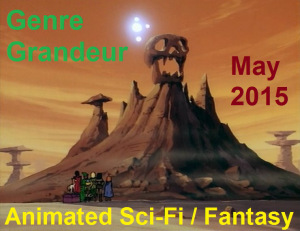
Here’s my review for my chosen genre of non-Disney fantasy animation, courtesy of MovieRob’s monthly Genre Grandeur. Thanks a bunch, Rob!

movierob's avatarMovieRob

gg may 2015

For this month’s final entry for Genre Grandeur May – Animated Sci-Fi/Fantasy (Non-Disney/PIXAR) Movies, here’s a review of The Children Who Chase Lost Voices (2011) by S.G. Liput of Rhyme and Reason who chose this month’s genre for us all.

If you missed any of them, here’s a recap:

This month we had 18 review for GG:

  1.  Quest For Camelot (1998) – Past Present Future TV and Film
  2.  Planet 51 (2009) – Movie Reviews 101
  3.  Robots (2005) – Tranquil Dreams
  4.  9 (2009) – Ten Stars or Less
  5.  The Pagemaster (1994) – Past Present Future TV and Film
  6.  The Iron Giant (1999) – Movie Reviews 101
  7.  The Iron Giant (1999) – Digital Shortbread
  8.  Titan A.E. (2000) – Past Present Future TV and Film
  9.  Thumbelina (1994) – Past Present Future TV and Film
  10.  The Tale of the Princess Kaguya (2013) – Sidekick Reviews

View original post 1,075 more words

Bottom-Dweller: 5 Centimeters Per Second (2007)

29 Wednesday Apr 2015

Posted by sgliput in Movies, NaPoWriMo, Poetry, Reviews, Writing

≈ 3 Comments

Tags

Animation, Anime, Bottom-Dweller, Drama, Romance


(Today’s NaPoWriMo prompt was for a poem written in the form of a review. Perfect for a poet/movie reviewer, right? In this case, I combined my usual poem and review into the single rant below.)

For those who might think I like all animation,
I’ll simply refer to this dreadful creation.
I’ve mentioned before that I cherish the art
And story of Ghibli’s Whisper of the Heart,
And after I saw it, I searched on my own
For anime like it that might be well-known
For a similar quiet and intimate tone.
 
I read some good things about this little flick
From Makoto Shinkai and hoped it would click.
I watched it, this 5 Centimeters Per Second,
And found it was not at all what I had reckoned.
This Japanese drama with praise was anointed.
Did no critic see how delayed and disjointed
This tearjerker is? Was just I disappointed?
 
The film’s broken up into three distinct parts,
With each saying more of the breaking of hearts.
It starts off with promise; two thirteen-year-olds
Are both separated as each life unfolds.
By train, the boy Tono then travels through white,
Through blizzard and blockages to reunite
With distant Akari who waits through the night.
 
This first part alone could have stayed on its own
And is rather sweet, though it’s tedium-prone,
But Parts 2 and 3 are unduly depressing,
With one girl downcast by love she’s not professing,
And then we see Tono grown up, while Akari
Has moved on without him, with both feeling sorry
And gazing at petals and skies dark and starry.
 
The film lasts an hour, with a pace so not vital
It seems twice as long, with less speed than the title,
Which fondly refers to the unhurried crawl
At which cherry blossoms supposedly fall.
When all’s said and done, out of nowhere appears
A strange music video meant to draw tears
To recap this great waste of time for the ears.
 
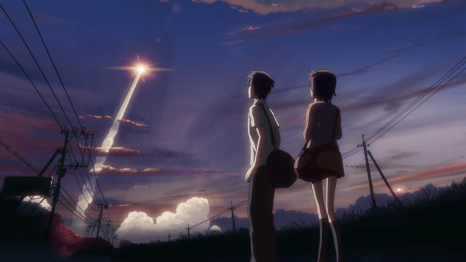
The film’s greatest strength is the beautiful art,
A treat for the eyes if not quite for the heart.
The landscapes are lovely, replete with details,
But that’s not enough, for the story still fails.
There’s much symbolism with petals and birds,
With launches of space probes and unspoken words,
And some of it’s poignant, though broken in thirds.
 
The imagery may be the film’s biggest draw,
But how it’s employed is a signature flaw.
Most anime’s mingled with peaceful transitions,
A still or an object, like small intermissions,
But actions in this film are drawn out and laced
With tons of these images, ploddingly paced,
Which may bear some beauty but aren’t to my taste.
 
Yet what do I draw from these touching vignettes,
That love sure can stink when it’s full of regrets?
A drama needs more than some symbols about
The fact that some romances just don’t work out.
There aren’t even reasons implied to explain
Why two former lovebirds broke up in such pain.
I grieved by the end, for my hour spent in vain.
 
 
Rank: Bottom-Dweller
 

© 2015 S. G. Liput

302 Followers and Counting

Song of the Sea (2014)

27 Monday Apr 2015

Posted by sgliput in Movies, NaPoWriMo, Poetry, Reviews, Writing

≈ 1 Comment

Tags

Animation, Drama, Family, Fantasy

Review: 'Song of the Sea' is a masterwork by director Tomm Moore - LA Times
 
Children
Are rarely
Prepared for tragedy.
 
Ben’s
Little sister
Can transform magically.
 
Selkies
Sing peace,
Only wearing coats.
 
Saoirse
Needs hers,
Freeing silent throats.
 
Fantasy
And emotion
Animate the ocean.
__________________
 

(Today’s NaPoWriMo prompt was for a hay(na)ku, a haiku variant with three lines, one word in the first, two in the second, and three in the third. In this case, I connected several, and since the word hay(na)ku sounds rather Celtic, even if it probably isn’t, I wrote them for last year’s Song of the Sea.)

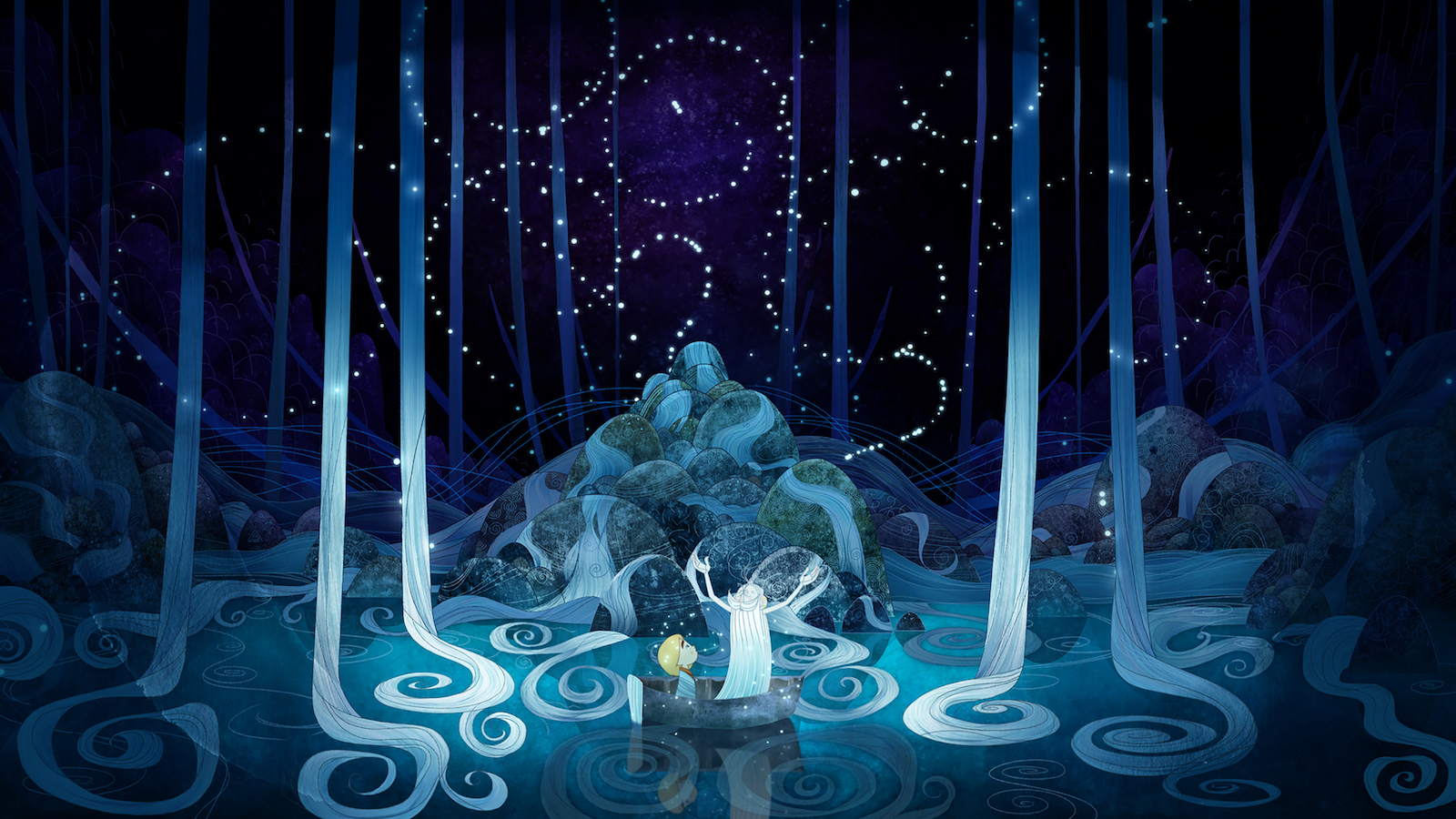
Just as The Secret of Kells came out of nowhere when it was nominated for Best Animated Feature in 2009, director Tomm Moore’s second film Song of the Sea was released with little fanfare (at least here in the U.S.) but luckily received another Oscar nod to lend it some added exposure. I very much enjoyed Kells, but this follow-up is even better, with deeper themes and more relatable characters. Like its predecessor, Song of the Sea boasts meticulously hand-drawn animation designed to resemble medieval Celtic art, a haunting Gaelic-infused lullaby sung by a magical child, and an intriguing mix of Christian motifs and Irish mythology. Five years in the making, the animation truly is a wonder; every frame has a beauty and balance, replete with gentle curves, jagged spikes, serene curlicues, and other geometric phenomena. Like Kells, nearly every scene could be a work of art, but here the animation connecting them is smoother and the plot more involving. Even modern sights absent from Kells are opportunities for entrancing symmetry, such as roundabouts and power lines. The character designs are more appealing as well, particularly little Saoirse, one of the cutest animated children since Boo in Monsters, Inc. (It also provides a reliable pronunciation for the Irish word for “freedom,” [SEER-sha]. Who hasn’t wondered how to say it ever since they first saw Saoirse Ronan’s name?)

Song of the Sea | Coolidge Corner Theater

After the loss of their mother, Ben is bitter toward his mute little sister, who discovers her mystical roots as a selkie, the seal equivalent of a mermaid. When their grief-stricken father (Brendan Gleeson, who was also in The Secret of Kells) finally agrees to send them to the city with their grandmother (Lost alert: Fionnula Flannigan), the children journey cross-country to reunite Saoirse with her selkie coat, encountering various members of the Deenashee, or faerie folk, along the way. This main plot could have been enough for the typical filmmaker, but Moore invests special symbolism in the mythological backstory of the giant Mac Lir, who suffered a great tragedy, and Macha the Owl Witch, his mother who turned him to stone. The story can be taken at face value, but it carries certain parallels to Ben’s family (made explicit in the voice acting) to provide unexpected depth for those looking for it.

Both of Moore’s films have attracted comparisons with the works of Hayao Miyazaki, with their relaxed pacing and earnest natural beauty. Ben’s efforts to reverse the transformative curse of a large-headed witch may remind some of Spirited Away, but Song of the Sea is a far more emotional journey than most of Miyazaki’s films. Through magical intervention, Ben becomes more responsible and aware of his brotherly role, and a maternal moment toward the end could either confuse or extract a few tears. For me, it almost did the latter. The accents and the music clearly mark the film as a product of Ireland, and it fits in well with my personal attraction to everything Celtic (including the actual “Song of the Sea,” which wins a spot in my End Credits Song Hall of Fame). It’s the very definition of an animated gem, the kind of lovingly crafted project that may never attract a vast audience but certainly deserves one.

Best line: (Bronach, the selkie/mother) “My son, remember me in your stories and in your songs. Know that I will always love you, always.”

 
Rank: List-Worthy
 

© 2015 S. G. Liput

302 Followers and Counting!

Ernest and Celestine (2012)

09 Thursday Apr 2015

Posted by sgliput in Movies, NaPoWriMo, Poetry, Reviews, Writing

≈ 1 Comment

Tags

Animation, Comedy, Family, Fantasy

   A mouse and a bear                                      could never be friends
 Or could they?                   Well, maybe,                   but that all depends.
On whether                                                                               the bear
Would dare                                                                                to share
  And not                                                                                        ingest
 The cute                                                                                   young pest
(Who lives                                                                                   beneath
And steals                                                                                  bear teeth),
  And if                                                                                        the mouse
Could stay in                                                                             his house
 And share                                                                                   her art
 And melt                                                                                   his heart,
   And if                             the couple                               could convince
The mice and             bears                 to leave                    such pairs
 And not                   insist                      they not                  persist,
 For most               hate this                     in prej-                 -udice.
The mouse         and bear                       with fond         -ness rare
 Might prove     their point                        on what’s          unfair
    And form a sweet                                             unlikely pair.
________________


(Today’s NaPoWriMo prompt is a calligram, a poem written in the shape of its subject, so I decided to go with reviewing Ernest and Celestine, in which teeth play an important role.)

Say what you will for the Academy’s Oscar choices, but every now and then they bring to light a rare gem. People scanning the nominees for Best Animated Feature in 2013 most likely read the name Ernest and Celestine and wondered where the heck that came from (not unlike The Secret of Kells in 2009 and A Cat in Paris or Chico and Rita in 2011). Though Frozen won that year, and The Wind Rises should have won, Ernest and Celestine was a worthy nomination, as cute and charming a tale as viewers are likely to find on either side of the Atlantic. Based on a series of Belgian children’s books by Gabrielle Vincent (pseudonym of Monique Martin), this French-language film follows the misadventures of the orphan mouse Celestine and the vagrant bear Ernest.

Celestine has always been taught to fear “the big bad bear” (not unlike the mice in The Tale of Despereaux) and to steal their teeth in order to support the mice’s incisor-centric society (a play on the Tooth Fairy, who is often a mouse in Europe). Likewise, Ernest is only interested in his next meal and agrees with all other bears that mice are mere pests who must stay below ground where they belong. Yet when the two meet and alternately have pity on the other, the subsequent budding friendship is undeniably heartwarming.

Adding to the charm of the story and its gentle humor is the lovely art style. This isn’t just a cartoon; it’s an illustration come to life. Certain scenes are gradually sketched from nothing, and, as detailed as much of the film is, at times the outer edges of a scene blur and fade into a blank margin, like the impressionistic pictures of a children’s book. (My VC and I had a debate over the quality of the different animation; she seems to pre-judge anything of non-Disney-style animation to be inferior, while I recognize the skill and beauty of different kinds of artwork, to a point. The fluidity of the animation is the biggest factor for me in judging its quality.) Though the film was originally in French, the English dub is excellent, with Forest Whitaker as gruff Ernest and a perfectly cast Mackenzie Foy (Interstellar) as cute and persuasive Celestine. It was also one of Lauren Bacall’s last film roles.

One note for families, though:  Both Ernest and Celestine partake in burglary, and though they are punished somewhat, they never show any remorse, like Remy did in Ratatouille. Thus, neither is necessarily a good moral role model, which might prompt some discussion between parents and children. Even so, the film lends hope that the two have moved on from their crimes and are happier for it. Ernest and Celestine is utterly sweet and a guaranteed children’s classic for those families lucky enough to discover it.

 
Rank: List-Worthy
 

© 2015 S. G. Liput

291 Followers and Counting

Watership Down (1978)

05 Sunday Apr 2015

Posted by sgliput in Movies, NaPoWriMo, Poetry, Reviews, Writing

≈ 2 Comments

Tags

Animation, Drama


Since the world was first contrived,
When Frith made creatures as they are,
Rabbits have survived and thrived,
Fleet of foot, the best by far,
Relying on their speed and tricks.
 
When a runt named Fiver feels
A danger coming for the warren,
Brother Hazel makes appeals
To leave for someplace safe but foreign,
Ere the danger he predicts.
 
On the journey toward a home
That Fiver sees upon a hill,
His companions dare and roam
Through perils always set to kill.
As rabbits, though, they must increase.
 
In Efrafa, a place oppressed,
Our heroes plan a great escape.
The wits and speed that serve them best
Must rescue them from quite a scrape
Before they rest in warren peace.
________________
 

From the greatest novel about rabbits ever written comes the greatest film about rabbits ever made. While I chose this film for Easter Sunday because of the obvious bunny connection, it is indeed about rabbits, not bunnies. While the characters are frequently cute, just as real rabbits tend to be, some of them also manage to be grotesque and cruel, and there’s a striking frankness about the violence inherent in the lives of wild animals. For those sensitive Thumper-lovers like my VC or those who didn’t like a certain kitchen scene in Fatal Attraction, this may not be for you. Bunnies die, sometimes in a stark sudden disappearance like Bambi’s mother, sometimes in brief but bloody maulings. Because of this, its rating (U in Britain or G for the US) has come under fire repeatedly since its release; as a mature but not adult cartoon, the film is, I think, appropriate for older children, like the next step up from the kid-friendliness of Bambi.

The film itself is fascinating, not only for the rabbits’ epic quest for safety and prosperity on Watership Down, but in how author Richard Adams managed to create a rabbit culture at once understandable but distinctly different from our own. In the vast majority of films that build worlds involving talking animals, the filmmakers tend to anthropomorphize the characters to the point of human intelligence, wearing clothes, cooking, reading books, fashioning entire civilizations analogous to our own (An American Tail, The Fantastic Mr. Fox, et cetera, et cetera). I don’t object to this, but it is as if filmmakers can’t seem to let animals be animals. The main exceptions would be Bambi and Watership Down.

The rabbits, like Hazel, Bigwig, Fiver, and Hyzenthlay, are all appealing personalities, but they’re still rabbits, guided predominately by instinct, to eat, to reproduce, to be free. Their intelligence is limited, and the ways of man are inexplicable to them, but they survive, despite all the dangers that threaten their lives every day. The opening scene, drawn in a creatively cartoonish style, brilliantly establishes the mythology of the leporine culture, explaining in rabbit terms why life is as it is. The dialogue between the characters also borrows freely from the book’s Lapine terminology, which may not be fully understood upon its first hearing (Owsla=the warren enforcers, going tharn=freaking out, silflay=aboveground foraging).

If you’ll forgive the expression, this bunny tale is a slow boiler, so to speak; some may find it hard to get into (a musical interlude featuring Art Garfunkel singing “Bright Eyes” is lovely but slows the film down), yet it builds to a genuinely exciting climax with a last-minute escape, an underground siege, and a furry battle to the death. Production quality is also top-notch. The imagery ranges from beautiful and bucolic to surreal and nightmarish, and the voice acting is excellent, particularly John Hurt as Hazel, Michael Graham Cox as Bigwig, and Zero Mostel (in his last film role) as the tempestuous gull Kehaar. As a whole, the film succeeds whether as pure adventure or an animalized endorsement of freedom over totalitarian and fatalistic societies. Plus, the end is also subtly moving, and knowing myself, I probably would have cried had I seen it at a younger age. I’ve been meaning to read Watership Down for some time now, and this excellent animated adaptation just increases my interest. Happy Easter!

Best line: (Kehaar) “You stupid bunnies! You got no mates!”

 
Rank: List-Worthy
 

© 2015 S. G. Liput

290 Followers and Counting

The Wind Rises (2013)

29 Sunday Mar 2015

Posted by sgliput in Movies, Poetry, Reviews, Writing

≈ Leave a comment

Tags

Animation, Anime, Drama, History, Romance


Before the World War that sent Zeros to soar,
A youngster named Jiro had bright dreams galore.
Airplane engineer was his chosen career,
A striving for beauty, naïve and sincere.
He built and he planned and foresaw something grand
To rise on the wind over enemy land.
 
While deep in his quest for the plane he loved best,
His heart found a partner, and both were soon blessed.
But love has a way of still making us pay,
For sadly short-lived is our happiest day.
He felt the wind rise to the loftiest skies,
Where high-minded dreams tend to meet their demise.
________________
 

Hailed as Hayao Miyazaki’s swan song before his retirement, The Wind Rises is a work of heartfelt beauty worthy of being the celebrated director’s final film (though he had supposedly retired after Princess Mononoke too). It is also an outlier among his films for two reasons: its realism and its poignancy. Looking back, few films directed by Miyazaki are based entirely in the real world, set instead within dystopian jungles, demon-infested landscapes, or steampunk fantasy lands. Some come close to reality, like Kiki’s Delivery Service, My Neighbor Totoro, or Porco Rosso, but even they carry obvious fantasy elements. Only his first film, the James Bond-ish The Castle of Cagliostro, could have actually happened (if you consider James Bond realistic), but not until his last film did he settle upon real people and real events.

Based on the life of avionic engineer and creator of the Japanese Zero Jiro Horikoshi, The Wind Rises (which could have been called Jiro Dreams of Airplanes) details his ambition of creating marvelous flying machines and bringing Japan up to speed with the likes of Italy, Germany, and the U.S.  Honestly, I know nothing about the real Jiro Horikoshi or the extent of the film’s historical accuracy, but, even if it weren’t a fictionalized biopic, it would still be one of Studio Ghibli’s most beautiful films. Certain scenes recall notable realistic scenes in past Ghibli movies. A sequence depicting the Great Kantō Earthquake of 1923 recalls the urban devastation of Grave of the Fireflies, while Miyazaki’s obvious fascination with flight takes center-stage in a story focused on building planes, a process only briefly portrayed in Porco Rosso. Of course, Miyazaki’s fantastical fingerprints are still evident in Jiro’s dream sequences, in which an Italian engineer named Caproni acts as his Chef Gusteau, offering inspiration and advice while they stroll along aircraft wings. Ghibli’s hand-drawn animation has always been impressive, but not since Howl’s Moving Castle have the artistry and attention to detail been so wondrous, from plane-level views of billowy clouds to the fading vapors of Jiro’s chain-smoking habit to the varying shadows cast by Jiro’s glasses on his own face.

The film’s realism is notable in itself, but it would have made it simply an interesting oddity, rather than the bittersweet drama it is. What sets The Wind Rises apart from its Miyazaki brethren is its heart. As much as I enjoy Miyazaki’s films, none of them have ever touched me on an emotional level; there’s visual beauty to spare, but they tend to appeal more to the eyes and the imagination rather than the heart. This latest film is the exception. The first half is entertaining enough on its own, but the film becomes something more special upon the arrival of Nohoko, one of Ghibli’s loveliest female characters to match its loveliest romance.

Consider their early courtship: like Romeo and Juliet, Nohoko stands on a balcony while Jiro deploys paper airplanes to her rather than poetry (though there’s poetry too). As corny as it sounds, it’s remarkably sweet, as is their increasing devotion to each other, despite Nohoko’s tuberculosis. Miyazaki plumbs unusual depths of emotion as the couple is brought together repeatedly by the wind until they become inseparable, the one pursuing a dream and the other wasting away in support of it. Though it does pay tribute to the most memorable scene from Porco Rosso involving the fate of fallen pilots, the ambiguous ending misses an opportunity to become a full-on tearjerker in favor of a pseudo-inspiring sendoff, which still manages to be rather powerful.

I heard an interview with Gary Rydstrom (director of the excellent English dub), which summed up the film’s dually signified message perfectly: the danger of daring to pursue a passion doomed to end badly. Jiro knows his avionic masterpieces will inevitably be used for destruction in the approaching war, just as he knows his time with Nohoko is limited. It’s the timeless struggle of love; though it will surely end, dreams fulfilled and time well spent manage to be worth it in some ways, despite regret. Caproni mentions that an artist has only ten good creative years allotted to him, but Hayao Miyazaki’s career is clearly an exception. Though Disney’s Frozen juggernaut was understandably the Oscar-winning favorite for Best Animated Feature that year, The Wind Rises would have won my vote.

Best line: (Caproni) “Airplanes are beautiful, cursed dreams, waiting for the sky to swallow them up.”

 
Rank: List-Worthy
 

© 2015 S. G. Liput

288 Followers and Counting

#7: Finding Nemo (2003)

02 Monday Feb 2015

Posted by sgliput in Movies, Poetry, Reviews, Writing

≈ 1 Comment

Tags

Animation, Comedy, Drama, Family, Meet 'em and Move on, Pixar

Though Marlin was once a free-spirited fish,
A tragedy filled him with fears.
For Nemo, his son, he has one simple wish,
To save him from risky frontiers.
 
One overprotective trip out from the reef
Sees Nemo abducted by men,
And Marlin is stricken with panic and grief
At sudden disaster again.
 
He’s met by a very forgetful blue tang
Named Dory, who joins Marlin’s quest.
After fish-loving sharks and an overdue bang,
They head out for Sydney southwest.
 
While Nemo is ushered to life in a tank
With fish-killing nieces expected,
His father and Dory, still drawing a blank,
Are challenged and helped and respected.
 
At last, they reach Sydney (from inside a whale)
And find Nemo after a flight.
Though Marlin considers his rescue a fail,
Both father and son reunite.
 
Employing the newest of fish common sense,
They save fellow fishes nearby,
And Marlin can now be less worried and tense
About his beloved small fry.
_________________
 

Pixar made a name for itself with the Toy Story films, but Finding Nemo truly solidified it as the premier animation studio. DreamWorks, Blue Sky, and even Studio Ghibli can’t compare with the consistent high quality of Pixar, which has only had one real dud (Cars 2), but out of an abundance of hits, my personal favorite animated film has to be Finding Nemo, for multiple reasons.

First of all, as a kid, I always insisted I’d be a marine biologist, and though my goals have changed over time, I still harbor affection for the fascinating denizens of the deep. The film also holds the record for bringing me to tears the fastest. Sure, I was under twelve when I first saw it, but I was deeply touched and invested within the first five minutes, an example of loss from a parent’s perspective rather than the usual child’s point of view.

Despite the heartbreaking beginning, Finding Nemo is arguably Pixar’s funniest film too, thanks to Ellen DeGeneres’s hilariously scatterbrained Dory, who suffers from short-term memory loss. That speaking-whale scene cracks my family up every time. Albert Brooks as Marlin is the perfect straight man to Dory’s lunacy, as well as a loving father, whose overprotective concern is revealed as true devotion in his quest to find Nemo. One more reason for me to love this film: it’s a meet-‘em-and-move-on, as many “quest” movies are. The myriad fish that Marlin and Dory encounter range from misunderstood to genuinely helpful to downright frightening, and it’s amazing how many sea creatures Pixar packed into this film, many of them with unique and comical personalities. Pixar has always excelled at introducing a large number of memorable characters in a way that seems rich and prolific rather than overstuffed, whether the toys in Andy’s room, the residents of Radiator Springs, or the colorful inmates of P. Sherman’s fish tank. (Note how the fish sound off where they were each bought, just as Andy’s toys named their respective manufacturers in Toy Story; also, I noticed that both this film and Disney’s Brother Bear that same year featured a similar joke involving a very limited game of “I Spy.” In addition, I wonder if a SpongeBob reference was intended in the naming of Sandy Plankton or Sheldon.)

The characters truly are brought to life with some of the most visually beautiful animation I’ve seen. The world of the coral reef teems with life and color, and the expressive character designs display deeply felt emotions without making them into cartoony human-fish (like DreamWorks’ paltry Shark Tale, released the following year). Most animated films take for granted the air around the characters, but Pixar outdid themselves with the underwater environment. Everything is moving, from the plants and dust around the sea floor to the realistic light and shadows filtering down from above.

With the heartfelt father-son relationship at its core, Finding Nemo is among the best animated films ever. Rather than an undeveloped dictatorial patriarch, Marlin is given clear motivation to protect his son, as well as clear reason to let go of his extreme caution in favor of trust. Before Toy Story 3, it was Pixar’s highest-grossing masterpiece, of course earning the Best Animated Feature Academy Award. With exceptional visuals and humor, Finding Nemo finds a well-deserved spot in my top ten; I’ve got my fins crossed for Finding Dory next year.

Best line: (Crush the sea turtle, voiced by director Andrew Stanton, after Marlin’s escape from the jellyfish) “Saw the whole thing, dude. First, you were all like, “Whoa”, and then we were like, “WHOA” and then you were like, “whoa….” (It’s better heard than read.)

 
Rank: 60 out of 60
 

© 2015 S. G. Liput

283 Followers and Counting

#9: Toy Story Trilogy (1995, 1999, 2010)

31 Saturday Jan 2015

Posted by sgliput in Movies, Poetry, Reviews, Writing

≈ 1 Comment

Tags

Animation, Comedy, Drama, Family, Pixar

(Spoilers ahead)
 
In Andy’s bedroom, where imaginings thrive,
When he’s not around, all his toys come alive.
Potato Head, Slinky, Bo Peep, Hamm, and Rex
Are always afraid of what toy he’ll get next,
But cowboy doll Woody insists that they stay
Collected and calm on their owner’s birthday.
 
When Andy arrives with his new Buzz Lightyear,
The other toys welcome their space ranger peer,
But Buzz doesn’t know he’s a child’s plaything,
And Woody’s annoyed by his self-deluding.
As Andy snubs Woody in favor of Buzz,
The cowboy grows bitter with thoughts of what was.
 
A misunderstanding at terrible cost
Leaves Woody and Buzz isolated and lost,
And soon they are caught by the sick neighbor kid,
The evil, sadistic, toy-torturing Sid.
As Andy is wondering where his toys are,
Both Woody and Buzz meet with mutants bizarre.
 
When Buzz at last realizes he is a toy,
It’s Woody who cheers him to strive for their boy.
A frightening warning puts Sid on the run,
But now they must rush; Andy’s move has begun.
Some chasing and launching and falling with style
Bring both to their kid, and to Andy a smile.
_________________
 
As Cowboy Camp beckons, there’s sudden alarm
When ol’ Woody suffers a rip in the arm.
A rescue attempt for a playmate in need
Lets Woody fall victim to one villain’s greed.
A nasty collector abducts the old doll,
Who enters a world that he knew not at all.
 
He meets Jessie, Bullseye, and old Stinky Pete,
Who welcome him since he makes their set complete.
He sees he is famous and rare merchandise
And soon to be sold in Japan at great price.
Though Woody insists at first he must return,
He changes his mind out of care and concern.
 
Meanwhile, his friends from the bedroom are out
To rescue him, taking a dangerous route.
Despite some setbacks and a Buzz Lightyear clone,
They locate the cowboy to take him back home.
While Woody is torn on the choice of his fate,
True colors are shown until it is too late.
 
The toys are packed up by the covetous man
And head to the airport, en route to Japan.
Deciding that Andy will value them all,
They swing from the plane with a very close call.
The toys journey home for fun playdates anew,
Until Andy grows up, as all children do.
_________________
 
The time has arrived: Andy’s finally grown,
Less likely to play than to chat on his phone.
Though toys have diminished in number and note,
They wait for their owner, however remote.
Some misunderstandings, which happen a lot,
Leave most of them feeling unloved and distraught.
 
They donate themselves to a nearby day care,
Where there reigns a strawberry-scented stuffed bear.
This Lotso presents them to quaint Sunnyside,
But playtime is brutal for those who don’t hide.
Though Woody escapes to go home, he is found
By Bonnie, whose penchant for play is profound.
 
The other toys learn Sunnyside is unfair
For new toys and those that don’t please the big bear.
When Buzz is brainwashed to imprison his friends,
They follow the plan Woody then recommends.
The prison break seems to go just as they planned,
But Lotso arrives when escape’s close at hand.
 
The tables are turned with a trip to the dump,
Where deus ex machina saves in a slump.
Though Woody would gladly be Andy’s forever,
He hints at the best way for their ties to sever.
The toys find themselves in a new home to dwell
After one last playdate and a poignant farewell.
_______________________
 

The first computer-generated feature film could have been any number of lackluster productions, but as luck would have it, the pioneering feat was accomplished by the most skilled storytellers in the animation business, the folks at Pixar. Toy Story was an intrinsic part of my childhood; with the exception of Hamm, Jessie, and Bullseye, I owned all of the main characters. Woody and Buzz Lightyear are among the most beloved animated characters ever created, and they were introduced at the perfect time in my youth for me to become attached to them as more than just throwaway kiddie entertainment.

The first Toy Story may look dated in its animation compared with Pixar’s more recent endeavors, but even if the humans are lacking, the CGI is ideal for the plastic residents of Andy’s room. With the unique look at suburbia from a toy’s perspective, it was the first glimpse of the immense imagination at work at Pixar, able to introduce an ensemble of characters and make everyone both lovable in their own way and wisely merchandisable. Almost everybody has owned a toy and can thus appreciate the characters’ obvious desire to be loved and valued by their owner. While this connection to the heart allows these inanimate objects to become as real as any animated human or talking animal, the sly humor keeps the entertainment value at a 10, thanks largely to the sterling voice cast. Tom Hanks and Tim Allen were in their heyday in 1995, fresh from dual Oscar wins for Hanks and the success of “Home Improvement” and The Santa Clause for Allen, but, unlike some more recent celebrity voiceovers, both were undoubtedly the best choice. Their progression from rivals to buddies is both hilarious and convincing, supplemented by a host of golden supporting characters, like Wallace Shawn’s timid Rex, John Ratzenberger’s clever Hamm, and Don Rickles’ belligerent Mr. Potato Head. The film won a special Academy Award, predating the creation of the Best Animated Feature Oscar by six years.

As perfect as the original film is, Toy Story 2 is even better. The first film took its core concept (that toys come to life when we’re not looking) and ran with it, giving them real emotions of affection, envy, betrayal, and dejection; the sequel further explores the expansive possibilities of toydom: being broken, being forgotten and abandoned, being just one of countless doppelgangers, being valued as a collectible rather than a child’s plaything. The imagination keeps coming, with greater danger, more memorable characters (Joan Cusack’s Jessie, Kelsey Grammer’s Stinky Pete), and some unexpected laugh-out-loud references to Jurassic Park and Star Wars. Jessie’s backstory, in particular, still wets my eyes and instilled in me what I call “toy guilt,” a reluctance to give up old toys for fear of traumatizing them (I’ve since gotten over it, mostly). The fact that the film was essentially a rush job due to over-optimistic scheduling makes its achievement even more impressive. Since I consider it the best of the trilogy, it’s a shame it’s the only one that didn’t win an Oscar.

I was skeptical about Toy Story 3, a sequel released a full decade after its predecessor, but it delivered the Pixar goods against all odds. While it’s not quite on par with the first two, the improved animation is worlds away and the same unbridled imagination is at work in the creation of a prison camp day care ruled by a plush bear (a grandfatherly Ned Beatty). The film supposedly introduces at least 150 new characters, and I believe it; from the teeming playroom at Sunnyside, full of under-utilized voice talent, to Bonnie’s room (including a Totoro, courtesy of John Lasseter’s fascination with Miyazaki), the new faces are abundant and diverse, though not all quite as memorable. The film’s heart and action are plentiful, though the humor isn’t quite as generous (I didn’t find Buzz’s Spanish mode as funny as the filmmakers seemed to think it is). This threequel is a source of some contention between my VC and me. She was rather depressed at the loveless situation at the beginning and was left unsatisfied with Andy giving up his toys in the end, feeling that they should have awaited his children in the attic, like my Buzz and Woody currently are. Yet deep down, I think Andy knew that toys are meant to be played with, and children are their core happiness. As mentioned in Corinthians, he “put away childish things,” but not with the cold indifference of Emily in Toy Story 2; he took the time and effort to give them a fitting home and one last playtime to bid them goodbye. This was also important because he was able to pass on their names to Bonnie; without knowing the titles of Woody and Buzz, she might have called them Mrs. Nesbitt or some such moniker. As frighteningly dramatic as the dump sequence is, the final scenes are equally bittersweet, a near-perfect tear-inducing conclusion for these beloved characters. As much faith as I have in the creative minds at Pixar, I almost wish they would leave Toy Story 4 alone and avoid the potential stumble of fourth movies, which are even harder to pull off than threequels, as evidenced by the Pirates and Indiana Jones series.

Rotten Tomatoes indicates that the Toy Story films form the most acclaimed trilogy ever, with 100% for the first and second and a 99% for the third. I’ve enjoyed every one, as well as Buzz’s spinoff TV series Buzz Lightyear of Star Command, a fun and imaginative sci-fi show from my youth. Though I’ve grown up parallel to Andy and outgrown my own childhood companions, at least I’ll never outgrow these beloved toy stories.

Best line from Toy Story: (Woody) “YOU ARE A TOY! You aren’t the real Buzz Lightyear! You’re – you’re an action figure! You are a child’s plaything!”   (Buzz) “You are a sad, strange little man, and you have my pity. Farewell.”
 
Best line from Toy Story 2: (2nd Buzz, to Zurg) “I’ll never give in. You killed my father.”   (Zurg) “No, Buzz, I am your father.”   (2nd Buzz) “Noooooooo!”   (a great line in any movie)
 
Best line from Toy Story 3: (Jessie) “Woody, we were wrong to leave Andy. I—I was wrong….”   (Mr. Potato Head) “Jessie’s right, Woody. She was wrong.”
 
 
Rank: 60 out of 60
 

© 2015 S. G. Liput

283 Followers and Counting

#12: Beauty and the Beast (1991)

27 Tuesday Jan 2015

Posted by sgliput in Movies, Poetry, Reviews, Writing

≈ 1 Comment

Tags

Animation, Comedy, Disney, Drama, Family, Fantasy, Musical, Romance

(Best sung to “The Mob Song”)
 
In the countryside of France,
Where the bakers say “Bonjour,”
Lives a lovely mademoiselle who’s always reading books galore.
Belle just doesn’t quite fit in,
But still that doesn’t stop Gaston
From insisting that she marry him for his conceited brawn.
 
Through the mist, through the woods,
When Belle’s father tries to travel,
He ends up inside a castle dark and grim.
Belle protests and suggests
That the castle’s beastly owner
Make her stay his prisoner instead of him.
 
She’s afraid of her host and his temper,
And alarmed but then charmed and impressed
By the servants and shows
And a spellbinding rose,
Till the beast makes her flee,
Too oppressed.
 
While en route, though, the brute
Saves her life, and so from then on,
Their relationship begins to slowly grow.
When the Beast comes to love
And Belle sees her father needs her,
Her detainer has the heart to let her go.
 
But Gaston has a plan to coerce her
To be his, but she will not be played.
When she speaks of the Beast,
Gaston’s rage is increased,
And he rallies best and least
To invade.
 
Servants fight and defend;
As the raiders are assaulted,
Bold Gaston will not be halted from his prey.
Both engage, and both fall,
But true love will conquer all,
And thus without a curse’s thrall,
Love will stay.
_____________________
 

Beauty and the Beast is the epitome of a Disney fairy tale musical, complete with magic mirror, enchanted castle, magical rose, bleak curse, stunning animation, and Oscar-winning music of the highest order. Though preceded by The Little Mermaid, this was the undeniable sign that the Disney Renaissance was well under way and that animated musicals could be taken seriously, even nominated for Best Picture.

First off, the animation is gorgeous, a combination of traditionally animated characters and certain CGI backgrounds that allow for some astoundingly beautiful moments, like the famous ballroom dance beneath the chandelier. While Hunchback and Tarzan had similarly striking visuals, Beauty and the Beast was one of the first Disney films to possess a smoothness of line and motion unseen in strictly hand-drawn features thanks to a new CAPS technology (technically, The Rescuers Down Under was the first).

The beauty of the animation is matched only by the music, which garnered two of Alan Menken’s well-deserved Oscars for Best Score and Best Song. From the very first musical number incorporating Belle, Gaston, and the entire village, my VC could tell that this was not a typical cartoon with tunes, but a new breed of Broadway-quality musical that was sure to be adapted to the stage, which it was. Her favorite song, though, is Gaston’s clever tavern chantey, one of the few villain songs to not be or even sound villainous. Though “Be Our Guest” and the Oscar-winning title song are more well-known, I’ve always preferred the dark, rhythmic “Mob Song” right before the castle siege.

The film is also notable for its moral themes. For once, the heroine is not a rebellious girl eager to disobey silly rules, but a noble daughter sacrificing herself for her father. The lesson of “beauty lies within” is established from the initial prologue, but rather than being a generic villain, Gaston illustrates the opposite, that evil can also lie within even with outward beauty. The romance between Belle and the Beast is not rushed, and even though its growth is depicted through the typical musical montage, the sudden sacrifice preceding it allowed a solid starting point for the Beast’s sudden change of heart and manner.

Beauty and the Beast is the purest example of a fairy tale adaptation I can imagine, created when they could be light-hearted or dark on their own terms without the grim revisionism of nowadays. Disney hit its stride with this musical masterpiece, a film in which music, characters, and animation seem to converge effortlessly into enjoyable entertainment for kids and adults alike.

Best line: (Gaston’s admirers, during his song) “For there’s no one as burly or brawny/ [Gaston] As you see, I’ve got biceps to spare,/ [Lefou] “Not a bit of him scraggly or scrawny,/ [Gaston] That’s right, and every last inch of me’s covered with hair!” and (Gaston) “I use antlers in all of my decorating!”

 
Rank: 60 out of 60
 

© 2015 S. G. Liput

283 Followers and Counting

#15: The Prince of Egypt (1998)

23 Friday Jan 2015

Posted by sgliput in Movies, Poetry, Reviews, Writing

≈ 3 Comments

Tags

Animation, Biblical, Drama, Dreamworks, Family, Musical

(Best sung to “When You Believe”)
 
In captivity,
In Egypt, Hebrews send their prayer
Waiting for their God above
To free them from their yoke.
Young Moses grows up free,
Adopted into Pharaoh’s care,
Till the past he knew not of
Cannot help but provoke.
 
He can’t live as a fraud
And sadly flees.
He finds refuge
And life anew.
Sent by his awesome God
To Rameses,
He has unease but follows through,
Though Pharaoh disagrees.
 
Brothers long ago,
The prophet and the Pharaoh clash.
All the plagues sent from the Lord
Demand his people freed.
The Pharaoh’s hardened “No”
Requires death to end the lash.
No such cost can be ignored,
And Pharaoh has to heed.
 
God’s people thus depart
To promised land,
Until the sea
Lies in the way.
Pharaoh, more sore than smart,
Makes his last stand
Until the hand of God that day
Provides salvation grand.
__________________
 

Hollywood isn’t known for remaining faithful where Biblical source material is concerned, but the greatest proof that it is possible is The Prince of Egypt, one of the first animated films of Dreamworks’ filmography. While Dreamworks Animation’s lineup has ranged from excellent (How to Train Your Dragon, Chicken Run) to mediocre (Shark Tale, Bee Movie), not since have they reached the high mark they set right from the beginning.

No Moses film yet has stuck completely to the Book, often downplaying Aaron’s involvement and Pharaoh’s vacillation during the plagues. Though this one too takes its liberties, it indeed remains faithful to the “essence, values, and integrity” of the source material, as stated in the prelude note that reveals the filmmakers’ respect for the story they’ve undertaken. The film does borrow a few aspects of The Ten Commandments, but improves upon every one. Rather than making Moses and Rameses rivals from the beginning due to a contrived love triangle, it makes them close friends and brothers pitted against each other in a tragedy of pride and divine intervention. Rather than Moses’ murder of the Egyptian being violent but somehow justifiable, in this version it is instead portrayed as an accident, allowing Moses to remain righteous while providing the shame to propel him to self-banishment. (I realize it was no accident in the Bible, but I like this kind of change.) All this improvement also comes with masterful abbreviation; events that took The Ten Commandments half an hour to portray are depicted in mere minutes of concise storytelling, sometimes funny but often of surprising depth.

Enhancing both plot and entertainment, the film’s soundtrack by Stephen Schwartz is inspired, with every song memorable and perfectly spaced in the film’s runtime. From Israeli singer Ofra Haza’s impassioned “Deliver Us” at the beginning to the Oscar-winning “When You Believe” as the Hebrews depart Egypt, the music serves the story rather than replacing it, just as the CGI flourishes enrich the beautiful hand-drawn animation. I’ve often hummed Jethro’s “Through Heaven’s Eyes” whenever speed is required (somehow it seems to make me move faster), while “The Plagues” has a dreadful majesty reminiscent of the music in Disney’s Hunchback.

Likewise, The Prince of Egypt is a perfect example of star power applied judiciously. The voice actors are all big names, including Val Kilmer as Moses, Ralph Fiennes as Rameses, Patrick Stewart as Seti, Sandra Bullock as Miriam, and Michelle Pfeiffer as Tzipporah. In each case, the voice so fits the character that I don’t just hear Jeff Goldblum but a believable Aaron, not just Danny Glover but a jolly Jethro. I could hardly recognize Steve Martin and Martin Short as Pharaoh’s magicians, who nonetheless have fun with their own song, “Playing with the Big Boys.” It’s interesting to note that, just as Kilmer also voiced the powerful yet personal depiction of God (with background whispers from the rest of the cast), Charlton Heston also voiced God in The Ten Commandments.

The most moving part (pun intended) is rightly the parting of the Red Sea, just as much a wonder to behold as it was in DeMille’s 1956 film. A shot of some enormous fish in the wall of water, lit by distant lightning, has an eerie power best suited to this animated outlet. The Prince of Egypt combines high studio quality with an earnestness unseen in many Biblical films, eschewing dark revisionism and modernist explanations in favor of faithful and profound filmmaking. It’s one of the few animated films that I feel should have been nominated for Best Picture, a brilliant example of how cartoons can be elevated to dramatic excellence.

Best line: (Miriam, singing “When You Believe”) “Many nights we’ve prayed, with no proof anyone could hear. In our hearts a hopeful song we barely understood. Now we are not afraid, although we know there’s much to fear. We were moving mountains, long before we knew we could….”

 
Rank: 60 out of 60
 

© 2015 S. G. Liput

282 Followers and Counting

← Older posts
Newer posts →

Recent Posts

  • We Didn’t Start 2025 (Recap)
  • NaPoWriMo 2025 Recap (Finally)
  • Sonic the Hedgehog 3 (2024)
  • It Happened One Night (1934)
  • Spellbound (2024)

Recent Comments

associatesofshellymann's avatarassociatesofshellyma… on My Top Twelve La La La So…
Kit's avatarKit Nichols on Bonnie and Clyde (1967)
lifelessons's avatarlifelessons on Look Back (2024)
Carol Jackson's avatarCarol Jackson on The Thief of Bagdad (1940…
Stephen's avatarStephen on Love Story (1970)

Archives

  • January 2026
  • December 2025
  • May 2025
  • April 2025
  • March 2025
  • February 2025
  • January 2025
  • December 2024
  • May 2024
  • April 2024
  • March 2024
  • February 2024
  • January 2024
  • December 2023
  • November 2023
  • October 2023
  • September 2023
  • July 2023
  • June 2023
  • May 2023
  • April 2023
  • March 2023
  • February 2023
  • January 2023
  • December 2022
  • November 2022
  • October 2022
  • September 2022
  • August 2022
  • July 2022
  • June 2022
  • May 2022
  • April 2022
  • March 2022
  • February 2022
  • January 2022
  • December 2021
  • November 2021
  • October 2021
  • September 2021
  • August 2021
  • July 2021
  • June 2021
  • May 2021
  • April 2021
  • March 2021
  • February 2021
  • January 2021
  • December 2020
  • November 2020
  • October 2020
  • September 2020
  • August 2020
  • July 2020
  • June 2020
  • May 2020
  • April 2020
  • March 2020
  • February 2020
  • January 2020
  • December 2019
  • November 2019
  • October 2019
  • September 2019
  • August 2019
  • July 2019
  • June 2019
  • May 2019
  • April 2019
  • March 2019
  • February 2019
  • January 2019
  • December 2018
  • November 2018
  • October 2018
  • September 2018
  • August 2018
  • July 2018
  • June 2018
  • May 2018
  • April 2018
  • March 2018
  • February 2018
  • January 2018
  • December 2017
  • November 2017
  • October 2017
  • September 2017
  • August 2017
  • July 2017
  • June 2017
  • May 2017
  • April 2017
  • March 2017
  • February 2017
  • January 2017
  • December 2016
  • November 2016
  • October 2016
  • September 2016
  • August 2016
  • July 2016
  • June 2016
  • May 2016
  • April 2016
  • March 2016
  • February 2016
  • January 2016
  • December 2015
  • November 2015
  • October 2015
  • September 2015
  • August 2015
  • July 2015
  • June 2015
  • May 2015
  • April 2015
  • March 2015
  • February 2015
  • January 2015
  • December 2014
  • November 2014
  • October 2014
  • September 2014
  • August 2014
  • July 2014
  • June 2014
  • May 2014
  • April 2014
  • March 2014
  • February 2014
  • January 2014
  • December 2013

Categories

  • Blindspot
  • Blogathon
  • Christian
  • Movies
  • Music
  • NaPoWriMo
  • Poetry
  • Reviews
  • TV
  • Writing

Meta

  • Create account
  • Log in
  • Entries feed
  • Comments feed
  • WordPress.com

Recent Posts

  • We Didn’t Start 2025 (Recap)
  • NaPoWriMo 2025 Recap (Finally)
  • Sonic the Hedgehog 3 (2024)
  • It Happened One Night (1934)
  • Spellbound (2024)

Recent Comments

associatesofshellymann's avatarassociatesofshellyma… on My Top Twelve La La La So…
Kit's avatarKit Nichols on Bonnie and Clyde (1967)
lifelessons's avatarlifelessons on Look Back (2024)
Carol Jackson's avatarCarol Jackson on The Thief of Bagdad (1940…
Stephen's avatarStephen on Love Story (1970)

Archives

  • January 2026
  • December 2025
  • May 2025
  • April 2025
  • March 2025
  • February 2025
  • January 2025
  • December 2024
  • May 2024
  • April 2024
  • March 2024
  • February 2024
  • January 2024
  • December 2023
  • November 2023
  • October 2023
  • September 2023
  • July 2023
  • June 2023
  • May 2023
  • April 2023
  • March 2023
  • February 2023
  • January 2023
  • December 2022
  • November 2022
  • October 2022
  • September 2022
  • August 2022
  • July 2022
  • June 2022
  • May 2022
  • April 2022
  • March 2022
  • February 2022
  • January 2022
  • December 2021
  • November 2021
  • October 2021
  • September 2021
  • August 2021
  • July 2021
  • June 2021
  • May 2021
  • April 2021
  • March 2021
  • February 2021
  • January 2021
  • December 2020
  • November 2020
  • October 2020
  • September 2020
  • August 2020
  • July 2020
  • June 2020
  • May 2020
  • April 2020
  • March 2020
  • February 2020
  • January 2020
  • December 2019
  • November 2019
  • October 2019
  • September 2019
  • August 2019
  • July 2019
  • June 2019
  • May 2019
  • April 2019
  • March 2019
  • February 2019
  • January 2019
  • December 2018
  • November 2018
  • October 2018
  • September 2018
  • August 2018
  • July 2018
  • June 2018
  • May 2018
  • April 2018
  • March 2018
  • February 2018
  • January 2018
  • December 2017
  • November 2017
  • October 2017
  • September 2017
  • August 2017
  • July 2017
  • June 2017
  • May 2017
  • April 2017
  • March 2017
  • February 2017
  • January 2017
  • December 2016
  • November 2016
  • October 2016
  • September 2016
  • August 2016
  • July 2016
  • June 2016
  • May 2016
  • April 2016
  • March 2016
  • February 2016
  • January 2016
  • December 2015
  • November 2015
  • October 2015
  • September 2015
  • August 2015
  • July 2015
  • June 2015
  • May 2015
  • April 2015
  • March 2015
  • February 2015
  • January 2015
  • December 2014
  • November 2014
  • October 2014
  • September 2014
  • August 2014
  • July 2014
  • June 2014
  • May 2014
  • April 2014
  • March 2014
  • February 2014
  • January 2014
  • December 2013

Categories

  • Blindspot
  • Blogathon
  • Christian
  • Movies
  • Music
  • NaPoWriMo
  • Poetry
  • Reviews
  • TV
  • Writing

Meta

  • Create account
  • Log in
  • Entries feed
  • Comments feed
  • WordPress.com

Blog at WordPress.com.

  • Subscribe Subscribed
    • Rhyme and Reason
    • Join 814 other subscribers
    • Already have a WordPress.com account? Log in now.
    • Rhyme and Reason
    • Subscribe Subscribed
    • Sign up
    • Log in
    • Report this content
    • View site in Reader
    • Manage subscriptions
    • Collapse this bar