• Home
  • About Me
  • The List
  • THE LIST (2016 Update)
  • THE LIST (2017 Update)
  • THE LIST (2018 Update)
  • THE LIST (2019 Update)
  • THE LIST (2020 Update)
  • THE LIST (2021 Update)
  • THE LIST (2022 Update)
  • Top Twelves and More
  • The End Credits Song Hall of Fame

Rhyme and Reason

~ Poetry Meets Film Reviews

Rhyme and Reason

Tag Archives: Animation

Kubo and the Two Strings (2016)

09 Wednesday Nov 2016

Posted by sgliput in Movies, Poetry, Reviews, Writing

≈ Leave a comment

Tags

Action, Animation, Family, Fantasy, Stop Motion

Image result for kubo and the two strings 2016


In ages long past, a boy dazzled his town
With music and magic and tales of renown,
With legends and stories he conjured and staged
As fierce paper battles and paper wars waged.

His paper-fold figures delighted the folk,
Who sang the boy’s praises before the spell broke,
But no one would guess that the sagas he spun
Held echoes of truth for this samurai’s son.

The rush of a rousing adventure well-told
Can wither as soon as the papers unfold,
But when real adventure emerges from lore,
The tales and their memories mean a bit more.
________________

MPAA rating: PG

I had the pleasure of seeing Kubo and the Two Strings as a sort-of double feature with Suicide Squad, and as the reviews of the latter would suggest, Kubo was easily the better film. In fact, I believe it has surpassed Chicken Run as my favorite stop-motion animated film, and mainly because it did something no other stop-motion movie has. The jerky movements or macabre aesthetic of past such films have defined the medium for years, but for the first time, Kubo made me forget I was watching stop motion. That makes it not only a visually incredible adventure with an imaginative story to boot, but a new high-point of achievement that Laika Entertainment can claim in their chosen field.

Kubo and the Two Strings is a heroic adventure influenced by ancient Japanese myth. Young Kubo (Art Parkinson) has been brought up in a seaside cave by his mother, who tells tales of how she saved him from her father, the Moon King, in an escape that cost Kubo one of his eyes and left her in a faltering mental state. Despite her warnings not to stay out after dark, one mistake leads to them being discovered by her menacing sisters (Rooney Mara), and, joined by a protective Monkey (Charlize Theron) and a dim-witted Beetle (Matthew McConaughey), Kubo is launched on a mystical quest to find his father’s lost armor, his only hope of survival.

Of course, the film’s most immediately remarkable trait is its animation. For once, Laika’s animation isn’t set on the creepy or grotesque, leaving such weirdness to only a few unnerving threats along Kubo’s journey (such as a preoccupation with eyes, also seen in Coraline). The freedom of the camera to capture all kinds of angles and both sweeping vistas and carefully crafted details sets the animation bar so high that only Laika will probably be able to outdo themselves in the future.

Image result for kubo and the two strings 2016

Despite the eerie effect that usually accompanies stop motion, Kubo and the Two Strings succeeds in balancing a variety of tones, from light and humorous during Beetle’s introduction to poignant during the mother’s backstory to absolutely wondrous when Kubo unleashes his magical shamisen (Japanese banjo) that controls origami puppets for his live performances. The plot may veer into some odd territory as it progresses, but Kubo and the Two Strings is aware of it, even encouraging viewers to hang with it in Kubo’s opening address. In doing so, the audience is taken on a dazzling ride with some darker-than-usual plot directions.

Alas, Kubo is not without some faults. Kubo admits to not being very good at ending his stories, and the filmmakers mirror that shortcoming to some extent. The final confrontation between Kubo and the Moon King is a bit randomly overblown with sentiment, and the resolution feels strange and manipulative, especially considering the importance the film places on memories. In a way, I see what the filmmakers were attempting, but they weren’t wholly successful. In addition, describing the Moon King as a celestial ruler of cold perfection might be seen as a criticism of God, but its basis in myth softens that objection, especially if compared with the cold “perfection” of other villains, like the Borg in Star Trek. Nevertheless, these complaints don’t ruin an otherwise outstanding film, and even if the ending could have been improved, I liked how the seemingly awkward title was given touching significance.

In an age of remakes and constant adaptations, Kubo stands out first and foremost as a work of pure originality. Animated films like The Secret Life of Pets are content to borrow other movies’ plot elements wholesale, but the folks at Laika have crafted something unique and presented audiences with sights they’ve never seen before. In a perfect world, that’s what a great film should do.

Best line: (Kubo, at the start of his stories) “If you must blink, do it now.”


Rank: List-Worthy


© 2016 S.G. Liput
418 Followers and Counting


Cartoon Comparisons: Upside Down (2012) / Patema Inverted (2014)

15 Thursday Sep 2016

Posted by sgliput in Movies, Poetry, Reviews, Writing

≈ 2 Comments

Tags

Animation, Anime, Cartoon Comparisons, Drama, Romance, Sci-fi

Image result for upside down 2012 film

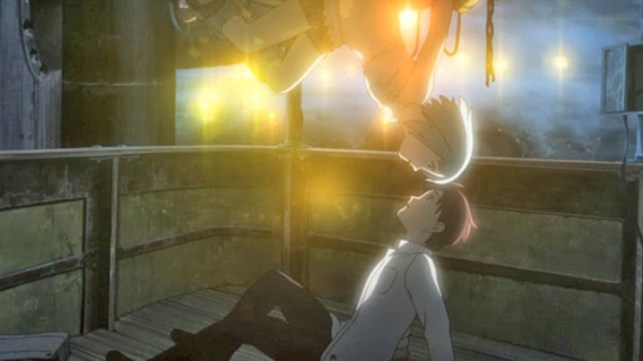
Image result for patema inverted


Right-side up is upside down
To those who smile when they frown,
To those who plunge whene’er they jump
Or rise when tripping on a bump
Or gobble down and up their meals
And sink a little in high heels,
To those who elevate a bit
If they lean over, kneel, or sit,
To those who set a precedent
When they descend on their ascent.
Up and down can be subjective.
‘Tis a matter of perspective.
____________________

MPAA rating for Upside Down: PG-13
MPAA rating for Patema Inverted: should be PG

For the next Cartoon Comparison, I’ve chosen two science fiction films with wildly imaginative concepts that happen to be suspiciously similar. Both the live-action Upside Down from Canada and the anime Patema Inverted from Japan feature the idea of opposite gravities: people walking on the ceilings, objects falling up, and the unlikelihood of two oppositely oriented young people overcoming the hatred of their politically hostile worlds. What differs is the way their worlds interact and the pseudo-scientific “explanation” for the curious gravitational situation.

Upside Down came first so if there was any copying being done, the live-action film can claim to be the original. Here, as explained by the narration of Adam (Jim Sturgess), two planets orbit each other so closely that there is essentially no sky. Looking up from either world, one simply sees the other planet’s surface, about as far away as a skyscraper, echoing perhaps the folding city street in Inception. One planet is considered Up Top, full of wealth and societal power, while the other is the economically exploited Down Below, though there’s no telling how they were named, considering the potential confusion of “up” and “down.” Luckily, the extraordinary visuals elevate the film’s none-too-subtle class struggle. Even if there were moments that I wasn’t sure what I was seeing at first, the remarkable effects were a marvel to the eye.

Image result for upside down 2012 film

As for the love story, Adam from Down Below happens to meet Eden (Kirsten Dunst) from Up Top, and they share remote romantic rendezvous in the mountains until the government breaks them apart. Years later, as Adam experiments with a practical anti-gravity serum, he seizes a chance to see Eden again at Transworld, the tower-like corporate bridge between the two worlds. The two leads certainly have chemistry, but due to a certain plot point, they don’t get to take much advantage of it, and Sturgess’s behavior can be awkward at times.

Yet Adam’s quest to reunite with Eden without being caught by the authorities leads to a good deal of inventiveness, such as his attempt to weigh himself “up” and pose as a citizen of Up Top. Unfortunately, logic gets in the way at times, including the film’s own invented gravitational rules. For instance, Adam never seems to have a problem with the blood flowing to his head when upside down. Wouldn’t that be both uncomfortable and a possible give-away to anyone who might notice? In addition, one of the planetary laws is that matter from opposite worlds eventually burns, but the time it takes for this to happen seems inconsistent. By film’s end, the conclusion is peculiarly rushed, offering a blanket resolution to crucial issues it couldn’t hope to address and doesn’t try. Upside Down is brilliant in concept, less so in execution, but the visuals alone are worth the watch.

Image result for upside down 2012 film adam and eden

Upside Down may have come first, but Patema Inverted utilizes the notion of inverse gravity far better, in my opinion. Perhaps the fantastical image of falling up is simply more credible in animation rather than live-action CGI, but it certainly captured the imagination of director Yasuhiro Yoshiura, who previously directed the compelling series-turned-movie Time of Eve. (I was impressed by both Patema and Time of Eve separately but didn’t realize till afterward that they shared the same director.)

Instead of the up-front exposition of Upside Down, Patema Inverted takes its time to show and develop the gravitational anomalies as the characters discover them. Patema is a girl living in a City of Ember-like underground bunker and seems to be one of the few inhabitants to show an interest in the Forbidden Zone, where dust floats upward and “bat people” are rumored to lurk. After a close encounter, she finds herself dangling from a fence with the sky looming “below” her. Luckily, she is saved by the equally curious surface boy Age, who seems upside down to her. Age lives under a totalitarian dystopian government, whose leader is determined to root out the surviving inverts, who made their way underground after a catastrophic accident sent most of them falling into the sky years ago.

Image result for patema inverted

Upside Down basically lacked any sky; there was only so far someone could fall. Patema Inverted, however, makes the sky an imposing threat, a beautiful but dangerous abyss ready to swallow Patema without Age’s assistance. The animation is frequently dazzling, especially when the point of view shifts to contrast Age’s perspective with Patema’s. As Patema ventures into Age’s world and he ventures into hers, the distinction of up and down becomes fluid. The plot even takes some initially confusing twists that challenge the viewer’s perceptions and require some extra thought to fully comprehend. Some might be befuddled, but I found it fascinating. Plus, the musical score is enchanting and perfectly complements the film, including the gorgeous credits song “Patema Inverse,” which is sung in Esperanto and earns a place in the End Credits Song Hall of Fame. Between this and Time of Eve, I’m definitely hoping that Yoshiura continues to create such intriguing films.

I will admit that Patema Inverted seems to draw some inspiration from Upside Down. The cause of the inverted gravity differs (natural phenomenon vs. manmade disaster), but how the two gravities interact is the same: the lesser weight lightens the gravity of the other. This leads to the couples in both films holding on to each other to prevent the other from falling away, and being able to defy gravity by using each other’s weight. Writing about it doesn’t seem to do it justice, but it’s clever, cool, and undeniably similar in both films. As original as Patema Inverted is, I can’t help but wonder how much inspiration it drew from the earlier film. In addition, Patema is also rather slow in its gradual plot progression, and the villain is stereotypically bad for bad’s sake.

Image result for patema inverted


Despite these minor “down”-sides, Patema Inverted is easily the better film. Upside Down may have brought gravitational sci-fi to life first, but its conventional plot can’t compare with the thought-provoking vision of its animated counterpart.

Best line from Upside Down: (Adam) “Gravity, they say you can’t fight it. Well, I disagree. What if love was stronger than gravity?”

Best line from Patema Inverted: (Age, when holding onto Patema) “I get it! Your weight makes me light.”  (Patema) “Girls don’t like it when you talk like that!”


Rank for Upside Down: List Runner-Up
Rank for Patema Inverted: List-Worthy


© 2016 S. G. Liput
408 Followers and Counting

Finding Dory (2016)

07 Wednesday Sep 2016

Posted by sgliput in Movies, Poetry, Reviews, Writing

≈ Leave a comment

Tags

Animation, Comedy, Family, Pixar

Image result for finding dory


Not knowing where you’re headed
Or even where you’re from
Can lead you to frontiers remote
And thrills to keep yourself afloat
And friends you never thought you’d meet,
And yet you still feel incomplete.
You may seem empty-headed,
But none should think you dumb.

With memories returning
And hopes you can’t subdue,
You may pursue the past one day
In hopes that what you lost will stay.
The blanker slate is worry-free,
But most would fill it happily.
The answer to your yearning
Is waiting there for you.
_____________________

MPAA rating: PG

Of all the studios churning out unnecessary sequels to films widely considered untouchable, I trust Pixar the most. Finding Nemo is one of my most beloved films, animated or not, and when a sequel is announced for one of your favorites, I think most people are torn between excitement and fear of disappointment. I wanted Finding Dory to be good, but how could it compare to the original? Luckily, as they’ve proven in every case but Cars 2, Pixar isn’t content to drop the ball for sequels and managed to create a worthwhile story dedicated to everyone’s favorite forgetful fish.

From the very beginning, as the adorable short film Piper segues to an equally adorable baby Dory, Finding Dory cleverly builds a film based entirely on a single line from the first film: Dory’s brief mention of family and the quickly forgotten question “Where are they?” It seemed like a throwaway gag at the time, but Dory is no throwaway character. We see in repeated flashbacks how her parents (Diane Keaton and Eugene Levy) struggled to train and encourage her to overcome her short-term memory loss, and the separation that follows highlights what a disability it is. As hilarious as Dory’s antics are, I never really considered how vulnerable and directionless her condition made her. It’s no wonder that Marlin’s mission filled such a void in her life, and now it’s his and Nemo’s turn to help Dory find her own family, which happens to lead them to the Marine Life Institute in California.

One thing that should be said of Finding Dory is that Pixar has not limited themselves for believability. A gleeful absurdity runs through many parts and particularly during the hilarious climax, not unlike the off-the-wall creativity in Inside Out. But whereas that was inside a girl’s head, this is ostensibly the real world, and a greater suspension of disbelief is required as fish jump between every body of water in sight, big or small. Most examples can be easily overlooked, but it is odd that the first film made an epic quest out of the distance between the Great Barrier Reef and Sydney, while this one transports the characters from Australia to California within minutes. I guess the destination is more important than the journey in this case. Other questions abound, like “Do whale sharks really speak whale (when they are actual sharks, not whales)?” and “Does underwater echolocation really work outside the water too?” But if you just roll with the filmmakers’ indulgences, none of these should affect one’s enjoyment.

The animation is just as spectacular as the first film’s and greater in many cases, especially a first-person slide-away that heightens the trauma of the moment. Seeing the diversely populated exhibits at the institute reminded me of the wonder I always relished whenever I’d visit an aquarium as a kid. That was always my favorite kind of field trip, and Finding Dory reminded me how much I miss those visits, though I have an entirely new view of those innocent little touch pools. The voice cast is also superb, between the return of Ellen DeGeneres as Dory and Albert Brooks as Marlin, and the addition of a host of supporting players, from barking sea lions (Idris Elba and Dominic West) to the grumpy octopus Hank (Ed O’Neill), whose lithe acrobatics facilitate most of the out-of-water experiences. My VC can’t stand the sight of octopi, and while she has yet to see Finding Dory, I’m hoping Hank will alleviate her dislike a bit. I would have liked a little more backstory for him (Could the next movie be Finding Hank?), but he’s a welcome addition, especially on a visual level.

Image result for finding dory

In a way, Finding Dory is like a much improved version of what Cars 2 attempted: giving a popular side character the spotlight to have an adventure of their own and affirm their worth. But whereas Cars 2 had little to say about Mater other than “he’s a lovable idiot so love him,” Dory’s situation has far more depth and empathy. Essentially a fish version of Leonard from Memento without the benefit of tattoos, she’s a constantly rebooting blank slate whose desire to remember is both heartbreaking and warmly resolute. Even if I don’t quite agree with her assertion that “the best things happen by chance,” Dory remains as endearing and sincere a presence as ever.

I won’t try to pretend that Finding Dory is as good as its predecessor, but I’ve seen Finding Nemo countless times. I remember crowing with laughter at Dory speaking whale, yet when you know a film practically by heart, sometimes it loses something and you wish you could see it again for the first time. Above all, Finding Dory let me laugh-out-loud with these characters again and many new ones besides. For example, I never expected Pixar to pull off such a hilarious parody of a scene from Alien and the unrelated casting of Sigourney Weaver just made it better. Finding Dory filled in gaps I didn’t think needed answering and brought me somewhat of that same feeling I had watching the first film as a ten-year-old. If a sequel had to be made, I’m glad it was this one.

Best line: (Dory) “Sigourney Weaver is going to help us!”


Rank: List-Worthy (joining Finding Nemo)


© 2016 S. G. Liput
405 Followers and Counting


The Peanuts Movie (2015)

31 Wednesday Aug 2016

Posted by sgliput in Movies, Poetry

≈ 2 Comments

Tags

Animation, Comedy, Family

Image result for the peanuts movie


Once upon a time there lived a boy named Charlie Brown,
Who everybody liked until he gave them cause to frown;
For Charlie Brown was quick to frown and sadly slow to smile,
And had the same effect on all his class’s rank and file.

Whenever his attempts at triumph went from bad to worse
And friends would laugh about his gaffe, he’d blame the universe.
Yet those who knew him well enough had faith in Charlie Brown
And knew that there would come a day he wouldn’t be let down.

Every foolish down-and-out and football-missing goof
Believes the talk of failure, thinking they are living proof.
Yet even then the heavy-hearted, unimpressive mourner
Should know that every failure still has Someone in his corner.
____________________

MPAA rating: G

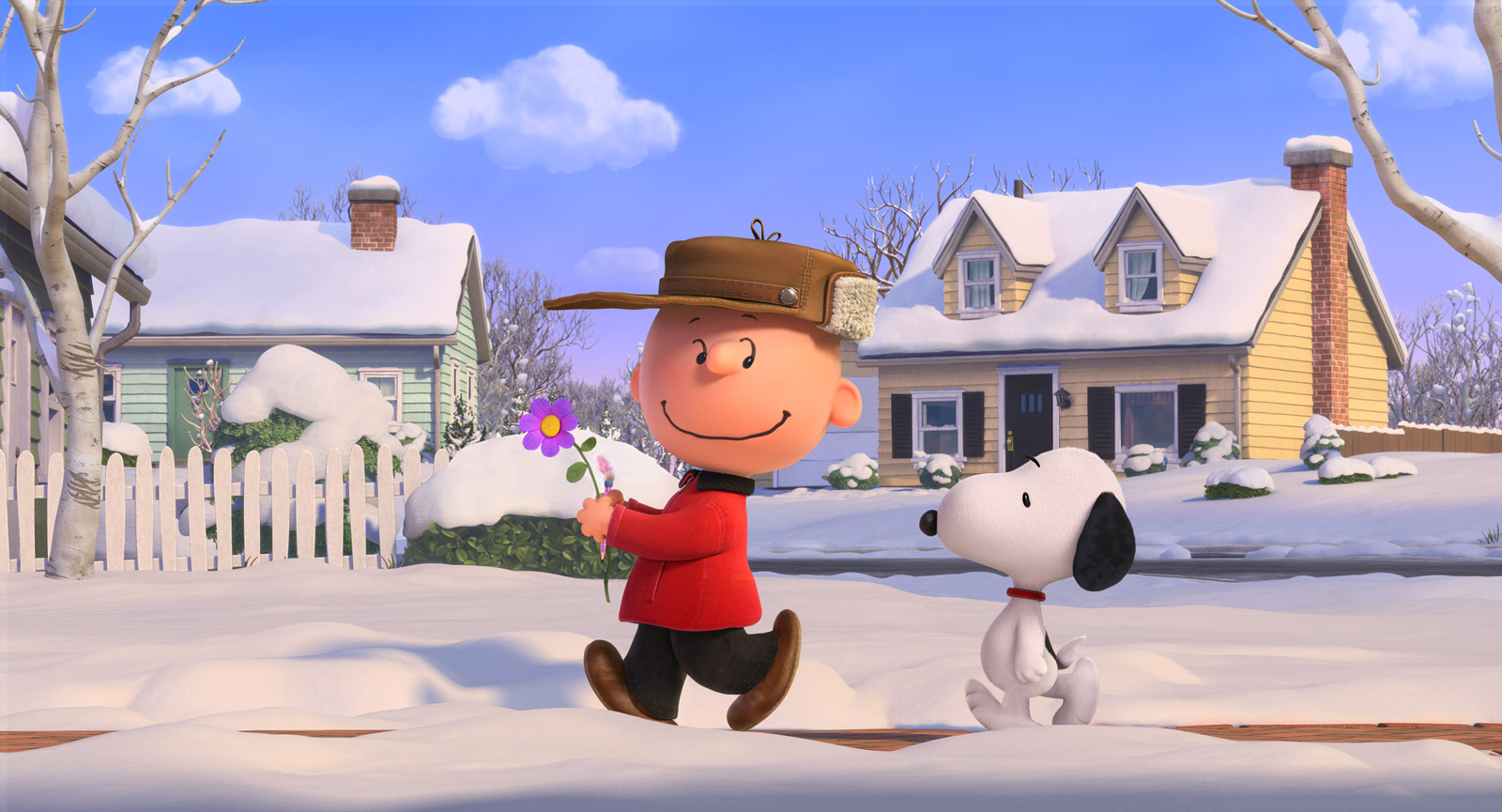
With so many old properties being revamped and rebooted in ways no one ever asked for or wanted, it’s easy to imagine a modern version of Charles Schulz’s Peanuts comic strip going off the rails. I shudder at the thought of some misguided writer combining Charlie Brown and Linus with smartphones and hip hop in a sad attempt at making them accessible to today’s youth. Yet, thankfully, someone thought better of it; that’s why The Peanuts Movie is such a wonder. Not only is it extremely faithful to its source material, but it effortlessly captures the charm of the classic cartoons. Like them, its appeal seems timeless, and there aren’t many animated films these days that fit that description.

Blue Sky Studios has found a nice balance between the original 2D and more recent 3D animation; it allows the same character appearances and comic-strip-style reaction lines while adding depth to their surroundings. The updated look is both vintage and current, working well for the everyday antics of the kids and bringing Snoopy’s WWI flying-ace dream sequences to a thrilling new level.

Luckily, though, the animation is really all that has been brought into the 21st century. There’s still the gentle pessimism of lovable Charlie Brown, the wise counsel of Linus, the goofy antics of Snoopy and Woodstock, the bossy hostility of Lucy, the distinct quirks of their various friends. While Linus’s religiosity has been dropped and the humor is more fast-paced, it all feels of a piece with the classic cartoons of the ‘60s and ‘70s, capturing their spirit better than the more recent 2D attempts on TV. Yet, as episodic as it seems at times, the filmmakers created a perfect connection among Charlie Brown’s misadventures: his attempts to impress the Little Red-Haired Girl in his class. I don’t remember the old Charlie Brown ever being as industrious (reading War and Peace in one weekend?!) or as kind as he is here (Snoopy too for that matter), but even with his classmates’ teasing, it’s clear what a role model the movie’s Charlie Brown is.

Throughout the film, I felt it was charming and likable, but it wasn’t until the end that I realized how much I truly admired The Peanuts Movie. Fans of the original specials will surely feel more of a connection with it, but it’s a film with all the earmarks of an instant classic, perhaps not a laugh-out-loud favorite, but a bit of warm nostalgia worth watching for years to come. It’s easily the best film Blue Sky has ever created and one I would feel proud to watch with kids of my own someday.

Best line: (Charlie Brown) “You’ve got to help me, Linus! I’m not sure I can handle being partners with the Little Red-Haired Girl! How will I support her? I can’t afford a mortgage! What if I’m put into escrow?”   (Linus) “Charlie Brown, you’re the only person I know who can turn a simple book report into a lifelong commitment.”


Rank: List-Worthy


© 2016 S. G. Liput
404 Followers and Counting


King of Thorn (2010)

21 Sunday Aug 2016

Posted by sgliput in Movies, Poetry, Reviews, Writing

≈ Leave a comment

Tags

Action, Animation, Anime, Drama, Horror, Mystery, Sci-fi, Thriller

Image result for king of thorn film


The world was collapsing
With panic forecast
And death in the news everyday,
Yet we were persuaded
That one short sleep passed
Would sweep the dark future away.

We woke to a nightmare
More dire than the last,
Confronted and hunted and trapped.
We slept to thwart death,
Which would not be outclassed
By sleepers with secrets untapped.
________________

MPAA rating: Not Rated (should be R)

One movie-watching emotion that I especially love and rarely get the chance to experience is the feeling of having my mind blown. The best example I can point to for that would be Inception, and to a lesser extent The Prestige, both Christopher Nolan features with unspoiled twists and a provocative narrative boldness. All too often the twist is either spoiled for me (Predestination, The Sixth Sense) or it’s not all that surprising (The Usual Suspects, Interstellar), so when a film provides me with that rare blend of shock and wonder, I treasure it. King of Thorn did just that.

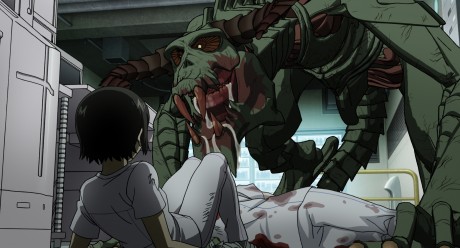
I had heard that this anime film was a combination of Inception, Aliens, and Lost, and…that’s exactly what it is, with a little Matrix and Akira thrown in for good measure. In the first scene, we see a woman commit suicide by jumping off a building, but when she lands, her body shatters, revealing the effects of a new fatal disease dubbed the Medusa virus. This plague that turns humans to stone quickly becomes a worldwide pandemic; in response, the Venus Gate organization selects 160 infected individuals to be put into a Cold Sleep until a cure can be found. When the diverse group is awakened from stasis, surrounded by thorny vines, a horde of monsters attacks them, thinning the herd (not unlike the plane crash at the beginning of Lost) in a scene sure to make you even more afraid of falling down an elevator shaft. Only seven survive, including timid Kasumi, who had to leave her twin sister behind and now must survive with the others and escape from this nightmare.

Now the typical viewer might think that they slept in stasis for hundreds of years to awaken in a post-apocalyptic future, and that’s actually exactly what the characters assume at first. But let’s just say there’s more to it, a lot more. Almost every character has a secret or a past trauma, and the plot twists just keep coming. Like Lost, the film even teases suggestions of what is really going on. Is all of this a dream? Did Kasumi and her sister somehow switch places? There’s no way I’m going to spoil it, though, and I guarantee you that you’ll be kept guessing right up to the last ten minutes.

Because King of Thorn is so packed with plot, from repeated flashbacks that slowly reveal more to overly explanatory references to Sleeping Beauty, it’s not surprising that not everything gets a resolution. Some plot points are dropped without a second glance, and the ending doesn’t even try to address a major uncertainty. Plus, even if I think I understand how everything came about, I’m not sure I get why it all happened the way it did, perhaps due to the significant omissions from the manga the film is based upon (which everyone who’s read it seems to agree is better than the film). Yet the fast-paced action and thought-provoking narrative made up for these faults. If you’re one of those people who hated all the loose threads in Lost, King of Thorn will leave you equally perplexed; but I for one didn’t mind at all, and I know quite a few friends and fellow bloggers who would find this film fascinating. I’ve already introduced it to a friend of mine, and he loved it.

Image result for king of thorn film


On the down side, it’s a film worthy of an R rating, with gruesome killings and a little nudity toward the end. Yet, the gore was far from constant, and like Aliens, it’s the kind of violence one can easily see coming and just turn away from at the right moment. At least, that’s what I did. As for the question of whether to see the subtitled or dubbed version, both have their strengths. The English dub features accents that make it clear that the survivors are from around the world (British, Italian, American, Australian), but it also has the foul language one would expect from an R-rated horror thriller. If you care about avoiding profanity, the original subtitles have far less.

Despite the few negatives, King of Thorn is an exceptional sci-fi thriller that played with my mind in the best way and even managed to touch the heart. The cast of characters are all unique and sympathetic as their back stories are clarified, and the music adds to an epic sense of mystery, especially in the early scenes. (The song “Edge of This World” also earns entrance to the End Credits Song Hall of Fame.) The animation beautifully brought to life both the thrilling and the grotesque, and even if some might complain about the occasional merging of 2D and 3D animation in the action scenes, I didn’t find it distracting. In the days since I first saw it, King of Thorn has only risen in my estimation, and while it might further mess up my original Top Twelve Anime List, I think I’ve got another favorite to add.

Best line: (Marco) “Even if you’re overcome by unspeakable loneliness, endure it and encourage someone who can follow where you left off.”


Rank: List-Worthy


© 2016 S. G. Liput
404 Followers and Counting


Cartoon Comparisons: Batman v Superman: Dawn of Justice (2016) / The Dark Knight Returns (2012)

12 Friday Aug 2016

Posted by sgliput in Movies, Poetry, Reviews, Writing

≈ Leave a comment

Tags

Action, Animation, Cartoon Comparisons, Drama, Superhero, Thriller

Image result for batman v superman dawn of justice

Image result for the dark knight returns film


Titans once clashed in the Greek myths of old,
When swords were the weapon of man sandal-soled.
Men marveled at stories of inhuman glories,
Which none had the privilege or chance to behold.

Now the world watches for titans once more,
For angels and devils to fear or adore,
And mythical quarrels with optional morals
Are thrills for mankind, as they were long before.
_________________

MPAA rating for Batman v Superman: Dawn of Justice: PG-13
MPAA rating for The Dark Knight Returns, Part 1 and Part 2: PG-13

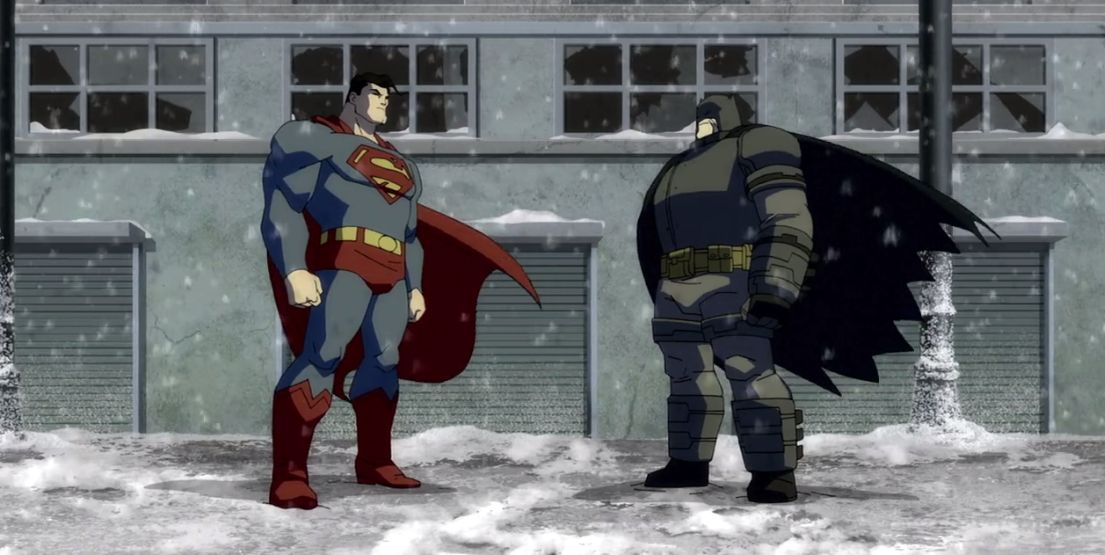
Since my Cartoon Comparisons aren’t limited to just Disney and anime, I decided to compare the recent Batman v Superman: Dawn of Justice with the animated WB adaptation of Frank Miller’s comic book miniseries The Dark Knight Returns. Both follow their own storylines, but Batman v Superman does draw some inspiration from The Dark Knight Returns, most notably in how the famous comic ends with a battle between the Dark Knight and the Man of Steel.

I should start out by saying that I am unapologetically a Marvel fan. Everyone has their preference, and I tend to think that those more drawn to DC or Marvel are more likely to forgive their movies’ faults. For example, one of my coworkers is a DC purist and loves to poke holes in Marvel movies while making excuses for films like Batman v Superman. One thing, though, that I find uncontestable (but I know many do contest) is that in recent years, Marvel films have taken the lead and DC is now struggling to keep up. Oddly, DC seems to be doing the opposite of Marvel; instead of introducing each hero in their own movie and bringing them together Avengers-style, DC is tossing in the likes of Wonder Woman and the Flash without much explanation and then providing a stand-alone film. I know DC is trying to differentiate itself from Marvel, but it’s a strange creative choice that doesn’t lend itself to a cohesive setup.

Honestly, I wasn’t too eager to see Zack Snyder’s Batman v Superman. The trailers were meh, the reviews were worse, and Man of Steel didn’t exactly thrill me as the beginning of a new superhero universe. Yet, with all the other DC films planned to follow, I felt I should give it a try, if only to keep up with the curve. Was it terrible? No. Was it anywhere near good Marvel? No. It was certainly better than I expected, and I found it to be a solid serious take on the DC heroes, particularly Batman, played with surprising intensity by Ben Affleck. While watching it, my main complaints were simply facts of its existence: it’s very dark, very serious, and very long. It still kept my interest through its 181-minute runtime with its mostly sound acting, cleverly symbolic dialogue, and periodic bursts of action, but boy, are there flaws! It’s just that its flaws were more noticeable after the fact than during the movie, and I’m not sure if that’s to the film’s advantage or detriment.

Image result for batman v superman dawn of justice

I suppose my biggest qualm going in was the very concept of Superman and Batman fighting each other, even though it has precedent in the comics. I loved Captain America: Civil War, but I don’t want the good guys to clash among themselves too much. Thankfully, that’s one thing that Batman v Superman does fairly well. Superman’s issues with Batman have to do with his shadowy vigilantism, but Batman’s objections to the Son of Krypton are more deep-seated, stemming from the rampant destruction that made Man of Steel notorious. One must keep in mind that these characters don’t know each other’s intentions, and I could understand Bruce Wayne’s distrust of a godlike alien. Even so, I felt that all of the anti-Superman rhetoric was rather narrow-minded. Most people wouldn’t blame a fireman for only being able to save half of the people in a fire, yet everyone seems to question Superman’s motivations, focusing on the one or two uncertain events instead of the countless lives he does save. No wonder Henry Cavill’s Superman acts so grim and depressed; note to the writers, Batman is supposed to be the brooding one.

There are smaller nitpicks too, such as Jesse Eisenberg’s youthful, God-haunted Lex Luthor, who seems more obviously crazy than the charisma of Gene Hackman’s original or even Kevin Spacey’s knock-off. A friend of mine said Eisenberg would have made a better Riddler, and I tend to agree. The film is also far from cohesive, with plot threads weaving all over the place, and a foreshadowing dream sequence has some unexpected predictive elements sure to confuse the uninitiated. As for the big brawl that may or may not have made DC fans geek out, it’s well set-up and well executed but ends with a semi-obvious plot twist that gets more stupid the more I think about it. Naturally, Batman and Superman couldn’t stay enemies for long, but the turnaround is sudden to the point of absurdity. At least, Gal Gadot’s Wonder Woman does make a nice if underused debut, and I’m actually more interested to see her movie than another Batman/Superman pairing. In trying so hard to set up the upcoming Justice League films, Batman v Superman offers much to appreciate and much to criticize, and it’s all a bit…much. I’m not saying Marvel is perfect either, but at least they’ve found a formula that works. DC is still struggling to find their feet, and, even if they have the spectacle, I’m dubious that they can reach the same level of entertainment.

Image result for batman v superman dawn of justice

Now for The Dark Knight Returns, which was broken up into a Part 1 and Part 2, both of which are about the same length as Batman v Superman when combined. I used to watch the animated Justice League on TV, but I’m not as familiar with the more recent direct-to-video animated films that lean more on the mature side. The Dark Knight Returns was my first exposure to these, and I see why it has been acclaimed and, despite the different storylines of each film, recognize several similarities with Batman v Superman. Among the aspects it shares with Zack Snyder’s film are the Batman/Superman fight (of course) complete with kryptonite gas, a line from Bruce reminding someone that “We’re criminals. We always have been,” repeated news reports debating the legitimacy of unsupervised heroism, an unexpected televised massacre, a nuclear explosion with Superman high in the atmosphere, and an ending funeral scene, in which the two movies have the characters’ places switched.

Unlike Batman v Superman, where Superman is still a new hero for Earth and Batman is a somewhat older than usual version, having already assumedly beaten the rogues to be seen in Suicide Squad, The Dark Knight Returns features a much older Batman in the 80s, who has retired from hero work after the death of his second Robin named Jason. With Gotham City being terrorized by a violent gang called the Mutants and the return of a supposedly rehabilitated Two-Face, Bruce Wayne decides to “return” as the hero it needs and deserves. As his crusade continues in Part 2, he also battles the once-catatonic Joker and eventually Superman himself, aided by the young Carrie Kelley as the new Robin.

Image result for the dark knight returns film

Part of what sets The Dark Knight Returns above its live-action counterpart, in addition to its more focused narrative that still covers a lot of ground, is the sense of history among the characters without showing it all. Batman is haunted by the deaths he couldn’t prevent, even telling the Joker he blames himself for allowing his foe’s killing spree to last so long, but he acts with the sureness of experience. The police have a varying reaction to the Dark Knight; those like Commissioner Gordon who remember Batman’s past heroics welcome him with a hands-off policy, while the newer recruits and incoming Commissioner Ellen Yindel see him as merely one more violent influence on Gotham City. Debates rage on the news and talk shows over whether Batman should be admired or arrested, with one know-it-all psychiatrist especially criticizing him with some good points, but the mix of opinions is a bit more balanced than the backlash in Batman v Superman. We even get some cameos from much older Selina Kyle and a grizzled Oliver Queen/Green Arrow (who has one arm for some reason, reflecting that unseen history I mentioned earlier).

The Dark Knight Returns also boasts a stellar voice cast, led by Peter Weller of Robocop as Batman. Also (Lost alert!), Michael Emerson, who played such a great villain in Ben Linus, brings a similar ruthless sneer to the Joker. As for Batman’s climactic clash with Superman, it plays out rather similarly, but for entirely different reasons. It goes back to the history they have with each other in this post-Justice League world, and interestingly the reason is more like that in Captain America: Civil War than in Batman v Superman. Unlike Zack Snyder’s Man of Steel, this Superman directly supports the U.S. government and its Reagan-esque President and is sent to put a stop to Batman’s vigilante brand of justice. They clearly disagree, but even in the heat of battle, their respect for each other causes them to hold back. And it doesn’t end with a silly twist so it’s arguably a better confrontation, which is more of a symbolic clash of ideals than the death battle in Batman v Superman.

Another point where The Dark Knight Returns has it over Batman v Superman is its depiction of Batman’s conscience. Both Batman and Superman are well-known for their refusal to kill their villains, which of course lets them come back repeatedly, but Zack Snyder seems to have ignored that fact. I didn’t notice at first, caught up in the impressive action sequences, but Affleck’s Batman doesn’t seem to mind smashing cars into people and general murder of the bad guys, perhaps owing to that “feeling of powerlessness that turns good men cruel,” as Jeremy Irons’s Alfred says. The Dark Knight Returns’s Batman, however, takes care to leave his baddies alive, only coming close to killing when pushed to his limit; one especially cool rampage in the tank-like Batmobile makes a point of using rubber bullets to incapacitate the Mutant gang without killing them.

Image result for the dark knight returns film


Despite the upheld ban on killing, there is quite a bit of violence and some nudity for a PG-13 cartoon. Some of the fistfights are vicious, and while the more gruesome scenes are left offscreen, it doesn’t shy away from blood, mainly in scenes with the Joker. Not to mention, the Joker has a Batarang sticking out of his eye for a while so I can’t help but think an R rating might have been more deserved. Likewise, Batman v Superman has its fair share of brutality, though comparatively little blood.

Both Batman v Superman: Dawn of Justice and The Dark Knight Returns have their strengths and weaknesses. The former is gritty and well-acted for the most part with a jam-packed plot that will likely reward repeat viewings, but its overstuffed length and particularly drab treatment of Superman aren’t about to make it a classic either. The Dark Knight Returns is clearly a stronger film, though that’s owed to its acclaimed source material which didn’t have to set up a whole superhero universe through cameos. The animation is nothing special but it illustrates the story well; the older Batman is a wise and responsible version of the hero who is still susceptible to human weakness and grief yet manages to even rally the citizens of Gotham to his cause. Despite the violence, some weird unexplained slang, and several loose ends left open, such as the Cold War entanglements, The Dark Knight Returns is a strong Batman movie and proves why DC often seems so much more suited to the animated realm (and TV, like Arrow). I won’t begrudge DC fans the pleasure of seeing their favorite heroes in live action on the big screen, but Marvel does it so much better. Only time will tell if that holds true for DC’s future line-up.

Best line from Batman v Superman: Dawn of Justice: (Lex Luthor, actually offering a good point) “You don’t need to use a silver bullet. But if you forge one, you don’t need to depend on the kindness of monsters.”

Best line from The Dark Knight Returns (the real best line is a spoiler but this one will do): (Alfred) “If it’s suicide you’re after, I have an old family recipe. It’s slow and painful. You’d like it.”


Rank for Batman v Superman: List Runner-Up

Rank for The Dark Knight Returns: List Runner-Up


© 2016 S. G. Liput
403 Followers and Counting
 

Monsters University (2013)

03 Wednesday Aug 2016

Posted by sgliput in Movies, Poetry, Reviews, Writing

≈ Leave a comment

Tags

Animation, Comedy, Family, Pixar

Image result for monsters university


“When I was in college,” the old monster said,
“We didn’t use laughter but screaming instead
To power our civilization, and so
Each monster who scared was a public hero.

“And where did they go hone their scaring art,
To learn how to quicken a young child’s heart,
To grasp the best method of siphoning screams
While working alone or together as teams?

“Where did they practice their skulking and creeping
And sneaking for when their young target is sleeping
So when the time’s right for the roaring and leaping,
They know that it’s just the right scream that they’re reaping?

“Where did they go? But of course, you all know.
The campus of MU, where scarers went pro.
Those were the days,” sighed the monster named Ed.
“Yeah, what he said,” said his own second head.
____________________

MPAA rating: G

After the disappointment of Cars 2, I was wary of any further Pixar sequels, or prequels in the case of Monsters University, a recounting of Mike and Sully’s wild college days and how they became friends. Even though I enjoy Monsters, Inc., I skipped its prequel at the theater, and the college concept didn’t give me much desire to see it. When I finally did, I was pleasantly surprised. Of course, it’s Pixar. Shame on me for doubting Pixar. It may not be their very best, but it’s a rare spinoff film that surprisingly holds its own with the original. My VC, who isn’t too fond of the original, actually loved Monsters University more.

Monsters, Inc. ended with a more or less satisfying conclusion so I see why they opted for a prequel. First, we go all the way back to an elementary field trip where little Mike gets to visit the scare floor from the first film, reinforcing his hero worship and attracting him to MU, Monsters University, the premier place for the next generation of scarers. When he finally arrives to the colorful campus, there’s a pleasant wink-wink of nostalgia with the arrival of Randall and Sully; we know that Randall will end up the bad guy and Sully the devoted friend, but seeing them in opposite roles that change over time is both intriguing and entertaining. Friendships aren’t always as straightforward as “Hi, let’s be friends” and neither are enemyships (yes, it’s a fake word), and Monsters University develops both in believably gradual fashion.

Mike and Sully are polar opposites, it seems. Mike is the underdog, forced to study hard to keep up with the more natural scarers, while Sully is the carefree frat boy content to coast on his family name and obvious talent. After a disastrous run-in with Dean Hardscrabble (Helen Mirren), the two are thrust together to reclaim their place at the school, which entails joining a loser fraternity called Oozma Kappa and competing in an intramural scaring competition.

Rarely does Pixar aim for the predictable, and this is no exception. Honestly, I highly doubt that the unexpected climax would have been the same had Dreamworks been in charge of production. All manner of animated and family films contain the message of believing in yourself and achieving your dreams with enough effort, and while Monsters University does too, there’s also the rare suggestion that not all dreams are feasible if your true talents lie elsewhere. In addition, it ignores the unspoken assumption that doing something good or impressive somehow washes away past transgressions; that’s a fairly common problem with many films (like how Captain Kirk from Star Trek has been in danger of court-martial more than once but always redeems himself with his heroics), and Monsters University doesn’t fall into it, making the result more realistic in the process.

I don’t know why I assumed Monsters University would be inferior. Perhaps the collegiate setting just didn’t interest me at the time, but it actually provided quite a bit of humor, from the various scaring studies to the madcap fraternity sports. Characters as lovable as Mike and Sully should only be revisited with a worthwhile story, and Pixar succeeded in that. It’s not a game-changer in animation like some of their best films, but it’s second-tier Pixar rather than third-tier. Compared with many of the animated movies out there, that’s certainly good enough for me.

Best line: (Art, mentioning his strengths) “I’ve got a third arm. Not with me, of course.”


Rank: List-Worthy (joining Monsters, Inc.)


© 2016 S. G. Liput
400 Followers and Counting


Zootopia (2016)

10 Sunday Jul 2016

Posted by sgliput in Movies, Poetry, Reviews, Writing

≈ 1 Comment

Tags

Animation, Comedy, Disney, Family

Image result for zootopia film


To stay in good graces,
Most stay in their places,
Their happy, expected, and preordained spaces
Among their preferred and familiarized faces.
It’s fine, and it’s true,
But in some special cases,

We aren’t just contented
With life as presented
But strive to be more and to live reinvented.
Such paths can be ridiculed, feared, or resented
But that’s nothing new
When you’re unprecedented.
_________________

MPAA rating: PG
Disney has certainly been on a roll lately. Rising from the lameness of Chicken Little and The Wild, it’s been delivering consistently original CGI gems, films like Tangled, Wreck-It Ralph, Big Hero 6, and now Zootopia (also called Zootropolis in Europe, supposedly to avoid confusion with an actual zoo over there). A box-office hit on par with Frozen’s success, Zootopia takes the idea of a world of anthropomorphic mammals and fills it with a winning blend of colorful characters, outstanding animation, and a universal moral message, three prime ingredients at which Disney excels.

Judy Hopps (chipper Ginnifer Goodwin) dares to be the first bunny cop, against her family’s worry and conventional wisdom, since most police officers are rhinos or elephants or something big enough to combat crime. When she actually realizes that dream and joins the force in the multi-species metropolis of Zootopia, her naïve idealism clashes with her chief (Idris Elba) and with the con artist fox Nick Wilde (smug Jason Bateman). Soon, Judy and Nick must form an uneasy alliance to solve a slew of missing mammal cases with unseen repercussions.

Right from the start, as Judy sees the city for the first time through a train’s observation deck, there’s enough visual detail and creative imagination to rival the world-building of Pixar. There are boroughs designed as habitats, from the lush rain forest to the frigid tundra, and a plethora of animalized modern conveniences: hamster-tunnel hallways, drink elevators for giraffes, sloths at the DMV (okay, that’s an inconvenience). So many scenes are full of varied pedestrians and fast-paced activity that the backgrounds alone are worth watching. Luckily, the script never lets its humorous potential go to waste, making Zootopia the funniest Disney movie in recent memory. I especially love how Alan Tudyk has become the John Ratzenberger of Disney, to the point that he’s now getting his own gags in reference to past roles (specifically, the Duke of Weselton in Frozen).

Aside from the vibrant animation and consistent jokes, there’s a layered message to Zootopia, a familiar one of tolerance and embracing differences over prejudice, in this case between prey and predator. Some may consider it preachy or heavy-handed, and I can understand why; one misunderstanding in particular seemed overly sensitive, like many perceived offenses nowadays that aren’t really that bad when you think about it. After all, unintended “insults” are often less offensive than people’s reactions to them. Despite this, Zootopia takes its lesson seriously. The finger isn’t just wagged at insensitivity; it’s also aimed at anyone stuck in complacency or those seeking to create problems where there were none. It isn’t all negative either; Judy herself is a wholly admirable female role model, not content to live under others’ expectations but rising to her dream and urging others to do the same. Now that’s a message worth lauding!

All in all, Zootopia is a fun buddy-cop mystery that plays to Disney’s non-musical strengths, even with a few weaknesses. I could have done without an awkward scene at a nudist spa, and it’s still a bit unusual to see modernized animated animals playing with cell phone apps. There are also a few unanswered questions, such as what exactly do predators eat if they’ve evolved past their carnivorous tendencies. Ice cream? I also couldn’t help wondering where all the non-mammals were, fish, birds, reptiles, and such. “Try Everything,” the catchy theme song sung by Shakira, even mentions birds but I never saw any. Have they not become sentient, or are they perhaps enslaved by their mammal overlords? My VC says I’m overthinking this, and I hope so. (She loved the movie too, as did my parents.)

Regardless, ever since John Lasseter was put in charge, Disney Animation continues to impress and entertain with a consistency only Pixar has shown thus far. Talking animals are nothing new, but Zootopia gives them a fresh spin that hits its intended message without ever forgetting to stay amusing. Like Big Hero 6, it’s also a film for which I can easily envision sequels, and based on the talent that created this original, my hopes are high.

Best line: (Judy, calculating Nick’s income to blackmail him) “Two hundred dollars a day, three hundred sixty-five days a year since you were twelve; that’s two decades, so times twenty which is… one million four hundred sixty thousand – I think, I mean I am just a dumb bunny, but we are good at multiplying.”


Rank: List-Worthy


© 2016 S. G. Liput
393 Followers and Counting


Cartoon Comparisons: Sleeping Beauty (1959) / Maleficent (2014)

19 Sunday Jun 2016

Posted by sgliput in Movies, Poetry, Reviews, Writing

≈ 6 Comments

Tags

Animation, Disney, Family, Fantasy, Musical


There she lies, fair Sleeping Beauty,
Cursed to slumber and to wait.
Those who kiss for wealth or duty
Cannot change her dreamless fate.

Only true love can awaken
And unlock her heavy eyes.
Fear not that she is forsaken.
Love will find her where she lies;
He will come, and she will rise.
________________


MPAA rating for Sleeping Beauty: G
MPAA rating for Maleficent: PG


Now that my cable has been restored after a bad storm knocked it out for a few days, it’s time once again for a Cartoon Comparison, this time between Disney’s classic Sleeping Beauty and its subversive live-action counterpart Maleficent. Sleeping Beauty was the last cinematic fairy tale of Walt Disney’s lifetime and really the last traditional fairy tale until The Little Mermaid thirty years later. Since it’s widely considered one of Disney’s best, modern Disney executives decided to use it (and Alice in Wonderland) to kick off their crusade to translate the entire canon to CGI-filled live-action. So how do these two compare?

I’ll be honest: Despite its reputation, Sleeping Beauty has never been among my favorite Disney films, which is why I haven’t reviewed it until now. Even compared with Disney’s classics, I’ve always leaned more toward Cinderella and Fantasia, simply because I grew up watching them more. I probably saw Sleeping Beauty once or twice as a kid and not since, and I was pleasantly surprised when this latest viewing reminded me of why it truly is a Disney classic. At first, some of the opening animation appears simple and angular, like an illustration from the Middle Ages, but as it continues, backgrounds become increasingly detailed. Close-ups of stone walls and tree trunks border on photo-realistic, and the layering of the forest adds beautiful depth as trees stretch away into the distance. As much as I love Disney’s follow-ups like One Hundred and One Dalmatians or The Jungle Book, the animation quality clearly started declining after this, making Sleeping Beauty, in a sense, the height of early Disney animation.

Not so much, though, when it comes to the story. One thing I always associated with Sleeping Beauty was its namesake being rather boring, and indeed Aurora herself is basically a placeholder, a damsel in distress who doesn’t do things as much as things happen to her. What I forgot was how enjoyable the fairies are. The three colorful fairy godmothers Flora, Fauna, and Merryweather are the true protagonists here, first blessing baby Aurora, then hiding her away from the evil Maleficent, raising her, and playing a key role in the famous climax. Their likable bickering over method and favorite color adds humor to scenes that otherwise might be dull. Likewise, Maleficent is a memorably evil villainess (voiced by Eleanor Audley, who also voiced Lady Tremaine in Cinderella), whose dragon transformation is the most thrilling scene of the movie.

While the film and the story it’s based on are undoubtedly classics, Sleeping Beauty does have more than its fair share of flawed fairy tale logic. For instance, why does King Stefan ban spinning wheels and force his kingdom into sixteen years without thread when Aurora is hidden anyway? Why do the fairies bring Aurora back to the castle the day of the curse rather than the day after, just to be safe, and then promptly give her some risky “alone time?” Why do the fairies put everyone to sleep when, for all they know, Aurora’s true love could be right there and unable to awaken her if he’s asleep too? Regardless of little plot holes like these, Sleeping Beauty has that timeless Disney touch that still captures imaginations, especially during the forest dance between Aurora and Prince Philip as they waltz to Tchaikovsky.

And then, fifty-five years after Sleeping Beauty, someone at Disney had a grand thought and asked, “Why is Maleficent so evil? She just wants to curse this baby out of spite for not being invited to her christening? Traditionally, evil villains are so old-fashioned, so why don’t we turn her into a good guy?” Thus, borrowing a page from Wicked minus the musical numbers, what should have been dismissed then as a foolish idea became 2014’s Maleficent, a film I fully intended to dislike. I’m not wholly against these live-action remakes, but Disney should be trying to honor and flesh out its classics, not transform them into their opposites.

As I watched Maleficent, I began to accept that it’s honestly not a bad film nor a bad fairy tale. It’s just not Sleeping Beauty, and unfortunately the comparison does make it a bad film. Gone is the line about Maleficent using “all the powers of hell”; instead, she’s just a cute little girl fairy who happens to have big devil horns and eagle wings and a name implying harm and destruction. She starts out good, the guardian of a magical realm called the Moors, whose one meaningful relationship with a human ends in betrayal, pain, and bitterness. As far as villain backstories go, I can actually accept this; the writers do a decent job in providing a reason for Maleficent’s hatred. Once the baby Aurora is born, though, and we get a re-creation of Sleeping Beauty’s opening scene, the sorry consequences of these story changes play out.

Eventually, Maleficent’s rage dwindles to annoyance as she watches Aurora from afar, repeatedly saving her from the thoughtlessness of the three “good” fairies, renamed Knotgrass, Flittle, and Thistlewit, whose bickering loses all its likability when it becomes clear what morons they are. Over the course of sixteen years, Maleficent and her shapeshifting raven Diaval (not Diablo as in the cartoon) are Aurora’s real caretakers, and by the time the curse is to be fulfilled, Maleficent tries first to cancel it and then to break it. Something just doesn’t feel right about giving all these laudable duties to the villain; in making Maleficent good at heart, every other character suffers. The three fairies, or pixies, are negligent fools; Aurora’s father King Stefan is the real villain, an obsessive monster who cares more about killing Maleficent than about his own wife and is nothing like his cartoon counterpart singing “Skumps!”; even Prince Phillip is deprived of everything that made him an appealing character in the original. By the time “true love’s kiss” rolls around, the story borrows a page from Frozen, reminding us that true love doesn’t have to be romantic in nature. That worked in Frozen because it was original; don’t mess with something that is supposed to be romantic!

Basically, everything worthwhile about Maleficent is original. Every time it thinks for itself, it entertains (the magical Moors, the battle scenes, Diaval’s transformations). Every time it tries to borrow from Sleeping Beauty, it pales in comparison (the fairies and their gifts, Aurora and Phillip’s unmemorably unmusical meeting, Phillip’s ineffectual kiss). Perhaps fans of Angelina Jolie could look past all this, but I’m not one of them, and nothing in her turn as Maleficent changed that. I did rather like Elle Fanning as the buoyant Aurora, but most of the cast was intentionally unpleasant, with the girl power message effectively ruining every male character. It’s not just I as a man who felt that way too; my VC felt the same distaste.

Maleficent is a prime example of where Disney should have left well enough alone, letting its past animations speak for themselves. It might have worked better as an original story, but when a voiceover tries to convince us that this live-action subversion with the cool visuals is the real story, it loses credibility. Please, I know the real story, and it’s from 1959.

Best line from Sleeping Beauty: (Merryweather, as Flora uses her as a dummy to make Aurora’s dress) “It looks awful.”   (Flora) “That’s because it’s on you, dear.”

Best line from Maleficent: (Aurora, practicing to tell her aunties) “You’ve been very good to me…well, except that time you fed me spiders.”


Rank for Sleeping Beauty: List Runner-Up
Rank for Maleficent: Dishonorable Mention


© 2016 S. G. Liput
388 Followers and Counting


Wolf Children (2012)

08 Sunday May 2016

Posted by sgliput in Movies, Poetry, Reviews, Writing

≈ 2 Comments

Tags

Animation, Anime, Drama, Family, Fantasy


Mothers are angels, by parenthood wrought,
And unsung saints, whether they know it or not.
Their job is to lead through each giggle and tear
And make angels too of the rascals they rear.

They’re makers of breakfast and takers of guff
And mentors who know when enough is enough.
They’re huggers or kissers, though all aren’t the same,
Who take it in stride when kids think it a shame.

When needed the most, they’re a wide-open door,
The builders of life starting at the ground floor.
All this mothers are, or should be by design,
All worthy of honor, and why I love mine.
__________________

MPAA rating: PG

Happy Mother’s Day to all! I have no idea why it’s taken me this long to review the film that placed #6 on my Top 12 Anime List, but Mother’s Day seemed like the perfect opportunity to review this affectionate tribute to a mother’s love. After strong films like The Girl Who Leapt through Time and Summer Wars, I think Mamoru Hosoda clinched his growing reputation as the next Hayao Miyazaki with Wolf Children, a favorite of many anime fans.

As a college student, Hana meets and gradually falls in love with a young man she meets in class, a strong, silent type with a kind heart. Her love for this unnamed man is not diminished when he reveals that he is part wolf, able to transform at will but choosing to live as a human. What follows is a warmhearted montage of domestic bliss to rival the beginning of Up, along with an equally tragic end when Hana is left alone to care for their two wolf children Yuki and Ame.

While an early scene implies the uncomfortable idea of interspecies romance, almost everything else about this film is sweet and tender in the most appealing way. The usual stresses of raising children are given a unique spin with the werewolf aspect (should she take them to a pediatrician or a vet?). Hana knows nothing about raising kids on her own, let alone the half-wolf variety, but she learns and loves through every sleepless night, cranky tantrum, and potential emergency. While she keeps Ame and Yuki away from the world for the most part to protect them, she is a superlative example of the hard-working, underappreciated single mother.

When the two kids begin to outgrow their small apartment, she decides to move to the distant countryside, where they will have the freedom to choose whether to be wolves or humans. The move to a large dilapidated home (reminiscent of the beginning of My Neighbor Totoro) only means more work for Hana and more opportunities for both fun and danger for assertive Yuki and timid Ame. Hana’s tenacity is tested and affirmed, as is the good will of her charitable neighbors. The lush, hilly setting offers some gorgeous scenery, which captivates one of the children more than the other. In particular, two scenes of natural splendor are the epitome of animated beauty, and the family’s frolic through the snow is accompanied by a winsomely elegant score that always gives me chills.

The unfortunate drawback to Wolf Children’s appeal is a semi-unsatisfying ending. With time to consider both perspectives, I’ve come to forgive the bittersweet climax, which is like the reverse of The Jungle Book’s ending, if that makes sense. Even so, everything Hana did for her children is worthy of the deepest love and appreciation, and the end smacks of adolescent ingratitude. Despite that caveat for the climax, Wolf Children, for me, is not a film to simply like or dislike but to be fond of. My fondness for this film runs deep, and it will forever rank among my favorite depictions of maternal love.


Rank: List-Worthy


© 2016 S. G. Liput
385 Followers and Counting


← Older posts
Newer posts →

Recent Posts

  • We Didn’t Start 2025 (Recap)
  • NaPoWriMo 2025 Recap (Finally)
  • Sonic the Hedgehog 3 (2024)
  • It Happened One Night (1934)
  • Spellbound (2024)

Recent Comments

associatesofshellymann's avatarassociatesofshellyma… on My Top Twelve La La La So…
Kit's avatarKit Nichols on Bonnie and Clyde (1967)
lifelessons's avatarlifelessons on Look Back (2024)
Carol Jackson's avatarCarol Jackson on The Thief of Bagdad (1940…
Stephen's avatarStephen on Love Story (1970)

Archives

  • January 2026
  • December 2025
  • May 2025
  • April 2025
  • March 2025
  • February 2025
  • January 2025
  • December 2024
  • May 2024
  • April 2024
  • March 2024
  • February 2024
  • January 2024
  • December 2023
  • November 2023
  • October 2023
  • September 2023
  • July 2023
  • June 2023
  • May 2023
  • April 2023
  • March 2023
  • February 2023
  • January 2023
  • December 2022
  • November 2022
  • October 2022
  • September 2022
  • August 2022
  • July 2022
  • June 2022
  • May 2022
  • April 2022
  • March 2022
  • February 2022
  • January 2022
  • December 2021
  • November 2021
  • October 2021
  • September 2021
  • August 2021
  • July 2021
  • June 2021
  • May 2021
  • April 2021
  • March 2021
  • February 2021
  • January 2021
  • December 2020
  • November 2020
  • October 2020
  • September 2020
  • August 2020
  • July 2020
  • June 2020
  • May 2020
  • April 2020
  • March 2020
  • February 2020
  • January 2020
  • December 2019
  • November 2019
  • October 2019
  • September 2019
  • August 2019
  • July 2019
  • June 2019
  • May 2019
  • April 2019
  • March 2019
  • February 2019
  • January 2019
  • December 2018
  • November 2018
  • October 2018
  • September 2018
  • August 2018
  • July 2018
  • June 2018
  • May 2018
  • April 2018
  • March 2018
  • February 2018
  • January 2018
  • December 2017
  • November 2017
  • October 2017
  • September 2017
  • August 2017
  • July 2017
  • June 2017
  • May 2017
  • April 2017
  • March 2017
  • February 2017
  • January 2017
  • December 2016
  • November 2016
  • October 2016
  • September 2016
  • August 2016
  • July 2016
  • June 2016
  • May 2016
  • April 2016
  • March 2016
  • February 2016
  • January 2016
  • December 2015
  • November 2015
  • October 2015
  • September 2015
  • August 2015
  • July 2015
  • June 2015
  • May 2015
  • April 2015
  • March 2015
  • February 2015
  • January 2015
  • December 2014
  • November 2014
  • October 2014
  • September 2014
  • August 2014
  • July 2014
  • June 2014
  • May 2014
  • April 2014
  • March 2014
  • February 2014
  • January 2014
  • December 2013

Categories

  • Blindspot
  • Blogathon
  • Christian
  • Movies
  • Music
  • NaPoWriMo
  • Poetry
  • Reviews
  • TV
  • Writing

Meta

  • Create account
  • Log in
  • Entries feed
  • Comments feed
  • WordPress.com

Recent Posts

  • We Didn’t Start 2025 (Recap)
  • NaPoWriMo 2025 Recap (Finally)
  • Sonic the Hedgehog 3 (2024)
  • It Happened One Night (1934)
  • Spellbound (2024)

Recent Comments

associatesofshellymann's avatarassociatesofshellyma… on My Top Twelve La La La So…
Kit's avatarKit Nichols on Bonnie and Clyde (1967)
lifelessons's avatarlifelessons on Look Back (2024)
Carol Jackson's avatarCarol Jackson on The Thief of Bagdad (1940…
Stephen's avatarStephen on Love Story (1970)

Archives

  • January 2026
  • December 2025
  • May 2025
  • April 2025
  • March 2025
  • February 2025
  • January 2025
  • December 2024
  • May 2024
  • April 2024
  • March 2024
  • February 2024
  • January 2024
  • December 2023
  • November 2023
  • October 2023
  • September 2023
  • July 2023
  • June 2023
  • May 2023
  • April 2023
  • March 2023
  • February 2023
  • January 2023
  • December 2022
  • November 2022
  • October 2022
  • September 2022
  • August 2022
  • July 2022
  • June 2022
  • May 2022
  • April 2022
  • March 2022
  • February 2022
  • January 2022
  • December 2021
  • November 2021
  • October 2021
  • September 2021
  • August 2021
  • July 2021
  • June 2021
  • May 2021
  • April 2021
  • March 2021
  • February 2021
  • January 2021
  • December 2020
  • November 2020
  • October 2020
  • September 2020
  • August 2020
  • July 2020
  • June 2020
  • May 2020
  • April 2020
  • March 2020
  • February 2020
  • January 2020
  • December 2019
  • November 2019
  • October 2019
  • September 2019
  • August 2019
  • July 2019
  • June 2019
  • May 2019
  • April 2019
  • March 2019
  • February 2019
  • January 2019
  • December 2018
  • November 2018
  • October 2018
  • September 2018
  • August 2018
  • July 2018
  • June 2018
  • May 2018
  • April 2018
  • March 2018
  • February 2018
  • January 2018
  • December 2017
  • November 2017
  • October 2017
  • September 2017
  • August 2017
  • July 2017
  • June 2017
  • May 2017
  • April 2017
  • March 2017
  • February 2017
  • January 2017
  • December 2016
  • November 2016
  • October 2016
  • September 2016
  • August 2016
  • July 2016
  • June 2016
  • May 2016
  • April 2016
  • March 2016
  • February 2016
  • January 2016
  • December 2015
  • November 2015
  • October 2015
  • September 2015
  • August 2015
  • July 2015
  • June 2015
  • May 2015
  • April 2015
  • March 2015
  • February 2015
  • January 2015
  • December 2014
  • November 2014
  • October 2014
  • September 2014
  • August 2014
  • July 2014
  • June 2014
  • May 2014
  • April 2014
  • March 2014
  • February 2014
  • January 2014
  • December 2013

Categories

  • Blindspot
  • Blogathon
  • Christian
  • Movies
  • Music
  • NaPoWriMo
  • Poetry
  • Reviews
  • TV
  • Writing

Meta

  • Create account
  • Log in
  • Entries feed
  • Comments feed
  • WordPress.com

Blog at WordPress.com.

Is this your new site? Log in to activate admin features and dismiss this message
Log In
  • Subscribe Subscribed
    • Rhyme and Reason
    • Join 814 other subscribers
    • Already have a WordPress.com account? Log in now.
    • Rhyme and Reason
    • Subscribe Subscribed
    • Sign up
    • Log in
    • Report this content
    • View site in Reader
    • Manage subscriptions
    • Collapse this bar