• Home
  • About Me
  • The List
  • THE LIST (2016 Update)
  • THE LIST (2017 Update)
  • THE LIST (2018 Update)
  • THE LIST (2019 Update)
  • THE LIST (2020 Update)
  • THE LIST (2021 Update)
  • THE LIST (2022 Update)
  • Top Twelves and More
  • The End Credits Song Hall of Fame

Rhyme and Reason

~ Poetry Meets Film Reviews

Rhyme and Reason

Category Archives: Poetry

Cars 3 (2017)

24 Sunday Sep 2017

Posted by sgliput in Movies, Poetry, Reviews, Writing

≈ Leave a comment

Tags

Animation, Comedy, Drama, Family, Pixar, Sports

Image result for cars 3

The world will see you as they choose,
No matter how they may deny.
They see exteriors so well
It takes hard work to break that shell,
To prove you’re more than meets the eye
And pay the greater dues.

The world’s opinions can infect
And sap the will to prove them wrong.
You balk on whether to begin,
But those who don’t will never win.
To everyone such doubts belong,
So prove them incorrect.
_________________

MPAA rating: G

I’m sure many, like me, approached Pixar’s third Cars movie with some hesitance, unsure if it was being made as a more fitting end for the series than Cars 2 or because Disney and Pixar were just trying to cash in on one of their most profitable (and least loved) franchises. While I still wasn’t sure through the first half of the movie, I’m glad to say it’s the former. Cars 3 is far more like the original than the over-the-top sequel, returning its sights to Lightning McQueen and the racing world and totally ignoring all the spy stuff of its immediate predecessor. Thankfully, Mater is once again a mere side character too.

Early on, we’re treated to a montage of Lightning’s time in the sun as a racing champ. After years on top, though, he’s suddenly outclassed by newcomer Jackson Storm (Armie Hammer), and much as Lightning overshadowed the King in the first film, analysts and fans are suddenly enamored with Storm’s ascent and scientifically proven training. After pushing himself too far, Lightning faces a career crisis when his contract is sold to a new owner named Sterling (Nathan Fillion, who I’m glad is still finding work), and his future in racing comes down to raw performance and perhaps a new way to train with motivational coach Cruz Ramirez (Cristela Alonzo).

Image result for cars 3 cruz

I will say this felt like one of Pixar’s more uneven films, making me wonder at times whether it was more like the first or the second Cars in terms of story quality and character interactions. There were times in the first half when things just felt “off” for a Pixar film, like when Bonnie Hunt’s Sally encourages Lightning in highly generic fashion, and some of the new characters take some time to get used to them.

Yet as the story develops, Cars 3 grows into a worthy conclusion for the series. It’s also a fitting farewell to two members of the original voice cast who have since died, Paul Newman as Doc Hudson and Tom Magliozzi of “Car Talk” fame as one of Lightning’s Rust-eze sponsors, both of whom are sort of resurrected via pre-recorded audio, which is underused but still touching. All of the other cast members (save for George Carlin) return as well, except for Michael Keaton as Chick Hicks, replaced by the very different-sounding Bob Peterson.

Lightning’s story is all about whether he’ll give up and ride on his fame or risk damaging his reputation by striving further than he is able, a strong yet subtle conflict with real-world parallels, such as tennis player Roger Federer for example. (My VC and I love him and have debated whether he should quit while he’s ahead, yet he keeps on eking out wins.) Lightning’s main goal is to be able to choose when he quits rather than being forced out of the game as Doc was. Yet by being constantly called a “legend,” he sees that everyone considers him past his prime, and Cruz makes it very clear that she considers him old as dirt.

Despite her initial presumptions, though, Cruz becomes something that Lightning has never had before, a protégé, one who has offered so much support to others through training that she’s never kept any of that confidence for herself. The fact that she is played by a Latina woman is no coincidence either, and she becomes a fine example for minority underdogs daring to be taken seriously. The dynamic between Lightning and Cruz isn’t without its bumps, but how it plays out by the end is a clever realization of both of their goals and a perfect way of bringing Lightning’s character full circle.

Image result for cars 3

As I said, except for maybe a couple racers, Cars 3 essentially ignores Cars 2 altogether, with not a single mention of the spy plot and even casting off key details. For instance, Cars 2 mentioned that the Piston Cup had been renamed in Doc’s honor, but here it’s the Piston Cup again. Plus, I noticed a scene in my recent viewing of Cars 2 where Lightning had product endorsements and plenty of merchandise, making me wonder why he is now so reluctant to “cash in” as a brand. Personally, I think Cars 2 was all a dream or one of Mater’s tall tales because Cars 3 stays as relatively grounded as the first film and thus is a far better continuation of its story. Despite a rocky start, Cars 3 turns out to be a superior sequel than the cash grab it might have been, raising Pixar’s animation quality even higher and providing a satisfying end to the trilogy. At least until they come up with a Cars 4. Please, Pixar, this franchise is one case where you should quit while you’re ahead.

Best line: (Smokey, Doc’s former crew chief) “You’ll never be the racer you once were. You can’t turn back the clock, kid. But you can wind it up again.”


Rank: List-Worthy (joining the first Cars)


© 2017 S.G. Liput
511 Followers and Counting


Cars 2 (2011)

20 Wednesday Sep 2017

Posted by sgliput in Movies, Poetry, Reviews, Writing

≈ Leave a comment

Tags

Action, Animation, Comedy, Family, Pixar, Sports, Thriller

Image result for cars 2 film

Imagine a world of living cars,
With windshields for eyes and mouths in their grills.
Now picture that some are elite racing stars,
And some are so junky, they’re fit for landfills.

Okay, so you got it? That’s good. Picture now
One racecar is cocky and needs a good lesson.
He’s stuck in a small town, which helps him somehow
Find more happiness than what he had success in.

You with me? All right, after that, visualize
A worldwide grand prix and an evil car plot,
And British car spies to take on the bad guys
And a tow truck that helps doing what he ought not
And maybe explosions and one car that flies.
The racecar’s there too, as a mere afterthought.

Wait, where are you going? No need to be cruel.
It may not be perfect, but it will look cool!
___________________

MPAA rating: G (PG would probably be better, since cars are actually killed in this one)

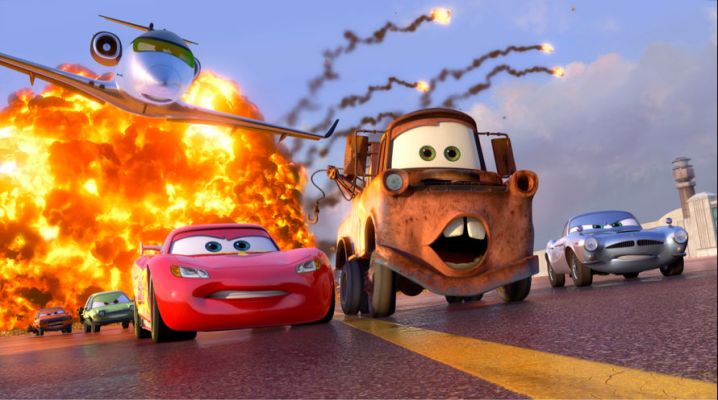
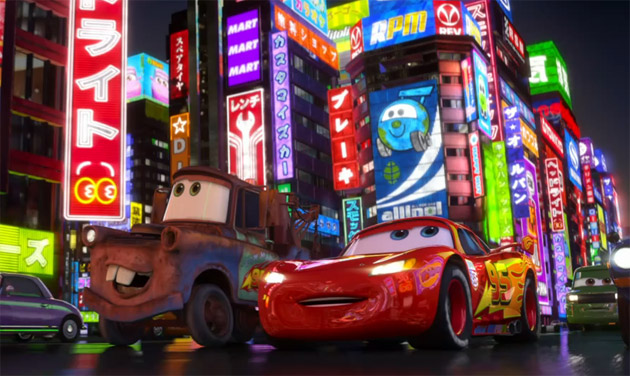
Before I review Cars 3, I thought I should get to the one Pixar film I haven’t covered yet, the black sheep of the Cars franchise and Pixar in general, Cars 2. Up until 2011, it seemed that Pixar could do no wrong, which I can say as someone who still greatly enjoys the first Cars, even if it is a rip-off of Doc Hollywood. Yet the first non-Toy Story sequel in Pixar’s lineup proved to be quite the mixed bag; it remains the only Pixar movie to have a “Rotten” score of 39% on Rotten Tomatoes. It follows Lightning McQueen on a worldwide racing grand prix, which is threatened (and overshadowed) by an evil cabal of lemon cars that only British secret agents and Mater can prevent from fulfilling their heinous plot. Whereas other Pixar films utilize inspiration to tell charming and relatable stories, Cars 2 is inspiration run amok and not really in a good way.

Cars established the world of sentient automobiles that has become Pixar’s biggest cash cow, and despite the outlandishness of its surface concept, the actual events of the plot were fairly down-to-earth, urging racing hotshot Lightning McQueen to slow down and enjoy the ride. By incorporating international espionage and globe-hopping plots into its world, Cars 2 is like director John Lasseter’s personal fan fiction, saying instead to speed up and enjoy the ride. The world of living cars takes a certain amount of suspension of disbelief to not ask questions like “Who builds the cars?” or “How do they do things that require hands and manual dexterity?” I was able to put such issues aside for the first film, but with James Bond-style gadgets and visits to different countries and car ethnicities, the suspension of disbelief is seriously strained here.

Image result for cars 2 film

And that’s on top of its other issues. While Lightning and all the other characters from the first film are still present (minus Paul Newman’s Doc Hudson, who is implied to have passed away), Cars 2 puts Mater front and center. I enjoyed Larry the Cable Guy’s bumpkin tow truck in the first film as another humorous member of Radiator Springs, all of whose inhabitants served as a good-natured contrast to Lightning and his crowd. Yet there’s such a thing as too much Mater, and his oblivious ineptitude grows grating when it becomes the main course, particularly as moments of mistaken identity pile up to make the British spies assume Mater is an American secret agent. I could tell Mater’s character here would be overbearing early on, when he spends the whole day with Lightning and then acts all sullen and gloomy when Lightning wants to spend some alone time with his girlfriend.

Worse still is how Mater’s character is tied into the film’s message of not condemning one’s friends for who they are or wishing them to change. Such a moral could be good and worthwhile, but it just doesn’t work when applied to Mater, who consistently acts like a fool in public and causes Lightning to lose a race. When Lightning gets upset, he’s justified in being upset, yet he’s the one who eventually apologizes. The film doesn’t seem to recognize the difference between changing who you are and behaving properly in different circumstances. Mater even comes to realize how he looks to other people, but despite his feeling bad, it doesn’t really lead to any insight or change on his part.

Add to all that smaller problems, like the light political jab of making “big oil” the bad guys and hailing alternative fuel as the greatest of breakthroughs. Plus, there are numerous scenes that just feel rushed and poorly written, especially toward the end, like the sudden confirmation of Mater having a “girlfriend” or Lightning totally misconstruing Mater’s warnings while simultaneously forgetting that he’s right in the middle of a race.

Image result for cars 2 film

So much negativity, but I don’t mean to bash Cars 2 like some low-rent DreamWorks movie. There’s still fantastic animation and ample imagination and humor on display, even if a lot of it consists of car-related puns. I may object to the secret agent plotline on a logical level, but it still offers some genuinely fun action sequences and eye-candy explosions. Michael Caine and Emily Mortimer are perfectly cast as the British spy cars who manage to mistake Mater for an undercover agent, and there’s cartoony amusement to be had, though the James Bond-ish elements make me hope that The Incredibles 2 works better than Cars 2 since they at least fit well into that superhero world. In conclusion, Cars 2 may not be good Pixar, but it still entertains if you don’t think about it too much. In fact, it’s probably more entertaining the less you think about it.

Best line: (Finn, played by Caine) “I never properly introduced myself: Finn McMissile, British Intelligence.”   (Mater) “Tow Mater, average intelligence.”


Rank: Honorable Mention


© 2017 S.G. Liput
509 Followers and Counting


VC Pick: Runaway (1984)

17 Sunday Sep 2017

Posted by sgliput in Movies, Poetry, Reviews, Writing

≈ 5 Comments

Tags

Action, Sci-fi, Thriller, VC Pick

Image result for runaway 1984 film

How will you know when the future has come?
When robots reside in your workplace or home.

How will you know where technology goes?
When robots start rising right under your nose.

How will you know when sci-fi meets real life?
When robots can handle the kids…or a knife.

How will you know if man’s made a mistake?
When robots and darker intentions awake.
___________________

MPAA rating: PG-13

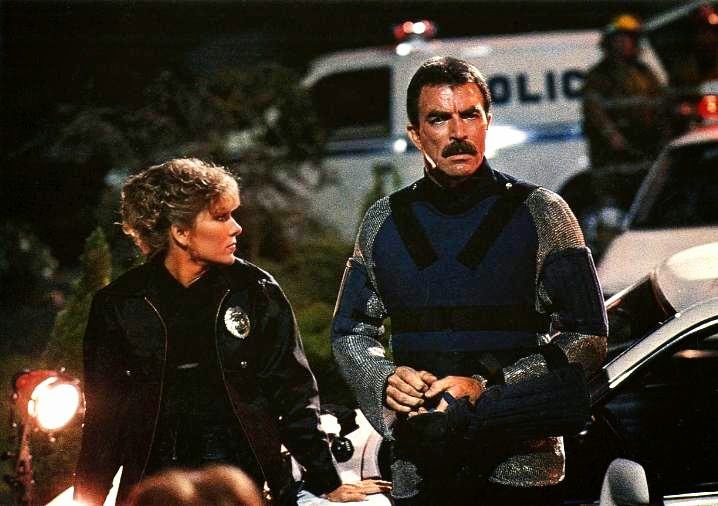
Runaway isn’t that great a sci-fi film but it is an enjoyably watchable one, only occasionally owing that appeal to its cheesy ‘80s-ness, which seems to appeal to my VC more than to me sometimes. Written and directed by Michael Crichton, this Tom Selleck vehicle features yet another potential future where robots have become common appliances at home and work, and wouldn’t you know it, they start killing people! It’s not about vengeful A.I.’s fighting back; it’s a bit more ordinary than that, since they’ve instead been reprogrammed by a leering baddie played by Gene Simmons (yes, from KISS!), and it’s up to Selleck’s policeman Jack Ramsay and his new partner Karen (Cynthia Rhodes) to stop him.

As a robot movie, Runaway has futuristic innovations both odd and pretty cool. You might question why it takes police intervention to pick up a malfunctioning pest control bot that doesn’t seem very dangerous, but then we get to marvel at the innovation of a heat-seeking missile bullet, with some first-person shots from the bullet’s point of view. To be honest, the robots are lame in design and execution, and while I’m sure they were impressive for 1984, seeing wobbly robotic spiders “sneak up” on hapless police has a distinctive B-movie quality. Even so, the machines can still be dangerous, like one murderous runaway modified to shoot a gun, the threat of a thrilling early scene slightly spoiled by the stupidity of one of its victims. One caring nanny robot also happened to remind me of the similar THX droid in the anime series/film Time of Eve.

Image result for runaway 1984 filmMy VC has introduced me to a lot of ‘80s movies, and thanks to her, I know Crichton could direct science fiction both innovative (Westworld) and memorably tense (Coma, which was one of Selleck’s first brief film roles). Though Runaway falls a little short of his earlier work in terms of originality, it was still a fun ‘80s popcorn movie. I can’t say I was ever bored since the police investigation moves along at a brisk pace between moments of well-wrought tension. It helps too that all the actors acquit themselves fairly well, from Selleck’s likeable, afraid-of-heights lead to Simmons’ malicious villain, though Simmons didn’t help his potential acting career with a gratuitous scene literally thrown in just for a jump scare. There may not be much depth to the characters or themes, but as a diverting little thrill ride into the future, Runaway ran far enough to entertain.

Best line: (Ramsay, after a wild goose chase) “Congratulations, guys, you just staked out a roll of toilet paper.”


Rank: List Runner-Up


© 2017 S.G. Liput
507 Followers and Counting


Cartoon Comparison / 2017 Blindspot Pick #9: Hear Me (2009) / A Silent Voice (2016)

15 Friday Sep 2017

Posted by sgliput in Blindspot, Movies, Poetry, Reviews, Writing

≈ Leave a comment

Tags

Animation, Anime, Cartoon Comparisons, Comedy, Drama, Foreign, Romance

Image result for hear me film

Image result for a silent voice film

Whispered rumors, mocking humor,
Overhearing words of spite,
Talk of blame and guilt and shame,
Made all the worse because they’re right—
Oh, to shut such voices out,
Unkindness barely out of sight.

Those with ears, now let them hear,
But if they can’t, do words turn rude?
Is absence of respect and love
The norm when barriers are viewed?
Perhaps it’s best the deaf don’t hear
Unkindness at such amplitude.

Those who fear the scorn they hear
May hide in deafness self-imposed,
Just as those who never chose
Their handicap can feel exposed.
Yet all who rise must recognize
Life’s eyes and ears should not be closed.
______________________

MPAA rating for Hear Me: Not Rated (should be PG)
MPAA rating for A Silent Voice: Not Rated (could be PG but probably PG-13)

In honor of  September being Deaf Awareness Month, I thought it appropriate to combine my monthly Blindspot Hear Me as a Cartoon Comparison with the anime film A Silent Voice, both of which are about a relationship between a boy and a young deaf girl. I thought to combine their reviews before I’d even seen them, but now that I have, the truth is that they’ve got far more differences than similarities. Hear Me is a Taiwanese romantic comedy with the unique distinction of being mostly in sign language, while A Silent Voice is a poignant tale of a bully’s emotional journey toward forgiveness, with romance staying on the back burner. (I thought they were both Japanese until I saw Hear Me was from Taiwan.) Yet both do address issues of deaf people and how others relate to them.

I’ll start with my Blindspot pick Hear Me, which intrigued me when I heard it was mostly in sign language. That probably won’t please anyone who doesn’t enjoy subtitles, but it makes for some very unique conversations, some of them quite dramatic yet communicated with only hands and facial expression rather than voice. Eddie Peng (who just appeared this year in The Great Wall) plays Tian Kuo, a delivery boy for his parents’ restaurant, who meets a girl named Yang Yang (Ivy Chen) at the public pool while her sister trains for the Deaflympics. Since he knows sign language, he freely converses with her over time, and their relationship goes through some familiar highs and lows, with deafness as a potential complication for their future together.

Image result for hear me film

Let me just say that Hear Me has abundant charm, thanks largely to Eddie Peng, whose goofy, lovestruck antics and faces shine through even without words. There is dialogue too, in Chinese, mainly for the humorous exchanges between Tian Kuo and his bossy mother, but sign language and relative quiet are the rule rather than the exception here. The romance is also refreshingly wholesome, with the most suggestive moment just Tian Kuo seeing Yang Yang’s feet while she’s changing, which gives him a nosebleed. (It’s funny, I’ve seen that happen in anime, but this suggests that it’s something that actually happens to Asian people when they get excited.)

Hear Me actually focuses on the dual relationships of Tian Kuo and Yang Yang, as well as Yang Yang and her deaf sister Xiao Peng (Yanxi Chen). After Tian Kuo offends his crush by disrespecting her meager income, his efforts to win her back may bring to mind John Cusack’s desperation in Say Anything, just instead of holding a boom box outside of her window, he dresses as a tree and gives her a coin bank shaped like a bird. Really similar, see? The humor comes from Tian Kuo’s side, while Yang Yang and her sister face more dramatic issues, like craving independence despite being deaf. Yang Yang earns all the money, while her sister focuses on competing as a swimmer, but when her performance suffers, Xiao Peng comes to regret and resent her own dependence on her sister, climaxing in an all-hand heart-to-heart between them.

Image result for hear me film

Hear Me makes the most of its unique sign-language dialogue, which serves the story rather than being just a gimmick. I liked how a misunderstanding was cleverly prolonged, as well as the few reminders of Yang Yang’s Christianity, since her absent father is said to be a missionary to Africa. It may not be a laugh riot, but there were definitely funny moments, especially a hilariously awkward scene where Tian Kuo’s parents sing his praises to his girlfriend. The central relationship also featured several of those heartwarmingly romantic moments that made Hear Me a pleasure to watch.

Now for A Silent Voice, or as its Japanese title Koe no Katachi translates, The Shape of Voice. While it received many accolades, A Silent Voice suffered somewhat from bad timing, being released just a month after last year’s mega-hit Your Name in Japan. (Incidentally, both were nominated for Japan’s Best Animated Feature Academy Award, but neither one won. That honor went to In This Corner of the World, which I’ll get to at some point.)  Whereas Hear Me was a romantic comedy with some moments of drama, A Silent Voice is much more dramatic in its young-adult setting and is bound to make sensitive viewers reach for the tissues more than once.

Image result for a silent voice film

The film starts with the carefree elementary school life of Shōya Ishida, who is dumbfounded at the arrival of a new student, a girl named Shoko Nishimiya who reveals through writing in her notebook that she cannot hear. While the other students are civil enough at first, the situation quickly devolves into bullying, led by Ishida. These scenes remind you how cruel kids can be and easily make your heart break for Nishimiya, who endures it all with quiet patience, still thinking the best of her classmates. When she finally is forced to change schools, the blame for her departure quickly falls on Ishida, and he takes her place as the class scapegoat and bully target. Fast forward several years to Ishida in high school, and his marginalization has only deepened, even making him consider suicide, until he tries to seek out Nishimiya and make amends.

A Silent Voice makes the uncommon choice of first portraying its main character as a bully, the kind whose maliciousness seems normal to them but traumatic to their target. Yet the same person we dislike from the outset grows into a source of sympathy as he tries desperately to put that childish cruelty behind him. I loved the creative choice of placing X’s over the faces of his fellow classmates, marking them as people he has no chance or desire of knowing, as literal “unfriends.” These X’s become a brilliant way of visualizing Ishida’s mental state and his chances of relationships with others; when he lets his guard down, actually noticing and treating someone else as a person or vice versa, the X falls from their face and allows him a chance at a friend.

Image result for a silent voice film ending

The relationship between Ishida and Nishimiya is touching on multiple levels. They’re both broken people with agonizingly low self-esteems, Ishida because he considers his past offenses unforgivable, Nishimiya because she blames herself for any trouble around her and believes she somehow deserves it, always apologizing for everything. It’s amazing how easily she seems to accept Ishida after what he did, but it’s the mere effort of communicating with her that she values most. Also perceptive are their interactions with the friends they make and how they respond to the bullying: one girl still sees Nishimiya as insincere and worthy of her harassment, while another views herself as completely innocent, even though she watched Nishimiya’s persecution and did nothing. These bullying themes and Ishida himself meant much to me because I too have been on both sides; I was picked on by an older classmate for a time and I did the same myself, something I still regret despite it happening only once. Ishida doesn’t approach Nishimiya with any set goals of how to make it up to her, but he tries to build the relationships he once helped destroy, something any repentant bully would wish they could do as well.

Kyoto Animation has a reputation for excellence, from the popular Haruhi Suzumiya franchise to the highly anticipated Violet Evergarden, and A Silent Voice is proof of the studio’s talents. The animation is painterly with its luminous, pastel palette, and, even if some of the artsy editing makes it unclear at first what just happened in the nonlinear storyline, it looks gorgeous throughout. The abundant use of symbolism and some ambiguous scenes (like the very first and last shots) also make it a film worth analyzing and hearing others analyze. I still consider Your Name the best anime of last year, but A Silent Voice is quite simply a beautiful film that wears its emotions on its sleeve. Anytime it threatens to dip into teen melodrama, it’s revived by a sweet moment or heart-tugging conversation. I laughed out loud twice, I actually cried “No!” at one harrowing part, and the final scene gives me tearful chills every time I see it.

Image result for a silent voice fireworks scene

Going into these two movies, I really expected them both to be List Runners-Up, as so many movies I’ve seen recently have been. On its own, Hear Me probably would be a Runner-Up, but A Silent Voice earns its way onto my List and gives me an excuse to add Hear Me as a tie. Both approach their deaf subjects with great sensitivity, stressing that they are relatable people in search of the same relationships we all crave. Hear Me had far more sign language than A Silent Voice, which didn’t really bother to translate with subtitles when it was used, but both are excellent features for Deaf Awareness Month and are well worth seeing any other month, for that matter.

Best line from Hear Me: (Tian Kuo’s father, of his mother) “She’s got a knife for a mouth and tofu for a heart.”

Best line from A Silent Voice: (Kawai, a sort-of friend) “Everyone suffers in their life. But it’s like that for everyone, right? So you have to love the bad parts of yourself too and move forward.”


Rank for both: List-Worthy (tie)


© 2017 S.G. Liput
507 Followers and Counting
 

September Morning (2017)

12 Tuesday Sep 2017

Posted by sgliput in Movies, Poetry, Reviews, Writing

≈ Leave a comment

Tags

Comedy, Drama, Triple A

Image result for september morning film 2017

Where were you when the towers fell,
When a nation was numbed by an unforeseen hell?
What hollow activities padded the day,
As newscasters had the same horrors to play,
The same videos, the same headlines to tell?
And wasn’t “tomorrow” new cause for dismay?

Yet here we are, many years past the threat,
Still filled with the grief that once shocked and upset.
New courage since then, we’ve been forced to adopt.
We all may recall the day normal life stopped,
But let not the sadness cause us to forget
The day it began again, day for night swapped.
___________________

MPAA rating: Not Rated (should be R, for language)

The last two years, I’ve commemorated the anniversary of 9/11 by watching movie re-creations, letting United 93 and World Trade Center remind me of the tragic power of that horrific day. This year, though, I had the privilege of attending a free local screening of a small independent film called September Morning, a 9/11 film that never shows the planes or the smoking towers, instead dramatizing how average Americans far from New York, specifically a group of college students, reacted to the day that changed America.

Filmed over thirteen days and set completely in a small dorm room, September Morning takes place during the night of September 11 into September 12, after everyone was sick of the repeated news stories, sick of the fear and uncertainty, “tired of watching history being made.” The five college freshmen who spend that difficult night together include jocular Eric (Troy Doherty), promiscuous Lynz (Katherine C. Hughes), pessimistic Justin (Michael Grant), reserved Shelly (Taylor Rose), and vengeful ROTC cadet “Dish” Fisher (Patrick Cage II), who gather for pizza, beer, cigarettes, and conversation to distract from the oppressive melancholy that ruled the day. Each of those adjectives I assigned them are very general, as all of them fit those descriptions at some point, never coming off as stereotypes or anything less than genuine. The film doesn’t suffer one bit from its independent status, since every one of the actors is beyond reproach, with skillful direction to match from first-time writer-director Ryan Frost, who based the film off his own experiences as a freshman at the University of Richmond in September of 2001. Based on this film, I’d say every one of these talents is a name to watch, if only they would get the right notice.

Image result for september morning film 2017

The banter of the newfound college friends is heartfelt and sometimes funny, though rarely in a laugh-out-loud sort of way, but the shadow of 9/11 hangs over everything. Throughout the film are discussions and even silent reminders of the events of the previous day, offering much insight into how people felt at the time. When someone suggests watching a movie, Justin objects that whatever they see will be stigmatized to remind them of this time, just as anything showing the Twin Towers bears a solemn memory. The mood changes drastically when someone mentions planes or Arabs.  Shelly voices her hesitation at having a good time with friends after seeing people jump from burning buildings. There’s a debate about how people can pray and believe in God at times like this, with two characters sticking with Jesus while Justin argues for cynicism.

In many ways, September Morning struck me as The Breakfast Club for a new generation, simply set in college rather than high school. The whole film is basically a five-way conversation about these young people’s joys, fears, insecurities, and anger, simply with 9/11 as the context and trigger of these volatile emotions. There’s even an antagonistic authority figure in Michael Liu’s resident assistant, who criticizes the group’s self-medicating attitude and is summarily resented. As with The Breakfast Club, it’s easy to relate to these characters, and everyone is bound to see themselves in one or several of them at some point.

My main problem with September Morning is the language, with a surfeit of casual F-words surpassing anything in The Breakfast Club. In addition, the sexual conversations get uncomfortably graphic at times, even if nothing is shown. The frequent obscenities sadly make it a film I wouldn’t watch often, taking away from the otherwise impressive acting and thoughtful dialogue. (“Maybe fate is just a series of events that lead people to the same place.”) The lighthearted scenes often leaned too crude, but when the serious moments came, they rang true, particularly a brilliant exchange with the pizza delivery man (Max Gail, known to older viewers as “Wojo” on Barney Miller), whose age and experience help the young people put the traumatic day in perspective.

Image result for september morning film

As with Life, Animated, I actually got to take part in a Q & A after the screening, this time with writer-director Ryan Frost, and he expressed his desire to memorialize how it felt on September 11 and 12 for the average American, especially since most college students will soon be part of a generation that doesn’t even remember 9/11. Even with the unnecessary profanity, September Morning succeeds as an encapsulation of those feelings and makes a point of contrasting the anger and despair with the kindness and encouragement that 9/12 instilled in people. As I left the theater with its flag flying at half-mast yesterday, the memory of the grief was lightened by the knowledge that, as hard and complex as it is, life does go on.

Best funny line: (Eric) “We’re all white people from the suburbs.”   (Dish, who’s black) “Excuse me?”   (Eric) “Oh, sorry, Justin’s Jewish.”

Best serious line: (delivery man Don) “When you get older, you tend to remember that time to time, the world goes crazy, but it doesn’t stop.”


Rank: List Runner-Up


© 2017 S.G. Liput
506 Followers and Counting


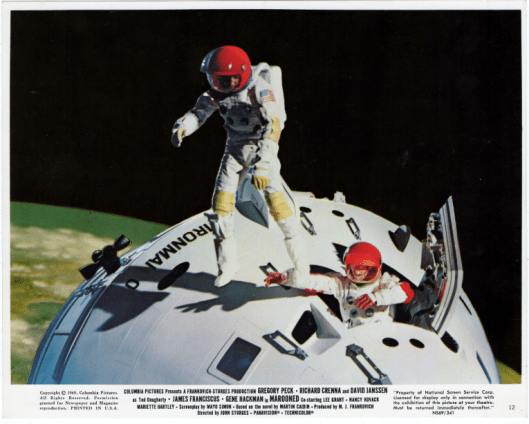
Marooned (1969)

10 Sunday Sep 2017

Posted by sgliput in Movies, Poetry, Reviews, Writing

≈ Leave a comment

Tags

Classics, Drama, Sci-fi, Thriller

Image result for marooned film

Although it looks down at mankind from the sky,
And we behold it every night,
The dark void of space is no friend or ally.
‘Tis death on our borders to push and defy,
An ever-black vacuum that wills us to die
If we from our atmosphere venture too high,
Which man will endeavor despite,
Despite the dread silence our fears amplify,
Despite the expanses too vast for the eye.
Despite all the dangers that could go awry,
Mankind will dare every new height.
___________________

MPAA rating: G (should be PG, for light language)

This one is a special request of my mom’s. I’ve been putting off reviewing Marooned for a long time, despite my mom’s insistence, because I remember her showing it to me as a kid, and I was bored out of my skull. Since that first viewing, I’ve always viewed it as boredom incarnate. To my mind for the last several years, it’s been “Marooned = dull.” Yet she finally convinced me to give it another chance, and I must admit it’s better than I recalled, perhaps because I’ve grown in patience over the years. (Plus, I have a new standard for boring-as-heck cinema, which I’ll review soon.)

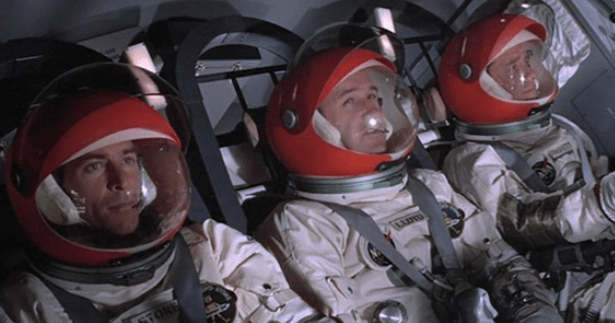
It might seem that this story of a space shuttle mission gone wrong drew inspiration from the Apollo 13 incident, but surprisingly it came out shortly after Apollo 11, a year before the similar events of Apollo 13. Richard Crenna, Gene Hackman, and James Franciscus play the three NASA astronauts who are stranded in their capsule (called Ironman One) when main engine failure leaves them without enough fuel to return home or to their space station. Unable to do anything but conserve oxygen and wait, the astronauts rest their hopes on Mission Control, led by Gregory Peck’s flight director Charles Keith, and a daring last-ditch rescue mission.

Image result for marooned film gregory peck

Marooned is still rather slow in its execution, but my mom has a special connection with any movie about NASA, this included, since my grandfather worked on the Mercury, Gemini, and Apollo missions at Cape Canaveral and she also worked there during the Space Shuttle Program. In fact, she sees her dad in Gregory Peck’s administrator and, as a kid, imagined her father similarly calling the shots, though he actually played more of a background role. I too have that fondness to some extent, which helped me appreciate Marooned more than I was expecting this time.

One thing that I recognized with this viewing is how Marooned has influenced other stranded-in-space films. Ron Howard’s Apollo 13 is an obvious comparison, though that had a direct historical basis, while this is fictional. I could also point, though, to the rallying of support and resources for a risky rescue that was also seen in The Martian, and the emotional farewells between the astronauts and their wives were echoed in the video goodbyes of the space crew in Deep Impact. And of course, the desperate space-walking finale bears some resemblance to the whole concept of Gravity, though Gravity’s jaw-dropping effects make the Oscar-winning effects in Marooned look pitiful. (They’re decent, but at one point, I could see a string suspending a supposedly floating object.) In a way, this climax represents the problem with Marooned: it’s meant to be tense and gripping, but the now-hokey effects and lack of music (only space sounds) make it anticlimactic and far less engaging than it was meant to be, especially when we have films like Gravity that took similar ingredients and did them better.

Image result for marooned film

Yet I can’t be too hard on Marooned anymore. It does feature some excellent performances, exemplified in the tearful calls between the astronauts and their wives, and Gregory Peck is in top form. Plus, that investment in the space program that must be in my blood helped me appreciate it overall, especially Keith’s impassioned defense of space travel, regardless of regrettable losses incurred, making the scrapping of our modern space program all the more disappointing. It’s still a bit dry, procedural, and overlong for my taste, but Marooned has at least moved up in my estimation, which at least should make my mom happy.

Best line: (reporter) “Are the results you’ve gained worth the lives you’ve lost?”  (Keith) “You’re damn right they are! You want to know what they accomplished living up there in a tin can for five months? Because of men like these, we’ve taken the first step off this little planet. A trip to the moon was just a walk around the block; we’re going to the stars, to other worlds, other civilizations. Men will be killed in this effort, just as they’re killed in cars and airplanes and bars and in bed.”


Rank: Honorable Mention


© 2017 S.G. Liput
506 Followers and Counting


The Red Turtle (2016)

08 Friday Sep 2017

Posted by sgliput in Blogathon, Movies, Poetry, Reviews, Writing

≈ 7 Comments

Tags

Animation, Drama, Fantasy, Foreign, Romance

Image result for the red turtle film

Shall I sit here all alone
And wait for death to call me home?
Now that I am stranded here,
Have worth and meaning flown?

Shall I push uphill my stone
And watch it roll back down and groan
And wish that life had chanced to veer
Somewhere less sorrow-prone?

Perhaps I’ll work myself to bone
And die unloved and thus unknown,
But if somebody could appear
And comfort give to persevere,
I’d gladly bear my daily stone
With one to call my own.
_________________

MPAA rating: PG

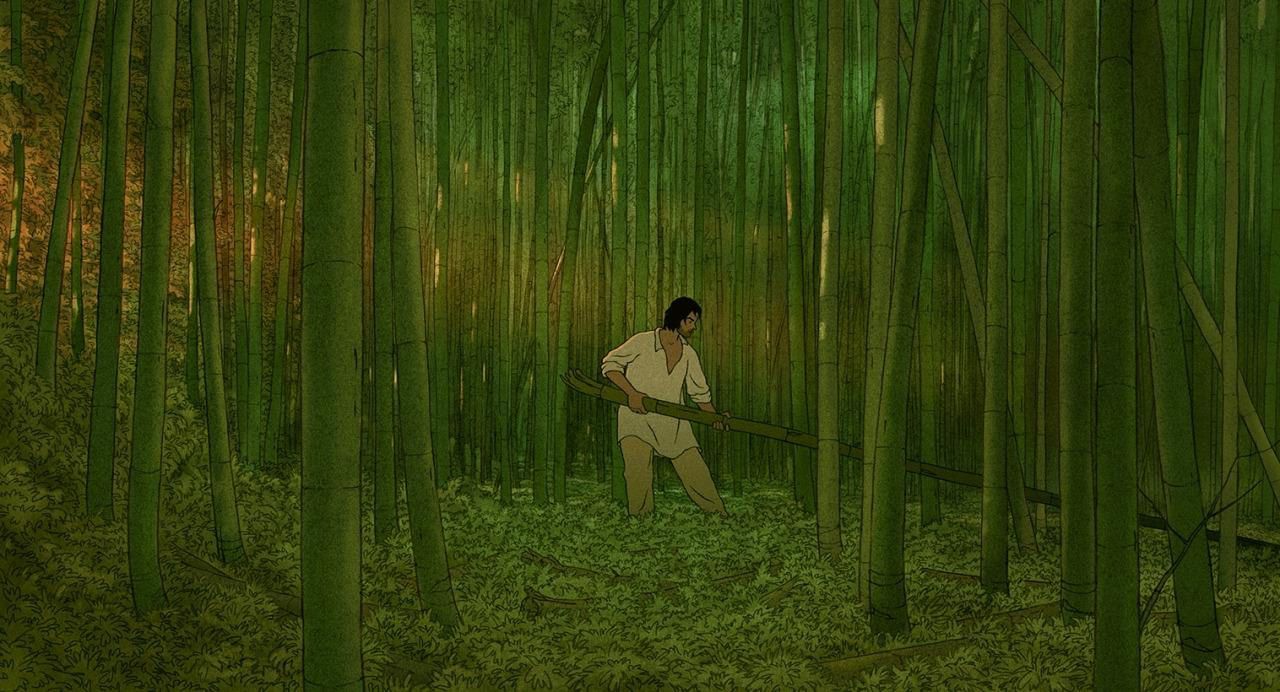
This review is my contribution to the Colours Blogathon hosted by Catherine of Thoughts All Sorts, focusing on all manner of movies with colorful titles. I chose The Red Turtle not only for the color in its name, but because I was curious about this feature-length silent film that earned an Oscar nomination for Best Animated Feature when Your Name didn’t. Now that I’ve seen it, I completely agree that it deserved such an honor because this story of a shipwrecked man stranded on an island is a piece of cinematic art. So many cartoons these days rely on hyperactive humor that something like The Red Turtle is an anomalous reminder that animation can offer compelling stories without jokes or even words through simple mastery of the medium, allowing silence to make it universal.

Image result for the red turtle film

The beautifully simple animation is the product of a collaboration between Dutch director Michaël Dudok de Wit, winner of the 2001 Animated Short Film Oscar for the lovely Father and Daughter, and the not-yet-defunct Studio Ghibli. I’m still surprised at Ghibli’s involvement because The Red Turtle has no resemblance to anime, except maybe in the attention to natural detail, yet I’m reminded that anime is not limited by the usual big-eyed style. The Oscar-winning short film La Maison en Petits Cubes has a European aesthetic similar to The Red Turtle, but, despite the French name, it was a Japanese production. So you could say that The Red Turtle is a best of both worlds, combining the visual imaginations of its animators in a surprisingly accessible, almost watercolor style.

Silent animation is usually the realm of short films, and it must have been a risk to protract what could have been vastly shortened to a feature-length story. Those with short attention spans will likely be bored by the third raft-making attempt, but the patient should find the narrative rewarding in its ambiguity. As with Cast Away, actions speak louder than words, and the painterly animation is so superb in its simplicity that I was rarely bored. It’s all in the details, like the humorous characterization of the crabs watching the man’s efforts or the lush island greenery swaying in the breeze, and the realistic water is worth particular praise, whether serene on the horizon or violent in its outbursts.

I don’t want to say much about the actual plot since it’s best experienced with the intended visuals to tell the story, but it very much fits its description as a fable, a seemingly straightforward tale that can be appreciated on its surface or on a deeper, more symbolic level. The Red Turtle itself remains something of an enigma, even as it becomes a profoundly important part of the castaway’s life, infusing the film and its ending with a bittersweet emotion that is strongly felt, if not fully understood.

Image result for the red turtle film

So, yes, The Red Turtle is absolutely Oscar-worthy and, if not for last year’s hefty competition, might well have won. Why couldn’t a film like this come out in 2006 or 2011, when Disney/Pixar wasn’t a shoo-in? I suppose I can now turn my blame on My Life as a Zucchini (the only nominee I haven’t yet seen) for Your Name’s lack of nomination last year because The Red Turtle is more than deserving. Despite its slow narrative that could have been a short film, it’s a piece of modern art that is becoming rarer and rarer in the world of feature-length animation.

Best line:  (the man’s only line) “Heeeeey!”


Rank: List Runner-Up


© 2017 S.G. Liput
506 Followers and Counting


The Letters (2014)

05 Tuesday Sep 2017

Posted by sgliput in Christian, Movies, Poetry, Reviews, Writing

≈ Leave a comment

Tags

Biopic, Drama, History

Image result for the letters film

Blessed are the selfless, though hidden they may be.
Blessed are the quiet; their thoughts the Lord will see.
Blessed are the pious, who do not seek renown.
Blessed are the few who suffer thorns their earthly crown.
Blessed are the holy ones, who rarer get each year,
For even in the darkest world, their light we will revere.
____________________

MPAA rating: PG

After watching The Letters last night, I figured it couldn’t be a coincidence that I happened to watch a movie about Mother Teresa on the one-year anniversary of her canonization as a saint. That’s why I hurried to write a review for today, the anniversary of her death, known in the Catholic Church as her Feast Day. A passion project of director William Riead, The Letters is one of the better faith-based films of recent years, a tribute to a woman of unparalleled holiness.

The Letters takes its inspiration and name from the many letters Mother Teresa wrote to her spiritual confidante Father Celeste Van Exem (Max von Sydow), who describes her story to Rutger Hauer as an investigator into Teresa’s cause for canonization. English actress Juliet Stevenson does a marvelous job (and feigns a convincing accent) as Mother Teresa herself, whose compassion for the poor outside her convent’s gates led her to petition for permission to leave the cloister and serve the unwashed masses of Calcutta, India. Over the years, despite her well-publicized sanctity, she also endured feelings of abandonment by God that have been called a “dark night of the soul,” a cross other saints have carried as well.

Image result for the letters  mother teresa film

The Letters has received mostly negative critical reviews, but I don’t find that surprising, considering how Christian films tend to be more appreciated by their target audience than by secular viewers. Yet The Letters doesn’t seem concerned with proselytizing, just as Mother Teresa didn’t approach the Indian communities to win converts. It’s a testimony of her commitment to God and to helping others, and while some have tried to cast aspersions on her motivations and methods, I find nothing wrong with a wholly positive view of a woman who dedicated her life to serving the poor. Perhaps some people wanted a darker, more challenging view instead of a shiny biopic of a saint at work. After all, most would probably prefer to watch the latest gruesome death on Game of Thrones than the inspiring rescue efforts to aid the Hurricane Harvey victims. Yet positivity and holiness deserve their day, and a movie like The Letters presents them as truly admirable.

That’s not to say that The Letters is perfect. It does have better acting and production values than some Christian films, but the beginning jumps about in time and place a bit confusingly. Plus, the initial confrontations with Indian Muslims urging Teresa to leave seemed rather half-hearted, rarely making it feel that she was actually in danger. Even with these caveats, The Letters is pure inspiration, revealing Mother Teresa’s spiritual turmoil that has only increased Christians’ veneration of her. With so much wrong in the world, sometimes just watching a selfless hero in action, an example to aspire to, is enough to stir the soul and make us want to serve where we can more faithfully.


Rank: List Runner-Up


© 2017 S.G. Liput
506 Followers and Counting


Ink (2009)

03 Sunday Sep 2017

Posted by sgliput in Movies, Poetry, Reviews, Writing

≈ 2 Comments

Tags

Drama, Fantasy

Image result for ink jamin winans

Dreams in the night
Carry darkness or light
Into minds at the height of their delicacy.
Deep in our slumber,
Charades without number
Parade through our heads, entertainment for free.

They charm us and threaten
With visions they let in,
But who holds the keys to such reveries sown?
What nightmare dimensions
With clashing intentions
Have displaced our thoughts with ideas of their own?
____________________

MPAA rating: Not Rated (should be R, mainly for language)

After ranking Ink at #11 on my Top Twelve Underrated Movies, I thought I should give this low-budget cult hit a full-fledged review. Written and directed by independent auteur Jamin Winans, Ink is so many things at once that it’s hard to classify it. It’s a fantasy about the clashes between invisible forces of good and evil. It’s a redemption tale of a father returning to his estranged daughter’s life. It’s a visually inventive head trip following a monster’s kidnapping of a girl’s soul. How it merges all these disparate components into a mostly cohesive and surprisingly meaningful whole is quite the experience, one that doesn’t let its budget limitations hinder it too much.

Image result for ink jamin winans

Chris Kelly plays John Sullivan, the father I mentioned, whose wife’s death caused him to lose contact with his daughter Emma (Quinn Hunchar), whom he kept at arm’s length even when they were together. Bitter, he throws himself into his work, not even caring when she later falls into a coma. This side of the story is fairly down-to-earth, but the reason for Emma’s coma goes off into an ever more ambitious dark fantasy. For starters, there are Storytellers, invisible spirits who disseminate sweet dreams like the Sandman from Rise of the Guardians, and Incubi, creepy screen-faced baddies who plant disturbing nightmares. Amidst this nightly battle, a hulking creature named Ink dressed in black rags steals Emma, or rather her spirit, from her bed and plans to trade her to the Incubi.

On one hand, you can tell it’s a low-budget production. The camerawork lacks the Hollywood polish we’ve come to expect, and some of the effects look like they’re from a Disney Channel movie. Yet the film continually manages to impress where it counts. For example, Ink’s initial confrontation with the Storytellers trying to save Emma has some amazingly well-choreographed action, with the unique twist of time rewinding to return every smashed object to its original condition. This is the spirit world, after all. Likewise, the editing ranges from overly jerky at times to downright brilliant during an exceptional scene where an eccentric “Pathfinder” (Jeremy Make) creates an unforeseen chain reaction that ties in to an earlier scene. It reminded me a lot of that sequence from The Curious Case of Benjamin Button where the narrator describes all the little cause-and-effects that brought about an accident.

Image result for ink jamin winans

Sadly, Ink is occasionally spoiled by some strong language, mostly from Chris Kelly (his first line is a tantrum of F-bombs), and I do feel it could earn a wider audience without it since the rest is grim but not overly objectionable. I also thought a few characters were trying too hard to be eccentric at times. Plus, a certain revelation might bend time and minds a bit too much to make total sense, but it’s a twist that has kept me thinking since and adds enormous layers to the film’s narrative.

I don’t know how Jamin Winans views God and religion since they’re never explicitly brought up here, though his next film The Frame seems to regard God as an absentee controller. Yet, there are several scenes in Ink that hold strong spiritual meaning, especially the Best Line below that seems to sum up how God sees his broken creation. The Storytellers are easily compared to angels as well, as the Incubi are to demons whispering hate and pride into people’s minds, and I loved a climactic scene toward the end that switches back and forth between the calm mortal world that John sees and an intense, invisible battle happening all around him. I wouldn’t doubt such unknown struggles happen every day between good and evil.

Image result for ink 2009 film

Oh, yeah, how could I forget the reason I discovered Ink, namely its moving score by Winans himself, which I heard in a collection of movie soundtracks. It’s a perfect atmospheric accompaniment to the film and its emotion, and one notable track called “The City Surf” was even sampled as “Into the Fray” in the film The Grey. As I said, Ink’s plot has multiple layers to peel back, ranging from flashbacks to metaphors and symbols to varying the level of color depending on the world shown, all of which add up to a profound reflection on life, death, and regret. It’s a film that sticks in the mind long after it’s over, which has understandably earned it a 100% on Rotten Tomatoes. It’s clever and well-crafted proof of the potential of indie filmmaking, causing me to wish that it had the overall technical quality to match its ambition. I’ve said it before, but someone get Winans a bigger budget!

Best line: (Ink) “I am ruined, why can’t you see that?”   (Liev, a Storyteller) “Because I choose to see you for what you were intended to be, not what you’ve become.”


Rank: List Runner-Up


© 2017 S.G. Liput
506 Followers and Counting


2017 Blindspot Pick #8: Darby O’Gill and the Little People (1959)

29 Tuesday Aug 2017

Posted by sgliput in Blindspot, Movies, Poetry, Reviews, Writing

≈ Leave a comment

Tags

Classics, Disney, Family, Fantasy, Romance

Darby O'Gill and the Little People (1959) - Alternate Ending ...

That jolly ol’ Darby O’Gill
At the pub would be drinking his fill,
Earning chuckles and yawns
Telling of leprechauns,
Half-believed out of simple good will.

Not caring what doubters may think,
Darby’d go home at last with a wink,
To natter and sing
With the leprechaun king,
And together they too shared a drink.
_________________

MPAA rating: G

Live-action Disney movies tend to fall into two categories: childhood-shaping classics (Mary Poppins, Homeward Bound, Swiss Family Robinson) and severely lame duds (The Shaggy Dog, The Million Dollar Duck, The Computer Wore Tennis Shoes). I wasn’t sure which one Darby O’Gill and the Little People would fit in, but I’d gladly place it in the first group, though I doubt this obscure little gem is shaping many childhoods nowadays.

Darby O'Gill and the Little People (1959) Review |BasementRejects

Apparently based on two books by Herminie Templeton Kavanagh, Darby O’Gill feels as genuinely Irish as The Quiet Man but with a more fantastical basis in Irish folklore. Albert Sharpe is a folksy joy as Darby, a good ol’ boy and father of young Katie (Janet Munro of Swiss Family Robinson) in the town of Rathcullen, who loves to recount his stories of leprechaun interactions with everyone at the local pub. They may only half-believe him, but he’s still a beloved member of the community, which sticks up for him against the mocking of the local brute Pony Sugrue (Kieron Moore), who reminded me a lot of Gaston in Beauty and the Beast, just as Darby is like a more respected version of Maurice. After his job is handed off to a younger man (Sean Connery, so young he barely looks or sounds like the Connery I know), Darby has another run-in with the king of the leprechauns Brian Connors (Jimmy O’Dea) and finagles three wishes that might not turn out as he’d hoped.

Darby O’Gill and the Little People has a lot of the charm of other Disney movies from that era, just with a healthy Irish zest that makes you want to dance a jig and crave shepherd’s pie. At times, the Irish brogues are a little thick to fully understand without subtitles, but for the most part, it adds to the authenticity, as does the music, which consists only of a sweet little ballad and an epic but slightly overlong fiddle dance. The special effects, for the most part, are also well-done, consisting mostly of shrinking the leprechauns to be only as tall as Darby’s knees, a visual trick that reminded me of the miniaturized hobbits in The Lord of the Rings. Also effective is the more dated creation of a ghostly banshee and death-coach-driving dullahan; Disney movies have their fair share of nightmare fuel, but I can easily see one scene in particular terrifying the very young.

Image result for darby o'gill and the little people banshee

Most people may not have seen or even heard of Darby O’Gill and the Little People, but that’s a bit of a shame. Where else can you get to see Sean Connery croon about his sweetheart? I especially liked the good-natured rivalry between Darby and Brian and the twist at the end that builds nicely on what came before and rounds it out for a satisfying end. If it were a modern movie, I’d say that Darby O’Gill doesn’t quite do enough with its fanciful concept, perhaps because the special effects could be better utilized, but as an Irish jaunt from yesteryear, it’s an underrated Disney classic that may well have earned placement on my List if I’d seen it as a kid.

Best line: (Darby, of his daughter Katie) “She should be the caretaker. She’s got a tongue would clip a hedge.”

Rank: List Runner-Up

© 2017 S.G. Liput
506 Followers and Counting

← Older posts
Newer posts →

Recent Posts

  • We Didn’t Start 2025 (Recap)
  • NaPoWriMo 2025 Recap (Finally)
  • Sonic the Hedgehog 3 (2024)
  • It Happened One Night (1934)
  • Spellbound (2024)

Recent Comments

associatesofshellymann's avatarassociatesofshellyma… on My Top Twelve La La La So…
Kit's avatarKit Nichols on Bonnie and Clyde (1967)
lifelessons's avatarlifelessons on Look Back (2024)
Carol Jackson's avatarCarol Jackson on The Thief of Bagdad (1940…
Stephen's avatarStephen on Love Story (1970)

Archives

  • January 2026
  • December 2025
  • May 2025
  • April 2025
  • March 2025
  • February 2025
  • January 2025
  • December 2024
  • May 2024
  • April 2024
  • March 2024
  • February 2024
  • January 2024
  • December 2023
  • November 2023
  • October 2023
  • September 2023
  • July 2023
  • June 2023
  • May 2023
  • April 2023
  • March 2023
  • February 2023
  • January 2023
  • December 2022
  • November 2022
  • October 2022
  • September 2022
  • August 2022
  • July 2022
  • June 2022
  • May 2022
  • April 2022
  • March 2022
  • February 2022
  • January 2022
  • December 2021
  • November 2021
  • October 2021
  • September 2021
  • August 2021
  • July 2021
  • June 2021
  • May 2021
  • April 2021
  • March 2021
  • February 2021
  • January 2021
  • December 2020
  • November 2020
  • October 2020
  • September 2020
  • August 2020
  • July 2020
  • June 2020
  • May 2020
  • April 2020
  • March 2020
  • February 2020
  • January 2020
  • December 2019
  • November 2019
  • October 2019
  • September 2019
  • August 2019
  • July 2019
  • June 2019
  • May 2019
  • April 2019
  • March 2019
  • February 2019
  • January 2019
  • December 2018
  • November 2018
  • October 2018
  • September 2018
  • August 2018
  • July 2018
  • June 2018
  • May 2018
  • April 2018
  • March 2018
  • February 2018
  • January 2018
  • December 2017
  • November 2017
  • October 2017
  • September 2017
  • August 2017
  • July 2017
  • June 2017
  • May 2017
  • April 2017
  • March 2017
  • February 2017
  • January 2017
  • December 2016
  • November 2016
  • October 2016
  • September 2016
  • August 2016
  • July 2016
  • June 2016
  • May 2016
  • April 2016
  • March 2016
  • February 2016
  • January 2016
  • December 2015
  • November 2015
  • October 2015
  • September 2015
  • August 2015
  • July 2015
  • June 2015
  • May 2015
  • April 2015
  • March 2015
  • February 2015
  • January 2015
  • December 2014
  • November 2014
  • October 2014
  • September 2014
  • August 2014
  • July 2014
  • June 2014
  • May 2014
  • April 2014
  • March 2014
  • February 2014
  • January 2014
  • December 2013

Categories

  • Blindspot
  • Blogathon
  • Christian
  • Movies
  • Music
  • NaPoWriMo
  • Poetry
  • Reviews
  • TV
  • Writing

Meta

  • Create account
  • Log in
  • Entries feed
  • Comments feed
  • WordPress.com

Recent Posts

  • We Didn’t Start 2025 (Recap)
  • NaPoWriMo 2025 Recap (Finally)
  • Sonic the Hedgehog 3 (2024)
  • It Happened One Night (1934)
  • Spellbound (2024)

Recent Comments

associatesofshellymann's avatarassociatesofshellyma… on My Top Twelve La La La So…
Kit's avatarKit Nichols on Bonnie and Clyde (1967)
lifelessons's avatarlifelessons on Look Back (2024)
Carol Jackson's avatarCarol Jackson on The Thief of Bagdad (1940…
Stephen's avatarStephen on Love Story (1970)

Archives

  • January 2026
  • December 2025
  • May 2025
  • April 2025
  • March 2025
  • February 2025
  • January 2025
  • December 2024
  • May 2024
  • April 2024
  • March 2024
  • February 2024
  • January 2024
  • December 2023
  • November 2023
  • October 2023
  • September 2023
  • July 2023
  • June 2023
  • May 2023
  • April 2023
  • March 2023
  • February 2023
  • January 2023
  • December 2022
  • November 2022
  • October 2022
  • September 2022
  • August 2022
  • July 2022
  • June 2022
  • May 2022
  • April 2022
  • March 2022
  • February 2022
  • January 2022
  • December 2021
  • November 2021
  • October 2021
  • September 2021
  • August 2021
  • July 2021
  • June 2021
  • May 2021
  • April 2021
  • March 2021
  • February 2021
  • January 2021
  • December 2020
  • November 2020
  • October 2020
  • September 2020
  • August 2020
  • July 2020
  • June 2020
  • May 2020
  • April 2020
  • March 2020
  • February 2020
  • January 2020
  • December 2019
  • November 2019
  • October 2019
  • September 2019
  • August 2019
  • July 2019
  • June 2019
  • May 2019
  • April 2019
  • March 2019
  • February 2019
  • January 2019
  • December 2018
  • November 2018
  • October 2018
  • September 2018
  • August 2018
  • July 2018
  • June 2018
  • May 2018
  • April 2018
  • March 2018
  • February 2018
  • January 2018
  • December 2017
  • November 2017
  • October 2017
  • September 2017
  • August 2017
  • July 2017
  • June 2017
  • May 2017
  • April 2017
  • March 2017
  • February 2017
  • January 2017
  • December 2016
  • November 2016
  • October 2016
  • September 2016
  • August 2016
  • July 2016
  • June 2016
  • May 2016
  • April 2016
  • March 2016
  • February 2016
  • January 2016
  • December 2015
  • November 2015
  • October 2015
  • September 2015
  • August 2015
  • July 2015
  • June 2015
  • May 2015
  • April 2015
  • March 2015
  • February 2015
  • January 2015
  • December 2014
  • November 2014
  • October 2014
  • September 2014
  • August 2014
  • July 2014
  • June 2014
  • May 2014
  • April 2014
  • March 2014
  • February 2014
  • January 2014
  • December 2013

Categories

  • Blindspot
  • Blogathon
  • Christian
  • Movies
  • Music
  • NaPoWriMo
  • Poetry
  • Reviews
  • TV
  • Writing

Meta

  • Create account
  • Log in
  • Entries feed
  • Comments feed
  • WordPress.com

Blog at WordPress.com.

  • Subscribe Subscribed
    • Rhyme and Reason
    • Join 814 other subscribers
    • Already have a WordPress.com account? Log in now.
    • Rhyme and Reason
    • Subscribe Subscribed
    • Sign up
    • Log in
    • Report this content
    • View site in Reader
    • Manage subscriptions
    • Collapse this bar