
• Home
  • About Me
  • The List
  • THE LIST (2016 Update)
  • THE LIST (2017 Update)
  • THE LIST (2018 Update)
  • THE LIST (2019 Update)
  • THE LIST (2020 Update)
  • THE LIST (2021 Update)
  • THE LIST (2022 Update)
  • Top Twelves and More
  • The End Credits Song Hall of Fame

Rhyme and Reason

~ Poetry Meets Film Reviews

Rhyme and Reason

Category Archives: NaPoWriMo

Mean Girls (2024)

21 Sunday Apr 2024

Posted by sgliput in Movies, NaPoWriMo, Poetry, Reviews, Writing

≈ Leave a comment

Tags

Comedy, Musical

(For Day 21 of NaPoWriMo, the prompt was for a poem with repetition of a specific color. I incorporated some anaphora from Day 14 and began each line with that meanest of colors – pink!)

Pink is what is expected of you.
Pink is the color of choice,
Pink as the blush of a rosebud,
Pink as a feminine voice,
Pink as a Barbie doll’s dreamhouse,
Pink as two greaser-bet slips,
Pink as the rarest of diamonds,
Pink as two feverish lips,
Pink as a cherry tree blooming,
Pink as a raspberry’s juice,
Pink as a Himalayan salt mine,
Pink as flamingos set loose,
Pink as a conch on the seashore,
Pink as an albino eye,
Pink as an Amazon dolphin,
Pink as an eventide sky,
But only on Wednesdays.
_________________________

MPA rating:  PG-13

I only watched the original Mean Girls recently, so it feels like even less of a turnaround for there to already be a remake 20 years after the first. Yet, as much as the marketing weirdly tried to hide the fact that the remake was a musical, it is in fact an adaptation of the 2018 Broadway hit. What they all have in common is Tina Fey behind the script, infusing humor into the tale of Cady Heron (here played by Angourie Rice) as she goes from outsider new kid to a member of the notorious mean-girl clique the Plastics, led by imperious Regina George (Reneé Rapp, reprising her stage role).
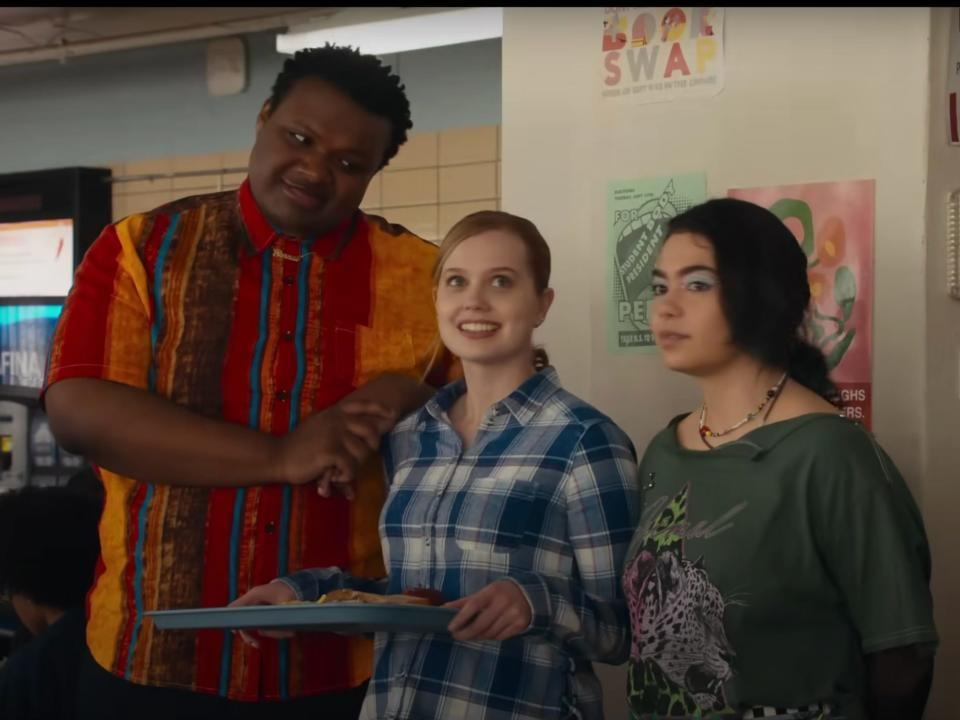
I consider Mean Girls the last great high school movie before the onset of smartphone culture, where popularity and infamy were born from in-person interactions rather than mass Internet engagement. So in a way, I can see how the story could use an update for modern teens. And of course, they had to make other cultural tweaks, like more diverse casting and having Cady’s friend Janis (Auli’i Cravalho) be an out lesbian rather than just rumored to be.

I do really like the original film (it is on my LIST), but I have quite a soft spot for the musical (one of the most fun stage shows I’ve seen), so I was excited to see this musical version on the big screen. Well, it’s a mixed bag. The plot has hardly changed from prior incarnations, but fans of the musical will definitely spot some gaps. For one, while I’m not musically qualified to identify what’s changed, the music style often sounds… different somehow, more acoustic and less punchy, taking the teeth out of what was my favorite song “Apex Predator.” Then there are the odd creative choices to swap out perfectly good songs for lesser others, like Cady’s intro or the tune for the Mathlete championship near the end.

The song omissions range from heartbreaking, like the much-missed “Fearless,” to understandable, like the thematically relevant but dramatically extraneous “Stop,” leaving Damian (Jaquel Spivey) without a big solo number. Yet the film finds its cinematic spectacle with its chosen showstoppers, particularly the rollicking “Revenge Party,” Regina’s sultry “World Burn,” and Janis’s anthemic “I’d Rather Be Me.”

So I’m torn on this new version of Mean Girls. With its song changes and cruder, less funny dialogue, it’s a step down from both the original and the stage musical, but it also brings its fair share of fun. I particularly liked a few callbacks to the first film, like a certain cameo near the end and the twist on Fey and Tim Meadows reprising their roles as Ms. Norbury and the school’s principal, respectively. All the actors do a fine job too, though Cravalho and Rapp are certainly stronger singers than Rice. It’s unlikely to become as iconic as the original Mean Girls, but this musical update fits comfortably in its cultural wake.

Best line: (Ms. Norbury, taking Cady’s revelation from the original) “’Cause one thing I know for sure, guys. Calling someone ugly is not gonna make you better-looking. Calling someone else stupid does not make you any smarter. And we as women have to be able to trust and support each other.”

Rank: List Runner-Up

© 2024 S.G. Liput
792 Followers and Counting

Lincoln (2012)

20 Saturday Apr 2024

Posted by sgliput in Movies, NaPoWriMo, Poetry, Reviews, Writing

≈ Leave a comment

Tags

Biopic, Drama, History

(For Day 20 of NaPoWriMo, the prompt was for a poem that recounts a historical event. Perhaps it becomes too abstract here, but I was inspired by this film and the passing of the 13th Amendment.)

“All men are created equal.” How simple! How fair!
Yet full of bull exceptions from the start.
While for decades, we disputed
Who exactly “all” included,
Each amendment added justice a la carte.

With the Civil War near-over, it hinged upon one vote
Whether slavery was truly at an end.
The Radicals were egging
On the timid, even begging
For the courage to be willing to offend.

For offense was unavoidable with rampant opposition.
There was no opinion free of vitriol.
But the President’s supporters
Had resolved to get three quarters
Of the states to redefine their use of “all.”

It bewilders modern senses that freedom was contentious,
That worth was based on race and shade of skin,
But this was second nature
To the warring legislature
In which the new amendment had to win.

Agreement is impossible for monolithic sides,
But single individuals can sway
Their moral qualms, if any,
And the future fates of many
If only they know justice won’t delay.
________________________

MPA rating:  PG-13

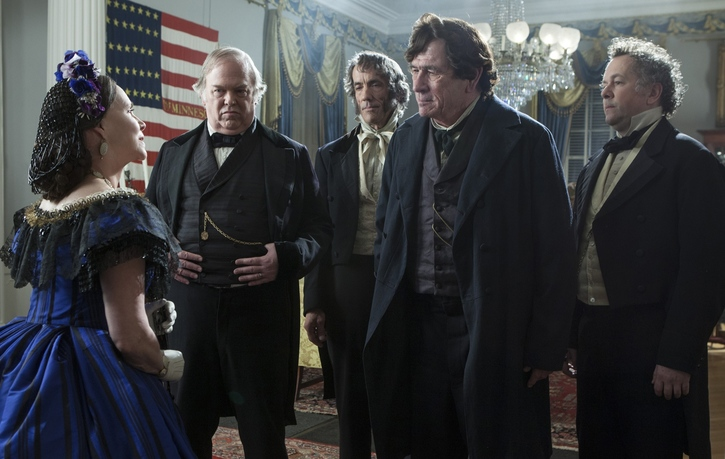
It was just a few months ago that I said in my last blogiversary post that Lincoln narrowly missed out on being List-Worthy but might make the cut with another watch. Well, just revisiting some scenes for this review made me realize this historical masterpiece from Spielberg deserves its place in my Top 365. Based on Doris Kearns Goodwin’s biography Team of Rivals, the film encapsulates the last four months of Abraham Lincoln’s life, particularly the hard-fought battle in the House of Representatives to get the 13th Amendment approved before the Civil War’s end.

My main complaint after seeing Lincoln was how dense and talky it can get with its closed-door strategy meetings and political maneuvering, but then again, it’s remarkable how well it conveys its messages with so many characters and agendas in play. No surprise, but the film’s greatest asset is Daniel Day-Lewis in the title role, a native Brit disappearing completely into the iconic American President. The voice, the weariness, the righteous indignation, the political acumen, the moments of folksy wisdom shared with his subordinates – with every scene, he proves how much he deserved that third Best Actor Oscar.

Yet he also leaves room for others to shine, a cavalcade of excellent supporting roles filled by both established and rising stars, from Colman Domingo and David Oyelowo in the excellent opening scene, to the likes of David Strathairn, Hal Holbrook, Michael Stuhlbarg, Walton Goggins, Joseph Gordon-Levitt, Jared Harris, and Adam Driver. As far as Oscar-nominated roles, Sally Field is good as the overwrought Mary Todd Lincoln, but Tommy Lee Jones is a hoot as Radical Republican leader Thaddeus Stevens, a role that probably would have won him Best Supporting Actor if not up against Christoph Waltz for Django Unchained.

Lincoln is a showcase of talent at every level, from its layered portrayal of Washington politics and a script both subtle and on-the-nose to its array of skilled actors making the most of every scene. I tend to think Lincoln wouldn’t have used profanity as he does here, but otherwise, Day-Lewis’s performance will surely go down as the definitive cinematic portrayal of the 16th President.

Best line: (Lincoln) “A compass, I learned when I was surveying, it’ll, it’ll point you true north from where you’re standing, but it’s got no advice about the swamps, deserts, and chasms that you’ll encounter along the way. If in pursuit of your destination, you plunge ahead heedless of obstacles, and achieve nothing more than to sink in a swamp… what’s the use of knowing true north?”

Rank: List-Worthy

© 2024 S.G. Liput
792 Followers and Counting

Hollow Man (2000)

19 Friday Apr 2024

Posted by sgliput in Movies, NaPoWriMo, Poetry, Reviews, Writing

≈ Leave a comment

Tags

Horror, Sci-fi, Thriller

(For Day 19 of NaPoWriMo, the prompt was for a poem about what haunts us, or rather what hunts us.)

The eyes that hide in broad daylight,
Assured that none will spot them….
The lips that curl just out of sight,
At ease since no one’s caught them…
The mind that’s sick and quick to spite
A people that forgot them…

The hands that crave a heedless neck
And wait for chances hidden…
The fiends of windowsill and deck
Who disappear unbidden…
That one fool time I fail to check,
To watch my back but didn’t…

The hate that hunts and takes in trade
Our frail serenity…
Disquiet’s grip that doesn’t fade
When I’m alone and free…
The things that make me most afraid
Are things I cannot see.
________________________

MPA rating:  R (mainly for violence)

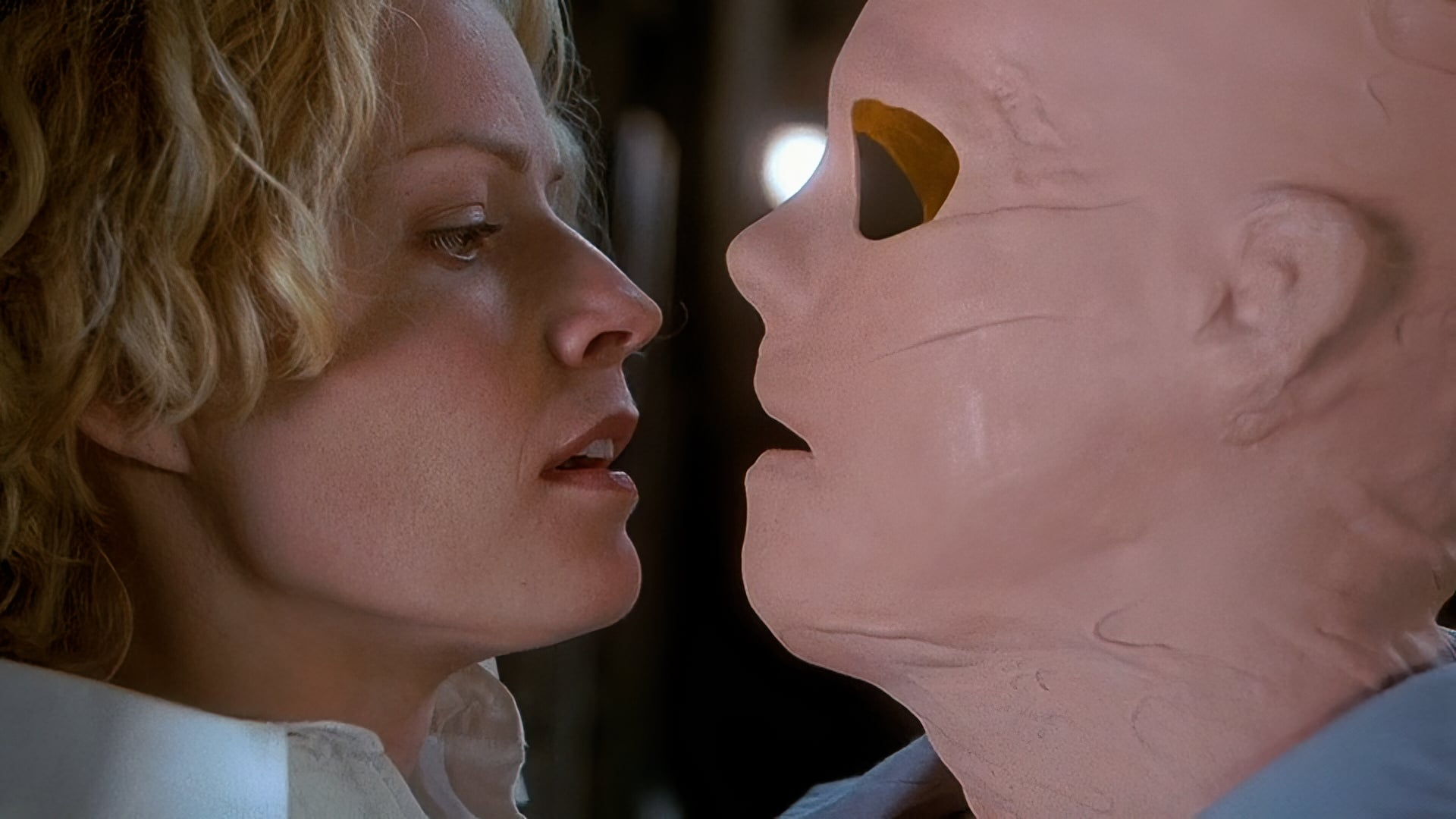
Before 2020’s The Invisible Man reminded audiences what a nightmare an invisible menace would be, Hollow Man gave us a more conventional thriller version of such a story. Kevin Bacon plays Dr. Sebastian Caine, an egotistical scientist working on a secret military project for invisibility, and, after dozens of animal tests, he takes the unauthorized risk to try it on himself. When the attempt to make him visible again fails, he finds a disturbing freedom from morality in being able to do whatever he wants unseen, worrying his ex-girlfriend (Elizabeth Shue) and her colleague/lover (Josh Brolin).

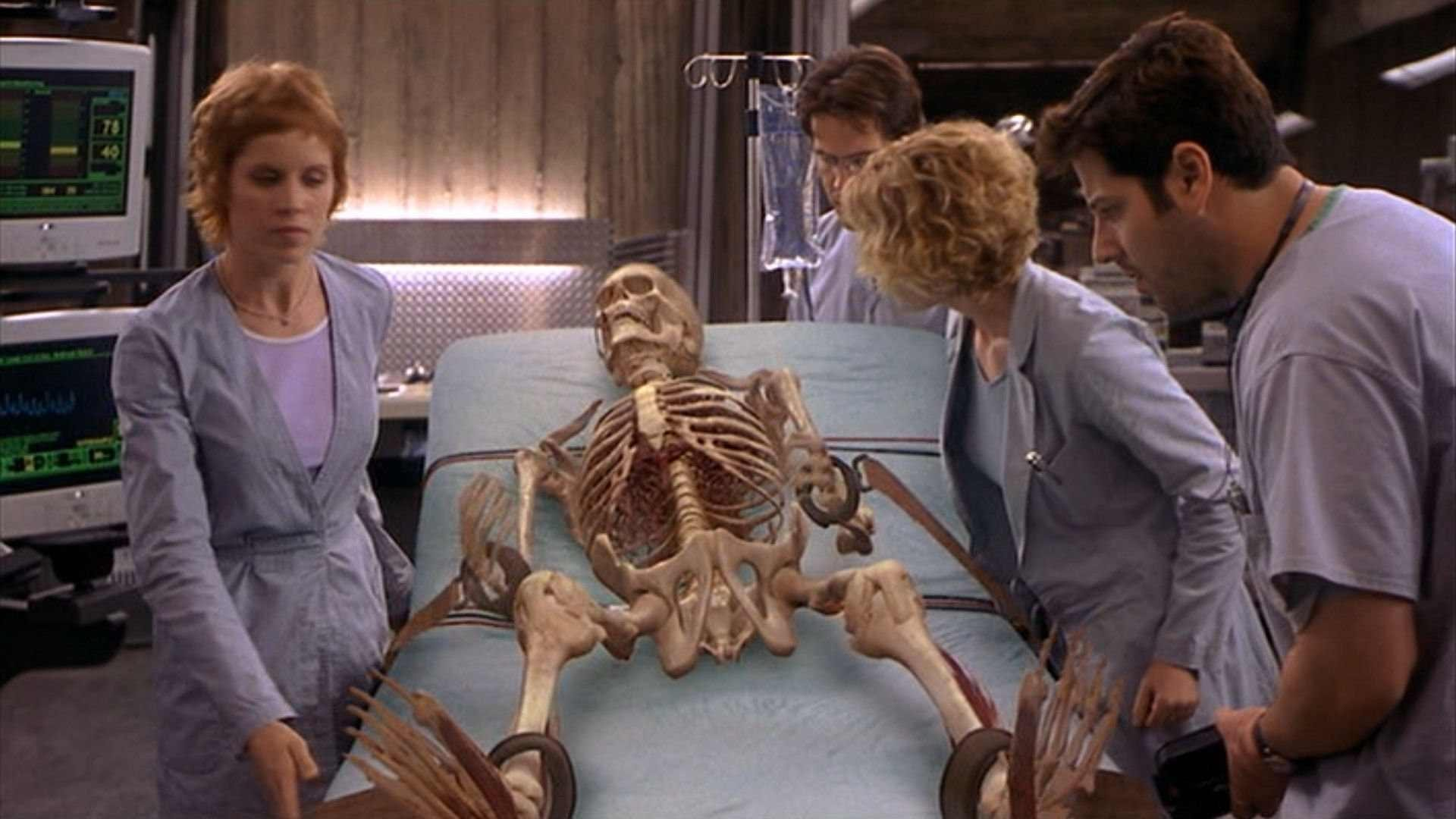
Owing much of its science-run-amok plot to The Fly, Hollow Man fell in that turn-of-the-millennium period when CGI was still a wonder even when it would be considered unpolished by today’s standards. The scenes of Bacon and a gorilla gradually shifting their transparency one organ at a time is still rather impressive and feels like a leap in visual effects around which the rest of the film was built. The acting is merely serviceable, but director Paul Verhoeven, aiming to make a more palatable mainstream movie, pulls off some effective chills and thrills once Sebastian goes into predictable slasher mode. It’s entertaining, but it can’t quite escape its innate cheesiness, especially when compared to the 2020 Invisible Man.

Best line: (Sebastian) “It’s amazing what you can do… when you don’t have to look at yourself in the mirror anymore.”

Rank: Honorable Mention

© 2024 S.G. Liput
792 Followers and Counting
The Boy and the Heron (2023)

18 Thursday Apr 2024

Posted by sgliput in Movies, NaPoWriMo, Poetry, Reviews, Writing

≈ Leave a comment

Tags

Animation, Anime, Drama, Fantasy

(For Day 18 of NaPoWriMo, the prompt was for a poem in which the speaker desires to become someone or something else. With reincarnation featured in this movie, it seemed like a good fit.)

I’ve lived in fire, lived in water,
Lived as someone else’s daughter.
What can I be? What have I been?
How can I hope to choose again?

I have been loved from sky to sea,
But have I loved as selflessly?
Always been given, and it’s been heaven,
Lifting my heart like tender leaven.

How shall I live and love again
Back in the realm of mortal men?
Given new life, I’ll give to another.
I want to be someone else’s mother.
_________________________

MPA rating:  PG-13

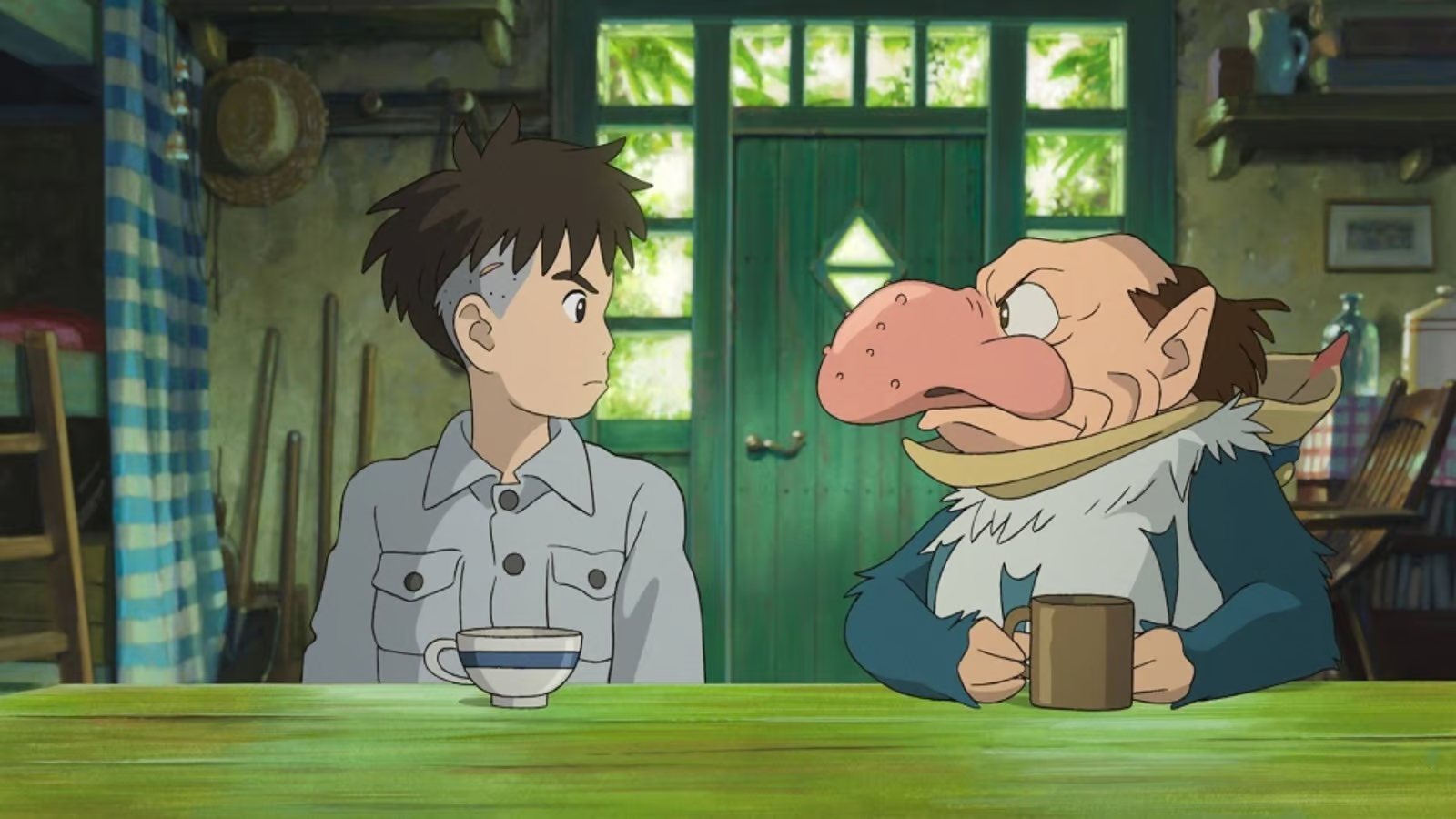
Hayao Miyazaki and Studio Ghibli have an astounding track record of instant classics, they boast an unparalleled reputation in the animation industry, and yet they are not infallible. Despite its many accolades, including the Academy Award for Best Animated Feature, The Boy and the Heron is quite possibly the weakest film of Miyazaki’s catalog, an unfocused fantasy that is both too much and not enough.

Taking its Japanese title How Do You Live? from a 1937 coming-of-age novel referenced in the film, the story begins similar to The Lion, The Witch, and the Wardrobe, with young Mahito Maki reeling from World War II and being brought to the countryside for safety. His mother lost in a hospital fire, he has no choice but to accept things as his father promptly marries her sister and moves him to a country estate. Mahito is drawn to a mysterious tower nearby, and a heron begins harassing him. When his pregnant aunt/stepmother disappears, the boy is led into a fantastical and very bird-oriented world as he commits to bringing her back while sorting out his conflicted feelings.

Ten years since his last film The Wind Rises, Miyazaki clearly had no shortage of ideas for his trademark imagination, but combining all of them into one fantasy world wasn’t the best move. After a rather long and boring prologue in the real world, Mahito’s introduction to the other dimension is a cavalcade of randomness, with a forbidden tomb, swarming pelicans, the butchering of a giant fish, and a representation of reincarnation, none of which really adds anything to Mahito’s story and feels more like padding to reinforce the world’s strangeness. There are also some other characters who have wandered in from the real world, yet they seem to fit right in, with magic powers and knowledge of how things work that Mahito lacks, making its rules further unclear. And the film keeps adding rules and characters right up to the end, making for a jumbled climax followed by a final scene that weirdly just… ends.

Of course, The Boy and the Heron does have its merits too, chief among them the gorgeous hand-drawn animation with that impeccable Ghibli style we haven’t seen in years. I enjoyed the middle section where Mahito teams up with a pyrokinetic girl and the little man who’s been wearing the heron like a suit, and the ending does have some touching themes involving family and personal choice. I only saw the English dub, and I have to applaud the star-studded voice cast, including Christian Bale, Dave Bautista, Gemma Chan, and especially Robert Pattinson sounding nothing like himself as the gremlin-like heron man.

Does it feel nice to have another Miyazaki film a decade after we thought his career was over? Sure. Did it deserve an Oscar? Nope, certainly not over Across the Spider-Verse, no matter what the Academy and critics say. Heck, The Boy and the Heron wasn’t even the best anime film I saw last year; I preferred Makoto Shinkai’s Suzume, and that wasn’t his strongest movie either. (Oddly, both films have a scene where characters’ true feelings of resentment bubble up to the surface in an outburst and then it’s never addressed again.) I won’t deny The Boy and the Heron its good points, especially visually, and it’s impressive how well it has performed with its experimental lack of initial promotion, coasting on the Miyazaki and Ghibli name, but I’m hoping the director can manage one more film that will hopefully end his career on a higher note.

Rank:  Honorable Mention

© 2024 S.G. Liput
792 Followers and Counting
Guys and Dolls (1955)

17 Wednesday Apr 2024

Posted by sgliput in Movies, NaPoWriMo, Poetry, Reviews, Writing

≈ Leave a comment

Tags

Classics, Comedy, Musical, Romance

(For Day 17 of NaPoWriMo, the prompt was for a poem inspired by a piece of music and sharing its title. But being rather late and tired, I instead decided to honor International Haiku Poetry Day and keep this entry short.)

Bets and debts galore
Wring romance from selfishness.
Gambling pays off.
________________________

MPA rating:  Approved (should be PG)

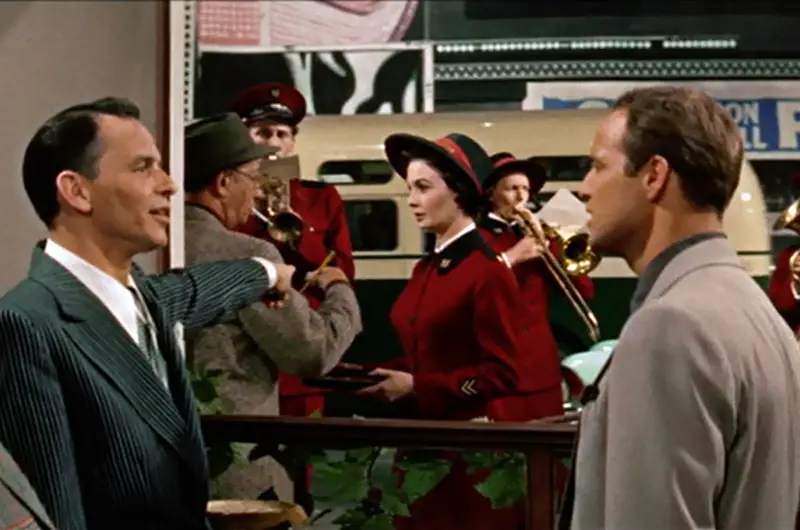
Out of the many many musicals from the Golden Age of Hollywood, there are a select few that became institutions in my house growing up, the likes of The Music Man, Singin’ in the Rain, and The Wizard of Oz. As I work on my own musical project, I read a book recently about the merits of various musical productions, and the author had tremendous respect for Guys and Dolls, Frank Loesser’s ‘50s-streetwise adaptation of two Damon Runyon short stories. It was a show/film I had never bothered to seek out, at least until his glowing recommendation.

The plot focuses on two couples, gamblers Nathan Detroit (Frank Sinatra) and Sky Masterson (Marlon Brando) and their would-be lady loves, nightclub singer Miss Adelaide (Vivian Blaine, reprising her stage role) and evangelist Sergeant Sarah Brown (Jean Simmons). Evading his fiancee’s marriage hopes and trying to scrape together enough money for a secret craps game venue, Detroit bets Masterson that he can’t woo the self-righteous Sarah Brown into a Cuban dinner date, even as she struggles to save her urban mission from closure. Naturally, none of the plans go quite as anticipated.

The book I read praised Guys and Dolls as theatrical plotting at its best, with composer Frank Loesser and book writers Jo Swerling and Abe Burrows masterfully weaving two storylines that depended on each other for resolution. With its idiosyncratic dialogue and shifting focus, I can see the reason for the veneration on a technical level, but I do think the two stories aren’t equally interesting. While Sinatra nails the crooning as expected (his character given more singing opportunities than on stage, I understand), I didn’t really care about his plight of scheduling a gambling venue while being a commitment-fearing jerk toward his long-suffering lover Adelaide (whose voice is also rather grating).

I much preferred the parallel story of Sky Masterson and Sarah Brown. I hadn’t seen Brando in a romantic role before, much less singing, but he had quite the swagger back then, and Simmons is wonderful as the priggish believer who gradually lets her hair down a little. Their banter and romance are the best part of the film, along with Loesser’s array of classic showtunes like “Luck Be a Lady,” “Sit Down, You’re Rockin’ the Boat,” and the title song. I think I’ve developed a soft spot for Sarah’s “If I Were a Bell” especially. Yet despite its good points, Guys and Dolls suffers from being overlong and only half-interesting, weakened further by an oddly rushed ending. It’s a bona fide classic, but some parts are more classic than others.

Best line: (Detroit, urging his friend to speak at the mission) “Southstreet, give your testimony.”   (Benny Southstreet) “I plead the fifth commandment.”

Ranking:  List Runner-Up

© 2024 S.G. Liput
792 Followers and Counting
A Man Called Otto (2022)

16 Tuesday Apr 2024

Posted by sgliput in Movies, NaPoWriMo, Poetry, Reviews, Writing

≈ 1 Comment

Tags

Comedy, Drama

(For Day 16 of NaPoWriMo, the prompt was for a close description of an object or place that ends with a surprising or seemingly unrelated line.)

There’s a woman ‘cross the way
Who halloos me every day,
Says she hopes I’m feeling better than I did the day before.
There’s a jogger every morning,
Even when it’s dark and storming,
Who declares a strong routine can win a footrace or a war.

There’s a kid who hates his chores
Throwing papers at our doors,
But he stops to extricate them if they land within a bush.
There’s a neighbor, just moved in,
Treats me like her next of kin,
And she has a way of knowing when to give a gentle push.

There’s a lady who cajoles
Me to try her casseroles,
Verifying if I’m sensitive to dairy, wheat, or nuts.

What idiots….
____________________

MPA rating:  PG-13

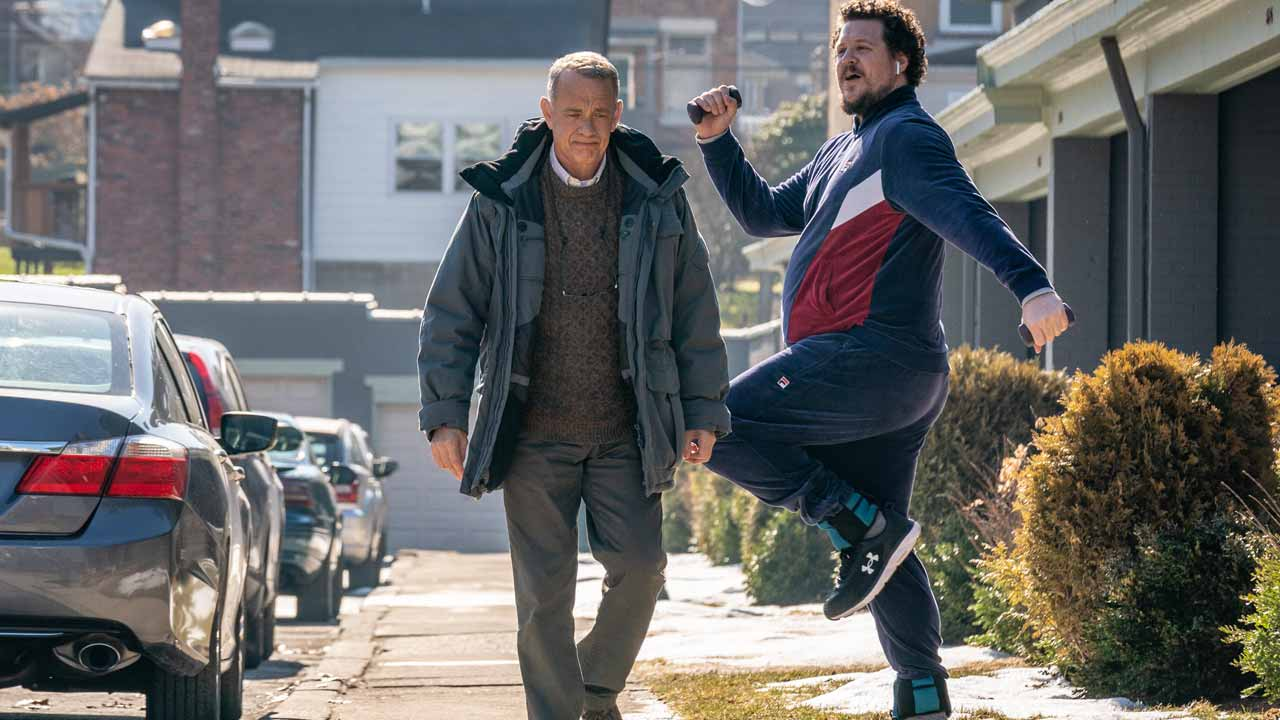
Tom Hanks had his heyday back in the 1990s, but his more recent films don’t seem to get the attention they deserve. Bridge of Spies, Greyhound, and News of the World were all outstanding roles for him, but I feel like his always reliable performances rarely get critical love, notwithstanding his Oscar-nominated supporting role in A Beautiful Day in the Neighborhood. Whatever character he embodies, audiences are used to seeing Tom Hanks as a nice and honorable guy, so it was a bit of a departure for him to play the crotchety Otto Andersen in this remake of the Swedish dramedy A Man Called Ove.

Otto is a man with little patience for anything that annoys him, and more things annoy him than don’t. A cynical widower, Otto patrols his row of apartments each day, barely tolerating his neighbors, and as he retires from his factory job, he has little to live for except planning his own suicide. That is until a friendly Hispanic family (Maria Treviño, Manuel Garcia-Rulfo) moves in across the street, adding to Otto’s list of nuisances and conspiring with fate to foil his self-destructive plans.

Obviously, it’s a fine line when a film combines suicide with comedy. Some like Better Off Dead take the screwball route, whereas A Man Called Otto walks it tactfully, putting the proper weight to the scenes of Otto’s self-harm and keeping the humor of their repeated failure subtle. Hanks is a perfect curmudgeon here, yet his good nature comes out when needed, exemplifying how we don’t need to necessarily like someone or the world at large in order to act decently toward them. Treviño also does an excellent job as his pregnant neighbor Marisol intruding on his solitude and offering him something beyond his own grief. From its droll yet still likable main character to its tearjerking moments, A Man Called Otto is a winner of an American adaptation that makes me curious to see the Swedish original.

Best line: (Otto, teaching Marisol to drive) “You have given birth to two children. Soon it will be three. You have come here from a country very far away. You learned a new language, you got yourself an education and a nitwit husband, and you are holding that family together. You will have no problem learning how to drive. My God, the world is full of complete idiots who have managed to figure it out, and you are not a complete idiot. So, clutch, shift, gas, drive.”

Rank:  List Runner-Up (may go up with a rewatch)

© 2024 S.G. Liput
792 Followers and Counting

Cabrini (2024)

15 Monday Apr 2024

Posted by sgliput in Christian, Movies, NaPoWriMo, Poetry, Reviews, Writing

≈ Leave a comment

Tags

Biopic, Drama, History

(For Day 15 of NaPoWriMo, the prompt was to write a poem inspired by the world of postage stamps. After looking around, I found that both Italy and the Vatican had issued stamps in honor of St. Frances Cabrini, a perfect tie-in for this inspiring film.)

How do you earn a statue,
Your face on a coin or a stamp?
Must you be
A celebrity,
An artist,
The smartest,
The latest
And greatest,
A leader,
Succeeder,
A vatic mindreader,
A champ?

Those are one way to be famous,
But somehow I’d rather prefer
To be more
Of an open door,
Be caring,
Forbearing,
Committed,
Quick-witted,
Be tender,
A mender,
And never surrender
Like her.
__________________________

MPA rating:  PG-13

I remember watching Christian films in the 2000s, usually direct-to-DVD affairs with overly preachy messaging and by-the-numbers plots of inspiration or admonishment. While Hollywood used to cater some of its offerings to audiences of faith (Ben-Hur, The Prince of Egypt), it seemed that their level of quality was out of reach, but not so anymore. Alejandro Gómez Monteverde was the first to turn the tide of faith-based filmmaking with his directorial debut Bella 18 years ago and now, working with Angel Studios, has raised the bar further with last year’s Sound of Freedom and his latest film Cabrini.

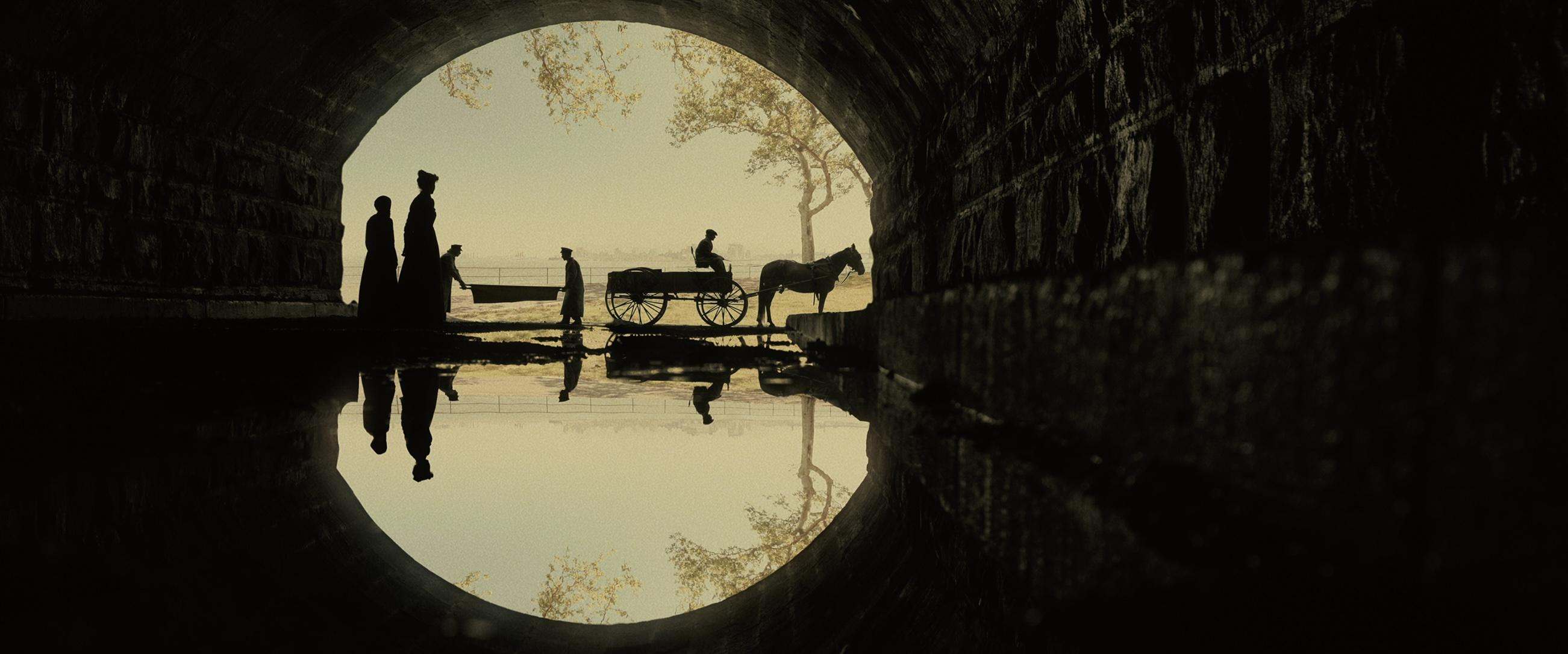
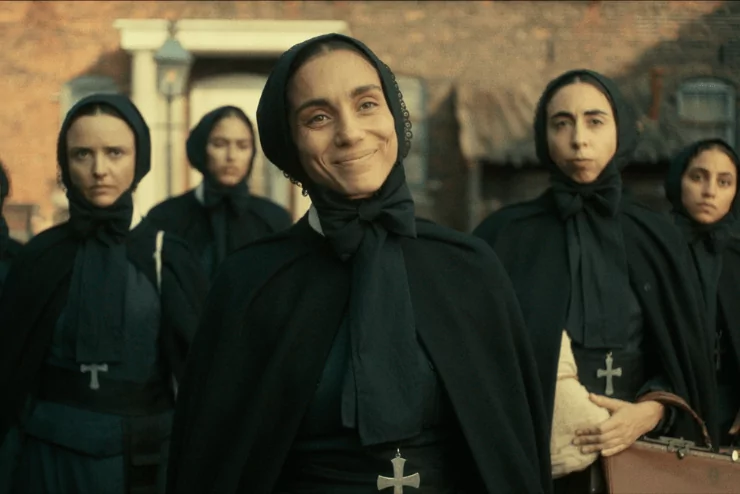
Released appropriately on International Women’s Day, the film is based on the life of Mother Frances Xavier Cabrini, the first American citizen to be canonized by the Catholic Church. Though plagued by tuberculosis, this humble Italian nun (played by the excellent Cristiana Dell’Anna) had a passion to serve overseas and, in 1889, was sent by the Pope (Giancarlo Giannini) to help the Italian immigrants in the slums of New York City. With limited support from the local archbishop (David Morse) and rampant racism directed toward the Italian population, she proved to be remarkably resourceful in establishing an orphanage, a hospital, and an example of resilience for all.

Hagiographic biopics about saints are hardly new, like for St. Bernadette (The Song of Bernadette), St. Joan of Arc (The Passion of Joan of Arc), or St. Joseph of Cupertino (The Reluctant Saint), but they’re increasingly rare in modern times. With striking cinematography and a realistically sober portrayal of 1800s immigrant hardship, Cabrini proves to be a praiseworthy production across the board. Seasoned actors like Giannini, Morse, and John Lithgow add gravitas to the casting, and Dell’Anna is outstanding as the lead, bristling at the repeated urgings to “stay where you belong” and pressing forward through faith and ingenuity. She represents the best kind of feminism, one that refuses to wilt under men’s underestimation and rises to serve others.

I found it a tad odd that the name of Jesus is never invoked, but I assume this was for the sake of catering to as wide an audience as possible. And with universal themes about kindness, perseverance, and the immigrant experience, Cabrini certainly feels like the kind of film that would appeal to any fan of historical drama, not just Christians or Catholics. I would like to think it deserves even Oscar consideration for Dell’Anna, Morse, and the cinematography, though I doubt the Academy would abide that. There will always be naysayers, but Cabrini exceeds the common pitfalls of faith-based cinema, and I would love for more films of its kind to flourish.

Best line: (Mother Cabrini) “We can serve our weakness or we can serve our purpose. Not both.”

Rank:  List-Worthy

© 2024 S.G. Liput
792 Followers and Counting

Long Way North (2015)

14 Sunday Apr 2024

Posted by sgliput in Movies, NaPoWriMo, Poetry, Reviews, Writing

≈ 1 Comment

Tags

Animation, Drama, Family, Foreign

(For Day 14 of NaPoWriMo, the prompt was for a poem of at least ten lines featuring anaphora, or starting each line with the same word. Such repetition is a good way of setting the rhythm, and the word “north” seemed only appropriate for this animated journey.)

North – the direction I’m going.
North to the ends of the earth.
North where the blizzard is blowing.
North to prove my own worth.

North where the polar bear shivers.
North where all hotheads are cooled.
North where aurora-light quivers.
North where the sky is bejeweled.

North where the sea is unstable.
North where the glacier ice looms.
North where presumption is fatal.
North where the icebergs are tombs.

North where the sun is unblinking.
North where the ocean is heaving.
North has my wiser side thinking…
North – the direction I’m leaving
For home.
_________________________

MPA rating:  PG

Unless the Academy happens to nominate one for Best Animated Feature (i.e., Persepolis, Ernest and Celestine, I Lost My Body, last year’s Robot Dreams), most people are probably unaware of animated films from overseas. Anime has its built-in fanbase, but there are plenty of low-profile international cartoons out there worth attention. Long Way North, a French-Danish production from director Rémi Chaye, is a prime example.

In 1882, young Russian aristocrat Sasha (Christa Théret) idolizes her explorer grandfather, who disappeared on a voyage to the North Pole, and while all the search parties have come up empty, she believes she knows how to locate his specially designed ship. Leaving her life of comfort and social expectations, she makes her way north, intent on convincing a crew to take her into the harsh and forbidding Arctic Circle.

Long Way North has a simple plot with little in the characterization that hasn’t been seen before, but the film executes its story flawlessly. Sasha is an admirable protagonist, able to prove her mettle alongside the hardened sailors while also receiving a Captains Courageous-style eye-opening to the harsh realities of the laboring class. The lineless animation style has a gorgeous simplicity to its colors and shadows, and I loved the true-to-life depictions of breaking through ice floes while navigating the half-frozen ocean. Long Way North may not stand out next to the big dogs of animation, but it’s a lovingly crafted indie adventure.

Rank:  List Runner-Up

© 2024 S.G. Liput
792 Followers and Counting
Dune: Part Two (2024)

14 Sunday Apr 2024

Posted by sgliput in Movies, NaPoWriMo, Poetry, Reviews, Writing

≈ Leave a comment

Tags

Action, Drama, Sci-fi

(For Day 13 of NaPoWriMo, the prompt was both general and specific, a poem playing with rhyme and based on a “word bank” of various types of words. Taking inspiration from this recent sequel, my words included “glare,” “rumble,” “parched,” “reek,” “worm,” “divine,” and “save,” and I tried out an alternating rhyme scheme I found rather challenging. It’s imperfect but maybe that’s for the best.)

From space, the occupiers came
To reap what they had never sown,
Their every footfall laying claim
And conquering an empty throne.
Or so they thought and sought to tame
This planet, stark and harsh and parched,
But everywhere the jackboot trod,
The sands would cover where they marched.
Awaiting their crusading god,
The natives hid from wanton force.
Invaders rarely spare the rod
Nor care enough to alter course
Nor wait for saviors come to save,
And so they spread their tyrant reek
And swept the desert like a wave,
A deadly game of hide and seek.
Wherever eye could bear the glare,
They flaunted strength upon the weak
Who lived off prophecy and prayer.

But even worms will one day turn
When hatred hounds the hot and humble.
Can you feel their rancor burn,
Sense immense commencing rumble
Of the conquered, quick to learn
The ways by which a war is waged?
Plunderers, your plunder’s mine,
I’m the one at whom you’ve raged,
One who broke your sandy line,
Tore your plan for us to shreds.
Believe it human or divine,
I bring justice on your heads.
____________________________

MPA rating:  PG-13

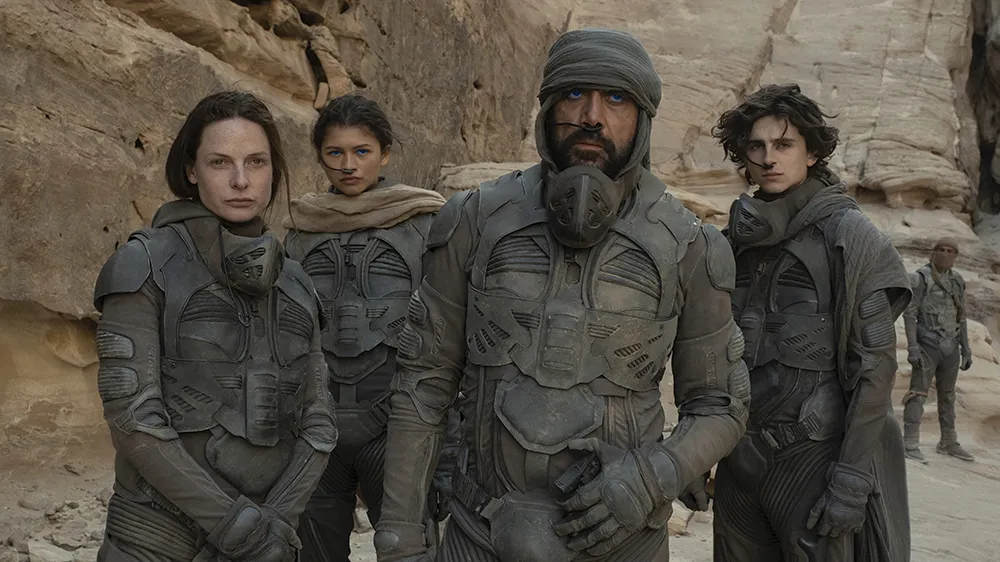
As a huge fan of science fiction, I should love Dune. I rewatched Part One of Denis Villeneuve’s adaptation of the famed Frank Herbert novel, and I was struck a few times by the thought “Maybe I ought to add this to my list of favorites.” The sheer magnitude and impeccable quality of the Dune universe is a marvel to behold, yet for some reason, the story still doesn’t fully connect with me. I was hopeful that Part Two might change that, providing a fitting conclusion to the epic journey of Paul Atreides.

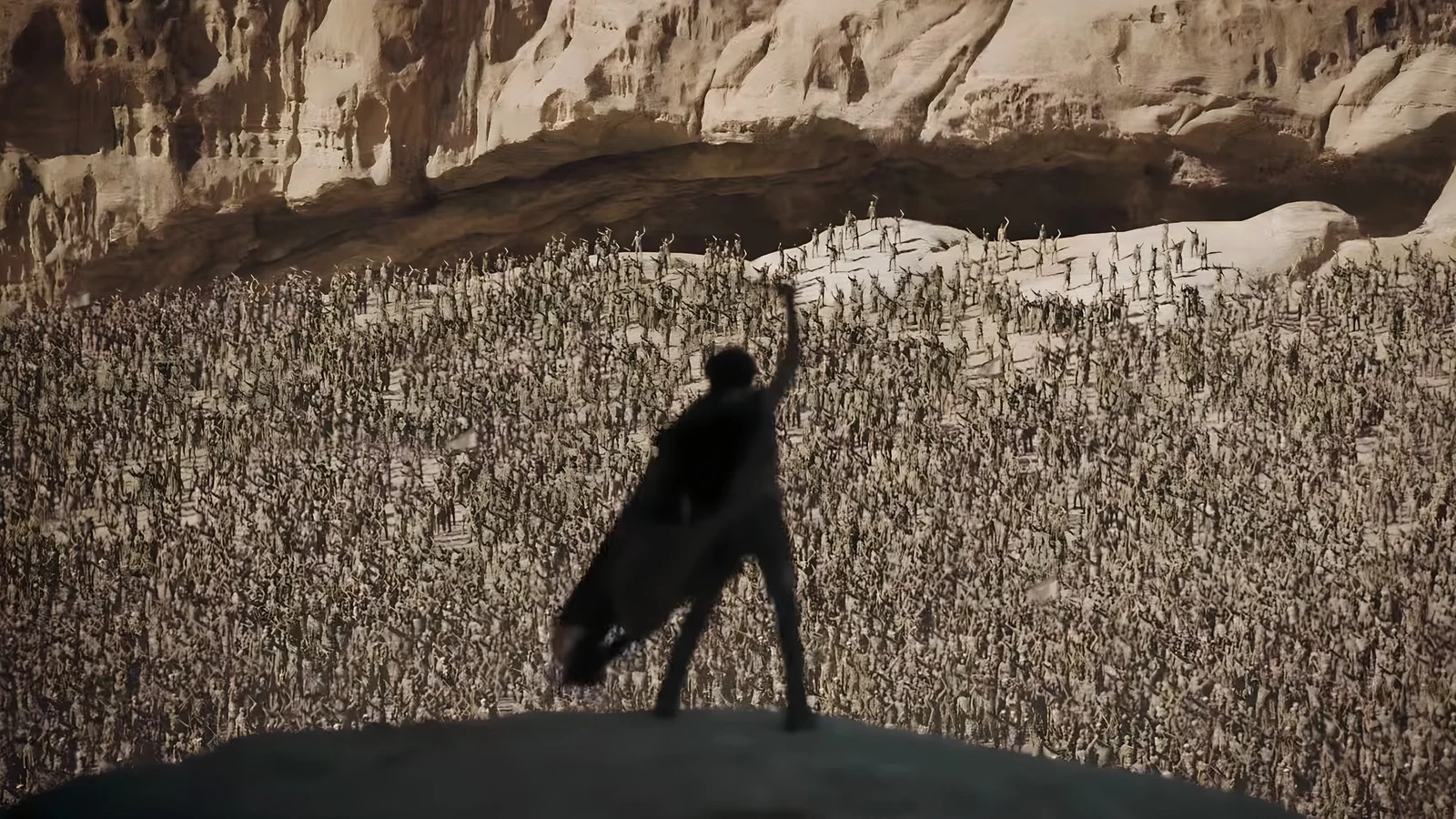
Picking up directly where Part One ended, Paul (Timothee Chalamet) and his Bene Gesserit mother Jessica (Rebecca Ferguson) are taken in by the desert-dwelling Fremen after the Atreides have been wiped out by a Harkonnen ambush. Soon, rumors spread through the Fremen that Paul might be the Lisan al Gaib, the promised messiah destined to lead them to prosperity and freedom, rumors lent credence by how easily Paul adapts to their lifestyle and the riding of the giant sandworms. As he falls in love with Fremen warrior Chani (Zendaya, finally getting more screentime), Paul must grapple with whether or not to embrace the mantle of messiah, if only to take revenge on the Harkonnens.

From Arrival to Blade Runner 2049, Denis Villeneuve has truly distinguished himself as the king of serious sci-fi and one of the finest directors working today. Dune: Part Two is further proof of his talents, continuing the same high quality of Part One and delving deeply into its themes of predestination, Machiavellian control, and religious fervor, which were mostly lost in translation in the 1984 David Lynch adaptation of Dune. (My VC is still very fond of that one for some reason.) That film presented Paul as the actual Fremen messiah, no questions asked, while Villeneuve’s version casts doubt by exploring how the Bene Gesserit have been manipulating such savior myths for centuries, now pushed onto Paul by his mother and unborn telepathic sister. It was interesting how the psychotic Harkonnen champion Feyd-Rautha (an unrecognizable Austin Butler) was shown to be part of these machinations, and quite a few details of the storyline and politics were definitely lost on me in the 1984 film’s speedrun through the plot while being properly fleshed out here and even diverging by the end.

There’s absolutely a place for Dune in the annals of top-tier sci-fi, but for all its deep world-building and desert spectacle, I still admire it more than I actually like the story. With Paul as its potential false prophet protagonist, it’s a subversion of the typical hero’s journey that leaves no one happy by the end, though I am still intrigued to see what the planned third film adapting Dune: Messiah would do, since I’m not at all familiar with what lies beyond the first book. With Oscar-worthy production values, excellent acting, battle scenes on a grand scale, and an ending that gives more finality than Part One while also leaving the door wide open for more, Dune: Part Two stands apart and above any recent film vying for the descriptor of “epic” and delivers exactly what its fans would want. I want to love it more and perhaps I will with time, but I can certainly praise its merits all the same.

Best line: (Paul Atreides) “He who can destroy the thing has the real control of it.”

Rank:  List Runner-Up

© 2024 S.G. Liput
792 Followers and Counting

Django Unchained (2012)

12 Friday Apr 2024

Posted by sgliput in Movies, NaPoWriMo, Poetry, Reviews, Writing

≈ 2 Comments

Tags

Action, Drama, Western

(For Day 12 of NaPoWriMo, the prompt was for a poem related to a tall tale, so I borrowed a certain larger-than-life character from Tarantino.)

Now hear the tale of Django, who was once a lowly slave,
But given chance and some romance, he rose as from a grave.

His finger was born itchy, and his bullets ne’er ran dry,
And eye for eye meant nothing once his foe could not reply.

The white folks watched their words whenever Django wandered free,
And when an N was uttered, they were dead before the G.

The hooded ones who lived off fear, of Django were afraid;
And if a hundred gathered, ninety-nine would flee for aid.

They tried to hang him once, believing numbers were the key,
But Django fought and with one shot, felled them and then the tree.

He was villain to the villains; he was vengeance none would dare.
His story isn’t history, but Django wouldn’t care.
_________________________

MPA rating:  R (for very good reason)

This was definitely out of character for me. While I did previously review Once Upon a Time… in Hollywood (because it was part of a 2019 Best Picture nominee marathon at Regal), I generally steer clear of Quentin Tarantino movies. His reputation for gratuitous violence and profanity is the kind of indulgence I prefer to avoid, but Django Unchained happened to come on TV at least somewhat “cut,” so I opted to give it a chance.

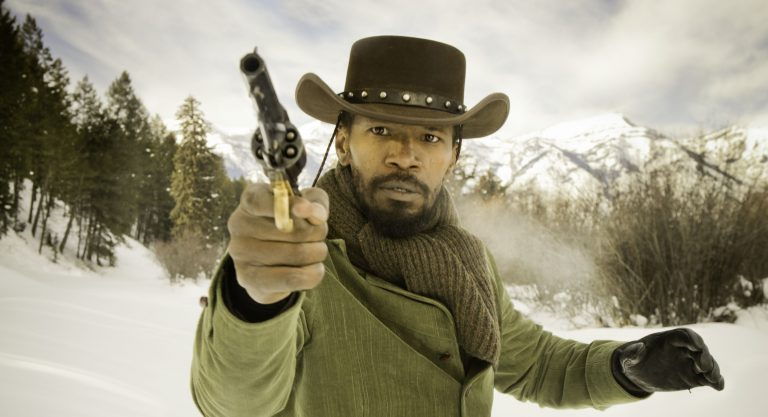
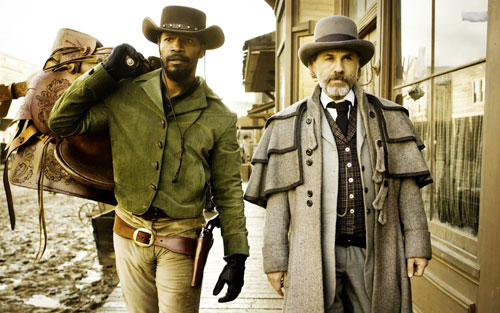
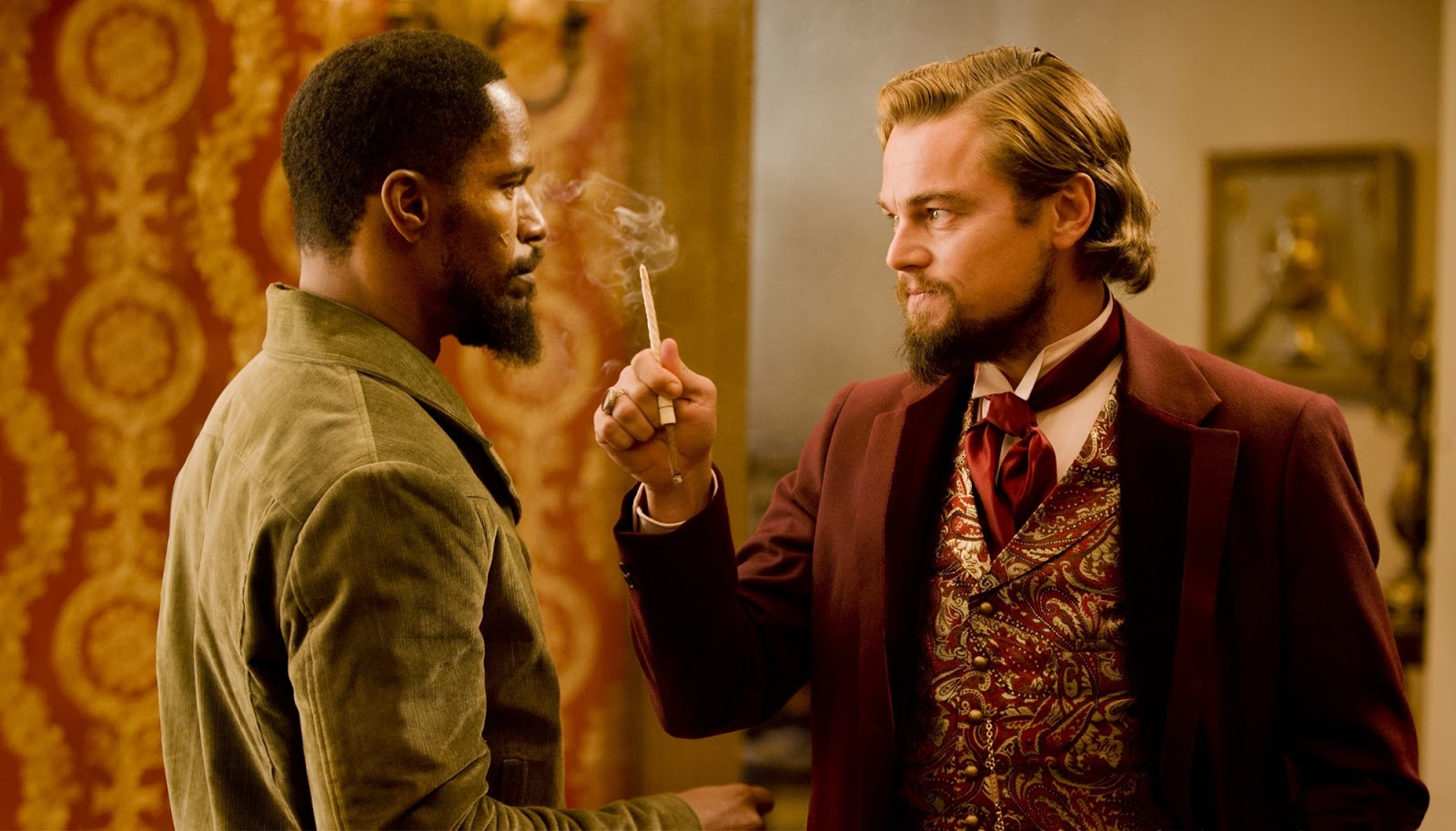
Set in the antebellum South and taking its hero’s name from the 1966 spaghetti western Django, the film follows its own Django (Jamie Foxx) as he grows from slave to avenger, thanks to the colorful intervention of Dr. King Schultz (Oscar-winning Christoph Waltz), a bounty hunter who trains him in the ways of killing bad guys for money. After some success at doling out bloody justice, the duo set their sights on the despicable Calvin Candie (Leonardo DiCaprio), a gleeful plantation owner holding Django’s wife Broomhilda (Kerry Washington) and unlikely to part with her easily.

First, the good stuff. It’s obvious from his first scene why Waltz won his second Best Supporting Actor Oscar (following his previous win for Tarantino’s Inglourious Basterds); Schultz boasts an undeniable charisma and charm to match his ruthlessness, and Waltz embodies the silver-tongued mercenary to a T. It’s a perfect case of a fine actor distinguished further by great dialogue, and, while Foxx and DiCaprio are also pitch perfect in their roles, the scenes that shine most are their interactions with Waltz. I can also appreciate Tarantino’s skill as director and storyteller, blending western and blaxploitation tropes into a compelling tale with an iconically anachronistic soundtrack.

Yet every R-rated movie for me is a balancing act between the laudable and the hard-to-watch, and which side has more weight by the end determines my opinion of it. Despite its good points, Django Unchained is excessive in multiple ways, from the cruelty of its slaveholders to the almost cartoonish amount of blood sprayed in the shootouts. (Watching on TV, I was spared the non-stop N-words and some brief nudity, but it certainly didn’t feel like a “cut” movie by most standards.)

Tarantino’s MO seems to be taking already hateful figures, whether Nazis, slaveholders, or the Manson family, and tweaking history to allow the heroes to slaughter their caricatures en masse with justifiable vengeance. Racism is terrible so why feel bad when Django shoots an unarmed woman? I get that it’s intended to be some form of catharsis, but it just leaves a bad taste in my mouth to make gory violence something cheer-worthy. The film was rightly controversial upon release as well, so even mainstream critics took some issue with its excesses. I suppose you could call it a mixed bag: entertaining and off-putting, well-made and ill-advised, impressive and nasty. I assume that was Tarantino’s intent, but, despite some masterful scenes, it’s not something I’m likely to revisit.

Best line: (Calvin Candie, after being given an exorbitant offer) “Gentlemen, you had my curiosity; now you have my attention.”

Rank:  Dishonorable Mention

© 2024 S.G. Liput
792 Followers and Counting
← Older posts
Newer posts →

Recent Posts

  • We Didn’t Start 2025 (Recap)
  • NaPoWriMo 2025 Recap (Finally)
  • Sonic the Hedgehog 3 (2024)
  • It Happened One Night (1934)
  • Spellbound (2024)

Recent Comments

associatesofshellymann's avatarassociatesofshellyma… on My Top Twelve La La La So…
Kit's avatarKit Nichols on Bonnie and Clyde (1967)
lifelessons's avatarlifelessons on Look Back (2024)
Carol Jackson's avatarCarol Jackson on The Thief of Bagdad (1940…
Stephen's avatarStephen on Love Story (1970)

Archives

  • January 2026
  • December 2025
  • May 2025
  • April 2025
  • March 2025
  • February 2025
  • January 2025
  • December 2024
  • May 2024
  • April 2024
  • March 2024
  • February 2024
  • January 2024
  • December 2023
  • November 2023
  • October 2023
  • September 2023
  • July 2023
  • June 2023
  • May 2023
  • April 2023
  • March 2023
  • February 2023
  • January 2023
  • December 2022
  • November 2022
  • October 2022
  • September 2022
  • August 2022
  • July 2022
  • June 2022
  • May 2022
  • April 2022
  • March 2022
  • February 2022
  • January 2022
  • December 2021
  • November 2021
  • October 2021
  • September 2021
  • August 2021
  • July 2021
  • June 2021
  • May 2021
  • April 2021
  • March 2021
  • February 2021
  • January 2021
  • December 2020
  • November 2020
  • October 2020
  • September 2020
  • August 2020
  • July 2020
  • June 2020
  • May 2020
  • April 2020
  • March 2020
  • February 2020
  • January 2020
  • December 2019
  • November 2019
  • October 2019
  • September 2019
  • August 2019
  • July 2019
  • June 2019
  • May 2019
  • April 2019
  • March 2019
  • February 2019
  • January 2019
  • December 2018
  • November 2018
  • October 2018
  • September 2018
  • August 2018
  • July 2018
  • June 2018
  • May 2018
  • April 2018
  • March 2018
  • February 2018
  • January 2018
  • December 2017
  • November 2017
  • October 2017
  • September 2017
  • August 2017
  • July 2017
  • June 2017
  • May 2017
  • April 2017
  • March 2017
  • February 2017
  • January 2017
  • December 2016
  • November 2016
  • October 2016
  • September 2016
  • August 2016
  • July 2016
  • June 2016
  • May 2016
  • April 2016
  • March 2016
  • February 2016
  • January 2016
  • December 2015
  • November 2015
  • October 2015
  • September 2015
  • August 2015
  • July 2015
  • June 2015
  • May 2015
  • April 2015
  • March 2015
  • February 2015
  • January 2015
  • December 2014
  • November 2014
  • October 2014
  • September 2014
  • August 2014
  • July 2014
  • June 2014
  • May 2014
  • April 2014
  • March 2014
  • February 2014
  • January 2014
  • December 2013

Categories

  • Blindspot
  • Blogathon
  • Christian
  • Movies
  • Music
  • NaPoWriMo
  • Poetry
  • Reviews
  • TV
  • Writing

Meta

  • Create account
  • Log in
  • Entries feed
  • Comments feed
  • WordPress.com

Recent Posts

  • We Didn’t Start 2025 (Recap)
  • NaPoWriMo 2025 Recap (Finally)
  • Sonic the Hedgehog 3 (2024)
  • It Happened One Night (1934)
  • Spellbound (2024)

Recent Comments

associatesofshellymann's avatarassociatesofshellyma… on My Top Twelve La La La So…
Kit's avatarKit Nichols on Bonnie and Clyde (1967)
lifelessons's avatarlifelessons on Look Back (2024)
Carol Jackson's avatarCarol Jackson on The Thief of Bagdad (1940…
Stephen's avatarStephen on Love Story (1970)

Archives

  • January 2026
  • December 2025
  • May 2025
  • April 2025
  • March 2025
  • February 2025
  • January 2025
  • December 2024
  • May 2024
  • April 2024
  • March 2024
  • February 2024
  • January 2024
  • December 2023
  • November 2023
  • October 2023
  • September 2023
  • July 2023
  • June 2023
  • May 2023
  • April 2023
  • March 2023
  • February 2023
  • January 2023
  • December 2022
  • November 2022
  • October 2022
  • September 2022
  • August 2022
  • July 2022
  • June 2022
  • May 2022
  • April 2022
  • March 2022
  • February 2022
  • January 2022
  • December 2021
  • November 2021
  • October 2021
  • September 2021
  • August 2021
  • July 2021
  • June 2021
  • May 2021
  • April 2021
  • March 2021
  • February 2021
  • January 2021
  • December 2020
  • November 2020
  • October 2020
  • September 2020
  • August 2020
  • July 2020
  • June 2020
  • May 2020
  • April 2020
  • March 2020
  • February 2020
  • January 2020
  • December 2019
  • November 2019
  • October 2019
  • September 2019
  • August 2019
  • July 2019
  • June 2019
  • May 2019
  • April 2019
  • March 2019
  • February 2019
  • January 2019
  • December 2018
  • November 2018
  • October 2018
  • September 2018
  • August 2018
  • July 2018
  • June 2018
  • May 2018
  • April 2018
  • March 2018
  • February 2018
  • January 2018
  • December 2017
  • November 2017
  • October 2017
  • September 2017
  • August 2017
  • July 2017
  • June 2017
  • May 2017
  • April 2017
  • March 2017
  • February 2017
  • January 2017
  • December 2016
  • November 2016
  • October 2016
  • September 2016
  • August 2016
  • July 2016
  • June 2016
  • May 2016
  • April 2016
  • March 2016
  • February 2016
  • January 2016
  • December 2015
  • November 2015
  • October 2015
  • September 2015
  • August 2015
  • July 2015
  • June 2015
  • May 2015
  • April 2015
  • March 2015
  • February 2015
  • January 2015
  • December 2014
  • November 2014
  • October 2014
  • September 2014
  • August 2014
  • July 2014
  • June 2014
  • May 2014
  • April 2014
  • March 2014
  • February 2014
  • January 2014
  • December 2013

Categories

  • Blindspot
  • Blogathon
  • Christian
  • Movies
  • Music
  • NaPoWriMo
  • Poetry
  • Reviews
  • TV
  • Writing

Meta

  • Create account
  • Log in
  • Entries feed
  • Comments feed
  • WordPress.com

Blog at WordPress.com.

Is this your new site? Log in to activate admin features and dismiss this message
Log In
  • Subscribe Subscribed
    • Rhyme and Reason
    • Join 814 other subscribers
    • Already have a WordPress.com account? Log in now.
    • Rhyme and Reason
    • Subscribe Subscribed
    • Sign up
    • Log in
    • Report this content
    • View site in Reader
    • Manage subscriptions
    • Collapse this bar
 

Loading Comments...