
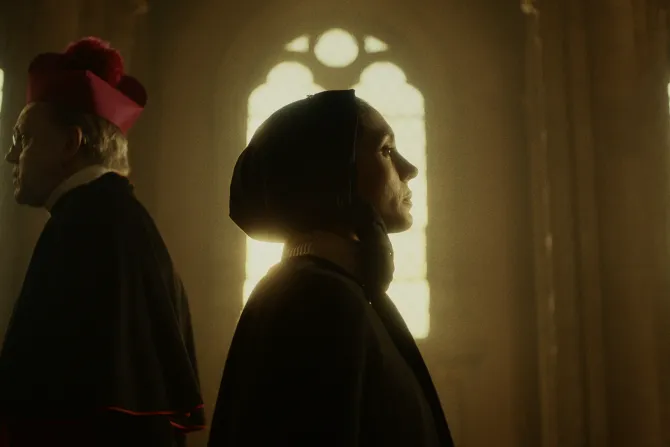
(For Day 15 of NaPoWriMo, the prompt was to write a poem inspired by the world of postage stamps. After looking around, I found that both Italy and the Vatican had issued stamps in honor of St. Frances Cabrini, a perfect tie-in for this inspiring film.)
How do you earn a statue,
Your face on a coin or a stamp?
Must you be
A celebrity,
An artist,
The smartest,
The latest
And greatest,
A leader,
Succeeder,
A vatic mindreader,
A champ?
Those are one way to be famous,
But somehow I’d rather prefer
To be more
Of an open door,
Be caring,
Forbearing,
Committed,
Quick-witted,
Be tender,
A mender,
And never surrender
Like her.
__________________________
MPA rating: PG-13
I remember watching Christian films in the 2000s, usually direct-to-DVD affairs with overly preachy messaging and by-the-numbers plots of inspiration or admonishment. While Hollywood used to cater some of its offerings to audiences of faith (Ben-Hur, The Prince of Egypt), it seemed that their level of quality was out of reach, but not so anymore. Alejandro Gómez Monteverde was the first to turn the tide of faith-based filmmaking with his directorial debut Bella 18 years ago and now, working with Angel Studios, has raised the bar further with last year’s Sound of Freedom and his latest film Cabrini.
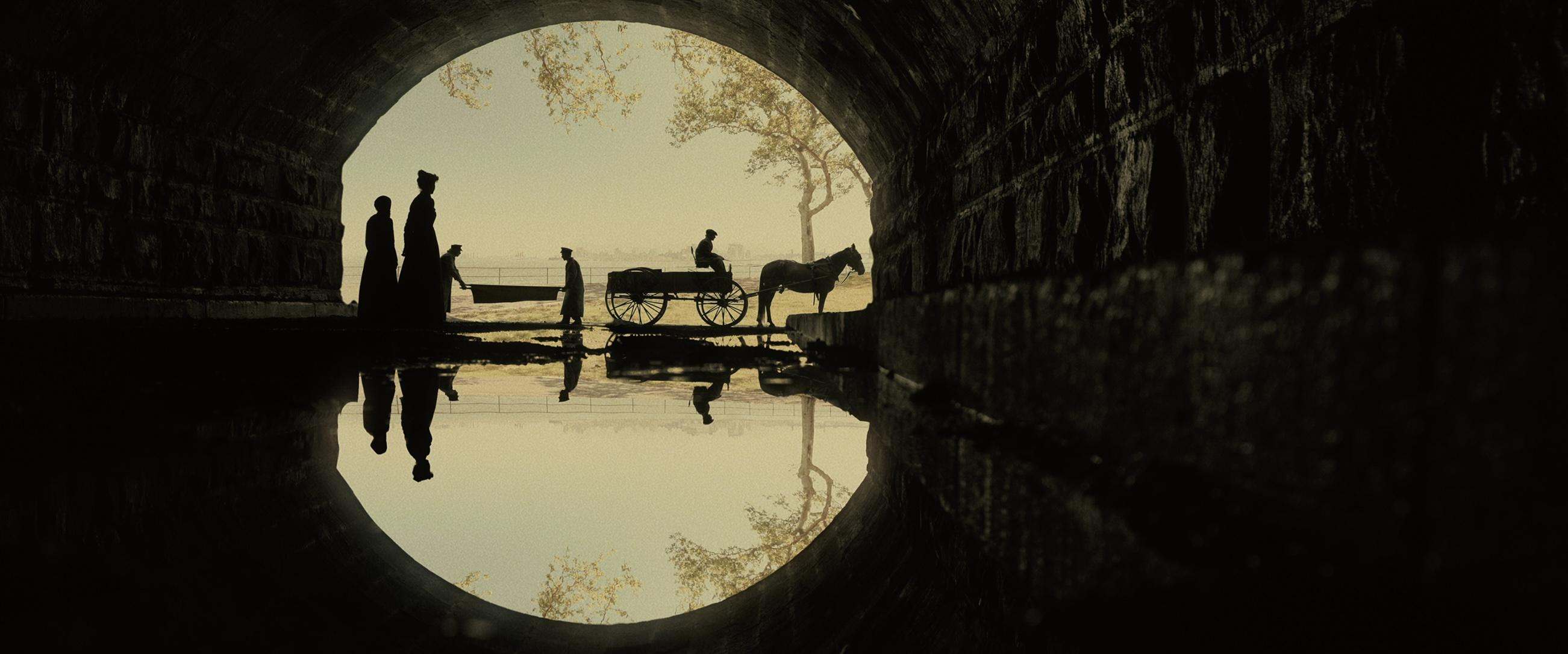
Released appropriately on International Women’s Day, the film is based on the life of Mother Frances Xavier Cabrini, the first American citizen to be canonized by the Catholic Church. Though plagued by tuberculosis, this humble Italian nun (played by the excellent Cristiana Dell’Anna) had a passion to serve overseas and, in 1889, was sent by the Pope (Giancarlo Giannini) to help the Italian immigrants in the slums of New York City. With limited support from the local archbishop (David Morse) and rampant racism directed toward the Italian population, she proved to be remarkably resourceful in establishing an orphanage, a hospital, and an example of resilience for all.
Hagiographic biopics about saints are hardly new, like for St. Bernadette (The Song of Bernadette), St. Joan of Arc (The Passion of Joan of Arc), or St. Joseph of Cupertino (The Reluctant Saint), but they’re increasingly rare in modern times. With striking cinematography and a realistically sober portrayal of 1800s immigrant hardship, Cabrini proves to be a praiseworthy production across the board. Seasoned actors like Giannini, Morse, and John Lithgow add gravitas to the casting, and Dell’Anna is outstanding as the lead, bristling at the repeated urgings to “stay where you belong” and pressing forward through faith and ingenuity. She represents the best kind of feminism, one that refuses to wilt under men’s underestimation and rises to serve others.
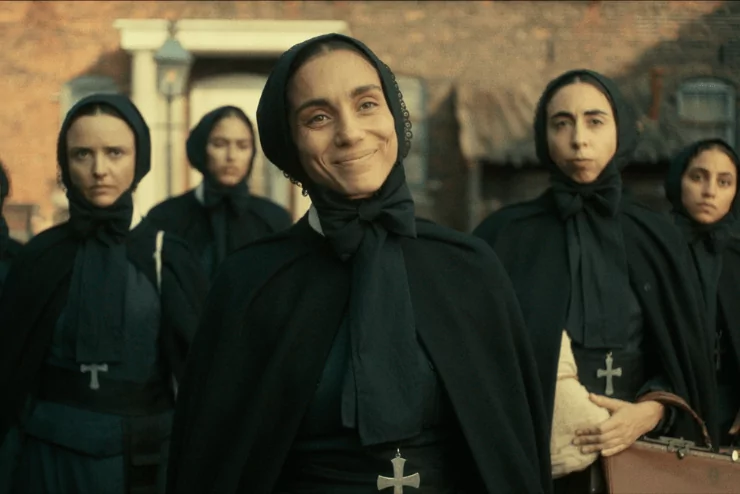
I found it a tad odd that the name of Jesus is never invoked, but I assume this was for the sake of catering to as wide an audience as possible. And with universal themes about kindness, perseverance, and the immigrant experience, Cabrini certainly feels like the kind of film that would appeal to any fan of historical drama, not just Christians or Catholics. I would like to think it deserves even Oscar consideration for Dell’Anna, Morse, and the cinematography, though I doubt the Academy would abide that. There will always be naysayers, but Cabrini exceeds the common pitfalls of faith-based cinema, and I would love for more films of its kind to flourish.
Best line: (Mother Cabrini) “We can serve our weakness or we can serve our purpose. Not both.”
Rank: List-Worthy
© 2024 S.G. Liput
792 Followers and Counting

