(For Day 9 of NaPoWriMo, the prompt was for a rhyming poem with varying line lengths, so I thought exploring time might be a good theme.)
The stone on which the house in which the chair in which I sit Has witnessed quite a bit. While flesh is quick to disappear, The bedrock lives in centuries; It waits for ice to yield to sea to yield to continental sheer And waits for errant meteors or yet another global freeze, Eroding into dust and grit, Chipped and thawed and trod and split, Ground and pressed and layered deep and never asking “what’s the year?” Giving purchase to the dirt, the firm foundation of the trees, Until at last, I came to rest Here. ____________________
MPA rating: PG-13
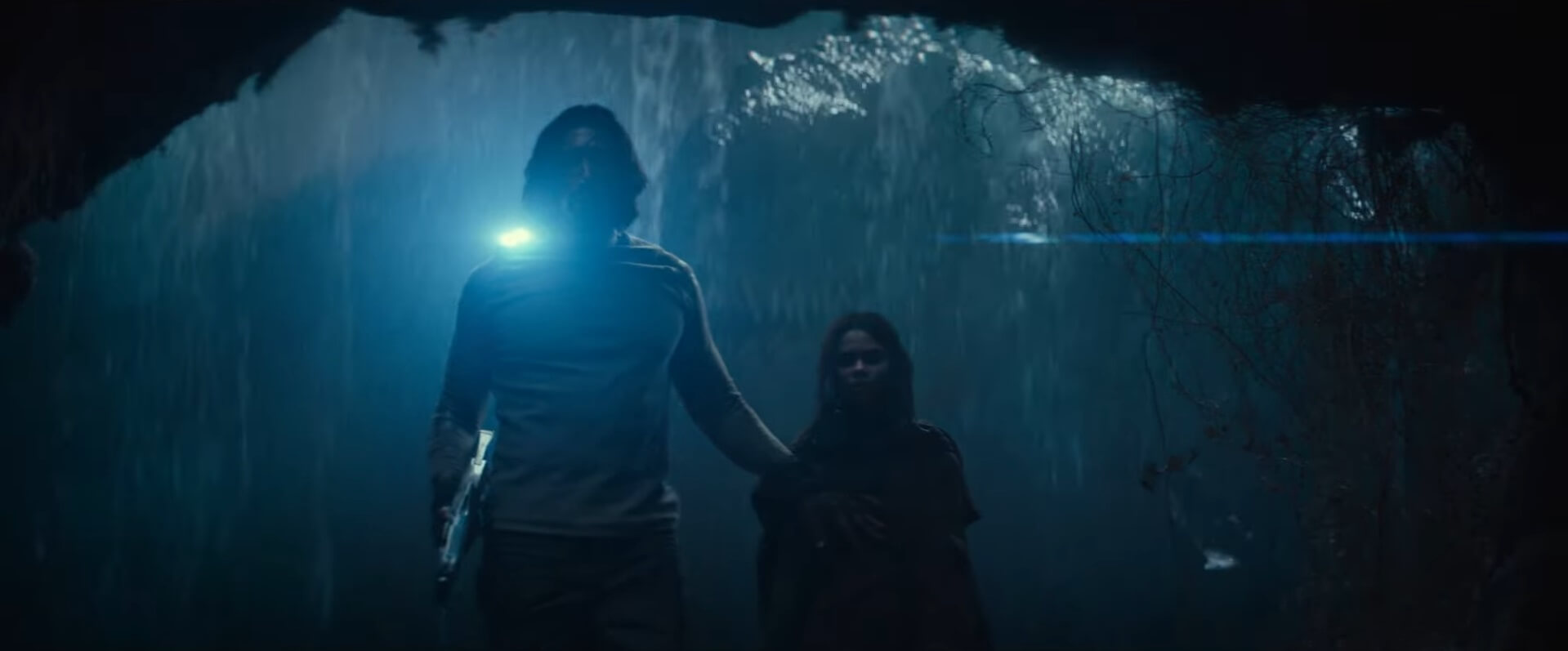
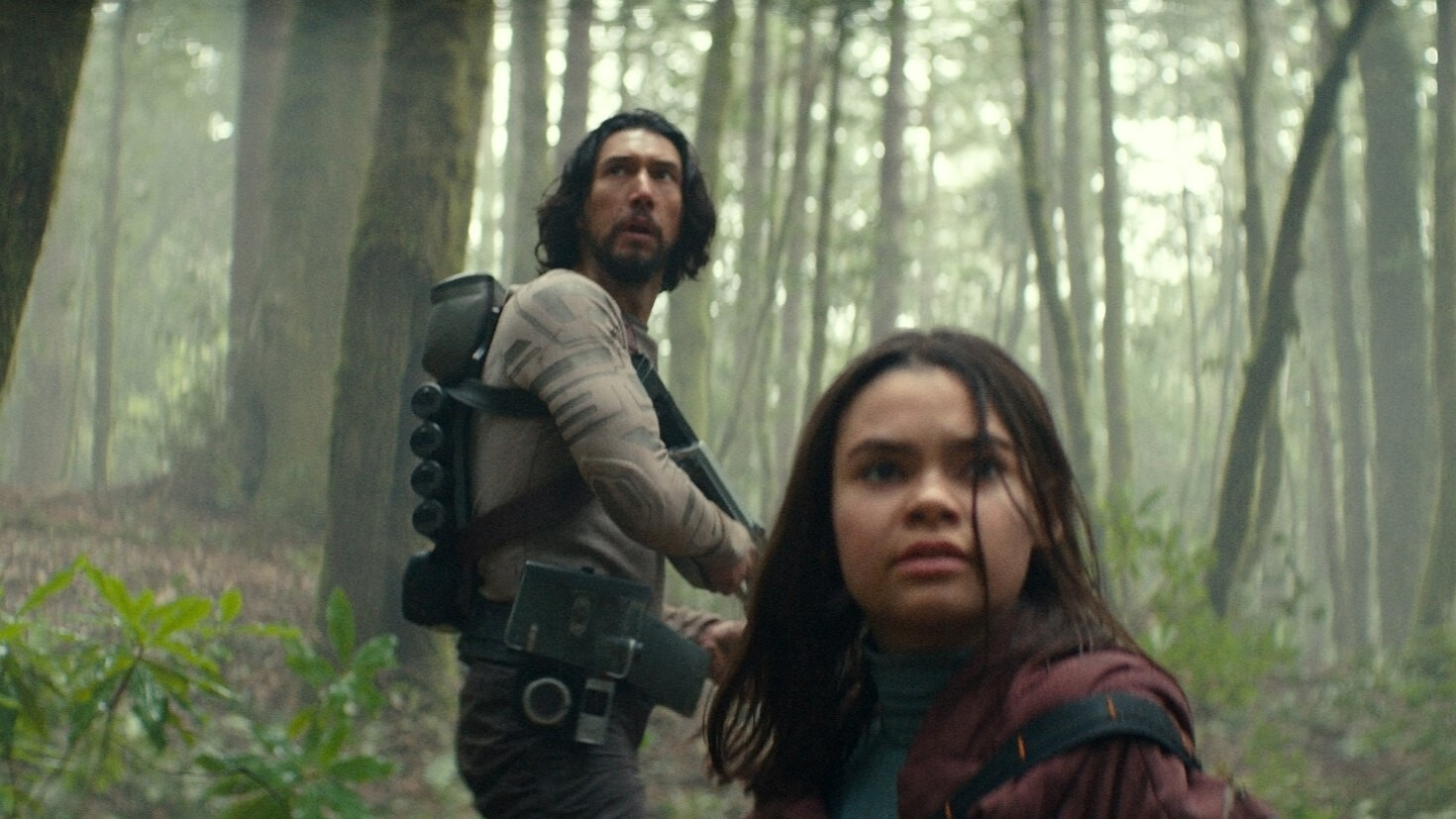
I love the idea of 65 more than I do 65 itself. I can absolutely picture the pitch meeting for the concept of aliens stumbling upon Earth in prehistoric times and being met by a dinosaur-filled death trap in the same way humans imagine inhospitable exoplanets. But it’s all in the execution, and 65 (named for the number of millions of years ago) somehow makes that thrilling notion feel ho-hum.
Adam Driver is serviceable as the main character Mills, a grieving father who left his sick daughter to pilot a space expedition, only for the ship to crash-land with only him and a young girl (Ariana Greenblatt) surviving. What follows is rather paint-by-numbers as they fight or evade dinosaurs and grow closer in their shared loss. There’s nothing particularly wrong with the plot or effects-heavy action, and it makes for a decent watch; it just never rises above a slightly futuristic Jurassic Park knock-off. Maybe films like Jurassic Park or King Kong have simply made dinosaurs less scary than they should be, at least when viewed from the comfort of our living rooms.
Best line: (Nevine, Mills’ daughter) “I know that you’re leaving. And I know it’s because of me.” (Mills) “No. It’s not because of you, it’s for you.”
(For Day 8 of NaPoWriMo, the prompt was for a ghazal, typically a love poem formed by couplets ending with the same word and a self-reference at the end.)
Rich as king and rollicking, I share my heart too easily; Men may fill the chess board, but I do so love a woman.
The loyal kind that hold the faith despite the politics and pleas, The kind that seize the title of queen – I do so love a woman.
The flirty kind that mince around, ambition mixed with delicacy, Wise enough to not lose one’s head – I do so love a woman.
The selfless kind that give and give, but take themselves whene’er they flee, And haunt your thoughts they once had filled – I do so love a woman.
The clever kind, whose minds outshine their outer physiognomy, Who play to win to men’s chagrin – I do so love a woman.
The gorgeous kind who cannot help but capture every heart they see, But don’t go keeping secrets, no… I do so love a woman.
The pious kind who care so true and stay unto the end with thee, No doubt they’re blessed to outlive the rest – I do so love a woman.
My senses fail with a sweet female, the face, the grace, the repartee… Come now, Henry, how can one choose that single, perfect woman? _______________________________
MPA rating: Passed (pretty much G)
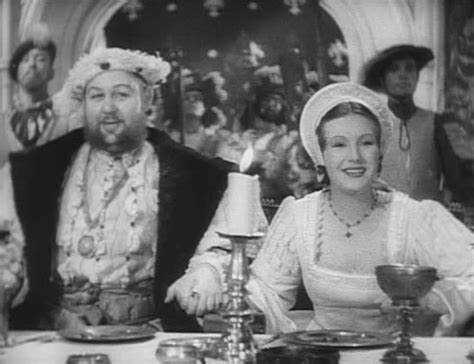
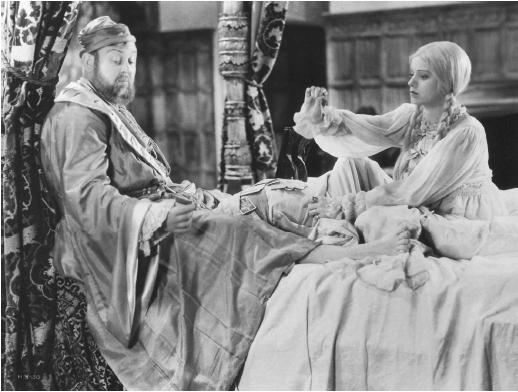
The older a film is, the harder it can be to cling to one’s claimed status as a cinefile, but there are still worthwhile movies among the overacting and poor sound quality common to the early era. Charles Laughton’s Oscar-winning role as the title king in The Private Life of Henry VIII did much to shape the popular image of Henry as gluttonous, immature, and volatile, and, while I understand not all of it is historically accurate, he does make for a quintessential portrayal of the infamous monarch.
Leaving Catherine of Aragon as a footnote, the film starts with the execution of Anne Boleyn (Merle Oberon) before cycling through the doomed Jane Seymour (Wendy Barrie), the shrewd Anne of Cleves (Elsa Lanchester), the adulterous Katherine Howard (Binnie Barnes), and finally the uptight Catherine Parr (Everley Gregg). Anne of Cleves gets the best interactions as she proves to be a match of wits with Henry in an ever more expensive card game, while Laughton’s anguished reaction to the revelation of Howard’s cheating is surprisingly poignant, making you almost forget about the real Henry’s rampant unfaithfulness. With its age very apparent, though, The Private Life of Henry VIII is more of a one-time watch than a potential favorite; I’d rather listen to the soundtrack of Six any day.
Best line: (Henry VIII) “Love is drunkenness when one is young. Love is wisdom when one is at my age.”
(For Day 7 of NaPoWriMo, the prompt was for a perhaps outlandish poem explaining “why you are not a particular piece of art,” so I went a bit more cocky and risqué than usual.)
I can’t compare to a well-mixed drink, Although I go down smooth. I’m too impassioned to be Old-Fashioned, But I can also soothe.
The life of a humble bartender Is only as good as his roll. The patrons need us for margaritas So they can lose control.
Complexity is ecstasy, So savor them, no rush. Why, try my Mai Tai, and I swear More than the sky will blush.
I’ll sling in Singapore, slide in mud, And blow like a Hurricane too. My expertise is in daiquiris Or a Slow Comfortable Screw.
My Russians might, both black and white, Remove your power of speech, Till you taste some sherry, scream Bloody Mary, And ask for Sex on the Beach.
Between the Sheets, sour or sweet, Wallbangers, never wetter – My cocktails, girl, are works of art, But let’s face it… I’m better. ________________________
MPA rating: R (mainly language)
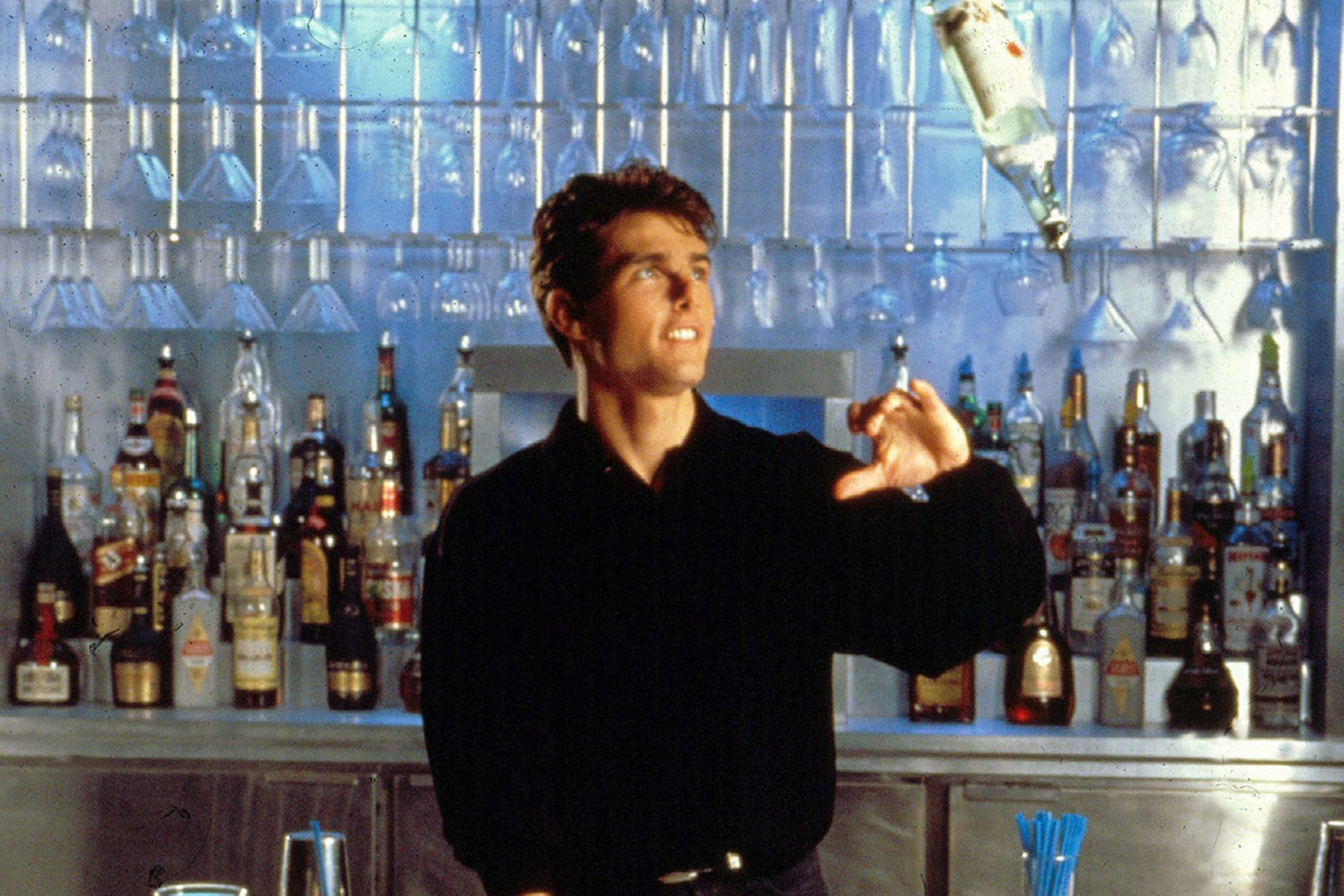
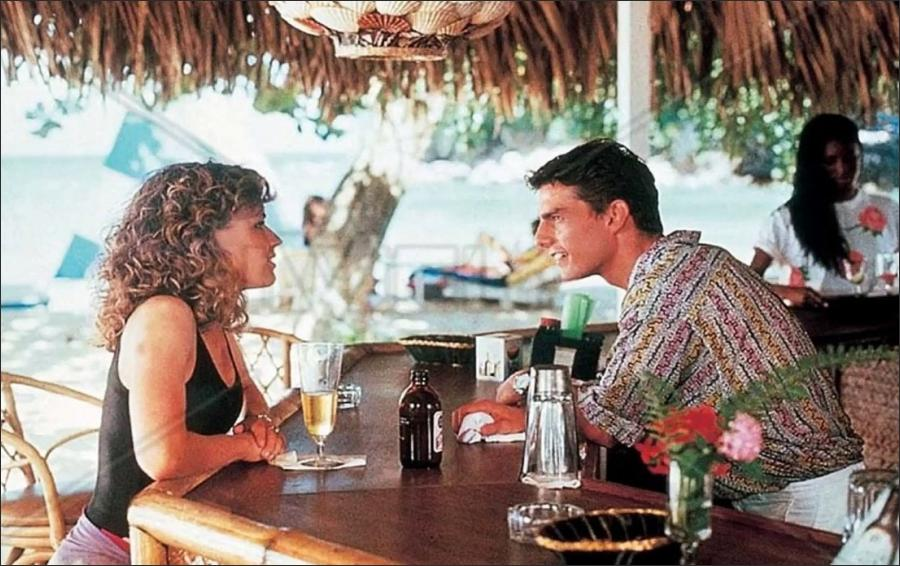
In the long and storied career of Tom Cruise, Cocktail is considered one of the low points, what with its Razzie win for Worst Picture, but it’s not as big a misfire as I thought it might be. Cruise plays self-motivated Brian Flanagan, who takes up flair bartending after his dreams of entering the business world in the big city are dashed. Trained by Australian mentor/rival Doug Coughlin (Bryan Brown), Brian flaunts his natural charisma to get ahead, even to the detriment of his island romance with Jordan (Elizabeth Shue, lovely as always).
As reflected by the film’s financial success in the face of negative reviews, Cocktail is quite entertaining, in no small part due to Cruise himself, who went to bartending school to learn the flipping and throwing tricks seen in the movie. (He even recites a few poems as part of the show.) His and Brown’s characters are frustratingly self-centered for most of the film, though not without consequence, yet there’s still an appeal to want them to succeed. I think the film mainly falls apart toward the end, where its tonal shift from tragedy to crowd-pleaser happens way too fast and saps the film’s themes of their power. Even if Cocktail isn’t Cruise’s finest hour, there are far worse Razzie winners out there; plus, it’s nice to think that he bounced right back with Rain Man later that same year.
Best line: (Brian) “I’m willing to start at the bottom.” (Job interviewer) “You’re aiming too high.”
(For Day 6 of NaPoWriMo, the prompt was to describe a flavor using certain words, and… I wasn’t feeling it, so here’s an off-prompt submission.)
There’s one way to heaven, but many ways to hell, And if you arise, it doesn’t matter how you fell. The darkness is sticky, not easy to dispel; Tragedies stay in it, and those are sure to sell. But winners find a constant, corny light in which to dwell. Those are both the options; what story will you tell? __________________________
MPA rating: Approved (a solid G)
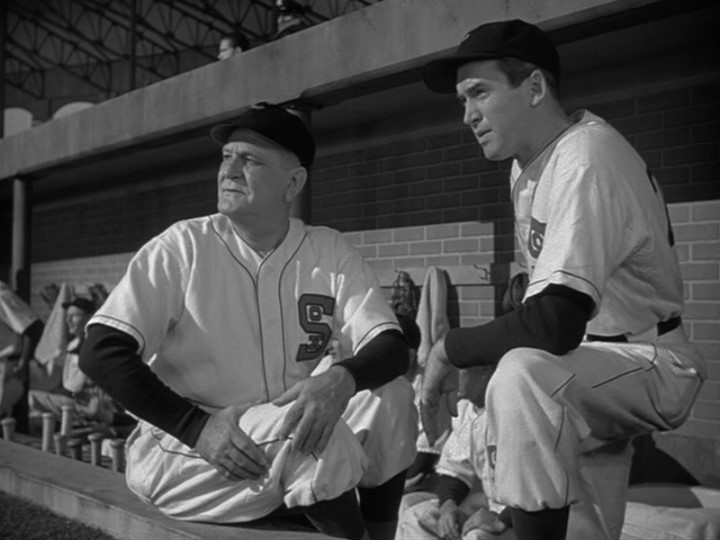
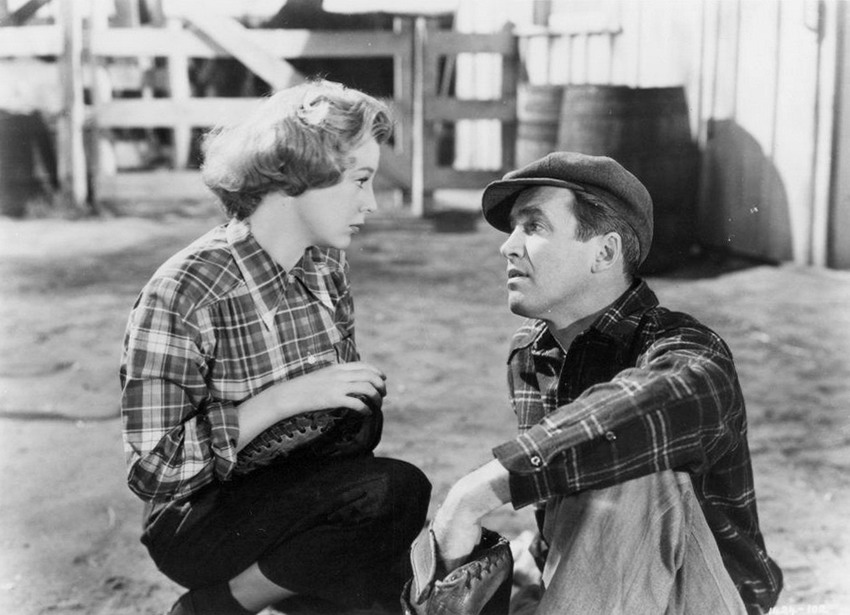
I already knew from The Glenn Miller Story that Jimmy Stewart and June Allyson shared winning chemistry, so it’s no surprise that that held true in the first of their three film romantic pairings The Stratton Story. Based on the life of MLB pitcher Monty Stratton, the film chronicles his early talent in rural Texas that caught the attention of a wandering scout (Barney Wile), his Major League success as he wooed his eventual wife Ethel (Allyson in fine girl-next-door form), and the hunting accident that halted his career but led to an inspiring comeback.
Stewart is never less than appealing as a poor boy making good despite the reservations of his mother (Agnes Moorehead), though the first half of the film alone doesn’t leave much of an impact. The second half, dealing with Monty’s injury and recovery, is painfully realistic in showing his depressive struggle, but the upswing is pure based-on-a-true-story inspiration that won the film an Oscar for Best Motion Picture Story. While not as well-known in the baseball movie pantheon, The Stratton Story deserves to be.
Best line: (Ethel, trying to encourage Monty from his despair) “Nothing’s really changed. You’re still the same fella I’ve always been in love with. I’ve made out much worse than you. You lost your leg, but I lost you.”
(For Day 5 of NaPoWriMo, the prompt was to choose a row from a list of word/musical style combinations, so I opted for “lord have mercy”/outlaw country classic/”clock.” So imagine this being sung by one of those deep, old-fashioned country voices.)
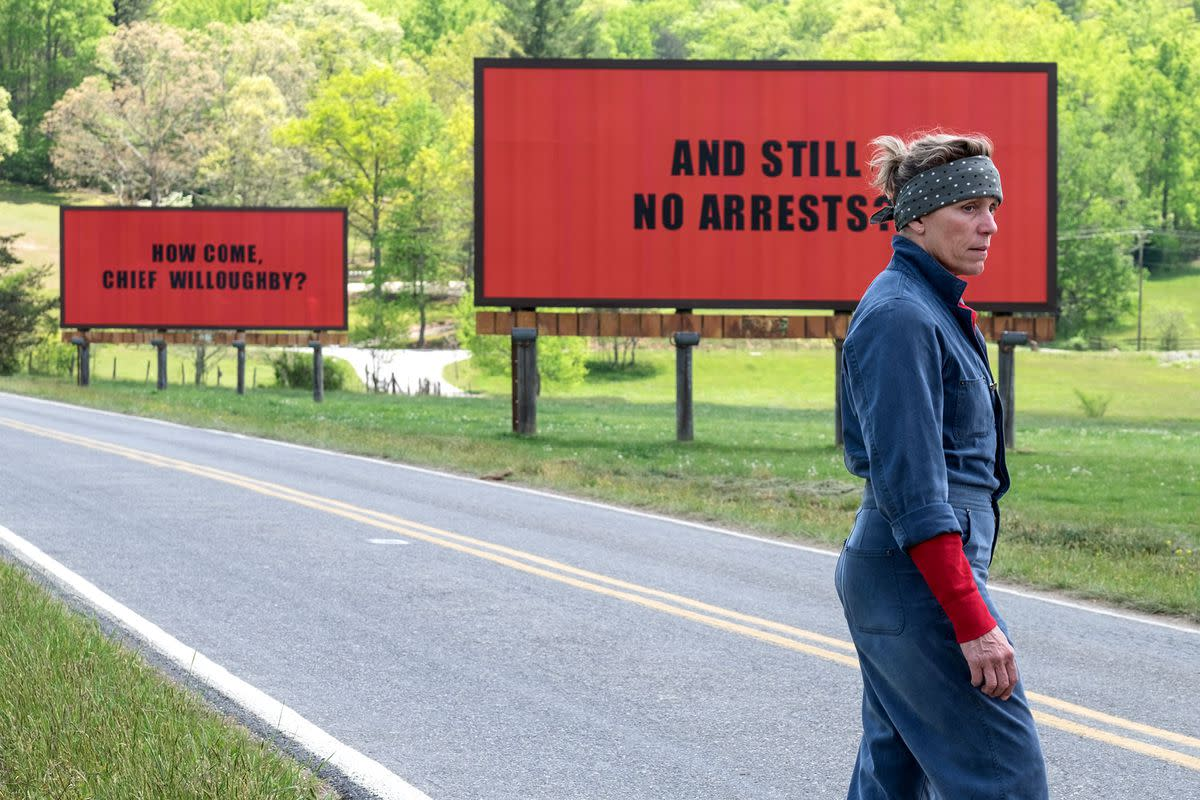
I was driving down a road outside Ebbing, Missouri, The miles on my mind but not much of a worry, And there I saw a trio Of billboards I couldn’t ignore.
They were calling out the cops for not catching a killer. A girl had suffered there, a reminder until her Justice had been won, And never would peace come before.
And I thought, The clock’s a-tickin’ for the good and the bad, For a mother who’s grievin’ and a heartbroken dad, For the monster and the officers that led to that ad On a road outside Ebbing, Missouri. And I wish There was more time for the hurting to fade, For the evil to be punished and the debts to be paid, But we only got so much to find peace, I’m afraid, And it’s sad… Some folks ain’t in a hurry.
I keep hoping every day that that killer’s been collared, So folks in that town can build on something more solid Than loss with no answer And pain with no face to be blamed.
We want justice right now, and I hope that they get it, But devils like that, I know just where they’re headed. I don’t want to join them, Just so my hate can be named.
And so still, The clock’s a-tickin’ for the good and the bad, For a mother who’s grievin’ and a heartbroken dad, For the monster and the officers that led to that ad On a road outside Ebbing, Missouri. And I wish There was more time for the hurting to fade, For the evil to be punished and the debts to be paid, But we only got so much to find peace, I’m afraid, And it’s sad… Some folks ain’t in a hurry. _______________________
MPA rating: R (for frequent language and some violence)
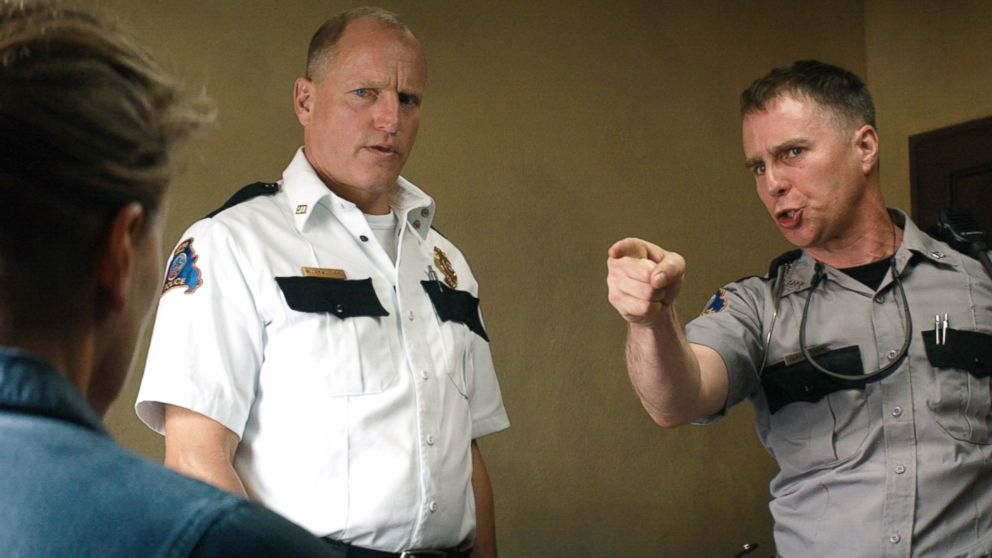
Martin McDonagh is known for the biting edge in his black comedies, which is generally not my cup of tea, so this is my first foray into his work. Three Billboards Outside Ebbing, Missouri certainly fits that expectation, a Midwest spectacle of ever-escalating bitterness fueling its character drama. Frances McDormand won her second Best Actress Oscar for playing Mildred Hayes, whose teen daughter (Kathryn Newton) was raped and murdered, and the lack of apparent progress in the police investigation leads her to commission three billboards blaming Chief Willoughby (Woody Harrelson). Partly because Willoughby has cancer, this action rubs the entire town the wrong way, particularly racist cop Jason Dixon (Sam Rockwell), initiating a battle of wills with no possible winner.
McDonagh intentionally avoided softening Mildred’s rough edges, so, while she may be the protagonist, she’s far from a hero. She’s stubborn to a fault in refusing to take down the billboards, lashing out against even friendly advice (her screed against a priest is a low blow), yet McDormand allows the underlying grief to peek through enough to make her misdirected rage understandable on some level. Harrelson is also excellent as Willoughby, playing both the most sympathetic character and the most directly targeted by Mildred’s anger. The rest of the cast is also impressive, even smaller roles for Abbie Cornish, Peter Dinklage, and Lucas Hedges, but Sam Rockwell was singled out for a Best Supporting Actor win. As Dixon, he plays a racist slacker for much of the film, yet is given some much-needed perspective when deprived of his power; it’s interesting that his turnaround comes after Willoughby calls him a “decent man,” despite much evidence to the contrary, as he tries to live up to such unearned belief.
Ultimately, Three Billboards eschews easy answers or a happy ending, perhaps its most sadly realistic direction, but allows room for growth. It’s full of angry people doing and saying hateful things, yet the few moments of humanity do shine the brighter, like a small act of forgiveness in a hospital room. The rural setting is also beautifully shot and complemented by Carter Burwell’s serene score. Though it’s not a film I’d care to see often, Three Billboards shines in its unpredictably tragic story and brilliant performances.
Best line: (Willoughby) “Hate never solved nothing, but calm did. And thought did. Try it. Try it just for a change.”
(For Day 4 of NaPoWriMo, the prompt was for a poem about living with a piece of art, which made me imagine what a blind person might think of a painting on the wall.)
My eyes cannot see; believe me, I’ve tried To get even traces of color or light. It’s something so simple for everyone else But such a high hurdle for me. There hangs in my bedroom a frame, rather wide; I walk by and feel it sometimes to my right. Where others see picture, I know only shape, Floating before me mysteriously.
They say it’s a seascape and try to describe, But surely mere words aren’t enough to compare. The angle, the shadows, the ambient mood – It’s more than just waves upon sand. I’ll never quite fathom this image’s vibe, But I can imagine what’s possibly there. And maybe reality can’t hold a candle to What I can see with my mind and my hand. ________________________
MPA rating: Approved (should be PG)
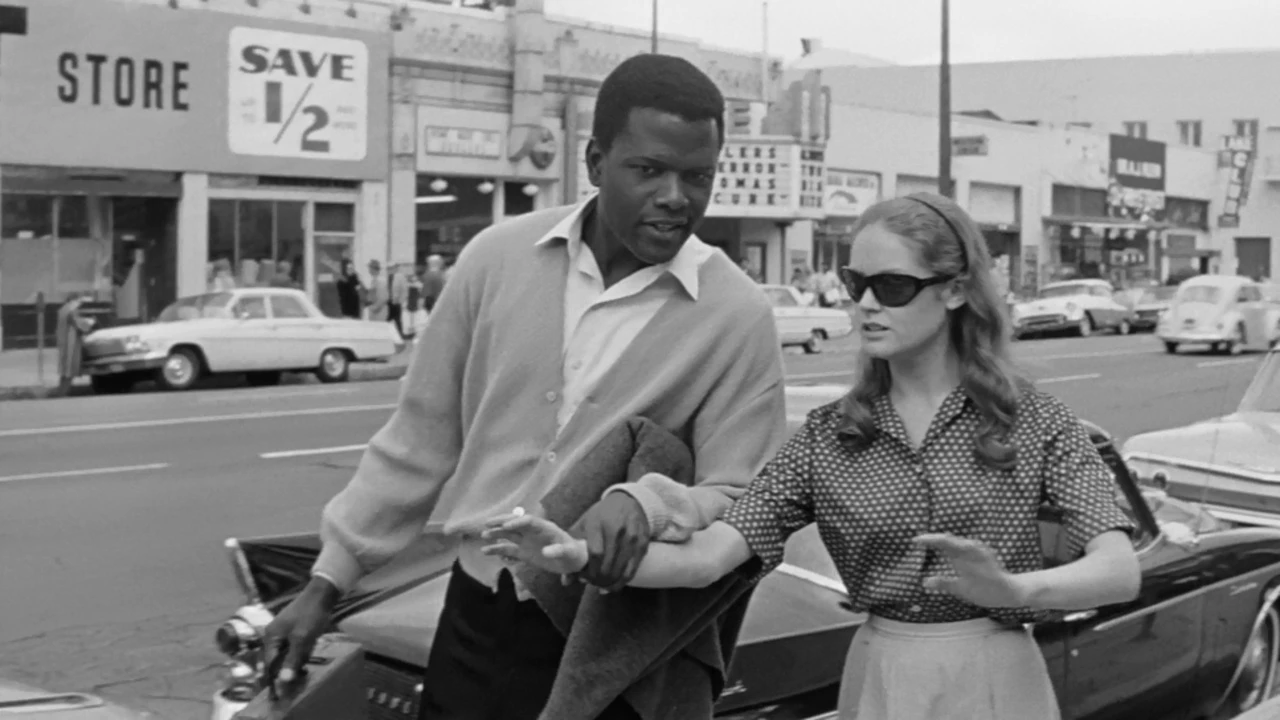
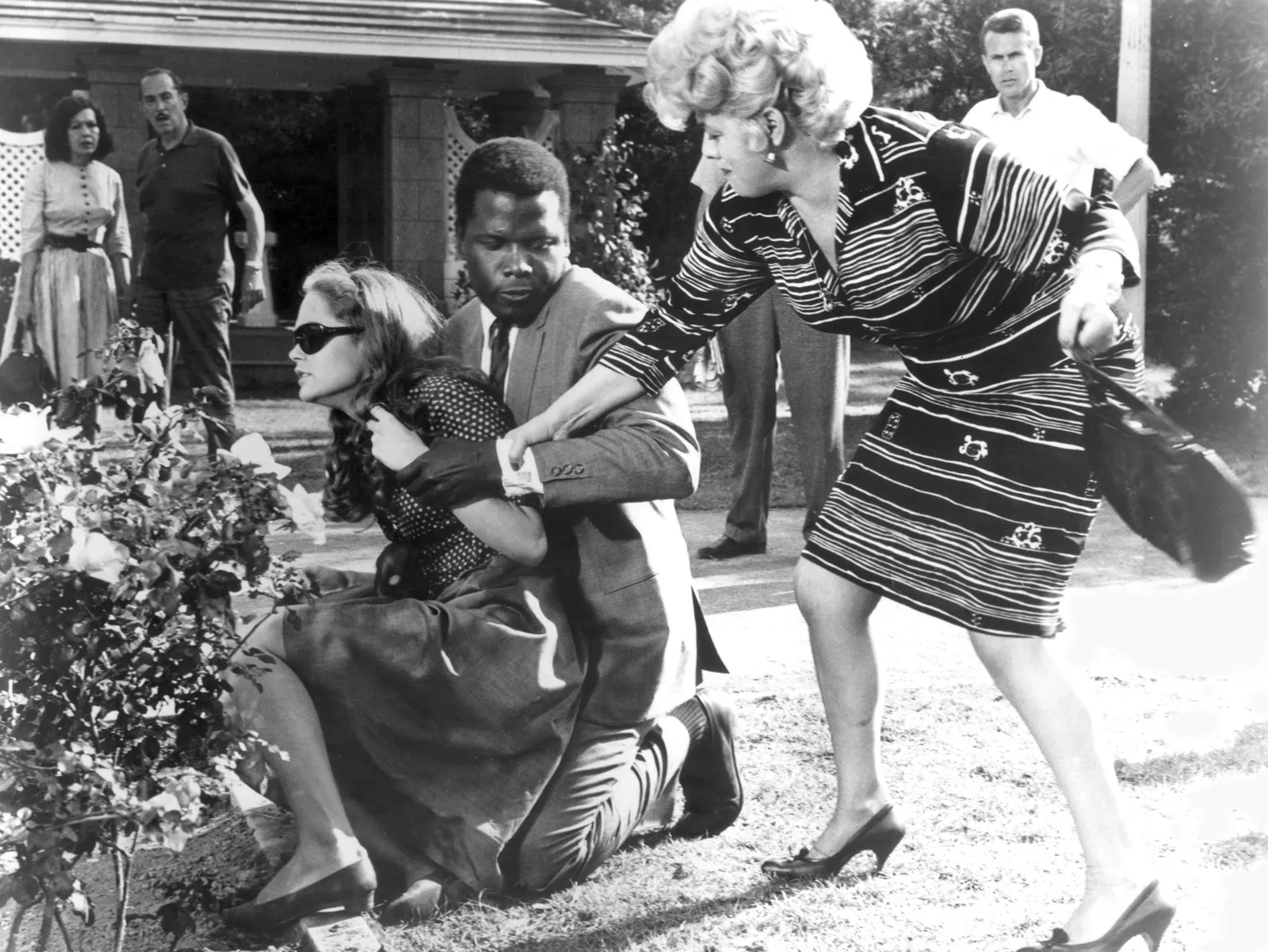
Set in between his more acclaimed roles in Lilies of the Field and In the Heat of the Night, A Patch of Blue is a less famous Sydney Poitier film but yet another thought-provoking showcase of his acting talent, as well as that of Shelley Winters and young ingénue Elizabeth Hartman. Hartman plays a blind girl named Selina, kept as little more than a servant by her abusive mother (Winters, who won her second Oscar) and drunkard grandfather (Wallace Ford in his final film before his death), with no attempt to introduce her to the wider world. After convincing them to let her spend time in a park, she meets friendly office worker Gordon (Poitier), whose unseen skin color matters far less than the kindness he shows her, leading her to want more out of her sheltered life.
Domestic abuse is hard to watch, even in movies, and the belittling cruelty Selina endures at the hands of her own family is no exception. Between Hartman’s naive innocence and Poitier’s natural charm, their growing bond is very sweet as a stark contrast to her home life, even though Gordon is keenly aware of the racial stigma (and age difference) standing in the way of romance between them. Ultimately, things play out encouragingly but realistically, highlighting that simple caring can transform someone’s life.
Best line: (Selina) “I think you’re beautiful!” (Gordon, smiling) “Beautiful? Most people would say the opposite.” (Selina) “Well, that’s because they don’t know you.”
(For Day 3 of NaPoWriMo, the prompt was for a poem that explains why I am a poet and not something else, like, say, a lawyer for example.)
I am a poet, though the world may not know it, And I am content in my chosen art. Though lawyers deflower big bucks by the hour, What I write is not rote and still carries some heart.
I’d much rather goad out a lyrical ode Than deal with the labyrinthine legal code.
I’d much rather dwell on a shrewd villanelle Than look for a loophole that’s hidden in hell.
I’d rather spend time masterminding some rhymes, Than living off custody battles and crimes.
I’d much rather stick with a nice limerick Than share the repute of a leech or a tick.
I’d rather arraign an offending quatrain Than claim an objection I hope they sustain.
I’d sooner do sonnets or write a rondeau Than need to know Latin to sound like a pro.
I’d rather debate with a versatile verse Than argue in prose with a need to rehearse.
A lawyer exerts to secure just desserts, And more power to them; such skill’s beyond me. For me, life is sweeter when measured by meter, Which doesn’t require a fancy degree. ______________________
MPA rating: PG
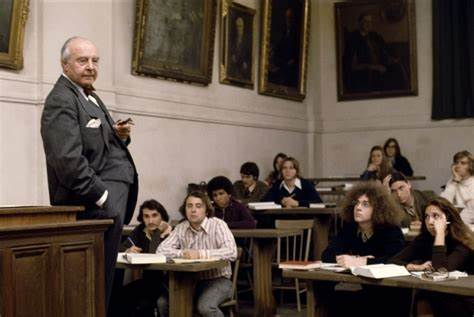
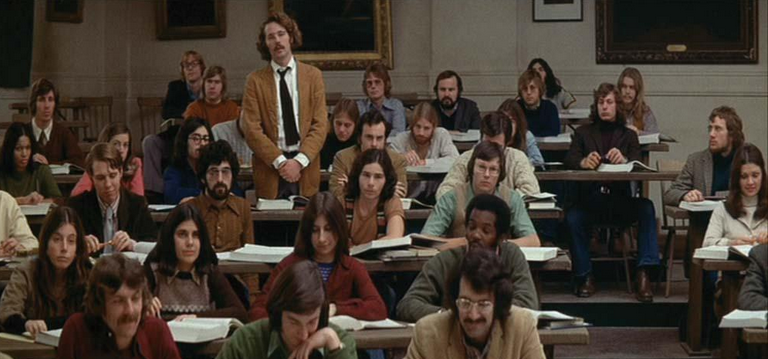
In the lead-up to the most recent Oscars ceremony, Turner Classic Movies had their annual 31 Days of Oscar event, playing a variety of Oscar-nominated films, many of which I only knew by name or reputation. One such movie was 1973’s The Paper Chase, following a first-year student at Harvard Law School named James Hart (Timothy Bottoms) who endures the stern tutelage of Professor Charles Kingsfield (John Houseman) while also wooing his daughter (Lindsay Wagner).
The film boasts an accessible erudition that feels like an honest depiction of law school, an ever-demanding taskmaster personified by Houseman’s no-nonsense professor, the kind that makes students desperate to prove they can measure up, even when they can’t. The scenes with Hart in class and bouncing off his high-strung study group are quite engaging, while the romance elements fall rather flat, partly because of a distinct lack of chemistry between Bottoms and Wagner’s characters. The final scene also left me a bit frustrated, fitting in a poetic sense but practically annoying like Rose’s last action in Titanic.
A long-time producer and acting teacher before becoming more widely known here, Houseman is considered the film’s main strength, having won the Oscar for Best Supporting Actor and going on to play the same role in the TV spin-off also called The Paper Chase. And though he is quite good, his stone-faced character never really wowed me as award-worthy, while I thought Bottoms, who wasn’t even nominated, deserved more attention for his portrayal of a harried law student. One thing is for certain, though: I’m glad I never tried to become a lawyer.
Best line: (Kingsfield, to Hart) “Mr. Hart, here’s a dime. Call your mother and tell her there is serious doubt about you becoming a lawyer.” (Hart, pausing on his way out) “You… are a son of a bitch, Kingsfield!” (Kingsfield) “Mr. Hart! That is the most intelligent thing you’ve said today. You may take your seat.”
(For Day 2 of NaPoWriMo, the prompt was for a poem that directly addresses someone and includes elements like an unusual simile and an anachronism. As you may guess, the addressee here is some WWII Nazis taken by surprise.)
I say, chaps, don’t gawp at me like you’re in shock; You knew this was coming (or should have at least). You can’t go around gobbling up the whole bloc And starting up wars on the west and the east.
It truly was only a matter of time Before some resourceful dissenters arrived To answer each war crime with, well, even more crime Until your dear Reich has been quite unalived.
You looked oh so smug in your grey uniforms, That swastika bent like a crime scene in chalk, But you lie with the devil, then you get the horns, A regular arsenal, loaded and cocked.
So don’t be so stunned by the Colt in your face; It’s not so irregular when you come to it. There’s action that’s needed when Nazis give chase, And always somebody, like us, who will do it. ____________________
MPA rating: R (for strong violence)
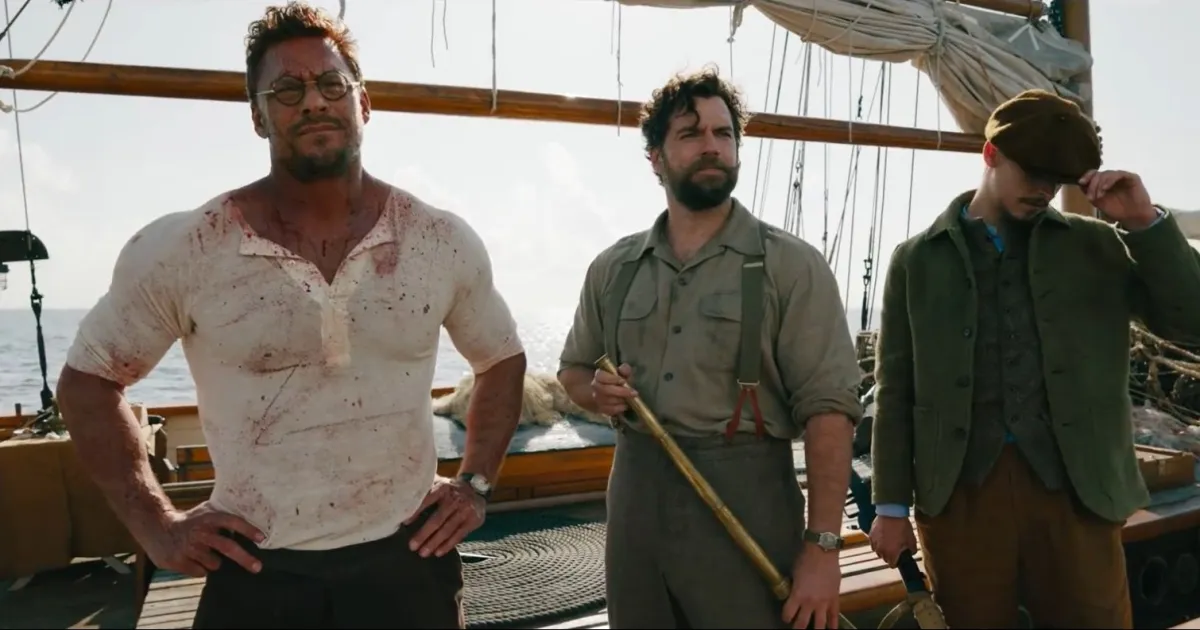
Based on a Damien Lewis book about Churchill’s secret Special Operations Executive (SOE), The Ministry of Ungentlemanly Warfare sees director Guy Ritchie leaning into that cinematic axiom that Nazis make the best villains and by extension the best victims. At the height of World War II, debonaire commando Gus March-Phillips (Henry Cavill) is recruited by one Brigadier Gubbins (Cary Elwes) and tasked with forming an elite espionage team to target Nazi operations with sabotage and guerilla warfare. Joined by a savage Dane (Alan Ritchson), an expert frogman (Henry Golding), and others, the team sets out to destroy an Italian supply ship in what would be known as Operation Postmaster.
The history of the SOE and the feats of the real-life war heroes are undoubtedly interesting, but this is obviously the Hollywood version of events. The film revels in its chance to dispatch Nazis with every sharp instrument at hand, yet, despite the danger involved, the action is so one-sided that there’s rarely any suspense for the fates of the main characters. That’s a shame too, because Cavill has an effortless charisma as the leader of the pack, complemented by the cool but ferocious Ritchson, and their characters might have shone even more with a slightly less glamorized script.
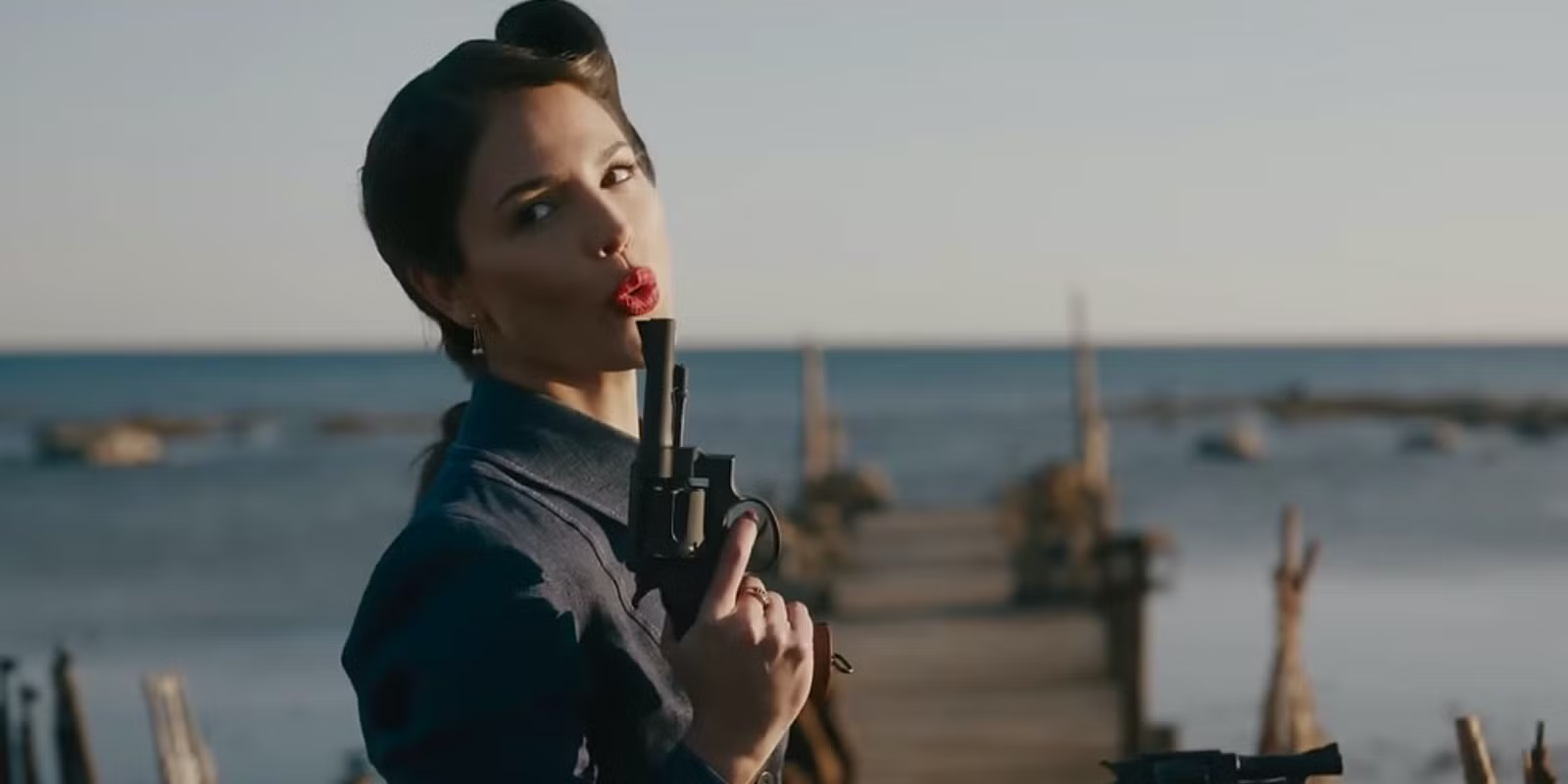
The Ministry of Ungentlemanly Warfare makes popcorn entertainment out of an under-publicized chapter of WWII history, and it does so reasonably well. From the undercover seductions of Eiza González to the shoot-em-up carnage of a tropical rescue mission, it’s sometimes brutal fun, but it also feels like empty calories in a way such intriguing history shouldn’t.
Best line: (Churchill) “If Hitler isn’t playing by the Rules, then neither shall we?”
(For Day 1 of NaPoWriMo, the prompt was to use a new-to-me music or art term, so I opted for the film-appropriate term chroma – “the intensity of a given color.”)
I wonder sometimes what I can see That nobody else can. How would I know? How would you know? Isn’t it normal for such to be so? Isn’t it true we rely on our eyes To fill in the gaps that are left by the wise? What differs is mystery.
I wonder sometimes what I can hear That nobody else can. Could I be wrong? Is that a song? And is there someone who might sing along? If I can only hit half of the notes, Who hears the other half, voice in our throats? Maybe they’ll lend me an ear.
I wonder sometimes what I can try That nobody else can. What can I play? What can I say That’s more than a fact we agree on today? I have a private monopoly on The unwritten song, the image undrawn, And the chroma of my sky. _________________________________
MPA rating: PG
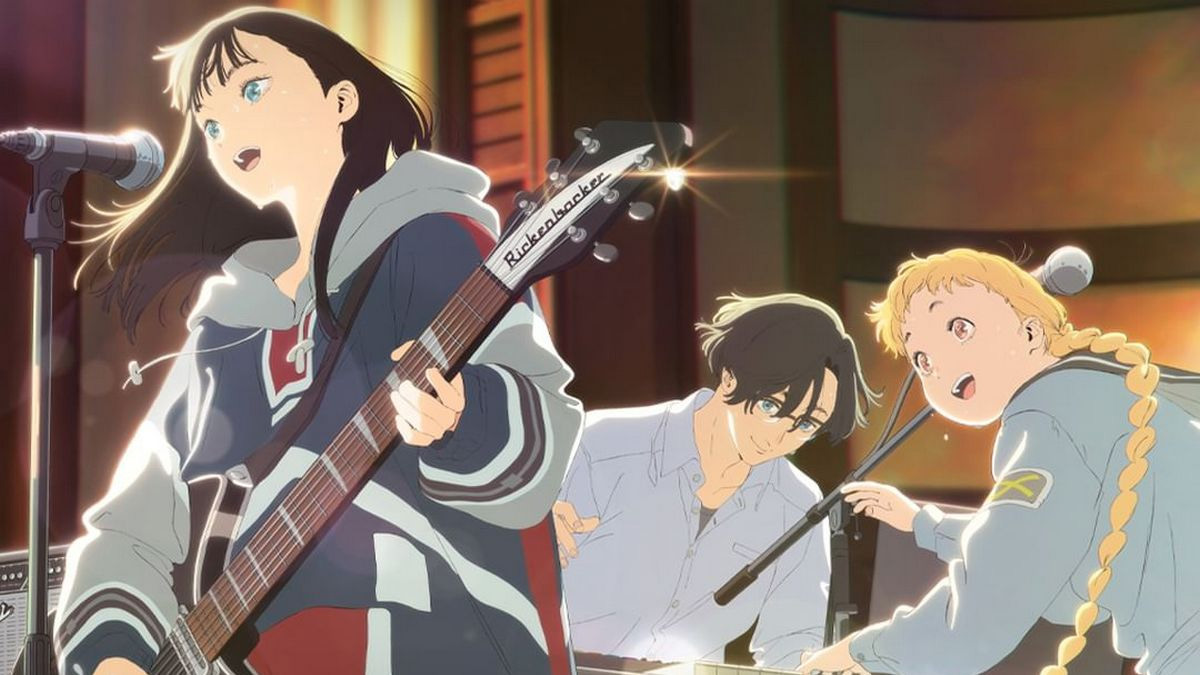
Considering how long we had to wait and catch up on anime films sometimes years after their release, it’s a special modern treat for fans like me to be able to see them in American theaters only months after their Japanese premiere, complete with a choice of English dub or subs. I caught the English dub of The Colors Within back in January, comparatively soon after its August 2024 release in Japan, and it did not disappoint. Directed by Naoko Yamada of A Silent Voice fame, this low-key high school drama is a gentle-hearted tribute to music’s power to foster friendship and self-discovery.
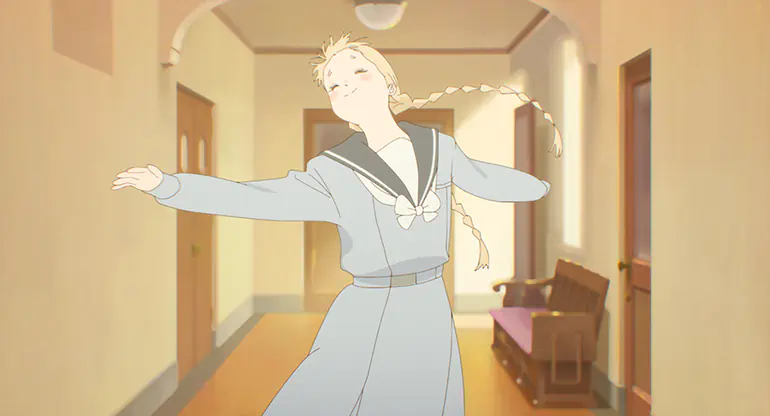
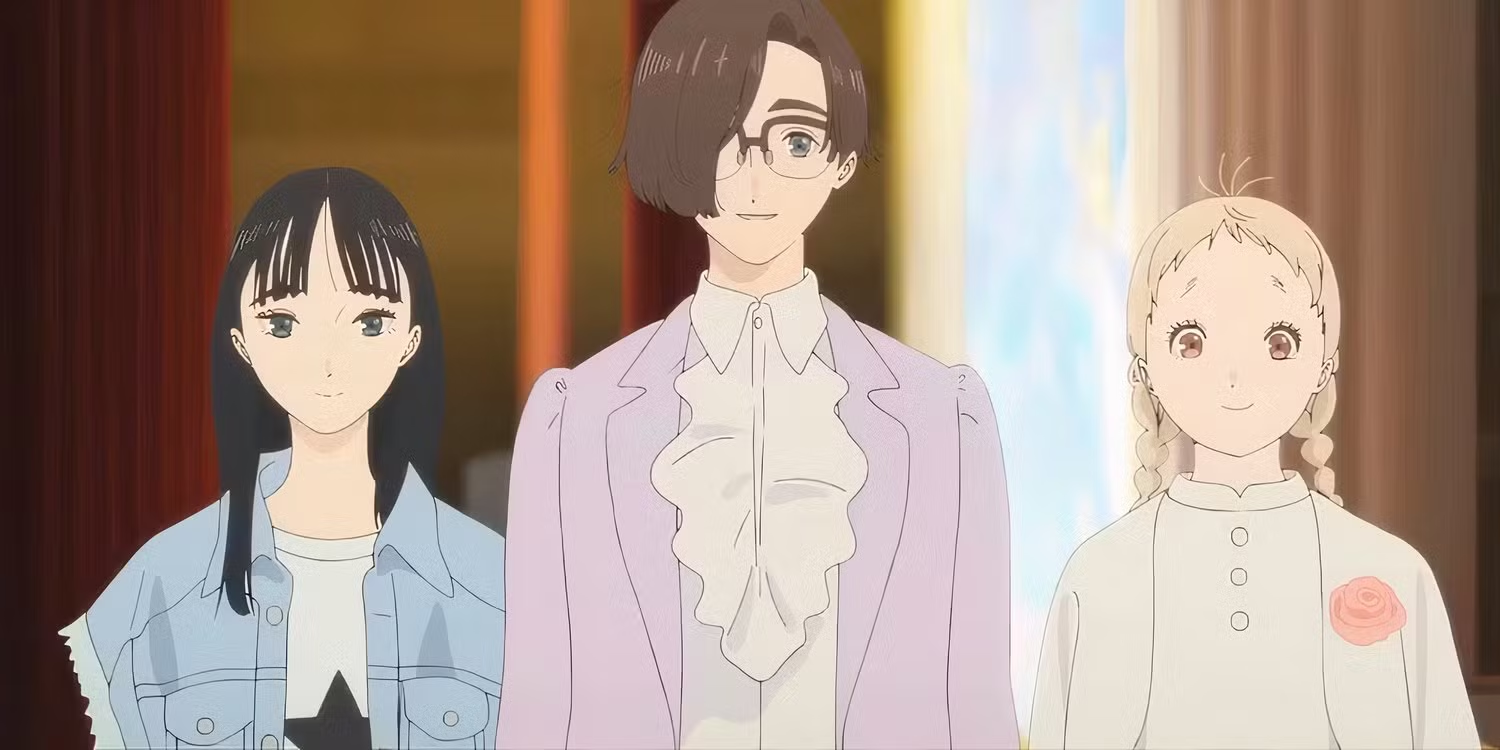
Set in a Catholic girls boarding school, the film follows ingenuous student Totsuko Higarashi, who experiences a visual synesthesia where she sees people in specific colors, often awestruck by an invisible beauty that no one else can appreciate. Drawn to an especially stunning blue coming from fellow student Kimi, Totsuko’s interest in her leads to the two stumbling into forming a band with a local boy and instrument collector named Rui. As the trio practice in secret and write their own songs, they endeavor to work through their individual personal and family struggles.
The Colors Within is a thoroughly sweet film, where the conflict stays at the level of contending with school rules and familial expectations, and there’s a special delight to be found in the creative joy the three teens derive from their simple musical ambitions. Totsuko’s wide-eyed experimentation with lyrics and notes and the collaboration of the three as they bond are enough to spark anyone’s curiosity to maybe start a band of their own (if only it was that easy). And the result of their teamwork is three outstanding songs, courtesy of musician Kensuke Ushio, two of them catchy pop tunes and one peaceful and ethereal. Going above and beyond, the excellent dub even translated the songs into English, with Kimi’s voice actor Kylie McNeill showcasing the singing chops she also brought to 2021’s Belle.
One unique element to The Colors Within is its earnest portrayal of Catholicism. Totsuko prays frequently and worries about going to confession after lying, Rui plays a moving rendition of the “Tantum ergo” on a theremin, and the nuns teaching at the girls’ school are largely presented as affectionate and supportive rather than strict caricatures. While not really a plot focus, it’s nice to see Christianity shown in a positive light as simply a part of the characters’ lives, even informing Totsuko’s song lyrics performed near the end.
As for the animation, director Yamada has traded in her prior collaborations with Kyoto Animation for the equally acclaimed studio Science Saru, known for highly dynamic animations like Ride Your Wave or last year’s hit series Dandadan. Compared with those, The Colors Within is far more grounded, full of pastel softness and painterly details, highlighted at times by the more abstract colors that Totsuko is able to see on those around her.
All in all, The Colors Within is a coming-of-age charmer. Totsuko’s fascination with Kimi could be read as a budding girl crush, but considering the setting and air of innocence, I thought it was more of a wholesome friendship. As someone working on song lyrics and basic tunes of my own for my musical, I related to the band members gradually developing their style, and the climactic performance of the end product was a joy of sight and sound. Totsuko’s character development may be ultimately on the thin side, but the colors on display here are beautiful.
I keep finding myself taken aback at the swiftness of time, spurring questions like “how have I not posted since Valentine’s Day” or “how is it already National/Global Poetry Writing Month again?” My distractions are numerous, so I’m feeling less prepared than ever for NaPoWriMo, yet I’m also reassuring myself that any pressure here is entirely self-imposed. I look forward to this event every year, following the daily prompts from the NaPoWriMo website and dredging my sometimes stagnant creative juices for hidden gems. Plus, my backlog of films seen and yet-to-be-reviewed is bigger than ever, so a flurry of poems/reviews is long overdue. Maybe those reviews will have to be shorter than usual, but I want to find a way to keep up with the one-a-day cadence if I can.
Anyone else out there is welcome to take part too, of course; it’s nice to be reminded that I’m not alone in this effort when I look at the daily submissions on the NaPoWriMo site. Historically, this has been a great opportunity for creativity, so here’s hoping for a fantastic poetry-filled April!