
Tags
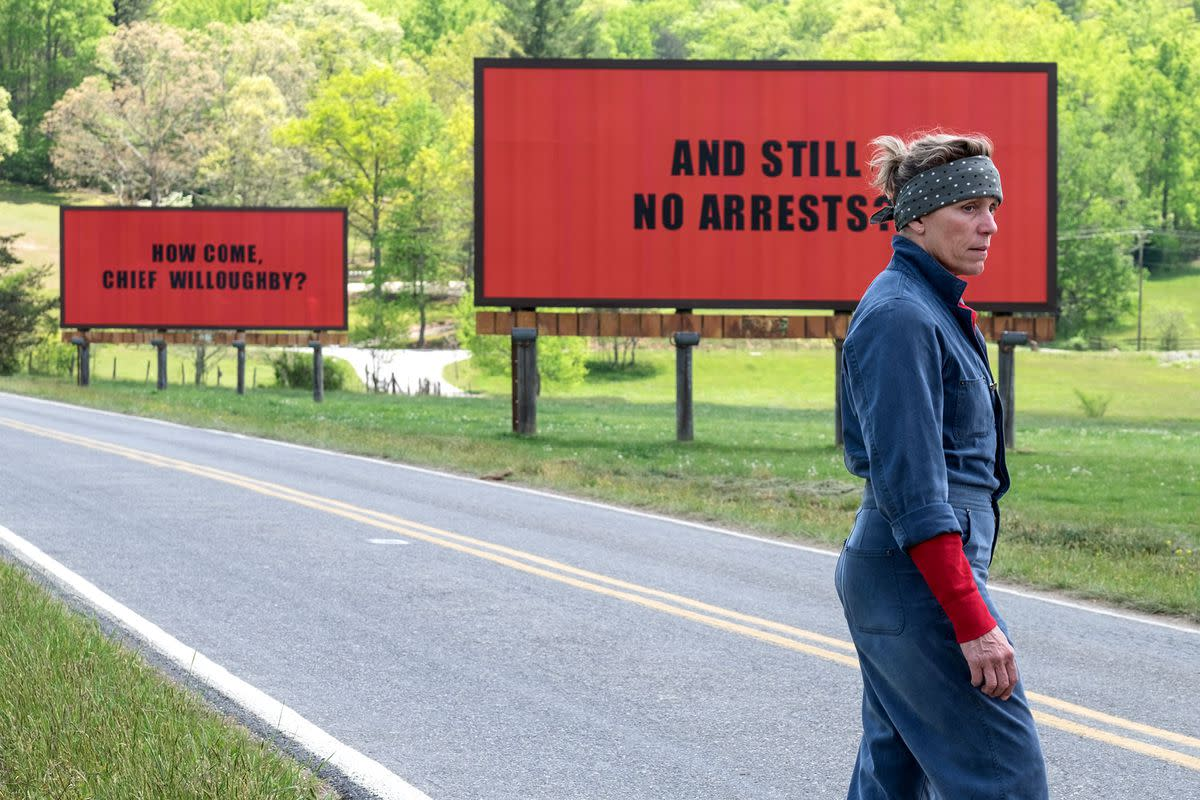
(For Day 5 of NaPoWriMo, the prompt was to choose a row from a list of word/musical style combinations, so I opted for “lord have mercy”/outlaw country classic/”clock.” So imagine this being sung by one of those deep, old-fashioned country voices.)
I was driving down a road outside Ebbing, Missouri,
The miles on my mind but not much of a worry,
And there I saw a trio
Of billboards I couldn’t ignore.
They were calling out the cops for not catching a killer.
A girl had suffered there, a reminder until her
Justice had been won,
And never would peace come before.
And I thought,
The clock’s a-tickin’ for the good and the bad,
For a mother who’s grievin’ and a heartbroken dad,
For the monster and the officers that led to that ad
On a road outside Ebbing, Missouri.
And I wish
There was more time for the hurting to fade,
For the evil to be punished and the debts to be paid,
But we only got so much to find peace, I’m afraid,
And it’s sad…
Some folks ain’t in a hurry.
I keep hoping every day that that killer’s been collared,
So folks in that town can build on something more solid
Than loss with no answer
And pain with no face to be blamed.
We want justice right now, and I hope that they get it,
But devils like that, I know just where they’re headed.
I don’t want to join them,
Just so my hate can be named.
And so still,
The clock’s a-tickin’ for the good and the bad,
For a mother who’s grievin’ and a heartbroken dad,
For the monster and the officers that led to that ad
On a road outside Ebbing, Missouri.
And I wish
There was more time for the hurting to fade,
For the evil to be punished and the debts to be paid,
But we only got so much to find peace, I’m afraid,
And it’s sad…
Some folks ain’t in a hurry.
_______________________
MPA rating: R (for frequent language and some violence)
Martin McDonagh is known for the biting edge in his black comedies, which is generally not my cup of tea, so this is my first foray into his work. Three Billboards Outside Ebbing, Missouri certainly fits that expectation, a Midwest spectacle of ever-escalating bitterness fueling its character drama. Frances McDormand won her second Best Actress Oscar for playing Mildred Hayes, whose teen daughter (Kathryn Newton) was raped and murdered, and the lack of apparent progress in the police investigation leads her to commission three billboards blaming Chief Willoughby (Woody Harrelson). Partly because Willoughby has cancer, this action rubs the entire town the wrong way, particularly racist cop Jason Dixon (Sam Rockwell), initiating a battle of wills with no possible winner.
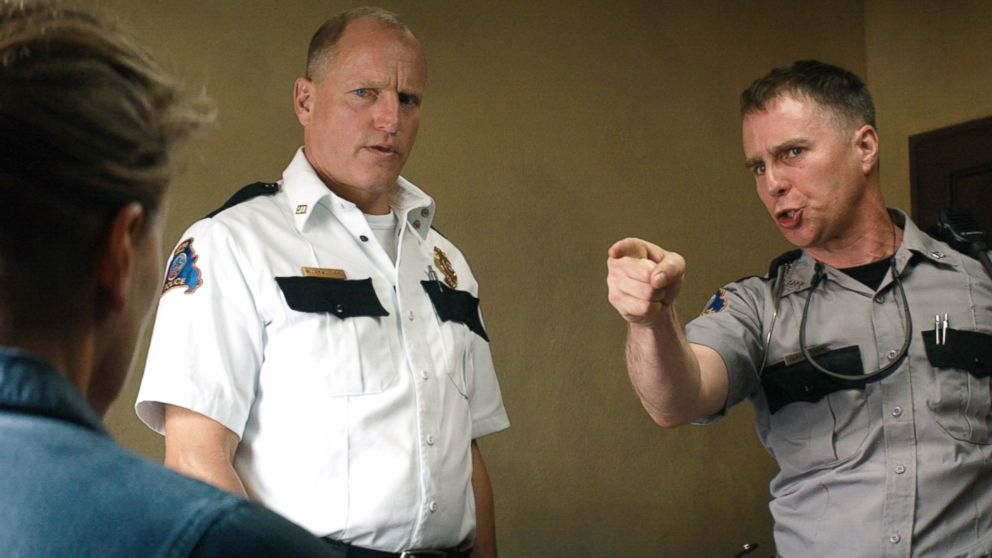
McDonagh intentionally avoided softening Mildred’s rough edges, so, while she may be the protagonist, she’s far from a hero. She’s stubborn to a fault in refusing to take down the billboards, lashing out against even friendly advice (her screed against a priest is a low blow), yet McDormand allows the underlying grief to peek through enough to make her misdirected rage understandable on some level. Harrelson is also excellent as Willoughby, playing both the most sympathetic character and the most directly targeted by Mildred’s anger. The rest of the cast is also impressive, even smaller roles for Abbie Cornish, Peter Dinklage, and Lucas Hedges, but Sam Rockwell was singled out for a Best Supporting Actor win. As Dixon, he plays a racist slacker for much of the film, yet is given some much-needed perspective when deprived of his power; it’s interesting that his turnaround comes after Willoughby calls him a “decent man,” despite much evidence to the contrary, as he tries to live up to such unearned belief.
Ultimately, Three Billboards eschews easy answers or a happy ending, perhaps its most sadly realistic direction, but allows room for growth. It’s full of angry people doing and saying hateful things, yet the few moments of humanity do shine the brighter, like a small act of forgiveness in a hospital room. The rural setting is also beautifully shot and complemented by Carter Burwell’s serene score. Though it’s not a film I’d care to see often, Three Billboards shines in its unpredictably tragic story and brilliant performances.
Best line: (Willoughby) “Hate never solved nothing, but calm did. And thought did. Try it. Try it just for a change.”
Rank: Honorable Mention
© 2025 S.G. Liput
804 Followers and Counting

