• Home
  • About Me
  • The List
  • THE LIST (2016 Update)
  • THE LIST (2017 Update)
  • THE LIST (2018 Update)
  • THE LIST (2019 Update)
  • THE LIST (2020 Update)
  • THE LIST (2021 Update)
  • THE LIST (2022 Update)
  • Top Twelves and More
  • The End Credits Song Hall of Fame

Rhyme and Reason

~ Poetry Meets Film Reviews

Rhyme and Reason

Tag Archives: War

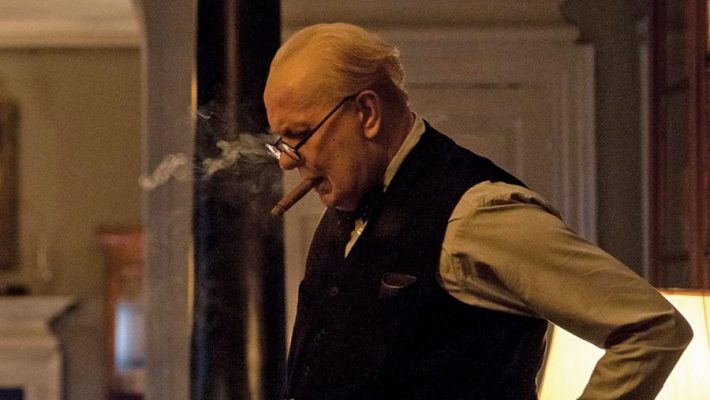
Darkest Hour (2017)

20 Friday Apr 2018

Posted by sgliput in Movies, NaPoWriMo, Poetry, Reviews, Writing

≈ 1 Comment

Tags

Drama, History, Triple A, War

See the source image

(Today’s NaPoWriMo prompt was for a poem featuring rebellion, so I took inspiration from Winston Churchill’s tenacity in resisting the German onslaught in World War II.)


An animal fights never so hard
As when its den, its nest, its yard,
Its hole or burrow, lair or hollow
Is assaulted, threatened, scarred.
It’s then they most are on their guard.

If they defend their home so well,
Then we as humans must rebel
Against invasion, no persuasion
To assuage our raising hell
To screen and shield our citadel.

The brightest day requires no grit
When we are free to relish it.
The darkest hour tests our power
And our backbone not to quit,
For rebel lairs dare not submit.
____________________

MPAA rating: PG-13

Were you expecting the 2011 alien invasion movie set in Russia? If so, psych! Get with the times because I already reviewed that two days ago (and it’s The Darkest Hour, by the way). No, this is last year’s Winston Churchill biopic, which is more likely the film people will associate with the words Darkest Hour (no The), not only because it’s more recent but because it’s a fantastic movie.

See the source image

While Christopher Nolan’s Dunkirk depicted the famous rescue of the British army across the English Channel and Their Finest used it as propaganda back on the home front, Darkest Hour looks at the same events from the perspective of the leadership and politicians. An English political drama could very easily have made the proceedings eminently dry and boring, but that’s hardly the case when there’s an actor of Gary Oldman’s caliber in top form. His Oscar-winning performance as Winston Churchill is exceptional, one of those roles of a lifetime that he truly melts into, so that he’s hardly distinguishable from the real-life figure he plays, thanks also to the Oscar-winning makeup. From his droll habits and bearing to his brilliantly delivered speeches, it’s no wonder critics and audiences alike were saying, “Just give him the Oscar he so clearly deserves.”

Even the most acclaimed biopics so often leave me with a lessened opinion of their subjects, but Darkest Hour manages to show Churchill “warts and all,” so to speak, and still leave no doubt as to why he is considered such a great leader. In his very first scene, he’s at his worst, roaring at a fresh-faced, new secretary (Lily James) over minor annoyances, only to be calmed down by his loving and encouraging wife (Kristin Scott Thomas). The rest of the film serves to soften that intimidating figure we first see, as he buckles under the weight of the wartime decisions he faces and stands resolute in the face of overwhelming odds.

See the source image

It was interesting to see how naively Churchill’s fellow leaders believed they could sue for peace even while war and destruction were upon them, and I was surprised at how unpopular Churchill was among his own Conservative party. Did the way he was described as someone with one hundred ideas a day, four of them good and the rest dangerous, remind anyone else of Donald Trump? Honestly, there were several scenes where it was as if they were describing the sitting U.S. President. “One never knows what’s going to come out of your mouth next. Something that’ll flatter, something that’ll wound,” says King George VI, played by Ben Mendelsohn (since I suppose Colin Firth was busy). Considering Churchill’s dictation habits, I can’t help but wonder if a modern Churchill would be tweeting in the privy as well.

Beyond the outstanding acting, the rest of the production is equally praiseworthy, such as the realistic sets and the way the dates change onscreen to make clear that events are happening within mere days of each other. Joe Wright’s direction is elegant but straightforward, and the script intelligent and witty in equal measure, providing welcome humor to lighten various scenes while also stressing the desperation of Britain’s situation. There’s some disappointment when you realize a great scene or two was fabricated, such as a voice-of-the-people sequence in the London subway, but the high degree of historical accuracy is only part of Darkest Hour’s strength.

See the source image

It’s a testament to the power of oratory and a portrait of a great man under fire, not covering his whole life but the tension-filled days and weeks that helped define the course of his life and of the world. I’m tempted to rank it as a tie with The Iron Lady, another well-acted film about a great British prime minister that won its lead an Oscar, but I think Darkest Hour is a tad stronger overall and indeed one of the best films of 2017.

Best line (there are so many): (Churchill) “Those who never change their mind never change anything.”


Rank: List-Worthy


© 2018 S.G. Liput
562 Followers and Counting
 

The Best Years of Our Lives (1946)

13 Friday Apr 2018

Posted by sgliput in Movies, NaPoWriMo, Poetry, Reviews, Writing

≈ 2 Comments

Tags

Classics, Drama, Romance, War

See the source image

(Today’s NaPoWriMo prompt was to write a poem based on the reverse of a well-known phrase or saying, so I picked “home is where the heart is.”)


The mind is rarely where the home is,
Always drawn back here, back there,
To sites of sorrows, times of traumas,
Every missed or broken promise,
Every frightened, whispered prayer,
And doubts that dwarf the likes of Thomas.

Although it wishes peace to find,
The night is haunted by the day,
And progress can be undermined
By ghosts we thought we’d left behind.
The battlefields still hold their sway
When hearts go home without the mind.
_________________

MPAA rating: Not Rated (should be PG)

This post is by request of MovieRob, who gave the most correct answers to my new banner challenge and so earned the right to have me review a film of his choice. It’s also a chance to review something not from the last couple years, which seems to be all I’ve been reviewing lately. I knew The Best Years of Our Lives was one of his all-time favorites, and it is a film that still packs an emotional wallop even 72 years later, offering an authentic glimpse of how World War II veterans readjusted to civilian life.

See the source image

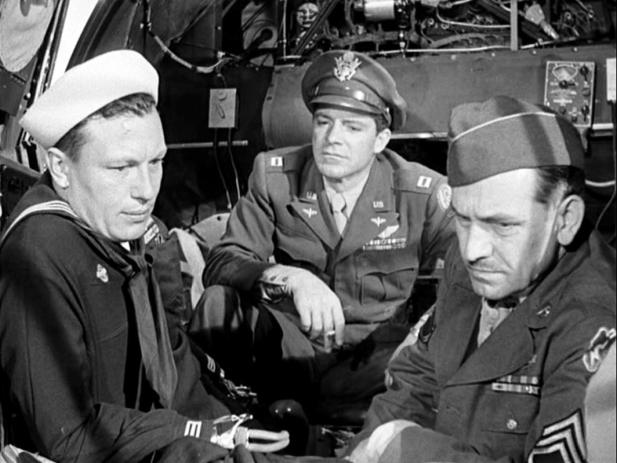
Perfectly timed when it came out the year after the war ended, The Best Years of Our Lives follows three ex-servicemen returning to their fictional hometown of Boone City: an older sergeant and banker named Al Stephenson (Fredric March), a newly married captain named Fred Derry (Dana Andrews), and an amputee from the Navy named Homer Parrish (real amputee Harold Russell), who lost both hands and now uses a pair of hook prosthetics. Although all are eager to return home, they quickly experience difficulties in adjusting to their new civilian roles, such as Fred’s lack of experience in anything but the bombing for which he was trained or Homer’s insecurity over how his family and sweetheart will react to his hooks.

The performances are excellent across the board, rarely falling into dated overacting, with Russell especially standing out as Homer, well deserving his Best Supporting Actor Oscar despite not being a professional actor. (He’s also the only actor to win two Oscars for the same role, one an honorary award, and the only one to auction his Oscar years later.) March also won an Oscar, though I personally thought he was better in 1937’s A Star Is Born, and the film received five other Academy Awards too, including Best Picture. Above all, the story feels genuine, as if these were real stories that actually played out in the post-war period, even including how businesses and conspiracists viewed the war and the shaken people it sent back home.

See the source image

Despite being a significant film and one of the best in its genre, I do feel The Best Years of Our Lives, at 170 minutes, runs about twenty minutes too long, and not all three of its stories carry the same weight. Homer’s is easily the best with a profoundly lump-inducing conclusion, while Fred’s love triangle with his shallow wife (Virginia Mayo) and Al’s daughter Peggy (lovely Teresa Wright) has its moments. So does Al’s homecoming, but his drunkenness drags on a bit with little resolution, even if I’m sure it’s a true depiction of the way many veterans tried to cope.

The Best Years of Our Lives may run long, but it’s a moving portrait of post-war America and the problems that plagued her veterans, which still ring true due to the permanence of war. One image near the end seems to capture the potential hopelessness of their situation, as Fred sits in the nose of a scrapped plane with no engines, grounded and heading nowhere. Yet it subtly says even more that right afterward, he learns the scrapyard will be recycled into new housing, a symbol of the renewal capable for men as well.

See the source image

Best line: (Fred) “I dreamed I was gonna have my own home. Just a nice little house for my wife and me out in the country… in the suburbs anyway. That’s the cock-eyed kind of dream you have when you’re overseas.”   (Peggy) “You don’t have to be overseas to have dreams like that.”   (Fred) “Yeah. You can get crazy ideas right here at home.”


Rank: List Runner-Up


© 2018 S.G. Liput
554 Followers and Counting


Girls und Panzer der Film (2015)

09 Monday Apr 2018

Posted by sgliput in Movies, NaPoWriMo, Poetry, Reviews, Writing

≈ 3 Comments

Tags

Action, Animation, Anime, Comedy, War

See the source image

(Today’s NaPoWriMo prompt was to combine something big and something small, like maybe tanks and girls for example. Inspired by this silly anime, I wrote a fake account of how tank warfare might become a girls’ sport.)


Years past, the tanks rolled into town
And terrorized the folk.
With dread renown,
Each new crackdown
Would paint the sky in smoke.

They came in force to crash and kill
And crush with cannon fire.
Such lethal will
They did fulfill;
The people’s need was dire.

One fateful day, a young girl eyed
An empty tank left bare.
She seized with pride
This chance supplied
By carelessness and prayer.

Against all odds and common sense,
She drove the tank somehow.
Her zeal intense,
In her town’s defense,
She raised every eyebrow.

She shocked the foe, confused their ranks,
And drove them from the land;
And it’s all thanks
To her that tanks
And girls go hand in hand.
_____________________

MPAA rating: Not Rated (PG is fine)

Anime has given us a lot of weird and wonderful concepts over the years, the kind you should just enjoy for their silliness and not think about too deeply, but making tank warfare a girl’s sport takes the cake for me. Even though I’ve never been particularly fond of tanks or the cute girl genre, Girls und Panzer was an admittedly fun ride, made even more fun by its big-screen follow-up.

See the source image

The 2012 TV series featured a ragtag group of girls from Ōarai High School rallying under the leadership of skilled but reluctant transfer student Miho in order to win a series of tank war games and stave off the closing of their school and town, which happen to be on top of a giant aircraft carrier (yes, really). The characters are simple and likable, with most development reserved for Miho and her four closest friends. The rest of the vast cast gets the most basic development possible as members of other clubs that nonetheless contribute to the tank warfare, which seems to use real ammunition and has no regard for property damage, since the government underwrites everything as an official sport. The set-up is enjoyable enough, but the real draw here is the tank battles, explosive clashes between war machines that are depicted with surprising historical accuracy for the most part. At only twelve episodes long, the series is short but doesn’t lack thrills, as the underdog Ōarai team faces off against more accomplished high school teams that each conform to the trappings and tactics of a different nation (Americans, Russians, Italians, Germans, etc.).

See the source image

If any of this sounds entertaining, go watch it because it’s nice and short, and I’m about to spoil the ending. It’s probably no surprise, but Ōarai wins. Yet the movie doesn’t let that victory stand for long; one exhibition match later, the government is eager to shut the school down again, putting Ōarai in the exact same position of betting their school’s fate on a giant tank battle, this time against a University team. With this battle, however, they’re so hopelessly outmatched that their former rivals beaten during the series come to their aid and take part in one big tank free-for-all.

Like the series, there is some confusion at times over who’s in which tank, and what’s happening is not always as clear as it should be. Yet the battles are still quite well planned, putting different styles of tank to good use and employing some very clever strategy along the way. (One planning session between the allied teams is like an argument between the tactical methods of all the major countries of World War II.) While the show had some semblance of realism in the tank’s capabilities, albeit small, the movie goes full-out bonkers with tanks flying through the air, sliding down rollercoaster tracks, and zooming around like high-capacity bumper cars. Some of the casualties would carry more weight if anyone was actually in danger, but that apparently never happens in this sport, and it’s perfectly fine to stick your head out the top hatch while being shelled (really).

See the source image

This isn’t the first anime film I’d recommend to anyone, but it’s now high on my list of guilty pleasures just for how gleefully crazy and bombastic it gets. By the time the battle moves into a theme park to use the rides as unconventional weapons, I was just enjoying the outlandishness of it all, and finding unexpected satisfaction with every enemy tank disabled. Sure, it’s silly and predictable, but that’s sometimes the very definition of fun. There’s a whole future series of films planned, but it’s hard to imagine how they’ll top this one.


Rank: List Runner-Up


© 2018 S.G. Liput
552 Followers and Counting

Here’s a good representation of what to expect, if you’re curious:
 

Testament of Youth (2014)

17 Wednesday Jan 2018

Posted by sgliput in Movies, Poetry, Reviews, Writing

≈ Leave a comment

Tags

Biopic, Drama, History, Romance, War

See the source image

How keenly and eagerly do wars begin,
When winners and losers have yet to be picked,
Before its true horror and hardship set in
And man is reminded how great is its sin!
The world returns ever, a careless addict,
To battle and blood, as the wise can predict.

Each new generation discovers firsthand
The truth only mastered when foolishness dies.
It cannot be scheduled; it cannot be planned;
It comes only when the naïve understand
That war is a futile and grave exercise.
Then do the innocent fools become wise.
___________________

MPAA rating: PG-13

Alicia Vikander broke onto most people’s radars with 2015’s Ex Machina and her Oscar-winning role in The Danish Girl, but Testament of Youth not long before them should not be forgotten. Based on the same-titled World War I memoir by Vera Brittain, Testament of Youth features the kind of lead performance that makes one wonder why it didn’t get more awards attention. As Brittain herself, Vikander plays an early feminist whose academic dreams are dashed by the onset of war and its unforeseen tragedies.

See the source image

I’d never heard of Vera Brittain or her apparently famous memoir before this movie, but that’s why I love well-done adaptations that introduce me to new and worthwhile stories. Early on, Brittain is a relatively carefree girl whose greatest challenge is convincing her father to let her go to Oxford. Thanks to the intervention of her brother Edward (Taron Edgerton in one of his first roles) and a sympathetic professor (Anna Chancellor), she is able to attend her dream school, right as she’s also finding love with one of Edward’s friends, Roland (Kit Harington of Game of Thrones fame). Before long, though, the Great War begins, and when all her male friends enlist, Vera’s priorities shift as well, compelling her to join the war effort as a nurse, first on the home front and later in France.

Testament of Youth may seem like your typical beautifully mounted British period piece, and if you don’t like beautifully mounted British period pieces, you might find it boring. Yet the cinematography is sumptuous and the acting of everyone involved stellar, with Vikander in particular embodying the wartime transformation of the nation as she develops from a naïve schoolgirl who advocates her brother joining the military to a war-weary mourner reeling from all that was lost. There are times when it seems to be treading familiar ground, such as a shot lifted straight from Gone with the Wind, but a scene where Vera declares to a vengeful crowd the best way to respond to the defeated Germans is especially powerful. While the end could have been depressing as heck, there are glimmers of hope as she discovers how to move beyond misfortune.

See the source image

As far as style, the closest thing I can compare Testament of Youth to is the John Keats biopic Bright Star, which also imbues a tragic true romance with a poignant beauty and literary passion. The anti-war themes center on loss and empathy, which is strongly endorsed through Brittain’s nurse experiences, as when she cares for both British and German soldiers as if they were her own brother or fiancé. Whether you’ve heard of it or not, Testament of Youth is a prime choice the next time you’re in the mood for a beautifully mounted British period piece.

Best line: (Vera’s college partner Winifred Holtby) “All of us are surrounded by ghosts. Now we need to learn how to live with them.”


Rank: List Runner-Up


© 2018 S.G. Liput
530 Followers and Counting


War for the Planet of the Apes (2017)

30 Saturday Dec 2017

Posted by sgliput in Movies, Poetry, Reviews, Writing

≈ 1 Comment

Tags

Action, Drama, Sci-fi, Thriller, War

See the source image

As long as wars and battles rage,
The world will yearn for peace;
So says the pacifist with sage
Detachment and release.

Yet when the battles come too close
And reap their ruthless wound,
How quick is he made bellicose,
His former faith impugned!

Yes, grief can make the wholesome hate,
The peaceful prime for war.
Sometimes their conscience wakes too late,
With much to answer for.
_________________

MPAA rating: PG-13

Perhaps the most surprising thing about these new Planet of the Apes movies is how good they are compared with how bad they could have been. Think about it: apes using sign language, sparse and simple dialogue, “monkeys riding horses,” as Everybody Loves Raymond once put it, concepts that could so easily become laughable. And yet both Rise and Dawn of the Planet of the Apes raised the bar for what this science fiction series could be, and 2017’s War for the Planet of the Apes continued the high quality and stuck the landing, so to speak.

Picking up two years after Dawn, this end to the trilogy sees Caesar (Andy Serkis) and his band of intelligent apes embattled with a military garrison led by the fanatical Colonel (Woody Harrelson, in grand villainous mode). There is plenty of wreckage still from Koba’s uprising in Dawn, from defecting gorillas siding with the humans against Caesar to the emotional baggage of Koba’s and Caesar’s actions. When the Colonel exacts a personal toll on Caesar’s family, the ape leader starts to share in Koba’s hatred and soon sets out with his most loyal friends on a quest for revenge. The story morphs several times as it goes, from western-like journeying through snowy mountains to brutal incarceration to a thrilling prison escape tale, all while following Caesar’s emotional rollercoaster and completing the allegorical Moses narrative begun in Rise.

See the source image

With each film in this trilogy, the visual effects have gotten more and more polished. The previous two still had moments when I could tell the apes weren’t real, but War makes them as realistic as any effect I’ve seen. Even if motion-capture technology  is perhaps not entirely perfected, it’s jaw-droppingly convincing at this point, which allows the apes’ emotions to be as clearly conveyed as any of the human characters’. The characters behind that effects façade are also better defined here than in prior films. The chimp Rocket and orangutan Maurice have been with Caesar since the first film, and while they barely registered in Dawn, the fact that they join Caesar on his trek allows them to stand out better from the rest of the apes. Also joining them is the eccentric Bad Ape (Steve Zahn), a zoo escapee who adds some much-needed humor to an otherwise bleak tale.

My VC has had a more restrained appreciation for these movies, admiring the visual skill but finding the execution a bit plodding and slow-paced. Even so, she found the story of War to be the strongest of the three, and although I prefer Dawn, War had the clearest character arc of the three, continued the subtle references to past movies, and worked in some evidence of how the world becomes as Charlton Heston found it in the original.

See the source image

I agree with her that the pacing could be tighter, particularly during the grueling prison scenes, but these films aren’t content to be mere action spectacles. They instead tackle deeper moral questions and universal themes of humanity, enlivened by moments of refreshing sweetness and stunning action. They’re a rare breed of blockbuster, and if their example overran Hollywood, that wouldn’t be such a bad thing.

Best line: (Caesar) “If we strive but fail, and the world remains armed against itself, then we’ve been divided, because the hunger for peace is in the hearts of all.”


Rank: List-Worthy (joining the previous two)


© 2017 S.G. Liput
524 Followers and Counting
 

The Dirty Dozen (1967)

08 Wednesday Nov 2017

Posted by sgliput in Movies, Poetry, Reviews, Writing

≈ 4 Comments

Tags

Action, Classics, War

When Nazis are doing what Nazis will do,
And you’re busy planning for D-Day’s debut,
Too busy to spare a commando or two
To send on a raid that could likely get you
Fired if it were to fail or fall through,
Who wouldn’t think, “I’ve an idea to pursue!
I’ll gather a murderous felon or two
Or twelve and I’ll line them all up in a queue
And train them to do what I want them to do.
Who cares if they misbehave out of my view
Or turn psycho, causing a hullabaloo?
It’s not my fault if something bad should ensue.
I know it’s a risk, and it’s dangerous too,
As my bosses would tell me if they only knew,
But expendability has its value.”
Who would think that? That’s right, very few.
___________________

MPAA rating: Not Rated (should be PG-13)

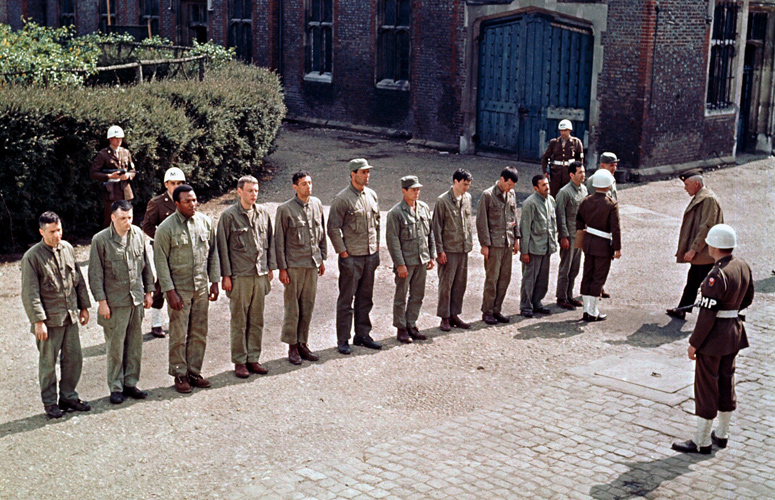
Considering I only saw it once years and years ago, I thought it was about time I reminded myself why The Dirty Dozen is so popular. After all, its memory brought Tom Hanks and Victor Garber to tears in Sleepless in Seattle. While it didn’t quite leave me choked up like them, I must admit it’s a unique classic of the war genre, full of surly machismo and a highly talented cast. And despite having practically the same basic premise, it’s way better than Suicide Squad.

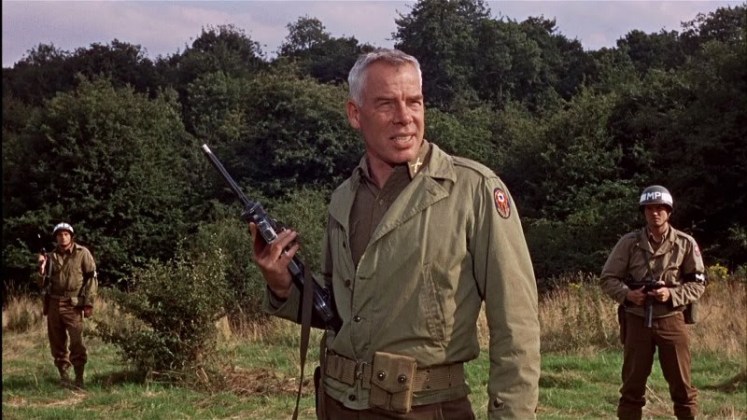
In the months leading up to D-Day, Lee Marvin’s Major Reisman is put in command of an experimental unit of twelve convicted prisoners, who are to be trained and sent on a probable suicide mission for the Allied cause.  Half of them plucked from death row, this “Dirty Dozen,” as they’re later explicitly called, is full of murderers and rebels, and despite being offered amnesty if they survive, they aren’t about to become model soldiers overnight. Thus, the no-nonsense Reisman pulls no punches in whipping them into shape and encouraging them to work together for their own (and the army’s) best interest.

The main thing I recalled from my first viewing was that I had trouble telling the men apart. Obviously, I could recognize Jim Brown as the only black member, but the others all blended together to the point that the deaths toward the end didn’t mean much to me since they were all interchangeable. While not everyone stood out this time either, I was better able to distinguish the actors I’d seen elsewhere, such as Donald Sutherland as Pinkley, Charles Bronson as Wladislaw, and John Cassavetes as Franko, plus Ernest Borgnine and George Kennedy as officers. Others stood out for their distinct personalities, such as Clint Walker’s shy Posey and Telly Savalas’s psycho Maggott. That’s still only half of the Dozen that I could pick out of a lineup from memory, but at least it’s better than my first go-round.

When I ignored trying to tell the other six apart, I was able to just enjoy the movie, which starts out slow but gets better with time. Periodic humor keeps the tone relatively light, such as Pinkley impersonating a general, and although the Dozen are labeled as bad men, there were levels to their “dirtiness.” Some like Maggott with his religious zealotry were downright crazy, but others were simply high-strung and bitter in their defiance. A few even had mitigating circumstances to their crimes that made them more sympathetic than others. This was something that Suicide Squad didn’t do well in making all the villains psychopaths, along with some of the “good guys” too. There has to be someone the audience can sympathize with, and at least a few of the men in The Dirty Dozen were worth caring about.

While the training and the war games scenes were rather fun to watch, the best part is the actual mission against the Nazis to which everything else builds. With the high body count and higher bullet count, this is war action at its best, even if I’m still not sure where and when everyone who died bit the dust. The film got a fair amount of criticism at the time for its violence, and I was a bit shocked too by the ruthlessness of killing both Nazi officers and their potentially innocent escorts, though I suppose such is war and the mission at hand. The Dirty Dozen lives up to its reputation as a “man’s movie,” but my VC enjoyed it too. Even with its large cast, it wrings plenty of excitement from the risk of its somewhat implausible but entertaining premise.

Best line: (Reisman, leaving the room after a racist comment starts a brawl) “Oh, the gentleman from the South had a question about the dining arrangements. He and his comrades are discussing place settings now.”


Rank: List Runner-Up


© 2017 S.G. Liput
517 Followers and Counting


Dawn of the Planet of the Apes (2014)

22 Sunday Oct 2017

Posted by sgliput in Movies, Poetry, Reviews, Writing

≈ Leave a comment

Tags

Action, Drama, Sci-fi, Thriller, War

Image result for dawn of the planet of the apes

They said no bridge could cross the divide,
Too far and different were each side,
And yet two chose
To still propose
A bridge to span the gap so wide.

They slowly worked with cautious hope
To lay foundations, tighten rope,
And earn the trust
That is a must
For silencing the misanthrope.

Naysayers had their efforts spurned,
Yet look what trust can build when earned!
Then fast as fire,
The doubters’ ire
Had lit the bridge and down it burned.
_____________________

MPAA rating: PG-13

Wow! If Rise of the Planet of the Apes was a prime reboot, Dawn of the Planet of the Apes is an exemplary sequel. It continues the storyline of its predecessor while establishing a new yet complementary scenario with far more depth than the simple “rise of the apes” concept could have had in the hands of lesser writers.

Image result for dawn of the planet of the apes

Set ten years after Rise, Dawn sees Caesar (Andy Serkis) and his band of intelligent esc-ape-ees having built their own mini-civilization, hidden in a dense redwood forest, while humanity has been decimated by the same virus that gave the apes their heightened intelligence. When a band of immune human survivors stumbles upon the apes, tensions immediately flare, especially because the humans’ energy needs won’t allow them the logical course of keeping their distance. Yet the human leader Malcolm (Jason Clarke) actually tries to reach out to Caesar and his apes and work toward mutual trust, something of which apes and humans alike disapprove, especially Caesar’s second-in-command Koba (Toby Kebbell).

The roles of both Caesar and Malcolm are very much representative of Rudyard Kipling’s poem “If—” as they try to “keep [their] head when all about [them] are losing theirs and blaming it on [them].” They both want what’s best for their respective groups, and they know that that includes peace between   them. We as level-headed viewers recognize the wisdom of their actions, and yet so many of their subordinates carry far too much baggage and resentment to trust that wisdom. Whether it be humans who automatically associate the word “ape” with the virus epidemic or surly Koba, who still hates humans for using him as a research guinea pig, they question their leader’s judgment and even his loyalties without questioning if he might be right. It’s frustrating and yet all too believable, considering humanity’s known weakness and intolerance.

Image result for dawn of the planet of the apes

Another major theme is that the apes and humans are not as different as either side would think. That weakness and intolerance are common to both, as is the tendency to view such opponents as a group rather than individuals who don’t necessarily all believe the same thing. The act of a rogue can quickly spiral into “us versus them” violence that makes such perceptions harder to undo. What’s astounding about Dawn is how it gets these complex messages across with minimal dialogue, utilizing the apes’ broken English and hand motions to their fullest. The motion-capture CGI is also even more impressive than in Rise, wowing with the action battle scenes, as well as benefiting the story in less flashy ways, like the clearly recognizable emotions that play out on Caesar’s face, courtesy of the talented Andy Serkis.

In addition to the Oscar-nominated visuals, all the performances are outstanding, especially Clarke, Serkis, Keri Russell as Malcolm’s wife, and Gary Oldman as Malcolm’s less trusting counterpart. James Franco is sadly departed from the story, but there are affecting reminders of him and Caesar’s past. Caesar’s ape friends who do carry over from Rise don’t stand out that much, making me glad I still remembered them from having just seen the first film, but Koba’s role is greatly expanded as an antagonist, with the ending directly mirroring one of his actions in Rise. Also, as a fan of tracking shots, I must point out a scene I loved in which the camera follows Malcolm as he stumbles through a maze of hallways trying to avoid invading apes. It made me think that a tracking shot could be a running element for the series, since Rise had the scene with young Caesar swinging throughout Will’s house.

Image result for dawn of the planet of the apes

Dawn is a sober movie that views the ape versus human struggle with far more nuance and regret than any earlier installment, precisely because the film shows it didn’t have to turn out the way it did. An action blockbuster is expected to have awesome visuals, but it’s a rare and pleasant surprise when there’s this much depth too. With so much tension between various groups nowadays, the film remains as timely as ever, a potent reminder to not let the worst parts of our nature carry us to destruction.

Best line: (Caesar) “I always think… ape better than human. I see now… how much like them we are.”


Rank: List-Worthy (joining Rise)


© 2017 S.G. Liput
516 Followers and Counting


No Game No Life: Zero (2017)

15 Sunday Oct 2017

Posted by sgliput in Movies, Poetry, Reviews, Writing

≈ 2 Comments

Tags

Action, Animation, Anime, Drama, Fantasy, Romance, War

Image result for no game no life zero film

Is life not a game
Where there’s no one to blame
If the rules seem unfair
And the ends are the same?

You’re tempted to quit,
Raise your hands in forfeit,
For the game doesn’t care
Where the losers will sit.

But wait! None will mind
The misfits of mankind,
For the arrogant player
Is conveniently blind.

Who heeds the has-been
When his triumphs begin?
Those who haven’t a prayer
In the game can still win.
_____________________

MPAA rating: PG-13

Although I’ve come to really enjoy anime movies over the last several years, I’d never seen an anime film in the theater. Thus, it was a special treat to see No Game No Life: Zero on the big screen, especially with it being such a visually spectacular film. After being impressed by the trailers for months before its July opening in Japan, I thought for sure I’d have to wait perhaps a year before I’d get to see an American release, so I’m grateful to Sentai Filmworks and Fathom Events for distributing the English dub so quickly.

I wouldn’t doubt that non-anime fans have no idea what No Game No Life is. It’s a series of Japanese light novels, but most in the West would know it from the anime adaptation that is surprisingly popular for having only a single twelve-episode season. It centers on the gaming prowess of eighteen-year-old Sora and his eleven-year-old stepsister Shiro, two genius-level shut-ins who are transported by the god of games Tet to a fantasy world where all conflicts are decided by wagering on games of any kind. Humanity (known as Imanity in this world) is the lowest and least powerful of all the fantasy races, so Sora and Shiro take it upon themselves to lift up the humans and conquer the world through the likes of chess, word chain, and first-person shooters. Just as WarGames fans say “Shall we play a game?”, No Game No Life fans say “Aschente,” the mutual pledge before starting a game.

Image result for no game no life zero film

The show itself is played mainly for laughs and to marvel at the Sherlock-level strategy and foresight the siblings command even when at a disadvantage, but it boasts a broader fantasy appeal too, especially with unseen backstory about a horrific war that only ended when Tet became god and made the world game-centric. The characters and situations are quite entertaining for the most part, though No Game No Life isn’t among my favorite series for one simple reason: fan service. There’s plenty of sexual harassment, near-nudity, and risqué humor, mainly from Sora, and while much of it is funny, a lot is just uncomfortable and annoying. Plus, I’m not usually a fan of the kind of anime with silly faces and exaggerated reactions (I know that’s the majority of anime), which is why I lean more toward dramatic series or movies, which are usually easier to take seriously.

That’s why I was so eager to see No Game No Life: Zero, a film centering on an extended flashback of the pre-Tet war, a subject which lends itself to much more drama and emotion, and indeed the film is a complete contrast from the humorous tone of the series. (By the way, the Zero in the title seems to be an example of the naming convention for works that are connected yet somehow separate from an established series [e.g. Fate/Zero, Steins;Gate 0, etc.].) No Game No Life is notable, and sometimes disliked, for its hypersaturated colors, boasting more bright hues than a Crayola factory, and while the movie retains the same style, it limits its palette more to complement the darker storyline. Instead of the shiny fantasy land into which Sora and Shiro are literally dropped, this war-torn world 6000 years earlier is dominated by reddened skies and skin-burning ash, leaving no doubt as to humanity’s desperation, caught in the crossfire between the more powerful magical races. Just look at the contrast between the worlds below, the first from the show, the second from the film.

Image result for no game no life disboard

Image result for no game no life zero movie

Although there’s still a lot left unseen, the film wonderfully expands our knowledge of the war, showing us why the modern-day races still hate each other. Jibril, an immortal angel-like creature called a Flugel, was one of the best characters on the show, conceited and charming at the same time, but her appearance in the film fits the description of an “angel of death,” proving that those memories of slaughter she fondly reminisces about in the show were not exaggerated. The film also intentionally echoes the series with its “new” character designs. Riku, the leader of the remaining humans, looks a lot like Sora, just as Shuvi, an Ex Machina android intent on learning the value of the human heart, looks much like Shiro. (They’re even voiced by the same voice actors in the excellent English dub that I saw.) The main design difference may be that their hair colors are reversed, but these new characters have their own personalities and griefs that set them apart from their later incarnations, and instead of a brother and sister relationship, theirs is destined for love. I will say it takes a certain amount of disconnect from the series to accept a romance between two characters who look like the siblings we know, but the film spends a good amount of time developing their relationship, even if it starts on a very awkward note.

The trailers mainly focused on the romance angle and an epic fight between Shuvi and Jibril, but I was glad to see that the movie does explain the war’s formerly vague resolution. Instead of the explicit games of the series, the game concept, along with humanity’s struggle, becomes more of a running theme as the characters engage in a literal game of “Global Thermonuclear War.” Some have complained about the pacing of the movie’s final third, but that’s where I thought it truly found its stride and consistently impressed. I loved the way victory is snatched from apparent defeat, utilizing the fact that the Ex Machina are a lot like the Borg from Star Trek, and the sad circumstances became sublimely bittersweet by the end. It spoke to how the most important people in history often remain unsung heroes, their names sometimes only remembered by God.

Image result for no game no life zero

No Game No Life: Zero was a pleasure to watch in the theater, especially because it elevated the series it was based on, focusing on the fantasy with just a taste of the original’s humor and chucking the unnecessary fan service. (There’s still some stylized nudity, but it’s more forgivable here.) The animation is particularly stunning, especially during that epic battle I mentioned, and the score beautifully enhanced the emotions of each scene, with the lovely ending theme “There Is a Reason” earning entrance into my End Credits Song Hall of Fame.  By the end, as the film tied itself directly into where the series left off, I even found myself feeling surprisingly nostalgic and fond for a show I thought I only moderately liked. Many think this film is a prelude for a potential second season, and the movie will certainly strengthen that hope. No Game No Life may be a series I wouldn’t quite recommend to everyone, but, with the right background information, this movie is. (By the way, I’ve included the first teaser trailer down below to give a taste of the awesome animation and music.)

Best line: (Riku) “Yes, humans are fools, but it takes a great fool to not let that foolishness get themselves killed.”

Rank: List Runner-Up

© 2017 S.G. Liput
516 Followers and Counting

Dunkirk (2017)

06 Friday Oct 2017

Posted by sgliput in Movies, Poetry, Reviews, Writing

≈ 1 Comment

Tags

Action, Drama, History, Thriller, War

Image result for dunkirk film

In desperate times, the desperate strive
To conquer odds and just survive,
A second, minute, hour away
To die or live another day.

Is this success, to scrape on through,
To call retreat as foes pursue?
Is it defeat to slip away
To live and fight another day?
_____________________

MPAA rating: PG-13

Dunkirk was one of my most anticipated movies this year, and Christopher Nolan delivered. And what he delivered is a war movie unlike any other, one that uses his penchant for time manipulation in order to provide a comprehensive and visceral glance at the Dunkirk evacuation, which until now wasn’t nearly as known as it should have been.

Image result for dunkirk film mark rylance

Minimally explained by a couple words on the screen, the film takes place in three different time frames: a week for the soldiers stranded on Dunkirk’s beaches as they desperately seek rescue, a day for a small civilian vessel on its way across the English Channel to help, and an hour for a lone RAF pilot (Tom Hardy) as he defends evacuees from German bombers. The movie bounces around between time frames so frequently that it’s easy to confuse the chronology of events that play out faster in one timeline than another, but it also becomes a sort of epic puzzle as the three stories converge toward the end.

Dunkirk is far from a head trip, though; it’s a non-stop adrenaline rush. From the first moments where silence is shattered by sudden gunfire, the nerves are constantly put on edge. I wouldn’t doubt that Dunkirk is a shoo-in for technical Oscars, like Sound Editing: augmented by Hans Zimmer’s escalating score, the gunshots and the blaring drone of incoming bombers are deafening (my theater had excellent speakers), lending the audience a taste of the shell shock felt by the soldiers of Dunkirk.

Image result for dunkirk film

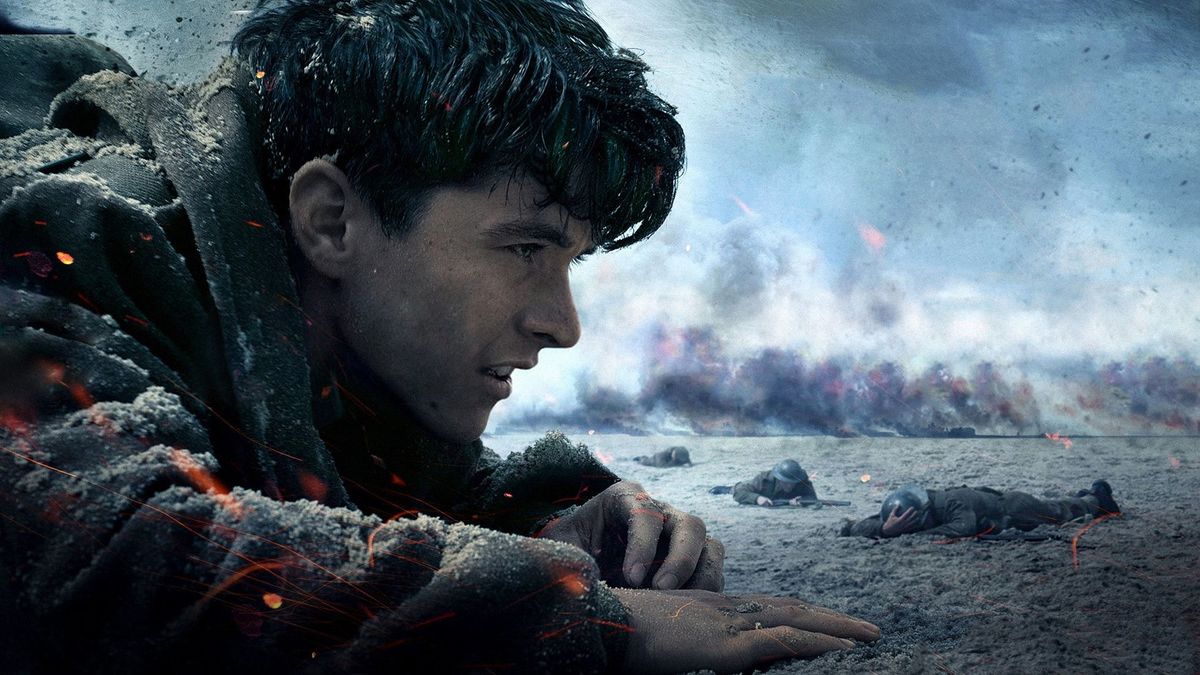
It’s amazing how relentless the suspense is across all three stories. Hardy’s midair dogfights are thrillingly authentic, especially with the knowledge that real period planes were used rather than CGI re-creations, while Mark Rylance embodies civilian determination as the skipper of the small boat Moonstone, offering brave wisdom while dealing with a panicky survivor (Cillian Murphy). The most unnerving scenes go to the British young men on Dunkirk’s stark, wind-swept beaches, particularly Fionn Whitehead as our touchstone in that time frame. We barely get to know any of the soldiers, which also include Aneurin Barnard and a quite solid Harry Styles, but their desperation is palpable as they search for any boat in the storm. One scene of a torpedo attack is a whirl of watery chaos; not since Titanic has a ship sinking been so riveting.

On technical merit, the film is practically flawless, but there were a few things that held it back from total perfection, for me at least. Aside from the potential confusion of the three time frames, I suppose I prefer war movies to have a bit more character development. I never really learned any of the characters’ names or backgrounds, and the beach-bound soldiers have precious little to say to each other, although I’m sure it was likely intentional to focus more on their immediate actions rather than backstory and dialogue. A few moments also left me confused as to people’s reasoning, like when soldiers on an endangered boat insist that someone should get off or when one character seems to choose capture by the enemy over joining the evacuation. One tiny bit of improved editing might also have better shown that a waterlogged boat was actually at sea rather than just surrounded by the incoming tide. Plus, Nolan’s focus for the film was clearly the desperation of everyone involved, and while heroism has its triumphant moments, the desperation tends to overwhelm it and leave little room for any religious aspect of the story, like the day of prayer in Britain beforehand or the miraculous storm that kept the German army at bay.

Image result for dunkirk film mark rylance

I quite agree with the consensus that Dunkirk is one of the great war movies of all time, and its beach setting makes comparisons to Spielberg’s Saving Private Ryan inevitable. While I think Saving Private Ryan is a better film overall, I will say that I appreciated Dunkirk’s comparative restraint. There are no severed limbs or sprays of blood, and the intensity of the war scenes is not diminished one bit. Yet perhaps that’s due to a difference in directorial intention. I loved Nolan’s explanation he gave in an interview, stating that Saving Private Ryan showed the horror of war with scenes to make you want to turn away, while Nolan wanted to make a film of suspense that “you can’t take your eyes off.” In that, he succeeded, and even if it’s not quite perfect, even if I still consider Inception Nolan’s best work, Dunkirk is a brilliantly executed, well-acted, edge-of-your-seat piece of immersive history.

Best line: (Rylance’s Mr. Dawson) “He’s shell-shocked, George. He’s not himself. He might never be himself again.”


Rank: List-Worthy


© 2017 S.G. Liput
514 Followers and Counting


2017 Blindspot Pick #6: Saving Private Ryan (1998)

02 Sunday Jul 2017

Posted by sgliput in Blindspot, Movies, Poetry, Reviews, Writing

≈ 2 Comments

Tags

Action, Drama, History, War

Image result for saving private ryan

They ran up the hills and across hostile plains.
They learned from their drills and embarked on campaigns.
They slogged through the mud and up bullet-chewed shores.
They spilled others’ blood while they dropped by the scores.

These teachers and writers and miners supplied
Their service as fighters for duty or pride.
They risked life and limb, often lost one or both,
And faced dangers grim that weren’t part of the oath.

They left homes and holes to attack assumed foes.
They charged foolish goals they were told to oppose.
They braved likely death where the angels don’t tread
And gave their last breath with both courage and dread.

Some died on the field, and some died in the tent,
And some made survival their cause to repent.
And most dwell, years past their first sojourn to war,
In graveyards amassed for the ones they fought for.

They stormed into hell, not for heaven’s demand,
But blistered and fell for their nation to stand.
And though you and I fathom not their nightmares,
How deep our thanks lie for the gift that is theirs.
_____________________

MPAA rating: R

Of all my Blindspot Picks this year (I know this one for June is a couple days late), Saving Private Ryan was the one I was most nervous about watching. There’s a reason I hadn’t yet watched this widely acclaimed classic from Steven Spielberg, namely its reputation as one of the more graphic war movies, which as a rule, I usually try to avoid. Yet after enduring the harsh battle scenes of Hacksaw Ridge and still loving it, as well as the current patriotic timing between the D-Day anniversary (June 6) and July 4, now seemed like the right time to finally give Saving Private Ryan a chance. I’m glad I did.

Image result for saving private ryan

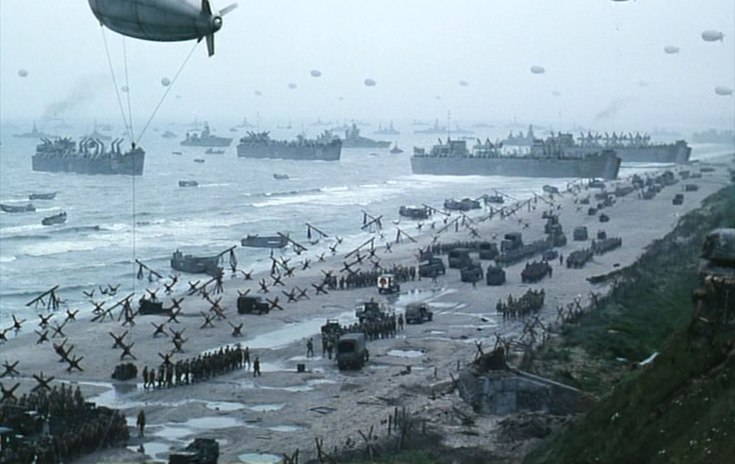
Most of what I’d heard of Saving Private Ryan centered on the first thirty minutes, the brutal re-creation of the Normandy invasion. Indeed it’s an impressively intense experience to sit through, even if it’s still only a fraction of what the soldiers involved actually had to endure, among them my own paternal grandfather. It also feels fiercely comprehensive in its depiction of the battlefield, following Tom Hanks’s Captain John Miller from the assault boats up the bullet-riddled beaches under constant enemy fire. The men’s reactions to the nightmarish setting range from terrified and dazed to angry and vengeful, particularly as the repeated attempts to save the wounded prove horrifically futile. There are no cuts away to generals talking or planning or anything to take the viewer out of the moment, and it’s epic and immersive. As for the notorious violence, it’s comparable to the battle scenes of Hacksaw Ridge, though perhaps a bit less constant in its bloodshed than the worst Hacksaw Ridge scenes.

Yet, even beyond the intense opening, the rest of the film has plenty of strengths as well, the strongest of which has to be Tom Hanks. Hanks has always been good in everything I’ve seen of his, and he gives an outstanding performance here, easily worthy of an Oscar, for which he was only nominated. As Captain Miller, he’s a competent leader willing to fulfill his duty, even when his superiors send him on a foolhardy mission into enemy territory to retrieve the titular Private Ryan (Matt Damon), whose loss of his three brothers in battle has earned him a sympathy ticket home. Yet Miller isn’t as tough as nails as he tries to act, sometimes amused at hearing his men guess at his mysterious past, sometimes letting his desperation and grief amidst all the violence show through. Hanks is the touchstone for the whole film, which is important when the rest of the men under him aren’t as distinguishable, at least at first. The film’s long runtime of 2 hours and 49 minutes helps the other men under him stand out a bit, such as Barry Pepper’s praying sniper or Edward Burns’ hothead who rebels at risking lives for the sake of one man. (Until the end credits, I really thought Burns was Ben Affleck for some reason.) Even if I couldn’t keep up with most of their names, all the actors do an excellent job, including Damon, Burns, Tom Sizemore, Giovanni Ribisi, and Vin Diesel. Speaking of characters, I was especially delighted to see a very young Nathan Fillion (Castle, Firefly) as a different Private Ryan and (major Lost alert!) Jeremy Davies as timid interpreter Upham, which is such a strong role for him that I’m surprised this film didn’t make him a more sought-after star.

Image result for saving private ryan

Along the cross-country search for Private James Francis Ryan are individual encounters that convey so much of the horror, callousness, and sacrifice. At one point, Miller’s men rummage through dog tags of the deceased, joking and bantering as if they’re playing cards, only to be reminded that they’re essentially sorting through men’s stolen lives. Later, Upham defends a German prisoner whom the others want to kill, only for his naively righteous motivations to be starkly challenged by the ruthlessness of war. (The way this subplot plays out is like the opposite of a similar aspect of the 2003 film Saints and Soldiers.)  And through it all is the question of whether Private Ryan is worth all the trouble of saving. Does offering Ryan’s mother a little comfort in her grief warrant putting other men’s mothers through the same? How can one man live up to the sacrifices made to rescue him?

Saving Private Ryan is undoubtedly one of Steven Spielberg’s greatest achievements, yet oddly enough, while the film runs through a range of emotions, one of the strongest for me was anger. Why? Because how on God’s blue marble did Shakespeare in Love beat this for Best Picture?!?!?! I mean, really, there is no contest as to which film is grander, better told, and all-around more significant. In my opinion, that has to be the worst Best Picture decision the Academy has ever made, worse even than the La La Land debacle from this past year. I’m sorry, but Saving Private Ryan is clearly the true Best Picture of 1998. At least, Spielberg won Best Director, alongside Oscars for Cinematography, Sound Mixing, Film Editing, and Sound Effects Editing.

Despite all this praise for Saving Private Ryan, I’m left divided on how exactly to rank it on my Top 365 List at the end of the year. As with Hacksaw Ridge, I loved the story, acting, script, patriotic message, and production values, but the violence is a big drawback for me, mainly in diminishing its watchability. While the violence is important for effectively re-creating the savagery of battle, I still feel that sprays of blood and severed limbs are unnecessarily gruesome tools in a filmmaker’s arsenal. At one point, someone is literally blown apart by a bomb they don’t throw away for some reason; I couldn’t tell who it was or why they didn’t chuck the explosive, making the scene unnecessary except for shock value. I just feel that this would have been a slightly more accessible film if it had been edited to avoid some of the gore; I know my aversion to violence puts me in the movie-watching minority, but there must be others who avoid films like this for the same reasons I did (like my VC, who still refuses to see it). Ultimately, though, its strengths far outweigh that personal negative, so I’ll have to figure out later where exactly on my list such a film deserves to be.

Image result for saving private ryan normandy

I have no hesitation in confirming that Saving Private Ryan really is among the best war films ever made. The cinematography and explosive battles augment its epic storytelling while never ignoring the human cost and casualties, and it captures the complicated mess of war, such as casting a disapproving eye at the vengeful cruelty done by Americans while reminding us that self-righteousness is rarely rewarded in battle. The strongest performances by Hanks and Davies should have earned them both Oscars. I can’t say I’d watch Saving Private Ryan often, due to its length and intensity, but few films are better suited for July 4 viewing.

Best line: (Captain Miller, to Private Reiben, who wants to kill a prisoner) “You want to leave? You want to go off and fight the war? All right. All right. I won’t stop you. I’ll even put in the paperwork. I just know that every man I kill, the farther away from home I feel.”


Rank: List-Worthy


© 2017 S.G. Liput
491 Followers and Counting


← Older posts
Newer posts →

Recent Posts

  • We Didn’t Start 2025 (Recap)
  • NaPoWriMo 2025 Recap (Finally)
  • Sonic the Hedgehog 3 (2024)
  • It Happened One Night (1934)
  • Spellbound (2024)

Recent Comments

associatesofshellymann's avatarassociatesofshellyma… on My Top Twelve La La La So…
Kit's avatarKit Nichols on Bonnie and Clyde (1967)
lifelessons's avatarlifelessons on Look Back (2024)
Carol Jackson's avatarCarol Jackson on The Thief of Bagdad (1940…
Stephen's avatarStephen on Love Story (1970)

Archives

  • January 2026
  • December 2025
  • May 2025
  • April 2025
  • March 2025
  • February 2025
  • January 2025
  • December 2024
  • May 2024
  • April 2024
  • March 2024
  • February 2024
  • January 2024
  • December 2023
  • November 2023
  • October 2023
  • September 2023
  • July 2023
  • June 2023
  • May 2023
  • April 2023
  • March 2023
  • February 2023
  • January 2023
  • December 2022
  • November 2022
  • October 2022
  • September 2022
  • August 2022
  • July 2022
  • June 2022
  • May 2022
  • April 2022
  • March 2022
  • February 2022
  • January 2022
  • December 2021
  • November 2021
  • October 2021
  • September 2021
  • August 2021
  • July 2021
  • June 2021
  • May 2021
  • April 2021
  • March 2021
  • February 2021
  • January 2021
  • December 2020
  • November 2020
  • October 2020
  • September 2020
  • August 2020
  • July 2020
  • June 2020
  • May 2020
  • April 2020
  • March 2020
  • February 2020
  • January 2020
  • December 2019
  • November 2019
  • October 2019
  • September 2019
  • August 2019
  • July 2019
  • June 2019
  • May 2019
  • April 2019
  • March 2019
  • February 2019
  • January 2019
  • December 2018
  • November 2018
  • October 2018
  • September 2018
  • August 2018
  • July 2018
  • June 2018
  • May 2018
  • April 2018
  • March 2018
  • February 2018
  • January 2018
  • December 2017
  • November 2017
  • October 2017
  • September 2017
  • August 2017
  • July 2017
  • June 2017
  • May 2017
  • April 2017
  • March 2017
  • February 2017
  • January 2017
  • December 2016
  • November 2016
  • October 2016
  • September 2016
  • August 2016
  • July 2016
  • June 2016
  • May 2016
  • April 2016
  • March 2016
  • February 2016
  • January 2016
  • December 2015
  • November 2015
  • October 2015
  • September 2015
  • August 2015
  • July 2015
  • June 2015
  • May 2015
  • April 2015
  • March 2015
  • February 2015
  • January 2015
  • December 2014
  • November 2014
  • October 2014
  • September 2014
  • August 2014
  • July 2014
  • June 2014
  • May 2014
  • April 2014
  • March 2014
  • February 2014
  • January 2014
  • December 2013

Categories

  • Blindspot
  • Blogathon
  • Christian
  • Movies
  • Music
  • NaPoWriMo
  • Poetry
  • Reviews
  • TV
  • Writing

Meta

  • Create account
  • Log in
  • Entries feed
  • Comments feed
  • WordPress.com

Recent Posts

  • We Didn’t Start 2025 (Recap)
  • NaPoWriMo 2025 Recap (Finally)
  • Sonic the Hedgehog 3 (2024)
  • It Happened One Night (1934)
  • Spellbound (2024)

Recent Comments

associatesofshellymann's avatarassociatesofshellyma… on My Top Twelve La La La So…
Kit's avatarKit Nichols on Bonnie and Clyde (1967)
lifelessons's avatarlifelessons on Look Back (2024)
Carol Jackson's avatarCarol Jackson on The Thief of Bagdad (1940…
Stephen's avatarStephen on Love Story (1970)

Archives

  • January 2026
  • December 2025
  • May 2025
  • April 2025
  • March 2025
  • February 2025
  • January 2025
  • December 2024
  • May 2024
  • April 2024
  • March 2024
  • February 2024
  • January 2024
  • December 2023
  • November 2023
  • October 2023
  • September 2023
  • July 2023
  • June 2023
  • May 2023
  • April 2023
  • March 2023
  • February 2023
  • January 2023
  • December 2022
  • November 2022
  • October 2022
  • September 2022
  • August 2022
  • July 2022
  • June 2022
  • May 2022
  • April 2022
  • March 2022
  • February 2022
  • January 2022
  • December 2021
  • November 2021
  • October 2021
  • September 2021
  • August 2021
  • July 2021
  • June 2021
  • May 2021
  • April 2021
  • March 2021
  • February 2021
  • January 2021
  • December 2020
  • November 2020
  • October 2020
  • September 2020
  • August 2020
  • July 2020
  • June 2020
  • May 2020
  • April 2020
  • March 2020
  • February 2020
  • January 2020
  • December 2019
  • November 2019
  • October 2019
  • September 2019
  • August 2019
  • July 2019
  • June 2019
  • May 2019
  • April 2019
  • March 2019
  • February 2019
  • January 2019
  • December 2018
  • November 2018
  • October 2018
  • September 2018
  • August 2018
  • July 2018
  • June 2018
  • May 2018
  • April 2018
  • March 2018
  • February 2018
  • January 2018
  • December 2017
  • November 2017
  • October 2017
  • September 2017
  • August 2017
  • July 2017
  • June 2017
  • May 2017
  • April 2017
  • March 2017
  • February 2017
  • January 2017
  • December 2016
  • November 2016
  • October 2016
  • September 2016
  • August 2016
  • July 2016
  • June 2016
  • May 2016
  • April 2016
  • March 2016
  • February 2016
  • January 2016
  • December 2015
  • November 2015
  • October 2015
  • September 2015
  • August 2015
  • July 2015
  • June 2015
  • May 2015
  • April 2015
  • March 2015
  • February 2015
  • January 2015
  • December 2014
  • November 2014
  • October 2014
  • September 2014
  • August 2014
  • July 2014
  • June 2014
  • May 2014
  • April 2014
  • March 2014
  • February 2014
  • January 2014
  • December 2013

Categories

  • Blindspot
  • Blogathon
  • Christian
  • Movies
  • Music
  • NaPoWriMo
  • Poetry
  • Reviews
  • TV
  • Writing

Meta

  • Create account
  • Log in
  • Entries feed
  • Comments feed
  • WordPress.com

Blog at WordPress.com.

Is this your new site? Log in to activate admin features and dismiss this message
Log In
  • Subscribe Subscribed
    • Rhyme and Reason
    • Join 814 other subscribers
    • Already have a WordPress.com account? Log in now.
    • Rhyme and Reason
    • Subscribe Subscribed
    • Sign up
    • Log in
    • Report this content
    • View site in Reader
    • Manage subscriptions
    • Collapse this bar