• Home
  • About Me
  • The List
  • THE LIST (2016 Update)
  • THE LIST (2017 Update)
  • THE LIST (2018 Update)
  • THE LIST (2019 Update)
  • THE LIST (2020 Update)
  • THE LIST (2021 Update)
  • THE LIST (2022 Update)
  • Top Twelves and More
  • The End Credits Song Hall of Fame

Rhyme and Reason

~ Poetry Meets Film Reviews

Rhyme and Reason

Tag Archives: Biblical

Journey to Bethlehem (2023)

25 Monday Dec 2023

Posted by sgliput in Christian, Movies, Music, Poetry, Reviews, Writing

≈ Leave a comment

Tags

Biblical, Comedy, Drama, Family, Musical, Romance

Merry Christmas, everybody!

____________________

At the turning of the centuries,
Though no one knew it then,
A babe was born to save the world,
Incarnate God. Amen!

But surely you have heard all this;
By now it might be trite,
The midnight clear, the first Noel,
That timeworn silent night.

It’s easy for familiar truths,
Traditions every year,
To not have quite the gleam they bore
When times were more sincere.

Perhaps we may have changed with time,
But truths stand hard and fast.
Traditions, like God’s promises,
Are comfort, for they last.

Although we know them all by heart,
We need reminding still,
That what the carols advertise
Rings true and always will.
____________________________

MPA rating: PG

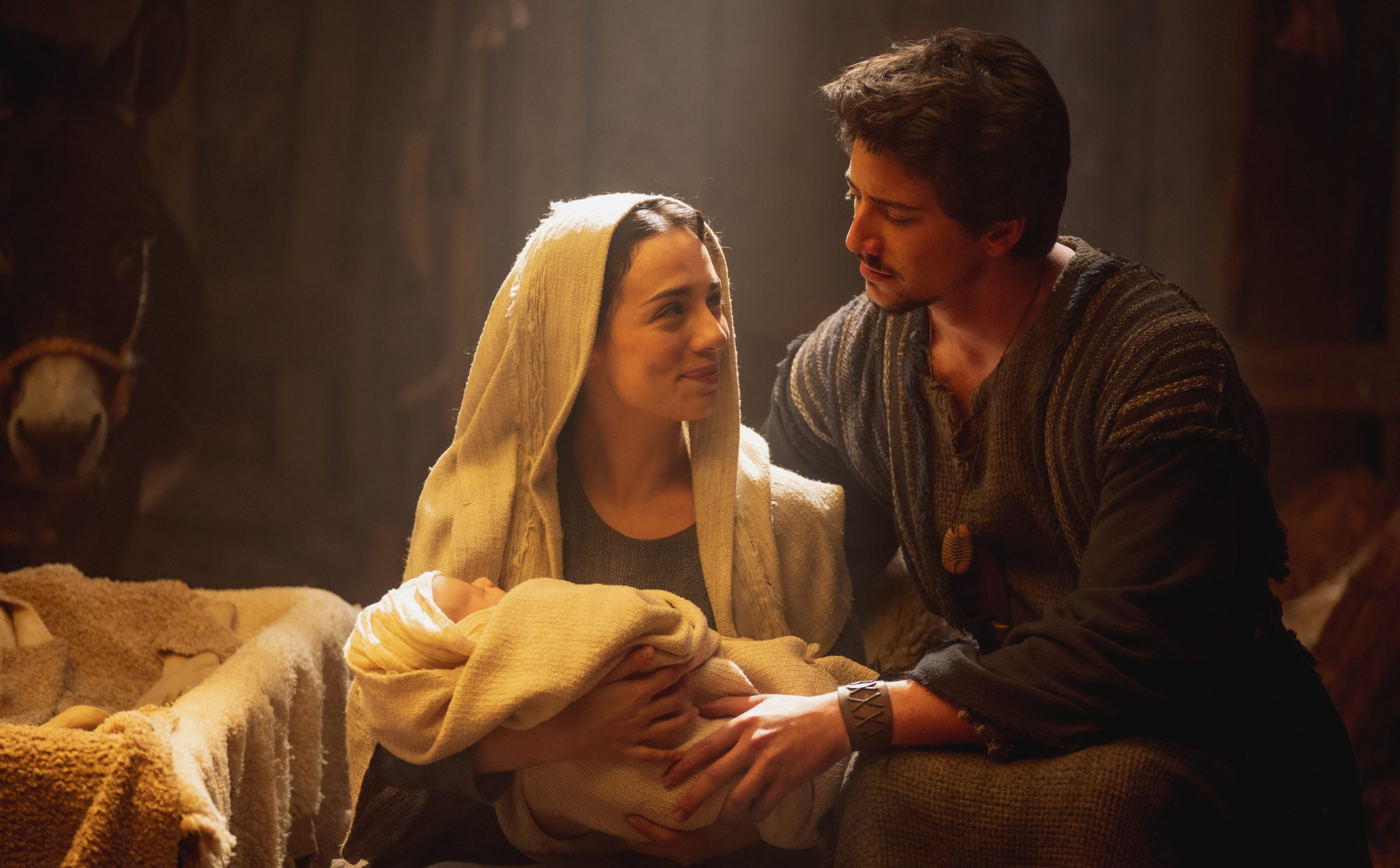
To complete this trilogy of musical posts, here’s a more recent release from this year. I feel like someone, assumedly director and songwriter Adam Anders, watched The Nativity Story and thought to himself, “This would be even better as a musical” and then made it so. Journey to Bethlehem takes the well-trodden Biblical story of Jesus’ birth and injects a pop-music sensibility that both adds entertainment value while also slightly watering it down.

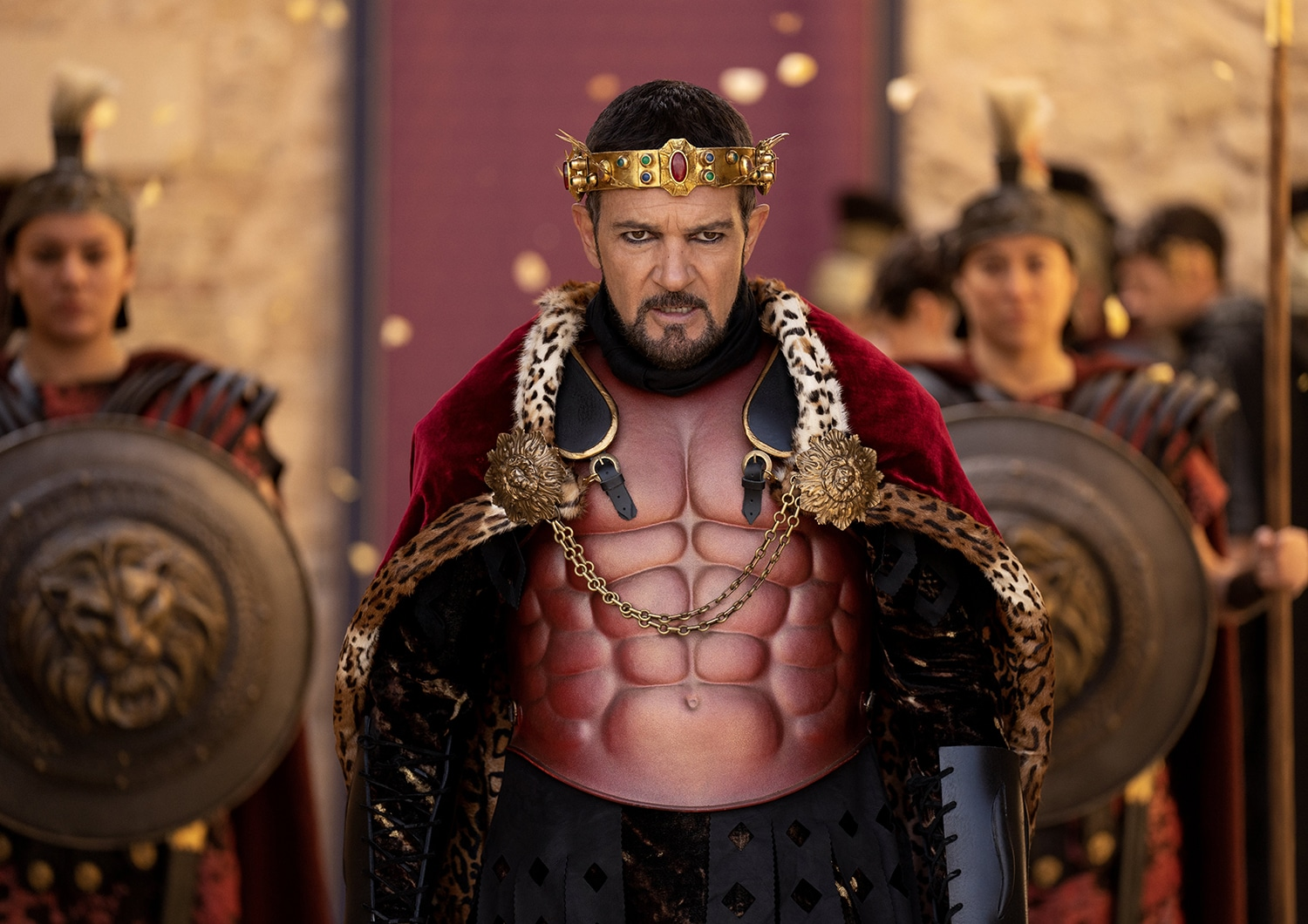
From the second song, in which Mary is bemoaning her expected role of marrying someone she’s never met, I thought that this was like the High School Musical version of the Christmas story, so I felt vindicated when I read that Anders co-wrote the script with Peter Barsocchini, who also wrote all three HSM movies (of which I remain a fan). So the character types and conflicts are all too familiar, yet the actors make the most of them, with Fiona Palomo as Mary and Milo Manheim (a recent Disney star from the Zombies franchise) as Joseph having an easy chemistry and excellent songs both together and solo. The soundtrack delivers on many levels, some better than others, but highlights include the opening title song and “Mother to a Savior and King,” which explores Mary’s own self-doubt. And I mustn’t forget Antonio Banderas as King Herod, who seems to be having fun mugging through his one song “Good to Be King.”
The plot of Journey to Bethlehem was clearly tweaked from the Biblical record to add peril to the climax and to better space out the musical numbers, so I can understand the decisions on a pure story basis.  Yet it felt at times like I was trying to keep track of how many deviations there were from the established narrative. In this film, Herod tries to ignore Rome’s census order but is persuaded to use it solely as a means to find the mother of the foretold Messiah, leading to several close calls where it’s assumed Mary would be immediately recognized as such if she were to be caught. It was also surprising to give a redemption arc to Herod’s son Antipater (Joel Smallbone of the band For King and Country), who gets one of the best songs as well.

Likewise, the wise men, here a trio of bickering comic relief figures (Rizwan Manji, Geno Segers, Omid Djalili), come to Herod even before the census or Jesus’ birth and then leave for Bethlehem (which isn’t far from Jerusalem) to hang out with the shepherds for months perhaps so that they also are witnesses to the heavenly angel chorus. Plus, there are odd omissions, like the absence of Mary’s acceptance of the role declared by Gabriel (Christian rapper Lecrae) during the Annunciation scene or the inclusion of Zechariah’s muteness without any subsequent depiction of his son’s birth.
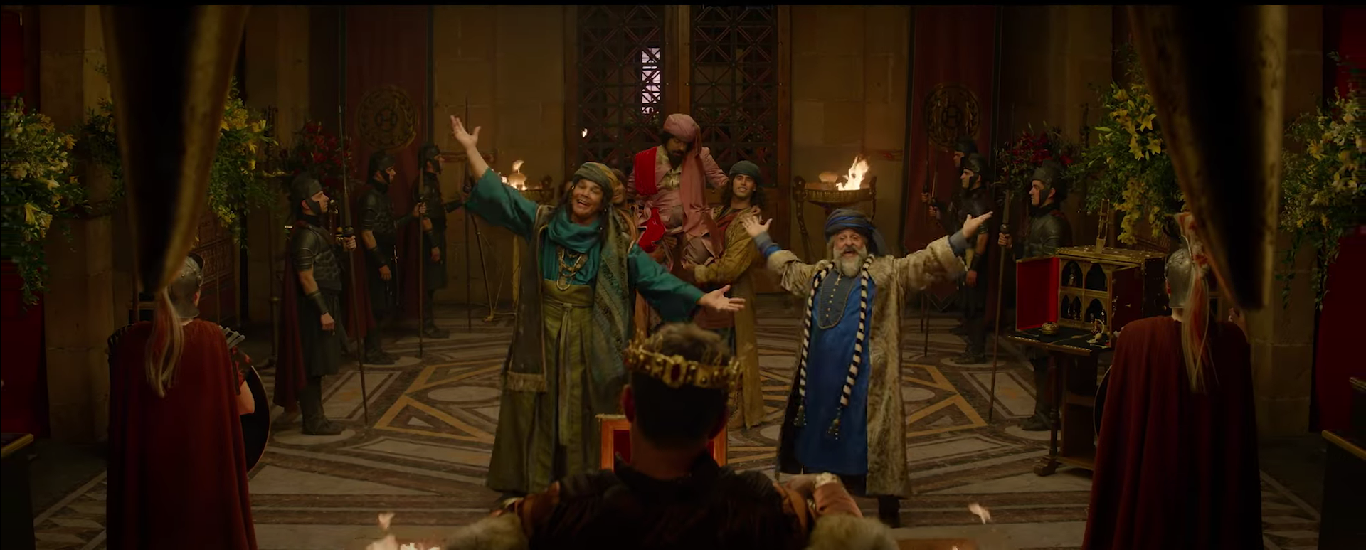
Yet for all the little things that nagged at me, Journey to Bethlehem is still an entertaining Christmas film, and I never got the sense that the changes were intentionally trying to subvert or undermine the meaning behind the story, which is refreshing. It also boasts impressive costumes and choreography that are far better than they would have been if this were made ten or fifteen years ago. It’s proof of how far Christian films have come. While I’m not quite sure if this movie rises to the level of a perennial classic to watch every Christmas, it’s still a laudable version of the Nativity with a soundtrack that deserves appreciation even outside its target audience.

Rank:  List Runner-Up

© 2023 S.G. Liput
785 Followers and Counting
The Christ Slayer (2019)

10 Friday Apr 2020

Posted by sgliput in Christian, Movies, NaPoWriMo, Poetry, Reviews, Writing

≈ Leave a comment

Tags

Biblical, Drama

See the source image

(Today’s NaPoWriMo prompt was for a hay(na)ku, a six-word variation of a haiku. Thus, I strung several hay(na)kus together to form a non-traditional sonnet.)

Crosses
Weigh heavier
With every step.

Burdens
Hang over,
Blocking the sun.

Lies
Strain hearts
Worse than disease.

Relief
Is all
That mankind craves.

Crosses grow lighter
Only in faith.
__________________

MPA rating: PG-13

Christian films are… hit-and-miss, to put it kindly, with far more misses than hits. Even the box-office hits from the Kendrick brothers are a bit too preachy to wholeheartedly recommend, even if their themes and message are laudable. Since it’s the most solemn holy day of the year, I knew I wanted to review something religious for Good Friday and decided to take a chance on a film I happened upon in Amazon Prime, one that turned out to be a very pleasant surprise.

See the source image

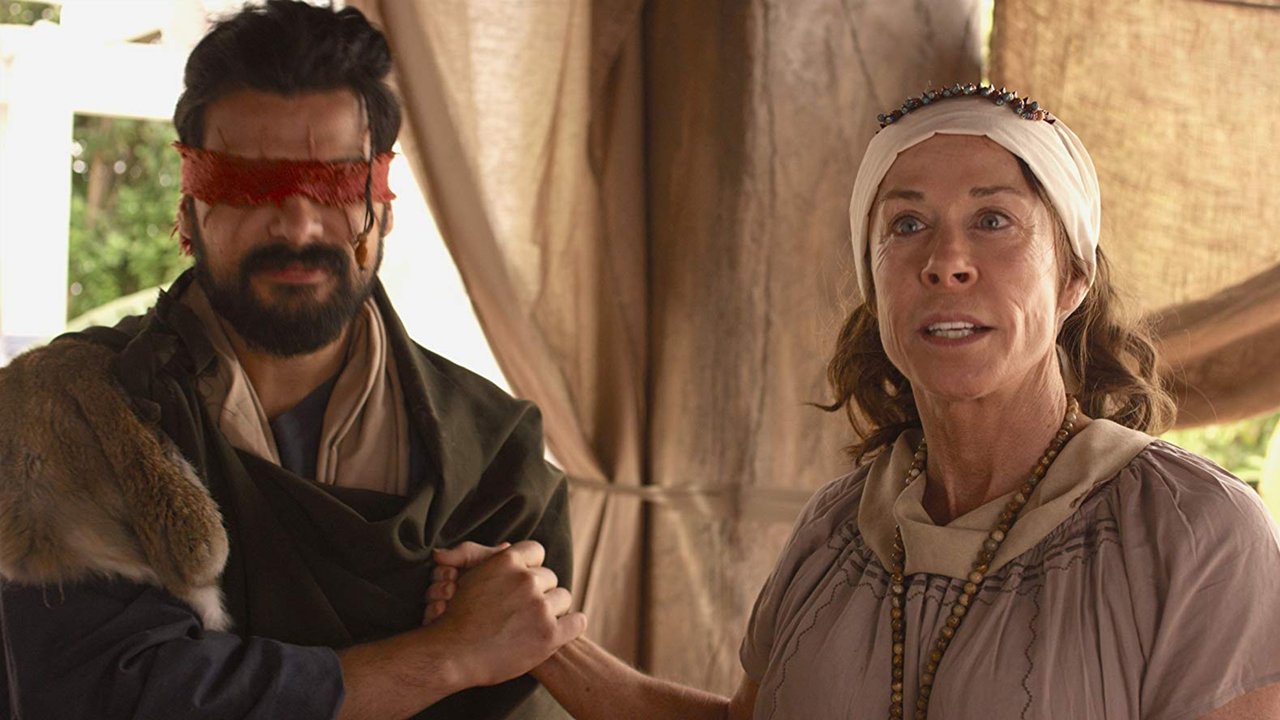
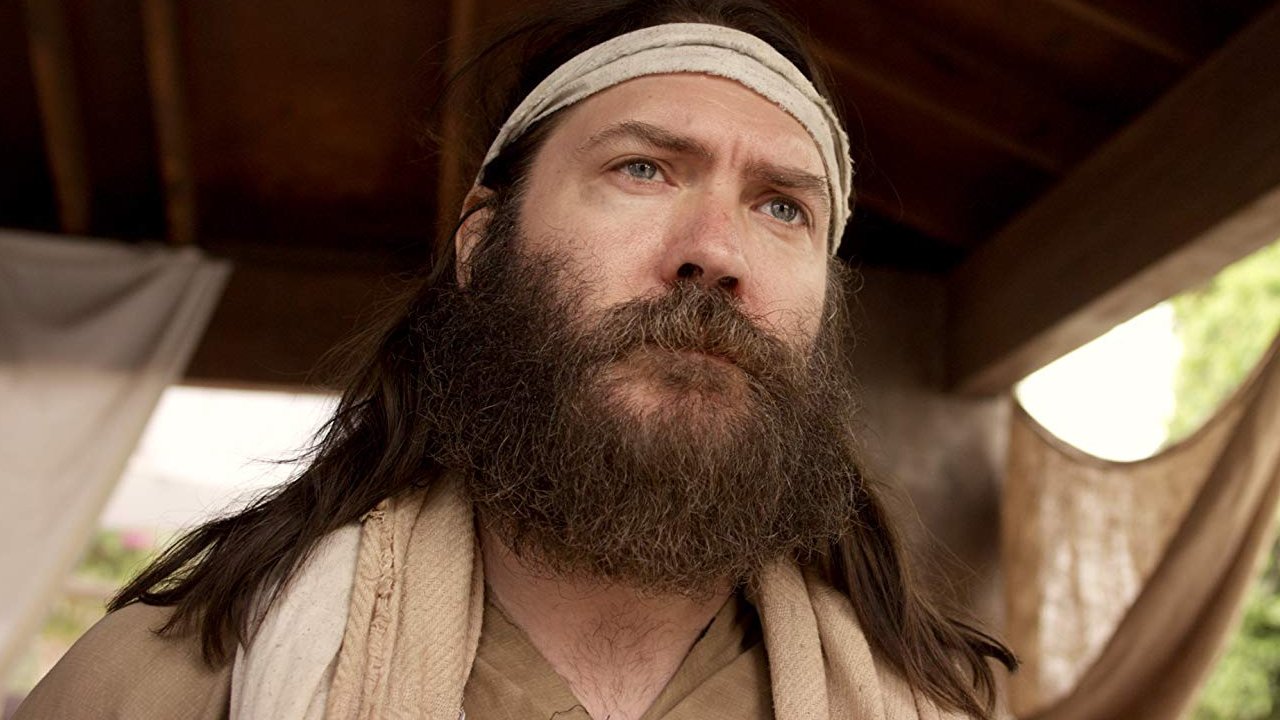
The Christ Slayer, in a unique blending of the Bible and legend, is the tale of Longinus, a blind and despondent Roman centurion who is ordered to pierce Jesus’ side at the crucifixion, earning him the same title as the film. When Jesus is reported to have been resurrected, some scoff, while others fear that he may seek vengeance on the soldier who killed him. Eventually, Longinus decides to quit his role and make the journey home, which becomes transformative when he meets a nameless traveler on the way.

The Christ Slayer can be inconsistent. At times, the camera work comes off as cheap, while at others, the dialogue is written to seem more archaic, resulting in a stilted delivery. Yet, there’s far more good than bad in this film. For one, the cinematography and score are often gorgeous, putting it a cut above the quality of other Christian films. And the acting, while rocky at the beginning, gets better with time, with DJ Perry (CEO of the film’s production company) standing out as a brilliant, soft-spoken Jesus. Likewise, Carl Weyant as Longinus and Josh Perry (who has Down’s syndrome) as his devoted servant make a surprisingly compelling pair as Longinus deals with his inner demons and guilt. Rance Howard, who died before its release, is the only recognizable name in a tiny role, but the other actors acquit themselves well.

One thing to keep in mind is that the plot of The Christ Slayer is definitely not faithful to the Bible events. For starters, Jesus was already dead before being pierced by the lance, so Longinus didn’t take his life himself, and while there are clear parallels to the road to Emmaus story, they’re somewhat abandoned in favor of the film’s own tale. Yet, even if the plot diverges more than I’d like, the film’s themes are faithful to its source, and the characters’ conversations become surprisingly profound. At one point, Satan and Gabriel, both following Jesus’ progress, share a fascinating exchange as former friends turned rivals; later, Jesus soothes Longinus’ concerns about his dead mother with warmth, empathy, and eloquent forgiveness. The whole second half is slower, contemplative, occasionally funny, and ultimately uplifting.

See the source image

I was pleased to learn that this is the third installment of a “Quest Trilogy” from production company Collective Development, Inc., and I’m now quite curious to check out its predecessors 40 Nights and Chasing the Star. Unlike many Christian films, The Christ Slayer focuses first on telling a compelling story and then weaves in its message, avoiding banal preachiness. It felt more natural than 2016’s Risen but with similarities to that film and 1953’s The Robe. It’s been a while since I discovered a faith-based film I could fully recommend, one that I would gladly watch again next year during Holy Week.

Best line: (Jesus) “Salvation is within reach of all.”  (Sabina, Longinus’ aunt) “But they must want to be saved.”


Rank: List Runner-Up


© 2020 S.G. Liput
677 Followers and Counting

Risen (2016)

16 Sunday Apr 2017

Posted by sgliput in Christian, Movies, NaPoWriMo, Poetry, Reviews, Writing

≈ Leave a comment

Tags

Biblical, Drama, History, Mystery

Image result for risen 2016 film

(Happy Easter to all! Today’s NaPoWriMo prompt was for a poem inspired by letter-writing, so I rhymed up a letter that the main character of this movie might have written by the end.)


Dear Lucius, please forgive
My sudden absence. I yet live,
But returning to my former life I simply cannot do.
I was Tribune, son of Mars,
And have weathered many scars,
But such were merely physical and all I ever knew.

I’ve seen many crucifixions;
I had no need for predictions.
Every broken, bloody body had its final resting place,
Till one random victim slain
The chosen grave could not contain.
I’ve never seen a man whom even death could not erase.

I doubted, how I doubted,
And was adamant about it;
I have seen and known too much to trust the supernatural.
I don’t expect you to believe,
For true faith I’ve yet to achieve,
But life can never be the same when it has known a miracle.

-Clavius
_________________

MPAA rating: PG-13

While all the other posts for NaPoWriMo have been decided mostly by the prompt, I knew there was no other recently seen film to review on Easter than Risen, the most prominent of the three Jesus movies from 2016 (the others being The Young Messiah and Last Days in the Desert). Risen was considered a spiritual sequel to The Passion of the Christ, picking up essentially where Mel Gibson’s film left off and focusing on the events of Jesus’ resurrection. Instead of merely showing the Biblical story as many previous films have, Risen differentiates itself for the better by applying an outsider’s view, specifically in the fictional character of Tribune Clavius (Joseph Fiennes).

Image result for risen 2016 film

Somewhat like 1953’s The Robe, the crucifixion is seen through the eyes of a Roman when Pontius Pilate sends Clavius to keep the crowds in check at Jesus’ execution. Clavius has never even heard of this man, and he absorbs all the reports and promises of his supernatural return with the mind of a pagan skeptic, putting his faith in Mars, the god of war. When the body of Jesus disappears, he is commissioned by Pilate to track it down and put all the rumors and worries to rest. Clavius’ investigations may not be strictly Biblical, but it makes sense that the authorities’ first response would be to disprove the resurrection with physical evidence, a search that is made surprisingly gripping by the urgency of the mission. The interviews Clavius conducts with the likes of Joseph of Arimathea and Bartholomew give him an idea of what Jesus’ followers are like, steadfast and often giddy with hope, and some of the side characters provide some excellent acting. The account of one of the unnerved guards from the tomb is especially well-delivered.

While Risen strives to be a cut above other faith-based films, it falls into the familiar mold by the end. Its similarities to The Passion of the Christ mainly consist in the use of the Hebrew name Yeshua for Jesus, and it does reimagine certain details with gritty zeal, but it doesn’t really follow The Passion’s sterling example of “show, don’t tell.” The film’s depiction of the resurrected Jesus (Cliff Curtis) felt rather insubstantial, quick to vanish without explanation, and the events following the resurrection are compressed to the point that the disciples seem to have barely a day with their Lord, much less forty. The ending is also ambiguously wrought and not in any satisfying way.

Image result for risen 2016 film

I liked Risen quite a bit, from its impressive re-creation of Roman warfare to its admirable performances, and it’s a film I would gladly watch again to celebrate the Easter season. It is let down by a weak second half, but it’s not as preachy or trite as some faith-based efforts, and unlike similar films, the script employs dialogue befitting the ancient world. Even if it doesn’t match the emotional impact of The Passion, Risen is a worthwhile story that stresses the life-changing significance of the Resurrection.

Best line: (Clavius) “I cannot reconcile all this with the world I know.”   (Yeshua) “With your own eyes you’ve seen, yet still you doubt. Imagine the doubt of those who have never seen. That’s what they face.”


Rank: List Runner-Up


© 2017 S.G. Liput
470 Followers and Counting


The Young Messiah (2016)

24 Saturday Dec 2016

Posted by sgliput in Movies, Poetry, Reviews, Writing

≈ Leave a comment

Tags

Biblical, Drama

Image result for the young messiah film


[Today’s the final day of my Pre-Christmas Marathon, and for my final review, I chose a religious film as a reminder of my faith at Christmas. A very Merry Christmas to all!]


When Jesus was born in a stable in Bethlehem,
What did He know in His heart?
Was he a child, a blank slate like all of them,
Or was He wise from the start?

How would it be for His mother and Joseph
To know that their Son was the Lord?
Would His divinity capture much notice,
Or would it be veiled and ignored?

What questions and theories must Mary have pondered
While holding her Lord in His youth!
For centuries since, the same matters we’ve wondered,
And still only God knows the truth.
_________________

MPAA rating: PG-13

It’s no secret that faith-based films usually play to a niche market of believers, yet even as a Christian myself, I still must admit that few of them transcend the usual preaching-to-the-choir lessons that are reassuring but rarely challenging. Bible-based stories are particularly predictable since I and most viewers know these stories like the back of our hands and have probably seen multiple versions of the same tales. I don’t mean to dis Biblical films because I think more quality adaptations should be made, as they were back in Hollywood’s Golden Age, but The Young Messiah stands separate of most of its cousins because it focuses on Jesus’ childhood, a time that is barely mentioned in the Bible.

Based on Anne Rice’s novel Christ the Lord: Out of Egypt, the film follows Jesus (curly-haired Adam Greaves-Neal) as a seven-year-old as His family leaves Egypt to return to Nazareth and visit Jerusalem. A key question that apologists have surely debated for centuries is that, if Jesus was God, when did He know? Did He shift from a naïve child to a Messiah knowledgeable of God’s will when He reached a certain age? The Young Messiah posits such questions earnestly as Jesus himself wonders what is so special about Him, and Mary (Sara Lazzaro) and Joseph (Vincent Walsh) debate whether they should reveal the miraculous story of His birth or wait. As Joseph tells his adopted son, “your questions are the questions of a child, but the answers are the answers for a man.” Such discussion could have been boring (and perhaps to uninvolved viewers, it is), but it’s treated as an important question for a warm and close-knit family. Said family is also kept personable by the jovial presence of Jesus’ uncle Cleopas (Christian McKay) and the relationships of Jesus and his cousins, one of whom admits he is jealous of Jesus’ specialness.

Image result for the young messiah film

None of this is in the Bible, a fact that has derailed many a speculative story in the past. It didn’t actually happen this way, but it could have. My VC refused to watch The Young Messiah because of its non-Biblical basis, but unlike revisionist accounts that question the roots of faith, The Young Messiah approaches its material with a key belief as part of its foundation: Jesus is God. In all its discussions of what that meant for a young Jesus, it never questions that tenet of Christianity and ultimately affirms it. I don’t consider it wrong that the filmmakers have turned a debate over Jesus’ early days into a feature film because the respect they feel toward the subject is obvious and its connections to actual Bible events anything but sacrilege. Certain aspects are even kept greatly conservative, such as making Jesus’ “brother” James his cousin, a detail held more closely by Catholics than Protestants.

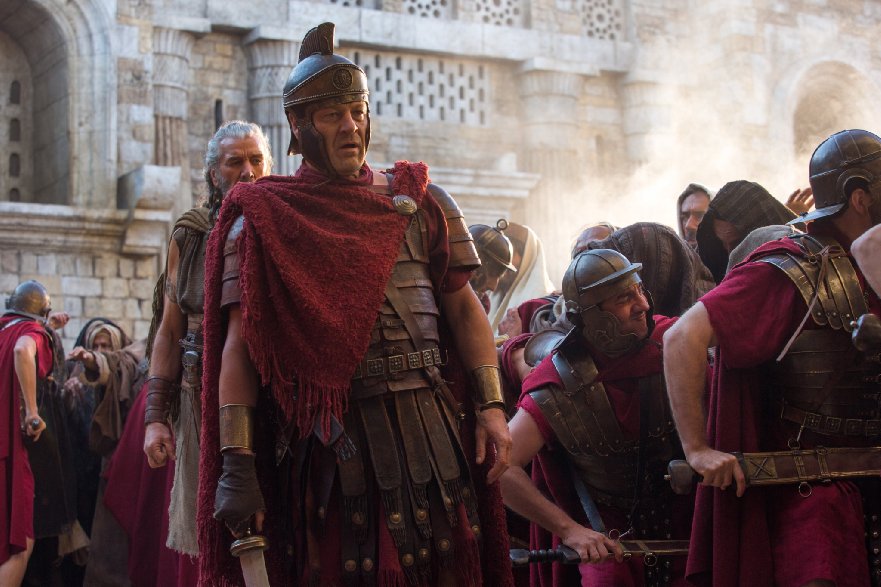
A good example of the film’s taking a credible idea and running with it is depicting Herod’s son Antipas as a paranoid weirdo who has inherited his father’s fear of being overthrown by the promised Messiah. Since that fear made his father murder the infants of Bethlehem, Antipas continues the thirst for blood by hiring a Roman centurion (Sean Bean) to hunt Him down. Since we know the Biblical account, we know what will not happen, but the film’s narrative remains interesting and sometimes tense because, unlike most Biblical films, we don’t know exactly how its embellishments will play out. Likewise, another threat is kept present as Jesus is shadowed by a demon (Rory Keenan) who whispers into others’ ears of who Jesus might be; it makes sense that Satan knew about the young Jesus, but any involvement he might have had before their confrontation in the desert must be left to the realms of speculation.

Image result for the young messiah sean bean

It helps too that The Young Messiah is of a respectable quality, fitting in nicely with other Biblical films of artistic merit, such as The Nativity Story and The Passion of the Christ. The cinematography is consistently handsome, especially as Jesus’ family journeys across the Judean countryside. There is a bit of an overreliance on slow-motion when certain scenes are meant to have spiritual significance, and perhaps letting the profound moments speak for themselves could have made them stronger.

Yet The Young Messiah does what few faith-based films do in depicting a story that’s never been told while keeping its basis in the Gospels. Even in Jesus’ final monologue, the simple fictional lines hold an insightful truth: beyond coming to die, Jesus became man to live, both as a child and as an adult, so He could relate to His creations in all things but sin. The Young Messiah may appeal mainly to Christian audiences, but it has more food for thought than most Christian films try to deliver.

Best line: (Joseph) “I know you have many questions, but you need to let them sleep in your heart for now. Why? Because your questions are the questions of a child, but the answers are the answers for a man. That is one bridge I cannot build. I don’t know how. But God can, and we must trust Him.”


Rank: List Runner-Up


© 2016 S.G. Liput
437 Followers and Counting


The Passion of the Christ (2004) (Encore)

03 Friday Apr 2015

Posted by sgliput in Movies, Poetry, Reviews, Writing

≈ 1 Comment

Tags

Biblical, Drama


Praying in the garden
Is a Man Whose heart is hardened
To the fact that He will soon endure the worst of any pain.
That devil snake unnerves Him,
Saying man does not deserve Him;
Jesus nonetheless resigns Himself to die, but not in vain.
 
He remains reserved and docile
When His ally and apostle
Judas gives his last betraying kiss to seize the Son of Man.
His other friends desert Him
As the soldiers bind and hurt Him.
He is led away, according to the Jewish leaders’ plan.
 
The Sanhedrin asks and mocks Him,
But it seems that nothing shocks Him,
And He’s all but silent till He says He is indeed divine.
They’re infuriated by it,
And, regardless if He’s quiet,
They insist that He be put to death because He crossed their line.
 
As He’s taken for His sentence,
Judas cannot find repentance
And is hounded by his demons till he hangs himself in grief.
Meanwhile, as Jesus eyes him,
Peter thrice in fear denies Him,
And he flees and weeps in bitterness for slandering his chief.
 
Jesus stands in Pilate’s power,
But He does not beg or cower;
He stands silent as the Jews accuse their King of wicked lies.
Though both he and Herod gather
That He’s innocent, he rather
Has his soldiers scourge the Man, perhaps to forgo His demise.
 
Still the Jews demand damnation
And will not accept placation,
And they free the foul Barabbas rather than a guiltless Man.
Pilate fears a new uprising
So he ends up compromising.
Pilate cleans his hands while giving in to his taxpayers’ plan.
 
As the soldiers strike and beat Him,
All the angry crowds mistreat Him,
And He’s forced to bear the heavy cross on which He will be hung.
Through the teeming streets, He carries
Quite a weight, that’s also Mary’s,
As His mother watches helplessly, unlike when He was young.
 
When He strains His final sinew,
When He falls and can’t continue,
They compel a man named Simon to assist Him with the beams.
When a woman comforts Jesus,
Wiping off the blood that frees us,
All the soldiers start to beat Him until Simon intervenes.
 
On the hill of crucifixion,
They complete the Lord’s affliction,
And they nail His hands and feet against the hard, abrasive wood.
As He knew the night preceding,
When His followers were feeding,
He is lifted overhead in utter pain for mankind’s good.
 
As the Jewish leaders scorn Him,
And His friends and mother mourn Him,
He forgives His own accusers, barely drawing enough breath.
When He feels abandoned even
By the God He did believe in,
He gives up His soul and spirit and thus triumphs over death.
 
As a sudden storm blows straight in,
There is only loss for Satan,
Though disciples round the cross are still in sorrow for their Lord.
Mary’s woe may dominate her,
But it’s only three days later
That the Savior Jesus rises, having life for all restored.
_____________________
 

First off, let me say that this poem and review are written solely from my position as a Christian, more so than my other posts. I personally believe that Jesus Christ died for my sins and those of the world, but like so many Christians, my convictions sometimes tend toward complacency. It’s easy to skim the Gospels and read that Jesus was flogged, mocked, and nailed to a cross, but after years of such tame review, His death often fails to achieve the level of meaning it once had. It takes a brutally honest portrayal like The Passion of the Christ to help viewers to fully appreciate the severity of his suffering, to recognize just how much He endured for me and for you.

Embroiled in controversy, Mel Gibson’s foreign-language, cinematic passion play, the highest-grossing R-rated film in the US, is exceedingly violent, an almost continuous cavalcade of tortures and ugliness, yet Jim Caviezel is a subtle and credible Jesus, bestowing a patient solemnity on all he suffers. Gibson himself has stated that the film falls short of depicting the crucifixion in its full horror (which is true to some extent since Jesus was likely crucified naked rather than with the traditional loincloth), while others have called the film’s agonies overwhelmingly excessive and more than enough to kill a man. To address the latter grievance, I must point out that Jesus did not merely suffer physically but spiritually as well. In addition to all the blood and humiliation, the weight of mankind’s sin throughout the ages was piled on Him so unbearably that God the Father turned His back on His Son. As opposed as I am to violence, I see The Passion of the Christ as an unflinching reminder of the Lord’s atonement to snap unexcitable believers like myself to a fuller appreciation of it.

The film also possesses notable artistic merit that cements its status as one of the quintessential Jesus movies. The literal interpretation of Genesis 3:15 (about crushing a snake’s head) is a brilliant symbol of Jesus’ final determination to go through with the dreaded task ahead of Him, and well-placed flashbacks offer meaningful respites from the carnage. The depiction of the Last Supper is saved for the arrival at Calvary as a fitting remembrance of Christ offering His Body and Blood. Other smaller details also hold significance, such as Mary’s wiping up her Son’s blood after the scourging: in the Catholic Church, any spilling of the Eucharistic wine/Blood is an occasion for swift and solemn purification. The most moving scene is Jesus’ rendezvous with His mother on the Via Dolorosa; after a previous good-humored scene together, this heart-breaking reunion portrays one of Jesus’ falls, interspersed with snippets of a childhood accident, and speaks to anyone who has given or received maternal love.

While I now watch The Passion of the Christ around Good Friday every year, it took me a while to muster the courage to view it, and my VC still cannot bring herself to watch such a disturbingly brutal film. I agree it is gruesome (particularly the wince-inducing scourging scene) and certainly not appropriate for children, but light is only fully appreciated and comprehended amid darkness. That light is even portrayed in the brief final scene, a refreshingly explicit reference to the Resurrection compared with artistically oblique endings in Ben-Hur and Jesus Christ Superstar. It’s not for everyone, but The Passion of the Christ is the most spiritually stirring film I’ve seen in some time, one that everyone who can handle it ought to see.

Best line (again given added depth after witnessing the horrors He endured): (Jesus, from the cross) “Forgive them, Father. They know not what they do.”

 
Rank: Still List-Worthy (#101)
 

© 2014 S. G. Liput

290 Followers and Counting

#15: The Prince of Egypt (1998)

23 Friday Jan 2015

Posted by sgliput in Movies, Poetry, Reviews, Writing

≈ 3 Comments

Tags

Animation, Biblical, Drama, Dreamworks, Family, Musical

(Best sung to “When You Believe”)
 
In captivity,
In Egypt, Hebrews send their prayer
Waiting for their God above
To free them from their yoke.
Young Moses grows up free,
Adopted into Pharaoh’s care,
Till the past he knew not of
Cannot help but provoke.
 
He can’t live as a fraud
And sadly flees.
He finds refuge
And life anew.
Sent by his awesome God
To Rameses,
He has unease but follows through,
Though Pharaoh disagrees.
 
Brothers long ago,
The prophet and the Pharaoh clash.
All the plagues sent from the Lord
Demand his people freed.
The Pharaoh’s hardened “No”
Requires death to end the lash.
No such cost can be ignored,
And Pharaoh has to heed.
 
God’s people thus depart
To promised land,
Until the sea
Lies in the way.
Pharaoh, more sore than smart,
Makes his last stand
Until the hand of God that day
Provides salvation grand.
__________________
 

Hollywood isn’t known for remaining faithful where Biblical source material is concerned, but the greatest proof that it is possible is The Prince of Egypt, one of the first animated films of Dreamworks’ filmography. While Dreamworks Animation’s lineup has ranged from excellent (How to Train Your Dragon, Chicken Run) to mediocre (Shark Tale, Bee Movie), not since have they reached the high mark they set right from the beginning.

No Moses film yet has stuck completely to the Book, often downplaying Aaron’s involvement and Pharaoh’s vacillation during the plagues. Though this one too takes its liberties, it indeed remains faithful to the “essence, values, and integrity” of the source material, as stated in the prelude note that reveals the filmmakers’ respect for the story they’ve undertaken. The film does borrow a few aspects of The Ten Commandments, but improves upon every one. Rather than making Moses and Rameses rivals from the beginning due to a contrived love triangle, it makes them close friends and brothers pitted against each other in a tragedy of pride and divine intervention. Rather than Moses’ murder of the Egyptian being violent but somehow justifiable, in this version it is instead portrayed as an accident, allowing Moses to remain righteous while providing the shame to propel him to self-banishment. (I realize it was no accident in the Bible, but I like this kind of change.) All this improvement also comes with masterful abbreviation; events that took The Ten Commandments half an hour to portray are depicted in mere minutes of concise storytelling, sometimes funny but often of surprising depth.

Enhancing both plot and entertainment, the film’s soundtrack by Stephen Schwartz is inspired, with every song memorable and perfectly spaced in the film’s runtime. From Israeli singer Ofra Haza’s impassioned “Deliver Us” at the beginning to the Oscar-winning “When You Believe” as the Hebrews depart Egypt, the music serves the story rather than replacing it, just as the CGI flourishes enrich the beautiful hand-drawn animation. I’ve often hummed Jethro’s “Through Heaven’s Eyes” whenever speed is required (somehow it seems to make me move faster), while “The Plagues” has a dreadful majesty reminiscent of the music in Disney’s Hunchback.

Likewise, The Prince of Egypt is a perfect example of star power applied judiciously. The voice actors are all big names, including Val Kilmer as Moses, Ralph Fiennes as Rameses, Patrick Stewart as Seti, Sandra Bullock as Miriam, and Michelle Pfeiffer as Tzipporah. In each case, the voice so fits the character that I don’t just hear Jeff Goldblum but a believable Aaron, not just Danny Glover but a jolly Jethro. I could hardly recognize Steve Martin and Martin Short as Pharaoh’s magicians, who nonetheless have fun with their own song, “Playing with the Big Boys.” It’s interesting to note that, just as Kilmer also voiced the powerful yet personal depiction of God (with background whispers from the rest of the cast), Charlton Heston also voiced God in The Ten Commandments.

The most moving part (pun intended) is rightly the parting of the Red Sea, just as much a wonder to behold as it was in DeMille’s 1956 film. A shot of some enormous fish in the wall of water, lit by distant lightning, has an eerie power best suited to this animated outlet. The Prince of Egypt combines high studio quality with an earnestness unseen in many Biblical films, eschewing dark revisionism and modernist explanations in favor of faithful and profound filmmaking. It’s one of the few animated films that I feel should have been nominated for Best Picture, a brilliant example of how cartoons can be elevated to dramatic excellence.

Best line: (Miriam, singing “When You Believe”) “Many nights we’ve prayed, with no proof anyone could hear. In our hearts a hopeful song we barely understood. Now we are not afraid, although we know there’s much to fear. We were moving mountains, long before we knew we could….”

 
Rank: 60 out of 60
 

© 2015 S. G. Liput

282 Followers and Counting

#27: Ben-Hur (1959)

07 Wednesday Jan 2015

Posted by sgliput in Movies, Poetry, Reviews, Writing

≈ 1 Comment

Tags

Action, Biblical, Classics, Drama

Beneath the mighty Roman yoke,
The Jewish people still invoke
The promise of a Christ to come
Who’ll save them from the Romans’ thumb,
And many eagerly provoke.
 
Returning to Jerusalem,
Messala comes to manage them
And reconnects with his old friend,
With Judah Ben-Hur to extend
A jilted offer to condemn.
 
Their friendship strained by Hur’s dissent,
It’s worsened by an accident.
While Judah’s made a galley slave,
His mother and his sister brave
Long years in prison and torment.
 
A naval battle frees Ben-Hur
By making him a rescuer,
And he becomes a Roman son,
Remembering the evil done
And vengeance promised to occur.
 
A skilled and lauded charioteer,
He goes back home to reappear
To cold Messala and demand
His family’s freedom close at hand,
But they are lepers, sparking fear.
 
Believing they are dead, no trace,
Ben-Hur competes within a race,
A chariot battle at high speeds.
Against Messala, he succeeds;
The fallen grieves him to his face.
 
He finds his mother and his sister,
Forced to live apart and fester,
And through mourning, he then tries
To seek out Jesus ere one dies,
At the urge of lovely Esther.
 
But the prophet is on trial,
Soon to die in savage style.
A kindness for which Hur once yearned
Is unexpectedly returned,
And healing springs from death worthwhile.
__________________
 

Hollywood still makes epics, even the Biblical kind it so enjoys messing up, yet all of the special effects and big names can’t compare with some of the best of yesteryear, especially 1959’s Ben-Hur, the first of only three films to win eleven Academy Awards. Indeed, this film that garnered one of the greatest Oscar sweeps of all time deserved every one; the sets, the scope, the emotions, the acting, the moral message are all conjured so impressively from the pages of Lew Wallace’s bestseller that no film has bested its number of Oscars, only equaled.

Coming only three years after Charlton Heston’s other Biblical epic The Ten Commandments, Ben-Hur weaves a story of lost friendship, vengeance, and redemption alongside brief but potent glimpses from the life of Jesus, whose face is shrewdly hidden, allowing the viewer to imagine his appearance as they will. Heston won Best Actor for his title role, which may not be as imposing as his turn as Moses but carries far more emotion. Unlike Cecil B. DeMille’s Exodus story, vain histrionics are kept to a minimum in favor of excellent dramatic acting from Jack Hawkins as Quintus Arrius, Stephen Boyd as Messala, Haya Harareet as Esther, and Oscar winner Hugh Griffith as Sheikh Ilderim. While the film is most notable for its action scenes, the character moments are often powerful; the scenes of mercy between Judah and Jesus are quietly profound high points.

Even so, the film boasts some of the most thrilling scenes of Hollywood’s golden age, full of magnificent sets, a cast of thousands, and some brief but unusually violent images for 1959. The galley battle is a vivid turning point for the film, creating both a provident moment of grace and a memorably rare depiction of ancient naval warfare. Of course, the film’s most intense sequence is the famous chariot race, about nine minutes of action filmmaking at its finest. The upcoming Ben-Hur remake will no doubt rely on CGI for this part, but the original is all the more monumental for its reality and lack of computer enhancement.

I don’t watch Ben-Hur but once a year typically, mainly because of its exhaustive length (over 3½ hours), but it will always be a milestone of epic cinema.

Best line: (Quintus Arrius) “In His eagerness to save you, your God has also saved the Roman fleet.”

 
Rank: 58 out of 60
 

© 2015 S. G. Liput

278 Followers and Counting

#88: The Ten Commandments (1956)

27 Monday Oct 2014

Posted by sgliput in Movies, Poetry, Reviews, Writing

≈ Leave a comment

Tags

Biblical, Classics, Drama, Family

The land of Egypt built its wonders high
Upon the backs of Hebrew slaves of old,
Who prayed that God salvation would supply,
And so He did, His people to uphold.
A baby borne upon the Nile’s waves
To rescue him from edicts merciless
Proceeded from the desperate blood of slaves
But found a home in Pharaoh’s house to bless.
Though Moses prospered as a faithful prince,
He learned the truth, and crime forced banishment.
At last, with burning bush, God did convince
His chosen one to turn and represent.
Though Moses wielded power from the Lord,
His “brother” Rameses would not free his race.
The death of every firstborn by God’s sword
Allowed the Hebrews freedom from this place.
Through sundered sea and senseless sin, God led
His people with commandments all have read.
_________________
 

A TV favorite around Easter/Passover, Cecil B. DeMille’s The Ten Commandments is undoubtedly dated but still retains the sense of grandeur that made it such an epic experience in 1956. While not his best role, Charlton Heston is a formidable Moses, exuding heroic dignity in every scene, even when he’s supposedly at the end of his rope. The eloquent voiceover narration and the jaw-dropping production values add to the overall grandiosity of the film.

Its biggest “flaw,” so to speak, is the overacting, with characters frequently looking off into the distance while spouting poetic dialogue about love, faith, or beauty. While this is at times unintentionally hammy, the melodramatic parlance has an archaic quality that is still somehow credible in the film’s antiquated setting. The story itself is well-formed, instituting simple yet complex character relationships among all the pomp and pageantry. The interplay among Moses, Rameses, and Nefretiri has a Shakespearean element that grounds the film in real, if exaggerated, emotion.

Anne Baxter as Nefretiri is the worst offender as far as magnified theatrics go, though her smug confidence about the power of her beauty adds to the interpersonal tension of the second act, even if Moses dismisses it. Likewise, Yul Brynner is stiffly arrogant at first, sharing with Baxter one of cinema’s truly awkward kisses, yet he grows into the role of Rameses until his lofty refusal to “let the people go” establishes him as a great Pharaoh in “de Nile.” (Get it?) The rest of the cast is large and adequate, with Edward G. Robinson as the standout naysayer Dathan, who’s the kind of guy everyone wants to punch now and then.

While The Ten Commandments is not completely accurate in the Biblical sense, it takes the source material seriously, applying it to an overall message of freedom and faith. It even transforms some Hollywood additions into clever speculations, such as a scorned lover causing the “hardening” of Pharaoh’s heart and his reversal after releasing the Hebrews. Above all, the film achieves scenes of visual vastness, from the labors of the slaves to their emancipation and immense leave-taking. The cast of thousands is stunning, and scenes like the parting of the Red Sea still hold an impressive power that can bring some, like my VC, to tears of awe. They don’t make ‘em like this anymore, not this long nor this extravagant, but The Ten Commandments stands as DeMille’s most successful accomplishment.

P.S. I don’t hold out much hope for Ridley Scott’s upcoming redux version Exodus: Gods and Kings, but we’ll see.

Best Biblical line: (Joshua) “As for me and my house, we will serve the Lord.”

Best original line: (Moses) “There can be no freedom without the Law.”

 
Rank: 53 out of 60
 

© 2014 S. G. Liput

233 Followers and Counting


The Passion of the Christ (2004)

13 Monday Oct 2014

Posted by sgliput in Movies, Poetry, Reviews, Writing

≈ Leave a comment

Tags

Biblical, Drama

Praying in the garden
Is a Man Whose heart is hardened
To the fact that He will soon endure the worst of any pain.
That devil snake unnerves Him,
Saying man does not deserve Him;
Jesus nonetheless resigns Himself to die, but not in vain.
 
He remains reserved and docile
When His ally and apostle
Judas gives his last betraying kiss to seize the Son of Man.
His other friends desert Him
As the soldiers bind and hurt Him.
He is led away, according to the Jewish leaders’ plan.
 
The Sanhedrin asks and mocks Him,
But it seems that nothing shocks Him,
And He’s all but silent till He says He is indeed divine.
They’re infuriated by it,
And, regardless if He’s quiet,
They insist that He be put to death because He crossed their line.
 
As He’s taken for His sentence,
Judas cannot find repentance
And is hounded by the demons till he hangs himself in grief.
Meanwhile, as Jesus eyes him,
Peter thrice in fear denies Him,
And he flees and weeps in bitterness for slandering his chief.
 
Jesus stands in Pilate’s power,
But He does not beg or cower;
He stands silent as the Jews accuse their King of wicked lies.
Though both he and Herod gather
That He’s innocent, he rather
Has his soldiers scourge the Man, perhaps to forgo His demise.
 
Still the Jews demand damnation
And will not accept placation,
And they free the foul Barabbas rather than a guiltless Man.
Pilate fears a new uprising
So he ends up compromising.
Pilate cleans his hands while giving in to his taxpayers’ plan.
 
As the soldiers strike and beat Him,
All the angry crowds mistreat Him,
And He’s forced to bear the heavy cross on which He will be hung.
Through the teeming streets, He carries
Quite a weight, that’s also Mary’s,
As His mother watches helplessly, unlike when He was young.
 
When He strains His final sinew,
When He falls and can’t continue,
They compel a man named Simon to assist Him with the beams.
When a woman comforts Jesus,
Wiping off the blood that frees us,
All the soldiers start to beat Him until Simon intervenes.
 
On the hill of crucifixion,
They complete the Lord’s affliction,
And they nail His hands and feet against the hard, abrasive wood.
As He knew the night preceding,
When His followers were feeding,
He is lifted overhead in utter pain for mankind’s good.
 
As the Jewish leaders scorn Him,
And His friends and mother mourn Him,
He forgives His own accusers, barely drawing enough breath.
When He feels abandoned even
By the God He did believe in,
He gives up His soul and spirit and thus triumphs over death.
 
As a sudden storm blows straight in,
There is only loss for Satan,
Though disciples round the cross are still in sorrow for their Lord.
Mary’s woe may dominate her,
But it’s only three days later
That the Savior Jesus rises, having life for all restored.
_____________________
 

First off, let me say that this poem and review are written solely from my position as a Christian, more so than my other posts. I personally believe that Jesus Christ died for my sins and those of the world, but like so many Christians, my convictions sometimes tend toward complacency. It’s easy to skim the Gospels and read that Jesus was flogged, mocked, and nailed to a cross, but after years of such tame review, His death often fails to achieve the level of meaning it once had. It takes a brutally honest portrayal like The Passion of the Christ to help viewers to fully appreciate the severity of his suffering, to recognize just how much He endured for me and for you.

Embroiled in controversy, Mel Gibson’s foreign-language, cinematic passion play, the highest-grossing R-rated film in the US, is exceedingly violent, an almost continuous cavalcade of tortures, yet Jim Caviezel is a subtle and credible Jesus, bestowing a patient solemnity on all he suffers. Gibson himself has stated that the film falls short of depicting the crucifixion in its full horror (which is true to some extent since Jesus was likely crucified naked rather than with the traditional loincloth), while others have called the film’s agonies overwhelmingly excessive and more than enough to kill a man. To address the latter grievance, I must point out that Jesus did not merely suffer physically but spiritually as well. In addition to all the blood and humiliation, the weight of mankind’s sin throughout the ages was piled on Him so unbearably that God the Father turned His back on His Son. As opposed as I am to violence, I see The Passion of the Christ as an unflinching reminder of the Lord’s atonement to snap unexcitable believers like myself to a fuller appreciation of it.

The film also possesses notable artistic merit that cements its status as one of the quintessential Jesus movies. The literal interpretation of Genesis 3:15 (about crushing a snake’s head) is a brilliant symbol of Jesus’ final determination to go through with the dreaded task ahead of Him, and well-placed flashbacks offer meaningful respites from the carnage. The depiction of the Last Supper is saved for the arrival at Calvary as a fitting remembrance of Christ offering His Body and Blood. Other smaller details also hold significance, such as Mary’s wiping up her Son’s blood after the scourging: in the Catholic Church, any spilling of the Eucharistic wine/Blood is an occasion for swift and solemn purification. The most moving scene is Jesus’ rendezvous with His mother on the Via Dolorosa; after a previous good-humored scene, this heart-breaking reunion portrays Jesus’ fall, interspersed with snippets of a childhood accident, and speaks to anyone who has given or received maternal love.

While I now watch The Passion of the Christ on Good Friday every year, it took me a while to muster the courage to view it, and my VC still cannot bring herself to watch such a disturbingly bloodthirsty film. I agree it is gruesome (particularly the gratuitous scourging scene) and certainly not appropriate for children, but light is only fully appreciated and comprehended amid darkness. That light is even portrayed in the brief final scene, a refreshingly explicit reference to the Resurrection compared with artistically oblique endings in Ben-Hur and Jesus Christ Superstar. It’s not for everyone, but The Passion of the Christ is the most spiritually stirring film I’ve seen in some time, one that everyone who can handle it ought to see.

Best line (again given added depth after witnessing the horrors He endured): (Jesus, from the cross) “Forgive them, Father. They know not what they do.”

 
Artistry: 10
Characters/Actors: 9
Entertainment: 4
Visual Effects: 9
Originality: 8
Watchability: 4
Other (deep spiritual meaning regardless of violence): +8
 
TOTAL: 52 out of 60
 

Next: #100 – You’ll see  🙂

© 2014 S. G. Liput

227 Followers and Counting


#120: Jesus Christ Superstar (1973)

16 Tuesday Sep 2014

Posted by sgliput in Movies, Poetry, Reviews, Writing

≈ 2 Comments

Tags

Biblical, Drama, Musical

(Can be sung to the tune used in “The Temple” and “The Arrest”)
 
Hippies drive to a desert land,
A raucous, happy, and long-haired band,
To recreate Jesus Christ’s last days,
The most musical of all passion plays.
 
Jesus has followers galore,
But Judas fears there is pain in store.
The high priests plot to cause Jesus’ fall
Before His actions destroy them all.
 
He enters into Jerusalem,
Hosannas ring out to welcome Him.
By cleansing temples and man’s disease,
He keeps on gathering enemies.
 
Judas feels a relentless pull,
Although he fears it is damnable,
To give the Christ to His rivals’ hands
And be the traitor the tale demands.
 
While Jesus begs in His garden prayer,
The soldiers come to arrest Him there.
The high priests stir up the hateful mob,
And Pilate gives in to save his job.
 
Judas hangs himself in shame
But sings one last song all the same.
When Jesus Christ is crucified,
The actors leave, one less to ride.
______________
 

Andrew Lloyd Webber has created some of the best stage musicals ever produced. Joseph and the Amazing Technicolor Dreamcoat was a worthy early effort, but Jesus Christ Superstar was his first real triumph. Webber exhibits a tremendous capacity for hummable tunes, some full songs (the lovely radio hit “I Don’t Know How to Love Him”), others short character motifs (“What’s the Buzz?” and “Always Knew That I’d Be an Apostle”). The Passion Week wouldn’t have been my initial idea for a rock opera, but it works, thanks largely to the plethora of memorable music and Tim Rice’s lyrics, which take the place of spoken dialogue.

As a Christian, I must point out that the musical is not always biblical, focusing on Christ’s humanity much more than His merely implied divinity. Some almost harem-like scenes suggest a physical relationship with Mary Magdalene, and the wording for the Last Supper is strangely twisted, as is Jesus’ fatigue from the incessant crowds. (I don’t believe He would ever have said “Leave me alone,” or “Heal yourselves” as in the stage version.) Plus, the film ends abruptly with the crucifixion, but without the resurrection denouement of The Passion of the Christ; instead, it borrows from Ben-Hur to show an obscure shepherd leading his sheep before the sun-circled cross. Aside from these religious issues, Jesus Christ Superstar also makes some odd artistic choices. While there is much symbolism and natural rock formations are favored over extravagant sets, the filmmakers throw in tanks and jet planes and hard hats, things that make no sense in this kind of movie.

It’s not above criticism, but Jesus Christ Superstar boasts a number of Broadway hits, sung by rocker Ted Neeley, Carl Anderson, Yvonne Elliman, and a host of less famous vocalists. One scene in particular is incredibly effective, the scene from the Bible that best displays Jesus’ humanity. His song in the Garden of Gethsemane may not be the catchiest, but it builds to a poignant series of painted crucifixion scenes that makes Jesus’ anxiety completely understandable. My VC even credits the song with deepening her Christian life. The song sung by “Simon Zealotes” is her favorite, though, and “This Jesus Must Die” and “Superstar” are mine. Almost every song is perfect, though Herod’s is uncomfortably derisive, if true to the character. Jesus Christ Superstar is neither the most faithful nor the most blasphemous of Jesus movies, but it’s one of the most watchable, as well as listenable.

Best line: (Jesus to the priests, in one of the few lines bespeaking His divinity) “Why waste your breath moaning at the crowd? Nothing can be done to stop the shouting! If every tongue were stilled, the noise would still continue! The rocks and stones themselves would start to sing!”

 
Artistry: 8
Characters/Actors: 8
Entertainment: 10
Visual Effects: 5
Originality: 8
Watchability: 10
Other (great music): +4
Other (aforementioned issues): -3
 
TOTAL: 50 out of 60
 

Next: #119 – Coal Miner’s Daughter

© 2014 S. G. Liput

207 Followers and Counting


← Older posts

Recent Posts

  • We Didn’t Start 2025 (Recap)
  • NaPoWriMo 2025 Recap (Finally)
  • Sonic the Hedgehog 3 (2024)
  • It Happened One Night (1934)
  • Spellbound (2024)

Recent Comments

associatesofshellymann's avatarassociatesofshellyma… on My Top Twelve La La La So…
Kit's avatarKit Nichols on Bonnie and Clyde (1967)
lifelessons's avatarlifelessons on Look Back (2024)
Carol Jackson's avatarCarol Jackson on The Thief of Bagdad (1940…
Stephen's avatarStephen on Love Story (1970)

Archives

  • January 2026
  • December 2025
  • May 2025
  • April 2025
  • March 2025
  • February 2025
  • January 2025
  • December 2024
  • May 2024
  • April 2024
  • March 2024
  • February 2024
  • January 2024
  • December 2023
  • November 2023
  • October 2023
  • September 2023
  • July 2023
  • June 2023
  • May 2023
  • April 2023
  • March 2023
  • February 2023
  • January 2023
  • December 2022
  • November 2022
  • October 2022
  • September 2022
  • August 2022
  • July 2022
  • June 2022
  • May 2022
  • April 2022
  • March 2022
  • February 2022
  • January 2022
  • December 2021
  • November 2021
  • October 2021
  • September 2021
  • August 2021
  • July 2021
  • June 2021
  • May 2021
  • April 2021
  • March 2021
  • February 2021
  • January 2021
  • December 2020
  • November 2020
  • October 2020
  • September 2020
  • August 2020
  • July 2020
  • June 2020
  • May 2020
  • April 2020
  • March 2020
  • February 2020
  • January 2020
  • December 2019
  • November 2019
  • October 2019
  • September 2019
  • August 2019
  • July 2019
  • June 2019
  • May 2019
  • April 2019
  • March 2019
  • February 2019
  • January 2019
  • December 2018
  • November 2018
  • October 2018
  • September 2018
  • August 2018
  • July 2018
  • June 2018
  • May 2018
  • April 2018
  • March 2018
  • February 2018
  • January 2018
  • December 2017
  • November 2017
  • October 2017
  • September 2017
  • August 2017
  • July 2017
  • June 2017
  • May 2017
  • April 2017
  • March 2017
  • February 2017
  • January 2017
  • December 2016
  • November 2016
  • October 2016
  • September 2016
  • August 2016
  • July 2016
  • June 2016
  • May 2016
  • April 2016
  • March 2016
  • February 2016
  • January 2016
  • December 2015
  • November 2015
  • October 2015
  • September 2015
  • August 2015
  • July 2015
  • June 2015
  • May 2015
  • April 2015
  • March 2015
  • February 2015
  • January 2015
  • December 2014
  • November 2014
  • October 2014
  • September 2014
  • August 2014
  • July 2014
  • June 2014
  • May 2014
  • April 2014
  • March 2014
  • February 2014
  • January 2014
  • December 2013

Categories

  • Blindspot
  • Blogathon
  • Christian
  • Movies
  • Music
  • NaPoWriMo
  • Poetry
  • Reviews
  • TV
  • Writing

Meta

  • Create account
  • Log in
  • Entries feed
  • Comments feed
  • WordPress.com

Recent Posts

  • We Didn’t Start 2025 (Recap)
  • NaPoWriMo 2025 Recap (Finally)
  • Sonic the Hedgehog 3 (2024)
  • It Happened One Night (1934)
  • Spellbound (2024)

Recent Comments

associatesofshellymann's avatarassociatesofshellyma… on My Top Twelve La La La So…
Kit's avatarKit Nichols on Bonnie and Clyde (1967)
lifelessons's avatarlifelessons on Look Back (2024)
Carol Jackson's avatarCarol Jackson on The Thief of Bagdad (1940…
Stephen's avatarStephen on Love Story (1970)

Archives

  • January 2026
  • December 2025
  • May 2025
  • April 2025
  • March 2025
  • February 2025
  • January 2025
  • December 2024
  • May 2024
  • April 2024
  • March 2024
  • February 2024
  • January 2024
  • December 2023
  • November 2023
  • October 2023
  • September 2023
  • July 2023
  • June 2023
  • May 2023
  • April 2023
  • March 2023
  • February 2023
  • January 2023
  • December 2022
  • November 2022
  • October 2022
  • September 2022
  • August 2022
  • July 2022
  • June 2022
  • May 2022
  • April 2022
  • March 2022
  • February 2022
  • January 2022
  • December 2021
  • November 2021
  • October 2021
  • September 2021
  • August 2021
  • July 2021
  • June 2021
  • May 2021
  • April 2021
  • March 2021
  • February 2021
  • January 2021
  • December 2020
  • November 2020
  • October 2020
  • September 2020
  • August 2020
  • July 2020
  • June 2020
  • May 2020
  • April 2020
  • March 2020
  • February 2020
  • January 2020
  • December 2019
  • November 2019
  • October 2019
  • September 2019
  • August 2019
  • July 2019
  • June 2019
  • May 2019
  • April 2019
  • March 2019
  • February 2019
  • January 2019
  • December 2018
  • November 2018
  • October 2018
  • September 2018
  • August 2018
  • July 2018
  • June 2018
  • May 2018
  • April 2018
  • March 2018
  • February 2018
  • January 2018
  • December 2017
  • November 2017
  • October 2017
  • September 2017
  • August 2017
  • July 2017
  • June 2017
  • May 2017
  • April 2017
  • March 2017
  • February 2017
  • January 2017
  • December 2016
  • November 2016
  • October 2016
  • September 2016
  • August 2016
  • July 2016
  • June 2016
  • May 2016
  • April 2016
  • March 2016
  • February 2016
  • January 2016
  • December 2015
  • November 2015
  • October 2015
  • September 2015
  • August 2015
  • July 2015
  • June 2015
  • May 2015
  • April 2015
  • March 2015
  • February 2015
  • January 2015
  • December 2014
  • November 2014
  • October 2014
  • September 2014
  • August 2014
  • July 2014
  • June 2014
  • May 2014
  • April 2014
  • March 2014
  • February 2014
  • January 2014
  • December 2013

Categories

  • Blindspot
  • Blogathon
  • Christian
  • Movies
  • Music
  • NaPoWriMo
  • Poetry
  • Reviews
  • TV
  • Writing

Meta

  • Create account
  • Log in
  • Entries feed
  • Comments feed
  • WordPress.com

Blog at WordPress.com.

Is this your new site? Log in to activate admin features and dismiss this message
Log In
  • Subscribe Subscribed
    • Rhyme and Reason
    • Join 814 other subscribers
    • Already have a WordPress.com account? Log in now.
    • Rhyme and Reason
    • Subscribe Subscribed
    • Sign up
    • Log in
    • Report this content
    • View site in Reader
    • Manage subscriptions
    • Collapse this bar
 

Loading Comments...