• Home
  • About Me
  • The List
  • THE LIST (2016 Update)
  • THE LIST (2017 Update)
  • THE LIST (2018 Update)
  • THE LIST (2019 Update)
  • THE LIST (2020 Update)
  • THE LIST (2021 Update)
  • THE LIST (2022 Update)
  • Top Twelves and More
  • The End Credits Song Hall of Fame

Rhyme and Reason

~ Poetry Meets Film Reviews

Rhyme and Reason

Tag Archives: Fantasy

Winter’s Tale (2014)

22 Wednesday Jul 2015

Posted by sgliput in Movies, Poetry, Reviews, Writing

≈ 2 Comments

Tags

Drama, Fantasy, Romance

“What if the war between darkness and light
Decided if stars would fluoresce in the night?
What if a thief and a horse snowy white
Could save an enigma at destiny’s tasking?

“What if, when angels and demons do spar,
They fight for the miracles human souls are?
What if we die and become a new star?”
“Quite simply, we don’t, silly girl, so stop asking!”
________________

Akiva Goldsman has had a mixed career; he did win an Oscar for his screenplay for A Beautiful Mind, but that was after also writing Batman and Robin. His directorial debut Winter’s Tale plays to both his strengths and weaknesses, with a story that is sometimes fancifully rich but also stumbles in trying to sustain that richness.

Winter’s Tale is an unusual blend of real-world romance and parallel fantasy. On the human side, the story follows Peter Lake (Colin Farrell), a thief who falls in love with Beverly Penn (Jessica Brown Findlay). In 1916, she is dying of tuberculosis and has some odd opinions about the afterlife. On the fantastical side, a mobster named Pearly Soames (Russell Crowe) is really an undercover demon who wants Peter dead and is part of a covert “dark side” intent on preventing humans from fulfilling their inner miracles and becoming stars. Apparently in this story, Beverly’s beliefs are correct, though there’s no indication of how she learned about the whole romantic “star” mumbo jumbo, nor why this version of New York City has angels and demons but no sign of traditional religion, nor why it is ostensibly the real world but no one seems to have noticed flying horses or men who don’t age.

As the story progressed, I was unsure where it was going, though I was more confused than intrigued. Still, now that I understand the full picture, I believe Winter’s Tale is a worthwhile story that unfortunately loses its way. I admire its themes of hope and good triumphing over evil, as well as the message that our destiny is rarely what we expect. The period setting and intermittent effects are also well-crafted for the most part, and I found the acting quite good, especially Crowe as the snarling villain.

Yet it’s hard to ignore its weaknesses, particularly the gushingly romantic, sometimes poetic dialogue about stars and the universe, which stand in for heaven and God, respectively. In addition, one of my complaints about The Notebook was that Ryan Gosling is reduced to a lovesick recluse without his sweetheart and for far too long. Here, that weakness is extended for decades with no end in sight, a state that our hero accepts with little to no change.

Winter’s Tale has merit but not enough of it to make it a must-see, even for fantasy fans. Some aspects surprisingly work (such as Will Smith’s cameo as the devil), but others are just hard to believe (such as the flying horse who is really a dog who is really an angel. Huh?). I would see it again, but I wouldn’t seek it out.

Best line: (Beverly Penn, in an instance where her voiceover rings true) “But be warned: as we seek out the light, darkness gathers and the eternal contest between good and evil is not fought with great armies… but one life at a time.”

Rank: Honorable Mention

© 2015 S. G. Liput

328 Followers and Counting

Ruby Sparks (2012)

12 Friday Jun 2015

Posted by sgliput in Movies, Poetry, Reviews, Writing

≈ 2 Comments

Tags

Comedy, Drama, Fantasy, Romance

A genius brought a dream to life
And dared to call her all his own,
But dreams aren’t what they seem in life
And oft grow past where they are sown.

Attempts to keep a dream confined
Will leave both love and lover stale,
For dreams cannot be hid behind
Possessive fears that they may fail.
____________________
After someone at work mentioned that I bore a resemblance to Paul Dano in Ruby Sparks, I knew I had to see this movie. (Incidentally, I don’t see the similarity.) The brainchild of star Zoe Kazan, who wrote the lead roles with herself and boyfriend Dano in mind, Ruby Sparks begins with a great idea and, despite some stumbles along the way, ultimately fulfills its potential. Paul Dano is much like a young Woody Allen as the rather neurotic young novelist Calvin Weir-Fields, who finds himself unable to match his early success. He’s a loner, whose past relationships haven’t ended well and whose friends include only his dog Scotty and his brother and sister-in-law. It’s not until his shrink suggests a writing exercise that he feels inspired and spits out a description of a girl he’s seen in his dreams. When Ruby actually appears as his very real girlfriend, drama, humor, romance, conflict, and hard relationship lessons ensue.

While the idea may feel a bit similar to The Odd Life of Timothy Green (released just a month later), and other films like Inkheart and Stranger than Fiction have toyed with the concept of writing becoming reality, the moral elements help to set Ruby Sparks apart. Though Calvin discovers that he can change Ruby with a few words on his typewriter, he resolves never to take advantage of this authorial privilege, but he reconsiders when his girlfriend deviates from his expectations. As Kazan has stated, Ruby isn’t just a “manic pixie dream girl,” eager to please Calvin with no faults whatsoever. Though he balks at the title of genius, Calvin’s too good a writer to create some one-dimensional character; whatever her origins, she ends up being a human being, wild and eccentric at times, but also moody and much more outgoing than her beau. He finds that he’s in love with the idea of her rather than the real McCoy. The nuances and challenges of love are sadly lost on Calvin, since after all, why must he change when Ruby is so changeable? I tend to sympathize with him since, being more of an introvert, I’d rather read a book at home than smoke weed with a free-spirited sort-of relative (a surprising Antonio Banderas), but Calvin’s still clearly in a rut he’s unwilling to escape.

While the potential was there for Ruby Sparks to become a rom-com classic, it aims a bit too wide of that mark. A few too many F-bombs and loose morals are thrown in (plus a brief but rather shocking scene from some zombie Z movie), perhaps to give it a more respectable(?) rating of R, and these elements only drag it down for me. Even so, I enjoy movies about writing, and Kazan’s often witty dialogue is one of the film’s strengths, along with stellar acting from all involved, including Elliott Gould, Annette Bening, and Chris Messina.

While Calvin’s changes to Ruby are sometimes hilarious, the fact that he’s exploiting the dignity of his “brainchild” is never lost and comes to a head in a bizarre climax that threatens to rob him of all sympathy. Nevertheless, considering everything before, what follows might be considered one of the most perfect endings I’ve seen in some time, allowing everyone the change and growth they need. On top of that, the film’s score by Nick Urata grabbed my attention and has become a new favorite of mine to listen to while I write. Despite its flaws, Ruby Sparks left me with a positive impression; with work like this, I’d say Kazan and Dano have bright futures ahead of them.

Best line: (movie producer, interested in adapting Calvin’s first novel into a film) “Now, Adam and Mandi come in with a wealth of experience from documentary films. Everything they touch is authentic. They make it real.”
(Adam) “Grounded in reality and—”
(Mandi) “We treat narrative the exact same way.”
(producer) “You saw the baby documentary they did.”
(Calvin’s publicist) “Yes. Made me want to have a kid.”

Rank: Honorable Mention

© 2015 S. G. Liput

315 Followers and Counting

Genre Grandeur May Finale – Children Who Chase Lost Voices (2011) – Rhyme and Reason

31 Sunday May 2015

Posted by sgliput in Movies, Poetry, Reviews, Writing

≈ 1 Comment

Tags

Action, Animation, Anime, Drama, Fantasy

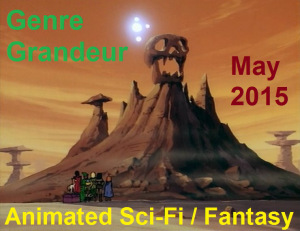
Here’s my review for my chosen genre of non-Disney fantasy animation, courtesy of MovieRob’s monthly Genre Grandeur. Thanks a bunch, Rob!

movierob's avatarMovieRob

gg may 2015

For this month’s final entry for Genre Grandeur May – Animated Sci-Fi/Fantasy (Non-Disney/PIXAR) Movies, here’s a review of The Children Who Chase Lost Voices (2011) by S.G. Liput of Rhyme and Reason who chose this month’s genre for us all.

If you missed any of them, here’s a recap:

This month we had 18 review for GG:

  1.  Quest For Camelot (1998) – Past Present Future TV and Film
  2.  Planet 51 (2009) – Movie Reviews 101
  3.  Robots (2005) – Tranquil Dreams
  4.  9 (2009) – Ten Stars or Less
  5.  The Pagemaster (1994) – Past Present Future TV and Film
  6.  The Iron Giant (1999) – Movie Reviews 101
  7.  The Iron Giant (1999) – Digital Shortbread
  8.  Titan A.E. (2000) – Past Present Future TV and Film
  9.  Thumbelina (1994) – Past Present Future TV and Film
  10.  The Tale of the Princess Kaguya (2013) – Sidekick Reviews

View original post 1,075 more words

Song of the Sea (2014)

27 Monday Apr 2015

Posted by sgliput in Movies, NaPoWriMo, Poetry, Reviews, Writing

≈ 1 Comment

Tags

Animation, Drama, Family, Fantasy

Review: 'Song of the Sea' is a masterwork by director Tomm Moore - LA Times
 
Children
Are rarely
Prepared for tragedy.
 
Ben’s
Little sister
Can transform magically.
 
Selkies
Sing peace,
Only wearing coats.
 
Saoirse
Needs hers,
Freeing silent throats.
 
Fantasy
And emotion
Animate the ocean.
__________________
 

(Today’s NaPoWriMo prompt was for a hay(na)ku, a haiku variant with three lines, one word in the first, two in the second, and three in the third. In this case, I connected several, and since the word hay(na)ku sounds rather Celtic, even if it probably isn’t, I wrote them for last year’s Song of the Sea.)

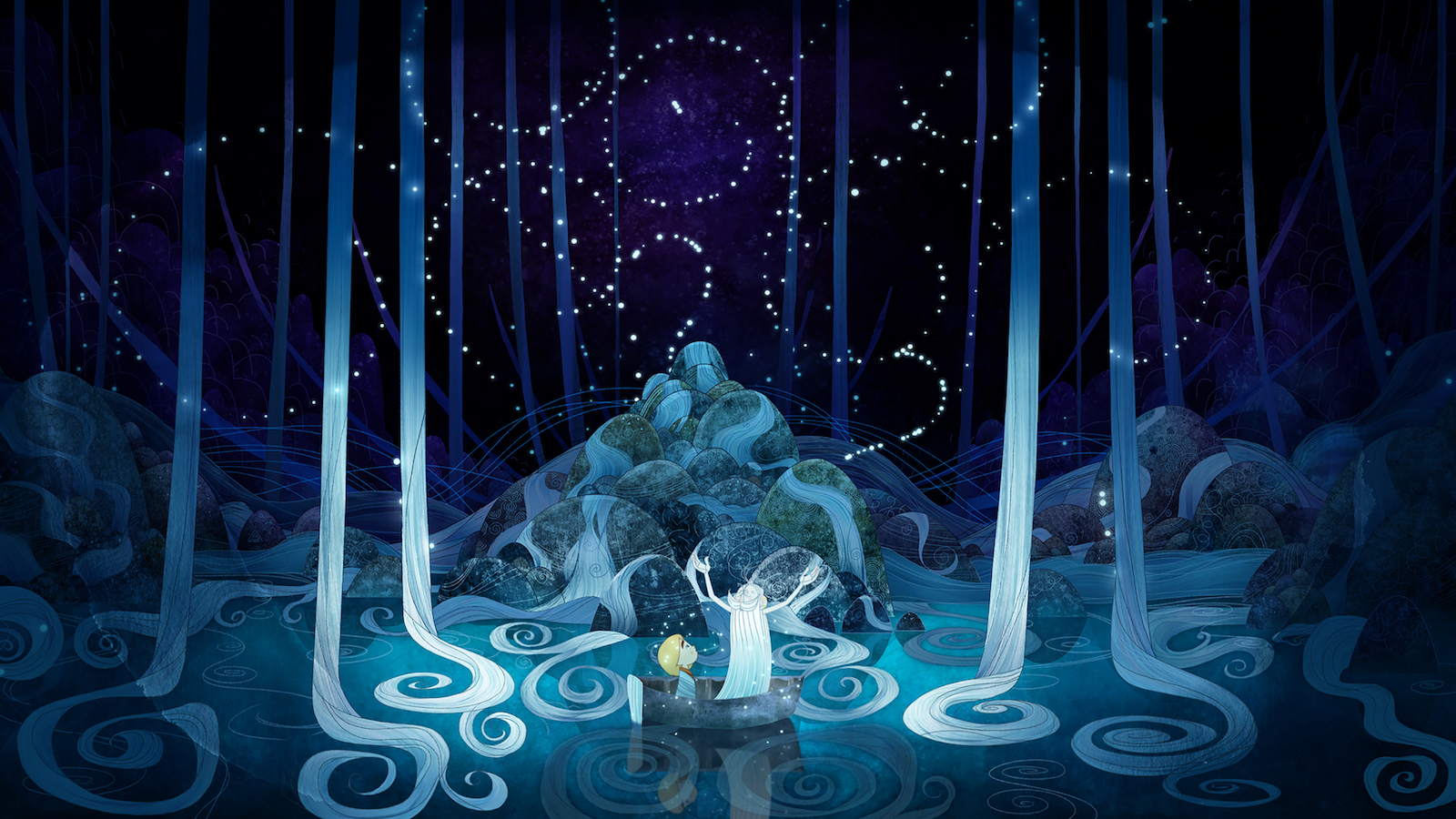
Just as The Secret of Kells came out of nowhere when it was nominated for Best Animated Feature in 2009, director Tomm Moore’s second film Song of the Sea was released with little fanfare (at least here in the U.S.) but luckily received another Oscar nod to lend it some added exposure. I very much enjoyed Kells, but this follow-up is even better, with deeper themes and more relatable characters. Like its predecessor, Song of the Sea boasts meticulously hand-drawn animation designed to resemble medieval Celtic art, a haunting Gaelic-infused lullaby sung by a magical child, and an intriguing mix of Christian motifs and Irish mythology. Five years in the making, the animation truly is a wonder; every frame has a beauty and balance, replete with gentle curves, jagged spikes, serene curlicues, and other geometric phenomena. Like Kells, nearly every scene could be a work of art, but here the animation connecting them is smoother and the plot more involving. Even modern sights absent from Kells are opportunities for entrancing symmetry, such as roundabouts and power lines. The character designs are more appealing as well, particularly little Saoirse, one of the cutest animated children since Boo in Monsters, Inc. (It also provides a reliable pronunciation for the Irish word for “freedom,” [SEER-sha]. Who hasn’t wondered how to say it ever since they first saw Saoirse Ronan’s name?)

Song of the Sea | Coolidge Corner Theater

After the loss of their mother, Ben is bitter toward his mute little sister, who discovers her mystical roots as a selkie, the seal equivalent of a mermaid. When their grief-stricken father (Brendan Gleeson, who was also in The Secret of Kells) finally agrees to send them to the city with their grandmother (Lost alert: Fionnula Flannigan), the children journey cross-country to reunite Saoirse with her selkie coat, encountering various members of the Deenashee, or faerie folk, along the way. This main plot could have been enough for the typical filmmaker, but Moore invests special symbolism in the mythological backstory of the giant Mac Lir, who suffered a great tragedy, and Macha the Owl Witch, his mother who turned him to stone. The story can be taken at face value, but it carries certain parallels to Ben’s family (made explicit in the voice acting) to provide unexpected depth for those looking for it.

Both of Moore’s films have attracted comparisons with the works of Hayao Miyazaki, with their relaxed pacing and earnest natural beauty. Ben’s efforts to reverse the transformative curse of a large-headed witch may remind some of Spirited Away, but Song of the Sea is a far more emotional journey than most of Miyazaki’s films. Through magical intervention, Ben becomes more responsible and aware of his brotherly role, and a maternal moment toward the end could either confuse or extract a few tears. For me, it almost did the latter. The accents and the music clearly mark the film as a product of Ireland, and it fits in well with my personal attraction to everything Celtic (including the actual “Song of the Sea,” which wins a spot in my End Credits Song Hall of Fame). It’s the very definition of an animated gem, the kind of lovingly crafted project that may never attract a vast audience but certainly deserves one.

Best line: (Bronach, the selkie/mother) “My son, remember me in your stories and in your songs. Know that I will always love you, always.”

 
Rank: List-Worthy
 

© 2015 S. G. Liput

302 Followers and Counting!

Ernest and Celestine (2012)

09 Thursday Apr 2015

Posted by sgliput in Movies, NaPoWriMo, Poetry, Reviews, Writing

≈ 1 Comment

Tags

Animation, Comedy, Family, Fantasy

   A mouse and a bear                                      could never be friends
 Or could they?                   Well, maybe,                   but that all depends.
On whether                                                                               the bear
Would dare                                                                                to share
  And not                                                                                        ingest
 The cute                                                                                   young pest
(Who lives                                                                                   beneath
And steals                                                                                  bear teeth),
  And if                                                                                        the mouse
Could stay in                                                                             his house
 And share                                                                                   her art
 And melt                                                                                   his heart,
   And if                             the couple                               could convince
The mice and             bears                 to leave                    such pairs
 And not                   insist                      they not                  persist,
 For most               hate this                     in prej-                 -udice.
The mouse         and bear                       with fond         -ness rare
 Might prove     their point                        on what’s          unfair
    And form a sweet                                             unlikely pair.
________________


(Today’s NaPoWriMo prompt is a calligram, a poem written in the shape of its subject, so I decided to go with reviewing Ernest and Celestine, in which teeth play an important role.)

Say what you will for the Academy’s Oscar choices, but every now and then they bring to light a rare gem. People scanning the nominees for Best Animated Feature in 2013 most likely read the name Ernest and Celestine and wondered where the heck that came from (not unlike The Secret of Kells in 2009 and A Cat in Paris or Chico and Rita in 2011). Though Frozen won that year, and The Wind Rises should have won, Ernest and Celestine was a worthy nomination, as cute and charming a tale as viewers are likely to find on either side of the Atlantic. Based on a series of Belgian children’s books by Gabrielle Vincent (pseudonym of Monique Martin), this French-language film follows the misadventures of the orphan mouse Celestine and the vagrant bear Ernest.

Celestine has always been taught to fear “the big bad bear” (not unlike the mice in The Tale of Despereaux) and to steal their teeth in order to support the mice’s incisor-centric society (a play on the Tooth Fairy, who is often a mouse in Europe). Likewise, Ernest is only interested in his next meal and agrees with all other bears that mice are mere pests who must stay below ground where they belong. Yet when the two meet and alternately have pity on the other, the subsequent budding friendship is undeniably heartwarming.

Adding to the charm of the story and its gentle humor is the lovely art style. This isn’t just a cartoon; it’s an illustration come to life. Certain scenes are gradually sketched from nothing, and, as detailed as much of the film is, at times the outer edges of a scene blur and fade into a blank margin, like the impressionistic pictures of a children’s book. (My VC and I had a debate over the quality of the different animation; she seems to pre-judge anything of non-Disney-style animation to be inferior, while I recognize the skill and beauty of different kinds of artwork, to a point. The fluidity of the animation is the biggest factor for me in judging its quality.) Though the film was originally in French, the English dub is excellent, with Forest Whitaker as gruff Ernest and a perfectly cast Mackenzie Foy (Interstellar) as cute and persuasive Celestine. It was also one of Lauren Bacall’s last film roles.

One note for families, though:  Both Ernest and Celestine partake in burglary, and though they are punished somewhat, they never show any remorse, like Remy did in Ratatouille. Thus, neither is necessarily a good moral role model, which might prompt some discussion between parents and children. Even so, the film lends hope that the two have moved on from their crimes and are happier for it. Ernest and Celestine is utterly sweet and a guaranteed children’s classic for those families lucky enough to discover it.

 
Rank: List-Worthy
 

© 2015 S. G. Liput

291 Followers and Counting

#1: The Lord of the Rings Trilogy (2001, 2002, 2003)

20 Friday Feb 2015

Posted by sgliput in Movies, Poetry, Reviews, Writing

≈ 3 Comments

Tags

Action, Drama, Fantasy, Meet 'em and Move on, War

(Major spoilers ahead)
 
Three films to rule them all,
Three films to top them,
Three films to contests call
And effortlessly stop them.
 
In ages long past, there were forged mighty rings,
And one was the greatest, to rule over kings.
‘Twas forged by the Dark Lord, one Sauron by name,
Who barely was beaten when men and elves came.
Isildur, however, retained the One Ring,
Which went on to spend centuries poisoning
The mind of poor Gollum, obsessed with his prize,
Until it was picked up by one of small size.
This hobbit named Bilbo returned to the Shire
And kept the Ring, growing in secret desire.
 
On Bilbo’s birthday, he intends to depart,
Although nephew Frodo is close to his heart.
The wizard Gandalf bids the hobbit farewell
But, wishing old Bilbo’s temptation to quell,
Insists that the Ring stay behind at Bag End,
For Frodo to keep safe, if not comprehend.
When Gandalf discerns that the Ring is the One,
He sends Frodo off since the hunt has begun.
With friends Samwise Gamgee and Pippin and Merry,
The hobbit seeks Bree on a life-saving ferry,
For nine fallen kings known as Ringwraiths now ride
To claim Frodo’s ring, knowing he cannot hide.
 
As Gandalf must deal with the sudden betrayal
Of white wizard Saruman, Frodo’s travail
Is still far from over, but he is defended
By Strider (or Aragorn), who’s well-descended.
When Frodo is wounded by one of the Nine,
The elf maiden Arwen assists him in time.
In Rivendell, Frodo finds rest with his friends,
Until a new journey Elrond recommends.
With Aragorn, Gandalf, Sam, Pippin, and Merry,
Plus Boromir, Legolas, and Gimli hairy,
Frodo heads to Mordor to end the Ring’s power,
As Sauron looks on from Barad-dûr’s tower.
 
When one mountain blocks them with avalanche thunder,
The Fellowship hesitantly passes under.
Through Moria’s mines and dark dangers galore
They dare, since they cannot turn back anymore.
A battle and balrog claim Gandalf, alas!
The others get out since the foe cannot pass.
Then on to Lothlórien they make their way,
Where Lady Galadriel lets the group stay.
A vision lets Frodo know what he must do,
And soon they depart down the river anew.
 
The wiles of the Ring come to tempt Boromir,
Who menaces Frodo when no one is near.
When Saruman’s fierce Uruk-hai then attack,
The men, elf, and dwarf prove that courage none lack.
Yet Boromir falls to his comrades’ dismay,
And Merry and Pippin are taken away.
As Aragorn, Legolas, Gimli, all three,
Go after the hobbits in captivity,
Both Frodo and Sam head to Mordor alone
To finish the quest in the wilds unknown.
__________________
 
As Frodo and Sam wander on with their quest,
The creature called Gollum proves more than a pest.
They catch and convince him to act as their guide;
Though Gollum assists, Sam is quick to deride.
Through labyrinths of stone and a haunted marshland,
The trio continue with threats close at hand.
They find Mordor’s entrance, the dreaded Black Gate,
Much too well-defended to now infiltrate,
So Gollum (or Sméagol as he was once known)
Suggests a dark way through a tunnel of stone.
As Frodo starts trusting him, Gollum must face
An identity crisis, one half to erase.
While traveling further through Gondor’s frontier,
They’re captured by Boromir’s kin, Faramir.
 
Meanwhile, the elf and the dwarf and the man
Are chasing the Uruks as fast as they can.
In Rohan, the creatures are slaughtered that night
By banished Rohirrim while making their flight.
While Merry and Pippin take shelter with Ents,
The shepherds of trees who ignore world events,
The others find Gandalf, alive, clad in white,
And join him to set Rohan’s monarchy right.
King Théoden sags under Saruman’s sway,
But Gandalf will not let the rogue wizard stay.
With Théoden now in his right mind once more,
He does as was done with past dangers before,
Vacating the city through mountain paths steep
And biding behind the great walls of Helm’s Deep.
 
As Saruman’s army arrives seeking blood,
The men and elves battle the sword-wielding flood.
While Merry and Pippin are sad and upset
By ponderous Ents still unmoved by the threat,
King Théoden, Aragorn, and all the rest
Defend for their lives from the Uruks, hard-pressed.
For when the foe blasts through impregnable walls,
Despair enters in as their brave defense falls.
 
While Frodo and Sam are held captive by men,
Who mishandle Sméagol, made bitter again,
The Ring allures Faramir’s inner desire
To prove himself to his unpleasable sire.
In Osgiliath, as the Nazgûl attack,
A change of heart shows strength that many men lack.
 
King Théoden rallies his warriors then
To ride out proclaiming the valor of men,
And Gandalf arrives with Rohirrim in tow
To charge with the sun and thus finish the foe.
As Helm’s Deep is won, the Ents see for themselves
That Saruman’s crimes harm not just men and elves.
They storm Isengard with a most righteous rage,
And ancients prevail in their last war to wage.
The good and the free have thus won battles twain,
But darkness will strengthen before it must wane.
The hope of all Middle-earth rests in a pair
Of hobbits whom Gollum intends to ensnare.
_________________
 
While Frodo and Sam follow Gollum, whose past
Reveals the corruption the Ring can work fast,
The rest of the Fellowship soon reunite
To celebrate triumph in their recent fight.
Yet Pippin is tempted to study a sphere,
A dangerous seeing stone called Palantir,
Which gives them a glimpse into Sauron’s next plan,
To crush Minas Tirith, the threat posed by Man.
 
When Gandalf takes Pippin to outrun the foe
And warn Gondor’s capital of coming woe,
The steward of Gondor, the Lord Denethor,
The father of Boromir, knows of the war.
He’s losing his mind and deplores Faramir
In mourning his brother, both cruel and severe.
Insisting his son display loyalty vain,
He sends him to fight where he’ll surely be slain.
Though Faramir sadly submits to his will,
The wizard Gandalf has a plan to fulfill
And sends word to Rohan to come to their aid,
Through beacon fires magnificently displayed.
 
While Merry’s preparing to fight for the peace,
Assisted by Éowyn, Théoden’s niece,
Both Frodo and Sam have a difficult time
In mounting stone stairs Sméagol says they must climb.
His influence turns Frodo’s mind against Sam,
Who’s forced to turn back by a Sméagol-y scam.
Within a dark tunnel of webbing and murk,
A monstrous spider called Shelob does lurk;
Though Gollum had hoped she would earn him the Ring,
His master escapes and sends him plummeting.
As Frodo continues, the spider surprises
Till Samwise the brave takes her down a few sizes.
 
When Elrond reforges a sword legendary
For Aragorn ever to wield and to carry,
The Grey Company leaves King Théoden’s side
To seek the assistance of traitors who died.
To grand Minas Tirith, Rohan’s armies ride
To aid the beleaguered of Gondor inside.
While Denethor’s sanity cracks from the strain
Of Faramir’s loss, though he isn’t yet slain,
The men and the wizard defend the White City
From hideous hordes that refuse to show pity.
When Théoden’s forces arrive with the sun,
The battle’s tide turns, though it isn’t yet won.
When great oliphaunts join this most epic fray,
It takes a ghost army to carry the day.
 
As Gandalf saves Faramir from Denethor,
Sam rescues poor Frodo from orcs of Mordor.
With much heroism and losses endured,
The victors, to keep Frodo’s mission obscured,
March on to the Black Gate, diverting the gaze
Of Sauron’s great eye, ever watching ablaze.
Through barren wastelands, Sam and Frodo proceed,
Weighed down by the Ring from which all must be freed.
Though Gollum attacks, Frodo reaches Mount Doom
But falls to temptation that tends to consume;
It’s not until Gollum, for his Precious’ sake,
Bites off Frodo’s finger, a deadly mistake,
That Sauron’s One Ring in the fire is cast
And evil is unmade and vanquished at last.
 
It looks like the end for the two hobbits spent,
But Gandalf retrieves the small heroes he sent.
In Rivendell, Frodo is thrilled to once more
Embrace his old Fellowship left long before.
In Minas Tirith, grateful free peoples bow down,
And Aragorn humbly accepts Gondor’s crown.
Though years of peace follow, for Frodo it seems
The scars of his quest are still haunting his dreams.
When elves take their leave of mankind’s Middle-earth,
They give final passage to heroes of worth.
As Bilbo and Gandalf depart from these shores,
It’s Frodo’s time too, and the journey restores.
Farewell to his friends, ever faithful and true;
Farewell for a time until all is made new.
_________________
 

This is it, the top of my list and, in my opinion, the greatest trilogy ever made. I know that is a tall claim, but no other film series matches the emotional power, memorable characterization, and epic scope of Peter Jackson’s original cinematic tour de force. Before their release, I had never read the books or had any exposure to J.R.R. Tolkien’s classic magnum opus, so these films came as a total surprise to my family and me; what we expected to be “just another movie” turned out to be something truly magnificent.

The Fellowship of the Ring has been acclaimed as the greatest fantasy film of all time; even with the detractions of literary purists, the film certainly succeeds in crafting a wholly convincing Middle-earth and capturing the spirit of its diverse inhabitants: the curly-haired tranquility of Hobbiton; the Stygian menace of the Nazgûl; the luminous nobility of the elves; and the repulsive terror of orcs, balrogs, and the Kraken’s second cousin. The hobbits especially are among the series’ most endearing creations, bucolic folk fond of peace, pubs, and pipes but capable of unexpected heroism.

Fellowship is more episodic than the other two films, as the travelers grow in number and pass from city to wilderness to caves to forest to river, yet amid all the walking, we get to know these characters more deeply than one would expect: hesitant Frodo, faithful Sam, the comic relief duo of Merry and Pippin, sapient Gandalf, conflicted lover Aragorn, awesome Legolas, untossable dwarf Gimli, corruptible Boromir, and so on. The film also features my favorite sequence of the entire trilogy, the tense and visually stunning journey through Moria, full of colossal architecture, subtle wisdom, fearsome creatures, and a climactic sacrifice. The showdown with the troll and the Khazad-dûm collapse were the turning point that convinced me of the immensity of this story, and Frodo’s world-weary gaze once they escape confirmed its emotional punch. By the end of the film, I’m always eager for more.

Being bookended by even greater films, The Two Towers is understandably the least of the trilogy, but it nonetheless includes some essential additions to an already exceptional cast. While the sudden introduction of Rohan’s horsemasters (with similar names like Éowyn, Éomer, Théoden, Théodred, etc.) might be confusing for the uninitiated, they add another texture to this captivating land. Though the flesh-and-blood characters are engaging enough, the special effects team outdid themselves with two brilliantly rendered eccentrics. Andy Serkis’s motion-capture performance as Gollum/Sméagol is among the film’s highlights, his raspy voice and spindling physicality perfectly capturing the creature’s tragic state and inner turmoil. Likewise, Treebeard’s lumbering presence is as convincing a living tree as one can imagine, and the deep, protracted voice of John Rhys-Davies (doubling as Gimli) fits him to a tree…I mean, tee. Again, there is no shortage of riveting action sequences, including a skirmish between riders of horses and wargs, the prodigious siege of Helm’s Deep which surpasses any other depiction of medieval warfare, and my second favorite battle sequence of all, the attack of the Ents on Isengard. The latter two battles converge in the climax for a truly epic conclusion, even as Sam delivers a heartfelt speech setting the noble yet very human stakes.

My VC was especially eager for The Return of the King and, not being familiar with the books, was constantly terrified for the beloved characters, especially Frodo. She was pretty much in tears for the entire latter half of the film, from concern and happiness and from the sheer epic scale of the images before her. While it didn’t have quite the same effect on me, I wholeheartedly agree that this third film is the greatest ever made, as the culmination of the trilogy and a monumental depiction of the triumph of good over evil. Along with Titanic and Ben-Hur, it won the most Oscars ever, eleven total, and holds the record for the greatest Oscar sweep since it won everything for which it was nominated; it’s also the only fantasy film to win Best Picture and deservedly so. After journeying through two already admired films with these characters, the emotions are in high gear, devastated grief at Faramir’s sacrifice and Frodo’s rejection of Sam, heartache at Théoden’s final moments and Shelob’s stabbing of Frodo, bittersweet joy at the quest’s success and Frodo’s relieved parting glance. Like the previous two films, there are moments of unbridled awesomeness worthy of sudden cheering, like Legolas and Éomer’s single-handedly taking down enormous oliphaunts, Éowyn’s feat of female empowerment, or Aragorn’s employing an undead ace up his sleeve. The two greatest sequences are the lighting of the beacons, a perfect combination of jaw-dropping New Zealand scenery and Howard Shore’s legendary score, which is my VC’s favorite part of the whole trilogy, and the battle of the Pelennor Fields, particularly Théoden’s charge; the looks of fear on the orcs’ faces are what I imagine will be seen when the Lord returns and evil is finally stamped out. Though the multiple endings have drawn some criticism and even mockery, none of them are needless, and all serve as most satisfying closure, perhaps just with a bit too much fading in and out. Every time the credits start to roll, I feel that I’ve watched something magnificent.

Since I first saw The Lord of the Rings trilogy, my family and I have become fast fans, buying enough merchandise to probably finance one of The Hobbit films. We’ve purchased the original books, guide books, books about the films, a documentary about the films, calendars, CDs of the score, action figure playsets, and both the original films and the extended edition box set. The extended edition is now our preferred version, contributing nearly two hours of fascinating additions that complement rather than detract from the original. It’s become a tradition for my family to watch all three films in a row, usually around Christmas, as an annual reminder of how much we love this story.

While I typically shy away from violent films, and The Lord of the Rings does contain plenty of hacking and even decapitations, the battle scenes still show considerable restraint for the most part, especially for a director known for gory horror movies; plus, the film’s fantasy setting precludes any instances of profanity or foul language, which isn’t even missed. Instead, the language carries a memorable nobility foreign to modern-set films, such as the monologues of encouragement from Gandalf or from various warriors before battle (“Ride for ruin and the world’s ending!”; “It is not this day!”) The music is also particularly marvelous, and Fellowship’s “May It Be” by Enya and The Return of the King’s “Into the West,” performed by Annie Lennox, easily make my End Credits Song Hall of Fame. (“Gollum’s Song” at the end of The Two Towers isn’t quite in the same league.) In addition, it occurred to me that one more reason I enjoy the films is that Frodo’s journey at least could be considered a “meet-‘em-and-move-on” story, since he encounters several others on his quest and is ultimately reunited with many of them. By the way, (Lost alert) I must mention Dominic Monaghan, who plays Merry as well as troubled rocker Charlie on my favorite TV show and who turned out to be a major draw for me to check out Lost, which started the year after The Return of the King was released.

(On a side note, I do want to explain my wholehearted embracing of this franchise in contrast with my dislike of the Harry Potter series. While both feature magic, however fantastical, Tolkien’s tales do not employ magic as a focus and ongoing interest for his characters, and they are set in an untouchable fantasy realm as opposed to a setting and time recognizably similar to our own. In some ways, it’s a fine line, but one that Rowling’s stories cross enough to warrant caution, to my mind. My opinions match those further expanded in this long article by film critic Steven Greydanus: http://www.decentfilms.com/articles/magic.)

The Lord of the Rings will forever stand as a landmark of cinema, especially impressive coming from an only mildly esteemed horror director like Peter Jackson, who certainly earned a name for himself. No other film can match the blend of utterly beautiful scenery, memorable music, realistic effects of every kind, Oscar-winning makeup, detailed armor and weaponry, brilliant ensemble acting, impressive artistry, unparalleled thrills, heart-wrenching pathos, and tear-worthy gratification. Some films rival or even surpass certain such aspects, but not all of them. All the awards won by the third film were undoubtedly meant for the trilogy as a whole, for no other director has shot a trilogy back to back like Jackson did, an achievement he repeated with The Hobbit and one that I don’t think is appreciated enough. George Lucas took three years between each of the Star Wars films, and James Cameron recently had to postpone his planned Avatar sequel trilogy because of the massive effort involved in shooting back-to-back films. It’s obviously harder than it seems. The Hobbit trilogy may not measure up to Jackson’s original achievement, but nothing really could. They are untouchable, masterpieces of fantasy to match their literary counterparts, despite certain alterations.

This film list of mine has been a long road, but its end is one worth revisiting again and again. I’m glad to be with you, Samwise Gamgee, here at the end of this list.

Best lines from The Fellowship of the Ring: (Gandalf, catching Sam after talking with Frodo) “Confound it all, Samwise Gamgee. Have you been eavesdropping?”
(Sam) “I ain’t been droppin’ no eaves, sir, honest. I was just cutting the grass under the window there, if you’ll follow me.”
(Gandalf) “A little late for trimming the verge, don’t you think?”
(Sam) “I heard raised voices.”
(Gandalf) “What did you hear? Speak.”
(Sam) “N-nothing important. That is, I heard a good deal about a ring, and a Dark Lord, and something about the end of the world, but… please, Mr. Gandalf, sir, don’t hurt me. Don’t turn me into anything… unnatural.”    and
 
(Frodo) “I wish the Ring had never come to me. I wish none of this had happened.”   (Gandalf) “So do all who live to see such times, but that is not for them to decide. All we have to decide is what to do with the time that is given to us. There are other forces at work in this world, Frodo, besides the will of evil. Bilbo was meant to find the Ring. In which case, you were also meant to have it. And that is an encouraging thought.”
 
Best lines from The Two Towers: (Treebeard) “I always like going south. Somehow, it feels like going downhill.”    and
 
(Sam) “Those were the stories that stayed with you, that meant something, even if you were too small to understand why. But I think, Mr. Frodo, I do understand. I know now. Folk in those stories had lots of chances of turning back, only they didn’t. They kept going. Because they were holding on to something.”   (Frodo) “What are we holding onto, Sam?”   (Sam) “That there’s some good in this world, Mr. Frodo… and it’s worth fighting for.”
 
Best lines from The Return of the King: (Gimli, after Legolas’s oliphaunt takedown) “That still only counts as one!”    and
 
(Frodo, after the success of their quest) “I’m glad to be with you, Samwise Gamgee, here at the end of all things.”
 
 
Rank: 60 out of 60
 

© 2015 S. G. Liput

286 Followers and Counting
#4: It’s a Wonderful Life (1946)

09 Monday Feb 2015

Posted by sgliput in Movies, Poetry, Reviews, Writing

≈ 3 Comments

Tags

Christmas, Classics, Drama, Family, Fantasy

George Bailey lives in Bedford Falls
But does not wish to stay.
“This crummy little town” just palls
Against lands far away.
 
His father barely keeps afloat
The ol’ Building and Loan,
Which causes George to miss his boat,
Or simply to postpone.
 
Young Mary Hatch has always had
A crush on George; the two
Soon hit it off, and Mary’s glad
That wishes do come true.
 
When George’s plans are shot once more
Because of the depression,
His business doesn’t close its door,
Through Mary’s intercession.
 
For years in little Bedford Falls,
George serves the friendly poor,
While stopping greedy Potter’s calls
To yield what George stands for.
 
But then one day, some carelessness
Misplaces needed cash,
And desperation’s stressful press
Tempts George to make a splash.
 
An angel staves off suicide,
And Clarence tries to warn
By giving George a glimpse untried
Of if he’d not been born.
 
This other world without George Bailey
Is dark and forlorn;
He sees the difference he made daily
Since he had been born.
 
He begs his life back, no more dull,
And finds to his delight
The life he sees is wonderful
And friends that aid his plight.
________________
 

My mom and I share my #1 film, but my dad’s personal favorite at least made it to my #4. My highest black-and-white film, It’s a Wonderful Life stands out as Frank Capra’s best film, sentimental in the best sense of the word, full of moments that inevitably bring my dad to tears. My mom loves it too, having first seen it after learning it was Roger Ebert’s favorite film back in the 80s. Though not successful upon release, it has grown in esteem over the years to become one of those perennial Christmas traditions, a reminder of all that can be good in this world.

In addition to a splendid screenplay, the casting is excellent. Jimmy Stewart is the ideal everyman, whether as a decent Joe Schmo in a world of dirty politics or a selfless son/brother/husband/father that changes his town in ways he never could have imagined. Here his acting talent is at its most diverse, evoking a wide range of deeply felt emotions, from disappointment to helpless despair to rebounding joy that tugs effortlessly on every viewer’s heartstrings. Other examples of exceptional casting include a glowing Donna Reed as Mary Bailey, Thomas Mitchell as forgetful Uncle Billy, child-like Henry Travers as guardian angel Clarence Odbody, and Lionel Barrymore as Mr. Potter, an utterly despicable villain in a town of otherwise pleasant folk.

Watching the film now, after so many prior viewings, it’s hard to believe that George Bailey could consider himself a failure, after saving a couple of lives and personally presiding over happy homecomings (most people don’t even do that). Yet the microscope of anxiety leads him to cruel panic, and a series of hardships, one after the other, plausibly drives him to consider suicide. While the film implies that guardian angels are deceased humans (which isn’t true), the intervention of Clarence is more charming and divinely sent than, say, the ghosts in A Christmas Carol. In trying to convince George of his own worth, the film serves as encouragement for its audience. Who hasn’t felt like a failure at some point in his/her life? Who hasn’t wondered if it was all for naught? Yet, like the tapestry argument about how focusing on one thread does not comprehend the full pattern, we never know how and how often our lives touch others’. By now, the interconnection of lives has become a well-worn lesson, from Liberty Mutual commercials to countless films, but It’s a Wonderful Life does it best, giving a full sense of just how essential one man can be to the happiness of an entire town.

My VC and I had a brief debate over whether the film could be considered a “meet-‘em-and-move-on” movie. I at first thought so because of the many people with whom George interacts throughout his life and the infinitely feel-good reunion of an ending. Yet she pointed out that, even if George doesn’t fully appreciate all his friends until the end, nobody really moves on. It all takes place in the same quiet little New York town, a place George at first views as a cage but, like nostalgic viewers, eventually comes to appreciate it as his home. (By the way, the entire town of Bedford Falls was one long outdoor set.) Thus, while It’s a Wonderful Life isn’t technically a “meet-‘em-and-move-on,” it does bear certain similarities, especially by the jubilant end. (Again by the way, as wonderful as it is for everyone in town to donate to George, it probably wasn’t enough to make up for the missing $8,000; it really all came down to his friendship with wealthy Sam Wainwright. Hee-haw!)

Though his films were often derided as “Capra-corn,” Frank Capra was certainly one of the great early Hollywood directors, simply choosing to focus on the good, the charming, and the uplifting rather than the more cynical stuff some critics prefer. His personal favorite of his films, It’s a Wonderful Life exemplifies simple, feel-good messages in an entertaining package sure to break and warm the heart.

Best line: (Clarence) “Strange, isn’t it? Each man’s life touches so many other lives. When he isn’t around, he leaves an awful hole, doesn’t he?”

 
Rank: 60 out of 60
 

© 2015 S. G. Liput

284 Followers and Counting

#10: Indiana Jones and the Last Crusade (1989)

28 Wednesday Jan 2015

Posted by sgliput in Movies, Poetry, Reviews, Writing

≈ 5 Comments

Tags

Action, Fantasy, Thriller

Indiana Jones is back to find the Holy Grail,
His father Henry’s disappeared but left a learned trail.
When Walter Donovan commissions him to seek it out,
Jones finds the journal of his father, bookish and devout.
 
In Venice, Dr. Elsa Schneider joins him to assist,
For underneath a library, dark catacombs exist.
They find a clue but barely flee the rat-infested tomb,
Before the fez men follow them and nearly seal their doom.
 
To Austria, they fly to find his father captured by
A group of Nazi Grail-pursuers in a castle high.
The pair of Joneses reunite and make the room combust,
But not before a revelation and betrayal of trust.
 
Two chases later, both of them head to the Middle East,
Where Henry’s captured on a tank and narrowly released.
The Canyon of the Crescent Moon is where their journey ends,
And Indy’s forced to find the Holy Grail as death portends.
 
Through deadly trials, Indy goes to claim the waiting prize,
And as the villains follow him, their choices are not wise.
Though history is lost, our heroes let it go, dismayed,
But ride into the sunset until their next escapade.
_____________________
 

I know most people tend to prefer Raiders of the Lost Ark, but for me Last Crusade is that rare threequel that surpasses the original. It borrows the best elements from Raiders: a Biblical MacGuffin, a booby-trapped temple, Nazis as the villains, Sallah and Marcus Brody, and a gruesome (though not as gruesome) death for the villain.

What puts Last Crusade over its predecessor, though, can be summed up in two words: Sean Connery. Harrison Ford is always a blast as the famous title character, but to make his father a mild-mannered James Bond ups both the heart and the humor. Rather than being the unflappable hero of the first film, Indy has a mental match in his estranged father, who may lack the level-headed physicality but is more like his son than either recognize. Henry Jones, Sr.’s dedication to his work made him a distant, poor father, but his son clearly inherited a similar commitment, not to mention his womanizing tendencies. Putting them together allows for some humorously contentious dialogue and some realistic father/son moments ranging from disapproval to grief to shared devotion.

Of course, this wouldn’t be an Indiana Jones film without some outstanding action sequences, and it doesn’t disappoint. While nothing quite matches the truck chase in Raiders, the film as a whole is a nonstop thrill ride, with ancient flammable crypts, speedboat chases, motorcycle chases, airplane chases, tank chases, and some clever booby traps to match the beginning of the first film. The opening sequence is a stroke of genius too; while not directly connected to the main plot, as are the beginnings of the other films, it gives an unexpected glimpse of Jones in his youth. River Phoenix pulls it off, with a comic-book-style train chase that offers action and some answers about Jones himself.

While the film may just seem like a series of chase scenes, it offers all the humor and twists of the original, just in a slightly more family friendly package. I especially like the scene in which the sole profanity is chastised by the elder Jones as blasphemy, one of the few instances in modern-day films where it is called out and condemned, allowing for a telling illustration of the differences between father and son. The final resolution of the quest not only confirms the authenticity of the sacred artifact in question (and the myths surrounding it) but contrasts the blind ambition of Elsa with the wiser discernment of the Joneses. Plus, it ends on the most perfect of perfect notes, a final ride into the sunset, a fantastic wrap-up for the franchise…oh, wait, yeah, there was that fourth movie. Still, this could have been an unparalleled conclusion.

Decidedly better than Temple of Doom and Crystal Skull and just a little better than Raiders, Indiana Jones and the Last Crusade is one of the most enjoyable actioners ever made. While not quite as iconic as Raiders, it still remains influential, even for Spielberg himself, who used a similar motorcycle chase in his Adventures of Tintin. Though my VC pointed out that Last Crusade made a helpless tagalong out of Marcus Brody, who had more dignity in the first film, it doesn’t get much better than the dual star power of Ford and Connery.

Best line: (the butler) “This is a castle, and we have many tapestries, but if you are a Scottish lord, then I am Mickey Mouse!”   (Indy to Elsa, with Scottish accent) “How dare he!” [punches his lights out]

VC’s best line: (Nazi leader) “Dr. Jones?”   (Indy and Henry, simultaneously) “Yes?”

 
Rank: 60 out of 60
 

© 2015 S. G. Liput

283 Followers and Counting

#11: The Princess Bride (1987)

27 Tuesday Jan 2015

Posted by sgliput in Movies, Poetry, Reviews, Writing

≈ 3 Comments

Tags

Christmas, Comedy, Drama, Family, Fantasy, Romance

Listen, dear viewers, and you shall be read
A story just like a sick child in bed,
About miracles, fencing, escapes, and true love,
Promises made and the efforts thereof
And a farm boy named Westley thought to be dead.
 
He said to his love that he would return
And not a thing could keep him away,
But Buttercup is upset to learn
That the Dread Pirate Roberts came to slay.
Burdened by grief, she catches the eye
Of Prince Humperdinck, a duplicitous guy.
Ere they are wed, she is caught by three
Colorful, talented killers-to-be,
Vizzini, Montoya, and Fezzik, who flee.
 
They are followed, though, by a man in black,
Coming to kidnap their prisoner back,
Facing the three of them, one by one,
Defeating each, and once he has won,
From Buttercup, Westley gets a smack.
The two through the Fire Swamp take their track
And fight when enormous rats attack.
Catching them, Prince Humperdinck won’t share
That he’s locked Westley in the Pit of Despair.
 
Meanwhile, Montoya and Fezzik unite,
Planning revenge for a family crime,
But they need Westley to plan it this time.
The two of them free him, though mostly dead,
Revive him with a miracle bite,
And before the wedding bells can chime,
Help him inside ere the couple can wed.
 
When he finds the man he’s been hunting for,
Montoya takes revenge at last,
And because true love is unsurpassed,
When Westley challenges pain galore,
Prince Humperdinck will not compete
Against a man death can’t defeat.
When Buttercup and the trio of men
Depart for safer hill and glen,
The two lovers kiss as never before.
You wouldn’t mind hearing the tale once more?
As you wish; I’ll come again.
______________________
 

The Princess Bride is one of the most perfect films around, not in any grand or profound way, but in its timeless, endlessly amusing creation of a modern fairy tale, based off the book by William Goldman, who also wrote the screenplay. I know I’m not alone in saying that this is a film I could watch any day of the week, while quoting much of the ingenious dialogue. It never ceases to entertain, and I think everyone involved in its production realized what a special film they produced.

The cast is a treasure trove of comedic talent, from Wallace Shawn as disdainful Vizzini to Andre the Giant as strong but gentle “land mass” Fezzik to Billy Crystal’s hilarious cameo as Miracle Max, who proves that chocolate does indeed have life-giving properties. Cary Elwes as Westley and Robin Wright as Buttercup (one of her first roles) are ideal starry-eyed lovers, the one gallant and dashingly British and the other beautiful, though rather helpless. The film is well-recognized for its abundance of potent quotables, and every character gets a memorable line, often several. Who can forget Mandy Patinkin as Inigo Montoya spouting his rehearsed threat to his father’s killer, or Wallace Shawn’s “Inconceivable,” said as only he can? Some droll moments are also given to the villains, Chris Sarandon as self-assured Prince Humperdinck (I wonder if his first name is Engelbert) and Christopher Guest as soft-spoken sadist Count Rugen. Even small roles like Mel Smith as the Albino and Peter Cook as the Impressive Clergyman get some Monte Python-style humor from their unexpected voices.

Though The Princess Bride parodies typical fairy tale tropes, it embraces them as well, like a more sincere version of a Mel Brooks comedy. Consider when Vizzini calls out “Behold, the Cliffs of Insanity!” followed by some overly dramatic music, yet the cliffs themselves do play a role in the tale, and their pretentious name doesn’t preclude real danger. The film’s depicted framework of a bedtime story, read by Peter Falk, lends the film a detached fascination, so that the audience can laugh while also becoming invested in the characters’ struggles. Quite a lot of work went into the filming as well, particularly the expert duel between Elwes and Patinkin, who did all but the somersaults themselves. Moments of whimsy alternate with moments of genuine passion to create a family film for all ages (though a single profanity from Fred Savage as the boy was unnecessary). The Oscar-nominated song “Storybook Love,” sung by Willy DeVille, is also worthy of a place in my End Credits Song Hall of Fame.

As I said, I can watch this film forever, but it was only recently that my attention was brought to a small but important detail. The Princess Bride is a Christmas movie! I didn’t believe it at first, but at the very beginning, there are lights and snow outside and a small lighted tree out in the hall, as well as a Santa hanging behind Peter Falk the whole time. I always assumed the book was a get-well-soon gift, but it’s a Christmas present. Now we all have one more reason to watch it, as if we needed another excuse. It’s got everything a good fairy tale needs and a great deal more besides.

Best lines (I wish I could just say the whole movie): (Vizzini, when Westley doesn’t fall from the Cliffs) “He didn’t fall? Inconceivable!”  (Inigo) “You keep using that word. I do not think it means what you think it means.”
 
(Inigo Montoya) “Hello. My name is Inigo Montoya. You killed my father. Prepare to die.”
 
(Miracle Max, when he lifts and drops Westley’s lifeless arm) “I’ve seen worse.”
 
(Westley, after knocking out the giant Fezzik) “I do not envy you the headache you will have when you awake. But for now, rest well and dream of large women.”
 
(Westley, after returning from almost-death) “Who are you? Are we enemies? Why am I on this wall? Where is Buttercup?”   (Inigo) “Let me explain. [pauses]  No, there is too much. Let me sum up.”
 
(Westley and the Grandfather) “As you wish.”
 
 
Rank: 60 out of 60
 

© 2015 S. G. Liput

283 Followers and Counting

#12: Beauty and the Beast (1991)

27 Tuesday Jan 2015

Posted by sgliput in Movies, Poetry, Reviews, Writing

≈ 1 Comment

Tags

Animation, Comedy, Disney, Drama, Family, Fantasy, Musical, Romance

(Best sung to “The Mob Song”)
 
In the countryside of France,
Where the bakers say “Bonjour,”
Lives a lovely mademoiselle who’s always reading books galore.
Belle just doesn’t quite fit in,
But still that doesn’t stop Gaston
From insisting that she marry him for his conceited brawn.
 
Through the mist, through the woods,
When Belle’s father tries to travel,
He ends up inside a castle dark and grim.
Belle protests and suggests
That the castle’s beastly owner
Make her stay his prisoner instead of him.
 
She’s afraid of her host and his temper,
And alarmed but then charmed and impressed
By the servants and shows
And a spellbinding rose,
Till the beast makes her flee,
Too oppressed.
 
While en route, though, the brute
Saves her life, and so from then on,
Their relationship begins to slowly grow.
When the Beast comes to love
And Belle sees her father needs her,
Her detainer has the heart to let her go.
 
But Gaston has a plan to coerce her
To be his, but she will not be played.
When she speaks of the Beast,
Gaston’s rage is increased,
And he rallies best and least
To invade.
 
Servants fight and defend;
As the raiders are assaulted,
Bold Gaston will not be halted from his prey.
Both engage, and both fall,
But true love will conquer all,
And thus without a curse’s thrall,
Love will stay.
_____________________
 

Beauty and the Beast is the epitome of a Disney fairy tale musical, complete with magic mirror, enchanted castle, magical rose, bleak curse, stunning animation, and Oscar-winning music of the highest order. Though preceded by The Little Mermaid, this was the undeniable sign that the Disney Renaissance was well under way and that animated musicals could be taken seriously, even nominated for Best Picture.

First off, the animation is gorgeous, a combination of traditionally animated characters and certain CGI backgrounds that allow for some astoundingly beautiful moments, like the famous ballroom dance beneath the chandelier. While Hunchback and Tarzan had similarly striking visuals, Beauty and the Beast was one of the first Disney films to possess a smoothness of line and motion unseen in strictly hand-drawn features thanks to a new CAPS technology (technically, The Rescuers Down Under was the first).

The beauty of the animation is matched only by the music, which garnered two of Alan Menken’s well-deserved Oscars for Best Score and Best Song. From the very first musical number incorporating Belle, Gaston, and the entire village, my VC could tell that this was not a typical cartoon with tunes, but a new breed of Broadway-quality musical that was sure to be adapted to the stage, which it was. Her favorite song, though, is Gaston’s clever tavern chantey, one of the few villain songs to not be or even sound villainous. Though “Be Our Guest” and the Oscar-winning title song are more well-known, I’ve always preferred the dark, rhythmic “Mob Song” right before the castle siege.

The film is also notable for its moral themes. For once, the heroine is not a rebellious girl eager to disobey silly rules, but a noble daughter sacrificing herself for her father. The lesson of “beauty lies within” is established from the initial prologue, but rather than being a generic villain, Gaston illustrates the opposite, that evil can also lie within even with outward beauty. The romance between Belle and the Beast is not rushed, and even though its growth is depicted through the typical musical montage, the sudden sacrifice preceding it allowed a solid starting point for the Beast’s sudden change of heart and manner.

Beauty and the Beast is the purest example of a fairy tale adaptation I can imagine, created when they could be light-hearted or dark on their own terms without the grim revisionism of nowadays. Disney hit its stride with this musical masterpiece, a film in which music, characters, and animation seem to converge effortlessly into enjoyable entertainment for kids and adults alike.

Best line: (Gaston’s admirers, during his song) “For there’s no one as burly or brawny/ [Gaston] As you see, I’ve got biceps to spare,/ [Lefou] “Not a bit of him scraggly or scrawny,/ [Gaston] That’s right, and every last inch of me’s covered with hair!” and (Gaston) “I use antlers in all of my decorating!”

 
Rank: 60 out of 60
 

© 2015 S. G. Liput

283 Followers and Counting

← Older posts
Newer posts →

Recent Posts

  • We Didn’t Start 2025 (Recap)
  • NaPoWriMo 2025 Recap (Finally)
  • Sonic the Hedgehog 3 (2024)
  • It Happened One Night (1934)
  • Spellbound (2024)

Recent Comments

associatesofshellymann's avatarassociatesofshellyma… on My Top Twelve La La La So…
Kit's avatarKit Nichols on Bonnie and Clyde (1967)
lifelessons's avatarlifelessons on Look Back (2024)
Carol Jackson's avatarCarol Jackson on The Thief of Bagdad (1940…
Stephen's avatarStephen on Love Story (1970)

Archives

  • January 2026
  • December 2025
  • May 2025
  • April 2025
  • March 2025
  • February 2025
  • January 2025
  • December 2024
  • May 2024
  • April 2024
  • March 2024
  • February 2024
  • January 2024
  • December 2023
  • November 2023
  • October 2023
  • September 2023
  • July 2023
  • June 2023
  • May 2023
  • April 2023
  • March 2023
  • February 2023
  • January 2023
  • December 2022
  • November 2022
  • October 2022
  • September 2022
  • August 2022
  • July 2022
  • June 2022
  • May 2022
  • April 2022
  • March 2022
  • February 2022
  • January 2022
  • December 2021
  • November 2021
  • October 2021
  • September 2021
  • August 2021
  • July 2021
  • June 2021
  • May 2021
  • April 2021
  • March 2021
  • February 2021
  • January 2021
  • December 2020
  • November 2020
  • October 2020
  • September 2020
  • August 2020
  • July 2020
  • June 2020
  • May 2020
  • April 2020
  • March 2020
  • February 2020
  • January 2020
  • December 2019
  • November 2019
  • October 2019
  • September 2019
  • August 2019
  • July 2019
  • June 2019
  • May 2019
  • April 2019
  • March 2019
  • February 2019
  • January 2019
  • December 2018
  • November 2018
  • October 2018
  • September 2018
  • August 2018
  • July 2018
  • June 2018
  • May 2018
  • April 2018
  • March 2018
  • February 2018
  • January 2018
  • December 2017
  • November 2017
  • October 2017
  • September 2017
  • August 2017
  • July 2017
  • June 2017
  • May 2017
  • April 2017
  • March 2017
  • February 2017
  • January 2017
  • December 2016
  • November 2016
  • October 2016
  • September 2016
  • August 2016
  • July 2016
  • June 2016
  • May 2016
  • April 2016
  • March 2016
  • February 2016
  • January 2016
  • December 2015
  • November 2015
  • October 2015
  • September 2015
  • August 2015
  • July 2015
  • June 2015
  • May 2015
  • April 2015
  • March 2015
  • February 2015
  • January 2015
  • December 2014
  • November 2014
  • October 2014
  • September 2014
  • August 2014
  • July 2014
  • June 2014
  • May 2014
  • April 2014
  • March 2014
  • February 2014
  • January 2014
  • December 2013

Categories

  • Blindspot
  • Blogathon
  • Christian
  • Movies
  • Music
  • NaPoWriMo
  • Poetry
  • Reviews
  • TV
  • Writing

Meta

  • Create account
  • Log in
  • Entries feed
  • Comments feed
  • WordPress.com

Recent Posts

  • We Didn’t Start 2025 (Recap)
  • NaPoWriMo 2025 Recap (Finally)
  • Sonic the Hedgehog 3 (2024)
  • It Happened One Night (1934)
  • Spellbound (2024)

Recent Comments

associatesofshellymann's avatarassociatesofshellyma… on My Top Twelve La La La So…
Kit's avatarKit Nichols on Bonnie and Clyde (1967)
lifelessons's avatarlifelessons on Look Back (2024)
Carol Jackson's avatarCarol Jackson on The Thief of Bagdad (1940…
Stephen's avatarStephen on Love Story (1970)

Archives

  • January 2026
  • December 2025
  • May 2025
  • April 2025
  • March 2025
  • February 2025
  • January 2025
  • December 2024
  • May 2024
  • April 2024
  • March 2024
  • February 2024
  • January 2024
  • December 2023
  • November 2023
  • October 2023
  • September 2023
  • July 2023
  • June 2023
  • May 2023
  • April 2023
  • March 2023
  • February 2023
  • January 2023
  • December 2022
  • November 2022
  • October 2022
  • September 2022
  • August 2022
  • July 2022
  • June 2022
  • May 2022
  • April 2022
  • March 2022
  • February 2022
  • January 2022
  • December 2021
  • November 2021
  • October 2021
  • September 2021
  • August 2021
  • July 2021
  • June 2021
  • May 2021
  • April 2021
  • March 2021
  • February 2021
  • January 2021
  • December 2020
  • November 2020
  • October 2020
  • September 2020
  • August 2020
  • July 2020
  • June 2020
  • May 2020
  • April 2020
  • March 2020
  • February 2020
  • January 2020
  • December 2019
  • November 2019
  • October 2019
  • September 2019
  • August 2019
  • July 2019
  • June 2019
  • May 2019
  • April 2019
  • March 2019
  • February 2019
  • January 2019
  • December 2018
  • November 2018
  • October 2018
  • September 2018
  • August 2018
  • July 2018
  • June 2018
  • May 2018
  • April 2018
  • March 2018
  • February 2018
  • January 2018
  • December 2017
  • November 2017
  • October 2017
  • September 2017
  • August 2017
  • July 2017
  • June 2017
  • May 2017
  • April 2017
  • March 2017
  • February 2017
  • January 2017
  • December 2016
  • November 2016
  • October 2016
  • September 2016
  • August 2016
  • July 2016
  • June 2016
  • May 2016
  • April 2016
  • March 2016
  • February 2016
  • January 2016
  • December 2015
  • November 2015
  • October 2015
  • September 2015
  • August 2015
  • July 2015
  • June 2015
  • May 2015
  • April 2015
  • March 2015
  • February 2015
  • January 2015
  • December 2014
  • November 2014
  • October 2014
  • September 2014
  • August 2014
  • July 2014
  • June 2014
  • May 2014
  • April 2014
  • March 2014
  • February 2014
  • January 2014
  • December 2013

Categories

  • Blindspot
  • Blogathon
  • Christian
  • Movies
  • Music
  • NaPoWriMo
  • Poetry
  • Reviews
  • TV
  • Writing

Meta

  • Create account
  • Log in
  • Entries feed
  • Comments feed
  • WordPress.com

Blog at WordPress.com.

  • Subscribe Subscribed
    • Rhyme and Reason
    • Join 814 other subscribers
    • Already have a WordPress.com account? Log in now.
    • Rhyme and Reason
    • Subscribe Subscribed
    • Sign up
    • Log in
    • Report this content
    • View site in Reader
    • Manage subscriptions
    • Collapse this bar