• Home
  • About Me
  • The List
  • THE LIST (2016 Update)
  • THE LIST (2017 Update)
  • THE LIST (2018 Update)
  • THE LIST (2019 Update)
  • THE LIST (2020 Update)
  • THE LIST (2021 Update)
  • THE LIST (2022 Update)
  • Top Twelves and More
  • The End Credits Song Hall of Fame

Rhyme and Reason

~ Poetry Meets Film Reviews

Rhyme and Reason

Tag Archives: Drama

Mojin: The Lost Legend (2015)

27 Friday Apr 2018

Posted by sgliput in Movies, NaPoWriMo, Poetry, Reviews, Writing

≈ 3 Comments

Tags

Action, Comedy, Drama, Fantasy, Foreign, Horror, Mystery, Thriller

See the source image

(Today’s NaPoWriMo prompt was for a poem inspired by our choice of tarot cards, whether the image on it or the symbolism behind it. I went with the Moon, which has some personification and mentions imagination, light, and the unknown.)


Where we’ve wandered, none can trace,
For none now live who knew this place.
The darkness creeps from stone to stone
And makes us feel we’re not alone.
Then, from above, the moon appears,
Perhaps to soothe our growing fears.

She peers below through open cave
At we who thought ourselves so brave
And lends us light to glance about
In search of some departure route.
Yet what she shows us haunts our dreams,
And only she can hear our screams.
____________________

MPAA rating: Not Rated (PG-13 content, though the profanity in the subtitles can get strong)

At least one good thing came out of my watching the utter waste of time that was The Assassin: I saw a trailer for Mojin: The Lost Legend and was intrigued enough to seek out this rather fun Chinese adventure movie. Apparently based on a Chinese book series, this tale of three grave robbers may have its weaknesses, but it’s also evidence of the blockbuster action and visual merit that Chinese cinema has to offer.

See the source image

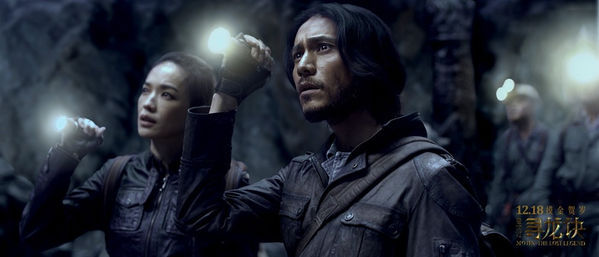
Hu Bayi (Chen Kun), his temperamental girlfriend Shirley (Shu Qi), and his reckless longtime friend Wang (Huang Bo) were all once Mojin, official treasure seekers and tomb raiders (Lara wasn’t available), but have since fallen into disgrace. Fed up with their washed-up lives in America, Wang is approached by a wealthy patron to locate an ancient Mongolian tomb. Compelled by a personal connection from his past, Wang accepts, dragging Hu Bayi and Shirley back into the dangerous business of booby traps, double-crossing villains, and supernatural(?) threats.

While the acting is all serviceable and sometimes quite good (the heroes are better than the villains), Mojin: The Lost Legend is most interesting as an example of how the Chinese do an Indiana Jones-style adventure. It takes a little while to get into tomb-raiding mode, but once it does, the pace stays brisk, and the set designs are impressive and elaborate, like the Moria of the Orient mixed with the Temple of Doom.  Anyone who enjoyed The Mummy or National Treasure should also find much to enjoy, from the playful banter to the horror elements of a particularly thrilling flashback to the way Chinese history and myth are used as clues and solutions along the way, not that I understood all of it.

See the source image

While it does mix a lot of aspects of adventure films I love, it is hard not to view those ingredients as copied or borrowed, even if there’s originality in how they are combined. Likewise, the special effects are one of the film’s strengths, yet there are moments that overuse slow motion and CGI to the point of being overblown and almost laughable, especially during the climax. Plus, the whole thing is a little too long for its own good. Yet it’s still a highly visual treasure hunt that even manages to work in some deeper emotions and themes of letting go of past tragedy. Flawed but fun, Mojin: The Lost Legend is an entertaining ride for those curious to see China’s take on their own National Treasure.


Rank: Honorable Mention


© 2018 S.G. Liput
565 Followers and Counting


The Light Between Oceans (2016)

26 Thursday Apr 2018

Posted by sgliput in Movies, NaPoWriMo, Poetry, Reviews, Writing

≈ 1 Comment

Tags

Drama, Romance

See the source image

(Today’s NaPoWriMo prompt was for a poem that engages all five senses, so I took some inspiration from the setting of this movie, which is largely set on a remote lighthouse isle.)


The sun that was forged in the east at dawn
Is now melted down at the end of the day.
The sparks of its smelting paint our horizon
And leave the world glowing from lighthouse to bay
And leave its spectators with nothing to say.

The seagulls are mourning the loss of their light,
Suffusing the sky with cacophony’s croaks,
But no matter how they lament to the night,
They cannot drown out the sea’s unceasing strokes,
So constant to calm the coastline that it soaks.

The smell of the salt in the darkening dusk
Invades through the nose to try brining the tongue,
But I barely notice the maritime musk,
For all that I feel is your hand to mine clung
As we watch the sunset with passion still young.
________________________

MPAA rating: PG-13

I knew The Light Between Oceans would be well-acted based on its two leads alone. Michael Fassbender and Alicia Vikander have proved themselves as still-rising stars, the latter already with an Oscar and the former likely to get one eventually. Based on a novel by M.L. Stedman, it’s a story full of high and subtle emotion that ultimately veers too far into the bitter side of bittersweet.

See the source image

Fassbender plays Tom Sherbourne, a shaken World War I veteran who accepts self-imposed isolation as a lighthouse keeper on a small island called Janus Rock off the Australian coast. His brief encounters on land ultimately result in a romance with well-to-do Isabel (Vikander), who marries him and moves out to Janus Rock in hopes of raising a family together. After several failed attempts at having children, though, an unlikely but convenient opportunity arrives when a boat washes up with a dead man and a baby inside. Isabel is all too eager to adopt the girl she names Lucy, regardless of whose baby she might be, challenging Tom’s morality in the process.

The first half of The Light Between Oceans is beautiful, not simply in its lustrous cinematography, but in the sweetness of Tom and Isabel’s romance. Despite his brokenness from the Great War, Isabel is drawn to Tom and offers him a happiness he didn’t think he deserved, and when he welcomes her into his heart and home, he turns out to be a faithful and generous husband. The heart breaks for them when Isabel suffers miscarriages, and it really is a moral quandary when they are faced with a chance at a family at the cost of their honesty, particularly when Tom learns of Lucy’s real mother (Rachel Weisz).

See the source image

Up to that point, everything was superb, but soon Tom’s ethical struggle becomes frustrating as he vacillates between right and wrong long after the decision should have been settled. The way he tries to make things right while keeping his wife’s secret only paves the way for its reveal, and I felt that, if he couldn’t do right at the beginning, he should have kept his mouth shut after a certain point, at least for the sake of the child. Eventually, things just keep going downhill, getting more and more depressing, until the plot buoys up for a poignant ending that’s not as bad as it could have been but not as satisfying as I wished either.

As I said, it’s beautifully shot and consistently touching thanks to its praiseworthy actors with great chemistry, but the story frustrated me. I can see how my opinion about Tom isn’t a purely moral one, and the fact that the film poses such a complex ethical question is a point in its favor, as is the theme of all sins eventually coming to light. Yet it hardly made for a satisfying movie-watching experience, and it just left me wishing for better circumstances for the characters.

See the source image

Best line: (Frank Roennfeldt, Lucy’s real father) “You only have to forgive once. To resent, you have to do it all day, every day, all the time. You have to keep remembering the bad things. It’s too much work.”


Rank: Honorable Mention


© 2018 S.G. Liput
565 Followers and Counting

 

In This Corner of the World (2016)

24 Tuesday Apr 2018

Posted by sgliput in Movies, NaPoWriMo, Poetry, Reviews, Writing

≈ 5 Comments

Tags

Animation, Anime, Drama, Foreign, History, Romance, War

See the source image

(Today’s NaPoWriMo prompt was for a hopeful elegy, so I wrote mine about the mourning of a way of life.)


What’s almost as sad as a person’s death
Is the death of the way that they lived.

They once woke up, knowing what their day
Would likely hold,
And they’d watch unfold
A normal we’d say
Was strange and old,
But they took pride
And personified
A life that bloomed till the world went cold.

Disasters sudden or a cancer slow
Or new breakthroughs
Would cause them to lose
What was status quo.
They could not refuse,
For who can tell
A dead bloom, “Get well,”
When its winter’s come and it’s paid its dues?

But people live on, like roots that remain
For new blooms to rise
Once the former dies
And forgets the pain
Of its sad demise.
Our ways of life fade
Daily and are remade.
Remember that grief is short-lived for the wise.
___________________

MPAA rating: PG-13

And the number of award-worthy animated films of 2016 just keeps on growing. When I heard that a crowdfunded project called In This Corner of the World had beaten out Your Name and A Silent Voice for Japan’s Best Animated Feature award, I rolled my eyes that anything could top those two emotional hits. I still would have preferred one of them to win, but I can now at least see why In This Corner of the World would deserve to win. (It’s also further proof that the American Academy can’t seem to recognize an award-worthy animation if it hails from another country.)

Set before, during, and after the Hiroshima bombing of August 6, 1945, this Japanese period drama has a slice-of-life charm and simplicity that endures the ever-looming shadow of death. In many ways, it is reminiscent of Grave of the Fireflies (a painful favorite of mine), yet while that film is essentially grief and desperation from start to finish, In This Corner of the World uses its long runtime to show the daily life of its characters and how the approaching war changed that way of life for the sake of survival.

See the source image

It begins with the childhood of Suzu Urano, an often absent-minded artist who grows up in an idyllic seaside town close to Hiroshima. After receiving an offer of marriage from a man she doesn’t know, she hesitantly leaves her own family to marry into the Hojo family in Kure, a Navy dockyard about an hour away by train. There is a wealth of humorous vignettes as Suzu adjusts to her new surrounding and family members, including a short-tempered sister-in-law and her daughter, and many aspects of their daily life are steeped in Japanese culture, from the fashioning of kimonos and later pants to the preparation of traditional field-to-table meals, which require resourcefulness once wartime rationing is implemented. From amusing asides and sweet romantic moments, the tone gets more and more serious and even dire as the war gets closer, the bombing raids become more frequent, and we the audience wait for the inevitable bomb to drop, wondering how it will affect Suzu and her loved ones.

The abrupt editing of all those vignettes does contribute to a sometimes unfocused storyline that puts certain details in doubt, and a few forays into Suzu’s imagination left me confused as to whether surrounding scenes were supposed to be real or not. Yet such negatives don’t detract too much from the humane power of the whole. Perceptive details and lovely snapshots abound, notably a post-war scene where the town’s lamps are uncovered (no longer in fear of air raids) and one by one shine into the night. The animation is not your typical anime style, with more of a gentle, hand-drawn impressionism that can be reminiscent of either a comic strip or a museum piece, depending on the tone of the scene. It’s surprisingly effective in its consistency depicting both Suzu’s carefree early life and the grief-stricken toll of war, and the filmmakers put great and laudable care into re-creating the pre-bomb city of Hiroshima accurately.

See the source image

Once again, I’m torn on how to rank what is clearly a great film, trying to judge my personal opinion of it. It’s absolutely worthy of Japan’s top animation prize, and I can see why they would opt for the more historically significant choice, even over the box-office juggernaut that was Your Name. Despite its winsome animation and gradually developed poignancy, it didn’t bring me close to tears like Your Name or A Silent Voice or Grave of the Fireflies, which matters to me as a way of measuring the emotional impact. Even so, I feel like I’m growing fonder of this film the more I think about it. Perhaps its ultimate ranking is a wait-and-see. It requires some patience, but I highly recommend In This Corner of the World for its touching civilian-level view of World War II.

Best line: (Suzu, comparing her current life to a dream) “I don’t want to wake up because I’m happy to be who I am today.”   (Shusaku, her husband) “I see. The past and the paths we did not choose, they’re like a dream.”


Rank: List Runner-Up (for now)


© 2018 S.G. Liput
564 Followers and Counting


Ready Player One (2018)

21 Saturday Apr 2018

Posted by sgliput in Movies, NaPoWriMo, Poetry, Reviews, Writing

≈ 2 Comments

Tags

Action, Drama, Mystery, Romance, Sci-fi, Thriller

See the source image

(Today’s NaPoWriMo prompt was for a poem inspired by the myth of Narcissus, who loved his reflection so much that he turned into a flower. Ah, those crazy Greeks…. This is an example of what I love about NaPoWriMo, because an ordinary poem of mine for this movie would have been quite different.)


I am the mirror that captured Narcissus,
A pool that reduced him to frailty and pride.
I am the mirror that heard the queen’s hisses
When told that Snow White was the more glorified.

I am the mirror no longer a mirror,
Tranformed over time to expand my appeal.
The more I’m admired by people, the dearer
I am to their lives, making all else unreal.

A whole generation and those in their wake
I’ve snared in a world they create to comply,
A mirror to show the world them for their sake,
Allured and immured by the power of “i”.

I’m praised for convenience, for freedom, for fun,
A magnet for eyes lest their view be too wide.
It’s up to the viewer what evil I’ve done;
I’m merely the mirror for frailty and pride.
___________________

MPAA rating: PG-13

There have been four movies I’ve seen so far in 2018 that I’ve genuinely loved, which, since it’s only April, is one a month (not bad). And it thrills me to no end that one of them is the film I declared my #1 movie that I hoped would be good. Steven Spielberg’s adaptation of Ready Player One didn’t blow my expectations away, like Train to Busan or The Greatest Showman, but I went in wanting to love it and found plenty of reasons to do just that.

See the source image


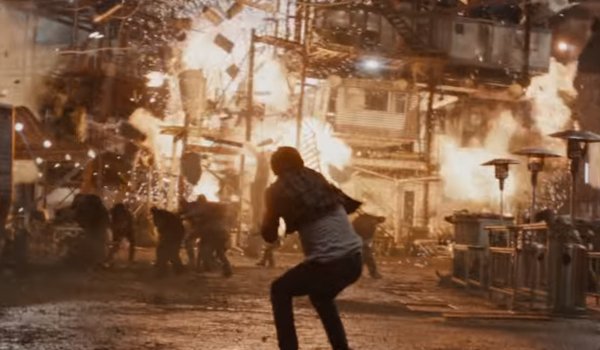
As someone who enjoyed Ernest Cline’s novel immensely, I can confirm that the film diverges quite a bit from its source material. Yet, unlike other decent but disappointing adaptations (Eragon, Inkheart), Ready Player One the film still adheres to the spirit of its source, and the fact that Cline himself cowrote the screenplay assuages my concerns about the many plot aberrations. Even so, the core story is intact: a massive multiplayer scavenger hunt through the virtual world known as the OASIS, a world and hunt created by dead eccentric James Halliday (Mark Rylance, who plays his social anxiety a bit too wooden). The entire world is in search of Halliday’s hidden Easter egg, which grants ownership of the OASIS to the winner, but no progress is made until Halliday fan Wade Watts (Tye Sheridan) earns the first of three keys, making him a target for the evil, power-hungry IOI corporation (led by an accent-less Ben Mendelsohn).

All that is straight out of the book, but in the leap from page to screen, changes are inevitable. If you’ve read the book, your enjoyment of the movie just might depend on how much such changes bother you. My VC, for example, enjoyed the film but harbored reservations about the rampant alterations of its second half. (She said, if she hadn’t read it first, she’d outright love the movie.) Yet, I think many of the changes work in the film’s favor. True, the book is better, but there are many parts of it that wouldn’t transfer well to the screen, such as the months that go by between breakthroughs or the important plot advances that consist of beating literal arcade games. Turning one of these challenges into a demolition derby race, for example, makes it far more exciting cinematically, while changing Halliday’s much-studied journals into a gallery of virtual records makes Wade’s research more visual. Also, the replacement of certain pop culture references with others is likely the result of copyright compromises and the filmmakers’ desire to play with particular “toys.”

See the source image

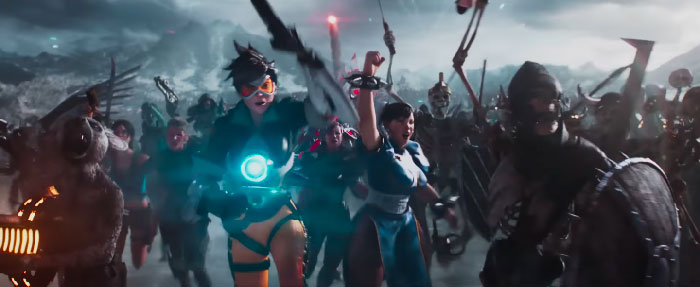
And boy, do they lay on the pop culture references, 90% of which swirl by far too quickly to fully appreciate. Yet the recognition that comes in those moments is an unparalleled thrill for nerds like me. Where else are you going to see the time-traveling DeLorean race the bike from Akira or Overwatch’s Tracer charging into battle with the Iron Giant? The cameos also vary depending on the viewer’s personal tastes; a friend of mine recognized a Lancer weapon from Gears of War, I geeked out at the site of the roulette wheel space station from Cowboy Bebop, while my VC chuckled at an incantation from Excalibur, all references that one of us “got” and the others didn’t. Thanks to the CGI mastery on display, there were several (likely entirely animated) sequences where I just sat there with a goofy grin on my face in a little place called geek heaven.

Except for the idea of not liking any changes in general, I can understand many of the complaints I’ve heard about what is essentially an alternate version of the Ready Player One story readers knew. Some of the rules of the OASIS are glossed over, potentially leaving questions for unfamiliar viewers. The characters aren’t nearly as developed as their counterparts on paper, lacking defined character arcs, and there’s little attention paid to the problems of this dystopian world outside its virtual refuge. The romance might be too rushed and convenient, the avatar of Wade’s friend Aech looks nothing like I imagined from the book, the very long runtime is felt by the end, and they should have included WarGames, dang it! It’s true; Ready Player One is not a perfect film, but I’ve rarely been better entertained in true Spielberg blockbuster fashion.

See the source image

It’s really quite simple: I am Ready Player One’s target audience. I’m the nerd who revels in shared geekery, while appreciating half-realized lessons about the value of a life outside of technological obsession. I think that, drawing its inspiration from a great book, this Ready Player One is a great movie, boasting a visual awesomeness that puts most movie spectacles to shame.

Best line:  (Halliday, echoing Groucho Marx) “I created the OASIS because I never felt at home in the real world. I just didn’t know how to connect with people there. I was afraid for all my life, right up until the day I knew my life was ending. And that was when I realized that as terrifying and painful as reality can be, it’s also… the only place that you can get a decent meal. Because, reality… is real.”


Rank: List-Worthy


© 2018 S.G. Liput
563 Followers and Counting


Darkest Hour (2017)

20 Friday Apr 2018

Posted by sgliput in Movies, NaPoWriMo, Poetry, Reviews, Writing

≈ 1 Comment

Tags

Drama, History, Triple A, War

See the source image

(Today’s NaPoWriMo prompt was for a poem featuring rebellion, so I took inspiration from Winston Churchill’s tenacity in resisting the German onslaught in World War II.)


An animal fights never so hard
As when its den, its nest, its yard,
Its hole or burrow, lair or hollow
Is assaulted, threatened, scarred.
It’s then they most are on their guard.

If they defend their home so well,
Then we as humans must rebel
Against invasion, no persuasion
To assuage our raising hell
To screen and shield our citadel.

The brightest day requires no grit
When we are free to relish it.
The darkest hour tests our power
And our backbone not to quit,
For rebel lairs dare not submit.
____________________

MPAA rating: PG-13

Were you expecting the 2011 alien invasion movie set in Russia? If so, psych! Get with the times because I already reviewed that two days ago (and it’s The Darkest Hour, by the way). No, this is last year’s Winston Churchill biopic, which is more likely the film people will associate with the words Darkest Hour (no The), not only because it’s more recent but because it’s a fantastic movie.

See the source image

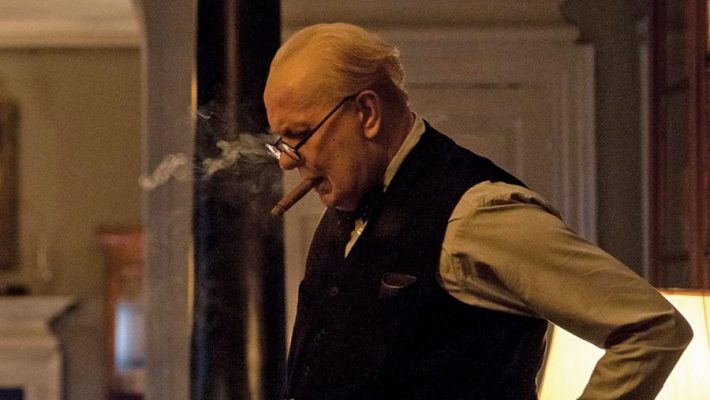
While Christopher Nolan’s Dunkirk depicted the famous rescue of the British army across the English Channel and Their Finest used it as propaganda back on the home front, Darkest Hour looks at the same events from the perspective of the leadership and politicians. An English political drama could very easily have made the proceedings eminently dry and boring, but that’s hardly the case when there’s an actor of Gary Oldman’s caliber in top form. His Oscar-winning performance as Winston Churchill is exceptional, one of those roles of a lifetime that he truly melts into, so that he’s hardly distinguishable from the real-life figure he plays, thanks also to the Oscar-winning makeup. From his droll habits and bearing to his brilliantly delivered speeches, it’s no wonder critics and audiences alike were saying, “Just give him the Oscar he so clearly deserves.”

Even the most acclaimed biopics so often leave me with a lessened opinion of their subjects, but Darkest Hour manages to show Churchill “warts and all,” so to speak, and still leave no doubt as to why he is considered such a great leader. In his very first scene, he’s at his worst, roaring at a fresh-faced, new secretary (Lily James) over minor annoyances, only to be calmed down by his loving and encouraging wife (Kristin Scott Thomas). The rest of the film serves to soften that intimidating figure we first see, as he buckles under the weight of the wartime decisions he faces and stands resolute in the face of overwhelming odds.

See the source image

It was interesting to see how naively Churchill’s fellow leaders believed they could sue for peace even while war and destruction were upon them, and I was surprised at how unpopular Churchill was among his own Conservative party. Did the way he was described as someone with one hundred ideas a day, four of them good and the rest dangerous, remind anyone else of Donald Trump? Honestly, there were several scenes where it was as if they were describing the sitting U.S. President. “One never knows what’s going to come out of your mouth next. Something that’ll flatter, something that’ll wound,” says King George VI, played by Ben Mendelsohn (since I suppose Colin Firth was busy). Considering Churchill’s dictation habits, I can’t help but wonder if a modern Churchill would be tweeting in the privy as well.

Beyond the outstanding acting, the rest of the production is equally praiseworthy, such as the realistic sets and the way the dates change onscreen to make clear that events are happening within mere days of each other. Joe Wright’s direction is elegant but straightforward, and the script intelligent and witty in equal measure, providing welcome humor to lighten various scenes while also stressing the desperation of Britain’s situation. There’s some disappointment when you realize a great scene or two was fabricated, such as a voice-of-the-people sequence in the London subway, but the high degree of historical accuracy is only part of Darkest Hour’s strength.

See the source image

It’s a testament to the power of oratory and a portrait of a great man under fire, not covering his whole life but the tension-filled days and weeks that helped define the course of his life and of the world. I’m tempted to rank it as a tie with The Iron Lady, another well-acted film about a great British prime minister that won its lead an Oscar, but I think Darkest Hour is a tad stronger overall and indeed one of the best films of 2017.

Best line (there are so many): (Churchill) “Those who never change their mind never change anything.”


Rank: List-Worthy


© 2018 S.G. Liput
562 Followers and Counting


Still Mine (2013)

19 Thursday Apr 2018

Posted by sgliput in Movies, NaPoWriMo, Poetry, Reviews, Writing

≈ 1 Comment

Tags

Drama, Romance

See the source image

(Today’s NaPoWriMo prompt was to write a paragraph and create a poem from the words in it. Thus, I drew from the first two paragraphs of my review below, which I wrote first, and rearranged the words into a bit of free verse.)


Marriage can be a big deal
When young, focused on opportunities,
Strong and of the opinion that a relationship
Invariably
Leads to an empire declining.

But when the enduring,
The building, the well-acted long-suffering,
The stubborn not letting go is decades-long
(Not depressingly),
It is prized by the two that are one.

Even with health slowing,
Faithfulness deteriorates not.
___________________

MPAA rating: PG-13 (for language and a non-explicit bedroom scene)

The movie industry invariably favors the young, so strong roles for older actors and actresses are prized opportunities. One example that got awards attention was 2015’s 45 Years, which was well-acted but depressingly focused on how easily a decades-long marriage can fall apart. Still Mine is like the anti-45 Years, with James Cromwell and Genevieve Bujold showing the long-suffering faithfulness of a moving and enduring relationship, yet it didn’t get much notice outside its native Canada, despite being a far better film in my opinion.

See the source image

Based on a true account, Cromwell plays Craig Morrison, the owner of several hundred acres in New Brunswick and a small farm empire that includes lumber, strawberries, and cattle. Now that he’s in his eighties, he’s slowing down and letting go of parts of his business, yet his wife Irene’s declining health leads him to start building a smaller house not far from their current one, which is now too big for the two of them. Decades before, that may have been no big deal, but it doesn’t take long for Craig to come into conflict with government bureaucrats, who insist that his unauthorized building (even on his own land) violates regulations. As Irene deteriorates into dementia, Craig must care for her and prove how stubborn he can be when he knows he’s in the right.

Cromwell gives an outstanding performance, the kind that makes you wonder why he’s never won an Oscar, though he did win the Canadian equivalent for this very role. He and Bujold share a tender warmth together, which swings from humorous reminiscences to extreme frustration yet remains unshakable. One conversation even reveals Irene’s jealousy over one of Craig’s past loves, and while that was the entire conflict of 45 Years, it’s a mere footnote in this love story. Craig’s interactions with his worried kids, nosy neighbors, and intractable bureaucrats confirm him as a willful but competent man whose decades of experience are not something to be underrated.See the source imageI’m torn on how to rank Still Mine. I feel like it could be List-Worthy, but there’s something keeping me from being sure, so I’ll err on the side of caution and name it a high Runner-Up. Cromwell is at his best here with a script that calls out the narrow demands of government overregulation while painting an affectionate picture of long-suffering love with both humor and pathos. It makes me think I ought to explore what other gems Canada has to offer.

Best line: (Craig, to one of his grandsons) “You mean to tell me you’re nine years old and no one’s told you who Babe Ruth is yet?”
(grandson) “No, how old are you?”
(Craig) “Eighty-seven.”
(grandson) “Do you know who Drake is?”
(Craig) “Who?”
(grandson) “Then we’re even.”


Rank: List Runner-Up (a very high one)


© 2018 S.G. Liput
561 Followers and Counting


The Last Days (2013)

17 Tuesday Apr 2018

Posted by sgliput in Movies, NaPoWriMo, Poetry, Reviews, Writing

≈ 3 Comments

Tags

Disaster, Drama, Foreign, Sci-fi, Thriller

See the source image

(Today’s NaPoWriMo prompt was for a memorable family anecdote. Instead of some specific story, I incorporated a few into a societal critique.)

There’s so much that we used to do
When we would go outside.

The sun would bake us at the beach
And leave us peeling for a week,
And kites would soar far out of reach
Until we practiced our technique.
We’d grumble as we walked the dog
And stumbled through the morning fog.
There’s so much we would take in stride
When we would go outside.

The mountain trails would call our name
And leave us awed and insect-bitten.
At the park, we’d choose our game,
Get stuck in trees we thought we’d fit in,
Find we’re lost beyond belief,
Then find our way with sighed relief.
There’s so much that we dared and tried
When we would go outside.

Interiors are now default,
The “Great Outdoors” a memory,
And from our comfort-ridden vault,
A screen eclipses earth and sea.
Although we know without a doubt,
We’re on the inside looking out.
There’s so much that we are denied
When we won’t go outside.
_____________________

MPAA rating: Unrated (should be R due to profanity in the subtitles, maybe PG-13 without that, though there’s still some brief violence and nudity)

When you see deserted city streets littered with abandoned cars and roaming animals, what explanation comes to mind first? These days, it’s probably a zombie apocalypse or maybe an alien invasion, right? The Last Days suggests a much simpler kind of apocalypse, though, one where people don’t dare go outside, but not because of some creature lurking out there; they simply die if they leave shelter.

See the source image

A Spanish thriller perhaps influenced by the surrealist film The Exterminating Angel, The Last Days (or Los Últimos Días) triggers its apocalypse gradually, with people suddenly contracting severe agoraphobia or fear of open spaces. Walking outside provokes a deadly seizure, so people end up stranded in whatever building they happen to be in at the time. Some viewers may have trouble taking such an epidemic seriously, but it’s revealed gradually through flashbacks and treated with dead seriousness and great realism. In the case of Marc (Quim Gutiérrez), he was at work when it hit and has spent the last three months trapped inside his Barcelona office building, taking turns with his coworkers to dig a tunnel to the subway. When they finally reach this chance to travel to other parts of the city, he sets out in search of his girlfriend Julia (Marta Etura), grudgingly aided by corporate firing specialist Enrique (José Coronado).

The Last Days works well on several levels: as a slow but compelling journey through end-of-the-world encounters, as a grim but endearing buddy movie, and as an outlet for subtle social themes. Of course, the apocalyptic settings are the biggest focus, but it felt unique to have the danger come not from some monster but from other people, some of whom band together to support each other while others compete violently for limited resources. The relationship between Marc and Enrique is an unlikely pairing based on where they started before the disaster, but I liked the way they both relate to each other’s goals and fears, helping each other along the way. The social message I mentioned may come off as obvious in some ways, with people’s fear of leaving their homes taken to an extreme, but there are other understated themes broached, such as the concern of bringing children into a world of doubt and uncertainty.

See the source image

I entertained ranking The Last Days as a List Runner-Up, but the ending really put it over the top. For a film with so much depressing atmosphere and tragedy, it ends on a surprisingly uplifting note that in some ways felt like the kind of ending Passengers should have had if it had tried harder. I was also impressed by the quality acting and production values and particularly by one long tracking shot through a scene of chaos. (Have I mentioned I love those kinds of scenes?) Don’t expect a lot of action, but if you can buy into its uniquely subdued form of disaster, The Last Days has much good to offer.


Rank: List-Worthy


© 2018 S.G. Liput
559 Followers and Counting


Thor: The Dark World (2013)

15 Sunday Apr 2018

Posted by sgliput in Movies, NaPoWriMo, Poetry, Reviews, Writing

≈ 1 Comment

Tags

Action, Drama, Fantasy, Sci-fi, Superhero

See the source image

(Today’s NaPoWriMo prompt was to write of a villain made relatably human, so I focused on how Loki feels as his father’s second favorite.)


Here am I, Loki, a god of Asgard,
Who ought to be king just for trying so hard.

The unchosen heir, second fiddle since birth,
Locked up just for seeking to conquer the earth!

I’m here behind energy fields, and where’s Thor?
Out hogging the glory like so oft before.

Who cares about me, the black sheep of the court,
The outcast brought in to be cast out for sport?

I’m Odin’s chagrin and his family’s regret,
But he and his favorite have seen nothing yet.

One day, they’ll come crawling to me in this jail,
Not knowing how deeply I’ll savor betrayal.
______________________

MPAA rating: PG-13

My family and I have been rewatching all the Marvel movies recently in preparation for Infinity War and to remind us of everything that came before. In doing so, I realized that Thor: The Dark World is the only one I haven’t reviewed, and I couldn’t let that slide. Such an oversight sort of proves that The Dark World is one of the weaker Marvel entries, and, although Thor is one of my least favorite Avengers, it’s still actually quite a solid film in the series.

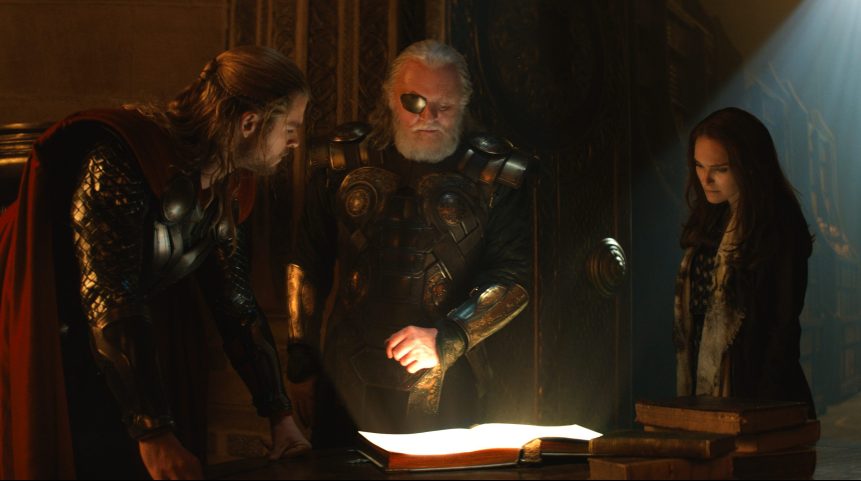
Picking up after Thor (Chris Hemsworth) returned the Tesseract and an imprisoned Loki (Tom Hiddleston) to Asgard in The Avengers, The Dark World introduces the universe-hating Dark Elves and their secret weapon called the Aether, later revealed to be one of the Infinity Stones. (Can you tell I’m a Marvel nerd yet?) Awakened from exile after Thor’s girlfriend Jane (Natalie Portman) discovers and absorbs the Aether, the Dark Elves seek vengeance on Asgard and, you know, try to destroy the universe.

See the source image

The Dark World’s biggest problem is its villain, Malekith (Christopher Eccleston), who remains the most forgettable of all of Marvel’s many disposable villains. Not even a Lost alert for Adewale Akinnuoye-Agbaje as a Kursed henchman could make the bad guys anything but dull threats. There’s literally nothing to them except getting the Aether to destroy everything, and the exposition-heavy prologue about the Dark Elves’ history weighs things down in unmemorable mythology.

I suppose mythology could be considered both a strength and a weakness for the first two Thor movies, steeped in Norse lore and Shakespearean pageantry as they are. With the Middle-Earth-style costumes and old English dialogue, they’re rather unique and somewhat sophisticated next to the lighter Marvel movies, yet they can easily become an overly serious bore for those who aren’t interested in those things. That’s likely why Thor: Ragnarok went full-on sci-fi comedy as a contrast, which was both good and bad.

See the source image

Yet The Dark World’s strengths shouldn’t be forgotten either. Hemsworth and Portman are so admirable and sincere in their roles that they manage to sell their average romance, while Thor boasts outstanding chemistry with his double-crossing adopted brother Loki. Their rivalry is the biggest character highlight of the Thor series, which is probably why Loki has stayed around in all three movies.

The special effects are also as eye-popping and destructive as the rest of Marvel’s repertoire, especially the Dark Elves’ invasion of Asgard, while the scope and adventure of visiting different worlds make it a far grander ride than the first Thor. (Did anyone else notice that the giant rock guy Thor shatters near the beginning looks a lot like Korg from Ragnarok? They may be from the same race.) Plus, I think the orchestral score by Brian Tyler might be one of the best of any Marvel movie, except The Avengers, and a decent balance of gravity and humor keeps things entertaining without going off-the-wall like Ragnarok.

See the source image

I enjoyed The Dark World more than I remembered, proving that even the lesser Marvel movies have plenty to offer. In fact, despite being more of a Runner-Up, I think I’ll go ahead and make it List-Worthy. Ragnarok found its way onto my Top 365 List last year when the other two Thors didn’t because I thought it was so much better, but I’m going to follow my own rules and put all three together. Even if The Dark World suffers from a bland villain, it’s still a good superhero movie, and I don’t think we comic nerds should be too hard on it.

Best line: (Thor, summing up his relationship with Loki) “I wish I could trust you.”


Rank: List-Worthy (joining Thor: Ragnarok)


© 2018 S.G. Liput
556 Followers and Counting


The Best Years of Our Lives (1946)

13 Friday Apr 2018

Posted by sgliput in Movies, NaPoWriMo, Poetry, Reviews, Writing

≈ 2 Comments

Tags

Classics, Drama, Romance, War

See the source image

(Today’s NaPoWriMo prompt was to write a poem based on the reverse of a well-known phrase or saying, so I picked “home is where the heart is.”)


The mind is rarely where the home is,
Always drawn back here, back there,
To sites of sorrows, times of traumas,
Every missed or broken promise,
Every frightened, whispered prayer,
And doubts that dwarf the likes of Thomas.

Although it wishes peace to find,
The night is haunted by the day,
And progress can be undermined
By ghosts we thought we’d left behind.
The battlefields still hold their sway
When hearts go home without the mind.
_________________

MPAA rating: Not Rated (should be PG)

This post is by request of MovieRob, who gave the most correct answers to my new banner challenge and so earned the right to have me review a film of his choice. It’s also a chance to review something not from the last couple years, which seems to be all I’ve been reviewing lately. I knew The Best Years of Our Lives was one of his all-time favorites, and it is a film that still packs an emotional wallop even 72 years later, offering an authentic glimpse of how World War II veterans readjusted to civilian life.

See the source image

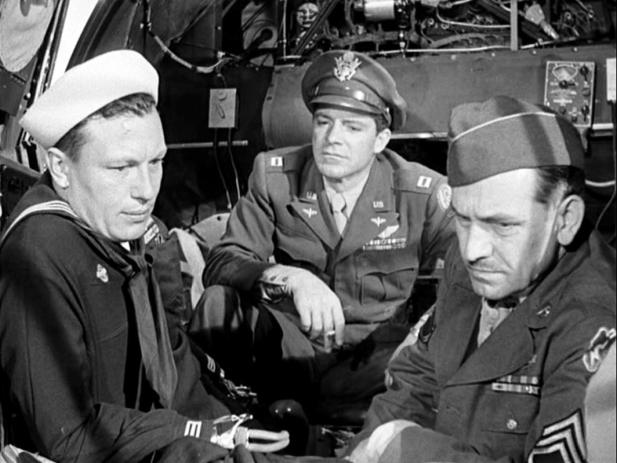
Perfectly timed when it came out the year after the war ended, The Best Years of Our Lives follows three ex-servicemen returning to their fictional hometown of Boone City: an older sergeant and banker named Al Stephenson (Fredric March), a newly married captain named Fred Derry (Dana Andrews), and an amputee from the Navy named Homer Parrish (real amputee Harold Russell), who lost both hands and now uses a pair of hook prosthetics. Although all are eager to return home, they quickly experience difficulties in adjusting to their new civilian roles, such as Fred’s lack of experience in anything but the bombing for which he was trained or Homer’s insecurity over how his family and sweetheart will react to his hooks.

The performances are excellent across the board, rarely falling into dated overacting, with Russell especially standing out as Homer, well deserving his Best Supporting Actor Oscar despite not being a professional actor. (He’s also the only actor to win two Oscars for the same role, one an honorary award, and the only one to auction his Oscar years later.) March also won an Oscar, though I personally thought he was better in 1937’s A Star Is Born, and the film received five other Academy Awards too, including Best Picture. Above all, the story feels genuine, as if these were real stories that actually played out in the post-war period, even including how businesses and conspiracists viewed the war and the shaken people it sent back home.

See the source image

Despite being a significant film and one of the best in its genre, I do feel The Best Years of Our Lives, at 170 minutes, runs about twenty minutes too long, and not all three of its stories carry the same weight. Homer’s is easily the best with a profoundly lump-inducing conclusion, while Fred’s love triangle with his shallow wife (Virginia Mayo) and Al’s daughter Peggy (lovely Teresa Wright) has its moments. So does Al’s homecoming, but his drunkenness drags on a bit with little resolution, even if I’m sure it’s a true depiction of the way many veterans tried to cope.

The Best Years of Our Lives may run long, but it’s a moving portrait of post-war America and the problems that plagued her veterans, which still ring true due to the permanence of war. One image near the end seems to capture the potential hopelessness of their situation, as Fred sits in the nose of a scrapped plane with no engines, grounded and heading nowhere. Yet it subtly says even more that right afterward, he learns the scrapyard will be recycled into new housing, a symbol of the renewal capable for men as well.

See the source image

Best line: (Fred) “I dreamed I was gonna have my own home. Just a nice little house for my wife and me out in the country… in the suburbs anyway. That’s the cock-eyed kind of dream you have when you’re overseas.”   (Peggy) “You don’t have to be overseas to have dreams like that.”   (Fred) “Yeah. You can get crazy ideas right here at home.”


Rank: List Runner-Up


© 2018 S.G. Liput
554 Followers and Counting


Bad Lucky Goat (2017)

12 Thursday Apr 2018

Posted by sgliput in Movies, NaPoWriMo, Poetry, Reviews, Writing

≈ 1 Comment

Tags

Comedy, Drama, Foreign

See the source image

(Today’s NaPoWriMo prompt was for a haibun, a Japanese combination of prose and haiku. Instead of focusing on my unremarkable current environment, as the prompt suggested, I thought I’d try the Caribbean setting of this offbeat film.)


The ocean exhales the tide as if to cover every island,
Only to breathe back in lest its favorite peaks be lost.
Life goes on, trusting
That the sea will catch his breath.
Do islands hold theirs?
____________________

MPAA rating: Not Rated (PG-13 or maybe even PG)

Another selection from last year’s South by Southwest, Bad Lucky Goat might be best described as Adventures in Babysitting, island-style. Except that instead of babysitting kids, it’s a goat’s corpse. Doesn’t that sound like fun? What’s also unusual about this Colombian movie is that there’s plenty of English but you absolutely will need subtitles, because all the characters speak in such a thick Caribbean patois dialect that it’s hard to believe they can understand each other.

The ones doing the goatsitting are brother and sister Corn (Honlenny Huffington) and Rita (Kiara Howard), who are clearly the type of siblings who don’t get along. While on an errand for their parents, Rita accidentally runs over a goat, and they are faced with covering up both the truck repair and the body disposal. I couldn’t help but be reminded of Adventures in Babysitting as they try to gather money to pay off the mechanic and even face the threat of kidnapping. Yet, there’s more realism and exotic charm than outright comedy, and it certainly captures a poor but unique way of life, one where cock fights are still popular and a troupe of shirtless musicians make music with improvised instruments and random objects while chest-deep in a bayou.

See the source image

Occasionally, it got old watching Corn and Rita argue almost the entire time, but their eventual reconciliation felt genuine in spite of their sibling quarrels. Unless you actively love goats, they’re also sympathetic enough to hope they resolve their ever worsening problems, though Rita’s pilfering of a church collection plate lost a lot of my sympathy.

I don’t know that I’d ever seek it out again, but Bad Lucky Goat was a singularly quirky film with a likably meandering plot, some Rastafarian superstition, and a distinctive island flavor. In addition to the upbeat reggae soundtrack (much of it courtesy of Robinson and the Lazy Hill Band), the direction from film school graduate Samir Oliveros is colorful and polished with a few nice tracking shots I wouldn’t expect from a low-budget film funded as a Kickstarter project. It’s a laid-back little movie that’s only 76 minutes long, well worth a look if you’re in the mood for something different from the usual Hollywood fare.


Rank: Honorable Mention


© 2018 S.G. Liput
554 Followers and Counting


← Older posts
Newer posts →

Recent Posts

  • We Didn’t Start 2025 (Recap)
  • NaPoWriMo 2025 Recap (Finally)
  • Sonic the Hedgehog 3 (2024)
  • It Happened One Night (1934)
  • Spellbound (2024)

Recent Comments

associatesofshellymann's avatarassociatesofshellyma… on My Top Twelve La La La So…
Kit's avatarKit Nichols on Bonnie and Clyde (1967)
lifelessons's avatarlifelessons on Look Back (2024)
Carol Jackson's avatarCarol Jackson on The Thief of Bagdad (1940…
Stephen's avatarStephen on Love Story (1970)

Archives

  • January 2026
  • December 2025
  • May 2025
  • April 2025
  • March 2025
  • February 2025
  • January 2025
  • December 2024
  • May 2024
  • April 2024
  • March 2024
  • February 2024
  • January 2024
  • December 2023
  • November 2023
  • October 2023
  • September 2023
  • July 2023
  • June 2023
  • May 2023
  • April 2023
  • March 2023
  • February 2023
  • January 2023
  • December 2022
  • November 2022
  • October 2022
  • September 2022
  • August 2022
  • July 2022
  • June 2022
  • May 2022
  • April 2022
  • March 2022
  • February 2022
  • January 2022
  • December 2021
  • November 2021
  • October 2021
  • September 2021
  • August 2021
  • July 2021
  • June 2021
  • May 2021
  • April 2021
  • March 2021
  • February 2021
  • January 2021
  • December 2020
  • November 2020
  • October 2020
  • September 2020
  • August 2020
  • July 2020
  • June 2020
  • May 2020
  • April 2020
  • March 2020
  • February 2020
  • January 2020
  • December 2019
  • November 2019
  • October 2019
  • September 2019
  • August 2019
  • July 2019
  • June 2019
  • May 2019
  • April 2019
  • March 2019
  • February 2019
  • January 2019
  • December 2018
  • November 2018
  • October 2018
  • September 2018
  • August 2018
  • July 2018
  • June 2018
  • May 2018
  • April 2018
  • March 2018
  • February 2018
  • January 2018
  • December 2017
  • November 2017
  • October 2017
  • September 2017
  • August 2017
  • July 2017
  • June 2017
  • May 2017
  • April 2017
  • March 2017
  • February 2017
  • January 2017
  • December 2016
  • November 2016
  • October 2016
  • September 2016
  • August 2016
  • July 2016
  • June 2016
  • May 2016
  • April 2016
  • March 2016
  • February 2016
  • January 2016
  • December 2015
  • November 2015
  • October 2015
  • September 2015
  • August 2015
  • July 2015
  • June 2015
  • May 2015
  • April 2015
  • March 2015
  • February 2015
  • January 2015
  • December 2014
  • November 2014
  • October 2014
  • September 2014
  • August 2014
  • July 2014
  • June 2014
  • May 2014
  • April 2014
  • March 2014
  • February 2014
  • January 2014
  • December 2013

Categories

  • Blindspot
  • Blogathon
  • Christian
  • Movies
  • Music
  • NaPoWriMo
  • Poetry
  • Reviews
  • TV
  • Writing

Meta

  • Create account
  • Log in
  • Entries feed
  • Comments feed
  • WordPress.com

Recent Posts

  • We Didn’t Start 2025 (Recap)
  • NaPoWriMo 2025 Recap (Finally)
  • Sonic the Hedgehog 3 (2024)
  • It Happened One Night (1934)
  • Spellbound (2024)

Recent Comments

associatesofshellymann's avatarassociatesofshellyma… on My Top Twelve La La La So…
Kit's avatarKit Nichols on Bonnie and Clyde (1967)
lifelessons's avatarlifelessons on Look Back (2024)
Carol Jackson's avatarCarol Jackson on The Thief of Bagdad (1940…
Stephen's avatarStephen on Love Story (1970)

Archives

  • January 2026
  • December 2025
  • May 2025
  • April 2025
  • March 2025
  • February 2025
  • January 2025
  • December 2024
  • May 2024
  • April 2024
  • March 2024
  • February 2024
  • January 2024
  • December 2023
  • November 2023
  • October 2023
  • September 2023
  • July 2023
  • June 2023
  • May 2023
  • April 2023
  • March 2023
  • February 2023
  • January 2023
  • December 2022
  • November 2022
  • October 2022
  • September 2022
  • August 2022
  • July 2022
  • June 2022
  • May 2022
  • April 2022
  • March 2022
  • February 2022
  • January 2022
  • December 2021
  • November 2021
  • October 2021
  • September 2021
  • August 2021
  • July 2021
  • June 2021
  • May 2021
  • April 2021
  • March 2021
  • February 2021
  • January 2021
  • December 2020
  • November 2020
  • October 2020
  • September 2020
  • August 2020
  • July 2020
  • June 2020
  • May 2020
  • April 2020
  • March 2020
  • February 2020
  • January 2020
  • December 2019
  • November 2019
  • October 2019
  • September 2019
  • August 2019
  • July 2019
  • June 2019
  • May 2019
  • April 2019
  • March 2019
  • February 2019
  • January 2019
  • December 2018
  • November 2018
  • October 2018
  • September 2018
  • August 2018
  • July 2018
  • June 2018
  • May 2018
  • April 2018
  • March 2018
  • February 2018
  • January 2018
  • December 2017
  • November 2017
  • October 2017
  • September 2017
  • August 2017
  • July 2017
  • June 2017
  • May 2017
  • April 2017
  • March 2017
  • February 2017
  • January 2017
  • December 2016
  • November 2016
  • October 2016
  • September 2016
  • August 2016
  • July 2016
  • June 2016
  • May 2016
  • April 2016
  • March 2016
  • February 2016
  • January 2016
  • December 2015
  • November 2015
  • October 2015
  • September 2015
  • August 2015
  • July 2015
  • June 2015
  • May 2015
  • April 2015
  • March 2015
  • February 2015
  • January 2015
  • December 2014
  • November 2014
  • October 2014
  • September 2014
  • August 2014
  • July 2014
  • June 2014
  • May 2014
  • April 2014
  • March 2014
  • February 2014
  • January 2014
  • December 2013

Categories

  • Blindspot
  • Blogathon
  • Christian
  • Movies
  • Music
  • NaPoWriMo
  • Poetry
  • Reviews
  • TV
  • Writing

Meta

  • Create account
  • Log in
  • Entries feed
  • Comments feed
  • WordPress.com

Blog at WordPress.com.

  • Subscribe Subscribed
    • Rhyme and Reason
    • Join 814 other subscribers
    • Already have a WordPress.com account? Log in now.
    • Rhyme and Reason
    • Subscribe Subscribed
    • Sign up
    • Log in
    • Report this content
    • View site in Reader
    • Manage subscriptions
    • Collapse this bar