• Home
  • About Me
  • The List
  • THE LIST (2016 Update)
  • THE LIST (2017 Update)
  • THE LIST (2018 Update)
  • THE LIST (2019 Update)
  • THE LIST (2020 Update)
  • THE LIST (2021 Update)
  • THE LIST (2022 Update)
  • Top Twelves and More
  • The End Credits Song Hall of Fame

Rhyme and Reason

~ Poetry Meets Film Reviews

Rhyme and Reason

Tag Archives: Drama

Harriet (2019)

19 Tuesday May 2020

Posted by sgliput in Movies, Poetry, Reviews, Writing

≈ Leave a comment

Tags

Drama, History

See the source image

Harriet, oh Harriet,
What daring feats you managed!
Your life was like a chariot
To bear the disadvantaged.

You fled the yoke of slavery
To Northern sanctuary,
And yet displayed your bravery
By seeking more to carry.

You earned the trade name “Moses” and
Freed slaves without the pleading.
You knew what God opposes and
Agreed to do the leading.

Harriet, oh Harriet,
What lives you liberated!
The weight, you knew to carry it,
And free whom God created.
_____________________

MPA rating: PG-13

My apologies for the long delay. After getting through NaPoWriMo, I didn’t anticipate taking a two-week break, but school, work, and adopting a new cat kept me busy. Anyway, it’s time to get back into movie mode, starting with a wonderful biopic from last year. The story of famed abolitionist and Underground Railroad conductor Harriet Tubman has been long overdue for the big-screen treatment, and Harriet does her tale justice.

See the source image

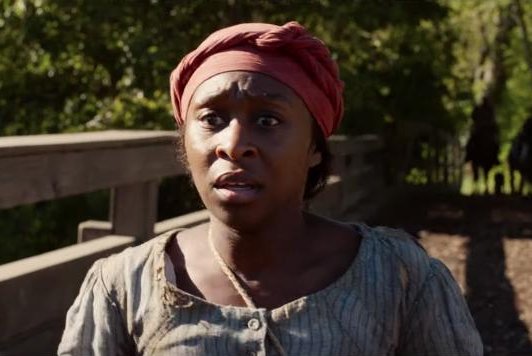
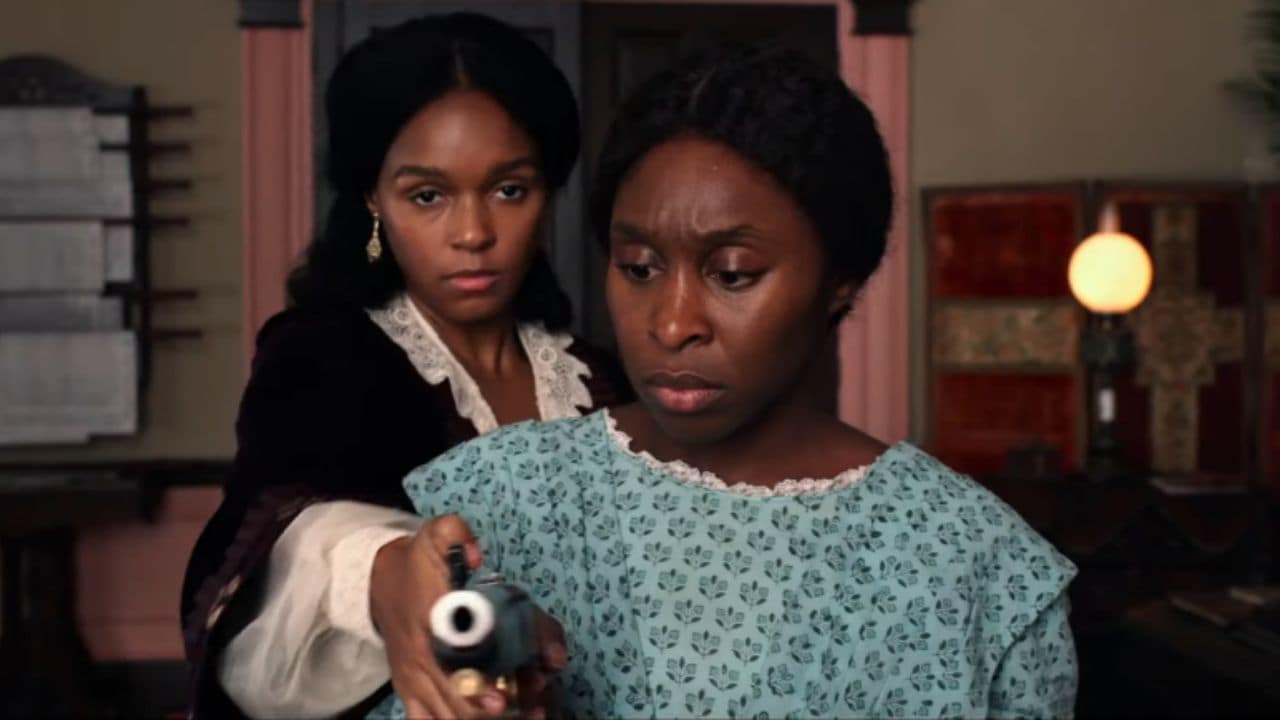
Making a name for herself on the stage, including the Broadway production of The Color Purple, Cynthia Erivo may only have three films to her name, but this (her third) is undoubtedly a star-making role. The film follows Harriet’s life from her time as a Maryland slave named Minty, captive to the Ross family, to her daring escape northward to her repeated journeys back to help other fugitive slaves reach freedom. Harriet’s indomitable courage and faith in God carried her through heartache and danger, and although she suffers from fainting spells, they turn out to be visions from God. She manages both the ferocity of the big moments, like a face-off with her former master (Joe Alwyn), and the sensitivity of small ones, as when she hops over the Pennsylvania border into sunlit freedom.

Harriet is notable for me because, for the first time, I actually know someone who was an extra in it, and I was able to spot her on a few occasions after she described which scenes she was in. It might not be like knowing a movie star, but it certainly felt cool to me being able to point at the screen and say “I know her!” Beyond the title role and the extras, the secondary cast does good work as well, including Leslie Odom Jr. of Hamilton and Janelle Monáe of Hidden Figures. And while the horrors of slavery could have warranted an R rating, like 12 Years a Slave, Harriet manages enough restraint to be more accessible as a history lesson suitable for older kids as well.
See the source image

Common complaints I’ve read include that Harriet is too formulaic or that it treats her fainting spells as a superpower, granting her warnings and visions from God. The latter has a basis in history, and as for the former, I don’t mind a “predictable” story if it’s well told. Not being familiar with all the details of Tubman’s life, there were still moments that surprised me and kept me invested. It was also fascinating to watch elements of history I hadn’t thought of, such as how the Fugitive Slave Act of 1850 affected the efforts of Tubman and the Underground Railroad.

Although I’m not black, the story of the Underground Railroad, freeing souls in bondage, resonates strongly with me; it’s why I think Operation Underground Railroad today is such a laudable charity, since slavery is still very much alive today. So many biopics leave me with a lowered opinion of a figure I’d thought I liked (The Theory of Everything, Ray), but Harriet made me admire her even more as an American hero. From the period detail to the stirring Oscar-nominated credits song “Stand Up” (partly written and sung by Erivo herself), Harriet is exactly the kind of biopic I most enjoy.

Best line: (Harriet, to her former master) “God don’t mean people to own people, Gideon! Our time is near!”


Rank: List-Worthy


© 2020 S.G. Liput
685 Followers and Counting

Ben Is Back (2018)

28 Tuesday Apr 2020

Posted by sgliput in Movies, NaPoWriMo, Poetry, Reviews, Writing

≈ Leave a comment

Tags

Christmas, Drama

See the source image

(Today’s NaPoWriMo prompt was to describe a notable bedroom from the past. I went a less comfy direction and explored a bedroom’s significance in the life of a drug addict.)

I’d like to pack
And hurry back
To the room in which I grew,
That room I hoarded toys within,
Where I’d retreat from nosy kin,
Where I first tried my blackest sin
That trails me still today.

I’d count to ten
And come again
To the room in which I grew.
And if I could, myself I’d see
And slap the needle far from me
And ruin reckless privacy
That made me easy prey.

No more to roam,
I’ll go back home
To the room in which I grew.
Because they never would disown,
To Mom and God, I must atone.
And yet my body starts to groan
To make my will give way.

Although I burn,
I can’t return
To the room in which I grew.
_______________________

MPA rating: R (for mainly language)

As part of last year’s NaPoWriMo, I reviewed Beautiful Boy, a memoir-based tale of a man struggling to help his son, who struggles with drug addiction. In another case of similarly themed films being released at the same time, Ben Is Back covers the same kind of story, though fictitious in this case. Instead of a father-son dynamic spanning years, it focuses on a single Christmas night, during which a mother named Holly (Julia Roberts) copes with the sudden return of her son Ben (Lucas Hedges) from rehab.

See the source image

I personally have never been drawn to drugs of any kind, yet the numbers affected by the opioid epidemic clearly show how widespread and devastating addiction can be. Like Beautiful Boy, Ben Is Back personalizes the statistics by showing that every addict has someone mourning their self-destructive decisions and rooting for their bumpy road to recovery. The first half of Ben Is Back is a deeply poignant portrait of a broken family, with Ben earning immediate distrust from his mother, sister (Kathryn Newton), and stepfather (Courtney B. Vance). While Ben himself seems penitent and likable, his own history and self-doubt make both his mother and the audience wonder how sincere he really is. Although it was spurned, the acting of all involved is Oscar-quality, and one scene where Ben breaks down to a church performance of “O Holy Night” is especially affecting, as is a sober visit to a graveyard.

Unfortunately, the film’s second half loses some of its emotional heft by trying to inject some thriller elements where Ben and Holly drive around town after the family dog is stolen by a drug dealer Ben knows. And the ending, while harrowing, is strangely abrupt, providing no closure to the story, which is perhaps the point since the cycles of addiction are rarely tied up with a clean bow. Beautiful Boy was easily a better film overall, but Ben Is Back had its fair share of powerful scenes; together, they are a sad testament to the victims of America’s drug crisis and reinforced my decision to never go down that dark road.

See the source image

Best line: (Holly, to Ben) “Just tell me, son, where you want me to bury you.”


Rank: Honorable Mention


© 2020 S.G. Liput
684 Followers and Counting

The Aeronauts (2019)

27 Monday Apr 2020

Posted by sgliput in Movies, NaPoWriMo, Poetry, Reviews, TV, Writing

≈ Leave a comment

Tags

Drama, History, Thriller

See the source image

(Today’s NaPoWriMo prompt was to review something not usually reviewed, so I decided to provide some thoughts on gravity – the force, not the movie.)

Dear readers, I had overheard the stories about gravity
Long before I put myself at risk to feel it fully.
I didn’t think it quite deserved the talk of its depravity,
But now I can confirm that it’s a mean and selfish bully.

Of all four fundamental forces, gravity’s the only type
That visibly affects mankind and all that it attracts.
It strikes with every trip and fall and when the fruits of trees are ripe,
And tortures people on the scales with inconvenient facts.

It’s true it keeps us on the ground instead of floating into space,
But never has it once allowed a flexible exception.
It’s so obsessed with physics’ laws that when we climb above our place,
It tugs and tells the ground to give a less-than-soft reception.

Though gravity will have its way, its power is not absolute;
A bit of caution and respect can keep its pull at bay.
Few acts of nature are as quick to prophesy and persecute,
But gravity’s control will fade the more we disobey.
____________________

MPA rating: PG-13

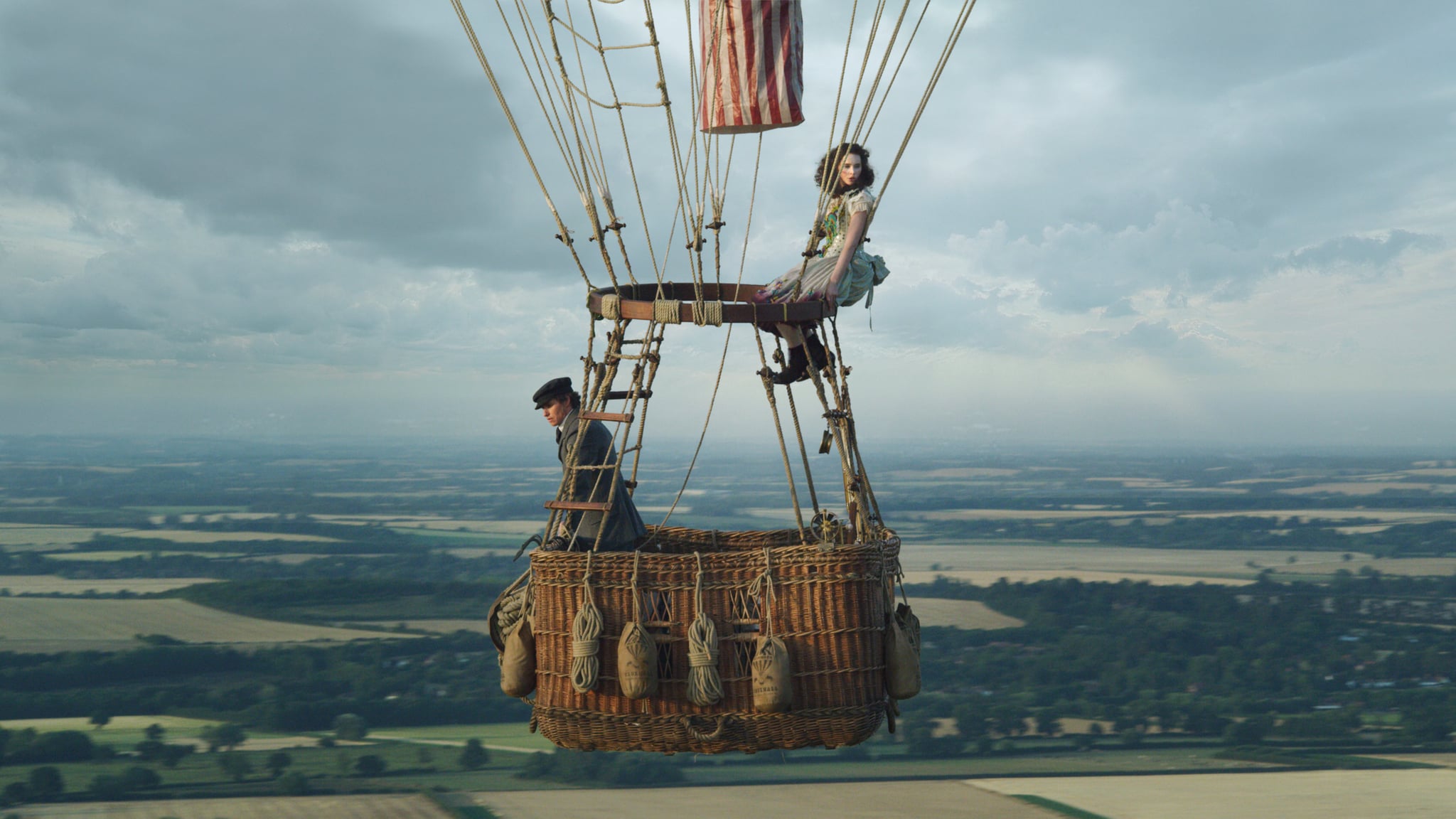
I love a good historical adventure drama, and The Aeronauts on Amazon Prime had my attention right from its first trailer. Eddie Redmayne plays James Glaisher, a scientist intent on proving his hypothesis that studying the atmosphere can allow the weather to be predicted, but as with so many 19th-century visionaries in film, his theories are ridiculed by the Royal Society of London. (Seriously, Hollywood apparently thinks the Royal Society was so narrow-minded, it’s a wonder that anything was discovered at all. I’m sure such disbelief did happen, but I’m noticing it so frequently in these kinds of movies that the villainizing for villainizing’s sake is starting to annoy me.) To prove his ideas, he enlists the aid of the only aeronaut willing to risk such a venture high into the atmosphere, a woman named Amelia (Felicity Jones), whose balloon takes them on a dangerous upward journey.

See the source image

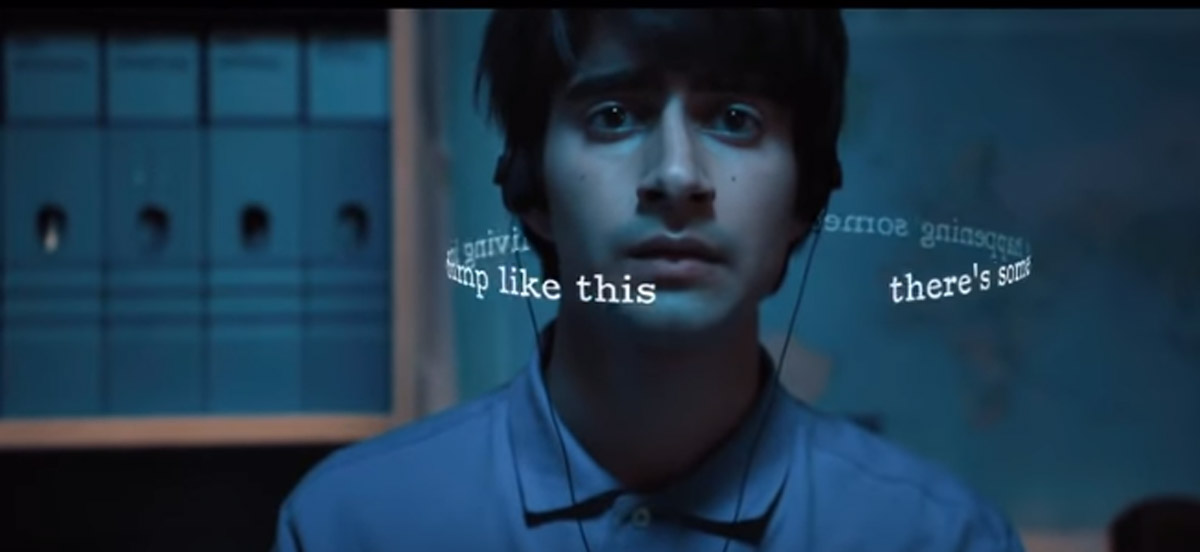
There’s a lot to like about The Aeronauts, not least of which are the visual wonders the pair encounter, from swarms of butterflies fluttering along air currents to the rainbows backed by mountainous clouds. As they get higher, the danger sets in as Glaisher especially struggles with the rarefied air and extreme cold. The high-altitude thrills keep the adventure from boredom, and regular flashbacks provide steady doses of character development along the way. Both actors do a fine job as well, reuniting without the romance five years after their pairing in The Theory of Everything, and it was nice to see Himesh Patel from Yesterday as a scientist friend of James’.

Yet for all its quality, The Aeronauts feels somehow lacking. Perhaps it’s because of its tenuous claim to being based off a true story. James Glaisher indeed made a historic balloon flight, but it was with a man named Henry Coxwell, making Amelia a composite character of other female balloonists who, while a laudable figure, feels shoehorned into the story. Certain elements do strain believability and historical accuracy, but The Aeronauts still does its best to build a grand scientific adventure on its half-fabricated foundation. It entertains doing just that, which is good enough for me.

See the source image

Best line: (Amelia Wren) “You don’t change the world simply by looking at it, you change it through the way you choose to live in it.”


Rank: List Runner-Up


© 2020 S.G. Liput
684 Followers and Counting

What Happened to Monday (2017)

23 Thursday Apr 2020

Posted by sgliput in Movies, NaPoWriMo, Poetry, Reviews, TV, Writing

≈ 2 Comments

Tags

Action, Drama, Mystery, Netflix, Sci-fi, Thriller

See the source image

(Today’s NaPoWriMo prompt was to write a poem about a letter of the alphabet, so I went through the week and compiled couplets for each day.)

The M in Monday dips and dives
And puts a strain on all our lives.

The T is Tuesday’s cruciform,
The closest shelter from the storm.

The W is Wednesday’s smile,
As crooked as a crocodile.

The T in Thursday spreads each arm
In peace, surrender, and alarm.

The F in Friday has buck teeth
That shield a smile underneath.

The S is Saturday’s great treble,
Quite the sinner, saint, and rebel.

The S in Sunday tries to swerve,
But hits Monday and hits a nerve.
__________________________

MPA rating: TV-MA (strong R)

Netflix films can be hit-or-miss, but when a good one comes along, its relegation to a single TV streaming service makes it feel perhaps more underrated than if it had received a theatrical release. Released to theaters in Europe and Asia but to Netflix elsewhere, What Happened to Monday falls somewhere between hit and miss, but it still feels underrated for the things it does well. The dystopian thriller takes a familiar dystopian threat like overpopulation and runs with it in a way not seen before.

See the source image

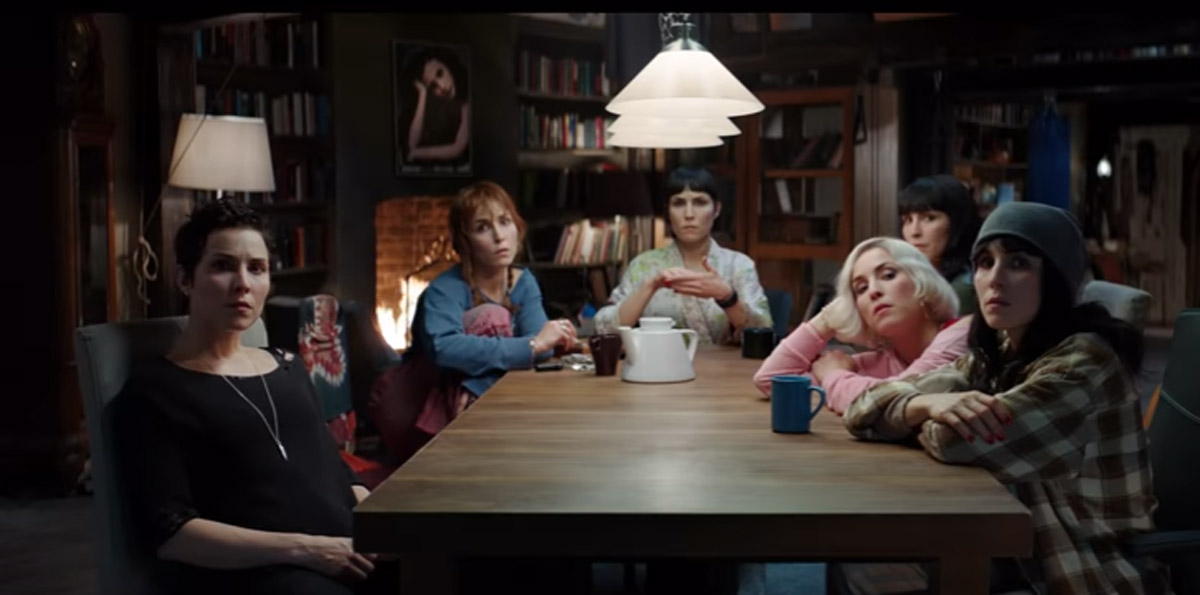
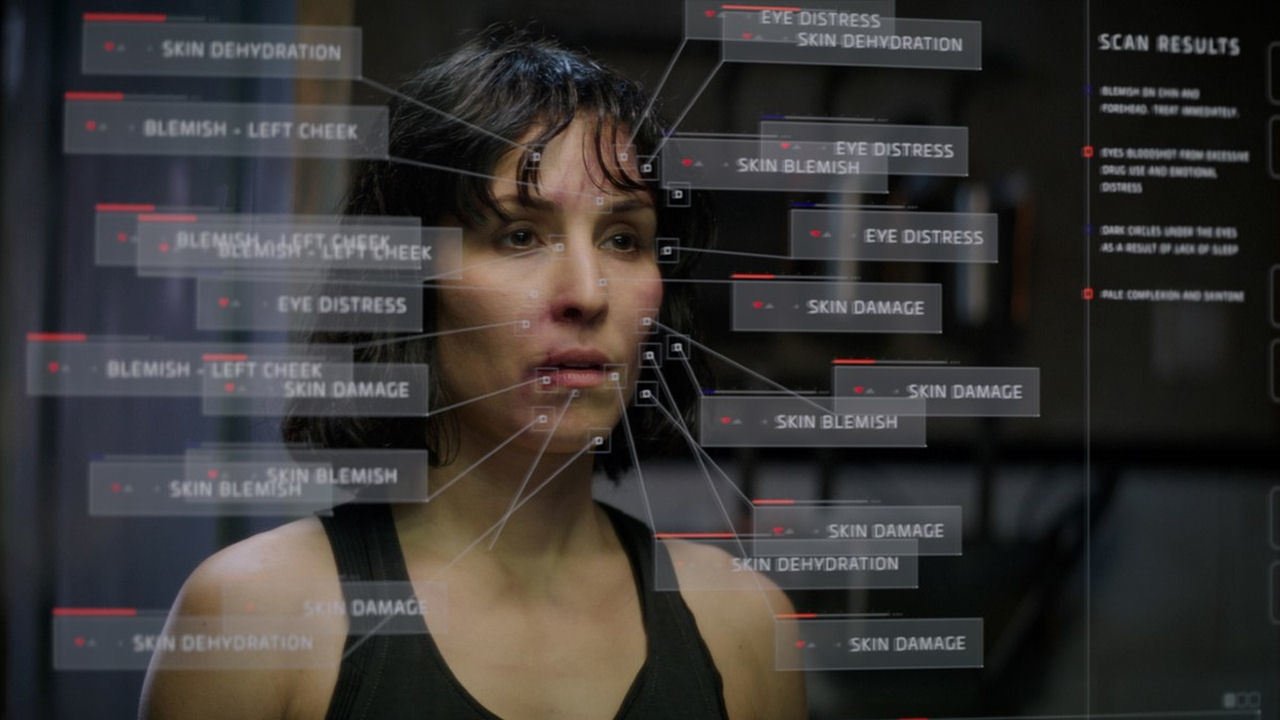
Actors seem to enjoy the test of inhabiting multiple characters and playing off themselves, but Noomi Rapace snagged a special challenge here, playing seven identical sisters raised in secret to protect them from the government’s rigidly enforced one-child policy. Although siblings are simply put into cryostasis, the septet’s grandfather (Willem Dafoe) kept them off the books entirely and fashioned a singular identity of Karen Settman; each girl is named after a day of the week and takes turns going out as Karen Settman on the day of their name: Sunday on Sunday, Monday on Monday, etc. However, when Monday doesn’t return at the end of her day, the other sisters find themselves in danger and must figure out what happened to her and her ties to the politician who first advocated the one-child policy (Glenn Close).

It’s no secret that I love science fiction, and What Happened to Monday is the kind of unique genre tale I enjoy, usually more than the critics do. The plot zips along without a moment of boredom, and Rapace does wonders with a script that doesn’t quite manage to make each of the Settman sisters stand out. Some are easy to pick out (Saturday has blonde hair, Friday is mousy and wears a knit cap), while others don’t really distinguish themselves much (Tuesday and Wednesday). Nevertheless, Rapace breathes personality into the ones that matter most, and the effects allowing her to interact with her doubles are top-notch.

See the source image

Many films on Netflix don’t seem to bother holding back on their TV-MA ratings, and sadly the same is true for What Happened to Monday, marred by several bloody deaths and a gratuitous sex scene. It’s really a shame because the film otherwise warrants repeat viewings. Some twists are hardly surprising to anyone familiar with the dystopian genre, but it still holds plenty of mystery and thrills to overcome the occasionally thin characterization. It even ends up with a surprisingly pro-life sentiment by the end. It’s far better than its mixed reviews indicate, and if you can overcome the R-rated content, it’s one more what-if example of why I love sci-fi.

Best line: (Sunday, quoting their father) “Seven minds are better than one.”


Rank: List Runner-Up


© 2020 S.G. Liput
684 Followers and Counting

Guarding Tess (1994)

22 Wednesday Apr 2020

Posted by sgliput in Movies, NaPoWriMo, Poetry, Reviews, Writing

≈ Leave a comment

Tags

Comedy, Drama

See the source image

(Today’s NaPoWriMo prompt was to find inspiration in an idiomatic expression from another language, which are often similar to but distinct from our English equivalents. I chose the idiom of “ironing one’s head” being used in Armenian and Turkish to mean annoyingly repetitive, like the constant requests of a shrewish woman, and also tried to develop a few of my own idioms.)

I think she once invented wringers
Just to put me through them daily.
I grit my teeth
And dig beneath
And wish that looks had stingers.

My head is being ironed solely
For the joy of seeing it flat.
My wrinkles never
Hurt her ever,
So why, for love of all that’s holy

Does she get such twisted jollies
Watching me squirm on her hook.
This fly is caught
‘Twixt web and swat,
And someone’s laughing at his follies.

A fool’s not down until you’ve kicked him,
Seems to be her school of thought.
I’m not the first
And not the worst,
So why am I her favorite victim?
______________________

MPA rating: PG-13 (solely for language)

I don’t have much to say about Guarding Tess, which is why it’s a good fit for a day when I don’t have as much time to devote to writing. Plus, it’s an interesting contrast to Shirley MacLaine’s much earlier role in What a Way to Go! that I reviewed a couple days ago. This dramedy follows a perplexed Secret Service agent named Doug Chesnic, who is assigned (forced really) to continue guarding former First Lady Tess Carlisle (MacLaine). Famously difficult to work with behind the scenes, Tess is outwardly an American sweetheart, and when she takes a liking to Doug, not even the President is going to turn her down.

See the source image

Guarding Tess isn’t really anything special beyond the love-hate relationship formed between Cage and MacLaine. There’s humor to be had in their battle of wills, but it’s neither funny enough to be a comedy nor compelling enough to be a drama, though it has flashes of poignancy surrounding Tess’s late husband, whom Doug also admired deeply. It tries to ramp up some slightly unrealistic tension near the end, but Guarding Tess is little more than a diversion, not that that’s a terrible thing. Fans of Cage and MacLaine should enjoy it, but it felt like the idea behind the story held some missed potential.

Best line: probably the best gag with Secret Service agents radioing each other over supermarket prices


Rank: Honorable Mention


© 2020 S.G. Liput
682 Followers and Counting

The Wandering Earth (2019)

19 Sunday Apr 2020

Posted by sgliput in Movies, NaPoWriMo, Poetry, Reviews, TV, Writing

≈ Leave a comment

Tags

Action, Drama, Foreign, Netflix, Sci-fi, Thriller

See the source image

(Today’s NaPoWriMo prompt was to write about items gathered during a walk. In my house, I latched onto a nearby globe and decided to write about the planet at large, even though the film is more about disaster than discovery.)

What ancient cartographer could have imagined
A world as small as this?
Back then, the maps ended without a true edge
In blurry oblivion. One would allege
A brand new discovery, and they would wedge
The new land upon the abyss.

And now we know everything, satellite-view;
No land is left to miss.
But now we look upward and see a frontier,
More blurry oblivion. Scorning the fear,
We still must endeavor to find what’s not here.
We just can’t abide an abyss.
___________________________

MPA rating: TV-MA (it’s a PG-13-level movie, but the English subtitles have more F words than the original Chinese for some reason)

When you think of Chinese films, science fiction isn’t a genre that immediately comes to mind, but The Wandering Earth might change that. Based on a 2000 novella and released through Netflix outside of China, this big-budget blockbuster is like Asia’s answer to Michael Bay, a solar-system-spanning disaster flick that is just over-the-top enough to work.

See the source image

Anyone remember the Spongebob episode with the Alaskan bull worm threatening the town, where Patrick says they should just take Bikini Bottom and push it someplace else? Well, that’s the brilliant idea the future world leaders in this film came up with to escape an expanding sun. Studding the earth’s surface with enormous rocket engines, they push the planet out of its orbit toward a safer system while most of the population retreats underground to escape the freezing surface. Years into the journey, the roaming planet gets caught in Jupiter’s gravity, forcing young adult Liu Qi (Chuxiao Qu), his sister, and their accomplices to fix one of the failing engines and save the world, while his father (Jing Wu) on a space station tries to do the same.

With tiny people causing planet-level effects, everything in The Wandering Earth is on such a humongous scale that even its semi-plausible elements seem utterly ridiculous, yet the earnestness of the characters and coolness of the visuals make the suspension of disbelief possible. In creating China’s first big sci-fi movie, the filmmakers certainly went all out with their emulation of similar Hollywood blockbusters: collapsing ice towers, a single-minded AI to fight, huge explosions, questions about saving the many vs. the few, last-minute heroics and touching sacrifices.

See the source image

There’s a reason it made $700 million, making it the third highest-grossing non-English film ever. (Netflix has an English dub, but I’d only watch it if you absolutely can’t stand subtitles or want fewer obscenities.) I don’t know how the current pandemic will affect China’s film industry, but The Wandering Earth is proof that it can compete with Hollywood on special-effects extravaganzas. I wouldn’t say it’s better than films like Armageddon or Sunshine, but it’s certainly bigger.


Rank: List Runner-Up


© 2020 S.G. Liput
679 Followers and Counting

VC Pick: Top Gun (1986)

17 Friday Apr 2020

Posted by sgliput in Movies, NaPoWriMo, Poetry, Reviews, Writing

≈ Leave a comment

Tags

Action, Drama, Romance, VC Pick, War

See the source image

(Today’s NaPoWriMo prompt was for an effusive poem of over-the-top praise, so I just kind of let my imagination run with it.)

Although it’s been said many times, many ways,
The feats at your feet never fail to amaze.
You stand high above every other by far.
If we were all Beatles, you’d drive every car.
You mass-produce marvels; you trigger the awe
Of both proletariat and the bourgeois.
You’re such a sensation, a spectacle said
To paint, not the town, but the whole county red.
The scholars no longer use language defining
The word “awesome”; no, it’s your photograph, shining.

The wonders don’t cease when you have a hand in them;
If there were contests for impressing, you’d win them.
Chuck Norris is porous compared to your muscle;
Gaston at his best can’t compete with your hustle.
The terms that describe you left Earth long ago;
The rest of the words couldn’t handle their glow.
If there is a mountain to move, you will move it.
And best of all,
As per protocol,
You need not be told all this; each day, you prove it.
______________________________

MPA rating: PG-13

At long last, my dear Viewing Companion (VC) convinced me to see Top Gun again. I recall seeing it years ago, but for some reason, it never really appealed to me in my memory. When the sequel was announced, my reaction was basically, “Meh,” while so many others were thrilled by their own ‘80s nostalgia. I just don’t have much interest in fighter pilot hotshots; it’s like wrestling or rap music, just not my cup of tea. But she finally got me to see it, and I must admit it was far better than I remembered, deserving of its reputation as a seminal film of the decade.

See the source image

Tom Cruise was in his youthful prime as “Maverick” Mitchell, the pilot whose massive shoulder chip propels him into the Navy’s top pilot school and the danger zone of aerial dog fights, aided by his trusty wingman Goose (Anthony Edwards). While he can be cocky and unpredictable, his stubbornness and penchant for risk get him far, including in his romance with the lovely Kelly McGillis, at least until tragedy strikes and threatens his career and his spirit.

Most critics tend to laud the aerial plane fights, which are well done, though I had trouble telling who was who and which plane was which at times. (Of course, in the cockpit, it helps that they made the Russian MiG pilots a faceless enemy with a full helmet mask.) Plus, I can’t help but wonder what “enemy waters” in the Indian Ocean would have warranted the air fight at the film’s climax. But there was also more to the characters than I remembered, more real emotion than the mere angst and testosterone I expected, though there was that too. For instance, Val Kilmer as fellow pilot “Iceman” is more of a genuine rival to Maverick rather than the smug antagonist he could have been. Plus, you can’t fault the cast, from Kilmer and Tom Skerritt to early roles for Tim Robbins, Meg Ryan, and Adrian Pasdar.

See the source image

Top Gun will never be one of my favorite movies, but watching it again has vastly raised my opinion of it. It’s a cool icon of a film, boasting not only the famous quote below but a truly quintessential soundtrack, including Kenny Loggins’ “Danger Zone” and the Oscar-winning “Take My Breath Away,” which is the kind of song that could make anything romantic. Plus, it inspired the name for Goose the cat in Captain Marvel, and who doesn’t love Goose the cat? The sequel may have been pushed back to December, but here’s hoping it can do justice to its classic original.

Best line: (Maverick) “I feel the need…”   (Maverick and Goose) “The need for speed!”


Rank: List Runner-Up


© 2020 S.G. Liput
679 Followers and Counting

Blinded by the Light (2019)

14 Tuesday Apr 2020

Posted by sgliput in Movies, NaPoWriMo, Poetry, Reviews, Writing

≈ Leave a comment

Tags

Drama, Musical

See the source image

(Today’s NaPoWriMo prompt was for a poem about poems or poets that inspired us to write. I went a bit broad to apply to anyone who has been stirred by another’s words. Incidentally, my own inspirations include Longfellow, Tennyson, Dr. Seuss, and Robert Service.)

I’d read and heard so many words
Before I chanced on yours,
And yet I found my being stirred,
My vision blurred, no dream deferred,
Like a patient with his pick of cures.

I’m not the first; so many more
Before me felt the thrill
Of finding phrases to explore
Of peaceful war and whispered roar,
Of things I know or never will.

I’m now a fan, have been for years,
But wish I could return
To when you widened my frontiers
And sparked the gears between my ears
And made my poet’s spirit burn.
_______________________

MPA rating: PG-13 (for language and themes)

Considering this was one of my Top Twelve movies watched last year, I suppose it’s about time I got around to reviewing it. Blinded by the Light is a feel-good delight of a film, especially for any fan of Bruce Springsteen, and although I never considered myself a fan of “The Boss,” I think this movie made me one.

Based off the experiences of real-life journalist Sarfraz Manzoor, Javed Khan (Viveik Kalra) is a Pakistani Brit growing up in the 1980s, caught between the blatant racism of some of his peers and the strict traditionalism of his immigrant dad (Kulvinder Ghir). Feeling even more misunderstood than most teenagers, he begins to despair, only to be jolted to inspiration when a Sikh classmate offers him some Springsteen tapes. Feeling a strong connection to Bruce’s music and themes, Javed renews his aspirations as a writer and begins a romance with a student activist named Eliza (Nell Williams), eventually coming into conflict with his father as he pushes his way further into the world and away from his family.

See the source image

There are certain protagonists, mainly young writers or dreamers, with whom I just feel a natural kinship: Shizuku in Whisper of the Heart, Mia in La La Land, John-Boy on The Waltons, and now Javed Khan as well. Even if I never had to contend with the racism he does, I found myself able to relate and sympathize so much with his poetry efforts, doubts, and the inspiration he finds in music. Hayley Atwell is a warmly encouraging presence as his English teacher, reminding me of Laura Dern in October Sky. And while disapproving parents are common to this kind of coming-of-age story, Ghir as Javed’s father remains believable in his bullheadedness, perhaps because Javed himself isn’t entirely blameless, and the compromise they both come to is brilliantly heartwarming. Plus, he can be a source of humor, as when he keeps thinking that Springsteen is Jewish.

I was never really aware of it, but my mom told me recently that Bruce Springsteen was one of my late father’s favorite musicians. Since I know he loved the Beatles, I find it interesting that two of his favorite artists were both immortalized by 2019 British films with South Asian protagonists (this one and Yesterday). Not unlike Sing Street, the musical segments add enormous entertainment value to offset the heavier scenes, shots of joy and dancing backed by greatest hits like “Thunder Road,” “Badlands,” “Born to Run,” and (of course) “Blinded by the Light.” If only they’d thrown in “Rosalita” or “Dancing in the Dark” too….

See the source image

I liked how the lyrics are often shown on-screen to highlight the songs’ poetic aspect that so appeals to Javed, and I was surprised at how some characters considered Springsteen “old” music by 1987. Funny, catchy, and poignant, Blinded by the Light proves the timelessness of not only “The Boss,” but musical and poetic inspiration in general and how it can change impressionable lives for the better.

Best line: (Miss Clay) “Tell me about your poems.”
(Javed) “They’re crap, miss.”
(Miss Clay) “Yeah, but they’re your crap. And if you keep at it, one day you might think they’re not crap.”


Rank: List-Worthy


© 2020 S.G. Liput
679 Followers and Counting

Version Variations: The Intouchables (2011) / The Upside (2017)

13 Monday Apr 2020

Posted by sgliput in Movies, NaPoWriMo, Poetry, Reviews, Writing

≈ Comments Off on Version Variations: The Intouchables (2011) / The Upside (2017)

Tags

Biopic, Comedy, Drama, Version Variations

See the source image

See the source image

(Happy Easter, everybody! Today’s NaPoWriMo prompt was for a triolet, an eight-line poem with repeated lines and a very particular rhyme scheme.)

The ruts in which our lives are spent
Seem deeper than they really are.
See only walls, and we lament
The ruts in which our lives are spent,
But thinking we are always meant
To stay will hardly get us far.
The ruts in which our lives are spent
Seem deeper than they really are.
_____________________

MPA rating for The Intouchables: R (really just for a few F words in the subtitles)
MPA rating for The Upside: PG-13

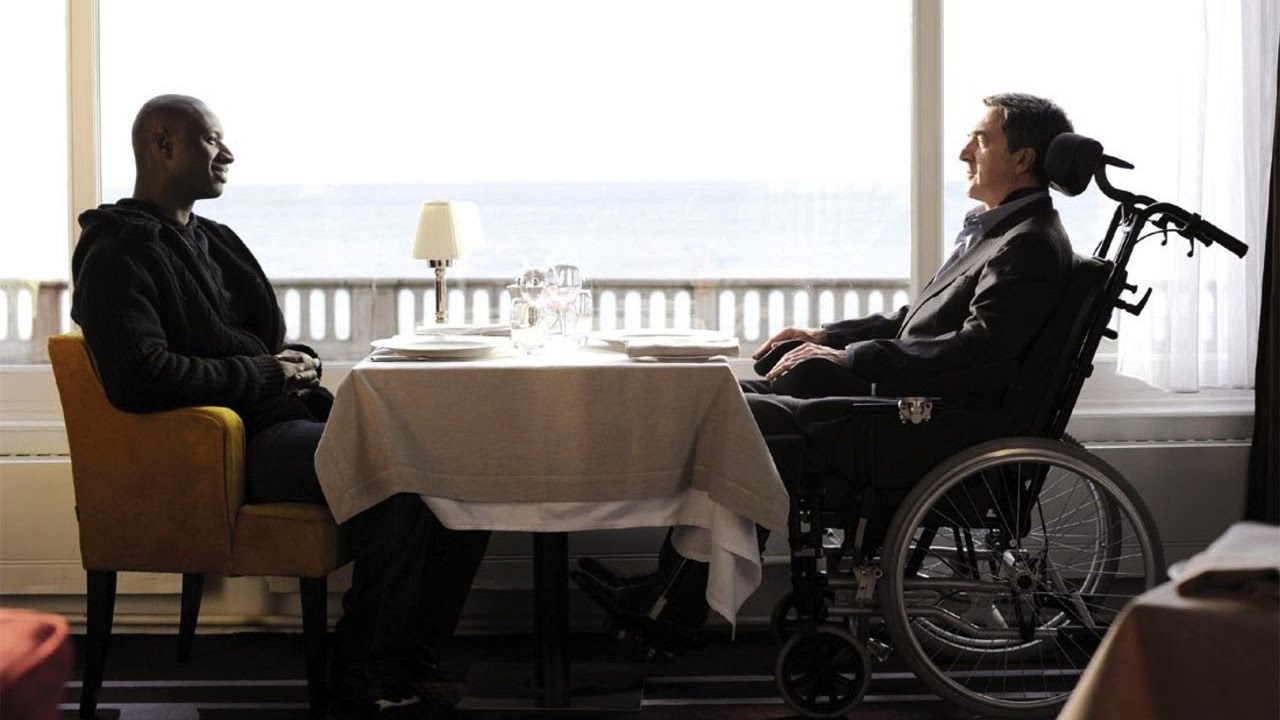
Is there some unofficial rule that says you shouldn’t watch a remake before the original? Because, if there is, I think I broke it… again. I had some curiosity about the popular French film The Intouchables, but I didn’t seek it out until I watched last year’s American version and wanted to compare them. After all, I’m far overdue for a Version Variation post. Based on the true story of Philippe di Borgo and Abdel Sellou, both films are about a poor, street-smart black man finding employment caring for a bitter quadriplegic millionaire and the feel-good friendship that grows between them.

See the source image

I’ll focus on The Upside first, since that was the first one I saw. Kevin Hart plays a deadbeat dad named Dell, who is more interested in barely fulfilling his parole requirements than actually seeking a job. Yet his initial rude interaction with Bryan Cranston’s wealthy Philip Lacasse catches the attention of the joyless businessman, and Dell is offered the job of a “life auxiliary” caretaker, with all the well-paid benefits and uncomfortable tasks that entails. Hart’s comedic experience serves him well during his character’s initial protests against catheters, but he proves himself to be an able dramatic actor as well, with Cranston being both a great foil and partner, despite being physically immobile. They’re a likable odd couple that grows in poignance up to the smile-worthy end.

And as for The Intouchables, well… it’s basically the same exact thing, but in French! With the number of remakes out there that tarnish the spirit of the original, I was surprised at how faithful The Upside was. The French characters are named Driss (Omar Sy) and Philippe (François Cluzet), but I could tell from the very first scene how similar the two films were: the protests against the more awkward forms of care, the sharing of a joint while out on the town, the creative forays into high-end painting, a stressful paragliding excursion, even a series of gags surrounding shaving Philippe’s beard and mustache.

See the source image

Yet there were still a few differences as well. Kevin Hart’s Dell is less of a jerk than the French Driss can be at times, though they still share the lack of pity that attracted their employer. The Intouchables also featured a great little scene where, after enduring Philippe’s love of classical, Driss lets loose to “Boogie Wonderland.” But the most notable difference concerns Philippe’s blind epistolary romance with a woman and Driss’s efforts to get them to meet face-to-face. The Upside features some of the exact same scenes, yet they have a different outcome, one that is perhaps more painfully realistic and leads to a far different role for the rich man’s assistant (Nicole Kidman in the American version, Audrey Fleurot in the French). For my part, I think I prefer the ending of The Intouchables, which is more lump-in-throat-worthy, aided by Ludovico Einaudi’s elegant score.

The Intouchables is clearly the more well-respected film (74% on Rotten Tomatoes versus an undeserved 39%), but The Upside is actually quite a successful remake. Some may bristle at recreating a film just so we English-speakers don’t have to read subtitles, but the filmmakers did a good job with it. Both films thrive off of the chemistry between the two leads, and all four actors are perfectly cast and do credit to the inspiring true story, though I find it odd that both Driss and Dell are black whereas Abdel Sellou was not. From the lows of depression to the highs of paragliding, The Intouchables and The Upside handle their serious subjects of class divides and disability with both pathos and humor and show that even total opposites can become lifelong friends.

See the source image

Best line from The Intouchables: (voice on the phone) “Hello?”   (Philippe) “Eleonore, it’s Philippe. I’m calling because I really wanted to hear the sound of your voice, and with that first hello, I’m fulfilled.”   (voice, apparently not Eleonore) “I’ll put her on.”

Best line from The Upside: (Dell, to Philip) “You can have any girl you want. What about this lady with all the Botox? You’re perfect for each other. You can’t move your body; she can’t move her face.”


Rank for The Intouchables: List Runner-Up
Rank for The Upside: List Runner-Up


© 2020 S.G. Liput
679 Followers and Counting

Little Women (1994)

11 Saturday Apr 2020

Posted by sgliput in Movies, NaPoWriMo, Poetry, Reviews, Writing

≈ 3 Comments

Tags

Classics, Drama, Family, Romance

See the source image

(Today’s NaPoWriMo prompt was for a poem about flowers taking on certain meanings, so I decided to compare flowers with the little women of this film.)

A family of daughters is like a bouquet
Of flowers, all different, that brighten the day.

The rose offers beauty and layers of grace,
With thorns to keep those who would pluck in their place.

The daisy seems simple, but as you look nearer,
Complexity waits for the few who revere her.

The lily looks shy with its petals locked tight
But opens up wide when it knows love and light.

And baby’s breath sighs with its placeholder status
Yet binds us all close in an elegant lattice.

From practical pansy to sumptuous mum,
Each woman and bloom are just right as they come.
_____________________

MPA rating: PG

After thoroughly loving Greta Gerwig’s most recent adaptation of Louisa May Alcott’s novel, I had to check out 1994’s similarly acclaimed version from Gillian Armstrong. With such a classic story and relatable characters, it’s clearly hard to go wrong, since this also proved to be a wonderful rendition, even if it didn’t quite match its most recent sister.

The ensemble is full of stars in their prime in the ‘90s: Winona Ryder as Jo, Kirsten Dunst (and later Samantha Mathis) as Amy, Claire Danes as Beth, Trini Alvarado (of Paulie) as Meg, Susan Sarandon as Marmee, and Christian Bale as Laurie, not to mention Gabriel Byrne, Eric Stoltz, and Mary Wickes as well. Unlike Gerwig’s non-linear narrative, jumping back and forth across a four-year gap, this version plays its events in order, which is easier to follow as the March sisters grow up, finding love, heartache, and joy along the way.

See the source image

So how do the two versions compare? Over and over, I recognized scenes and interactions (which obviously means they came from the book), and I liked them here but couldn’t help preferring the more recent film’s take on them, which might have been reversed if I’d seen this version first. Much of the dialogue that I so loved in the 2019 film wasn’t the same here, a testament to Gerwig’s contribution, yet I still appreciated its simple, often humorous elegance. Individual characters were harder to decide on. Meryl Streep was certainly a more memorable Aunt March than Wickes was. Winona Ryder and Saorsie Ronan are evenly matched as Jo, considering I have a crush on both, but I thought Christian Bale made a more sympathetic Laurie than Timothée Chalamet. Likewise, Friedrich and Jo’s relationship felt slightly more natural and fleshed out here than in the remake.

I must admit one embarrassing thing. I kept being confused by certain differences I viewed as creative choices. Why did they keep giving Beth’s actions to Amy? Only halfway through did I realize I had Beth and Amy mixed up, thanks largely to the casting of the 2019 film. In that one, Florence Pugh plays both the younger and older Amy, but because she looks and is older than Eliza Scanlen as Beth, I thought Amy was the third eldest of the girls, which threw me off when 12-year-old Kirsten Dunst’s Amy was clearly the youngest in the 1994 film. It’s hard to say which is the better option, though. In this film, I thought that the replacement of Dunst with Mathis after the 4-year gap sapped some of the bond formed with Amy, so I can see why keeping the same actress might be desirable, if slightly confusing for people like me. I should really just read the novel.

See the source image

Ultimately, I loved both versions because they both bring this story to life in a brilliantly traditional way. So many 19th-century period pieces are centered in Victorian England or focus on some war or significant historical event, so it’s a rare treat to glimpse into the everyday lives of Americans from this time. I may be partial to Gerwig’s incarnation, but both films share a stellar cast and engaging wholesomeness that are equally refreshing.

Best line: (Jo, after Laurie proposes) “Neither of us can keep our temper…”
(Laurie) “I can, unless provoked.”
(Jo) “We’re both stupidly stubborn, especially you. We’d only quarrel!”
(Laurie) “I wouldn’t!”
(Jo) “You can’t even propose without quarreling.”


Rank: List-Worthy (I’ll tie it with the 2019 version)


© 2020 S.G. Liput
679 Followers and Counting

← Older posts
Newer posts →

Recent Posts

  • We Didn’t Start 2025 (Recap)
  • NaPoWriMo 2025 Recap (Finally)
  • Sonic the Hedgehog 3 (2024)
  • It Happened One Night (1934)
  • Spellbound (2024)

Recent Comments

associatesofshellymann's avatarassociatesofshellyma… on My Top Twelve La La La So…
Kit's avatarKit Nichols on Bonnie and Clyde (1967)
lifelessons's avatarlifelessons on Look Back (2024)
Carol Jackson's avatarCarol Jackson on The Thief of Bagdad (1940…
Stephen's avatarStephen on Love Story (1970)

Archives

  • January 2026
  • December 2025
  • May 2025
  • April 2025
  • March 2025
  • February 2025
  • January 2025
  • December 2024
  • May 2024
  • April 2024
  • March 2024
  • February 2024
  • January 2024
  • December 2023
  • November 2023
  • October 2023
  • September 2023
  • July 2023
  • June 2023
  • May 2023
  • April 2023
  • March 2023
  • February 2023
  • January 2023
  • December 2022
  • November 2022
  • October 2022
  • September 2022
  • August 2022
  • July 2022
  • June 2022
  • May 2022
  • April 2022
  • March 2022
  • February 2022
  • January 2022
  • December 2021
  • November 2021
  • October 2021
  • September 2021
  • August 2021
  • July 2021
  • June 2021
  • May 2021
  • April 2021
  • March 2021
  • February 2021
  • January 2021
  • December 2020
  • November 2020
  • October 2020
  • September 2020
  • August 2020
  • July 2020
  • June 2020
  • May 2020
  • April 2020
  • March 2020
  • February 2020
  • January 2020
  • December 2019
  • November 2019
  • October 2019
  • September 2019
  • August 2019
  • July 2019
  • June 2019
  • May 2019
  • April 2019
  • March 2019
  • February 2019
  • January 2019
  • December 2018
  • November 2018
  • October 2018
  • September 2018
  • August 2018
  • July 2018
  • June 2018
  • May 2018
  • April 2018
  • March 2018
  • February 2018
  • January 2018
  • December 2017
  • November 2017
  • October 2017
  • September 2017
  • August 2017
  • July 2017
  • June 2017
  • May 2017
  • April 2017
  • March 2017
  • February 2017
  • January 2017
  • December 2016
  • November 2016
  • October 2016
  • September 2016
  • August 2016
  • July 2016
  • June 2016
  • May 2016
  • April 2016
  • March 2016
  • February 2016
  • January 2016
  • December 2015
  • November 2015
  • October 2015
  • September 2015
  • August 2015
  • July 2015
  • June 2015
  • May 2015
  • April 2015
  • March 2015
  • February 2015
  • January 2015
  • December 2014
  • November 2014
  • October 2014
  • September 2014
  • August 2014
  • July 2014
  • June 2014
  • May 2014
  • April 2014
  • March 2014
  • February 2014
  • January 2014
  • December 2013

Categories

  • Blindspot
  • Blogathon
  • Christian
  • Movies
  • Music
  • NaPoWriMo
  • Poetry
  • Reviews
  • TV
  • Writing

Meta

  • Create account
  • Log in
  • Entries feed
  • Comments feed
  • WordPress.com

Recent Posts

  • We Didn’t Start 2025 (Recap)
  • NaPoWriMo 2025 Recap (Finally)
  • Sonic the Hedgehog 3 (2024)
  • It Happened One Night (1934)
  • Spellbound (2024)

Recent Comments

associatesofshellymann's avatarassociatesofshellyma… on My Top Twelve La La La So…
Kit's avatarKit Nichols on Bonnie and Clyde (1967)
lifelessons's avatarlifelessons on Look Back (2024)
Carol Jackson's avatarCarol Jackson on The Thief of Bagdad (1940…
Stephen's avatarStephen on Love Story (1970)

Archives

  • January 2026
  • December 2025
  • May 2025
  • April 2025
  • March 2025
  • February 2025
  • January 2025
  • December 2024
  • May 2024
  • April 2024
  • March 2024
  • February 2024
  • January 2024
  • December 2023
  • November 2023
  • October 2023
  • September 2023
  • July 2023
  • June 2023
  • May 2023
  • April 2023
  • March 2023
  • February 2023
  • January 2023
  • December 2022
  • November 2022
  • October 2022
  • September 2022
  • August 2022
  • July 2022
  • June 2022
  • May 2022
  • April 2022
  • March 2022
  • February 2022
  • January 2022
  • December 2021
  • November 2021
  • October 2021
  • September 2021
  • August 2021
  • July 2021
  • June 2021
  • May 2021
  • April 2021
  • March 2021
  • February 2021
  • January 2021
  • December 2020
  • November 2020
  • October 2020
  • September 2020
  • August 2020
  • July 2020
  • June 2020
  • May 2020
  • April 2020
  • March 2020
  • February 2020
  • January 2020
  • December 2019
  • November 2019
  • October 2019
  • September 2019
  • August 2019
  • July 2019
  • June 2019
  • May 2019
  • April 2019
  • March 2019
  • February 2019
  • January 2019
  • December 2018
  • November 2018
  • October 2018
  • September 2018
  • August 2018
  • July 2018
  • June 2018
  • May 2018
  • April 2018
  • March 2018
  • February 2018
  • January 2018
  • December 2017
  • November 2017
  • October 2017
  • September 2017
  • August 2017
  • July 2017
  • June 2017
  • May 2017
  • April 2017
  • March 2017
  • February 2017
  • January 2017
  • December 2016
  • November 2016
  • October 2016
  • September 2016
  • August 2016
  • July 2016
  • June 2016
  • May 2016
  • April 2016
  • March 2016
  • February 2016
  • January 2016
  • December 2015
  • November 2015
  • October 2015
  • September 2015
  • August 2015
  • July 2015
  • June 2015
  • May 2015
  • April 2015
  • March 2015
  • February 2015
  • January 2015
  • December 2014
  • November 2014
  • October 2014
  • September 2014
  • August 2014
  • July 2014
  • June 2014
  • May 2014
  • April 2014
  • March 2014
  • February 2014
  • January 2014
  • December 2013

Categories

  • Blindspot
  • Blogathon
  • Christian
  • Movies
  • Music
  • NaPoWriMo
  • Poetry
  • Reviews
  • TV
  • Writing

Meta

  • Create account
  • Log in
  • Entries feed
  • Comments feed
  • WordPress.com

Blog at WordPress.com.

  • Subscribe Subscribed
    • Rhyme and Reason
    • Join 814 other subscribers
    • Already have a WordPress.com account? Log in now.
    • Rhyme and Reason
    • Subscribe Subscribed
    • Sign up
    • Log in
    • Report this content
    • View site in Reader
    • Manage subscriptions
    • Collapse this bar