(For Day 21 of NaPoWriMo, the prompt was for a poem describing an abnormal version of an event as if it’s normal, so I took an outsider’s view of a wild party.)
The neighbors had another party last night. I saw from a distance and rolled my eyes. I got a nice view of each head light As all of the guests rolled in. It didn’t take long for the hahs and guffaws, The drunken cheers and smoky highs. They probably broke some local laws, But, hey, I was used to the din.
And then, as usual, the screams began, The frenzied shrieks of “Eek, he’s dead!” It must be some weird game they plan For when the tension loosens. Threats were yelled and shots were fired, But I just tried to go to bed. I checked in the morning, sore and tired. More cops… what a nuisance…. ________________________
MPA rating: R (for frequent language and brief violence)
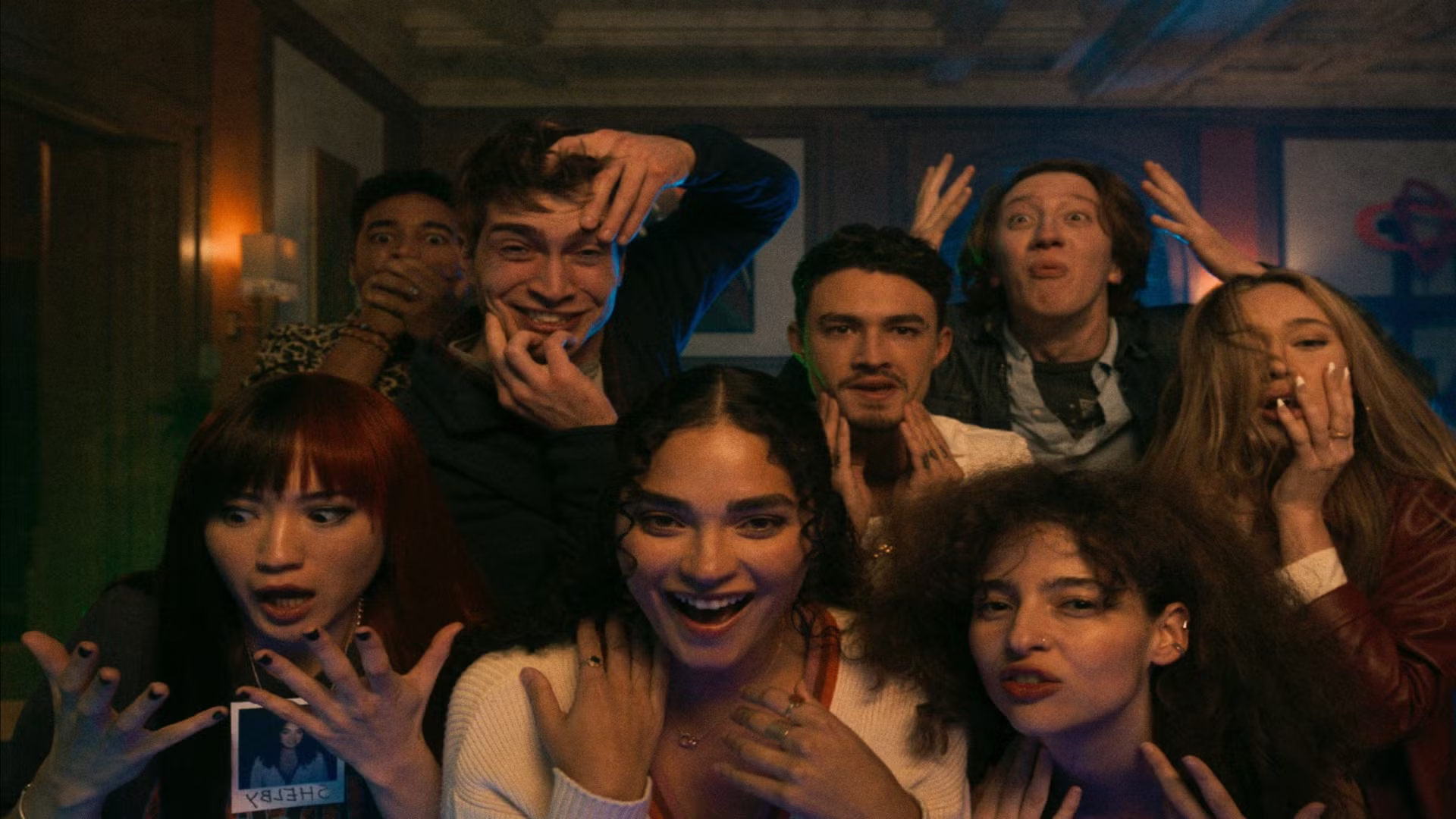
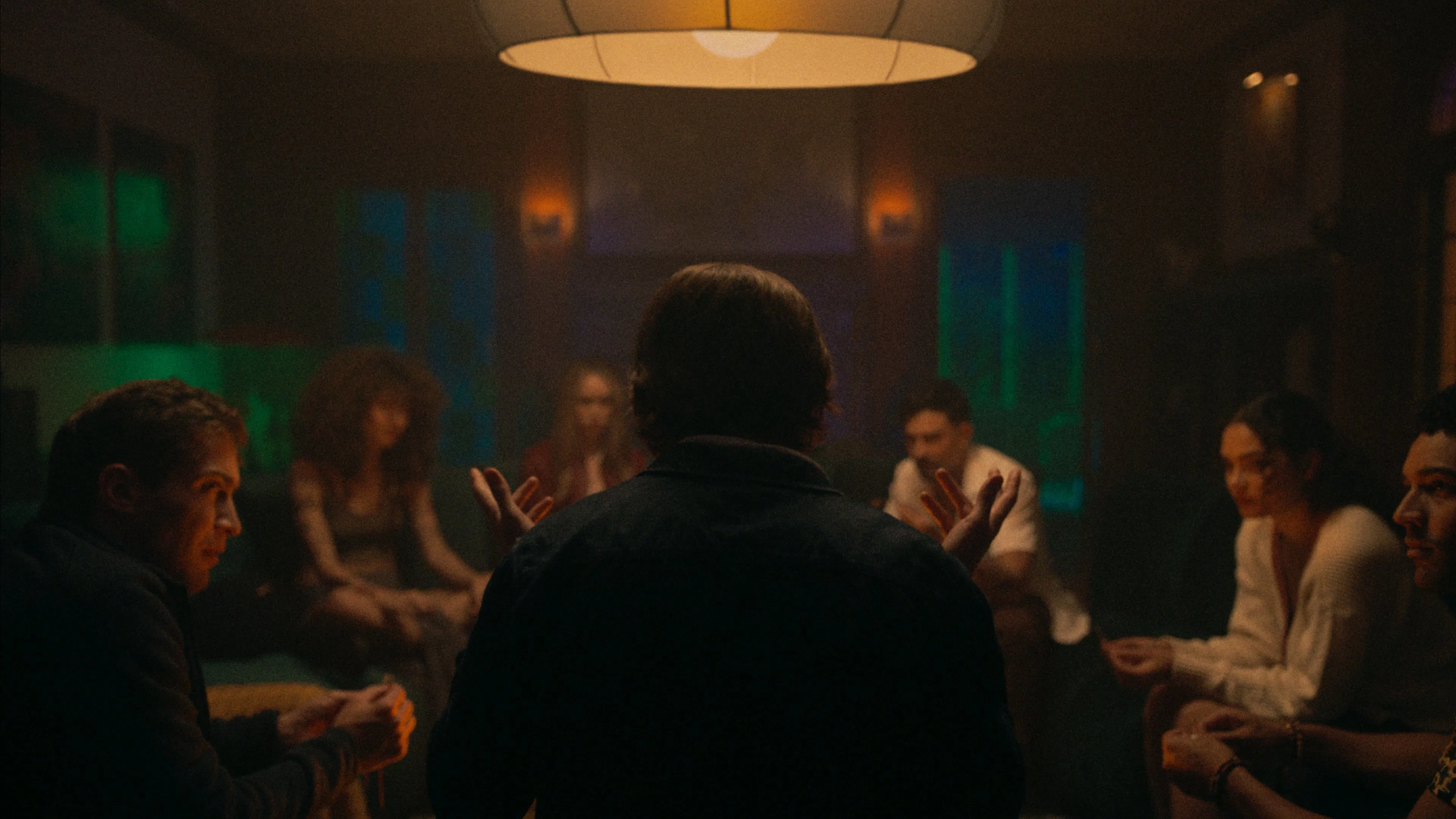
I’ve always been fascinated with the idea of body swaps; when I was growing up, they always made for especially fun cartoon episodes (and you’d be surprised at how many there are). So a film with multiple body switches at its core had my interest from the get-go. A group of seven college friends reunite after eight years for a pre-wedding party at a remote mansion. To their surprise, an estranged pal of theirs named Forbes (David Thompson) shows up as well, bearing a mysterious device and inviting them to play a game in which they all trade bodies and then must guess who is who. When an accident leaves, shall we say, fewer bodies to go around, chaos breaks out as their weird fun transforms into competing self-preservation.
It’s What’s Inside gets a lot of mileage out of its uniquely trippy take on a timeworn concept, even if it can be confusing to keep the ensemble cast straight as they swap bodies and sometimes lie about who they really are. There’s initial interest from the idea of being one’s own friend temporarily and how that can affect one’s self-esteem and ambitions, but, once the shoe drops, the second half is a twisting whirlwind of intrigue and backstabbing that makes for a wild ride. I had some reservations about the ending, though, particularly how one character is punished excessively for more of an interpersonal offense, but It’s What’s Inside was still a fun watch exploring the dangers of body-swapping.
(For Day 6 of NaPoWriMo, the prompt was for a poem based on some “weird wisdom” given to you, so I opted for the advice of preppers, who may be onto something.)
You’ll need a sturdy bunker With a strong hermetic seal And a good amount of space In case you’ll be in there a while. I’d choose a generator Over wind or water wheel, But in that case, I’d stock up On the solar panel aisle.
Buy more shelves, then fill with food That’s good for twenty years, And if you don’t know how to can, You definitely should. Learn how to sew and shoot a bow And maybe fashion spears, And how to navigate by stars And tell what shrooms are good.
Do you have gold? Don’t answer that, But buy what’s in your budget, And cigarettes and booze to trade Once currency is bust. Hoard herbs and spices for the taste. How much? I’ll let you judge it. If you have pets, then be prepared To eat them if you must.
And get a first-aid kit (or ten); You’ll thank me when you need it. And candle tapers, pens and paper, Books, and one machete. Oh yes, invest in fertile land And seeds with which to seed it. You ask when will you need all this? Who knows, but you’ll be ready. ______________________
MPA rating: R
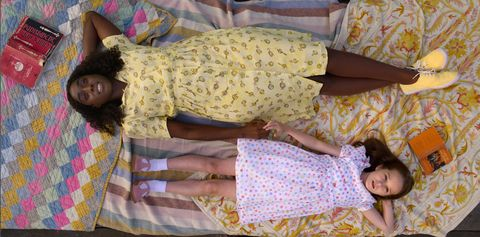
Releasing late last year, based on a popular novel, and featuring A-list stars and a timely message, Leave the World Behind seemed like it was poised for potential Oscars contention. Yet its flash-in-the-pan interest yielded to a mixed reception from Netflix viewers, and it was odd seeing at least half of the people online lambasting a critically well-received film as frustrating and pointless. Evidently, it was not what some people want from a typical disaster movie, but it offered something scarier and (mostly) more realistic.
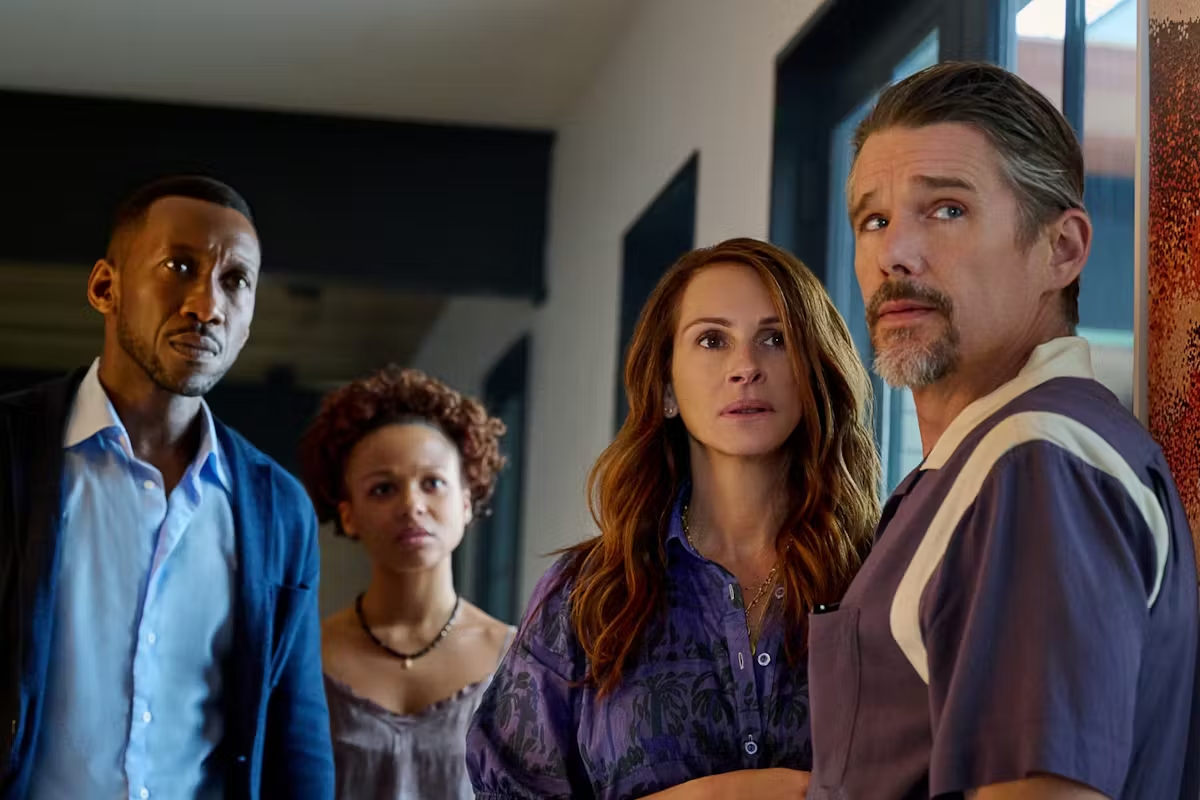
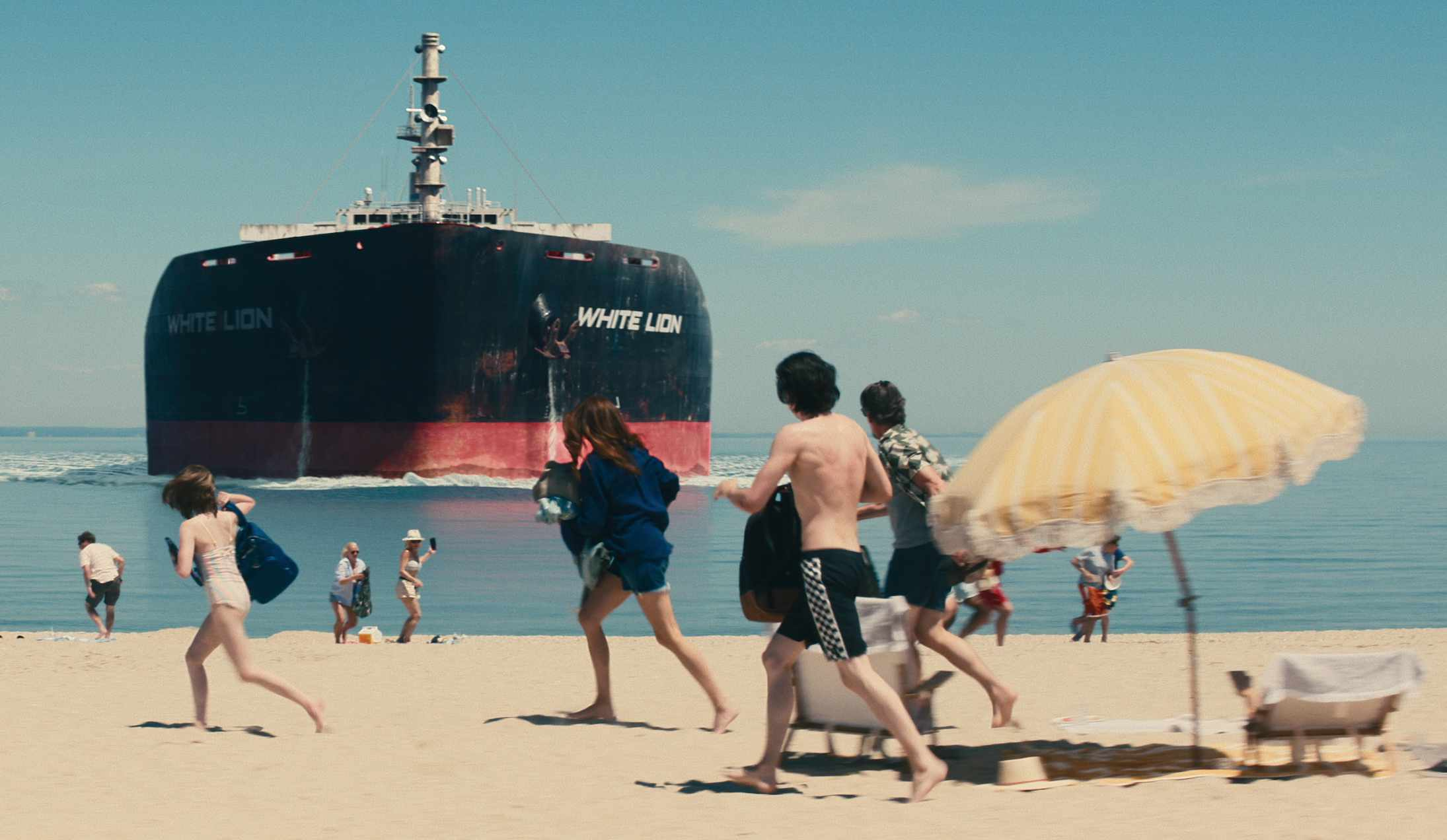
After an opening monologue showing the misanthropic outlook of mother Amanda (Julia Roberts), she and her husband Clay (Ethan Hawke) take their two kids (Farrah Mackenzie, Charlie Evans) outside the city for a little vacation, renting a fancy house near the seashore. Strange things begin happening, like a Wi-Fi outage and an oil tanker running aground near them, and they are further perturbed when a well-dressed black man named G.H. (Mahershala Ali) and his daughter Ruth (Myha’la) show up, claiming to be the owners of the house and asking to stay the night. While there is some initial racial tension between the families, it soon becomes evident that larger problems are happening in the world, threatening their very survival.
Whatever people thought of Leave the World Behind, it should be said that it is quite well-made, with some excellent cinematography, clever details, and strong performances, from Ali and Hawke especially. Although the film got some people talking due to the implicit racism exhibited by Amanda toward the visitors and echoed even more by Ruth toward white people in general, that is hardly the point of the film. With the divisions in the world today, it’s understandable that mistrust would manifest like that, and, as the film illustrates, mistrust runs rampant when nobody has any answers.
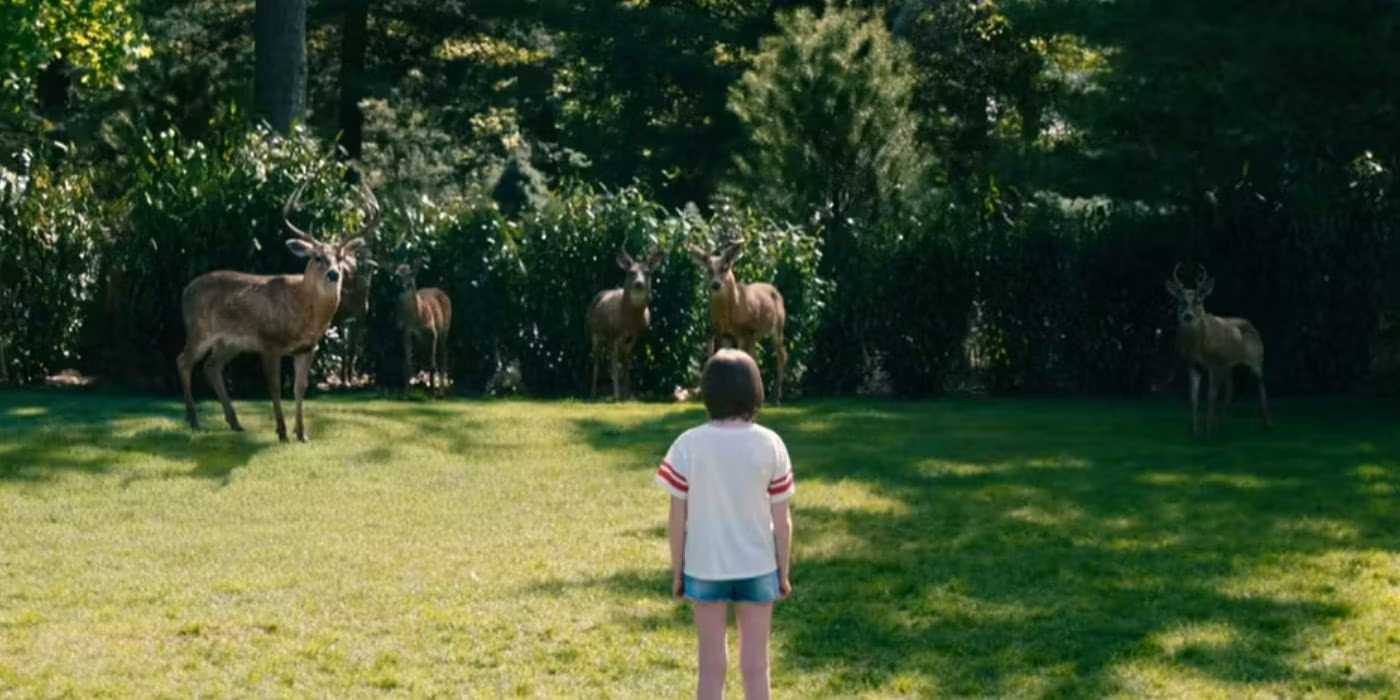
Indeed, the film never actually gives a clear explanation for what is happening to cause the EMP-like power outages, the strange high-pitched noise that causes health problems, or the unusual behavior in animals. Many found this made the film an irksome waste of time, but the movie is far more interested in the effect of these phenomena than their cause. There are indicators of various bad actors to blame – flyers in Arabic pointing to jihadists, rumors of North Korean attacks – and with no Internet, no news channel, blocked roads, and low supplies, I doubt the average person would respond any better than the characters do. At one point, Clay begs a man far more prepared (Kevin Bacon) for assistance and gives voice to the helplessness that would spread like wildfire if all of our modern advantages were stripped away from us.
Considering the admittedly abrasive characters and inexplicably weird use of CGI animals, I can’t say Leave the World Behind is a perfect film or even an Oscar-worthy one. But it does feel like an important warning, one that seems to have been missed by all those complaining about wasted time and an unsatisfying ending. And I liked the ending quite a bit since it demonstrates how small pleasures can be a source of comfort amid the chaos. This is not a disaster movie with heroic rescues or easy solutions, but it brings to light just how close civilization can be to collapse, which is more unnerving.
Best line: (G.H.) “A conspiracy theory about a shadowy group of people running the world is far too lazy of an explanation, especially when the truth is much scarier.” (Amanda) “What is the truth?” (G.H.) “No one is in control. No one is pulling the strings.”
(For Day 23 of NaPoWriMo, the prompt was for a poem in numbered sections about a place I no longer visit as much. The best example I could think of was my old elementary school, so I imagined the various places abandoned and nostalgic.)
I I remember they filed in one at a time, Students alert to the school bell’s chime. My classroom became their knowledge base, And I kept them all safe in my walls’ embrace. I was their path To history, math, The parts of the cell, and the subjective case. Those who I held left smarter by far, But now I do wonder where all of them are.
II I remember they joined me at tables so long That both ends could easily sing their own song. They pulled out their lunches so lovingly packed Or else I provided whatever they lacked. I was their meal, Their chance to be real, To trade and upgrade and get caught in the act. The hungry were happy and brought up to par, But now I do wonder where all of them are.
III I remember they ran with unparalleled glee To climb on my monkey bars, wild and free. My stretches of rubber mulch, bordered by sand, Gave them their chances to fall and crash-land. I was their play, The peak of their day, A time to recess from the teacher’s command. I was the source of both smile and scar, But now I do wonder where all of them are. _____________________________________
MPA rating: PG
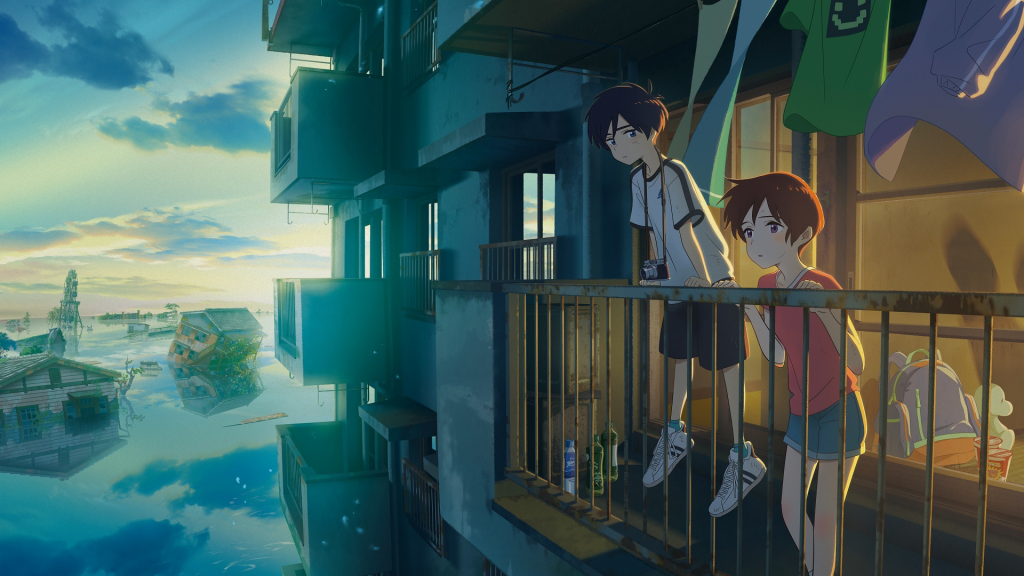
While Makoto Shinkai and Mamoru Hosoda are the biggest names in anime films, there are plenty of other studios in the mix, such as Studio Colorido, which has an ongoing partnership with Netflix. With films like A Whisker Away and Drifting Home, they bring some welcome Ghibli-esque fantasy to the streaming service. In Drifting Home, a group of children go exploring in the abandoned apartment building where Kosuke and his childhood friend Natsume used to live with Kosuke’s grandfather. After the two have an argument, the building somehow ends up floating in the middle of the ocean, forcing the kids to survive off what they can scavenge.
While the premise could have become mere escapism for the children, the story actually puts them in real danger, with limited resources and a crumbling structure as their only refuge from the sea. The characters themselves are not anything special and sometimes grating, though the conflict between Kosuke and Natsume carries weight as they both reacted differently to the death of Kosuke’s grandfather, a loss which haunts their relationship and perhaps the apartment itself.
Beyond the survival aspects and interpersonal drama, a prominent theme involves the inherent grief of buildings and structures that were once full of life and activity but have become abandoned over time. It’s an interesting concept of a place having its own form of sorrow and passing away. Drifting Home may not stand out as much as other anime films, but it’s a lovely smaller effort highlighting how we connect to the places we grow up.
(Yes, I missed another day, but I’m back on the horse. For Day 18 of NaPoWriMo, the prompt was for an abecedarian poem that follows the alphabet. Considering this musical has its own alphabet-themed song, it seemed like a good match.)
Apparently, you shouldn’t Be a Cruel and callous Devotee of over- Eager punishment For one Good cause: Humanity. If everyone was Just and Kind and Listened as they spoke their Mind, then maybe No one would Opine the worst in People, which they find. The Qualms and quirks of Roald Dahl exaggerate Such sin and gall To juxtapose the truly nice Up against the common Vice. Would you prefer a genial and Xenial largesse? Or Yield to yet another yoke of Zealous nastiness? ___________________________
MPA rating: PG
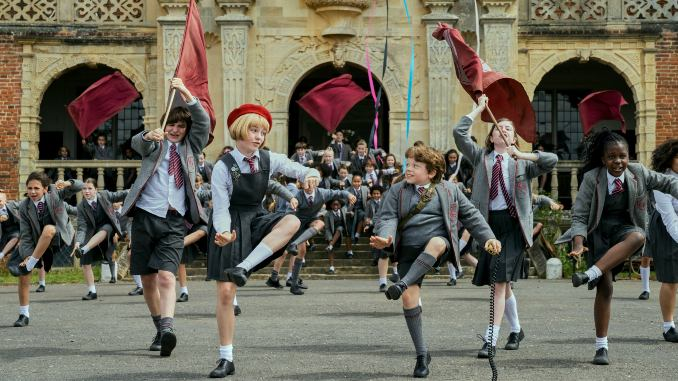
I feel blessed that, in the last few years, my awakening to a greater appreciation for musical theater has coincided with a surge in movie musicals. While 2021 had a glut of them, the more sparse 2022 ended with a long-awaited adaptation of Matilda the Musical, based on Roald Dahl’s classic book about a telekinetic girl pushing back on her abusive home and school life.
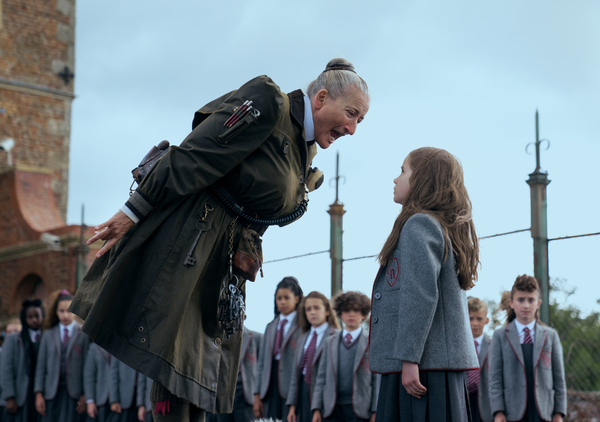
Alisha Weir plays the title character with a sweet, bookish earnestness to contrast her loud and self-absorbed parents (Stephen Graham, Andrea Riseborough). After years of self-learning, she is sent off to the infamous Crunchem Hall, where she catches the eye of both warmhearted Miss Honey (Lashana Lynch) and the tyrannical headmistress Agatha Trunchbull (Emma Thompson, acting through a masculine fat suit).
I vaguely remember the 1996 movie adaptation with Mara Wilson and Danny DeVito, but it’s been long enough that I was able to enjoy this version without worrying about comparisons to the other. Of course, this one is enlivened by musical numbers, which are a sure improvement in my book. The music and lyrics by Tim Minchin are a good match for Dahl’s cartoonish reality, presented here by swinging wildly between gaudy, energetic highs and oppressively bleak lows. Matilda’s playful solo “Naughty” is a perfect summation of her character looking for small ways to rebel against the unkindness around her, while the detached number “When I Grow Up” manages to be both buoyant for young viewers and wistfully nostalgic for their elders. While the clever alphabetics of “School Song” are an early highlight for the school-size ensemble of child singers, the real standout is near the end with the showstopping “Revolting Children,” which deservingly went viral with its exuberant choreography and earworm tune.
Yet for all its good points, Matilda falls short of being one of my new favorite musicals, for reasons I can’t quite pin down. Thompson as the villainous Trunchbull is over-the-top in her abusive villainy, with so-so songs and an underwhelming exit, though much of that is baked into the character from Dahl’s book. While I enjoyed the musical numbers, even the smaller ones like Miss Honey’s emotional “My House” which showcases Lynch’s acting talent, only “Revolting Children” stood out after the credits rolled. But I suppose the main drawback is that Dahl’s style of storytelling lends itself to an abundance of obnoxiousness for the hero or heroine to overcome, and the obnoxiousness of Matilda’s parents and Miss Trunchbull is more grating than entertaining.
Maybe time will improve my opinion, and maybe I would feel different seeing this as a kid since the story is clearly aimed at children, such as the imaginative tale Matilda spins about circus performers (which does at least tie in nicely to the plot, unlike, say, the storytelling in The Breadwinner). Even if it’s not quite up there with the best, Matilda the Musical is full of magical charm and clearly a quality production with lots of passion and talent behind it. Now I think I’ll go watch “Revolting Children” for the twentieth time.
(For Day 12 of NaPoWriMo, the prompt was to write a poem that addresses itself, so I drew a comparison between my own writing deadlines and the more life-threatening deadlines of this film’s protagonist, perhaps like a spell that might help him.)
Lines of mine, lines of mine, Tell me why you take your time. You know the deadline’s coming fast, And they’re expecting something good.
Stubborn words, on my nerves, Tell me what this poem deserves. Can’t you feel the restless readers Breathing down my livelihood?
I beseech the powers of speech; Bring the verse within my reach. Page and ink, don’t you think I’d write less tritely if I could?
Rhymes of fire, climb, inspire, Share the lyrics I require. Don’t you care the curse will come If we don’t feed them like we should? ______________________
MPA rating: PG (due to some rather intense scares for a kids movie)
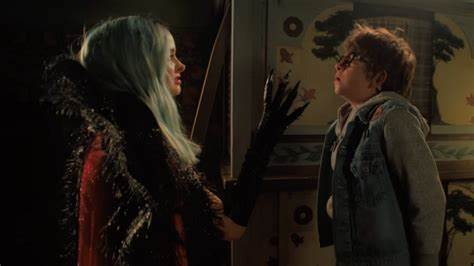
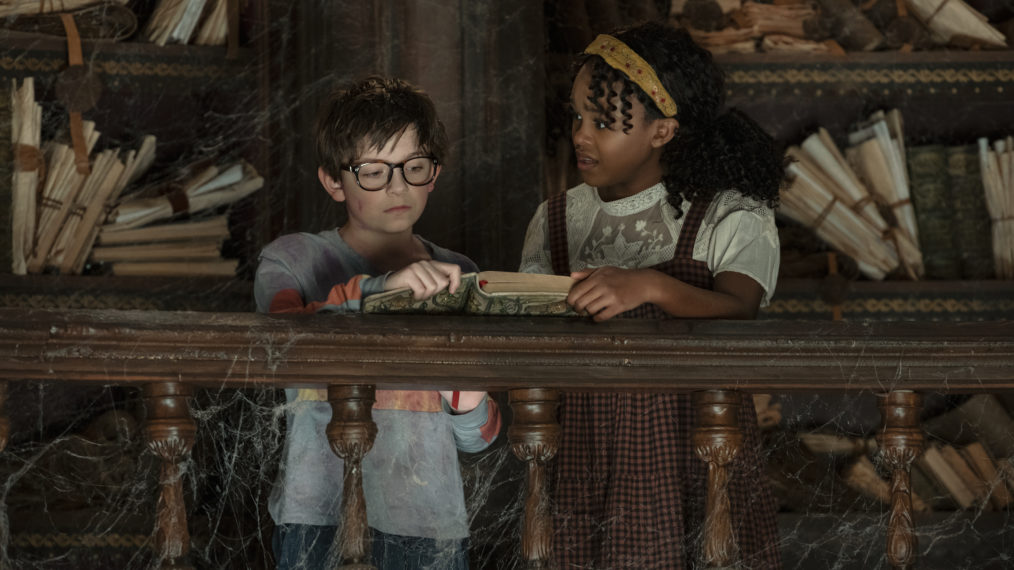
While I acknowledge the likes of Coraline, Gremlins, and Goosebumps, it does feel like kid-friendly horror movies are few and far between, so I appreciate when a new one comes along. Based on a J. A. White book, Nightbooks makes writer’s block more of a nightmare than it already is. After fleeing his home one night, young horror enthusiast Alex Mosher (Winslow Fegley) is lured inside a magical apartment building controlled by the heartless witch Natacha (Krysten Ritter), who insists he read her a new scary story every night. Trapped within this enchanted prison, Alex and his fellow hostage Yasmin (Lidya Jewett) must find a way to outsmart their captor and escape.
Nightbooks has a great Scheherazade-style setup, with a would-be horror writer being forced to come up with new stories or face dire consequences. Krysten Ritter as the witch is a perfect adversary for this kind of movie. She’s capricious and hammy with her persona but can quickly become sadistic and threatening if displeased, and her magical unpredictability adds a lot to the sense of dread even when she’s not on screen. Fegley and Jewett are further proof that child actors are no longer the stuff of automatic mockery, and Fegley’s Alex will especially appeal to kids who struggle to embrace their niche interests.
With its fairy tale qualities hearkening back to witch stories like Hansel and Gretel, Nightbooks has a good chance at becoming a Halloween staple for those who seek it out on Netflix. The individual creepy tales Alex reads to Natacha are the stuff of cheesy campfire frights, but the scares can actually get rather intense at times, like during a side quest with skull-faced, blade-wielding insects that attack Natacha’s garden. And it doesn’t hurt that the film and Alex have a fondness for The Lost Boys, even ending with a fantastic cover of “Cry Little Sister” by CHVRCHES. For aspiring young writers especially, Nightbooks is an ideal spooky watch.
Best line: (Yasmin) “Weird? Who called you that? Well, they’re right. You are weird. I mean, look at you. The thing that makes you weird makes them ordinary, and nobody likes to be ordinary because ordinary sucks. So ordinary people are going to try and take that away from you by calling you names like… try-hard or…” (Alex) “Or creepshow.”
(For Day 10 of NaPoWriMo, the prompt was for a sea shanty, a form I’ve had fun with before. This film seemed like an ideal match, considering it features its own tavern shanty praising its legendary sea captain.)
When out on the waters, be wary, my lad. Don’t rest on the other adventures you’ve had. You’re only a squatter; you’re just a nomad, Compared with the creatures who call the sea home.
Enjoy the wide ocean, her salty sweet kiss, And balk at the notion there’s land that you miss, But don’t let devotion declaw the abyss. It’s waiting to claim all ye sailors who roam.
So empty your flagons, and I’ll empty mine. Go board your sea wagons, your ships of the line. You know there be dragons somewhere in the brine, But that’s where the fun is, out there on the foam. ________________________
MPA rating: PG
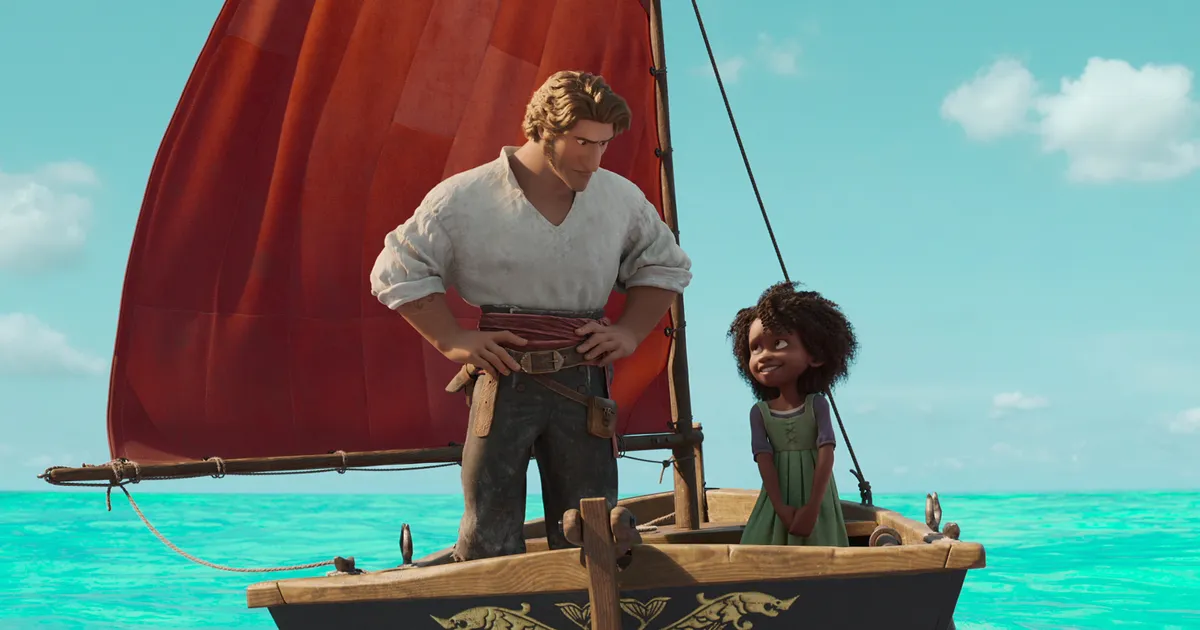
I am all for more animation studios throwing their hats in the ring alongside Disney, Pixar, DreamWorks, and Illumination, and luckily Netflix is willing to support such independent efforts. If the absence of more Pirates of the Caribbean has left you wanting for swashbuckling action, The Sea Beast aims to scratch that itch. Set in a world in which high-seas hunters pursue giant ocean monsters, the film follows brave hero Jacob Holland (Karl Urban) as he tries to help his vengeful Captain Crow (Jared Harris) to track down and kill the fabled Red Bluster, while also dealing with a precocious stowaway named Maisie (Zaris-Angel Hator).
The first half of The Sea Beast is a thrilling joy. The battles against aquatic behemoths are stunningly animated, recalling the similar fight against the Kraken in Dead Man’s Chest, and their size and menace could effectively trigger some latent thalassophobia. The characterizations of Jacob and his adopted father figure Crow are well-written and engaging, while Maisie is a spunky addition to the crew and a perfect stand-in for kid viewers. It seemed to be a refreshingly fun adventure, and though I wouldn’t say it goes off the rails, the second half weighed the film down with a message far too similar to How to Train Your Dragon, revising the initial conflict to tell us most of the monsters are merely misunderstood. Though the film has some perceptive lessons about even heroes being in the wrong, as well as the danger of history being written with an agenda, I can’t help but wish that the plot had remained a straightforward man-vs-nature adventure.
The Sea Beast may have been overshadowed by the likes of Puss in Boots and Pinocchio, but it deserved its Oscar nomination for Best Animated Feature. Despite the familiarity of many plot elements, it excels in seafaring derring-do and the charisma of its lead characters, so I look forward to what other adventures might await in a sequel.
Best line: (Jacob, of his fallen hunter predecessors) “Aye, they were heroes. But you can be a hero and still be wrong.”
(Today’s NaPoWriMo prompt was for a cento, a tricky form made up of lines borrowed from other poems. I probably spent more time on this hodgepodge of feminism than anything else this month. I only changed some punctuation here, and I’ve included annotations for where I found each line at the bottom of this post.)
I have not stood long on the strand of life, And I’m learning (though it sometimes really hurts me) The irresponsibility of the male. Everything was theirs because they thought so; ’Tis paid with sighs a plenty, And you just know he knows he knows The woman to be nobler than the man. Meekly we let ourselves be diverted, And woman in a bitter world must do the best she can.
Mere women, personal and passionate, Somewhere ages and ages hence: ‘Thou shalt not live by dreams alone. Go, gird thyself with grace; collect thy store Of blue midsummer loveliness, Of love’s austere and lonely offices, Of lads that wore their honors out, Of lusting, laughter, passion, pain.’
In Criticks hands, beware thou dost not come. Why do you show only the dark side?” It’s the keeping-your-chin-up that’s hard. For men may come and men may go, But ah, my foes, and oh, my friends— I might as well be glad! I shall not pass this way again. ________________________________
MPA rating: PG-13
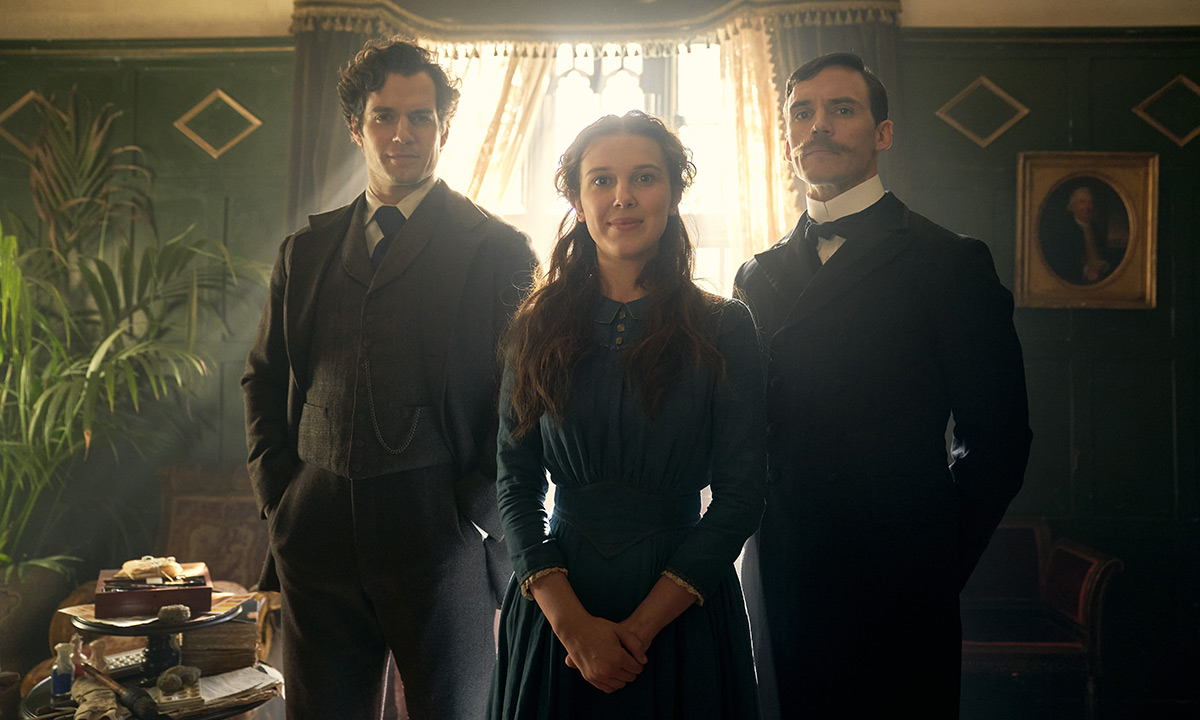
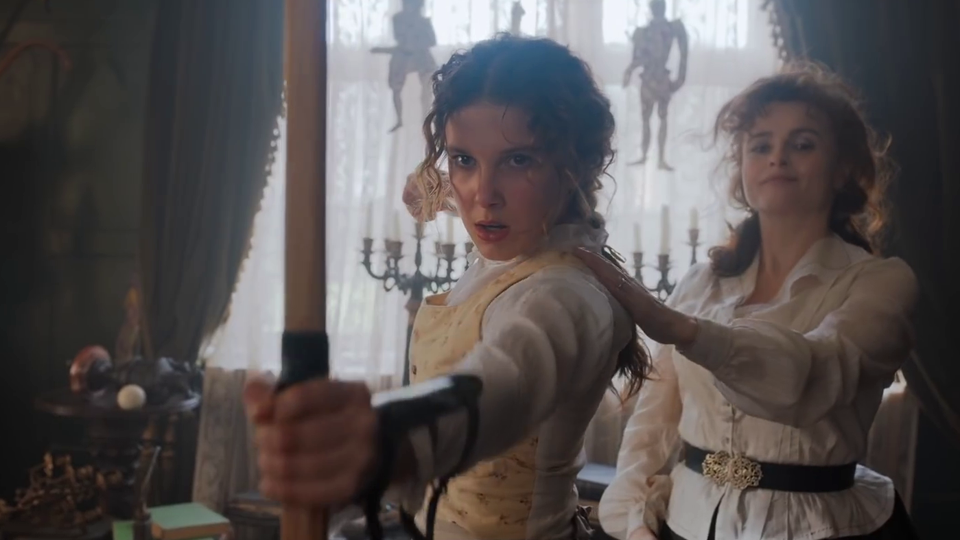
While playing Eleven in Stranger Things made an instant star out of Millie Bobby Brown, Enola Holmes let her put that star power to use as not only the titular character but also a producer for this adaptation of Nancy Springer’s YA book series, one of Brown’s favorites as a child. As the previously unknown sister of Sherlock and Mycroft Holmes (here played by Henry Cavill and Sam Claflin, respectively), Enola shares their natural precociousness, thanks in large part to the unconventional homeschooling of her mother Eudoria (Helena Bonham Carter). When Eudoria suddenly disappears, leaving only vague clues behind, Enola flees the expectations of her brothers to become a conforming Victorian lady and runs off to London in search of her mum while also stumbling into a murder plot involving a young marquess (Louis Partridge).
Despite some menace and light violence, the film is a light-hearted affair through and through, and I’m glad to see that clean, tween-friendly adventures of this quality are still being made. Brown shows far more charisma than in the role of Eleven and uses it to playful effect as she breaks the fourth wall, conversing freely with the audience like a first-person narrator. Some Sherlock Holmes fans might be disappointed (I understand many were) with Cavill’s restrained and less-than-omniscient portrayal of the famous detective, but he’s more of a side character here and still employs his famed deductive ability on occasion. Claflin’s Mycroft is more of an antagonist, acting as the aggressively traditional authority figure trying to crush Enola’s spirited individuality with corsets and boarding school, which by now have become clichéd forms of Victorian oppression.
The period costumes and locations are top-notch, and Enola’s puzzle-solving and gentle subversions keep the plot engaging, despite it feeling overly complex at times. One element that felt odd was Enola’s mother, who is shown to be her hero and dearest inspiration for thinking outside the box yet also is implied to be involved in some kind of feminist terrorist plot. That storyline is never resolved, and her final scene doesn’t really compensate for how she abandoned her daughter without explanation, leaving her character in a strange position of semi-sympathy. Hopefully, the sequel due later this year will address that further and give Brown another opportunity to bring her appealing character to life.
Best line: (Sherlock, giving sleuthing advice) “Look for what’s there, not what you want to be there.”
‘I have not stood long on the strand of life, (Aurora Leigh by Elizabeth Barrett Browning) And I’m learning (though it sometimes really hurts me) (“Learning” by Judith Viorst) The irresponsibility of the male (“Parturition” by Mina Loy) Everything was theirs because they thought so. (“The Last One” by W. S. Merwin) ’Tis paid with sighs a plenty (“When I Was One-and-Twenty” by A.E. Housman) And you just know he knows he knows. (“The Sloth” by Theodore Roethke) The woman to be nobler than the man, (Aurora Leigh by Elizabeth Barrett Browning) Meekly we let ourselves be diverted (“Great Infirmities” by Charles Simic) And woman in a bitter world must do the best she can. (“The Harpy” by Robert Service)
Mere women, personal and passionate, (Aurora Leigh by Elizabeth Barrett Browning) Somewhere ages and ages hence: (“The Road Not Taken” by Robert Frost) ‘Thou shalt not live by dreams alone (“Religious Instruction” by Mina Loy) Go, gird thyself with grace; collect thy store (“The Rights of Women” by Anna Laetitia Barbald) Of blue midsummer loveliness, (“A Summer Morning” by Rachel Field) of love’s austere and lonely offices? (“Those Winter Sundays” by Robert Hayden) Of lads that wore their honors out (“To an Athlete Dying Young” by A.E. Housman) Of lusting, laughter, passion, pain, (“Prelude” from Ballads of a Bohemian by Robert Service)
In Criticks hands, beware thou dost not come; (“The Author to Her Book” by Anne Bradstreet) Why do you show only the dark side?” (“Käthe Kollwitz” by Muriel Rukeyser) It’s the keeping-your-chin-up that’s hard. (“The Quitter” by Robert Service) For men may come and men may go (“The Brook” by Alfred, Lord Tennyson) But ah, my foes, and oh, my friends— (“First Fig” by Edna St. Vincent Millay) I might as well be glad!” (“The Penitent” by Edna St. Vincent Millay) I shall not pass this way again. (“I Shall Not Pass This Way Again” by Anonymous)
(Today’s NaPoWriMo prompt was a “duplex,” a complex sonnet form “organized into seven, two-line stanzas. The second line of the first stanza is echoed by (but not identical to) the first line of the second stanza, the second line of the second stanza is echoed by (but not identical to) the first line of the third stanza, and so on. The last line of the poem is the same as the first.” Hopefully, this attempt fits the bill.)
What has a beginning must have an end, And no one can see it until it arrives.
Though no one can see it, we still comprehend The subtle impermanence of our own lives.
Impermanent, yes, but our lives leave a mark Upon those who follow the traces we leave,
And so we must leave traces here in the dark And give without knowing who else will receive.
For no one has known who will follow their wakes; No great name of history read the next page.
The page being written no doubt has mistakes, But let them inform the next coming of age.
The next age that comes is another’s to tend. What has a beginning must have an end. ________________________
MPA rating: PG-13
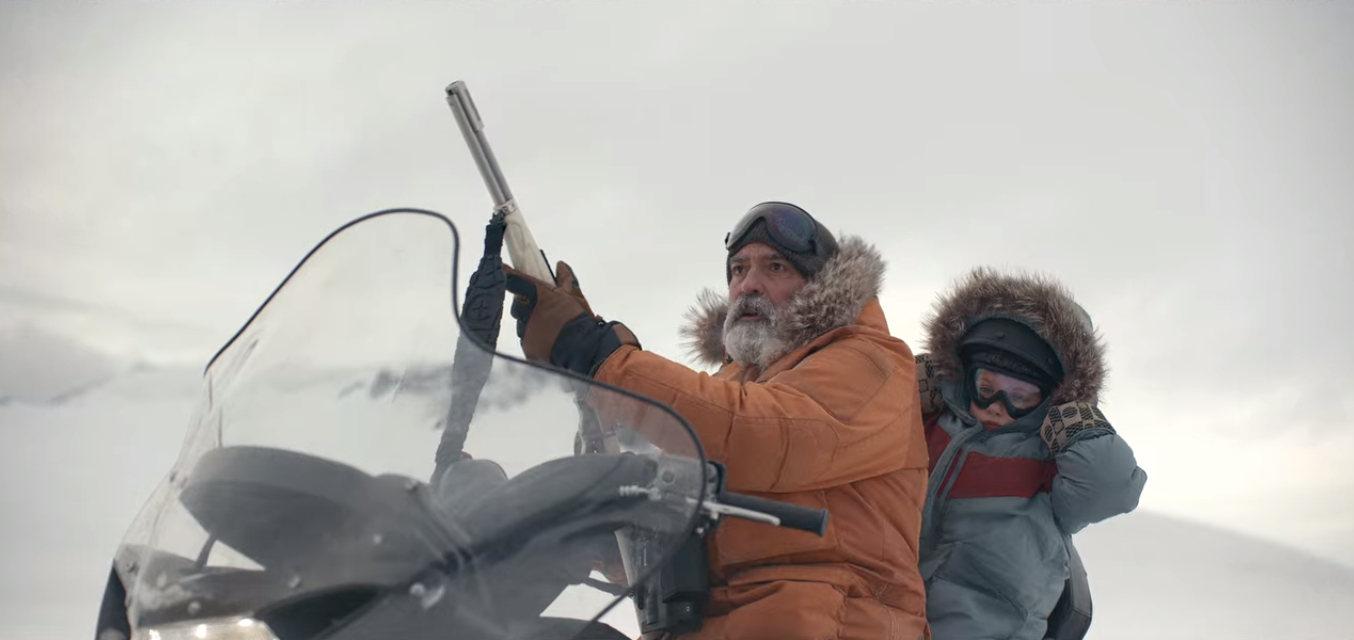
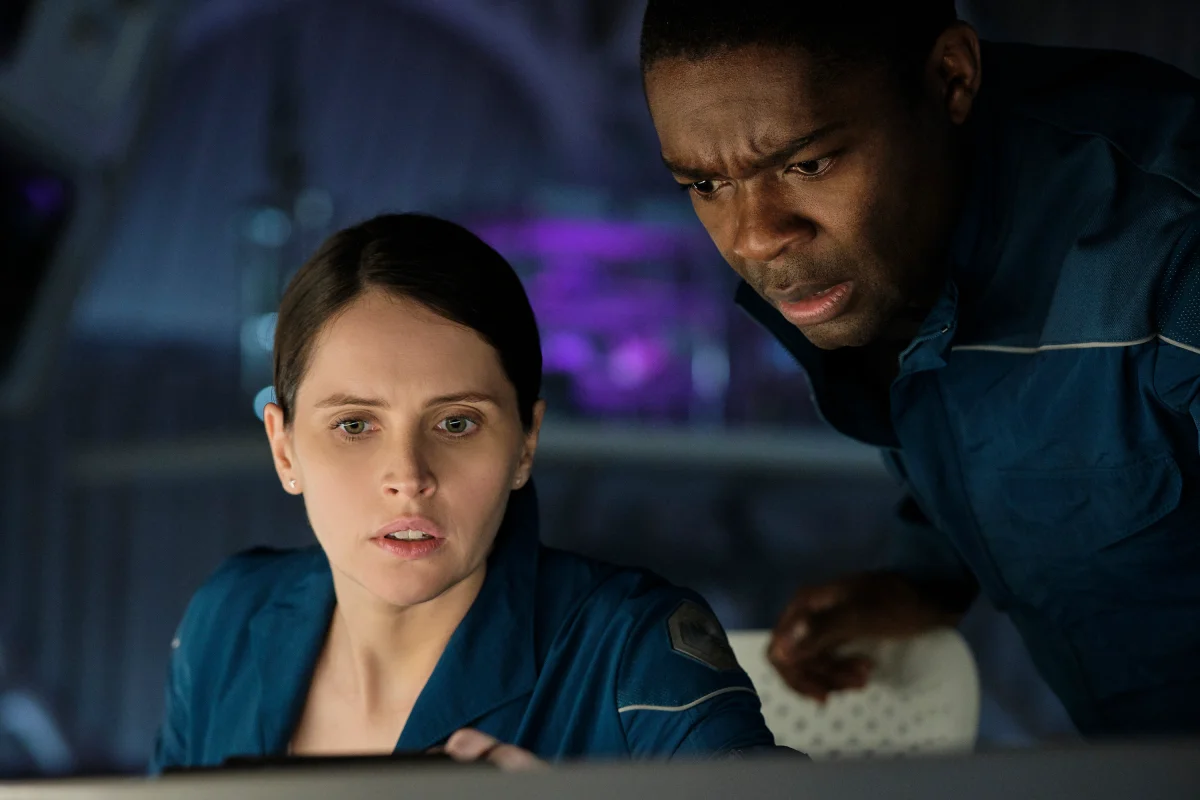
The Midnight Sky is an odd installment in the sci-fi genre, combining bits of post-apocalypse, survival, space exploration, and emotional introspection into an aspiring whole. Based upon the novel Good Morning, Midnight and directed by star George Clooney, it’s essentially two separate films that come together toward the end. In one, Clooney plays dying astronomer Augustine Lofthouse, who chooses to remain at an Arctic observatory as an unstated catastrophe destroys the earth with radioactivity. He finds a young girl left behind as well and takes her on a snowy journey to another weather station so he can warn a spaceship of the disaster before they reach Earth. The spaceship is the other half of the plot, in which five good-natured astronauts (including Felicity Jones, David Oyelowo, and Kyle Chandler) return from an exploratory mission and naturally run into unforeseen dangers.
I liked both halves of this slow and somber drama about the near-end of humanity, but I’m not sure they quite fit together. A twist connecting them is quite moving the more I think about it, but my initial reaction was more confusion than pathos. Still, the acting is strong across the board, with Clooney especially excelling as a grizzled man weighed down by regret, and his journey across the Arctic with a quiet little girl was oddly reminiscent of Tom Hanks’ turn in News of the World, particularly a part where he loses track of her in a storm. Clooney’s artful direction is evident both on Earth and in a gravity-defying space walk sequence that earned the film a well-deserved Oscar nomination for its visual effects. The Midnight Sky is an overly familiar hodgepodge, and a rather depressing one at that, but its individual strengths still add up to a worthwhile journey for sci-fi fans like me.
Best line: (Augustine, telling the spaceship crew about Earth) “I’m afraid we didn’t do a very good job of looking after the place while you were away.”
(Today’s NaPoWriMo prompt was a poem about the opening scene of a movie about my life. With this film about a scriptwriter in mind, I decided to get a bit meta.)
We open with a panning shot That swings from a suburban street And slowly lifts and nears a house With bushes bloomed in April heat.
A window’s lit, and through its pane We see a young man deep in thought, Studying his laptop screen, Unsure if he should type or not.
He reads the fourteenth prompt again, And shifts upon the seat below him. Then, he cracks a knowing grin And swiftly rattles off this poem. ___________________________
MPA rating: R (solely for some language, a fairly light R)
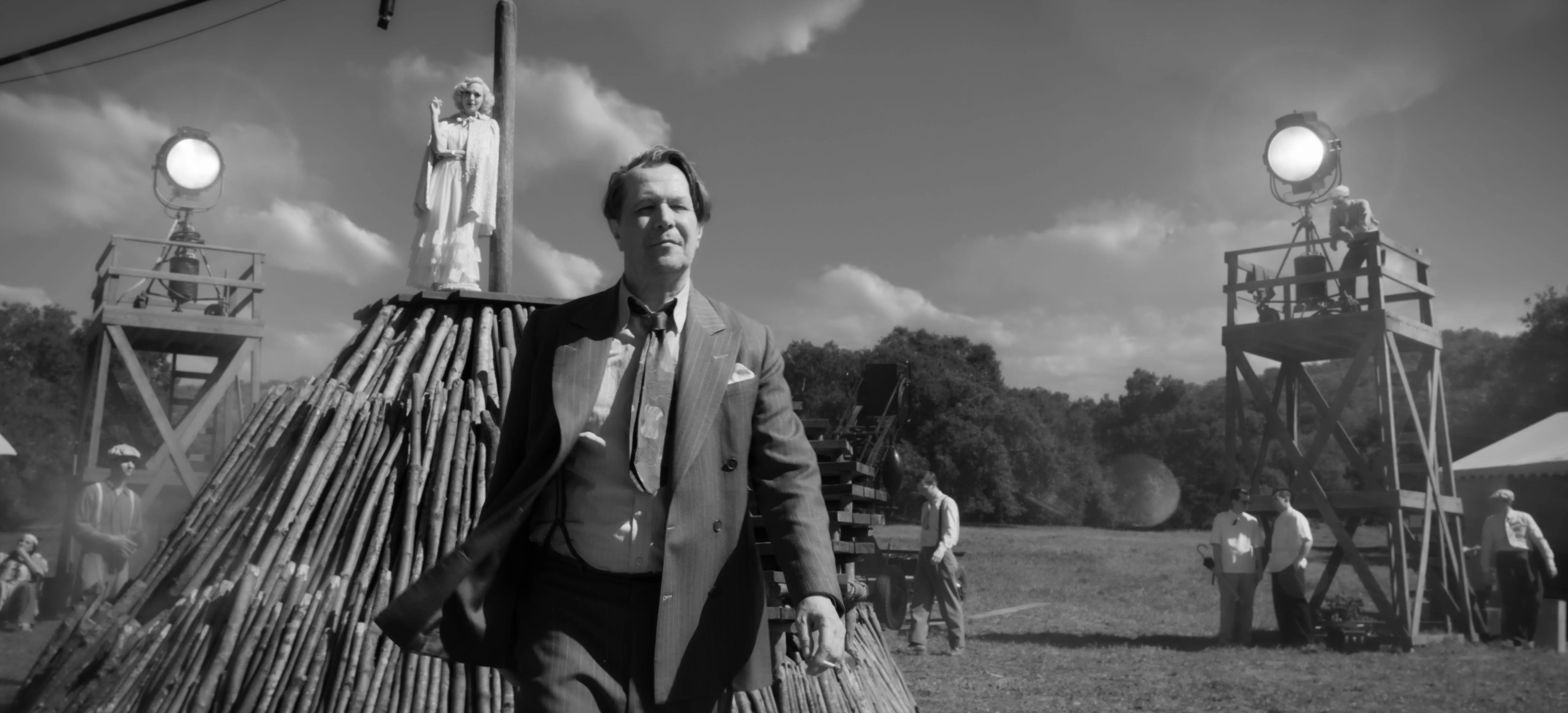
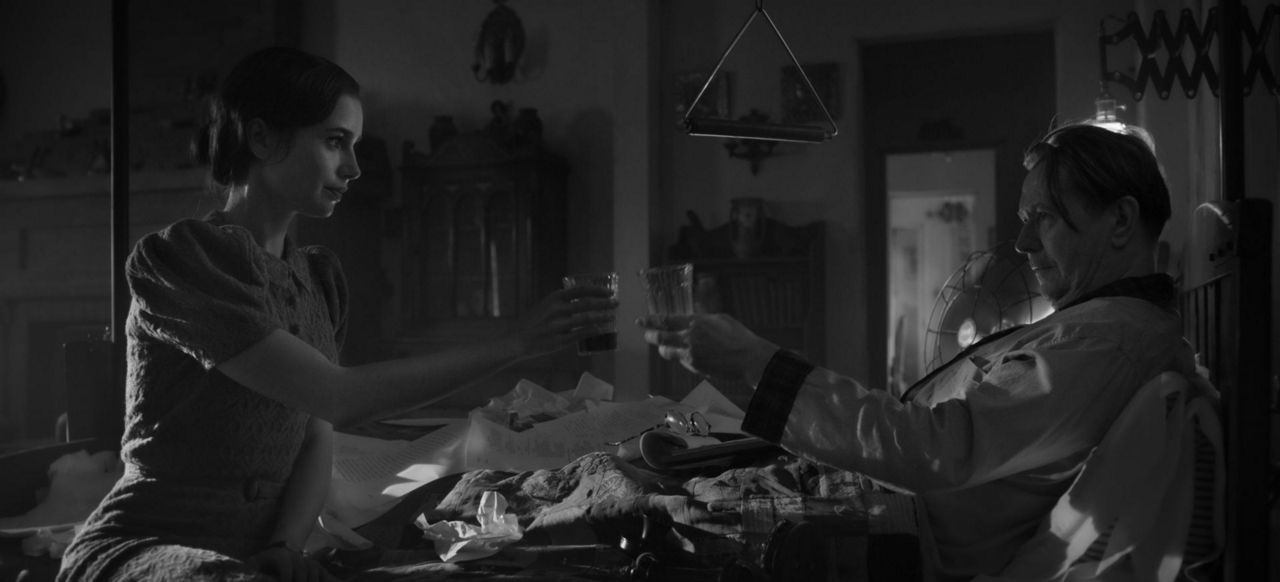
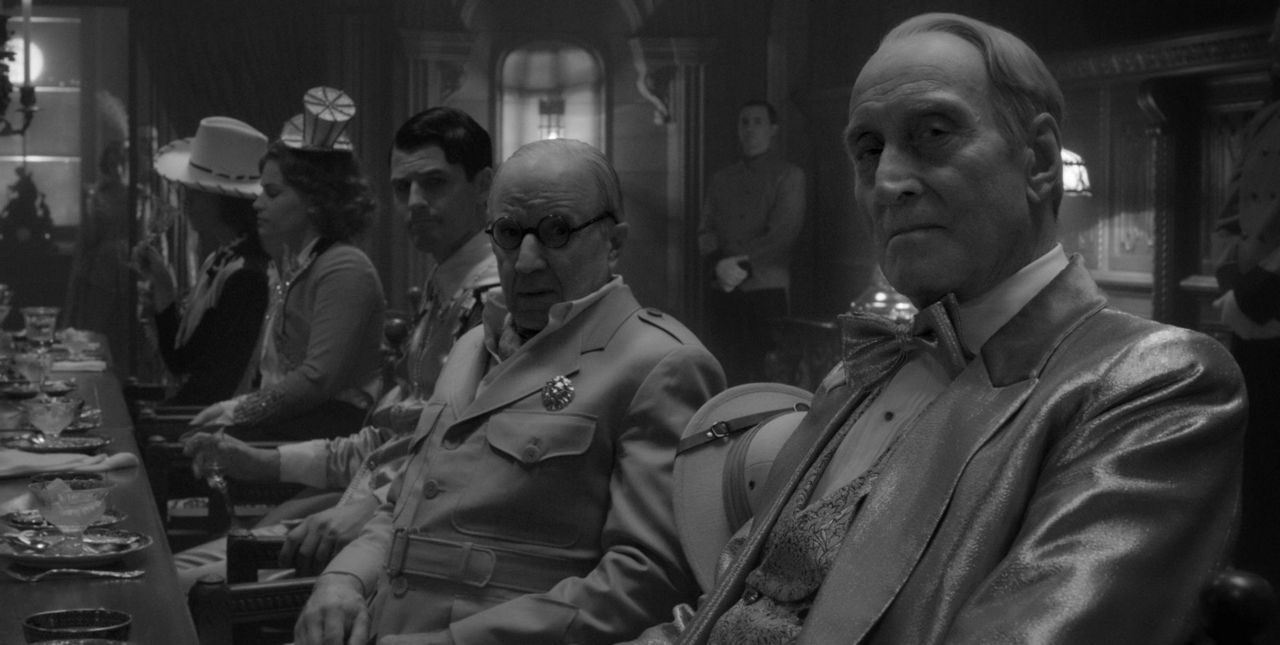
The name Herman Mankiewicz may not mean much to non-cinephiles, but he’s still held in high esteem for his Oscar-winning screenplay for Citizen Kane, sharing credit with Orson Welles, much to the chagrin of Welles’ ego. David Fincher’s treatment of Mank, as his friends called him, is an undeniable labor of love, with a screenplay written by Fincher’s father Jack prior to his 2003 death and delayed over the next two decades. On top of that, the black-and-white cinematography and sound were painstakingly designed to mimic the style of old Hollywood, though the level of that detail is more appreciated by film historians than average viewers.
Oscar nominee Gary Oldman brings Mank to life as a washed-up genius too witty and fond of alcohol for his own good, Whether he’s dictating the Citizen Kane script while recuperating from a broken leg in his desert hideaway or schmoozing with Louis B. Mayer (Arliss Howard), William Randolph Hearst (Charles Dance), and Marion Davies (Oscar-nominated Amanda Seyfried) ten years earlier, Oldman is brilliant as ever at portraying afflicted brilliance, while the rest of the cast is strong but somewhat forgettable compared to him.
Despite Oldman’s ever award-worthy presence, the true star is the script, which bears an old-timey eloquence that is uncommon these days, the kind that trusts in the intelligence of the audience to appreciate its wit. With such a reliance on dialogue, the film can get dry at times, but it also elucidates interesting details of Mank’s story, such as his assistance of Jews escaping Nazi Germany and how he changed his mind about receiving credit for the Citizen Kane script. From what I understand, the history is embellished to give Mank a greater claim to Citizen Kane’s brilliance than Orson Welles, but, taken with a grain of salt, it’s still an impressively crafted vision of classic Hollywood through the bleary eyes of one of its great writers.
Best line: (Louis B. Mayer) “This is a business where the buyer gets nothing for his money but a memory. What he bought still belongs to the man who sold it. That’s the real magic of the movies. And don’t let anybody tell you different.”
We hear all these tales of unlikely success, Of thousands of no’s that resulted in yes, Of people achieving their triumph with less Than anyone else could have guessed was required.
They seem the exception to that wretched truth That work is not always rewarded, nor youth, And even those weary and long-in-the-tooth Have little to show for their being so tired.
But who could have guessed what those blessed ones would do? What low expectations observed their debut? And who says that I can’t be one of those few? And who says that you aren’t exceptional too? __________________________
MPA rating: PG-13
I suppose the first order of business for 2022 should be reviewing the films that made it onto my end-of-year list for 2021. Considering my fondness for animation, musicals, and superhero films, it’s not surprising that these dominated much of the list, and the only musical of last year that didn’t disappoint at the box office (since it was released on Netflix) was my favorite of the bunch.
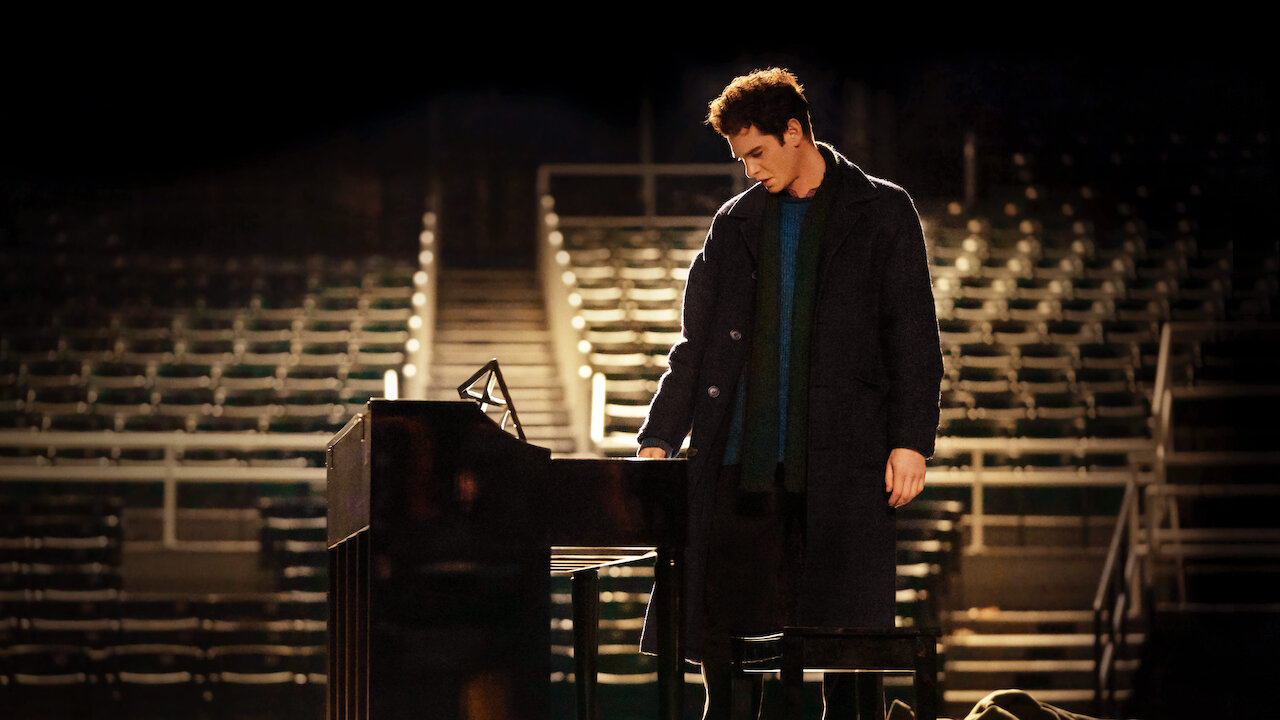
Tick, Tick… Boom! is the other Jonathan Larson work, a one-man musical monologue that never made it to Broadway like his hit Rent did five years later. Considering I doubt anyone was clamoring for a film version of this lesser-known “rock monologue” from thirty years ago, it’s clear that this was a passion project. First-time director Lin-Manuel Miranda has written that Tick, Tick… Boom! inspired him when he saw a reworked version performed after Larson’s untimely death, and he even played Larson himself in a 2014 production. It makes sense that Larson’s semi-autobiographical take on the stresses of chasing success in musical theater resonated with Miranda, whose Hamilton shared the role of someone writing “day and night like [they’re] running out of time.” In the case of Jonathan Larson (Andrew Garfield), he struggled to produce his futuristic rock opera Superbia and wrote Tick, Tick… Boom! as an outlet for his creative frustration, even as the 1990s and his thirtieth birthday loomed before him.
I knew nothing about the story going in and was amazed at how fitting it was that I watched it on my own birthday. The very first (and very catchy) song “30/90” laments how quickly the years are outpacing Jonathan’s dreams of making his mark on the world, a sentiment that I can certainly relate to, along with most other twenty- or thirtysomethings out there. Andrew Garfield delivers one of his best performances yet in the lead role, demonstrating he’s a double threat of acting and singing (for the first time apparently). Whether he’s ecstatic over small achievements, harried working for every cent and every note he can muster for the sake of his workshop, or heartbroken by tragic news, he runs the full spectrum of emotions and well deserved his recent Golden Globe win.
Also outstanding are Alexandra Shipp as his girlfriend Susan and Robin de Jesús as his friend Michael, both of whom suffer being left behind by Jonathan’s mania of chasing success even as they sincerely want him to find it. Plus, like Zac Efron in The Greatest Showman, it was nice to see Vanessa Hudgens returning to her movie musical roots as one of the key singers for the show/workshop. The film also incorporates elements that would clearly go on to influence Larson’s next musical Rent, such as several of Jonathan’s gay friends falling to the AIDS epidemic.
Tick, Tick… Boom! has an unusual structure; while most of it is the expected movie musical format (drama with interspersed musical numbers), it’s mixed with scenes of Larson/Garfield narrating on stage with piano and band as if performing the show live to an audience. As a sort of blend of stage play and film memoir, it excels at folding the songs into the narrative as embellishments of the first-person storytelling. There’s really only one moment where the song seriously fails to match the tone, when a sardonically poppy song about relationship problems clashes with an otherwise very serious scene. Regardless of such minor hiccups, the quality of Larson’s music and lyrics speaks for itself, from the gentle guitar of “Johnny Can’t Decide” to the stark piano of “Why” to the full rock ensemble of “30/90” and “Louder Than Words.” In particular, “Why” struck me as an emotionally exhausting performance akin to Anne Hathaway’s “I Dreamed a Dream” in Les Miserables, so Garfield had better get an Oscar nomination.
Every now and then, a movie about creativity and chasing art comes along and speaks to me on an especially personal level, films like Whisper of the Heart or La La Land that often are appreciated by some more than others. Tick, Tick… Boom! is just such a film. I have my own latent plans for a musical that I’ve been toying with for years, and while I have yet to put full effort toward it, watching Larson’s grueling journey and eventual vindication gives me hope that my own efforts won’t be in vain, even if it seems so.
The film is a tribute to both Jonathan Larson and the creative process of musical theater, elevated by Miranda’s personal direction and lots of cameos from Broadway legends that not everyone will recognize. Some cool trivia: Bradley Whitford plays Larson’s idol, the late great Stephen Sondheim, but when Sondheim leaves an encouraging voice mail toward the end of the film, Sondheim himself recorded the lines. All these layers make Tick, Tick… Boom! a clear labor of love and, for me at least, a film to love as well.
Best line: (Jonathan, after a rejection) “So what am I supposed to do now?” (Rosa, his agent) “You start writing the next one. And after you finish that one, you start on the next. And on and on, and that’s what it is to be a writer, honey. You just keep throwing them against the wall and hoping against hope that eventually something sticks. Listen. Little advice from someone who’s been in this business a long, long time. On the next one, maybe try writing about what you know.”