
• Home
  • About Me
  • The List
  • THE LIST (2016 Update)
  • THE LIST (2017 Update)
  • THE LIST (2018 Update)
  • THE LIST (2019 Update)
  • THE LIST (2020 Update)
  • THE LIST (2021 Update)
  • THE LIST (2022 Update)
  • Top Twelves and More
  • The End Credits Song Hall of Fame

Rhyme and Reason

~ Poetry Meets Film Reviews

Rhyme and Reason

Tag Archives: Drama

Belle (2021)

16 Saturday Apr 2022

Posted by sgliput in Movies, NaPoWriMo, Poetry, Reviews, Writing

≈ Leave a comment

Tags

Action, Animation, Anime, Drama, Family, Musical, Romance, Sci-fi

(Good Friday and work obligations sadly made me miss yesterday, but I’m back on the wagon. Today’s NaPoWriMo prompt was for a curtal sonnet, an 11-line sonnet variant from Gerard Manley Hopkins.)

In the realm of cyberspace I hide,
Comforted by anonymity.
My flesh-self is content behind its smokescreen.
Robed in pixels, I can roam with pride,
Finding other introverts to agree,
Minorities like ghosts in the machine.

Life from womb to here has left me wincing;
Life since logging on is fancy-free,
Far easier to spurn the cruel and mean.
I’m someone else, and boy, am I convincing,
As you’ve seen.
________________________

MPA rating:  PG

In anime circles, a new film from Mamoru Hosoda is an event. From Summer Wars to Wolf Children to the Oscar-nominated Mirai, he’s proven to be one of the most skilled anime directors around, and Belle promised to be yet another win. A modern riff on Beauty and the Beast fusing music and social media, the film garnered a fourteen-minute standing ovation at Cannes, making me wonder if it was just a case of no one wanting to be the first to stop clapping. Belle is another strong film in Hosoda’s oeuvre, but, like Encanto, it’s also proof that a film can be good while also being deeply flawed.

In the near-future of Belle, a digital world called U has become the most popular metaverse for people across the globe to interact with avatars somehow extrapolated from their own biometrics, resulting in an array of bizarre appearances ranging from babies to superheroes to literal hands with a face on it, which no one seems to object to. Suzu is a self-conscious high school student still haunted by her mother’s death, but when she logs into U as the beautiful Bell (which is what Suzu means), she finds that the anonymity allows her to sing again and, much to her surprise, become a celebrity. As she deals with the flurry of differing opinions that come with fame, she grows curious about the aggressive avatar known as the Beast, whose unknown identity is hunted by U’s authorities.

Hosoda is no stranger to virtual worlds, having previously worked with the concept in Digimon and Summer Wars, so it’s no surprise that the world of U is dazzling, an eye-popping blend of 3D and 2D animation, thanks in part to backgrounds from Cartoon Saloon. It’s easily Hosoda’s most visually resplendent and imaginative film that still carries his calling cards (he must have a thing for flying whales). The bad thing about U is that so much of it is left unexplained. While OZ in Summer Wars had several clear real-world applications, the avatars in U are never shown doing much more than floating around and commenting, though there are concerts and fighting tournaments, I suppose. Plus, it’s never clear how the real-world users are interacting with the virtual world; at some points, it’s as if their avatars are mirroring their real body’s movements, but is it like Ready Player One-style mechanics? There’s mention of sharing the senses of their avatars, so how can they see both U and the real world when logged in? Questions like that just require a suspension of disbelief that divorces the virtual and real worlds for the sake of the story.

The virtual world is ostensibly the main fantastical draw of the film, but I honestly enjoyed the parts in the real world more. The high school romance drama is nothing unusual for the genre, but the relatable supporting characters are an endearing bunch, particularly during a laughably awkward love confession. It was also a nice subversion to reveal the usually unsympathetic popular girl as a genuinely caring friend. However, the real world is also where the story falters toward the end. The revelation of the Beast’s identity is a powerful moment that speaks to the trauma of hidden abuse, yet it’s a reality for which the film doesn’t really have an answer. One culminating sacrifice hits an emotional high, but Suzu’s efforts afterward are unrealistic and absent of any long-term solution.

Belle has a lot of impressive elements in service to a somewhat half-baked plot, and the Beauty and the Beast parallels are rather incidental to the main story. Its vision of social media feeding frenzies and the online experience are timely and well-executed, while Suzu’s journey to understand the meaning of selflessness is suitably moving as well. And though the songs sometimes feel shoehorned in, I must give props to their quality, including the English recordings for the dub, and I think that the climactic “A Million Miles Away” would have been a worthy nominee for a Best Song Oscar if the Academy would look around more. Belle may not match the likes of Wolf Children, but it lives up to Summer Wars and exceeds Mirai, in my opinion. The visual splendor on display largely overshadows the plot issues, just as long as you don’t think about it too much.

Rank:  List Runner-Up

© 2022 S.G. Liput
765 Followers and Counting
Mank (2020)

14 Thursday Apr 2022

Posted by sgliput in Movies, NaPoWriMo, Poetry, Reviews, Writing

≈ Leave a comment

Tags

Biopic, Drama, History, Netflix

(Today’s NaPoWriMo prompt was a poem about the opening scene of a movie about my life. With this film about a scriptwriter in mind, I decided to get a bit meta.)

We open with a panning shot
That swings from a suburban street
And slowly lifts and nears a house
With bushes bloomed in April heat.

A window’s lit, and through its pane
We see a young man deep in thought,
Studying his laptop screen,
Unsure if he should type or not.

He reads the fourteenth prompt again,
And shifts upon the seat below him.
Then, he cracks a knowing grin
And swiftly rattles off this poem.
___________________________

MPA rating:  R (solely for some language, a fairly light R)

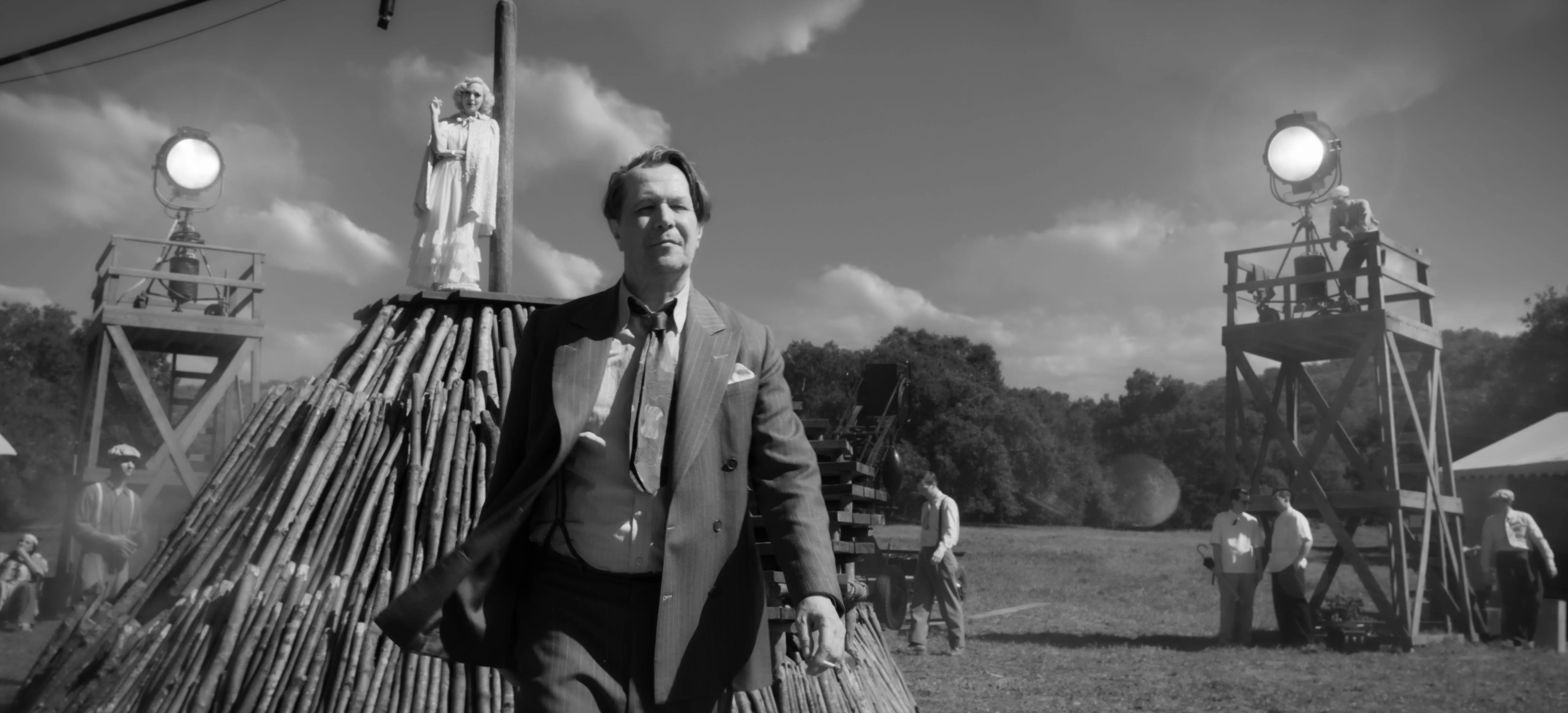
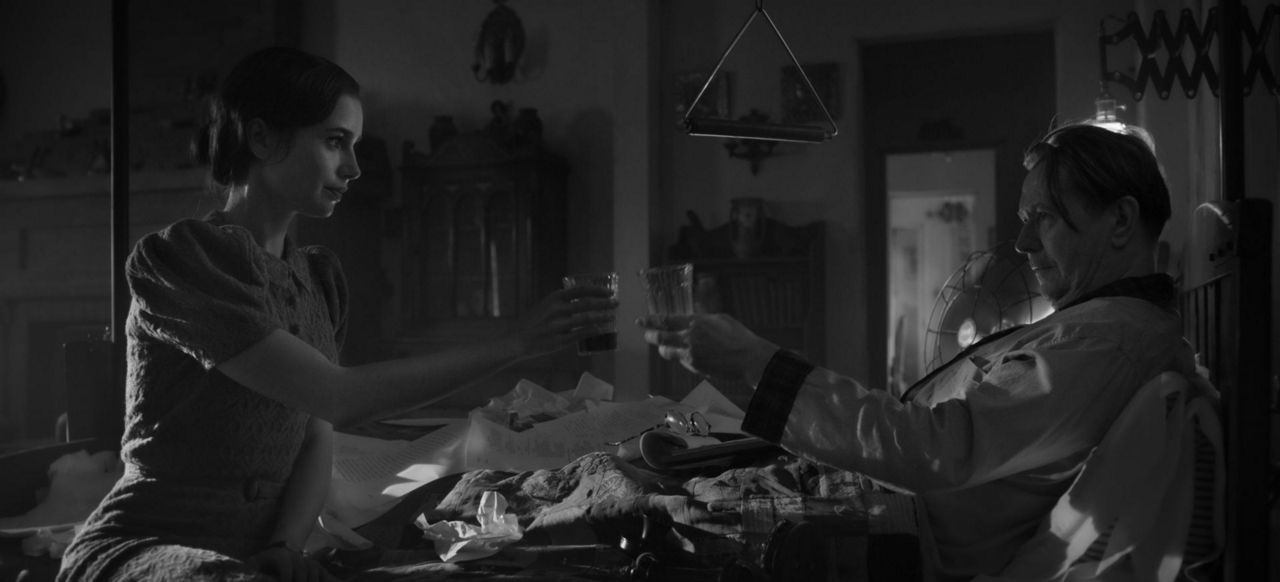
The name Herman Mankiewicz may not mean much to non-cinephiles, but he’s still held in high esteem for his Oscar-winning screenplay for Citizen Kane, sharing credit with Orson Welles, much to the chagrin of Welles’ ego. David Fincher’s treatment of Mank, as his friends called him, is an undeniable labor of love, with a screenplay written by Fincher’s father Jack prior to his 2003 death and delayed over the next two decades. On top of that, the black-and-white cinematography and sound were painstakingly designed to mimic the style of old Hollywood, though the level of that detail is more appreciated by film historians than average viewers.

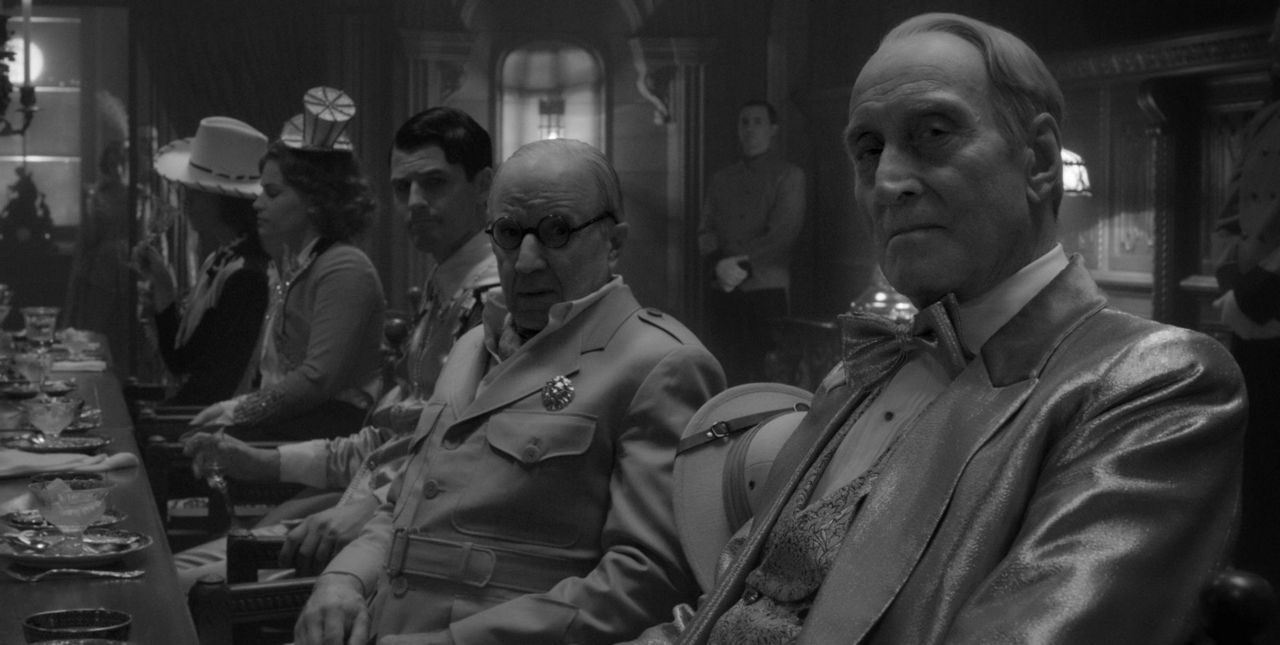
Oscar nominee Gary Oldman brings Mank to life as a washed-up genius too witty and fond of alcohol for his own good, Whether he’s dictating the Citizen Kane script while recuperating from a broken leg in his desert hideaway or schmoozing with Louis B. Mayer (Arliss Howard), William Randolph Hearst (Charles Dance), and Marion Davies (Oscar-nominated Amanda Seyfried) ten years earlier, Oldman is brilliant as ever at portraying afflicted brilliance, while the rest of the cast is strong but somewhat forgettable compared to him.

Despite Oldman’s ever award-worthy presence, the true star is the script, which bears an old-timey eloquence that is uncommon these days, the kind that trusts in the intelligence of the audience to appreciate its wit. With such a reliance on dialogue, the film can get dry at times, but it also elucidates interesting details of Mank’s story, such as his assistance of Jews escaping Nazi Germany and how he changed his mind about receiving credit for the Citizen Kane script. From what I understand, the history is embellished to give Mank a greater claim to Citizen Kane’s brilliance than Orson Welles, but, taken with a grain of salt, it’s still an impressively crafted vision of classic Hollywood through the bleary eyes of one of its great writers.

Best line: (Louis B. Mayer) “This is a business where the buyer gets nothing for his money but a memory. What he bought still belongs to the man who sold it. That’s the real magic of the movies. And don’t let anybody tell you different.”

Ranking:  Honorable Mention

© 2022 S.G. Liput
765 Followers and Counting
Everything Everywhere All at Once (2022)

13 Wednesday Apr 2022

Posted by sgliput in Movies, NaPoWriMo, Poetry, Reviews, Writing

≈ Leave a comment

Tags

Action, Comedy, Drama, Sci-fi, Thriller

(Today’s NaPoWriMo prompt was for an optimistic pep-talk of a poem, and what better way to cheer up than to imagine all the possibilities of the future?)

Are you dwelling on your present and its causes in the past,
Believing that your current station cannot be surpassed
And thinking that what got you here’s so permanent and vast
That every future holds more of the same?

I tell you it’s a lie, for there are futures far and wide,
A you that is a lawyer with a master’s on the side,
An architect, an astronaut, or business never tried,
A plaque or medal waiting with your name.

Another you’s achieving in another universe,
And nothing but your mindset makes your version any worse.
A choice alone can breed a set of futures so diverse
That only you will see what you became.
_______________________

MPA rating:  R

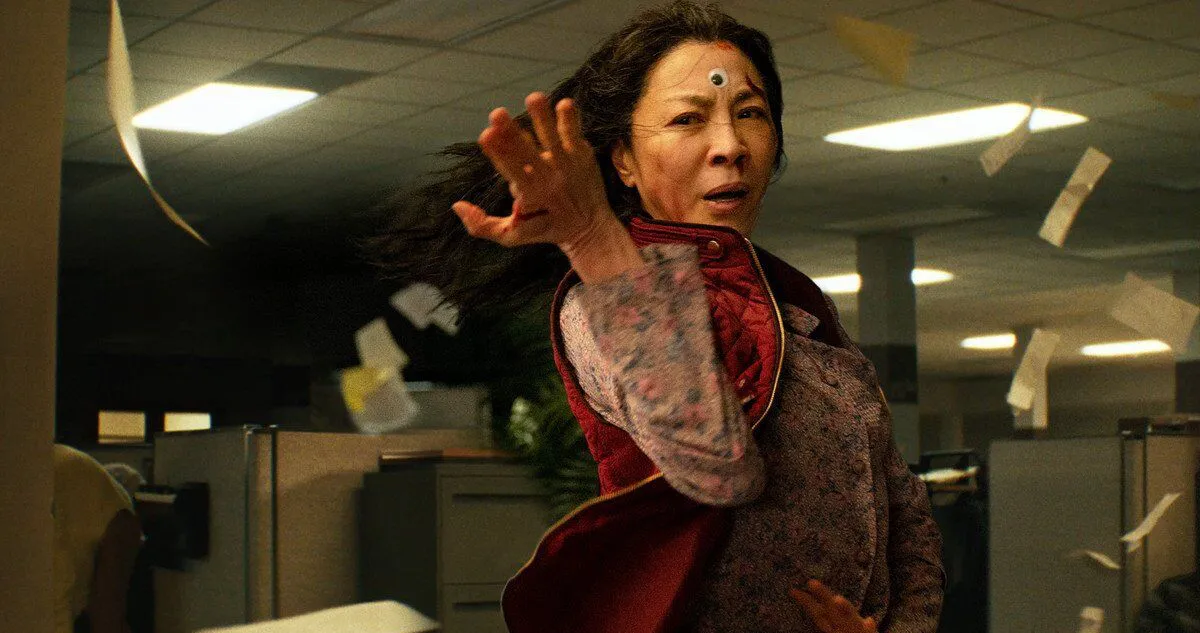
With positive word of mouth still spreading this movie’s praises, I will affirm that Everything Everywhere All at Once is the genre-defying, expectation-blowing multiversal fever dream that no one knew they wanted. Born from the unorthodox imaginations of music video directors Daniel Kwan and Daniel Scheinert (known as Daniels, whose last film Swiss Army Man had a description weird enough to turn me off from seeing it at all), this new film is a head-trip, a drug trip, and a reality-spanning hero’s journey/familial drama all wrapped up in a Chinese-American cultural milieu and the distinctive anything-goes visual style of a pair of auteurs. Basically, it’s the ultimate indie film.

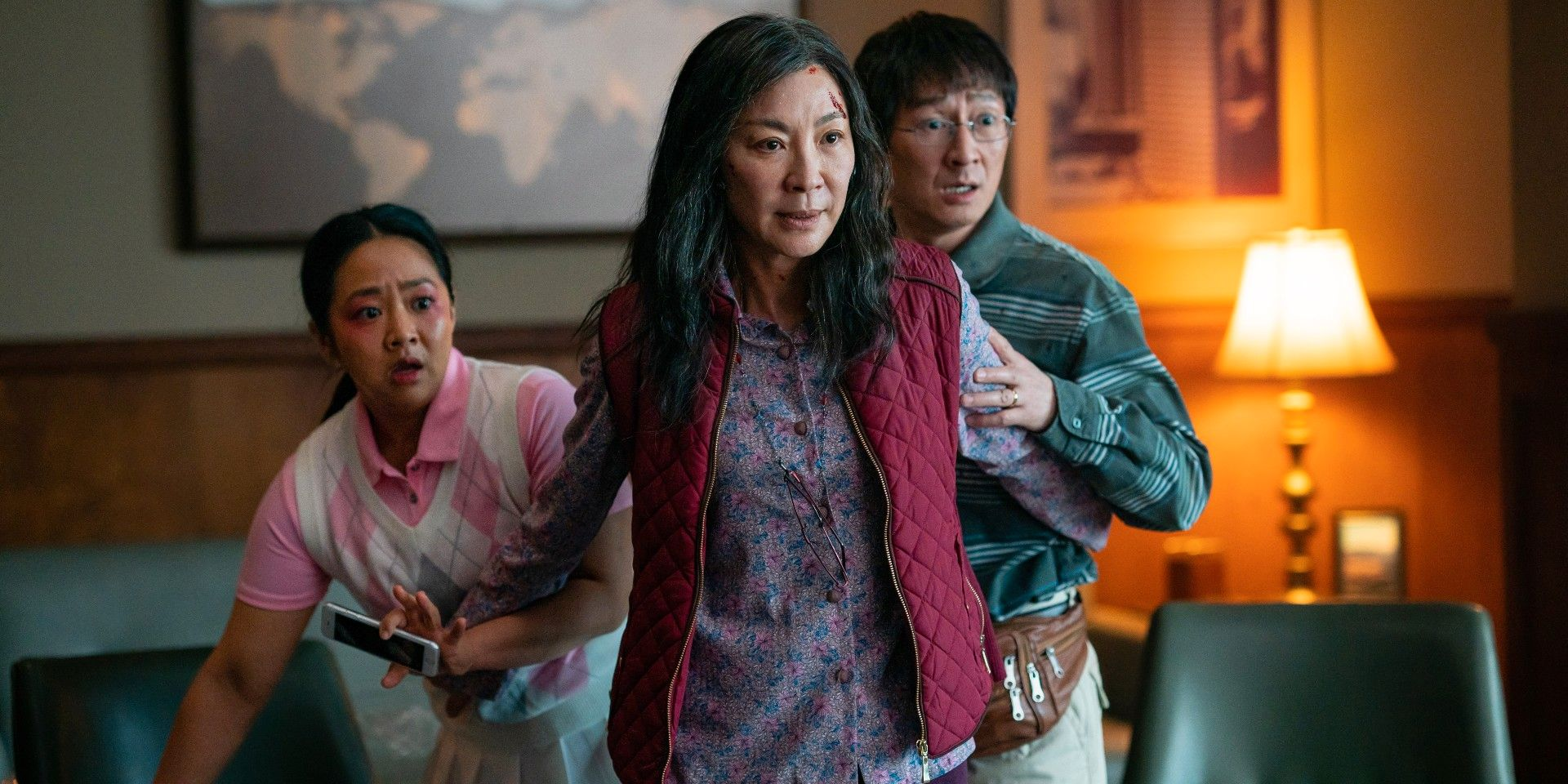
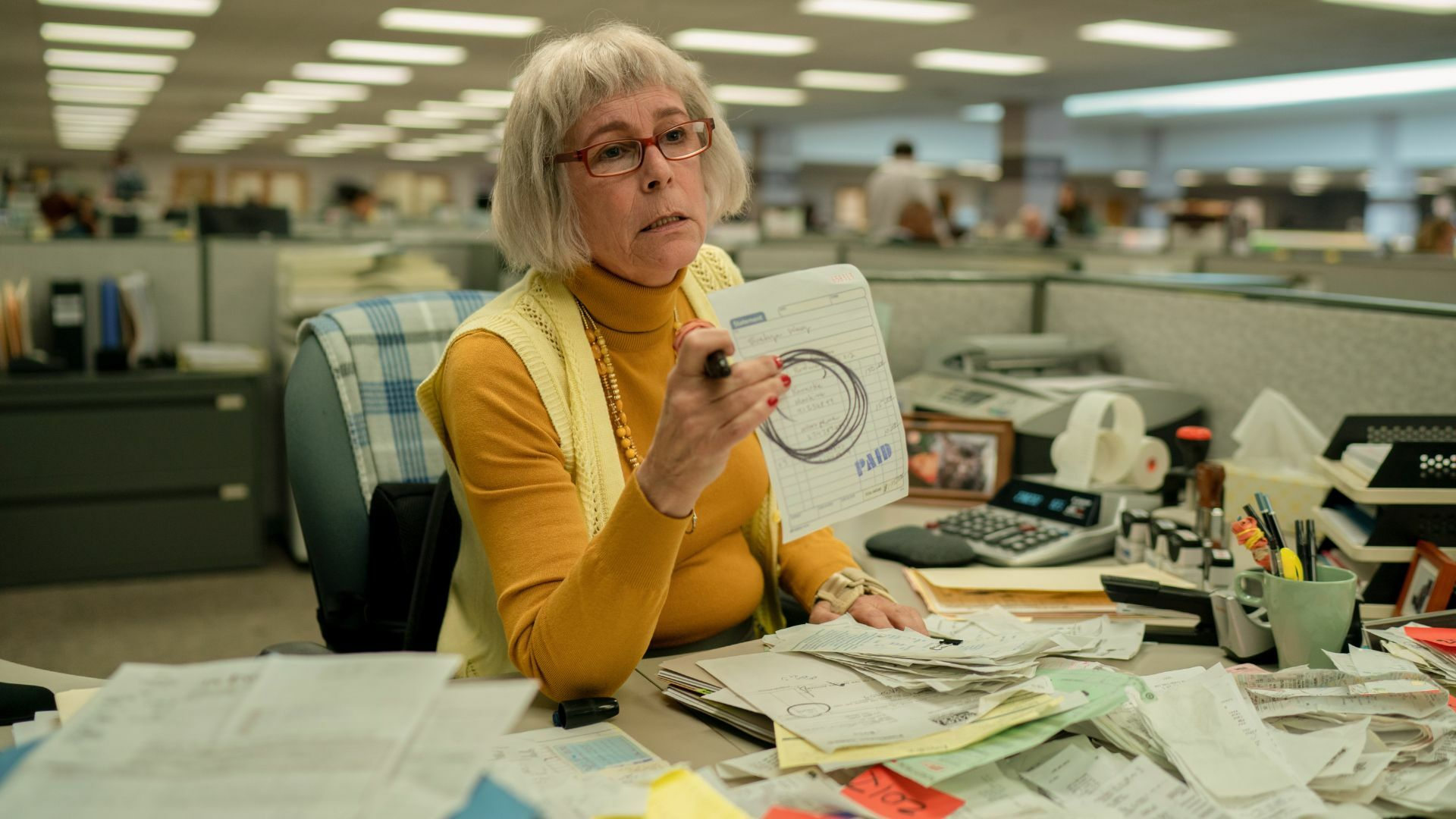
Michelle Yeoh plays Evelyn Wang, who owns a laundromat with her meek husband Waymond (Ke Huy Quan of Goonies and Temple of Doom fame) and is being audited by a no-nonsense IRS inspector named Deirdre (Jamie Lee Curtis). While attending a tax meeting, Evelyn is suddenly whisked into a multiverse-spanning struggle when an alternate version of Waymond informs her of a cosmic threat and the possibility of accessing the skills of other versions of Evelyn in different universes. She is understandably skeptical of such revelations but is soon forced to battle other multiverse-hoppers, not to mention the struggles of parenthood and the meaning of existence.

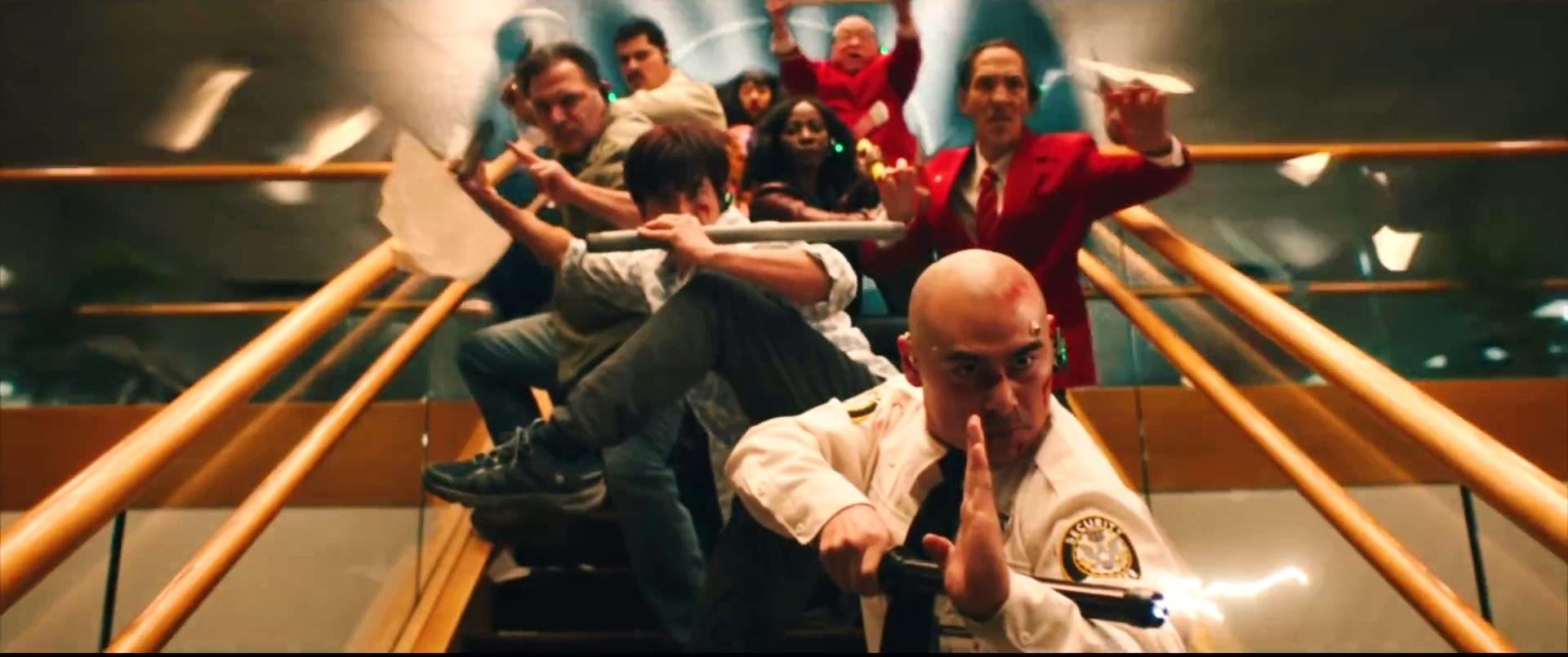
So much happens in Everything Everywhere All at Once that it’s hard to focus on what makes it so engaging, but I’ll say it’s probably the most wildly original film I’ve ever seen. With that originality, it must also be said that it embraces the surreal and outright bizarre with abandon, making it also a film whose sense of humor is not necessarily for all tastes. Quite a few scenes earned big laughs in the theater just from how unexpected and weird they were, like when a small dog on a leash is suddenly used in combat as a swinging weapon. This is a movie that alternates between relatable scenes of grappling with one’s disappointing life choices and Yeoh sparring with a pair of martial artists with trophies stuck up their butts (for a plot-sensible reason, strangely enough). It’s nuts, and yet, for the most part, it works.

Yeoh is at her best here, portraying Evelyn in a wide range of states from domestic despair to a glamorous lifestyle mirroring that of Yeoh herself. Evelyn is told that her potential “chosen one” status is because she is basically the worst version of herself, allowing all that unfulfilled potential to draw abilities from other universes instead. Between her regretful cynicism and burgeoning omnipotence, one sequence leads her on the path to nihilism and cruelty because “nothing matters” when you see how insignificant our lives are. A less satisfying film might have embraced that theme to its worst end, but that’s where Quan shines as the true heart of the film. In a triumphant return to acting, he provides a brilliant summation of kindness as the best alternative, which is basically what I consider my own worldview. He does much more than that, serving as the main deliverer of exposition and nailing a finely choreographed fight armed with only a fanny pack, but he grounds the film in a way that wouldn’t be possible without him.

I realize I’ve gone this far without even mentioning Stephanie Hsu as Evelyn’s estranged daughter or James Hong as her judgmental, wheelchair-bound father. I haven’t gotten to the reality-ending bagel or the zany reimagining of Pixar’s Ratatouille. The number of components to appreciate and discuss in this film can’t be crammed into this one review, but let’s just say there are plenty of them. I suppose the closest thing to which I can compare the wide breadth of this film is Cloud Atlas, but on crack. In both cases, neither film’s premise is really compatible with my own Christian worldview, never acknowledging any God but the “universe” and choosing to find meaning elsewhere, yet I can still admire the far-reaching search for that meaning, which touches on universal truth (like Waymond’s endorsement of kindness) and is inspiring in its own way.

Honestly, Everything Everywhere All at Once is a small miracle of a film, one that goes bat-crap crazy with its creativity yet never loses sight of the human story at its core, the one where everyone wants to be valued and loved. Even in its sillier alternative universes, it plays the emotions within them straight, so that they earn a chuckle for their absurdity while not detracting from the tear of the moment. I could have done without a few sexual elements of the weirdness that clinch the R rating, but there’s so much else to admire that I can overlook certain excesses.

In many ways, it feels like a game-changing milestone type of film, like Star Wars or The Matrix, one that others will no doubt try to imitate but never quite match. I bet Marvel thought the second Dr. Strange movie would monopolize the theme of an infinite multiverse, so who would have guessed that “Shang-Chi’s Aunt in the Multiverse of Madness” would come along to disrupt the conversation only a month before? From brilliant fight choreography to madcap editing and effects work, Everything Everywhere All at Once dares more than any film in recent memory and wins because of it.

Best line: (Waymond, to Evelyn) “You think because l’m kind that it means I’m naive, and maybe I am. It’s strategic and necessary. This is how I fight.”

Rank: List-Worthy

© 2022 S.G. Liput
765 Followers and Counting
Archive (2020)

13 Wednesday Apr 2022

Posted by sgliput in Movies, NaPoWriMo, Poetry, Reviews, Writing

≈ Leave a comment

Tags

Drama, Sci-fi

(For Day 12 of NaPoWriMo, the prompt reversed yesterday’s bigness with the suggestion of writing about something small, like the tiny but powerful microchip, for example.)

Within a microchip,
Entire minds abide
In quiet ownership
Of knowledge petrified.

Its tiny, patient essence
Is preordained to serve
Till fated obsolescence
At long last strikes a nerve.
_________________________

MPA rating:  TV-MA (language but otherwise could be PG-13)

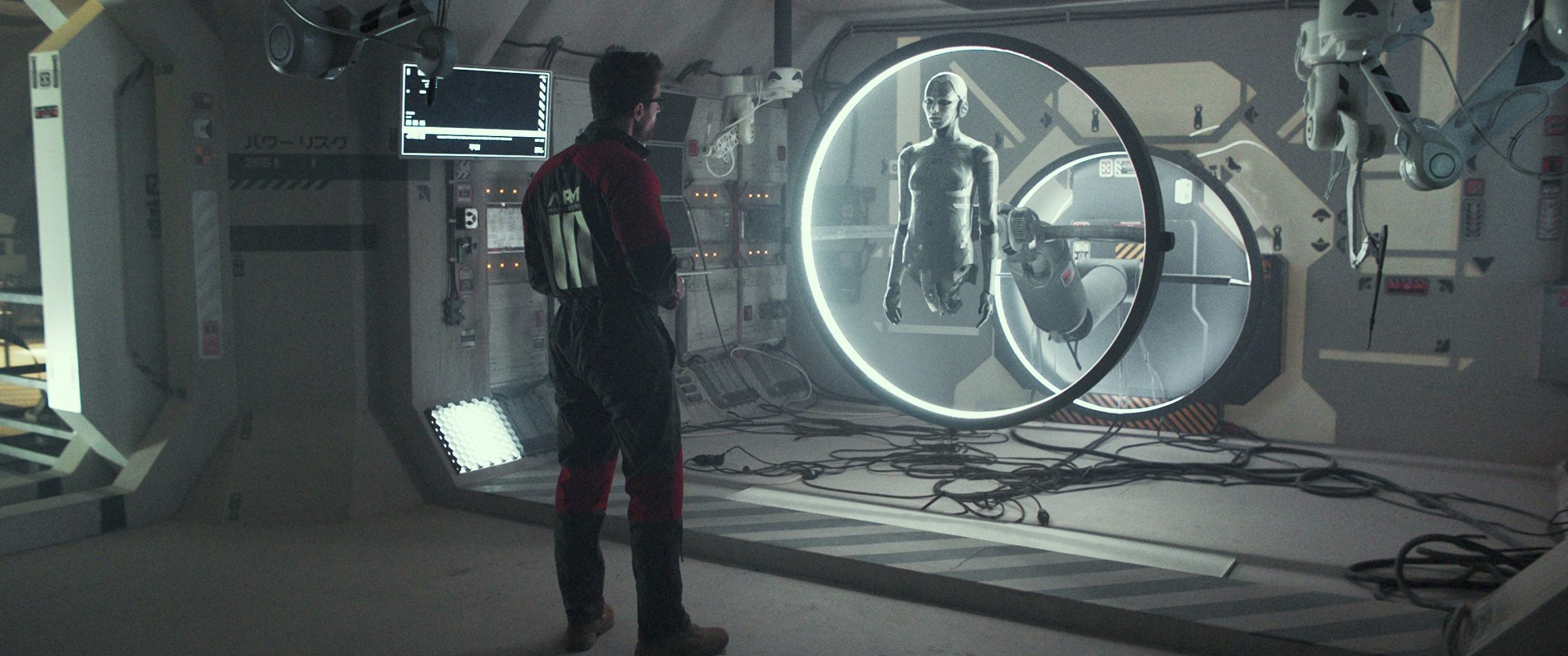
Archive is one of those small but heady sci-fi movies that adventurous moviegoers happen across years later, wondering why they’ve never heard of it before. In this case, it was one of the many films whose release schedules were upturned by the COVID pandemic, causing it to be released to video-on-demand and almost immediate obscurity. Theo James stars as George Almore, a man working at a secluded robotics workshop in Japan where only he and two prototypes named J1 and J2 reside. J2 is more advanced and human-like than J1, and George is working on a new, even more human-like prototype called J3 modeled after his wife Jules, who died in a car accident but whose consciousness endures through a death-defying but temporary technology called the Archive.

While the post-death possibilities of the Archive seem like the focus based on the title, the film spends more time on the (in my opinion) more interesting theme of robot perceptions. If a piece of machinery had a human-like personality and sentience like J2 does (at the level of a teenager according to George in the film), how would they grapple with their own obsolescence and the inevitability of being replaced by a newer model? Jealousy, anger, despair? Would such emotions be “real” enough to matter? It’s a fascinating study of the potential “feelings” of robots that have reached that gray area between being objects and individuals.

Like The One I Love or Infinity Chamber, this falls in that underseen niche of twisty stories that might have ended up as a Twilight Zone episode in years past but was able to get the feature film treatment. Despite a slow pace and a scene that blatantly borrows from Ghost in the Shell, the film is buoyed by the excellent James as the tortured protagonist, a snowy and atmospheric setting, and the seamless effects that bring his android “wife” to life. While the final twist has symbolic implications that metaphor lovers can dig into, it also somewhat undercuts the purpose of everything that preceded, so I suppose its effectiveness will depend on the viewer. Still, it’s a shame Archive didn’t get more attention.

Best line: (J3) “I’ve been dreaming a lot. Last night I… Well, I don’t know if I’m dreaming or remembering. Dreams do that, don’t they?”

Rank:  List Runner-Up

© 2022 S.G. Liput
764 Followers and Counting
Greyhound (2020)

11 Monday Apr 2022

Posted by sgliput in Movies, NaPoWriMo, Poetry, Reviews, Writing

≈ Leave a comment

Tags

Drama, Thriller, War

(Today’s NaPoWriMo prompt was a seemingly basic theme, a poem about something large, so the massive ocean made perfect sense.)

The ocean was a barrier mere centuries ago,
Immovable, impassable, impossible to overthrow.
It mocked our human efforts with indifferent distances,
Its furthest reaches only myths that man could never hope to know.

But even once we “conquered” it and put its edge to page,
It hardly made a dent upon its unpremeditated rage.
We may know where to sail and hark to what the compass says,
But none can quite predict this beast of overwhelming size and age.

The ships that are our power and our glory navally
Can do their best against the test that dwarfs the land’s reality.
They ply the waves that murder without hate or prejudice,
A tiny line of ants that crawl across the quicksand of the sea.
________________________________

MPA rating:  PG-13

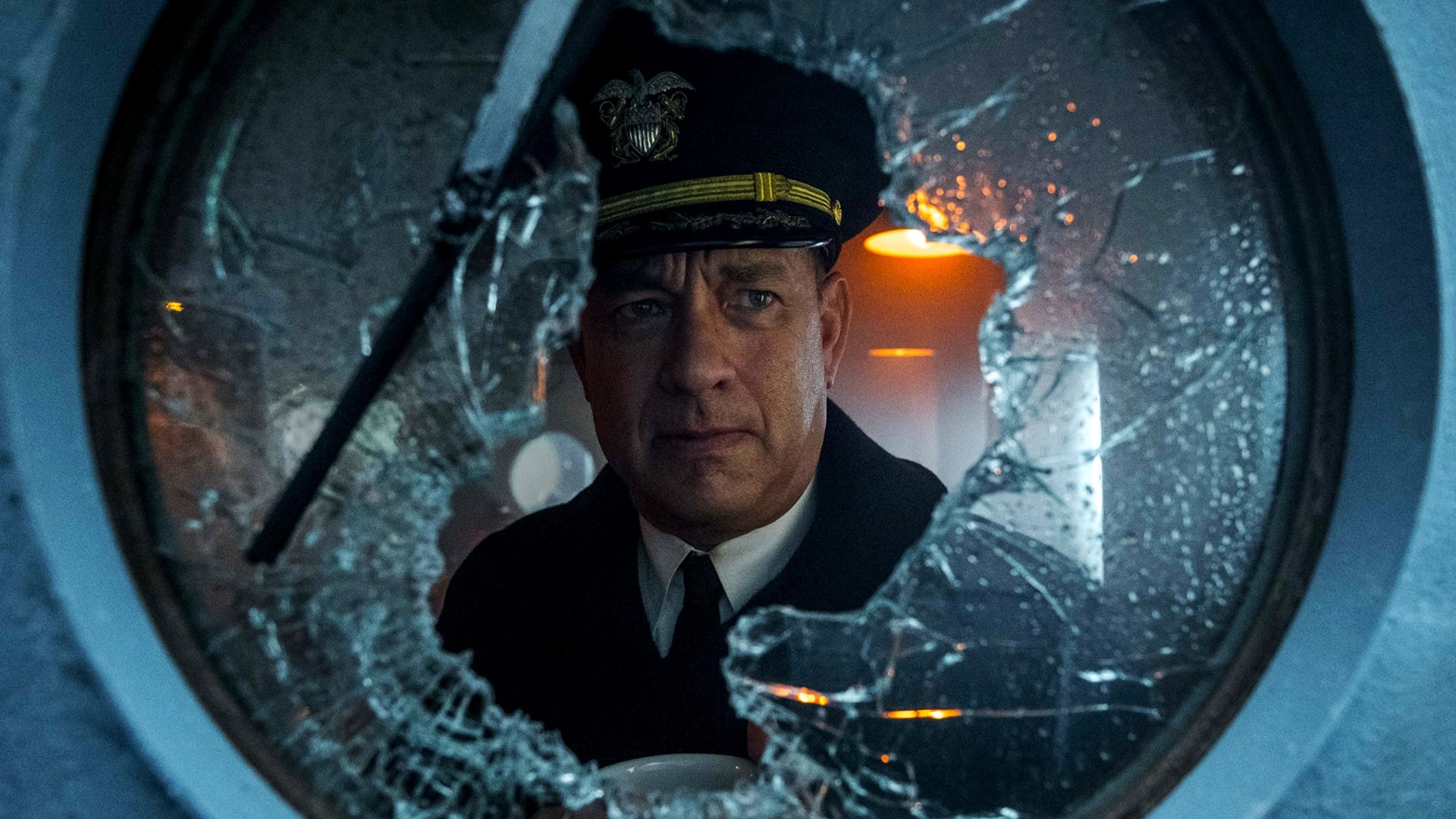
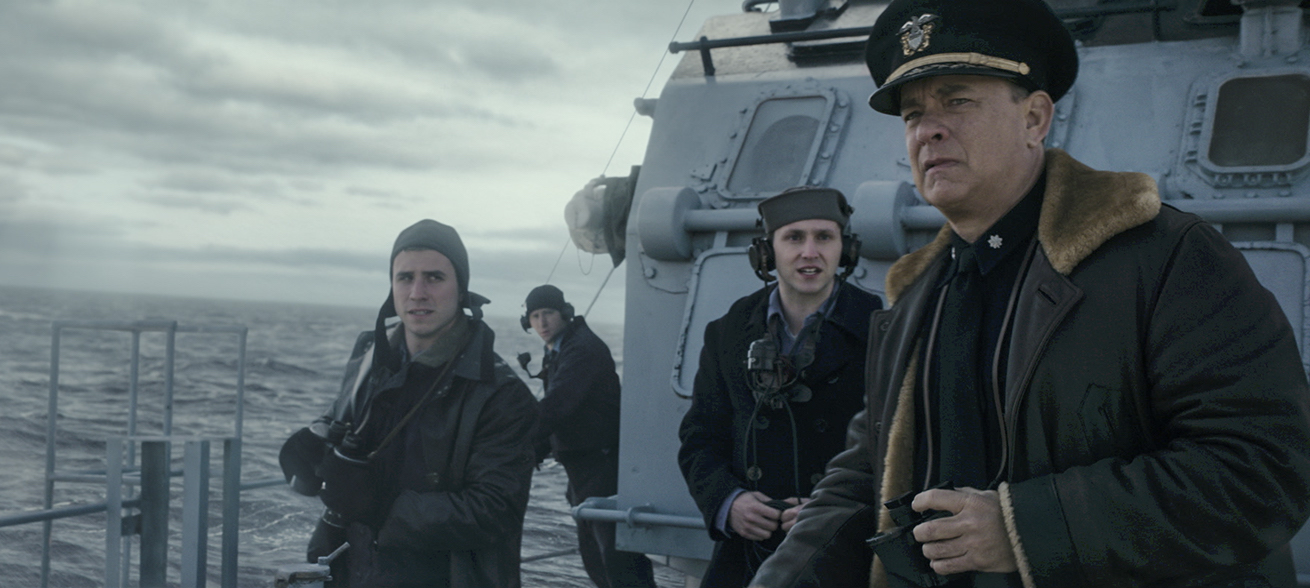
Like Finch, Greyhound was the other Apple TV+ film with Tom Hanks to convince me to subscribe to yet another streaming service. Based on C.S. Forester’s 1955 novel The Good Shepherd, the film is an intense journey across the Atlantic Ocean at the height of World War II, when German U-boats terrorized the ships trying to bring troops and supplies from the United States to beleaguered Europe. Hanks plays Captain Ernest Krause of the USS Keeling (a.k.a. Greyhound) and its supply convoy, and but for a brief flashback with his assumed wife (Elisabeth Shue), the whole action of the film takes place upon the storm-tossed seas with the constant threat of enemy torpedoes.

While the film earns high marks for realism with its authentic naval terminology, the weak script and characterization are rather thin. It’s a good thing then that Hanks is so committed to the role, forgoing the pirates of Captain Phillips in favor of Nazi wolf packs who taunt him over the radio as they pick off the ships he’s been tasked with protecting. Every loss is reflected in his weary but determined eyes, and the captain’s commitment is reflected in how he refuses to rest while the danger persists or celebrate death too much.

After all the waiting and worrying, it’s a cheer-worthy moment when the ships are able to land a blow on the submarines stalking them, and the film certainly highlights how the journey across the Atlantic was just as dangerous as what awaited soldiers on the other side. A taut and streamlined historical thriller, Greyhound owes much to Hanks, whose mixture of grit and religiosity in the role once more proves why we love him so.

Best line: (Cole, the executive officer, to Captain Krause) “What you did yesterday got us to today.”

Rank:  List Runner-Up

© 2022 S.G. Liput
764 Followers and Counting
Don’t Look Up (2021)

09 Saturday Apr 2022

Posted by sgliput in Movies, NaPoWriMo, Poetry, Reviews, Writing

≈ 1 Comment

Tags

Comedy, Drama

(Today’s NaPoWriMo prompt was for a nonet, a nine-line poem where the first line has nine syllables and then each subsequent line has one syllable less. That reminded me of a countdown, so this film immediately came to mind.)

There’s nothing to worry about here,
No reason to panic and fear.
Don’t stress out any longer.
Don’t be a fearmonger.
Your warnings are lies
That jump through hoops,
While I’ll be
Proven…
Oops…
________________________________

MPA rating:  R (for frequent profanity, plus nudity at the very end)

There was a flurry of unexpected opinions around Adam McKay’s latest socio-political satire Don’t Look Up, with many critics describing its climate-change doomsday metaphor as “smug,” “unfunny,” and “cynical.” They granted it a 55% Rotten rating on Rotten Tomatoes, which is very rare for a modern Best Picture nominee. So I had to check it out for myself to see just how insufferable the environmentalist finger-wagging would be, and it turned out to be everything I’d heard but also a bit more.

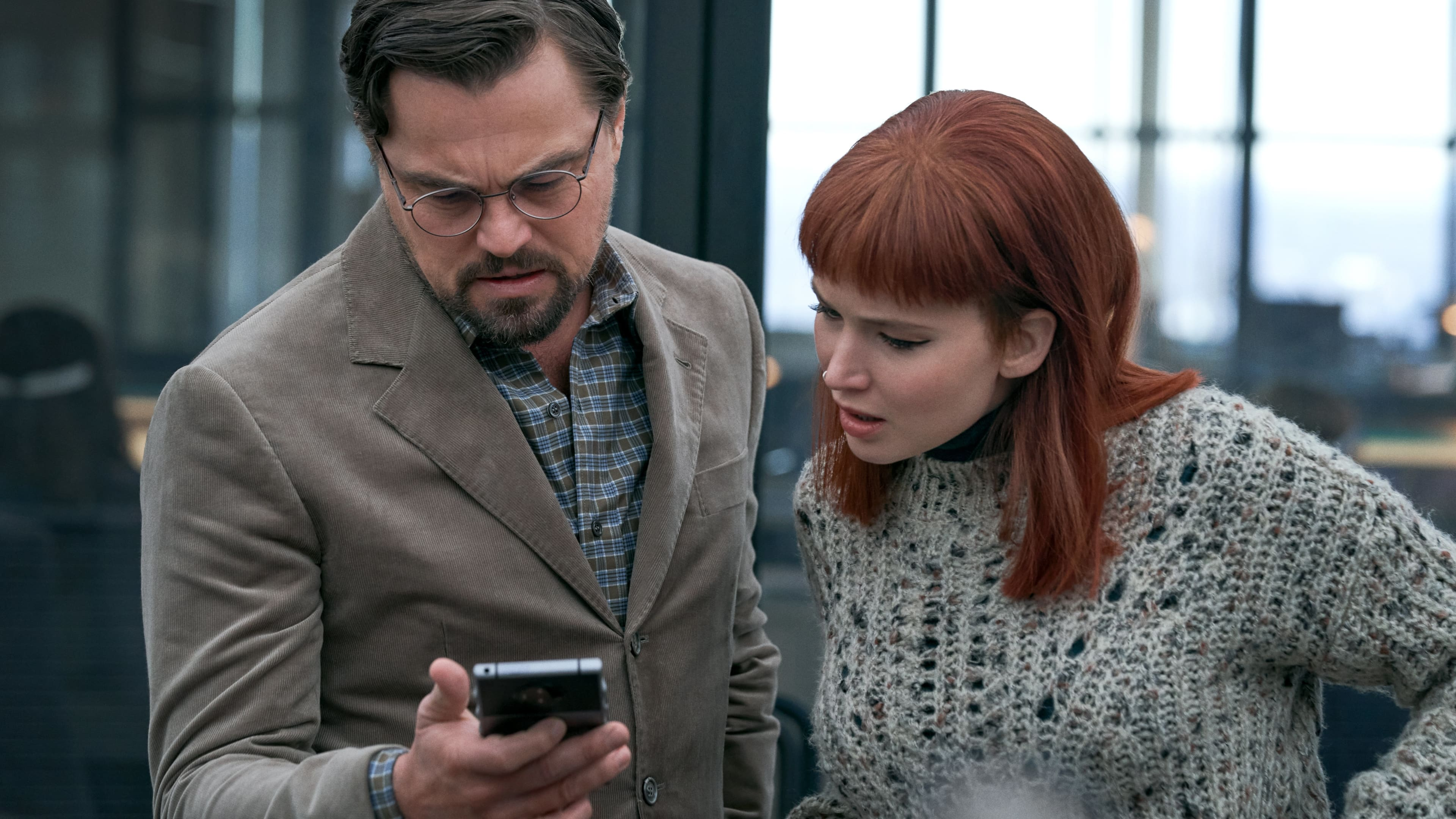
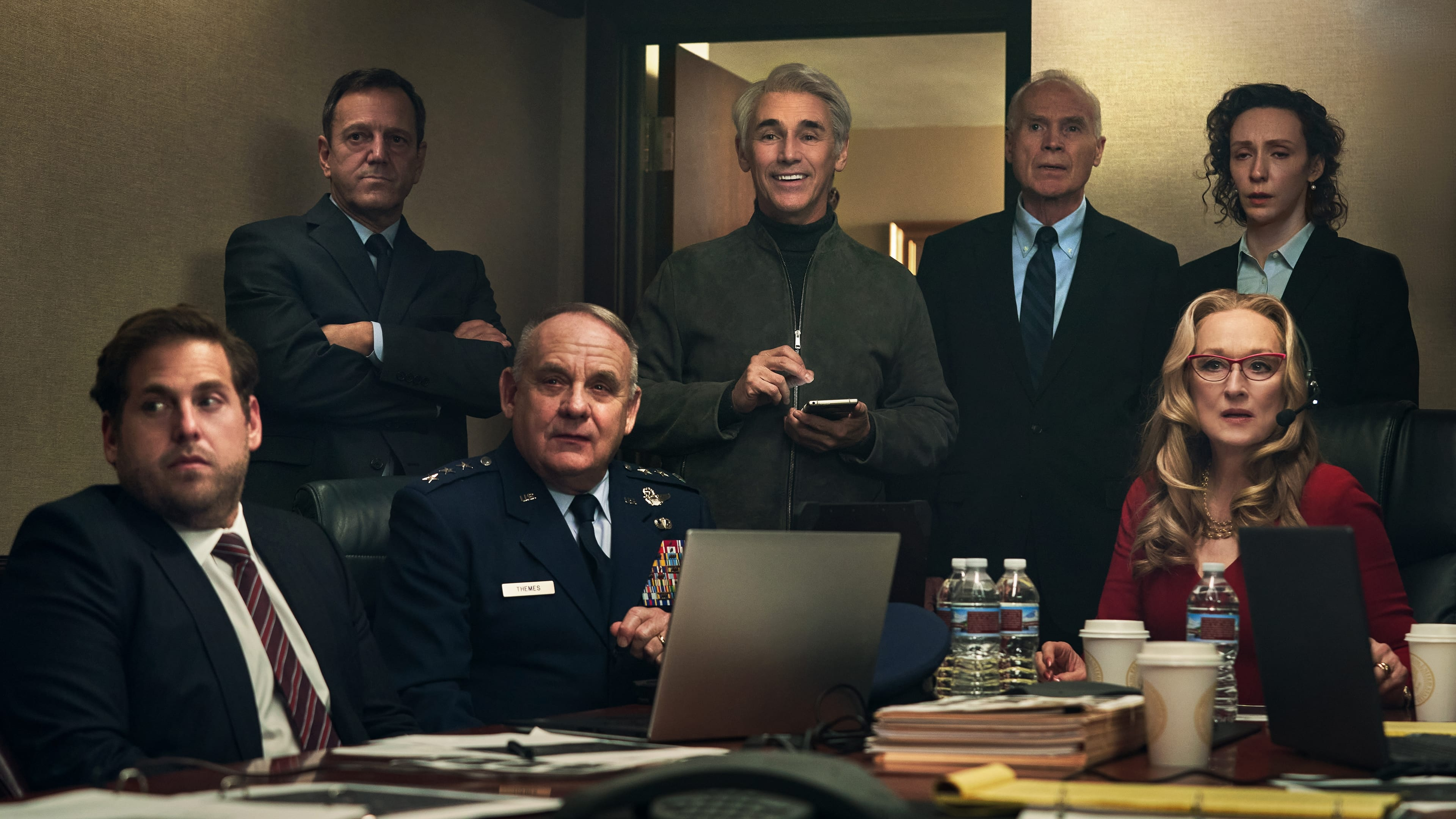
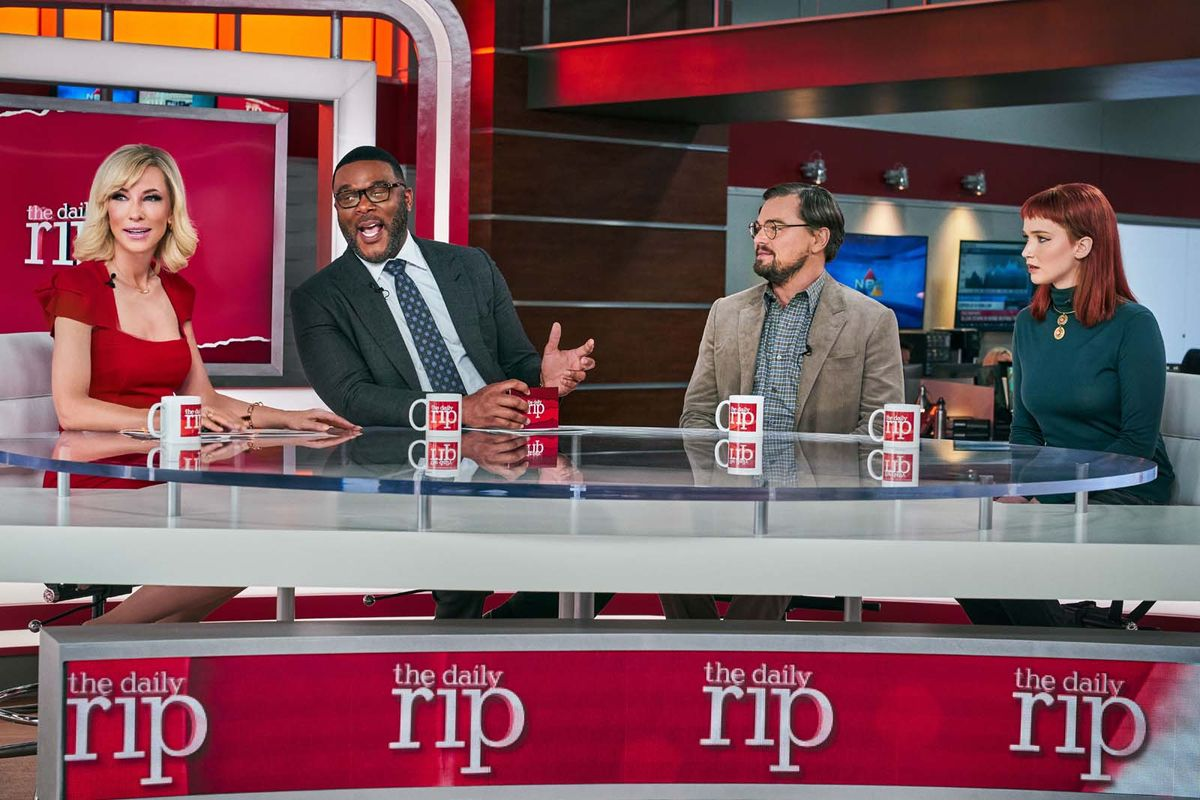
There’s certainly no denying the star power on display. Leonardo DiCaprio and Jennifer Lawrence play a pair of astronomers who discover both a new comet and the horrifying fact that it will collide with the earth within six months. As they try to publicize this oncoming extinction event, they are met with unexpected apathy from a slew of Oscar darlings, like Meryl Streep as the self-serving U.S. President Orlean, Jonah Hill as her arrogant son/Chief of Staff, Cate Blanchett and Tyler Perry as the hosts of a frivolous morning show, and Mark Rylance as a Jobs-like CEO of a tech giant. Where the scientists had hoped the world would unite against humanity’s common threat, they become increasingly exasperated that no one seems to take the danger seriously, eventually devolving into a slogan war between “Just Look Up” and “Don’t Look Up.”

The weirdest thing about Don’t Look Up to me is that its central conceit just doesn’t work that well as an analogy for climate change. The six-month deadline, the mathematical provability of space dynamics, the potentially straightforward solution to destroy the comet, the moment when the comet becomes clearly visible in the night sky – all of these serve to heighten the stubborn foolishness of the apocalypse deniers in a way that just doesn’t align with climate change warnings. Oddly, since it was conceived before the pandemic even began, the film’s theme of wide-scale denial rings truer in regards to COVID, partisan myopia, and the spin on both sides of the aisle, perhaps in ways that were not even intended by the left-leaning people behind it.

Despite its clear intentions, Don’t Look Up has so many targets to roast that some of its jabs can’t help but land, whether it be the feel-good distraction of daytime talk shows, the fickle immaturity of social media frenzies, the allure of short-term fame, or the single-minded confidence of elites who refuse to let others point out where they’re wrong. To be honest, it’s not particularly funny for a “comedy,” and while a few running gags earned a chuckle, it was somewhat uncomfortable sitting through two hours of blithe apathy and even sabotage, despite the impassioned rants given by both Lawrence and DiCaprio. It’s an experience that can be appreciated as the filmmakers’ intent but is more frustrating than enjoyable.

Yet in its final downbeat moments, which made me wonder if McKay had been inspired by the Nicolas Cage film Knowing, the frantic lampooning slows down with a surprisingly sincere prayer given by Timothée Chalamet’s hipster character Yule, and the few sympathetic characters all share in what really matters in the face of the apocalypse. It was a poignant coda that some may not appreciate, but I did. Don’t Look Up is a worthwhile parody of society despite its smug excesses and the fact that its ensemble alone probably earned it a Best Picture nomination that should have gone to Tick, Tick …Boom! But I won’t harp on that point; it’s not the end of the world.

Best line: (Yule, praying) “Dearest Father and Almighty Creator, we ask for Your grace tonight, despite our pride. Your forgiveness, despite our doubt. Most of all, Lord, we ask for Your love to soothe us through these dark times. May we face whatever is to come in Your divine will with courage and open hearts of acceptance. Amen.”

Rank:  Honorable Mention

© 2022 S.G. Liput
764 Followers and Counting

Daredevil (2003)

09 Saturday Apr 2022

Posted by sgliput in Movies, NaPoWriMo, Poetry, Reviews, Writing

≈ Leave a comment

Tags

Action, Drama, Superhero, Thriller

(Today’s NaPoWriMo prompt was for a poem detailing an alter ego, so a superhero seemed like a prime subject.)

My alter ego you may know;
His fame surpasses mine,
And yet for all our differences,
Our points of view align.
Where I avoid hostility,
My shadow boasts a spine.

Where I will yield at pressure’s grip,
He clings to his ideals.
The fear that dogs me in the day,
The night for him conceals.
And those who propagate that fear,
He follows on their heels.

The scars that scare the rest away,
My counterpart will earn.
And what he does for you and me
It’s best that we don’t learn.
Since bad for bad is good for good,
A blind eye I will turn.
_________________________

MPA rating:  PG-13 (though R for the director’s cut I saw)

I went into Daredevil fully expecting it to be bad since it has gained a reputation as one of the several lame Marvel adaptations that floundered before the MCU found its stride. I wasn’t aware that the director’s cut had a better reputation than the original, so it was just luck that I opted to see the more complete version of the story, before thirty minutes were unwisely cut for theaters. And I was pleasantly surprised by a comic book tale that may be imperfect but not nearly as dismal as I’d heard.

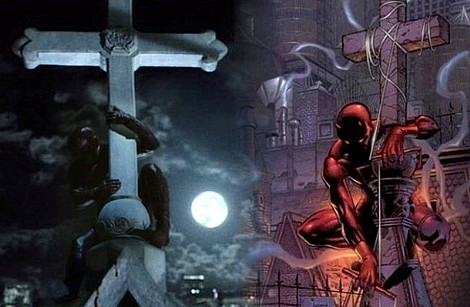
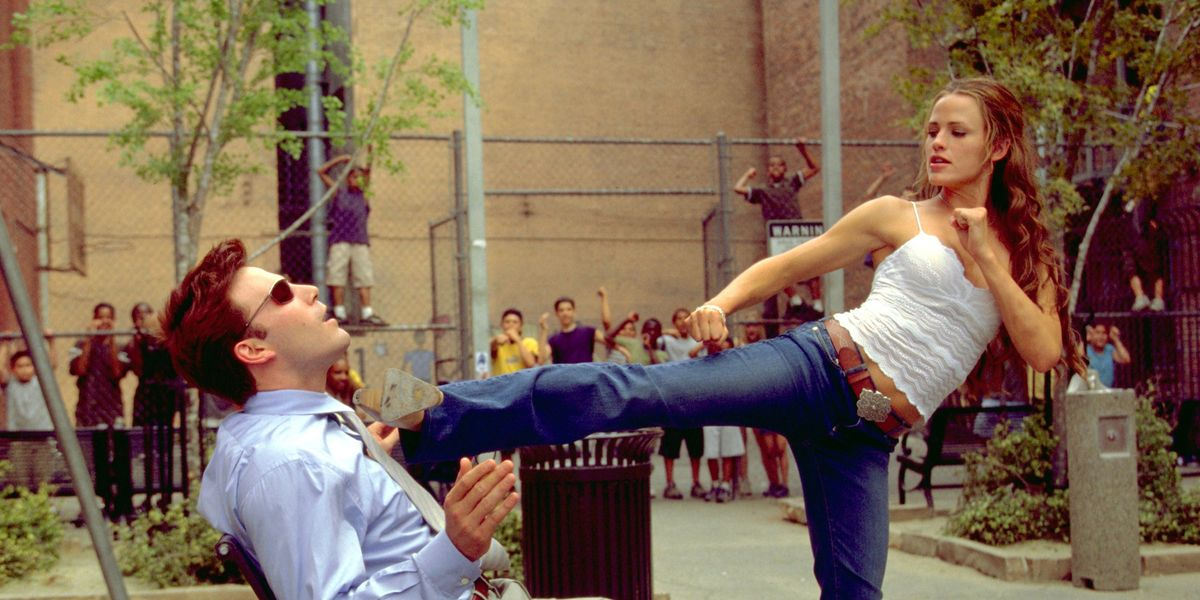
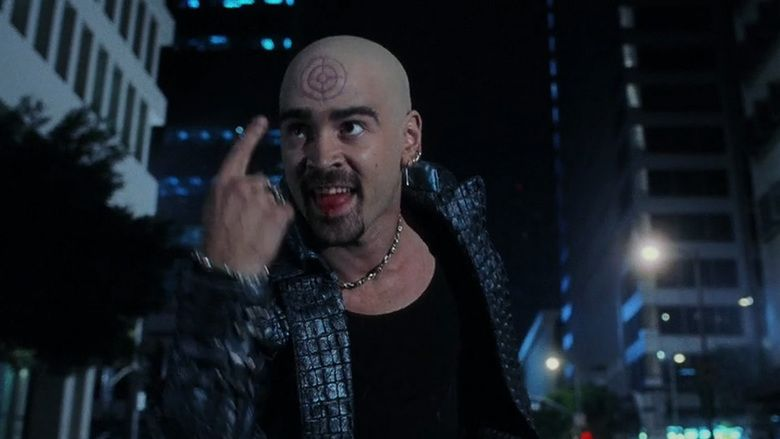
None of the actors are at the top of their game, but it’s still an impressive cast, including a pre-Batman Ben Affleck as “the man without fear” Matt Murdock, a pre-Happy Jon Favreau as his lawyer friend, and a pre-Penguin Colin Farrell as the ruthless assassin Bullseye. Jennifer Garner is decent as love interest and fellow fighter Elektra, while Michael Clarke Duncan steals every scene as the hulking Kingpin, putting his massive height and strength to good use as the imposing criminal mastermind. There are clear echoes of Daredevil’s comic book origins, such as the opening scene of the blind vigilante clinging to a church’s rooftop cross, and even though it plays itself straight with a dark and brooding tone to rival Batman (and minus the aversion to killing), there’s also definite cheesiness on display, with Farrell the worst offender, taking every opportunity to show how irredeemably evil he is.

With its obvious CGI moments and choppy fight editing, Daredevil doesn’t have the special effects polish we’ve come to expect of modern superhero films, so it’s a product of its time, when the first Spider-Man was the best template for a comic book film but was hard to replicate right. I was also surprised to hear the Grammy-winning “Bring Me to Life” by Evanescence, which was part of the soundtrack before the song had even been released. There are genuinely good elements in the mix, from Murdock’s movingly tragic childhood to the Catholic subtext to the brutal face-off between Daredevil and Kingpin. So Daredevil may have been a misfire at the time, but it simply paved the way for other Marvel films to be better. (I really ought to see the Netflix series now that the character seems to be entering the MCU in earnest.)

Best line: (Father Everett, to Matt as Daredevil) “Look, a man without fear is a man without hope. May God have mercy on you for your sins and grant you Everlasting Life, Amen. …I’m not too crazy about the outfit, either.”

Rank:  Honorable Mention

© 2022 S.G. Liput
764 Followers and Counting

Nightmare Alley (2021)

06 Wednesday Apr 2022

Posted by sgliput in Movies, NaPoWriMo, Poetry, Reviews, Writing

≈ Leave a comment

Tags

Drama, Thriller

(For Day 6 of NaPoWriMo, the prompt was to write an acrostic poem, not spelling out something with the first letter of each line but using the first word of each line to form some phrase or quote, so I chose a classic line of Walter Scott poetry that sums up so many dark stories.)

Oh, I know
What you desire,
A listening ear to stem your fear,
Tangled up and dire.
Web of anger, web of grief – either one
We fall into –
Weave around us
When they’ve found us,
First a lie, then gravely true.
We wish to believe, and we
Practice that creed, if only
To try to
Deceive our own greed.
_____________________

MPA rating:  R (mainly for language and scattered but graphic violence)

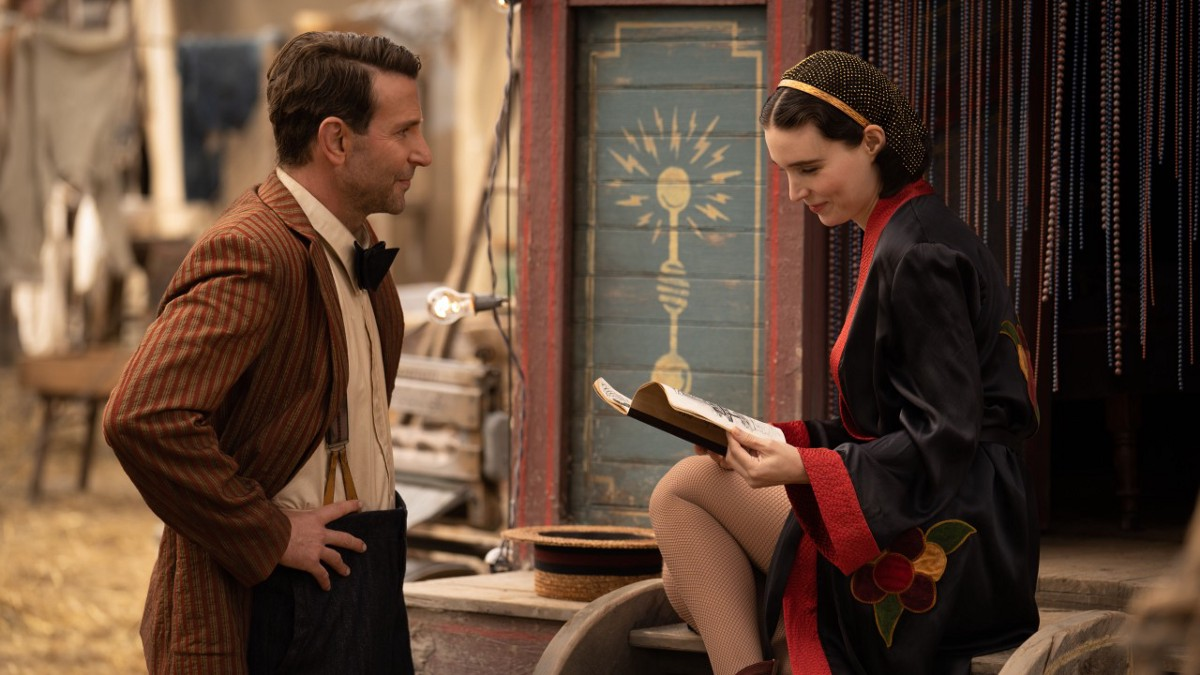
Every few years, there comes along a Best Picture nominee that dwells on the sordid saga of someone’s lies taken to an extreme, prompting me to sum up the theme with the Walter Scott quote from my acrostic poem above. The last was Parasite, and while Nightmare Alley didn’t achieve the same awards love of that film, it’s still a chillingly effective and handsomely-made period piece. Based on a 1946 film by William Lindsay Gresham, which already had a film adaptation in 1947, Nightmare Alley follows Stan Carlisle (Bradley Cooper) from an apparent murder scene to a Depression-era carnival, where he learns the ropes of mentalism and carny hokum from a pair of faux psychics (Toni Collette, David Strathairn). After wooing an assistant (Rooney Mara) and taking his own mentalist show on the road, he becomes entangled with aloof psychologist Dr. Lilith Ritter (Cate Blanchett) as they seek to pull off bigger and more dangerous cons.

I haven’t seen many of director Guillermo del Toro’s other films, but, comparing this one to Pan’s Labyrinth, Nightmare Alley is unique in its lack of supernatural elements but also shares some of his favorite excesses, like the dark and slick aesthetic and moments of bloody violence that could have been toned down. The noir production design is especially laudable, from the shadowy grotesquerie of the carnival to the art deco elegance of Dr. Ritter’s office, and it could have earned an Oscar or two if Dune hadn’t swept the technical categories.

I was dissatisfied at first with Cooper’s portrayal of Carlisle, who seemed rather wooden, like too much of a blank page, at the beginning. Yet as the film wore on through its overlong two and a half hours, I realized that was intentional, as Carlisle absorbed the carny wiles of his friends in the first half, gradually becoming more and more confident in himself and his powers of persuasion until his house of cards falls. And boy, does it fall hard! I was surprised that Cooper didn’t warrant a Best Actor nomination for the range of emotions his character undergoes, but all of the actors did an excellent job across the board.

Nightmare Alley is certainly a dark drama, with cold people doing cruel things as they weave that tangled web, but I found it surprisingly riveting (minus the violence). It’s hard to say whether a moral can be gleaned from the story beyond “trust no one,” but based on advice from Willem Dafoe’s seasoned carnival barker, one of the themes seems to be how people can know exactly the ruin where their path is leading and still fail to turn from it, first noticed in Carlisle’s growing alcoholism. I’m curious now to see how the original 1946 film compares, since I assume it’s largely the same story without the R rating. Ultimately, Nightmare Alley just couldn’t stand out enough in its crowded field, but it is an awards-caliber film nonetheless.

Best line: (Carlisle) “Sometimes you don’t see the line until you cross it.”

Rank:  List Runner-Up

© 2022 S.G. Liput
763 Followers and Counting
Finch (2021)

04 Monday Apr 2022

Posted by sgliput in Movies, NaPoWriMo, Poetry, Reviews, Writing

≈ 3 Comments

Tags

Drama, Sci-fi

(Today’s NaPoWriMo prompt was for a poem in the form of a poem prompt. Based on the examples given, I went beyond the limits of time and science fiction for this one.)

Where only his machines remain,
Go forward to the end of man.
Seek out the few who walk the plain,
Who rust and memory contain,
Who live beyond what humans can.

Inspect their logs or ask them straight
The last word they heard humans speak:
A dying breath, a parting hate,
Decision to “deactivate,”
The hopeful blending with the bleak.

Combine each word or final phrase
And let them marry in the mind.
Then add a touch of quiet praise
To those who still recall those days
And leave the poem for them to find.
______________________

Best line:  PG-13

I love Tom Hanks. Who doesn’t love Tom Hanks? Assuming he doesn’t do something wildly unexpected, like slap someone onstage, he has earned his place as one of America’s most beloved actors, and my VC and I would probably watch any new release if he’s in it. So it’s no surprise that a film placing him in a desolate future with only a robot and a dog promised the same kind of strong solo acting that Cast Away boasted. Finch doesn’t reinvent any wheels, but it’s one more proof that Hanks is an acting army unto himself.

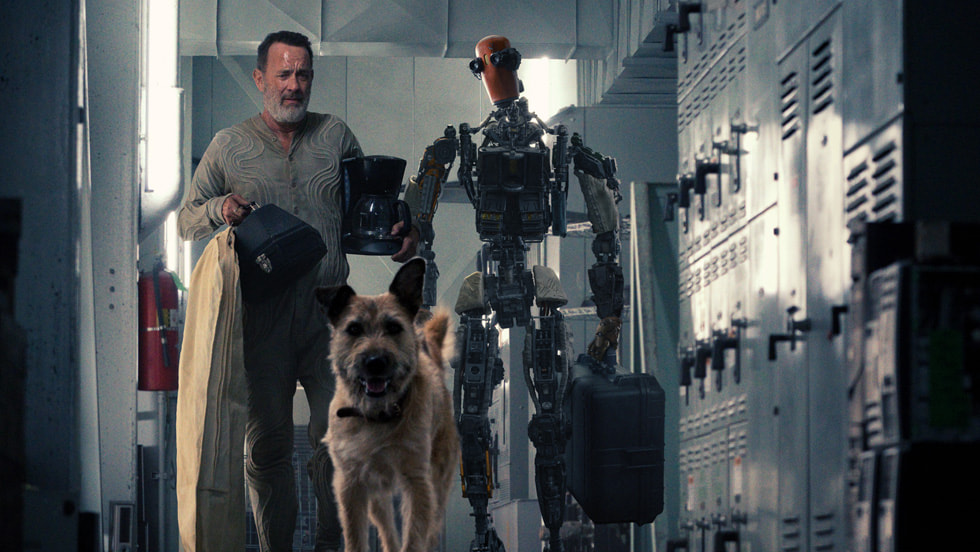
A lone survivor on a future earth scorched by an intensified sun, Hank’s Finch Weinberg shelters in an abandoned lab in St. Louis and scavenges for supplies with a radiation suit. Knowing his death is inevitable, he uses his robotics expertise to build a humanoid bot named Jeff (Caleb Landry Jones) to care for his dog Goodyear after he is gone. When a deadly storm approaches, Finch has no choice but to pack up his solar-powered RV and set out on a road trip west, where they at least have a chance at survival, all the while teaching the child-like Jeff how to drive, play, and live.

There’s natural charm in the interactions of Finch, Jeff, and Goodyear, with Finch as the exasperated parent trying to train his wards how to survive in the wasteland. Hanks is more than up to the task and fills his character with stoic pathos, while Landry’s vocal work and the seamless special effects humanize Jeff as an overeager caretaker to join cinema’s great lovable robots. There may not be that much unique about the downbeat, lone-survivor dystopia, but Hanks and his non-human companions nail a range of emotions to make Finch well worth a watch.

Best line: (Finch, angry at Jeff) “I know you were born yesterday, but it’s time for you to grow up.”

Rank: List Runner-Up

© 2022 S.G. Liput
763 Followers and Counting
Gattaca (1997)

03 Sunday Apr 2022

Posted by sgliput in Movies, NaPoWriMo, Poetry, Reviews, Writing

≈ Leave a comment

Tags

Drama, Sci-fi, Thriller

(Today’s NaPoWriMo prompt was for a Spanish glosa, which is a form that takes a quatrain from an existing poem and answers or explains it, using each line in the quatrain as the final line in each of the new poem’s four stanzas. I ignored the form’s usual ten-line stanza in favor of imitating the original poem; in my case, I used the third stanza from “Richard Cory” by Edwin Arlington Robinson, which has a short tale of crushing expectation that went well with this film.)

We praised a man geneticists had blessed,
His silver spoon from birth still carrying.
His wealth was how he outshone all the rest,
And he was rich—yes, richer than a king—

His skin was flawless, health beyond compare,
With only confidence upon his face.
He seemed at home and happy anywhere
And admirably schooled in every grace:

He had been bred to evermore excel,
In sport and science, art and book and string.
He barely seemed to try, and he did well;
In fine, we thought that he was everything.

But then the fateful day arrived to shock:
Our hero came in second in a race!
How had we fools allowed this laughingstock
To make us wish that we were in his place?
________________________

MPA rating:  PG-13

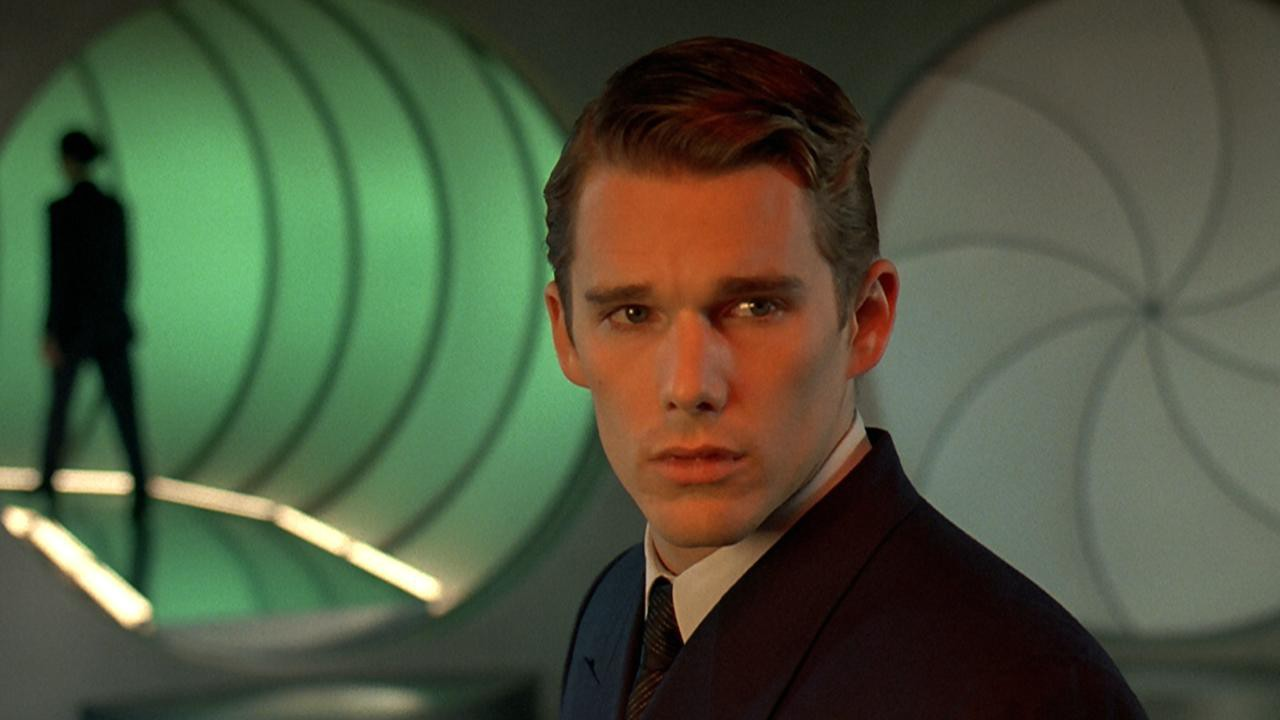
Science fiction is so often associated with massive spaceships, alien invaders, time travelers, and robot dystopias that it can be easy to overlook the more understated entries in the genre. Gattaca, the debut feature of Andrew Niccol, is a prime example of speculative fiction, presenting a believable vision of a world that’s taken some societal vice or virtue to an extreme. In this case, the search for perfection has led to unbridled eugenics, allowing mankind to literally breed its flaws away, for the privileged anyway.

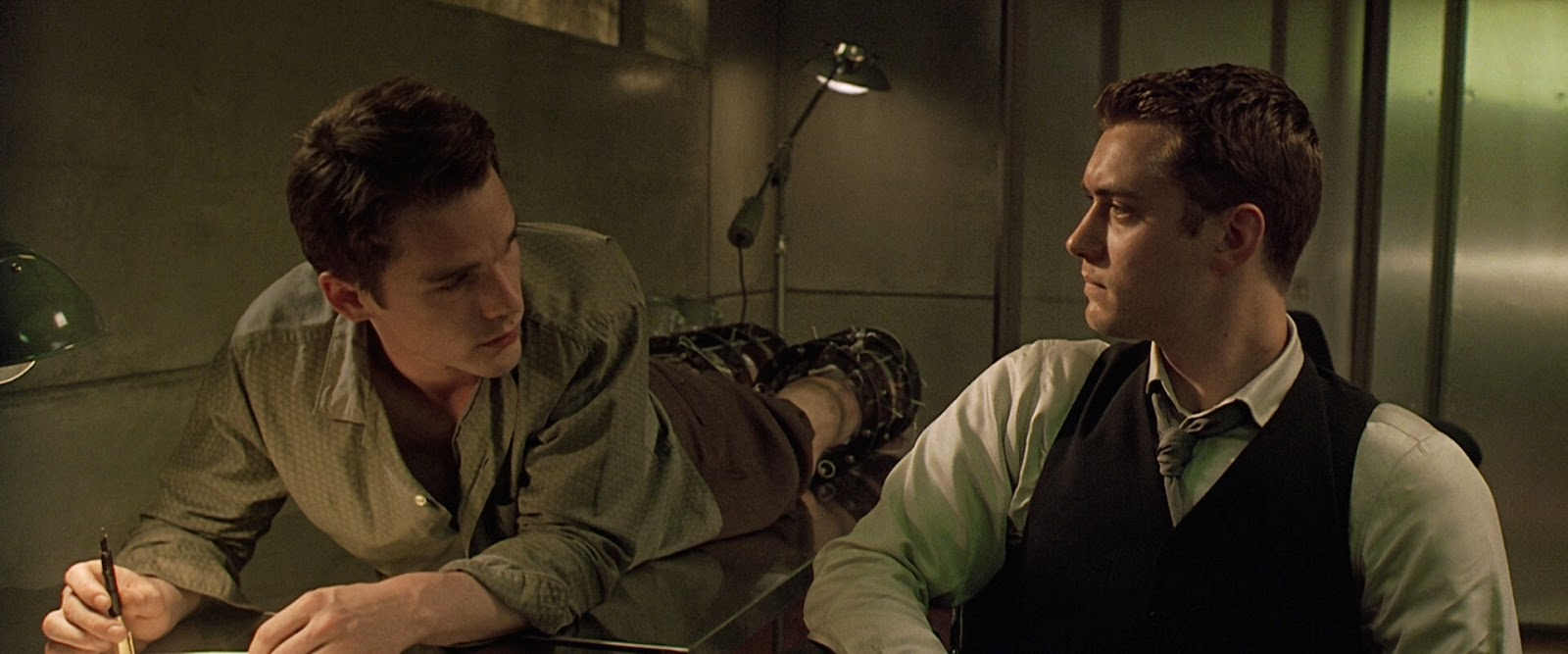
A young Ethan Hawke plays Vincent Freeman, the product of a natural birth or “In-Valid” whose projected probability of heart failure and mental problems immediately labeled him a failure from the delivery room. Dreaming of going to space despite never being able to physically qualify for such a high-value career, Vincent is connected with Jerome Morrow (Jude Law), a Valid whose near-perfect genetics do him little good since he’s in a wheelchair. Taking on Jerome’s identity via borrowed blood, urine, and DNA samples, Vincent fakes his way into the space program of Gattaca and seems poised to make his dream a reality until a murder on the premises results in his former identity becoming the prime suspect.

Niccol’s other work like The Truman Show and In Time (a film I enjoyed more than most) prove how skilled he is at setting determined protagonists against a system stacked against them, and Gattaca falls into that same mold. While it glosses over the rampant abortion necessary for this eugenics dystopia, there are a host of themes at play as Vincent rebels against his assigned potential:  the limitations of science in determining a person’s worth without regard for effort, the pressure on those who have every reason to excel and somehow still fall short, the risks of taking screening procedures and only-the-best scrutiny too far, the quiet desperation of those who don’t approve of a system but feel too powerless to change it.

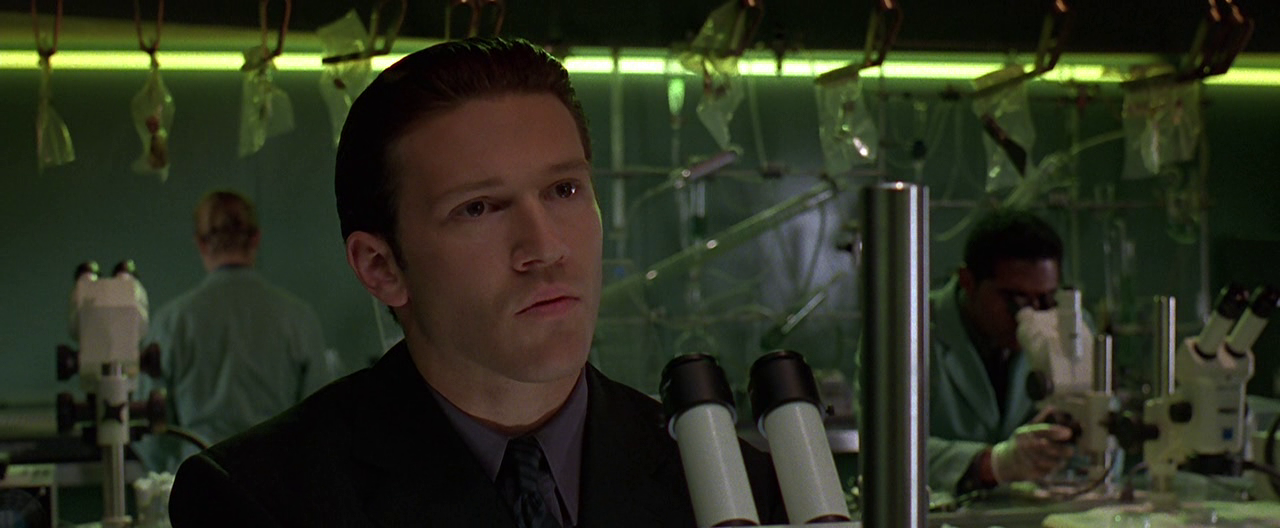
All of these themes play out while also keeping the murder mystery intriguing as two detectives (Loren Dean, Alan Arkin) rely on advanced DNA testing to track down the killer. Vincent’s clever efforts to conceal his true identity add to the tension, and his camaraderie with the real Jerome grows deeper with time as Jerome adopts Vincent’s dream as his own to an extent, even encouraging him to keep going when continuing their shared fraud gets riskier. Uma Thurman as Vincent’s love interest doesn’t have much to do, but she illustrates her own burdens of self-consciousness.

Gattaca is one of those films that deserves the clichéd accolades about “the triumph of the human spirit.” Michael Nyman’s score is subtly majestic and lump-inducing at key moments, and Vincent’s journey becomes a well-earned inspiration by the end. Despite warm reviews, it’s one more sci-fi winner that failed at the box office and deserves so much more attention than it got. Still, the film has already made an impact on the public perception of the potential prejudices of genetic engineering. From the advent of technologies like CRISPR to the danger of “common-sense” biases, its themes continue to be relevant twenty-five years later.

Best line: (Vincent) “They have got you looking so hard for any flaw that after a while that’s all that you see.”

Rank:  List-Worthy

© 2022 S.G. Liput
763 Followers and Counting
← Older posts
Newer posts →

Recent Posts

  • We Didn’t Start 2025 (Recap)
  • NaPoWriMo 2025 Recap (Finally)
  • Sonic the Hedgehog 3 (2024)
  • It Happened One Night (1934)
  • Spellbound (2024)

Recent Comments

associatesofshellymann's avatarassociatesofshellyma… on My Top Twelve La La La So…
Kit's avatarKit Nichols on Bonnie and Clyde (1967)
lifelessons's avatarlifelessons on Look Back (2024)
Carol Jackson's avatarCarol Jackson on The Thief of Bagdad (1940…
Stephen's avatarStephen on Love Story (1970)

Archives

  • January 2026
  • December 2025
  • May 2025
  • April 2025
  • March 2025
  • February 2025
  • January 2025
  • December 2024
  • May 2024
  • April 2024
  • March 2024
  • February 2024
  • January 2024
  • December 2023
  • November 2023
  • October 2023
  • September 2023
  • July 2023
  • June 2023
  • May 2023
  • April 2023
  • March 2023
  • February 2023
  • January 2023
  • December 2022
  • November 2022
  • October 2022
  • September 2022
  • August 2022
  • July 2022
  • June 2022
  • May 2022
  • April 2022
  • March 2022
  • February 2022
  • January 2022
  • December 2021
  • November 2021
  • October 2021
  • September 2021
  • August 2021
  • July 2021
  • June 2021
  • May 2021
  • April 2021
  • March 2021
  • February 2021
  • January 2021
  • December 2020
  • November 2020
  • October 2020
  • September 2020
  • August 2020
  • July 2020
  • June 2020
  • May 2020
  • April 2020
  • March 2020
  • February 2020
  • January 2020
  • December 2019
  • November 2019
  • October 2019
  • September 2019
  • August 2019
  • July 2019
  • June 2019
  • May 2019
  • April 2019
  • March 2019
  • February 2019
  • January 2019
  • December 2018
  • November 2018
  • October 2018
  • September 2018
  • August 2018
  • July 2018
  • June 2018
  • May 2018
  • April 2018
  • March 2018
  • February 2018
  • January 2018
  • December 2017
  • November 2017
  • October 2017
  • September 2017
  • August 2017
  • July 2017
  • June 2017
  • May 2017
  • April 2017
  • March 2017
  • February 2017
  • January 2017
  • December 2016
  • November 2016
  • October 2016
  • September 2016
  • August 2016
  • July 2016
  • June 2016
  • May 2016
  • April 2016
  • March 2016
  • February 2016
  • January 2016
  • December 2015
  • November 2015
  • October 2015
  • September 2015
  • August 2015
  • July 2015
  • June 2015
  • May 2015
  • April 2015
  • March 2015
  • February 2015
  • January 2015
  • December 2014
  • November 2014
  • October 2014
  • September 2014
  • August 2014
  • July 2014
  • June 2014
  • May 2014
  • April 2014
  • March 2014
  • February 2014
  • January 2014
  • December 2013

Categories

  • Blindspot
  • Blogathon
  • Christian
  • Movies
  • Music
  • NaPoWriMo
  • Poetry
  • Reviews
  • TV
  • Writing

Meta

  • Create account
  • Log in
  • Entries feed
  • Comments feed
  • WordPress.com

Recent Posts

  • We Didn’t Start 2025 (Recap)
  • NaPoWriMo 2025 Recap (Finally)
  • Sonic the Hedgehog 3 (2024)
  • It Happened One Night (1934)
  • Spellbound (2024)

Recent Comments

associatesofshellymann's avatarassociatesofshellyma… on My Top Twelve La La La So…
Kit's avatarKit Nichols on Bonnie and Clyde (1967)
lifelessons's avatarlifelessons on Look Back (2024)
Carol Jackson's avatarCarol Jackson on The Thief of Bagdad (1940…
Stephen's avatarStephen on Love Story (1970)

Archives

  • January 2026
  • December 2025
  • May 2025
  • April 2025
  • March 2025
  • February 2025
  • January 2025
  • December 2024
  • May 2024
  • April 2024
  • March 2024
  • February 2024
  • January 2024
  • December 2023
  • November 2023
  • October 2023
  • September 2023
  • July 2023
  • June 2023
  • May 2023
  • April 2023
  • March 2023
  • February 2023
  • January 2023
  • December 2022
  • November 2022
  • October 2022
  • September 2022
  • August 2022
  • July 2022
  • June 2022
  • May 2022
  • April 2022
  • March 2022
  • February 2022
  • January 2022
  • December 2021
  • November 2021
  • October 2021
  • September 2021
  • August 2021
  • July 2021
  • June 2021
  • May 2021
  • April 2021
  • March 2021
  • February 2021
  • January 2021
  • December 2020
  • November 2020
  • October 2020
  • September 2020
  • August 2020
  • July 2020
  • June 2020
  • May 2020
  • April 2020
  • March 2020
  • February 2020
  • January 2020
  • December 2019
  • November 2019
  • October 2019
  • September 2019
  • August 2019
  • July 2019
  • June 2019
  • May 2019
  • April 2019
  • March 2019
  • February 2019
  • January 2019
  • December 2018
  • November 2018
  • October 2018
  • September 2018
  • August 2018
  • July 2018
  • June 2018
  • May 2018
  • April 2018
  • March 2018
  • February 2018
  • January 2018
  • December 2017
  • November 2017
  • October 2017
  • September 2017
  • August 2017
  • July 2017
  • June 2017
  • May 2017
  • April 2017
  • March 2017
  • February 2017
  • January 2017
  • December 2016
  • November 2016
  • October 2016
  • September 2016
  • August 2016
  • July 2016
  • June 2016
  • May 2016
  • April 2016
  • March 2016
  • February 2016
  • January 2016
  • December 2015
  • November 2015
  • October 2015
  • September 2015
  • August 2015
  • July 2015
  • June 2015
  • May 2015
  • April 2015
  • March 2015
  • February 2015
  • January 2015
  • December 2014
  • November 2014
  • October 2014
  • September 2014
  • August 2014
  • July 2014
  • June 2014
  • May 2014
  • April 2014
  • March 2014
  • February 2014
  • January 2014
  • December 2013

Categories

  • Blindspot
  • Blogathon
  • Christian
  • Movies
  • Music
  • NaPoWriMo
  • Poetry
  • Reviews
  • TV
  • Writing

Meta

  • Create account
  • Log in
  • Entries feed
  • Comments feed
  • WordPress.com

Blog at WordPress.com.

  • Subscribe Subscribed
    • Rhyme and Reason
    • Join 814 other subscribers
    • Already have a WordPress.com account? Log in now.
    • Rhyme and Reason
    • Subscribe Subscribed
    • Sign up
    • Log in
    • Report this content
    • View site in Reader
    • Manage subscriptions
    • Collapse this bar
 

Loading Comments...