The mind has many corners in its many-wrinkled maze, To hide from heavy burdens that it cannot hope to raise. The layers of its labyrinth stretch to depths we cannot guess, And how deeply we flee depends upon our yesterdays.
While most of us can cope with just the top tiers meant for stress, The world at its most wicked makes us seek a dark recess. And if we lose our way, the dark that darkness drove us to May keep us from escaping our escaping in excess. ________________________
MPA rating: R (for violence, language, and brief nudity)
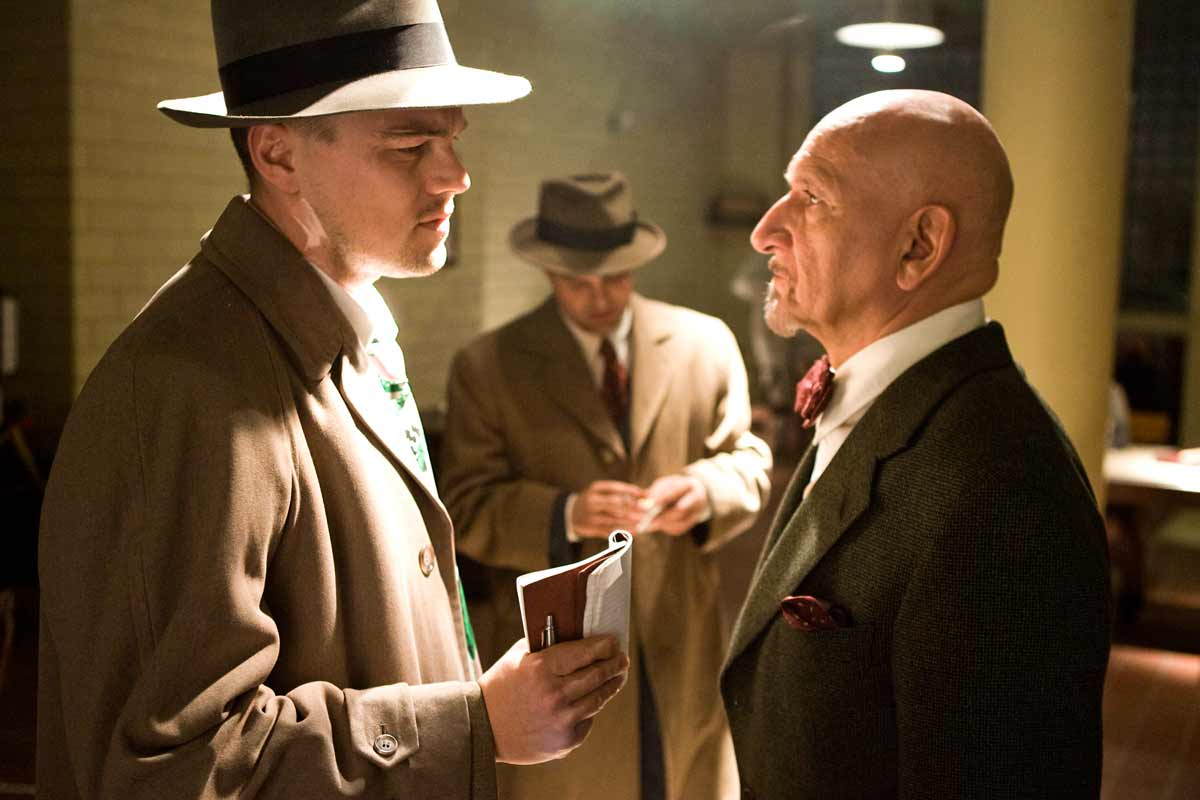
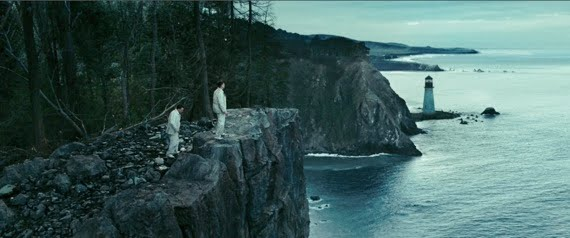
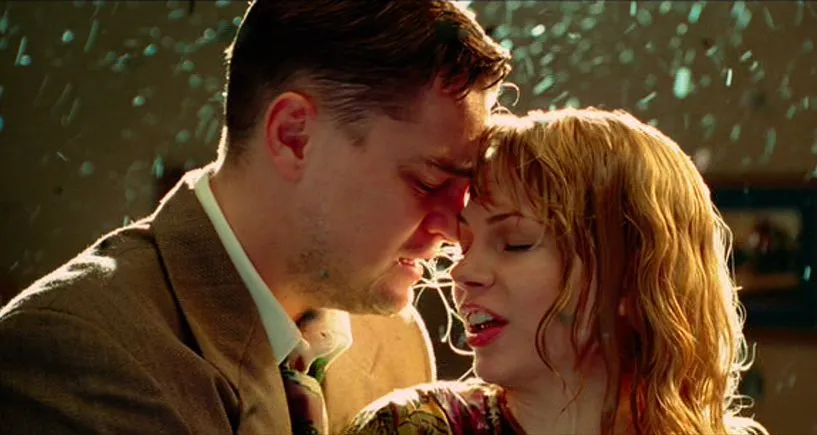
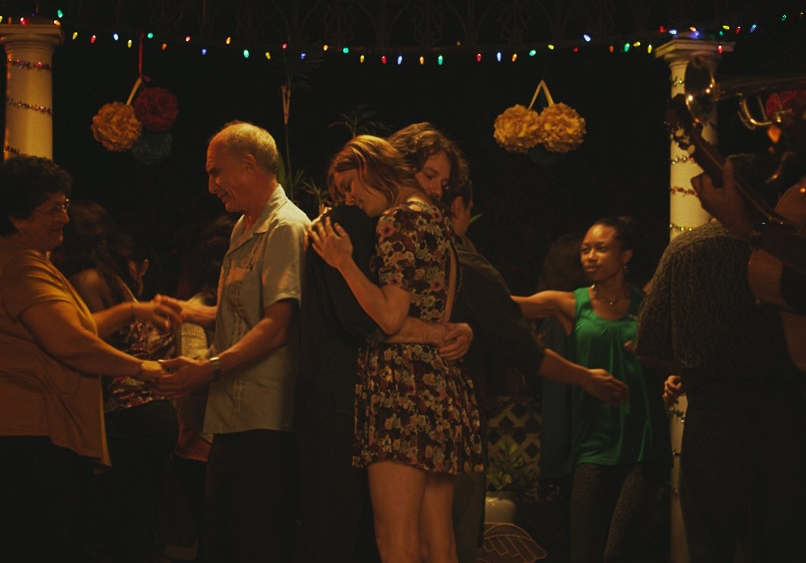
A Merry belated Christmas to all! I may have given up on reviewing all my 2022 Blindspots before the end of the year, but I think I can at least watch them all before year’s end. The reviews will catch up in good time. To be honest, I haven’t seen many Martin Scorsese movies, so I figured I should address that by starting with the one that seemed to have the most intrigue to it. Based on Dennis Lehane’s novel, Shutter Island is a psychological thriller that thrives on its foreboding atmosphere and strong performances, even if it ends up feeling like a mid-tier M. Night Shyamalan plot.
Leonardo DiCaprio delivers an intense performance as U.S. Marshal Teddy Daniels, who arrives with his new partner Chuck (Mark Ruffalo) to the titular island’s Ashecliffe Hospital for the criminally insane to investigate a recently escaped prisoner/patient. Despite requesting their help, the hospital’s head psychiatrist Dr. Cawley (Ben Kingsley) is hesitant to divulge certain information to the marshals, even as a hurricane moves in to wreak havoc on the island. As Daniels becomes more and more haunted by his own past traumas, he begins to question reality and what kind of conspiracy he has come to confront.
It’s a bit surprising that, despite its acclaimed director and star, Shutter Island failed to generate any awards nominations, aside from a National Board of Review nod. Whether you connect with the story or not, there’s no denying the skill with which it was made: the dingy lighting, the ominous cinematography, the subtle performances. Inception was easily DiCaprio’s better puzzle-box film that year, but it’s still interesting that this film couldn’t snag a single nomination.
I was rather shocked while admiring an especially poignant portion of the musical score as I realized that I had heard it before in another film: “On the Nature of Daylight” by Max Richter added the same emotional gut punch to the ending of Arrival (far more effectively, in my opinion) and other films and TV shows besides. I didn’t realize till afterward that this track was not original to either film or that the entire soundtrack of Shutter Island comprised pre-released classical music.
Perhaps it didn’t help that I had some idea of what the film’s key twist would be. I credit the screenplay for still keeping me guessing and wondering if I was right or not, but yes, I was right. Not to say the film’s reveal wasn’t still effective and heartbreaking, but it didn’t have the same punch as something completely unforeseen. Overall, Shutter Island reminded me a bit of Nightmare Alley in its masterfully composed story and dark setting that I appreciated without being truly drawn into, probably because of its ending clearly designed to foster thoughtfulness in the audience rather than satisfaction. But it’s still an excellent genre piece ripe for theorizing that will no doubt reward further rewatches, which could perhaps raise my opinion of it even more.
Best lines: (Rachel Solando) “People tell the world you’re crazy, and all your protests to the contrary just confirm what they’re saying.” (Teddy) “I’m not following you, I’m sorry.” (Rachel) “Once you’re declared insane, then anything you do is called part of that insanity. Reasonable protests are denial, valid fears paranoia…” (Teddy) “Survival instincts are defense mechanisms.” (Rachel) “You’re smarter than you look, Marshal. That’s probably not a good thing.”
If life were like a recipe, We’d follow every step and see If what we’ve done or tried to do Produced the proper cake or stew Or coq au vin or cordon bleu Or tonkatsu or what-have-you.
We’d quickly know where we went wrong, Like where the salt’s a bit too strong Or where the spice got out of hand, Where fresh is favored over canned Or where the flavor grew too bland. It would be simpler if pre-planned.
But life’s not like a recipe. More often, it’s a mess, and we Must guess on times and quantities, Ingredients and potencies. And sometimes we pair fish with cheese And wish we had more expertise.
But trial and error bear their fruits (Ideally fending off lawsuits), And soon the recipe is clear In retrospect, without veneer. Sometimes it takes a whole career To be the chef who cooks by ear. _________________________
MPA rating: R (solely for language)
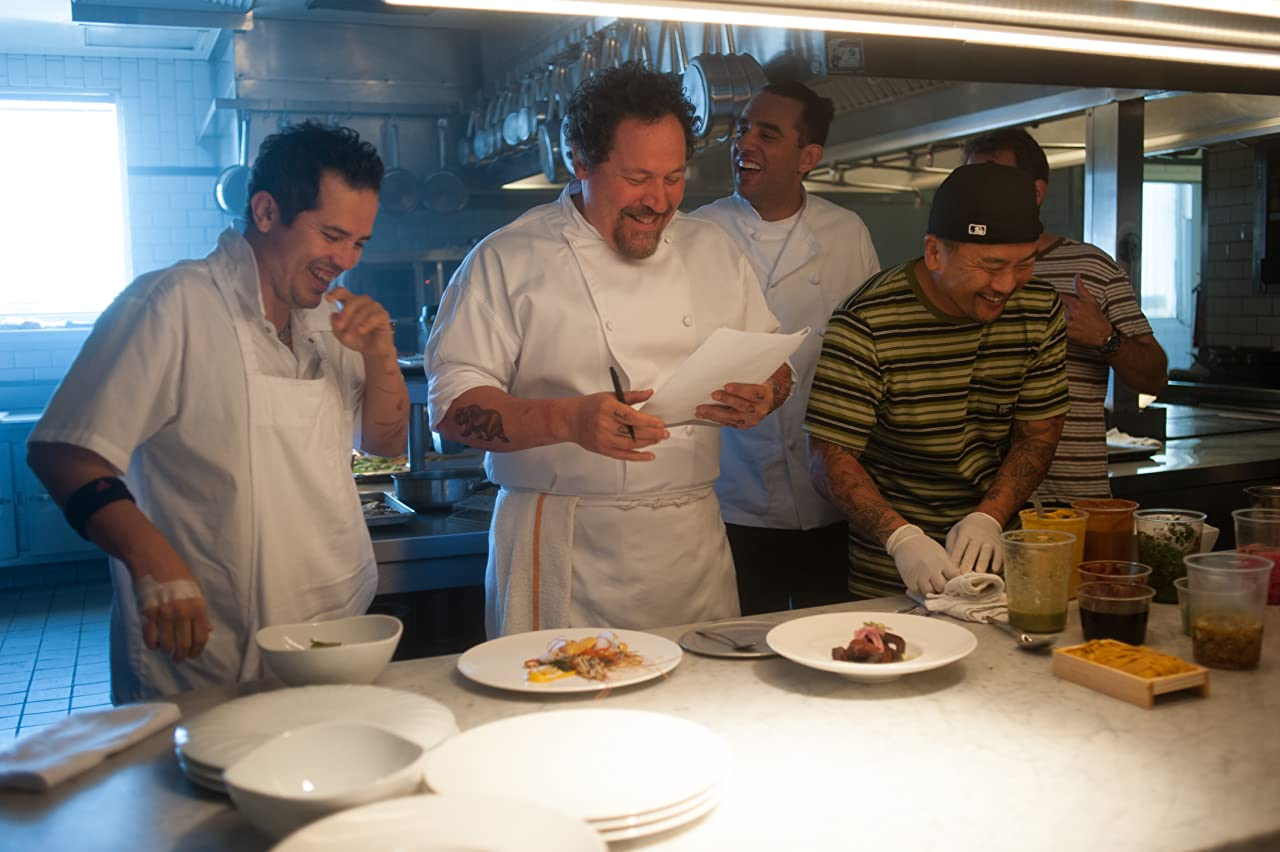
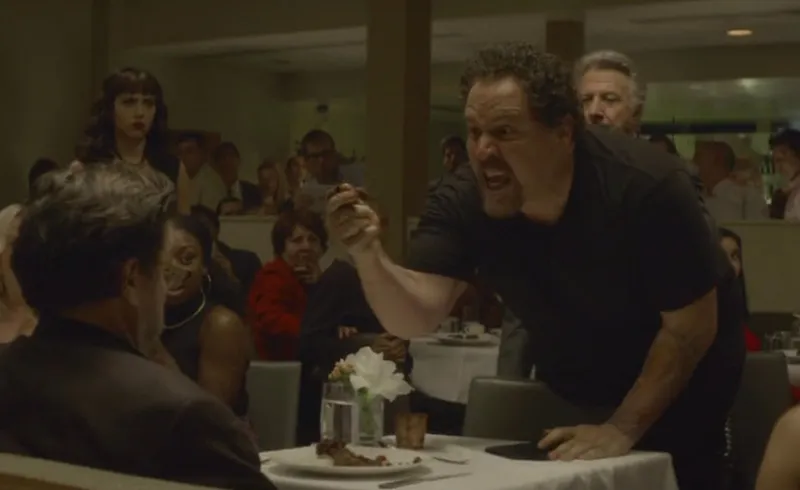
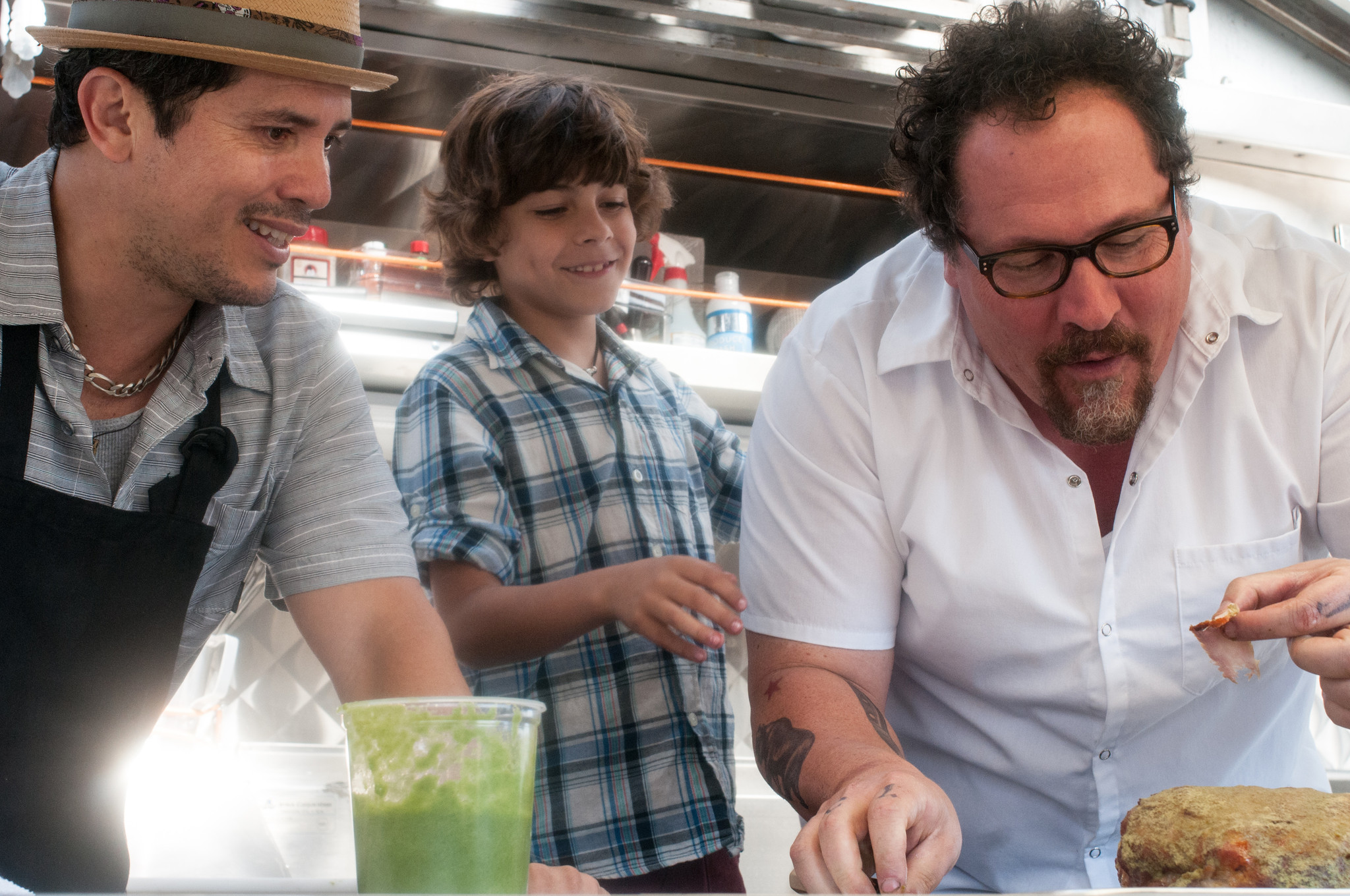
As December progresses, I feel like I’m in a race to see if I can cram the rest of this year’s Blindspots into the weeks remaining. Writer’s block doesn’t help, but a good movie certainly does. Chef has long been in my backlog as a widely lauded film that I just never got around to watching until now. Trained and co-produced by food truck chef Roy Choi, director Jon Favreau also plays Carl Casper, the head chef of a distinguished restaurant in L.A. that is sorely in need of a positive review from a critical blogger (Oliver Platt). Yet when Carl runs afoul of his employer (Dustin Hoffman) and makes a highly public mistake, he is forced to revamp his career by trying something new, namely opening a Cuban food truck that might just bring him closer to his son Percy (Emjay Anthony) and ex-wife Inez (Sofia Vergara) along the way.
Chef definitely seems like a film tailored for me. Not only has my family long been faithful Food Network viewers, but I even owned and operated my own food cart business, selling hot dogs for a grand total of three months. I’ve probably told this story on the blog before, but it’s one that I often look back on as a huge mistake. So I had mixed feelings watching Favreau’s Carl find almost immediate success with his venture; there is vicarious satisfaction at seeing someone else succeed, mixed with a tinge of bitter jealousy whispering “It wouldn’t have been that easy. He would have needed more permits.” But I digress. The satisfaction was louder anyway.
As a food lover, I was delighted by the delectable dishes throughout the film, from a sumptuous pasta Carl concocts as a sort-of date night to a gourmet grilled cheese sandwich that Carl’s son doesn’t fully appreciate. The love of food infuses much of the story, especially as Carl tries to instill his own passion into his son, telling him of the joys of New Orleans beignets or urging him to never grow complacent in serving anything but the best. Plus, despite my earlier complaint, there’s a likable genuineness to the script as well, such as the waggish kitchen banter with Carl and his sous chefs (John Leguizamo, Bobby Cannavale). That also extends to the relationships; Percy craves the attention of his dad, yet Carl is far from an absentee father, just constantly distracted, so it’s easy to see how he might think he’s doing enough as a dad. Their mutual bonding over food and the work that goes into it is a joy to watch.
Chef does have its flaws, taking a little too long with the set-up before the food truck idea gains steam, and, beyond some awkward scenes played for laughs, it’s a prime example of a film that doesn’t need its abundance of F-bombs, since it would make a solid family film without them. It was nice seeing cameos from the likes of Amy Sedaris and Favreau’s Iron Man co-stars Robert Downey Jr. and Scarlett Johansson, though it was odd seeing him flirt with the latter. Happy Hogan and Black Widow? I can’t see it. Despite all this, Chef has all the culinary love of a passion project and boasts an all-around feel-good ending that is likely to leave any viewer smiling. It’s yet another Blindspot I’m glad to finally have seen, if only for that grilled cheese recipe I’m totally going to try.
Best line: (Chef Carl Casper, to his son) “I may not do everything great in my life, but I’m good at this. I manage to touch people’s lives with what I do, and I want to share this with you.”
We think of scars as plain to see, Disfigurements of normalcy, And never could we guess the pain Of people who do not complain.
While many bare and air their hurts, Both recluses and extroverts, With time they tend to hide regret And cover what they can’t forget.
Both the mount and molehill end, And yet the tolls they take depend On what we each have faced before And whether we can take much more.
The world is not known for its heart; The people in it must do that part, To take the scars concealed so well And show the heaven beyond the hell. __________________________
MPA rating: R (for much language and some sexual references)
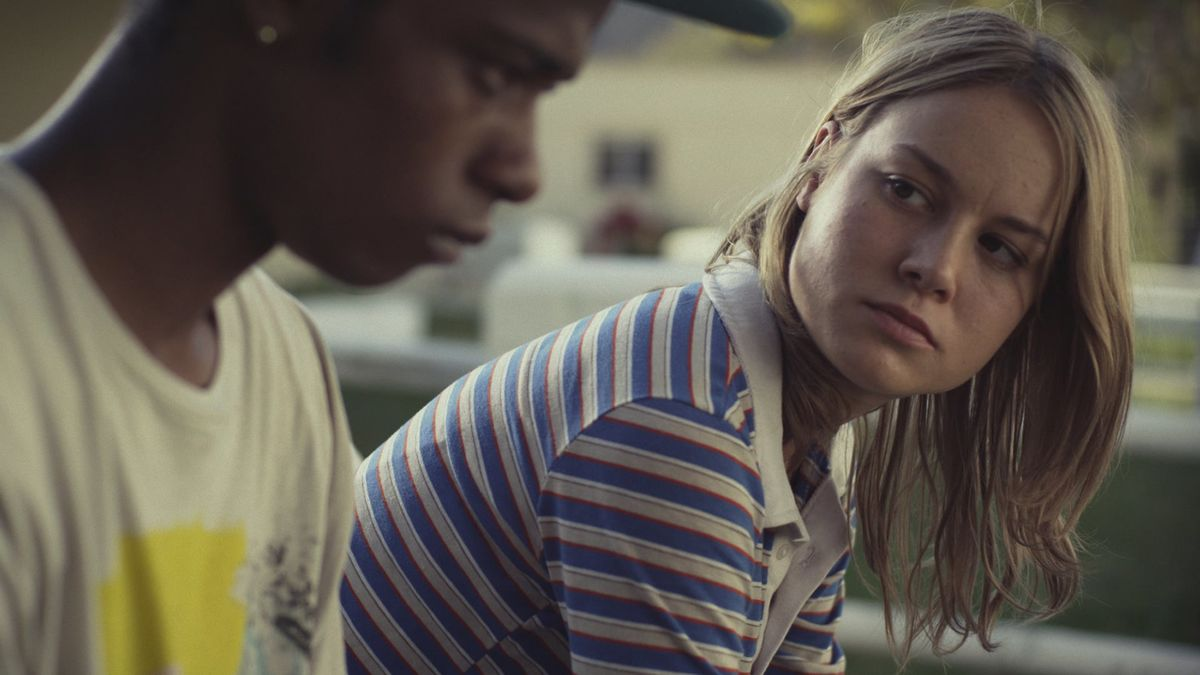
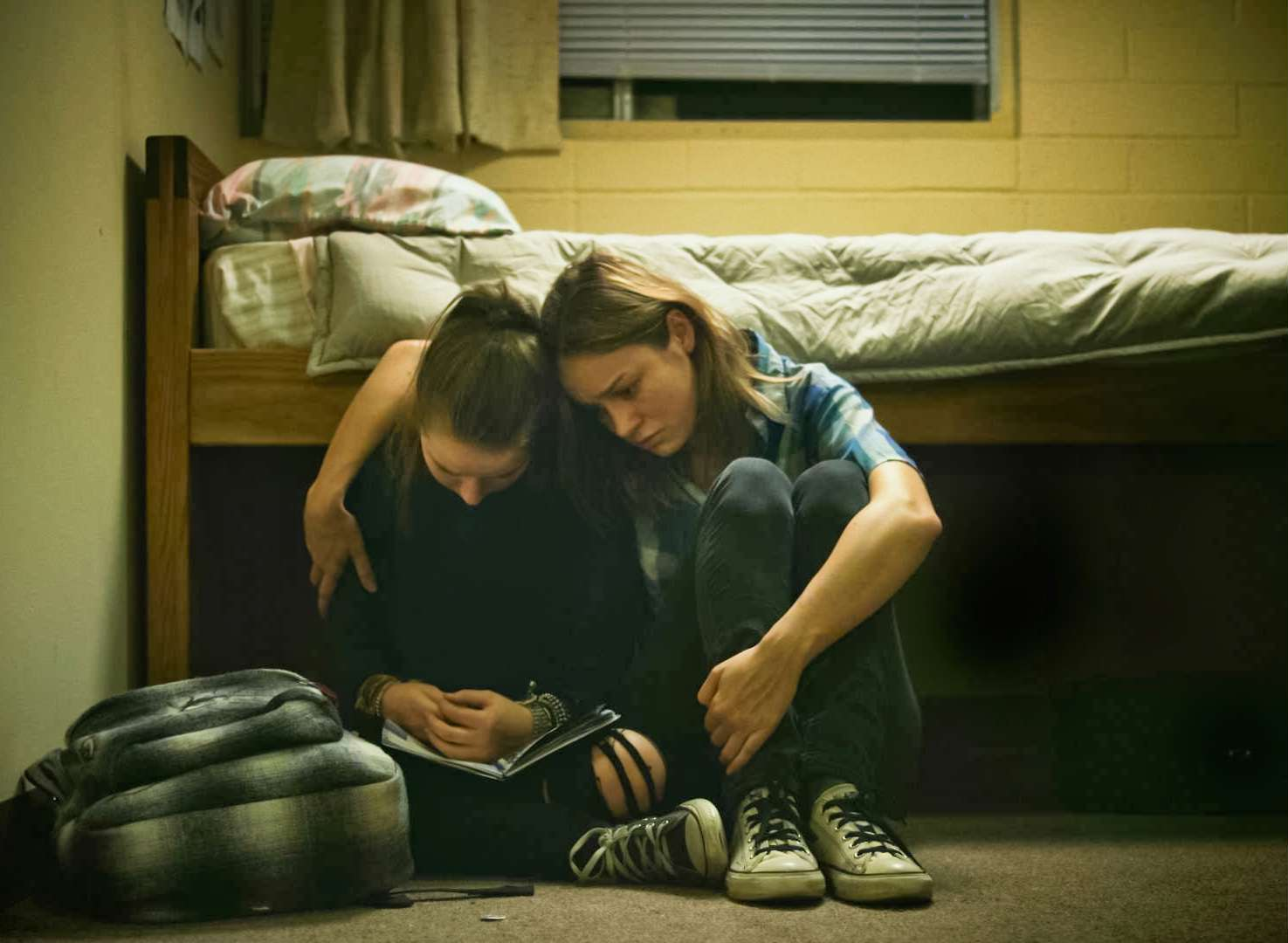
The end of the year is fast approaching, but I haven’t yet given up on finishing my Blindspot series. Short Term 12 earned a place on the list mainly because I was curious to see so many now-famous stars in what I might call an “incubator film.” I would compare it to 1983’s The Outsiders, which was a vehicle for multiple big-name actors before they were famous, such as Tom Cruise, Patrick Swayze, and Rob Lowe. Short Term 12 likewise highlighted the skills of Brie Larson, Lakeith Stanfield, and Rami Malek years before they were Oscar contenders, not to mention writer-director Destin Daniel Cretton.
Expanding Cretton’s own short film and based on his experiences working at a group home for troubled teens, the film is a masterwork of empathetic storytelling. A story of kids overcoming trauma could so easily have become maudlin or trite or else devolved into soul-crushing despair, but somehow the script tows the line between realism and hope. Larson plays Grace Howard, a line worker at the titular group shelter whose responsibility, as she tells new recruit Nate (Malek), is to only give the kids there a safe place, not to be their therapist or friend. Yet for teenagers struggling with distrust, abuse, and anxiety, that safe place and the act of listening and caring are worth more than any amount of formal therapy. However, when a sullen girl named Jayden (Kaitlyn Dever) arrives, Grace is reminded of her own past trauma that threatens to overwhelm her.
Short Term 12 would be an interesting watch just for its cast alone. Look, Brie Larson before Room and Captain Marvel! Look, Lakeith Stanfield before Get Out and Judas and the Black Messiah! Rami Malek before Bohemian Rhapsody, John Gallagher, Jr. of 10 Cloverfield Lane, Kaitlyn Dever of Last Man Standing, Stephanie Beatriz of Brooklyn Nine-Nine and Encanto. And they all do phenomenal work, with Larson, Stanfield, and Dever especially giving Oscar-worthy performances. Yet the script is the real star, filled with brilliant individual scenes that give so much nuance to the characters and their struggles, whether it be a resentful rap delivered by Stanfield’s Marcus, a grateful toast from Gallagher’s Mason to his foster parents, or a children’s story by Jayden that has the same simplicity and achingly sad truth of The Giving Tree. Foul-mouthed outbursts are contrasted with moments of genuine compassion, and somehow none of it comes off as overly scripted or artificial.
The most meaningful theme I got from Short Term 12 was the sense that, for every terrible ordeal or wave of panic, “this too shall pass.” In the case of the kids lashing out, the adults have to literally hold them down to prevent them from hurting themselves or others, and it’s awful in the moment but ultimately a sign of caring once the intense emotions fade. Likewise, Grace’s apparent happiness is shattered by a succession of bad news, bringing her to the brink of despondency and regrettable life choices. Yet there is catharsis for everything, whether we see it or not, often making us better able to understand the pain of others and help them through it as well.
Short Term 12 is a hard watch at times, putting an unvarnished spotlight on teen distress that is so often kept out of sight, but it’s a highly rewarding one. I have always held up Amy Adams in Arrival being ignored for Best Actress as a notorious Oscar snub, and now I can add this film to the mix, since it was entirely and criminally passed over by the Academy. While Larson got her due two years later for Room, Cretton’s screenplay absolutely deserved a nomination, if not a win. I never would have guessed he would go on to Shang-Chi and the upcoming Avengers films, but it’s satisfying to see the humble beginnings of him and his up-and-coming stars. (We can thank this film for Stanfield’s whole acting career, since Cretton cast him in the original short and later tracked him down to get him to return for the film.) With its perceptive direction, star-making performances, and encouraging pro-life sentiment, it’s a film that shows that the best in people can outshine the worst.
Best line: (part of Marcus’s rap) “Look into my eyes so you know what it’s like to live a life not knowing what a normal life’s like.”
Would a sane human being Be intrigued by ever seeing Odd phenomena beyond the knowledge of us mortal men, Like a chair moved by air Or a voice that bids beware Or strange forces eating horses as first courses now and then?
Blood that drips down walls Or peculiar moving dolls – Who would choose to chase the clues of deadly mysteries and such? We ought to run away, But we’re curious and stay. Curiosity, insanity – the difference isn’t much. ______________________
MPA rating: R (mainly for language)
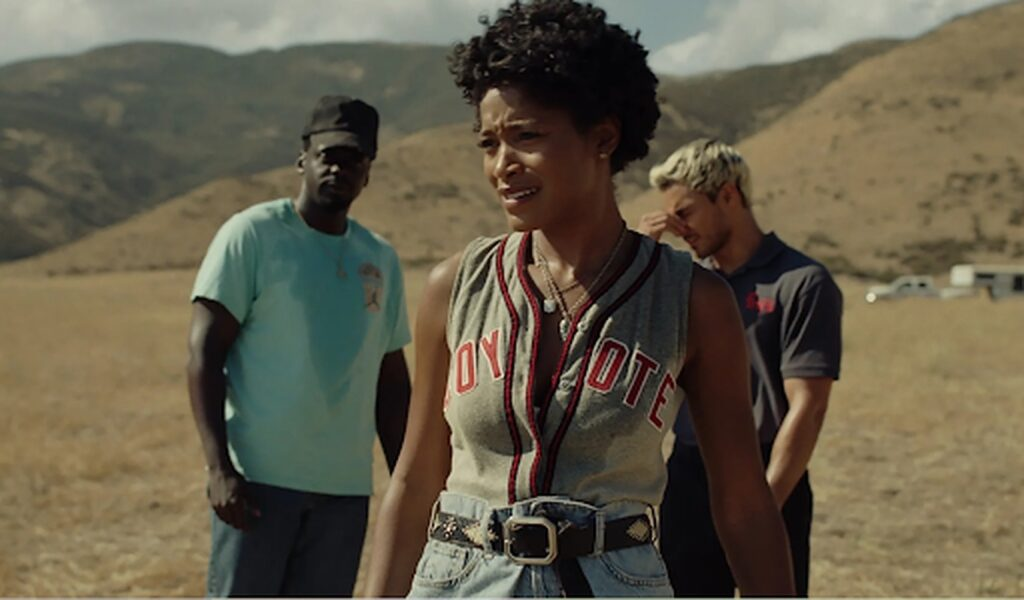
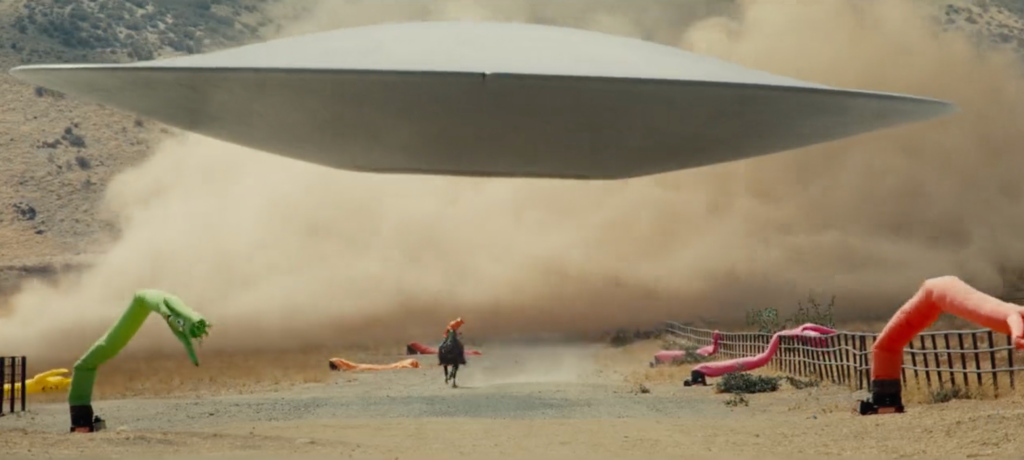
If there was any doubt about Jordan Peele’s skill as a horror director (or director in general), Nope should dispel it. Get Out was an electrifying debut with its potent social commentary, and Us boasted highly impactful scares, even if its underlying mythology made zero sense. Yet I think I prefer Nope over either of them, an entertaining genre mish-mash that recalls Close Encounters of the Third Kind, if the UFOs were not secretly friendly. From the enigmatic trailers, it seemed that Peele wanted to make aliens scary again, and he did, while also subverting a few expectations to great effect.
Reteaming with Peele after Get Out, Daniel Kaluuya plays O.J. Haywood, a horse trainer for film projects, who struggles to maintain his family’s historic business after the bizarre death of his father (Keith David). His sister Em (Keke Palmer) is more interested in schmoozing talent seekers than saving the ranch, but they are both disturbed by the behavior and disappearance of their horses, eventually realizing something in the sky is preying on them. Soon the siblings are collaborating to get certified photographic proof of the dangerous UFO, which is easier said than done, even with the help of jaded electronics employee Angel (Brandon Perea) and grizzled filmmaker Antlers Holst (Michael Wincott).
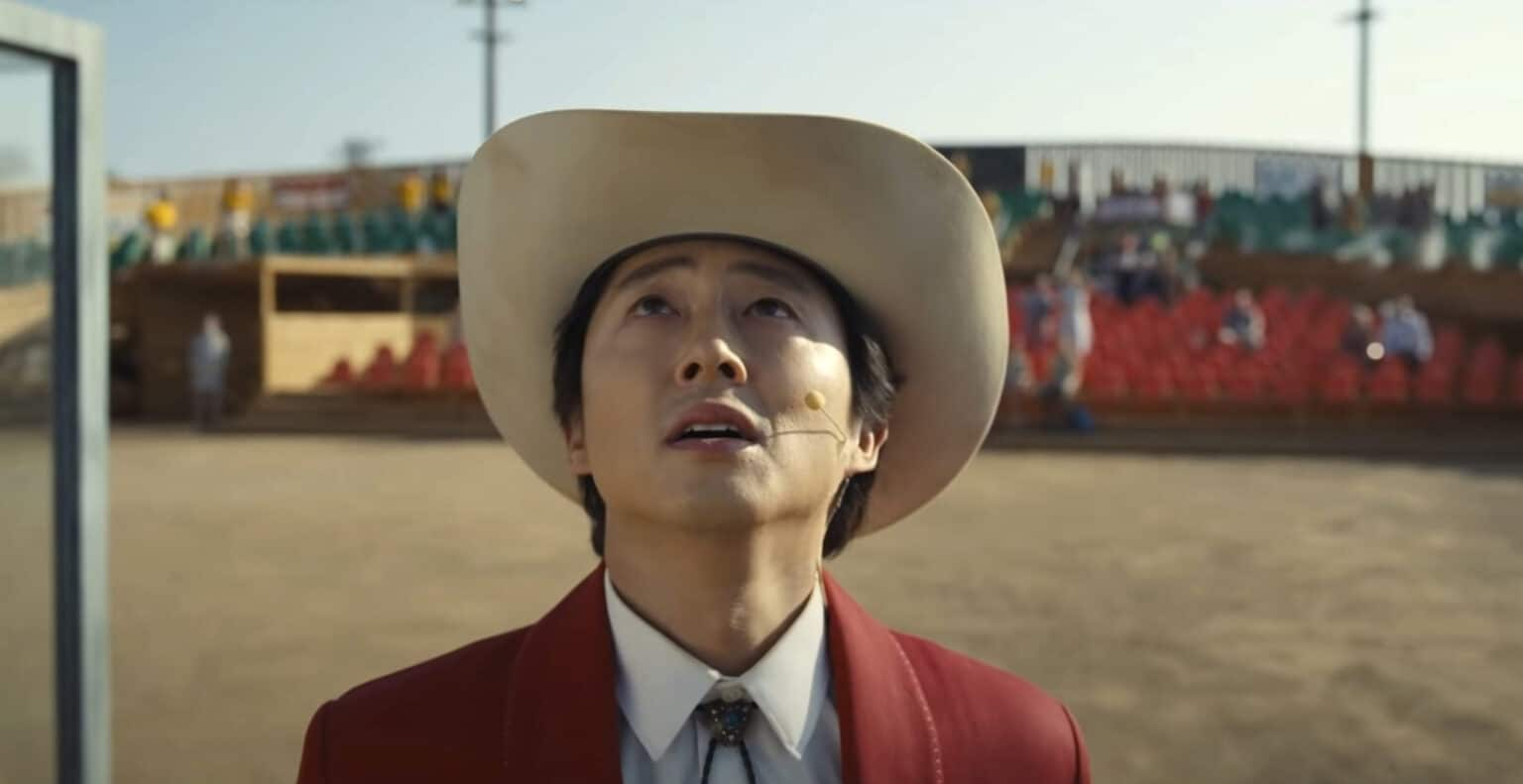
Nope continues Peele’s winning blend of understated comedy and legit horror, injecting doses of humor among the growing anxiety, most notably the title response when situations are too risky to engage. Unlike so many horror films, the characters largely respond realistically to the strange events they face, though it’s notable that some of them lose that sense of self-preservation in pursuit of fame, strengthening the film’s theme of destructive celebrity. Considering how straight-faced and quiet he is throughout, Kaluuya once more proves his acting talent and is never wooden, while Palmer’s surplus of personality makes her a great familial foil for him. Both Steven Yeun as Jupe Park, the owner of a nearby Western theme park, and Perea as an everyman techie are also standouts, while Wincott’s character adds gravitas but also ends up a little underdeveloped.
Through most of the film, I couldn’t help but feel like the subplot with Yeun seemed out of place, a story of him as a child actor witnessing a violent episode involving a crazed chimp. Indeed, it doesn’t have much to do with the main UFO narrative. In retrospect, it does complement the motifs of spectacle and animal danger, and, going beyond survivor guilt, the idea of survivor confidence explains Park’s unwise actions later on. It’s ultimately another sign that Peele puts a good deal of thought into his film’s themes, down to the final scene, and that he’s interested in more than cheap scares. Of course, there are some expert moments of tension and shock as well (I especially liked how the flying saucer is kept out of view at first, darting between clouds and deadening electronics with the distant menace of the fin in Jaws), but it felt unique that the climax happens in broad daylight.
While Us showed that Peele is not above story missteps, Nope is an ambitious step forward that I look forward to watching again. It’s a creature feature that knows how to balance its looming terror with human foibles and a crowd-pleasing climax, complete with an Akira reference. Us was scarier and Get Out had more to say, but Nope is easily the most entertaining entry in Peele’s filmography so far.
Best line: (Holst) “This dream you’re chasing, where you end up at the top of the mountain, all eyes on you… it’s the dream you never wake up from.”
Most humans have the comfort of not knowing of too much, Of doors we should not open and loose threads we ought not touch, Of dogs we dare not waken and of lines we should not cross, Lest brutal, futile knowledge should become our albatross.
The warning of “forbidden” has eroded over years, Decided as the product of unreasonable fears. For nothing is anathema, forbidden, or taboo, And so we delve too deeply into things we can’t undo.
When doors not meant to open are instead extended wide, And fears begin to slither in where had been only pride, And darkness once attractive starts exacting its dread cost, You’ll recognize what isn’t wise when certain lines are crossed. __________________________________
MPA rating: PG-13 (honestly, some of the violence leans toward R)
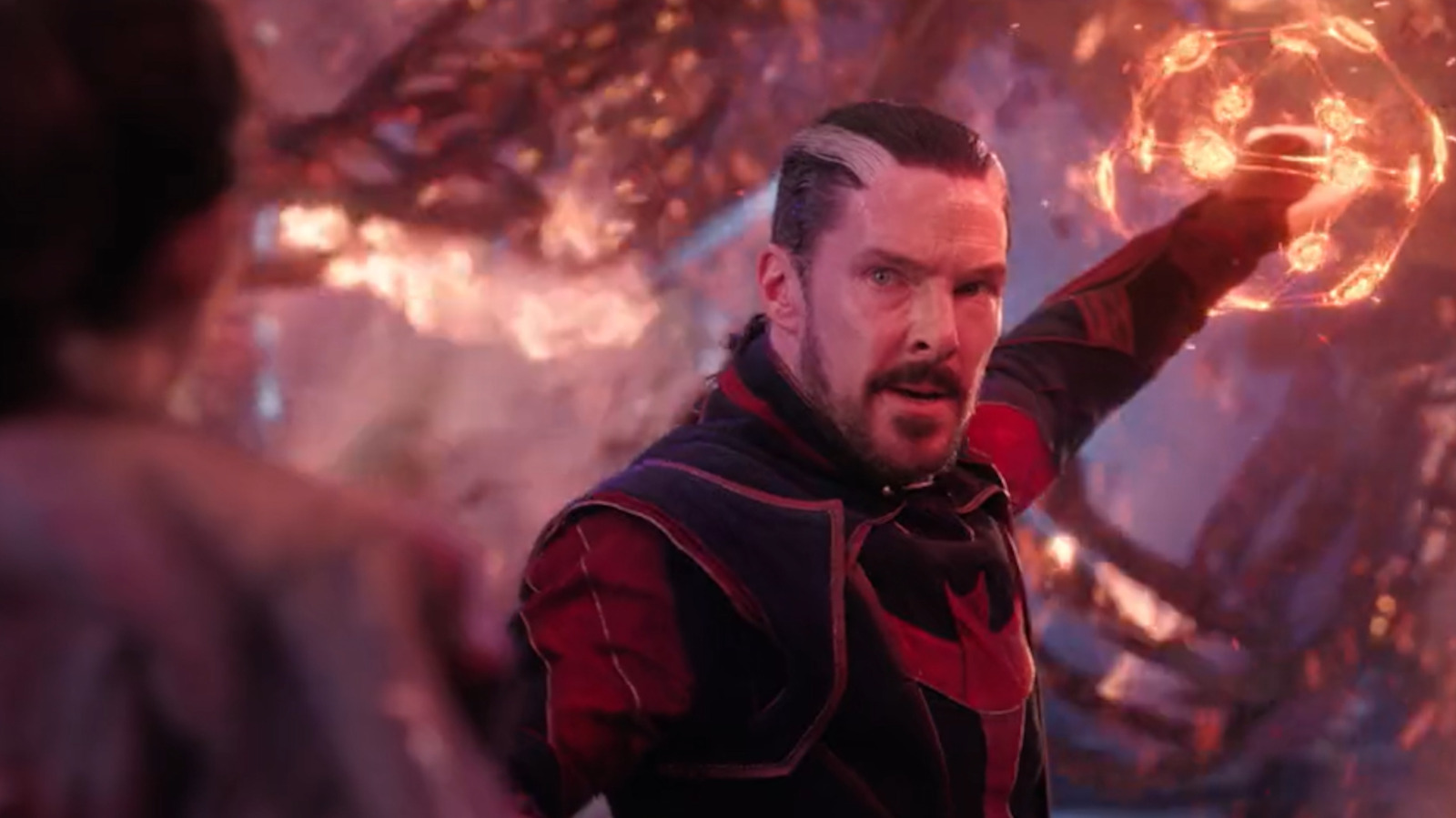
I never used to wait this long before reviewing Marvel blockbusters, but my mind hasn’t been in movie review mode lately. Still, it’s about time I got to it. Anyway, I’m an MCU fanboy, so anything they release I am likely to enjoy to varying levels. Even some that gave me initial mixed reactions like Thor: The Dark World or Eternals, I’ve grown to appreciate more with time and reflection. It’s rare then that time and reflection ends up lowering my opinion of a Marvel film, but such is the case with Doctor Strange in the Multiverse of Madness. I still liked it overall, but there are elements I can’t help but view with disappointment.
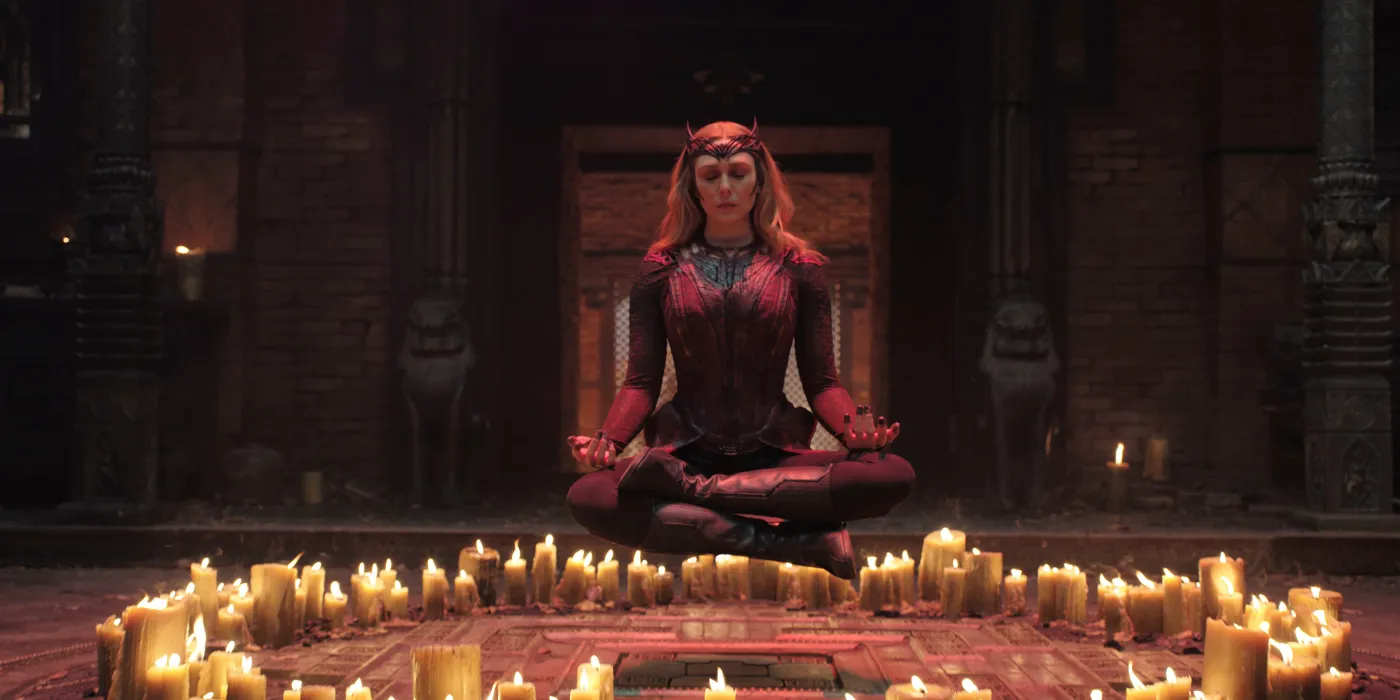
This second Doctor Strange film marks a milestone for the MCU; it’s the first time that a Marvel film has continued a storyline from one of the Disney+ TV series, specifically WandaVision, released about a year before. I’ve decided to skip reviewing TV shows (for now) and won’t go into detail on WandaVision, but it essentially dealt with the messy grieving process of Wanda Maximoff (Elizabeth Olsen) after losing her beloved Vision (Paul Bettany) in Infinity War. It was the first time Wanda was referred to by her comics name of Scarlet Witch and introduced the potential children she might have had with Vision, as well as a cursed book called the Darkhold, all of which play a role in this film.
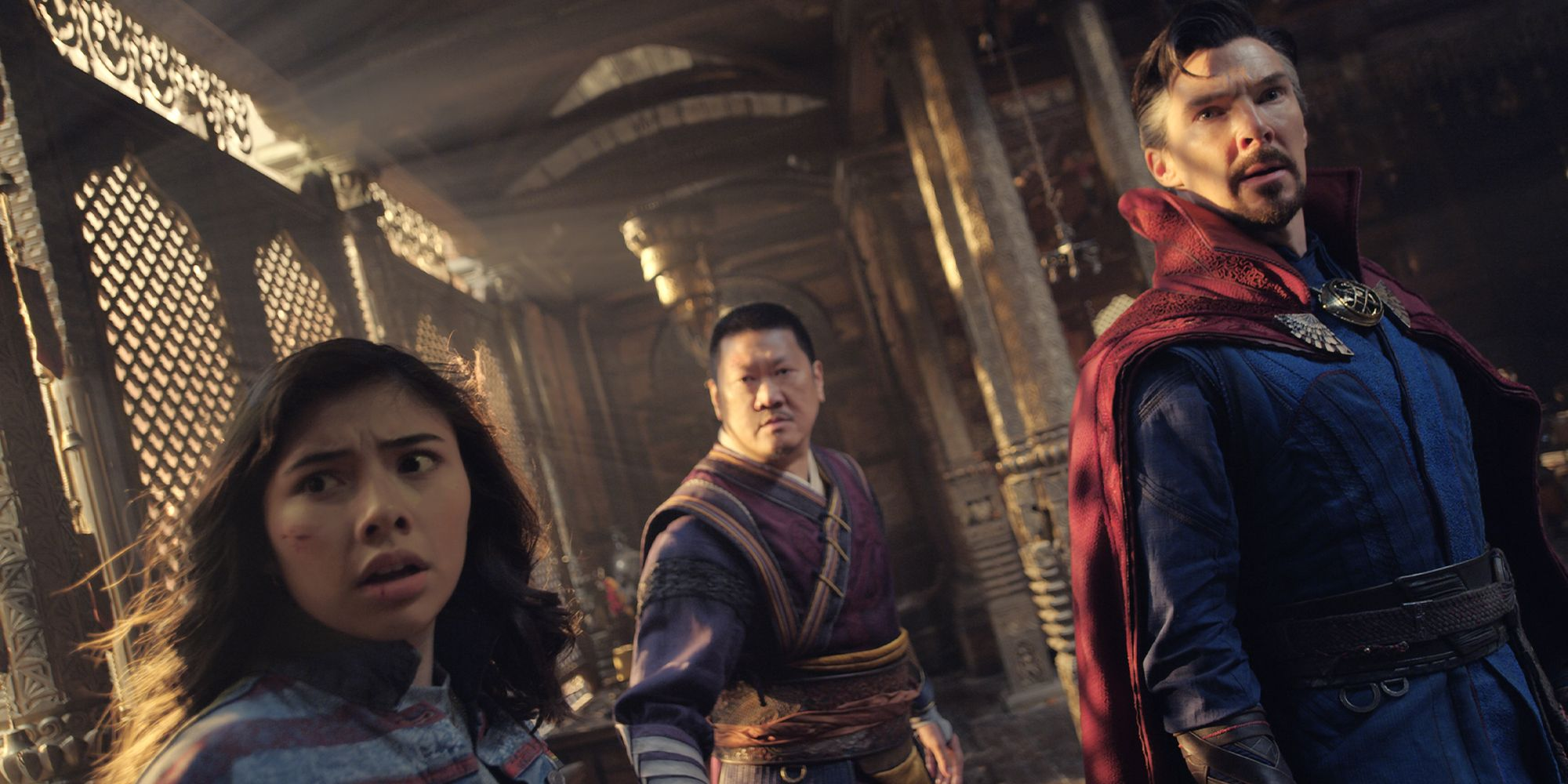
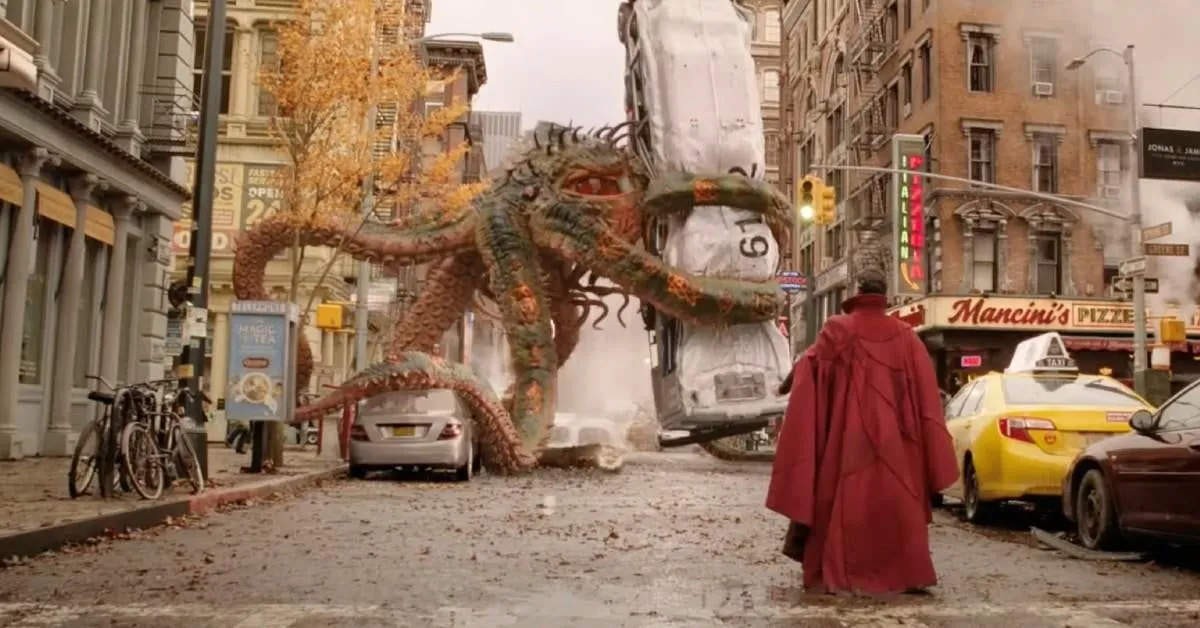
As for Stephen Strange himself (Benedict Cumberbatch), he has settled into the self-sacrificing superhero life of losing his own love Christine (Rachel McAdams) yet trying to convince himself he’s happy anyway. When a multiverse-hopping girl named America Chavez (a bit one-note but likable Xochitl Gomez) arrives in New York, chased by otherworldly creatures, Strange and Wong (Benedict Wong) take on the duty of protecting her across universes.
Between Loki and Spider-Man: No Way Home, the multiverse has already been cracked open for most viewers, but Doctor Strange in the MoM goes beyond variations of one character. Many would argue that it still doesn’t do enough with the concept to warrant a name like Multiverse of Madness, but my VC actually liked that the number of universes involved were limited, finding it easier to follow. The use of the multiverse is where my complaints begin (and the spoilers). One of the biggest set pieces of the film involves a multiversal team getting slaughtered mercilessly, which felt like a jarring contrast to the way that even villains were treated in No Way Home, a spectacle mistaking cruel for cool. It gave me concern that the multiverse could be used to just provide an endless supply of fan service cannon fodder because if one character dies, hey, there’s plenty of others out there for next time, right?
Beyond that, the film’s treatment of Wanda is also a mixed bag. While Olsen delivers an outstanding performance stepping into the rare role of a hero-turned-villain and showing just how powerful she is, it ends up undermining the emotional progress she seemed to experience in WandaVision (and totally ignoring the fact that Vision in some form is out there somewhere). Her motivations are sympathetic, but it was shocking just how far she goes, her behavior easily blamed on the corrupting power of the Darkhold but hard to forgive nonetheless. And then there’s Strange’s diving into the dark art of necromancy in the climax, which is both a gleeful reminder of director Sam Raimi’s horror specialty and also a problematic strategy that calls into question whether Strange can just walk away from any supposedly forbidden behavior without consequence. We’ll see if the sequels shed any light on that.
And speaking of sequels, it also felt like there should have been a different Doctor Strange 2 between the original and this one. Despite the brief presence of Chiwetel Ejiofor’s Mordo in a different universe, his setup as a villain in the first film’s after-credits scene was essentially dropped, waved away in a single line indicating he and Strange had already clashed before. Am I the only one who would have liked to see that?
So yes, I have mixed feelings about Doctor Strange in the Multiverse of Madness, right down to its abrupt ending, yet I can’t outright dislike it either. It still has all the ingredients for an entertaining Marvel adventure, mixed with the sometimes creepy, somewhat goofy, and more violent style of Sam Raimi, complete with a prime Bruce Campbell cameo. I liked the more human element of Strange’s character arc, and Olsen’s scenery-chewing wrath is both memorable and cleverly resolved by the end. It can’t be easy writing these Marvel films in a way that continues prior plotlines, delivers its own story, and sets up future possibilities, but they’ve been doing it splendidly for a decade now. While it has its good points, Doctor Strange in the Multiverse of Madness is the first stumble for me.
Best line: (Wanda, with a good point) “You break the rules and become a hero. I do it, and I become the enemy. That doesn’t seem fair.”
On foreign roads, I may be led, No guarantees of food or bed; I might be kept, a bitter pill, By duty or against my will; I may delay on land or foam, But still I’ll know the way back home.
On dying hopes I may depend, But they’ll be with me to the end. For be it distance, sickness, wars That separates my heart from yours, I know no matter where I roam, Our love remains my road back home. ___________________________
MPA rating: G
I would never have even heard of The Road Home if it hadn’t been suggested to me by fellow movie-loving blogger Chris of Movies and songs 365. Sorry it took years to finally put it on my Blindspot list as incentive, but a big thanks for the recommendation! With the exception of Crouching Tiger, Hidden Dragonand Yi Yi, Chinese cinema is unexplored territory for me, and while action and wuxia are more likely to make a splash with western moviegoers, it’s nice to be reminded of low-key romantic dramas like The Road Home, which can be easily overlooked.
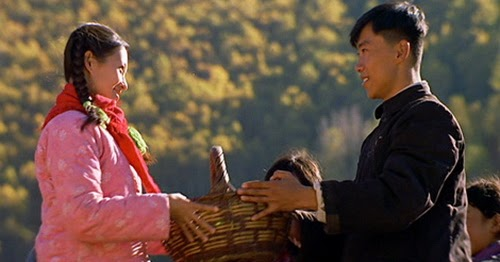
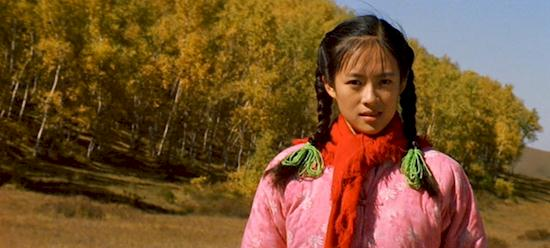
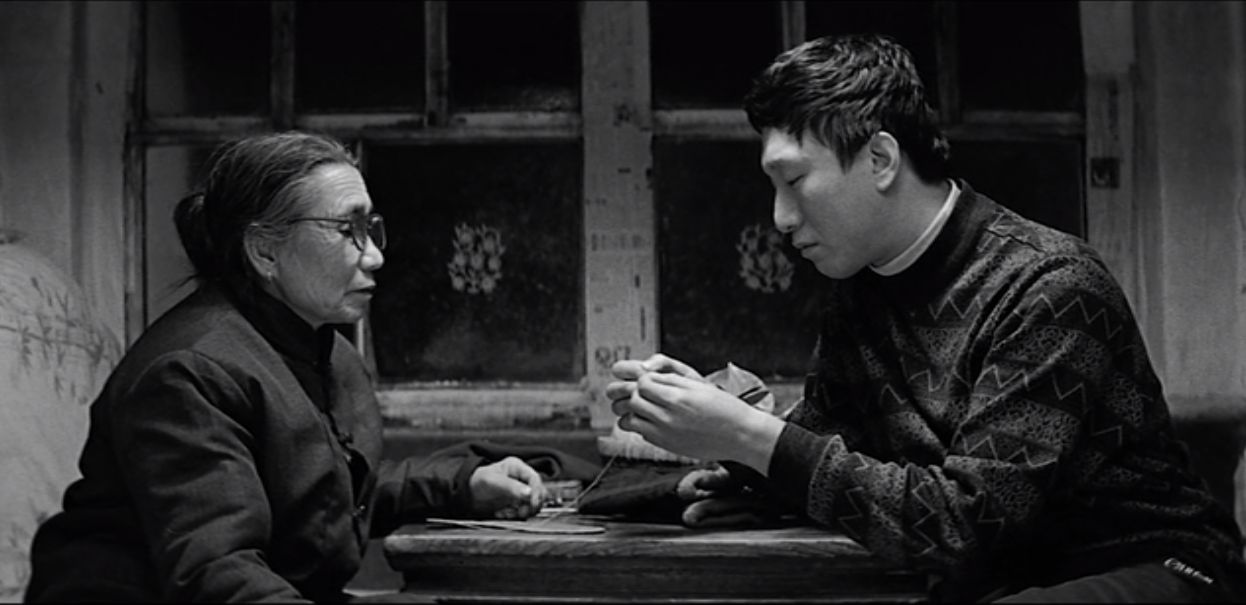
After his father dies, a young man (Sun Honglei) returns home to his rural village and widowed mother, who insists on a traditional on-foot procession to bring her husband’s body back home, since he died in a nearby city. While weighing whether to honor her logistically difficult request, the man reminisces about his parents’ well-known love story and how his mother Zhai Di (Zhang Ziyi of Crouching Tiger fame, in her first major role) first met his schoolteacher father Luo (Zheng Hao). In a creative choice also used in The Phantom of the Opera, the modern time period is presented in black-and-white while the flashbacks to 1950s China shift to bright color, showing how much more vivid Di’s memories are compared with her present-day grief.
The Road Home thrives on its simplicity and the nostalgia of young hearts fluttering after each other. Ziyi is luminous as the young Di, who longs for the village’s new schoolteacher and subtly finds ways to make her affection known. I would say there’s a bit too much of that distant flirting, with far too many repetitive shots of Di staring googly-eyed at her love, which eventually feel like padding for the already short runtime. Still, the performances are excellent, shifting from sentimentality to devoted worry when Luo is taken away by the Chinese government. The film’s real power comes at the end, though, when the impact of one rural schoolteacher on the community is made evident in a show of caring that would make Mr. Holland’s Opus proud.
The Road Home is perhaps too simple a tale to get much notice in a cinematic landscape crowded by superheroes and CGI space battles, but it’s a refreshingly human account of young love. As mentioned, some of the longing looks could have been edited out, and I rather wish we had gotten to see at least a little bit of the happy life that Di and Luo had together, instead of just its preface and epilogue. What we do see, though, is a warm and sweet reminder that our parents or grandparents loved deeply long before we came along.
Best line: (older Di, to her son) “Your father’s gone. He used to worry about you. Our children must leave home. We can’t keep you here forever. As parents, we let you go, but we never stopped worrying. Your father missed you so.” (Yusheng, the son) “Please don’t cry.” (Di) “With your father gone, it’s hard not to feel lonely.” (Yusheng) “I know.” (Di) “You must work hard and make a good life.”
Expectations are the weight That drags us to a win or loss. And either way, we learn to hate The expectation albatross.
For whether it is you alone Or one you’re trying to impress, The chance of failure’s one millstone That only comes off with success.
A flaw offends, a stumble spreads, And those who saw it coming quit, Shaking their collective heads. They knew you couldn’t handle it.
But then, you might have full support Yet build up such a stress within, That nothing but the highest court Could name you worthy of a win.
Still yet, we live for moments grand When fear is met by answered prayer, When what occurs is what was planned, Even if that may feel rare.
These expectations doom or drive Our efforts to achieve our best. Just know as long as you’re alive That nothing is a futile quest. ________________________
MPA rating: PG-13
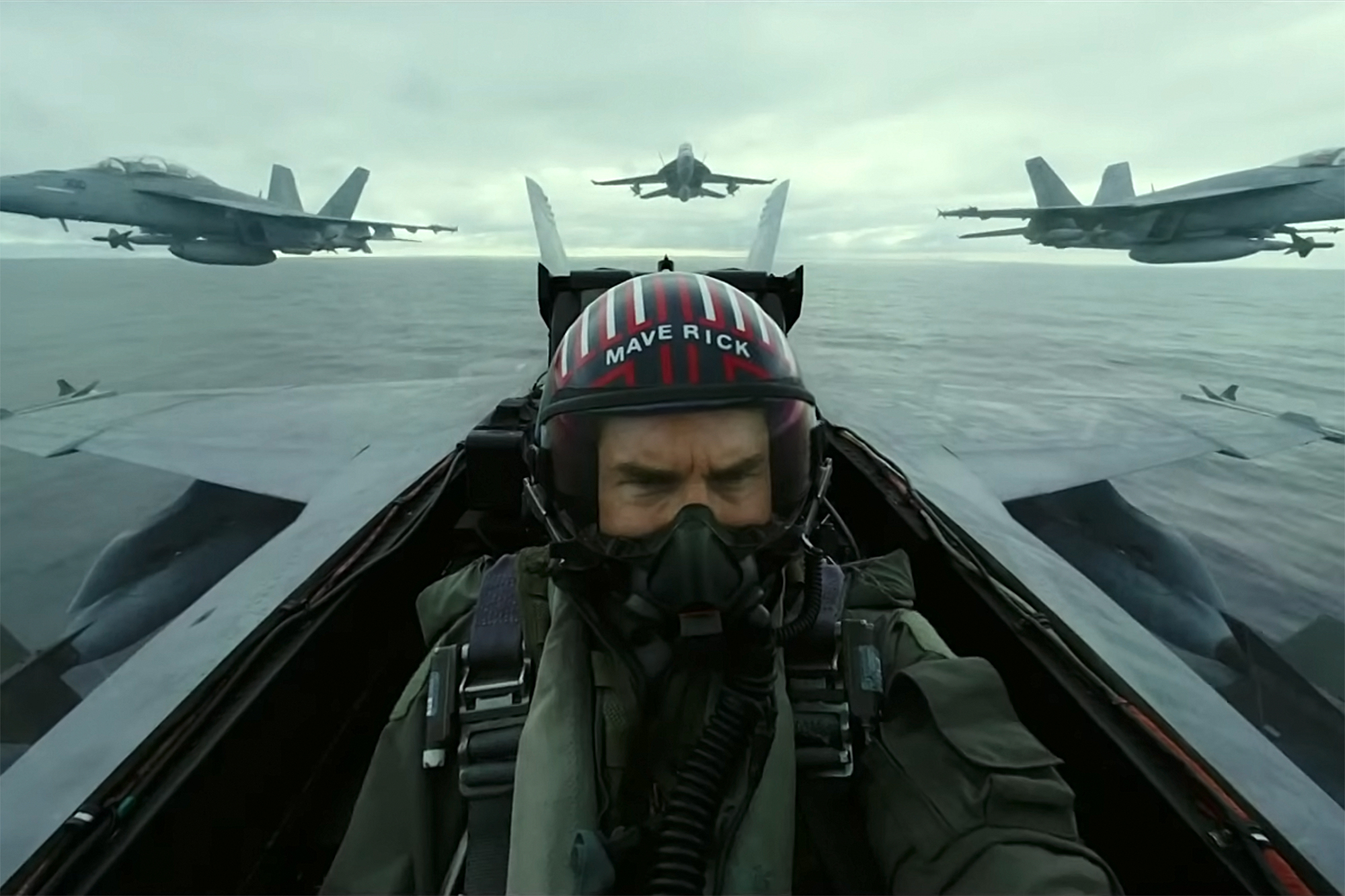
I don’t know if anyone remembers, but I rewatched the original Top Gun back in 2020 so I could review it before the sequel came out later that year. Of course, a certain pandemic got in the way of that, repeatedly pushing the release of Top Gun: Maverick to a point where it would have the best chance of thriving in theaters rather than settling for a limited or streaming release. And thrived it has, racking up over a billion dollars and outperforming what I think most people expected from yet another resurrected 1980s franchise. I appreciate the first Top Gun on a purely superficial level but would never consider it a favorite movie, so I was genuinely surprised that Maverick actually managed to deliver on the hype that had grown around it.
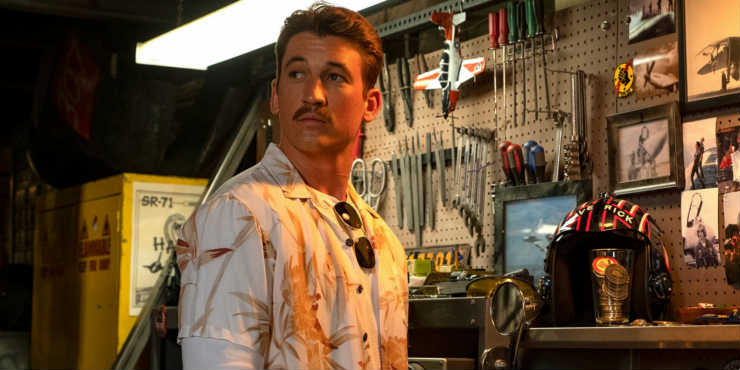
Set over thirty years after the original, Top Gun: Maverick sees the return of Pete “Maverick” Mitchell (Tom Cruise), whose penchant for risks and disobeying orders has kept him from rising above the rank of captain. With his career near its end, he is called by his old rival and friend Iceman (Val Kilmer, whose inclusion was a nice treat considering his health struggles) to return to Top Gun (a.k.a. the United States Navy Strike Fighter Tactics Instructor program) and train the most skilled graduates for a daring mission to destroy a uranium enrichment plant. Among them is “Rooster” Bradshaw (Miles Teller), the son of Maverick’s deceased partner Goose, and the two must work through their shared history to make the mission a success.
I can absolutely see a version of this movie with the same description I gave above that feels like a zombie retread of the first film, resurrected for the sake of cashing in on audience nostalgia. While that’s likely how the film’s development started, a laudable amount of effort and care went into making this a worthy successor that honestly surpasses the first film in every way. Knowing that the real actors and planes were involved in the aerial action adds much to the experience as a sharp contrast to the overabundance of CGI, and the high-flying direction feels brisk and immediate while not losing track of which plane is which. Plus, the soundtrack is a knockout, featuring not just the return of Kenny Loggins’ “Danger Zone” but also welcome additions from The Who, OneRepublic, and Lady Gaga.
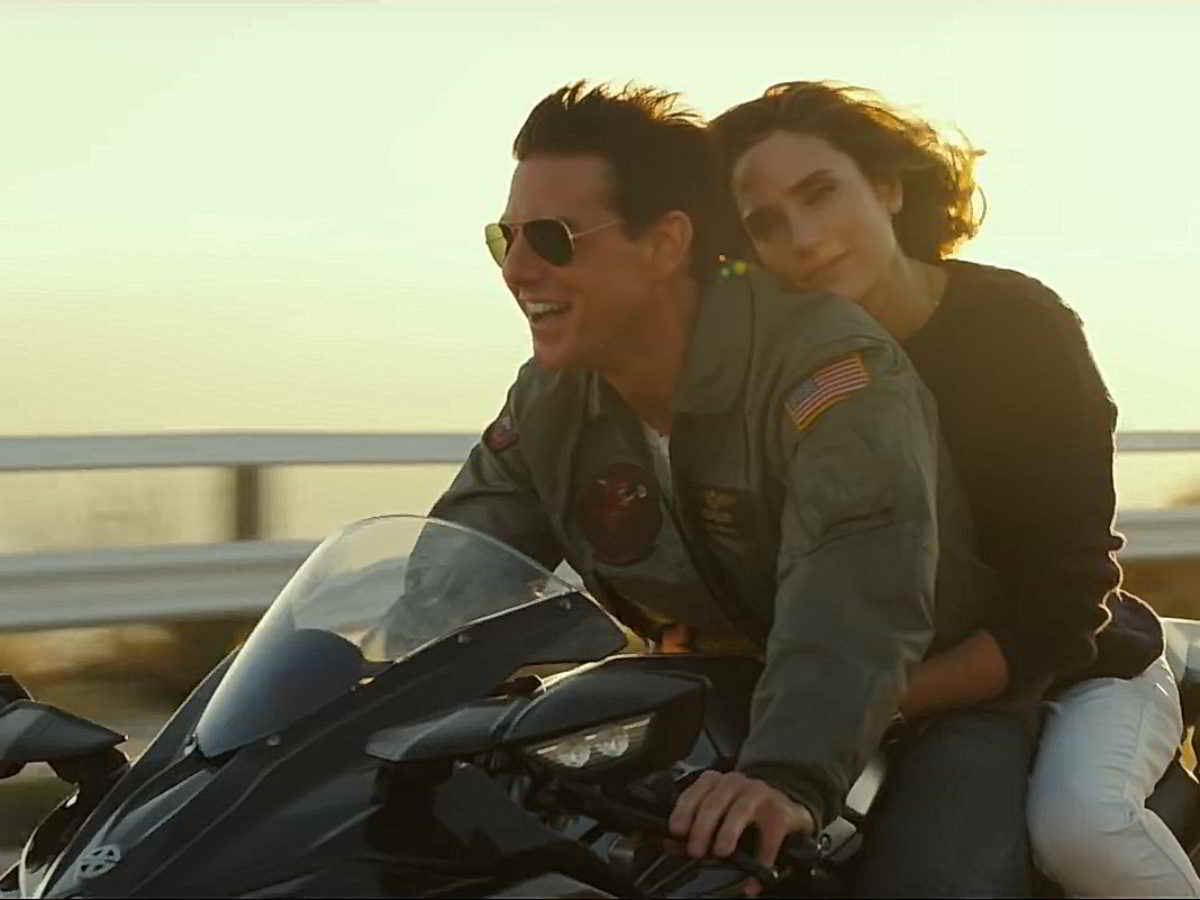
It’s rather amazing that Maverick has all of the same ingredients as the first film – hot shot pilots, including a cocky rival (Glen Powell); surly superiors (Jon Hamm, Ed Harris); a simmering romance centered in a bar (now with Jennifer Connolly in place of Kelly McGillis); a shirtless volleyball game; and a climactic face-off with an unnamed enemy – and yet it deepens them and makes them mean more than in the original Top Gun. The writing and story are clearly improved and give the performances of Cruise and Teller especially much more dramatic weight as the loss of Goose continues to weigh on them both. And the whole climax set among snowy mountains is a tense thrill ride, not a sudden “crisis” that pops up like in the first film, but an extended mission that the whole film builds up to, with high stakes and an ever-present chance that someone might not make it home.
The distinction may only make sense to me, but I consider Top Gun an entertaining movie, while Top Gun: Maverick is an entertaining film. Both may be summer blockbusters, but the sequel lives in another category of quality, and I really would like to see it perhaps snag a Best Picture nod at the Oscars. Even with my half-hearted appreciation of the first film, the second was moving, patriotic, and immensely satisfying in its own right while also building on the nostalgia. It sets a new standard for these long-delayed ‘80s sequels, one that will be hard for any other to top.
Best line: (Admiral “Cyclone” Simpson) “Your reputation precedes you.” (Maverick) “Thank you, Sir.” (Adm. Simpson) “It wasn’t a compliment.”
Diamonds in the rough, by definition, Are diamonds no one ever thought to see, So hidden snugly in the earth That none would know or guess their worth, No fanfare for their forceful birth, No choice but anonymity.
But diamonds in the rough possess ambition, Convinced they have a chance at gems-to-be. Potential needs but one ally To see its wings before they fly, To know what others would deny: The diamond’s there for those who see. ________________________
MPA rating: PG-13
It’s still unclear what the long-term effects will be of the infamous slap that Will Smith gave Chris Rock at this year’s Oscars ceremony, not long before Smith then took the stage to accept his award for Best Actor. I’ve loved many of Smith’s films and still think he was robbed of an Oscar for The Pursuit of Happyness, so I was genuinely glad for him to finally get that gold statue, even if there was an inescapable distaste over what preceded it. Still, I try to watch films divorced from the personalities of the actors in them, and regardless of how egregious or overhyped some may consider Smith’s slap, you have to admit that he does a fantastic job as the controversial father of future tennis superstars Venus and Serena Williams.
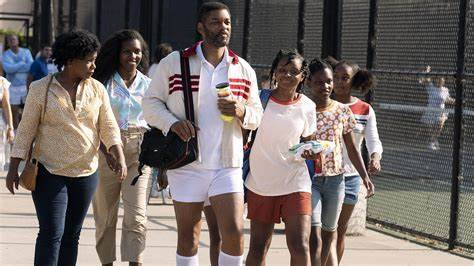
King Richard would normally be a star-making role, but it seems right in line with Will Smith’s talents, even as he sports a pair of white shorts and a slight lisp. As he explains while pitching his daughters’ talents to various tennis instructors, Richard Williams had a plan for Venus and Serena from the start, and he and his wife Oracene (Aunjanue Ellis) went to great lengths to give them plenty of practice on the public court in Compton. Once Richard actually gets the attention of some coaches (Tony Goldwyn, Jon Bernthal), he proves to be an uncompromising negotiator on his daughters’ behalf, never doubting that they are destined to be stars.
Richard Williams was never on my radar, since Venus and Serena were already lauded pros by the time I paid any attention to tennis. (Plus, my mom usually only watches men’s tennis anyway. When are they going to make a Roger Federer movie?) The film certainly gets across Williams’ prickly, opinionated side that rubbed many the wrong way, whether it be his indignation over presumed microaggressions or his controlling attitude about his daughters’ futures. While it acknowledges some of his failings, the movie doesn’t dwell on them or even mention his and Oracene’s eventual divorce, and it can seem at times that the film agrees with him that Richard Williams knew best at all times. Luckily, Aunjanue Ellis does an outstanding and necessary job to match his passion for their success and offset his stubborn domineering, like when he goes too far trying to discourage his girls from bragging after a victory. While Ariana DeBose was great in West Side Story, Ellis honestly would have been just as deserving of the Supporting Actress Oscar.
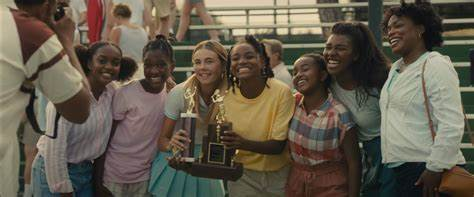
Based on their status as executive producers, it’s clear that Venus and Serena Williams support this deeply fond portrayal of their father, so even if it smooths over some of his rough edges, I like to think it’s a picture of how they saw him, their first coach and cheerleader who valued their childhoods as well as their budding talents. Saniyya Sidney and Demi Singleton as the teenaged Venus and Serena, respectively, succeed at standing out despite Richard’s shadow, and it’s easy to root for them as the underdog in what was then even more of a predominantly white sport, examples for “every little black girl on earth,” as their father says. I sometimes got the girls mixed up, partially because Richard kept using nicknames I wasn’t aware of (“Junior” for Venus and “Meka” for Serena), but it became clear by the end, as Venus becomes the first to go pro with Serena waiting in the wings for her chance.
King Richard is a comfortable fit for the usual aspirational sports movie mold, but it’s a moving and above-average rendition of an American success story. I never really had an opinion of the Williams sisters (some people I know have said they seemed arrogant, contrasting with Richard’s lessons on humility in the film), but my admiration for their talent and triumphs has certainly grown, especially in the film’s depiction of success being found even in apparent loss. Richard Williams and Will Smith may both be controversy magnets in their own way, but King Richard showcases their shared love of family, the kind of stubborn love that, despite its flaws, can still inspire.
Best line: (Richard Williams, to his daughters) “The most strongest, the most powerful, the most dangerous creature on this whole earth is a woman who know how to think. Ain’t nothing she can’t do.”
What is it about being part of a group That makes one more likely to hate those outside it, To play in one’s mind their offenses on loop, And bask in contempt with no effort to hide it? The more they feel threatened by some other troop, The more they seek violence, and thus justified it.
It’s easy to fall into “us versus them,” To see every slight as a reason for hate, But history’s splattered with vengeful mayhem From tomfools preferring force over debate. Perhaps we can’t grow too far from such a stem, But “love wins,” they say. I suppose I will wait. _____________________________
MPA rating for 1961 film: Approved/PG MPA rating for 2021 film: PG-13
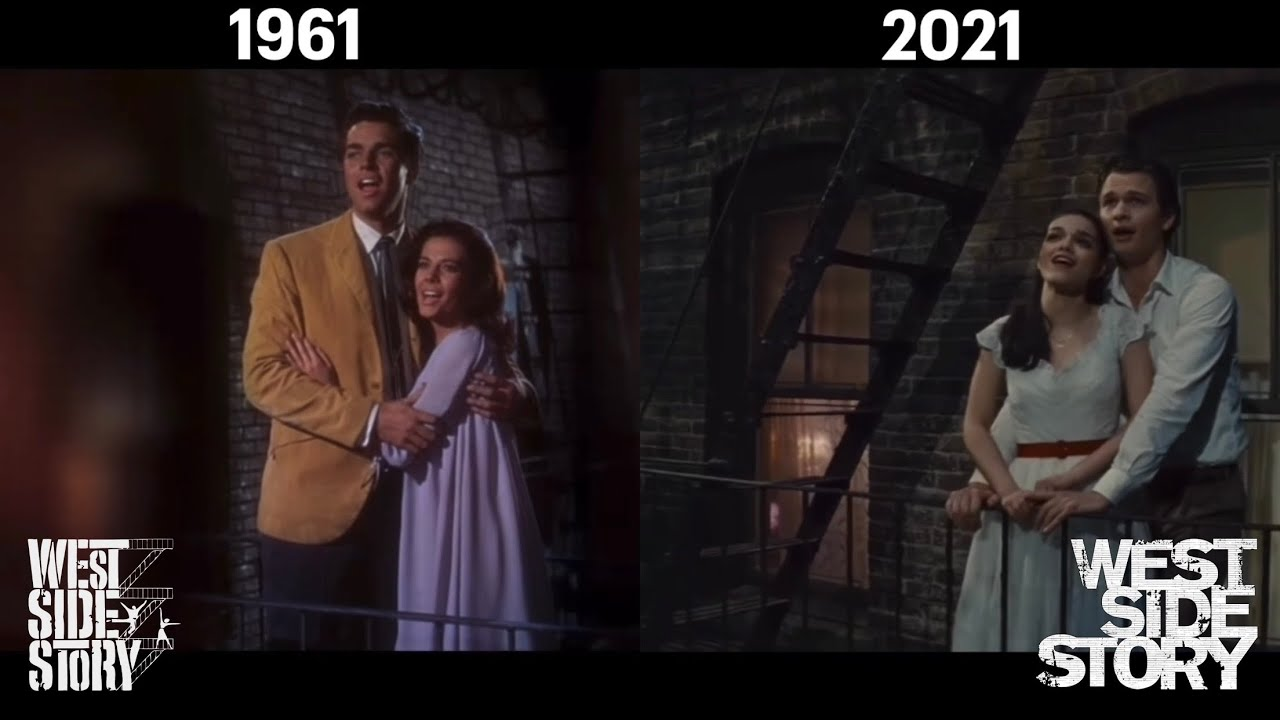
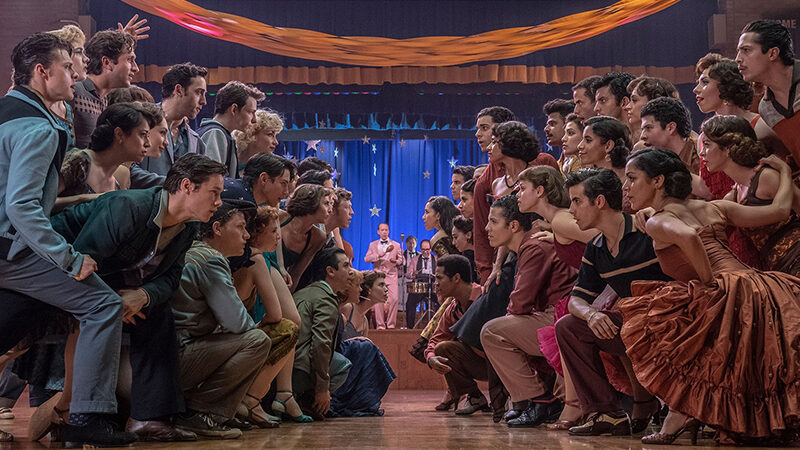
I didn’t expect the strain of NaPoWriMo to result in nearly a month off from blogging, but I’ve had my inspiration focused elsewhere. I’m back on the horse, though, and resurrecting a long-dormant feature: my Version Variations, where I review and compare two different cinematic versions of the same story. Whether it’s the original 1961 film adaptation from Robert Wise and Jerome Robbins or Steven Spielberg’s recent remake, West Side Story is a beloved and socially relevant musical that certainly supports multiple tellings.
As much as I pride myself on loving musicals, it may seem odd that I never reviewed the original West Side Story, which is nowhere to be found on my Top 365 list. The simple truth is that I’ve never considered it one of my favorites. Before a recent rewatch for this comparison, I saw it many years ago and mainly remembered that “America” was the best number and the ending was depressing. Of course, it’s based on Shakespeare’s Romeo and Juliet, so of course it would have a sad ending, but that really is the main drawback for me. Intentionally tragic or not, I just don’t enjoy watching a tale that leaves me unsatisfied the way West Side Story does, though that doesn’t mean I can’t appreciate what comes before said ending.
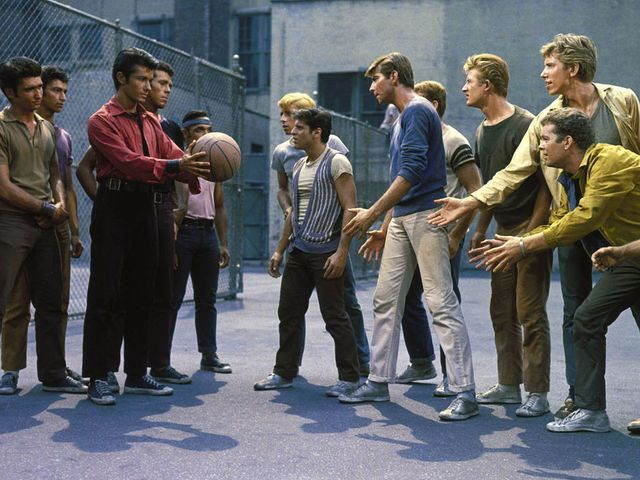
The original West Side Story won the 1961 Academy Award for Best Picture, back when musicals were prime award material. It was a rather innovative move reimagining the family feud of Romeo and Juliet as a gang war between whites and Puerto Ricans in NYC’s Upper West Side, not to mention Jerome Robbins’ balletic choreography performed by these street punks. Despite not actually being Hispanic, Natalie Wood is a radiant Maria, who falls quickly in love with former Jets member Tony (Richard Beymer), much to the consternation of her brother and Sharks leader Bernardo (George Chakiris, who is also not Hispanic and actually played Riff on the London stage).
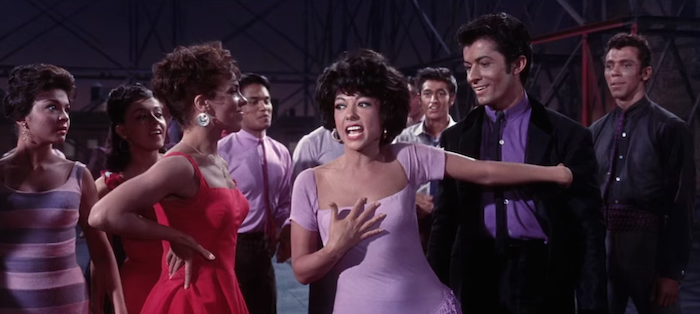
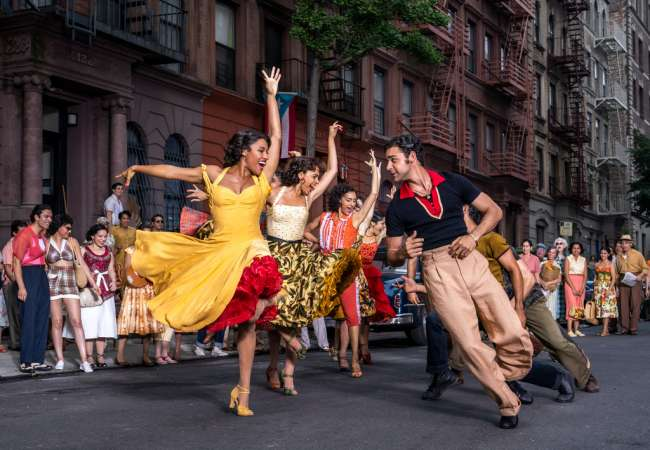
I was surprised that I enjoyed the 1961 film a lot more than I remembered. Right from the opening number where the Jets and Sharks trade intimidations, the dance numbers are iconic with their jazzy, avant-garde sensibility. As I recalled, Rita Moreno’s Oscar-winning turn as Anita and her iconic song “America” is the highlight of the whole show. As someone who aspires to be a lyricist myself, I have immense respect for Stephen Sondheim and his words, whether it be “America”’s spirited debate on the nation’s virtues and vices or the fun but insightful social commentary of “Gee, Officer Krupke.” There’s so much to appreciate about the film’s romance, story, and musical production, yet it sadly feels fruitless by the tragic end, settling as a commentary for hatred matching hatred, which is worthwhile but far from a satisfying watch. Clearly, a sad ending hasn’t dampened West Side Story’s popularity or legacy, but it does keep it from ranking among my personal favorites.
Unfortunately, that goes for Spielberg’s 2021 remake, which is a shame since I consider it even better than the original in most respects. As good as the 1961 film is, it can’t help but feel dated, while last year’s version boasts a shiny makeover replete with graceful cinematography, colorful costumes, and greater cultural authenticity. Rachel Zegler makes an exceptional debut as Maria, while Ansel Elgort, despite some hate and reviews calling him wooden, is quite likable as Tony, and both flex their acting chops at the right moments. Ariana DeBose followed in Moreno’s footsteps, winning a deserved Oscar for her portrayal of Anita, though I don’t know why her castmates were passed over for similar awards nominations, such as Mike Faist as Riff. Among the many small plot changes made by screenwriter Tony Kushner, I especially liked the addition of Rita Moreno as the widow of Doc (the soda shop owner in the original); she not only brings gravitas and a trace of the original film, but her marriage also serves as a sort of example for Tony of what he and Maria could have if they can overcome the conflict around them.
My VC was skeptical of the few plot changes and rearrangements and still prefers the original, but I think Kushner’s additions make the story even better. The discussion of Tony’s jailtime and his guilt over letting his temper go too far adds to his character and makes his eventual dip into violence less out of character, although his subsequent reunion with Maria is marred by the absence of an actual explanation before she forgives him. Likewise, I appreciated that Tony and Maria are actually able to go on a date to a nearby museum, giving their romance a little more room to grow instead of fifteen minutes in a dress shop in the 1961 film. Likewise, the number “Cool” is after the Rumble in the original and feels rather extraneous, but the 2021 version uses it as a confrontation between Tony and Riff as Tony attempts to prevent the Rumble, which seems like he tried harder than just showing up in the middle of it.
My main beef with the creative choices made was Spielberg’s explicit decision to not subtitle the Spanish dialogue, despite including far more Spanish than its predecessor. He stated this was to avoid “giving English the power over the Spanish.” He may have wanted “to respect the language enough not to subtitle it,” but he should have recognized that much of his audience may not know Spanish, which was frustrating for my VC. Some scenes coast on context and didn’t need subtitles, but others have entire conversations in Spanish that withhold full understanding from English-only viewers. Luckily, I know enough Spanish to keep up, and I don’t mind more of it for authenticity, so long as it doesn’t become a language barrier; I just think it was a poor and politically correct choice on Spielberg’s part.
Still, my criticisms of the newer film are minor objections when I look at how well it renewed a sixty-year-old classic. Last year was honestly a dream for lovers of movie musicals (like me), and it breaks my heart that In the Heights, Dear Evan Hansen, and West Side Story were all regarded as flops, since their performance might discourage future musical adaptations. Hopefully, Hollywood will just blame COVID and keep up this musical resurgence. There are still upcoming musical adaptations of The Color Purple, Mean Girls, and a two-part Wicked, so there’s hope.
While West Side Story feels like it deserves a place on my List, the ending is strangely a deal breaker for me. I don’t know why this tragic end is worse than sad endings like Grave of the Fireflies or Doctor Zhivago, but I’m just left unsatisfied with the lesson of “hatred breeds more hatred.” I can still appreciate both versions of this classic story and admire them for their obvious strengths. In deciding which is better, most will likely opt for the original, but I’d personally give the remake the edge. From Shakespeare’s time to 1961 to 2021, this story is clearly timeless and a well-deserved musical touchstone.
Best line from 1961 film: (Doc, to the Jets) “When do you kids stop? You make this world lousy!” (Action) “We didn’t make it, Doc.” Best line from 2021 film: (Riff, in a perfect summation of radicalization) “You know, I wake up to everything I know either getting sold or wrecked or being taken over by people that I don’t like, and they don’t like me, and you know what’s left out of all of that? The Jets.”
Rank for 1961 film: List Runner-Up Rank for 2021 film: List Runner-Up (darn close to List-Worthy, though)
(Today’s NaPoWriMo prompt was for a cento, a tricky form made up of lines borrowed from other poems. I probably spent more time on this hodgepodge of feminism than anything else this month. I only changed some punctuation here, and I’ve included annotations for where I found each line at the bottom of this post.)
I have not stood long on the strand of life, And I’m learning (though it sometimes really hurts me) The irresponsibility of the male. Everything was theirs because they thought so; ’Tis paid with sighs a plenty, And you just know he knows he knows The woman to be nobler than the man. Meekly we let ourselves be diverted, And woman in a bitter world must do the best she can.
Mere women, personal and passionate, Somewhere ages and ages hence: ‘Thou shalt not live by dreams alone. Go, gird thyself with grace; collect thy store Of blue midsummer loveliness, Of love’s austere and lonely offices, Of lads that wore their honors out, Of lusting, laughter, passion, pain.’
In Criticks hands, beware thou dost not come. Why do you show only the dark side?” It’s the keeping-your-chin-up that’s hard. For men may come and men may go, But ah, my foes, and oh, my friends— I might as well be glad! I shall not pass this way again. ________________________________
MPA rating: PG-13
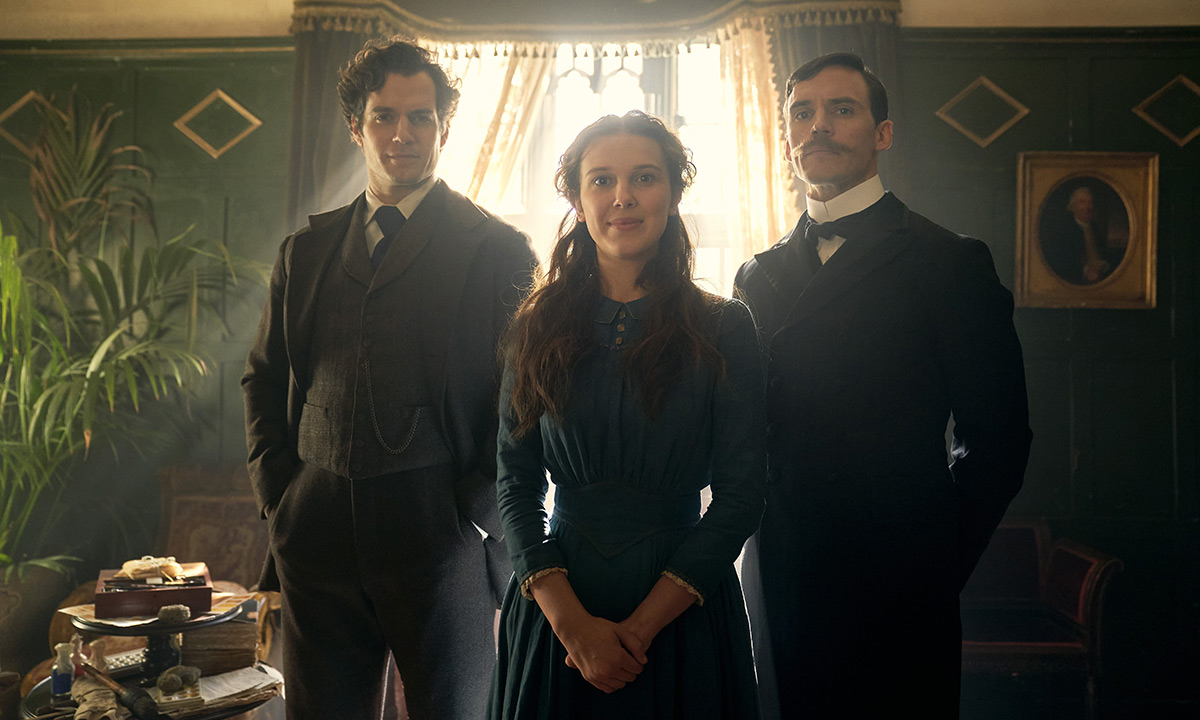
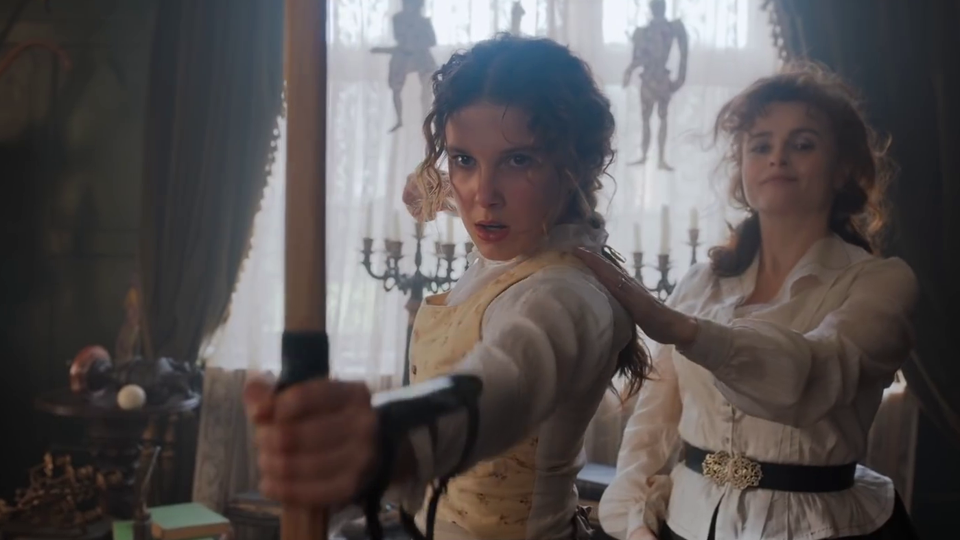
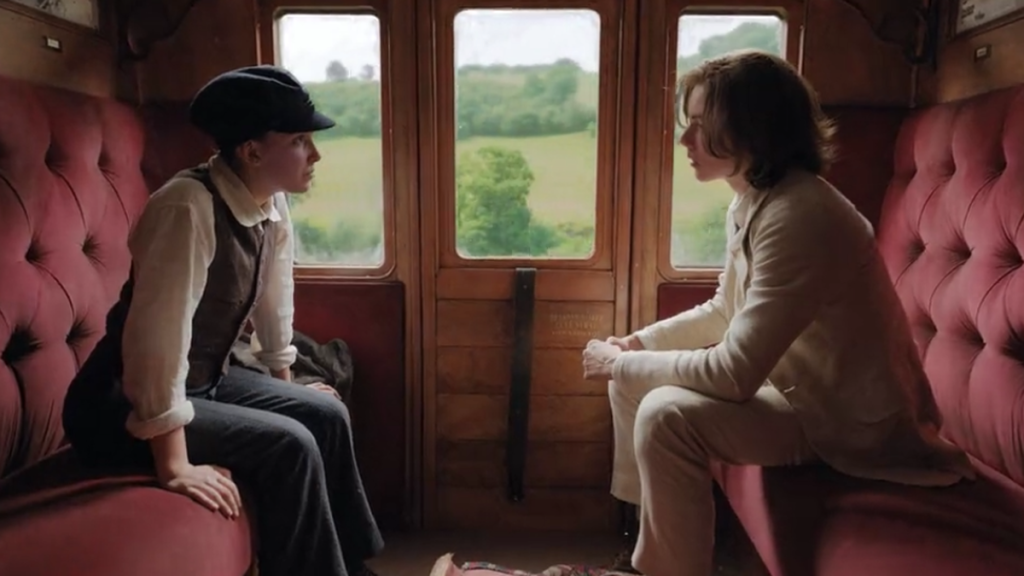
While playing Eleven in Stranger Things made an instant star out of Millie Bobby Brown, Enola Holmes let her put that star power to use as not only the titular character but also a producer for this adaptation of Nancy Springer’s YA book series, one of Brown’s favorites as a child. As the previously unknown sister of Sherlock and Mycroft Holmes (here played by Henry Cavill and Sam Claflin, respectively), Enola shares their natural precociousness, thanks in large part to the unconventional homeschooling of her mother Eudoria (Helena Bonham Carter). When Eudoria suddenly disappears, leaving only vague clues behind, Enola flees the expectations of her brothers to become a conforming Victorian lady and runs off to London in search of her mum while also stumbling into a murder plot involving a young marquess (Louis Partridge).
Despite some menace and light violence, the film is a light-hearted affair through and through, and I’m glad to see that clean, tween-friendly adventures of this quality are still being made. Brown shows far more charisma than in the role of Eleven and uses it to playful effect as she breaks the fourth wall, conversing freely with the audience like a first-person narrator. Some Sherlock Holmes fans might be disappointed (I understand many were) with Cavill’s restrained and less-than-omniscient portrayal of the famous detective, but he’s more of a side character here and still employs his famed deductive ability on occasion. Claflin’s Mycroft is more of an antagonist, acting as the aggressively traditional authority figure trying to crush Enola’s spirited individuality with corsets and boarding school, which by now have become clichéd forms of Victorian oppression.
The period costumes and locations are top-notch, and Enola’s puzzle-solving and gentle subversions keep the plot engaging, despite it feeling overly complex at times. One element that felt odd was Enola’s mother, who is shown to be her hero and dearest inspiration for thinking outside the box yet also is implied to be involved in some kind of feminist terrorist plot. That storyline is never resolved, and her final scene doesn’t really compensate for how she abandoned her daughter without explanation, leaving her character in a strange position of semi-sympathy. Hopefully, the sequel due later this year will address that further and give Brown another opportunity to bring her appealing character to life.
Best line: (Sherlock, giving sleuthing advice) “Look for what’s there, not what you want to be there.”
‘I have not stood long on the strand of life, (Aurora Leigh by Elizabeth Barrett Browning) And I’m learning (though it sometimes really hurts me) (“Learning” by Judith Viorst) The irresponsibility of the male (“Parturition” by Mina Loy) Everything was theirs because they thought so. (“The Last One” by W. S. Merwin) ’Tis paid with sighs a plenty (“When I Was One-and-Twenty” by A.E. Housman) And you just know he knows he knows. (“The Sloth” by Theodore Roethke) The woman to be nobler than the man, (Aurora Leigh by Elizabeth Barrett Browning) Meekly we let ourselves be diverted (“Great Infirmities” by Charles Simic) And woman in a bitter world must do the best she can. (“The Harpy” by Robert Service)
Mere women, personal and passionate, (Aurora Leigh by Elizabeth Barrett Browning) Somewhere ages and ages hence: (“The Road Not Taken” by Robert Frost) ‘Thou shalt not live by dreams alone (“Religious Instruction” by Mina Loy) Go, gird thyself with grace; collect thy store (“The Rights of Women” by Anna Laetitia Barbald) Of blue midsummer loveliness, (“A Summer Morning” by Rachel Field) of love’s austere and lonely offices? (“Those Winter Sundays” by Robert Hayden) Of lads that wore their honors out (“To an Athlete Dying Young” by A.E. Housman) Of lusting, laughter, passion, pain, (“Prelude” from Ballads of a Bohemian by Robert Service)
In Criticks hands, beware thou dost not come; (“The Author to Her Book” by Anne Bradstreet) Why do you show only the dark side?” (“Käthe Kollwitz” by Muriel Rukeyser) It’s the keeping-your-chin-up that’s hard. (“The Quitter” by Robert Service) For men may come and men may go (“The Brook” by Alfred, Lord Tennyson) But ah, my foes, and oh, my friends— (“First Fig” by Edna St. Vincent Millay) I might as well be glad!” (“The Penitent” by Edna St. Vincent Millay) I shall not pass this way again. (“I Shall Not Pass This Way Again” by Anonymous)