• Home
  • About Me
  • THE LIST Through the Years
  • Top Twelves and More
  • The End Credits Song Hall of Fame

Rhyme and Reason

~ Poetry Meets Film Reviews

Rhyme and Reason

Tag Archives: Comedy

Spider-Man: Homecoming (2017)

29 Friday Dec 2017

Posted by sgliput in Movies, Poetry, Reviews, Writing

≈ Leave a comment

Tags

Action, Comedy, Sci-fi, Superhero, Thriller

See the source image

If there is money to be milked,
Hollywood is there!
If there are empires to be built,
Hollywood will dare!
If there are purists they can jilt,
If there are wishes they can wilt,
Hollywood won’t care!

If franchises refuse to die,
Some revel at the sight,
While others weakly question why
And still tune in despite.
But if you silence your outcry,
Hollywood might satisfy.
They sometimes get it right.
_________________

MPAA rating: PG-13

I was among the most skeptical when yet another Spider-Man was announced, and as amazing as Tom Holland’s debut in Captain America: Civil War was, I still wasn’t sold on Homecoming’s potential. I’m one of those people who grew up loving Tobey Maguire’s Spider-Man, and I’m firmly convinced that no other Spider-Man will replace him as my favorite or Spider-Man 2 as the best in the series. All that said, I loved Spider-Man: Homecoming far more than I was expecting and certainly more than the Andrew Garfield films (which I didn’t exactly hate either).

The trick that this new Disney/Sony partnership pulls off successfully is making this version of Spider-Man sufficiently different that it doesn’t feel like a rehash of what we’ve already seen. For example, Peter Parker’s origin story is completely skipped, assuming the audience already knows the basics about a radioactive spider and the death of his Uncle Ben. Instead, it focuses much more on Peter’s high school life, with fawning crushes, scholastic decathlon training, and his geeky friend Ned (Jacob Batalon) and more nonchalant friend Michelle (Zendaya). The typical Mary Jane, Gwen Stacy, and Harry Osborne aren’t here (mostly), and instead we have some fantastic continuity with the MCU, embodied in Tony Stark (Robert Downey, Jr.) as Peter’s detached mentor/benefactor.

See the source image

In avoiding past Spider-Man movies, we also get a new villain in Michael Keaton’s Adrian Toomes, who becomes the Vulture using alien tech left over from the Chitauri battle in The Avengers. Aside from the priceless in-joke of casting Birdman himself as the Vulture, Keaton makes his embittered contractor-turned-weapons dealer one of the best and smartest Marvel villains in a while, one who’s not evil for evil’s sake but who is still ruthless in doing what he thinks is necessary and justifying it as a family man. His battles with Spider-Man are far more thrilling than I expected from a second-rate villain like Vulture, and the fact that his motivations don’t involve world domination or destruction is actually refreshing at this point in the MCU.

Of course, the biggest challenge goes to Holland, who embraces Peter Parker’s inexperience and high school geeky side with appealing charm and an amusing tendency of being awestruck by all the coolness he encounters. What’s missing is his reason for helping people, which is unavoidable if you leave out Uncle Ben, but the filmmakers managed to create a decent replacement inspiration. With the high-tech suit provided by Stark, there’s a lot of fun to be had as Peter learns the bells and whistles available to him, including his own A.I. he names Karen (Jennifer Connelly), but he also begins thinking that the suit is what makes him a hero. How he comes to terms with that is quite well-handled, even if “With great power comes great responsibility” is still better.

See the source image

Surprisingly, Spider-Man: Homecoming exceeded my expectations (especially an awesome action scene at the Washington Monument), which is always welcome. There are still things I would have changed, from an off-hand porn joke to a few politically correct jabs. Plus, I’m not a fan of Marisa Tomei as the new “hot” Aunt May, who is no longer the wise and pious counselor of past versions and made me miss Rosemary Harris from the first three films. Even so, the plentiful humor and overall entertainment value of the whole made up for these lesser elements, though my VC was less pleased with the constantly joking tone.  So, although it doesn’t exceed Tobey Maguire’s movies for me, I’m largely satisfied with a new generation growing up with this Spider-Man (especially since they’ll likely still watch the original to get the full origin story).

Best line: (Peter) “I’m nothing without the suit!”  (Tony) “If you’re nothing without the suit, then you shouldn’t have it.”


Rank: List-Worthy


© 2017 S.G. Liput
524 Followers and Counting


Serendipity (2001)

24 Sunday Dec 2017

Posted by sgliput in Movies, Poetry, Reviews, Writing

≈ 4 Comments

Tags

Christmas, Comedy, Romance

See the source image

The incidence of miracles is far too low these days.
Coincidence is cited now, when “accidents” amaze,
But when it seems that chance is too unlikely an excuse,
We start to dream of destiny and what it might produce.

Call it what you will, my friends: coincidence or fate,
Or more precisely, Providence that makes our courses straight.
Though some may call it all a crock, a universe of chance,
When once you glimpse the grand design, ‘tis more than happenstance.
____________________

MPAA rating: PG-13

Around Christmas, I tend to watch traditional movies I’ve seen a million times (It’s a Wonderful Life, Miracle on 34th Street, The Polar Express, etc.), so I wasn’t sure at first what would be best for the season. Then, I remembered that Serendipity begins and ends at Christmastime, making it a good fit for a Christmas Eve post. Somehow, I thought that most rom coms since the ‘90s just weren’t worth my time, but Serendipity surprised me as a wholly charming and enjoyable member of a genre that deserves a better reputation.

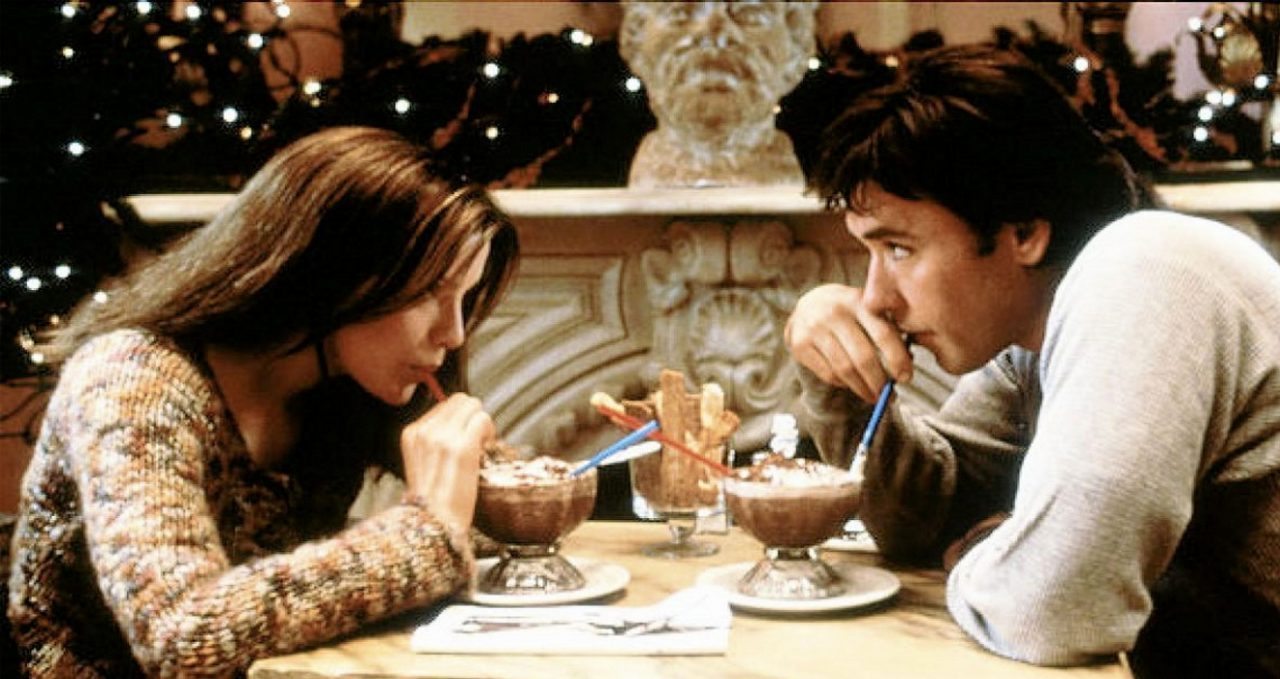
It begins with a classic meet-cute for Jonathan Trager (John Cusack) and Sara Thomas (Kate Beckinsale), both Christmas shoppers after a pair of gloves at Bloomingdale’s. Despite already having partners, there’s an instant connection as they have dessert together at a restaurant called Serendipity 3, and while Jonathan is quick to acknowledge it, Sara is more hesitant and unconvinced that they were “destined” to meet. Using a dollar bill, a book, and an elevator, she decides to test fate a bit too far, and the two potential lovebirds go their separate ways. Fast forward a few years, and both of their relationships have progressed to engagement. Yet, there’s also a gnawing sense of what-could-have-been, and they both decide to search out what might be destiny.

See the source image

No romantic comedy can be successful without two appealing leads, and Cusack and Beckinsale have marvelous chemistry together, that hard-to-define bond that simply either works or doesn’t. It definitely works here, and I could see how their short time together at the beginning could give them pause on whether this stranger might be “the one.” Beckinsale is lovely as always, though for some reason, even with his sweetly obsessive role in Say Anything, neither I nor my VC thought of Cusack as a romantic lead, yet he affably fills the kind of role that could have gone to Tom Hanks a few years earlier.

The dialogue may not be on the level of Nora Ephron’s, but there’s a good number of chuckles along the way as Jonathan and Kate go on a scavenger hunt for clues as to where their mystery lover might be. Eugene Levy puts in an amusingly offbeat side role, while Jeremy Piven and Molly Shannon are perfect companions in trying to keep the two star-crossed lovers relatively grounded. The themes of fate vs. coincidence are nicely laced throughout as well, sometimes for comedy (“Maybe the absence of signs is a sign!”) but also in more thoughtful ways, especially how the audience gets to see connections and near-misses that the characters don’t.

See the source image

I wasn’t sure exactly how much I liked Serendipity at first. One minorly major complaint was in how Jonathan and Sara’s other love interests are treated. Usually, this kind of movie shows that the initial relationship is doomed from the start, making the breakup inevitable, but while that is the case with Sara and her weird fluting boyfriend, Jonathan’s alternative girl is a little too viable a match, making me feel sorry for her by the end. I thought that might be a deal-breaker for me in deciding Serendipity’s ranking, but after seeing it a second time with my VC (who also enjoyed it), it’s a minor complaint in an otherwise satisfying romance. Predictable but very watchable, it falls a bit short of my absolute favorite rom coms, but I’ve come to value any movie that leaves me smiling by the end.

Best line: (Jonathan’s friend Dean) “If you want to improve, be content to be thought foolish and stupid.”


Ranking: List-Worthy


© 2017 S.G. Liput
522 Followers and Counting


A Merry Christmas to all and to all a good night!

Thor: Ragnarok (2017)

06 Wednesday Dec 2017

Posted by sgliput in Movies, Poetry, Reviews, Writing

≈ 2 Comments

Tags

Action, Comedy, Sci-fi, Superhero

See the source image

When terrorized by Ragnarok,
(The end of the world? What a shock!),
Mighty Thor will not shrink.
With a boom and a wink,
He’ll prevail while the rest of us gawk.
_______________________

MPAA rating: PG-13

It’s safe to say that the Thor movies are probably the least loved of the Marvel Cinematic Universe (except maybe The Incredible Hulk, but with Mark Ruffalo’s recast, that one’s barely even connected). Thor and Thor: The Dark World aren’t bad films and are still perfectly entertaining fusions of Shakespearean drama and alien hammer battles, but compared with the rest of the MCU, they’re just not that memorable, despite being the source of Marvel’s best villain thus far, Tom Hiddleston’s Loki. Hiddleston’s trickery and Chris Hemsworth’s muscular appeal helped the Thor movies not drag down their more acclaimed cousins, but it seems that Thor has finally found his hit, not with earth-threatening gravitas but tongue-in-cheek comedy, courtesy of New Zealand director Taika Waititi.

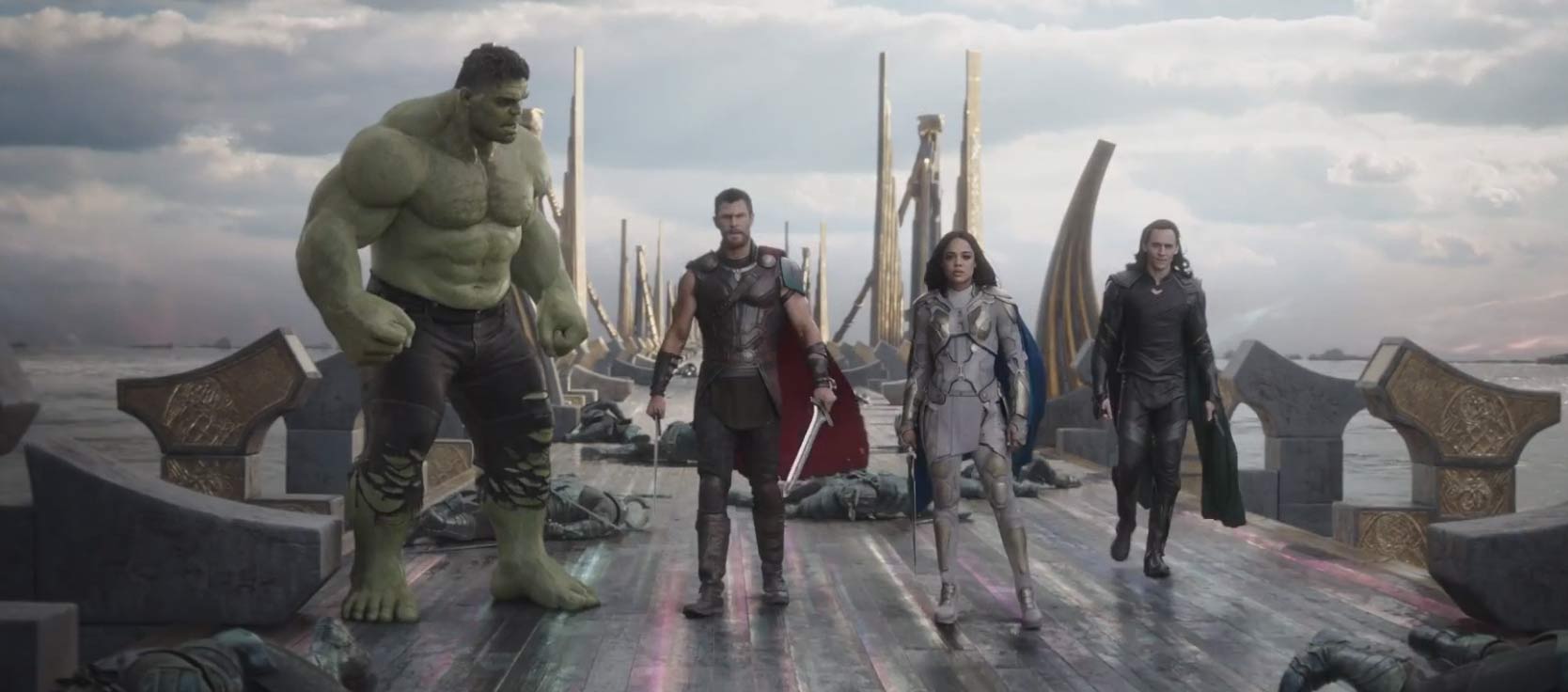
Those paying attention during Captain America: Civil War might have noticed that two of the Avengers were absent from the whole schism. So what were Thor and the Hulk up to in the meantime? Quite a lot actually. The post-credits scene of Doctor Strange hinted that Thor would be looking for his father Odin, but aside from a neat little cameo for the Sorcerer Supreme, the search for Odin isn’t a main plot point. Instead, there’s the arrival of Thor’s long-banished sister Hela (Cate Blanchett), the goddess of death, whose power overwhelms Thor and his hammer and sends him hurtling onto a distant planet of garbage and gladiators. There he encounters both the sadistic Grandmaster (ever-colorful Jeff Goldblum) and the long lost Hulk, whose two-year leave has widened his vocabulary and made the big green guy more of an actual character than merely a secret weapon, borrowing from the Planet Hulk storyline of the comics.

See the source image

While most of the buzz for Ragnarok has been positive, there is a minority who find that the lighter tone cheapens the proceedings, especially considering how dark Hela’s takeover gets. I can definitely see that; the body count is high, including characters from past Thor movies, yet only one gets even some brief token grief, while the others are sloughed off without a passing glance. This might seem callous in a film so filled with gags that it clearly doesn’t want you to dwell on anything but the entertainment. But entertaining it is.

Fans of Guardians of the Galaxy should be quite pleased with how Ragnarok emulates its quirky alien diversity, but Waititi adds his own Kiwi sense of humor, in person actually playing a soft-spoken rock-covered gladiator named Korg. He also brings along Rachel House (as the Grandmaster’s assistant) and a briefly seen Sam Neill (as an Odin actor) from his previous film Hunt for the Wilderpeople. I was also shocked to learn that Matt Damon has a cameo I totally missed. The jokes are many, often droll and sometimes at the expense of past Marvel films, stepping back from the expected superheroics to chuckle before doing them anyway. It’s a fun mix, particularly the rivalry/rapport between Thor and Loki, and although Ragnarok also follows Guardians of the Galaxy in thinking it’s funnier than it actually is, there’s enough varied humor here to please anyone, especially when the whole cast seems to have had so much fun making it.

The action, though, is where Thor: Ragnarok really ups the ante. From the big Thor vs. Hulk fight to a Guardians-ish spaceship chase, the effects are an epic thrill to behold, augmented by the presence of Hemsworth’s more cheeky Thor and likely fan favorite Valkyrie (Tessa Thompson). Karl Urban also has a nice little character arc as a would-be lackey of Hela’s, along with one of the many awesome scenes of the finale. But there’s no beating Thor’s big battle toward the end, made brilliantly epic by Led Zeppelin’s “Immigrant Song.”

See the source image

So yes, Thor: Ragnarok is far more memorable than its predecessors, attracting every conceivable synonym of “fun,” “epic,” and “awesome.” While it has its dramatic moments, the constant jokery keeps things so light that the gravity of certain situations only sinks in later. Despite the fact that Ragnarok leaves several lasting impacts on the MCU, it still feels oddly disposable, like really amusing filler meant to set the stage for next year’s Infinity War. (Can’t wait!) It may or may not go down as one of Marvel’s best, but even if it doesn’t, it’s still Thor-oughly entertaining.

Best line: (Bruce Banner, to Loki) “Last time we saw you, you were trying to kill everyone. What are you up to these days?”   (Loki) “It varies from moment to moment.”


Rank: List-Worthy


© 2017 S.G. Liput
517 Followers and Counting


VC Pick: Fletch (1985)

03 Sunday Dec 2017

Posted by sgliput in Movies, Poetry, Reviews, Writing

≈ Leave a comment

Tags

Comedy, Mystery, Thriller, VC Pick

See the source image

Hello, sir, I’m Roland Dough,
I work for someone you don’t know,
And last I checked,
I must inspect
The volume of your stereo.

While I’m here, I thought I’d ask
If you’ve seen any shady stuff,
Like backroom deals
Or big reveals
Or guys like me who just can’t bluff.

Of course, you’ve not seen me before;
I think I’d know if I was seen.
I just stopped by
To satisfy
My need to be in every scene.

No, no, don’t bother getting up.
Your stereo broke; what a shame!
I’m finished, so
I’d better go.
It’s time to pick another name.
__________________

MPAA rating: PG (perhaps PG-13 nowadays)

My VC has a habit of having me rewatch films I saw only once years ago, just to see if my vague memories are reliable. In this case, I recalled Fletch favorably, even if every detail of the plot had long ago been jettisoned from my mind. But now that I’ve seen it again, that’s a crying shame, because I enjoyed Fletch a lot more than I expected. Chevy Chase’s comedy can be hit-and-miss for me, but when he’s good, he’s good.

See the source image

Chase plays investigative reporter Irwin Fletcher (one guess what his nickname is), who is in the middle of an undercover drug bust when he is picked up by dying millionaire Alan Stanwyck (Tim Matheson), who promises to pay Fletch to kill him. Since not asking questions isn’t in his DNA, Fletch then sets out doing what he does best, following leads, dressing up, and lying through his teeth in pursuit of the truth.

While it’s based on a book series I didn’t know existed, I felt Fletch might have been intended to mirror the success of Beverly Hills Cop. Both of them cast an SNL alum as an improvisational investigator, backed by similar-sounding Harold Faltermeyer scores. Whereas Axel Foley had a gun to do off-hours police work, Fletch is entirely dependent on his wit and sharp tongue, and it’s great fun watching him scramble to plug the holes in his stories. Throughout the film, he impersonates a doctor, a beach bum, a country club guest, an insurance investigator, and probably some I’m forgetting, all with hilarious fake names, and Chevy Chase sells the verbal gymnastics with aplomb.

See the source image

It was also fun recognizing some of the secondary cast, from Geena Davis as his news office buddy, Joe Don Baker as a corrupt police chief, and even The Waltons’ Jim-Bob (David W. Harper) as a young car thief, not to mention small roles for George Wyner, Kenneth Mars, George Wendt, and M. Emmet Walsh. (The “Moon River” scene with Walsh as a doctor was literally the only thing I remembered from last time.) It’s a talented cast and an intriguing, weaving plot, but Chase is the anchor, whose wry narration and slick spontaneity make Fletch possibly his best role, though I still prefer Foul Play overall. Now to remind myself of the sequel I also saw only once called Fletch Lives, though I hear Fletch Dies never got off the ground. Just kidding, though there’s still talk of a re-cast prequel called Fletch Won. This franchise may not be dead yet.

Best line: (Dr. Dolan, speaking of someone Fletch doesn’t know) “You know, it’s a shame about Ed.”
(Fletch) “Oh, it was. Yeah, it was really a shame. To go so suddenly like that.”
(Dr. Dolan) “He was dying for years.”
(Fletch) “Sure, but… the end was very… very sudden.”
(Dr. Dolan) “He was in intensive care for eight weeks.”
(Fletch) “Yeah, but I mean the very end, when he actually died. That was extremely sudden.”


Rank: List Runner-Up (a very close one)


© 2017 S.G. Liput
517 Followers and Counting


It Could Happen to You (1994)

19 Sunday Nov 2017

Posted by sgliput in Movies, Poetry, Reviews, Writing

≈ Leave a comment

Tags

Comedy, Drama, Romance

See the source image

“If I won the lottery,” so many say.
“If I won the lottery,” oh, what a day!
“The things I would buy and the bills I could pay,
The dreams I could fill and the places I’d stay!”
And that’s why so many will plead and will pray
For six random numbers confirming their luck.

If you won the lottery, what would you do?
If you won the lottery, would it change you?
Dreams can be marvelous when they come true
But often result in more pain than you knew.
While waiting for fortune and fame to break through,
Enjoy life a bit before you’re money-struck.
(And then make it count when you do make a buck.)
_________________

MPAA rating: PG

There’s something refreshingly old-fashioned about It Could Happen to You. For a ‘90s rom-com with Nicolas Cage and Bridget Fonda, I can easily envision a 1940s version with Jimmy Stewart and June Allyson. (It’s easy for me to picture them together after The Glenn Miller Story.) There’s a wholesomeness here that you just don’t see nowadays, strengthened by the “Once upon a time” fairy tale narration by Isaac Hayes.

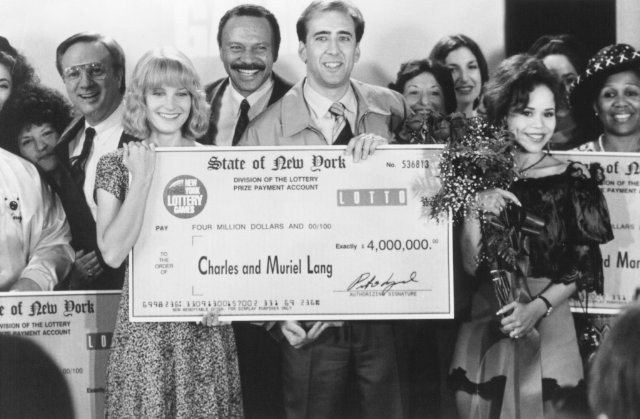
For all his nuttier roles, Cage is admirably down-to-earth as responsible NYPD officer Charlie Lang, who’s beloved of the whole neighborhood except for his critical wife Muriel (Rosie Perez). Strapped for cash at a diner one day and too upstanding to not leave a tip, he promises down-and-out waitress Yvonne (Bridget Fonda) that he’ll split his lottery ticket with her if he wins. Lo and behold, he does, much to Yvonne’s delight and Muriel’s chagrin. Everyone uses their newfound fortune differently, and it doesn’t take long to see Charlie and Yvonne deserve each other far more than greedy Muriel or Yvonne’s also-greedy husband (a barely recognizable Stanley Tucci).

See the source image

Based on and greatly exaggerating a real life story from ten years prior, It Could Happen to You begins with a universal what-if question of winning the lottery and extends that to ask whether Charlie should uphold his promise and how best to wield such riches. We as the audience may not be as humanitarian as Charlie and Yvonne, who freely share their wealth with the less fortunate, but we’re hopefully not as heartless as the scheming Muriel. Most people probably fall somewhere between the two extremes, but seeing them side by side reminds us just how laudable a Charlie or an Yvonne is in this selfish world. Yvonne even points out that, as decent people, they seem to be “freaks” in a place like New York City, but the end suggests that there are far more lovers of decency than the news headlines would have us believe.

Despite having an all-around charm to it, I must admit that It Could Happen to You isn’t very strong in the comedy department. I don’t remember laughing once, though Cage and Fonda largely made up for that with their sweet chemistry. On the other hand, Rosie Perez’s grating voice made her excessively unpleasant, as if the courtroom scenes with her calculating lawyer weren’t enough. Don’t you hate those scenes where some devious lawyer twists the facts to paint the worst possible picture of an innocent defendant who’s too inarticulate to escape being backed into a corner? I do, so the film’s second half was a tad annoying before it bounced back to satisfying.

See the source image

With the classic tune “Young at Heart” sung by both Frank Sinatra and Tony Bennett, the film evokes a vaguely similar tone as Sleepless in Seattle but could have used a more humorous script. Still, lacking much profanity or objectionable content, it’s a reminder that Hollywood once did PG-rated romances just as well as the R-rated ones. Fonda and Cage have rarely been so appealing, and the end is likely to leave you with a smile.

Best line: (Charlie, about Muriel) “It’s like we’re on two different channels now. I’m CNN, and she’s the Home Shopping Network.”


Rank: Honorable Mention


© 2017 S.G. Liput
517 Followers and Counting


An American Werewolf in London (1981)

29 Sunday Oct 2017

Posted by sgliput in Movies, Poetry, Reviews, Writing

≈ 3 Comments

Tags

Comedy, Horror, Thriller

It’s tough to be a werewolf.
It quickly does get old.
It’s sore and strange
To feel the change
And watch your bones all rearrange
And you’re more apt to catch the mange,
Although you’re rarely cold.

It’s tough to be a werewolf.
The lupine life is lone.
If you have friends,
It all depends,
But likely they’ll meet grisly ends
And then it’s tough to make amends,
For corpses tend to groan.

So when you hear “Stay off the moors,
Keep to the roads, don’t take detours,”
Pay heed to those who stay indoors,
Or you will see when on all fours,
It’s tough to be a werewolf.
_____________________

MPAA rating: R

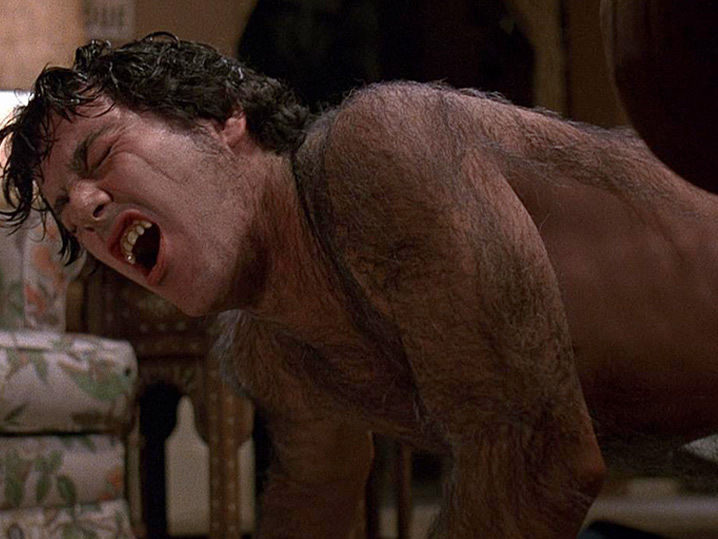
After yesterday’s vampires, for my second Halloween-themed review, I watched the cult classic An American Werewolf in London, which is mainly known for winning the very first Academy Award for Best Makeup for Rick Baker’s werewolf effects. I’ll just say up front that this film had all the things I usually try to avoid in horror and movies in general—bloody violence, sex and nudity, profanity—but I will try to put that aside and appraise the film itself.

The set-up is a classic one: two unwise American visitors to the English countryside wander where they shouldn’t and are attacked by a vicious creature. Jack (Griffin Dunne) is killed by the beast, but David (David Naughton, who lost his Dr. Pepper deal after this movie) survives, only to be told by Jack’s ghost that David is now a werewolf. Obviously, no one would believe the decaying apparition of a dead friend, so David ignores him and goes home with a lovely nurse (Jenny Agutter). But wait! He’s changing…he is a werewolf! And now he will prowl London in search of helpless escalator-riding victims.

Okay, maybe that was too dramatic, but to be honest, I expected a little bit more from what is billed as a horror-comedy. True, there’s some humor to Jack and David’s early banter, the wry moon-related soundtrack, and particularly in Jack’s undead suicide advice, but this isn’t quite what I would consider a comedy. It’s like the opposite of Ghostbusters: I consider that a comedy with some horror while this is a horror with some comedic lines, but neither quite fits the horror-comedy label. The horror elements are fairly straightforward (creepy locals, foolish victims, full moon; check, check, check), but director John Landis fills the werewolf attacks with looming terror, especially with first-person views as David chases a man through the London subway.

It was a decent horror film overall, but ultimately it’s really memorable for two things, one good, one bad. The good is that Rick Baker absolutely deserved that Oscar, since David’s transformation, anomalously set to Sam Cooke’s version of “Blue Moon,” still holds up as an impressive feat of makeup effects, one that predated everything computers could do today. It’s interesting to note that wolf men seem to attract makeup awards, since 2010’s The Wolfman also won the Best Makeup Oscar. As for the bad, what was with that ending? Perhaps the abruptness of the final scene was also intended for comedy, but for me, it was a bit too jarring a conclusion, though I’m sure it gets a chuckle from cult fans on their hundredth rewatch. For a true horror comedy, though, I’ll side with the vampires and stick with The Lost Boys. At least the ending doesn’t suck.

Best line: (a boy at the zoo) “A naked American man stole my balloons.”


Rank: Honorable Mention


© 2017 S.G. Liput
517 Followers and Counting


Cars 3 (2017)

24 Sunday Sep 2017

Posted by sgliput in Movies, Poetry, Reviews, Writing

≈ Leave a comment

Tags

Animation, Comedy, Drama, Family, Pixar, Sports

Image result for cars 3

The world will see you as they choose,
No matter how they may deny.
They see exteriors so well
It takes hard work to break that shell,
To prove you’re more than meets the eye
And pay the greater dues.

The world’s opinions can infect
And sap the will to prove them wrong.
You balk on whether to begin,
But those who don’t will never win.
To everyone such doubts belong,
So prove them incorrect.
_________________

MPAA rating: G

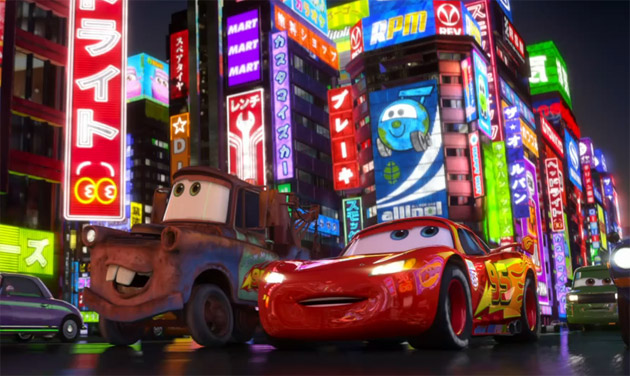
I’m sure many, like me, approached Pixar’s third Cars movie with some hesitance, unsure if it was being made as a more fitting end for the series than Cars 2 or because Disney and Pixar were just trying to cash in on one of their most profitable (and least loved) franchises. While I still wasn’t sure through the first half of the movie, I’m glad to say it’s the former. Cars 3 is far more like the original than the over-the-top sequel, returning its sights to Lightning McQueen and the racing world and totally ignoring all the spy stuff of its immediate predecessor. Thankfully, Mater is once again a mere side character too.

Early on, we’re treated to a montage of Lightning’s time in the sun as a racing champ. After years on top, though, he’s suddenly outclassed by newcomer Jackson Storm (Armie Hammer), and much as Lightning overshadowed the King in the first film, analysts and fans are suddenly enamored with Storm’s ascent and scientifically proven training. After pushing himself too far, Lightning faces a career crisis when his contract is sold to a new owner named Sterling (Nathan Fillion, who I’m glad is still finding work), and his future in racing comes down to raw performance and perhaps a new way to train with motivational coach Cruz Ramirez (Cristela Alonzo).

Image result for cars 3 cruz

I will say this felt like one of Pixar’s more uneven films, making me wonder at times whether it was more like the first or the second Cars in terms of story quality and character interactions. There were times in the first half when things just felt “off” for a Pixar film, like when Bonnie Hunt’s Sally encourages Lightning in highly generic fashion, and some of the new characters take some time to get used to them.

Yet as the story develops, Cars 3 grows into a worthy conclusion for the series. It’s also a fitting farewell to two members of the original voice cast who have since died, Paul Newman as Doc Hudson and Tom Magliozzi of “Car Talk” fame as one of Lightning’s Rust-eze sponsors, both of whom are sort of resurrected via pre-recorded audio, which is underused but still touching. All of the other cast members (save for George Carlin) return as well, except for Michael Keaton as Chick Hicks, replaced by the very different-sounding Bob Peterson.

Lightning’s story is all about whether he’ll give up and ride on his fame or risk damaging his reputation by striving further than he is able, a strong yet subtle conflict with real-world parallels, such as tennis player Roger Federer for example. (My VC and I love him and have debated whether he should quit while he’s ahead, yet he keeps on eking out wins.) Lightning’s main goal is to be able to choose when he quits rather than being forced out of the game as Doc was. Yet by being constantly called a “legend,” he sees that everyone considers him past his prime, and Cruz makes it very clear that she considers him old as dirt.

Despite her initial presumptions, though, Cruz becomes something that Lightning has never had before, a protégé, one who has offered so much support to others through training that she’s never kept any of that confidence for herself. The fact that she is played by a Latina woman is no coincidence either, and she becomes a fine example for minority underdogs daring to be taken seriously. The dynamic between Lightning and Cruz isn’t without its bumps, but how it plays out by the end is a clever realization of both of their goals and a perfect way of bringing Lightning’s character full circle.

Image result for cars 3

As I said, except for maybe a couple racers, Cars 3 essentially ignores Cars 2 altogether, with not a single mention of the spy plot and even casting off key details. For instance, Cars 2 mentioned that the Piston Cup had been renamed in Doc’s honor, but here it’s the Piston Cup again. Plus, I noticed a scene in my recent viewing of Cars 2 where Lightning had product endorsements and plenty of merchandise, making me wonder why he is now so reluctant to “cash in” as a brand. Personally, I think Cars 2 was all a dream or one of Mater’s tall tales because Cars 3 stays as relatively grounded as the first film and thus is a far better continuation of its story. Despite a rocky start, Cars 3 turns out to be a superior sequel than the cash grab it might have been, raising Pixar’s animation quality even higher and providing a satisfying end to the trilogy. At least until they come up with a Cars 4. Please, Pixar, this franchise is one case where you should quit while you’re ahead.

Best line: (Smokey, Doc’s former crew chief) “You’ll never be the racer you once were. You can’t turn back the clock, kid. But you can wind it up again.”


Rank: List-Worthy (joining the first Cars)


© 2017 S.G. Liput
511 Followers and Counting


Cars 2 (2011)

20 Wednesday Sep 2017

Posted by sgliput in Movies, Poetry, Reviews, Writing

≈ Leave a comment

Tags

Action, Animation, Comedy, Family, Pixar, Sports, Thriller

Image result for cars 2 film

Imagine a world of living cars,
With windshields for eyes and mouths in their grills.
Now picture that some are elite racing stars,
And some are so junky, they’re fit for landfills.

Okay, so you got it? That’s good. Picture now
One racecar is cocky and needs a good lesson.
He’s stuck in a small town, which helps him somehow
Find more happiness than what he had success in.

You with me? All right, after that, visualize
A worldwide grand prix and an evil car plot,
And British car spies to take on the bad guys
And a tow truck that helps doing what he ought not
And maybe explosions and one car that flies.
The racecar’s there too, as a mere afterthought.

Wait, where are you going? No need to be cruel.
It may not be perfect, but it will look cool!
___________________

MPAA rating: G (PG would probably be better, since cars are actually killed in this one)

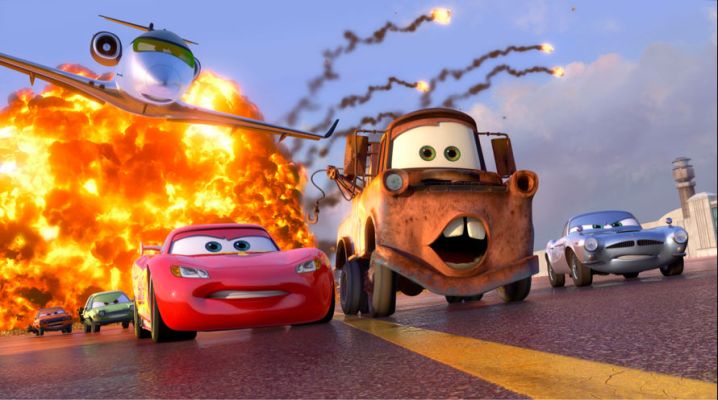
Before I review Cars 3, I thought I should get to the one Pixar film I haven’t covered yet, the black sheep of the Cars franchise and Pixar in general, Cars 2. Up until 2011, it seemed that Pixar could do no wrong, which I can say as someone who still greatly enjoys the first Cars, even if it is a rip-off of Doc Hollywood. Yet the first non-Toy Story sequel in Pixar’s lineup proved to be quite the mixed bag; it remains the only Pixar movie to have a “Rotten” score of 39% on Rotten Tomatoes. It follows Lightning McQueen on a worldwide racing grand prix, which is threatened (and overshadowed) by an evil cabal of lemon cars that only British secret agents and Mater can prevent from fulfilling their heinous plot. Whereas other Pixar films utilize inspiration to tell charming and relatable stories, Cars 2 is inspiration run amok and not really in a good way.

Cars established the world of sentient automobiles that has become Pixar’s biggest cash cow, and despite the outlandishness of its surface concept, the actual events of the plot were fairly down-to-earth, urging racing hotshot Lightning McQueen to slow down and enjoy the ride. By incorporating international espionage and globe-hopping plots into its world, Cars 2 is like director John Lasseter’s personal fan fiction, saying instead to speed up and enjoy the ride. The world of living cars takes a certain amount of suspension of disbelief to not ask questions like “Who builds the cars?” or “How do they do things that require hands and manual dexterity?” I was able to put such issues aside for the first film, but with James Bond-style gadgets and visits to different countries and car ethnicities, the suspension of disbelief is seriously strained here.

Image result for cars 2 film

And that’s on top of its other issues. While Lightning and all the other characters from the first film are still present (minus Paul Newman’s Doc Hudson, who is implied to have passed away), Cars 2 puts Mater front and center. I enjoyed Larry the Cable Guy’s bumpkin tow truck in the first film as another humorous member of Radiator Springs, all of whose inhabitants served as a good-natured contrast to Lightning and his crowd. Yet there’s such a thing as too much Mater, and his oblivious ineptitude grows grating when it becomes the main course, particularly as moments of mistaken identity pile up to make the British spies assume Mater is an American secret agent. I could tell Mater’s character here would be overbearing early on, when he spends the whole day with Lightning and then acts all sullen and gloomy when Lightning wants to spend some alone time with his girlfriend.

Worse still is how Mater’s character is tied into the film’s message of not condemning one’s friends for who they are or wishing them to change. Such a moral could be good and worthwhile, but it just doesn’t work when applied to Mater, who consistently acts like a fool in public and causes Lightning to lose a race. When Lightning gets upset, he’s justified in being upset, yet he’s the one who eventually apologizes. The film doesn’t seem to recognize the difference between changing who you are and behaving properly in different circumstances. Mater even comes to realize how he looks to other people, but despite his feeling bad, it doesn’t really lead to any insight or change on his part.

Add to all that smaller problems, like the light political jab of making “big oil” the bad guys and hailing alternative fuel as the greatest of breakthroughs. Plus, there are numerous scenes that just feel rushed and poorly written, especially toward the end, like the sudden confirmation of Mater having a “girlfriend” or Lightning totally misconstruing Mater’s warnings while simultaneously forgetting that he’s right in the middle of a race.

Image result for cars 2 film

So much negativity, but I don’t mean to bash Cars 2 like some low-rent DreamWorks movie. There’s still fantastic animation and ample imagination and humor on display, even if a lot of it consists of car-related puns. I may object to the secret agent plotline on a logical level, but it still offers some genuinely fun action sequences and eye-candy explosions. Michael Caine and Emily Mortimer are perfectly cast as the British spy cars who manage to mistake Mater for an undercover agent, and there’s cartoony amusement to be had, though the James Bond-ish elements make me hope that The Incredibles 2 works better than Cars 2 since they at least fit well into that superhero world. In conclusion, Cars 2 may not be good Pixar, but it still entertains if you don’t think about it too much. In fact, it’s probably more entertaining the less you think about it.

Best line: (Finn, played by Caine) “I never properly introduced myself: Finn McMissile, British Intelligence.”   (Mater) “Tow Mater, average intelligence.”


Rank: Honorable Mention


© 2017 S.G. Liput
509 Followers and Counting


Cartoon Comparison / 2017 Blindspot Pick #9: Hear Me (2009) / A Silent Voice (2016)

15 Friday Sep 2017

Posted by sgliput in Blindspot, Movies, Poetry, Reviews, Writing

≈ Leave a comment

Tags

Animation, Anime, Cartoon Comparisons, Comedy, Drama, Foreign, Romance

Image result for hear me film

Image result for a silent voice film

Whispered rumors, mocking humor,
Overhearing words of spite,
Talk of blame and guilt and shame,
Made all the worse because they’re right—
Oh, to shut such voices out,
Unkindness barely out of sight.

Those with ears, now let them hear,
But if they can’t, do words turn rude?
Is absence of respect and love
The norm when barriers are viewed?
Perhaps it’s best the deaf don’t hear
Unkindness at such amplitude.

Those who fear the scorn they hear
May hide in deafness self-imposed,
Just as those who never chose
Their handicap can feel exposed.
Yet all who rise must recognize
Life’s eyes and ears should not be closed.
______________________

MPAA rating for Hear Me: Not Rated (should be PG)
MPAA rating for A Silent Voice: Not Rated (could be PG but probably PG-13)

In honor of  September being Deaf Awareness Month, I thought it appropriate to combine my monthly Blindspot Hear Me as a Cartoon Comparison with the anime film A Silent Voice, both of which are about a relationship between a boy and a young deaf girl. I thought to combine their reviews before I’d even seen them, but now that I have, the truth is that they’ve got far more differences than similarities. Hear Me is a Taiwanese romantic comedy with the unique distinction of being mostly in sign language, while A Silent Voice is a poignant tale of a bully’s emotional journey toward forgiveness, with romance staying on the back burner. (I thought they were both Japanese until I saw Hear Me was from Taiwan.) Yet both do address issues of deaf people and how others relate to them.

I’ll start with my Blindspot pick Hear Me, which intrigued me when I heard it was mostly in sign language. That probably won’t please anyone who doesn’t enjoy subtitles, but it makes for some very unique conversations, some of them quite dramatic yet communicated with only hands and facial expression rather than voice. Eddie Peng (who just appeared this year in The Great Wall) plays Tian Kuo, a delivery boy for his parents’ restaurant, who meets a girl named Yang Yang (Ivy Chen) at the public pool while her sister trains for the Deaflympics. Since he knows sign language, he freely converses with her over time, and their relationship goes through some familiar highs and lows, with deafness as a potential complication for their future together.

Image result for hear me film

Let me just say that Hear Me has abundant charm, thanks largely to Eddie Peng, whose goofy, lovestruck antics and faces shine through even without words. There is dialogue too, in Chinese, mainly for the humorous exchanges between Tian Kuo and his bossy mother, but sign language and relative quiet are the rule rather than the exception here. The romance is also refreshingly wholesome, with the most suggestive moment just Tian Kuo seeing Yang Yang’s feet while she’s changing, which gives him a nosebleed. (It’s funny, I’ve seen that happen in anime, but this suggests that it’s something that actually happens to Asian people when they get excited.)

Hear Me actually focuses on the dual relationships of Tian Kuo and Yang Yang, as well as Yang Yang and her deaf sister Xiao Peng (Yanxi Chen). After Tian Kuo offends his crush by disrespecting her meager income, his efforts to win her back may bring to mind John Cusack’s desperation in Say Anything, just instead of holding a boom box outside of her window, he dresses as a tree and gives her a coin bank shaped like a bird. Really similar, see? The humor comes from Tian Kuo’s side, while Yang Yang and her sister face more dramatic issues, like craving independence despite being deaf. Yang Yang earns all the money, while her sister focuses on competing as a swimmer, but when her performance suffers, Xiao Peng comes to regret and resent her own dependence on her sister, climaxing in an all-hand heart-to-heart between them.

Image result for hear me film

Hear Me makes the most of its unique sign-language dialogue, which serves the story rather than being just a gimmick. I liked how a misunderstanding was cleverly prolonged, as well as the few reminders of Yang Yang’s Christianity, since her absent father is said to be a missionary to Africa. It may not be a laugh riot, but there were definitely funny moments, especially a hilariously awkward scene where Tian Kuo’s parents sing his praises to his girlfriend. The central relationship also featured several of those heartwarmingly romantic moments that made Hear Me a pleasure to watch.

Now for A Silent Voice, or as its Japanese title Koe no Katachi translates, The Shape of Voice. While it received many accolades, A Silent Voice suffered somewhat from bad timing, being released just a month after last year’s mega-hit Your Name in Japan. (Incidentally, both were nominated for Japan’s Best Animated Feature Academy Award, but neither one won. That honor went to In This Corner of the World, which I’ll get to at some point.)  Whereas Hear Me was a romantic comedy with some moments of drama, A Silent Voice is much more dramatic in its young-adult setting and is bound to make sensitive viewers reach for the tissues more than once.

Image result for a silent voice film

The film starts with the carefree elementary school life of Shōya Ishida, who is dumbfounded at the arrival of a new student, a girl named Shoko Nishimiya who reveals through writing in her notebook that she cannot hear. While the other students are civil enough at first, the situation quickly devolves into bullying, led by Ishida. These scenes remind you how cruel kids can be and easily make your heart break for Nishimiya, who endures it all with quiet patience, still thinking the best of her classmates. When she finally is forced to change schools, the blame for her departure quickly falls on Ishida, and he takes her place as the class scapegoat and bully target. Fast forward several years to Ishida in high school, and his marginalization has only deepened, even making him consider suicide, until he tries to seek out Nishimiya and make amends.

A Silent Voice makes the uncommon choice of first portraying its main character as a bully, the kind whose maliciousness seems normal to them but traumatic to their target. Yet the same person we dislike from the outset grows into a source of sympathy as he tries desperately to put that childish cruelty behind him. I loved the creative choice of placing X’s over the faces of his fellow classmates, marking them as people he has no chance or desire of knowing, as literal “unfriends.” These X’s become a brilliant way of visualizing Ishida’s mental state and his chances of relationships with others; when he lets his guard down, actually noticing and treating someone else as a person or vice versa, the X falls from their face and allows him a chance at a friend.

Image result for a silent voice film ending

The relationship between Ishida and Nishimiya is touching on multiple levels. They’re both broken people with agonizingly low self-esteems, Ishida because he considers his past offenses unforgivable, Nishimiya because she blames herself for any trouble around her and believes she somehow deserves it, always apologizing for everything. It’s amazing how easily she seems to accept Ishida after what he did, but it’s the mere effort of communicating with her that she values most. Also perceptive are their interactions with the friends they make and how they respond to the bullying: one girl still sees Nishimiya as insincere and worthy of her harassment, while another views herself as completely innocent, even though she watched Nishimiya’s persecution and did nothing. These bullying themes and Ishida himself meant much to me because I too have been on both sides; I was picked on by an older classmate for a time and I did the same myself, something I still regret despite it happening only once. Ishida doesn’t approach Nishimiya with any set goals of how to make it up to her, but he tries to build the relationships he once helped destroy, something any repentant bully would wish they could do as well.

Kyoto Animation has a reputation for excellence, from the popular Haruhi Suzumiya franchise to the highly anticipated Violet Evergarden, and A Silent Voice is proof of the studio’s talents. The animation is painterly with its luminous, pastel palette, and, even if some of the artsy editing makes it unclear at first what just happened in the nonlinear storyline, it looks gorgeous throughout. The abundant use of symbolism and some ambiguous scenes (like the very first and last shots) also make it a film worth analyzing and hearing others analyze. I still consider Your Name the best anime of last year, but A Silent Voice is quite simply a beautiful film that wears its emotions on its sleeve. Anytime it threatens to dip into teen melodrama, it’s revived by a sweet moment or heart-tugging conversation. I laughed out loud twice, I actually cried “No!” at one harrowing part, and the final scene gives me tearful chills every time I see it.

Image result for a silent voice fireworks scene

Going into these two movies, I really expected them both to be List Runners-Up, as so many movies I’ve seen recently have been. On its own, Hear Me probably would be a Runner-Up, but A Silent Voice earns its way onto my List and gives me an excuse to add Hear Me as a tie. Both approach their deaf subjects with great sensitivity, stressing that they are relatable people in search of the same relationships we all crave. Hear Me had far more sign language than A Silent Voice, which didn’t really bother to translate with subtitles when it was used, but both are excellent features for Deaf Awareness Month and are well worth seeing any other month, for that matter.

Best line from Hear Me: (Tian Kuo’s father, of his mother) “She’s got a knife for a mouth and tofu for a heart.”

Best line from A Silent Voice: (Kawai, a sort-of friend) “Everyone suffers in their life. But it’s like that for everyone, right? So you have to love the bad parts of yourself too and move forward.”


Rank for both: List-Worthy (tie)


© 2017 S.G. Liput
507 Followers and Counting

 

September Morning (2017)

12 Tuesday Sep 2017

Posted by sgliput in Movies, Poetry, Reviews, Writing

≈ Leave a comment

Tags

Comedy, Drama, Triple A

Image result for september morning film 2017

Where were you when the towers fell,
When a nation was numbed by an unforeseen hell?
What hollow activities padded the day,
As newscasters had the same horrors to play,
The same videos, the same headlines to tell?
And wasn’t “tomorrow” new cause for dismay?

Yet here we are, many years past the threat,
Still filled with the grief that once shocked and upset.
New courage since then, we’ve been forced to adopt.
We all may recall the day normal life stopped,
But let not the sadness cause us to forget
The day it began again, day for night swapped.
___________________

MPAA rating: Not Rated (should be R, for language)

The last two years, I’ve commemorated the anniversary of 9/11 by watching movie re-creations, letting United 93 and World Trade Center remind me of the tragic power of that horrific day. This year, though, I had the privilege of attending a free local screening of a small independent film called September Morning, a 9/11 film that never shows the planes or the smoking towers, instead dramatizing how average Americans far from New York, specifically a group of college students, reacted to the day that changed America.

Filmed over thirteen days and set completely in a small dorm room, September Morning takes place during the night of September 11 into September 12, after everyone was sick of the repeated news stories, sick of the fear and uncertainty, “tired of watching history being made.” The five college freshmen who spend that difficult night together include jocular Eric (Troy Doherty), promiscuous Lynz (Katherine C. Hughes), pessimistic Justin (Michael Grant), reserved Shelly (Taylor Rose), and vengeful ROTC cadet “Dish” Fisher (Patrick Cage II), who gather for pizza, beer, cigarettes, and conversation to distract from the oppressive melancholy that ruled the day. Each of those adjectives I assigned them are very general, as all of them fit those descriptions at some point, never coming off as stereotypes or anything less than genuine. The film doesn’t suffer one bit from its independent status, since every one of the actors is beyond reproach, with skillful direction to match from first-time writer-director Ryan Frost, who based the film off his own experiences as a freshman at the University of Richmond in September of 2001. Based on this film, I’d say every one of these talents is a name to watch, if only they would get the right notice.

Image result for september morning film 2017

The banter of the newfound college friends is heartfelt and sometimes funny, though rarely in a laugh-out-loud sort of way, but the shadow of 9/11 hangs over everything. Throughout the film are discussions and even silent reminders of the events of the previous day, offering much insight into how people felt at the time. When someone suggests watching a movie, Justin objects that whatever they see will be stigmatized to remind them of this time, just as anything showing the Twin Towers bears a solemn memory. The mood changes drastically when someone mentions planes or Arabs.  Shelly voices her hesitation at having a good time with friends after seeing people jump from burning buildings. There’s a debate about how people can pray and believe in God at times like this, with two characters sticking with Jesus while Justin argues for cynicism.

In many ways, September Morning struck me as The Breakfast Club for a new generation, simply set in college rather than high school. The whole film is basically a five-way conversation about these young people’s joys, fears, insecurities, and anger, simply with 9/11 as the context and trigger of these volatile emotions. There’s even an antagonistic authority figure in Michael Liu’s resident assistant, who criticizes the group’s self-medicating attitude and is summarily resented. As with The Breakfast Club, it’s easy to relate to these characters, and everyone is bound to see themselves in one or several of them at some point.

My main problem with September Morning is the language, with a surfeit of casual F-words surpassing anything in The Breakfast Club. In addition, the sexual conversations get uncomfortably graphic at times, even if nothing is shown. The frequent obscenities sadly make it a film I wouldn’t watch often, taking away from the otherwise impressive acting and thoughtful dialogue. (“Maybe fate is just a series of events that lead people to the same place.”) The lighthearted scenes often leaned too crude, but when the serious moments came, they rang true, particularly a brilliant exchange with the pizza delivery man (Max Gail, known to older viewers as “Wojo” on Barney Miller), whose age and experience help the young people put the traumatic day in perspective.

Image result for september morning film

As with Life, Animated, I actually got to take part in a Q & A after the screening, this time with writer-director Ryan Frost, and he expressed his desire to memorialize how it felt on September 11 and 12 for the average American, especially since most college students will soon be part of a generation that doesn’t even remember 9/11. Even with the unnecessary profanity, September Morning succeeds as an encapsulation of those feelings and makes a point of contrasting the anger and despair with the kindness and encouragement that 9/12 instilled in people. As I left the theater with its flag flying at half-mast yesterday, the memory of the grief was lightened by the knowledge that, as hard and complex as it is, life does go on.

Best funny line: (Eric) “We’re all white people from the suburbs.”   (Dish, who’s black) “Excuse me?”   (Eric) “Oh, sorry, Justin’s Jewish.”

Best serious line: (delivery man Don) “When you get older, you tend to remember that time to time, the world goes crazy, but it doesn’t stop.”


Rank: List Runner-Up


© 2017 S.G. Liput
506 Followers and Counting
 

← Older posts
Newer posts →

Recent Posts

  • Colony (2026)
  • Dust Bunny (2025)
  • Don’t Breathe (2016)
  • The Sheep Detectives (2026)
  • The Black Phone (2021)

Recent Comments

Colony (2026) | Rhym… on Peninsula (2020)
Colony (2026) | Rhym… on Cartoon Comparison: Train to B…
The Sheep Detectives… on Wildwood (2026)
The Sheep Detectives… on #40: Babe (1995)…
The Black Phone (202… on Halloween Kingathon – Mi…

Archives

  • November 2026
  • September 2026
  • June 2026
  • May 2026
  • January 2026
  • December 2025
  • May 2025
  • April 2025
  • March 2025
  • February 2025
  • January 2025
  • December 2024
  • May 2024
  • April 2024
  • March 2024
  • February 2024
  • January 2024
  • December 2023
  • November 2023
  • October 2023
  • September 2023
  • July 2023
  • June 2023
  • May 2023
  • April 2023
  • March 2023
  • February 2023
  • January 2023
  • December 2022
  • November 2022
  • October 2022
  • September 2022
  • August 2022
  • July 2022
  • June 2022
  • May 2022
  • April 2022
  • March 2022
  • February 2022
  • January 2022
  • December 2021
  • November 2021
  • October 2021
  • September 2021
  • August 2021
  • July 2021
  • June 2021
  • May 2021
  • April 2021
  • March 2021
  • February 2021
  • January 2021
  • December 2020
  • November 2020
  • October 2020
  • September 2020
  • August 2020
  • July 2020
  • June 2020
  • May 2020
  • April 2020
  • March 2020
  • February 2020
  • January 2020
  • December 2019
  • November 2019
  • October 2019
  • September 2019
  • August 2019
  • July 2019
  • June 2019
  • May 2019
  • April 2019
  • March 2019
  • February 2019
  • January 2019
  • December 2018
  • November 2018
  • October 2018
  • September 2018
  • August 2018
  • July 2018
  • June 2018
  • May 2018
  • April 2018
  • March 2018
  • February 2018
  • January 2018
  • December 2017
  • November 2017
  • October 2017
  • September 2017
  • August 2017
  • July 2017
  • June 2017
  • May 2017
  • April 2017
  • March 2017
  • February 2017
  • January 2017
  • December 2016
  • November 2016
  • October 2016
  • September 2016
  • August 2016
  • July 2016
  • June 2016
  • May 2016
  • April 2016
  • March 2016
  • February 2016
  • January 2016
  • December 2015
  • November 2015
  • October 2015
  • September 2015
  • August 2015
  • July 2015
  • June 2015
  • May 2015
  • April 2015
  • March 2015
  • February 2015
  • January 2015
  • December 2014
  • November 2014
  • October 2014
  • September 2014
  • August 2014
  • July 2014
  • June 2014
  • May 2014
  • April 2014
  • March 2014
  • February 2014
  • January 2014
  • December 2013

Categories

  • Blindspot
  • Blogathon
  • Christian
  • Movies
  • Music
  • NaPoWriMo
  • Poetry
  • Reviews
  • TV
  • Writing

Meta

  • Create account
  • Log in
  • Entries feed
  • Comments feed
  • WordPress.com

Blog at WordPress.com.

  • Subscribe Subscribed
    Rhyme and Reason
    Join 799 other subscribers

    Have a WordPress.com account? Log in now.

  • Rhyme and Reason
    View site in Reader
    Manage subscriptionsSign upLog in
    Report this content
    Collapse this bar