(Today’s NaPoWriMo prompt was for a poem inspired by the art in the margins of medieval manuscripts, which, if you look it up, can be pretty darn bizarre. One popular subject I noticed was anthropomorphic animals standing up like humans, and this film immediately came to mind.)
What wonder-filled world have I wandered into,
So foreign to me and yet home to this zoo?
What strange sort of people inhabit this land,
Where hopefully eating the tourists is banned?
I’ve never seen animals walking like men,
Except for a viral show-off now and then,
But I, as a visitor, now must take care
To not let the seven-foot pig see me stare.
They fight and converse, like us humans, I guess;
Some threaten and hate, and some hate a bit less.
Now new cartoon worlds don’t appear every day.
The strangeness is fading; I think I may stay.
__________________
MPAA rating: PG-13
I don’t know why it took me so long to finally see The Boy and the Beast, considering how much I love director Mamoru Hosoda’s previous film Wolf Children. It feels both very similar to and very different from that film, but it carries the same creative touch that sets Hosoda’s films apart from Studio Ghibli or other anime.
The director seems to alternate the gender of his protagonists (a girl in The Girl Who Leapt through Time, a boy in Summer Wars, a young woman in Wolf Children), and The Boy and the Beast is much more of a male-centric story, as the name implies. After an introduction explaining how two fighting masters are preparing to face off for the rule of a parallel world of beasts, we’re introduced to Ren, a nine-year-old human who has run away from home and become deeply bitter after the death of his mother. A chance encounter with a hooded and gruff bear-faced stranger captures his curiosity, and he follows him through an alleyway portal to the beast world, a disorienting scene reminiscent of the spirit world’s emergence in Spirited Away. Though mocked, feared, and bullied in this land of walking, talking animals, Ren becomes the grudging apprentice of Kumatetsu, a warrior preparing to fight for his world’s lordship who also happens to be a juvenile ruffian. The two learn from each other, Karate Kid-style, and the mutual chips on their shoulders help them form a uniquely short-tempered bond.
Among the similarities to Wolf Children (aside from the appearance of wolf-headed background characters) is the theme of choosing where one belongs. While the earlier film made Ame and Yuki choose between life as wolves or as humans, The Boy and the Beast presents Ren with an analogous decision between the rough-and-tumble warrior life among beasts or the more scholarly and even romantic pursuits among his own kind. One of my favorite sequences is when Ren is older and connects with a female student who tutors him, a very sweet montage recalling the touching beginning of Wolf Children. Yet this film also faces the dark consequences fostered by bitterness and feelings of not belonging, which can threaten to swallow up their owner, here literalized as a soul-corrupting monster to be confronted.
Where The Boy and the Beast falters is oddly enough its key dynamic, the relationship between Ren and Kumatetsu. The way their antagonism belies deeper respect and affection is well-developed, but the constant yelling at each other becomes tiring after a while, making me wish for the far quieter tone of Wolf Children. In addition, the mythological world of the beasts remains a bit alienating at times, not helped by the long Japanese names many of them possess; the story runs a bit too long; and the big, action-packed, touching, meaningful finale may look impressive, but it only makes sense because the story says it does.
The Boy and the Beast has a lot to appreciate. I was particularly impressed by certain fluidly crafted shots, such as first-person perspectives that zoom through a scene or tracking shots that slowly extend to reveal something off-screen. The detail of the animation is beautiful, especially in that finale I mentioned, and, if you can get past the frequent yelling (which isn’t uncommon in anime), there’s an engaging tale of finding unconventional family at its core. It didn’t speak to me personally like Wolf Children did, but I can see someone else being equally as fond of it.
(Today’s NaPoWriMo prompt was for a georgic, which I may have confused with a pastoral, but both have to do with agriculture or country life. It may have only a thin connection to the film reviewed, but this is what came to mind.)
It’s easy to forget the joy
Of life dependent on my touch,
Of plants that never would have grown,
Sprouts that might have bent to stone,
Animals safe in their zone,
Pride in lifetimes all my own,
Though they don’t know it much.
So many want adventurous
And thrilling lives at large,
For every sight to be unseen,
Nothing staid or too serene,
Changed before it feels routine,
Nothing but a glowing screen
To be within my charge.
Adventure, danger have their place,
But when the thrill is gone,
They too will wish for their homestead,
Fruitful loam and flower bed,
Trust in what yet lies ahead,
Smaller lives now comforted
By one to rely upon.
________________
MPAA rating: PG
The Good Dinosaur is quite the mixed bag for Pixar. If DreamWorks or Blue Sky had made it, I might rank it among their best work, but for Pixar, it’s a weak entry in a filmography full of instant classics. There’s nothing especially wrong with this story of a timid young Apatosaurus named Arlo who is separated from his mountain farm and forced to survive and eventually bond with a human “pet” he names Spot, but like Brave, it’s Pixar at its most unoriginal. The plot borrows heavily from the likes of The Land Before Time, The Lion King, and Ice Age, and yet it still has moments of wonder, pathos, and heartwarmth (that’s a word now) that are staples of Pixar’s brand of storytelling.
I suppose my biggest beef with the film is the creative choices of its animators. On the one hand, the scenery clearly modeled off Wyoming’s Grand Tetons and Yellowstone is absolutely stunning, perhaps some of the most gorgeous animated landscapes ever; and on the other, the dinosaurs themselves are as cartoonish and unrealistic as possible. Nothing’s wrong with the animation quality, and a closer look at the dinos reveals more detail than is seen at first glance; but their general design looks like Play-Doh next to the realism of the backgrounds. It looked suspect in the trailers, and as good as Pixar’s animation is, I feel it was just a bad creative decision, making me miss the realism of Disney’s Dinosaur.
On top of that, The Good Dinosaur really is a missed opportunity. The stated premise is that the meteor never wiped out the dinosaurs, so millions of years later, it’s dinos that have risen to the point of an agrarian/herding society. I suppose their presence is meant to explain why humans never got past the caveman stage, but is that really the best that the creative minds at Pixar could come up with? Based on the description, I was imagining a modern-day world with humans and dinosaurs living side by side in some kind of fusion civilization, but there’s nothing here that couldn’t have feasibly happened millions of years ago. I feel like the “millions of years later” aspect was included just so that Pixar could put a dinosaur and a human together without drawing the ire of evolutionist date critics. A movie can suspend the disbelief of a dinosaur family farming, so isn’t the human-dinosaur pairing within the realm of credibility for a cartoon? For the world to be like this millions of years later is kind of a letdown.
Wow, two whole paragraphs of gripes might make you think I hated this movie, but I did enjoy it. The overall story may be simple and unoriginal, but Arlo’s journey to gain courage fosters a familiar kind of inspiration. The comedy is hit-and-miss, but there are a few dramatic moments that resoundingly hit home, whether it be the beyond-words stick-figure bonding between Arlo and Spot or the ghostly dream Arlo has at a crucial juncture. I also loved some magical scenes with fireflies and Sam Elliott’s role as a T. Rex cowboy, even if the dynamics of this dino-world remain underdeveloped. By the end, The Good Dinosaur may be disappointing by Pixar’s standards, but by anyone else’s, it’s a decent animated coming-of-age story that, like Arlo, proves stronger than its failings.
Best line: (Poppa) “Sometimes you got to get through your fear to see the beauty on the other side.”
(Today’s NaPoWriMo prompt was for a ghazal, an Arab poem form of couplets with repeated last lines, into which I tried to incorporate this interesting title.)
They thought they knew what to expect, until they were eleven.
The number of chosen elect jumped from ten to eleven.
This wasn’t the plan; they were told there were ten in the test,
Until it began to unfold, and they counted eleven.
Though tempted to end it because of the unwanted guest,
This crucial attempt at advancing meant all to eleven.
No danger, no drawback would ruin their chance to be best;
Game-changers, they saw, could distinguish the ten or eleven.
The challenge was simple: survive as a team coalesced,
But must the plans alter when ten are progressed to eleven?
___________________
MPAA rating: Not Rated (should be PG, due to a little brief nudity)
In seeking out hidden gems among anime, one need not focus on current releases, since there are plenty of older films worthy of greater recognition. Based on a 1975 manga, They Were Eleven feels very much like a classic, not just classic anime but classic science fiction, the kind of story that feels like an influence on sci-fi to come. Ten finalists of what is basically Starfleet Academy have one final test to gain entrance: a team exercise where they must survive together on a derelict ship for 53 days. The only hitch is that once the random candidates gather on the ship, they discover there’s an eleventh member, and no one knows who the extra is or what their intentions are.
With a plot that recalls Star Trek: The Next Generation and Ender’s Game and may or may not have inspired elements of them, the film does an excellent job balancing its diverse cast. This kind of ensemble in animation is rare, but the varied character designs help to differentiate the cadets on board, who include a king, a cyborg, two alien species, an apparent girl named Frol who insists she’s a man, and a young psychic named Tada, who serves as the main protagonist. All of them have different reasons for wanting to attend the academy, and their personalities often clash as they encounter obstacles, dangers, paranoia, and sabotage.
Except for a few explosive scenes, there’s nothing particularly special about the animation; it’s solid, and serves the story well enough, as does the English dub, which only feels notable because it features Steve Blum and Wendee Lee before they were paired again in the excellent Cowboy Bebop dub. They Were Eleven is a consistently interesting mystery, and while the ending isn’t exactly a big shock, it explores its sci-fi themes with intelligence, particularly Frol’s side plot that manages to both challenge and embrace traditional gender roles. It may not be well-known, but They Were Eleven deserves to be.
(The prompt for Day 7 of NaPoWriMo was to write a poem centered around luck or fortuitousness, such as finding something you didn’t know you’d lost.)
I found a lonely Lego head
That rolled out when I moved the bed,
A static smile on its face
And of his body not a trace.
What toys I’d played with in his stead—
He did not care, his smile said.
Where he was from, I could not say,
Nor what I’d used him for that day—
What worlds and exploits I’d created
Before he was decapitated,
Perhaps a knight as dragon prey
Or zombie falling to decay.
Though gone was every fellow piece,
His smile never seemed to cease.
Alone no more on outcast ground,
His hopes were met, and he was found.
His smile chides my lack of peace.
I wait, as well, for my release.
________________
MPAA rating: PG
When The Lego Movie burst on the scene in February of 2014, it’s safe to say that it surpassed expectations. Many smaller and lamer Lego animations had preceded it on television, and mediocrity seemed to be its destiny. Then lo and behold, the reviews came back positive, and directors Phil Lord and Christopher Miller, also behind Cloudy with a Chance of Meatballs, proved they could breathe hilarious life into the most unlikely subjects. I can’t wait to see what they do with the upcoming Han Solo spinoff.
The Lego Movie is hard to sum up because it’s a lot of things at once. At one level, it’s an ultra-fast-paced adventure about a normal nobody named Emmett (Chris Pratt), drawn into a larger world of Master Builders to thwart the evil plans of a tyrant (Will Ferrell). You know, typical hero journey stuff. Yet, at the same time, it’s an ironically self-aware multiverse of franchise crossovers, a stimulating commentary on specialness and self-invention, a critique of the extremes of both conformity and anarchy, a cornucopia of parody opportunities, and even a transcendently sweet example of the value of playtime. You know, not so typical animated stuff.
With its constantly frenetic pace designed for short attention spans, it’s not always easy to keep up, but there’s literally something for everyone to enjoy and laugh at. The characters are as diverse as they come: you’ve got instruction-following everyman Emmett, who discovers the Piece of Resistance and is suddenly labeled “the Special”; love interest Wyldstyle (Elizabeth Banks), who’s an obvious imitator of Trinity from The Matrix; Batman himself (Will Arnett), whose eccentricities are raised to jerk levels; the wizard Vitruvius (Morgan Freeman), whose prophecies are true because they rhyme; and ever-joyful Unikitty (Alison Brie) from Cloud Cuckooland, who for some reason is my favorite of the bunch. Not to mention the enormous supporting cast of foes and friends from franchises only a Lego movie could mash together.
Overall, The Lego Movie is a good amount of fun with some surprising depth for those looking past the vibrant colors and manic action. It’s not quite as funny as it tries to be or as sensational as its biggest fans treat it, but the sheer number of jokes and themes on display manage to hit more than they miss. The computer animation is unique in how it appears as stop motion, and this visual distinction heightens the sense of watching Lego creations that could actually be built if they moved with the imagination-directed smoothness of those microbots in Big Hero 6. The film’s hyperactivity would be harder to watch in larger doses (which is why my VC didn’t care for it), but the sharp social satire and brilliant cacophony of spoofs distinguish The Lego Movie as “special” among modern animated films.
Best line: (Emmett, upon being told of the villain and his evil corporation) “President Business is going to end the world? But he’s such a good guy! And Octan, they make good stuff: music, dairy products, coffee, TV shows, surveillance systems, all history books, voting machines… wait a minute!”
When I am dead, my soul no longer here,
What happens to my body is unknown.
‘Tis but a shell, an empty souvenir
Of my time in a world from which I’ve flown.
Most likely, it will end up in the ground,
A monument for time to chip away,
But if some more productive use were found,
Its former owner would not have a say.
If man no longer buried his remains
And flouted promises of “rest in peace,”
His conscience would be numb as it disdains
What once deserved respect upon decease.
What world of Frankensteins I’d leave behind
If man were to defile his own kind!
________________
MPAA rating: should be PG-13 or maybe older
The Empire of Corpses looks like an incredible, action-packed, thought-provoking movie, but it’s not. It just looks like one. Based on a novel by a Japanese author dubbed Project Itoh, who died of cancer before the book’s completion, this anime zombie film sets up an alternative steampunk version of Victorian England, where technology has allowed mankind to reanimate the dead as essentially robotic slaves, programming them to perform menial labor as a growing workforce in the world economy. These walking corpses can be recognized by their pale gray skin and passive expressions, but though they seem to understand and follow orders, they are without a soul. Into this hypothetical world is placed an amalgamation of historic and literary figures, a la The League of Extraordinary Gentlemen. John Watson is the hero, a corpse scientist who has resurrected a dead friend he renames Friday and now searches for a way to return his soul. Blackmailed by M of the James Bond franchise, he sets out in search of the fabled research of Dr. Victor Frankenstein, aided and impeded by the likes of Ulysses Grant, Thomas Edison, and characters from The Brothers Karamazov and The Future Eve.
While that description sounds rather awesome, especially when paired with a world full of brainwashed zombies, The Empire of Corpses seems eager to spoil a good thing. After the adventure begins on a thrilling note, it quickly descends into opaque philosophical pondering and inscrutable character motivations. After watching it all the way through, I recognize a worthwhile, imaginative story, full of food for thought, but actually watching it scene by scene can easily frustrate and confuse. By the end, the villain’s revealed plot (the second villain since one wasn’t enough) is baffling and poorly explained, making it clear just how vaguely defined the laws of this corpse technology are.
I hate to be so negative, especially when The Empire of Corpses looks so amazing. The animation is crisp and atmospheric and brings this theoretical world to life in ways that far surpass the deficient script. I’m glad I saw it, if only for the visual flair, such as the thrill of seeing a woman on the back of a galloping stagecoach mowing down zombies with a flamethrower. The action scenes are exceptional, but it makes it that much more disappointing that the rest of the film couldn’t measure up.
The Empire of Corpses is not without its virtues; I would just like it much more if it made more sense. It does feature some intriguing themes about life and death and manages to create a unique entry in the zombie genre, complete with zombie suicide bombers. The English dub is actually quite good, but the animation is the main attraction for fans of the medium, though certain scenes can get bloody (begging the question of why a dead corpse would bleed). This film is one of three anime movies based on Project Itoh’s novels (the others being last year’s Harmony and this year’s Genocidal Organ), and I certainly hope the other two have more than visual merit alone.
Do you value your life,
All you have, all you know?
And for what would you trade it,
I wonder?
Could you ever decide
To what lengths you would go?
Would you grieve when you’d paid it,
I wonder?
I would never regret,
Says the fool, feeling smart,
To confirm his conviction
Till later.
But regrets always come
When we think with our heart.
‘Tis our own contradiction
And traitor.
___________________
MPAA rating: All not rated (should be PG-13)
Don’t judge a book by its cover, or in this case, a show by its genre. I would think most people even mildly familiar with anime have heard of magical girl shows like Sailor Moon or Cardcaptors, where a group of girls typically gain powers from some adorable talking creature and become cutesy superheroines. Not to dis those shows, but it’s the kind of formula that works well for kids yet becomes insufferable to outsiders and even older former fans, like me. Yet about six years ago, Puella Magi Madoka Magica (that’s Latin, by the way, not Japanese) revolutionized the genre under the mature eye of writer Gen Urobuchi. In American terms, that’s like Christopher Nolan directing a Barbie movie and making it awesome.
Since I’ve been reviewing only films up to this point, I’ll point out that Puella Magi Madoka Magica (I’ll just call it Madoka Magica to save time) isn’t just a TV show; it had a film follow-up subtitled Rebellion, and before that was released, the 12-episode series was edited and retooled as two theatrical films, the first called Beginnings, the second Eternal. Thus, that makes Madoka Magica eligible for my top movie list and well worth reviewing, since it happens to be my third favorite anime series, after Cowboy Bebop and Steins;Gate.
The odd thing about Madoka Magica is that it was marketed like any number of similar shows, light and innocent, and since it was original and not based on a manga, viewers had no idea what to expect. The opening credits are overly bright and cheery and the first couple episodes are nothing out of the ordinary, with the typical banter and buoyancy of color-coordinated middle-school girls, but don’t let that fool you. This series goes to some very dark and very emotional places, and it confirms the unwritten rule of watching at least three episodes of a given series before you write it off.
After school one day, Madoka (the one with pink hair) and Sayaka (blue hair) are rescued from a dangerous witch by upperclassman Mami Tomoe (yellow hair), who became a magical girl by making a deal with the talking animal-thing Kyubey: magical powers and the duty of battling witches in exchange for a single wish. At first, they’re awed by the potential of such a pact, but neither can bring themselves to trade away their old lives. Meanwhile, a black-haired new student and magical girl named Homura seems to have a mysterious mission to keep Madoka from accepting Kyubey’s deal at all costs. The story may threaten to lose your interest at first, but then comes a moment in the third episode that changes the entire tone of the show, a scene so sudden and shocking that it has burned itself into my memory, even though I knew about it beforehand. From there, the story spirals into tragedy, heartache, and themes far deeper than one would expect going in.
The characters are still young and naïve, and they buckle under the weight of the hard, regrettable choices placed upon them. They expect frilly costumes and to help people, and while there’s some of that, before long they must deal with disillusionment, death, lies, time travel, and the laws of thermodynamics. (Told you this wasn’t a typical magical girl show.) The catalyst for all this is Kyubey, who seems like a cute sidekick at first but holds much darker intentions with his Faustian contract. Even with his passive demeanor, high-pitched voice, and blank stare that gets creepier with time, he’s such a manipulative, logical little bugger that, by the end, I hated the very sight of him. He’s also essentially unkillable, but it was satisfying whenever anyone tried. Homura’s story in particular overshadows everyone else’s, and while she’s a mystery for most of the series, her backstory is remarkably compelling.
Like the story, the art style is also distinctive and layered with atmosphere. The animation of the real world is evocative on its own, often setting the mood with stylized angles and amber-tinged sunsets, and the character’s eyes have a unique sketched quality to them. Things get bizarre, though, whenever a witch appears in its labyrinth, not as a pointy-hatted antagonist but as a collage of stop-motion cutouts that go deep into surreal territory. The combination of the traditional animation with this dreamlike setting is often nightmarish and complements the story’s descent into misfortune, while certain scenes in silhouette are both beautiful and disturbing, incorporating artistic details evoking similar themes to Faust and The Little Mermaid. The action scenes are also very well-done, often with spectacular explosions. Boy, this series has everything.
I feel like I’ve been reviewing Madoka Magica the show rather than the movies, but the first two films basically are the series, with the first eight episodes making up Beginnings and the final four forming Eternal. They actually translate quite well, skipping over some of the awkward moments at the beginning and keeping only what’s necessary to the story, while retaining important character moments, like Madoka’s insightful conversation with her mother. Eternal has one extra battle scene and some revised animation but unfortunately includes some cutesy montages that feel out of place since the story’s tone had already changed drastically from the beginning. However, it does follow the same plot to the same heart-tugging finale. The series is full of tragic events that make me want to tear up just seeing the characters, but despite some overwrought execution of the cosmic twist at the end, the conclusion is sublimely bittersweet.
And then… they had to ruin it with a third movie. Rebellion may be more cinematic than the first two, but it’s nowhere near as successful. It tries to replicate the bait-and-switch of the series, with a lighthearted beginning that gets darker as it goes, but it does so by presenting an alternate version of events with an explanation far too long in coming. I suppose it’s a little satisfying to see the characters in the carefree life they thought they’d have as magical girls, but it indulges for too long. Sure, the plot eventually makes sense, but it’s not good when even those familiar with the story are utterly confused for over a half hour.
It’s not all bad. Once the plot deepens, it gets more absorbing, and the eventual reveal of the mystery reconfirms Kyubey as the most hateful cat-bunny-thing imaginable. There’s also an epic gun battle between two popular characters that is jaw-droppingly awesome and may be the action high point of the series. If only the rest of the story could live up to it. One side character has little reason for existing; the surreal visuals are the rule rather than the exception now, as if the filmmakers took turns animating their most unsettling drug trips; and the final twist took Homura’s obsession with Madoka in a wholly unsatisfying direction. And then it ends, with a brand new conflict introduced and no resolution. No! There’s talk of a fourth film in development, and while that may improve things if they can end it right, it doesn’t make the disappointment of Rebellion any better right now. Sequel-makers constantly ignore this demand, but don’t continue a series unless you can end it just as well as it already had!
The final movie aside, Puella Magi Madoka Magica is a brilliant and memorable series, well-written, poignant, and impressively visualized. The music is haunting, the animation arresting, and the character motivations powerfully nuanced yet pitiful and open to interpretation. It’s the kind of psychological story that leaves me with a persistent melancholy long after it’s over. I’m including a fan-made music video down at the bottom (set to one of my favorite Florence and the Machine songs) that might give you an idea of its peculiar power. For anyone still reading this who may be hesitant to check out a magical girl series, I can only say one thing: Don’t judge a book by its cover. You’ll be glad you didn’t.
Best line: (Kyubey, the loathsome, logical little scumball) “Why is it that when humans regret a decision they made based on their own misunderstanding, they feel resentment toward the other party?”
Tied with his punch-worthy “If you ever feel like dying for the universe, call me. I’ll be waiting.”
Rank for Beginnings and Eternal: List-Worthy
Rank for Rebellion: Dishonorable Mention
Insults bring about turmoil.
Injuries cause blood to boil.
Sin and sufferings embitter,
Making spite a heavy hitter.
Malice merits some requital;
Are not victims so entitled?
Vengeance is a worthy cause
For those who follow their own laws.
And when reprisals hit their mark,
The soul falls further into dark.
Revenge does what justice intends,
But when it starts, it never ends.
___________________
MPAA rating: PG-13
I love animation, whether it be Disney, Pixar, anime, or any number of cartoons on television, so I’ve never thought of myself as prejudiced against animated media. (Would that be called an animationist?) My VC is of that mind, considering animation to be, if not inferior, then at least less effective than live action, and we’ve had some strong disagreements on that front. However, I’m split over the various DC animated films that have been released direct-to-DVD over the last decade.
While they all seem to attract excellent voice casts and usually critical appreciation, I can’t help but feel they are second-tier animations. Why else would they be released direct to DVD? The few I’ve seen have been good, but even acclaimed ones like the two-part The Dark Knight Returns seem to fall short of greatness because, well, they’re animated. No, now I feel guilty for even saying that. It’s not that they’re animated; it’s that the animation seems less of an effort and causes me to lower my expectations, even though The Dark Knight Returns is undoubtedly better than, say, Batman v Superman: Dawn of Justice.
All this debate is to provide context since I’ve now seen an animated DC film that does stand toe-to-toe with its live-action cousins. Batman: Under the Red Hood holds to the much darker trend in the DC animated universe, evident right from the beginning, where the Joker (John DiMaggio) mercilessly beats the second Robin/Jason Todd with a crowbar and Batman (Bruce Greenwood) arrives too late to save his sidekick. Jump ahead five years to Gotham City, in which a new vigilante called the Red Hood (Jensen Ackles) keeps criminals in line by becoming a feared crime boss himself. As Batman investigates this lethally skilled foe, his past confronts him in ways he never expected.
Deserving of its 100% Rotten Tomatoes score, Under the Red Hood would have been fantastic enough with its explosive action sequences, but the triple confrontations between Batman, the Joker, and the Red Hood cut right to the heart of Batman’s morality. He and the Red Hood agree that criminals must be kept in line, yet their methods are diametrically opposed, with killing as the great line that Batman refuses to cross, for reasons rarely so compellingly delivered. Their final faceoff provides both tragedy and food for thought, an epic clash of moralities backed by the dark madness of the Joker. This version of the Joker is memorably malicious and unpredictable, and even if DiMaggio still sounds a little like his Adventure Time and Futurama characters, he once again proves how playing the Joker brings out the best in an actor, even a voice actor (except Jared Leto, that is).
Watching Under the Red Hood, I was tempted to throw it into the good-not-great category, but animated or not, it’s a mature and outstanding Batman movie. I wish the ending wasn’t so ambiguous, but this film gives me hope that perhaps other DC cartoons will be better than I’ve given them credit for.
Best line: (Red Hood, about killing the Joker) “What? What, your moral code just won’t allow for that? It’s too hard to cross that line?”
(Batman) “No. God Almighty, no. It’d be too damned easy. All I’ve ever wanted to do is kill him. A day doesn’t go by I don’t think about subjecting him to every horrendous torture he’s dealt out to others, and then end him.”
(Joker) “Awwww, so you do think about me.”
(Batman) “But if I do that, if I allow myself to go down into that place, I’ll never come back.”
The forest stood for centuries,
In peace made permanent by trees
Whose roots sucked deep of earthen milk,
Whose branches guarded all.
And then came humans and their ilk
Who made the trees to fall.
/\/\/\/\/\/\/\/\/\/\/\/\/\/\/\/
Mankind pushed on for centuries
Through mountains, deserts, woods, and seas.
From cave to tent to town, they rose
With wonders underway.
Too often, nature did oppose
And kept progress at bay.
/\/\/\/\/\/\/\/\/\/\/\/\/\/\/\/
Both stories hold an equal truth.
Both man and nature from their youth
Have wished romantically for truce
That ended in conquest.
Cooperation or abuse—
We choose which path is best.
___________________
MPAA rating: PG-13
Hayao Miyazaki has a filmography full of films considered great cinema, and each of them seems to fit a particular target age group. While they are all beautifully drawn, the maturity level for his features could be generally ranked something like this: Ponyo (5 years old and up), My Neighbor Totoro (6 and up), Kiki’s Delivery Service (7 and up), Castle in the Sky(8 and up), Porco Rosso (9 and up), Spirited Away (10 and up), Howl’s Moving Castle (11 and up), Nausicaä of the Valley of the Wind(12 and up),The Castle of Cagliostro (13 and up), The Wind Rises (13 and up), and the one most clearly meant for adults, Princess Mononoke (14 and up).
Princess Mononoke is different from any other Studio Ghibli film, both in its narrative complexity and its level of violence, and when I discovered the Ghibli films and had myself an anime marathon, it caught me completely off-guard. I was shocked that heads and arms were being lopped off within the first fifteen minutes, and I turned it off then and there. It took me some time to give it another try and look past the savagery of certain scenes. Luckily, those scenes are the exception rather than the rule, and I found that Princess Mononoke was something few animated films can claim to be—an epic. From the sweeping landscapes and moving Joe Hisaishi score (he really is one of my favorite movie composers) to the huge cast of characters and nuanced themes, it’s a film so ambitious that I don’t know if there’s anything else to compare it to.
The story follows Prince Ashitaka (Billy Crudup in the English dub) in ancient tribal Japan, before forest gods and demons became mere legends. While defending his village from a demon boar, his arm is infected with a curse, and he must journey to a distant forest in the hopes of a spiritual cure. What he finds is an ongoing struggle between industry and nature, as the hardworking folk of the lakeside Irontown battle against the forest gods, led by the giant wolf Moro (Gillian Anderson) and her adopted human daughter San (Claire Danes).
Before Spirited Away came along, Princess Mononoke had every right to be called Miyazaki’s masterpiece, and while it’s far from my favorite of his films, I certainly see why it is deserving of that distinction, more so than Spirited Away, to be honest. Princess Mononoke is as expansive an experience as one can find in an anime film, with Ghibli’s ever-detailed artwork transporting viewers to another time and place full of action, beauty, and menace. It’s not a film I connected with personally, and certain things detract from it in my eyes: the aforementioned violence, the heavy pagan mythology, some grotesque imagery, an ending that doesn’t seem to punish the character most deserving of it. Yet there’s so much to impress that objections like these seem small by comparison.
The plot and characters are the most impressive ingredients on display. The conflict between humans and nature has resonances of Miyazaki’s Nausicaä of the Valley of the Wind, from the strong female characters right down to the final scene of both, but there are more than two sides to the dispute, and every side has its own distinct motivations that are far from black and white or simple good and evil. There’s Lady Eboshi (Minnie Driver) and her Irontown loyalists, who are embattled with San and the wolves, while a herd of vengeful boar also joins the fray, while a devious monk (Billy Bob Thornton) plots to steal the head of the Great Forest Spirit, while some iron-greedy samurai make war too. And in the middle of everything is Ashitaka, urging peace on all sides as he seeks to heal his cursed arm, which gives him super-strength but will eventually kill him. How all these various factions clash is key to the film’s epicness, yet Miyazaki’s knack for character is also on display. Lady Eboshi, for instance, isn’t a typical villain, trying to act in the best interest of her people and demonstrating concern for the lepers and women under her care. It’s unfortunate then that the multitude of characters proves too much to negotiate by the end, where the strife is wrapped up a bit too neatly, but the bulk of the film balances it all amazingly well.
The sheer length and scope of Princess Mononoke are enough to make it a landmark anime, even if it’s not for all ages. It played a role in bringing Studio Ghibli to greater attention in the West and, like Akira, showed audiences that anime could be intricate and mature and more than Saturday morning cartoon fare. Though I find several of his films more engaging than Princess Mononoke, if you want proof of Hayao Miyazaki’s talent as a filmmaker, this is it.
Best line: (Hii-sama, the wise woman of Ashitaka’s village) “You cannot change fate. However, you can rise to meet it, if you so choose.”
With the release of Moana, which I still have yet to see, I thought it would be a good idea to revisit my favorite animated features from the House of Mouse. Disney has had its ups and downs over the years, from the dark ages of the ‘70s (which still put out some pretty good films, like Robin Hood) to the 21st-century slump during Pixar’s heyday. Then again, few can rival Disney when their filmmakers are on their games, whether it be the Golden Era classics that Walt Disney himself directed or the Renaissance of the ‘90s that catered to my childhood. Lately, Disney is back on their game with CGI classics rivaling Pixar, and I can only hope they’ll keep up the consistent quality entertainment of recent years.
One thing I notice about my personal favorites is that some of them are among the less regarded films in Disney’s canon, but Disney films are so varied and appeal to us all so early in our lives that everyone probably has preferences all their own, depending on what they grew up watching. Thus, here are my top beloved Disney cartoons thus far. Do you agree? What are your favorites? Feel free to let me know in the comments and geek out about your favorites too.
It may seem premature to rank such a recent film this highly, but I’ve seen Zootopia twice and loved it both times, a couple quibbles notwithstanding. Strong likable characters, a well-realized and Pixar-esque world, stunningly detailed animation, and some thought-provoking themes about being who you want to be rather than how others see you make this the most likely candidate for Best Animated Feature this year, in my book anyway.
I wasn’t too impressed with The Princess and the Frog a year before, but Tangled proved that Disney could still pull off the princess format that made them so successful. After Bolt, it also confirmed that they could be just as at home with CGI animation as the hand-drawn style of the past, and the radiant animation and Alan Menken songs (his last for a Disney cartoon, as of this writing) are pure delight.
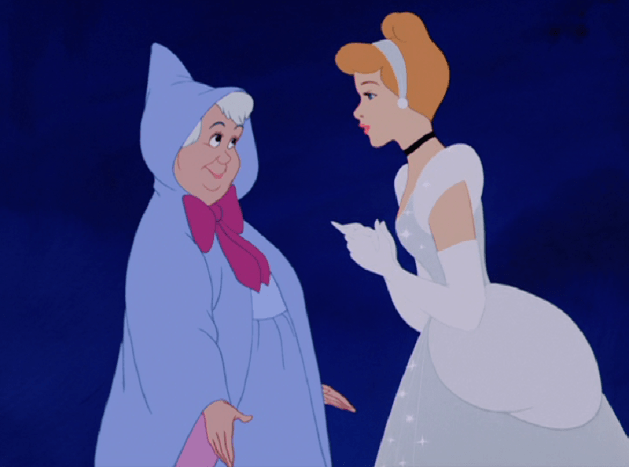
My favorite of Walt’s original fairy tale adaptations, Cinderella is as charming today as it was in 1950. Not quite as saccharine as Snow White, it is the definitive version of the Cinderella story in my house and was a particular favorite of my mom’s when she was a kid. Heredity?
As the beginning of the Disney Renaissance, The Little Mermaid revolutionized the House of Mouse with Broadway quality tunes and a new high point in animation quality. The colorful marine setting and catchy Menken/Ashman tunes breathed new life into the animation studio and made princess fairy tales all the rage again.
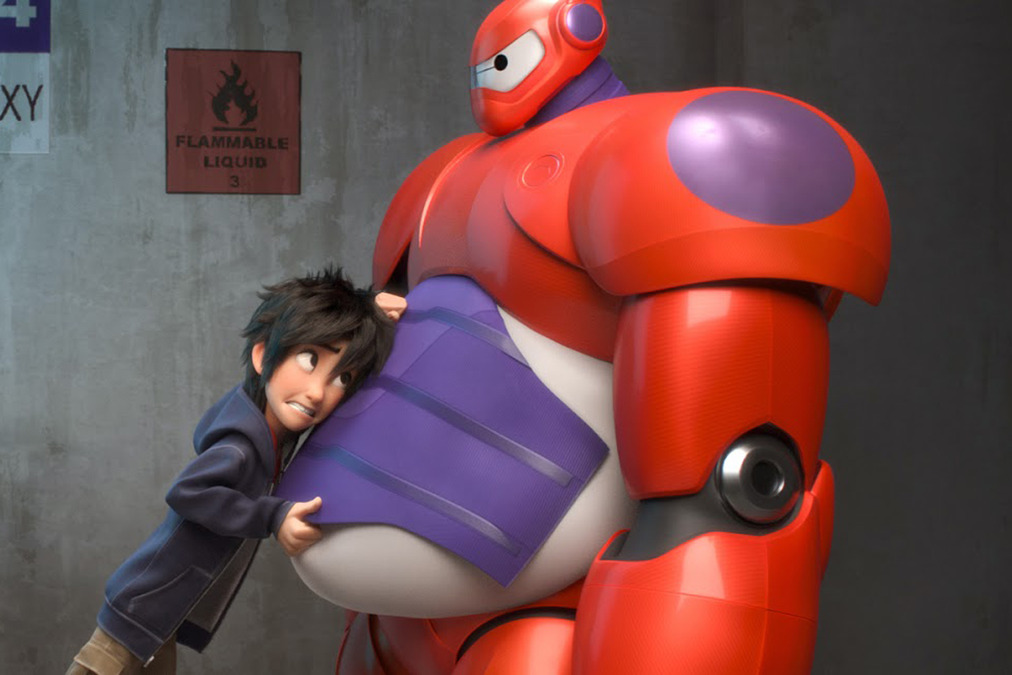
While we all know Disney is pulling the strings of the Marvel Cinematic Universe, it was nice to see them incorporate some superhero magic into their animation department. As with The Incredibles and Batman: Under the Red Hood, it’s always a thrill to see a great superhero cartoon. Poignant, action-packed, and all-around awesome, the origin story of Big Hero 6 is my favorite of Disney’s current CGI era.
I really don’t understand all the hate for Brother Bear. Released during the waning years of the Disney Renaissance, it’s still a funny and heartbreaking journey with a beautifully drawn Arctic setting and some great background songs. I remember crying as a 10-year-old in the theater, and any film that brings me to tears holds a special place in my heart.
As entertaining as the vast majority of Disney films are, Fantasia is something different, a true work of art, blending classical music with animation at its most imaginative. It’s a shame that its poor commercial showing made Walt Disney initially regret making it because it has since become one of his most highly regarded classics. Yes, it’s a perfect film to fall asleep to, but that has more to do with the sometimes soothing music than what’s on the screen.
Buoyed by the brilliantly frenetic voice performance of Robin Williams as the Genie, Aladdin may be the funniest member of the Disney canon. This adaptation of the 1001 Nights continued the winning animation and music that made the Renaissance so special.
I’m a much bigger fan of Hunchback than most, viewing its darker storyline and lack of a typical happy ending as a risk for Disney that paid off in magnificent fashion. Without a doubt, this is Alan Menken’s masterpiece score, not just catchy and hummable but truly, goosebumpily glorious.
Speaking of goosebumps, the beginning of The Lion King is Fantasia-level art, while the rest is an entertaining piece of Shakespeare lite, complete with one of the saddest Disney deaths and one of the best Disney villains. From the thrilling wildebeest stampede to the carefree song “Hakuna Matata,” The Lion King has something for everyone.
Another favorite I find hugely underrated is Tarzan, with its lushly gorgeous jungle setting and outstanding Phil Collins soundtrack. Not only is it my VC’s favorite Disney cartoon, it’s one of the first films I actually remember watching in the theater (and yes, I cried at the end), and I recall playing “Trashing the Camp” with my cousin over and over and over on video. Good times….
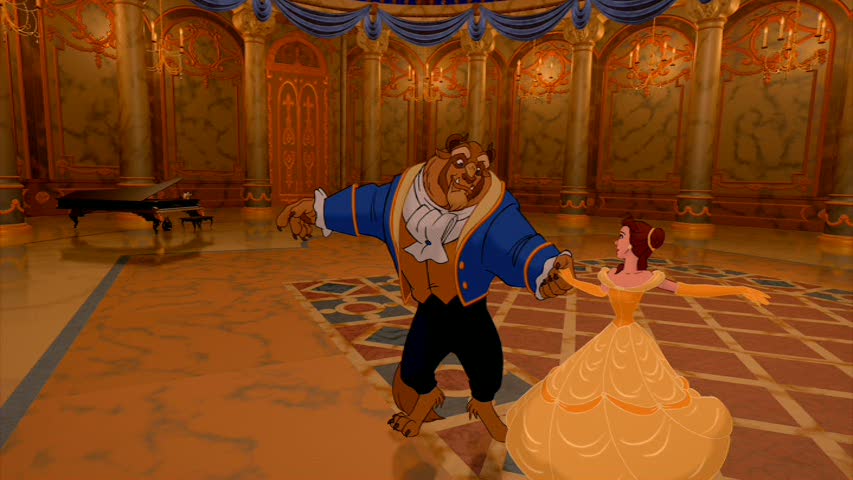
I personally consider Beauty and the Beast the most perfect fairy tale adaptation in all of Disney’s canon. It’s funny, tragic, enchanting, melodious, elegant, and all-around entertaining. It’s everything that Disney does best and thus feels timeless. I have my doubts about the live-action version next year, but at least we’ll always have the immortal original.
________________
With the exception of Chicken Little and Home on the Range (the only one I haven’t actually seen), I enjoy all Disney movies to some extent, so I thought I’d continue my ranking below with the rest of the animated features on my Top 365 list (not including mixed animations like Enchanted or those only released by Disney, like the Studio Ghibli films). What would your ranking look like?
If someday I should forget you
Or the moment that I met you,
I hope, easing your regret, you
Know, although you fade
In memory, your soul and mine
Are too attached to disentwine.
You are the one for whom I’ll pine
Till all the world’s unmade.
__________________
MPAA rating: Not rated yet (should be PG, maybe PG-13)
I’ve been awaiting Makoto Shinkai’s next feature film for some time now, and it seems that his latest movie has finally earned him acclaim and notice outside of anime fan circles. Kimi No Na Wa, or Your Name, is being heralded as proof of Shinkai coming into his own as “the new Hayao Miyazaki,” and this his fifth feature film has been hugely successful in Japan, where it is currently the seventh highest-grossing film ever.
Honestly, I’m just thrilled that I was able to see Your Name so soon after its release (as opposed to waiting perhaps a year for the DVD), but the fact that it is such a winner for writer/director Shinkai makes it even better. I’ve had a rocky regard for his past films, which are always visually beautiful and emotional but range from confusing (The Place Promised in Our Early Days) to depressing (5 Centimeters Per Second) to absolutely wondrous (Children Who Chase Lost Voices). I can’t say Your Name is the faultless masterpiece that many reviewers are making it out to be, but it’s an enchanting and praiseworthy fantasy drama that seems like the culmination of all that his less successful films tried to be.
On the surface, Your Name is a body-swap comedy between a city boy named Taki in Tokyo and a country girl named Mitsuha. Sick of her provincial surroundings and embarrassed by her feminine duties at her grandmother’s Shinto shrine, Mitsuha wishes she could be a handsome boy in Tokyo in her next life, a fancy that soon becomes reality. At random times, the two wake up in each other’s bodies and awkwardly try to live each other’s lives until they can get back to their own the next day. Their memories of the other-body experiences remain hazy afterward, like a dream, but the reactions of their friends and family make it clear that the switch is indeed real. Through notes, advice, and complaints left for each other, they get to know each other on a deeper level than most, while having a key element of any relationship—face-to-face contact—just out of reach.
Based on the trailers, one might think the body-swap humor was the main point of the film, but it actually makes up only the first third, with the rest of the film taking a far deeper and more meaningful course. Had the film remained like the first forty minutes, it would have been a somewhat fun and strange if unremarkable story, but as long as the tonal shift doesn’t bother viewers, it’s the final hour that explains Your Name’s popular acclaim, going off in unexpected and poignant directions. While publicity shots like the one below suggest that Taki and Mitsuha have greater contact, they’re separated by more than distance for the majority of the film. When they do have fleeting connections, it’s the stuff of cosmic, tragic romance, which brings people like me close to tears, even if I don’t quite get there.
Your Name does stumble on occasion, particularly when Shinkai indulges in repeated music video-like montages, like the one at the end of 5 Centimeters Per Second. The J-pop contributions of the band Radwimps actually complement the film well, but the montages sometimes give the film a rushed quality that could have been improved. The non-linear storyline also leaves the significance of some scenes in doubt, especially at the beginning… that is, until the importance of certain flashbacks becomes clearer. I would highly recommend seeing the film more than once, since the layers of its plot are better appreciated when viewed with the whole picture.
Other traces of Shinkai’s past work actually improve on his portfolio. Like The Place Promised in Our Early Days, there are a boy and girl’s sci-fi-ish separation and the threat of massive destruction, while the presence of a comet streaking across the sky brings to mind the space probe of 5 cm. One moment toward the end was even straight out of the unsatisfying conclusion of 5 Centimeters Per Second, prompting me to say “No, don’t you dare end it like that!” Luckily, it didn’t. I also appreciated a neat little cameo for a character from Shinkai’s previous film The Garden of Words.
Your Name is as beautifully animated a film as any I’ve seen in recent memory, with Shinkai’s usual attention to detail for light and shadow being exemplified. A sojourn to an expansive crater out in the countryside is especially memorable, with some gorgeous fall colors on display. Details abound, both in the scenery and the story, and attention is paid to fleshing out not only Taki and Mitsuha but also their friends and family members, making for a comprehensively touching film.
There’s so much to admire in Your Name, from the intricate but engaging plot to the moments of visual beauty, that few should mind its weaknesses, such as the quasi-spiritual “explanation” for the body swap itself. It has a good chance at snagging a Best Animated Feature nomination at the Oscars, which would make it the first non-Studio Ghibli anime film to do so, and even if I suspect Zootopia is the favored winner, Your Name would also be deserving. I still consider Children Who Chase Lost Voices to be Shinkai’s unsung masterpiece, but films like it and Your Name are what might make him a household name one of these days.
Best line: (Mitsuha’s grandmother, to Mitsuha/Taki) “Treasure the experience. Dreams fade away after you wake up.”







 Rhyme and Reason