• Home
  • About Me
  • The List
  • THE LIST (2016 Update)
  • THE LIST (2017 Update)
  • THE LIST (2018 Update)
  • THE LIST (2019 Update)
  • THE LIST (2020 Update)
  • THE LIST (2021 Update)
  • THE LIST (2022 Update)
  • Top Twelves and More
  • The End Credits Song Hall of Fame

Rhyme and Reason

~ Poetry Meets Film Reviews

Rhyme and Reason

Category Archives: Writing

Wolf Children (2012)

08 Sunday May 2016

Posted by sgliput in Movies, Poetry, Reviews, Writing

≈ 2 Comments

Tags

Animation, Anime, Drama, Family, Fantasy


Mothers are angels, by parenthood wrought,
And unsung saints, whether they know it or not.
Their job is to lead through each giggle and tear
And make angels too of the rascals they rear.

They’re makers of breakfast and takers of guff
And mentors who know when enough is enough.
They’re huggers or kissers, though all aren’t the same,
Who take it in stride when kids think it a shame.

When needed the most, they’re a wide-open door,
The builders of life starting at the ground floor.
All this mothers are, or should be by design,
All worthy of honor, and why I love mine.
__________________

MPAA rating: PG

Happy Mother’s Day to all! I have no idea why it’s taken me this long to review the film that placed #6 on my Top 12 Anime List, but Mother’s Day seemed like the perfect opportunity to review this affectionate tribute to a mother’s love. After strong films like The Girl Who Leapt through Time and Summer Wars, I think Mamoru Hosoda clinched his growing reputation as the next Hayao Miyazaki with Wolf Children, a favorite of many anime fans.

As a college student, Hana meets and gradually falls in love with a young man she meets in class, a strong, silent type with a kind heart. Her love for this unnamed man is not diminished when he reveals that he is part wolf, able to transform at will but choosing to live as a human. What follows is a warmhearted montage of domestic bliss to rival the beginning of Up, along with an equally tragic end when Hana is left alone to care for their two wolf children Yuki and Ame.

While an early scene implies the uncomfortable idea of interspecies romance, almost everything else about this film is sweet and tender in the most appealing way. The usual stresses of raising children are given a unique spin with the werewolf aspect (should she take them to a pediatrician or a vet?). Hana knows nothing about raising kids on her own, let alone the half-wolf variety, but she learns and loves through every sleepless night, cranky tantrum, and potential emergency. While she keeps Ame and Yuki away from the world for the most part to protect them, she is a superlative example of the hard-working, underappreciated single mother.

When the two kids begin to outgrow their small apartment, she decides to move to the distant countryside, where they will have the freedom to choose whether to be wolves or humans. The move to a large dilapidated home (reminiscent of the beginning of My Neighbor Totoro) only means more work for Hana and more opportunities for both fun and danger for assertive Yuki and timid Ame. Hana’s tenacity is tested and affirmed, as is the good will of her charitable neighbors. The lush, hilly setting offers some gorgeous scenery, which captivates one of the children more than the other. In particular, two scenes of natural splendor are the epitome of animated beauty, and the family’s frolic through the snow is accompanied by a winsomely elegant score that always gives me chills.

The unfortunate drawback to Wolf Children’s appeal is a semi-unsatisfying ending. With time to consider both perspectives, I’ve come to forgive the bittersweet climax, which is like the reverse of The Jungle Book’s ending, if that makes sense. Even so, everything Hana did for her children is worthy of the deepest love and appreciation, and the end smacks of adolescent ingratitude. Despite that caveat for the climax, Wolf Children, for me, is not a film to simply like or dislike but to be fond of. My fondness for this film runs deep, and it will forever rank among my favorite depictions of maternal love.


Rank: List-Worthy


© 2016 S. G. Liput
385 Followers and Counting


My Top Twelve Movie Doors

06 Friday May 2016

Posted by sgliput in Movies, Writing

≈ 2 Comments

Tags

Lists


After a full month of poetry, it’s about time for another list. Doors are among the simplest components of a building or room, but they offer many different functions: an entrance, an exit, an obstacle, a trap, a measure to keep something in or out. Naturally, movies have incorporated doors and all their uses and created some memorable door scenes over the years. Of course, almost every film has some kind of door, whether it be big, small, round, square, wood, or metal, but these are my favorite from film, not to forget great TV doors like the Get Smart intro or various doors in Star Trek (like the Guardian of Forever or that revolving door spinning on its own). Without further ado, here are my top 12 door scenes in movies.


  1. The Abyss (1989)

Ships and submarines often have doors that close in the event of a flood. While Titanic had some close-call scenes with such doors, The Abyss outdid them years before. After angrily throwing his wedding ring in the toilet and grudgingly retrieving it, Ed Harris’s Bud is very glad he reclaimed it. He almost gets trapped behind an automatic flood door, and only his wedding ring jams it long enough to save his life.


  1. Ghost (1990)

What does the inside of a door look like? Well, newly deceased Sam (Patrick Swayze) finds out when his first experiment with intangibility involves slowly phasing through a door. Plus, there’s the famous penny scene, where he convinces Molly by dragging a coin up the same door.


  1. TIE: The Wizard of Oz (1939) / The Truman Show (1998)

These two films don’t have much in common, but both feature a visually significant door to a new world, one at the beginning and one at the end. Dorothy’s transition from black-and-white Kansas to the Technicolor Oz will always be one of the most magical moments in cinema, while Truman’s farewell to his life as a reality show ends The Truman Show with a perfect wink.


  1. Howl’s Moving Castle (2004)

A magical castle would understandably possess a magical door, and while Howl’s moving castle stays safely in the mountains, its front door can lead to any of four locations depending on a knob and a color wheel. I’d love a door like that!


  1. The Matrix Reloaded (2003)

The Matrix sequels were definitely flawed, but they still incorporated cool concepts. The second movie added a lot of lore to its digital world, including hidden corridors lined with doors and the character of the Keymaker, whose keys can make a door lead anywhere. Warning for some language and violence in this video:


  1. The Brain That Wouldn’t Die (1962)

Originally titled The Black Door, The Brain That Wouldn’t Die is the kind of laughably cheesy disembodied-head B-movie that Mystery Science Theater 3000 thrived on. It’s mainly known to me as the film that traumatized my mom, who at a young age saw the scene where someone’s arm is torn off by a mad scientist’s monster hidden behind a locked door. That same door is ripped off its hinges when the creature finally attacks the mad scientist.


  1. TIE: The Others (2001) / The Conjuring (2013)

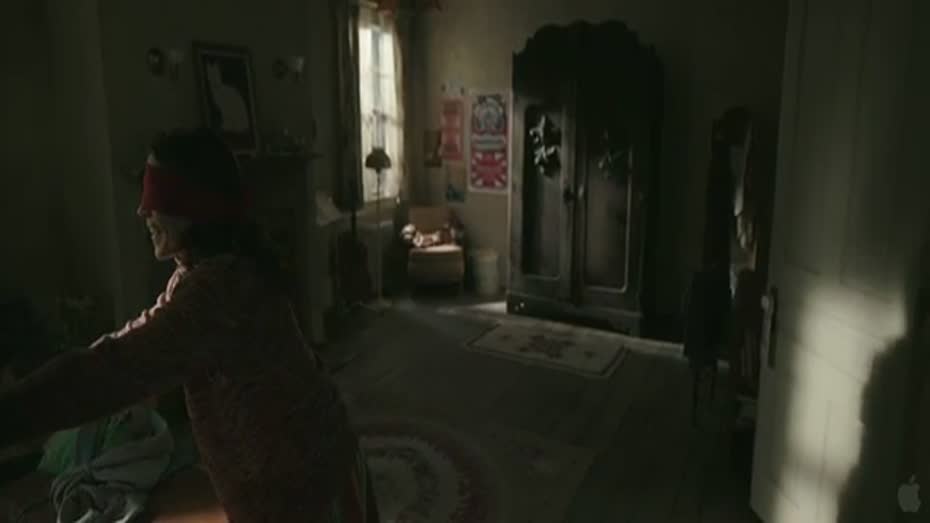
Both of these atmospheric horrors are filled with doors: closing doors, opening doors, doors that play with knocks. In The Others, Nicole Kidman’s protective mother insists on keeping curtains and doors closed to protect her photosensitive children, while The Conjuring’s restless spirits have a field day with their haunted house’s doors. Both films also have a drawn-out scene involving a door slamming shut unexpectedly.


  1. TIE: King Kong (1933) / Jurassic Park (1993)

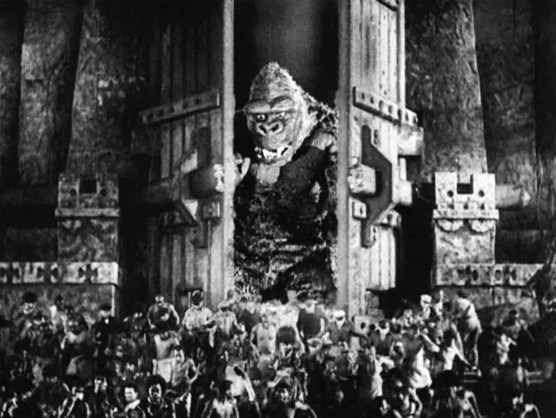
This placement mainly goes to Jurassic Park, in which too-intelligent raptors learn how to open doors. There’s also the giant main gate (echoed in Jurassic World too) that leads into the park, which is very similar to the gate in the original King Kong (I thought I’d heard they were the same), and of course Ian Malcolm had to make a reference.


  1. The Adjustment Bureau (2011)

It seems like the most intriguing doors are those that open to someplace unexpected. When Matt Damon’s romance with Emily Blunt is not approved by the fate-enforcing Adjustment Bureau, he uses their supernatural hats to teleport through doors and escape.


  1. The Incredibles (2004)

Don’t you hate it when you close a door on yourself? That might happen more often if you could stretch across a room like Elastigirl, like in this awesome scene from everyone’s favorite animated superhero movie.


  1. The Shining (1980)

One of the most classic horror scenes is Jack Nicholson’s taking an ax to the bathroom door, where Shelley Duvall cringes in terror. Heeere’s Johnny!


  1. Monsters, Inc. (2001)

Pixar claims the top spot with a film chock full of doors! The only safe way for monsters to enter the human world and reap the fuel of screams is to sneak through children’s closet doors and scare them. Those doors are all kept in an industrial-size vault, the setting for one of Pixar’s most imaginative action sequences. No movie has as many doors as Monsters, Inc.


Runners-Up


2001: A Space Odyssey (1968) – “Open the pod bay doors, HAL.”

A Christmas Carol – Scrooge’s first hint of ghosts afoot is when Marley appears as his door knocker.

Alice in Wonderland (1951) – Alice drinks the shrinking potion to get through that little talking door.

Alien (1979) / Aliens (1986) – Both films qualify if an airlock can be considered a door, but Aliens also has that reveal scene where Paul Reiser gets it.

Beetlejuice (1988) – How to reach the afterlife waiting room: draw a door in chalk and don’t forget the doorknob.

The Breakfast Club (1985) – The vice principal just couldn’t keep that door open, not with a screw missing.

Coraline (2009) – Don’t crawl through every spooky little door you find in your house.

Elizabethtown (2005) – Drew’s boss is obsessed with the number two, so of course he had to have two Tunisian doors imported for $762,000…each.

Fantastic Four (2005) – Mr. Fantastic’s first test of his powers involves stretching underneath a door.

Forbidden Planet (1956) – No door can stop a “monster from the id.”

Funny Farm (1988) – Those country doors that split in the middle are slapstick gold.

Get Smart (2008) – The original series’ famous opening showed Maxwell Smart walking through a series of perfectly timed doors, which the movie had to use for homage and parody (see below).

The Godfather (1972) – The final scene illustrates that a door has closed on Michael Corleone’s old life.

Godzilla (2014) – Early on, Bryan Cranston makes a hard decision with a radiation door.

The Lord of the Rings (2001-3) – From the round doors of Hobbiton to the besieged gates of Minas Tirith, Middle Earth loves its doors (see above).

The Maze Runner (2014) – Doors are often ripe for squeezing through at the last second.

Monster House (2006) – I never thought of a door as a house’s mouth until this movie.

Pan’s Labyrinth (2006) – A door drawn in chalk; where have I seen that before?

Prince Caspian (2008) – I liked how the exit from Narnia was changed from a simple door frame in the book to a door within a tree in the film.

The Prince of Egypt (1998) – Any account of the Exodus includes the Biblical blood on the doorposts during the first Passover.

Room (2015) – “It can’t really be Room if Door’s open.”

Signs (2002) – Don’t get too close to a door when an alien’s trapped on the other side.

The Sixth Sense (1999) – The big red church doors and the red handle of the cellar door served as early clues to the supernatural.

Stuart Little (1999) – For some reason, I’ve always remembered the doors in the Little household because they’re strangely covered in wallpaper and blend into the wall when closed.

Twister (1996) – That first scene proves that holding the cellar door in a tornado doesn’t do much good.

What’s Up, Doc? (1972) – All the people going back and forth between a hotel hall’s doors is just one of the great elements of this screwball comedy, perhaps reminiscent of the door hopping during those Scooby Doo cartoon chases.

Hidden (2015)

04 Wednesday May 2016

Posted by sgliput in Movies, Poetry, Reviews, Writing

≈ 2 Comments

Tags

Drama, Horror, Thriller


The shadows all deepen,
While silhouettes creep in,
And light gives its nightly allowance to dark.
Most men surely worry
Of menaces blurry,
Of dangers and strangers too hazy to mark.

But when the sun’s gleaming
Is more home to screaming,
The shadows will rapidly lose their unease.
If dark once forbidden
Keeps us safe and hidden,
The risks of the light are our new enemies.
___________________

MPAA rating: R (could maybe be PG-13)

I have no idea what possessed me to watch an R-rated horror thriller sight unseen, without the complete knowledge of what to expect that I usually obtain before venturing into the genre. I hadn’t really read many reviews of this under-the-radar film from last year, but this is one instance where I’m glad that I didn’t.

Hidden is not just one of the best horror films I’ve seen of late, but really two films in one: first, a post-apocalyptic drama about a family locked within an underground bunker, and second, a heart-thumping “they’re-out-there” thriller with a shrewdly concealed twist. While my VC felt the setup was a bit too long, it was the family part that won me over. Alexander Skarsgård as Ray plays one of the most endearing father figures I can recall, encouraging his young daughter Zoe (Emily Alyn Lind of Won’t Back Down) with good humor, tender comfort, and imaginary trips to the world before whatever disaster hit. Rounding out the trio, Andrea Riseborough is the anxious mother, intent on enforcing her four Mom rules: 1. Don’t be loud; 2. Never lose control; 3. Never open the door; and 4. Never talk about the Breathers, who lurk outside in search of the family.

Despite the R rating, Hidden is fairly subdued for a horror, with hardly any language and the violence brief and often off-screen. Like The Conjuring, I tend to think the R is for its general intensity, though it’s nowhere near as chilling as that film. I think most horror connoisseurs will find it rather tame, but it’s an ideal nail-biter for wimps like me who prefer tension over gore. There were moments where my hand instinctively covered my mouth (especially when I noticed a spider dangling not far from my face at one point. I hate when that happens!). My VC felt that certain motivations didn’t entirely make sense to her, but I liked how everything was from the family’s point of view.

I don’t want to spoil Hidden. It’s best seen with no expectations. Perhaps the best way I can describe it is like a Twilight Zone episode directed by M. Night Shyamalan on one of his good days. The twist and the overall tension might be main selling points, but the marvelous acting by all three stars, especially Lind, is its greatest strength. The best horror films make you care about the characters before throwing them into alarming circumstances, and Hidden does it exceptionally well.

Best line: (Ray, encouraging Zoe on their 301st day in the bunker) “301. Now we shouldn’t have been around for any one of those days, but when we needed it, we found this shelter, and it’s given us food, a home, a life. And for all we know we could be the only ones left, the only ones still alive. So every one of those marks is really a miracle.”
(Zoe) “A miracle?”
(Ray) “That’s right, a miracle. This food is going to allow you to live another day, and that means another hash can be drawn, right?”
(Zoe) “Yeah, I guess so.”
(Ray) “So you see, those nasty, cold, mushy beans on your plate, they’re really their own kind of miracle too.”

Rank: List-Worthy

© 2016 S. G. Liput
385 Followers and Counting


NaPoWriMo 2016 Recap

01 Sunday May 2016

Posted by sgliput in Movies, NaPoWriMo, Poetry, Writing

≈ Leave a comment

Tags

Lists


So ends April, and with it National/Global Poetry Writing Month. This was my second year participating, and it’s been both challenging and fun. The prompts from NaPoWriMo.net have fostered more creativity for the poetry, and the consistency of a poem (and review) a day has helped me get through quite a few diverse movies I might not have reviewed otherwise, from ‘80s comedies and old black-and-whites to unique animations and recent Oscar winners. Thank you to all who have read and liked and followed and commented over the last month, encouraging me to keep going.

Here’s the full list of the last month’s poems/reviews, if anyone missed a day:


April 1 – Broadcast News (1987) – Honorable Mention

April 2 – The Piano Lesson (1995) – Honorable Mention

April 3 – Fanboys (2009) – Dishonorable Mention

April 4 – Labor Day (2013) – List Runner-Up

April 5 – Z for Zachariah (2015) – List Runner-Up

April 6 – The Last Sin Eater (2007) – Honorable Mention

April 7 – Coraline (2009) – List Runner-Up

April 8 – Cabin in the Sky (1943) – Honorable Mention

April 9 – Rope (1948) – Honorable Mention

April 10 – Dead Men Don’t Wear Plaid (1982) – List Runner-Up

April 11 – Teachers (1984) – List- Worthy

April 12 – Mr. Holmes (2015) – List Runner-Up

April 13 – The Curse of the Jade Scorpion (2001) – List Runner-Up

April 14 – The 33 (2015) – List Runner-Up

April 15 – Maze Runner: The Scorch Trials (2015) – List-Worthy

April 16 – Persepolis (2007) – List-Worthy

April 17 – The Ghost and Mrs. Muir (1947) – List-Worthy (probably my favorite film this month)

April 18 – Fried Green Tomatoes (1991) – Semi-Honorable List Runner-Up

April 19 – How to Make an American Quilt (1995) – List Runner-Up

April 20 – Room (2015) – List-Worthy

April 21 – The Raven (1963) – Honorable Mention (the poem I’m most proud of)

April 22 – Everest (2015) – List-Worthy

April 23 – Time of Eve (2010) – List-Worthy

April 24 – Austenland (2013) – Honorable Mention (my featured poem)

April 25 – The Social Network (2010) – List-Worthy

April 26 – Newsies (1992) – Honorable Mention

April 27 – Waterworld (1995) – List-Worthy

April 28 – Love Story (1970) – List Runner-Up

April 29 – Still Alice (2014) – List Runner-Up

April 30 – Ragnarok (2013) – List Runner-Up


The month’s been a bit exhausting so I’ll be returning to a more relaxed blogging schedule, probably back to two posts a week. School’s about over, but I’ve got other projects in the works. So onward into May, where you have your choice of National Smile Month, Better Hearing and Speech Month, or International Mediterranean Diet Month!


Ragnarok (2013)

30 Saturday Apr 2016

Posted by sgliput in Movies, NaPoWriMo, Poetry, Reviews, Writing

≈ 3 Comments

Tags

Action, Drama, Family, Fantasy, Foreign, Thriller


(Today’s final NaPoWriMo/GloPoWriMo prompt was to write a translated poem, so I tried to write something homophonically similar to “The Half-Finished Heaven” by Swedish poet Tomas Transtromer. Doing that, I could have ended up with something as inscrutable as some of Gerard Manley Hopkins’ work, so instead I simply began each line of the poem below with the same letter as the original poem and chose a Scandinavian film to review.)

Mid-look was my life cut short,
Aghast at the proven report.
Goodbye to my daughter and son;
Dear father will never see port.

A brave man was I, no mistake.
Oh, Vikings would never forsake.
Vigor was rife in our bones,
Alas, till they littered the lake.

Veiled are we here in our sleep,
Veiled in the dangerous deep.
Still does our conqueror live,
Drowsing upon our corpse heap.

Valiant and foolish to tarry
Is he who finds our cemetery.
______________

MPAA rating: PG-13

Ragnarok may be the first Norwegian film I’ve seen, in a way the Norwegian equivalent of a late-summer blockbuster. Perhaps the closest thing I can compare it to is 2008’s Journey to the Center of the Earth with Brendan Fraser, loaded as both are with clichés and genuinely thrilling moments. Both films start out much the same; like Fraser’s volcanologist, archaeologist Sigurd Swenson (good Scandinavian name!) is desperate for funding, and when an enigmatic clue arises, he brings along his two kids Ragnhild and Brage and a couple colleagues on an ill-advised search for answers that doesn’t go as planned. In lieu of a Jules Verne novel as inspiration, Norse mythology stands in with the story of Ragnarok, a.k.a. the end of the world.

The expedition walks into danger when they raft across a remote, far-north lake to a central island where both Vikings and Russians once visited, never to leave again. It’s an effective build-up to what is ultimately a creature feature. The monster hidden below the surface and the foolish decisions of the humans will bring to mind films like Jaws, Eragon, and Jurassic Park III, but this Norwegian equivalent of those movies usually manages to make the material its own. A few set pieces involving a zip line and a bunker are edge-of-your-seat highs, and my VC was far more terrified than I at one prolonged suspense scene.

It may not be entirely original, but Ragnarok is an entertaining action adventure with some tense thrills that never become un-family friendly. The special effects are usually as good as most American productions, and the isolated Arctic scenery makes for a stunningly rich setting. I will be interested to see how Marvel’s Thor: Ragnarok compares. For a first accessible foray into Norwegian cinema, I’d recommend Ragnarok, though don’t watch the English dub. Most dubs don’t bother me, but when children are screaming and some English voiceover dully says “Help me,” it kinda ruins the moment.

Rank: List Runner-Up

© 2016 S. G. Liput

385 Followers and Counting


Still Alice (2014)

29 Friday Apr 2016

Posted by sgliput in Movies, NaPoWriMo, Poetry, Reviews, Writing

≈ Leave a comment

Tags

Drama


(Today’s NaPoWriMo prompt was to write a poem based on memories, so in honor of a film focusing on Alzheimer’s disease, I wrote it in three progressively uncertain parts.)


I remember the house where I grew,
The hibiscus bush out to the right of the yard,
The oak tree so eager its leaves to discard,
The carpet a cringe-worthy blue.
I remember it clearly in every regard,
And I miss the old house that I knew.
_____

I remember the house where I spent
My childhood, garnished with roses, I think,
Or was it hibiscus, a picturesque pink?
The maple tree I did resent.
I remember the rug was as purple as ink,
And that Mom wasn’t very content.
_____

I remember a house with a tree.
A bush was nearby, with some flowers that grew.
I now want to say that I gathered a few;
And something inside was ugly.
Whose home that house was, I wish that I knew,
But failing is my memory.
______________________

MPAA rating: PG-13

Based on a 2007 novel, Still Alice is one of those laudable films that give an actor or actress the perfect outlet to prove their worthiness of an Oscar, and in this case, Julianne Moore delivered. As successful linguistics professor Alice Howland, Moore takes an unexpected Alzheimer’s diagnosis from its distressing onset to its heartbreaking end. She has the support of her husband (Alec Baldwin) and grown children (Kate Bosworth, Hunter Parrish, and Kristen Stewart), but it’s a personal struggle that neither they nor anyone without Alzheimer’s can fully understand.

I don’t personally have any experience with Alzheimer’s (though some old age dementia) in my family, but watching the details of Alice’s everyday life provided further appreciation for her efforts to maintain her memory. She tries to keep her extensive vocabulary intact, but its loss is gradual and relentless. When she can’t remember how to navigate her own house or recognize someone she just met, both she and her family cannot help but grieve, even in a pained glance, at the decline of an accomplished woman, slipping away a day or a minute at a time. Despite an inspiring speech that triumphs despite her waning ability, by the end, her power over nothing is harrowingly pitiful.

Kristen Stewart as Alice’s free-spirited actress daughter shows she has stronger acting chops than Twilight and Snow White might indicate, but this is Moore’s film from start to finish. There is no doubt whatsoever why she won the Best Actress Academy Award and swept many similar awards. Even if it upheld the theory at the time that acting an illness was a sure way to an Oscar, Still Alice makes Alzheimer’s personal, in all its familial compassion and sorrow. It’s not a film I’d watch often, but it’s one in which everyone can find empathy.

Best line: (Alice, speaking to an Alzheimer’s conference) “And please do not think that I am suffering. I am not suffering. I am struggling. Struggling to be part of things, to stay connected to whom I was once. So, ‘live in the moment’ I tell myself. It’s really all I can do, live in the moment.”


Rank: List Runner-Up


© 2016 S. G. Liput

385 Followers and Counting


Love Story (1970)

28 Thursday Apr 2016

Posted by sgliput in Movies, NaPoWriMo, Poetry, Reviews, Writing

≈ 2 Comments

Tags

Drama, Romance


(Today’s NaPoWriMo prompt was to write a story told in reverse, so I chose a film that begins with its famously tragic end.)


No one expected a young wife to die.
The shock of injustice preceded the tears.
Her husband’s bereft
At the hole that she left
In their fleeting but passionate years.

No one expected, when they found success,
And scraping at pennies at last found reward.
Their happiness shone
At what they called their own
Before happiness fell on its sword.

No one expected, when poverty galled
And left them with little but love to sustain.
Their family fund
Had been purposely shunned
For unstable financial terrain.

No one expected, when vows were exchanged,
And hopes for the future loomed higher than fears.
Parental objections
Swayed not their affections,
Romantic and rash pioneers.

No one expected, when sweethearts were paired
In college, where many a romance is born.
They teased and poked fun
Till true love had begun
And devotion had discarded scorn.

No one expected a young wife would die
When she and her unlikely husband first met.
Yet if they had read
Of the heartaches ahead,
I know from love’s source
They’d have sailed the same course,
A course neither of them would regret.
___________________

MPAA rating: PG (probably should be PG-13 for the language)

Decades before John Green’s The Fault in Our Stars captured people’s hearts and minds with its intelligent but doomed romance, Love Story did the same thing for the children of the ‘70s, first as a book, then as a 1970 film. With two appealing leads in Ali McGraw and Ryan O’Neal and an Oscar-winning Francis Lai score that brings tears to my VC’s eyes, Love Story is considered one of the great romantic movies.

That distinction is accompanied by a reputation for sappiness, and somehow I expected to be more amused than moved by the melodrama. Love Story exceeded my expectations in that regard, thanks in large part to the sardonic banter between young Oliver Barrett IV (O’Neal) and Jenny Cavalleri (McGraw) as their initial love/hate relationship quickly drops the hate part. The chemistry is both obvious from the start and confirmed gradually until Oliver dismisses assumptions of a temporary affair and proposes marriage. Their bond is further proven by Oliver’s dismissal of his wealthy father’s objections, despite the loss of his financial support. Of course, living on love alone is nobly impractical, but watching the couple support each other just heightens the romance further.

And then she dies…. That’s not really a spoiler since the very first line and scene reveal it, but it still comes as a devastating tragedy after all that came before. The mawkish sentimentality that I was expecting is kept to a minimum, mainly during the pristine hospital scenes in which McGraw doesn’t look particularly ill and the most famous line: “Love means never having to say you’re sorry.” That quote is the main reason I expected silly schmaltz, since it’s both mystifying and utterly untrue. Having seen What’s Up, Doc? first, I always follow up that line with O’Neal’s comedic answer from 1972: “That’s the dumbest thing I’ve ever heard.”

Since I now know that Love Story is actually a good movie, I suppose the main question is how it compares with its spiritual successors like The Fault in Our Stars. In this case, I definitely side with Fault in Our Stars, mainly because of a key fault in Love Story. My VC saw it long before I did and has told me that her main sticking point was the modern, areligious beliefs of the characters; my complaint is the same. The stated lack of belief in God only illustrates atheistic emptiness since the closing scenes end with no comfort or hope. She dies; it’s depressing. The end. At least The Fault in Our Stars leaves open the possibility of God and heaven, thanks to the optimism of Augustus Waters, and though the ending is equally heartbreaking, the one who died has extended meaning into the life of the one left behind. Love Story is tragic, and that’s it. Perhaps the poorly received sequel Oliver’s Story was meant to compensate for this weakness. Despite said flaw, the bulk of Love Story still provides a perfect dose of chick flick romance that can make women sob and men perhaps discreetly wipe a tear away.

Best line: (Oliver) “You know, Jenny, you’re not that great looking.”   (Jenny) “I know. But can I help it if you think so?”


Rank: List Runner-Up


© 2016 S. G. Liput

384 Followers and Counting


Waterworld (1995)

27 Wednesday Apr 2016

Posted by sgliput in Movies, NaPoWriMo, Poetry, Reviews, Writing

≈ 3 Comments

Tags

Action, Drama, Sci-fi


(Today’s NaPoWriMo prompt was to write a poem with long lines, so I used twenty-syllable lines in this meditation on the ocean.)


Look to the north, to the south, to the east, to the west, and as far as you can;
Your whole field of view is a blending of blue with the sea and the sky in your sight.
At the end of the day, in first orange, then gray, they display for the sea-faring man
The blush that soon fades in the darkening shades as the two become one in the night.

Again, when the sun declares darkness is done and awakes from its sunken abode,
The sea and the sky heave a secretive sigh as the line that divides them is drawn.
The sailor can stare with a personal prayer as he plies the invisible road,
But all he will glean is duel aquamarine till the sundering stria is gone.

A seafarer seeks the foreseeable peaks that he hopes the horizon will yield,
And promise of land is as sharp a command as any ship captain could give.
Yet after he’s tasted the crowd and embraced the stability water can’t wield,
He’ll miss the blue pair and their distant affair where the loneliest mariners live.
____________________

MPAA rating: PG-13

After years of huge successes like The Untouchables, Field of Dreams, and Dances with Wolves, Kevin Costner delivered one of the most notable career-stalling bombs in Hollywood history, 1995’s over-budget Waterworld. Despite the jeering reviews at the time, Waterworld did break even in the end, but it has pretty much receded into the ranks of forgettable science fiction. This is a waterlogged shame because, regardless of its reputation as a flop, I enjoyed Waterworld. In fact, I watched it with the incredulous realization that “Hey, this is a great movie.” (Note that I say movie rather than film. It’s not what I would consider Oscar-worthy, but it’s darn good.)

Perhaps Waterworld didn’t take off simply because it was ahead of its time. It’s essentially Mad Max: Fury Road on water. An unrealistic cataclysm has covered the world in water rather than desert, forcing humans to adapt and settle in isolated communities or else join roving gangs of water-skiing thugs. A laconic wayfarer lacking a name (Costner) wanders this dystopia where seeds and dirt are rare commodities (as opposed to seeds and water) and is grudgingly forced to protect some fleeing females (Jeanne Tripplehorn and young Tina Majorino) in search of a fabled paradise, while being chased by the hammy head of a cult-like water gang (eyepatch-wearing Dennis Hopper). Like Fury Road, it takes a while for any of the characters to get some actual development, but the explosive action ably makes up for such faults. It even ends in similar Fury Road fashion, with an unlikely happy ending and a reluctant departure.

The themes and characterizations don’t quite have the nuance of Fury Road. There’s no female empowerment subtext or criticism of utilitarian societies, but when Deacon the villain stands high above a crowd of his followers with promises of survival, it’s hard not to see the resemblance. Waterworld does include a few mockable elements, such as making Costner’s mariner a mutant with gills, but they work with the story, and hey, Fury Road had some silly aspects too (“V8! V8! V8!”). The eccentric characters and expansive action were clearly influenced by the earlier Mad Max films, but the plot seemed to prefigure the latest installment.

It’s certainly not on par with his best films, but Kevin Costner didn’t deserve the mockery he received for Waterworld. From what I’ve read, it did take his ego down a peg, but I for one found it to be a fun and exhilarating boat ride with many set designs and effects worth praising, one particularly awesome boom, and more water than you can shake a lit flare at. I just don’t understand why Fury Road earned universal acclaim while Waterworld became the butt of jokes. Waterworld is proof that one shouldn’t always trust the critics.

Best line: (Deacon) “Let’s have an intelligent conversation here: I’ll talk, and you listen.”


Rank: List-Worthy


© 2016 S. G. Liput

384 Followers and Counting


Newsies (1992)

26 Tuesday Apr 2016

Posted by sgliput in Movies, NaPoWriMo, Poetry, Reviews, Writing

≈ 4 Comments

Tags

Disney, Drama, Family, Musical


(Today’s NaPoWriMo prompt was to write a call-and-response poem, with a repeated refrain or chorus. I applied such a refrain to a news crier like those in a certain musical.)


Read all about it: the latest taboos!
-I’ll buy a paper; I do love the news.

Read all about it: new victims accuse!
-I’ll buy a paper; I do love the news.

Read all about it: strike workers refuse!
-I’ll buy a paper; I do love the news.

Read all about it: new game with horseshoes!
-I’ll buy a paper; I do love the news.

Read all about it: the war was a ruse!
-I’ll buy a paper: I do love the news.

Read all about it: your favorite teams lose!
-I’ll buy a paper: I do love the news.

Read all about it: erased interviews!
-I’ll buy a paper: I do love the news.

Read all about it: a new witness sues!
-I’ll buy a paper: I do love the news.

Read all about it: a brave few refuse
To stand by and watch those in power abuse
Their privilege and threaten the rights and the views
Of people whose justice nobody pursues!
-. . . Where’s the Enquirer? I want real news.
___________________________

MPAA rating: PG

Despite all the bad reviews and Razzie nominations it garnered upon release, I watched Newsies expecting and hoping to like it, both because I enjoy musicals and because it was the directorial debut of Kenny Ortega, who helmed my beloved teenage High School Musical films. Unfortunately, Newsies did not live up to my hopes, but neither was it as awful as the 39% Rotten Tomatoes score indicates. It was trying to be a grand, heartwarming musical but didn’t succeed, and I can’t even put my finger on why.

Set in 1890s New York, Newsies fictionalizes the real-life story of the newsboys who began their own strike when Joseph Pulitzer (an overwrought Robert Duvall) increased the cost of the papers that provided their meager income. Leading the charge against Pulitzer is a very young Christian Bale as Jack “Cowboy” Kelly, whose Brooklyn accent covers up Bale’s British accent with panache. Accompanied by new friend David (David Moscow, the young Josh Baskin in Big) and a single ally from a rival newspaper (Bill Pullman), Kelly unites the newsies of New York while trying to stay ahead of the corrupt orphanage keeper (Lost alert for Kevin Tighe, who does play a good meanie).

Newsies is at its best when the limber cast are belting out Alan Menken’s songs and performing Ortega’s remarkable choreography. The opening anthem “Carrying the Banner” and the now semi-classic “King of New York” are the high points, but Bale also gets a solo in the wishful “Santa Fe,” and none of the songs are what I would call bad. Sadly, there’s not enough of them, and long stretches of unengaging drama in between the musical numbers made much of the film unfortunately boring. I could tell that both the writers and the young actors were trying to create something potentially classic, but the necessary level of interest just wasn’t there. Not to mention, the strike scenes included some of the aspects that bug me about unions, such as the persecution of “scabs” who can’t afford not to do their job.

While it might be considered a misfire for Disney, I do admire Newsies for being one of the few non-animated musicals to be entirely original without being based on an earlier Broadway play. In fact, more songs were added to a stage production in 2011, and it later became a hugely popular, Tony-winning Broadway musical. That musical has its roots in this film, so I believe everyone involved in it can still be proud. Newsies does have something of a cult following, and I wonder now whether I would enjoy it more if it had been a mainstay of my childhood. Plenty of people hate the High School Musical films, but my nostalgia helps me forgive whatever they criticize. Perhaps if I’d seen Newsies at a much younger age, I would have enjoyed it more.

Best line: (Crutchy, one of the boys) “It’s this brain of mine; it’s always makin’ mistakes. It’s got a mind of its own.”


Rank: Honorable Mention


© 2016 S. G. Liput

384 Followers and Counting


The Social Network (2010)

25 Monday Apr 2016

Posted by sgliput in Movies, NaPoWriMo, Poetry, Reviews, Writing

≈ 3 Comments

Tags

Drama, History


(Big thanks to NaPoWriMo.net for featuring my Austenland poem today! Today’s prompt, though, was to write a poem beginning with a line from another poem. I’ve actually had in mind to do that for this review for a while, so I incorporated a line from one of my favorite poems, Longfellow’s “A Psalm of Life.”)


Lives of great men all remind us
Even they can act like jerks,
Even when they build a website
Quick to grow that really works.

Websites are a dime a dozen,
But when fame and wealth are earned,
Some regret their path because in
Burning bridges, all are burned.

When one’s social enterprising
Gains more enemies than friends,
Even great men ask while rising
If the means made worth the ends.
__________________

MPAA rating: PG-13

Despite all the awards and adulation and bloggers including it among their favorite movies, I honestly had little desire to see The Social Network and for one simple reason: I don’t use Facebook. I know that seems weird for a college guy in today’s hashtagging, selfie-loving world, but social networking has never been of interest to me; and while Mark Zuckerberg’s rise to millionaire is an American success story, I didn’t expect to be interested in a film about the creation of something I don’t use.

Leave it to Aaron Sorkin to prove me wrong. Some screenwriters just know how to write dialogue (Nora Ephron, for example), and then there are the few like Sorkin who write dialogue on steroids. His Oscar-winning screenplay probably boasts two or three times as many words as the typical Oscar nominee, and the consistently talented cast articulate it with the cadence of a machine gun, particularly Jesse Eisenberg as Zuckerberg.

Eisenberg’s version of the college-age billionaire is obviously so smart that he never even has to think before responding, though he’d surely have more friends if he did think, since his responses usually come with enough caustic banter to make Will Hunting blush. His capabilities with website creation are quickly made clear after losing his girlfriend turns into a drunken blog rant and then a sophisticated, network-crashing girl comparison site. Approached by the Winklevoss twins (both played by Armie Hammer) and Divya Narendra (Max Minghella) to develop a dating site for Harvard, Zuckerberg instead teams with his friend Eduardo Saverin (surprisingly excellent Andrew Garfield) to create The Facebook, the concept and extent of which evolves swiftly into what so many people now check one hundred times a day. Unfortunately, as Zuckerberg expands and gains the dubious collaboration of Napster founder Sean Parker (also surprisingly excellent Justin Timberlake), Saverin gets left behind both technologically and financially, and both he and the Winklevosses file separate lawsuits against Zuckerberg. If placed at the end, these legal proceedings would have dragged the film down, so instead the depositions are expertly sprinkled among flashbacks.

Winning Oscars for Best Adapted Screenplay, Best Score, and Best Film Editing, The Social Network boldly confirms the fact that nerds will inherit the earth, but even bolder is the fact that such a high-profile biopic was made about a 26-year-old (at the time) creator of a six-year-old website, which might have easily been a fading fad like Myspace. One might consider it an honor, but the film’s depiction of Zuckerberg could hardly be called flattering. While key, real-life events were used in the story, Zuckerberg himself has written much of the film off as fiction, which I find rather probable. He criticized the characters’ wild partying, for example, and I too believe that multi-billion-dollar corporations are most likely built on a bit more restraint and discipline, which aren’t as entertaining in a movie.

Despite the likely liberties taken by Sorkin, his treatment of Facebook itself is laudably balanced. On the one hand, he shows that it revolutionized how collegiate students and everyone else interact with one another. On the other, that very cultural revolution is sarcastically faulted for the shallow change in social life that has kept me away from Facebook in the first place. Likewise, the film’s Mark is a genius and a visionary deserving of praise, but a regrettable current of callousness often lurks beneath the admirable. While I have a better appreciation for it, I must admit that I won’t be joining Facebook any time soon.

Best line: (Zuckerberg) “I’m not a bad guy.”
(Marylin Delpy, a lawyer) “I know that. When there’s emotional testimony, I assume that 85% of it is exaggeration.”
(Zuckerberg) “And the other fifteen?”
(Delpy) “Perjury. Creation myths need a devil.”


Rank: List-Worthy


© 2016 S. G. Liput

384 Followers and Counting


← Older posts
Newer posts →

Recent Posts

  • We Didn’t Start 2025 (Recap)
  • NaPoWriMo 2025 Recap (Finally)
  • Sonic the Hedgehog 3 (2024)
  • It Happened One Night (1934)
  • Spellbound (2024)

Recent Comments

associatesofshellymann's avatarassociatesofshellyma… on My Top Twelve La La La So…
Kit's avatarKit Nichols on Bonnie and Clyde (1967)
lifelessons's avatarlifelessons on Look Back (2024)
Carol Jackson's avatarCarol Jackson on The Thief of Bagdad (1940…
Stephen's avatarStephen on Love Story (1970)

Archives

  • January 2026
  • December 2025
  • May 2025
  • April 2025
  • March 2025
  • February 2025
  • January 2025
  • December 2024
  • May 2024
  • April 2024
  • March 2024
  • February 2024
  • January 2024
  • December 2023
  • November 2023
  • October 2023
  • September 2023
  • July 2023
  • June 2023
  • May 2023
  • April 2023
  • March 2023
  • February 2023
  • January 2023
  • December 2022
  • November 2022
  • October 2022
  • September 2022
  • August 2022
  • July 2022
  • June 2022
  • May 2022
  • April 2022
  • March 2022
  • February 2022
  • January 2022
  • December 2021
  • November 2021
  • October 2021
  • September 2021
  • August 2021
  • July 2021
  • June 2021
  • May 2021
  • April 2021
  • March 2021
  • February 2021
  • January 2021
  • December 2020
  • November 2020
  • October 2020
  • September 2020
  • August 2020
  • July 2020
  • June 2020
  • May 2020
  • April 2020
  • March 2020
  • February 2020
  • January 2020
  • December 2019
  • November 2019
  • October 2019
  • September 2019
  • August 2019
  • July 2019
  • June 2019
  • May 2019
  • April 2019
  • March 2019
  • February 2019
  • January 2019
  • December 2018
  • November 2018
  • October 2018
  • September 2018
  • August 2018
  • July 2018
  • June 2018
  • May 2018
  • April 2018
  • March 2018
  • February 2018
  • January 2018
  • December 2017
  • November 2017
  • October 2017
  • September 2017
  • August 2017
  • July 2017
  • June 2017
  • May 2017
  • April 2017
  • March 2017
  • February 2017
  • January 2017
  • December 2016
  • November 2016
  • October 2016
  • September 2016
  • August 2016
  • July 2016
  • June 2016
  • May 2016
  • April 2016
  • March 2016
  • February 2016
  • January 2016
  • December 2015
  • November 2015
  • October 2015
  • September 2015
  • August 2015
  • July 2015
  • June 2015
  • May 2015
  • April 2015
  • March 2015
  • February 2015
  • January 2015
  • December 2014
  • November 2014
  • October 2014
  • September 2014
  • August 2014
  • July 2014
  • June 2014
  • May 2014
  • April 2014
  • March 2014
  • February 2014
  • January 2014
  • December 2013

Categories

  • Blindspot
  • Blogathon
  • Christian
  • Movies
  • Music
  • NaPoWriMo
  • Poetry
  • Reviews
  • TV
  • Writing

Meta

  • Create account
  • Log in
  • Entries feed
  • Comments feed
  • WordPress.com

Recent Posts

  • We Didn’t Start 2025 (Recap)
  • NaPoWriMo 2025 Recap (Finally)
  • Sonic the Hedgehog 3 (2024)
  • It Happened One Night (1934)
  • Spellbound (2024)

Recent Comments

associatesofshellymann's avatarassociatesofshellyma… on My Top Twelve La La La So…
Kit's avatarKit Nichols on Bonnie and Clyde (1967)
lifelessons's avatarlifelessons on Look Back (2024)
Carol Jackson's avatarCarol Jackson on The Thief of Bagdad (1940…
Stephen's avatarStephen on Love Story (1970)

Archives

  • January 2026
  • December 2025
  • May 2025
  • April 2025
  • March 2025
  • February 2025
  • January 2025
  • December 2024
  • May 2024
  • April 2024
  • March 2024
  • February 2024
  • January 2024
  • December 2023
  • November 2023
  • October 2023
  • September 2023
  • July 2023
  • June 2023
  • May 2023
  • April 2023
  • March 2023
  • February 2023
  • January 2023
  • December 2022
  • November 2022
  • October 2022
  • September 2022
  • August 2022
  • July 2022
  • June 2022
  • May 2022
  • April 2022
  • March 2022
  • February 2022
  • January 2022
  • December 2021
  • November 2021
  • October 2021
  • September 2021
  • August 2021
  • July 2021
  • June 2021
  • May 2021
  • April 2021
  • March 2021
  • February 2021
  • January 2021
  • December 2020
  • November 2020
  • October 2020
  • September 2020
  • August 2020
  • July 2020
  • June 2020
  • May 2020
  • April 2020
  • March 2020
  • February 2020
  • January 2020
  • December 2019
  • November 2019
  • October 2019
  • September 2019
  • August 2019
  • July 2019
  • June 2019
  • May 2019
  • April 2019
  • March 2019
  • February 2019
  • January 2019
  • December 2018
  • November 2018
  • October 2018
  • September 2018
  • August 2018
  • July 2018
  • June 2018
  • May 2018
  • April 2018
  • March 2018
  • February 2018
  • January 2018
  • December 2017
  • November 2017
  • October 2017
  • September 2017
  • August 2017
  • July 2017
  • June 2017
  • May 2017
  • April 2017
  • March 2017
  • February 2017
  • January 2017
  • December 2016
  • November 2016
  • October 2016
  • September 2016
  • August 2016
  • July 2016
  • June 2016
  • May 2016
  • April 2016
  • March 2016
  • February 2016
  • January 2016
  • December 2015
  • November 2015
  • October 2015
  • September 2015
  • August 2015
  • July 2015
  • June 2015
  • May 2015
  • April 2015
  • March 2015
  • February 2015
  • January 2015
  • December 2014
  • November 2014
  • October 2014
  • September 2014
  • August 2014
  • July 2014
  • June 2014
  • May 2014
  • April 2014
  • March 2014
  • February 2014
  • January 2014
  • December 2013

Categories

  • Blindspot
  • Blogathon
  • Christian
  • Movies
  • Music
  • NaPoWriMo
  • Poetry
  • Reviews
  • TV
  • Writing

Meta

  • Create account
  • Log in
  • Entries feed
  • Comments feed
  • WordPress.com

Blog at WordPress.com.

  • Subscribe Subscribed
    • Rhyme and Reason
    • Join 814 other subscribers
    • Already have a WordPress.com account? Log in now.
    • Rhyme and Reason
    • Subscribe Subscribed
    • Sign up
    • Log in
    • Report this content
    • View site in Reader
    • Manage subscriptions
    • Collapse this bar