• Home
  • About Me
  • The List
  • THE LIST (2016 Update)
  • THE LIST (2017 Update)
  • THE LIST (2018 Update)
  • THE LIST (2019 Update)
  • THE LIST (2020 Update)
  • THE LIST (2021 Update)
  • THE LIST (2022 Update)
  • Top Twelves and More
  • The End Credits Song Hall of Fame

Rhyme and Reason

~ Poetry Meets Film Reviews

Rhyme and Reason

Category Archives: Reviews

No Game No Life: Zero (2017)

15 Sunday Oct 2017

Posted by sgliput in Movies, Poetry, Reviews, Writing

≈ 2 Comments

Tags

Action, Animation, Anime, Drama, Fantasy, Romance, War

Image result for no game no life zero film

Is life not a game
Where there’s no one to blame
If the rules seem unfair
And the ends are the same?

You’re tempted to quit,
Raise your hands in forfeit,
For the game doesn’t care
Where the losers will sit.

But wait! None will mind
The misfits of mankind,
For the arrogant player
Is conveniently blind.

Who heeds the has-been
When his triumphs begin?
Those who haven’t a prayer
In the game can still win.
_____________________

MPAA rating: PG-13

Although I’ve come to really enjoy anime movies over the last several years, I’d never seen an anime film in the theater. Thus, it was a special treat to see No Game No Life: Zero on the big screen, especially with it being such a visually spectacular film. After being impressed by the trailers for months before its July opening in Japan, I thought for sure I’d have to wait perhaps a year before I’d get to see an American release, so I’m grateful to Sentai Filmworks and Fathom Events for distributing the English dub so quickly.

I wouldn’t doubt that non-anime fans have no idea what No Game No Life is. It’s a series of Japanese light novels, but most in the West would know it from the anime adaptation that is surprisingly popular for having only a single twelve-episode season. It centers on the gaming prowess of eighteen-year-old Sora and his eleven-year-old stepsister Shiro, two genius-level shut-ins who are transported by the god of games Tet to a fantasy world where all conflicts are decided by wagering on games of any kind. Humanity (known as Imanity in this world) is the lowest and least powerful of all the fantasy races, so Sora and Shiro take it upon themselves to lift up the humans and conquer the world through the likes of chess, word chain, and first-person shooters. Just as WarGames fans say “Shall we play a game?”, No Game No Life fans say “Aschente,” the mutual pledge before starting a game.

Image result for no game no life zero film

The show itself is played mainly for laughs and to marvel at the Sherlock-level strategy and foresight the siblings command even when at a disadvantage, but it boasts a broader fantasy appeal too, especially with unseen backstory about a horrific war that only ended when Tet became god and made the world game-centric. The characters and situations are quite entertaining for the most part, though No Game No Life isn’t among my favorite series for one simple reason: fan service. There’s plenty of sexual harassment, near-nudity, and risqué humor, mainly from Sora, and while much of it is funny, a lot is just uncomfortable and annoying. Plus, I’m not usually a fan of the kind of anime with silly faces and exaggerated reactions (I know that’s the majority of anime), which is why I lean more toward dramatic series or movies, which are usually easier to take seriously.

That’s why I was so eager to see No Game No Life: Zero, a film centering on an extended flashback of the pre-Tet war, a subject which lends itself to much more drama and emotion, and indeed the film is a complete contrast from the humorous tone of the series. (By the way, the Zero in the title seems to be an example of the naming convention for works that are connected yet somehow separate from an established series [e.g. Fate/Zero, Steins;Gate 0, etc.].) No Game No Life is notable, and sometimes disliked, for its hypersaturated colors, boasting more bright hues than a Crayola factory, and while the movie retains the same style, it limits its palette more to complement the darker storyline. Instead of the shiny fantasy land into which Sora and Shiro are literally dropped, this war-torn world 6000 years earlier is dominated by reddened skies and skin-burning ash, leaving no doubt as to humanity’s desperation, caught in the crossfire between the more powerful magical races. Just look at the contrast between the worlds below, the first from the show, the second from the film.

Image result for no game no life disboard

Image result for no game no life zero movie

Although there’s still a lot left unseen, the film wonderfully expands our knowledge of the war, showing us why the modern-day races still hate each other. Jibril, an immortal angel-like creature called a Flugel, was one of the best characters on the show, conceited and charming at the same time, but her appearance in the film fits the description of an “angel of death,” proving that those memories of slaughter she fondly reminisces about in the show were not exaggerated. The film also intentionally echoes the series with its “new” character designs. Riku, the leader of the remaining humans, looks a lot like Sora, just as Shuvi, an Ex Machina android intent on learning the value of the human heart, looks much like Shiro. (They’re even voiced by the same voice actors in the excellent English dub that I saw.) The main design difference may be that their hair colors are reversed, but these new characters have their own personalities and griefs that set them apart from their later incarnations, and instead of a brother and sister relationship, theirs is destined for love. I will say it takes a certain amount of disconnect from the series to accept a romance between two characters who look like the siblings we know, but the film spends a good amount of time developing their relationship, even if it starts on a very awkward note.

The trailers mainly focused on the romance angle and an epic fight between Shuvi and Jibril, but I was glad to see that the movie does explain the war’s formerly vague resolution. Instead of the explicit games of the series, the game concept, along with humanity’s struggle, becomes more of a running theme as the characters engage in a literal game of “Global Thermonuclear War.” Some have complained about the pacing of the movie’s final third, but that’s where I thought it truly found its stride and consistently impressed. I loved the way victory is snatched from apparent defeat, utilizing the fact that the Ex Machina are a lot like the Borg from Star Trek, and the sad circumstances became sublimely bittersweet by the end. It spoke to how the most important people in history often remain unsung heroes, their names sometimes only remembered by God.

Image result for no game no life zero

No Game No Life: Zero was a pleasure to watch in the theater, especially because it elevated the series it was based on, focusing on the fantasy with just a taste of the original’s humor and chucking the unnecessary fan service. (There’s still some stylized nudity, but it’s more forgivable here.) The animation is particularly stunning, especially during that epic battle I mentioned, and the score beautifully enhanced the emotions of each scene, with the lovely ending theme “There Is a Reason” earning entrance into my End Credits Song Hall of Fame.  By the end, as the film tied itself directly into where the series left off, I even found myself feeling surprisingly nostalgic and fond for a show I thought I only moderately liked. Many think this film is a prelude for a potential second season, and the movie will certainly strengthen that hope. No Game No Life may be a series I wouldn’t quite recommend to everyone, but, with the right background information, this movie is. (By the way, I’ve included the first teaser trailer down below to give a taste of the awesome animation and music.)

Best line: (Riku) “Yes, humans are fools, but it takes a great fool to not let that foolishness get themselves killed.”

Rank: List Runner-Up

© 2017 S.G. Liput
516 Followers and Counting

Predator (1987)

10 Tuesday Oct 2017

Posted by sgliput in Movies, Poetry, Reviews, Writing

≈ Leave a comment

Tags

Action, Sci-fi, Thriller

Image result for predator 1987 film

Can you feel the eyes upon you,
Every move within their sight?
Where they are you cannot know
Regardless if it’s day or night.
Vainly, you attempt to flee
Or foolishly prepare to fight.

It
awaits the perfect moment,
Preying on your fear’s last thread.
Though some fail to see the danger,
Blood is ready to be shed.
Once you know you’re being hunted,
You’re already good as dead.
_________________

MPAA rating: R (for much violence and language)

Predator is about a bunch of elite commandos, led by the Terminator himself, fighting an alien hunter in the Central American jungle. And I thought Sylvester Stallone arm-wrestling was macho! This Arnold Schwarzenegger vehicle supposedly stands alongside the Alien movies as a great sci-fi actioner (thanks in part to the whole Alien vs. Predator spinoff), and while it definitely nails the action part, it’s certainly not on the level of the first two Alien films.

This is a prime example of a film in which the plot serves the action rather than the other way around. The storyline is as thin as it gets, with Schwarzenegger’s “Dutch” Schaefer sent on a rescue mission with his team of professional soldiers (Bill Duke, Jesse Ventura, future writer/director Shane Black, who will be helming another sequel due out next year), joined by Carl Weathers as former friend and CIA agent George Dillon. After an assault on the local guerrillas reveals they were misled as to their true mission, the soldiers head back, only to be picked off by an invisible alien poacher. As I said, the plot serves the action, and so do the simple but enjoyable enough characters, all of whom are oozing testosterone with lines like “I ain’t got time to bleed.” (Spoiler: He finds the time.)

Image result for predator 1987 film

You don’t watch a movie like Predator for the narrative or any complex themes. It’s a turn-your-brain-off-and-watch-the-explosions kind of movie and an entertaining and not too dumb one at that. There’s not much horror to the ugly, cloaked alien himself (who feels a lot like a relative of the Hirogen hunters from Star Trek: Voyager), but he’s an intimidating and well-armed antagonist, especially from how easily he takes down most of the group, though he also seems to have some kind of honor code for worthy prey. My VC felt that the reveal of its face was rather a letdown, but it was followed by a fight and an explosion so I can’t complain too much. A solid sci-fi actioner, Predator is perhaps not what I’d consider “great,” but it’s machismo-fueled entertainment that still excites thirty years later.

Best line: (Dutch, adhering to the Batman school of alien killing) “If it bleeds, we can kill it.”


Rank: List Runner-Up


© 2017 S.G. Liput
516 Followers and Counting


The Inn of the Sixth Happiness (1958)

08 Sunday Oct 2017

Posted by sgliput in Movies, Poetry, Reviews, Writing

≈ Leave a comment

Tags

Biopic, Classics, Drama, History, Romance

Image result for the inn of the sixth happiness

Some may wish five happinesses
On both traveler and friend:
The hope for wealth from their successes,
And a long life ere the end.

Third, may good health cause increase,
And virtue fortify your soul,
And lastly, may you die in peace,
Having met your every goal.

Though five would fill most purposes,
A sixth and final happiness
I wish to all, but what it is
Is up to each of us to guess.
____________________

MPAA rating: PG

Ingrid Bergman is one movie star who hasn’t been much on my classic film radar, aside from Casablanca and Gaslight (which are great). To remedy that, I decided to check out one of her later roles in the semi-epic The Inn of the Sixth Happiness, in which she plays Gladys Aylward, a real-life missionary to China who rose to fame with her humanitarian efforts during the Sino-Japanese War of the 1930s.

I call it a semi-epic because, though it doesn’t quite boast the sweeping storytelling of Ben-Hur or Doctor Zhivago, there’s enough of it in Aylward’s decades-long mission that the magnitude of her story rises above others of its day. At the beginning, Aylward displays an indomitable passion for China, feeling it is where God has called her for His purposes, and at her own expense and peril, she journeys there to join an already established missionary (Athene Seyler). There in Yang Cheng, they open an inn for travelers, whose hunger for stories they plan to meet with the Bible, but many difficulties stand in the way, from uncooperative leaders to the obvious language barrier. And even when she earns the trust and love of the people, Aylward’s commitment to China also puts her in harm’s way when the Japanese invade in the years leading up to World War II, and she takes it upon herself to lead a hundred orphans to safety.

Image result for the inn of the sixth happiness

While The Inn of the Sixth Happiness doesn’t quite make my List, it’s the kind of film that might have if I’d seen it long ago and built it up in my head as a classic. (That is how it works sometimes.) There’s much to love about it, not least of all is Bergman’s performance as Aylward. Even if she looks and sounds nothing like the woman she’s playing (just one of the film’s many historical liberties), she certainly captures her commitment and love for the Chinese people. Like Mother Teresa, she goes to serve as both servant and example rather than force conversion on the people. She doesn’t merely go to China for a couple years to fulfill a duty; instead, she immerses herself in the land and culture, even becoming a Chinese citizen, and dedicates her entire life to her mission of love and social reform. It is this kind of Christian commitment that is most persuasive, and when she does find success and respect in the eyes of both the Chinese and her fellow missionaries, it’s immensely satisfying and touching. I’ve even heard reports that playing such a godly woman led Ingrid Bergman to become a Christian.

Strong supporting roles are filled by Curt Jurgens as a half-Chinese colonel and love interest and Robert Donat (his last film role before his death) as the local mandarin of Yang Cheng. Of course, neither actor is Chinese, leading to retroactive criticisms of the film for whitewashing, but they both are excellent still, especially Donat, and they’re not at all insulting like Mickey Rooney’s caricature in Breakfast at Tiffany’s. Plus, the vast majority of the cast are still played by Chinese actors, including many children from a Chinese community in Liverpool. Especially affecting is the commitment of Aylward’s two Chinese helpers who assist her along the way, as well as an emotional scene between Aylward and one of her adopted Chinese daughters.

Image result for the inn of the sixth happiness

It’s not without its flaws, from an overlong runtime to some loose ends that are left unresolved by the end. Plus, it’s up to each viewer how much the historical changes bother you; Aylward herself wasn’t a fan of the film’s depiction of her or Curt Jurgens’ character. Yet the mountainous setting adds a good deal of authenticity to Aylward’s travails, aided by terrific cinematography, and even if director Mark Robson was the only member of the production to earn an Oscar nomination, the quality of the performances and overall film seem deserving of far more. The Inn of the Sixth Happiness isn’t strongly evangelical, still being a Hollywood production, but the faith of its subject is unmistakable and inspiring.

Best line: (Aylward) “You have to interfere with what you feel is wrong, if you hope to make it right.”


Rank: List Runner-Up


© 2017 S.G. Liput
514 Followers and Counting

 

Dunkirk (2017)

06 Friday Oct 2017

Posted by sgliput in Movies, Poetry, Reviews, Writing

≈ 1 Comment

Tags

Action, Drama, History, Thriller, War

Image result for dunkirk film

In desperate times, the desperate strive
To conquer odds and just survive,
A second, minute, hour away
To die or live another day.

Is this success, to scrape on through,
To call retreat as foes pursue?
Is it defeat to slip away
To live and fight another day?
_____________________

MPAA rating: PG-13

Dunkirk was one of my most anticipated movies this year, and Christopher Nolan delivered. And what he delivered is a war movie unlike any other, one that uses his penchant for time manipulation in order to provide a comprehensive and visceral glance at the Dunkirk evacuation, which until now wasn’t nearly as known as it should have been.

Image result for dunkirk film mark rylance

Minimally explained by a couple words on the screen, the film takes place in three different time frames: a week for the soldiers stranded on Dunkirk’s beaches as they desperately seek rescue, a day for a small civilian vessel on its way across the English Channel to help, and an hour for a lone RAF pilot (Tom Hardy) as he defends evacuees from German bombers. The movie bounces around between time frames so frequently that it’s easy to confuse the chronology of events that play out faster in one timeline than another, but it also becomes a sort of epic puzzle as the three stories converge toward the end.

Dunkirk is far from a head trip, though; it’s a non-stop adrenaline rush. From the first moments where silence is shattered by sudden gunfire, the nerves are constantly put on edge. I wouldn’t doubt that Dunkirk is a shoo-in for technical Oscars, like Sound Editing: augmented by Hans Zimmer’s escalating score, the gunshots and the blaring drone of incoming bombers are deafening (my theater had excellent speakers), lending the audience a taste of the shell shock felt by the soldiers of Dunkirk.

Image result for dunkirk film

It’s amazing how relentless the suspense is across all three stories. Hardy’s midair dogfights are thrillingly authentic, especially with the knowledge that real period planes were used rather than CGI re-creations, while Mark Rylance embodies civilian determination as the skipper of the small boat Moonstone, offering brave wisdom while dealing with a panicky survivor (Cillian Murphy). The most unnerving scenes go to the British young men on Dunkirk’s stark, wind-swept beaches, particularly Fionn Whitehead as our touchstone in that time frame. We barely get to know any of the soldiers, which also include Aneurin Barnard and a quite solid Harry Styles, but their desperation is palpable as they search for any boat in the storm. One scene of a torpedo attack is a whirl of watery chaos; not since Titanic has a ship sinking been so riveting.

On technical merit, the film is practically flawless, but there were a few things that held it back from total perfection, for me at least. Aside from the potential confusion of the three time frames, I suppose I prefer war movies to have a bit more character development. I never really learned any of the characters’ names or backgrounds, and the beach-bound soldiers have precious little to say to each other, although I’m sure it was likely intentional to focus more on their immediate actions rather than backstory and dialogue. A few moments also left me confused as to people’s reasoning, like when soldiers on an endangered boat insist that someone should get off or when one character seems to choose capture by the enemy over joining the evacuation. One tiny bit of improved editing might also have better shown that a waterlogged boat was actually at sea rather than just surrounded by the incoming tide. Plus, Nolan’s focus for the film was clearly the desperation of everyone involved, and while heroism has its triumphant moments, the desperation tends to overwhelm it and leave little room for any religious aspect of the story, like the day of prayer in Britain beforehand or the miraculous storm that kept the German army at bay.

Image result for dunkirk film mark rylance

I quite agree with the consensus that Dunkirk is one of the great war movies of all time, and its beach setting makes comparisons to Spielberg’s Saving Private Ryan inevitable. While I think Saving Private Ryan is a better film overall, I will say that I appreciated Dunkirk’s comparative restraint. There are no severed limbs or sprays of blood, and the intensity of the war scenes is not diminished one bit. Yet perhaps that’s due to a difference in directorial intention. I loved Nolan’s explanation he gave in an interview, stating that Saving Private Ryan showed the horror of war with scenes to make you want to turn away, while Nolan wanted to make a film of suspense that “you can’t take your eyes off.” In that, he succeeded, and even if it’s not quite perfect, even if I still consider Inception Nolan’s best work, Dunkirk is a brilliantly executed, well-acted, edge-of-your-seat piece of immersive history.

Best line: (Rylance’s Mr. Dawson) “He’s shell-shocked, George. He’s not himself. He might never be himself again.”


Rank: List-Worthy


© 2017 S.G. Liput
514 Followers and Counting


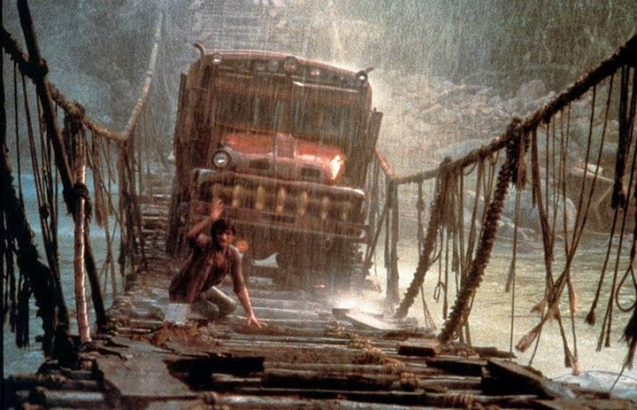
Genre Grandeur – The Wages of Fear (1953) / Sorcerer (1977) – Rhyme and Reason

01 Sunday Oct 2017

Posted by sgliput in Movies, Poetry, Reviews, Writing

≈ 1 Comment

Tags

Classics, Drama, Thriller, Version Variations

Here is my contribution to MovieRob’s September Genre Grandeur of Remade Movies. I reviewed both the classic French thriller The Wages of Fear with its American counterpart Sorcerer, comparing and contrasting them as one of my Version Variations.

movierob's avatarMovieRob

For this month’s first review for Genre Grandeur – Re-Made Movies, here’s a review of The Wages of Fear (1953) / Sorcerer (1977)) by SG of Rhyme and Reason

Thanks again to Robb of Red Bezzle for choosing this month’s genre.

Next month’s Genre has been chosen by Kira of Film and TV 101 and it is Western CrossoverMovies.

Literally any film from any genre with western elements to it; comedy/drama/musical or even thrillers or horror.

Please get me your submissions by the 25th of October by sending them to westerncrosskira@movierob.net

Try to think out of the box! Great choice Kira!

Let’s see what SG thought of these movies:

_________________________________

The Wages of Fear (1953) / Sorcerer (1977)


You don’t know what fear is, son.

You’ve felt it flicker and then fade.

But none can say they’ve fully felt

The fear that makes men’s spirits melt

Until their nerves…

View original post 1,236 more words

The Assassin (2015)

29 Friday Sep 2017

Posted by sgliput in Movies, Poetry, Reviews, Writing

≈ Leave a comment

Tags

Drama, Foreign

Image result for the assassin chinese film

They say the world was slow before the Information Age,
When everything was hastened into busyness and rage.
Before the start of coal and steel and trains to move them round,
I guess that life was slower still and much less schedule-bound.

So think of how much slower life was centuries ago:
Compared with now, it might seem that the world was in slo-mo.
But once the novelty had worn, you’d want your time restored,
‘Cause when the world was slower, it was also very bored.
____________________

MPAA rating: Not Rated (should be PG-13)

I can’t remember the last movie I saw that was such a complete and excruciating waste of time. I had heard The Assassin was a slow but beautifully shot Chinese epic, but my gosh, I had no inkling as to how slow it would be. As I once described 2001: A Space Odyssey, this is the definition of artsy-fartsy: artsy because yes, there is cinematic skill on display, and fartsy because it stinks nonetheless.

The Assassin’s plot, such as it is, is about a woman named Yinniang trained from a young age as an assassin, whose mentor sends her to prove her ruthlessness by killing Yinniang’s own cousin, the military governor of an autonomous province. Even if I wanted to recount the rest of the story, I don’t know that I could because it was so inscrutable. There’s talk of backstabbing loyalists to the Emperor and someone’s wife getting pregnant and an assassination attempt other than Yinniang’s, and honestly I couldn’t keep track of the convoluted mess being barely explained in front of me. One bald guy seems to be pulling strings from the shadows but is never identified; even after some soldiers barged in and shot him with arrows, I still didn’t know who he was supposed to be.

Image result for the assassin chinese film

On top of this narrative opacity, all the plot elements I mentioned belie the fact that very little actually happens. Seriously, this 105-minute film has less dialogue than a typical half-hour TV show, and it seems to drag out its story by padding every sentence with interminably long shots of characters staring gloomily ahead, with not enough context or effort to lend their expressions any meaningful emotion. This might be forgivable if the action scenes could make up for it, since this is supposed to be a wuxia film, but Crouching Tiger, Hidden Dragon this is not. The martial arts are oddly placed and very brief, often with jarringly abrupt endings. At one point, Yinniang walks through the woods, trades sword slashes with a briefly glimpsed masked woman, manages to cut off a piece of the mask, and they both walk away with no words spoken. Did the filmmakers not care how many questions scenes like that would bring up? Obviously not, since they never try to explain it.

I just want to point out that I am a very patient person. I can spend hours working on a jigsaw puzzle. I’ve watched uneventful potential snoozefests like Into Great Silence, Dim Sum: A Little Bit of Heart, The Wall, and Metropolis and typically tried to recognize the best in them. I greatly enjoyed and admired The Red Turtle, and that didn’t have any dialogue at all! But The Assassin was a complete and utter waste of my time, a film I only finished because of my personal policy to finish any movie I start, unless it’s outright offensive, which this wasn’t.

Image result for the assassin chinese film

After preserving some hope for the first half hour, I spent the remainder just wishing it would end already. I wanted every scene toward the end to be the last because I knew it would try for some enigmatic conclusion I wouldn’t understand anyway so why did it matter where it stopped? If I had to pick something, I suppose I appreciated the cinematography, such as some of the landscapes and a carefully composed scene shot through a transparent curtain. But trust me when I say this film is not worth your time. I’ve included the trailer below because every scene of worth is in there; just watch that instead, disregard the critical praise, and do something more interesting with your 105 minutes, like maybe watching paint dry.

Best line: There were none!


Rank: (Very) Dishonorable Mention


© 2017 S.G. Liput
511 Followers and Counting



VC Pick: The Red Violin (1998)

27 Wednesday Sep 2017

Posted by sgliput in Movies, Poetry, Reviews, Writing

≈ Leave a comment

Tags

Drama, Meet 'em and Move on, Mystery

Image result for the red violin film

Where was this music before it came here
To strum my emotions and tickle my ear?
Where did this instrument formerly play
Before it revived to distinguish this day?

In hand-crafted wood, in dormancy kept,
Awaiting their moment, the melodies slept
Until the right hand, the right passion and skill
Compelled euphony from its prison to spill.

What hearts has it shattered? What lives has it blessed,
As lifelong companion or transient guest?
I cannot be sure of what lies in repose
In the unwritten symphony it alone knows.
_____________________

MPAA rating: R (mainly for a couple scenes with unnecessary nudity)

My VC obviously knows what I like. I had never even heard of this Canadian drama, but the way she described it piqued my interest. Indeed, it turned out to be exactly what I’d hoped, a Meet-‘Em-and-Move-On movie, my favorite unofficial subgenre in which a character’s life or journey introduces them to a parade of acquaintances and influences that typically brings their story full circle. Forrest Gump and War Horse are good examples, but whereas those follow a person or animal, The Red Violin follows the titular instrument as it passes from owner to owner through centuries, finding new meaning in the hands of each player.

Image result for the red violin film

The Red Violin is really five stories in one, and while it’s not as potentially confusing as Cloud Atlas, the narrative does jump around a bit. In a way, it begins at the end, with the violin being put up for auction, before leaping back to its creation at the hands of an Italian master (Carlo Cecchi) in 1681. From there, the violin passes on to 18th-century Austria, 19th-century England, and Communist China. I absolutely loved the editing that wove connections between stories that share little in common other than the violin. In between each new tale, we return to the 1600s, where the violin maker’s wife receives a tarot card reading, and we revisit the auction house in 1997, where every bidder has a unique reason for wanting this particular violin.

There’s a great deal of authenticity to each vignette, allowing us to grasp the time and place even without an explanatory subtitle. Each tale plays out in the language of the country—Italian, German, English, Chinese, etc.—and there aren’t many recognizable actors to call attention to themselves, Samuel L. Jackson being the only big name star. (Some may also recognize Jason Flemying, Colm Feore, and Greta Scacchi.) The music is fantastic, both the feigned violin playing itself and the compositions, both graceful and aggressive, by John Corrigliano, who won the Oscar for Best Score, and it adds even more sophistication to the elegant camerawork and production design.Image result for the red violin filmBy the end, I wasn’t positive how I felt about The Red Violin, but my admiration for it has grown with time. I especially admire how, in its journey through history, the violin becomes a symbol of everything music can stand for: a true love, a damaging obsession, an inspiring muse, a steep cost, a science to study, a cause for persecution, a treasure worth protecting. It’s imperfectly ambitious and didn’t provoke the strong emotions I usually expect from a Meet-‘Em-and-Move-On, but it was still an engaging and epic journey, punctuated by a revelation that wasn’t exactly a twist but more of a slow realization confirmed by the end. Beautiful, sad, and passionate in equal measure, The Red Violin is proof that my VC’s tastes sometimes do match my own.


Rank: List-Worthy


© 2017 S.G. Liput
511 Followers and Counting
 

Cars 3 (2017)

24 Sunday Sep 2017

Posted by sgliput in Movies, Poetry, Reviews, Writing

≈ Leave a comment

Tags

Animation, Comedy, Drama, Family, Pixar, Sports

Image result for cars 3

The world will see you as they choose,
No matter how they may deny.
They see exteriors so well
It takes hard work to break that shell,
To prove you’re more than meets the eye
And pay the greater dues.

The world’s opinions can infect
And sap the will to prove them wrong.
You balk on whether to begin,
But those who don’t will never win.
To everyone such doubts belong,
So prove them incorrect.
_________________

MPAA rating: G

I’m sure many, like me, approached Pixar’s third Cars movie with some hesitance, unsure if it was being made as a more fitting end for the series than Cars 2 or because Disney and Pixar were just trying to cash in on one of their most profitable (and least loved) franchises. While I still wasn’t sure through the first half of the movie, I’m glad to say it’s the former. Cars 3 is far more like the original than the over-the-top sequel, returning its sights to Lightning McQueen and the racing world and totally ignoring all the spy stuff of its immediate predecessor. Thankfully, Mater is once again a mere side character too.

Early on, we’re treated to a montage of Lightning’s time in the sun as a racing champ. After years on top, though, he’s suddenly outclassed by newcomer Jackson Storm (Armie Hammer), and much as Lightning overshadowed the King in the first film, analysts and fans are suddenly enamored with Storm’s ascent and scientifically proven training. After pushing himself too far, Lightning faces a career crisis when his contract is sold to a new owner named Sterling (Nathan Fillion, who I’m glad is still finding work), and his future in racing comes down to raw performance and perhaps a new way to train with motivational coach Cruz Ramirez (Cristela Alonzo).

Image result for cars 3 cruz

I will say this felt like one of Pixar’s more uneven films, making me wonder at times whether it was more like the first or the second Cars in terms of story quality and character interactions. There were times in the first half when things just felt “off” for a Pixar film, like when Bonnie Hunt’s Sally encourages Lightning in highly generic fashion, and some of the new characters take some time to get used to them.

Yet as the story develops, Cars 3 grows into a worthy conclusion for the series. It’s also a fitting farewell to two members of the original voice cast who have since died, Paul Newman as Doc Hudson and Tom Magliozzi of “Car Talk” fame as one of Lightning’s Rust-eze sponsors, both of whom are sort of resurrected via pre-recorded audio, which is underused but still touching. All of the other cast members (save for George Carlin) return as well, except for Michael Keaton as Chick Hicks, replaced by the very different-sounding Bob Peterson.

Lightning’s story is all about whether he’ll give up and ride on his fame or risk damaging his reputation by striving further than he is able, a strong yet subtle conflict with real-world parallels, such as tennis player Roger Federer for example. (My VC and I love him and have debated whether he should quit while he’s ahead, yet he keeps on eking out wins.) Lightning’s main goal is to be able to choose when he quits rather than being forced out of the game as Doc was. Yet by being constantly called a “legend,” he sees that everyone considers him past his prime, and Cruz makes it very clear that she considers him old as dirt.

Despite her initial presumptions, though, Cruz becomes something that Lightning has never had before, a protégé, one who has offered so much support to others through training that she’s never kept any of that confidence for herself. The fact that she is played by a Latina woman is no coincidence either, and she becomes a fine example for minority underdogs daring to be taken seriously. The dynamic between Lightning and Cruz isn’t without its bumps, but how it plays out by the end is a clever realization of both of their goals and a perfect way of bringing Lightning’s character full circle.

Image result for cars 3

As I said, except for maybe a couple racers, Cars 3 essentially ignores Cars 2 altogether, with not a single mention of the spy plot and even casting off key details. For instance, Cars 2 mentioned that the Piston Cup had been renamed in Doc’s honor, but here it’s the Piston Cup again. Plus, I noticed a scene in my recent viewing of Cars 2 where Lightning had product endorsements and plenty of merchandise, making me wonder why he is now so reluctant to “cash in” as a brand. Personally, I think Cars 2 was all a dream or one of Mater’s tall tales because Cars 3 stays as relatively grounded as the first film and thus is a far better continuation of its story. Despite a rocky start, Cars 3 turns out to be a superior sequel than the cash grab it might have been, raising Pixar’s animation quality even higher and providing a satisfying end to the trilogy. At least until they come up with a Cars 4. Please, Pixar, this franchise is one case where you should quit while you’re ahead.

Best line: (Smokey, Doc’s former crew chief) “You’ll never be the racer you once were. You can’t turn back the clock, kid. But you can wind it up again.”


Rank: List-Worthy (joining the first Cars)


© 2017 S.G. Liput
511 Followers and Counting
 

Cars 2 (2011)

20 Wednesday Sep 2017

Posted by sgliput in Movies, Poetry, Reviews, Writing

≈ Leave a comment

Tags

Action, Animation, Comedy, Family, Pixar, Sports, Thriller

Image result for cars 2 film

Imagine a world of living cars,
With windshields for eyes and mouths in their grills.
Now picture that some are elite racing stars,
And some are so junky, they’re fit for landfills.

Okay, so you got it? That’s good. Picture now
One racecar is cocky and needs a good lesson.
He’s stuck in a small town, which helps him somehow
Find more happiness than what he had success in.

You with me? All right, after that, visualize
A worldwide grand prix and an evil car plot,
And British car spies to take on the bad guys
And a tow truck that helps doing what he ought not
And maybe explosions and one car that flies.
The racecar’s there too, as a mere afterthought.

Wait, where are you going? No need to be cruel.
It may not be perfect, but it will look cool!
___________________

MPAA rating: G (PG would probably be better, since cars are actually killed in this one)

Before I review Cars 3, I thought I should get to the one Pixar film I haven’t covered yet, the black sheep of the Cars franchise and Pixar in general, Cars 2. Up until 2011, it seemed that Pixar could do no wrong, which I can say as someone who still greatly enjoys the first Cars, even if it is a rip-off of Doc Hollywood. Yet the first non-Toy Story sequel in Pixar’s lineup proved to be quite the mixed bag; it remains the only Pixar movie to have a “Rotten” score of 39% on Rotten Tomatoes. It follows Lightning McQueen on a worldwide racing grand prix, which is threatened (and overshadowed) by an evil cabal of lemon cars that only British secret agents and Mater can prevent from fulfilling their heinous plot. Whereas other Pixar films utilize inspiration to tell charming and relatable stories, Cars 2 is inspiration run amok and not really in a good way.

Cars established the world of sentient automobiles that has become Pixar’s biggest cash cow, and despite the outlandishness of its surface concept, the actual events of the plot were fairly down-to-earth, urging racing hotshot Lightning McQueen to slow down and enjoy the ride. By incorporating international espionage and globe-hopping plots into its world, Cars 2 is like director John Lasseter’s personal fan fiction, saying instead to speed up and enjoy the ride. The world of living cars takes a certain amount of suspension of disbelief to not ask questions like “Who builds the cars?” or “How do they do things that require hands and manual dexterity?” I was able to put such issues aside for the first film, but with James Bond-style gadgets and visits to different countries and car ethnicities, the suspension of disbelief is seriously strained here.

Image result for cars 2 film

And that’s on top of its other issues. While Lightning and all the other characters from the first film are still present (minus Paul Newman’s Doc Hudson, who is implied to have passed away), Cars 2 puts Mater front and center. I enjoyed Larry the Cable Guy’s bumpkin tow truck in the first film as another humorous member of Radiator Springs, all of whose inhabitants served as a good-natured contrast to Lightning and his crowd. Yet there’s such a thing as too much Mater, and his oblivious ineptitude grows grating when it becomes the main course, particularly as moments of mistaken identity pile up to make the British spies assume Mater is an American secret agent. I could tell Mater’s character here would be overbearing early on, when he spends the whole day with Lightning and then acts all sullen and gloomy when Lightning wants to spend some alone time with his girlfriend.

Worse still is how Mater’s character is tied into the film’s message of not condemning one’s friends for who they are or wishing them to change. Such a moral could be good and worthwhile, but it just doesn’t work when applied to Mater, who consistently acts like a fool in public and causes Lightning to lose a race. When Lightning gets upset, he’s justified in being upset, yet he’s the one who eventually apologizes. The film doesn’t seem to recognize the difference between changing who you are and behaving properly in different circumstances. Mater even comes to realize how he looks to other people, but despite his feeling bad, it doesn’t really lead to any insight or change on his part.

Add to all that smaller problems, like the light political jab of making “big oil” the bad guys and hailing alternative fuel as the greatest of breakthroughs. Plus, there are numerous scenes that just feel rushed and poorly written, especially toward the end, like the sudden confirmation of Mater having a “girlfriend” or Lightning totally misconstruing Mater’s warnings while simultaneously forgetting that he’s right in the middle of a race.

Image result for cars 2 film

So much negativity, but I don’t mean to bash Cars 2 like some low-rent DreamWorks movie. There’s still fantastic animation and ample imagination and humor on display, even if a lot of it consists of car-related puns. I may object to the secret agent plotline on a logical level, but it still offers some genuinely fun action sequences and eye-candy explosions. Michael Caine and Emily Mortimer are perfectly cast as the British spy cars who manage to mistake Mater for an undercover agent, and there’s cartoony amusement to be had, though the James Bond-ish elements make me hope that The Incredibles 2 works better than Cars 2 since they at least fit well into that superhero world. In conclusion, Cars 2 may not be good Pixar, but it still entertains if you don’t think about it too much. In fact, it’s probably more entertaining the less you think about it.

Best line: (Finn, played by Caine) “I never properly introduced myself: Finn McMissile, British Intelligence.”   (Mater) “Tow Mater, average intelligence.”


Rank: Honorable Mention


© 2017 S.G. Liput
509 Followers and Counting


VC Pick: Runaway (1984)

17 Sunday Sep 2017

Posted by sgliput in Movies, Poetry, Reviews, Writing

≈ 5 Comments

Tags

Action, Sci-fi, Thriller, VC Pick

Image result for runaway 1984 film

How will you know when the future has come?
When robots reside in your workplace or home.

How will you know where technology goes?
When robots start rising right under your nose.

How will you know when sci-fi meets real life?
When robots can handle the kids…or a knife.

How will you know if man’s made a mistake?
When robots and darker intentions awake.
___________________

MPAA rating: PG-13

Runaway isn’t that great a sci-fi film but it is an enjoyably watchable one, only occasionally owing that appeal to its cheesy ‘80s-ness, which seems to appeal to my VC more than to me sometimes. Written and directed by Michael Crichton, this Tom Selleck vehicle features yet another potential future where robots have become common appliances at home and work, and wouldn’t you know it, they start killing people! It’s not about vengeful A.I.’s fighting back; it’s a bit more ordinary than that, since they’ve instead been reprogrammed by a leering baddie played by Gene Simmons (yes, from KISS!), and it’s up to Selleck’s policeman Jack Ramsay and his new partner Karen (Cynthia Rhodes) to stop him.

As a robot movie, Runaway has futuristic innovations both odd and pretty cool. You might question why it takes police intervention to pick up a malfunctioning pest control bot that doesn’t seem very dangerous, but then we get to marvel at the innovation of a heat-seeking missile bullet, with some first-person shots from the bullet’s point of view. To be honest, the robots are lame in design and execution, and while I’m sure they were impressive for 1984, seeing wobbly robotic spiders “sneak up” on hapless police has a distinctive B-movie quality. Even so, the machines can still be dangerous, like one murderous runaway modified to shoot a gun, the threat of a thrilling early scene slightly spoiled by the stupidity of one of its victims. One caring nanny robot also happened to remind me of the similar THX droid in the anime series/film Time of Eve.

Image result for runaway 1984 filmMy VC has introduced me to a lot of ‘80s movies, and thanks to her, I know Crichton could direct science fiction both innovative (Westworld) and memorably tense (Coma, which was one of Selleck’s first brief film roles). Though Runaway falls a little short of his earlier work in terms of originality, it was still a fun ‘80s popcorn movie. I can’t say I was ever bored since the police investigation moves along at a brisk pace between moments of well-wrought tension. It helps too that all the actors acquit themselves fairly well, from Selleck’s likeable, afraid-of-heights lead to Simmons’ malicious villain, though Simmons didn’t help his potential acting career with a gratuitous scene literally thrown in just for a jump scare. There may not be much depth to the characters or themes, but as a diverting little thrill ride into the future, Runaway ran far enough to entertain.

Best line: (Ramsay, after a wild goose chase) “Congratulations, guys, you just staked out a roll of toilet paper.”


Rank: List Runner-Up


© 2017 S.G. Liput
507 Followers and Counting


← Older posts
Newer posts →

Recent Posts

  • We Didn’t Start 2025 (Recap)
  • NaPoWriMo 2025 Recap (Finally)
  • Sonic the Hedgehog 3 (2024)
  • It Happened One Night (1934)
  • Spellbound (2024)

Recent Comments

associatesofshellymann's avatarassociatesofshellyma… on My Top Twelve La La La So…
Kit's avatarKit Nichols on Bonnie and Clyde (1967)
lifelessons's avatarlifelessons on Look Back (2024)
Carol Jackson's avatarCarol Jackson on The Thief of Bagdad (1940…
Stephen's avatarStephen on Love Story (1970)

Archives

  • January 2026
  • December 2025
  • May 2025
  • April 2025
  • March 2025
  • February 2025
  • January 2025
  • December 2024
  • May 2024
  • April 2024
  • March 2024
  • February 2024
  • January 2024
  • December 2023
  • November 2023
  • October 2023
  • September 2023
  • July 2023
  • June 2023
  • May 2023
  • April 2023
  • March 2023
  • February 2023
  • January 2023
  • December 2022
  • November 2022
  • October 2022
  • September 2022
  • August 2022
  • July 2022
  • June 2022
  • May 2022
  • April 2022
  • March 2022
  • February 2022
  • January 2022
  • December 2021
  • November 2021
  • October 2021
  • September 2021
  • August 2021
  • July 2021
  • June 2021
  • May 2021
  • April 2021
  • March 2021
  • February 2021
  • January 2021
  • December 2020
  • November 2020
  • October 2020
  • September 2020
  • August 2020
  • July 2020
  • June 2020
  • May 2020
  • April 2020
  • March 2020
  • February 2020
  • January 2020
  • December 2019
  • November 2019
  • October 2019
  • September 2019
  • August 2019
  • July 2019
  • June 2019
  • May 2019
  • April 2019
  • March 2019
  • February 2019
  • January 2019
  • December 2018
  • November 2018
  • October 2018
  • September 2018
  • August 2018
  • July 2018
  • June 2018
  • May 2018
  • April 2018
  • March 2018
  • February 2018
  • January 2018
  • December 2017
  • November 2017
  • October 2017
  • September 2017
  • August 2017
  • July 2017
  • June 2017
  • May 2017
  • April 2017
  • March 2017
  • February 2017
  • January 2017
  • December 2016
  • November 2016
  • October 2016
  • September 2016
  • August 2016
  • July 2016
  • June 2016
  • May 2016
  • April 2016
  • March 2016
  • February 2016
  • January 2016
  • December 2015
  • November 2015
  • October 2015
  • September 2015
  • August 2015
  • July 2015
  • June 2015
  • May 2015
  • April 2015
  • March 2015
  • February 2015
  • January 2015
  • December 2014
  • November 2014
  • October 2014
  • September 2014
  • August 2014
  • July 2014
  • June 2014
  • May 2014
  • April 2014
  • March 2014
  • February 2014
  • January 2014
  • December 2013

Categories

  • Blindspot
  • Blogathon
  • Christian
  • Movies
  • Music
  • NaPoWriMo
  • Poetry
  • Reviews
  • TV
  • Writing

Meta

  • Create account
  • Log in
  • Entries feed
  • Comments feed
  • WordPress.com

Recent Posts

  • We Didn’t Start 2025 (Recap)
  • NaPoWriMo 2025 Recap (Finally)
  • Sonic the Hedgehog 3 (2024)
  • It Happened One Night (1934)
  • Spellbound (2024)

Recent Comments

associatesofshellymann's avatarassociatesofshellyma… on My Top Twelve La La La So…
Kit's avatarKit Nichols on Bonnie and Clyde (1967)
lifelessons's avatarlifelessons on Look Back (2024)
Carol Jackson's avatarCarol Jackson on The Thief of Bagdad (1940…
Stephen's avatarStephen on Love Story (1970)

Archives

  • January 2026
  • December 2025
  • May 2025
  • April 2025
  • March 2025
  • February 2025
  • January 2025
  • December 2024
  • May 2024
  • April 2024
  • March 2024
  • February 2024
  • January 2024
  • December 2023
  • November 2023
  • October 2023
  • September 2023
  • July 2023
  • June 2023
  • May 2023
  • April 2023
  • March 2023
  • February 2023
  • January 2023
  • December 2022
  • November 2022
  • October 2022
  • September 2022
  • August 2022
  • July 2022
  • June 2022
  • May 2022
  • April 2022
  • March 2022
  • February 2022
  • January 2022
  • December 2021
  • November 2021
  • October 2021
  • September 2021
  • August 2021
  • July 2021
  • June 2021
  • May 2021
  • April 2021
  • March 2021
  • February 2021
  • January 2021
  • December 2020
  • November 2020
  • October 2020
  • September 2020
  • August 2020
  • July 2020
  • June 2020
  • May 2020
  • April 2020
  • March 2020
  • February 2020
  • January 2020
  • December 2019
  • November 2019
  • October 2019
  • September 2019
  • August 2019
  • July 2019
  • June 2019
  • May 2019
  • April 2019
  • March 2019
  • February 2019
  • January 2019
  • December 2018
  • November 2018
  • October 2018
  • September 2018
  • August 2018
  • July 2018
  • June 2018
  • May 2018
  • April 2018
  • March 2018
  • February 2018
  • January 2018
  • December 2017
  • November 2017
  • October 2017
  • September 2017
  • August 2017
  • July 2017
  • June 2017
  • May 2017
  • April 2017
  • March 2017
  • February 2017
  • January 2017
  • December 2016
  • November 2016
  • October 2016
  • September 2016
  • August 2016
  • July 2016
  • June 2016
  • May 2016
  • April 2016
  • March 2016
  • February 2016
  • January 2016
  • December 2015
  • November 2015
  • October 2015
  • September 2015
  • August 2015
  • July 2015
  • June 2015
  • May 2015
  • April 2015
  • March 2015
  • February 2015
  • January 2015
  • December 2014
  • November 2014
  • October 2014
  • September 2014
  • August 2014
  • July 2014
  • June 2014
  • May 2014
  • April 2014
  • March 2014
  • February 2014
  • January 2014
  • December 2013

Categories

  • Blindspot
  • Blogathon
  • Christian
  • Movies
  • Music
  • NaPoWriMo
  • Poetry
  • Reviews
  • TV
  • Writing

Meta

  • Create account
  • Log in
  • Entries feed
  • Comments feed
  • WordPress.com

Blog at WordPress.com.

  • Subscribe Subscribed
    • Rhyme and Reason
    • Join 814 other subscribers
    • Already have a WordPress.com account? Log in now.
    • Rhyme and Reason
    • Subscribe Subscribed
    • Sign up
    • Log in
    • Report this content
    • View site in Reader
    • Manage subscriptions
    • Collapse this bar