• Home
  • About Me
  • The List
  • THE LIST (2016 Update)
  • THE LIST (2017 Update)
  • THE LIST (2018 Update)
  • THE LIST (2019 Update)
  • THE LIST (2020 Update)
  • THE LIST (2021 Update)
  • THE LIST (2022 Update)
  • Top Twelves and More
  • The End Credits Song Hall of Fame

Rhyme and Reason

~ Poetry Meets Film Reviews

Rhyme and Reason

Monthly Archives: April 2020

The Wandering Earth (2019)

19 Sunday Apr 2020

Posted by sgliput in Movies, NaPoWriMo, Poetry, Reviews, TV, Writing

≈ Leave a comment

Tags

Action, Drama, Foreign, Netflix, Sci-fi, Thriller

See the source image

(Today’s NaPoWriMo prompt was to write about items gathered during a walk. In my house, I latched onto a nearby globe and decided to write about the planet at large, even though the film is more about disaster than discovery.)

What ancient cartographer could have imagined
A world as small as this?
Back then, the maps ended without a true edge
In blurry oblivion. One would allege
A brand new discovery, and they would wedge
The new land upon the abyss.

And now we know everything, satellite-view;
No land is left to miss.
But now we look upward and see a frontier,
More blurry oblivion. Scorning the fear,
We still must endeavor to find what’s not here.
We just can’t abide an abyss.
___________________________

MPA rating: TV-MA (it’s a PG-13-level movie, but the English subtitles have more F words than the original Chinese for some reason)

When you think of Chinese films, science fiction isn’t a genre that immediately comes to mind, but The Wandering Earth might change that. Based on a 2000 novella and released through Netflix outside of China, this big-budget blockbuster is like Asia’s answer to Michael Bay, a solar-system-spanning disaster flick that is just over-the-top enough to work.

See the source image

Anyone remember the Spongebob episode with the Alaskan bull worm threatening the town, where Patrick says they should just take Bikini Bottom and push it someplace else? Well, that’s the brilliant idea the future world leaders in this film came up with to escape an expanding sun. Studding the earth’s surface with enormous rocket engines, they push the planet out of its orbit toward a safer system while most of the population retreats underground to escape the freezing surface. Years into the journey, the roaming planet gets caught in Jupiter’s gravity, forcing young adult Liu Qi (Chuxiao Qu), his sister, and their accomplices to fix one of the failing engines and save the world, while his father (Jing Wu) on a space station tries to do the same.

With tiny people causing planet-level effects, everything in The Wandering Earth is on such a humongous scale that even its semi-plausible elements seem utterly ridiculous, yet the earnestness of the characters and coolness of the visuals make the suspension of disbelief possible. In creating China’s first big sci-fi movie, the filmmakers certainly went all out with their emulation of similar Hollywood blockbusters: collapsing ice towers, a single-minded AI to fight, huge explosions, questions about saving the many vs. the few, last-minute heroics and touching sacrifices.

See the source image

There’s a reason it made $700 million, making it the third highest-grossing non-English film ever. (Netflix has an English dub, but I’d only watch it if you absolutely can’t stand subtitles or want fewer obscenities.) I don’t know how the current pandemic will affect China’s film industry, but The Wandering Earth is proof that it can compete with Hollywood on special-effects extravaganzas. I wouldn’t say it’s better than films like Armageddon or Sunshine, but it’s certainly bigger.


Rank: List Runner-Up


© 2020 S.G. Liput
679 Followers and Counting
Paddington (2014)

18 Saturday Apr 2020

Posted by sgliput in Movies, NaPoWriMo, Poetry, Reviews, Writing

≈ Leave a comment

Tags

Comedy, Family

See the source image

(Today’s NaPoWriMo prompt was to write about life’s small pleasures, which can include how we treat one another.)

It’s the little things, you know,
That make a day a joy,
The little interactions, like a smile, a wink, a wave,
The “please” or “Miss” or “Mister”
That a shrinking few deploy,
Reminding us some people still recall how to behave.

When hate’s on all horizons
And stress is in the air
And every morning seems less optimistic than the last,
A touch of common courtesy,
Less common but still there,
Can prove the world’s not too far gone, no matter the forecast.
________________________

MPA rating: PG

At last, I finally got to see why everyone loves Paddington so much. For some reason, I never got around to seeing this family film from 2014 until recently, perhaps because I never read the original classic British children’s books when I was young. Paddington has quickly become beloved by both critics and audiences, and it does indeed have a near-perfect blend of whimsy and humor.

See the source image

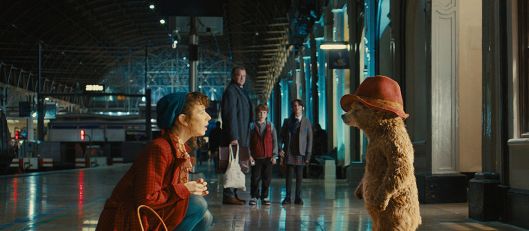
The film starts with a flashback about a British explorer discovering a pair of intelligent bears in Darkest Peru, teaching them about England and marmalade sandwiches before returning home. Decades later, those bears’ nephew (voiced by Ben Whishaw) journeys from the jungle to Paddington Station in London, where he is taken in by the kind Brown family (Hugh Bonneville, Sally Hawkins), who give him the name Paddington. He struggles, though, to find where he belongs, even as he’s targeted by a cruel taxidermist (Nicole Kidman).

It’s common for a family film to veer too far into puerile territory and be demoted to a “kid’s movie.” As a kid at heart, I can appreciate the vast majority of cartoons and such (as evidenced by yesterday’s review), but it’s clearly difficult for filmmakers to create something that can appeal to kids and adults without patronizing either. Pixar has mastered it, and so, it seems, has Paddington. There are, of course, jokes and burps and slapstick for easy laughs, but beyond that is an overwhelming abundance of charm. Paddington himself, rendered in bravura CGI, doesn’t have an unkind bone in his body, and his interactions with everyone are marked by a politeness and courtesy that is genuinely refreshing, due to how rare they’ve become in recent times. I’m sometimes irritated by characters who are defended for being clumsy and destructive, and there’s a little of that here, but the charm easily outweighs any negatives.

See the source image

More than anything, Paddington reminded me of another film about a polite CGI character trying to find his place in the world and being accepted into a nuclear family: 1999’s Stuart Little, which was a beloved movie for me growing up. My nostalgia makes me prefer the earlier film, but I like how Paddington has become the Stuart Little of a new generation. Paddington certainly is more critically lauded, and its inventive camerawork and set design only add to an overall delightful aesthetic. It’s a family film in the truest sense of the words.

Best line: (Mary Brown, giving a description of Paddington to a policeman) “He’s about three foot six, he’s got a bright red hat on, and a blue duffel coat… and he’s a bear.”
(Policeman) “It’s not much to go on.”
(Mary) “Really?”


Rank: List Runner-Up


© 2020 S.G. Liput
679 Followers and Counting


The Emoji Movie (2017)

17 Friday Apr 2020

Posted by sgliput in Movies, NaPoWriMo, Poetry, Reviews, Writing

≈ 2 Comments

Tags

Animation, Comedy, Family, Fantasy

See the source image

(Today’s NaPoWriMo prompt was for a poem about outdated technology, so I went a little into the future to see how generations yet to come might look back on a present-day craze.)


The primitive Egyptians had their hieroglyphic font,
A picture-style penmanship to decorate the wall.
And slightly less archaic humans later chose to flaunt
Another image language on the phones they used to call.

You see here all the tiny illustrations they would use
To message, manage, and react in digital discourse.
We’re not sure why developed people (for the time) would choose
To discard words in favor of these mini-metaphors.

From faces showing every mood to smiling excrement,
These symbols were exchanged among them by the gadget-full.
These hands betoken clapping, and this sobbing shows lament,
And no one’s really sure about this purple vegetable.

It took a while for mankind at last to move beyond
This graphical vocabulary sent through cyberspace.
Now who will raise your hand and tell us what replacement dawned?
What new communication took the poor emoji’s place?
______________________________

MPA rating: PG

I watched The Emoji Movie at the end of a terrible day, thinking that, if it was truly as terrible as everyone said, I would associate it with that day and never want to see it again. It’s been lambasted so many times that it’s practically a meme to hate on it. Yet despite all the loathing, four Razzies, and the 7% Rotten Tomatoes score, I must admit it’s not that bad.

See the source image

The premise is straight out of Inside Out or Wreck-It Ralph, but instead of emotions or video game characters, the cast consists of various emojis living within the digital city of Textopolis, inside the phone of a high schooler named Alex. Gene (T.J. Miller) is the son of two “meh” emojis, and although he is meant to personify indifference, he tends to “break character,” so to speak, and show emotions he shouldn’t, which eventually gets him in trouble and sends him on a dangerous journey through the phone and its many apps.

Would I characterize The Emoji Movie as good? No. It’s frequently dumb or crude humor is lackluster, and the climax, in which a single emoji somehow saves the day and causes an instant change in the direction of the plot, is socially myopic at best, not saying much good for the communication skills of the next generation. Yet, is that really enough reason to label it one of the worst films of the decade?

Other reviews I’ve read have insisted that this film has no redeeming qualities whatsoever, which is a pretty absolute statement for an adult to lob at a film aimed at kids. I thought the animation was colorfully fun and polished, and the world inside the phone, while obviously derivative, had some sparks of creativity, like visualizing Spotify as a series of literal “streams” of music to ride. Though some are grating, I didn’t mind the voice actors either (James Corden, Anna Faris, Maya Rudolph). I do cringe at Patrick Stewart voicing the poop emoji, but Steven Wright as Gene’s “meh” father was an inspired choice.

See the source image

So The Emoji Movie may be “meh” overall and is so tied to present-day technology that it’s sure to age poorly, but I don’t see what makes it worse than some similarly dumb blockbuster like Minions. There are many other films out there worth hating more.


Rank: Honorable Mention


© 2020 S.G. Liput
679 Followers and Counting

VC Pick: Top Gun (1986)

17 Friday Apr 2020

Posted by sgliput in Movies, NaPoWriMo, Poetry, Reviews, Writing

≈ Leave a comment

Tags

Action, Drama, Romance, VC Pick, War

See the source image

(Today’s NaPoWriMo prompt was for an effusive poem of over-the-top praise, so I just kind of let my imagination run with it.)

Although it’s been said many times, many ways,
The feats at your feet never fail to amaze.
You stand high above every other by far.
If we were all Beatles, you’d drive every car.
You mass-produce marvels; you trigger the awe
Of both proletariat and the bourgeois.
You’re such a sensation, a spectacle said
To paint, not the town, but the whole county red.
The scholars no longer use language defining
The word “awesome”; no, it’s your photograph, shining.

The wonders don’t cease when you have a hand in them;
If there were contests for impressing, you’d win them.
Chuck Norris is porous compared to your muscle;
Gaston at his best can’t compete with your hustle.
The terms that describe you left Earth long ago;
The rest of the words couldn’t handle their glow.
If there is a mountain to move, you will move it.
And best of all,
As per protocol,
You need not be told all this; each day, you prove it.
______________________________

MPA rating: PG-13

At long last, my dear Viewing Companion (VC) convinced me to see Top Gun again. I recall seeing it years ago, but for some reason, it never really appealed to me in my memory. When the sequel was announced, my reaction was basically, “Meh,” while so many others were thrilled by their own ‘80s nostalgia. I just don’t have much interest in fighter pilot hotshots; it’s like wrestling or rap music, just not my cup of tea. But she finally got me to see it, and I must admit it was far better than I remembered, deserving of its reputation as a seminal film of the decade.

See the source image

Tom Cruise was in his youthful prime as “Maverick” Mitchell, the pilot whose massive shoulder chip propels him into the Navy’s top pilot school and the danger zone of aerial dog fights, aided by his trusty wingman Goose (Anthony Edwards). While he can be cocky and unpredictable, his stubbornness and penchant for risk get him far, including in his romance with the lovely Kelly McGillis, at least until tragedy strikes and threatens his career and his spirit.

Most critics tend to laud the aerial plane fights, which are well done, though I had trouble telling who was who and which plane was which at times. (Of course, in the cockpit, it helps that they made the Russian MiG pilots a faceless enemy with a full helmet mask.) Plus, I can’t help but wonder what “enemy waters” in the Indian Ocean would have warranted the air fight at the film’s climax. But there was also more to the characters than I remembered, more real emotion than the mere angst and testosterone I expected, though there was that too. For instance, Val Kilmer as fellow pilot “Iceman” is more of a genuine rival to Maverick rather than the smug antagonist he could have been. Plus, you can’t fault the cast, from Kilmer and Tom Skerritt to early roles for Tim Robbins, Meg Ryan, and Adrian Pasdar.

See the source image

Top Gun will never be one of my favorite movies, but watching it again has vastly raised my opinion of it. It’s a cool icon of a film, boasting not only the famous quote below but a truly quintessential soundtrack, including Kenny Loggins’ “Danger Zone” and the Oscar-winning “Take My Breath Away,” which is the kind of song that could make anything romantic. Plus, it inspired the name for Goose the cat in Captain Marvel, and who doesn’t love Goose the cat? The sequel may have been pushed back to December, but here’s hoping it can do justice to its classic original.

Best line: (Maverick) “I feel the need…”   (Maverick and Goose) “The need for speed!”


Rank: List Runner-Up


© 2020 S.G. Liput
679 Followers and Counting

Sing (2016)

15 Wednesday Apr 2020

Posted by sgliput in Movies, NaPoWriMo, Poetry, Reviews, Writing

≈ Leave a comment

Tags

Animation, Comedy, Family, Musical

See the source image

(Today’s NaPoWriMo prompt was for a poem inspired by a favorite musical genre. So I wrote my own lyrics to the beautiful Leonard Cohen classic “Hallelujah,” which was used in this film, and it’s best sung to that tune.)

I heard there was a big contest
Where people sang to prove they’re the best,
But who would try when all the world sees through ya?
Yet trying is a practice sport,
It’s hard to start, easier to thwart,
But still I saw a chance for hallelujah!

I answered to the casting call;
I saw so many give their all,
But not too much or else they’d have to sue ya.
Then my turn came, and I stepped sincere;
I flung my lungs to the judges’ ear
And hoped to God I’d find my hallelujah.

The echoes waned, and I waited there,
And one leaned backward in his chair,
And said, “If I produced, I would pursue ya.
But this audition’s meant for dance,”
So clearly I did not advance,
But still I got a chance at hallelujah.
It is true-ya,
But who knew-ya?
My debut-ya,
My limelight, but not quite,
Hallelujah.
____________________

MPA rating: PG

At first glance, Sing looks very generic, especially with Illumination largely meh record (The Secret Life of Pets, Despicable Me). Anthropomorphic animals? Seen it, that same year actually with Zootopia. A singing competition? That’s only been done, oh, about 100 times. So what does Sing offer? Well, nothing new really, but it does present its familiar elements in a highly crowd-pleasing way with an all-star voice cast and bright animation to rival its competitors.

See the source image

A koala named Buster Moon (Matthew McConaughey) owns an old failing theater with great passion and nostalgia, and when the bank threatens to foreclose on it, he decides to hold a singing competition to revive the venue’s reputation, accidentally offering a cash prize he doesn’t have. A motley crew of animal characters then audition for the show with their eyes on the prize, and things go both very wrong and very right.

The most notable aspect of Sing is the sheer number of pop standards it includes, over 60, sometimes only for a few seconds, an expense that reportedly used up 15% of the film’s budget. From Taylor Swift and Frank Sinatra to Queen and Stevie Wonder, it’s a veritable auditory feast of well-produced popular music, which also offered me the surprise of realizing how well actors like Scarlett Johansson can sing, even as a porcupine. Plus, I have little doubt that Taron Egerton’s rendition of “I’m Still Standing” helped clinch his casting as Elton John in Rocketman.

The diverse characters and personalities – mice, porcupines, pigs, gorillas, elephants – all get basic but relatable character development, and I liked how every one of the contestants had a different reason for wanting to sing and win the money, whether for selfish needs, a chance to start over, or for more personal hopes and dreams. There was charm to spare in the voice cast, which also included Reese Witherspoon, Seth MacFarlane, Tori Kelly, John C. Reilly, and Peter Serafinowicz, and the animation was smooth and colorful, particularly an impressively rendered scene involving a flood.

See the source image

So ultimately, Sing is an enjoyable film built on a lackluster base. It’s easily criticized for its lack of originality, yet all the ingredients come together to make it surprisingly… likable, I guess is the word. It’s easily Illumination’s best film, in my book. Plus, I do love the original song “Faith,” sung by Stevie Wonder and Ariana Grande, which deserves a place in my End Credits Song Hall of Fame. Sing doesn’t step far out of any box, but it’s a thoroughly amusing and pleasant watch sure to get your toe tapping.

Best line: (Buster, showing Ash a garish costume) “Isn’t this a great color for you?”
(Ash) “I can’t tell. It’s melting my eyes.”


Rank: List Runner-Up


© 2020 S.G. Liput
679 Followers and Counting

Blinded by the Light (2019)

14 Tuesday Apr 2020

Posted by sgliput in Movies, NaPoWriMo, Poetry, Reviews, Writing

≈ Leave a comment

Tags

Drama, Musical

See the source image

(Today’s NaPoWriMo prompt was for a poem about poems or poets that inspired us to write. I went a bit broad to apply to anyone who has been stirred by another’s words. Incidentally, my own inspirations include Longfellow, Tennyson, Dr. Seuss, and Robert Service.)

I’d read and heard so many words
Before I chanced on yours,
And yet I found my being stirred,
My vision blurred, no dream deferred,
Like a patient with his pick of cures.

I’m not the first; so many more
Before me felt the thrill
Of finding phrases to explore
Of peaceful war and whispered roar,
Of things I know or never will.

I’m now a fan, have been for years,
But wish I could return
To when you widened my frontiers
And sparked the gears between my ears
And made my poet’s spirit burn.
_______________________

MPA rating: PG-13 (for language and themes)

Considering this was one of my Top Twelve movies watched last year, I suppose it’s about time I got around to reviewing it. Blinded by the Light is a feel-good delight of a film, especially for any fan of Bruce Springsteen, and although I never considered myself a fan of “The Boss,” I think this movie made me one.

Based off the experiences of real-life journalist Sarfraz Manzoor, Javed Khan (Viveik Kalra) is a Pakistani Brit growing up in the 1980s, caught between the blatant racism of some of his peers and the strict traditionalism of his immigrant dad (Kulvinder Ghir). Feeling even more misunderstood than most teenagers, he begins to despair, only to be jolted to inspiration when a Sikh classmate offers him some Springsteen tapes. Feeling a strong connection to Bruce’s music and themes, Javed renews his aspirations as a writer and begins a romance with a student activist named Eliza (Nell Williams), eventually coming into conflict with his father as he pushes his way further into the world and away from his family.

See the source image

There are certain protagonists, mainly young writers or dreamers, with whom I just feel a natural kinship: Shizuku in Whisper of the Heart, Mia in La La Land, John-Boy on The Waltons, and now Javed Khan as well. Even if I never had to contend with the racism he does, I found myself able to relate and sympathize so much with his poetry efforts, doubts, and the inspiration he finds in music. Hayley Atwell is a warmly encouraging presence as his English teacher, reminding me of Laura Dern in October Sky. And while disapproving parents are common to this kind of coming-of-age story, Ghir as Javed’s father remains believable in his bullheadedness, perhaps because Javed himself isn’t entirely blameless, and the compromise they both come to is brilliantly heartwarming. Plus, he can be a source of humor, as when he keeps thinking that Springsteen is Jewish.

I was never really aware of it, but my mom told me recently that Bruce Springsteen was one of my late father’s favorite musicians. Since I know he loved the Beatles, I find it interesting that two of his favorite artists were both immortalized by 2019 British films with South Asian protagonists (this one and Yesterday). Not unlike Sing Street, the musical segments add enormous entertainment value to offset the heavier scenes, shots of joy and dancing backed by greatest hits like “Thunder Road,” “Badlands,” “Born to Run,” and (of course) “Blinded by the Light.” If only they’d thrown in “Rosalita” or “Dancing in the Dark” too….

See the source image

I liked how the lyrics are often shown on-screen to highlight the songs’ poetic aspect that so appeals to Javed, and I was surprised at how some characters considered Springsteen “old” music by 1987. Funny, catchy, and poignant, Blinded by the Light proves the timelessness of not only “The Boss,” but musical and poetic inspiration in general and how it can change impressionable lives for the better.

Best line: (Miss Clay) “Tell me about your poems.”
(Javed) “They’re crap, miss.”
(Miss Clay) “Yeah, but they’re your crap. And if you keep at it, one day you might think they’re not crap.”


Rank: List-Worthy


© 2020 S.G. Liput
679 Followers and Counting

Dora and the Lost City of Gold (2019)

13 Monday Apr 2020

Posted by sgliput in Movies, NaPoWriMo, Poetry, Reviews, Writing

≈ Leave a comment

Tags

Action, Comedy, Family, Fantasy

See the source image

(Today’s NaPoWriMo prompt was for a non-apology, so I wrote one to the ancient cultures that have been despoiled in modern times.)

I’d like to take a moment to say sorry, if I may,
To all the ancient cultures our museums now display.
You went to all that trouble, building monoliths of stone,
Turned now to tourist traps we like to think of as our own.

Apologies to Giza and the pharaohs mummified.
It’s just that, with your pyramids, you hardly tried to hide.
When something’s that conspicuous, what person could resist?
It’s honey to the fly that is the archaeologist.

And ancient Greece, I’m sorry for the snatching of your art;
It’s just that all your masterpieces seem so a la carte.
A marble here, a marble there, no price tag to be seen,
It’s not as if you’ll miss another naked figurine.

Regrets to Rome and China, the Aztecs and Babylon;
You should have left instructions for long after you were gone.
It’s just that one philosophy applies to tomb and shrine:
When something sits there long enough, it might as well be mine.
_______________________

MPA rating: PG

Never in a million years did I think I would have something positive to say about a Dora the Explorer movie, but here we are. I remember growing up when seven-year-old bilingual Dora was at her height of popularity on Nickelodeon, and I also remember how quickly I outgrew her repetitive talking to the camera and decided she had little to offer me. How could a live-action version be worthwhile? Well, it can because Dora and the Lost City of Gold is better than it has any right to be.

See the source image

Having voiced a character in a cartoon spin-off of the original show, Isabella Moner (now Merced) of Instant Family plays the young explorer, aged up to a teenager. She lives happily with her professor parents (Michael Pena, Eva Longoria) and her CGI monkey Boots in the South American jungle, but her parents reluctantly send her to school in California, hoping their sheltered daughter will socialize and make some friends. Her overly perky naivete makes her less than popular with most students, including her cousin Diego (Jeff Wahlberg), but when she and some classmates are kidnapped back to the jungle, she proves how handy it is to have an explorer as a friend.

Moner as Dora is the heart of the film, and she is a consistent ray of sunshine, earnest without coming off as saccharine. The writers leaned into her cartoon persona’s more ridiculous traits (“Can you say ‘extreme neurotoxicity?’”), and, while not every joke lands, they found some comedy gold with her fish-out-of-water antics. And I’m not sure what to make of a sequence animated like the old show, which offers nostalgia while suggesting that the whole thing was one massive drug trip. Despite that scene and a vaguely liberal bent, it’s a largely family-friendly adventure that can appeal to a much wider age range than the original cartoon did.

See the source image

The story also has some excitement once it reaches the jungle again, with Eugenio Derbez being a slapstick hoot when he joins the jungle-bound teens. The journeys of Dora’s jungle-marooned classmates may be predictable, but I thought the story found a good balance between adolescent growth and National Treasure-style escapades. From the unexpected guest voices of Benicio del Toro and Danny Trejo to the excellent musical number at the end, the whole thing is self-aware and far more entertaining than I had expected. Can you say “franchise potential?”

Best line: (Sammy, a classmate) “There’s nothing more dangerous than a wounded animal.” (Dora) “There are a lot of things more dangerous than a wounded animal. A healthy animal, for starters.”


Rank: List Runner-Up


© 2020 S.G. Liput
679 Followers and Counting

Version Variations: The Intouchables (2011) / The Upside (2017)

13 Monday Apr 2020

Posted by sgliput in Movies, NaPoWriMo, Poetry, Reviews, Writing

≈ Comments Off on Version Variations: The Intouchables (2011) / The Upside (2017)

Tags

Biopic, Comedy, Drama, Version Variations

See the source image

See the source image

(Happy Easter, everybody! Today’s NaPoWriMo prompt was for a triolet, an eight-line poem with repeated lines and a very particular rhyme scheme.)

The ruts in which our lives are spent
Seem deeper than they really are.
See only walls, and we lament
The ruts in which our lives are spent,
But thinking we are always meant
To stay will hardly get us far.
The ruts in which our lives are spent
Seem deeper than they really are.
_____________________

MPA rating for The Intouchables: R (really just for a few F words in the subtitles)
MPA rating for The Upside: PG-13

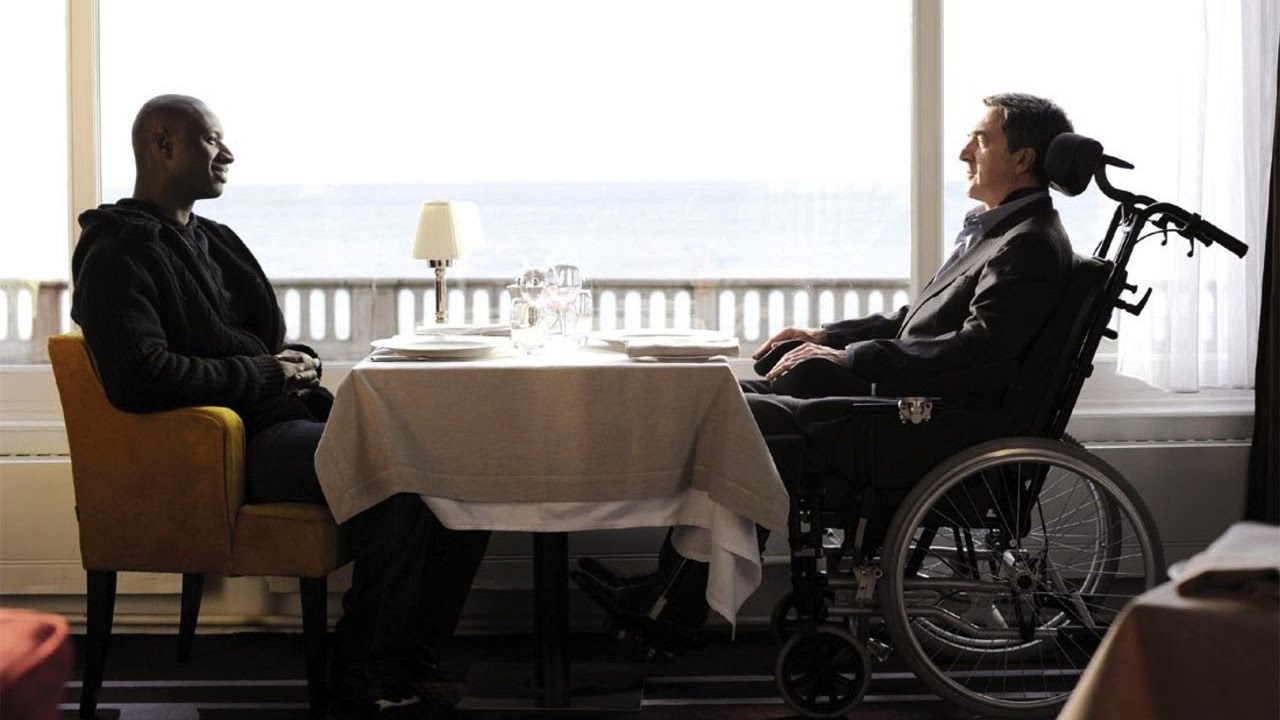
Is there some unofficial rule that says you shouldn’t watch a remake before the original? Because, if there is, I think I broke it… again. I had some curiosity about the popular French film The Intouchables, but I didn’t seek it out until I watched last year’s American version and wanted to compare them. After all, I’m far overdue for a Version Variation post. Based on the true story of Philippe di Borgo and Abdel Sellou, both films are about a poor, street-smart black man finding employment caring for a bitter quadriplegic millionaire and the feel-good friendship that grows between them.

See the source image

I’ll focus on The Upside first, since that was the first one I saw. Kevin Hart plays a deadbeat dad named Dell, who is more interested in barely fulfilling his parole requirements than actually seeking a job. Yet his initial rude interaction with Bryan Cranston’s wealthy Philip Lacasse catches the attention of the joyless businessman, and Dell is offered the job of a “life auxiliary” caretaker, with all the well-paid benefits and uncomfortable tasks that entails. Hart’s comedic experience serves him well during his character’s initial protests against catheters, but he proves himself to be an able dramatic actor as well, with Cranston being both a great foil and partner, despite being physically immobile. They’re a likable odd couple that grows in poignance up to the smile-worthy end.

And as for The Intouchables, well… it’s basically the same exact thing, but in French! With the number of remakes out there that tarnish the spirit of the original, I was surprised at how faithful The Upside was. The French characters are named Driss (Omar Sy) and Philippe (François Cluzet), but I could tell from the very first scene how similar the two films were: the protests against the more awkward forms of care, the sharing of a joint while out on the town, the creative forays into high-end painting, a stressful paragliding excursion, even a series of gags surrounding shaving Philippe’s beard and mustache.

See the source image

Yet there were still a few differences as well. Kevin Hart’s Dell is less of a jerk than the French Driss can be at times, though they still share the lack of pity that attracted their employer. The Intouchables also featured a great little scene where, after enduring Philippe’s love of classical, Driss lets loose to “Boogie Wonderland.” But the most notable difference concerns Philippe’s blind epistolary romance with a woman and Driss’s efforts to get them to meet face-to-face. The Upside features some of the exact same scenes, yet they have a different outcome, one that is perhaps more painfully realistic and leads to a far different role for the rich man’s assistant (Nicole Kidman in the American version, Audrey Fleurot in the French). For my part, I think I prefer the ending of The Intouchables, which is more lump-in-throat-worthy, aided by Ludovico Einaudi’s elegant score.

The Intouchables is clearly the more well-respected film (74% on Rotten Tomatoes versus an undeserved 39%), but The Upside is actually quite a successful remake. Some may bristle at recreating a film just so we English-speakers don’t have to read subtitles, but the filmmakers did a good job with it. Both films thrive off of the chemistry between the two leads, and all four actors are perfectly cast and do credit to the inspiring true story, though I find it odd that both Driss and Dell are black whereas Abdel Sellou was not. From the lows of depression to the highs of paragliding, The Intouchables and The Upside handle their serious subjects of class divides and disability with both pathos and humor and show that even total opposites can become lifelong friends.

See the source image

Best line from The Intouchables: (voice on the phone) “Hello?”   (Philippe) “Eleonore, it’s Philippe. I’m calling because I really wanted to hear the sound of your voice, and with that first hello, I’m fulfilled.”   (voice, apparently not Eleonore) “I’ll put her on.”

Best line from The Upside: (Dell, to Philip) “You can have any girl you want. What about this lady with all the Botox? You’re perfect for each other. You can’t move your body; she can’t move her face.”


Rank for The Intouchables: List Runner-Up
Rank for The Upside: List Runner-Up


© 2020 S.G. Liput
679 Followers and Counting

Little Women (1994)

11 Saturday Apr 2020

Posted by sgliput in Movies, NaPoWriMo, Poetry, Reviews, Writing

≈ 3 Comments

Tags

Classics, Drama, Family, Romance

See the source image

(Today’s NaPoWriMo prompt was for a poem about flowers taking on certain meanings, so I decided to compare flowers with the little women of this film.)

A family of daughters is like a bouquet
Of flowers, all different, that brighten the day.

The rose offers beauty and layers of grace,
With thorns to keep those who would pluck in their place.

The daisy seems simple, but as you look nearer,
Complexity waits for the few who revere her.

The lily looks shy with its petals locked tight
But opens up wide when it knows love and light.

And baby’s breath sighs with its placeholder status
Yet binds us all close in an elegant lattice.

From practical pansy to sumptuous mum,
Each woman and bloom are just right as they come.
_____________________

MPA rating: PG

After thoroughly loving Greta Gerwig’s most recent adaptation of Louisa May Alcott’s novel, I had to check out 1994’s similarly acclaimed version from Gillian Armstrong. With such a classic story and relatable characters, it’s clearly hard to go wrong, since this also proved to be a wonderful rendition, even if it didn’t quite match its most recent sister.

The ensemble is full of stars in their prime in the ‘90s: Winona Ryder as Jo, Kirsten Dunst (and later Samantha Mathis) as Amy, Claire Danes as Beth, Trini Alvarado (of Paulie) as Meg, Susan Sarandon as Marmee, and Christian Bale as Laurie, not to mention Gabriel Byrne, Eric Stoltz, and Mary Wickes as well. Unlike Gerwig’s non-linear narrative, jumping back and forth across a four-year gap, this version plays its events in order, which is easier to follow as the March sisters grow up, finding love, heartache, and joy along the way.

See the source image

So how do the two versions compare? Over and over, I recognized scenes and interactions (which obviously means they came from the book), and I liked them here but couldn’t help preferring the more recent film’s take on them, which might have been reversed if I’d seen this version first. Much of the dialogue that I so loved in the 2019 film wasn’t the same here, a testament to Gerwig’s contribution, yet I still appreciated its simple, often humorous elegance. Individual characters were harder to decide on. Meryl Streep was certainly a more memorable Aunt March than Wickes was. Winona Ryder and Saorsie Ronan are evenly matched as Jo, considering I have a crush on both, but I thought Christian Bale made a more sympathetic Laurie than Timothée Chalamet. Likewise, Friedrich and Jo’s relationship felt slightly more natural and fleshed out here than in the remake.

I must admit one embarrassing thing. I kept being confused by certain differences I viewed as creative choices. Why did they keep giving Beth’s actions to Amy? Only halfway through did I realize I had Beth and Amy mixed up, thanks largely to the casting of the 2019 film. In that one, Florence Pugh plays both the younger and older Amy, but because she looks and is older than Eliza Scanlen as Beth, I thought Amy was the third eldest of the girls, which threw me off when 12-year-old Kirsten Dunst’s Amy was clearly the youngest in the 1994 film. It’s hard to say which is the better option, though. In this film, I thought that the replacement of Dunst with Mathis after the 4-year gap sapped some of the bond formed with Amy, so I can see why keeping the same actress might be desirable, if slightly confusing for people like me. I should really just read the novel.

See the source image

Ultimately, I loved both versions because they both bring this story to life in a brilliantly traditional way. So many 19th-century period pieces are centered in Victorian England or focus on some war or significant historical event, so it’s a rare treat to glimpse into the everyday lives of Americans from this time. I may be partial to Gerwig’s incarnation, but both films share a stellar cast and engaging wholesomeness that are equally refreshing.

Best line: (Jo, after Laurie proposes) “Neither of us can keep our temper…”
(Laurie) “I can, unless provoked.”
(Jo) “We’re both stupidly stubborn, especially you. We’d only quarrel!”
(Laurie) “I wouldn’t!”
(Jo) “You can’t even propose without quarreling.”


Rank: List-Worthy (I’ll tie it with the 2019 version)


© 2020 S.G. Liput
679 Followers and Counting

The Christ Slayer (2019)

10 Friday Apr 2020

Posted by sgliput in Christian, Movies, NaPoWriMo, Poetry, Reviews, Writing

≈ Leave a comment

Tags

Biblical, Drama

See the source image

(Today’s NaPoWriMo prompt was for a hay(na)ku, a six-word variation of a haiku. Thus, I strung several hay(na)kus together to form a non-traditional sonnet.)

Crosses
Weigh heavier
With every step.

Burdens
Hang over,
Blocking the sun.

Lies
Strain hearts
Worse than disease.

Relief
Is all
That mankind craves.

Crosses grow lighter
Only in faith.
__________________

MPA rating: PG-13

Christian films are… hit-and-miss, to put it kindly, with far more misses than hits. Even the box-office hits from the Kendrick brothers are a bit too preachy to wholeheartedly recommend, even if their themes and message are laudable. Since it’s the most solemn holy day of the year, I knew I wanted to review something religious for Good Friday and decided to take a chance on a film I happened upon in Amazon Prime, one that turned out to be a very pleasant surprise.

See the source image

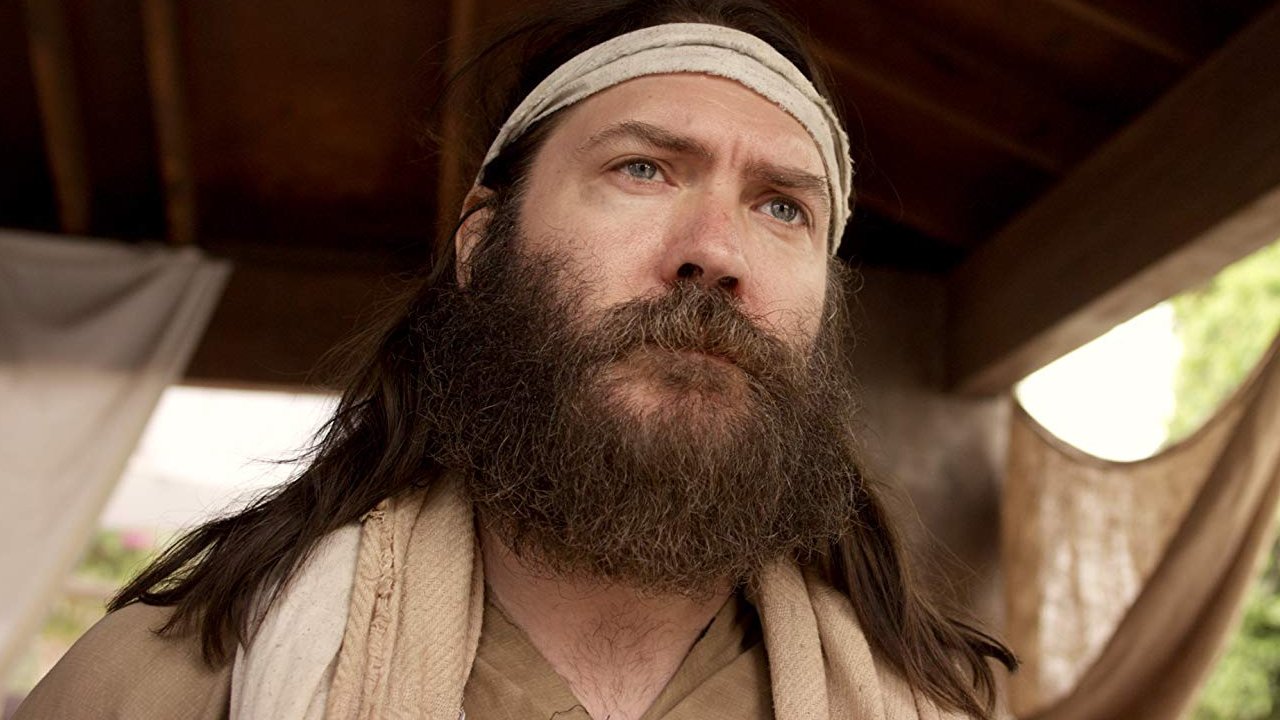
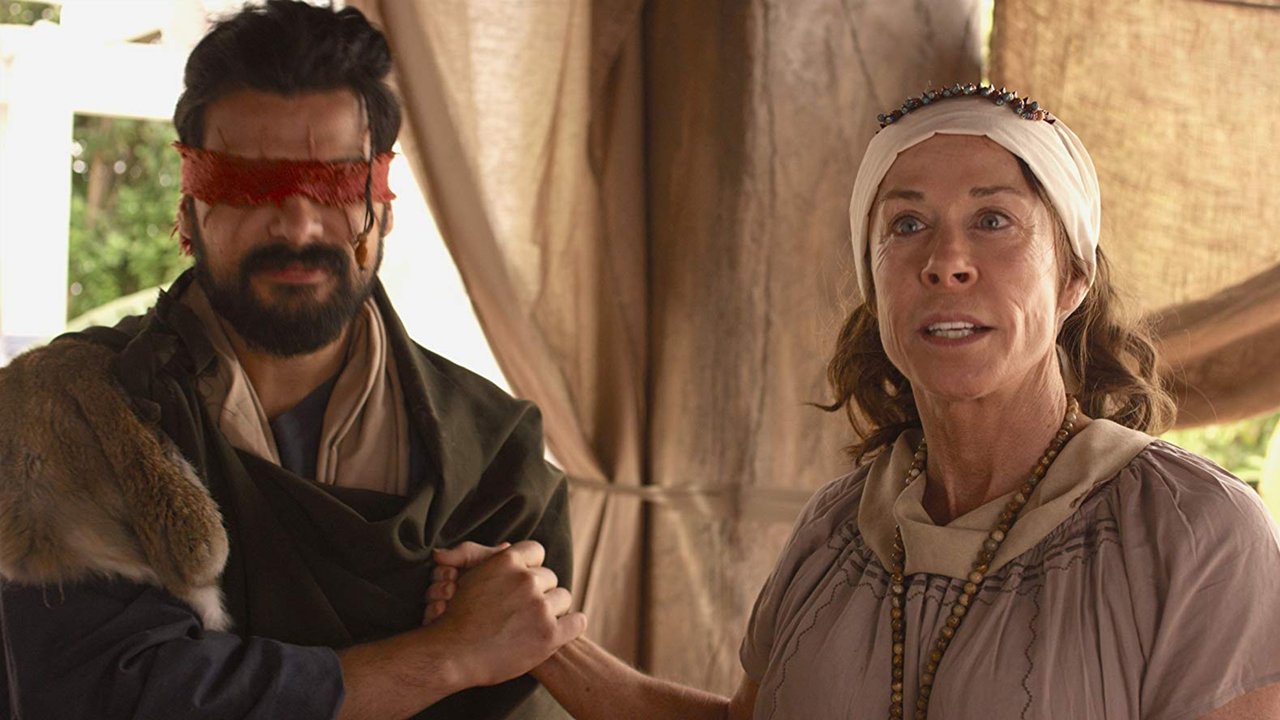
The Christ Slayer, in a unique blending of the Bible and legend, is the tale of Longinus, a blind and despondent Roman centurion who is ordered to pierce Jesus’ side at the crucifixion, earning him the same title as the film. When Jesus is reported to have been resurrected, some scoff, while others fear that he may seek vengeance on the soldier who killed him. Eventually, Longinus decides to quit his role and make the journey home, which becomes transformative when he meets a nameless traveler on the way.

The Christ Slayer can be inconsistent. At times, the camera work comes off as cheap, while at others, the dialogue is written to seem more archaic, resulting in a stilted delivery. Yet, there’s far more good than bad in this film. For one, the cinematography and score are often gorgeous, putting it a cut above the quality of other Christian films. And the acting, while rocky at the beginning, gets better with time, with DJ Perry (CEO of the film’s production company) standing out as a brilliant, soft-spoken Jesus. Likewise, Carl Weyant as Longinus and Josh Perry (who has Down’s syndrome) as his devoted servant make a surprisingly compelling pair as Longinus deals with his inner demons and guilt. Rance Howard, who died before its release, is the only recognizable name in a tiny role, but the other actors acquit themselves well.

One thing to keep in mind is that the plot of The Christ Slayer is definitely not faithful to the Bible events. For starters, Jesus was already dead before being pierced by the lance, so Longinus didn’t take his life himself, and while there are clear parallels to the road to Emmaus story, they’re somewhat abandoned in favor of the film’s own tale. Yet, even if the plot diverges more than I’d like, the film’s themes are faithful to its source, and the characters’ conversations become surprisingly profound. At one point, Satan and Gabriel, both following Jesus’ progress, share a fascinating exchange as former friends turned rivals; later, Jesus soothes Longinus’ concerns about his dead mother with warmth, empathy, and eloquent forgiveness. The whole second half is slower, contemplative, occasionally funny, and ultimately uplifting.

See the source image

I was pleased to learn that this is the third installment of a “Quest Trilogy” from production company Collective Development, Inc., and I’m now quite curious to check out its predecessors 40 Nights and Chasing the Star. Unlike many Christian films, The Christ Slayer focuses first on telling a compelling story and then weaves in its message, avoiding banal preachiness. It felt more natural than 2016’s Risen but with similarities to that film and 1953’s The Robe. It’s been a while since I discovered a faith-based film I could fully recommend, one that I would gladly watch again next year during Holy Week.

Best line: (Jesus) “Salvation is within reach of all.”  (Sabina, Longinus’ aunt) “But they must want to be saved.”


Rank: List Runner-Up


© 2020 S.G. Liput
677 Followers and Counting

← Older posts
Newer posts →

Recent Posts

  • We Didn’t Start 2025 (Recap)
  • NaPoWriMo 2025 Recap (Finally)
  • Sonic the Hedgehog 3 (2024)
  • It Happened One Night (1934)
  • Spellbound (2024)

Recent Comments

associatesofshellymann's avatarassociatesofshellyma… on My Top Twelve La La La So…
Kit's avatarKit Nichols on Bonnie and Clyde (1967)
lifelessons's avatarlifelessons on Look Back (2024)
Carol Jackson's avatarCarol Jackson on The Thief of Bagdad (1940…
Stephen's avatarStephen on Love Story (1970)

Archives

  • January 2026
  • December 2025
  • May 2025
  • April 2025
  • March 2025
  • February 2025
  • January 2025
  • December 2024
  • May 2024
  • April 2024
  • March 2024
  • February 2024
  • January 2024
  • December 2023
  • November 2023
  • October 2023
  • September 2023
  • July 2023
  • June 2023
  • May 2023
  • April 2023
  • March 2023
  • February 2023
  • January 2023
  • December 2022
  • November 2022
  • October 2022
  • September 2022
  • August 2022
  • July 2022
  • June 2022
  • May 2022
  • April 2022
  • March 2022
  • February 2022
  • January 2022
  • December 2021
  • November 2021
  • October 2021
  • September 2021
  • August 2021
  • July 2021
  • June 2021
  • May 2021
  • April 2021
  • March 2021
  • February 2021
  • January 2021
  • December 2020
  • November 2020
  • October 2020
  • September 2020
  • August 2020
  • July 2020
  • June 2020
  • May 2020
  • April 2020
  • March 2020
  • February 2020
  • January 2020
  • December 2019
  • November 2019
  • October 2019
  • September 2019
  • August 2019
  • July 2019
  • June 2019
  • May 2019
  • April 2019
  • March 2019
  • February 2019
  • January 2019
  • December 2018
  • November 2018
  • October 2018
  • September 2018
  • August 2018
  • July 2018
  • June 2018
  • May 2018
  • April 2018
  • March 2018
  • February 2018
  • January 2018
  • December 2017
  • November 2017
  • October 2017
  • September 2017
  • August 2017
  • July 2017
  • June 2017
  • May 2017
  • April 2017
  • March 2017
  • February 2017
  • January 2017
  • December 2016
  • November 2016
  • October 2016
  • September 2016
  • August 2016
  • July 2016
  • June 2016
  • May 2016
  • April 2016
  • March 2016
  • February 2016
  • January 2016
  • December 2015
  • November 2015
  • October 2015
  • September 2015
  • August 2015
  • July 2015
  • June 2015
  • May 2015
  • April 2015
  • March 2015
  • February 2015
  • January 2015
  • December 2014
  • November 2014
  • October 2014
  • September 2014
  • August 2014
  • July 2014
  • June 2014
  • May 2014
  • April 2014
  • March 2014
  • February 2014
  • January 2014
  • December 2013

Categories

  • Blindspot
  • Blogathon
  • Christian
  • Movies
  • Music
  • NaPoWriMo
  • Poetry
  • Reviews
  • TV
  • Writing

Meta

  • Create account
  • Log in
  • Entries feed
  • Comments feed
  • WordPress.com

Recent Posts

  • We Didn’t Start 2025 (Recap)
  • NaPoWriMo 2025 Recap (Finally)
  • Sonic the Hedgehog 3 (2024)
  • It Happened One Night (1934)
  • Spellbound (2024)

Recent Comments

associatesofshellymann's avatarassociatesofshellyma… on My Top Twelve La La La So…
Kit's avatarKit Nichols on Bonnie and Clyde (1967)
lifelessons's avatarlifelessons on Look Back (2024)
Carol Jackson's avatarCarol Jackson on The Thief of Bagdad (1940…
Stephen's avatarStephen on Love Story (1970)

Archives

  • January 2026
  • December 2025
  • May 2025
  • April 2025
  • March 2025
  • February 2025
  • January 2025
  • December 2024
  • May 2024
  • April 2024
  • March 2024
  • February 2024
  • January 2024
  • December 2023
  • November 2023
  • October 2023
  • September 2023
  • July 2023
  • June 2023
  • May 2023
  • April 2023
  • March 2023
  • February 2023
  • January 2023
  • December 2022
  • November 2022
  • October 2022
  • September 2022
  • August 2022
  • July 2022
  • June 2022
  • May 2022
  • April 2022
  • March 2022
  • February 2022
  • January 2022
  • December 2021
  • November 2021
  • October 2021
  • September 2021
  • August 2021
  • July 2021
  • June 2021
  • May 2021
  • April 2021
  • March 2021
  • February 2021
  • January 2021
  • December 2020
  • November 2020
  • October 2020
  • September 2020
  • August 2020
  • July 2020
  • June 2020
  • May 2020
  • April 2020
  • March 2020
  • February 2020
  • January 2020
  • December 2019
  • November 2019
  • October 2019
  • September 2019
  • August 2019
  • July 2019
  • June 2019
  • May 2019
  • April 2019
  • March 2019
  • February 2019
  • January 2019
  • December 2018
  • November 2018
  • October 2018
  • September 2018
  • August 2018
  • July 2018
  • June 2018
  • May 2018
  • April 2018
  • March 2018
  • February 2018
  • January 2018
  • December 2017
  • November 2017
  • October 2017
  • September 2017
  • August 2017
  • July 2017
  • June 2017
  • May 2017
  • April 2017
  • March 2017
  • February 2017
  • January 2017
  • December 2016
  • November 2016
  • October 2016
  • September 2016
  • August 2016
  • July 2016
  • June 2016
  • May 2016
  • April 2016
  • March 2016
  • February 2016
  • January 2016
  • December 2015
  • November 2015
  • October 2015
  • September 2015
  • August 2015
  • July 2015
  • June 2015
  • May 2015
  • April 2015
  • March 2015
  • February 2015
  • January 2015
  • December 2014
  • November 2014
  • October 2014
  • September 2014
  • August 2014
  • July 2014
  • June 2014
  • May 2014
  • April 2014
  • March 2014
  • February 2014
  • January 2014
  • December 2013

Categories

  • Blindspot
  • Blogathon
  • Christian
  • Movies
  • Music
  • NaPoWriMo
  • Poetry
  • Reviews
  • TV
  • Writing

Meta

  • Create account
  • Log in
  • Entries feed
  • Comments feed
  • WordPress.com

Blog at WordPress.com.

Is this your new site? Log in to activate admin features and dismiss this message
Log In
  • Subscribe Subscribed
    • Rhyme and Reason
    • Join 814 other subscribers
    • Already have a WordPress.com account? Log in now.
    • Rhyme and Reason
    • Subscribe Subscribed
    • Sign up
    • Log in
    • Report this content
    • View site in Reader
    • Manage subscriptions
    • Collapse this bar