• Home
  • About Me
  • The List
  • THE LIST (2016 Update)
  • THE LIST (2017 Update)
  • THE LIST (2018 Update)
  • THE LIST (2019 Update)
  • THE LIST (2020 Update)
  • THE LIST (2021 Update)
  • THE LIST (2022 Update)
  • Top Twelves and More
  • The End Credits Song Hall of Fame

Rhyme and Reason

~ Poetry Meets Film Reviews

Rhyme and Reason

Tag Archives: Musical

Coco (2017)

23 Friday Feb 2018

Posted by sgliput in Movies, Poetry, Reviews, Writing

≈ Leave a comment

Tags

Animation, Comedy, Drama, Family, Fantasy, Musical, Pixar

See the source image

Everybody, young and old,
Desires that their life be told
One day with fondness in past tense.
We think that we must spread our name
And earn our quarter hour of fame
To be remembered decades hence.

We need not awe the world so vain
When others close at hand remain
For us to serve and love instead.
The world may never know, it’s true,
How you have lived, but those who do
Are those who matter once we’re dead.
___________________

MPAA rating: PG

It’s nice to know that in a pretty lackluster year for American animation, Pixar can still come through. Coco was undoubtedly a risky film for the famous studio, their first musical and one delving into another country’s culture as none of their past movies have. Even dicier, it threatened to be one of Pixar’s least original stories, coming three years after The Book of Life already did the whole Day of the Dead theme in animation. Yet Pixar not only beat the odds but hit them out of the park. (Am I mixing my idioms? Anyway….)

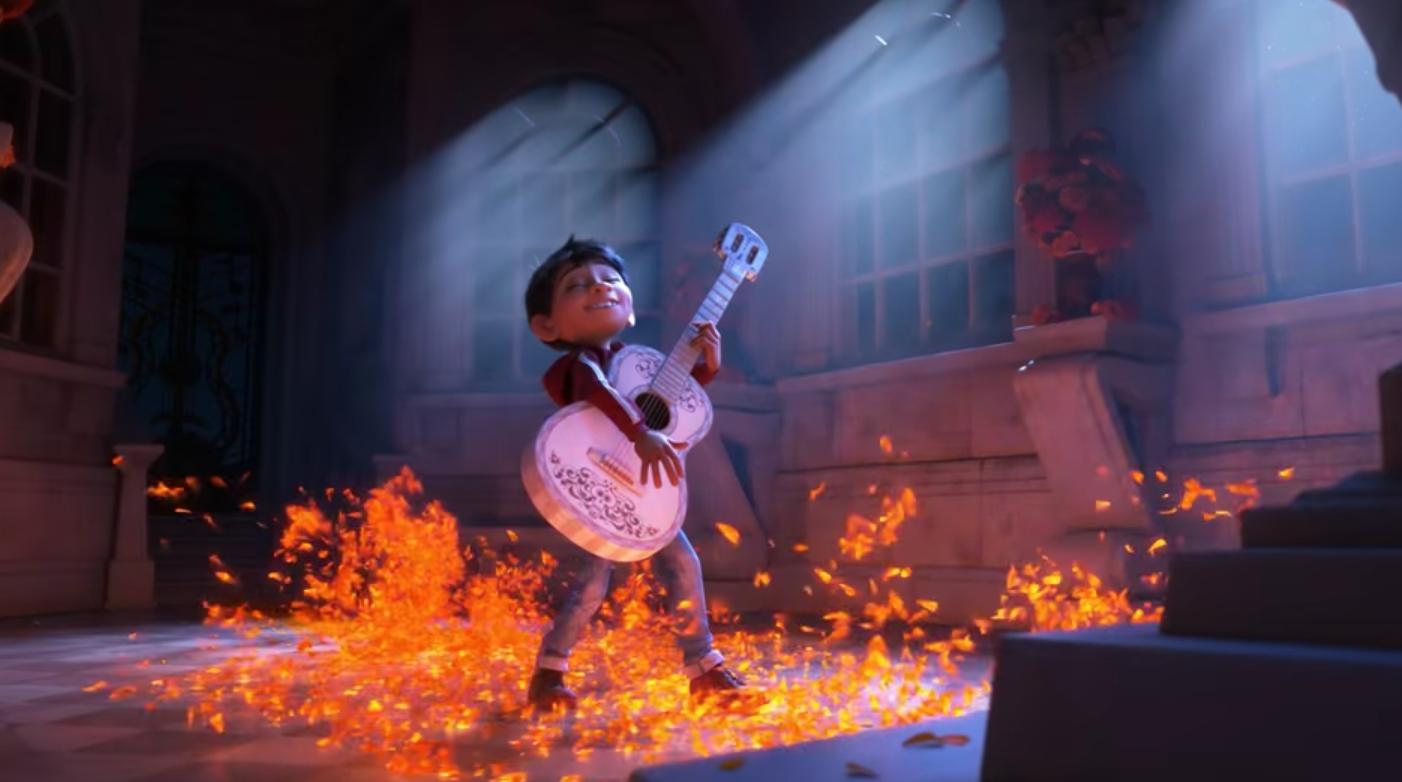
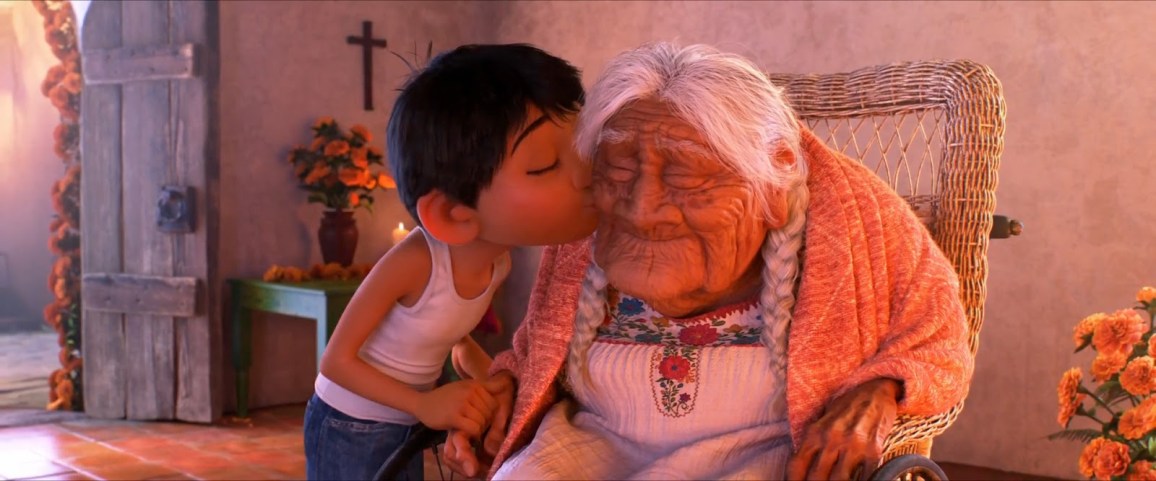
Starting with a prologue explaining why the Rivera family has hated music for generations, Coco introduces us to Miguel Rivera (Anthony Gonzalez) and his extended family of shoemakers, including his rocking chair-bound great-grandmother Coco. Although his Abuelita (grandmother) forbids music of any kind, Miguel is an unashamed fan, particularly of the dead superstar Ernesto de la Cruz (Benjamin Bratt). While the rest of his family celebrates the traditional Mexican holiday of Día de Muertos or the Day of the Dead, the one day their dead relatives can visit them, Miguel’s passion for music accidentally transfers him to the Land of the Dead, and, if he doesn’t want to become a skeleton himself, he must find a way back before the end of the day, accompanied by a misfit named Héctor (Gael García Bernal).
See the source image

It’s true that Coco isn’t the most exceptionally original film in Pixar’s canon. It not only reuses some elements of The Book of Life (skeletons in the Land of the Dead, musical aspirations suppressed by the family business) but will certainly remind some of Ratatouille in the way its talented protagonist dreams of emulating his dead idol against the wishes of his stern family. There are echoes of Up as well, but that might go into spoiler territory. Yet from these all too familiar ingredients, Coco still finds ways to enchant, impress, and touch in ways we haven’t seen before.

For one thing, Pixar continues to reach new heights in the quality of their CGI animation. From the semi-2D prologue told through traditional Mexican paper cuttings (papel picado) to the glory of the Land of the Dead’s fantasy metropolis and its bridge of marigold petals, the level of detail on display is spectacular. I saw Coco with my dad, and it seemed like I heard him whisper “Wow” every ten minutes or so.

See the source image

Simply put, the animation is flawless, but I was glad to see that the same effort went into the story. It undoubtedly captures the traditions and culture of Mexico (it’s now the highest grossing film there), from its exclusively Hispanic cast to the exuberant gritos (the equivalent of a yahoo) to the particulars of celebrating Día de Muertos, yet it backs up that cultural specificity with themes that are universal, especially familial love and devotion. Strengthened by the Oscar-nominated song “Remember Me,” the emotions run deep toward the end, and although Pixar didn’t bring me to tears this time, I can easily see why many viewers’ hearts have melted, especially those who have lost family members.

There are a few points to maybe not object to but at least mention, which run a bit deeper than a  bizarre moment or two. Despite Mexico’s Catholic heritage, Día de Muertos does include pagan and mythological elements, and its concept of the afterlife isn’t exactly a Christian one. Despite the laudable lesson in both Coco and The Book of Life of remembering those who have died, I don’t believe that their existence in the afterlife is dependent on our memory. It’s a concept that works well for the story and its fantasy aspects but one that parents should probably discuss with their kids afterward.

See the source image

That being said, Coco is still a triumph for Pixar, from its funny and poignant moments to its catchy soundtrack (I loved the final song especially). Its twists and turns may be guessable or not, but they do leave an impact. In typical Pixar fashion, it also appeals to kids and adults on different levels. Kids can root for Miguel’s love for music, but as they get older, they might pick up more on how an excess of that passion is problematic, putting him in more danger than was necessary. This may not have been intentional, but a couple parts even seemed to comment on the whole Confederate statue debate, offering a little support for both sides of the argument. Or maybe I’m just reading into it, but the point is that you don’t find such subtlety and food for thought in the majority of Western animation. It’s easily better than The Book of Life, and I’ll probably have to update my Top Twelve Pixar Movies now. As much as I’m still miffed at the Academy for spurning A Silent Voice for a Best Animated Feature nomination, I must admit that even if they had, Coco deserves to win.

Best line: (Miguel) “Although you may never forgive him, you should never forget him!”


Rank: List-Worthy


© 2018 S.G. Liput
538 Followers and Counting


Labyrinth (1986)

16 Friday Feb 2018

Posted by sgliput in Movies, Poetry, Reviews, Writing

≈ 2 Comments

Tags

Comedy, Family, Fantasy, Musical

See the source image

Turn left and right, then left again,
Through passageways unknown to men,
Escorted by the walls so wide
That hedge your path on either side.

It’s left again, or was it right?
Dead ends about, despite foresight,
And going forth and going back
Will likely both lead you off-track.

The walls can lie, the clues mislead,
In hopes that you may not be freed,
But when you round the final bend
And then at last you reach the end,

Perhaps you’ll find your former pen
Worth wandering through once again.
_____________________

MPAA rating: PG

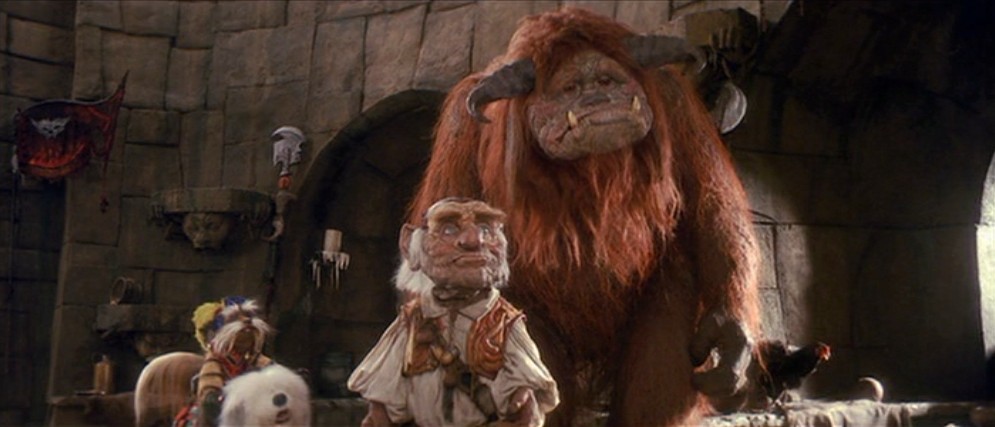
You know what Jim Henson’s Labyrinth most reminds me of? The Wizard of Oz, with muppets. I’m sure I’m not the first to point out that similarity, but I never noticed it when I first saw Labyrinth years ago. The film also explicitly credits Maurice Sendak for inspiration, so Henson had some true children’s classics to draw from as he endeavored to craft one of his own. Whether it is one might be up to each viewer’s nostalgia and “inner child,” but it’s at least a cult classic for some.

In only her fourth movie role, Jennifer Connelly plays Dorothy, I mean Sarah, an imaginative fifteen-year-old who gets fed up with her annoying baby stepbrother Toby (Toby Froud) and wishes he were taken away by goblins. Naturally, she is shocked when he is actually spirited away by the Goblin King Jareth (alluringly hairy David Bowie), who challenges her to make it through his huge labyrinth to save her brother. Like The Wizard of Oz, she braves various obstacles and misadventures, while gaining three companions along the way, who manage to save her after she’s trapped in a dream, not unlike Dorothy in the field of poppies.

See the source image

Bowie may have been one of the big draws for Labyrinth, but in all honesty, the real star is Henson’s puppetry. The sheer number of fancifully designed creatures is impressive, and some boast a “how did they do that?” mastery, such as Sarah’s first grudging friend Hoggle, who apparently had a dwarf in a costume but a face radio-controlled by a team of puppeteers. (When his name is misremembered as Hogwart at one point, I couldn’t help but wonder if J.K. Rowling had been taking notes.) The characters can be alternately cute and grotesque, so when baby Toby is crying surrounded by partying goblins, I doubt there was any acting required. The other part that jumps out at me is the door riddle with the two guards that either lie or tell the truth. I remember that riddle being asked at camp once, and no one could remember the answer. Heck, I’m still not sure I understand its logic. While the film’s box-office disappointment hurt Henson, he had much to be proud of here, since the puppets outshine the humans for the most part.

Attractive as all get-out, Connelly handles her interactions with them earnestly, but her early “curse” against her brother is so over-the-top, it’s hard to believe she went on to win an Oscar. Bowie, on the other hand, is suave and charismatic from start to finish and strangely fits in with the goblins better than expected. Along with the wonderfully ‘80s-sounding soundtrack, he gets to sing too, with the most memorable tune being the endlessly catchy “Magic Dance.”

See the source image

I feel that Labyrinth might have been one of my fond favorites too if I’d seen it more than once when I was a kid (like The Neverending Story), since its mixture of dark fantasy and puppet silliness only worked so far watching it now as an adult. By the end of Sarah’s coming-of-age journey, though, it’s hard not to feel a bit of nostalgia as Hoggle and her friends offer to be there for her, “should you need us.” That’s exactly what childhood favorites are for, reminding you “every now and again in…life, for no reason at all” of the adventures that once so enthralled and enchanted you, even if you know they’re things of the past. Labyrinth may be uneven overall, but it’s still a triumph of puppetry skill and set design, notably a staircase maze modeled after the work of M.C. Escher. Perhaps I just need to revisit it myself a few more times for the magic to fully hit me.

Best line: (Sarah, a true teenager) “That’s not fair!”   (Jareth) “You say that so often, I wonder what your basis for comparison is?”


Rank: List Runner-Up


© 2018 S.G. Liput
536 Followers and Counting


VC Pick: White Nights (1985)

12 Sunday Nov 2017

Posted by sgliput in Movies, Poetry, Reviews, Writing

≈ Leave a comment

Tags

Drama, Musical, Thriller, VC Pick

There are desperate folk where the sun wears no cloak
And the nights are as light as the day.
People come with a grudge and they rarely will budge
Since they’ve no other choice but to stay.

There are pasts black as pitch, a few poor and some rich,
But they’re all the same on that plateau,
Where they’ve all lost their rights to the land where the nights
Are as bright and as white as the snow.

There are desperate men in their self-assigned pen,
And they do what they must to escape,
As they muse in disgrace how they came to this place,
Where the sun never leaves the landscape.
___________________

MPAA rating: PG-13

It seems I’ve been neglecting my dear VC, not having reviewed one of her picks for well over a month. To fix that, she had me revisit a film I saw years ago and only remembered certain scenes. I thought my memories were more vague, but watching the movie brought them all back so I guess it was more memorable than I thought. With a title referring to Siberia’s lack of sunset, White Nights is unique as both a Cold War thriller and a musical combining two dancers-turned-actors with different specialties, tap dancer Gregory Hines and ballet dancer Mikhail Baryshnikov.

When I say it’s a musical, that doesn’t mean people break into song at random moments, but since both of its main characters are performers, they each get to strut their stuff on stage throughout the film. Baryshnikov’s character of Nikolai Rodchenko is practically autobiographical, a famed ballet dancer who defects from the Soviet Union. When his plane crash-lands in Siberia, he is taken into custody by the Soviets, who task disillusioned American defector Raymond Greenwood (Hines) with convincing Nikolai to voluntarily serve Soviet interests, whether he likes it or not.

This is a case where it feels that the movie was made just to team up two talented dancers, employing a Cold War plot meant to keep it timely. That’s not necessarily a bad thing, but let’s just say the dance scenes are far more memorable than the Soviet intrigue. Hines gets to show off his talents as dancer, singer, and actor, with some personal theatrics that make his conflicted character sympathetic, though they don’t quite convince us why the heck he would pick the U.S.S.R. over the U.S. He has surprising chemistry with Isabella Rossillini as his wife, as does Baryshnikov with Helen Mirren as his ex-lover, so there’s little negative I can say about the acting.

Likewise, the musical numbers are marvelous, from Baryshnikov’s modern dance opener (Le Jeune Homme et la Mort) to Hines’ tap rendition of “There’s a Boat Dat’s Leavin’ Soon for New York” from Porgy and Bess. The real kickers are when the two let loose freestyle in the ballet studio, though I do wish those scenes were longer. Yet, despite the great dancing and decent tension toward the end, I feel that I could just as well have watched the musical highlights and skipped the occasionally boring scenes in between, just as I can enjoy Lionel Richie’s Oscar-winning song “Say You, Say Me” or the also-nominated “Separate Lives” sung by Phil Collins with or without the movie to which they’re attached.

While my VC probably won’t be pleased with my ranking, White Nights is simply not one of my favorites, despite the pleasure of seeing two very different dancers collaborating with some athletic and complementary choreography. It’s a decent film all around, and I’m struggling to find much negative to say about it, but it’s one I’d probably only watch when she insists.

Best line:   (Nikolai) “I see. You and your wife, you work in the theater. And you live here… in Siberia.”   (Raymond) “It’s just temporary.”   (Nikolai, dryly) “Of course. Nobody is here permanently.”

VC’s best line: (Nikolai) “You’re an important person, with power. I hear you drive a Mercedes now.”  (Ivanova, played by Mirren) “And what do you ride, Kolya? A donkey? Yes, I rebuilt my life! I was supposed to throw everything away so that you could live in Disneyland?”


Rank: Honorable Mention


© 2017 S.G. Liput
517 Followers and Counting


The Glenn Miller Story (1954)

20 Sunday Aug 2017

Posted by sgliput in Movies, Poetry, Reviews, Writing

≈ Leave a comment

Tags

Biopic, Classics, Drama, Musical, Romance

Image result for the glenn miller story

(Best sung to “Little Brown Jug”)

Music once was full of brass;
Dance halls dripped with the sound of class.
Rock and roll had yet to grow,
But folks all knew Glenn Miller, though.

Ha, ha, ha, what a sound,
The kind to make Miller’s band renowned!
Ha, ha, ha, songs that stay,
The kind today’s elevators play!
__________________

MPAA rating: G

My mom has been urging me to check out more Jimmy Stewart movies lately, which I don’t mind since he’s one of my favorite actors, with a natural likability rivaling Tom Hanks. My latest exploration of his filmography is The Glenn Miller Story, which I hadn’t thought to see before because I didn’t know who Glenn Miller was. I’m sorry for my youthful ignorance now because it’s really an excellent role for Stewart and focuses on a style of music I rarely consider.

Image result for the glenn miller story

For those like me who may recognize Glenn Miller’s name but don’t know who he was, he was a big band leader in the 1930s and ‘40s whose band’s famous recordings include “Moonlight Serenade,” “In the Mood,” and “Pennsylvania 6-5000.” I was familiar with almost all of these songs, especially “Little Brown Jug,” which I learned to play on piano as a kid, but because most of them don’t have lyrics, they’re typically relegated to background music, making them recognizable but not necessarily known. Yet before rock and roll got off the ground in the ‘50s, this jazzy orchestra music ruled the dance halls of America, and like Stewart’s Lindbergh biopic The Spirit of St. Louis, it was made at a time when people still remembered these pre-war events.

The film recounts Glenn’s early struggles, such as repeatedly pawning his trombone in between shows, and his eventual rise to stardom, always in search of “the sound” that would set his band apart. It also focuses on his romance with Helen Burger (June Allyson), whose initial wariness of Glenn’s rootless vocation melts into wholehearted support of his dream. Stewart is his usual lovable self, letting his charm overshadow his character’s frequent inconsiderate treatment of others, which is more out of preoccupation than malice. He also does a fine job pretending to play the trombone. Allyson, though, almost outshines him, bringing considerable warmth to the usual encouraging spouse role and making me like her as an actress even more than I already did from Good News. I was also surprised to see a young Harry Morgan of M*A*S*H fame, and an abundance of famous musicians who knew Miller cameo and perform, though due to that youthful ignorance I mentioned, I only recognized Louis Armstrong.

Image result for the glenn miller story

What I especially liked about The Glenn Miller Story is that it didn’t fall into the problem I usually have with musical biopics. Most biographical films like this (think Ray, for instance) typically leave me with a more negative impression of its subject than I had before, exposing marital infidelity and drug use that taint their public image. It may be true, but it’s sad. Glenn Miller doesn’t do that, probably due to when it was made, instead depicting the music and romance of its title character without aiming to blemish his legacy. If I had a greater love for the big band style, this movie would easily make my list, but even if it just misses the cut, I greatly enjoyed its story and lead performances. My mom likes it even more, since she grew up with her parents listening to this kind of music, and it always puts a big, nostalgic smile on her face to hear it again. I feel bad now for putting off seeing it and not knowing of the talented Glenn Miller.

Best line: (Helen, several times) “Honestly!”  (I’ll think of this movie now every time I hear that.)


Rank: List Runner-Up (a very high one)


© 2017 S.G. Liput
506 Followers and Counting


Moana (2016)

04 Friday Aug 2017

Posted by sgliput in Movies, Poetry, Reviews, Writing

≈ 1 Comment

Tags

Animation, Comedy, Disney, Family, Fantasy, Musical

Image result for moana film

Out on the ocean, with sea on all sides,
The wind as your engine, the stars as your guides,
You are your own island, though roaming between
The land you called home and another unseen.

To blaze the blue courses no human has plied,
You must navigate more than tempest and tide.
To know destination and where you’ll return,
Your place in the ocean of life you must learn.
__________________

MPAA rating: PG

Most would agree that 2016 was a strong year for Disney (and animation in general), releasing two movies in the same year and both nominated for Best Animated Feature: Zootopia, which I loved, and Moana, which I wish I loved more. I’ve waited to review Moana because I wanted to see it again to see if I liked it better than my initial viewing, and I did, but not nearly as much as everyone else. While others are ranking it among Disney’s best, I’ve got it tucked in the middle of the “I like it” section, and I’m not even completely sure why.

The common complaint is that Moana recycles plot elements and the stern authoritarian father figure from The Little Mermaid, also directed by Disney veterans Ron Clements and John Musker, but that didn’t bother me much. There’s plenty else to set it apart, including the obvious subversion that King Trident wanted to keep Ariel in the sea and away from things of the land, while Moana’s father (Temuera Morrison, who played Jango Fett in Star Wars: Episode II) tries to keep her on their island of Motonui and away from the sea. Literally chosen by the sentient ocean to return the fabled Heart of Te Fiti and stop a spreading darkness, Moana (Auli’i Cravalho) sets out on her own (not unlike Mulan) to find the shapeshifting demigod Maui (Dwayne Johnson) and return the Heart.

Image result for tamatoa moana

Before I get into my nitpicking, I must give credit where credit is due. The animation is a new CGI high for Disney, with special attention paid to the lush island greenery and the photorealistic water, and I don’t think any movie since Finding Nemo has contained this much stunningly animated water. It’s a technical marvel, and one more sign that Disney is handily keeping up with Pixar’s animation quality. The music is also well done, courtesy of Hamilton’s Lin Manuel-Miranda, score composer Mark Mancina, and South Pacific musician Opetaia Foa’i. I still think it’s not as memorable as past Disney soundtracks, yet most of the songs have gotten stuck in my head at some point.  My least favorite has to be the still lyrically clever “Shiny,” sung by the oddly accented crab monster Tamatoa (Jemaine Clement), but Moana’s “How Far I Go” and Maui’s “You’re Welcome” are soon-to-be-classic highlights, making me wish there were more musical numbers throughout.

I’m still trying to figure out why Moana didn’t hit me as it did so many others. I don’t think it’s the Pacific island pagan mythology, since Disney has explored other culture’s religions in the past, like the ancestors of Mulan and the spirits of Brother Bear. So what then? The best answer I can give is that I simply didn’t connect with the setting and, by extension, the story. I personally have no love for tropical islands (I used to live in Florida and moved to get away from that kind of climate), so that could be a factor, whereas I found it easy to enjoy Brother Bear since I love Alaska and its mountain scenery. Likewise, as strong as the main two characters were, I felt there was something lacking in the script, perhaps in the humor department. Moana’s repeated self-motivation got old after a while, and the reason for why the ocean chose her, a question that haunts her throughout, is somewhat glossed over in favor of stirring self-confidence. And why did the ocean, controlling itself like the water column from The Abyss, only help her at some points and not others?

Image result for te ka moana

As with so many of my less-than-positive reviews, I don’t want to make it sound as if I didn’t like it. I did. Moana is a solid addition to the Disney canon, boasting colorful and beautifully rendered animation and outstanding voicework. It took some time, but I really enjoyed the dynamic between Moana and Maui and how it grew along their voyage, as well as his tattoo mini-Maui. There’s much to praise, particularly in how Disney has created an admirable dark-skinned heroine and independent role model for kids, much more successfully than in The Princess and the Frog. All I can say is that it’s not one of my favorites, and I understand if people disagree with my gripes. I love Brother Bear and don’t get why some people hate it. One of the many great things about Disney’s canon is how varied it is, and for every lukewarm entry, there’s one to absolutely love. Moana does continue Disney’s streak of winners, but I thought Zootopia was better and deserved its Best Animated Feature win. But that’s just me.

Best lines: (Moana) “Okay, first, I am not a princess. I’m the daughter of the chief.”
(Maui) “Same difference.”
(Moana) “No.”
(Maui) “If you wear a dress and have an animal sidekick, you’re a princess.”

and

(Moana, as Tamatoa tries to take her necklace) “Don’t! That’s my gramma’s!”
(Tamatoa, the crab monster, mocking) “’That’s my gramma’s!’ I ate my Gramma! And it took a week, ’cause she was absolutely humongous.”


Rank: List Runner-Up


© 2017 S.G. Liput
499 Followers and Counting


Version Variations: Pete’s Dragon (1977, 2016)

23 Tuesday May 2017

Posted by sgliput in Movies, Poetry, Reviews, Writing

≈ 3 Comments

Tags

Animation, Drama, Family, Fantasy, Musical, Version Variations

Image result for pete's dragon 1977

Image result for pete's dragon 2016

To some, a forest holds mere trees,
With empty air between,
While one who knows to notice sees
A firmament of green,
Of life and lives and rarities
That few have ever seen.

What wonderments may hide out there
I cannot dare to guess,
But those who speak of creatures rare,
Withdrawn from man’s progress,
Perhaps perceive that empty air
Cannot be magicless.
_________________

MPAA rating for 1977 version: G (maybe PG)
MPAA rating for 2016 version: PG

With Disney so dedicated now to translating its past canon of animated classics into live-action films, it’s rather disconcerting that their attempts thus far have been fan favorites, like Sleeping Beauty or Beauty and the Beast, but not the lesser entries in Disney’s catalog. While remakes of The Black Cauldron and The Sword in the Stone are supposedly in the works and would be welcome, Pete’s Dragon is the first recent remake that actually had a chance of surpassing the original simply because the original is fairly lame. Yet, even though a simple updating of the tale could have sufficed, writer-director David Lowery took the essentials of the first story and transformed them into something closer in spirit to E.T. than to their source, providing an example of improvement for future Disney remakes to follow.

Image result for pete's dragon 1977 helen reddy

Let’s take a look at the original, a film whose “classic” status is more reliant on its age than anything else. The first Pete’s Dragon sees young Pete and his sometimes invisible dragon Elliott escape from a wicked foster family and seek a home in the seaside town of Passamaquoddy, where kind lighthouse keepers (Mickey Rooney, Helen Reddy) take him in and sneaky snake-oil salesmen (Jim Dale, Red Buttons) plot to capture Elliott. It’s a family-friendly musical in the vein of Mary Poppins, Bedknobs and Broomsticks, and Chitty Chitty Bang Bang, the key difference being that it came out in 1977, a less innocent time when ultra-sincere stories like this began tasting too saccharine.

The silly musical numbers and childish wish fulfillment simply don’t work as well here, thanks to some dreadfully gee-whiz acting from young Sean Marshall as Pete. There’s a notable lack of Disney magic, perhaps due to a new generation of animators (including Don Bluth) taking the reins at the time, and some elements are downright unpleasant, like the abusive backwoods Gogans, headed by Shelley Winters, who want Pete as their personal slave. The songs range from forgettable to embarrassing, but Helen Reddy’s “Candle on the Water” is a beautiful exception and even earned an Oscar nomination.

Image result for pete's dragon 1977

I suppose I shouldn’t be too hard on the original Pete’s Dragon. If I’d seen it as a kid, maybe I’d consider it a classic, as I do Chitty Chitty Bang Bang. The merging of animation and live-action is actually done quite well, and there are some fun moments sprinkled throughout the tiresome ones, like Mickey Rooney’s panic over seeing Elliott or the visiting mountebank who can’t pronounce the name of the town he claims to love. It was also neat seeing Jim Backus of Gilligan’s Island appearing as the town’s mayor. By the overly heartwarming ending, I even was able to recognize why others might find this as charming as Elliott himself. Yet my adult sensibilities couldn’t let me overlook its glaring flaws and often laughable excesses, like the soap opera twist at the end that explains away a character’s year-long absence with amnesia. With these earnest family films, it’s a fine line between delightful and cloying, and Pete’s Dragon is one member of the Disney canon that could have certainly benefited from a remake done right.

Thankfully, almost forty years later, that remake arrived. I debated on whether to call this review a Cartoon Comparison or a Version Variation since the original’s dragon was animated and the latest Elliot was CGI, but since CGI is still animation, I opted for a Version Variation. (Did anyone else notice that the 1977 dragon was named Elliott with two t’s, while the more recent one was Elliot with one t?) Yes, in the 2016 version of Pete’s Dragon, there’s still a boy named Pete and a giant invisible green dragon, but that’s really all this film has in common with the original. Gone are the brutish hillbillies. Gone is Dr. Terminus, the greedy charlatan. Gone are the musical numbers and the silly tone. Whereas established fairy tale films are expected to follow the same beats as their predecessors, Pete’s Dragon took the bare minimum of inspiration from the 1977 movie and made something new yet affectionate out of it.

Image result for pete's dragon 2016 bryce dallas howard

Young Pete (Oakes Fegley) is still an orphan, but the beginning actually shows the loss of his parents and how his first encounter with Elliot saves him, after which the boy grows up as a wild child with his protective dragon friend in the remote woods of the Pacific Northwest. In place of Helen Reddy’s beer cask-skipping lighthouse keeper, Bryce Dallas Howard is pleasantly down-to-earth as Forest Ranger Grace Meacham, and her father (Robert Redford) still tells tall tales of spotting an enormous dragon out in the woods. When Pete is discovered and falls into Grace’s charge, the same familial bonds and adoptive hopes develop as in the first film, only done better and with more subtlety. In lieu of the covetous swindler who wants Elliott for elixir ingredients, the villain role goes to Karl Urban as Gavin, the brother of Grace’s lumberjack boyfriend. His desire to capture a fantastical creature isn’t the most original element, but he’s more like Peter Coyote’s man with the keys from E.T. than an outright villain, and a good moment toward the end reaffirms that he does care more for his family than about fame and fortune.

The latest Pete’s Dragon is perhaps a bit too slow in spots, but it’s an appealing contrast to the frantic comedy of most family fare these days. Unlike the 1977 film, all of the human performances are natural and endearing, and Elliot himself is masterfully brought to life in all his fluffy green dragon glory, behaving like a giant dog at times, which is perhaps different from the whistling original but not at all in a negative way. And as a huge Lindsey Stirling fan, I have to mention her lovely and wistful song “Something Wild” that easily makes my End Credits Song Hall of Fame and was my #4 song of last year.

Image result for pete's dragon 2016

Of all the live-action remakes Disney has created and planned, Pete’s Dragon seemed an unlikely contender, with a lackluster original with limited appeal. Yet even if it’s not the most entertaining entry, Pete’s Dragon may be the best live-action translation yet. While Cinderella and The Jungle Book did their sources justice, 2016’s Pete’s Dragon blows its predecessor out of the water, from the much more intimate change in tone to the uplifting final scene that offers a happy ending to Elliot as well as Pete. Notably distinct without the need to be edgy or revisionist, it’s a gentle remake that Disney would do well to learn from.

Best line from 1977 version:  (Merle Gogan) “Say, have you seen anything of a mean, fresh kid, about yea big? Answers to the name of Pete.”  (Hoagy) “Half of the kids here in this town answer to Pete. Other half don’t answer.”

Best line from 2016 version:  (Mr. Meacham) “There’s magic in the woods, if you know where to look for it.”


Rank for the 1977 version: Dishonorable Mention
Rank for the 2016 version: List Runner-Up


© 2017 S.G. Liput
484 Followers and Counting


Good News (1947)

10 Wednesday May 2017

Posted by sgliput in Movies, Poetry, Reviews, Writing

≈ 4 Comments

Tags

Classics, Comedy, Musical, Romance

I was featured on The Classic Movie Marathon link party

Image result for good news 1947

I’ve good news and bad news for those still alone,
Who pine for somebody to love as their own.
The good news is that there is someone for you,
Who’s hoping there’s someone for them to love too.
They’re out there, out somewhere, far off or close by;
You’re made for each other, as tales testify.

The bad news is that things may get in the way,
Like not recognizing true romance at play.
In not waiting long enough, you might pick wrong,
And they may do likewise, not where they belong.
Beware the missed moments and chances you shirk;
Your own asininity may be at work.

So keep an eye out for that promised soul mate,
And you may have good news to soon celebrate.
___________________

MPAA rating: Approved (an easy G)

After enjoying the compilation of classic MGM musical numbers in That’s Entertainment! and its Part II, I had to satisfy my curiosity over at least one of the featured films that caught my eye. The educational setting and youthful dance scenes of Good News made me think of it as a forerunner to High School Musical, and indeed that’s what it is. Just as Grease predated High School Musical, Good News anticipated Grease, and its romantic entanglements backed by buoyant musicality are still entertaining all these decades later.

Image result for good news 1947

While those later films were set in high school, though, Good News takes place at Tait College, the kind of carefree movie college where studies take a backseat to parties and football games. Peter Lawford plays the ever-confident athlete Tommy, while June Allyson fills the role of the mousy school librarian Connie, both of whom discover each other when Lawford’s smitten hotshot tries to impress the gold-digging it-girl, played by Patricia Marshall. The wholesome interactions between romance-seeking students brought to mind the original Archie comics, even incorporating a jealous bully named Beef (as opposed to Moose) who makes up part of an adjacent love triangle.

The story may remind you of many imitators since, but Good News is good clean fun, though I understand it’s a remake of a racier Pre-Code version from 1930. The best part is clearly the musical scenes, many of which feel like lesser-known classics, like “The Best Things in Life Are Free” or “Lucky in Love,” which benefits from the smooth voice of Mel Tormé.  Between the lyrical cleverness (“The French Lesson”) and the exuberant dancing (“Pass That Peace Pipe,” which was nominated for a Best Song Oscar), Good News has tuneful talent and charm to spare.

Best line: (Tommy, when chided on speaking French) “Guess I can’t help it, Poochy. Language comes easy to me. I’ve only been in class five days, and already I speak like a native. I don’t know of what country, but, uh, like a native.”


Rank: List Runner-Up


© 2017 S.G. Liput
480 Followers and Counting


2017 Blindspot Pick #3: An American in Paris (1951)

26 Sunday Mar 2017

Posted by sgliput in Blindspot, Movies, Poetry, Reviews, Writing

≈ 6 Comments

Tags

Comedy, Drama, Musical, Romance

Image result for an american in paris film

It’s magical in Paris,
At least in film and book,
Where painters dance
And find romance
And anyone can cook.

Real Paris may be different;
But skyline stars still shine,
Where love can stir
And dreams occur;
That Paris can be mine.
____________

MPAA rating:  All (easily a G)

I do have a soft spot for musicals, but for some reason, I’d never gotten around to watching what many consider one of the pinnacles of classic musical cinema. Luckily, it’s one of my Blindspots. An American in Paris combines some of the best aspects of the genre, particularly Gene Kelly’s dancing and George Gershwin’s music, but there’s something lacking too.

I’d only ever seen the famous dance scene that serves as the film’s centerpiece, and since that is largely symbolic, I wasn’t sure what to expect as far as a plot. Kelly plays struggling artist and American expat Jerry Mulligan, who lives contentedly in Paris while periodically displaying his paintings on the street. Much to his surprise, he attracts the attention of wealthy socialite Milo Roberts (Nina Foch), who volunteers to sponsor his talent, even if Jerry’s not sure she’s doing so solely out of the goodness of her heart. After a bit of love at first sight, he seeks to woo a young Parisian (Leslie Caron), who is torn between love and loyalty. It’s a good thing Kelly is so darn likable because his character is a bit of a jerk at times, such as how he pursues his love interest without a thought to the other woman accompanying him, but for the most part, Kelly’s natural charisma engages wonderfully with his costars.

Image result for an american in paris film

While the plot works well enough, the musical numbers overshadow the story connecting them, and the fact that most of the Gershwin songs were previously written and don’t have much bearing on what’s going on makes them feel a bit disjointed. They shouldn’t feel like this, but the songs are padding for an uninspired plot, even if they’re the best aspects of the film. I honestly could have skipped the storyline and simply watched the musical numbers, which would make for a great montage but not exactly a great film.

There’s still some superlative style to this Vincente Minnelli-directed lark, from the personable introduction to the three main male characters to the show-stopping pageantry of the songs. One dream sequence with Oscar Levant as Jerry’s unemployed pianist friend may be one of those filler numbers, but it employs some visual trickery that was likely very innovative at the time. And, having heard a good deal of Gershwin in Mr. Holland’s Opus, it was nice to see one of its original visual accompaniments.

Image result for an american in paris film

An American in Paris may be a beloved classic, but it’s nowhere near the level of Kelly’s Singin’ in the Rain. The plot is a charming but average romance that completely ignores and offers no closure to the side characters, and even the grand 17-minute tap dance/ballet climax set to Gershwin’s title music ran too long and threatened to lose my interest at times. I don’t want to knock it too hard, but there are much better musicals than the Best Picture of 1951. Still, the musical scenes should easily put a smile on anyone’s face, and I can watch Gene Kelly’s effortless talent any day.

Best line: (Jerry) “Back home, everyone said I didn’t have any talent. They might be saying the same thing over here, but it sounds better in French.”


Rank: List Runner-Up


© 2017 S.G. Liput
457 Followers and Counting


La La Land (2016)

01 Wednesday Mar 2017

Posted by sgliput in Movies, Poetry, Reviews, Writing

≈ 12 Comments

Tags

Comedy, Drama, Musical, Romance

Image result for la la land film


[Can be sung to “Audition (Fools Who Dream)”]

Many will scoff at
The goals that are not yet fulfilled.
Dreams without backers
Are subject to slackers
And thoughts that they’re too hard to build.

“No” to the doubts that press,
Weathered by hopefulness.
Those that will roll their eyes
Are in for a grand surprise.

A lone aspiration
Is ripe for frustration,
As all true successes know.
The chances we fumble
May help keep us humble
With more than one right way to go.

Hard is the road our dreams set,
Bumpy and lined with regret.
Still, where they lead we must go,
Only one outcome to know.
_______________

MPAA rating: PG-13 (for a lone F-word, that’s it)

In the past, I’ve never given Oscar nominees the attention many bloggers do (I still haven’t seen half the nominees from 2015), but this year I had the unique pleasure of watching all but one of the Best Picture nominees in the theater, thanks to a great special with Regal. You can’t beat nine movies for $35! Thus, with the benefit of hindsight, I’ll be reviewing all of them in the days ahead, except for Moonlight, which I skipped only for it to end up winning, and I’ve already posted my thoughts on Arrival and Hidden Figures.

For my first post-Oscars review, I’ll cover the very last film I watched, which was actually during the Oscar ceremony. La La Land rose so quickly as a critical darling that many have pushed back or at least rolled their eyes at it, and reading so many such opinions, I had already given in to the consensus that it’s overrated. And yet…I loved it. I enjoyed all of the nominees this year, but rarely have I walked out of the theater as satisfied as I did with La La Land. Unfortunately, as soon as I came to the decision that it deserved Best Picture, that infamous mix-up gave the honor to Moonlight, for what could have been politically motivated reasons (I do still have yet to see it). While I was angry at the time and had to remind myself it doesn’t matter in the grand scheme of things, I’m glad at least that La La Land won other awards it deserved and that I got to enjoy it on the big screen.

Image result for la la land film

I should state that I love musicals. While many were trashing Les Misérables, I was singing its praises, and La La Land hearkens back to the classic MGM musicals for which I recently found greater appreciation from the documentary That’s Entertainment! It’s true that La La Land isn’t a Broadway musical with constant showstoppers, though the very first scene should impress any music lover and I enjoyed the modern style of a concert headlined by John Legend. Even if it’s not a typical musical toward the end, Justin Hurwitz’s Oscar-winning music, the jazz in particular, is a constant presence and almost a character unto itself. Often, it’s without words, like the classic dance numbers of yesteryear.

The story itself centers on two aspiring creatives: Emma Stone’s Mia came to Hollywood to be an actress but endures a barista job on the studio lot, while Ryan Gosling’s Sebastian is obsessed with classic jazz, wishing to preserve its purity in his own nightclub one day. Their initially cold run-ins with each other melt into romance as they both share their unique passions and encourage each other toward their dreams. The plot may seem familiar, owing much to the likes of A Star Is Born and Roman Holiday, but it’s made vibrant by the charm and chemistry of the two leads and the nostalgia they wear on their sleeves. The screenplay is actually rather self-aware of its Hollywood setting (“They worship everything, and they value nothing”), and themes that apply to creative types abound: How far should one go in sacrificing what they love in service of present needs? How much rejection are we willing to take before throwing in the towel? Is a dying art worth saving if even one devout advocate remains? As Mia insists, “People love what other people are passionate about,” and there’s passion here to spare, even if you don’t think you’re a fan of jazz or musicals in general.

Damien Chazelle’s Oscar-winning direction and camerawork are truly phenomenal as well. I’m a sucker for long, uninterrupted shots, and the fluidity of the camera helps one feel in the moment, whether it’s singers cavorting on a freeway or a disgruntled couple tap-dancing together on an L.A. overlook. Ryan Gosling and the ever-lovely Emma Stone may not be professional singers or dancers, but they show great commitment to their roles. Stone’s emotional scenes leave no doubt as to her Best Actress win, and the fact that Gosling learned how to play jazz piano for this film is astounding, considering how often and skillfully he tickles the ivories.

Image result for la la land film

As corny or clichéd as it sounds, La La Land is a true reminder of the magic of movies. Several scenes left me awed and enchanted, especially Mia’s one-take audition song, which deserved the Best Song Oscar much more than “City of Stars.” (I no longer blame La La Land for keeping Sing Street from a song nomination. That’s on “The Empty Chair.”) Yet it’s not all joy and magic; there’s struggle too and, like Arrival, that beautiful emotion called bittersweet. La La Land is honest enough to admit that life is rarely like a movie, but wouldn’t it be grand if it were?

In my opinion, 2016 bore one of the strongest batches of Oscar nominees in recent memory, and there was no single film that was clearly best. Some extolled the deep sci-fi of Arrival; others disliked it but preferred the power of Hacksaw Ridge; still others loved the sad realism of Manchester By the Sea or the emotion of Moonlight or Lion. In my case, I loved La La Land, and while I may be temporarily flying high only for my initial admiration to lapse eventually, I suspect it will continue to be a fond favorite of mine. As Mia’s audition song states, this film is for “the ones who dream,” and I’m one of them.

Best line: (Sebastian, explaining his lack of progress) “I’m letting life hit me until it gets tired. Then I’ll hit back.”


Rank: Top 100-Worthy


© 2017 S.G. Liput
451 Followers and Counting


Version Variations / VC Pick: A Star Is Born (1937, 1954, 1976)

27 Monday Feb 2017

Posted by sgliput in Movies, Poetry, Reviews, Writing

≈ 9 Comments

Tags

Drama, Musical, Romance, VC Pick, Version Variations

Image result for a star is born 1937

Image result for a star is born norman maine oscar

Image result for a star is born 1976 grammy


For every star to glory born
And lifted from obscurity,
Another sinks to dark and scorn,
An endless cycle now well-worn
But no less pitifully.

Some seek, some flee the weight of fame,
For which so many mourn.
They love the players, hate the game,
Who lose the lights around their name
That more stars may be born.
_________________

MPAA rating for 1937 version: Not Rated (should be PG)
MPAA rating for 1954 version: PG
MPAA rating for 1976 version: R (mainly for language)

My VC has been urging me to review the 1976 version of A Star Is Born, one of her favorites with Barbra Streisand, and I saw it as an opportunity to compare all three movies of the same name in a long overdue Version Variation review. It’s a Hollywood story that has become well-known through repetition, earning a remake every twenty years or so. The original was in 1937 with Janet Gaynor and Fredric March; the second retooled the tale as an epic musical with Judy Garland and James Mason; and the third is my VC’s favorite, another musical with Streisand and Kris Kristofferson. Ironically, I believe I was exposed to each of them in backwards order and enjoyed the story more the further back I went. And to anyone who thinks this story is too old to be relevant over forty years after the last version, there is yet another remake in the works for next year, starring Bradley Cooper and Lady Gaga. Time will tell how that compares with the others, but let’s take a look at the similarities and differences between the past versions.

What every incarnation of A Star Is Born has in common is the central story of an ambitious female newcomer who catches the eye and support of a celebrity with a reputation for being difficult, and as her star rises, his fades with heartbreaking results. While the necessity for the existence of a remake is always questioned, A Star Is Born is one case where every new version updated it for the times in completely understandable ways. The 1937 film had Hollywood as its setting, with Janet Gaynor’s Esther Blodgett dreaming of rising from a country girl to a starlet of its Golden Age. Judy Garland’s version is also about Hollywood but at the height of its musical phase; Garland’s Blodgett is already an established singer, and it’s her voice that prompts Mason’s Norman Maine to help her to shoot for something bigger through the studio system. By 1976, Streisand’s version ignores Hollywood in favor of the rock-and-roll scene of the ‘70s; the voice of her renamed Esther Hoffman catches the ear of not a movie star but rock star John Norman Howard (Kristofferson). All three films see Esther and her self-destructive benefactor share wedded bliss that is sadly short-lived, and the final scenes, while handled in different ways, are essentially the same.

Image result for a star is born 1937

Let’s start with the original 1937 film. It was the last one I saw, and knowing how unimpressed I usually am with dated movies of its era, I watched it more for the sake of comparison than for personal interest. Yet, surprisingly, I found it to be the best version of them all, which I suppose should be expected of the original work. The first A Star Is Born has no music like the other two, and thus the story is more boiled down to the basics of its plot, without the often unnecessary window-dressing of a musical number. In doing so, it also includes important details left out in the 1954 version, such as the origin of Esther’s screen name Vicki Lester.

Above all, the original’s greatest asset that the other two can’t match is its script, pointed and eloquent in just the right measure. While it received seven Oscar nominations, including the honor of being the first color film to be nominated for Best Picture, it’s no surprise that its one win was for Best Writing (plus an honorary award for its color photography). One important character that is totally absent from later versions is Esther’s Grandmother Lettie, played with witty spunk by May Robson. It’s her grandmother that gives Esther the initial encouragement to become a star, and her shrewd counsel at both the movie’s beginning and end may be my favorite bit of grandmotherly wisdom on film. All of the other performances are outstanding, with not one devolving into overacting, and Gaynor and March deserved their acting nominations, even if they didn’t win. (On a side note, I thought it interesting that Lionel Stander, who plays the studio’s unsympathetic publicity manager, sounded exactly like Harvey Fierstein’s raspy voice. I doubt there’s any relation, but it would be funny if Fierstein played the same role in the next remake.) Dated or not, the original A Star Is Born is the best, as its 100% Rotten Tomatoes score attests, and it has somewhat changed my views on prejudging a film based on its age.

Image result for a star is born 1937 lettie

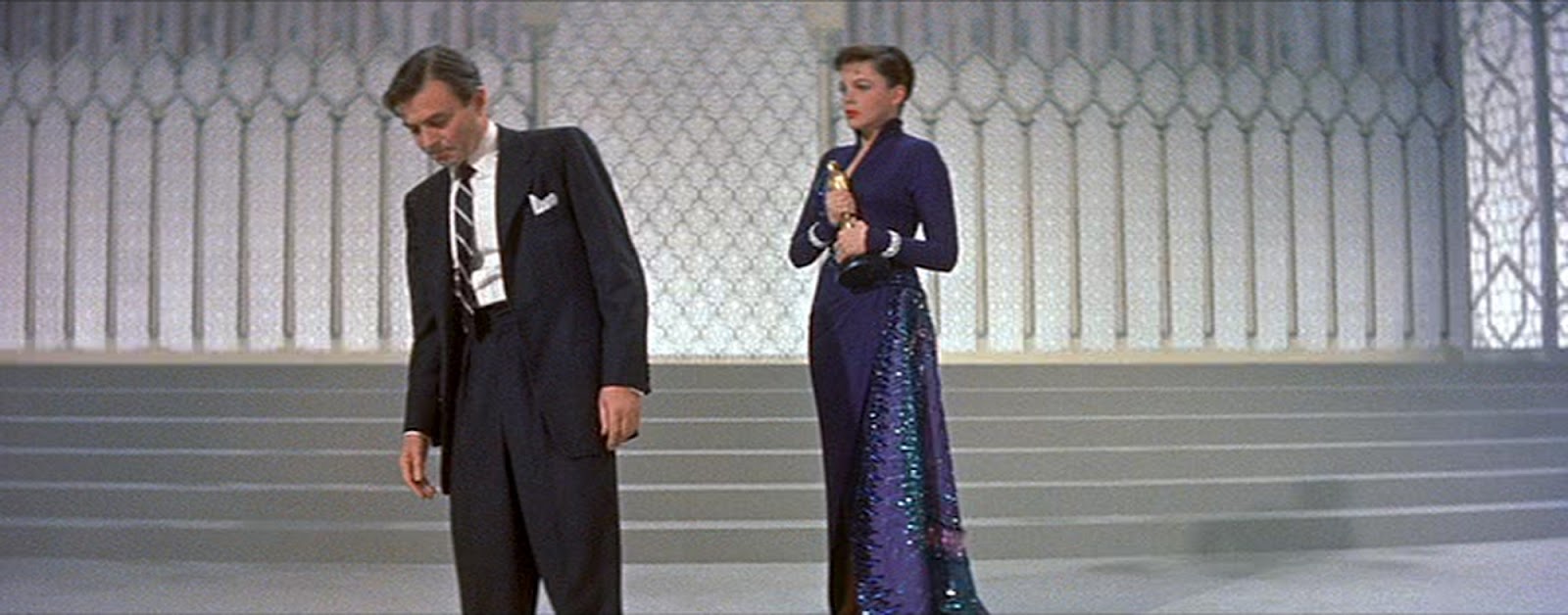
As for the 1954 version with Judy Garland, Esther is presented not as an aspiring nobody but as the lead singer of a musical ensemble, whose performance at a gala is interrupted by Norman Maine’s drunken antics. (Danny McGuire, her friend from the original, becomes her bandmate in this version.) Won over by her voice, Norman invites her to stay in Hollywood for a screen test, and after some bumps in the road, she becomes a star of musical cinema. Many scenes, especially in the second half, are recreated from the first film, often word for word, such as the studio head’s visit to Maine in a sanitarium or Esther’s intervention when her husband is about to be sent to jail. What the remake adds is a surfeit of musical numbers, ranging from small personal songs to lavish song-and-dance routines. One sketch detailing Esther’s supposed rise to stardom plays out like Judy Garland’s version of Gene Kelly’s “Broadway Melody” number in Singin’ in the Rain.

All the additional music helps the remake stand apart from its predecessor, but with essentially the same story, it’s hard not to feel that the extended scenes of choreography are merely padding to warrant its somewhat tiresome three-hour runtime. Like Janet Gaynor before her, Judy Garland was nominated for Best Actress but lost to Grace Kelly that year, a snub that was widely criticized, but I can understand. As marvelous as she was as a singer, Garland never struck me as a great actress, and I found her most emotional scenes rather forced, the kind of dated acting that Gaynor actually avoided in the earlier version. Another odd discrepancy is that the original film is still intact, but portions of the 1954 film have been lost and recreated with still photographs. Even if Garland’s incarnation has some drawbacks, it’s still entertaining in the musical department, and, nailing the suave but broken sides of the character, James Mason plays probably the best Norman Maine role of all three films.

Image result for a star is born 1954

And now the moment my VC has been waiting for, Barbra Streisand and the oh so handsome Kris Kristofferson in the 1976 retelling of A Star Is Born! Since this is the greatest departure from the original film, I’ll start with what my VC loves about it, particularly the music. She’s always loved Streisand’s voice, if not her personally, and like Judy Garland before her, Streisand was the premier singer/actress of the time. (Whether Lady Gaga is for our generation has yet to be seen.) The whole soundtrack is updated to excellent classic rock standards, and unlike the previous version, Streisand’s film won an Oscar for Best Song, the theme “Evergreen,” which rather pales in comparison with the more dynamic showstoppers, like “The Woman in the Moon.” Both she and Kristofferson are also quite good in their acting roles, though not in any award-worthy way, an opinion on which my VC vehemently disagrees with me.

I do wish I could like this version as much as she does, but it has even more problems than the ’54 film. For one, the great script of the original is nowhere to be found, despite clear echoes of the earlier films’ events, like Norman interrupting Esther’s award ceremony (here the Grammys rather than the Oscars). Perhaps the most frustrating aspect for me is Kristofferson’s character of John Norman Howard. Like the previous Norman Maines, he’s a drunken, self-destructive jerk at times, whose behavior is harder to understand here. He frequently makes terrible decisions, even when not drunk; for instance, this is the only version where he cheats on Esther, and while my VC insists there’s a deep motive behind it of self-resentment on his part, I’m afraid I just don’t see it. His final act of the film is also perplexing; in the other versions, it is because Norman fears Esther will throw everything away on him, while here, he has a chance at a comeback but refuses to take it for supposedly the same reason.

Image result for a star is born 1976

All three versions of A Star Is Born have their strengths: the shrewd dialogue of the original, the sprawling musical numbers of Garland’s incarnation, the bittersweet and passionate ending of Streisand’s (the only one to actually end with a performance). While my VC’s favorite is not mine, it did give me a reason to check out the others, the first of which is now among my favorite films from the 1930s. This story of Hollywood success, love, and loss has proven its staying power, and although I’m always dubious about remakes, this is one tale that can support further retellings.

Best serious line (from the 1937 version): (Grandmother Lettie) “Tragedy is a test of courage. If you can meet it bravely, it will leave you bigger than it found you. If not, then you will have to live all your life as a coward, because no matter where you may run, you can never run away from yourself.”

Best funny line (from the 1937 version): (Esther’s aunt) “Of course, no one ever listens to me!”   (Grandmother Lettie) “They do if they’re within ten miles of ya.”


Rank for the 1937 version: List-Worthy
Rank for the 1954 version: List Runner-Up
Rank for the 1976 version: Honorable Mention


© 2017 S.G. Liput
451 Followers and Counting


← Older posts
Newer posts →

Recent Posts

  • We Didn’t Start 2025 (Recap)
  • NaPoWriMo 2025 Recap (Finally)
  • Sonic the Hedgehog 3 (2024)
  • It Happened One Night (1934)
  • Spellbound (2024)

Recent Comments

associatesofshellymann's avatarassociatesofshellyma… on My Top Twelve La La La So…
Kit's avatarKit Nichols on Bonnie and Clyde (1967)
lifelessons's avatarlifelessons on Look Back (2024)
Carol Jackson's avatarCarol Jackson on The Thief of Bagdad (1940…
Stephen's avatarStephen on Love Story (1970)

Archives

  • January 2026
  • December 2025
  • May 2025
  • April 2025
  • March 2025
  • February 2025
  • January 2025
  • December 2024
  • May 2024
  • April 2024
  • March 2024
  • February 2024
  • January 2024
  • December 2023
  • November 2023
  • October 2023
  • September 2023
  • July 2023
  • June 2023
  • May 2023
  • April 2023
  • March 2023
  • February 2023
  • January 2023
  • December 2022
  • November 2022
  • October 2022
  • September 2022
  • August 2022
  • July 2022
  • June 2022
  • May 2022
  • April 2022
  • March 2022
  • February 2022
  • January 2022
  • December 2021
  • November 2021
  • October 2021
  • September 2021
  • August 2021
  • July 2021
  • June 2021
  • May 2021
  • April 2021
  • March 2021
  • February 2021
  • January 2021
  • December 2020
  • November 2020
  • October 2020
  • September 2020
  • August 2020
  • July 2020
  • June 2020
  • May 2020
  • April 2020
  • March 2020
  • February 2020
  • January 2020
  • December 2019
  • November 2019
  • October 2019
  • September 2019
  • August 2019
  • July 2019
  • June 2019
  • May 2019
  • April 2019
  • March 2019
  • February 2019
  • January 2019
  • December 2018
  • November 2018
  • October 2018
  • September 2018
  • August 2018
  • July 2018
  • June 2018
  • May 2018
  • April 2018
  • March 2018
  • February 2018
  • January 2018
  • December 2017
  • November 2017
  • October 2017
  • September 2017
  • August 2017
  • July 2017
  • June 2017
  • May 2017
  • April 2017
  • March 2017
  • February 2017
  • January 2017
  • December 2016
  • November 2016
  • October 2016
  • September 2016
  • August 2016
  • July 2016
  • June 2016
  • May 2016
  • April 2016
  • March 2016
  • February 2016
  • January 2016
  • December 2015
  • November 2015
  • October 2015
  • September 2015
  • August 2015
  • July 2015
  • June 2015
  • May 2015
  • April 2015
  • March 2015
  • February 2015
  • January 2015
  • December 2014
  • November 2014
  • October 2014
  • September 2014
  • August 2014
  • July 2014
  • June 2014
  • May 2014
  • April 2014
  • March 2014
  • February 2014
  • January 2014
  • December 2013

Categories

  • Blindspot
  • Blogathon
  • Christian
  • Movies
  • Music
  • NaPoWriMo
  • Poetry
  • Reviews
  • TV
  • Writing

Meta

  • Create account
  • Log in
  • Entries feed
  • Comments feed
  • WordPress.com

Recent Posts

  • We Didn’t Start 2025 (Recap)
  • NaPoWriMo 2025 Recap (Finally)
  • Sonic the Hedgehog 3 (2024)
  • It Happened One Night (1934)
  • Spellbound (2024)

Recent Comments

associatesofshellymann's avatarassociatesofshellyma… on My Top Twelve La La La So…
Kit's avatarKit Nichols on Bonnie and Clyde (1967)
lifelessons's avatarlifelessons on Look Back (2024)
Carol Jackson's avatarCarol Jackson on The Thief of Bagdad (1940…
Stephen's avatarStephen on Love Story (1970)

Archives

  • January 2026
  • December 2025
  • May 2025
  • April 2025
  • March 2025
  • February 2025
  • January 2025
  • December 2024
  • May 2024
  • April 2024
  • March 2024
  • February 2024
  • January 2024
  • December 2023
  • November 2023
  • October 2023
  • September 2023
  • July 2023
  • June 2023
  • May 2023
  • April 2023
  • March 2023
  • February 2023
  • January 2023
  • December 2022
  • November 2022
  • October 2022
  • September 2022
  • August 2022
  • July 2022
  • June 2022
  • May 2022
  • April 2022
  • March 2022
  • February 2022
  • January 2022
  • December 2021
  • November 2021
  • October 2021
  • September 2021
  • August 2021
  • July 2021
  • June 2021
  • May 2021
  • April 2021
  • March 2021
  • February 2021
  • January 2021
  • December 2020
  • November 2020
  • October 2020
  • September 2020
  • August 2020
  • July 2020
  • June 2020
  • May 2020
  • April 2020
  • March 2020
  • February 2020
  • January 2020
  • December 2019
  • November 2019
  • October 2019
  • September 2019
  • August 2019
  • July 2019
  • June 2019
  • May 2019
  • April 2019
  • March 2019
  • February 2019
  • January 2019
  • December 2018
  • November 2018
  • October 2018
  • September 2018
  • August 2018
  • July 2018
  • June 2018
  • May 2018
  • April 2018
  • March 2018
  • February 2018
  • January 2018
  • December 2017
  • November 2017
  • October 2017
  • September 2017
  • August 2017
  • July 2017
  • June 2017
  • May 2017
  • April 2017
  • March 2017
  • February 2017
  • January 2017
  • December 2016
  • November 2016
  • October 2016
  • September 2016
  • August 2016
  • July 2016
  • June 2016
  • May 2016
  • April 2016
  • March 2016
  • February 2016
  • January 2016
  • December 2015
  • November 2015
  • October 2015
  • September 2015
  • August 2015
  • July 2015
  • June 2015
  • May 2015
  • April 2015
  • March 2015
  • February 2015
  • January 2015
  • December 2014
  • November 2014
  • October 2014
  • September 2014
  • August 2014
  • July 2014
  • June 2014
  • May 2014
  • April 2014
  • March 2014
  • February 2014
  • January 2014
  • December 2013

Categories

  • Blindspot
  • Blogathon
  • Christian
  • Movies
  • Music
  • NaPoWriMo
  • Poetry
  • Reviews
  • TV
  • Writing

Meta

  • Create account
  • Log in
  • Entries feed
  • Comments feed
  • WordPress.com

Blog at WordPress.com.

Is this your new site? Log in to activate admin features and dismiss this message
Log In
  • Subscribe Subscribed
    • Rhyme and Reason
    • Join 814 other subscribers
    • Already have a WordPress.com account? Log in now.
    • Rhyme and Reason
    • Subscribe Subscribed
    • Sign up
    • Log in
    • Report this content
    • View site in Reader
    • Manage subscriptions
    • Collapse this bar