• Home
  • About Me
  • The List
  • THE LIST (2016 Update)
  • THE LIST (2017 Update)
  • THE LIST (2018 Update)
  • THE LIST (2019 Update)
  • THE LIST (2020 Update)
  • THE LIST (2021 Update)
  • THE LIST (2022 Update)
  • Top Twelves and More
  • The End Credits Song Hall of Fame

Rhyme and Reason

~ Poetry Meets Film Reviews

Rhyme and Reason

Tag Archives: Musical

That’s Entertainment! (1974) and That’s Entertainment, Part II (1976)

10 Tuesday Jan 2017

Posted by sgliput in Movies, Music, Poetry, Reviews, Writing

≈ 2 Comments

Tags

Documentary, History, Musical

Image result for that's entertainment 1974 film


For centuries, great entertainers
Wowed the crowds and made them cheer,
With song and dance, speech, and romance,
Their famous names known far and near.

Yet soon they died, their plays and songs
Preserved in libraries and hearts;
We saved the page, but those on stage
Were soon forgotten from the arts.

Not till the novelty of film
Could actors prove their artistry
And ply their skill to awe and thrill
With hope of immortality.
_______________

MPAA rating for both: G

It’s hard enough trying to keep up with all the new releases that pass through the cinemas week after week, but what about the plethora of old classics stretching back to the 1920s? What about the hundreds of musicals that MGM churned out back in the days when contracted actors were assigned roles rather than offered them? Where does one start? Well, That’s Entertainment! is an excellent reference point, a star-studded documentary that also serves as a highlight reel of old musicals, famous and obscure.

Older musicals often seem to have just a thin plot meant solely to string together spectacular song-and-dance numbers, and That’s Entertainment! gets rid of the connective tissue to provide a musical tour of MGM’s forgotten pageantry. The early days of 1929’s The Broadway Melody may not be all that impressive, but within a few years, MGM had the musical extravaganzas down to a science. I’m well familiar with favorites like Singin’ in the Rain and The Wizard of Oz or famous scenes from On the Town (the three sailors singing “New York! New York!”) and Royal Wedding (Fred Astaire dancing on the ceiling), but there are boatloads more that I’d never even heard of, such as the series of suspiciously similar small-town romances starring Mickey Rooney and Judy Garland. Most of the clips are worth watching just as highlights, but a few have made me curious to check out the films themselves, such as the navy grandeur of Hit the Deck (1955) or the High School Musical forerunner Good News (1947).

Image result for royal wedding fred astaire

Sprinkled throughout the singing and dancing are introductions filmed by a variety of stars in 1974 as they wander the decaying MGM backlot where these musicals were filmed decades earlier. (The sets were torn down shortly after filming.) The star power is incredible, including Frank Sinatra, Gene Kelly, Elizabeth Taylor, Jimmy Stewart, Fred Astaire, Mickey Rooney, and the late Debbie Reynolds. Each screen legend introduces the work of one of their friends and costars, passing the baton as the film progresses. Old film buffs are sure to recognize the less widely known stars from the old film clips more than casual viewers like myself, but seeing some of these stars in action helped me appreciate the talents of performers whose reputations have waned over the decades. I wasn’t familiar with the incredible tap dancing of Ann Miller, the water-fountain displays of Esther Williams, or the impressive voice of Kathryn Grayson, but I’m glad I am now.

The film also features a few familiar faces in unexpected musical roles. Mainstream musicals may be anomalies these days, but back in the day, they were everywhere, and stars didn’t always have a choice of whether to sing or not. I never thought to see Jimmy Stewart trying to carry a tune, much less Clark Gable dancing to “Puttin’ on the Ritz” in 1939’s Idiot’s Delight. Let’s just say, there’s a reason they eventually left the dancing to Gene Kelly and Fred Astaire.

Speaking of Kelly and Astaire, they actually teamed up to host That’s Entertainment, Part II, proving that there was far too much material in MGM’s vault to fill only one documentary. (There’s also a Part III from 1994, but I didn’t get to see that one.) While it features the same retrospective montage of film clips, Part II feels even less like a documentary, thanks to the more sensational production values and the entertaining interludes of Kelly and Astaire as the sole hosts. In the first That’s Entertainment, Astaire admitted that his favorite dance partner was actually Gene Kelly, whom he had danced with only once in 1946’s Ziegfeld Follies. In Part II, the two reunite to dance together again, which was actually Astaire’s last dance on film, and they reportedly did so just to prove that they hadn’t lost their mojo, even in their sixties and seventies.

Image result for that's entertainment part II

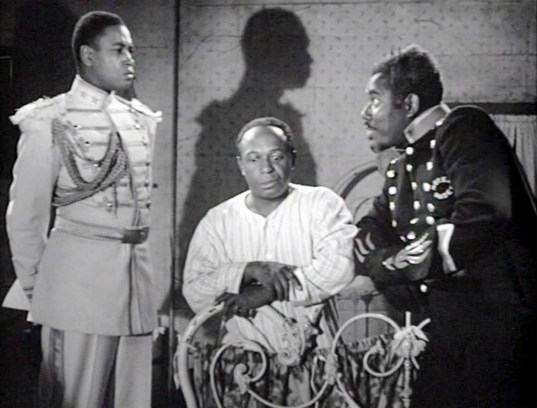
As with the first film, the musical moments are plentiful and dazzling, again with a few stunning dance numbers that are undoubtedly the centerpieces of their films. I won’t soon forget the operatic rebellion of New Moon, the athleticism of Kiss Me, Kate, or the amazing extended shot of a young Bobby Van literally hopping across town in Small Town Girl. Plus, the almost disturbing sight of Fred Astaire, Nanette Fabray, and Jack Buchanan singing on their knees dressed as babies in The Band Wagon. Plus, I did get to recognize a few familiar scenes, including one for Cabin in the Sky, an all-black older musical I happened to randomly watch last year. In addition, there are more than just musical scenes. Part II also has tributes to screen greats like Spencer Tracy and Katherine Hepburn and comedians like the Marx Brothers, including the famous packed stateroom scene from A Night at the Opera.

That’s Entertainment! and its sequel reveal just how much fabulous musical cinema is on the verge of being forgotten, and I’m quite glad that MGM kindly boiled down its heyday into these affectionately repackaged collections. I only knew of these films from my mom, who talks about how they opened her eyes to the Golden Age of Hollywood musicals, and in some ways, it did the same for me. The tunes are both new and familiar (I had no idea that the music to “Make ‘Em Laugh” predated Singin’ in the Rain and was used in The Pirate), the choreography and star power are staggering, and the whole package is, well, entertaining. I doubt I’ll ever get around to seeing all the films featured, but at least I know I’ve seen all the best parts.

Image result for good news 1947

Best line: (Liza Minnelli) “Thank God for film. It can capture a performance and hold it right there forever. And if anyone says to you, ‘Who was he?’ or ‘Who was she?’ or ‘What made them so good?’ I think a piece of film answers that question better than any words I know of.”


Since documentaries are ineligible for my List, it’s the return of the five-star system.
Rank for both: Five Stars out of Five


© 2017 S.G. Liput
437 Followers and Counting


Sing Street (2016)

08 Thursday Dec 2016

Posted by sgliput in Movies, Music, Poetry, Reviews, Writing

≈ 5 Comments

Tags

Comedy, Drama, Musical, Romance

Sing Street Trailer (2016)

(Best sung to “The Riddle of the Model,” see the video at the bottom, and yes, I know the original lyrics are better)

No life is ever perfect.
It doesn’t play along.
How will we ever surf it,
Except to sing a song,
A song with inspiration
In everything we love and hate.
It’s pleasure and frustration
But in a musical debate.

It’s called creativity.
It’s all the work of the human heart.
Few if any can see it from the start.
Positivity
Won’t let it fall apart.
Can you see
The origin of genius?
__________________

MPAA rating: PG-13

Would it be wrong to say that the 1980s had the best music? Sure, there are plenty of modern favorites I have, but it’s amazing how many great songs originated in that decade that has become a bastion of nostalgia of late. It is that music scene of Duran Duran and U2 that is the backdrop for Sing Street, the humble origin story of an Irish high school band clearly inspired by everything ‘80s music did well.

Though young Conor (Ferdia Walsh-Peelo) is forced to move to a different Dublin school, where he must put up with bullies and a cold-hearted principal, he goes out on a limb to invite the lovely aspiring model Raphina (Lucy Boynton) to a music video shoot. All he needs then is a band, which he cobbles together from schoolmates and talented acquaintances with surprising ease. Despite some growing pains, it’s clear they’re more talented than your typical garage band, and the music becomes a sort of escape from the oppressive futility of his dysfunctional home life and unpromising future.

Image result for sing street drive it like you stole it

In several respects, Sing Street brought to mind Cameron Crowe’s 1970s-set Almost Famous, another film with a great soundtrack of classic tunes. Raphina may not be as enigmatic as Penny Lane, but Conor is just as taken with her as William was in the earlier film, though in this case Conor gets an actual romance. In addition, Conor’s brother bears traces of Philip Seymour Hoffman’s character in Almost Famous, with his musical snobbery and creative encouragement. (For the record, I do enjoy Phil Collins music, no matter what Conor’s brother says.) In particular, both films seem to capture a love for the music of the times and a sympathy for the imperfect fellows who develop and appreciate it, sharing that same love and sympathy with the audience.

True, there are things I wish were different, such as the ambiguously optimistic ending scene and the typical caricature of the vilified priest as the bad guy. Nevertheless, there’s a lot that Sing Street does right, especially the music, from background songs courtesy of Genesis, Spandau Ballet, and many more to original hits that sound like they could have been plucked from some unproduced 1985 album. The band’s efforts at producing music videos are as low-budget but quirky as any number of ‘80s videos, while a dream sequence concert of the original song “Drive Like You Stole It” is the marvelous high point of the film and perhaps the musical high point of the whole year. Honestly, I hope it wins Best Song at the Oscars, however unlikely that seems.

Image result for sing street film musical number

Besides the music, the characters feel real, likable, and worthy of support, with Conor especially growing in confidence and even rightly treating the school bully first with indifference and then with compassion. Above all, there’s a certain artistic thrill and satisfaction to watching these young people experiment and create something that’s actually, surprisingly good. With the talent on display, the hopes for their future are implicitly high, and I can easily imagine Sing Street, both the band and the movie, being the object of fond nostalgia in years to come.

Best line: (Raphina) “Your problem is that you’re not happy being sad, but that’s what love is, Cosmo— happy sad.”

Rank: List-Worthy (tied with Almost Famous)

© 2016 S.G. Liput
435 Followers and Counting

Pitch Perfect 2 (2015)

05 Wednesday Oct 2016

Posted by sgliput in Movies, Poetry, Reviews, Writing

≈ 2 Comments

Tags

Comedy, Musical

https://i0.wp.com/www.billboard.com/files/styles/promo_650/public/media/pitch-perfect-2-anna-kendrick-group-performance-billboard-650.jpg

(Again, best sung to “Cups”)

When competition leads to victory,
One slip can worsen failure’s sting.
To erase disgrace and reclaim the first place,
Out of many, your harmony must sing.

Sing along, sing along,
Perhaps a right can fix a wrong.
You’re gonna meet the future soon
And you will meet it still in tune,
If you sing now and then all your life long.
_____________________

MPAA rating: PG-13

Rarely has there been a sequel I so clearly enjoyed more than the original. Despite the fact that both Pitch Perfects were written by Kay Cannon, the screenwriter manages to overcome one of my main complaints about the first film –the lack of humor—with some greatly improved comedy.

The plot is essentially the same: a performance fiasco ruins the reputation of the Barden Bellas, which leads to training, a rivalry, tempers flaring, bonding, and a big musical face-off for which no one could possibly guess the outcome. Likewise, the characters haven’t changed much: Brittany Snow’s Chloe is now the obsessive Bella leader in place of Aubrey (who’s graduated but still gets some screen time), Hana Mae Lee’s Lilly still spouts bizarre non sequiturs, Ester Dean’s Cynthia-Rose still acts tough and gay, and Rebel Wilson’s “Fat Amy” is still her crude but fearless self. Yet when the stories and characters are so similar, the comedic differences shine all the brighter. I laughed more in the first twenty minutes of Pitch Perfect 2 than during the whole of the first film. Perhaps the characters simply grew on me with exposure, but they were all far more likable this time around. Some new characters were also welcome, such as Hailee Steinfeld as the amateur songwriter Emily and Chrissie Fit as a Latina constantly contrasting Chloe’s panicking with her own extreme Third World experiences. Again, the two a cappella commentators, played by Elizabeth Banks (who also directed this sequel) and John Michael Higgins, remain the most hilarious piece of the ensemble, especially when they throw political correctness out the window.

The one place that Pitch Perfect 2 may fall a bit short of the first is the music; the a cappella song-sampling is still full of catchy mixed beats from every era, but I was less familiar with the soundtrack as a whole (though I loved that the very first song was “Timber”). Even so, the sequel does try to outdo its predecessor, making the Bellas’ rivals a massive German collective who understand spectacle and turning the first film’s Riff-Off into a higher-stakes competition, even featuring the Green Bay Packers for some reason. Even if the main plot was identical, I did like the direction the subplots took. Aside from Fat Amy being paired with the man who threw a burrito at her in the first film, Beca had to realize that her experience with a cappella and mash-ups did not a music career make. Often hobbies we enjoy or even find success at don’t always translate into a practical vocation, and how Beca responded to that inconvenient truth felt like a real and worthwhile lesson for an otherwise silly movie.

Pitch Perfect 2 still isn’t quite the kind of film I gravitate toward, but it’s one I’d gladly see again. I wasn’t expecting much after the first film, but my low expectations allowed me to enjoy its sequel far more than I anticipated. With a third film on the way next year, I’m more optimistic for it now, and I hope they can conclude this trilogy in pitch perfect fashion.

Best line: (John, the commentator, during a Bellas performance) “An overweight girl dangling from the ceiling. Who hasn’t had that dream?”
(Gail) “Lots of us!”

Rank: List Runner-Up

© S.G. Liput 2016
413 Followers and Counting

Pitch Perfect (2012)

02 Sunday Oct 2016

Posted by sgliput in Movies, Poetry

≈ Leave a comment

Tags

Comedy, Musical

Image result for pitch perfect


(Best sung to “Cups”)

A cappella singers need a team.
It doesn’t work when on your own.
Voices merge, converge, and to new heights they surge
As a chorus of perfect pitch and tone.

Sing along, sing along,
It doesn’t matter what’s the song.
You’re gonna be the coolest nerds
If you remember all the words,
And you sing one for all, just sing along.
__________________

MPAA rating: PG-13

Yep, there’s a competition for everything, even a cappella singing, so it was only a matter of time before Hollywood found a way to make a movie out of it. I for one enjoy a cappella, especially modern groups like Pentatonix, and I was actually well familiar with this film’s soundtrack long before I saw it, in particular Anna Kendrick’s rendition of the “Cups” song. I had hoped that Pitch Perfect‘s comedy could match the quality of its music, but that was obviously too high a bar. I came for the music, and ultimately I stayed for the music since Pitch Perfect had little else going for it.

After the Barden Bellas are humiliated at the highest collegiate competition, only Aubrey (Anna Camp) and Chloe (Brittany Snow, whose voice I know from Whisper of the Heart) carry on the mantle of the disgraced singing club and must recruit a winning new team. Enter the rest of the cast through auditions both chuckle-worthy and cringe-worthy. While jokes are made at the few members who fail to stand out, the key characters are well-distinguished, most notably the unabashed “Fat Amy” (Rebel Wilson), who introduces herself as such, and the quietly weird Lilly (Hana Mae Lee), whose barely audible voice makes one wonder why she was even recruited at all. And then there’s Anna Kendrick as Beca, the sensible outsider with musical career aspirations and a good ear for mash-ups. Unsurprisingly, the disparate group must all work together to overcome Aubrey’s control-freak tendencies and Beca’s independence and beat out their favored rivals, the Treblemakers, who aren’t necessarily better, just more exuberant.

There’s not much in the plot that hasn’t been seen before; in fact, the sequence of events in the competition is almost identical to another musical film from the same year, Joyful Noise. The characters are what should set Pitch Perfect apart, and they only half succeed. Quirks and characterization abound, but when the word b*tch is thrown around so much, it’s unfortunate that it fits most of the cast at one point or another. Plus, I found it odd that, instead of the biggest jerk of the film being brought down a peg as is usual, he was actually rewarded and sent away. In addition, I have yet to see an instance in any film where a vomit gag is anything but gross; when will screenwriters realize that throwing up just isn’t funny? That goes for many of the other jokes too, with the key exception of Elizabeth Banks and John Michael Higgins as the barb-trading a cappella commentators. They were a hoot, even if their criticism of the Bellas didn’t always seem deserved.

I don’t mean to sound totally negative since it’s not as if Pitch Perfect tries to be more than dumb fun; that’s what it is for the most part and excels mainly on the musical side of things, which is the reason the film exists in the first place. Every musical number was entertaining with several being sensational, and it was enjoyable to hear well-blended mash-ups of songs I hear often on the radio and my own iPod. Besides the music, I also loved the movie plugs of Skylar Astin as Jesse, Beca’s Treblemaker would-be boyfriend, who had the most charm of any character and introduced Beca (and maybe a teenage viewer or two) to The Breakfast Club.

As I said before, I watched Pitch Perfect for the music, and that’s the main reason to see it, along with the pretty (but crass) girls singing it. The sometimes quotable dialogue, both sharp and blunt at the same time, may not carry as much humor for me as I’d like, but the film at least did justice to the ear-pleasing appeal of “organized nerd singing.”

Best line: (Gail, one of the commentators) “The Barden Bellas went deep into the archive for that song, John. I remember singing it with my own a cappella group.”
(John) “And what group was that, Gail?”
(Gail) “The Minstrel Cycles, John.”
(John) “Well, that’s an unfortunate name.”


Rank: Honorable Mention


© 2016 S. G. Liput
413 Followers and Counting

And here’s the music video for “Cups” or “When I’m Gone,” directed by Pitch Perfect‘s director Jason Moore; I love long, complex takes, so this is one of my favorite music videos.

Cartoon Comparisons: Sleeping Beauty (1959) / Maleficent (2014)

19 Sunday Jun 2016

Posted by sgliput in Movies, Poetry, Reviews, Writing

≈ 6 Comments

Tags

Animation, Disney, Family, Fantasy, Musical


There she lies, fair Sleeping Beauty,
Cursed to slumber and to wait.
Those who kiss for wealth or duty
Cannot change her dreamless fate.

Only true love can awaken
And unlock her heavy eyes.
Fear not that she is forsaken.
Love will find her where she lies;
He will come, and she will rise.
________________


MPAA rating for Sleeping Beauty: G
MPAA rating for Maleficent: PG


Now that my cable has been restored after a bad storm knocked it out for a few days, it’s time once again for a Cartoon Comparison, this time between Disney’s classic Sleeping Beauty and its subversive live-action counterpart Maleficent. Sleeping Beauty was the last cinematic fairy tale of Walt Disney’s lifetime and really the last traditional fairy tale until The Little Mermaid thirty years later. Since it’s widely considered one of Disney’s best, modern Disney executives decided to use it (and Alice in Wonderland) to kick off their crusade to translate the entire canon to CGI-filled live-action. So how do these two compare?

I’ll be honest: Despite its reputation, Sleeping Beauty has never been among my favorite Disney films, which is why I haven’t reviewed it until now. Even compared with Disney’s classics, I’ve always leaned more toward Cinderella and Fantasia, simply because I grew up watching them more. I probably saw Sleeping Beauty once or twice as a kid and not since, and I was pleasantly surprised when this latest viewing reminded me of why it truly is a Disney classic. At first, some of the opening animation appears simple and angular, like an illustration from the Middle Ages, but as it continues, backgrounds become increasingly detailed. Close-ups of stone walls and tree trunks border on photo-realistic, and the layering of the forest adds beautiful depth as trees stretch away into the distance. As much as I love Disney’s follow-ups like One Hundred and One Dalmatians or The Jungle Book, the animation quality clearly started declining after this, making Sleeping Beauty, in a sense, the height of early Disney animation.

Not so much, though, when it comes to the story. One thing I always associated with Sleeping Beauty was its namesake being rather boring, and indeed Aurora herself is basically a placeholder, a damsel in distress who doesn’t do things as much as things happen to her. What I forgot was how enjoyable the fairies are. The three colorful fairy godmothers Flora, Fauna, and Merryweather are the true protagonists here, first blessing baby Aurora, then hiding her away from the evil Maleficent, raising her, and playing a key role in the famous climax. Their likable bickering over method and favorite color adds humor to scenes that otherwise might be dull. Likewise, Maleficent is a memorably evil villainess (voiced by Eleanor Audley, who also voiced Lady Tremaine in Cinderella), whose dragon transformation is the most thrilling scene of the movie.

While the film and the story it’s based on are undoubtedly classics, Sleeping Beauty does have more than its fair share of flawed fairy tale logic. For instance, why does King Stefan ban spinning wheels and force his kingdom into sixteen years without thread when Aurora is hidden anyway? Why do the fairies bring Aurora back to the castle the day of the curse rather than the day after, just to be safe, and then promptly give her some risky “alone time?” Why do the fairies put everyone to sleep when, for all they know, Aurora’s true love could be right there and unable to awaken her if he’s asleep too? Regardless of little plot holes like these, Sleeping Beauty has that timeless Disney touch that still captures imaginations, especially during the forest dance between Aurora and Prince Philip as they waltz to Tchaikovsky.

And then, fifty-five years after Sleeping Beauty, someone at Disney had a grand thought and asked, “Why is Maleficent so evil? She just wants to curse this baby out of spite for not being invited to her christening? Traditionally, evil villains are so old-fashioned, so why don’t we turn her into a good guy?” Thus, borrowing a page from Wicked minus the musical numbers, what should have been dismissed then as a foolish idea became 2014’s Maleficent, a film I fully intended to dislike. I’m not wholly against these live-action remakes, but Disney should be trying to honor and flesh out its classics, not transform them into their opposites.

As I watched Maleficent, I began to accept that it’s honestly not a bad film nor a bad fairy tale. It’s just not Sleeping Beauty, and unfortunately the comparison does make it a bad film. Gone is the line about Maleficent using “all the powers of hell”; instead, she’s just a cute little girl fairy who happens to have big devil horns and eagle wings and a name implying harm and destruction. She starts out good, the guardian of a magical realm called the Moors, whose one meaningful relationship with a human ends in betrayal, pain, and bitterness. As far as villain backstories go, I can actually accept this; the writers do a decent job in providing a reason for Maleficent’s hatred. Once the baby Aurora is born, though, and we get a re-creation of Sleeping Beauty’s opening scene, the sorry consequences of these story changes play out.

Eventually, Maleficent’s rage dwindles to annoyance as she watches Aurora from afar, repeatedly saving her from the thoughtlessness of the three “good” fairies, renamed Knotgrass, Flittle, and Thistlewit, whose bickering loses all its likability when it becomes clear what morons they are. Over the course of sixteen years, Maleficent and her shapeshifting raven Diaval (not Diablo as in the cartoon) are Aurora’s real caretakers, and by the time the curse is to be fulfilled, Maleficent tries first to cancel it and then to break it. Something just doesn’t feel right about giving all these laudable duties to the villain; in making Maleficent good at heart, every other character suffers. The three fairies, or pixies, are negligent fools; Aurora’s father King Stefan is the real villain, an obsessive monster who cares more about killing Maleficent than about his own wife and is nothing like his cartoon counterpart singing “Skumps!”; even Prince Phillip is deprived of everything that made him an appealing character in the original. By the time “true love’s kiss” rolls around, the story borrows a page from Frozen, reminding us that true love doesn’t have to be romantic in nature. That worked in Frozen because it was original; don’t mess with something that is supposed to be romantic!

Basically, everything worthwhile about Maleficent is original. Every time it thinks for itself, it entertains (the magical Moors, the battle scenes, Diaval’s transformations). Every time it tries to borrow from Sleeping Beauty, it pales in comparison (the fairies and their gifts, Aurora and Phillip’s unmemorably unmusical meeting, Phillip’s ineffectual kiss). Perhaps fans of Angelina Jolie could look past all this, but I’m not one of them, and nothing in her turn as Maleficent changed that. I did rather like Elle Fanning as the buoyant Aurora, but most of the cast was intentionally unpleasant, with the girl power message effectively ruining every male character. It’s not just I as a man who felt that way too; my VC felt the same distaste.

Maleficent is a prime example of where Disney should have left well enough alone, letting its past animations speak for themselves. It might have worked better as an original story, but when a voiceover tries to convince us that this live-action subversion with the cool visuals is the real story, it loses credibility. Please, I know the real story, and it’s from 1959.

Best line from Sleeping Beauty: (Merryweather, as Flora uses her as a dummy to make Aurora’s dress) “It looks awful.”   (Flora) “That’s because it’s on you, dear.”

Best line from Maleficent: (Aurora, practicing to tell her aunties) “You’ve been very good to me…well, except that time you fed me spiders.”


Rank for Sleeping Beauty: List Runner-Up
Rank for Maleficent: Dishonorable Mention


© 2016 S. G. Liput
388 Followers and Counting


VC Pick: Music and Lyrics (2007)

15 Wednesday Jun 2016

Posted by sgliput in Movies, Poetry, Reviews, Writing

≈ Leave a comment

Tags

Comedy, Musical, Romance


Music alone can be grand in all kinds,
For banging of heads or relaxing of minds,
And lyrics alone, whether plain or highbrow,
Can be poetry, like what you’re reading now.

But lyrics can caper and dance with the notes
When coupled and wed by the truest of throats,
And music can whisk up the words in its pull
And render fair splendor from mere doggerel.

Just one by itself could exist happily
Alone, on its own, not unlike you and me.
But if they can merge as a unified song,
We still will be humming it all our life long.
_______________

MPAA rating: PG-13

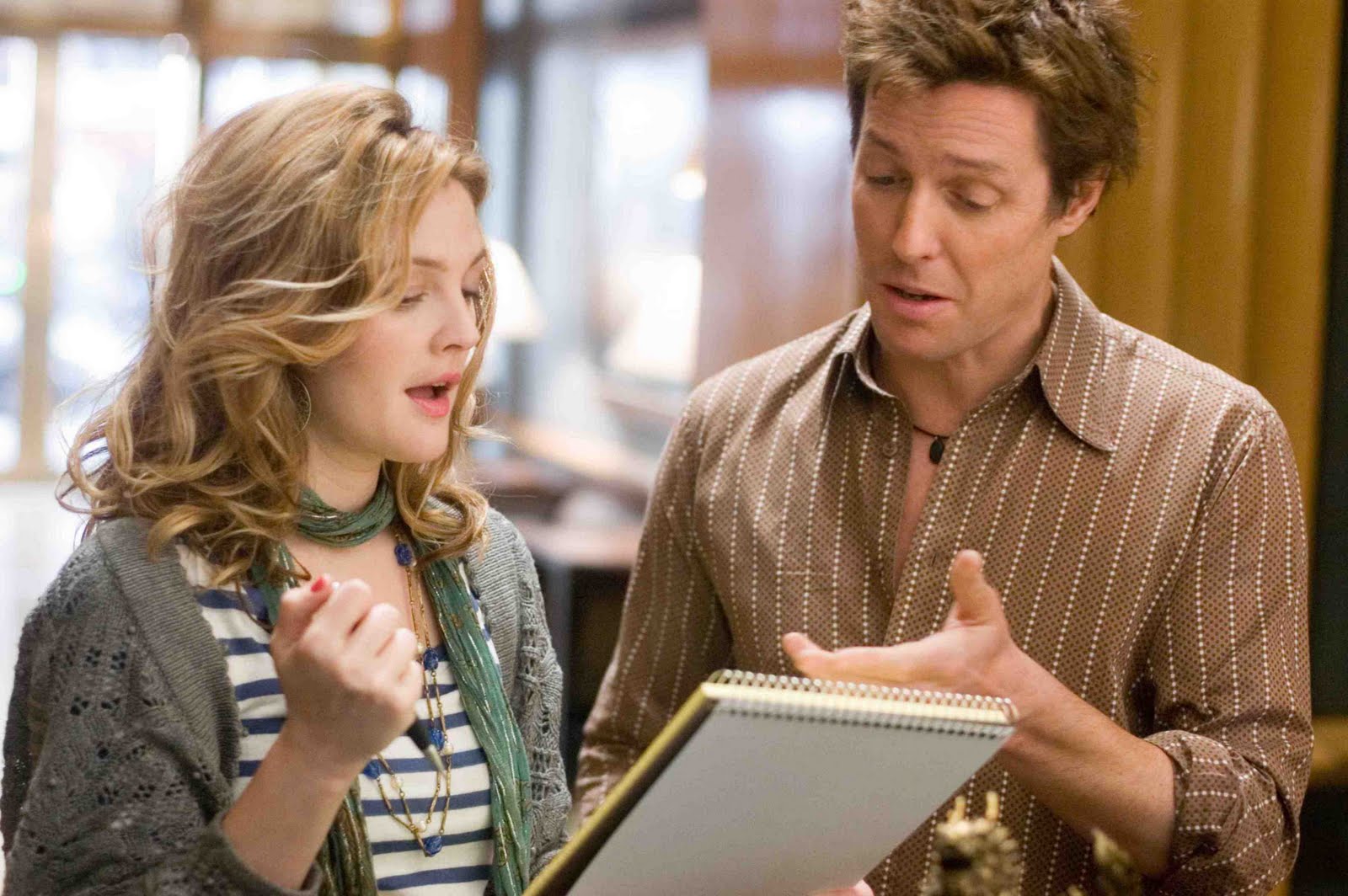
I love a good rom-com, and there aren’t nearly as many as I’d like that could actually be described as good. So many fall flat, whether because they’re more crude than romantic or because they’re just not funny, and their success always hinges on two key ingredients: chemistry and the script. One without the other leaves the film wanting, but when both are present, it’s magic, like the blissful merging of words and music. For me, When Harry Met Sally… and You’ve Got Mail rule the genre, but Music and Lyrics takes a comfortable spot not too far beneath them, thanks to (you guessed it) the script and its two leads (Hugh Grant and Drew Barrymore).

Alex Fletcher (Grant), formerly of the popular ‘80s band PoP!, is content to coast on his past fame, a “happy has-been” whose career consists mainly of state fairs and throwback nights. When his manager (a welcome Brad Garrett of Everybody Loves Raymond) urges him to salvage his career by writing a song for megadiva Cora Corman (Haley Bennett), he grudgingly agrees to the music but needs a lyricist. Enter Sophie Fisher (Barrymore), a mousy substitute plant waterer, who accidentally lets her talent for lyrics show and is drafted to assist Alex in writing a hit song.

As far as the plot is concerned, Music and Lyrics is wholly predictable, with Alex and Sophie’s relationship budding and rollercoastering exactly as you’d expect in such a film. Alex has confidence issues and an ego; Sophie has a painful past romance. They need each other professionally and then on a deeper level. It’s all stuff we’ve seen before, but what could easily be written off as clichéd is enlivened by amusing character quirks, some surprisingly catchy tunes, and clever dialogue that ensures frequent chuckles. Grant’s dry wit mixes well with Sophie’s slight neurosis, and rare chemistry is the result.

In addition, many modern romances manage to turn me off with some kind of boundary-pushing crudity, but Music and Lyrics is a pretty clean affair. While Cora delights in her “steamy and sticky” dance routines, she actually serves as a reminder of how a lot of modern music has degraded from Alex’s good ol’ days of the ‘80s and acts somewhat as a critique of overly sexualized pop stars with fans far too young for their on-stage gyrations. Heck, Katy Perry’s “Dark Horse” sounds exactly like something Cora Corman would sing. Ugh. (Not to offend Katy Perry fans; I do love “Wide Awake.”)

I’d rather have PoP’s “Pop Goes My Heart” any day; played at the beginning and end, this little earworm perfectly recreates the cheesy charm of ‘80s pop, and though Alex himself derides it as “dessert,” the song and film alike are my kind of dessert. I convinced my VC to watch Music and Lyrics after a rough day at work when she was in the mood for some undemanding fluff, and she ended up enjoying it even more than I, even insisting I review it as a VC pick. Sure, it’s not the most original of rom-coms, but when clichés are done this well, it doesn’t detract from the entertainment one bit.

Best line: (Sophie’s sister Rhonda, calling to her kids in the bedroom) “Okay, okay, everybody goes to bed. I’m sending your father in there.”
(one of the kids, giggling) “Whoa, we’re so scared!”
(Rhonda) “And then I’m coming in!”
[giggling immediately stops]
(Rhonda’s husband) “I’ll just go check to make sure they’re still breathing.”

VC’s best line: (Sophie) “How was the movie?”
(Rhonda’s husband) “I enjoyed it.”
(Rhonda) “He fell asleep.”
(her husband) “I enjoy sleeping.”


Rank: List-Worthy


© 2016 S. G. Liput

388 Followers and Counting


School of Rock (2003)

03 Friday Jun 2016

Posted by sgliput in Movies, Music, Poetry, Reviews, Writing

≈ 2 Comments

Tags

Comedy, Musical


(Best sung to AC/DC’s “It’s a Long Way to the Top (If You Wanna Rock ‘n’ Roll)”)

Knowing next to nothing,
Except for rock and roll
May well get you nothing
Resembling a goal.

Roll the rock,
Rock the roll,
If the music’s
In your soul.
Getting paid
For it, though—
It may be rare, but that’s the way to go.

It’s a grand gig worth a song,
Teaching what you know the best.
It’s a grand gig, just as long
As it’s legal and you’re dressed.

If you want to try and buck “the Man’s” control,
Takes passion to go make your own goal.

It’s a grand gig when you rock
To the rhythm of your soul.
________________

MPAA rating: PG-13

Don’t you love it when you expect very little from a movie and end up enjoying it far more than you thought possible? I found that the case with School of Rock, a comedy that many seem to consider a classic and yet I never have had any desire to see. I suppose it’s Jack Black that turned me away; I’ve always considered his comedy odd and lowbrow, akin to Adam Sandler’s, and yet what little I’ve seen of his, I’ve liked. He was good in Shallow Hal and The Muppets and the Kung Fu Panda movies, quite good in King Kong, and more charmingly low-key in The Holiday. I should really check out more of his movies, since both my VC and I thoroughly enjoyed School of Rock.

Black starts out as the kind of slobbish loser he seems to enjoy playing, a jobless rocker named Dewey Finn, who is kicked out of his own band after a pathetic concert. Living with his former bandmate Ned Schneebly (screenwriter Mike White) and Ned’s overbearing girlfriend (Sarah Silverman), Dewey’s life and career are going nowhere fast, and when Ned “demands” the rent he’d owed, there’s only one reasonable thing to do. Dewey impersonates Ned as a substitute teacher at an elite prep school, which strangely checks neither his references nor his ID. Faced with a class full of fourth-graders better educated than himself, Dewey trains them in his one area of expertise – classic rock – and prepares them to participate in a “Battle of the Bands” while trying to keep everything secret from their parents, Ned, and the uptight school principal Ms. Mullins (Joan Cusack).

The implausible setup alone is ripe with comedic opportunities, and the film rarely misses a beat. From Dewey’s rant against “the Man” to his students’ faking a blood disease, the dialogue finds the right balance between funny and believable. Aside from the general humor, though, School of Rock’s greatest appeal is to anyone who has ever banged their head to AC/DC or Fleetwood Mac or Led Zeppelin; not only are many classic rock songs played and sampled, but Black praises and explains them with such infectious gusto that both audience and class are won over, despite his quirky ineptitude.

Another plus is how Dewey manages to “touch” his students (figuratively): encouraging the shy boy who’s convinced himself he’s uncool, sympathizing with an overweight girl, showing some maturity by enforcing discipline with one kid who takes his reckless teaching to heart. There’s a bit of smart-mouthing by the kids, but both they and Dewey manage to grow while still remaining uniquely themselves. It was also nice to recognize young overachiever Summer as Miranda Cosgrove, who went on to play evil sister Megan on Drake and Josh. (I grew up with that show. I know she can sing, so it was odd that she pretended to be a poor singer here.) Even the final concert delivered on the expectations that had been growing throughout the movie, only making me wish that the performance could have been longer.

School of Rock is still popular today, spawning a Broadway play and a Nickelodeon TV series just this past year, and I now see why. Since she’s a bigger rock fan than I, my VC enjoyed it even more; she even started watching it again as soon as it was over. It’s not often that a film totally exceeds my expectations, but if you’ll forgive the pun, School of Rock rocks!

Best line: (Frankie) “Ms. Mullins, you’re “the Man.”   (Ms. Mullins) “Thank you, Frankie!”


Rank: List-Worthy


© 2016 S. G. Liput
386 Followers and Counting


Newsies (1992)

26 Tuesday Apr 2016

Posted by sgliput in Movies, NaPoWriMo, Poetry, Reviews, Writing

≈ 4 Comments

Tags

Disney, Drama, Family, Musical


(Today’s NaPoWriMo prompt was to write a call-and-response poem, with a repeated refrain or chorus. I applied such a refrain to a news crier like those in a certain musical.)


Read all about it: the latest taboos!
-I’ll buy a paper; I do love the news.

Read all about it: new victims accuse!
-I’ll buy a paper; I do love the news.

Read all about it: strike workers refuse!
-I’ll buy a paper; I do love the news.

Read all about it: new game with horseshoes!
-I’ll buy a paper; I do love the news.

Read all about it: the war was a ruse!
-I’ll buy a paper: I do love the news.

Read all about it: your favorite teams lose!
-I’ll buy a paper: I do love the news.

Read all about it: erased interviews!
-I’ll buy a paper: I do love the news.

Read all about it: a new witness sues!
-I’ll buy a paper: I do love the news.

Read all about it: a brave few refuse
To stand by and watch those in power abuse
Their privilege and threaten the rights and the views
Of people whose justice nobody pursues!
-. . . Where’s the Enquirer? I want real news.
___________________________

MPAA rating: PG

Despite all the bad reviews and Razzie nominations it garnered upon release, I watched Newsies expecting and hoping to like it, both because I enjoy musicals and because it was the directorial debut of Kenny Ortega, who helmed my beloved teenage High School Musical films. Unfortunately, Newsies did not live up to my hopes, but neither was it as awful as the 39% Rotten Tomatoes score indicates. It was trying to be a grand, heartwarming musical but didn’t succeed, and I can’t even put my finger on why.

Set in 1890s New York, Newsies fictionalizes the real-life story of the newsboys who began their own strike when Joseph Pulitzer (an overwrought Robert Duvall) increased the cost of the papers that provided their meager income. Leading the charge against Pulitzer is a very young Christian Bale as Jack “Cowboy” Kelly, whose Brooklyn accent covers up Bale’s British accent with panache. Accompanied by new friend David (David Moscow, the young Josh Baskin in Big) and a single ally from a rival newspaper (Bill Pullman), Kelly unites the newsies of New York while trying to stay ahead of the corrupt orphanage keeper (Lost alert for Kevin Tighe, who does play a good meanie).

Newsies is at its best when the limber cast are belting out Alan Menken’s songs and performing Ortega’s remarkable choreography. The opening anthem “Carrying the Banner” and the now semi-classic “King of New York” are the high points, but Bale also gets a solo in the wishful “Santa Fe,” and none of the songs are what I would call bad. Sadly, there’s not enough of them, and long stretches of unengaging drama in between the musical numbers made much of the film unfortunately boring. I could tell that both the writers and the young actors were trying to create something potentially classic, but the necessary level of interest just wasn’t there. Not to mention, the strike scenes included some of the aspects that bug me about unions, such as the persecution of “scabs” who can’t afford not to do their job.

While it might be considered a misfire for Disney, I do admire Newsies for being one of the few non-animated musicals to be entirely original without being based on an earlier Broadway play. In fact, more songs were added to a stage production in 2011, and it later became a hugely popular, Tony-winning Broadway musical. That musical has its roots in this film, so I believe everyone involved in it can still be proud. Newsies does have something of a cult following, and I wonder now whether I would enjoy it more if it had been a mainstay of my childhood. Plenty of people hate the High School Musical films, but my nostalgia helps me forgive whatever they criticize. Perhaps if I’d seen Newsies at a much younger age, I would have enjoyed it more.

Best line: (Crutchy, one of the boys) “It’s this brain of mine; it’s always makin’ mistakes. It’s got a mind of its own.”


Rank: Honorable Mention


© 2016 S. G. Liput

384 Followers and Counting


Cabin in the Sky (1943)

08 Friday Apr 2016

Posted by sgliput in Movies, NaPoWriMo, Poetry, Reviews, Writing

≈ 2 Comments

Tags

Comedy, Drama, Fantasy, Musical


(I decided to forgo today’s NaPoWriMo prompt about flowers, because really, how many movies about flowers are there? At least one of the characters in this random choice is named Petunia.)


When your mind is debating on whether or not
You should go for that third piece of pie,
Or whether you’re better off tying the knot
With a sinner or saint worth a try,
You may not be able to see who is there
As they whisper advice you might take,
But angels and devils are rapt in midair,
Intent on your every mistake.

So next time you manage to fend off temptation
And choose to obey that red light,
Or when you hold in your off-color frustration
At stubbing your toe late at night,
Just know that, although you may not hear a sound,
Your good choices made someone upset,
And that someone is probably pounding the ground,
Because you just lost him a bet.
_________________

MPAA rating: might as well be G

One day not long ago, I decided to just watch this random old movie for no other reason than it was there. Directed by Vincente Minnelli, Cabin in the Sky is a notable film due to its entirely African-American cast, which was unheard-of back in 1943, and it surprised many by performing well with white audiences too, perhaps because the vices, virtues, and caricatures on display are not exclusively black.

Little Joe (Eddie “Rochester” Anderson) can’t seem to shake his gambling addiction, despite the insistence of his religious wife Petunia (excellent Ethel Waters, who reprised her role from the play from which the film was adapted). After his bad habit ends up killing him, Little Joe is confronted by demons eager to take him to hell, but his wife’s prayers earn him a temporary second chance to straighten out his life. Aside from the fact that the plot seems to have inspired a memorable Tom and Jerry cartoon (“Heavenly Puss” if I’m not mistaken), it was a rather fun dynamic watching literal versions of a shoulder angel and devil pulling the characters in different directions. Once Little Joe returns to life, he doesn’t remember or see the spirits, and watching the spiritual enemies vying for him to make right or wrong choices is like a lighthearted version of The Screwtape Letters.

Where Cabin in the Sky falls is in its status as a musical. A musical number is supposed to enhance emotions or be generally enjoyable, but the few songs here just drag the pace to an unnecessary standstill. “Happiness Is a Thing Called Joe” is the only one worth hearing and earned an Oscar nomination for Best Song, but the rest are wholly forgettable, with one wince-inducing number confirming that Eddie Anderson’s scratchy voice was not meant for singing. Duke Ellington and Louis Armstrong have small roles, but it was odd that Armstrong never even got to sing.

The music aside, Cabin in the Sky is a reasonably charming old movie with good work from its black cast, including Lena Horne as Little Joe’s worst temptation. If you’re looking for a random movie to watch, you could do worse.

Best line: (Georgia, played by Horne) “I’m just speaking my mind.”   (Petunia) “And I ain’t heard nothing yet.”


Rank: Honorable Mention


© 2016 S. G. Liput

376 Followers and Counting


VC Pick: Mamma Mia! (2008)

17 Wednesday Feb 2016

Posted by sgliput in Movies, Music, Poetry, Reviews, Writing

≈ 2 Comments

Tags

Comedy, Musical


(Best sung to ABBA’s “SOS”; there be spoilers)
 
When Sophie plans to wed, she wants to meet her dad,
But from what she has read, her mom loved a triad.
So she invites the trio there,
To their hotel in Greece.
Sam, Bill, and Harry show; will wonders never cease?

When Donna meets her lovers there, it eats her.
What a mess!
Though they intrigue her, Sophie isn’t eager
To confess.
Donna’s stressed,
And the beaus play it close to the vest.
Sophie tries
To sightsee with all three of the guys.
 
The wedding closer draws, and she is still unsure
Which of the three it was that really fathered her.
As all three come to know the truth
And Sophie’s plans collapse,
Old griefs and tensions rise that once were under wraps.

With Sophie’s wedding, things come to a heading.
No more stress!
With all the bother, why choose just one father?
Take a guess!
And instead,
It is not who we thought would be wed.
And the throng
Celebrates and hydrates with a song!
________________


MPAA rating: PG-13 (for sexual dialogue)


It’s been a while since I let my VC pick a movie (although Flash Gordon was sort of hers) so I finally let her talk me into seeing Mamma Mia! again. There are so many fantastic musicals out there, and then there are those in which the plot is so flimsy that it only serves as a framework for musical numbers. Mamma Mia! definitely fits into the latter category, stringing together a number of 1970s hits amid a convoluted and loose-moralled story of uncertain identity. The catch is that this is all it tries to be, and it does it very well.

Let’s start with the plot. After reading her mother Donna’s youthful diary, Sophie (Amanda Seyfried) discovers that her father is one of three men who hooked up with Donna (Meryl Streep) about twenty years ago, all around the same time. Since Sophie is soon to be married, she wants her real father to walk her down the aisle and so invites all three to the Greek island where she lives. What could possibly go wrong? This setup is implausible and more than a little silly, and it goes nowhere fast as Sophie and Donna are both frazzled, while little side-plots with their friends chip away at ABBA’s discography.

But, as I said, the plot is secondary to the music, and there’s no shortage of great ABBA songs. While I was aware of the Swedish pop quartet before this movie, the only songs I associated with them were “Dancing Queen” and “Super Trouper,” but there are far more memorable tunes than I had given them credit for. Some I’d heard but didn’t really know (“Honey, Honey,” “Our Last Summer”), and others I had never even encountered before (“Lay All Your Love on Me” and the title song “Mamma Mia”). The way that all these disparate pop songs are combined into a barely cohesive whole is rather impressive, and if anything, it introduces whippersnappers like me to an uber-band from the ‘70s that deserves to be remembered.

The other reason to see Mamma Mia! is the privilege(?) of seeing famous actors play against type. It’s no secret that Amanda Seyfried sings beautifully (Les Miserables), but who would expect Meryl Streep to belt out surprisingly good vocals while wearing overalls or in a duet with James Bond? Plus, Julie Walters and Stellan Skarsgard are entirely different in “wild-and-crazy-old-people” roles, Dominic Cooper sounds nothing like the MCU’s Howard Stark, and Colin Firth is a far cry from Mr. Darcy. These uncharacteristic castings are also a problem, though. As much as he tries, Pierce Brosnan is simply not a singer, and every song with Julie Walters is uncomfortably grating. In fact, Walters and Christine Baranski as Donna’s friends are consistently grating as two overly frisky cougars whose attempts at not being old aren’t exactly flattering.

As if that didn’t sound negative enough, I also take issue with the ending. Not to give away specifics, but the overall message that the finale pushes is that love is for everybody but marriage is just for old people. I may be old-fashioned (in fact, I know I am), but why does marriage always seem to come after the honeymoon in movies, if it comes at all? Sophie’s choice at the end implies that she didn’t learn very much from her mother’s mistakes.

With the last two negative paragraphs, I was planning on ranking Mamma Mia! as a dishonorable mention, but my VC’s fondness for it tipped the scales. She says that “yes, it’s immoral and silly and all, but I like it.” The music, the exotic Greek scenery, the choreography, the appeal of good actors having fun with roles that might have gone to has-beens – these are what she enjoys, and I can’t really say I disagree. The truth is that I do love the music, which should understandably be the star of a musical. ABBA’s songs make up for the film’s abundant flaws so that its groovy appeal still shines through.

Best line: (Sophie) “I want the perfect wedding, and I want my father to give me away.” (Ali, her friend) “Better be a wide aisle!”


Rank: Honorable Mention


© 2016 S. G. Liput

362 Followers and Counting


← Older posts
Newer posts →

Recent Posts

  • We Didn’t Start 2025 (Recap)
  • NaPoWriMo 2025 Recap (Finally)
  • Sonic the Hedgehog 3 (2024)
  • It Happened One Night (1934)
  • Spellbound (2024)

Recent Comments

associatesofshellymann's avatarassociatesofshellyma… on My Top Twelve La La La So…
Kit's avatarKit Nichols on Bonnie and Clyde (1967)
lifelessons's avatarlifelessons on Look Back (2024)
Carol Jackson's avatarCarol Jackson on The Thief of Bagdad (1940…
Stephen's avatarStephen on Love Story (1970)

Archives

  • January 2026
  • December 2025
  • May 2025
  • April 2025
  • March 2025
  • February 2025
  • January 2025
  • December 2024
  • May 2024
  • April 2024
  • March 2024
  • February 2024
  • January 2024
  • December 2023
  • November 2023
  • October 2023
  • September 2023
  • July 2023
  • June 2023
  • May 2023
  • April 2023
  • March 2023
  • February 2023
  • January 2023
  • December 2022
  • November 2022
  • October 2022
  • September 2022
  • August 2022
  • July 2022
  • June 2022
  • May 2022
  • April 2022
  • March 2022
  • February 2022
  • January 2022
  • December 2021
  • November 2021
  • October 2021
  • September 2021
  • August 2021
  • July 2021
  • June 2021
  • May 2021
  • April 2021
  • March 2021
  • February 2021
  • January 2021
  • December 2020
  • November 2020
  • October 2020
  • September 2020
  • August 2020
  • July 2020
  • June 2020
  • May 2020
  • April 2020
  • March 2020
  • February 2020
  • January 2020
  • December 2019
  • November 2019
  • October 2019
  • September 2019
  • August 2019
  • July 2019
  • June 2019
  • May 2019
  • April 2019
  • March 2019
  • February 2019
  • January 2019
  • December 2018
  • November 2018
  • October 2018
  • September 2018
  • August 2018
  • July 2018
  • June 2018
  • May 2018
  • April 2018
  • March 2018
  • February 2018
  • January 2018
  • December 2017
  • November 2017
  • October 2017
  • September 2017
  • August 2017
  • July 2017
  • June 2017
  • May 2017
  • April 2017
  • March 2017
  • February 2017
  • January 2017
  • December 2016
  • November 2016
  • October 2016
  • September 2016
  • August 2016
  • July 2016
  • June 2016
  • May 2016
  • April 2016
  • March 2016
  • February 2016
  • January 2016
  • December 2015
  • November 2015
  • October 2015
  • September 2015
  • August 2015
  • July 2015
  • June 2015
  • May 2015
  • April 2015
  • March 2015
  • February 2015
  • January 2015
  • December 2014
  • November 2014
  • October 2014
  • September 2014
  • August 2014
  • July 2014
  • June 2014
  • May 2014
  • April 2014
  • March 2014
  • February 2014
  • January 2014
  • December 2013

Categories

  • Blindspot
  • Blogathon
  • Christian
  • Movies
  • Music
  • NaPoWriMo
  • Poetry
  • Reviews
  • TV
  • Writing

Meta

  • Create account
  • Log in
  • Entries feed
  • Comments feed
  • WordPress.com

Recent Posts

  • We Didn’t Start 2025 (Recap)
  • NaPoWriMo 2025 Recap (Finally)
  • Sonic the Hedgehog 3 (2024)
  • It Happened One Night (1934)
  • Spellbound (2024)

Recent Comments

associatesofshellymann's avatarassociatesofshellyma… on My Top Twelve La La La So…
Kit's avatarKit Nichols on Bonnie and Clyde (1967)
lifelessons's avatarlifelessons on Look Back (2024)
Carol Jackson's avatarCarol Jackson on The Thief of Bagdad (1940…
Stephen's avatarStephen on Love Story (1970)

Archives

  • January 2026
  • December 2025
  • May 2025
  • April 2025
  • March 2025
  • February 2025
  • January 2025
  • December 2024
  • May 2024
  • April 2024
  • March 2024
  • February 2024
  • January 2024
  • December 2023
  • November 2023
  • October 2023
  • September 2023
  • July 2023
  • June 2023
  • May 2023
  • April 2023
  • March 2023
  • February 2023
  • January 2023
  • December 2022
  • November 2022
  • October 2022
  • September 2022
  • August 2022
  • July 2022
  • June 2022
  • May 2022
  • April 2022
  • March 2022
  • February 2022
  • January 2022
  • December 2021
  • November 2021
  • October 2021
  • September 2021
  • August 2021
  • July 2021
  • June 2021
  • May 2021
  • April 2021
  • March 2021
  • February 2021
  • January 2021
  • December 2020
  • November 2020
  • October 2020
  • September 2020
  • August 2020
  • July 2020
  • June 2020
  • May 2020
  • April 2020
  • March 2020
  • February 2020
  • January 2020
  • December 2019
  • November 2019
  • October 2019
  • September 2019
  • August 2019
  • July 2019
  • June 2019
  • May 2019
  • April 2019
  • March 2019
  • February 2019
  • January 2019
  • December 2018
  • November 2018
  • October 2018
  • September 2018
  • August 2018
  • July 2018
  • June 2018
  • May 2018
  • April 2018
  • March 2018
  • February 2018
  • January 2018
  • December 2017
  • November 2017
  • October 2017
  • September 2017
  • August 2017
  • July 2017
  • June 2017
  • May 2017
  • April 2017
  • March 2017
  • February 2017
  • January 2017
  • December 2016
  • November 2016
  • October 2016
  • September 2016
  • August 2016
  • July 2016
  • June 2016
  • May 2016
  • April 2016
  • March 2016
  • February 2016
  • January 2016
  • December 2015
  • November 2015
  • October 2015
  • September 2015
  • August 2015
  • July 2015
  • June 2015
  • May 2015
  • April 2015
  • March 2015
  • February 2015
  • January 2015
  • December 2014
  • November 2014
  • October 2014
  • September 2014
  • August 2014
  • July 2014
  • June 2014
  • May 2014
  • April 2014
  • March 2014
  • February 2014
  • January 2014
  • December 2013

Categories

  • Blindspot
  • Blogathon
  • Christian
  • Movies
  • Music
  • NaPoWriMo
  • Poetry
  • Reviews
  • TV
  • Writing

Meta

  • Create account
  • Log in
  • Entries feed
  • Comments feed
  • WordPress.com

Blog at WordPress.com.

Is this your new site? Log in to activate admin features and dismiss this message
Log In
  • Subscribe Subscribed
    • Rhyme and Reason
    • Join 814 other subscribers
    • Already have a WordPress.com account? Log in now.
    • Rhyme and Reason
    • Subscribe Subscribed
    • Sign up
    • Log in
    • Report this content
    • View site in Reader
    • Manage subscriptions
    • Collapse this bar