Have you heard? Have you heard? There are rumors running rampant. Have you heard that there’s a murderer whose killing is undampened By the increase in policemen Or the neighborhood’s unease? There’s a chance he could be anyone the average person sees.
No immunity for anyone From danger or suspicion. There’s a liar in our midst who lacks the basest inhibition. Could be him. Could be her. I won’t sleep until we know. Though even when they’re caught, I fear the fear may not let go. _______________________
Rating: TV-14 (equates to PG-13)
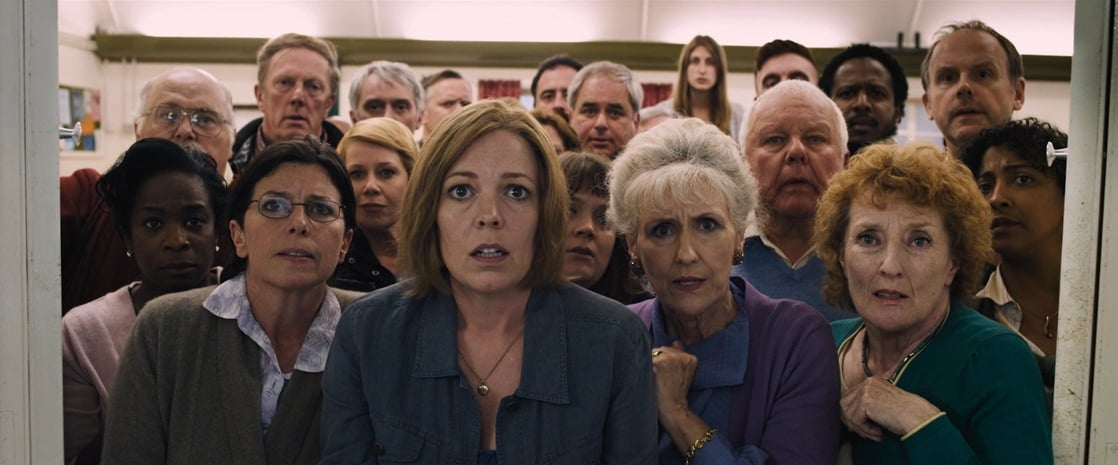
It’s no secret that I love musicals. I just said so in my last post. But that doesn’t mean I love all musicals by default; they have to earn it. An example of that love not coming easily is London Road, a 2015 drama based on a stage musical about the 2006 serial murders by the Suffolk Strangler, or rather about their impact on the surrounding Ipswich neighborhood. With the concept of a murder mystery musical and featuring actors like Olivia Coleman and Tom Hardy, I added the film to my Blindspot list with little other knowledge about it.
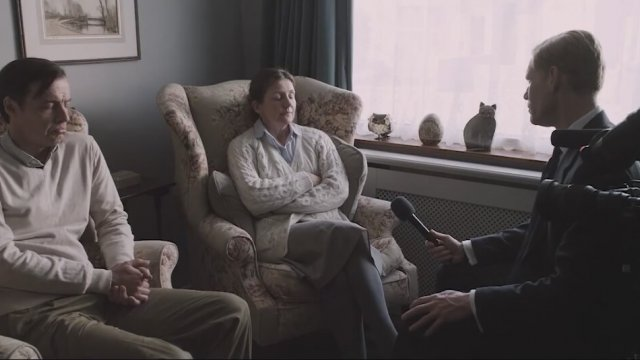
The locals of Ipswich were interviewed at the time about their fears and concerns about the murders, as were the sex workers being targeted by the killer, and the songs use this verbatim testimony as lyrics. Thus, all of the songs sound like real people speaking normally, complete with “um”s and “yeah”s and pauses that go with such realism. However, to make these interviews work as songs, there is quite a bit of repetition involved, hammering in less-than-eloquent points like “it’s ‘orrible, idn’t it, eh?” and “begonias and petunias and, um, impatiens and things.” Plus, this repetition is mostly done through talking along with the tune rather than actual singing, so if you thought Tom Hardy couldn’t sing, this won’t prove you wrong. The film’s cinematography tries to inject some visual interest into the musical numbers, but the lyric style largely yields rather dull songs that feel much longer than they are.
And yet I still rather appreciate London Road as an experiment, one that isn’t quite successful but still effective in its own way. It immortalizes these seemingly mundane conversations and frames them in a way that reflects how the community as a whole responds to tragedy, from doubt and fear to a desire for better things beyond. I probably wouldn’t listen to the songs on their own, but they often begin with that awkward talk-singing and actually do sound nice by the end as voices overlap amid violin or synthesizer. It’s highly unique, and I credit the inventiveness of the original play’s creators (Alecky Blythe and Adam Cork), as well as the producers of the film version for adapting a story Americans like me might not otherwise have been able to see on stage.
The question has haunted mankind like a ghost: Can somebody honestly change? It seems that by thirty or forty at most, They’re set in their ways The way furniture stays, The kind you don’t sell but at best rearrange.
And yet we hear tales of how others transform, The hackneyed morality plays. But those are anomalies, far from the norm, For wishers and dopes Who need fuel for their hopes That common unkindness is only a phase.
But Grinches and Scrooges are likely short-term: No heart changes shape when it melts. You can’t shake foundations; they’re simply too firm. It’s nice to believe, But let’s not be naïve. If I don’t plan to change, why should anyone else? __________________________
MPA rating: PG-13
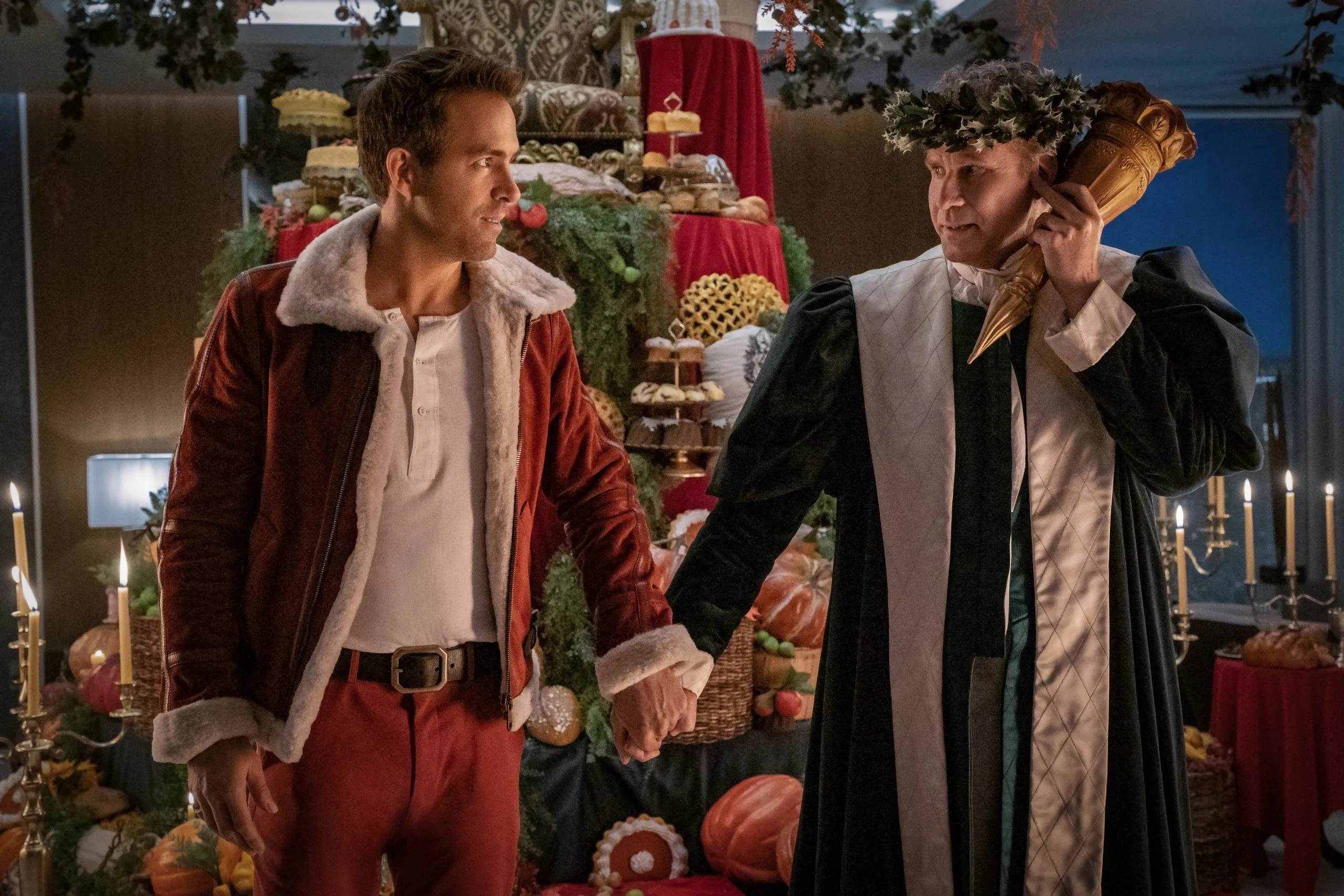
I have long wished that there were more original movie musicals. Rather than waiting for stage musicals to become popular enough to warrant film adaptations, I think there are stories that are better served by getting the movie treatment up front, and Pasek and Paul are leading the way. The Greatest Showman was a mainstream hit, but it seemed like last year’s Spirited didn’t get nearly as much buzz; plus, being an Apple TV+ exclusive means it sadly won’t get the usual annual holiday reruns either. So it seemed only right that I do my own small part to promote this modern retelling of A Christmas Carol, mixed in with meta Scrooged-style comedy milking the chemistry of stars Will Ferrell and Ryan Reynolds.
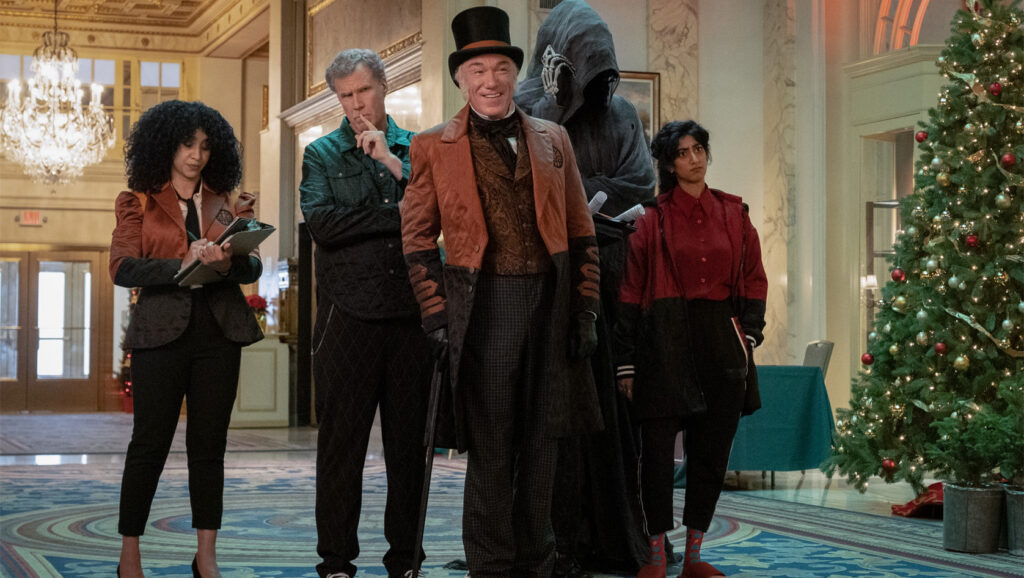
The twist to this version of the oft-oft-oft-adapted Dickens story is that it is from the ghosts’ perspective, turning the ghost quartet who once haunted Scrooge into a multi-generational corporation where the dead create personalized illusions to improve one terrible person each Christmas. The current Ghost of Christmas Present (Ferrell) is torn about just how much good they’re doing with these individual redemptions but finds a challenge in the form of cynical media manipulator Clint Briggs (Reynolds). While the supposedly “unredeemable” Clint insists he’s too savvy to undergo the usual moral awakening, both he and his ghostly guide must grapple with just how much someone can change.
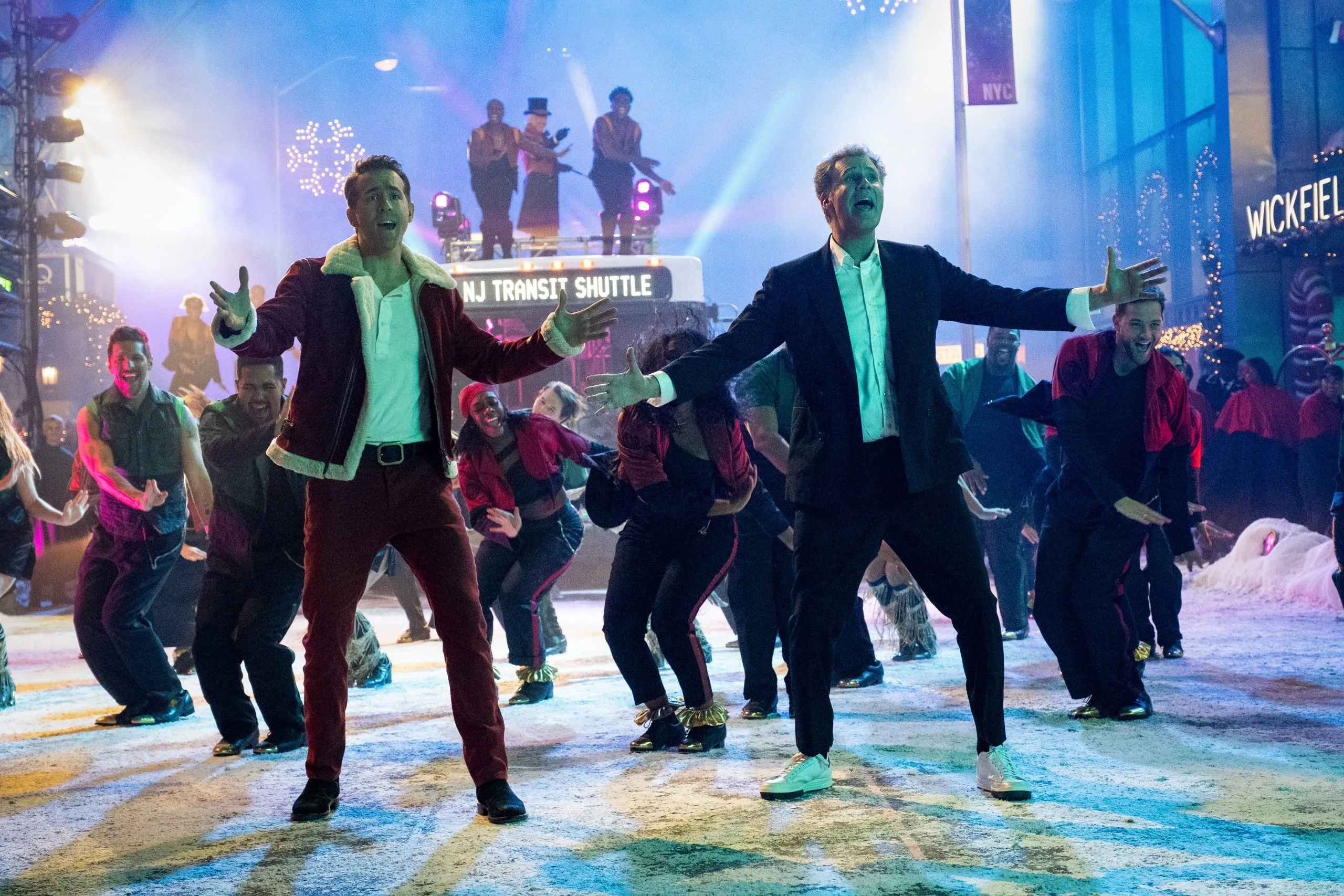
Where Spirited shines most is what every musical strives for: fantastic musical numbers. Between the upbeat earworms of Pasek and Paul and the stunningly energetic choreography by Chloe Arnold, the big dance numbers go hard. There are good smaller songs too, but when they aim for a Broadway-level showstopper, every single one succeeds, making it truly mind-boggling to me that the soundtrack got no awards attention at all. I was glad when RRR’s “Naatu Naatu” won the Oscar for Best Original Song, but it’s a little galling when this film’s “Good Afternoon” or “Do a Little Good” are better than any of the other nominees. My personal favorite is “Ripple,” which was cut from the film itself (likely for time) but was clearly too good to not include and was thankfully added to the end credits.
As for the rest of the film, it’s a likable redemption story that doesn’t play out quite as predictably as the usual Christmas Carol adaptation. Ferrell’s Ghost of Christmas Present is the film’s heart as he showcases how the hardest person to forgive is oneself, while Reynolds’ Clint fits comfortably into his lovable jerk mold, wielding his self-proclaimed knowledge of human nature to stoke conflict and cancel culture without ever noticing the aftermath. I’ve never been a fan of either actor’s brand of comedy, but, while there are still moments here that don’t always land for me, I’d consider this some of their best work. This is especially because of how well they stretch their musical chops, despite not having much experience with song and dance, the same being true for Octavia Spencer as Clint’s self-loathing employee. The entire cast does a great job, from Broadway heavyweight Patrick Page as Jacob Marley to Sunita Mani and the voice of Tracy Morgan as the other two Christmas ghosts.
Spirited would be a good film with just its plot, but the music puts it into instant classic territory in my book and a film I plan to make part of my annual Christmas movie schedule. It can seem a bit overlong and overwhelming at times, but I enjoyed my second watch this year more than I did last year, when I added it to my top 365 list and then never reviewed it. If a movie can poke holes in cynicism, promote the idea that anyone can change for the better, and make me dance and sing along, that’s my kind of movie.
Best line: (Ferrell’s Ghost of Christmas Present, to a party guest dressed like Buddy the Elf) “You look stupid.”
“Parting is such sweet sorrow,” Said the bard through Juliet. It’s bittersweet Till next we meet Lest you or I forget.
But sweetness fades with waiting While bitter amplifies. By fits and starts, Two hostage hearts Will wear new love’s disguise.
And when the parting’s ended And our hearts meet again, The memory Still sweet can be But only as ‘twas then. _____________________
MPA rating: Not Rated (PG-13 seems right)
I’ll admit that October does seem a little late to start on that Blindspot series I announced back in January, but I at least haven’t waited this long to start watching them. I have already seen five of them, but my reviews have been painfully slow in coming. I need to get better at carving out time for them and not being afraid to keep them short. Since I’ve been knee-deep in writing a musical, it seems only right to kick off the Blindspot reviews with an acclaimed foreign musical called Les Parapluies de Cherbourg, or The Umbrellas of Cherbourg.
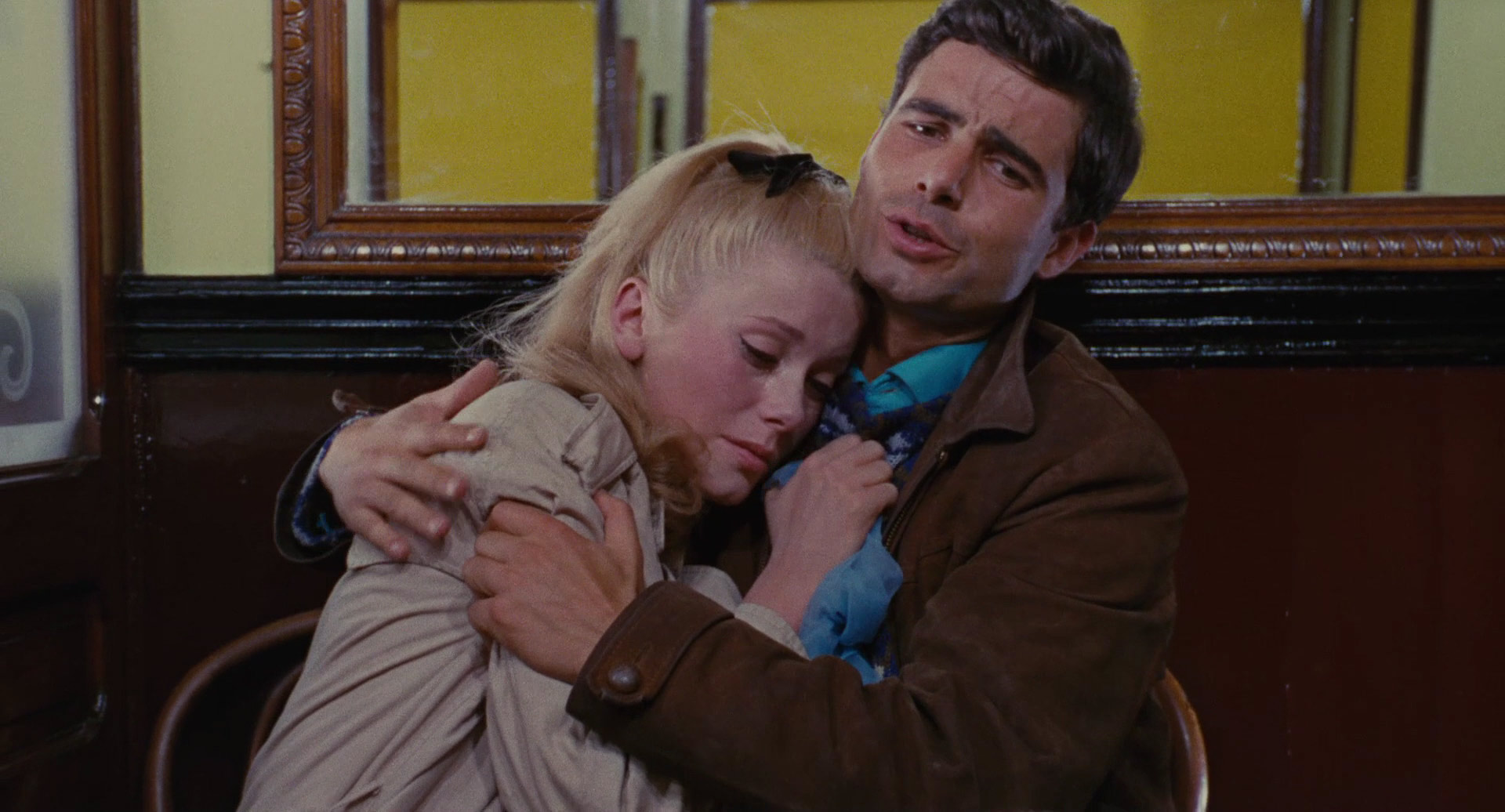
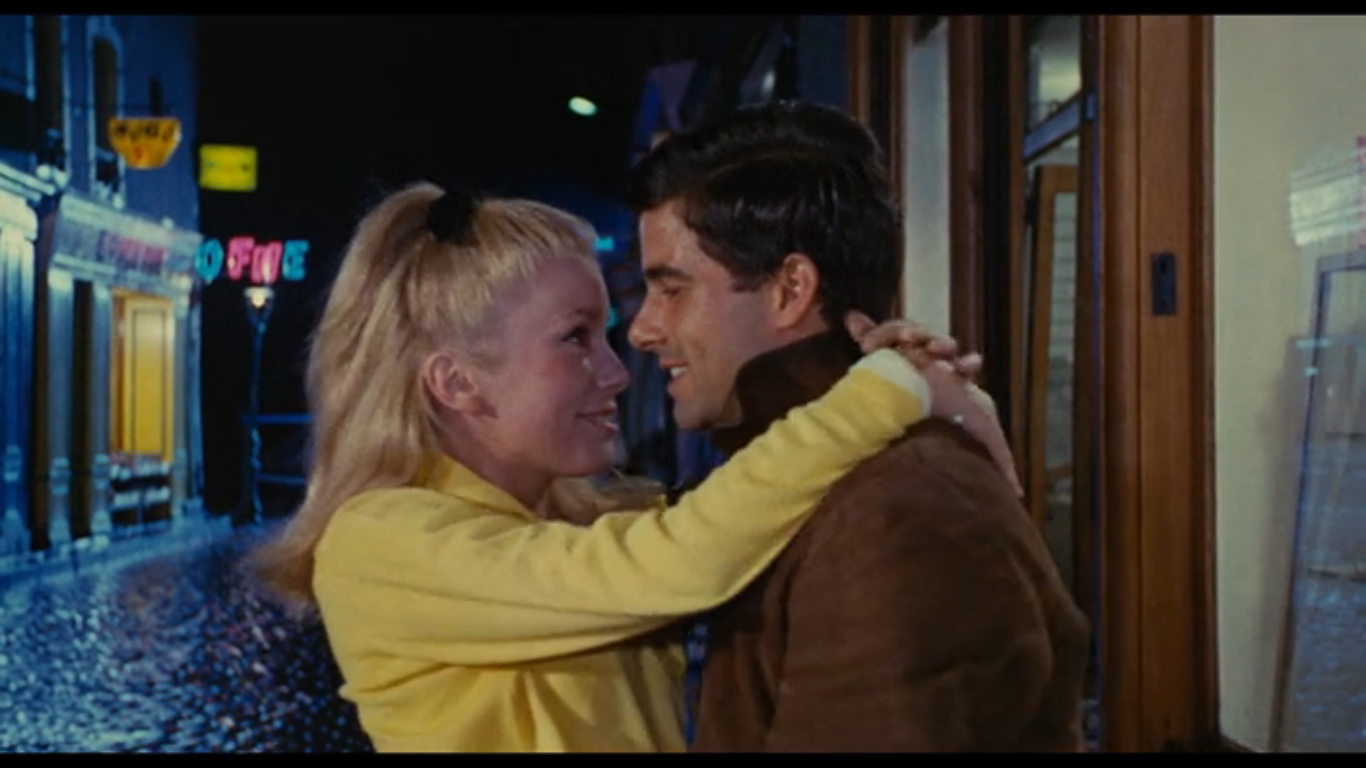
Sung-through entirely in French, the film follows two young lovers, mechanic Guy (Nino Castelnuovo) and umbrella store clerk Geneviève (Catherine Deneuve), whose swooning rendezvous are kept secret from Geneviève’s busybody mother (Anne Vernon). Yet their budding romance is foiled by Guy’s being drafted to fight in the Algerian War. As Geneviève’s mother impresses on her the importance of marrying well, the young girl is faced with a difficult choice and a heartbreaking regret.
I can certainly see why The Umbrellas of Cherbourg is so beloved among cinephiles and stands as one of the quintessential bittersweet romances. While opera had its own long-standing tradition, an original, sung-through musical was quite a novelty for the time and an artistic risk that might not have paid off with lesser artists. But Michel Legrand’s haunting melodies add a tender beauty to the sung dialogue, which would be rather mundane if just spoken. A behind-the-scenes featurette was quite interesting as Legrand was interviewed about his initial struggles developing a theme for each character, an important element of musical writing. I was impressed to learn that all the actors were lip-syncing to other singers’ voices, considering how well Deneuve and Castelnuovo acted in line with their “singing.”
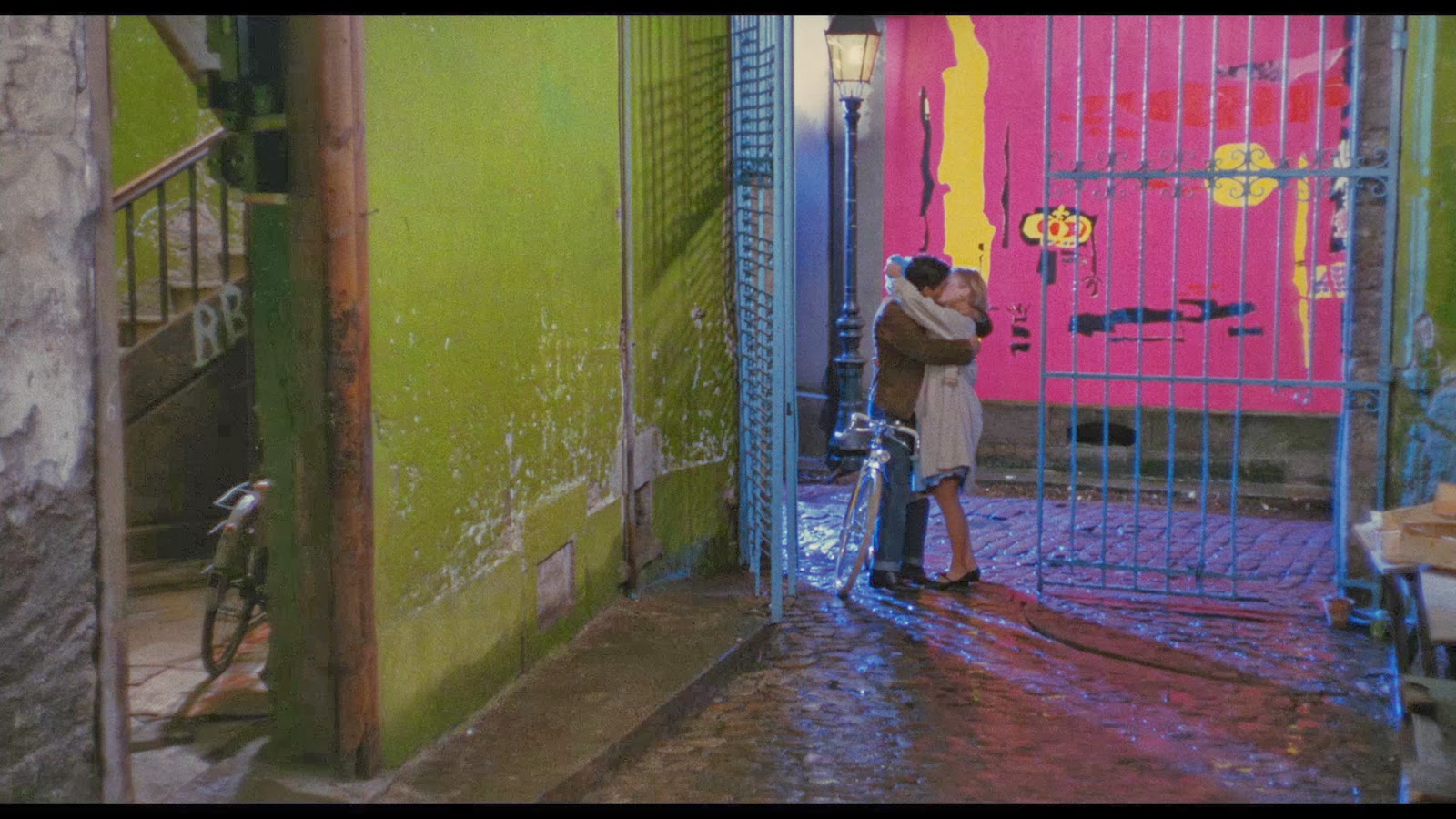
While the music is key to the film’s fame, even earning a Best Original Song Oscar nomination for “I Will Wait for You,” the parting song between Guy and Geneviève (also somehow getting noms for both Original and Adapted Score), the sets and cinematography deserve just as much praise. Considering director Jacques Demy’s previous two films were in black and white, the colors here are as vivid and impressive as Dorothy stepping into Oz, like an interior designer’s wet dream. The rooms and stores have brightly variegated walls that often look freshly painted, Geneviève’s yellow jacket pops against the rainy blue streets, and every choice of paint, costume, and wallpaper feels intentional for the background to accent the scene and give it an iconic look. Rarely does the use of color feel so integral to a film’s identity and success, making the lack of any technical Oscar nominations feel criminal.
If I’m being totally honest, the music tends to sound the same after a while, lacking variety that would keep the middle section from getting rather monotonous and boring. The film’s interest and emotion are highest at the beginning and end, and its final scenes especially have a superb bittersweetness that clearly went on to inspire other films like La La Land. Ultimately, The Umbrellas of Cherbourg feels like a film everyone ought to see at least once, making it a perfect Blindspot pick, but it’s not the kind of musical I’d want to rewatch often or one I would recommend to those musical-haters out there (you know who you are). Even if its narrative loses steam, it is impressive art for both ear and eye and a laudable trailblazer for musical cinema.
Best line: (Geneviève) “Mother, he’s leaving. He’ll be away for two years. I can’t live without him. I’ll die.” (her mother, Madame Emery) “Stop crying. Look at me. People only die of love in movies.”
(For Day 30, the last day of NaPoWriMo, the prompt was to write a palinode, a poem that retracts a view from a previous poem or from earlier in the same poem. I sort of did that yesterday, but it seemed like a good way to reflect on both sequels and the temporary end of NaPoWriMo, until next year.)
When the villain is bested, The henchmen arrested, Then all of the heroes make merry. When credits have rolled, The story is told, And endings are not temporary.
A glad ever after Is sunshine and laughter; What follows is better unsaid. To many’s chagrin, you Cannot just continue When even the last page is read.
Just savor the story That closed in its glory, And you can imagine the rest. Another adaptor Might mar the next chapter. It’s honestly probably best.
Although I’ll allow That a “where are they now?” Would probably earn some applause. Finales are fleeting And bear some repeating, And endings are only a pause. _____________________
MPA rating: PG
While Avatar: The Way of Watergot ribbed for the extended delay between movies, it took Disney two years longer to finally deliver a second Enchanted, dropped half-heartedly on Disney+ late last year. It’s a prime example of a sequel many wanted and wanted to like yet ultimately can’t compete with its predecessor. In retrospect, we didn’t really need to know the details of how “happily ever after” fails to satisfy.
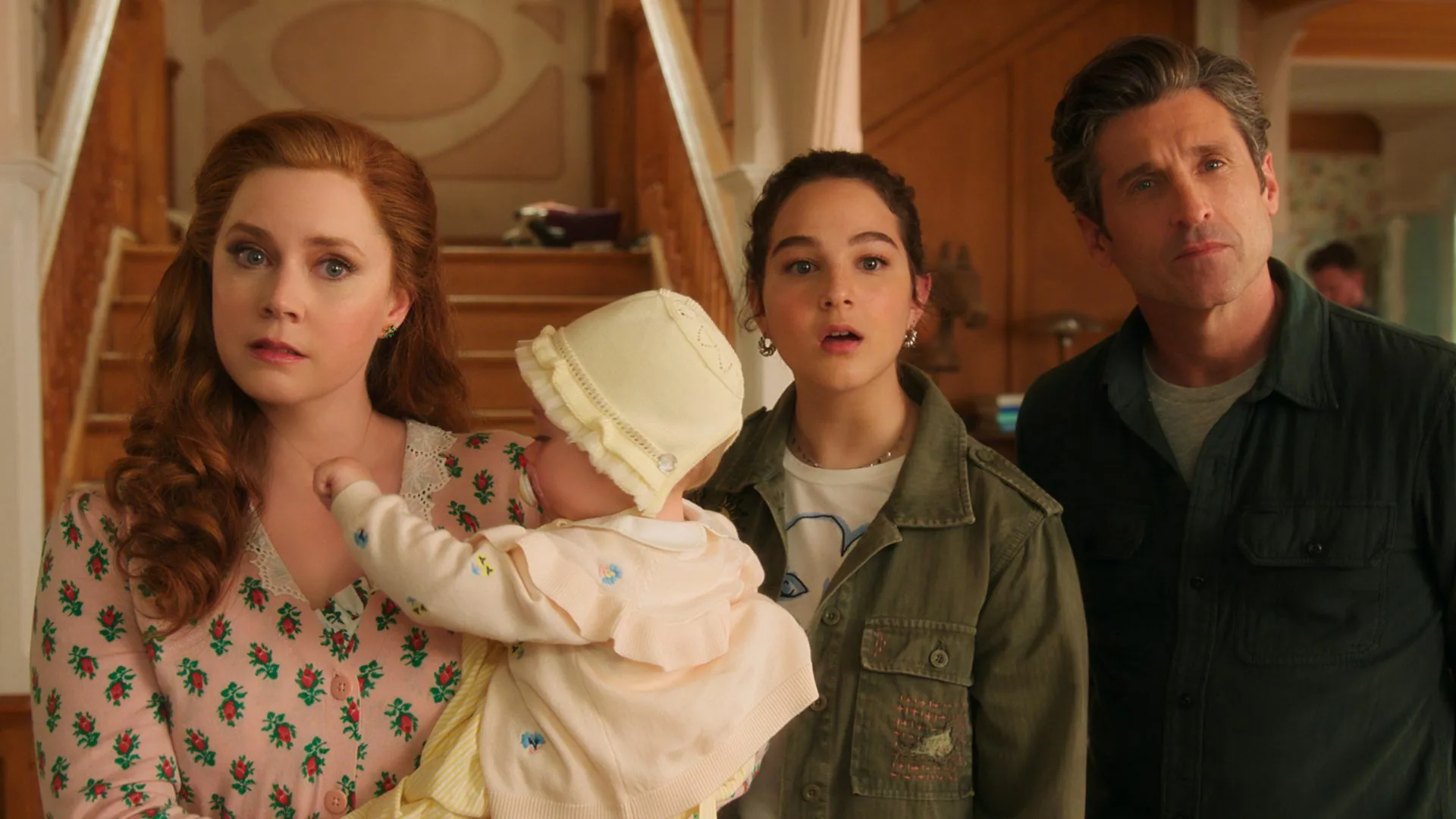
The first Enchanted was a breath of fresh air, a reverse isekai before that was even a term, with doe-eyed Giselle banished from her animated fantasy world to the streets of New York and injecting some much-needed sincerity into the lives of widower Robert (Patrick Dempsey) and his daughter Morgan (Rachel Covey). Years later, the family is seeking something more and moves out to the suburb of Monroeville, much to the chagrin of teenage Morgan (now played by Gabriella Baldacchino). After they struggle to integrate with the community, led by the imperious realtor Malvina Monroe (Maya Rudolph), Giselle uses a wish-granting wand to give them a more “fairy-tale” life, transforming the town into a literal magical land with all the delight and danger that entails.
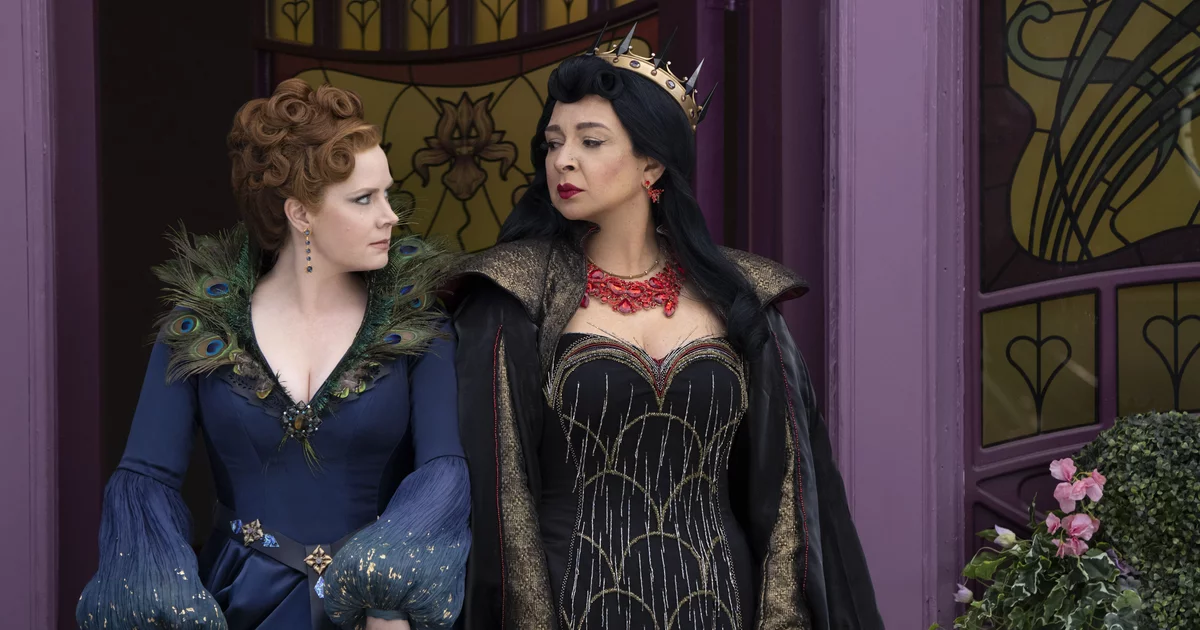
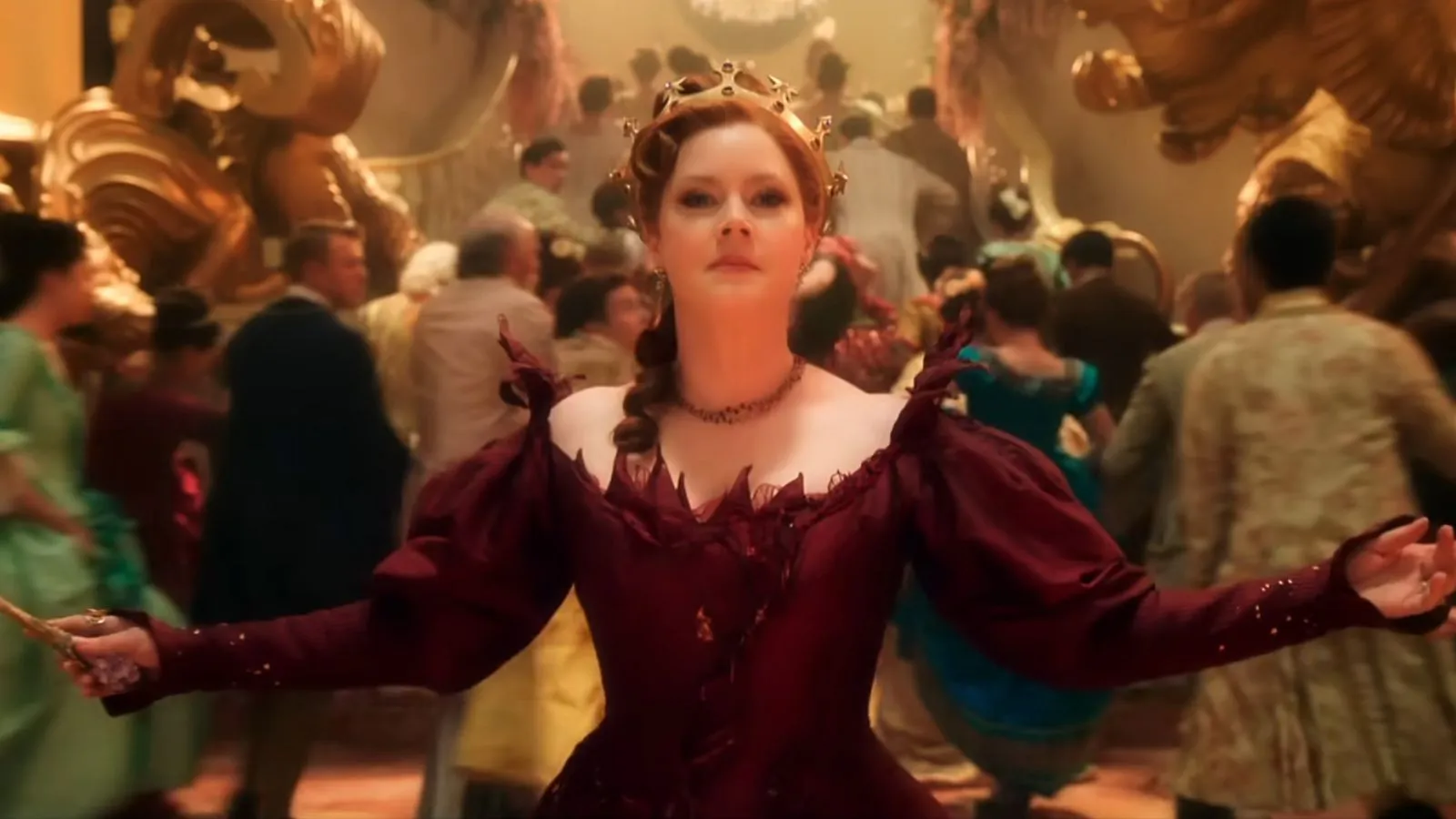
Like the first film, the best thing about Disenchanted is Amy Adams, whose perky Giselle is progressively changed into an evil stepmother by her wish, since she is literally Morgan’s stepmother. She relishes playing with the caricature and trying to outdo Rudolph’s equally evil Malvina, even sharing a delightful song about their nasty rivalry called “Badder.” It’s a fun idea as the rest of the “real world” characters are brainwashed into fairy tale roles, complete with lavish costumes, but it can also run a bit thin, with Dempsey especially having very little to contribute. And the drama of the climax definitely feels forced, with the magic wand not being used effectively and the stroke of midnight somehow being delayed by jamming a clock tower’s gears.
Even if the plot falls short, it was admittedly nice seeing all the principal actors returning to these beloved characters, including James Marsden’s Edward and Idina Menzel’s Nancy. It was a crime that Menzel didn’t get a chance to sing in the original, and she does finally use her famous pipes with the anthemic “Love Power.” I was glad that Alan Menken and Stephen Schwartz again teamed up for the sequel’s songs, though the lyrics can be lackluster and nothing comes close to the first film’s “That’s How You Know” dance number. Disenchanted does manage to capture at least part of the satirical charm and magic of the original, so it’s not a complete misfire, but it does show how special the first film was in balancing its real and fantastical elements. Even after so much time has passed, it’s still a tough act to follow.
Best line: (Morgan, in response to Edward and Nancy singing) “Does anyone in Andalasia ever just say stuff?” (Giselle) “Not if we can help it!”
(For Day 24 of NaPoWriMo, the prompt was to write a poem reviewing something that is not normally reviewed, so I imagined someone’s spiraling falsehoods being rated by their own mind.)
You’re doing it, dude. You’re making it sell. A lie gets you high If you’re telling it well.
And there goes another! That’s some web you weave. It’s quite the art form When the experts deceive.
A nine out of ten, If I’m giving a score. Just hold your eye contact A little bit more.
A quick feigned offense, And she bought it again. There’s no way she knows It’s a ten out of ten!
You can’t pull out now When you’ve lasted this long. A lie can be right If you don’t mind the wrong.
The greatest of lies Are built from ideals, Which obviously Are the hardest reveals. ____________________________
MPA rating: PG-13
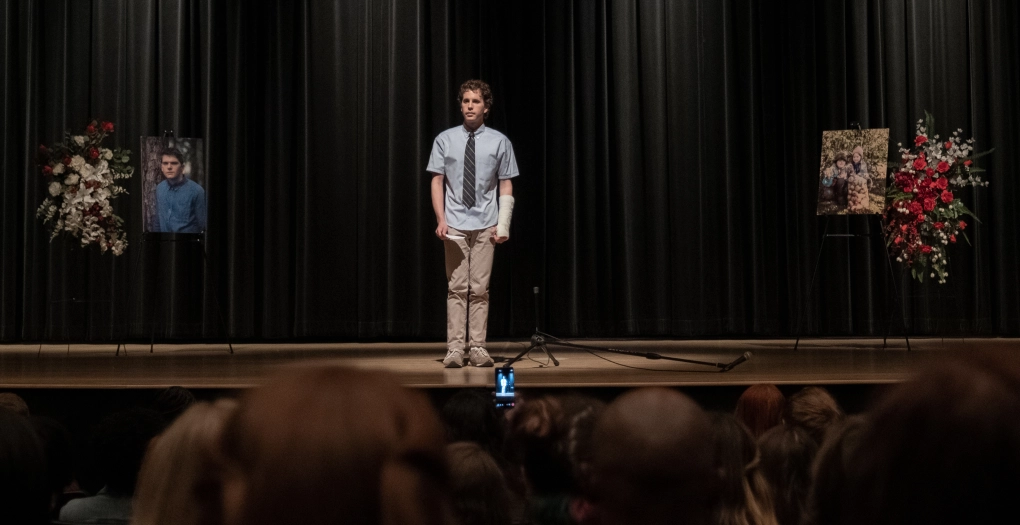
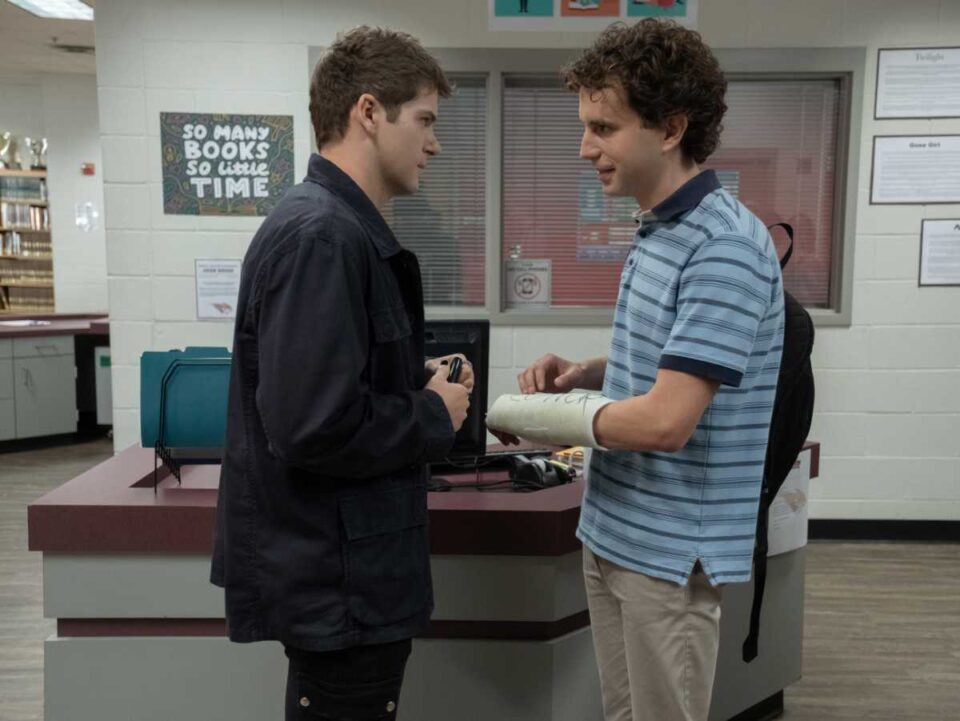
I saw this movie musical in the theater a year and a half ago, and I just couldn’t quite bring myself to review it. Based on the Tony-winning musical by Benj Pasek and Justin Paul of The Greatest Showman fame, Dear Evan Hansen was yet another movie musical adaptation to flop at the box office, without even the critical praise that In the Heights had. I’ve heard people rip this movie apart and complain about how it portrays mental illness or how star Ben Platt is too old to be playing a high school student, and I seem to be in the minority in not sharing those common objections. Yet the film is rather disappointing, even for a lover of movie musicals like me, just for reasons I can’t quite pin down.
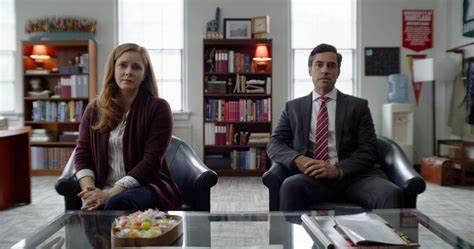
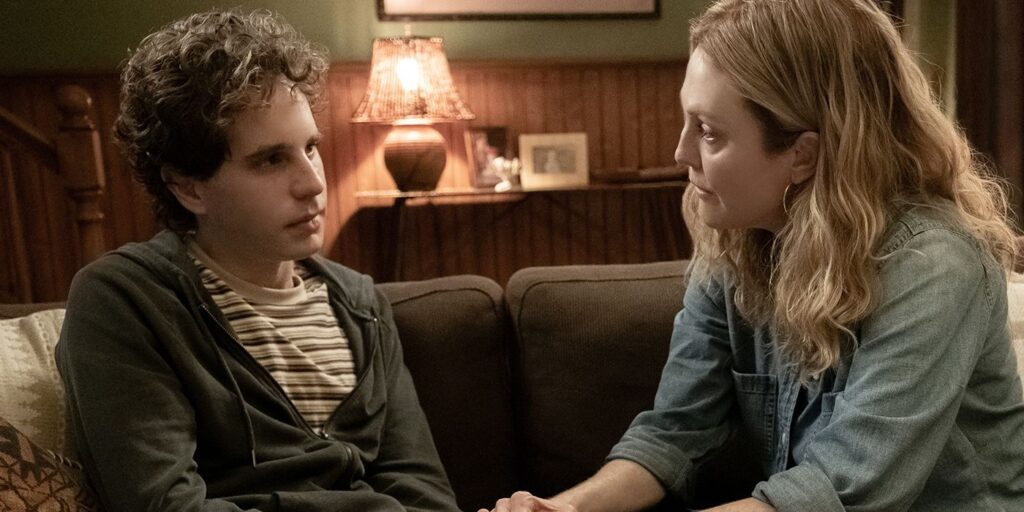
I also had the privilege of seeing a touring production of the stage musical after seeing the film, so I have something to compare it to now. The plot is fairly faithful with anxious teenager Evan Hansen (Platt) barely navigating high school as he writes daily letters to himself, according to his therapist’s advice. One of these letters ends up in the possession of the volatile Connor Murphy (Colton Ryan), who commits suicide, leaving his parents (Amy Adams, Danny Pino) and sister (Kaitlyn Dever) to believe Connor wrote the note to Evan. Evan can’t bring himself to contradict the despondent family and instead plays into the narrative of him and Connor being close friends.
I recall wryly asking one of my friends if he wanted to go see “a depressing musical” when the film came out. Dear Evan Hansen is heavy stuff, dealing with mental illness, suicide, familial resentment, and desperate grief, which is part of what made it such a powerful and relatable hit on Broadway. Clearly, the themes that worked on stage didn’t quite translate as well to film, yet the weaknesses of the film were baked into the story, in my view. Platt is a fantastic actor and singer (whose age didn’t bother me a bit), but there’s something inherently unrealistic about his socially graceless character being able to convince this family of his untruth, even if Connor’s mother practically goads him into it. It leads to some extremely cringy moments where Evan’s awkwardness is too hard to overlook. The songs are meant to smooth that suspension of disbelief, but again there’s a disconnect between him belting out “For Forever” in the Murphys’ dining room as opposed to an open stage with a large audience.
Pasek and Paul’s pop-influenced music is the best thing about the film, and I’m personally glad that Platt was able to bring the character he helped create to the big screen. His performances of the inspirational “You Will Be Found” or the devastating “Words Fail” show his incredible vocal and emotional range, and, despite not typically being a singer, Julianne Moore as Evan’s mom Heidi excels with “So Big / So Small,” a deeply poignant expression of motherly love. Amy Adams and Kaitlyn Dever are likewise only used for one song, but both deliver strong acting performances, that feel both genuine and oddly unrealistic at times. Fans of the musical were naturally disappointed by the removal of songs like “Disappear” and “Anybody Have a Map?”, especially when the new addition “The Anonymous Ones” is serviceable at best. At least they kept “Sincerely, Me” to retain the one lighthearted song in the story.
Dear Evan Hansen isn’t a bad film and in fact has a number of very powerful moments and performances, as well as an outstanding soundtrack. Its story just feels half-baked when brought from the distance of a stage to the intimacy of a camera close-up. Some rewrites and testing screenings might have benefited it, but I can’t bring myself to dislike it as much as so many do. It’s far from the strongest musical of 2021, but it still gave me all the intended feels.
Best line: (Heidi, singing to Evan) “Your mom is staying right here. No matter what, I’ll be here when it all feels so big till it all feels so small.”
(I had a rough day yesterday and missed Day 21 of NaPoWriMo, but I thought I’d try doubling up this weekend instead. Yesterday’s prompt was for a poem describing an abstract noun, using short lines and a made-up word. I chose Strength.)
I am strong Because I cannot afford To be weak.
The weight of My people’s hopes, The yoke Of all my foes, The burden of Love to defend Have tempered Me Like steel.
But still I only wish To wake to laughter In the aftermorn, To kiss with No farewell, To let my power Be still.
Strength I bear That I may not Bear it forever. __________________________
MPA rating: Not Rated (should be R for violence, which is fitting, right?)
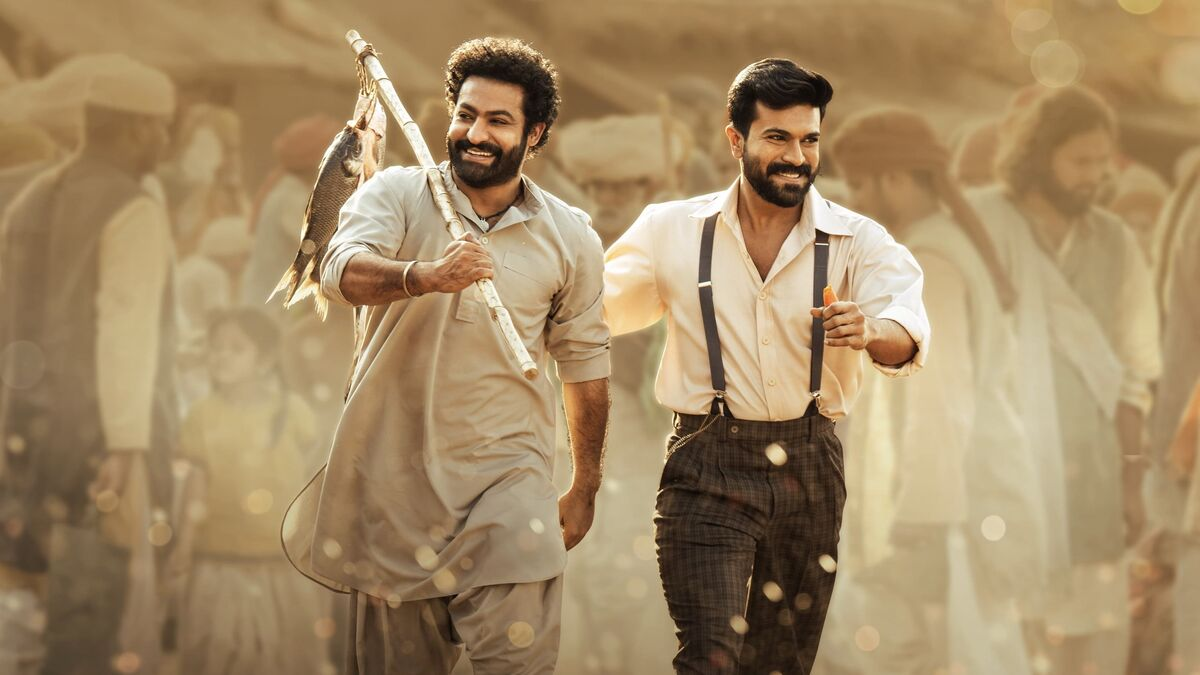
After recently watching Satyajit Ray’s Apu Trilogy, which marked a turning point in Indian cinema back in the 1950s, it was mind-blowing to see how far the country’s filmmaking has come with 2022’s RRR. I know Bollywood has a reputation for over-the-top spectacle, but this was my first introduction to the modern wow factor that Indian films have to offer. (Considering its wide distribution on Netflix, I doubt I’m alone there.) RRR follows two real-life Indian freedom fighters in the 1920s, telling a completely fictitious what-if story about them meeting and teaming up against the evil British empire. In American Revolution terms, I like to describe it as the Indian equivalent of “What if Ethan Allen and Francis Marion became bros and singlehandedly decimated the redcoats?”
Standing for Rise Roar Revolt (in English at least), RRR is the kind of epic that Hollywood just doesn’t make anymore, if it ever did, boasting an everything-goes narrative that makes it hard to classify. It’s heavy on the action but also has room to be a romance, a historical drama, a buddy film, and a musical. The supremely handsome Ram Charan plays A. Rama Raju, a member of the Delhi imperial police force trying to rise through the ranks. N.T. Rama Rao Jr. plays Komaram Bheem, a protector of the Gond tribe who goes undercover in Delhi after the British governor (Ray Stevenson) and his cruel wife (Alison Doody) abduct a young girl named Malli. Thus, the two initially meet and become good friends, not knowing they are on opposite sides, Bheem seeking to rescue Malli while Raju aims to capture him to earn favor with the British.
RRR is a lot. Boasting superhero-level stunts and CGI animals to rival Hollywood, the film looks amazing, albeit replete with slow-motion interludes to highlight the emotion or absurdity of the action. In that vein, it is also anything but subtle. The villainous Brits are cartoonishly evil without any nuance at all, save for the kind Jenny (Olivia Morris) who somehow becomes a love interest for Bheem despite neither of them understanding the other’s language. The film relishes in its own excess, from the rippling muscles of its often shirtless leads to the extravagant and lengthy action scenes that include one man taking on an entire angry mob and a free-for-all battle with tigers and deer invading a posh banquet. Honestly, some of the coolest moments almost feel like parody with how outrageous they are.
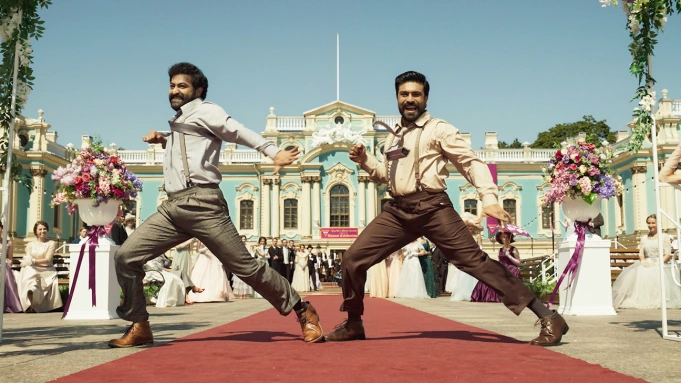
Yet there’s something refreshing about how RRR wears its cinematic heart on its sleeve, like the montage of Raju and Bheem bonding over their shared buffness, which brought to mind the ancient brotherhood of Gilgamesh and Enkidu. That kind of epic clash of good and evil with a cast of thousands was much more common in old Hollywood when epics were a common genre, so it’s interesting to see such large-scale heroics from a foreign perspective. And the film often uses its excess quite effectively, especially in the instantly iconic dance-off to the song “Naatu Naatu,” which won a deserved Oscar for Best Original Song and was one of the best movie moments of last year.
Aside from some brutal violence, the worst thing about RRR is its length. I was able to convince my VC to watch it (and she liked it), but only by breaking it up into three parts. At a little over three hours, it can feel more like a miniseries than a movie, so I would recommend that; basically, take a break whenever someone is caught by the British. RRR is epic in every sense of the word, and its mainstream success will likely open the door for more Americans, me included, to explore further what Indian cinema has to offer.
Best line: (Raju’s father) “He [the governor] said that an Indian’s life is not worth a bullet. So how will this bullet earn its value? When it comes out of your gun and pierces an Englishman’s heart.”
(Yes, I missed another day, but I’m back on the horse. For Day 18 of NaPoWriMo, the prompt was for an abecedarian poem that follows the alphabet. Considering this musical has its own alphabet-themed song, it seemed like a good match.)
Apparently, you shouldn’t Be a Cruel and callous Devotee of over- Eager punishment For one Good cause: Humanity. If everyone was Just and Kind and Listened as they spoke their Mind, then maybe No one would Opine the worst in People, which they find. The Qualms and quirks of Roald Dahl exaggerate Such sin and gall To juxtapose the truly nice Up against the common Vice. Would you prefer a genial and Xenial largesse? Or Yield to yet another yoke of Zealous nastiness? ___________________________
MPA rating: PG
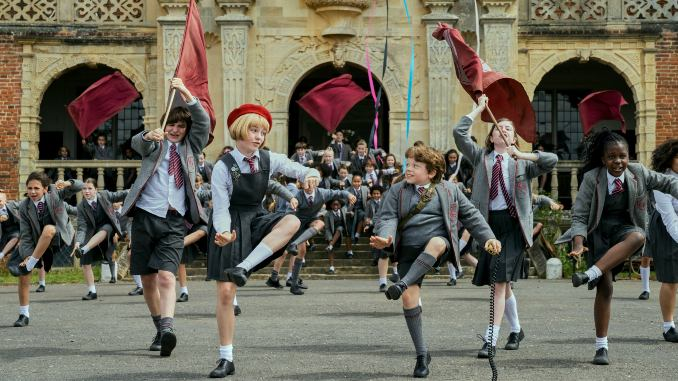
I feel blessed that, in the last few years, my awakening to a greater appreciation for musical theater has coincided with a surge in movie musicals. While 2021 had a glut of them, the more sparse 2022 ended with a long-awaited adaptation of Matilda the Musical, based on Roald Dahl’s classic book about a telekinetic girl pushing back on her abusive home and school life.
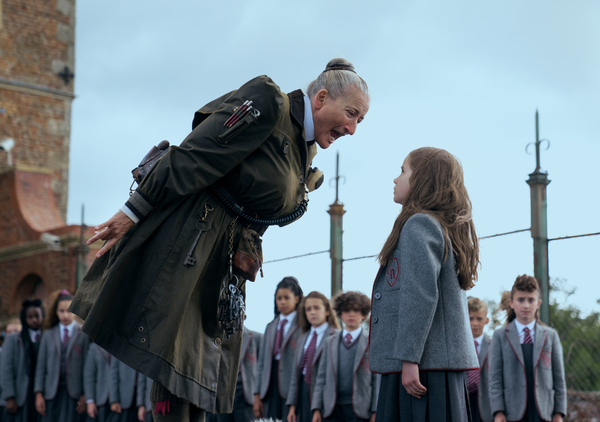
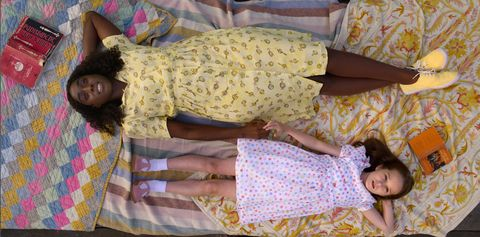
Alisha Weir plays the title character with a sweet, bookish earnestness to contrast her loud and self-absorbed parents (Stephen Graham, Andrea Riseborough). After years of self-learning, she is sent off to the infamous Crunchem Hall, where she catches the eye of both warmhearted Miss Honey (Lashana Lynch) and the tyrannical headmistress Agatha Trunchbull (Emma Thompson, acting through a masculine fat suit).
I vaguely remember the 1996 movie adaptation with Mara Wilson and Danny DeVito, but it’s been long enough that I was able to enjoy this version without worrying about comparisons to the other. Of course, this one is enlivened by musical numbers, which are a sure improvement in my book. The music and lyrics by Tim Minchin are a good match for Dahl’s cartoonish reality, presented here by swinging wildly between gaudy, energetic highs and oppressively bleak lows. Matilda’s playful solo “Naughty” is a perfect summation of her character looking for small ways to rebel against the unkindness around her, while the detached number “When I Grow Up” manages to be both buoyant for young viewers and wistfully nostalgic for their elders. While the clever alphabetics of “School Song” are an early highlight for the school-size ensemble of child singers, the real standout is near the end with the showstopping “Revolting Children,” which deservingly went viral with its exuberant choreography and earworm tune.
Yet for all its good points, Matilda falls short of being one of my new favorite musicals, for reasons I can’t quite pin down. Thompson as the villainous Trunchbull is over-the-top in her abusive villainy, with so-so songs and an underwhelming exit, though much of that is baked into the character from Dahl’s book. While I enjoyed the musical numbers, even the smaller ones like Miss Honey’s emotional “My House” which showcases Lynch’s acting talent, only “Revolting Children” stood out after the credits rolled. But I suppose the main drawback is that Dahl’s style of storytelling lends itself to an abundance of obnoxiousness for the hero or heroine to overcome, and the obnoxiousness of Matilda’s parents and Miss Trunchbull is more grating than entertaining.
Maybe time will improve my opinion, and maybe I would feel different seeing this as a kid since the story is clearly aimed at children, such as the imaginative tale Matilda spins about circus performers (which does at least tie in nicely to the plot, unlike, say, the storytelling in The Breadwinner). Even if it’s not quite up there with the best, Matilda the Musical is full of magical charm and clearly a quality production with lots of passion and talent behind it. Now I think I’ll go watch “Revolting Children” for the twentieth time.
(For Day 15 of NaPoWriMo, the prompt was to write a poem praising a role model while suggesting doubt around their supposed reputation. A biopic seemed like an ideal choice for this topic, since they so often expose the seedier aspects of celebrities.)
When searching music history, From madrigals to neo-soul, Elvis Presley was expressly Called the King of Rock and Roll.
That clearly means the genre must Have started with his rise to fame. Raucous singing, pelvic swinging – Closely linked to Elvis’ name.
Is Elvis not the true foundation Of the rock we now revere? When your sound is that renowned, He must have been the pioneer, Or so I hear. ____________________
MPA rating: PG-13
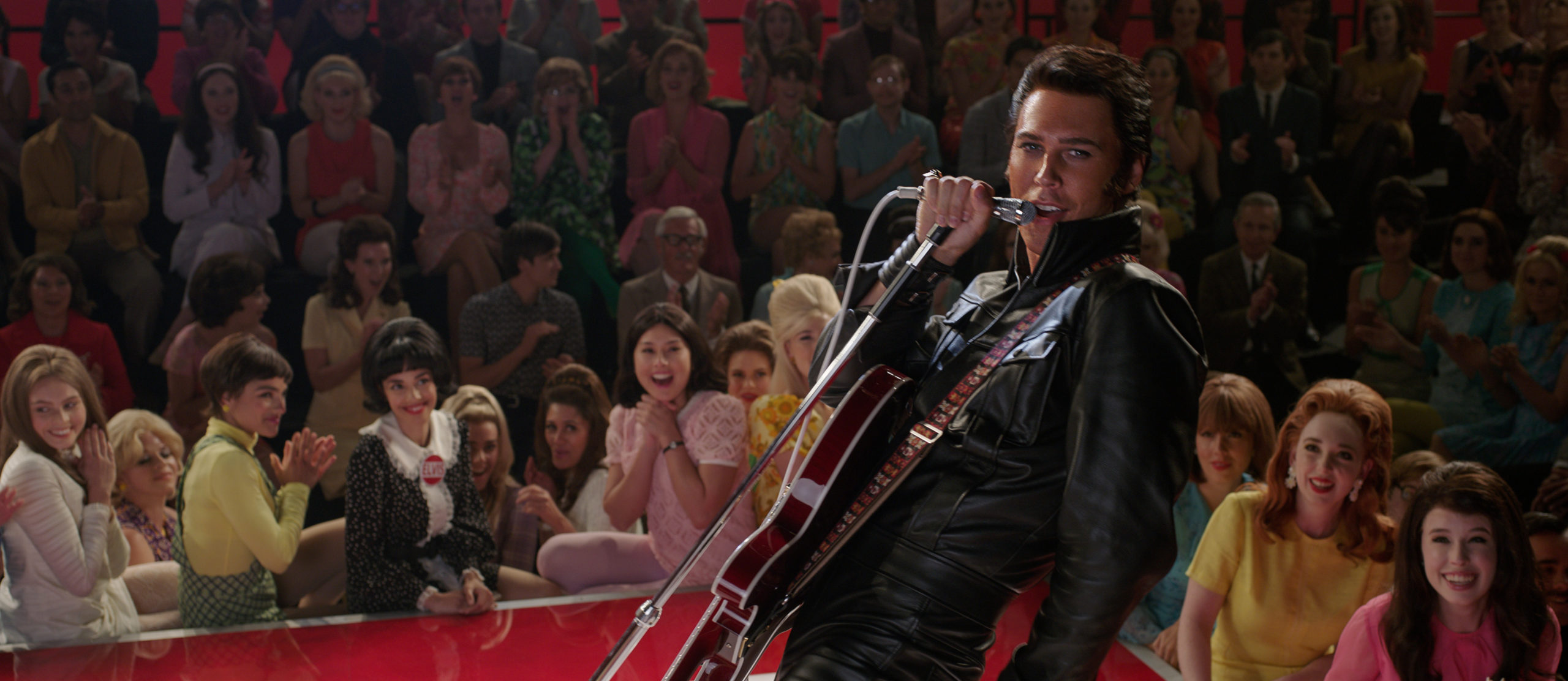
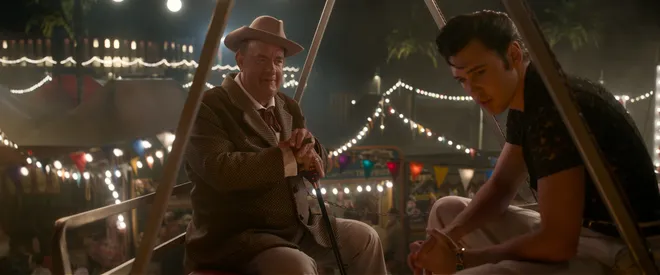
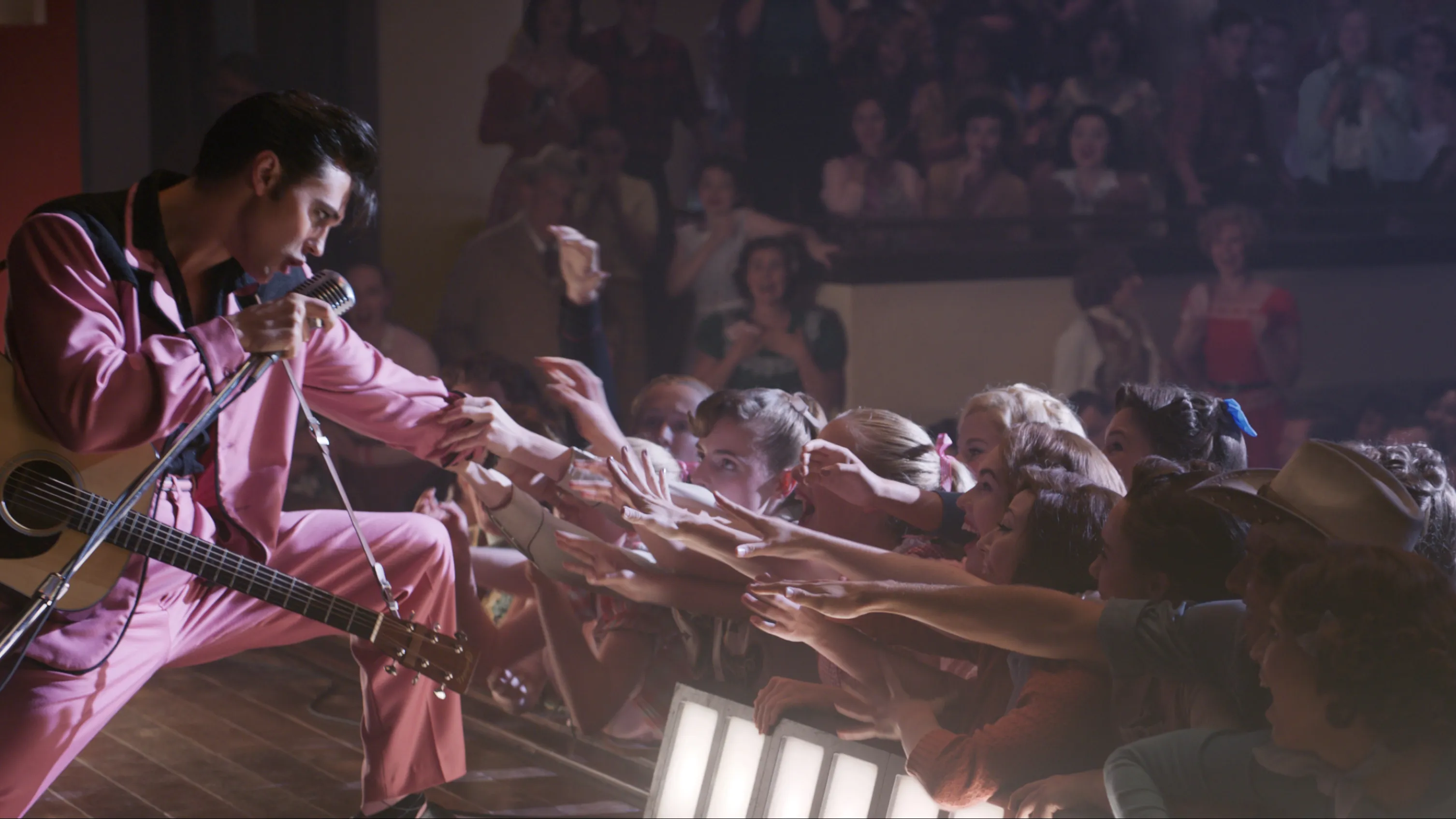
At this point, I expect all successful musicians of yesteryear to eventually get a film exposing their struggles and faults. Honestly, I’m surprised it took this long for Elvis Presley to get the Hollywood biopic treatment (not counting incidental narratives like Elvis & Nixon), but director Baz Luhrmann certainly went all out to finally make the King’s story into a flashy blockbuster. Framed as a deathbed recollection of Elvis’ infamously controlling manager Colonel Tom Parker (Tom Hanks), the story recounts Elvis’ life from his early fascination with African-American gospel music to his 1968 Christmas special comeback to his restrictive Las Vegas residency.
As I think most people acknowledge, the real star here is Austin Butler, who plays Elvis to perfection with an effortless drawl and swagger yet still makes him feel like a real person in a way old performance footage often doesn’t. It’s one of those rare ideal matches between star and subject that every biopic dreams of finding. And while Tom Hanks has gotten plenty of flak for his fake Dutch(?) accent, even winning two Razzies for the role, I thought he did a fine job, striking a convincing balance between fondness for “his boy” and the greed and anxiety of not wanting to lose control of his cash cow.
What felt more divisive than Hanks’s performance is Luhrmann’s direction, pumping as much visual glitz and bustle into each second as possible. The camera swoops and swirls with fever-dream abandon and rarely rests on any one scene for very long, further punctuated by anachronistic music, I suppose chosen to show Elvis’ continuing impact on modern music, even though rap tends to clash with 1950s Memphis. Yet as the film progressed, the drama and conflict between Elvis and Parker become more pronounced, and the direction likewise settles into a more serious mode that supports the emotional moments toward the end. I’m discovering that this is apparently a Luhrmann trend, since I recall Strictly Ballroom having a similar tonal switch from a first half I hated to a second half I loved. I suppose a strong ending is preferable to the alternative, but his style does take some getting used to.
That being said, Elvis does right by its iconic namesake, highlighting his stage presence and vocal power so closely replicated by Butler, who absolutely deserved his Best Actor nomination (though I am happy for Brendan Fraser’s win). His stunning rendition of “If I Can Dream” and the closing integration of “Unchained Melody” with real footage are especially brilliant. While it’s overlong and sidesteps some of his failings, like marital infidelity, the film shines a light on many details I never knew about the King of Rock and Roll and will likely become the de facto cinematic version of his story.
Best line: (Elvis) “A reverend once told me, ‘When things are too dangerous to say, sing.’”
There once was a castle perverse. Its owner was evil and worse, He’d break into song While his friends sang along Without any time to rehearse.
All visitors finding his lair Were likely to join the nightmare, And goody-two-shoes Who had morals to lose Would leave, having had an affair.
Beware then the castle debased, If you’d choose being chaste over chased, Unless you’re the type Who exults in the hype Of intentional absence of taste. __________________________
MPA rating: R
I know this review is a little late for Halloween (and for only my fourth Blindspot), but I’ve been struggling to figure out how to review The Rocky Horror Picture Show. When a film is this iconic in its cult status, is it basically above criticism? To be clear, I did not enjoy this sex-crazed salute to campy horror, but I can see why others might. It’s the kind of over-the-top cheesefest that knows exactly what it wants to be and is so committed to it that it doesn’t matter whether I like it or not. It is what it is, and I guess it proves that a film can be both classic and atrocious at the same time.
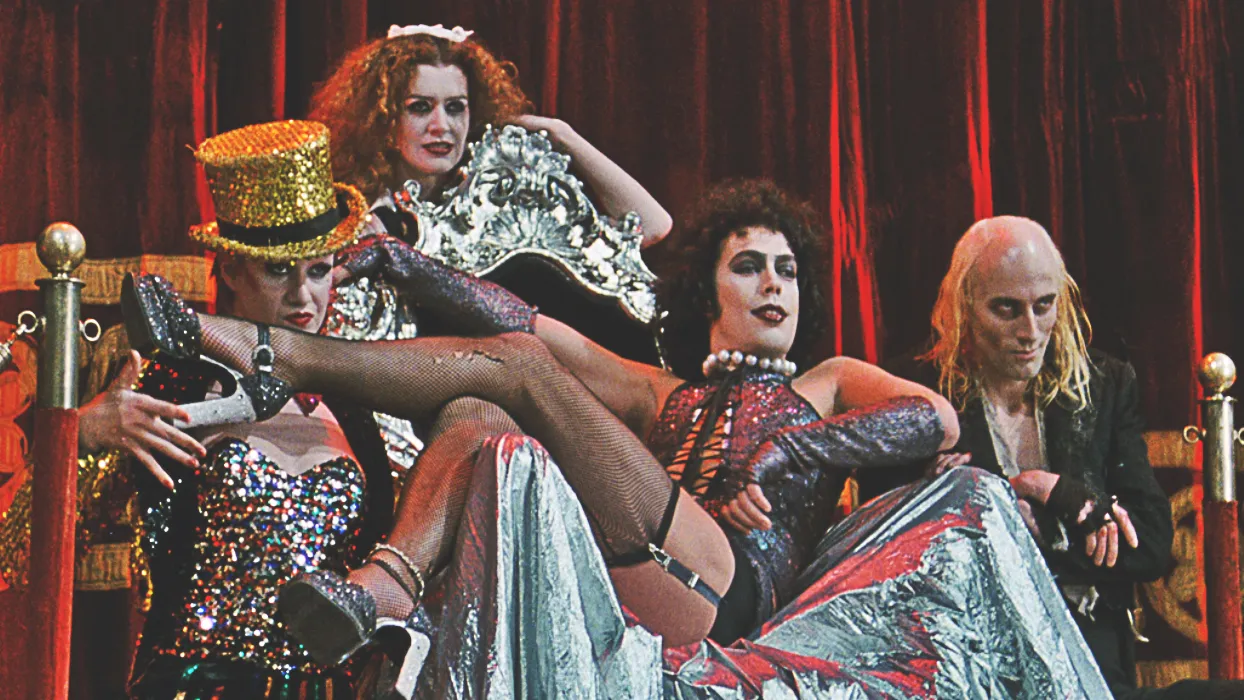
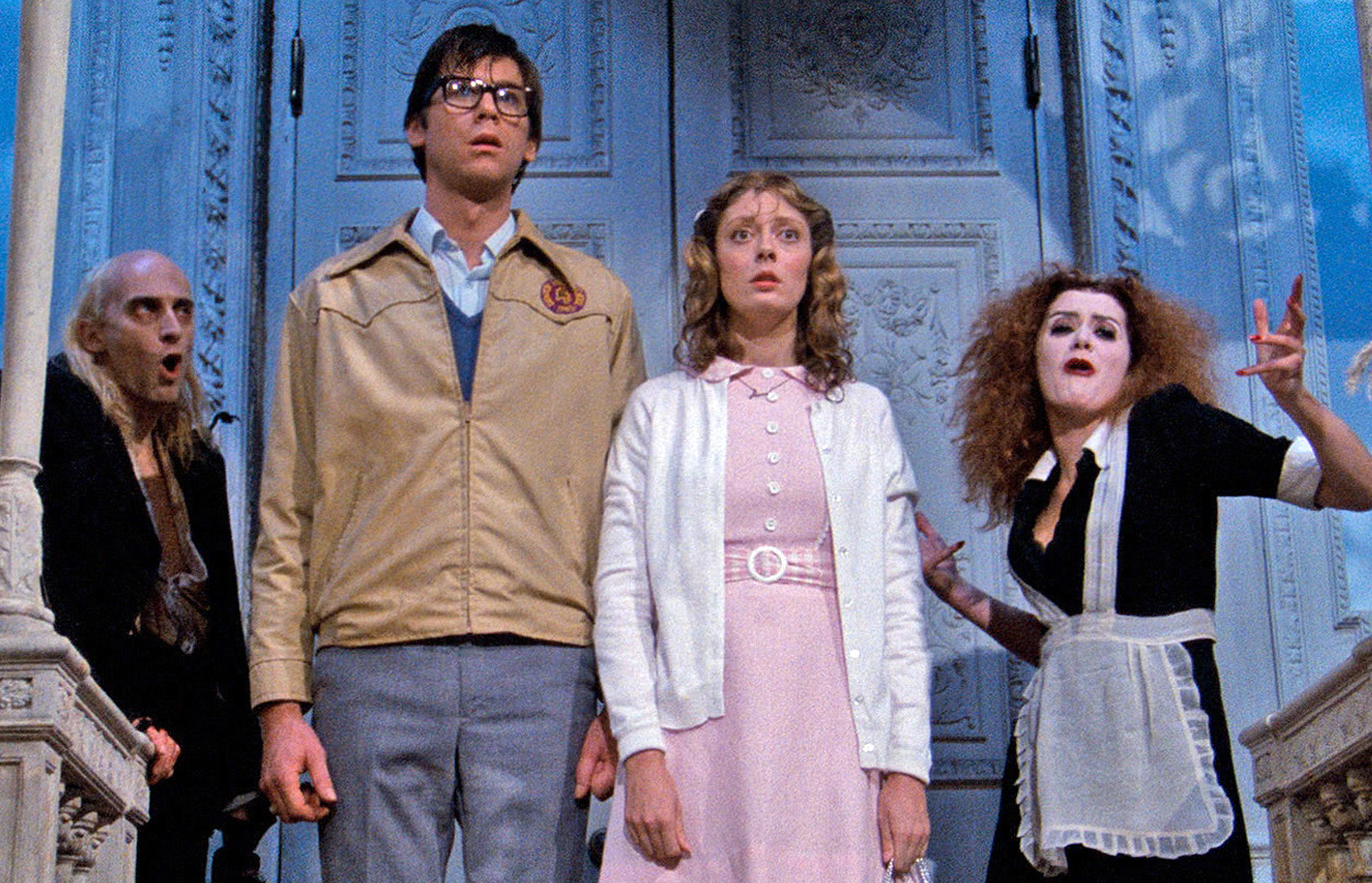
The paper-thin story, narrated periodically by a genteel criminologist (Charles Gray), sees newly engaged couple Brad (Barry Bostwick) and Janet (Susan Sarandon) being stranded when their car breaks down on a dark and stormy night, leading them to the castle of the eccentric transvestite Dr. Frank-N-Furter (a scenery-chewing Tim Curry). The straight-laced couple are soon drawn into a free-for-all of seduction, murder, and musical numbers, complete with a creepy butler named Riff Raff (Richard O’Brian, who also wrote the film and the original stage show), a newly created muscle man named Rocky (Peter Hinwood), and a machine that turns people into statues.
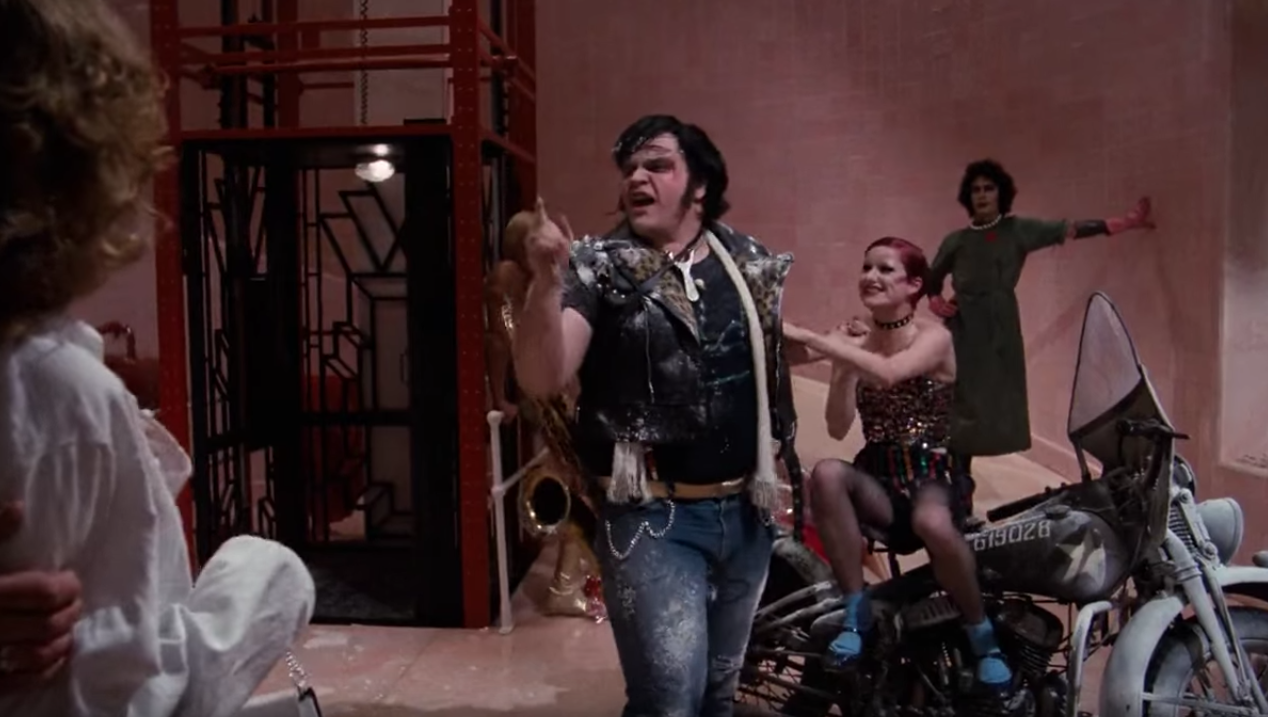
Objectively, The Rocky Horror Picture Show is a mess, as reflected by its poor reception by critics upon initial release. Characters come and go randomly, notably Meatloaf as a half-brained motorcyclist who shows up for one chaotic song and is abruptly killed for no reason. And a big stage number near the end is a fever dream of trashy costume glitz that makes zero sense, followed by a swimming pool championing wish fulfillment. In short, once Brad and Janet entered the castle, I just alternated between appreciating the music, feeling uncomfortable, and wondering what the heck I was watching, which I suspect was the intent of the filmmakers all along.
Speaking of the music, the movie does have some catchy songs to its credit (all written by O’Brien), energetic bops like “The Time Warp” and “Hot Patootie – Bless My Soul” to match its tongue-in-cheek silliness. I generally love musicals, and, while I would consider this one of the exceptions, I will grant that the music is pretty much the only thing that makes it watchable, some chuckle-worthy jokes notwithstanding. Perhaps I’d buy into the film’s bizarre brand of fun more if I attended one of the midnight showings known for audience participation, and I’m tempted to. If only I had a better baseline opinion of it….
I’m well aware that The Rocky Horror Picture Show isn’t my kind of movie. I’m not a fan of watching two clean-cut kids be corrupted by an alien missionary of the sexual revolution and his motley array of perversions, even if it’s someone as charismatic as Tim Curry. I suppose that makes me a prude, but so be it; I prefer my musicals less hypersexualized. I do find it funny that my first exposure to both Curry and O’Brien was in kid-friendly cartoons where they played likable dads: Curry in The Wild Thornberrys and O’Brien in Phineas and Ferb, which were a far cry from their raucous younger days. I’m glad I’ve seen The Rocky Horror Picture Show at least once, if only to understand its iconic cult reputation, but it’s a cult I’d prefer to avoid.
Best line: (Dr. Frank-N-Furter) “It’s not easy having a good time.”
What is it about being part of a group That makes one more likely to hate those outside it, To play in one’s mind their offenses on loop, And bask in contempt with no effort to hide it? The more they feel threatened by some other troop, The more they seek violence, and thus justified it.
It’s easy to fall into “us versus them,” To see every slight as a reason for hate, But history’s splattered with vengeful mayhem From tomfools preferring force over debate. Perhaps we can’t grow too far from such a stem, But “love wins,” they say. I suppose I will wait. _____________________________
MPA rating for 1961 film: Approved/PG MPA rating for 2021 film: PG-13
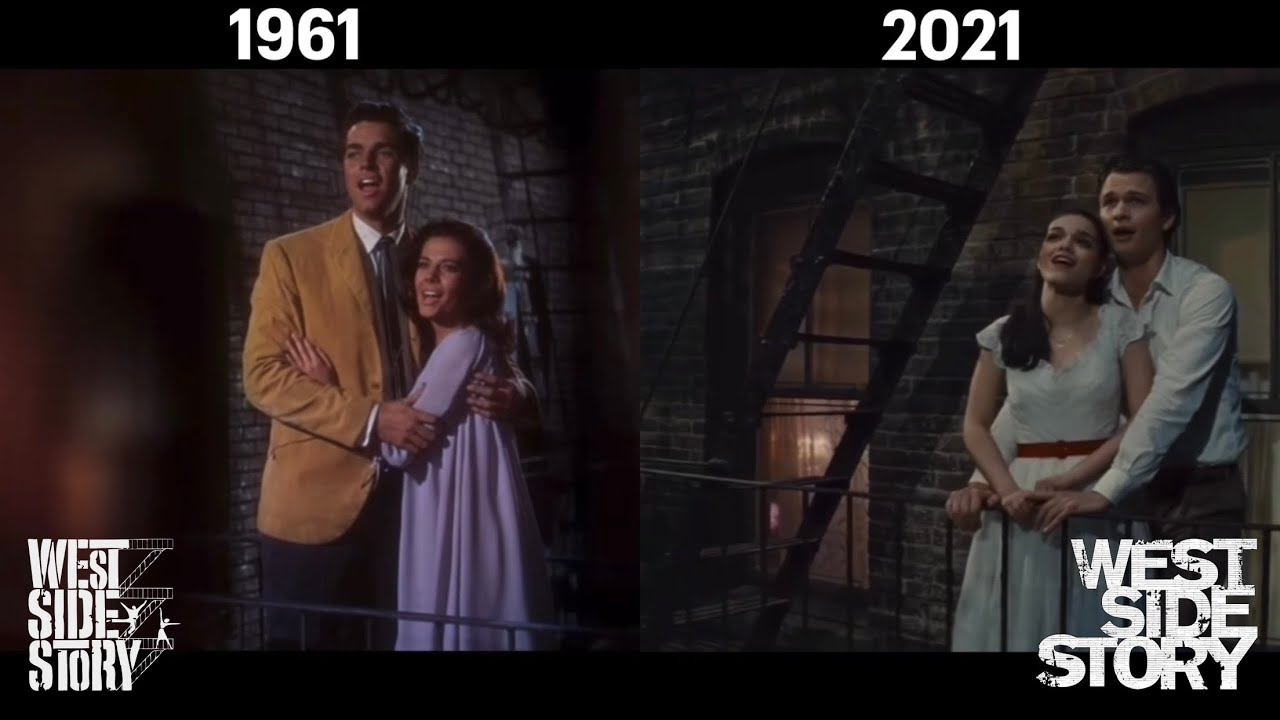
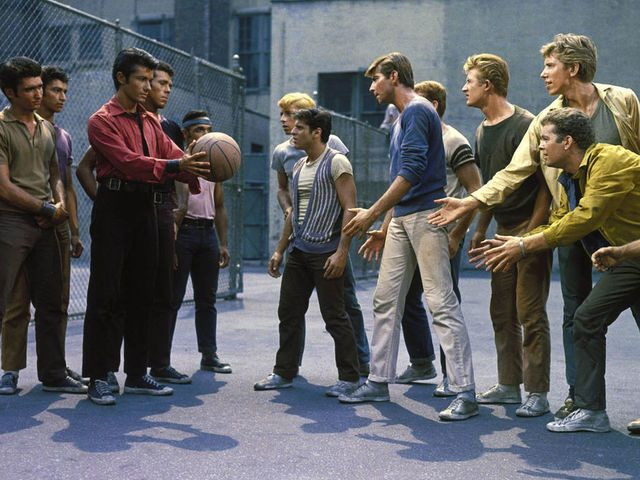
I didn’t expect the strain of NaPoWriMo to result in nearly a month off from blogging, but I’ve had my inspiration focused elsewhere. I’m back on the horse, though, and resurrecting a long-dormant feature: my Version Variations, where I review and compare two different cinematic versions of the same story. Whether it’s the original 1961 film adaptation from Robert Wise and Jerome Robbins or Steven Spielberg’s recent remake, West Side Story is a beloved and socially relevant musical that certainly supports multiple tellings.
As much as I pride myself on loving musicals, it may seem odd that I never reviewed the original West Side Story, which is nowhere to be found on my Top 365 list. The simple truth is that I’ve never considered it one of my favorites. Before a recent rewatch for this comparison, I saw it many years ago and mainly remembered that “America” was the best number and the ending was depressing. Of course, it’s based on Shakespeare’s Romeo and Juliet, so of course it would have a sad ending, but that really is the main drawback for me. Intentionally tragic or not, I just don’t enjoy watching a tale that leaves me unsatisfied the way West Side Story does, though that doesn’t mean I can’t appreciate what comes before said ending.
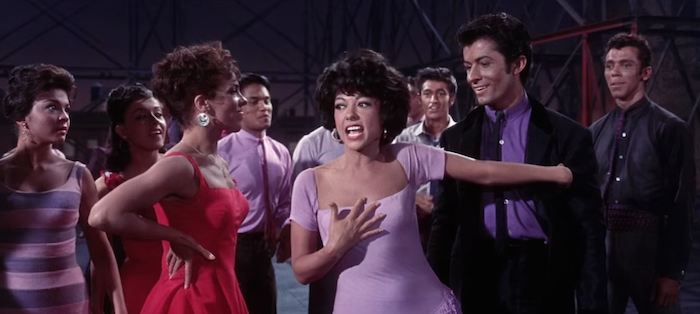
The original West Side Story won the 1961 Academy Award for Best Picture, back when musicals were prime award material. It was a rather innovative move reimagining the family feud of Romeo and Juliet as a gang war between whites and Puerto Ricans in NYC’s Upper West Side, not to mention Jerome Robbins’ balletic choreography performed by these street punks. Despite not actually being Hispanic, Natalie Wood is a radiant Maria, who falls quickly in love with former Jets member Tony (Richard Beymer), much to the consternation of her brother and Sharks leader Bernardo (George Chakiris, who is also not Hispanic and actually played Riff on the London stage).
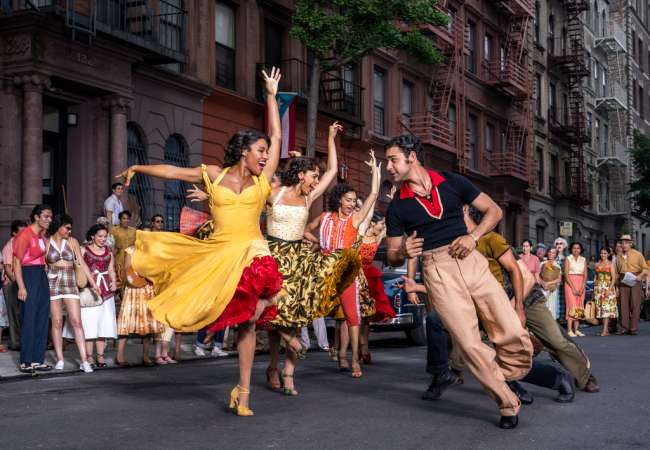
I was surprised that I enjoyed the 1961 film a lot more than I remembered. Right from the opening number where the Jets and Sharks trade intimidations, the dance numbers are iconic with their jazzy, avant-garde sensibility. As I recalled, Rita Moreno’s Oscar-winning turn as Anita and her iconic song “America” is the highlight of the whole show. As someone who aspires to be a lyricist myself, I have immense respect for Stephen Sondheim and his words, whether it be “America”’s spirited debate on the nation’s virtues and vices or the fun but insightful social commentary of “Gee, Officer Krupke.” There’s so much to appreciate about the film’s romance, story, and musical production, yet it sadly feels fruitless by the tragic end, settling as a commentary for hatred matching hatred, which is worthwhile but far from a satisfying watch. Clearly, a sad ending hasn’t dampened West Side Story’s popularity or legacy, but it does keep it from ranking among my personal favorites.
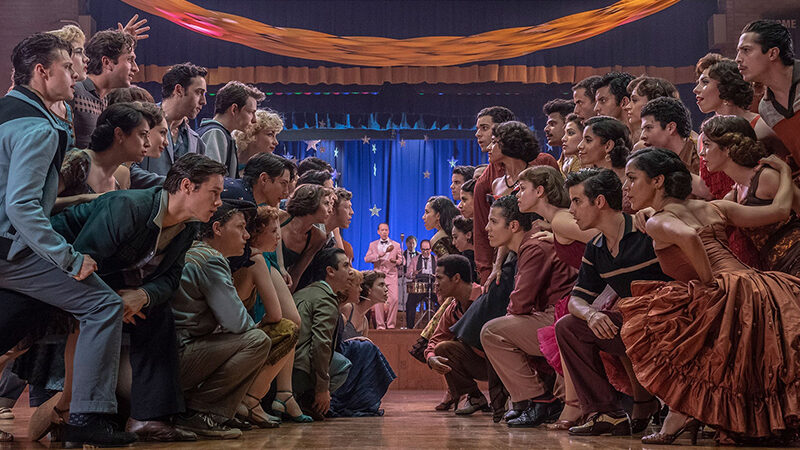
Unfortunately, that goes for Spielberg’s 2021 remake, which is a shame since I consider it even better than the original in most respects. As good as the 1961 film is, it can’t help but feel dated, while last year’s version boasts a shiny makeover replete with graceful cinematography, colorful costumes, and greater cultural authenticity. Rachel Zegler makes an exceptional debut as Maria, while Ansel Elgort, despite some hate and reviews calling him wooden, is quite likable as Tony, and both flex their acting chops at the right moments. Ariana DeBose followed in Moreno’s footsteps, winning a deserved Oscar for her portrayal of Anita, though I don’t know why her castmates were passed over for similar awards nominations, such as Mike Faist as Riff. Among the many small plot changes made by screenwriter Tony Kushner, I especially liked the addition of Rita Moreno as the widow of Doc (the soda shop owner in the original); she not only brings gravitas and a trace of the original film, but her marriage also serves as a sort of example for Tony of what he and Maria could have if they can overcome the conflict around them.
My VC was skeptical of the few plot changes and rearrangements and still prefers the original, but I think Kushner’s additions make the story even better. The discussion of Tony’s jailtime and his guilt over letting his temper go too far adds to his character and makes his eventual dip into violence less out of character, although his subsequent reunion with Maria is marred by the absence of an actual explanation before she forgives him. Likewise, I appreciated that Tony and Maria are actually able to go on a date to a nearby museum, giving their romance a little more room to grow instead of fifteen minutes in a dress shop in the 1961 film. Likewise, the number “Cool” is after the Rumble in the original and feels rather extraneous, but the 2021 version uses it as a confrontation between Tony and Riff as Tony attempts to prevent the Rumble, which seems like he tried harder than just showing up in the middle of it.
My main beef with the creative choices made was Spielberg’s explicit decision to not subtitle the Spanish dialogue, despite including far more Spanish than its predecessor. He stated this was to avoid “giving English the power over the Spanish.” He may have wanted “to respect the language enough not to subtitle it,” but he should have recognized that much of his audience may not know Spanish, which was frustrating for my VC. Some scenes coast on context and didn’t need subtitles, but others have entire conversations in Spanish that withhold full understanding from English-only viewers. Luckily, I know enough Spanish to keep up, and I don’t mind more of it for authenticity, so long as it doesn’t become a language barrier; I just think it was a poor and politically correct choice on Spielberg’s part.
Still, my criticisms of the newer film are minor objections when I look at how well it renewed a sixty-year-old classic. Last year was honestly a dream for lovers of movie musicals (like me), and it breaks my heart that In the Heights, Dear Evan Hansen, and West Side Story were all regarded as flops, since their performance might discourage future musical adaptations. Hopefully, Hollywood will just blame COVID and keep up this musical resurgence. There are still upcoming musical adaptations of The Color Purple, Mean Girls, and a two-part Wicked, so there’s hope.
While West Side Story feels like it deserves a place on my List, the ending is strangely a deal breaker for me. I don’t know why this tragic end is worse than sad endings like Grave of the Fireflies or Doctor Zhivago, but I’m just left unsatisfied with the lesson of “hatred breeds more hatred.” I can still appreciate both versions of this classic story and admire them for their obvious strengths. In deciding which is better, most will likely opt for the original, but I’d personally give the remake the edge. From Shakespeare’s time to 1961 to 2021, this story is clearly timeless and a well-deserved musical touchstone.
Best line from 1961 film: (Doc, to the Jets) “When do you kids stop? You make this world lousy!” (Action) “We didn’t make it, Doc.” Best line from 2021 film: (Riff, in a perfect summation of radicalization) “You know, I wake up to everything I know either getting sold or wrecked or being taken over by people that I don’t like, and they don’t like me, and you know what’s left out of all of that? The Jets.”
Rank for 1961 film: List Runner-Up Rank for 2021 film: List Runner-Up (darn close to List-Worthy, though)

 Rhyme and Reason