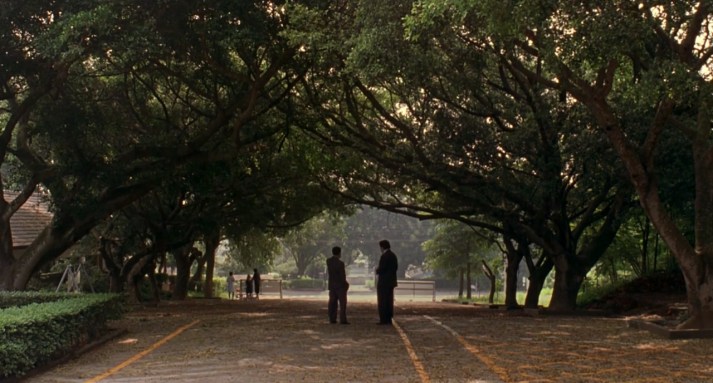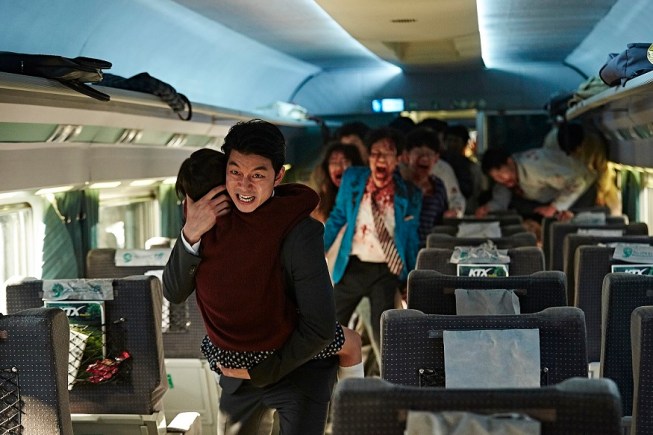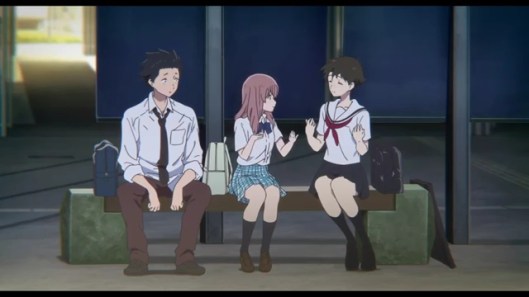
• Home
  • About Me
  • The List
  • THE LIST (2016 Update)
  • THE LIST (2017 Update)
  • THE LIST (2018 Update)
  • THE LIST (2019 Update)
  • THE LIST (2020 Update)
  • THE LIST (2021 Update)
  • THE LIST (2022 Update)
  • Top Twelves and More
  • The End Credits Song Hall of Fame

Rhyme and Reason

~ Poetry Meets Film Reviews

Rhyme and Reason

Tag Archives: Foreign

April and the Extraordinary World (2015)

22 Sunday Apr 2018

Posted by sgliput in Movies, NaPoWriMo, Poetry, Reviews, Writing

≈ 5 Comments

Tags

Action, Animation, Family, Fantasy, Foreign, Mystery, Sci-fi

See the source image

(Today’s NaPoWriMo prompt was to write about how one of a list of impossible things could actually happen, so I thought of a certain highly imaginative film.)


“Pigs can’t fly,”
They said. “Of course,
And cats can’t join
The labor force.”

“Clocks can’t chime
Thirteen,” they vowed,
“Nor rewind time.
That’s not allowed.”

But some will hear
Such sober laws,
And ask with thought,
“Why not?” because

The present world
They recognize
Is changing more
Before their eyes.

If they dislike
Such rules, they dream
Worlds where clocks strike
Thirteen, where steam

Propels machines,
Where pigs can fly,
Where magic beans
Grow greens so high,

Where men can grow
Beyond their flaws.
Imagination
Knows no laws.
___________________

MPAA rating: PG

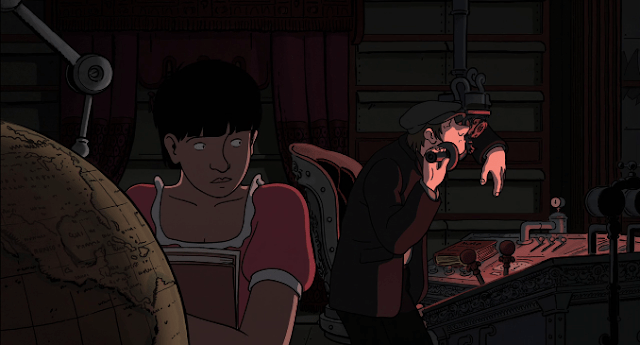
I love animation, and I love discovering hidden gems that remind me why I love animation. April and the Extraordinary World is a delightful case in point. At a time when the U.S. and Japan seem to rule the animation industry, it’s also an important reminder that Europe has no shortage of talent and is just as likely to churn out an instant classic for those willing to search for it.See the source imageA French-Belgian-Canadian co-production, April and the Extraordinary World is one of the most imaginative films I’ve seen in a while, broadly rewriting history to create a unique steampunk setting, one in which science and technology couldn’t develop beyond the Steam Age. Vegetation has been decimated by fuel needs, and the air is thick with industrial smoke, while the scientists that could improve things have vanished without a trace. After a fast-paced introduction in which everything is significant, we meet April Franklin (Marion Cotillard in the French version, Angela Galuppo in the English dub) and her brilliant family of fugitive scientists. Due to events best seen rather than described, April grows up alone with only her talking cat Darwin (a product of SCIENCE!), and her chemist’s quest for an immortality serum soon turns into a whirlwind adventure as the French government and a mysterious group with advanced technology vie for the scientific secrets of her family.

Animation allows its creators to fashion worlds limited only by their imagination, but most cartoons are content to imagine small. It’s usually Pixar or Ghibli that brings the medium to its full potential, but so does April and the Extraordinary World, which often feels like something one of those two powerhouses would have conceived. Where else are you going to see giant cable cars that run from Paris to Berlin or a helicopter plane escaping an underwater prison? The animation has the distinctive look of a European comic (apparently based on the work of French comic artist Jacques Tardi), and although it seems like it would take some getting used to, it actually flows quite nicely, with plenty of clever detail in the settings and backgrounds. It has strong characters to boot, from resourceful April herself to her quick-witted grandfather, though, as a cat lover, my favorite has to be the talking cat Darwin (Tony Hale in the dub, which also includes Paul Giamatti, J.K. Simmons, and Susan Sarandon).See the source imageWhile the imagination is impressive, I could still recognize prior influences for April, most notably 2004’s Steamboy, another steampunk adventure featuring a young protagonist caught in the middle of a scientific power struggle with a similarly explosive ending. Plus, it’s hard to avoid comparisons to Ghibli when there’s an actual house atop mechanized legs á la Howl’s Moving Castle or a polluted atmosphere contrasted with a clean underground biome á la Nausicaä. You might also pick up on traces of Atlas Shrugged and Tomorrowland, though the latter was released the same year as this film. Regardless, April and the Extraordinary World brings all these disparate elements together into a thrilling package that’s better than most of the films I just mentioned.

With a complex and fast-paced storyline and a number of off-screen deaths, it does feel more intelligent and mature than your typical American cartoon (not to mention the detail put into Darwin’s backside), but there’s nothing to make it un-kid-friendly either. By the surprisingly satisfying end, I was just happy to have stumbled upon such an underrated gem, one that no fan of animation should miss.


Rank: List-Worthy


© 2018 S.G. Liput
563 Followers and Counting


The Last Days (2013)

17 Tuesday Apr 2018

Posted by sgliput in Movies, NaPoWriMo, Poetry, Reviews, Writing

≈ 3 Comments

Tags

Disaster, Drama, Foreign, Sci-fi, Thriller

See the source image

(Today’s NaPoWriMo prompt was for a memorable family anecdote. Instead of some specific story, I incorporated a few into a societal critique.)

There’s so much that we used to do
When we would go outside.

The sun would bake us at the beach
And leave us peeling for a week,
And kites would soar far out of reach
Until we practiced our technique.
We’d grumble as we walked the dog
And stumbled through the morning fog.
There’s so much we would take in stride
When we would go outside.

The mountain trails would call our name
And leave us awed and insect-bitten.
At the park, we’d choose our game,
Get stuck in trees we thought we’d fit in,
Find we’re lost beyond belief,
Then find our way with sighed relief.
There’s so much that we dared and tried
When we would go outside.

Interiors are now default,
The “Great Outdoors” a memory,
And from our comfort-ridden vault,
A screen eclipses earth and sea.
Although we know without a doubt,
We’re on the inside looking out.
There’s so much that we are denied
When we won’t go outside.
_____________________

MPAA rating: Unrated (should be R due to profanity in the subtitles, maybe PG-13 without that, though there’s still some brief violence and nudity)

When you see deserted city streets littered with abandoned cars and roaming animals, what explanation comes to mind first? These days, it’s probably a zombie apocalypse or maybe an alien invasion, right? The Last Days suggests a much simpler kind of apocalypse, though, one where people don’t dare go outside, but not because of some creature lurking out there; they simply die if they leave shelter.

See the source image

A Spanish thriller perhaps influenced by the surrealist film The Exterminating Angel, The Last Days (or Los Últimos Días) triggers its apocalypse gradually, with people suddenly contracting severe agoraphobia or fear of open spaces. Walking outside provokes a deadly seizure, so people end up stranded in whatever building they happen to be in at the time. Some viewers may have trouble taking such an epidemic seriously, but it’s revealed gradually through flashbacks and treated with dead seriousness and great realism. In the case of Marc (Quim Gutiérrez), he was at work when it hit and has spent the last three months trapped inside his Barcelona office building, taking turns with his coworkers to dig a tunnel to the subway. When they finally reach this chance to travel to other parts of the city, he sets out in search of his girlfriend Julia (Marta Etura), grudgingly aided by corporate firing specialist Enrique (José Coronado).

The Last Days works well on several levels: as a slow but compelling journey through end-of-the-world encounters, as a grim but endearing buddy movie, and as an outlet for subtle social themes. Of course, the apocalyptic settings are the biggest focus, but it felt unique to have the danger come not from some monster but from other people, some of whom band together to support each other while others compete violently for limited resources. The relationship between Marc and Enrique is an unlikely pairing based on where they started before the disaster, but I liked the way they both relate to each other’s goals and fears, helping each other along the way. The social message I mentioned may come off as obvious in some ways, with people’s fear of leaving their homes taken to an extreme, but there are other understated themes broached, such as the concern of bringing children into a world of doubt and uncertainty.

See the source image

I entertained ranking The Last Days as a List Runner-Up, but the ending really put it over the top. For a film with so much depressing atmosphere and tragedy, it ends on a surprisingly uplifting note that in some ways felt like the kind of ending Passengers should have had if it had tried harder. I was also impressed by the quality acting and production values and particularly by one long tracking shot through a scene of chaos. (Have I mentioned I love those kinds of scenes?) Don’t expect a lot of action, but if you can buy into its uniquely subdued form of disaster, The Last Days has much good to offer.


Rank: List-Worthy


© 2018 S.G. Liput
559 Followers and Counting


Bad Lucky Goat (2017)

12 Thursday Apr 2018

Posted by sgliput in Movies, NaPoWriMo, Poetry, Reviews, Writing

≈ 1 Comment

Tags

Comedy, Drama, Foreign

See the source image

(Today’s NaPoWriMo prompt was for a haibun, a Japanese combination of prose and haiku. Instead of focusing on my unremarkable current environment, as the prompt suggested, I thought I’d try the Caribbean setting of this offbeat film.)


The ocean exhales the tide as if to cover every island,
Only to breathe back in lest its favorite peaks be lost.
Life goes on, trusting
That the sea will catch his breath.
Do islands hold theirs?
____________________

MPAA rating: Not Rated (PG-13 or maybe even PG)

Another selection from last year’s South by Southwest, Bad Lucky Goat might be best described as Adventures in Babysitting, island-style. Except that instead of babysitting kids, it’s a goat’s corpse. Doesn’t that sound like fun? What’s also unusual about this Colombian movie is that there’s plenty of English but you absolutely will need subtitles, because all the characters speak in such a thick Caribbean patois dialect that it’s hard to believe they can understand each other.

The ones doing the goatsitting are brother and sister Corn (Honlenny Huffington) and Rita (Kiara Howard), who are clearly the type of siblings who don’t get along. While on an errand for their parents, Rita accidentally runs over a goat, and they are faced with covering up both the truck repair and the body disposal. I couldn’t help but be reminded of Adventures in Babysitting as they try to gather money to pay off the mechanic and even face the threat of kidnapping. Yet, there’s more realism and exotic charm than outright comedy, and it certainly captures a poor but unique way of life, one where cock fights are still popular and a troupe of shirtless musicians make music with improvised instruments and random objects while chest-deep in a bayou.

See the source image

Occasionally, it got old watching Corn and Rita argue almost the entire time, but their eventual reconciliation felt genuine in spite of their sibling quarrels. Unless you actively love goats, they’re also sympathetic enough to hope they resolve their ever worsening problems, though Rita’s pilfering of a church collection plate lost a lot of my sympathy.

I don’t know that I’d ever seek it out again, but Bad Lucky Goat was a singularly quirky film with a likably meandering plot, some Rastafarian superstition, and a distinctive island flavor. In addition to the upbeat reggae soundtrack (much of it courtesy of Robinson and the Lazy Hill Band), the direction from film school graduate Samir Oliveros is colorful and polished with a few nice tracking shots I wouldn’t expect from a low-budget film funded as a Kickstarter project. It’s a laid-back little movie that’s only 76 minutes long, well worth a look if you’re in the mood for something different from the usual Hollywood fare.


Rank: Honorable Mention


© 2018 S.G. Liput
554 Followers and Counting


Munyurangabo (2007)

05 Thursday Apr 2018

Posted by sgliput in Movies, NaPoWriMo, Poetry, Reviews, Writing

≈ 3 Comments

Tags

Drama, Foreign

See the source image

(Today’s NaPoWriMo prompt was to find a poem in a foreign language, pretend it is about a chosen image, and write our own “translation.” I chose the picture above, a still from this foreign-language film, and tried to base my poem off of the beginning lines of the Xhosa-language poem “The Cattle Killing,” which you can find here. Hopefully, it turned out all right.)


Let it stir up,
Let it stir up
Yellowing wakenings of dreams once real—
Friendships’ longevity will fade
Away,
Disappearing with every word
Unspoken or cankered
By lies, downturned eyes, and fears that won’t fade.
I remember us, we two,
Uncankered, unafraid, arm in arm,
Before our brotherhood’s ebbing
When our fears did rise
And our eyes turned down.
As I see you again in my regrets, I wonder,
Would we still be arm in arm
If I had raised my eyes?
___________________________

MPAA rating: Not Rated (little objectionable, but I guess PG-13)

Munyurangabo has sat for so long in my Netflix queue that I can’t even remember where I first heard of it or what I was expecting from it. One thing is certain, though: this is a critic movie, the kind that critics fawn over while regular viewers say things like “It was all right, I guess,” if they even have the patience to finish it at all. It’s not an off-putting disaster like the last critic movie I saw (The Assassin, seriously one of the most grueling films I’ve sat through), but it’s hardly a film I’d watch again, even with some positive elements toward the end.

See the source image

While it was filmed in Rwanda as the first movie in the Kinyarwanda language, it was actually directed by American Isaac Lee Chung, who employed local Rwandans as amateur actors. In the film, Munyurangabo (Jeff Rutagengwa), or Ngabo for short, is a teenager traveling with his friend Sangwa (Eric Ndorunkundiye) as they journey to kill someone. On the way, they stop over at the house of Sangwa’s parents, whom he had left to move to the capital of Kigali. While revisiting friends and family, the pair find welcome, resentment, and a reminder that the two of them are each from enemy tribes.

As is common in critic movies, the story of Munyurangabo seems extremely padded to fill out its 97-minute runtime. There are long stretches of the two boys just walking together as the camera follows them from behind. The cinematography is mediocre, to me at least, and the shakiness of the camera adds both intended realism and an amateurish quality. The untrained actors themselves do all right, though there are times their lack of experience shows a bit.

See the source image

I had just about decided that this film had very little worthwhile about it when a random stranger (apparently Ugandan poet laureate Edouard Uwayo) suddenly launched into an extended poetry recitation, which might have seemed out of place if it didn’t encapsulate so eloquently the movie’s themes, much better than the rest of the film tries. As an ode to the struggles of the Rwandan nation, it’s a moving one-take scene, practically a psalm, that has little to do with the story and yet everything to do with its larger context. The moral resolution that follows also conveys the value of forgiveness in this war-torn country, even if it doesn’t really address the plight of one of the boys. In short, the last fifteen minutes of Munyurangabo resonate while the rest is dull, so you might be better off just watching the poem scene and leaving the remainder for the critics.

Best line: (part of the poem recitation) “Give the child what he needs, and he can become a king…. The rich one can prepare a gift to give to the poorest one, and how poor is he?”


Rank: Honorable Mention


© 2018 S.G. Liput
550 Followers and Counting


Trollhunter (2010)

03 Tuesday Apr 2018

Posted by sgliput in Movies, NaPoWriMo, Poetry, Reviews, Writing

≈ 3 Comments

Tags

Fantasy, Foreign, Horror, Thriller

See the source image

(Today’s NaPoWriMo prompt was for a list poem based in made-up names, so I invented a few species of troll to populate this bit of creepy nonsense.)


When trees are swimming deep in fog
And stars are dull as old eggnog,
The trolls come out to hunt and roam
Where humans dare not make their home.

The stankenlops and flicklepines
Emerge from their abandoned mines
And greet the trarterstumps and groyts
Embarking on their own exploits.

The nibblelungers beat their chests,
And grindlefangers make conquests,
And no one knows what skleeblers do
Since even trolls think it taboo.

No sheep or goat or man is safe
When hunted by a narberwafe,
And blattercrones’ deep moans are known
To chill a grown man to the bone.

The night is theirs but does not last,
And soon each lerpt and pincherclast
Will shrink back to their darkened pits
To wait till when the night permits.
____________________

MPAA rating: PG-13

The found-footage style gets a bad rap because of its gimmicky nature and its overuse in often poor quality horror movies since The Blair Witch Project. Yet it does have its bright spots, like the mind-bending “documentary” Lunopolis and the 2010 Norwegian import Trollhunter. Of all the monsters to chase with a camera, trolls don’t seem like an obvious choice, but Trollhunter strikes a unique blend of giant monster thrills and occasional dark comedy that gives the big-nosed brutes an outlet other than Middle-Earth.

See the source image

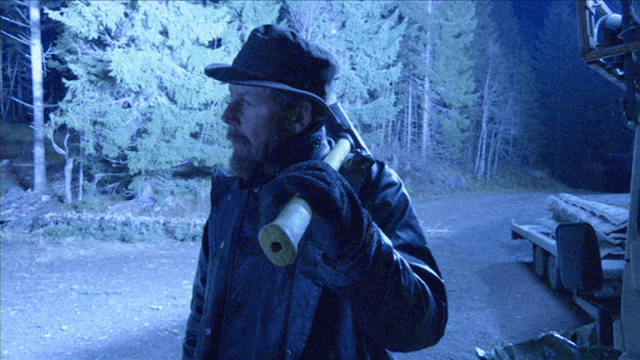
The “filmmakers” in this case are three students from Volda University College, who think they’re investigating a bear poacher only to stumble upon the rough-hewn Hans (Otto Jespersen, who’s apparently a comedian) and his secret government-sanctioned job of hunting trolls. Tired of toiling in obscurity, Hans lets the trio follow him around on his troll control missions and explains the details purposely kept from the public, like the various species of troll, how power lines are really electric fences to keep them in, or the fact that trolls can smell the blood of a Christian man. (In that case, remind me not to move to Norway because I wouldn’t last long.)

The found-footage aspect is fairly standard as far as the shaky camera and often insufficient lighting, though there are some stand-out moments, such as the use of night vision to get a glimpse of the dangerous creatures. The biggest asset is Jespersen as Hans, who goes about his dirty fantasy job with weary competence, seemingly unfazed by the fact he gets paid to flash lights at three-headed giants. The special effects are also quite effective. While the trolls are often clearly CGI, their grotesque appearance somehow makes it look realistic too, and the finale with a mountain-sized troll is an awesome edge-of-your-seat sequence.

See the source image

Trollhunter follows a lot of the usual found-footage tropes, but it does them well, managing to find a balance between absurdity and realism, like how a veterinarian explains the “scientific” reason that trolls turn to stone or explode when exposed to sunlight. Already something of a cult classic, the abundance of Norwegian culture and impressive scenery makes it an entertaining option for exploring Scandinavian cinema, though I doubt the prospect of trolls has helped tourism.

Best line: (the Norwegian Prime Minister, with a slip of the tongue at a press conference) “Few people find power grids attractive. I certainly don’t. Norwegians are pro-electricity, but against power lines. That won’t work in the long run. Norway has trolls, so more power lines are needed. That’s just the way it is.”


Rank: List Runner-Up


© 2018 S.G. Liput
549 Followers and Counting


2018 Blindspot Pick #2: Yi Yi (2000)

20 Tuesday Feb 2018

Posted by sgliput in Blindspot, Movies, Poetry, Reviews, Writing

≈ Leave a comment

Tags

Drama, Foreign, Romance

See the source image

What is life
But fate’s plaything,
Where some men die while others cling
To watch new youths discover truths
They could have learned from listening?

What is life
But joy in wait,
A chance to show the few who hate
That love profound can still surround
If one will only demonstrate?

What is life
But one big slog
Reminding you you’re just a cog
In systems built to cover guilt
And stoke the nearest demagogue?

What is life
But bittersweet
In every breath and each heartbeat,
As memories refuse to freeze,
A former friend in full retreat?

What is life
But grief, concerns,
And happiness all taking turns?
Each person braves their own such waves
Until at last each human learns
What is life.
____________________

MPAA rating: Not Rated (the number of F-words in the subtitles and fleeting nudity might warrant an R, but it’s really more of a PG-13)

Finally, a critically acclaimed “masterpiece” of world cinema that doesn’t require the quotation marks! In my limited forays into international filmmaking, I’ve found that just because critics laud a movie, that doesn’t mean it will actually be any good (for example, The Assassin *shudder*). In addition to celebrating the Chinese New Year with a Chinese movie, I added Yi Yi to my list of Blindspots this year because I was curious to see whether it deserved its renown as “one of the major films of the 21st century” and “the third most acclaimed film of the 21st century among critics,” according to Wikipedia. Thankfully, it does, and even if it’s not destined to be among my personal favorites, I am 100% behind its status as one of the all-time greats.

See the source image

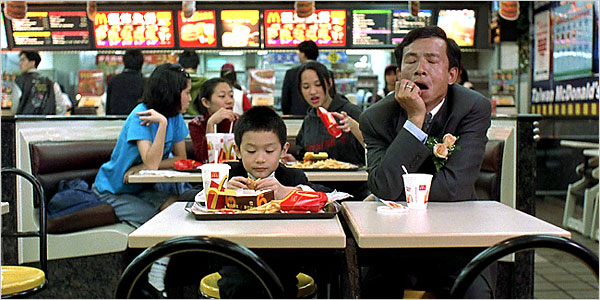
Translated as A One and a Two…, but more literally as One One or One by One, Yi Yi is hard to describe in a way that doesn’t make it sound incredibly dull, since it’s about the everyday life of the Jian family of Taipei and runs for 2 hours and 53 minutes.  Yet, I was surprised at how engaging a three-hour movie about everyday life could be, thanks largely to a deep and insightful script from writer/director Edward Yang and several diverse characters that are relatable on multiple levels.

The Jians include the father NJ (famed director Wu Nien-jen), who must deal with both a high-risk business deal and an unexpected run-in with a former lover; the mother Min-Min (Elaine Jin), who suffers a midlife crisis; their teenage daughter Ting-Ting (Kelly Lee), who enters a love triangle with her best friend; their young son Yang-Yang (Jonathan Chang), who gets bullied at school; and the perpetually unlucky brother-in-law A-Di, who gets caught between two strong-willed women. It’s a film of both broad plot strokes (NJ’s self-doubt and potential affair, A-Di’s money troubles) and more minor vignettes (Yang-Yang’s photography, the birth of A-Di’s son) that nonetheless feel vital in getting to know the large cast.

See the source image

The grandmother of the family is only briefly active at the beginning, spending most of the film in a coma and serving as an ingenious sounding board for her family, who are told to talk to her in hope of her recovery. Those who sit by her bedside bare their inner doubts more fully than anywhere else, such as Ting-Ting’s guilt over whether she’s to blame for her grandmother’s condition, and NJ even compares it to prayer, not knowing for sure how much the listener is hearing.

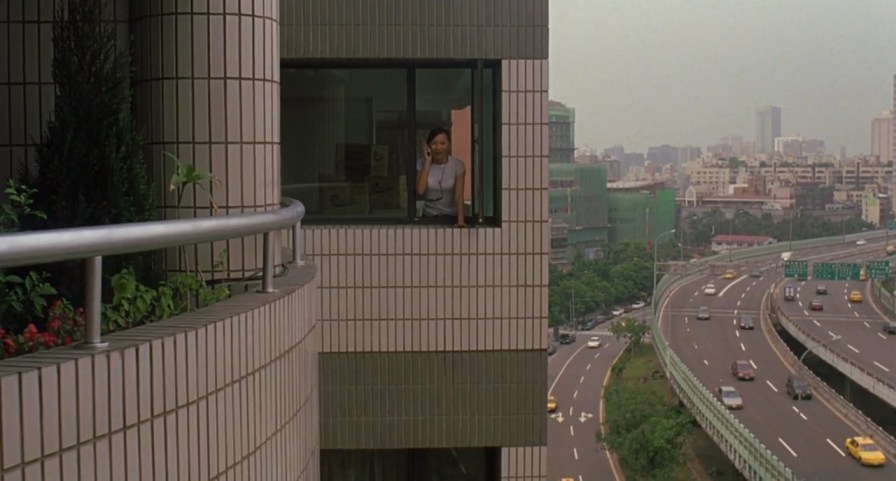
Despite its apparent simplicity, Edward Yang’s direction is also worth praising, not only in its composition but in its economy. Scenes are kept wide with very few close-ups. Long extended takes are the rule, with no scene or edit being wasted, yet the camera is fairly static. It doesn’t follow the characters around but allows events to play out off-screen, often letting us see part of what’s happening through reflections in windows and mirrors, which provides both visual interest and a strong sense of place.

See the source image

Even masterpieces can have room for improvement, though, and Yi Yi is no different. While its mundaneness is part of its charm, the pacing does lag several times, and there are many scenes that could have been trimmed to shave off perhaps a half hour from the runtime. It takes an investment of time and patience to sit through, yet I can say it’s a rewarding experience, even if its full power is only half understood when the credits roll. There are highs and lows, joys and sorrows, laughter and tears, both a marriage and a funeral, history repeating itself and wisdom coming from the mouth of babes. The film is mostly warm and gentle, never judging the characters and their flaws, yet the wisdom of right decisions shines against the foolish passion of mistakes. I don’t know that I’ll make the time to watch it again, but it will still live in my mind as a genuinely great film.

Best line: (Fatty, Ting-Ting’s boyfriend) “Life is a mixture of sad and happy things. Movies are so lifelike; that’s why we love them.”
(Ting Ting) “Then who needs movies? Just stay home and live life!”
(Fatty) “My uncle says ‘we live three times as long since man invented movies.’”
(Ting Ting) “How can that be?”
(Fatty) “It means movies give us twice what we get from daily life. For example, murder—we never killed anyone, but we all know what it’s like to kill. That’s what we get from the movies…. It’s only one example; there are other things. Like he also said, ‘There’s no cloud, no tree that isn’t beautiful, so we should be too.’”


Rank: List Runner-Up


© 2018 S.G. Liput
537 Followers and Counting


Cartoon Comparison: Train to Busan (2016) / Seoul Station (2016)

07 Wednesday Feb 2018

Posted by sgliput in Movies, Poetry, Reviews, Writing

≈ 2 Comments

Tags

Action, Animation, Anime, Cartoon Comparisons, Drama, Foreign, Horror, Thriller

See the source image

See the source image

When certain death surrounds you,
You’d be foolish not to fear,
To run and hide and save yourself
And those few you hold dear.

Yet in the face of jeopardy,
What will you sacrifice?
Your conscience and humanity?
For those too have a price.

For some, to care for more than self,
The risk may be too high,
But ask yourself how proud you’ll be
Both if and when you die.
________________________

MPAA rating for Train to Busan: Not Rated (I guess R but it’s not as bad as some)
MPAA rating for Seoul Station: Not Rated (should be R)

If someone had told me last year that the first movie I’d love in 2018 was a South Korean zombie flick, I’d never have believed it. I only half-believed all the positive buzz around Train to Busan because hey, it’s a zombie movie, and I don’t watch zombie movies. I’ve never seen Dawn of the Dead or The Walking Dead and have only really liked a precious few of that genre (World War Z, Warm Bodies). The living dead concept is intriguing, but usually it seems like an excuse for excessive gore and end-of-the-world futility. But for some reason I checked out Train to Busan, which I can now say is my favorite of the genre and honestly one of my favorite horror films period, mainly because it goes beyond its horror limitations to deliver exceptional thrills and emotional stakes worth caring about too. Since I loved Train to Busan then, I had to check out its animated prequel, if only for comparison’s sake, a prequel that reminded me exactly why I don’t typically enjoy zombie movies.

See the source image

First, let’s focus on the good one. Train to Busan seems like such a simple idea: zombies on a train. It could easily have been the concept of a B-grade cheesefest, but the filmmakers went above and beyond to make it gripping. A big part of that is giving us worthwhile characters, particularly Seok-woo (Gong Yoo), a disengaged father who decides to accompany his young daughter Soo-an (Kim Su-an) as she returns to his ex-wife in Busan. There are various other passengers that quickly stand out as “survivor characters”: a man and his pregnant wife, a traumatized tramp, two high school students, and a self-serving businessman, among others. Things seem to start normally as the train sets out, but an abundance of warning signs builds the tension as a zombie outbreak engulfs the nation and the train itself. From there, it’s an all-out flight of survival with a few much-needed moments to catch one’s breath (even a disarming chuckle or two), but the suspense is ever-present. I don’t think I’ve been this tense during a movie since Dunkirk.

What’s impressive about Train to Busan is that it delivers the scares and shocks alongside an insightful character arc without sacrificing either. Seok-woo starts out as an apparent coward, fearfully closing a door in the face of someone fleeing the zombie onslaught, yet his self-first philosophy is called out in the criticisms of his daughter, while also playing out to an extreme in the uncaring actions of other passengers. The contrast between these mindsets imparts to the action some deeper themes behind it. There are sacrifices aplenty, some meaningful, some pointless, but the film seems to affirm the importance of helping others in the face of desperation rather than just oneself. To that end, the conclusion is surprisingly emotional as well, right up to the film’s anxious final moments.See the source imageSince I’ve said I don’t like the gory side of zombie movies, I should address that part of it. There is blood, but Train to Busan is still greatly restrained compared with a lot of others out there. Heck, some of the commercials for Walking Dead are worse than anything in Train to Busan. A big part of that is the absence of knives and guns, which draw maximum blood while also dehumanizing the still human-like zombies. (Sorry, but all the head-shots and such bother me.) Here, baseball bats are as bad as it gets, and most of the blood comes from the initial outbreak of zombies biting people’s necks. The fact that the victims quickly “turn” also does away with the whole flesh-eating element while also making the ever-growing horde even scarier. So I was thankful that the film didn’t rely on violence for its scares. In fact, after the initial outbreak, it’s really more of a fast-paced thriller than a horror. The zombies are the running type also seen in World War Z, and there are several moments that had me going “oh my gosh” as things devolve from bad to worse, often making great use of the visual effects.

How then does Seoul Station, from the same director Yeon Sang-ho, compare? It’s not exactly anime since it’s Korean rather than Japanese, but it has a similar visual style. I think it purports to be a prequel showing the origin of the zombie apocalypse, but it doesn’t really give any further details about the actual cause. A wounded homeless man is apparently patient zero, and while he slowly “turns,” we meet a runaway girl named Hye-sun who has a falling out with her cash-strapped and selfish boyfriend. The boyfriend is soon confronted by her father, and the two of them go in search for Hye-sun right as the city starts spiraling into zombie-infested chaos.See the source imageSeoul Station has some merit to it, mainly in the strictly horror department. There are some moments of genuine terror, particularly a white-knuckle encounter with a crazy woman, so if you enjoy zombie movies for the situational tension alone, you might like it. I, however, found plenty to dislike. For one, the animation, while mostly good, has the stilted look that 3-D-ish anime hasn’t gotten past, such as the way the characters walk. In addition, the gore and foul language (subtitled) are more pronounced here than in Train to Busan, and the characters are dumber compared to the rather clever survival techniques in its live-action counterpart. For one thing, everyone seems very slow to grasp the idea of a zombie outbreak, as if they’ve never heard of a zombie before, whereas Train to Busan showed that “zombies” were exactly where people’s minds went.

Still, I could look past most of that if the ending were worthwhile, but this is one case where the ending completely ruined it for me. The film pulls out a dark twist that pounds in the whole end-of-the-world futility I mentioned earlier I didn’t like. The characters are far less sympathetic, and the end only amplifies that. I didn’t hate the movie as I was watching it, but by the end, I did. Seoul Station tries harder to focus on its themes of class warfare, which were much more subtle in Train to Busan, yet it comes off as a cheaper offshoot of a much better original.See the source imageI’ve said before that I have very particular tastes when it comes to horror movies, but seeing two ostensibly similar zombie films side by side made me consider why exactly I loved one and hated the other. I can say I prefer genuine creepiness and atmosphere over gore, but in this case, I think it comes down to this (spoiler warning): I don’t like stories whose main purpose is killing off its characters. If there’s no survivor by the end, then everything that came before was pointless. If I actually care about the characters who live and die, then the end product becomes even better. That’s why Train to Busan exceeded my expectations. Clearly, I’m not about to become a fan of zombie movies in general, but I’m glad to have found one member of the genre that truly impressed me.

Best line (from Train to Busan): (Soo-an, pricking her father’s conscience) “Dad, you only care about yourself. That’s why mommy left.”


Rank for Train to Busan : List-Worthy
Rank for Seoul Station: Dishonorable Mention


© 2018 S.G. Liput
536 Followers and Counting


The Diving Bell and the Butterfly (2007)

26 Sunday Nov 2017

Posted by sgliput in Movies, Poetry, Reviews, Writing

≈ 2 Comments

Tags

Biopic, Drama, Foreign

See the source image

To watch the world outside a shell,
One window in a tiny cell—
Is this mere pain or is this hell?

‘Tis hell if I but make it so.
While others pity, I must know
That self alone brings spirits low.

From out my shell, my soul must fly
Through fancy, passion, mind, and eye
Before my body dares to die.

I’d view the lives of others crossed
By tragedy and tempest-tossed,
And value things they have not lost.

The world is cruel, yet majesty
Is found in places hard to see,
And both extremes have staggered me.
__________________

MPAA rating: PG-13 (for two brief scenes with topless women)

There are some movies that remind you how blessed you are and how grateful you ought to be. Films like Cast Away and Room show us people deprived of life as usual, and things once taken for granted gain far greater value when they are reclaimed. The Diving Bell and the Butterfly may lack such recovery of normal life, yet the story of Jean-Dominique Bauby made me value everything he lost so suddenly.

See the source image

Formerly the editor of Elle magazine, Bauby (Mathieu Amalric) suffered a sudden stroke in 1995, awakening after a twenty-day coma to discover that his entire body was paralyzed except for his left eye, a rare condition called “locked-in syndrome.” The film begins as he wakes up, and the camera’s first-person view lets the audience hear Bauby’s thoughts and see what he sees. It reminded me a lot of the season 7 M*A*S*H episode “Point of View,” where the audience sees the typical M*A*S*H operations through the eyes of a wounded soldier. As in that episode, doctors and visitors speak directly to the camera, delivering bad news and hollow encouragement alike. Although flashbacks and third-person views are more prevalent later on, a good chunk of the film is furnished through Bauby’s perspective, which is uncannily effective, such as when the screen blinks to portray Bauby’s only means of communication or when his right eyelid is unnervingly sewn shut to prevent infection.

I can envision a present-day version of this story turning into a pro-euthanasia tale bemoaning his pitiful quality of life, but The Diving Bell and the Butterfly is thankfully instead a reminder of the humanity hidden behind Bauby’s withered form. Amalric does a fine job, both in the pre-stroke sequences and his rigid paralysis afterward, managing to convey emotion with just one eye, even more minimalist acting than Eddie Redmayne in The Theory of Everything. Hearing his thoughts reminds us that there is still an active mind behind the expressionless face, one able to think, compose, regret, gripe, and even laugh at himself now and then. At one point, Bauby does wish for death, only to have his nurse scold him for even considering it, urging him to remember everyone who still cares about him. Plus, despite being called a vegetable, he shows the initiative of writing the memoir on which the film is based, dictated a letter at a time by blinking with a special alphabet method and a very patient nurse. Although he points out the ineffectiveness of prayers offered for him by his children and various religious groups, even Bauby ends up acknowledging the reality of miracles.

See the source image

The other actors playing friends, loved ones, and nurses are also phenomenal, from Emmanuelle Seigner as the still-devoted mother of Bauby’s children (whom he regrets not marrying) to Anne Consigny and Marie-Josée Croze as his faithful nurses/therapists. Moving comparisons are made between Bauby’s situation and that of a friend who was imprisoned by terrorists, as well as of his apartment-bound father (Max von Sydow), and an indirect phone call between Bauby and his father is particularly emotional.

I’m typically not a fan of films like this with artsy editing and high-minded metaphors, but it doesn’t come off as pretentious here. There’s plenty of symbolic imagery, like collapsing ice-shelves or the diving suit and butterfly of the title, which seem to represent Bauby’s confinement and the freedom of his imagination, respectively. The Oscar-nominated cinematography is luminous and frequently out of focus when seen through Bauby’s vision, and the first-person views really exhibit the talents of the cast. Bauby’s dream sequences and flashbacks serve more of a purpose than escaping his affliction; they manifest the simple things he once took for granted: a sumptuous meal, a passionate kiss, a mere drive through the countryside, things we forget to value until they’re gone.

See the source image

Deservingly nominated for four Oscars, The Diving Bell and the Butterfly is a paean to life and empathy, to the selflessness of nurses and caretakers, to the bright side of a wretched situation. Despite the sadness of it, the film’s end fosters a unique sense of inspiration, reinforced by the rewound images played over the credits to the song “Ramshackle Day Parade” (worthy of my End Credits Song Hall of Fame). One wonders why such a terrible thing would happen to someone, but the way Bauby’s story ends, I can’t help but wonder if it was simply to supply the world with a much-needed tale of encouragement amid adversity.

Best line: (Roussin) “Hold fast to the human inside of you, and you’ll survive.”


Rank: List-Worthy


© 2017 S.G. Liput
517 Followers and Counting


The Assassin (2015)

29 Friday Sep 2017

Posted by sgliput in Movies, Poetry, Reviews, Writing

≈ Leave a comment

Tags

Drama, Foreign

Image result for the assassin chinese film

They say the world was slow before the Information Age,
When everything was hastened into busyness and rage.
Before the start of coal and steel and trains to move them round,
I guess that life was slower still and much less schedule-bound.

So think of how much slower life was centuries ago:
Compared with now, it might seem that the world was in slo-mo.
But once the novelty had worn, you’d want your time restored,
‘Cause when the world was slower, it was also very bored.
____________________

MPAA rating: Not Rated (should be PG-13)

I can’t remember the last movie I saw that was such a complete and excruciating waste of time. I had heard The Assassin was a slow but beautifully shot Chinese epic, but my gosh, I had no inkling as to how slow it would be. As I once described 2001: A Space Odyssey, this is the definition of artsy-fartsy: artsy because yes, there is cinematic skill on display, and fartsy because it stinks nonetheless.

The Assassin’s plot, such as it is, is about a woman named Yinniang trained from a young age as an assassin, whose mentor sends her to prove her ruthlessness by killing Yinniang’s own cousin, the military governor of an autonomous province. Even if I wanted to recount the rest of the story, I don’t know that I could because it was so inscrutable. There’s talk of backstabbing loyalists to the Emperor and someone’s wife getting pregnant and an assassination attempt other than Yinniang’s, and honestly I couldn’t keep track of the convoluted mess being barely explained in front of me. One bald guy seems to be pulling strings from the shadows but is never identified; even after some soldiers barged in and shot him with arrows, I still didn’t know who he was supposed to be.

Image result for the assassin chinese film

On top of this narrative opacity, all the plot elements I mentioned belie the fact that very little actually happens. Seriously, this 105-minute film has less dialogue than a typical half-hour TV show, and it seems to drag out its story by padding every sentence with interminably long shots of characters staring gloomily ahead, with not enough context or effort to lend their expressions any meaningful emotion. This might be forgivable if the action scenes could make up for it, since this is supposed to be a wuxia film, but Crouching Tiger, Hidden Dragon this is not. The martial arts are oddly placed and very brief, often with jarringly abrupt endings. At one point, Yinniang walks through the woods, trades sword slashes with a briefly glimpsed masked woman, manages to cut off a piece of the mask, and they both walk away with no words spoken. Did the filmmakers not care how many questions scenes like that would bring up? Obviously not, since they never try to explain it.

I just want to point out that I am a very patient person. I can spend hours working on a jigsaw puzzle. I’ve watched uneventful potential snoozefests like Into Great Silence, Dim Sum: A Little Bit of Heart, The Wall, and Metropolis and typically tried to recognize the best in them. I greatly enjoyed and admired The Red Turtle, and that didn’t have any dialogue at all! But The Assassin was a complete and utter waste of my time, a film I only finished because of my personal policy to finish any movie I start, unless it’s outright offensive, which this wasn’t.

Image result for the assassin chinese film

After preserving some hope for the first half hour, I spent the remainder just wishing it would end already. I wanted every scene toward the end to be the last because I knew it would try for some enigmatic conclusion I wouldn’t understand anyway so why did it matter where it stopped? If I had to pick something, I suppose I appreciated the cinematography, such as some of the landscapes and a carefully composed scene shot through a transparent curtain. But trust me when I say this film is not worth your time. I’ve included the trailer below because every scene of worth is in there; just watch that instead, disregard the critical praise, and do something more interesting with your 105 minutes, like maybe watching paint dry.

Best line: There were none!


Rank: (Very) Dishonorable Mention


© 2017 S.G. Liput
511 Followers and Counting


Cartoon Comparison / 2017 Blindspot Pick #9: Hear Me (2009) / A Silent Voice (2016)

15 Friday Sep 2017

Posted by sgliput in Blindspot, Movies, Poetry, Reviews, Writing

≈ Leave a comment

Tags

Animation, Anime, Cartoon Comparisons, Comedy, Drama, Foreign, Romance

Image result for hear me film

Image result for a silent voice film

Whispered rumors, mocking humor,
Overhearing words of spite,
Talk of blame and guilt and shame,
Made all the worse because they’re right—
Oh, to shut such voices out,
Unkindness barely out of sight.

Those with ears, now let them hear,
But if they can’t, do words turn rude?
Is absence of respect and love
The norm when barriers are viewed?
Perhaps it’s best the deaf don’t hear
Unkindness at such amplitude.

Those who fear the scorn they hear
May hide in deafness self-imposed,
Just as those who never chose
Their handicap can feel exposed.
Yet all who rise must recognize
Life’s eyes and ears should not be closed.
______________________

MPAA rating for Hear Me: Not Rated (should be PG)
MPAA rating for A Silent Voice: Not Rated (could be PG but probably PG-13)

In honor of  September being Deaf Awareness Month, I thought it appropriate to combine my monthly Blindspot Hear Me as a Cartoon Comparison with the anime film A Silent Voice, both of which are about a relationship between a boy and a young deaf girl. I thought to combine their reviews before I’d even seen them, but now that I have, the truth is that they’ve got far more differences than similarities. Hear Me is a Taiwanese romantic comedy with the unique distinction of being mostly in sign language, while A Silent Voice is a poignant tale of a bully’s emotional journey toward forgiveness, with romance staying on the back burner. (I thought they were both Japanese until I saw Hear Me was from Taiwan.) Yet both do address issues of deaf people and how others relate to them.

I’ll start with my Blindspot pick Hear Me, which intrigued me when I heard it was mostly in sign language. That probably won’t please anyone who doesn’t enjoy subtitles, but it makes for some very unique conversations, some of them quite dramatic yet communicated with only hands and facial expression rather than voice. Eddie Peng (who just appeared this year in The Great Wall) plays Tian Kuo, a delivery boy for his parents’ restaurant, who meets a girl named Yang Yang (Ivy Chen) at the public pool while her sister trains for the Deaflympics. Since he knows sign language, he freely converses with her over time, and their relationship goes through some familiar highs and lows, with deafness as a potential complication for their future together.

Image result for hear me film

Let me just say that Hear Me has abundant charm, thanks largely to Eddie Peng, whose goofy, lovestruck antics and faces shine through even without words. There is dialogue too, in Chinese, mainly for the humorous exchanges between Tian Kuo and his bossy mother, but sign language and relative quiet are the rule rather than the exception here. The romance is also refreshingly wholesome, with the most suggestive moment just Tian Kuo seeing Yang Yang’s feet while she’s changing, which gives him a nosebleed. (It’s funny, I’ve seen that happen in anime, but this suggests that it’s something that actually happens to Asian people when they get excited.)

Hear Me actually focuses on the dual relationships of Tian Kuo and Yang Yang, as well as Yang Yang and her deaf sister Xiao Peng (Yanxi Chen). After Tian Kuo offends his crush by disrespecting her meager income, his efforts to win her back may bring to mind John Cusack’s desperation in Say Anything, just instead of holding a boom box outside of her window, he dresses as a tree and gives her a coin bank shaped like a bird. Really similar, see? The humor comes from Tian Kuo’s side, while Yang Yang and her sister face more dramatic issues, like craving independence despite being deaf. Yang Yang earns all the money, while her sister focuses on competing as a swimmer, but when her performance suffers, Xiao Peng comes to regret and resent her own dependence on her sister, climaxing in an all-hand heart-to-heart between them.

Image result for hear me film

Hear Me makes the most of its unique sign-language dialogue, which serves the story rather than being just a gimmick. I liked how a misunderstanding was cleverly prolonged, as well as the few reminders of Yang Yang’s Christianity, since her absent father is said to be a missionary to Africa. It may not be a laugh riot, but there were definitely funny moments, especially a hilariously awkward scene where Tian Kuo’s parents sing his praises to his girlfriend. The central relationship also featured several of those heartwarmingly romantic moments that made Hear Me a pleasure to watch.

Now for A Silent Voice, or as its Japanese title Koe no Katachi translates, The Shape of Voice. While it received many accolades, A Silent Voice suffered somewhat from bad timing, being released just a month after last year’s mega-hit Your Name in Japan. (Incidentally, both were nominated for Japan’s Best Animated Feature Academy Award, but neither one won. That honor went to In This Corner of the World, which I’ll get to at some point.)  Whereas Hear Me was a romantic comedy with some moments of drama, A Silent Voice is much more dramatic in its young-adult setting and is bound to make sensitive viewers reach for the tissues more than once.

Image result for a silent voice film

The film starts with the carefree elementary school life of Shōya Ishida, who is dumbfounded at the arrival of a new student, a girl named Shoko Nishimiya who reveals through writing in her notebook that she cannot hear. While the other students are civil enough at first, the situation quickly devolves into bullying, led by Ishida. These scenes remind you how cruel kids can be and easily make your heart break for Nishimiya, who endures it all with quiet patience, still thinking the best of her classmates. When she finally is forced to change schools, the blame for her departure quickly falls on Ishida, and he takes her place as the class scapegoat and bully target. Fast forward several years to Ishida in high school, and his marginalization has only deepened, even making him consider suicide, until he tries to seek out Nishimiya and make amends.

A Silent Voice makes the uncommon choice of first portraying its main character as a bully, the kind whose maliciousness seems normal to them but traumatic to their target. Yet the same person we dislike from the outset grows into a source of sympathy as he tries desperately to put that childish cruelty behind him. I loved the creative choice of placing X’s over the faces of his fellow classmates, marking them as people he has no chance or desire of knowing, as literal “unfriends.” These X’s become a brilliant way of visualizing Ishida’s mental state and his chances of relationships with others; when he lets his guard down, actually noticing and treating someone else as a person or vice versa, the X falls from their face and allows him a chance at a friend.

Image result for a silent voice film ending

The relationship between Ishida and Nishimiya is touching on multiple levels. They’re both broken people with agonizingly low self-esteems, Ishida because he considers his past offenses unforgivable, Nishimiya because she blames herself for any trouble around her and believes she somehow deserves it, always apologizing for everything. It’s amazing how easily she seems to accept Ishida after what he did, but it’s the mere effort of communicating with her that she values most. Also perceptive are their interactions with the friends they make and how they respond to the bullying: one girl still sees Nishimiya as insincere and worthy of her harassment, while another views herself as completely innocent, even though she watched Nishimiya’s persecution and did nothing. These bullying themes and Ishida himself meant much to me because I too have been on both sides; I was picked on by an older classmate for a time and I did the same myself, something I still regret despite it happening only once. Ishida doesn’t approach Nishimiya with any set goals of how to make it up to her, but he tries to build the relationships he once helped destroy, something any repentant bully would wish they could do as well.

Kyoto Animation has a reputation for excellence, from the popular Haruhi Suzumiya franchise to the highly anticipated Violet Evergarden, and A Silent Voice is proof of the studio’s talents. The animation is painterly with its luminous, pastel palette, and, even if some of the artsy editing makes it unclear at first what just happened in the nonlinear storyline, it looks gorgeous throughout. The abundant use of symbolism and some ambiguous scenes (like the very first and last shots) also make it a film worth analyzing and hearing others analyze. I still consider Your Name the best anime of last year, but A Silent Voice is quite simply a beautiful film that wears its emotions on its sleeve. Anytime it threatens to dip into teen melodrama, it’s revived by a sweet moment or heart-tugging conversation. I laughed out loud twice, I actually cried “No!” at one harrowing part, and the final scene gives me tearful chills every time I see it.

Image result for a silent voice fireworks scene

Going into these two movies, I really expected them both to be List Runners-Up, as so many movies I’ve seen recently have been. On its own, Hear Me probably would be a Runner-Up, but A Silent Voice earns its way onto my List and gives me an excuse to add Hear Me as a tie. Both approach their deaf subjects with great sensitivity, stressing that they are relatable people in search of the same relationships we all crave. Hear Me had far more sign language than A Silent Voice, which didn’t really bother to translate with subtitles when it was used, but both are excellent features for Deaf Awareness Month and are well worth seeing any other month, for that matter.

Best line from Hear Me: (Tian Kuo’s father, of his mother) “She’s got a knife for a mouth and tofu for a heart.”

Best line from A Silent Voice: (Kawai, a sort-of friend) “Everyone suffers in their life. But it’s like that for everyone, right? So you have to love the bad parts of yourself too and move forward.”


Rank for both: List-Worthy (tie)


© 2017 S.G. Liput
507 Followers and Counting
 

← Older posts
Newer posts →

Recent Posts

  • We Didn’t Start 2025 (Recap)
  • NaPoWriMo 2025 Recap (Finally)
  • Sonic the Hedgehog 3 (2024)
  • It Happened One Night (1934)
  • Spellbound (2024)

Recent Comments

associatesofshellymann's avatarassociatesofshellyma… on My Top Twelve La La La So…
Kit's avatarKit Nichols on Bonnie and Clyde (1967)
lifelessons's avatarlifelessons on Look Back (2024)
Carol Jackson's avatarCarol Jackson on The Thief of Bagdad (1940…
Stephen's avatarStephen on Love Story (1970)

Archives

  • January 2026
  • December 2025
  • May 2025
  • April 2025
  • March 2025
  • February 2025
  • January 2025
  • December 2024
  • May 2024
  • April 2024
  • March 2024
  • February 2024
  • January 2024
  • December 2023
  • November 2023
  • October 2023
  • September 2023
  • July 2023
  • June 2023
  • May 2023
  • April 2023
  • March 2023
  • February 2023
  • January 2023
  • December 2022
  • November 2022
  • October 2022
  • September 2022
  • August 2022
  • July 2022
  • June 2022
  • May 2022
  • April 2022
  • March 2022
  • February 2022
  • January 2022
  • December 2021
  • November 2021
  • October 2021
  • September 2021
  • August 2021
  • July 2021
  • June 2021
  • May 2021
  • April 2021
  • March 2021
  • February 2021
  • January 2021
  • December 2020
  • November 2020
  • October 2020
  • September 2020
  • August 2020
  • July 2020
  • June 2020
  • May 2020
  • April 2020
  • March 2020
  • February 2020
  • January 2020
  • December 2019
  • November 2019
  • October 2019
  • September 2019
  • August 2019
  • July 2019
  • June 2019
  • May 2019
  • April 2019
  • March 2019
  • February 2019
  • January 2019
  • December 2018
  • November 2018
  • October 2018
  • September 2018
  • August 2018
  • July 2018
  • June 2018
  • May 2018
  • April 2018
  • March 2018
  • February 2018
  • January 2018
  • December 2017
  • November 2017
  • October 2017
  • September 2017
  • August 2017
  • July 2017
  • June 2017
  • May 2017
  • April 2017
  • March 2017
  • February 2017
  • January 2017
  • December 2016
  • November 2016
  • October 2016
  • September 2016
  • August 2016
  • July 2016
  • June 2016
  • May 2016
  • April 2016
  • March 2016
  • February 2016
  • January 2016
  • December 2015
  • November 2015
  • October 2015
  • September 2015
  • August 2015
  • July 2015
  • June 2015
  • May 2015
  • April 2015
  • March 2015
  • February 2015
  • January 2015
  • December 2014
  • November 2014
  • October 2014
  • September 2014
  • August 2014
  • July 2014
  • June 2014
  • May 2014
  • April 2014
  • March 2014
  • February 2014
  • January 2014
  • December 2013

Categories

  • Blindspot
  • Blogathon
  • Christian
  • Movies
  • Music
  • NaPoWriMo
  • Poetry
  • Reviews
  • TV
  • Writing

Meta

  • Create account
  • Log in
  • Entries feed
  • Comments feed
  • WordPress.com

Recent Posts

  • We Didn’t Start 2025 (Recap)
  • NaPoWriMo 2025 Recap (Finally)
  • Sonic the Hedgehog 3 (2024)
  • It Happened One Night (1934)
  • Spellbound (2024)

Recent Comments

associatesofshellymann's avatarassociatesofshellyma… on My Top Twelve La La La So…
Kit's avatarKit Nichols on Bonnie and Clyde (1967)
lifelessons's avatarlifelessons on Look Back (2024)
Carol Jackson's avatarCarol Jackson on The Thief of Bagdad (1940…
Stephen's avatarStephen on Love Story (1970)

Archives

  • January 2026
  • December 2025
  • May 2025
  • April 2025
  • March 2025
  • February 2025
  • January 2025
  • December 2024
  • May 2024
  • April 2024
  • March 2024
  • February 2024
  • January 2024
  • December 2023
  • November 2023
  • October 2023
  • September 2023
  • July 2023
  • June 2023
  • May 2023
  • April 2023
  • March 2023
  • February 2023
  • January 2023
  • December 2022
  • November 2022
  • October 2022
  • September 2022
  • August 2022
  • July 2022
  • June 2022
  • May 2022
  • April 2022
  • March 2022
  • February 2022
  • January 2022
  • December 2021
  • November 2021
  • October 2021
  • September 2021
  • August 2021
  • July 2021
  • June 2021
  • May 2021
  • April 2021
  • March 2021
  • February 2021
  • January 2021
  • December 2020
  • November 2020
  • October 2020
  • September 2020
  • August 2020
  • July 2020
  • June 2020
  • May 2020
  • April 2020
  • March 2020
  • February 2020
  • January 2020
  • December 2019
  • November 2019
  • October 2019
  • September 2019
  • August 2019
  • July 2019
  • June 2019
  • May 2019
  • April 2019
  • March 2019
  • February 2019
  • January 2019
  • December 2018
  • November 2018
  • October 2018
  • September 2018
  • August 2018
  • July 2018
  • June 2018
  • May 2018
  • April 2018
  • March 2018
  • February 2018
  • January 2018
  • December 2017
  • November 2017
  • October 2017
  • September 2017
  • August 2017
  • July 2017
  • June 2017
  • May 2017
  • April 2017
  • March 2017
  • February 2017
  • January 2017
  • December 2016
  • November 2016
  • October 2016
  • September 2016
  • August 2016
  • July 2016
  • June 2016
  • May 2016
  • April 2016
  • March 2016
  • February 2016
  • January 2016
  • December 2015
  • November 2015
  • October 2015
  • September 2015
  • August 2015
  • July 2015
  • June 2015
  • May 2015
  • April 2015
  • March 2015
  • February 2015
  • January 2015
  • December 2014
  • November 2014
  • October 2014
  • September 2014
  • August 2014
  • July 2014
  • June 2014
  • May 2014
  • April 2014
  • March 2014
  • February 2014
  • January 2014
  • December 2013

Categories

  • Blindspot
  • Blogathon
  • Christian
  • Movies
  • Music
  • NaPoWriMo
  • Poetry
  • Reviews
  • TV
  • Writing

Meta

  • Create account
  • Log in
  • Entries feed
  • Comments feed
  • WordPress.com

Blog at WordPress.com.

Is this your new site? Log in to activate admin features and dismiss this message
Log In
  • Subscribe Subscribed
    • Rhyme and Reason
    • Join 814 other subscribers
    • Already have a WordPress.com account? Log in now.
    • Rhyme and Reason
    • Subscribe Subscribed
    • Sign up
    • Log in
    • Report this content
    • View site in Reader
    • Manage subscriptions
    • Collapse this bar