• Home
  • About Me
  • The List
  • THE LIST (2016 Update)
  • THE LIST (2017 Update)
  • THE LIST (2018 Update)
  • THE LIST (2019 Update)
  • THE LIST (2020 Update)
  • THE LIST (2021 Update)
  • THE LIST (2022 Update)
  • Top Twelves and More
  • The End Credits Song Hall of Fame

Rhyme and Reason

~ Poetry Meets Film Reviews

Rhyme and Reason

Tag Archives: Drama

#8: Titanic (1997)

01 Sunday Feb 2015

Posted by sgliput in Movies, Poetry, Reviews, Writing

≈ 1 Comment

Tags

Disaster, Drama, History, Romance

The RMS Titanic plowed the icy North Atlantic
And made headlines and history when swallowed by the sea.
It served as quite a backdrop for a rendezvous romantic
Between an aimless artist and a fiancée set free.
 
When Rose is brought aboard the ship, she sees her future set,
A world of wealthy well-to-dos and proper parties planned,
But when the lass is rescued from a self-delivered threat,
Jack Dawson introduces her to his own world firsthand.
 
Although her mother and her haughty, cold fiancé Cal
Insist she stay away from Jack and keep to codes and class,
Her heart and hopes have superseded moneyed rationale,
For love is theirs until an iceberg makes a fatal pass.
 
As water floods into the ship, there’s order up on deck,
But when that deck begins to lean, anxiety begins.
With nowhere near enough lifeboats, this monumental wreck
Will claim the lives of most who panic to the violins.
 
The grand Titanic sinks beneath the frigid ocean waves,
And only six are rescued by the lone returning boat.
Though 1,500 fell below to dark and unmarked graves,
A sworn survivor strove to live, not just remain afloat.
_____________________
 

One of the greatest film achievements belongs to James Cameron and his historic Titanic, tied winner of the most Academy Awards, eleven in total. While the film’s prestige seems to have waned since the director’s cheesy “I’m king of the world” speech at the Oscars, it remains a moving romance and an unparalleled spectacle of magnificence brought low.

While it didn’t win any acting Oscars, both Roses were nominated, the lovely Kate Winslet as young Rose and the trauma-wearied Gloria Stuart as elderly Rose. Though not outstanding, the acting is uniformly good, from Kathy Bates as the unsinkable Molly Brown, Billy Zane as Rose’s arrogant husband-to-be Cal Hockley, Bill Paxton as modern-day treasure seeker Brock Lovett, and Bernard Hill and Victor Garber as the ship’s captain and designer, respectively, both overwhelmed with the grief and guilt of helming a deathtrap. Leonardo DiCaprio found his first big budget role here, and though he’s gone on to ever greater fame, it wasn’t until Inception that I saw him as anything but artist/lover Jack Dawson.

It’s a sad fact that, just as The Hunger Games is most entertaining when the blood sport commences, the best part is the massive ship’s epic floundering, both realistically tragic and awesome to behold. The couple’s wandering through the dying vessel allows multiple perspectives, from the gradually slanting upper deck to the water-logged lower levels, the desperate passengers behind locked gates and the former splendor of state rooms being swallowed from below. The Oscar-winning visual effects are indeed wondrous, giving a sense of the astounding size of this vanquished metal beast. Even so, I find it almost humorous how many times Jack and Rose trade each other’s names; from when Rose finds Jack below to her rescue, I counted 48 Jacks and 32 Roses.

In addition to winning Best Picture, Director, Visual Effects, Cinematography, Art Direction, Film Editing, Costume Design, Sound, and Sound Effects Editing, it truly deserved wins for James Horner’s majestic Celtic-infused score and for the song “My Heart Will Go On,” sung by Celine Dion over the end credits (earning a place in my Hall of Fame). The music adds much to the film’s beauty and grandeur and deepens the characters’ emotions. The romance itself is not the very best, so perhaps it was the music that put it over the edge for me. Titanic holds special meaning to me because I probably saw it too young; I cried harder at this film’s finale than at any other movie before or since, to the point that I swore I would never again watch it. While that oath obviously didn’t stick and the film doesn’t touch me quite as deeply, it’s still sublimely sad, with a final scene worthy of a meet-‘em-and-move-on reunion, even if the film doesn’t fit into that mold.

Though not the first film about the Titanic (which was 1912’s Saved from the Titanic, starring an actress who survived the sinking) nor the last (the recent 2012 miniseries Titanic featured quite a good ensemble), James Cameron’s Titanic will forever be the film version for the ages, against which all others are compared. With real underwater footage of the wreck and an epic depiction of the film’s floundering, its flaws are easily overlooked (among them the unnecessary language and nudity and the absence of any heroism among the wealthy passengers; also my VC feels the throwing away of the diamond was pointless). Even so, it deserved every one of its accolades and is still a truly spectacular experience.

Best line: (Jack, after they’re in the water) “I don’t know about you, but I intend to write a strongly worded letter to the White Star Line about all of this.”

VC’s best line: (Jack) “I figure life’s a gift, and I don’t intend on wasting it. You don’t know what hand you’re gonna get dealt next. You learn to take life as it comes at you… to make each day count.”

  
Rank: 60 out of 60
 

© 2015 S. G. Liput

283 Followers and Counting

#9: Toy Story Trilogy (1995, 1999, 2010)

31 Saturday Jan 2015

Posted by sgliput in Movies, Poetry, Reviews, Writing

≈ 1 Comment

Tags

Animation, Comedy, Drama, Family, Pixar

(Spoilers ahead)
 
In Andy’s bedroom, where imaginings thrive,
When he’s not around, all his toys come alive.
Potato Head, Slinky, Bo Peep, Hamm, and Rex
Are always afraid of what toy he’ll get next,
But cowboy doll Woody insists that they stay
Collected and calm on their owner’s birthday.
 
When Andy arrives with his new Buzz Lightyear,
The other toys welcome their space ranger peer,
But Buzz doesn’t know he’s a child’s plaything,
And Woody’s annoyed by his self-deluding.
As Andy snubs Woody in favor of Buzz,
The cowboy grows bitter with thoughts of what was.
 
A misunderstanding at terrible cost
Leaves Woody and Buzz isolated and lost,
And soon they are caught by the sick neighbor kid,
The evil, sadistic, toy-torturing Sid.
As Andy is wondering where his toys are,
Both Woody and Buzz meet with mutants bizarre.
 
When Buzz at last realizes he is a toy,
It’s Woody who cheers him to strive for their boy.
A frightening warning puts Sid on the run,
But now they must rush; Andy’s move has begun.
Some chasing and launching and falling with style
Bring both to their kid, and to Andy a smile.
_________________
 
As Cowboy Camp beckons, there’s sudden alarm
When ol’ Woody suffers a rip in the arm.
A rescue attempt for a playmate in need
Lets Woody fall victim to one villain’s greed.
A nasty collector abducts the old doll,
Who enters a world that he knew not at all.
 
He meets Jessie, Bullseye, and old Stinky Pete,
Who welcome him since he makes their set complete.
He sees he is famous and rare merchandise
And soon to be sold in Japan at great price.
Though Woody insists at first he must return,
He changes his mind out of care and concern.
 
Meanwhile, his friends from the bedroom are out
To rescue him, taking a dangerous route.
Despite some setbacks and a Buzz Lightyear clone,
They locate the cowboy to take him back home.
While Woody is torn on the choice of his fate,
True colors are shown until it is too late.
 
The toys are packed up by the covetous man
And head to the airport, en route to Japan.
Deciding that Andy will value them all,
They swing from the plane with a very close call.
The toys journey home for fun playdates anew,
Until Andy grows up, as all children do.
_________________
 
The time has arrived: Andy’s finally grown,
Less likely to play than to chat on his phone.
Though toys have diminished in number and note,
They wait for their owner, however remote.
Some misunderstandings, which happen a lot,
Leave most of them feeling unloved and distraught.
 
They donate themselves to a nearby day care,
Where there reigns a strawberry-scented stuffed bear.
This Lotso presents them to quaint Sunnyside,
But playtime is brutal for those who don’t hide.
Though Woody escapes to go home, he is found
By Bonnie, whose penchant for play is profound.
 
The other toys learn Sunnyside is unfair
For new toys and those that don’t please the big bear.
When Buzz is brainwashed to imprison his friends,
They follow the plan Woody then recommends.
The prison break seems to go just as they planned,
But Lotso arrives when escape’s close at hand.
 
The tables are turned with a trip to the dump,
Where deus ex machina saves in a slump.
Though Woody would gladly be Andy’s forever,
He hints at the best way for their ties to sever.
The toys find themselves in a new home to dwell
After one last playdate and a poignant farewell.
_______________________
 

The first computer-generated feature film could have been any number of lackluster productions, but as luck would have it, the pioneering feat was accomplished by the most skilled storytellers in the animation business, the folks at Pixar. Toy Story was an intrinsic part of my childhood; with the exception of Hamm, Jessie, and Bullseye, I owned all of the main characters. Woody and Buzz Lightyear are among the most beloved animated characters ever created, and they were introduced at the perfect time in my youth for me to become attached to them as more than just throwaway kiddie entertainment.

The first Toy Story may look dated in its animation compared with Pixar’s more recent endeavors, but even if the humans are lacking, the CGI is ideal for the plastic residents of Andy’s room. With the unique look at suburbia from a toy’s perspective, it was the first glimpse of the immense imagination at work at Pixar, able to introduce an ensemble of characters and make everyone both lovable in their own way and wisely merchandisable. Almost everybody has owned a toy and can thus appreciate the characters’ obvious desire to be loved and valued by their owner. While this connection to the heart allows these inanimate objects to become as real as any animated human or talking animal, the sly humor keeps the entertainment value at a 10, thanks largely to the sterling voice cast. Tom Hanks and Tim Allen were in their heyday in 1995, fresh from dual Oscar wins for Hanks and the success of “Home Improvement” and The Santa Clause for Allen, but, unlike some more recent celebrity voiceovers, both were undoubtedly the best choice. Their progression from rivals to buddies is both hilarious and convincing, supplemented by a host of golden supporting characters, like Wallace Shawn’s timid Rex, John Ratzenberger’s clever Hamm, and Don Rickles’ belligerent Mr. Potato Head. The film won a special Academy Award, predating the creation of the Best Animated Feature Oscar by six years.

As perfect as the original film is, Toy Story 2 is even better. The first film took its core concept (that toys come to life when we’re not looking) and ran with it, giving them real emotions of affection, envy, betrayal, and dejection; the sequel further explores the expansive possibilities of toydom: being broken, being forgotten and abandoned, being just one of countless doppelgangers, being valued as a collectible rather than a child’s plaything. The imagination keeps coming, with greater danger, more memorable characters (Joan Cusack’s Jessie, Kelsey Grammer’s Stinky Pete), and some unexpected laugh-out-loud references to Jurassic Park and Star Wars. Jessie’s backstory, in particular, still wets my eyes and instilled in me what I call “toy guilt,” a reluctance to give up old toys for fear of traumatizing them (I’ve since gotten over it, mostly). The fact that the film was essentially a rush job due to over-optimistic scheduling makes its achievement even more impressive. Since I consider it the best of the trilogy, it’s a shame it’s the only one that didn’t win an Oscar.

I was skeptical about Toy Story 3, a sequel released a full decade after its predecessor, but it delivered the Pixar goods against all odds. While it’s not quite on par with the first two, the improved animation is worlds away and the same unbridled imagination is at work in the creation of a prison camp day care ruled by a plush bear (a grandfatherly Ned Beatty). The film supposedly introduces at least 150 new characters, and I believe it; from the teeming playroom at Sunnyside, full of under-utilized voice talent, to Bonnie’s room (including a Totoro, courtesy of John Lasseter’s fascination with Miyazaki), the new faces are abundant and diverse, though not all quite as memorable. The film’s heart and action are plentiful, though the humor isn’t quite as generous (I didn’t find Buzz’s Spanish mode as funny as the filmmakers seemed to think it is). This threequel is a source of some contention between my VC and me. She was rather depressed at the loveless situation at the beginning and was left unsatisfied with Andy giving up his toys in the end, feeling that they should have awaited his children in the attic, like my Buzz and Woody currently are. Yet deep down, I think Andy knew that toys are meant to be played with, and children are their core happiness. As mentioned in Corinthians, he “put away childish things,” but not with the cold indifference of Emily in Toy Story 2; he took the time and effort to give them a fitting home and one last playtime to bid them goodbye. This was also important because he was able to pass on their names to Bonnie; without knowing the titles of Woody and Buzz, she might have called them Mrs. Nesbitt or some such moniker. As frighteningly dramatic as the dump sequence is, the final scenes are equally bittersweet, a near-perfect tear-inducing conclusion for these beloved characters. As much faith as I have in the creative minds at Pixar, I almost wish they would leave Toy Story 4 alone and avoid the potential stumble of fourth movies, which are even harder to pull off than threequels, as evidenced by the Pirates and Indiana Jones series.

Rotten Tomatoes indicates that the Toy Story films form the most acclaimed trilogy ever, with 100% for the first and second and a 99% for the third. I’ve enjoyed every one, as well as Buzz’s spinoff TV series Buzz Lightyear of Star Command, a fun and imaginative sci-fi show from my youth. Though I’ve grown up parallel to Andy and outgrown my own childhood companions, at least I’ll never outgrow these beloved toy stories.

Best line from Toy Story: (Woody) “YOU ARE A TOY! You aren’t the real Buzz Lightyear! You’re – you’re an action figure! You are a child’s plaything!”   (Buzz) “You are a sad, strange little man, and you have my pity. Farewell.”
 
Best line from Toy Story 2: (2nd Buzz, to Zurg) “I’ll never give in. You killed my father.”   (Zurg) “No, Buzz, I am your father.”   (2nd Buzz) “Noooooooo!”   (a great line in any movie)
 
Best line from Toy Story 3: (Jessie) “Woody, we were wrong to leave Andy. I—I was wrong….”   (Mr. Potato Head) “Jessie’s right, Woody. She was wrong.”
 
 
Rank: 60 out of 60
 

© 2015 S. G. Liput

283 Followers and Counting
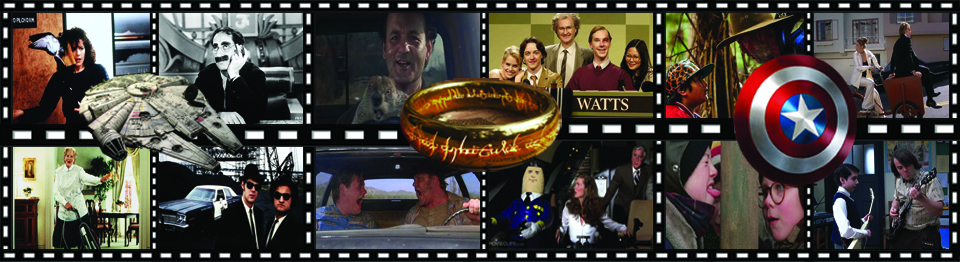
#11: The Princess Bride (1987)

27 Tuesday Jan 2015

Posted by sgliput in Movies, Poetry, Reviews, Writing

≈ 3 Comments

Tags

Christmas, Comedy, Drama, Family, Fantasy, Romance

Listen, dear viewers, and you shall be read
A story just like a sick child in bed,
About miracles, fencing, escapes, and true love,
Promises made and the efforts thereof
And a farm boy named Westley thought to be dead.
 
He said to his love that he would return
And not a thing could keep him away,
But Buttercup is upset to learn
That the Dread Pirate Roberts came to slay.
Burdened by grief, she catches the eye
Of Prince Humperdinck, a duplicitous guy.
Ere they are wed, she is caught by three
Colorful, talented killers-to-be,
Vizzini, Montoya, and Fezzik, who flee.
 
They are followed, though, by a man in black,
Coming to kidnap their prisoner back,
Facing the three of them, one by one,
Defeating each, and once he has won,
From Buttercup, Westley gets a smack.
The two through the Fire Swamp take their track
And fight when enormous rats attack.
Catching them, Prince Humperdinck won’t share
That he’s locked Westley in the Pit of Despair.
 
Meanwhile, Montoya and Fezzik unite,
Planning revenge for a family crime,
But they need Westley to plan it this time.
The two of them free him, though mostly dead,
Revive him with a miracle bite,
And before the wedding bells can chime,
Help him inside ere the couple can wed.
 
When he finds the man he’s been hunting for,
Montoya takes revenge at last,
And because true love is unsurpassed,
When Westley challenges pain galore,
Prince Humperdinck will not compete
Against a man death can’t defeat.
When Buttercup and the trio of men
Depart for safer hill and glen,
The two lovers kiss as never before.
You wouldn’t mind hearing the tale once more?
As you wish; I’ll come again.
______________________
 

The Princess Bride is one of the most perfect films around, not in any grand or profound way, but in its timeless, endlessly amusing creation of a modern fairy tale, based off the book by William Goldman, who also wrote the screenplay. I know I’m not alone in saying that this is a film I could watch any day of the week, while quoting much of the ingenious dialogue. It never ceases to entertain, and I think everyone involved in its production realized what a special film they produced.

The cast is a treasure trove of comedic talent, from Wallace Shawn as disdainful Vizzini to Andre the Giant as strong but gentle “land mass” Fezzik to Billy Crystal’s hilarious cameo as Miracle Max, who proves that chocolate does indeed have life-giving properties. Cary Elwes as Westley and Robin Wright as Buttercup (one of her first roles) are ideal starry-eyed lovers, the one gallant and dashingly British and the other beautiful, though rather helpless. The film is well-recognized for its abundance of potent quotables, and every character gets a memorable line, often several. Who can forget Mandy Patinkin as Inigo Montoya spouting his rehearsed threat to his father’s killer, or Wallace Shawn’s “Inconceivable,” said as only he can? Some droll moments are also given to the villains, Chris Sarandon as self-assured Prince Humperdinck (I wonder if his first name is Engelbert) and Christopher Guest as soft-spoken sadist Count Rugen. Even small roles like Mel Smith as the Albino and Peter Cook as the Impressive Clergyman get some Monte Python-style humor from their unexpected voices.

Though The Princess Bride parodies typical fairy tale tropes, it embraces them as well, like a more sincere version of a Mel Brooks comedy. Consider when Vizzini calls out “Behold, the Cliffs of Insanity!” followed by some overly dramatic music, yet the cliffs themselves do play a role in the tale, and their pretentious name doesn’t preclude real danger. The film’s depicted framework of a bedtime story, read by Peter Falk, lends the film a detached fascination, so that the audience can laugh while also becoming invested in the characters’ struggles. Quite a lot of work went into the filming as well, particularly the expert duel between Elwes and Patinkin, who did all but the somersaults themselves. Moments of whimsy alternate with moments of genuine passion to create a family film for all ages (though a single profanity from Fred Savage as the boy was unnecessary). The Oscar-nominated song “Storybook Love,” sung by Willy DeVille, is also worthy of a place in my End Credits Song Hall of Fame.

As I said, I can watch this film forever, but it was only recently that my attention was brought to a small but important detail. The Princess Bride is a Christmas movie! I didn’t believe it at first, but at the very beginning, there are lights and snow outside and a small lighted tree out in the hall, as well as a Santa hanging behind Peter Falk the whole time. I always assumed the book was a get-well-soon gift, but it’s a Christmas present. Now we all have one more reason to watch it, as if we needed another excuse. It’s got everything a good fairy tale needs and a great deal more besides.

Best lines (I wish I could just say the whole movie): (Vizzini, when Westley doesn’t fall from the Cliffs) “He didn’t fall? Inconceivable!”  (Inigo) “You keep using that word. I do not think it means what you think it means.”
 
(Inigo Montoya) “Hello. My name is Inigo Montoya. You killed my father. Prepare to die.”
 
(Miracle Max, when he lifts and drops Westley’s lifeless arm) “I’ve seen worse.”
 
(Westley, after knocking out the giant Fezzik) “I do not envy you the headache you will have when you awake. But for now, rest well and dream of large women.”
 
(Westley, after returning from almost-death) “Who are you? Are we enemies? Why am I on this wall? Where is Buttercup?”   (Inigo) “Let me explain. [pauses]  No, there is too much. Let me sum up.”
 
(Westley and the Grandfather) “As you wish.”
 
 
Rank: 60 out of 60
 

© 2015 S. G. Liput

283 Followers and Counting

#12: Beauty and the Beast (1991)

27 Tuesday Jan 2015

Posted by sgliput in Movies, Poetry, Reviews, Writing

≈ 1 Comment

Tags

Animation, Comedy, Disney, Drama, Family, Fantasy, Musical, Romance

(Best sung to “The Mob Song”)
 
In the countryside of France,
Where the bakers say “Bonjour,”
Lives a lovely mademoiselle who’s always reading books galore.
Belle just doesn’t quite fit in,
But still that doesn’t stop Gaston
From insisting that she marry him for his conceited brawn.
 
Through the mist, through the woods,
When Belle’s father tries to travel,
He ends up inside a castle dark and grim.
Belle protests and suggests
That the castle’s beastly owner
Make her stay his prisoner instead of him.
 
She’s afraid of her host and his temper,
And alarmed but then charmed and impressed
By the servants and shows
And a spellbinding rose,
Till the beast makes her flee,
Too oppressed.
 
While en route, though, the brute
Saves her life, and so from then on,
Their relationship begins to slowly grow.
When the Beast comes to love
And Belle sees her father needs her,
Her detainer has the heart to let her go.
 
But Gaston has a plan to coerce her
To be his, but she will not be played.
When she speaks of the Beast,
Gaston’s rage is increased,
And he rallies best and least
To invade.
 
Servants fight and defend;
As the raiders are assaulted,
Bold Gaston will not be halted from his prey.
Both engage, and both fall,
But true love will conquer all,
And thus without a curse’s thrall,
Love will stay.
_____________________
 

Beauty and the Beast is the epitome of a Disney fairy tale musical, complete with magic mirror, enchanted castle, magical rose, bleak curse, stunning animation, and Oscar-winning music of the highest order. Though preceded by The Little Mermaid, this was the undeniable sign that the Disney Renaissance was well under way and that animated musicals could be taken seriously, even nominated for Best Picture.

First off, the animation is gorgeous, a combination of traditionally animated characters and certain CGI backgrounds that allow for some astoundingly beautiful moments, like the famous ballroom dance beneath the chandelier. While Hunchback and Tarzan had similarly striking visuals, Beauty and the Beast was one of the first Disney films to possess a smoothness of line and motion unseen in strictly hand-drawn features thanks to a new CAPS technology (technically, The Rescuers Down Under was the first).

The beauty of the animation is matched only by the music, which garnered two of Alan Menken’s well-deserved Oscars for Best Score and Best Song. From the very first musical number incorporating Belle, Gaston, and the entire village, my VC could tell that this was not a typical cartoon with tunes, but a new breed of Broadway-quality musical that was sure to be adapted to the stage, which it was. Her favorite song, though, is Gaston’s clever tavern chantey, one of the few villain songs to not be or even sound villainous. Though “Be Our Guest” and the Oscar-winning title song are more well-known, I’ve always preferred the dark, rhythmic “Mob Song” right before the castle siege.

The film is also notable for its moral themes. For once, the heroine is not a rebellious girl eager to disobey silly rules, but a noble daughter sacrificing herself for her father. The lesson of “beauty lies within” is established from the initial prologue, but rather than being a generic villain, Gaston illustrates the opposite, that evil can also lie within even with outward beauty. The romance between Belle and the Beast is not rushed, and even though its growth is depicted through the typical musical montage, the sudden sacrifice preceding it allowed a solid starting point for the Beast’s sudden change of heart and manner.

Beauty and the Beast is the purest example of a fairy tale adaptation I can imagine, created when they could be light-hearted or dark on their own terms without the grim revisionism of nowadays. Disney hit its stride with this musical masterpiece, a film in which music, characters, and animation seem to converge effortlessly into enjoyable entertainment for kids and adults alike.

Best line: (Gaston’s admirers, during his song) “For there’s no one as burly or brawny/ [Gaston] As you see, I’ve got biceps to spare,/ [Lefou] “Not a bit of him scraggly or scrawny,/ [Gaston] That’s right, and every last inch of me’s covered with hair!” and (Gaston) “I use antlers in all of my decorating!”

 
Rank: 60 out of 60
 

© 2015 S. G. Liput

283 Followers and Counting

#13: Groundhog Day (1993)

25 Sunday Jan 2015

Posted by sgliput in Movies, Poetry, Reviews, Writing

≈ 1 Comment

Tags

Comedy, Drama, Fantasy, Romance

Little interest has Phil Connors in the mirth of Groundhog Day,
But as Pittsburgh’s weatherman, another visit he must pay.
Punxsutawney welcomes him and his producer, lovely Rita,
But, remaining misanthropic, he would not want to repeat a
Day within this backwards town enthralled by shadows and a rat.
Keen on February 3rd, he finds the 2nd back at bat.
 
Every day, he wakens to the same old song and same old day,
And the shortest of the months becomes the lengthiest replay.
Unsure what to do at first, he soon finds things to break and borrow,
Loving, eating, then repeating, living like there’s no tomorrow.
Yet his sanity breaks down from all the pointless repetition,
Since his goal of wooing Rita never once comes to fruition.
 
Further tries to end the cycle get him nowhere, till the day
When he vents his own fatigue and Rita tries to help and stay.
Now his wiser, better goal is to improve himself, no scheme,
Helping with his near-omniscience, rising in the town’s esteem.
By the time he’s nearly perfect for the girl he’s come to love,
Groundhog Day releases Phil with sudden snowfall from above.
_____________________
 

Harold Ramis’s Groundhog Day is an astounding comedy, because it constantly repeats itself and yet is endlessly watchable. While not the first instance of a time loop in fiction (Star Trek: The Next Generation did such an episode the previous year called ”Cause and Effect,” and there have been books and stories that came long before), but it depicts a 24-hour loop so fully and entertainingly that it is now the go-to example of time repetition. The recent Edge of Tomorrow was always compared with Groundhog Day, not with its lesser-known predecessors.

Easily Bill Murray’s best role, Phil Connors is the kind of cynical jerk he plays so well, condescending, sarcastic, the perfect candidate for an unexplained time paradox makeover. Over the course of his many Groundhog Days, he displays the full spectrum of reactions to his helpless situation: confusion, revelry, manipulation, depression, suicide, self-progress, and eventual altruism. The way he responds to the quirky townspeople of Punxsutawney, at first with disdain, then with fond geniality and authentic concern, clearly reveals his change of heart, as does his relationship with Rita, a down-to-earth Andie McDowall. All the repetition makes for certain scenes to be easily memorable, such as that buoyant polka music, the alarm clock’s Sonny and Cher theme, and Phil’s run-in with Stephen Tobolowsky’s geekily weird Ned…Ryerson! Bing! I especially love that groundhog gnawing the air at the steering wheel. Plus, George Fenton’s song “Weatherman” at the beginning is repeated at the end, thus making it eligible for my End Credits Song Hall of Fame.

Critics have discussed the film’s deeper themes, like Buddhist transcendence and Catholic purgatory, evidence that a good comedy is not simply a string of jokes but contains the potential for profound questions and intelligent discussion. While I prefer to just watch the film for its own hilarious sake, small details reveal divine presence, such as when Phil’s claim of being a god is contradicted by his futile efforts at saving a life. One does wonder whether Phil’s situation is intended as a blessing or a curse, since I can see myself being exasperated at the constant déjà vu and delighted with all the time at my disposal, but I suppose it is mainly an opportunity, to improve himself, assist the town, and become the perfect man for Rita. Whether for the delightful humor or the more profound messages, one can enjoy Groundhog Day time after time after time.

Best lines (so many): (Phil Connors) “Well, what if there is no tomorrow? There wasn’t one today.”
 
[my VC’s favorite]  (Phil) “Do you ever have déjà vu, Mrs. Lancaster?”  (Mrs. Lancaster) “I don’t think so, but I could check with the kitchen.”
 
(Phil’s piano teacher, as he is playing for her) “Not bad… Mr. Connors, you say this is your first lesson?” (Phil) “Yes, but my father was a piano mover, so…”
 
 
Rank: 60 out of 60
 

© 2015 S. G. Liput

283 Followers and Counting

#14: The Shawshank Redemption (1994)

24 Saturday Jan 2015

Posted by sgliput in Movies, Poetry, Reviews, Writing

≈ 3 Comments

Tags

Drama, Meet 'em and Move on

An innocent banker named Andy Dufresne
Is fingered for two vengeful murders in Maine,
Imprisoned for life for the death of his wife,
As well as her lover, life sentences twain.
 
Behind the cold fences and walls of Shawshank,
With vice and corruption unseen at his bank,
Browbeaten and humbled, Dufresne might have crumbled
And yet he shares kindness with no need to thank.
 
Befriending “the man who can get things” named Red,
Dufresne carves a niche in this prison instead.
The warden devout has no scruples about
Employing Dufresne in the scams he has led.
 
The years of routine pass without a parole,
And those who receive it are no longer whole.
Dufresne has the time and the patience sublime
To build a library, a high-minded goal.
 
With nineteen years gone, Dufresne starkly can see
The warden’s obtuseness to one simple plea.
His reason to stay is then taken away,
And Andy is ready to visit the sea.
For Andy Dufresne, hope was never in vain;
Redemption and justice at last set him free.
__________________
 

When I first saw The Shawshank Redemption, I was surprised how much I enjoyed it. It’s one of the more brutal films on my list, filled with the kind of profanity and savagery I tend to avoid. Yet, without the objectionable content, it is such a moving story and so powerfully told that I couldn’t help but join the myriad critics who have praised it.

As Andy Dufresne, Tim Robbins has that “icy and remorseless” quality that makes Andy seem like the prime suspect for a double homicide, balanced with a detached intelligence and latent mischief only fully appreciated by his fellow inmates. Though Red was intended as a white character, Morgan Freeman makes the role his own with an Oscar-nominated performance and a candid and profound voice-over that marked him as the ultimate narrator. As released “lifer” Brooks, James Whitmore complements the film’s most poignant scene, a touching example of acting, music, and direction illustrating a sad and terminal point. Bob Gunson gets surprisingly dark as Warden Norton, forever making me hesitate to use the word “obtuse.” There’s something chilling about how he hums “A Mighty Fortress Is Our God” after having murdered and manipulated to protect his money laundering, and he succeeds in creating one of the few religious villains who are clearly revealed and condemned as hypocrites without condemning the faith they obviously have not taken to heart. Also (the inevitable Lost alert), hard-core guard Byron Hadley is played by character and voice actor Clancy Brown, who appeared as Kelvin on my favorite show.

Despite the gloomy, callous atmosphere of the prison, the film boasts numerous scenes of beauty and hope which are able to balance out the dark elements. Sweeping overhead shots of the prison yard are contrasted with the confined prison quarters, and the use of repeated scenes (Norton stepping from the darkness, Brooks’s farewell, Andy’s end-of-night business routine) is employed brilliantly. Though I had been previously exposed to parodies of the climactic reveal (such as Hey Arnold: The Movie), it still was a surprise for me and remains a satisfying illustration of cinematic sleight of hand. Director Frank Darabont was definitely the right fit for adapting Stephen King’s novella, and he must have enjoyed the experience, later adapting other King books like The Green Mile and The Mist, though not quite with the same skill as his first Oscar nominee.

One probable reason that I so admire the film is that it is what I would consider a “meet-‘em-and-move-on” story. Though not typical of that subgenre since Andy and Red remain static for the most part, the way in which various characters float in and out of their lives (abusive Bogs, institutionalized Brooks, tragic Tommy) is not unlike other members of the genre. Plus, all such films are marked by some kind of potentially tear-inducing consummation or reunion, and this is no exception. Despite much foul language, the film is an exquisite paean to hope, which will live on as a modern classic, because “hope is a good thing, maybe the best of things, and no good thing ever dies.”

Best line: (Red, when Andy is playing a snatch of opera for the inmates) “I have no idea to this day what those two Italian ladies were singing about. Truth is, I don’t want to know. Some things are best left unsaid. I’d like to think they were singing about something so beautiful, it can’t be expressed in words, and makes your heart ache because of it. I tell you, those voices soared higher and farther than anybody in a gray place dares to dream. It was like some beautiful bird flapped into our drab little cage and made those walls dissolve away, and for the briefest of moments, every last man in Shawshank felt free.” (For the record, they were actually singing about revealing a man’s love affair.)

 
Rank: 60 out of 60
 

© 2015 S. G. Liput

283 Followers and Counting

#15: The Prince of Egypt (1998)

23 Friday Jan 2015

Posted by sgliput in Movies, Poetry, Reviews, Writing

≈ 3 Comments

Tags

Animation, Biblical, Drama, Dreamworks, Family, Musical

(Best sung to “When You Believe”)
 
In captivity,
In Egypt, Hebrews send their prayer
Waiting for their God above
To free them from their yoke.
Young Moses grows up free,
Adopted into Pharaoh’s care,
Till the past he knew not of
Cannot help but provoke.
 
He can’t live as a fraud
And sadly flees.
He finds refuge
And life anew.
Sent by his awesome God
To Rameses,
He has unease but follows through,
Though Pharaoh disagrees.
 
Brothers long ago,
The prophet and the Pharaoh clash.
All the plagues sent from the Lord
Demand his people freed.
The Pharaoh’s hardened “No”
Requires death to end the lash.
No such cost can be ignored,
And Pharaoh has to heed.
 
God’s people thus depart
To promised land,
Until the sea
Lies in the way.
Pharaoh, more sore than smart,
Makes his last stand
Until the hand of God that day
Provides salvation grand.
__________________
 

Hollywood isn’t known for remaining faithful where Biblical source material is concerned, but the greatest proof that it is possible is The Prince of Egypt, one of the first animated films of Dreamworks’ filmography. While Dreamworks Animation’s lineup has ranged from excellent (How to Train Your Dragon, Chicken Run) to mediocre (Shark Tale, Bee Movie), not since have they reached the high mark they set right from the beginning.

No Moses film yet has stuck completely to the Book, often downplaying Aaron’s involvement and Pharaoh’s vacillation during the plagues. Though this one too takes its liberties, it indeed remains faithful to the “essence, values, and integrity” of the source material, as stated in the prelude note that reveals the filmmakers’ respect for the story they’ve undertaken. The film does borrow a few aspects of The Ten Commandments, but improves upon every one. Rather than making Moses and Rameses rivals from the beginning due to a contrived love triangle, it makes them close friends and brothers pitted against each other in a tragedy of pride and divine intervention. Rather than Moses’ murder of the Egyptian being violent but somehow justifiable, in this version it is instead portrayed as an accident, allowing Moses to remain righteous while providing the shame to propel him to self-banishment. (I realize it was no accident in the Bible, but I like this kind of change.) All this improvement also comes with masterful abbreviation; events that took The Ten Commandments half an hour to portray are depicted in mere minutes of concise storytelling, sometimes funny but often of surprising depth.

Enhancing both plot and entertainment, the film’s soundtrack by Stephen Schwartz is inspired, with every song memorable and perfectly spaced in the film’s runtime. From Israeli singer Ofra Haza’s impassioned “Deliver Us” at the beginning to the Oscar-winning “When You Believe” as the Hebrews depart Egypt, the music serves the story rather than replacing it, just as the CGI flourishes enrich the beautiful hand-drawn animation. I’ve often hummed Jethro’s “Through Heaven’s Eyes” whenever speed is required (somehow it seems to make me move faster), while “The Plagues” has a dreadful majesty reminiscent of the music in Disney’s Hunchback.

Likewise, The Prince of Egypt is a perfect example of star power applied judiciously. The voice actors are all big names, including Val Kilmer as Moses, Ralph Fiennes as Rameses, Patrick Stewart as Seti, Sandra Bullock as Miriam, and Michelle Pfeiffer as Tzipporah. In each case, the voice so fits the character that I don’t just hear Jeff Goldblum but a believable Aaron, not just Danny Glover but a jolly Jethro. I could hardly recognize Steve Martin and Martin Short as Pharaoh’s magicians, who nonetheless have fun with their own song, “Playing with the Big Boys.” It’s interesting to note that, just as Kilmer also voiced the powerful yet personal depiction of God (with background whispers from the rest of the cast), Charlton Heston also voiced God in The Ten Commandments.

The most moving part (pun intended) is rightly the parting of the Red Sea, just as much a wonder to behold as it was in DeMille’s 1956 film. A shot of some enormous fish in the wall of water, lit by distant lightning, has an eerie power best suited to this animated outlet. The Prince of Egypt combines high studio quality with an earnestness unseen in many Biblical films, eschewing dark revisionism and modernist explanations in favor of faithful and profound filmmaking. It’s one of the few animated films that I feel should have been nominated for Best Picture, a brilliant example of how cartoons can be elevated to dramatic excellence.

Best line: (Miriam, singing “When You Believe”) “Many nights we’ve prayed, with no proof anyone could hear. In our hearts a hopeful song we barely understood. Now we are not afraid, although we know there’s much to fear. We were moving mountains, long before we knew we could….”

 
Rank: 60 out of 60
 

© 2015 S. G. Liput

282 Followers and Counting

#16: You’ve Got Mail (1998)

22 Thursday Jan 2015

Posted by sgliput in Movies, Poetry, Reviews, Writing

≈ 2 Comments

Tags

Comedy, Drama, Romance

“You’ve Got Mail”
Has never grown stale
For Kathleen Kelly when online.
Anonymous,
She loves to discuss
Trivialities that somehow shine.
 
She does not know
Her chatroom beau
Is bookstore heavyweight Joe Fox.
Her own bookstore
Has charm galore
But can’t compete when conflict knocks.
 
She is upset
Once they have met,
For he excels at talking smack.
And yet online,
They’re both benign,
Not knowing who is writing back.
 
When Joe Fox learns
The truth, it burns,
And he just keeps it to himself.
As business slows,
Her store must close,
And Kathleen mourns each empty shelf.
 
Because love’s growth
Eludes them both,
Joe tries again to be her friend.
Although his strife
Undid her life,
She doesn’t mind more time to spend.
 
Through days and weeks
And lows and peaks,
Friendship and love begin to bloom.
When truth is told,
They kiss and hold
The one behind the nom de plume.
_________________
 

When it comes to Tom Hanks and Meg Ryan, most people seem to gravitate to Sleepless in Seattle, a great romantic comedy but one that suffers from their almost total lack of contact, despite memorable performances and script. Yet my VC and I have always enjoyed You’ve Got Mail even more. While it is based on a play previously adapted to film twice (1940’s The Shop Around the Corner and 1949’s In the Good Old Summertime), in some cases borrowing scenes line for line, the movie is further enhanced by references and parallels to Pride and Prejudice and Nora Ephron’s legendary dialogue. It’s one of those films I’ve seen so often that I practically know it by heart.

The two romantic leads start off unaware of each other’s existence but for trading impressions and insight via the Internet. Yes, the prominence of AOL’s “You’ve got mail” greeting dates the film, but it’s still an update from the letters used in prior versions of the story. Ryan and Hanks may not get along at first and even trade rather cruel barbs, but both of them exude charm and humor, which is simply more evident when they’re not around each other. Ryan is the underdog, owner of a small bookshop on the Upper West Side of New York; she’s friendly with her employees (Heather Burns, Steve Zahn, and Jean Stapleton) and living with a highly opinionated columnist obsessed with typewriters and himself (Greg Kinnear). Meanwhile, Hanks as Joe Fox is heir to a Barnes-and-Noble-style bookstore chain, full of discounts and lattes and a survival-of-the-cheapest mentality. He is superior to some extent, yet takes time out for his younger kin and seems like an overall decent chap. While it’s obvious that the two of them are on opposite sides, as business rivals, their back-and-forth sparring never overshadows the fact that they’re MFEO (go watch Sleepless in Seattle for clarification).

So much of this film’s success lies in the two lead actors, whose mere glances and tone offer endless amusement. There’s a scene in which their respective dates meet each other and trade unconsciously embarrassing remarks; the expressions on Hanks and Ryan’s faces are priceless. When Fox tries writing a conciliatory e-mail with ridiculous excuses, Hanks milks the unforeseen humor from the BACKSPACE button. When the script requires Ryan to respond with three yeses in a row, she fills each one with growing gravitas. They know how to say their lines perfectly, and luckily they are given plenty of notable lines to say, whether it be the meditations on the significance of Starbucks or The Godfather, the discussion of well-timed zingers, or the hilarious guesses on who the mysterious pen pal could be.

On top of all that, the film touches on some serious points, like the unstoppable advance of big-name commercialism over small-scale intimacy. Even though Kathleen and her boyfriend deride Fox as “the destroyer of city books,” when she actually visits the superstore, there’s little to dislike about all the “cheap books and legal addictive stimulants” that attract so many. The main fault is a lack of passion and knowledge in the employees (specifically Chris Messina in an early role), the personal customer connection lost amid the endless aisles. I’ll admit I enjoy visiting Barnes & Noble and Books-a-Million (and Borders before they closed), but there’s something special about the well-worn shelves and comforting appeal of the “Shops around the Corner” that are still surviving, as well as a sense of loss when they fold. (See 84 Charing Cross Road for similar themes.)

Full of enduring quotes and droll character moments, You’ve Got Mail is among my favorite romantic comedies, an underseen gem and some of Ephron’s best work.

Best lines: (Kathleen, online) “So much of what I see reminds me of something I read in a book, when shouldn’t it be the other way around?”
 
(Joe, discussing his handle NY152 with Kathleen) “N-Y-one-five-two. One hundred and fifty-two. He’s a hundred and fifty-two years old. He’s had one hundred and fifty-two moles removed, so now he’s got one hundred fifty-two pock marks on his… on his face.”   (Kathleen) “The number of people who think he looks like Clark Gable.”   (Joe) “One hundred and fifty-two people who think he looks like a Clark Bar.”
 
(Joe) “I like Patricia. I love Patricia. Patricia makes coffee nervous.”
 
 
Rank: 60 out of 60
 

© 2015 S. G. Liput

282 Followers and Counting

#19: War Horse (2011)

19 Monday Jan 2015

Posted by sgliput in Movies, Poetry, Reviews, Writing

≈ 2 Comments

Tags

Drama, Meet 'em and Move on, War

A Devon-born horse with four white socks and star
Is bought at an auction by Ted Narracott.
The drunkard, discouraged by how their lives are,
Lets Albert, his son, give the horse his best shot.
 
His training of Joey allows him to plow
And buck expectations of them and their field,
But when the War starts, there’s a greater need now
For money, and horses for England to wield.
 
Assigned to the cavalry, Joey is passed
From Britain to Germany following fights.
Two brothers persuaded by promises past
In fleeing to safety surrender their rights.
 
An elderly Frenchman and his young granddaughter
Are next to take in this miraculous horse.
They try to protect him from bondage and slaughter,
But callous war comes to reclaim him by force.
 
Through marches and trenches, he tries to survive;
Through wire and fences, he ventures to flee,
But only when care and compassion arrive
Do rivals join forces to set Joey free.
 
By chance or by fate or by Providence’ will,
The unlikely promise that young Albert swore
Is kept when the both of them reunite still,
Two tired, admired survivors of war.
__________________
 

In vying for Oscars and popularity, most films nowadays constantly experiment to make themselves new. As well-done as they may be, many award-winners are becoming more dependent on gimmicks, whether it be a retro silent picture, a coming-of-age tale shot over twelve years, a drama meant to appear as one continuous take, or a musical that does away with pre-recorded tracks. Few films return to the pure, old-fashioned filmmaking of Hollywood’s Golden Age as wondrously as Steven Spielberg’s 2010 masterpiece War Horse, a return to a time when epic journeys could indulge in straightforward schmaltz and emotion without being called “sentimental,” as if that were a bad thing.

Paulie already proved that “meet ‘em and move on” films could feature an animal protagonist, but unlike that film or Spirit: Stallion of the Cimarron or the Michael Morpurgo book on which War Horse is based, the animal involved is not anthropomorphized to provide narration. He acts as a character but also a sounding board for those he meets along his odyssey. In doing so, he experiences the many angles of World War I depicted throughout the story: the confident bravery of the war’s beginning, the early losses, the fears and misgivings on both sides, the heartbreaking cost forced upon innocent civilians, the devolution of battlefields into ravaged wastelands, and the unexpected kindnesses displayed throughout.

As a war film, it manages to show multiple perspectives and never demonizes one group or the other. As with every war, there are sympathetic angels and hard-nosed warriors on both sides. A scene of cooperation between a British and German soldier acts as a microcosm of the previously reviewed Christmas film Joyeux Noël, uniting them over shared humanity and sympathy for an injured innocent. One way in which the film recalls the war features of yesteryear is in its realistic but sanitized depiction of battle; despite much loss of life and some intense sequences, there’s no blood and no unnecessary brutality. I applaud Spielberg for that.

My VC doesn’t believe War Horse should be this high on my list (she’s not partial to any film with a suffering animal), but for me, War Horse is the most recent film to find a special place in my heart. Certain movies like this, Heart and Souls, and Whisper of the Heart just retain an unusual personal fondness that can’t be fully explained. The opening might be a little slow, but it highlights the formation of a life-leading friendship that compels the viewer to follow this special horse, and certain elements are made more relevant and poignant as the film progresses. In addition, the breath-taking cinematography and scenery of Devon, England, are more than enough to hold one’s attention, especially when combined with yet another moving score from John Williams. The actors are all excellent as well, from newcomer Jeremy Irvine as Albert, a heartfelt and consistently admirable lad whether in the turnip field or battlefield, to a number of recognizable English thespians, including Tom Hiddleston (Loki), Eddie Marsan (Inspector Lestrade), and Benedict Cumberbatch (Smaug, Sherlock, Khan, etc.).

War Horse indeed feels like classical filmmaking, like that of John Ford mixed with Lassie, but updated with Spielberg’s artistic touch and more natural acting. Shots of the Devon sunset carry a painterly beauty, while a scene of an execution is evocatively hidden by a turning windmill. The Artist may have been more lauded for its innovative take on classic Hollywood, but I consider War Horse the best film of 2011.

Best line: (Rose Narracott to her husband Ted, after he fears his failures will alienate her) “I might hate you more, but I’ll never love you less.”

 
Rank: 59 out of 60
 

© 2015 S. G. Liput

282 Followers and Counting

#21: Cast Away (2000)

16 Friday Jan 2015

Posted by sgliput in Movies, Poetry, Reviews, Writing

≈ 2 Comments

Tags

Disaster, Drama

Timing is the great obsession
For Chuck Noland, whose profession
As a FedEx problem solver leads him on a distant track.
Never lacking phone and beeper,
Chuck yet wants his romance deeper
And is planning to propose to Kelly once he journeys back.
 
Travel o’er the stormy ocean
Crashes Noland’s plans in motion,
And he’s left upon a beach no foot has touched upon before.
Cast away upon this isle,
Left with but a picture’s smile,
Chuck is forced to learn survival on this godforsaken shore.
 
With a volleyball attendant
On whom Noland grows dependent,
He has difficulty finding simple joys, like food and fire.
Long he waits upon the isle,
Fitter, wiser from the trial,
Till the day the brutal tide bestows a blessing to inspire.
 
Seizing chances when extended,
Noland builds a raft intended
As his freedom from the island that has been his home for years.
Rescue comes and resurrection,
And in need of new direction,
Noland mourns the loss of love until a plainer path appears.
____________________
 

Before All Is Lost, before Life of Pi, before Lost, there came Cast Away. While not the first film about an island-bound survivor, it is the most emotionally powerful, all thanks to actor extraordinaire Tom Hanks. He poured quite a bit of time and commitment into the role of Chuck Noland, first gaining weight in order to look like a chubby executive, then spending a year getting starkly thin with a full beard for the later island scenes. Many actors are at their best not saying a word, and his struggles against the surf, coconuts, and personal pain fill the long stretches of silence on the island with fascinating desperation and ingenuity.

I love the layers and hints sprinkled throughout the beginning: the Elvis connections, the ranch sign later seen partially missing, the underlying story of divorce playing out behind the scenes and waiting to become relevant to Chuck Noland, even the little copier dance with Chuck and Kelly (Helen Hunt). After a harrowing plane crash (with a scene of Chuck hanging underwater to watch sinking debris, which has been borrowed by Life of Pi and The Incredibles), Chuck is stranded on an isle not nearly as hospitable as Gilligan’s Island. While there are no wild animals or headhunters, there’s also nothing to attract distant search parties, nothing to encourage his eroding sanity, not even a single sound from an insect or a background score. He is alone. The audience is pulled into Chuck’s solitary struggle to sympathize with his loneliness, celebrate his small victories, and meet a volleyball named Wilson. (Despite all the product placement with FedEx and Wilson sporting goods, the film never feels like a commercial, instead simply using these familiar names as integral aspects of the story.)

By the time he escapes his island prison, Hanks had already earned his Oscar nomination for Best Actor, but his reaction to his subsequent loss should have clinched a win. (I think Hanks should have won, and Russell Crowe could have won the next year for A Beautiful Mind.) It’s a perfect example of how the loss of a “character” or even an inanimate object can deeply affect the audience simply by how it affects another character. I didn’t care about Wilson; he’s just a volleyball, but he was also Noland’s only friend. Hanks’s performance makes the loss far sadder than many a human death in other movies. Now that is acting!

The film is not quite perfect; despite repeated angelic symbolism, the film has no religious perspective on Noland’s plight, and a scene in which he buries a dead pilot is rather brusque in its lack of sentiment. Yet Cast Away works on many levels, not only as a story of forlorn seclusion; it’s a beautifully shot adventure, an example of the many survivalist uses of ice skates and evening gowns, a testament to the power of hope and endurance, a meditation on the simple conveniences we so often take for granted, and a lamentation of how life goes on and sometimes leaves us behind. Plus, it was the inspiration for Lost, at least in part. The suggestion of a Cast Away television series led to J. J. Abrams’ great show four years later, and it even bears a few familiar elements (a plane crash, a failed SOS; if Noland had looked harder, he might have found a hatch or a smoke monster). In many ways, Cast Away could easily have been titled Lost, best represented by the four-way dirt road in its final scene. As Alan Silvestri’s short but lovely score plays, it seems Noland has found his way; I’m not partial to many ambiguous and open-ended conclusions, but Cast Away’s is one of the best.

Best line: (Chuck Noland, to Wilson, as he is attempting to light a fire) “You wouldn’t have a match by any chance, would you?”

 
Rank: 59 out of 60
 

© 2015 S. G. Liput

281 Followers and Counting

← Older posts
Newer posts →

Recent Posts

  • We Didn’t Start 2025 (Recap)
  • NaPoWriMo 2025 Recap (Finally)
  • Sonic the Hedgehog 3 (2024)
  • It Happened One Night (1934)
  • Spellbound (2024)

Recent Comments

associatesofshellymann's avatarassociatesofshellyma… on My Top Twelve La La La So…
Kit's avatarKit Nichols on Bonnie and Clyde (1967)
lifelessons's avatarlifelessons on Look Back (2024)
Carol Jackson's avatarCarol Jackson on The Thief of Bagdad (1940…
Stephen's avatarStephen on Love Story (1970)

Archives

  • January 2026
  • December 2025
  • May 2025
  • April 2025
  • March 2025
  • February 2025
  • January 2025
  • December 2024
  • May 2024
  • April 2024
  • March 2024
  • February 2024
  • January 2024
  • December 2023
  • November 2023
  • October 2023
  • September 2023
  • July 2023
  • June 2023
  • May 2023
  • April 2023
  • March 2023
  • February 2023
  • January 2023
  • December 2022
  • November 2022
  • October 2022
  • September 2022
  • August 2022
  • July 2022
  • June 2022
  • May 2022
  • April 2022
  • March 2022
  • February 2022
  • January 2022
  • December 2021
  • November 2021
  • October 2021
  • September 2021
  • August 2021
  • July 2021
  • June 2021
  • May 2021
  • April 2021
  • March 2021
  • February 2021
  • January 2021
  • December 2020
  • November 2020
  • October 2020
  • September 2020
  • August 2020
  • July 2020
  • June 2020
  • May 2020
  • April 2020
  • March 2020
  • February 2020
  • January 2020
  • December 2019
  • November 2019
  • October 2019
  • September 2019
  • August 2019
  • July 2019
  • June 2019
  • May 2019
  • April 2019
  • March 2019
  • February 2019
  • January 2019
  • December 2018
  • November 2018
  • October 2018
  • September 2018
  • August 2018
  • July 2018
  • June 2018
  • May 2018
  • April 2018
  • March 2018
  • February 2018
  • January 2018
  • December 2017
  • November 2017
  • October 2017
  • September 2017
  • August 2017
  • July 2017
  • June 2017
  • May 2017
  • April 2017
  • March 2017
  • February 2017
  • January 2017
  • December 2016
  • November 2016
  • October 2016
  • September 2016
  • August 2016
  • July 2016
  • June 2016
  • May 2016
  • April 2016
  • March 2016
  • February 2016
  • January 2016
  • December 2015
  • November 2015
  • October 2015
  • September 2015
  • August 2015
  • July 2015
  • June 2015
  • May 2015
  • April 2015
  • March 2015
  • February 2015
  • January 2015
  • December 2014
  • November 2014
  • October 2014
  • September 2014
  • August 2014
  • July 2014
  • June 2014
  • May 2014
  • April 2014
  • March 2014
  • February 2014
  • January 2014
  • December 2013

Categories

  • Blindspot
  • Blogathon
  • Christian
  • Movies
  • Music
  • NaPoWriMo
  • Poetry
  • Reviews
  • TV
  • Writing

Meta

  • Create account
  • Log in
  • Entries feed
  • Comments feed
  • WordPress.com

Recent Posts

  • We Didn’t Start 2025 (Recap)
  • NaPoWriMo 2025 Recap (Finally)
  • Sonic the Hedgehog 3 (2024)
  • It Happened One Night (1934)
  • Spellbound (2024)

Recent Comments

associatesofshellymann's avatarassociatesofshellyma… on My Top Twelve La La La So…
Kit's avatarKit Nichols on Bonnie and Clyde (1967)
lifelessons's avatarlifelessons on Look Back (2024)
Carol Jackson's avatarCarol Jackson on The Thief of Bagdad (1940…
Stephen's avatarStephen on Love Story (1970)

Archives

  • January 2026
  • December 2025
  • May 2025
  • April 2025
  • March 2025
  • February 2025
  • January 2025
  • December 2024
  • May 2024
  • April 2024
  • March 2024
  • February 2024
  • January 2024
  • December 2023
  • November 2023
  • October 2023
  • September 2023
  • July 2023
  • June 2023
  • May 2023
  • April 2023
  • March 2023
  • February 2023
  • January 2023
  • December 2022
  • November 2022
  • October 2022
  • September 2022
  • August 2022
  • July 2022
  • June 2022
  • May 2022
  • April 2022
  • March 2022
  • February 2022
  • January 2022
  • December 2021
  • November 2021
  • October 2021
  • September 2021
  • August 2021
  • July 2021
  • June 2021
  • May 2021
  • April 2021
  • March 2021
  • February 2021
  • January 2021
  • December 2020
  • November 2020
  • October 2020
  • September 2020
  • August 2020
  • July 2020
  • June 2020
  • May 2020
  • April 2020
  • March 2020
  • February 2020
  • January 2020
  • December 2019
  • November 2019
  • October 2019
  • September 2019
  • August 2019
  • July 2019
  • June 2019
  • May 2019
  • April 2019
  • March 2019
  • February 2019
  • January 2019
  • December 2018
  • November 2018
  • October 2018
  • September 2018
  • August 2018
  • July 2018
  • June 2018
  • May 2018
  • April 2018
  • March 2018
  • February 2018
  • January 2018
  • December 2017
  • November 2017
  • October 2017
  • September 2017
  • August 2017
  • July 2017
  • June 2017
  • May 2017
  • April 2017
  • March 2017
  • February 2017
  • January 2017
  • December 2016
  • November 2016
  • October 2016
  • September 2016
  • August 2016
  • July 2016
  • June 2016
  • May 2016
  • April 2016
  • March 2016
  • February 2016
  • January 2016
  • December 2015
  • November 2015
  • October 2015
  • September 2015
  • August 2015
  • July 2015
  • June 2015
  • May 2015
  • April 2015
  • March 2015
  • February 2015
  • January 2015
  • December 2014
  • November 2014
  • October 2014
  • September 2014
  • August 2014
  • July 2014
  • June 2014
  • May 2014
  • April 2014
  • March 2014
  • February 2014
  • January 2014
  • December 2013

Categories

  • Blindspot
  • Blogathon
  • Christian
  • Movies
  • Music
  • NaPoWriMo
  • Poetry
  • Reviews
  • TV
  • Writing

Meta

  • Create account
  • Log in
  • Entries feed
  • Comments feed
  • WordPress.com

Blog at WordPress.com.

  • Subscribe Subscribed
    • Rhyme and Reason
    • Join 814 other subscribers
    • Already have a WordPress.com account? Log in now.
    • Rhyme and Reason
    • Subscribe Subscribed
    • Sign up
    • Log in
    • Report this content
    • View site in Reader
    • Manage subscriptions
    • Collapse this bar