• Home
  • About Me
  • The List
  • THE LIST (2016 Update)
  • THE LIST (2017 Update)
  • THE LIST (2018 Update)
  • THE LIST (2019 Update)
  • THE LIST (2020 Update)
  • THE LIST (2021 Update)
  • THE LIST (2022 Update)
  • Top Twelves and More
  • The End Credits Song Hall of Fame

Rhyme and Reason

~ Poetry Meets Film Reviews

Rhyme and Reason

Tag Archives: Drama

VC Pick: Excalibur (1981)

07 Tuesday Mar 2017

Posted by sgliput in Movies, Poetry, Reviews, Writing

≈ 3 Comments

Tags

Drama, Fantasy

Image result for excalibur 1981


The land was grand when Arthur reigned,
The fields no longer scarlet-stained,
The crown no longer coveted
By lesser men who ruled the dead,
And all who saw their shining king
Would prize the sight till their deathbed.

The sword he wore pronounced him king,
Announcing it with every swing,
And even though it left his keep,
It waited till he woke from sleep.
Though Arthur’s glory now has waned,
His reputation yet runs deep.
___________________

MPAA rating: PG or R, depending on the version

For the last of my VC’s birthday picks, she chose a film very different from the others (all romances: The Lake House, The Goodbye Girl, and A Star Is Born), instead delving into the Arthurian legend brought to life in Excalibur. As is often the case, I didn’t care for this film at first but appreciated it far more upon a second viewing.

The story of King Arthur has been presented in countless different ways, from Disney’s kid-friendly The Sword in the Stone to Guy Ritchie’s action-packed King Arthur: Legend of the Sword, to be released later this year. Yet with all the partial retellings of this classic British myth, shouldn’t there always be one definitive version that others copy or draw from? Excalibur tries to be just that, and while it takes license with historical details (plate armor wasn’t used in the Dark Ages), it still comes off as the most faithful to the traditional source material, Sir Thomas Malory’s Le Morte d’Arthur and various other accounts. There’s obviously far too much for any two-hour movie to cover comprehensively, but all the most familiar elements are here: young Arthur (Nigel Terry) pulling the sword from the stone, his gathering of the Knights of the Round Table (which looks suspiciously like a giant DVD), his betrayal by Lancelot and Guenevere, and his family issues with his half-sister and their son Mordred (Robert Addie). Terry is an especially convincing Arthur, playing him both as a scrawny squire and an aging monarch, and Nicol Williamson’s Merlin brings some much-needed wit to the proceedings.

Image result for excalibur 1981 round table

It may seem strange, but the film that Excalibur kept reminding me of was David Lynch’s Dune (another VC pick), mainly due to the serious quality of the acting and palpable adherence to source material. Plus, both served as prime outlets for many actors before they were famous: Patrick Stewart is in both films, but Excalibur also features a young Helen Mirren as Morgana Le Fay, Liam Neeson as Sir Gawain, Gabriel Byrne as Arthur’s father Uther Pendragon, and Ciarán Hinds as King Lot. In addition to the cavalcade of stars to be, Excalibur also boasts some exceptional cinematic moments, particularly when it employs the classical opera of Wagner and Orff; anytime I hear Orff’s “O Fortuna,” it brings me back to the gloried sight of Arthur and his knights riding out to battle.

For all its strengths, however, there’s a reason Excalibur didn’t appeal to me on my first watch. For one, the characters have all the depth of a children’s book of myths, and the actors play them with such Shakespearean solemnity that no one but Merlin actually has a personality. Another comparison to Dune might be warranted too, when the search for the Holy Grail verges into a Lynchian dream sequence, which manages to both be meaningful to the plot and make no sense. Not to mention, the latter half of the Arthur story is quite the downer, as Arthur degrades into a ruler not unlike King Théoden when we first meet him in The Two Towers. In addition, the R-rated cut doesn’t shy away from certain scenes of nudity and battlefield violence; the worst love/rape scene toward the beginning is made worse by the fact that the woman involved was the director’s own daughter.

Image result for excalibur 1981

Excalibur may be an inconsistent iteration of the tales of Merlin, King Arthur, and his knights, but for the most part, the lavish production design, shiny costumes, noble music, and mostly solid acting come together in grand fashion. It brings to life the glory of medieval myth and the destructive danger of men following lust and greed, and though it has its flaws, it’s the most definitive version of King Arthur I’ve seen so far.

Best line: (Merlin, upon Arthur’s final conquest as king) “Remember it well, then… this night, this great victory. So that in the years ahead, you can say, ‘I was there that night, with Arthur, the King!’ For it is the doom of men that they forget.”

VC’s best line: (Arthur) “Which is the greatest quality of knighthood? Courage? Compassion? Loyalty? Humility? What do you say, Merlin?”
(Merlin) “Hmm? Ah. Ah. Ah, the greatest. Uh, well, they blend, like the metals we mix to make a good sword.”
(Arthur) “No poetry. Just a straight answer. Which is it?”
(Merlin) “All right, then. Truth. That’s it. Yes. It must be truth above all. When a man lies, he murders some part of the world. You should know that.”


Rank: List Runner-Up


© 2017 S.G. Liput
453 Followers and Counting


Manchester By the Sea (2016)

05 Sunday Mar 2017

Posted by sgliput in Movies, Poetry, Reviews, Writing

≈ 8 Comments

Tags

Drama

Image result for manchester by the sea film


Ordeals that do not kill you make you stronger, so they say,
But in the meantime, on the way,
Your life can fall to disarray,
And till you’re looking back one day,
Its grueling getting through.

The grief that haunts your footsteps won’t allow you to forget.
Harassed by sorrow and regret,
You know you haven’t moved on yet,
If you but give the grief you get.
Is that not up to you?
___________________

MPAA rating: R (for frequent language)

Of all the Best Picture nominees of 2016, Manchester By the Sea was the least for me—the least engaging, the least enjoyable, the least satisfying—which isn’t to say it’s out-and-out bad, but its style and pervasive melancholy did not appeal to me. Perhaps the film it most reminded me of was 1980’s Ordinary People, another film about fraternal tragedy with understatedly emotional performances and a montage of artsy stills backed by classical music. I much prefer Ordinary People, but Manchester had its good points all the same.

The film’s strongest point is its acting, which treads water as good most of the time and bubbles into great at emotional high spots. Casey Affleck plays Lee Chandler, a divorcee living alone who receives word that his brother has died of a heart condition, leaving his teenage nephew Patrick (Lucas Hedges) in need of a guardian. Due to a past trauma that ruined his marriage and embittered him to the Manchester area, Lee refuses to move back for Patrick but remains and bonds with him while figuring out how to handle the situation. While I would have preferred Denzel Washington to win Best Actor for Fences, Affleck does give a powerful performance, just an inconsistent one, sometimes revealing profound grief, other times merely stoic and bored-looking. He’s not always the likable sort, moping and initiating bar fights, but thanks to sudden flashbacks that get more powerful with time, he’s certainly sympathetic. Lucas Hedges is just as good, though, especially in certain scenes, like the frozen chicken breakdown, as is Michelle Williams as Lee’s ex-wife. Kenneth Lonergan’s direction is also masterful, whether it be in the placid seaside scenery resembling a Thomas Kinkade painting or the delicate practice of letting us see rather than hear a difficult conversation from a distance.

Image result for manchester by the sea film

One aspect that I keep seeing praise for is how realistic the film is, a fly-on-the-wall portrayal of what can and does happen to broken people. Yet, there were many times that the realism seemed forced or stilted, and mundane imperfections felt thrown in solely for the sake of “realism.” For instance, when someone on a gurney is being placed into an ambulance, ten seconds are spent struggling to lift the gurney’s wheels into the vehicle. Why? Was that a mistake they just kept in or some attempt at weak black humor? There are many moments like that, scenes that other movies would skip over for good reason. I suppose I can see others viewing it as compellingly realistic, but I found it unnecessary and odd.

Part and parcel with such observations is the dialogue between characters. Due to Lee’s aversion to small talk, many of the conversations end with awkward silences, as if the editor waited too long to cut to another scene. I was a bit baffled that Manchester won Best Original Screenplay since there are only a few bits of dialogue that were even memorable, and in my opinion, a great screenplay shouldn’t need stretches where the F-bomb is every other word. (Well, I guess Good Will Hunting proves it happens, but this isn’t in the same league.) Hell or High Water had much more insight and characterization in its screenplay, so that would have been my choice.

Image result for manchester by the sea film

I can understand why Manchester By the Sea has earned its praise and awards, but it wasn’t for me. (It didn’t help that the theater I was in made the sound tinny for some reason.) By the time Lee comes to his decision, I was expecting something more to happen, and when the credits rolled, I said, “Oh, I guess that’s it.” Manchester By the Sea works as the basis for some fine performances, but overall, it left me wanting, even if it is an emotional testament to one family’s grief.

Best line, or the one that got a laugh anyway: (Patrick, when Lee is overreacting) “Uncle Lee, are you fundamentally unsound?”


Rank: Honorable Mention


© 2017 S.G. Liput
453 Followers and Counting


La La Land (2016)

01 Wednesday Mar 2017

Posted by sgliput in Movies, Poetry, Reviews, Writing

≈ 12 Comments

Tags

Comedy, Drama, Musical, Romance

Image result for la la land film


[Can be sung to “Audition (Fools Who Dream)”]

Many will scoff at
The goals that are not yet fulfilled.
Dreams without backers
Are subject to slackers
And thoughts that they’re too hard to build.

“No” to the doubts that press,
Weathered by hopefulness.
Those that will roll their eyes
Are in for a grand surprise.

A lone aspiration
Is ripe for frustration,
As all true successes know.
The chances we fumble
May help keep us humble
With more than one right way to go.

Hard is the road our dreams set,
Bumpy and lined with regret.
Still, where they lead we must go,
Only one outcome to know.
_______________

MPAA rating: PG-13 (for a lone F-word, that’s it)

In the past, I’ve never given Oscar nominees the attention many bloggers do (I still haven’t seen half the nominees from 2015), but this year I had the unique pleasure of watching all but one of the Best Picture nominees in the theater, thanks to a great special with Regal. You can’t beat nine movies for $35! Thus, with the benefit of hindsight, I’ll be reviewing all of them in the days ahead, except for Moonlight, which I skipped only for it to end up winning, and I’ve already posted my thoughts on Arrival and Hidden Figures.

For my first post-Oscars review, I’ll cover the very last film I watched, which was actually during the Oscar ceremony. La La Land rose so quickly as a critical darling that many have pushed back or at least rolled their eyes at it, and reading so many such opinions, I had already given in to the consensus that it’s overrated. And yet…I loved it. I enjoyed all of the nominees this year, but rarely have I walked out of the theater as satisfied as I did with La La Land. Unfortunately, as soon as I came to the decision that it deserved Best Picture, that infamous mix-up gave the honor to Moonlight, for what could have been politically motivated reasons (I do still have yet to see it). While I was angry at the time and had to remind myself it doesn’t matter in the grand scheme of things, I’m glad at least that La La Land won other awards it deserved and that I got to enjoy it on the big screen.

Image result for la la land film

I should state that I love musicals. While many were trashing Les Misérables, I was singing its praises, and La La Land hearkens back to the classic MGM musicals for which I recently found greater appreciation from the documentary That’s Entertainment! It’s true that La La Land isn’t a Broadway musical with constant showstoppers, though the very first scene should impress any music lover and I enjoyed the modern style of a concert headlined by John Legend. Even if it’s not a typical musical toward the end, Justin Hurwitz’s Oscar-winning music, the jazz in particular, is a constant presence and almost a character unto itself. Often, it’s without words, like the classic dance numbers of yesteryear.

The story itself centers on two aspiring creatives: Emma Stone’s Mia came to Hollywood to be an actress but endures a barista job on the studio lot, while Ryan Gosling’s Sebastian is obsessed with classic jazz, wishing to preserve its purity in his own nightclub one day. Their initially cold run-ins with each other melt into romance as they both share their unique passions and encourage each other toward their dreams. The plot may seem familiar, owing much to the likes of A Star Is Born and Roman Holiday, but it’s made vibrant by the charm and chemistry of the two leads and the nostalgia they wear on their sleeves. The screenplay is actually rather self-aware of its Hollywood setting (“They worship everything, and they value nothing”), and themes that apply to creative types abound: How far should one go in sacrificing what they love in service of present needs? How much rejection are we willing to take before throwing in the towel? Is a dying art worth saving if even one devout advocate remains? As Mia insists, “People love what other people are passionate about,” and there’s passion here to spare, even if you don’t think you’re a fan of jazz or musicals in general.

Damien Chazelle’s Oscar-winning direction and camerawork are truly phenomenal as well. I’m a sucker for long, uninterrupted shots, and the fluidity of the camera helps one feel in the moment, whether it’s singers cavorting on a freeway or a disgruntled couple tap-dancing together on an L.A. overlook. Ryan Gosling and the ever-lovely Emma Stone may not be professional singers or dancers, but they show great commitment to their roles. Stone’s emotional scenes leave no doubt as to her Best Actress win, and the fact that Gosling learned how to play jazz piano for this film is astounding, considering how often and skillfully he tickles the ivories.

Image result for la la land film

As corny or clichéd as it sounds, La La Land is a true reminder of the magic of movies. Several scenes left me awed and enchanted, especially Mia’s one-take audition song, which deserved the Best Song Oscar much more than “City of Stars.” (I no longer blame La La Land for keeping Sing Street from a song nomination. That’s on “The Empty Chair.”) Yet it’s not all joy and magic; there’s struggle too and, like Arrival, that beautiful emotion called bittersweet. La La Land is honest enough to admit that life is rarely like a movie, but wouldn’t it be grand if it were?

In my opinion, 2016 bore one of the strongest batches of Oscar nominees in recent memory, and there was no single film that was clearly best. Some extolled the deep sci-fi of Arrival; others disliked it but preferred the power of Hacksaw Ridge; still others loved the sad realism of Manchester By the Sea or the emotion of Moonlight or Lion. In my case, I loved La La Land, and while I may be temporarily flying high only for my initial admiration to lapse eventually, I suspect it will continue to be a fond favorite of mine. As Mia’s audition song states, this film is for “the ones who dream,” and I’m one of them.

Best line: (Sebastian, explaining his lack of progress) “I’m letting life hit me until it gets tired. Then I’ll hit back.”


Rank: Top 100-Worthy


© 2017 S.G. Liput
451 Followers and Counting


Version Variations / VC Pick: A Star Is Born (1937, 1954, 1976)

27 Monday Feb 2017

Posted by sgliput in Movies, Poetry, Reviews, Writing

≈ 9 Comments

Tags

Drama, Musical, Romance, VC Pick, Version Variations

Image result for a star is born 1937

Image result for a star is born norman maine oscar

Image result for a star is born 1976 grammy


For every star to glory born
And lifted from obscurity,
Another sinks to dark and scorn,
An endless cycle now well-worn
But no less pitifully.

Some seek, some flee the weight of fame,
For which so many mourn.
They love the players, hate the game,
Who lose the lights around their name
That more stars may be born.
_________________

MPAA rating for 1937 version: Not Rated (should be PG)
MPAA rating for 1954 version: PG
MPAA rating for 1976 version: R (mainly for language)

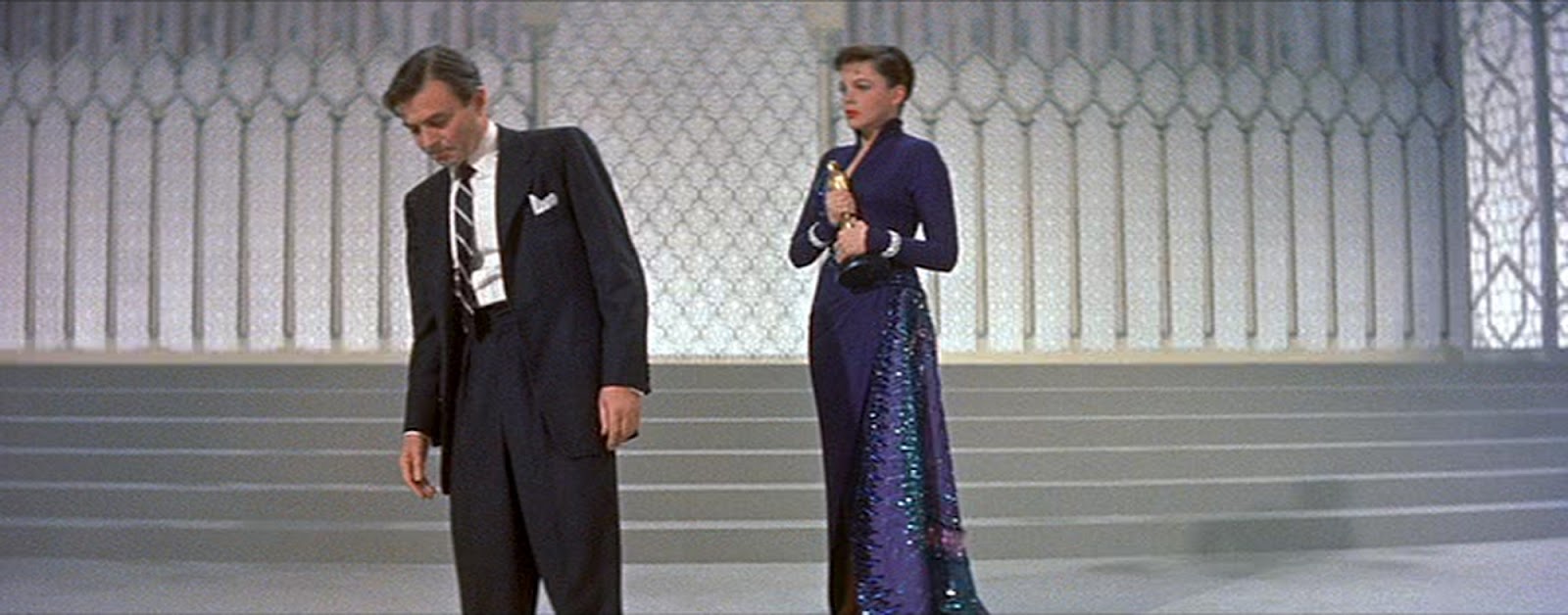
My VC has been urging me to review the 1976 version of A Star Is Born, one of her favorites with Barbra Streisand, and I saw it as an opportunity to compare all three movies of the same name in a long overdue Version Variation review. It’s a Hollywood story that has become well-known through repetition, earning a remake every twenty years or so. The original was in 1937 with Janet Gaynor and Fredric March; the second retooled the tale as an epic musical with Judy Garland and James Mason; and the third is my VC’s favorite, another musical with Streisand and Kris Kristofferson. Ironically, I believe I was exposed to each of them in backwards order and enjoyed the story more the further back I went. And to anyone who thinks this story is too old to be relevant over forty years after the last version, there is yet another remake in the works for next year, starring Bradley Cooper and Lady Gaga. Time will tell how that compares with the others, but let’s take a look at the similarities and differences between the past versions.

What every incarnation of A Star Is Born has in common is the central story of an ambitious female newcomer who catches the eye and support of a celebrity with a reputation for being difficult, and as her star rises, his fades with heartbreaking results. While the necessity for the existence of a remake is always questioned, A Star Is Born is one case where every new version updated it for the times in completely understandable ways. The 1937 film had Hollywood as its setting, with Janet Gaynor’s Esther Blodgett dreaming of rising from a country girl to a starlet of its Golden Age. Judy Garland’s version is also about Hollywood but at the height of its musical phase; Garland’s Blodgett is already an established singer, and it’s her voice that prompts Mason’s Norman Maine to help her to shoot for something bigger through the studio system. By 1976, Streisand’s version ignores Hollywood in favor of the rock-and-roll scene of the ‘70s; the voice of her renamed Esther Hoffman catches the ear of not a movie star but rock star John Norman Howard (Kristofferson). All three films see Esther and her self-destructive benefactor share wedded bliss that is sadly short-lived, and the final scenes, while handled in different ways, are essentially the same.

Image result for a star is born 1937

Let’s start with the original 1937 film. It was the last one I saw, and knowing how unimpressed I usually am with dated movies of its era, I watched it more for the sake of comparison than for personal interest. Yet, surprisingly, I found it to be the best version of them all, which I suppose should be expected of the original work. The first A Star Is Born has no music like the other two, and thus the story is more boiled down to the basics of its plot, without the often unnecessary window-dressing of a musical number. In doing so, it also includes important details left out in the 1954 version, such as the origin of Esther’s screen name Vicki Lester.

Above all, the original’s greatest asset that the other two can’t match is its script, pointed and eloquent in just the right measure. While it received seven Oscar nominations, including the honor of being the first color film to be nominated for Best Picture, it’s no surprise that its one win was for Best Writing (plus an honorary award for its color photography). One important character that is totally absent from later versions is Esther’s Grandmother Lettie, played with witty spunk by May Robson. It’s her grandmother that gives Esther the initial encouragement to become a star, and her shrewd counsel at both the movie’s beginning and end may be my favorite bit of grandmotherly wisdom on film. All of the other performances are outstanding, with not one devolving into overacting, and Gaynor and March deserved their acting nominations, even if they didn’t win. (On a side note, I thought it interesting that Lionel Stander, who plays the studio’s unsympathetic publicity manager, sounded exactly like Harvey Fierstein’s raspy voice. I doubt there’s any relation, but it would be funny if Fierstein played the same role in the next remake.) Dated or not, the original A Star Is Born is the best, as its 100% Rotten Tomatoes score attests, and it has somewhat changed my views on prejudging a film based on its age.

Image result for a star is born 1937 lettie

As for the 1954 version with Judy Garland, Esther is presented not as an aspiring nobody but as the lead singer of a musical ensemble, whose performance at a gala is interrupted by Norman Maine’s drunken antics. (Danny McGuire, her friend from the original, becomes her bandmate in this version.) Won over by her voice, Norman invites her to stay in Hollywood for a screen test, and after some bumps in the road, she becomes a star of musical cinema. Many scenes, especially in the second half, are recreated from the first film, often word for word, such as the studio head’s visit to Maine in a sanitarium or Esther’s intervention when her husband is about to be sent to jail. What the remake adds is a surfeit of musical numbers, ranging from small personal songs to lavish song-and-dance routines. One sketch detailing Esther’s supposed rise to stardom plays out like Judy Garland’s version of Gene Kelly’s “Broadway Melody” number in Singin’ in the Rain.

All the additional music helps the remake stand apart from its predecessor, but with essentially the same story, it’s hard not to feel that the extended scenes of choreography are merely padding to warrant its somewhat tiresome three-hour runtime. Like Janet Gaynor before her, Judy Garland was nominated for Best Actress but lost to Grace Kelly that year, a snub that was widely criticized, but I can understand. As marvelous as she was as a singer, Garland never struck me as a great actress, and I found her most emotional scenes rather forced, the kind of dated acting that Gaynor actually avoided in the earlier version. Another odd discrepancy is that the original film is still intact, but portions of the 1954 film have been lost and recreated with still photographs. Even if Garland’s incarnation has some drawbacks, it’s still entertaining in the musical department, and, nailing the suave but broken sides of the character, James Mason plays probably the best Norman Maine role of all three films.

Image result for a star is born 1954

And now the moment my VC has been waiting for, Barbra Streisand and the oh so handsome Kris Kristofferson in the 1976 retelling of A Star Is Born! Since this is the greatest departure from the original film, I’ll start with what my VC loves about it, particularly the music. She’s always loved Streisand’s voice, if not her personally, and like Judy Garland before her, Streisand was the premier singer/actress of the time. (Whether Lady Gaga is for our generation has yet to be seen.) The whole soundtrack is updated to excellent classic rock standards, and unlike the previous version, Streisand’s film won an Oscar for Best Song, the theme “Evergreen,” which rather pales in comparison with the more dynamic showstoppers, like “The Woman in the Moon.” Both she and Kristofferson are also quite good in their acting roles, though not in any award-worthy way, an opinion on which my VC vehemently disagrees with me.

I do wish I could like this version as much as she does, but it has even more problems than the ’54 film. For one, the great script of the original is nowhere to be found, despite clear echoes of the earlier films’ events, like Norman interrupting Esther’s award ceremony (here the Grammys rather than the Oscars). Perhaps the most frustrating aspect for me is Kristofferson’s character of John Norman Howard. Like the previous Norman Maines, he’s a drunken, self-destructive jerk at times, whose behavior is harder to understand here. He frequently makes terrible decisions, even when not drunk; for instance, this is the only version where he cheats on Esther, and while my VC insists there’s a deep motive behind it of self-resentment on his part, I’m afraid I just don’t see it. His final act of the film is also perplexing; in the other versions, it is because Norman fears Esther will throw everything away on him, while here, he has a chance at a comeback but refuses to take it for supposedly the same reason.

Image result for a star is born 1976

All three versions of A Star Is Born have their strengths: the shrewd dialogue of the original, the sprawling musical numbers of Garland’s incarnation, the bittersweet and passionate ending of Streisand’s (the only one to actually end with a performance). While my VC’s favorite is not mine, it did give me a reason to check out the others, the first of which is now among my favorite films from the 1930s. This story of Hollywood success, love, and loss has proven its staying power, and although I’m always dubious about remakes, this is one tale that can support further retellings.

Best serious line (from the 1937 version): (Grandmother Lettie) “Tragedy is a test of courage. If you can meet it bravely, it will leave you bigger than it found you. If not, then you will have to live all your life as a coward, because no matter where you may run, you can never run away from yourself.”

Best funny line (from the 1937 version): (Esther’s aunt) “Of course, no one ever listens to me!”   (Grandmother Lettie) “They do if they’re within ten miles of ya.”


Rank for the 1937 version: List-Worthy
Rank for the 1954 version: List Runner-Up
Rank for the 1976 version: Honorable Mention


© 2017 S.G. Liput
451 Followers and Counting

 

2017 Blindspot Pick #2: Imitation of Life (1934)

21 Tuesday Feb 2017

Posted by sgliput in Blindspot, Movies, Poetry, Reviews, Writing

≈ 1 Comment

Tags

Drama

Image result for imitation of life 1934


Minorities of different skin
Have often dreamed of fitting in,
And none should stand opposed.
But in attempts of reaching par,
One should not give up who they are.
The hope of changing what has been
Means not the past should be disposed.

To shed yourself to fit the crowd
Will leave foundations disavowed,
And such will lead to shame.
It should be easy fitting in,
Regardless of one’s origin,
But in your act of standing proud,
The rest of us can do the same.
______________

MPAA rating: Approved (should be G)

I picked Imitation of Life as one of my Blindspot picks because I had started to see it a while ago, and for whatever reason never got past the first scene. It wasn’t for lack of interest, though, and in honor of Black History Month, I’m glad I finally returned to this unique tale of a friendship between a white businesswoman and her black maid-turned-business-partner. It’s based on a Fannie Hurst novel released just a year before and had a remake with Lana Turner in 1959.

Image result for imitation of life 1934

One interesting aspect of both the 1934 and 1959 version is the downplaying of African Americans in the marketing. Claudette Colbert as the ambitious Bea Pullman gets top billing, but based on the poster above, you may not be able to tell that the story deals with issues of race and identity. Opposite Colbert is Louise Beavers as Delilah, a sincere black mother in search of work to support herself and her uncommonly light-skinned daughter Peola. After Bea agrees to hire her as a housekeeper, Delilah’s recipe for pancakes (waffles in the book) gives Bea the idea to open a pancake restaurant in Delilah’s name, taking some plucky financial risks to do so.

First off, I know how hard it is to open a business; I once owned a hot dog cart that was sadly short-lived. Seeing Bea’s seemingly easy success with her pancake restaurant was strangely both satisfying and sickening. Was it really that easy back then? If so, why does it have to be so hard nowadays?! I tried to enjoy Bea’s booming business vicariously, especially since she then goes on to sell the pancakes as a mix, making millions, with the logo of “Aunt” Delilah’s smiling face clearly echoing the Aunt Jemima brand. Oh, man, do you know how long my mom has wanted to package her chili as a mix? Sigh… Sorry, I’ve got to stop being jealous of a movie.

Image result for imitation of life 1934

Considering Delilah’s servile attitude (volunteering to rub Bea’s feet, for instance), it might be easy to knock her as a stereotype and to criticize Bea for milking Delilah for her own benefit without even asking, but Delilah is working and profiting with her all along the way and has the fame of the brand’s name and logo honoring her. Delilah remains loyal to Bea, wishing to live with her even after she has enough money for her own home, and though the arrangements reflect the social norms of the day (Bea’s bedroom upstairs, Delilah’s downstairs), it’s clear that the two women are good friends, regardless of race.

Beyond the initial restaurant storyline are two subplots dealing with Peola’s shame at her black heritage and Bea’s blossoming romance that is complicated by her own daughter. Peola’s story is what makes Imitation of Life unique. Because her father was also light-skinned, Peola can pass as white, but Delilah’s presence instantly labels her black and causes Peola to resent her own mother. At times, Delilah seems rather dense, embarrassing Peola when she should know by then how her daughter feels, yet it’s understandable for Delilah to want Peola to accept who she is and where she came from. Delilah’s earnest counsel that being black is nothing to be ashamed of feels like the heart of the film’s message, one that seemed ahead of its time in the ‘30s and was likely an encouragement for African Americans at the time. The other subplot with Bea’s daughter (Rochelle Hudson) and gentleman caller (Warren William) is less interesting but also carries somewhat the theme of someone being fixated on their feelings and needing to accept reality.

Image result for imitation of life 1934

The trailers that did highlight the black actors featured reviews stating that Louise Beavers delivers the best performance by a black actress up to that time, and I don’t doubt that to be true. In her emotional scenes, Beavers is just as good or better than Colbert, and it’s unfortunate that her race was the probable reason she didn’t receive an Oscar nomination. (Colbert won Best Actress that year but for It Happened One Night.) Fredi Washington is also excellent as the 19-year-old Peola, a role that fit her perfectly since Washington was also a light-skinned African American who had trouble finding work due to her conflicting race and appearance.

Boasting a 100% on Rotten Tomatoes, Imitation of Life has some powerful scenes pertaining to racial identity and a good story and characters besides, but the resolution felt lacking, again mainly in relation to the plot about Bea’s boyfriend. A few moments are also dragged down by the acting conventions of the time, such as the very fake child acting of the first scene. It may not be a repeatably watchable classic, but for its treatment of interracial friendship and personal identity, it’s an important film nonetheless.

Best line: (Delilah, to Peola) “Ain’t nothing to be ashamed of, daughter dear. Meet your cross halfway. It won’t be near so heavy. Go amongst your own. Quit battlin’. Your little head’s sore now from buttin’ against stone walls. Open up and say, ‘Lord, I bows my head.’ He made you black, honey. Don’t be tellin’ Him His business. Accept it. Do that for your mammy, for your mother, dear.”

Rank: Honorable Mention

© 2017 S.G. Liput
451 Followers and Counting


VC Pick: The Goodbye Girl (1977)

15 Wednesday Feb 2017

Posted by sgliput in Movies, Poetry, Reviews, Writing

≈ 6 Comments

Tags

Comedy, Drama, Romance, VC Pick

Image result for the goodbye girl 1977

It’s easy come and easy go,
As every broken heart will know,
And broken hearts are loath to feel
While all the cracks attempt to heal.

If every stranger you befriend
Becomes a stranger by the end,

You might treat love with some dismay
And be surprised by those who stay.
____________________

MPAA rating: PG (should be PG-13 for language)

Coming on the heels of Valentine’s Day, the next film chosen by my trusty Viewing Companion (VC) is one of her favorite romances, the kind I wasn’t really looking forward to seeing but ended up liking all the same. As much as I wish Richard Dreyfuss had won an Oscar for Mr. Holland’s Opus, at least he had already received one (the youngest actor ever at that point) for his role in this adaptation of a Neil Simon play, a classic hate/love story between conflicting personalities that inevitably leans toward the satisfying love side.

Dreyfuss plays Elliot Garfield, a struggling actor who subleases an apartment from an old friend, only to find that friend’s former girlfriend Paula (Marsha Mason) and her precocious daughter (Quinn Cummings) already living there, having been abandoned when her ex skipped town. Despite Elliot having every right to force them out and Paula having “nine tenths of the law,” he allows them to stay under strict conditions, and the three grudgingly share the apartment. It’s easy to feel sorry for both Paula and Elliot at different times, and both have their quirks and character flaws. Paula is a wreck trying to get by as a single mother and find work as a dancer after ten years out of practice, while Elliot’s hopes for theatrical glory are dashed by a director who wants him playing Richard III as a flaming homosexual stereotype. Their trials are equal parts funny and pitiful, enlivened by an outstanding script full of eloquent barbs, as one can expect from a Neil Simon production.

Image result for the goodbye girl 1977

The fact that Paula and Elliot can both be sympathetic and abrasive fleshes out their characters and helps them feel real. Paula’s demanding anxiety and Elliot’s neurotic tendencies may grate on each other at first, but the longer they’re together, the better their personalities mesh. Where that relationship goes is an understandable source of worry for Paula, whose affairs with actors never end well, but The Goodbye Girl lends hope that one can always find that person who won’t let you down. Seeing The Goodbye Girl again, I can certainly see why my VC is so fond of it, and while I prefer some other hostility-melting-into-romance rom-coms (You’ve Got Mail, for instance), its clever banter and developed characters make it the classic it is.

Best line: (Elliot, to Paula) “If you were a Broadway musical, people would be humming your face.”

Rank: List Runner-Up

© 2017 S.G. Liput
451 Followers and Counting


Hidden Figures (2016)

13 Monday Feb 2017

Posted by sgliput in Movies, Poetry, Reviews, Writing

≈ 2 Comments

Tags

Biopic, Drama, Family, History

Image result for hidden figures film


The chronicles of history are filled with famous names,
Who’ve earned our generation’s praise or bear their age’s shames.
We think we know the few worthwhile players of the past,
And yet the world was shaped by more than names we learned in class.

Behind each role we’re tested on and public figure known
Were men and women, making crucial impacts of their own.
Perhaps they knew obscurity would be their likely end,
But history’s more hidden tales are those to recommend.
__________________

MPAA rating: PG

I’m honestly amazed that I did not already know the story of Katherine Johnson and her fellow black female compatriots at NASA. I remember noticing a theater display for Hidden Figures on my way out of watching Rogue One and thinking, “Oh, NASA—that might be interesting.” The same day I saw an episode of Timeless that featured Katherine Johnson as the historical figure of the week. That’s when I did some research and knew this was a film I had to see, which I finally did with my mom.

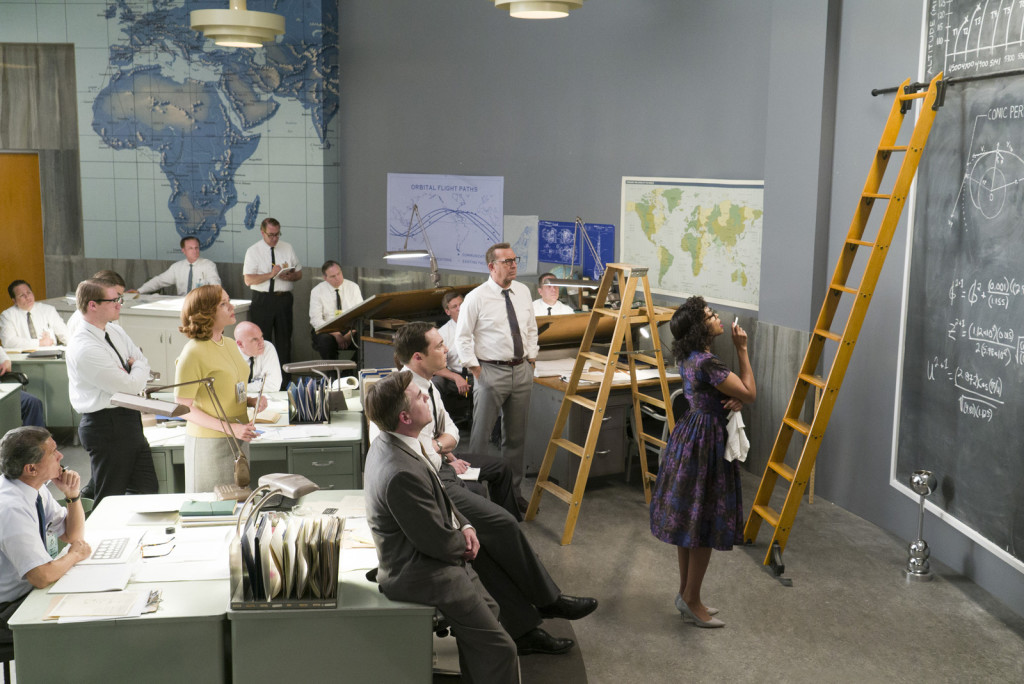
She used to work at Kennedy Space Center during the early Space Shuttle launches, and my grandfather was involved at a relatively high level in the Mercury, Gemini, Apollo, and Shuttle missions, so the space program means a lot to our family. Which makes it all the more astonishing that neither I nor my mom had ever heard of these “hidden figures,” who calculated trajectories and landing coordinates even better than their white, male coworkers. Taraji P. Henson plays Katherine Goble (eventually Johnson), whose knack for algebra earns her the role of “computer” for the Space Task Group, a thankless job of number-crunching with more than a little prejudice aimed her way. Also working at Virginia’s Langley Research Center are Mary Jackson (Janelle Monáe), who strives for the right to be an engineer, and Dorothy Vaughn (Oscar nominee Octavia Spencer), who seeks the elusive title of supervisor over her team of black female computers. In addition to the talented cast of African Americans, including Mahershala Ali as well, Kevin Costner delivers an excellent supporting role as Katherine’s no-nonsense boss who refuses to let bigotry impede the mission at hand. (I rather wish Costner had gotten a Supporting Actor nomination; Ed Harris did for Apollo 13, and there’s nothing Harris did that Costner doesn’t do just as well.)

Image result for hidden figures kevin costner film

I expected to love Hidden Figures going in, with its inspiring role models and old-fashioned enlightenment of unsung history, and I did, perhaps not quite as much as I expected but not in any disappointing way. I felt that the racism early on was a bit heavy-handed, with entire rooms of white men staring at Katherine as if she had two heads, yet I wouldn’t be surprised if that was indeed how it was. Likewise, there are many historical liberties taken for the sake of the story, whether it be composite characters created to get points across or details streamlined to simplify the story. For instance, Costner is made to look like he’s running Mission Control, but he’s at Langley, not Houston. Yet, for the most part, I didn’t mind the license taken, since it served the story to no historical detriment. (There are some interesting true-to-life details thrown in, though, such as the flooring material that snags Mary Jackson’s high heel; my mom can attest to that annoyance.) I also don’t agree with the few complaints I’ve heard about the film’s predictable underdog conventions; when it’s done right, it makes for a great movie, and it’s never been done with these characters and this particular slice of history. For the record, my mom absolutely loved it, except maybe for some of the semi-repetitive soundtrack from Pharrell Williams.

Hidden Figures is a film I believe all African Americans, all women, and everyone else for that matter ought to see. Beyond being an entertaining true story, it’s a film rife with positive messages, both obvious and subtle. Mary Jackson and Dorothy Vaughan may be bitter about their superiors’ scorn, but they don’t take it lying down. Dorothy herself tells Mary not to complain but to do something about it. It’s a court plea in Mary’s case, while Dorothy shows incredible foresight in noticing the incoming IBM meant to replace her human computers and becoming an expert in computer coding to make herself and her team valuable. Her visit to the library is backdropped by a street protest, and while the protest clearly got more attention at the time, it’s her attempts at personal betterment that are more laudable.

Image result for hidden figures film

While Hidden Figures may follow familiar story beats, it’s a marvelously acted feel-good film that ennobles intelligence and mathematics and casts a long overdue spotlight on the unrecognized heroines of NASA. Even if the initial reactions of their biased coworkers can be frustrating, the talent and intellect they displayed are undeniable, as is the satisfaction of seeing it vindicated. They served their nation well, and there was no color-coding to the worry and interest directed at sending Americans into space, evident from black and white families both anxiously watching John Glenn’s historic flight. At our present point in history, what could be more inspiring?

Best line: (Katherine, responding to being underestimated) “I will have you know, I was the first Negro female student at West Virginia University Graduate School. On any given day, I analyze the binomial levels of air displacement, friction, and velocity. And compute over ten thousand calculations by cosine, square root, and lately analytic geometry. By hand. There are twenty bright, highly capable Negro women in the West Computing Group, and we’re proud to be doing our part for the country. So yes, they let women do some things at NASA, Mr. Johnson. And it’s not because we wear skirts. It’s because we wear glasses. Have a good day.”


Rank: List-Worthy


© 2017 S.G. Liput
451 Followers and Counting


VC Pick: The Lake House (2006)

10 Friday Feb 2017

Posted by sgliput in Movies, Poetry, Reviews, Writing

≈ 6 Comments

Tags

Drama, Fantasy, Romance

Image result for the lake house 2006


A house is not a home, it seems,
Until it houses someone’s dreams,
And even if its tenant leaves,
Some part remains beneath the eaves.

Although no new dreams now reside
Within a home unoccupied,
The traces of its owners past
Remain in spirit, left to last.

These ghosts, perhaps, I’d like to meet.
Perhaps I have upon the street.
We both have shared a home, almost,
And when I move, I’ll be the ghost.
__________________

MPAA rating: PG

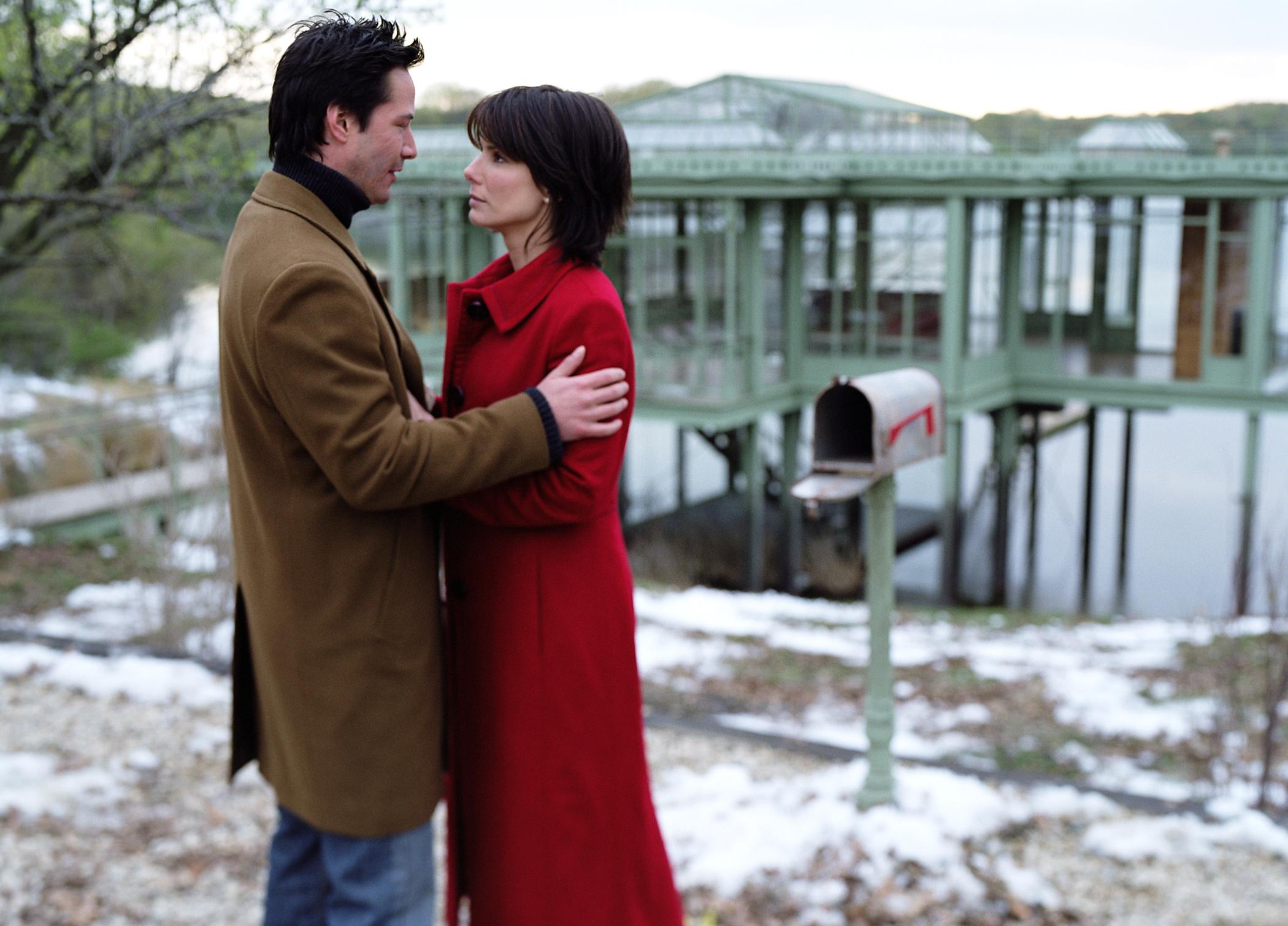
In honor of Valentine’s Day and her upcoming birthday, I’ll be reviewing a VC pick each week for the next month, and The Lake House is the first in her honor. As my VC well knows, I do love a good supernatural romance, especially when its otherworldly elements set it apart from the typical romantic clichés. I found The Lake House to be one of the better members of the genre, pairing Keanu Reeves and Sandra Bullock again twelve years after Speed.

Image result for the lake house 2006

Based on the 2000 Korean film Il Mare, The Lake House follows Dr. Kate Forster (Bullock) and architect Alex Wyler (Reeves) as the former moves out of the titular glass home and the latter moves in. The hook is that they’re doing so two years apart, with Alex in 2004 and Kate in 2006. A mail-forwarding note that Kate leaves behind somehow ends up in Alex’s mailbox two years earlier, and the two discover that they can communicate with each other through their time-traveling letters. I personally love the idea of a pen-pal relationship spanning time itself, and even if the mailbox’s mysterious powers are never explained, the chemistry between Bullock and Reeves is just as evident here as it was in Speed, despite the fact they’re separated from each other much of the time. Also in fine form are Shohreh Aghdashloo as Kate’s doctor friend and Christopher Plummer as Alex’s father and architectural teacher who actually built the lake house.

Oddly enough, the film that kept coming to mind as I watched The Lake House was last year’s anime hit Your Name, another film where two likable characters are separated by time and tragedy and rarely get to meet face to face. Going into the similarities would require too many spoilers, but while Your Name was a better film overall, it’s worth noting the parallels to this earlier movie and the still earlier Il Mare.

Image result for the lake house 2006

While some might consider The Lake House maudlin, I thought its emotional scenes were highly effective, whether it be the inner longing of Alex’s visit to Kate before she knows of their relationship or the retrospective of Alex’s rocky bond with his father.  As for the ending, I saw the “twist” coming a mile away, but the film kept me in doubt as to whether its separation romance would go the way of City of Angels (did NOT like) or Sleepless in Seattle (DID like). As my VC pointed out to me, the chemistry and anticipation of love between the two leads kept us invested in the outcome, and while it toyed with my expectations, the end at least provided the kind of old-fashioned satisfaction that too many modern romances try to avoid for some reason.

The only explanation I have that The Lake House isn’t List-Worthy stemmed from a review I read after seeing it, which pointed out the holes in its time-travel aspects. As much as I want to disregard them, I must admit it’s true; even the most basic laws of time travel are pretty much ignored. For instance, Alex plants a tree outside Kate’s apartment to surprise her, and in her time, it suddenly appears. While it’s a neat visual and a sweet gesture, that tree planted two years earlier should have always been there, such that Kate would never know it hadn’t been there before. Though my VC doesn’t mind, for reasons like this, The Lake House has gone down a tiny bit in my estimation, but it’s still a lovely and poignant romance, just one that shouldn’t really be thought of any deeper than a Shyamalan movie.

Best line: (Alex, of the lake house) “Dad knew how to build a house, not a home.”

VC’s best line: (Alex, after glimpsing Kate in 2004) “I don’t know if you remember, but we saw each other. That is, I saw you. You never told me… how beautiful you were.”   (Kate) “Well, maybe you saw someone else. That was a bad hair year for me.”


Rank: List Runner-Up


© 2017 S.G. Liput
451 Followers and Counting


2017 Blindspot Pick #1: Shuffle (2011)

31 Tuesday Jan 2017

Posted by sgliput in Blindspot, Movies, Poetry, Reviews, Writing

≈ Leave a comment

Tags

Drama, Fantasy, Mystery, Thriller

Image result for shuffle kurt kuenne


Life is hard enough in order,
Each day in succession gone,
Until one day we look behind and see mistakes a plenty,
And all in twenty-twenty.

It might seem harder out of order,
Jumping years to days thought gone,
But might that give our stubborn minds a little new perspective
And make us more reflective?

Our destinies are ours to order,
Rampant chances till they’re gone,
And some forget fulfillment rests on what we each will do.
The question is, will you?
_________________

MPAA rating: PG-13

Since I’m new to this Blindspot series and a notorious procrastinator, of course I waited to the last day of the month to review my first Blindspot pick, but I surely did choose a good one to start with in Shuffle. I have my good friend MovieRob to thank for recommending this time travel puzzler after he became a big fan of independent director Kurt Kuenne. I see why, because Shuffle combines so much of what I love about the time travel genre with a unique and compelling story.

Shuffle is as lean a narrative as I’ve seen, diving right into the tale of a man displaced within his own lifetime with every scene adding something to the plot. From the first moments, Lovell Milo explains to a psychiatrist that every time he falls asleep (which is often), he awakens on a different day in his life, sometimes as an old man, sometimes as a child, or anywhere in between. It takes an exhausting toll on him, and he has no idea why it’s happening, explaining away potential plot holes with the mystery that he “just knows” certain facts about himself, such as his age at every jump in time. While he’s tempted to despair at this seemingly endless headache, different strangers at certain points urge him to “pay attention” because there’s something to learn from all this, and indeed there is.

Image result for shuffle kurt kuenne

There are a lot of touchstones or spiritual predecessors one could point to with Shuffle, and they’re a pantheon of great stories. The choppy editing and sudden shifts in place and time might recall Christopher Nolan’s Memento, though Shuffle is much easier to follow and much more rewarding. The theme of redemptive second chances brings to mind A Christmas Carol and It’s a Wonderful Life, and the time travel jumps echo the great sci-fi elements of Quantum Leap, The Time Traveler’s Wife, and the Star Trek: Voyager episode “Before and After,” where Kes periodically lives her life backwards. I also loved the fleeting moments of prayer, where Lovell pleads desperately with God for help, though in a general sense, like how Quantum Leap’s Sam Beckett recognizes that there must be a higher power directing his experiences.

One of the most impressive aspects of Shuffle is how well it was made on what was clearly a small budget. The production values are obviously limited, which is felt on occasion, but it’s often covered quite nicely. A behind-the-scenes featurette revealed that the same living room was used as an all-purpose set for most of the interior scenes, but I couldn’t tell at all. Unlike so many small-budget films, the acting and script are also above average, with special attention to revealing plot points gradually as Lovell learns of them and never getting lost amid the flurry of time leaps. The actors aren’t big-name stars (unless you watch the TV show Bones), but everyone involved provides good performances, even the child actors and especially T. J. Thyne as Lovell.

Image result for shuffle t. j. thyne

Again, a big thank-you to Rob for his recommendation; it being an under-the-radar film that had trouble getting noticed before becoming a festival hit, I doubt I’d ever have seen Shuffle otherwise. My VC loved it as well, proving this is a film that deserves far more recognition. There’s a lot to admire about this film, from its structure and subtle foreshadowing to individual emotional scenes that just might put a lump in your throat. Stylistic choices also add visual interest, such as the backlighting that often imparts a luminous quality to certain scenes, and the color brightness changes depending on the timeframe. The director’s cut is apparently all in black-and-white, but I preferred the usage of color, particularly in the final scene.

I’ve read that many people disliked the ending, thinking it veers into overly satisfying territory, but I thought the whole final act was beautiful, a couple creative choices notwithstanding. In its testament of hope, Shuffle still acknowledges that mistakes and heartache can’t always be undone, but how we react to them can make the difference between a life fulfilled and a life wasted.

Best line: (Lovell’s mother, when he’s a grown man) “It seems like just yesterday, he was eight.”   (Lovell) “Actually, that was two days ago.”


Rank: List-Worthy


© 2017 S.G. Liput
448 Followers and Counting


The Empire of Corpses (2015)

29 Sunday Jan 2017

Posted by sgliput in Movies, Poetry, Reviews, Writing

≈ 4 Comments

Tags

Action, Animation, Anime, Drama, Sci-fi, Thriller

Image result for the empire of corpses film


When I am dead, my soul no longer here,
What happens to my body is unknown.
‘Tis but a shell, an empty souvenir
Of my time in a world from which I’ve flown.
Most likely, it will end up in the ground,
A monument for time to chip away,
But if some more productive use were found,
Its former owner would not have a say.
If man no longer buried his remains
And flouted promises of “rest in peace,”
His conscience would be numb as it disdains
What once deserved respect upon decease.
What world of Frankensteins I’d leave behind
If man were to defile his own kind!
________________

MPAA rating: should be PG-13 or maybe older

The Empire of Corpses looks like an incredible, action-packed, thought-provoking movie, but it’s not. It just looks like one. Based on a novel by a Japanese author dubbed Project Itoh, who died of cancer before the book’s completion, this anime zombie film sets up an alternative steampunk version of Victorian England, where technology has allowed mankind to reanimate the dead as essentially robotic slaves, programming them to perform menial labor as a growing workforce in the world economy. These walking corpses can be recognized by their pale gray skin and passive expressions, but though they seem to understand and follow orders, they are without a soul. Into this hypothetical world is placed an amalgamation of historic and literary figures, a la The League of Extraordinary Gentlemen. John Watson is the hero, a corpse scientist who has resurrected a dead friend he renames Friday and now searches for a way to return his soul. Blackmailed by M of the James Bond franchise, he sets out in search of the fabled research of Dr. Victor Frankenstein, aided and impeded by the likes of Ulysses Grant, Thomas Edison, and characters from The Brothers Karamazov and The Future Eve.

Image result for the empire of corpses film

While that description sounds rather awesome, especially when paired with a world full of brainwashed zombies, The Empire of Corpses seems eager to spoil a good thing. After the adventure begins on a thrilling note, it quickly descends into opaque philosophical pondering and inscrutable character motivations. After watching it all the way through, I recognize a worthwhile, imaginative story, full of food for thought, but actually watching it scene by scene can easily frustrate and confuse. By the end, the villain’s revealed plot (the second villain since one wasn’t enough) is baffling and poorly explained, making it clear just how vaguely defined the laws of this corpse technology are.

I hate to be so negative, especially when The Empire of Corpses looks so amazing. The animation is crisp and atmospheric and brings this theoretical world to life in ways that far surpass the deficient script. I’m glad I saw it, if only for the visual flair, such as the thrill of seeing a woman on the back of a galloping stagecoach mowing down zombies with a flamethrower. The action scenes are exceptional, but it makes it that much more disappointing that the rest of the film couldn’t measure up.

Image result for the empire of corpses film

The Empire of Corpses is not without its virtues; I would just like it much more if it made more sense. It does feature some intriguing themes about life and death and manages to create a unique entry in the zombie genre, complete with zombie suicide bombers. The English dub is actually quite good, but the animation is the main attraction for fans of the medium, though certain scenes can get bloody (begging the question of why a dead corpse would bleed). This film is one of three anime movies based on Project Itoh’s novels (the others being last year’s Harmony and this year’s Genocidal Organ), and I certainly hope the other two have more than visual merit alone.


Rank: Honorable Mention


© 2016 S.G. Liput
444 Followers and Counting
 

← Older posts
Newer posts →

Recent Posts

  • We Didn’t Start 2025 (Recap)
  • NaPoWriMo 2025 Recap (Finally)
  • Sonic the Hedgehog 3 (2024)
  • It Happened One Night (1934)
  • Spellbound (2024)

Recent Comments

associatesofshellymann's avatarassociatesofshellyma… on My Top Twelve La La La So…
Kit's avatarKit Nichols on Bonnie and Clyde (1967)
lifelessons's avatarlifelessons on Look Back (2024)
Carol Jackson's avatarCarol Jackson on The Thief of Bagdad (1940…
Stephen's avatarStephen on Love Story (1970)

Archives

  • January 2026
  • December 2025
  • May 2025
  • April 2025
  • March 2025
  • February 2025
  • January 2025
  • December 2024
  • May 2024
  • April 2024
  • March 2024
  • February 2024
  • January 2024
  • December 2023
  • November 2023
  • October 2023
  • September 2023
  • July 2023
  • June 2023
  • May 2023
  • April 2023
  • March 2023
  • February 2023
  • January 2023
  • December 2022
  • November 2022
  • October 2022
  • September 2022
  • August 2022
  • July 2022
  • June 2022
  • May 2022
  • April 2022
  • March 2022
  • February 2022
  • January 2022
  • December 2021
  • November 2021
  • October 2021
  • September 2021
  • August 2021
  • July 2021
  • June 2021
  • May 2021
  • April 2021
  • March 2021
  • February 2021
  • January 2021
  • December 2020
  • November 2020
  • October 2020
  • September 2020
  • August 2020
  • July 2020
  • June 2020
  • May 2020
  • April 2020
  • March 2020
  • February 2020
  • January 2020
  • December 2019
  • November 2019
  • October 2019
  • September 2019
  • August 2019
  • July 2019
  • June 2019
  • May 2019
  • April 2019
  • March 2019
  • February 2019
  • January 2019
  • December 2018
  • November 2018
  • October 2018
  • September 2018
  • August 2018
  • July 2018
  • June 2018
  • May 2018
  • April 2018
  • March 2018
  • February 2018
  • January 2018
  • December 2017
  • November 2017
  • October 2017
  • September 2017
  • August 2017
  • July 2017
  • June 2017
  • May 2017
  • April 2017
  • March 2017
  • February 2017
  • January 2017
  • December 2016
  • November 2016
  • October 2016
  • September 2016
  • August 2016
  • July 2016
  • June 2016
  • May 2016
  • April 2016
  • March 2016
  • February 2016
  • January 2016
  • December 2015
  • November 2015
  • October 2015
  • September 2015
  • August 2015
  • July 2015
  • June 2015
  • May 2015
  • April 2015
  • March 2015
  • February 2015
  • January 2015
  • December 2014
  • November 2014
  • October 2014
  • September 2014
  • August 2014
  • July 2014
  • June 2014
  • May 2014
  • April 2014
  • March 2014
  • February 2014
  • January 2014
  • December 2013

Categories

  • Blindspot
  • Blogathon
  • Christian
  • Movies
  • Music
  • NaPoWriMo
  • Poetry
  • Reviews
  • TV
  • Writing

Meta

  • Create account
  • Log in
  • Entries feed
  • Comments feed
  • WordPress.com

Recent Posts

  • We Didn’t Start 2025 (Recap)
  • NaPoWriMo 2025 Recap (Finally)
  • Sonic the Hedgehog 3 (2024)
  • It Happened One Night (1934)
  • Spellbound (2024)

Recent Comments

associatesofshellymann's avatarassociatesofshellyma… on My Top Twelve La La La So…
Kit's avatarKit Nichols on Bonnie and Clyde (1967)
lifelessons's avatarlifelessons on Look Back (2024)
Carol Jackson's avatarCarol Jackson on The Thief of Bagdad (1940…
Stephen's avatarStephen on Love Story (1970)

Archives

  • January 2026
  • December 2025
  • May 2025
  • April 2025
  • March 2025
  • February 2025
  • January 2025
  • December 2024
  • May 2024
  • April 2024
  • March 2024
  • February 2024
  • January 2024
  • December 2023
  • November 2023
  • October 2023
  • September 2023
  • July 2023
  • June 2023
  • May 2023
  • April 2023
  • March 2023
  • February 2023
  • January 2023
  • December 2022
  • November 2022
  • October 2022
  • September 2022
  • August 2022
  • July 2022
  • June 2022
  • May 2022
  • April 2022
  • March 2022
  • February 2022
  • January 2022
  • December 2021
  • November 2021
  • October 2021
  • September 2021
  • August 2021
  • July 2021
  • June 2021
  • May 2021
  • April 2021
  • March 2021
  • February 2021
  • January 2021
  • December 2020
  • November 2020
  • October 2020
  • September 2020
  • August 2020
  • July 2020
  • June 2020
  • May 2020
  • April 2020
  • March 2020
  • February 2020
  • January 2020
  • December 2019
  • November 2019
  • October 2019
  • September 2019
  • August 2019
  • July 2019
  • June 2019
  • May 2019
  • April 2019
  • March 2019
  • February 2019
  • January 2019
  • December 2018
  • November 2018
  • October 2018
  • September 2018
  • August 2018
  • July 2018
  • June 2018
  • May 2018
  • April 2018
  • March 2018
  • February 2018
  • January 2018
  • December 2017
  • November 2017
  • October 2017
  • September 2017
  • August 2017
  • July 2017
  • June 2017
  • May 2017
  • April 2017
  • March 2017
  • February 2017
  • January 2017
  • December 2016
  • November 2016
  • October 2016
  • September 2016
  • August 2016
  • July 2016
  • June 2016
  • May 2016
  • April 2016
  • March 2016
  • February 2016
  • January 2016
  • December 2015
  • November 2015
  • October 2015
  • September 2015
  • August 2015
  • July 2015
  • June 2015
  • May 2015
  • April 2015
  • March 2015
  • February 2015
  • January 2015
  • December 2014
  • November 2014
  • October 2014
  • September 2014
  • August 2014
  • July 2014
  • June 2014
  • May 2014
  • April 2014
  • March 2014
  • February 2014
  • January 2014
  • December 2013

Categories

  • Blindspot
  • Blogathon
  • Christian
  • Movies
  • Music
  • NaPoWriMo
  • Poetry
  • Reviews
  • TV
  • Writing

Meta

  • Create account
  • Log in
  • Entries feed
  • Comments feed
  • WordPress.com

Blog at WordPress.com.

  • Subscribe Subscribed
    • Rhyme and Reason
    • Join 814 other subscribers
    • Already have a WordPress.com account? Log in now.
    • Rhyme and Reason
    • Subscribe Subscribed
    • Sign up
    • Log in
    • Report this content
    • View site in Reader
    • Manage subscriptions
    • Collapse this bar