• Home
  • About Me
  • The List
  • THE LIST (2016 Update)
  • THE LIST (2017 Update)
  • THE LIST (2018 Update)
  • THE LIST (2019 Update)
  • THE LIST (2020 Update)
  • THE LIST (2021 Update)
  • THE LIST (2022 Update)
  • Top Twelves and More
  • The End Credits Song Hall of Fame

Rhyme and Reason

~ Poetry Meets Film Reviews

Rhyme and Reason

Tag Archives: Drama

The Visit (2015)

06 Thursday Apr 2017

Posted by sgliput in Movies, NaPoWriMo, Poetry, Reviews, Writing

≈ 3 Comments

Tags

Comedy, Drama, Horror, Mystery, Thriller

Image result for the visit 2015

(Today’s NaPoWriMo prompt was for a poem that looks at something from different viewpoints, such as how differently children view their grandparents.)


A visit with grandparents can be generous and merry;
Depending on the child, though, reactions often vary.

I.

Eager meeting, cheers of greeting,
Warm embraces, tender faces,
Cookies, pies, and counsel wise,
And cash they share for being there.
The rarity of reprimand
Will make you wish all parents were grand.

II.

Cheeky pinching, optic squinching,
Cling embraces, wrinkled faces,
Jell-O, prunes, and no cartoons,
And elder smells from creams and gels.
You wipe off lipstick with your sleeve
And count the minutes till you leave.

III.

Basements dreary, habits eerie,
Laughs as cackles, rules as shackles;
Attempts at cheer inspire fear,
An aged nightmare to keep you there.
Although dread comes with every visit,
I’m sure it’s nothing to fear, or is it?
_________________

MPAA rating: PG-13

After a string of films that ranged from poor to terrible (The Last Airbender being the absolute worst), M. Night Shyamalan gave his fans hope of a comeback with The Visit, a small but effective found-footage horror for everyone who was ever afraid of their grandparents. (Not me, of course.) Becca (Olivia DeJonge) and her younger brother Tyler (Ed Oxenbould) finally get to meet their grandparents, who reach out to their estranged daughter (Kathryn Hahn) and propose a five-day visit. While Mom is off on a cruise, the kids enjoy quality time with Nana (Deanna Dunagan) and Pop Pop (Peter McRobbie), a week that slowly takes a turn for the weird.

Image result for the visit  film 2015

I’ve never been a fan of the shaky-cam found-footage style, except for Lunopolis, but The Visit finds a decent reason for everything to be caught on tape, namely Becca’s attempt to help her mom and grandparents reconcile through her recordings and interviews. Plus, she’s an aspiring filmmaker, and she and her brother apparently enjoy filming everything. At first, they record the quaint pleasures of meeting new family members and good-natured sibling bickering, but soon Pop Pop and especially Nana begin showing signs of bizarre behavior, particularly after dark. The first-person perspective does lend itself to some genuinely creepy moments, from an intense game of tag in the house’s crawlspace to slow reveals as the camera-holder approaches something eerie. In true horror fashion, Shyamalan imbues tension into seemingly ordinary things, like cleaning the oven, and in true Shyamalan fashion, there are clues dropped that don’t make total sense until a certain twist.

The one thing that I can’t quite reconcile is the description of The Visit as a horror comedy. I suppose it’s laughable that the kids and their mother at first blame the grandparents’ abnormalities on just being old, but there’s little here that I would consider funny, unless you’re amused by intense weirdness. In addition, the final explanation for everything has some shock value at first, but how it plays out is rather conventional, detracting from all the buildup. I did admire the fine performances and some subtle themes of forgiveness and letting go of resentment, especially at the end, but, even if it’s a step in the right direction, The Visit is still a far cry from Shyamalan’s early successes.

Best line: (Becca, explaining away a midnight snack) “I can’t sleep. I need Nana’s cookies. I’m gonna turn a personal addiction into a positive cinematic moment.”


Rank:  Honorable Mention


© 2017 S.G. Liput
463 Followers and Counting
 

The Wall (Die Wand) (2012)

05 Wednesday Apr 2017

Posted by sgliput in Movies, NaPoWriMo, Poetry, Reviews, Writing

≈ Leave a comment

Tags

Drama, Sci-fi

Image result for die wand 2012

(Today’s NaPoWriMo prompt was for a poem centered on some aspect of the natural world, so I picked a film with beautiful scenery.)


A stone in the mountains was where I would sit
When my mind became tenuous, troubled, and torn,
And there I would gaze at the dips and ascents
Of a green countryside so serene and immense
That I doubt it had changed since the planet was born.

The sun had God’s view where the clouds would allow,
And outcrops of trees bent to frame the landscape.
A forested quilt full of patches and glades
Extended below me in emerald shades;
A mist hovered o’er with no hope of escape.

My limited world, feeling smaller each day,
In view of this limitless vista below,
Was somehow bestowed with more peace and more hope
That this life on this stone on this sumptuous slope
Was not so confined and had room still to grow.
_________________

MPAA rating: Not Rated (PG, nothing much objectionable, except some animal deaths)

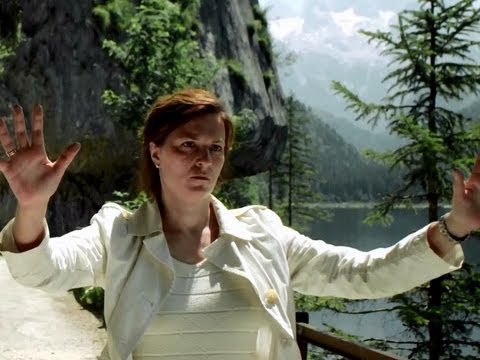
When it comes to isolationist cinema like Cast Away or Moon, none are quite as simple and direct as The Wall, an Austrian-German film about a young woman whose visit to a mountain cabin becomes permanent when an invisible wall cuts her off from the outside world. The concept may be reminiscent of Stephen King’s Under the Dome, but it plays out like an extended episode of The Twilight Zone, with the nameless woman (Martina Gedeck) forced to survive with this one simple, unavoidable wrench thrown into the works of her life.

Image result for die wand 2012

It’s also a sublimely quiet film with a bare minimum of spoken dialogue, instead relying on Gedeck’s voiceover recounting her experience via journal entries, like Robinson Crusoe detailing his survival methods. Yet, beyond the activity, there’s a substantial focus on the woman’s feelings, doubts, fears, and inner reflections, from her relationships with her animal companions to her nightmares of her world continuing to shrink and deep ruminations of life and death.

Because it’s such a philosophical and contemplative film, it’s not something to watch if you’re sleepy and will probably bore you even if you’re not. Plus, it ends in Twilight Zone fashion with some raw emotion and little closure. Yet, set amidst the classical violin score and some absolutely gorgeous German countryside, there’s a subdued tranquility to the struggles of a tortured soul struggling in silence. It’s sad and lovely and probably something I’d only watch again if I couldn’t sleep.

Best line: (the woman) “There is no rational emotion as love. Love makes the life of the lovers and the beloved ones more bearable. We have to just recognize in time that this was our only option. Our only hope for a better life.”


Rank: Honorable Mention


© 2017 S.G. Liput
462 Followers and Counting


The Imitation Game (2014)

04 Tuesday Apr 2017

Posted by sgliput in Movies, NaPoWriMo, Poetry, Reviews, Writing

≈ Leave a comment

Tags

Biopic, Drama, History

Image result for the imitation game film

(Today’s NaPoWriMo prompt was to incorporate an “enigma” or something hidden into the poem, so I thought a movie about solving Enigma would be perfect. For my own secret message, try stringing together the underlined letters.)

The German Codes in safety rode
Upon the winds of radio,
And passed with ease their strategies
To Mystify the Allied foe.

Bright minds were scratched and Egos matched,
The Riddle daily taxing Brains
Who knew their best At this math Test
Could still Harm lives and Squander gains.

Unraveling this Risky thing
Was not for one man to Explain.
What Cracked And tamed the Numbers game?
A mind Combined To break the chain.
________________

MPAA rating: PG-13

Benedict Cumberbatch seems most comfortable playing the smartest guy in the room, even if he only thinks he’s the smartest guy in the room. Sherlock, Doctor Strange, etc. exemplify this, and The Imitation Game allowed him to apply that proven characterization to a real-life figure, Alan Turing, a mathematical computer pioneer who helped crack the German Enigma code during World War II.

Cumberbatch is the film’s strongest asset, channeling the same troubled-genius mentality as Russell Crowe in A Beautiful Mind, not so much in the mental health aspects as in his blinding self-confidence and difficulty working with others. His acting, as always, is beyond reproach and distinguishes Turing as a man of vision frustrated by the inflexibility of his superior (Charles Dance) but too single-minded himself to recognize the need for collaboration with the rest of his team of genius mathematicians. Keira Knightley’s Joan Clarke serves as an attractive reminder that a talent for numbers is not Turing’s alone, and it’s an insightful pleasure watching Cumberbatch engage with her and his fellow teammates to perfect his decoding machine. The espionage angle involving a major general from MI6 (Mark Strong) is also peppered with intrigue.

Image result for the imitation game film

The performances, Alexandre Desplat’s score, and the period-piece re-creations are top-notch, but the film’s historical accuracy leaves much to be desired. Many “based-on-a-true-story” movies take artistic license, but learning after the fact that most of the events of the film occurred completely differently is rather disappointing. Likewise, the film’s ultimate transition from code breaking and war strategies to a social tragedy centered on the treatment of Turing’s homosexuality lost my interest. This aspect of Turing’s life was clearly important and lamentable, but it felt tacked on and even a tad manipulative when paired with the historical liberties. The Imitation Game is handsome and well-acted and even consummate in its first half, but the dual intentions of the filmmakers to merge two kinds of stories, one about war decoders and one about social injustice, feel like a forced fit that doesn’t live up to its early promise.

Best line: (Turing’s childhood friend Christopher, and later Joan) “Sometimes it’s the very people who no one imagines anything of who do the things no one can imagine.”


Rank: Honorable Mention


© 2017 S.G. Liput
461 Followers and Counting


Rabbit Hole (2010)

03 Monday Apr 2017

Posted by sgliput in Movies, NaPoWriMo, Poetry, Reviews, Writing

≈ Leave a comment

Tags

Drama

Image result for rabbit hole film

(Today’s NaPoWriMo prompt was for an elegy with some kind of unorthodox focus. I don’t know about unusual, but a film about loss seemed a good fit for a mournful elegy.)


The boy who died filled a hole, you know,
Before he lost his chance to grow,
Before the accident defined
And left the hole behind.

Where he’d have been, there’s no one there
To fill his kindergarten chair,
To chase the dog or yet annoy
His parents with a toy.

Where he’d have been, his parents frame
And argue who is more to blame.
The empty frame can comfort bring
Or aggravate the sting.

His loss unravels and unrolls
A family into separate souls,
Two wondering if they can fill
The name of parent still.

While life goes on, the hole will stay,
Though cloaked in time till Judgment Day.
To build from it is not a sin,
The hole where he’d have been.
__________________

MPAA rating: PG-13

Based on a play by David Lindsay-Abaire, Rabbit Hole is a deeply affecting portrait of realistic familial grief, much in the vein of Ordinary People and Manchester By the Sea, though closer in appeal to the former. It’s not so much about tragedy as how people cope with it and tackles the subject in an intimate way that draws phenomenal performances from its main actors, most notably Aaron Eckhart and Oscar nominee Nicole Kidman as parents grieving the death of their little boy.

Months after their son Danny is killed by a car, Becca (Kidman) and Howie Corbett (Eckhart) attend group therapy sessions and go about life as normal, but life is not the same. With every reminder of Danny, the two react in opposite ways: Howie values every smudge and picture made by his son, while Becca wants to give away his clothes and even sell the house to escape his ever-present memory. Likewise, they seek out comfort in different people, whether a sympathetic acquaintance who understands grief (Sandra Oh) or the very person responsible for Danny’s death (Miles Teller). Through it all, the Corbetts’ everyday life is like a scab covering the wound, quick to be torn off at any mention of Danny, which leads to some uncomfortable and heart-rending emotional fireworks. Nicole Kidman received the lion’s share of the praise, including an Oscar nomination, but I thought Eckhart was just as good, matching the high quality of all the performances.

Image result for rabbit hole film miles teller

Rabbit Hole brings home how elusive comfort can be in the wake of an unspeakable grief and how it may be found in unexpected places, perhaps a comic book, a dog, or a conversation that once provoked resentment. I would have liked Becca to see the value in the religious solace she denounces at first, but her mother Nat (Dianne Wiest) mentions the support of her church, and it’s something of an irony that Becca does find some comfort in a different perception of the supernatural. Eckhart and Kidman deliver nuance and pain in their award-worthy roles and, with the rest of the excellent cast, evoke so many facets of the grieving process, making Rabbit Hole a heartbreaking watch that nevertheless doesn’t lose sight of the light at the end of the tunnel.

Best line: (Becca) “Does it ever go away?”
(Nat) “No, I don’t think it does. Not for me, it hasn’t – has gone on for eleven years. But it changes, though.”
(Becca) “How?”
(Nat) “I don’t know… the weight of it, I guess. At some point, it becomes bearable. It turns into something that you can crawl out from under and… carry around like a brick in your pocket. And you… you even forget it, for a while. But then you reach in for whatever reason, and – there it is. Oh, right, that. Which could be awful – not all the time. It’s kinda… not that you like it exactly, but it’s what you’ve got instead of your son. So, you carry it around. And uh… it doesn’t go away. Which is…”
(Becca) “Which is what?”
(Nat) “Fine, actually.”


Rank: List-Worthy (tied with Ordinary People)


© 2017 S.G. Liput
460 Followers and Counting


Catch Me If You Can (2002)

01 Saturday Apr 2017

Posted by sgliput in Movies, NaPoWriMo, Poetry, Reviews, Writing

≈ 6 Comments

Tags

Biopic, Comedy, Drama

Image result for catch me if you can 2002

(For Day 1 of NaPoWriMo, the prompt was to write a poem in the style of former U.S. Poet Laureate Kay Ryan, which might be summed up as short lines, tight rhymes, and deep thoughts.)


The urge to run,
To risk and dare
With the nerve to splurge
Is a powerful one.
Why stay put
With an itchy foot
When fun is
To be had out there?
A still life is fine,
Nothing bad, no offense,
But I swear
Between me
And life checked by design,
The difference
Is the same
Between watching a film
And a frame.
___________________

MPAA rating: PG-13

Back when Leonardo DiCaprio still had his Jack Dawson boyishness about him, he starred in Catch Me If You Can, Steven Spielberg’s con artist lark based on real life forger Frank Abagnale. This story of a man who impersonated an airline pilot, a doctor, and a lawyer and stole millions of dollars back in the 1960s isn’t nearly as heavy as the actual consequences of those actions, but Spielberg hits a good mix of tone and style.

Image result for catch me if you can 2002 walken

The trickiest part of this kind of story was making Frank likable enough for the audience to sympathize with him, despite the wanton fraud he commits, and it’s done rather effortlessly by DiCaprio’s natural appeal and a look into his childhood. Following the example of his cajoling father (Christopher Walken), Frank enjoys misrepresenting himself and pushes to see how far his fibs can go, especially after his family is torn apart by financial trouble and divorce. Once he runs away, he becomes a master of forging checks and bluffing his way through any obstruction; his schemes soon catch the notice of FBI agent Carl Hanratty (Tom Hanks, less likable than usual), and the chase is on.

Catch Me If You Can presents its subject with some subtle skill. On the one hand, there’s the risky romance of Frank pushing every boundary he can, fueled by the thrill of the chase and an unwillingness to give up. Plus, it’s just fascinating to watch feats of duplicity from the ‘60s that I doubt anyone could get away with nowadays. Yet at the same time, Frank is something of a tragic figure as well, deprived of a normal family or love life. His early failed fraud attempts show he’s a fallible kid who simply got better with practice, and at the end of the day, he can’t escape the loneliness of his rootless impostor existence, especially when the only person you have to call on Christmas Eve is the FBI agent hunting you.

As well as it handles its subject matter, the film can’t quite escape the fact that its protagonist is a criminal, an objection that is probably personal on my part since I’ve never been a fan of heist films. It’s entertaining to watch his devil-may-care adventures, but it’s still wrong, especially how he dumps a would-be fiancée (very young Amy Adams) for the sake of escape, an offense the film never revisits. Thankfully, the final ten minutes or so vastly improve and redeem the true-crime narrative by utilizing Frank’s experience and attention to detail and bringing some constructive good out of it all.

Image result for catch me if you can 2002

Spielberg’s version of events apparently changes some aspects of the history, but the real Abagnale didn’t mind the embellishments (which isn’t surprising) and approved of the finished film. Catch Me If You Can serves as an entertaining outlet for Spielberg, Hanks, and especially DiCaprio and Walken, and while it proves crime can pay in the end, the life of a fraud can be deeper than it looks.

Best line: (Frank, finally telling the truth) “Brenda, I don’t want to lie to you anymore. All right? I’m not a doctor. I never went to medical school. I’m not a lawyer, or a Harvard graduate, or a Lutheran. Brenda, I ran away from home a year and a half ago when I was 16.”   (Brenda) “Frank? Frank? You’re not a Lutheran?”


Rank: List Runner-Up


© 2017 S.G. Liput
460 Followers and Counting


2017 Blindspot Pick #3: An American in Paris (1951)

26 Sunday Mar 2017

Posted by sgliput in Blindspot, Movies, Poetry, Reviews, Writing

≈ 6 Comments

Tags

Comedy, Drama, Musical, Romance

Image result for an american in paris film

It’s magical in Paris,
At least in film and book,
Where painters dance
And find romance
And anyone can cook.

Real Paris may be different;
But skyline stars still shine,
Where love can stir
And dreams occur;
That Paris can be mine.
____________

MPAA rating:  All (easily a G)

I do have a soft spot for musicals, but for some reason, I’d never gotten around to watching what many consider one of the pinnacles of classic musical cinema. Luckily, it’s one of my Blindspots. An American in Paris combines some of the best aspects of the genre, particularly Gene Kelly’s dancing and George Gershwin’s music, but there’s something lacking too.

I’d only ever seen the famous dance scene that serves as the film’s centerpiece, and since that is largely symbolic, I wasn’t sure what to expect as far as a plot. Kelly plays struggling artist and American expat Jerry Mulligan, who lives contentedly in Paris while periodically displaying his paintings on the street. Much to his surprise, he attracts the attention of wealthy socialite Milo Roberts (Nina Foch), who volunteers to sponsor his talent, even if Jerry’s not sure she’s doing so solely out of the goodness of her heart. After a bit of love at first sight, he seeks to woo a young Parisian (Leslie Caron), who is torn between love and loyalty. It’s a good thing Kelly is so darn likable because his character is a bit of a jerk at times, such as how he pursues his love interest without a thought to the other woman accompanying him, but for the most part, Kelly’s natural charisma engages wonderfully with his costars.

Image result for an american in paris film

While the plot works well enough, the musical numbers overshadow the story connecting them, and the fact that most of the Gershwin songs were previously written and don’t have much bearing on what’s going on makes them feel a bit disjointed. They shouldn’t feel like this, but the songs are padding for an uninspired plot, even if they’re the best aspects of the film. I honestly could have skipped the storyline and simply watched the musical numbers, which would make for a great montage but not exactly a great film.

There’s still some superlative style to this Vincente Minnelli-directed lark, from the personable introduction to the three main male characters to the show-stopping pageantry of the songs. One dream sequence with Oscar Levant as Jerry’s unemployed pianist friend may be one of those filler numbers, but it employs some visual trickery that was likely very innovative at the time. And, having heard a good deal of Gershwin in Mr. Holland’s Opus, it was nice to see one of its original visual accompaniments.

Image result for an american in paris film

An American in Paris may be a beloved classic, but it’s nowhere near the level of Kelly’s Singin’ in the Rain. The plot is a charming but average romance that completely ignores and offers no closure to the side characters, and even the grand 17-minute tap dance/ballet climax set to Gershwin’s title music ran too long and threatened to lose my interest at times. I don’t want to knock it too hard, but there are much better musicals than the Best Picture of 1951. Still, the musical scenes should easily put a smile on anyone’s face, and I can watch Gene Kelly’s effortless talent any day.

Best line: (Jerry) “Back home, everyone said I didn’t have any talent. They might be saying the same thing over here, but it sounds better in French.”


Rank: List Runner-Up


© 2017 S.G. Liput
457 Followers and Counting


Hacksaw Ridge (2016)

19 Sunday Mar 2017

Posted by sgliput in Movies, Poetry, Reviews, Writing

≈ 8 Comments

Tags

Drama, Thriller, War

Image result for hacksaw ridge film

Though shots ring out both far and near,
And men engage in hate and fear,
I will not.
I’ll do my duty, honorbound,
But for my faith, I’ll stand my ground,
As I ought.

Though every man insist that I
Should join their wish that others die,
I cannot.
And when war’s done, my heart’s belief
Will hold more worth and bear less grief
Than they thought.
___________________

MPAA rating: R (solely for violence)

Perhaps appropriately considering its subject matter, Hacksaw Ridge caused me a bit of a crisis of conscience. I don’t typically watch extremely violent movies, which is why I’ve avoided films like Braveheart and anything Tarantino, and I was very hesitant to see Hacksaw Ridge after hearing of the intensity of its battle sequences. My VC, who is of the same mind, urged me not to, but there were enough positive elements inherent in the story of conscientious objector and war hero Desmond Doss that I decided to risk it. That actually made Hacksaw Ridge the first R-rated film I’d seen in the theater, and by the end, I was glad I did.

Image result for hacksaw ridge film

Mel Gibson may have shot his reputation in the foot years ago, but his talent as a filmmaker is undeniable, and it’s surprising and inspiring that he’s been somewhat forgiven by Hollywood, based on the number of Oscar nominations and wins Hacksaw Ridge received. His latest film has a lot in common with The Passion of the Christ; both carry deep religious meaning for Christians especially and also indulge in some gut-wrenching bloodshed that mark them as clearly not for everyone. It took me a while to work up the nerve for Passion of the Christ, but now I watch it every Good Friday; Hacksaw Ridge, likewise, requires a strong stomach in parts, but the overall story makes it worth it.

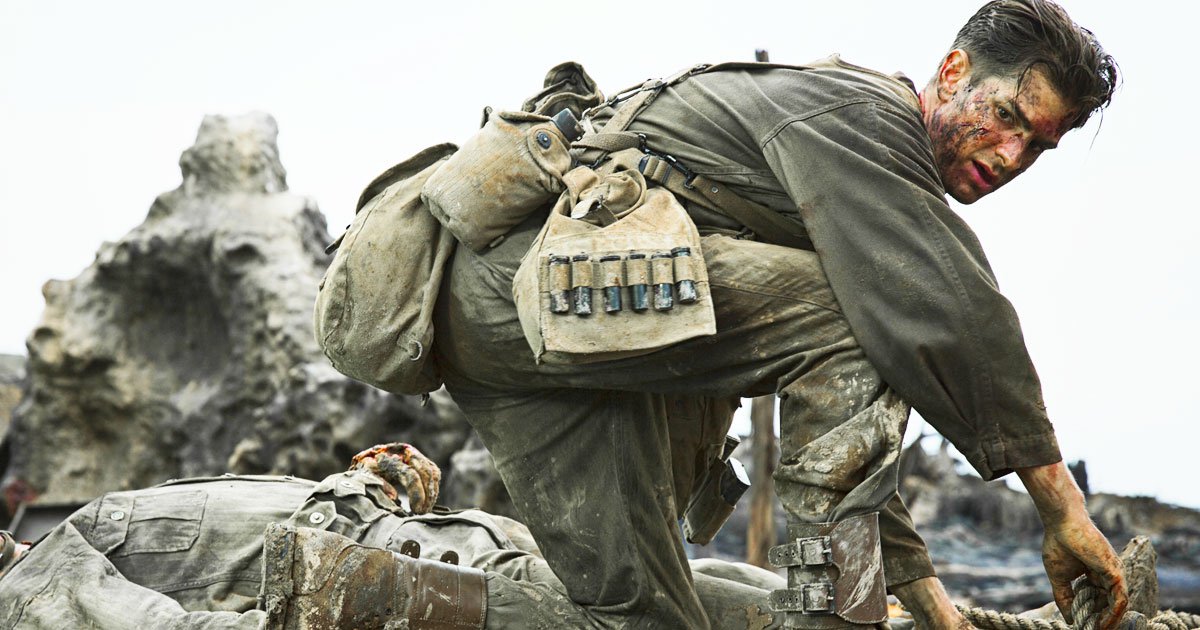
Andrew Garfield hardly seemed like an obvious choice for the potential Oscar-magnet role of Doss, but he was a massive surprise; he’s no longer that second-rate Spider-Man. As Desmond, he’s folksy but determined, earnest but firm, kind but tenacious, a man who wants to help others at any cost to himself, in short a true hero. Other casting examples were also less-than-obvious choices, such as Vince Vaughn as Desmond’s drill sergeant with a deadpan sense of humor or Hugo Weaving as his war-haunted father. Everyone involved does a phenomenal job, particularly Weaving, and even if the collection of fellow soldiers Desmond meets in boot camp don’t all register at first viewing, the quality of the acting never lapses.

The film is basically broken into two parts: the first half sees Desmond enlist as a medic and deal with the consequences and persecution from his refusal to carry a gun, while the second focuses on the decisive battle at Hacksaw Ridge and proves this supposed coward as anything but. I’ve seen some reviews criticize the beginning as preachy and heavy-handed, but I feel that one’s opinion of Desmond and his father waxing eloquent about freedom of religion and the Constitution depends on how dearly one holds such conservative values. I found it refreshing for a mainstream film to extol the First Amendment and the right of someone to serve his country as his faith allows. Desmond may be a Seventh Day Adventist with views that not every Christian holds, but his right to uphold his own principles is the same.

Image result for hacksaw ridge film

Even those rolling their eyes at the first half have praised the second for its realistic war scenes, and they are indeed intense and visceral. The explosions are constant, the body count is high, the headshots are many, and I may have spent most of those scenes with my eyes off to the side, watching in my peripheral vision. With superb editing, Gibson certainly nails the visualization of war as hell, but I don’t quite agree with those who say that it’s not gratuitous if it’s realistic; the gruesome double headshot that kicks off the carnage is a prime example. I still insist that films like Gettysburg and most of Glory are proof that war scenes don’t have to be gory to be effective, but the hell Desmond endures does make his courage in the face of it even more incredible. The violence may be an extreme, but at least here it serves as a counterpoint and contrast to the main character’s grace and perseverance, not unlike Passion of the Christ. I will say that, now that I’ve seen this, I do feel a bit less anxious about seeing Saving Private Ryan as a Blindspot pick later this year.

Though the worst moments of battle were extreme, it luckily wasn’t constant. It’s when the shooting stops that Desmond’s role as a medic and hero kicks in. As he recovers the wounded of Hacksaw Ridge and prays to save just “one more,” the tension never lets up, and Desmond demonstrates the valor and backbone his fellow soldiers assumed he lacked. I loved how the one time he does touch a gun, it’s for a wholly practical purpose in one of the most exciting scenes.

Image result for hacksaw ridge film

There’s little doubt in my mind that Hacksaw Ridge is one of the best war films I’ve seen, made even better by concluding with interviews with the real Desmond Doss. Some may consider it cheesy but appreciate the war scenes, while I tolerated the bloody battles and embraced everything else. Gibson seems to excel at making religious themes accessible, and what some call preachy, I call laudable. Even if some scenes are hard to watch, few films can match the selfless courage on display in Hacksaw Ridge.

Best line: (Desmond) “It isn’t right that other men should fight and die, that I would just be sitting at home safe. I need to serve. I got the energy and the passion to serve as a medic, right in the middle with the other guys. No less danger, just… while everybody else is taking life, I’m going to be saving it. With the world so set on tearing itself apart, it doesn’t seem like such a bad thing to me to wanna put a little bit of it back together.”
 

Rank: List-Worthy

2017 S.G. Liput
454 Followers and Counting


Lion (2016)

15 Wednesday Mar 2017

Posted by sgliput in Movies, Poetry, Reviews, Writing

≈ Leave a comment

Tags

Biopic, Drama, Meet 'em and Move on

I saw a young boy among beggars,
A large metal spoon in his fist.
He’d found it somewhere
In a state of despair,
Too terribly lost to be missed.

I sipped at my soup in the window,
Entranced by his curious stare.
With a ravenous look,
Every mouthful I took
He mimicked and sipped at the air.

I could have just smiled and left then,
Averted my eyes toward the door,
But I gazed at this boy
With a spoon for a toy
As if he’d never used one before.

While others passed by the poor beggars,
I crossed the street, frenzied and thronged.
Soon at the boy’s side
At the turn of his tide,
I helped him find where he belonged.
__________________

MPAA rating: PG-13

So this is why one of the first things my parents taught me to memorize was our home address! Lion may have been overshadowed by the more prestigious Best Picture nominees, but it’s an outstanding film and one likely to leave viewers reaching for the tissues by the end. Directed by debuting director Garth Davis, it is based on the true-life story of Saroo Brierley, following him from a lost boy in India to his adoptive home in Australia and back.

Young Sunny Pawar portrays Saroo as a five-year-old, who resides in a small town in India, where his mother, sister, and elder brother Guddu (Abhishek Bharate) eke out a poor but happy life. When Guddu unwisely brings Saroo along for a job near a train station, Saroo accidentally ends up trapped on a train, hurtling away from home for miles before arriving at a foreign place where he can’t even speak the local dialect. It’s utterly upsetting for the boy and similarly disorienting for the audience as Saroo calls pitifully for help that never comes. From then on, his life becomes a series of rude awakenings; every time he falls asleep, he awakes to some new danger or peculiarity, and only the kindness of strangers leads him to a chance at happiness with the Brierleys (Nicole Kidman and David Wenham) in Australia.

Once Saroo grows up into Oscar nominee Dev Patel, the film loses some steam, focusing on his self-destructive relationship with his girlfriend (Rooney Mara) and his online pursuit of his original family. It’s hard to make a Google Earth search compelling, but the film does its best, and the end result of Saroo’s quest is undoubtedly worth it. As good as Patel is, the brightest point of the second half, aside from the ending, is Nicole Kidman as his adoptive mother Sue, the kind of patient and loving parent every lost child deserves. It’s understandable that Saroo initially feels guilty about searching for his first home, afraid to seem ungrateful for Sue’s affections, but their scenes together capture the sensitive and unconstrained bond between mother and son.

There’s more than just the acting to praise, though. For example, the score by Dustin O’Halloran and Hauschka is gorgeous and perfectly enhances the emotion of the film. The artistry also extends to the cinematography, which is lush and vivid, especially the overhead landscape shots that show off the natural beauty of both India and Australia.

While I did get a bit misty-eyed, the end didn’t quite bring me to tears, though that’s more on me than the film since I heard a few sniffles in the theater. My VC hasn’t seen it yet, but I suspect she’ll have a stronger reaction than I, especially since she always bawls at the end of tearjerkers like The Color Purple. Perhaps one reason I particularly enjoyed Lion is that it fits into my beloved, self-titled genre of the “Meet-‘Em-and-Move-On movie,” which follows a character through various acquaintances and ends with a reunion. (For further clarification, I compiled a list of my favorites.) It’s this kind of film that packs the strongest emotional punch for me, and it’s been a while since such a film was made to Oscar caliber. The source of its title may not be apparent at first, but Lion is a tribute to the transformative power of adoption and a poignant journey of a film not to be overlooked.

Best line: (Sue Brierley, to Saroo) “Because we both felt as if… the world has enough people in it. Have a child, couldn’t guarantee it will make anything better. But to take a child that’s suffering like you boys were. Give you a chance in the world. That’s something.”

Rank: List-Worthy

© 2017 S.G. Liput
453 Followers and Counting

Fences (2016)

12 Sunday Mar 2017

Posted by sgliput in Movies, Poetry, Reviews, Writing

≈ 2 Comments

Tags

Drama, Triple A

Image result for fences film


The role of a father’s not easy to fill;
The best of intentions can leave a bad taste,
And efforts that some might consider a waste
Can trouble their progeny still.

A father can favor or ruin a child,
Although they may try to resist.
A fine line exists between slaps on the wrist
And a rift to stay unreconciled.

Though not every father will coddle or kiss,
They impact the lives they create.
A father may foster affection or hate
But later is easy to miss.
_________________

MPAA rating: PG-13

Movies have so many different elements to catch one’s attention—the score, the direction, the locations—that the acting can sometimes be an afterthought, important but not the be-all-end-all for a success. When it comes to a play, with its limited sets and reliance on dialogue, the acting is everything, and the same applies for films based on a play, at least those that remain faithful to the source material. Fences is a Triple A movie if ever I saw one (that’s All About the Acting for those who don’t know) and features some of the best acting performances I’ve ever seen, especially the slam-dunk pairing of Denzel Washington and Viola Davis, reprising their roles from the Broadway revival.

Washington is both the director and star, playing Troy Maxson, a garbage collector who is easygoing while chewing the fat with his friend Bono (Stephen Henderson, who also appeared in Manchester By the Sea, by the way) but has a stubborn, controlling streak when it comes to his sons, whether it be the dissatisfaction with older son Lyons and his unrealistic musical aspirations or the hard-hearted opinion that young Cory has no chance at professional football. Viola Davis is his long-suffering wife Rose who balances Troy’s harder edges with sympathy and straightens him out when necessary. Both Washington and Davis give intense and incredibly nuanced performances, as does Jovan Adepo as Cory, and their interactions carry affection at first but also a high capacity for tension and verbal fireworks. While I was disappointed that Washington lost Best Actor, it’s about time Viola Davis won a well-deserved Oscar, considering she’s stood out even in small roles for years. It’s also the same role for which she won a Tony in 2010, and she’s now the only black actor to have an Emmy, Tony, and Oscar for acting categories.

Image result for fences film

While I’m not very familiar with playwright August Wilson’s Pittsburgh Cycle, a series of ten plays about African-American families throughout the 20th century, Fences isn’t my first exposure to his work. The Hallmark movie The Piano Lesson had a similar dialogue-driven narrative and style, but while that focused on matters of heritage and had a strangely supernatural ending, Fences is wholly realistic and tackles themes of fatherhood and responsibility with some truly complex characters. Troy, in particular, is both imperfect and admirable in his staunch adherence to personal responsibility; one of his first exchanges with Cory (the main one seen in all the trailers) sums him up perfectly, extolling his devotion to duty but putting that tough love ahead of anything like a caring familial relationship. When he admits to a reputation-shattering mistake on his part, he owns up to it but tries to defend his actions all the same, submitting to his responsibility with cold impartiality but not quite recognizing his own selfishness. He’s a proud man and a bitter one, thanks to racial prejudice and his own half-admitted past foibles that put his treatment of his sons in context.

Fences is a character study of flawed fatherhood, the kind that can mess up one’s childhood while shaping the person one becomes, for better or worse. Like its characters, it’s not perfect: the introduction of Troy’s mentally damaged brother (Mykelti Williamson) doesn’t flow as well as the rest, and I’m not sure it has the rewatch value of other play adaptations I love, such as Driving Miss Daisy. For the first half-hour, as Troy delivers folksy soliloquies that establish who he is, I wasn’t sold, but the emotional turns that follow confirm Fences as one of the great films of the year.

Image result for fences film viola davis

I never thought the whole #OscarsSoWhite controversy of the last two years was that egregious, but it might have seemed that the Academy overcompensated with the number of black nominees in 2016. Yet, with films like Fences, Hidden Figures, and Moonlight, it’s encouraging that these movies with and about African Americans are genuinely deserving rather than some token nominations to fill a societal quota. With its confined setting and focus on dialogue, Fences honors its roots as a play, and the exceptional acting distinguishes it as a first-class adaptation.

Best line: (Rose, to Cory about his father) “You can’t be nobody but who you are, Cory. That shadow wasn’t nothing but you growing into yourself. You either got to grow into it or cut it down to fit you. But that’s all you got to make life with. That’s all you got to measure yourself against that world out there. Your daddy wanted you to be everything he wasn’t…and at the same time he tried to make you into everything he was. I don’t know if he was right or wrong, but I do know he meant to do more good than he meant to do harm.”

Rank: List Runner-Up

2017 S.G. Liput
453 Followers and Counting

Hell or High Water (2016)

10 Friday Mar 2017

Posted by sgliput in Movies, Poetry, Reviews, Writing

≈ 2 Comments

Tags

Drama, Thriller, Western

Image result for hell or high water film

Now, justice out West could be spotty at best,
From the stories of outlaws I’ve heard,
Where the reach of the law often wound to a draw
With the lines of what’s ethical blurred.

The days of the lone desperados have gone
Into textbook and legend and grave,
But their daring unrest still lives on in the West
In the folks who just barely behave.
___________________

MPAA rating: R

If not for its Oscar nominations, it’s doubtful I’d ever have watched Hell or High Water, since a modern heist western with an R rating isn’t the kind of film that would normally catch my interest. Yet this film turned out to be a pleasant surprise, and even if it had zero chance of winning Best Picture, I see why it was counted among the best films of 2016.

Chris Pine and Ben Foster play two brothers, Toby and Tanner Howard, who embark on a robbery spree of Texas Midlands Bank branches, taking only small scores early in the morning. While Foster’s Tanner is the wild card who enjoys the criminal undertaking a bit too much, Pine’s Toby is the level head behind it all, revealing much more clever planning than Tanner’s improvised antics might indicate. Opposite these masked outlaws are Jeff Bridges as Texas Ranger Marcus Hamilton and Gil Birmingham as his half-Indian deputy Alberto, trying to track down the robbers and figure out their motives. While the Howard brothers are ostensibly the bad guys, the conflict isn’t good versus evil; it’s the law against the desperate. Toby and Tanner sticking it to the banks is part revenge but also done with selfless intentions, and Pine’s natural Captain Kirk likability ensures that the robbers never lose our sympathy, despite his criminal brother’s recklessness.

Image result for hell or high water film

While the whole cast are in top form, with Bridges especially fitting his grizzled lawman role like a glove, the true star to me is the screenplay. There’s an evident bitterness toward the financial crash and predatory banks, as seen in building after building being foreclosed, and a perceptive commentary of the state of the classic West: cowboys coexist with neon green sports cars, and Alberto comments on the karmic irony of the land once again being taken away from its former owners. As for characterization, the relationships and conversations between characters seem to share a kind of grudging respect. The brothers bicker and cuss at each other but are still loving brothers at the end of the day, while Bridges’ Ranger enjoys teasing Alberto with all manner of Indian insults, but they know each other well enough to recognize the fondness behind the traded barbs. Even in the final scene, after things hardly turn out as any of them hoped, there’s a hint of respect behind the antagonism.

In addition, the film captures the down-to-earth attitude of Texas in general. As Ranger Hamilton says, “I love West Texas,” where the waitresses tell you what to order and the populace isn’t afraid to fight back. I loved when the patrons of one of the robbed banks actually peppered Toby’s car with gunfire and gave chase to the bandits; I doubt you’d see that kind of reaction anywhere else.

Image result for hell or high water robbery

Hell or High Water still had too much language for my taste and a few violent moments, but overall it’s proof positive that Westerns are far from dead, even the familiar cops-and-robbers story. With a script that should have won the Oscar and an ending at once sad and fitting, it’s got all the grit and heart of a potential modern classic.

Best line: (Alberto) “I’m starving.”
(Hamilton) “I doubt they serve pemmican.”
(Alberto) “You know I’m part Mexican, too.”
(Hamilton) “Yeah, well, I’m gonna get to that when I’m through with the Indian insults, but it’s gonna be a while.”
(Bank manager) “You rangers are an odd bunch.”
(Alberto) “No, just him.”

Rank: List Runner-Up

© 2017 S.G. Liput
453 Followers and Counting


← Older posts
Newer posts →

Recent Posts

  • We Didn’t Start 2025 (Recap)
  • NaPoWriMo 2025 Recap (Finally)
  • Sonic the Hedgehog 3 (2024)
  • It Happened One Night (1934)
  • Spellbound (2024)

Recent Comments

associatesofshellymann's avatarassociatesofshellyma… on My Top Twelve La La La So…
Kit's avatarKit Nichols on Bonnie and Clyde (1967)
lifelessons's avatarlifelessons on Look Back (2024)
Carol Jackson's avatarCarol Jackson on The Thief of Bagdad (1940…
Stephen's avatarStephen on Love Story (1970)

Archives

  • January 2026
  • December 2025
  • May 2025
  • April 2025
  • March 2025
  • February 2025
  • January 2025
  • December 2024
  • May 2024
  • April 2024
  • March 2024
  • February 2024
  • January 2024
  • December 2023
  • November 2023
  • October 2023
  • September 2023
  • July 2023
  • June 2023
  • May 2023
  • April 2023
  • March 2023
  • February 2023
  • January 2023
  • December 2022
  • November 2022
  • October 2022
  • September 2022
  • August 2022
  • July 2022
  • June 2022
  • May 2022
  • April 2022
  • March 2022
  • February 2022
  • January 2022
  • December 2021
  • November 2021
  • October 2021
  • September 2021
  • August 2021
  • July 2021
  • June 2021
  • May 2021
  • April 2021
  • March 2021
  • February 2021
  • January 2021
  • December 2020
  • November 2020
  • October 2020
  • September 2020
  • August 2020
  • July 2020
  • June 2020
  • May 2020
  • April 2020
  • March 2020
  • February 2020
  • January 2020
  • December 2019
  • November 2019
  • October 2019
  • September 2019
  • August 2019
  • July 2019
  • June 2019
  • May 2019
  • April 2019
  • March 2019
  • February 2019
  • January 2019
  • December 2018
  • November 2018
  • October 2018
  • September 2018
  • August 2018
  • July 2018
  • June 2018
  • May 2018
  • April 2018
  • March 2018
  • February 2018
  • January 2018
  • December 2017
  • November 2017
  • October 2017
  • September 2017
  • August 2017
  • July 2017
  • June 2017
  • May 2017
  • April 2017
  • March 2017
  • February 2017
  • January 2017
  • December 2016
  • November 2016
  • October 2016
  • September 2016
  • August 2016
  • July 2016
  • June 2016
  • May 2016
  • April 2016
  • March 2016
  • February 2016
  • January 2016
  • December 2015
  • November 2015
  • October 2015
  • September 2015
  • August 2015
  • July 2015
  • June 2015
  • May 2015
  • April 2015
  • March 2015
  • February 2015
  • January 2015
  • December 2014
  • November 2014
  • October 2014
  • September 2014
  • August 2014
  • July 2014
  • June 2014
  • May 2014
  • April 2014
  • March 2014
  • February 2014
  • January 2014
  • December 2013

Categories

  • Blindspot
  • Blogathon
  • Christian
  • Movies
  • Music
  • NaPoWriMo
  • Poetry
  • Reviews
  • TV
  • Writing

Meta

  • Create account
  • Log in
  • Entries feed
  • Comments feed
  • WordPress.com

Recent Posts

  • We Didn’t Start 2025 (Recap)
  • NaPoWriMo 2025 Recap (Finally)
  • Sonic the Hedgehog 3 (2024)
  • It Happened One Night (1934)
  • Spellbound (2024)

Recent Comments

associatesofshellymann's avatarassociatesofshellyma… on My Top Twelve La La La So…
Kit's avatarKit Nichols on Bonnie and Clyde (1967)
lifelessons's avatarlifelessons on Look Back (2024)
Carol Jackson's avatarCarol Jackson on The Thief of Bagdad (1940…
Stephen's avatarStephen on Love Story (1970)

Archives

  • January 2026
  • December 2025
  • May 2025
  • April 2025
  • March 2025
  • February 2025
  • January 2025
  • December 2024
  • May 2024
  • April 2024
  • March 2024
  • February 2024
  • January 2024
  • December 2023
  • November 2023
  • October 2023
  • September 2023
  • July 2023
  • June 2023
  • May 2023
  • April 2023
  • March 2023
  • February 2023
  • January 2023
  • December 2022
  • November 2022
  • October 2022
  • September 2022
  • August 2022
  • July 2022
  • June 2022
  • May 2022
  • April 2022
  • March 2022
  • February 2022
  • January 2022
  • December 2021
  • November 2021
  • October 2021
  • September 2021
  • August 2021
  • July 2021
  • June 2021
  • May 2021
  • April 2021
  • March 2021
  • February 2021
  • January 2021
  • December 2020
  • November 2020
  • October 2020
  • September 2020
  • August 2020
  • July 2020
  • June 2020
  • May 2020
  • April 2020
  • March 2020
  • February 2020
  • January 2020
  • December 2019
  • November 2019
  • October 2019
  • September 2019
  • August 2019
  • July 2019
  • June 2019
  • May 2019
  • April 2019
  • March 2019
  • February 2019
  • January 2019
  • December 2018
  • November 2018
  • October 2018
  • September 2018
  • August 2018
  • July 2018
  • June 2018
  • May 2018
  • April 2018
  • March 2018
  • February 2018
  • January 2018
  • December 2017
  • November 2017
  • October 2017
  • September 2017
  • August 2017
  • July 2017
  • June 2017
  • May 2017
  • April 2017
  • March 2017
  • February 2017
  • January 2017
  • December 2016
  • November 2016
  • October 2016
  • September 2016
  • August 2016
  • July 2016
  • June 2016
  • May 2016
  • April 2016
  • March 2016
  • February 2016
  • January 2016
  • December 2015
  • November 2015
  • October 2015
  • September 2015
  • August 2015
  • July 2015
  • June 2015
  • May 2015
  • April 2015
  • March 2015
  • February 2015
  • January 2015
  • December 2014
  • November 2014
  • October 2014
  • September 2014
  • August 2014
  • July 2014
  • June 2014
  • May 2014
  • April 2014
  • March 2014
  • February 2014
  • January 2014
  • December 2013

Categories

  • Blindspot
  • Blogathon
  • Christian
  • Movies
  • Music
  • NaPoWriMo
  • Poetry
  • Reviews
  • TV
  • Writing

Meta

  • Create account
  • Log in
  • Entries feed
  • Comments feed
  • WordPress.com

Blog at WordPress.com.

  • Subscribe Subscribed
    • Rhyme and Reason
    • Join 814 other subscribers
    • Already have a WordPress.com account? Log in now.
    • Rhyme and Reason
    • Subscribe Subscribed
    • Sign up
    • Log in
    • Report this content
    • View site in Reader
    • Manage subscriptions
    • Collapse this bar