• Home
  • About Me
  • THE LIST Through the Years
  • Top Twelves and More
  • The End Credits Song Hall of Fame

Rhyme and Reason

~ Poetry Meets Film Reviews

Rhyme and Reason

Tag Archives: Action

The Three Musketeers (2011)

15 Wednesday Apr 2015

Posted by sgliput in Movies, NaPoWriMo, Poetry, Reviews, Writing

≈ 1 Comment

Tags

Action, Drama


Brave Athos and Porthos and Aramis three
Fell victim to fraud that they could not foresee.
These fine musketeers were the heroes of France
But now are in need of a grand second chance.
 
When reckless D’Artagnan arrives with his sword
And makes first impressions that garner reward,
The Cardinal Richelieu plots and conspires
To trigger a war with a helper he hires.
 
It’s up to D’Artagnan and those musketeers
To launch the great quest of their noble careers.
For king, queen, and country, and also romance,
They’ll sail for adventure to rescue all France.
____________________
 

The latest Hollywood big-screen adaptation of Alexandre Dumas’s classic swashbuckling tale of intrigue feels undoubtedly like a copycat film, the kind that tries to come off as daring and original when all it does is borrow heavily from other better films. From the very beginning, when the titular musketeers are introduced in action, they are each drawn in a sketchbook style identical to that of Guy Ritchie’s Sherlock Holmes. In addition, they are not merely expert swordsmen but rather the 17th century version of the Avengers, with anachronistic gadgets and endless tricks up their sleeves, that is until someone else with bigger sleeves tricks them, namely Milady de Winter (Milla Jovovich, whom director and husband Paul W. S. Anderson brought along from the Resident Evil franchise to play the same kind of kick-butt superwoman).

Once we’re introduced to young D’Artagnan (Percy Jackson‘s Logan Lerman), the film more or less follows the course of the novel, as he challenges and eventually teams with the famed musketeers (Luke Evans as Aramis, Ray Stevenson as Porthos, and Matthew Macfadyen as Athos) in order to save the honor of France’s queen, battling the Duke of Buckingham (a campy Orlando Bloom), Cardinal Richelieu (Christoph Waltz), and Richelieu’s Captain Rochefort (Mads Mikkelson in another one-eyed role). Aside from the romantic struggle of Athos (and Macfadyen’s voice which my VC loves), the characters were mere placeholders. The filmmakers clearly tried for some development, such as with foppish Louis XIII’s re-courtship of his queen, but none of it carried any meaningful depth.

Throughout the film, I was reminded of National Treasure, The Dark Knight, Entrapment, The Golden Compass, and so on and so forth. The most glaring embellishment to Dumas’s tale is the airships, enormous balloon vessels supposedly designed by the visionary Leonardo da Vinci yet so anachronistic as to turn the story almost into science fiction. The battle between two such ships in the finale seems ripped straight from Pirates of the Caribbean, with a subsequent over-the-top swordfight on top of Notre Dame. It’s entertaining, but it felt as if the filmmakers were just throwing ideas at the story, saying, “Surely, this will be cool!” The film is not without merit: its production design, costumes, visual effects, ornate sets, and decent acting make for an enjoyable ride, but with so many influences so obviously borrowed, it fails to leave any lasting impression, making the heavily implied sequel highly unlikely. It’s popcorn entertainment of the disposable kind.

Best line: (Athos, as D’Artagnan is torn between duty and love) “I’ve made a lot of sacrifices. Made a lot of hard choices. For honor, for King, for country. Do you know what I’ve learned, boy? Hard choices and sacrifices do not keep you warm at night, and life is too damn short and too damn long to go through without someone at your side. Don’t end up like me. Choose the woman. Fight for love, D’Artagnan. France will take care of itself.”

 
Rank: Honorable Mention
 

© 2015 S. G. Liput

294 Followers and Counting

The Maze Runner (2014)

22 Sunday Mar 2015

Posted by sgliput in Movies, Poetry, Reviews, Writing

≈ 6 Comments

Tags

Action, Drama, Sci-fi, Thriller


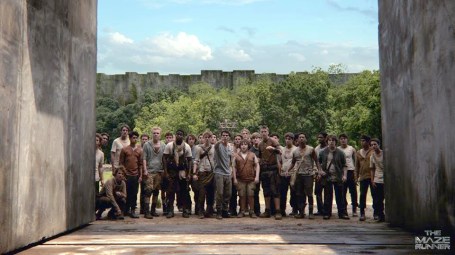
Within a Glade within a Maze are boys without their memories,
Trying to survive and build the best of boy communities.
Outside the Glade, within the Maze are Grievers no one’s lived to see,
And the walls protect as well as hold them in captivity.
 
A final boy is planted here and wonders at the mysteries;
Thomas breaks the rules, impressing some but making enemies.
In search of freedom and some answers, gutsy curiosity
Opens doors as it explores and hopes to set the captives free.
_________________
 

Despite the glut of young adult films based on young adult book series starring young adults, The Maze Runner was one of the few films last year that I actually wanted to see in the theater based on the trailer alone. While I didn’t get to view it until just recently, I found it to be just what I was hoping for, a better-than-average YA thriller that rises above its brethren due to sheer intensity.

Like The Hunger Games, it’s a story built around one central but entertainingly provocative concept: a collection of amnesiac boys trapped in an enigmatic maze. Honestly, I’m surprised this idea was adapted into a book and film before it became a video game, what with its survivalist circumstances, plot-specific terminology (Grievers, the Changing, etc.), and lack of in-depth characters. (I can easily envision “Mini-Games with Minho” as players map and memorize the Maze. It makes me wonder what Halo or Portal would have been like had the game not come first.) Though none of the characters have an explained backstory as yet, they all become more real and likable over time. As second-in-command Newt says, it doesn’t matter who they were but who they are now, and almost all of them are sympathetic and supportive of each other as they band together to face the unknown with surprising maturity. My VC pointed out that the script could have been full of wit or clever dialogue, but instead the character’s lines are very much what real people might say, adding to the realism of the performances.

These YA series seem to act like this generation’s Red Dawn or The Breakfast Club, introducing many fresh faces sure to have promising careers ahead of them. Dylan O’Brian and Kaya Scodelario portray the game-changers Thomas and Teresa, alongside Aml Ameen as leader Alby and Ki Hong Lee as runner Minho. I was excited to see Will Poulter as Gally, a very different role from that of weaselly cousin Eustace Scrubb in the Narnia film The Voyage of the Dawn Treader, and my favorite of the boys would have to be Newt, played by baby-faced Thomas Brodie-Sangster, known to me as the voice of Ferb on Disney Channel’s Phineas and Ferb.

While there’s no Lost alert for any of the actors, several similarities to that great show occurred to me afterward. Think about it: there is a group of people banding together in isolation, hoping to escape, while receiving supplies from a mysterious acronymed organization obsessed with experiments (DHARMA=WCKD) who leave cryptic video messages, all while being terrorized by an unseen creature which emits roars and mechanical clicking noises. On top of that, there are lies built upon lies and mysteries upon mysteries, which foster Lost-style speculation about what it all means (at least for those of us who haven’t read James Dashner’s books). According to IMDb, even director Wes Ball originally called the film “Lord of the Flies meets Lost.”

While the social commentary is not as pronounced as in The Hunger Games series, The Maze Runner surprisingly prompted far more discussion between my VC and me. We mainly debated the morality of Thomas’s search for the truth, which led to many casualties and didn’t better their situation (at least in this installment). On the one hand, she sympathized with Gally, who didn’t want to upset the status quo, a hard-fought peace that had made the Glade more or less an idyllic community. While Thomas wanted to find the truth, he did spoil that peace with his revolutionary curiosity, which ended up costing many lives. On the other hand, I countered that, as Thomas states, the situation in the Glade could not last forever, and his actions may have actually saved more lives (my reasoning behind that would be too spoiler-prone). In addition, the tantalizing idea of freedom and the desire to not be controlled or contained were understandable driving forces for his dissenting inquisitiveness.

The Maze Runner may draw a little from Aliens and The Lord of the Rings: Return of the King, mainly with respect to the frightening Grievers, but it’s an intense and intriguing first installment for a series in which I’m now thoroughly invested, full of tense moments and glowing Broadway musical reviews (after all, “Wicked is good,” right?). That being said, don’t expect a lot of answers to your questions. The ending explains a couple issues but raises even more, and since my VC was not expecting this to be a trilogy, she was unsatisfied by the conclusion. If you enjoy sci-fi thrillers and don’t mind cliffhangers, this film is a must, but if that’s not the case, you might wait to watch after all the films have been released, like I did after Lost’s final season. Guilty as charged. 🙂

Best line: (Newt, to Thomas) “He’s right. It doesn’t matter, any of it. Because the people we were before the Maze, they don’t even exist anymore. These Creators took care of that. What does matter is who we are now and what we do right now.”

 
Rank: List-Worthy
 

© 2015 S. G. Liput

286 Followers and Counting

The Count of Monte Cristo (2002)

19 Thursday Mar 2015

Posted by sgliput in Movies, Poetry, Reviews, Writing

≈ Leave a comment

Tags

Action, Drama, Romance

When Edmond Dantes dares to run
To Elba, where Napoleon
Was exiled, in hopes to save
His ailing captain from the grave,
The captive emperor commands
He take a message to the hands
Of some old friend, and in his debt,
The sailor takes it with regret.
 
When Dantes lands back in Marseilles,
He’s lauded, and his fiancée
Mercedes welcomes him with joy,
Which jealousy will soon destroy.
His friend Mondego goes too far
With envious first mate Danglars,
To have Dantes arrested for
The treason of the note he bore.
 
Before the matter comes to court,
A magistrate named Villefort,
Who might have offered him relief,
Entombs him in the Chateau D’If.
Through painful years, he sits and waits,
Endures and loses faith and hates.
When near the ending of his rope,
A fellow prisoner gives hope.
 
This priest assists him, through despair,
To dig for freedom and prepare.
They learn and burrow gradually,
And when Dantes at last is free,
He plots his vengeance, soon released,
With treasure from the caring priest.
A wealthy count, a different man,
He reaps revenge with righteous plan.
As Edmond nears his final goal,
Perhaps true love can save his soul.
_______________
 

Alexander Dumas is among the most famous of French novelists, but his memory seems often based on mere name recognition. Plenty of people have heard of The Three Musketeers, but far fewer actually know its plot. Such was the case with me and The Count of Monte Cristo, a classic tale of revenge that has resulted in countless adaptations (such as ABC’s current series Revenge), as well as a scrumptious sandwich. Though I had read the book in abridged form as a kid, I had little interest in this 2002 film version when it was released, but I recently sought it out after discovering the unproduced musical version by Frank Wildhorn (Jekyll and Hyde). I’m glad I did, for it turned out to be a clean, exciting, and undeniably entertaining swashbuckler that even manages to improve on the source material.

The evenly talented cast is composed of actors more recognizable from their other roles than from their names. Jim Caviezel as Edmond Dantes also played Jesus in The Passion of the Christ, and his suffering in the Chateau D’If mirrors that film, though Dantes hardly turns the other cheek. Guy Pearce (The King’s Speech, Iron Man 3) is the most famous of the cast and is perfectly odious as his backstabbing “friend” Mondego. Dantes’ faithful love Mercedes is played with romantic earnestness by Dagmara Dominczyk (Marguerite in The Five People You Meet in Heaven), and Richard Harris (Camelot, two Harry Potter films) brings wisdom and unshaken religiosity as Abbe Faria, Dantes’ fellow prisoner and mentor. Also notable are a young Henry Cavill as Mercedes’ son Albert, long before the fame of Man of Steel, and James Frain (known to me as the sleepy college student in Shadowlands) as Villefort, proving that he and Pierce excel at portraying despicable aristocrats.

Despite the large cast, the main point of the tale is very simple: revenge. While The Count of Monte Cristo could be considered the original revenge fantasy, it surpasses imitators like Kill Bill or Darkman by not reveling too much in the morally sticky subject of vengeance but placing it in a religious context. Certainly everyone enjoys watching villains receive their just desserts, but when one becomes an instrument of revenge, obsession and resignation to sin threaten. While there’s an entertaining “gotcha” factor to his enemies’ comeuppance, there are also friends urging Dantes to move past his hatred. It’s a sensitive balance that ultimately sides with the godly faith of Abbe Faria and is not lessened at all by its religiosity. (The only really morally problematic act of vengeance involves the Chateau D’If’s sadistic jailer [Michael Wincott of Hitchcock and Robin Hood: Prince of Thieves in yet another creepy role], but is more or less understandable considering its timing.)

The production itself sometimes has the look of a BBC television production, but with a much higher budget, seen in the ornate set design and the Count’s spectacular entrance into Parisian society. (Hint: There’s a hot air balloon!) The sword fights are riveting, the dialogue is clever, and the final confrontation between Dantes and Mondego is so much better than in the book, which ends with a mere suicide and a less happy ending for some characters. It may depart from the novel, but I prefer this version.

Having seen this film, I’m even more convinced that it would make a great musical. There have been productions in Germany and South Korea, and at BYU just two months ago (its English-language premiere), but I think it ought to be on Broadway. Listen to these examples: “I Will Be There,” a love duet between Dantes and Mercedes,

and “Hell to Your Doorstep,” a rage-fueled tirade as Dantes plans his revenge.

Doesn’t anyone else think this musical deserves more attention than it’s gotten? Then again, so does this film.

Best line: (Abbe Faria) “Here is your final lesson: Do not commit the crime for which you now serve the sentence. God said, ‘Vengeance is mine.’”   (Dantes) “I don’t believe in God.”   (Abbe Faria) “It doesn’t matter. He believes in you.”

 
Rank: List-Worthy
 

© 2015 S. G. Liput

286 Followers and Counting

#1: The Lord of the Rings Trilogy (2001, 2002, 2003)

20 Friday Feb 2015

Posted by sgliput in Movies, Poetry, Reviews, Writing

≈ 4 Comments

Tags

Action, Drama, Fantasy, Meet 'em and Move on, War

(Major spoilers ahead)
 
Three films to rule them all,
Three films to top them,
Three films to contests call
And effortlessly stop them.
 
In ages long past, there were forged mighty rings,
And one was the greatest, to rule over kings.
‘Twas forged by the Dark Lord, one Sauron by name,
Who barely was beaten when men and elves came.
Isildur, however, retained the One Ring,
Which went on to spend centuries poisoning
The mind of poor Gollum, obsessed with his prize,
Until it was picked up by one of small size.
This hobbit named Bilbo returned to the Shire
And kept the Ring, growing in secret desire.
 
On Bilbo’s birthday, he intends to depart,
Although nephew Frodo is close to his heart.
The wizard Gandalf bids the hobbit farewell
But, wishing old Bilbo’s temptation to quell,
Insists that the Ring stay behind at Bag End,
For Frodo to keep safe, if not comprehend.
When Gandalf discerns that the Ring is the One,
He sends Frodo off since the hunt has begun.
With friends Samwise Gamgee and Pippin and Merry,
The hobbit seeks Bree on a life-saving ferry,
For nine fallen kings known as Ringwraiths now ride
To claim Frodo’s ring, knowing he cannot hide.
 
As Gandalf must deal with the sudden betrayal
Of white wizard Saruman, Frodo’s travail
Is still far from over, but he is defended
By Strider (or Aragorn), who’s well-descended.
When Frodo is wounded by one of the Nine,
The elf maiden Arwen assists him in time.
In Rivendell, Frodo finds rest with his friends,
Until a new journey Elrond recommends.
With Aragorn, Gandalf, Sam, Pippin, and Merry,
Plus Boromir, Legolas, and Gimli hairy,
Frodo heads to Mordor to end the Ring’s power,
As Sauron looks on from Barad-dûr’s tower.
 
When one mountain blocks them with avalanche thunder,
The Fellowship hesitantly passes under.
Through Moria’s mines and dark dangers galore
They dare, since they cannot turn back anymore.
A battle and balrog claim Gandalf, alas!
The others get out since the foe cannot pass.
Then on to Lothlórien they make their way,
Where Lady Galadriel lets the group stay.
A vision lets Frodo know what he must do,
And soon they depart down the river anew.
 
The wiles of the Ring come to tempt Boromir,
Who menaces Frodo when no one is near.
When Saruman’s fierce Uruk-hai then attack,
The men, elf, and dwarf prove that courage none lack.
Yet Boromir falls to his comrades’ dismay,
And Merry and Pippin are taken away.
As Aragorn, Legolas, Gimli, all three,
Go after the hobbits in captivity,
Both Frodo and Sam head to Mordor alone
To finish the quest in the wilds unknown.
__________________
 
As Frodo and Sam wander on with their quest,
The creature called Gollum proves more than a pest.
They catch and convince him to act as their guide;
Though Gollum assists, Sam is quick to deride.
Through labyrinths of stone and a haunted marshland,
The trio continue with threats close at hand.
They find Mordor’s entrance, the dreaded Black Gate,
Much too well-defended to now infiltrate,
So Gollum (or Sméagol as he was once known)
Suggests a dark way through a tunnel of stone.
As Frodo starts trusting him, Gollum must face
An identity crisis, one half to erase.
While traveling further through Gondor’s frontier,
They’re captured by Boromir’s kin, Faramir.
 
Meanwhile, the elf and the dwarf and the man
Are chasing the Uruks as fast as they can.
In Rohan, the creatures are slaughtered that night
By banished Rohirrim while making their flight.
While Merry and Pippin take shelter with Ents,
The shepherds of trees who ignore world events,
The others find Gandalf, alive, clad in white,
And join him to set Rohan’s monarchy right.
King Théoden sags under Saruman’s sway,
But Gandalf will not let the rogue wizard stay.
With Théoden now in his right mind once more,
He does as was done with past dangers before,
Vacating the city through mountain paths steep
And biding behind the great walls of Helm’s Deep.
 
As Saruman’s army arrives seeking blood,
The men and elves battle the sword-wielding flood.
While Merry and Pippin are sad and upset
By ponderous Ents still unmoved by the threat,
King Théoden, Aragorn, and all the rest
Defend for their lives from the Uruks, hard-pressed.
For when the foe blasts through impregnable walls,
Despair enters in as their brave defense falls.
 
While Frodo and Sam are held captive by men,
Who mishandle Sméagol, made bitter again,
The Ring allures Faramir’s inner desire
To prove himself to his unpleasable sire.
In Osgiliath, as the Nazgûl attack,
A change of heart shows strength that many men lack.
 
King Théoden rallies his warriors then
To ride out proclaiming the valor of men,
And Gandalf arrives with Rohirrim in tow
To charge with the sun and thus finish the foe.
As Helm’s Deep is won, the Ents see for themselves
That Saruman’s crimes harm not just men and elves.
They storm Isengard with a most righteous rage,
And ancients prevail in their last war to wage.
The good and the free have thus won battles twain,
But darkness will strengthen before it must wane.
The hope of all Middle-earth rests in a pair
Of hobbits whom Gollum intends to ensnare.
_________________
 
While Frodo and Sam follow Gollum, whose past
Reveals the corruption the Ring can work fast,
The rest of the Fellowship soon reunite
To celebrate triumph in their recent fight.
Yet Pippin is tempted to study a sphere,
A dangerous seeing stone called Palantir,
Which gives them a glimpse into Sauron’s next plan,
To crush Minas Tirith, the threat posed by Man.
 
When Gandalf takes Pippin to outrun the foe
And warn Gondor’s capital of coming woe,
The steward of Gondor, the Lord Denethor,
The father of Boromir, knows of the war.
He’s losing his mind and deplores Faramir
In mourning his brother, both cruel and severe.
Insisting his son display loyalty vain,
He sends him to fight where he’ll surely be slain.
Though Faramir sadly submits to his will,
The wizard Gandalf has a plan to fulfill
And sends word to Rohan to come to their aid,
Through beacon fires magnificently displayed.
 
While Merry’s preparing to fight for the peace,
Assisted by Éowyn, Théoden’s niece,
Both Frodo and Sam have a difficult time
In mounting stone stairs Sméagol says they must climb.
His influence turns Frodo’s mind against Sam,
Who’s forced to turn back by a Sméagol-y scam.
Within a dark tunnel of webbing and murk,
A monstrous spider called Shelob does lurk;
Though Gollum had hoped she would earn him the Ring,
His master escapes and sends him plummeting.
As Frodo continues, the spider surprises
Till Samwise the brave takes her down a few sizes.
 
When Elrond reforges a sword legendary
For Aragorn ever to wield and to carry,
The Grey Company leaves King Théoden’s side
To seek the assistance of traitors who died.
To grand Minas Tirith, Rohan’s armies ride
To aid the beleaguered of Gondor inside.
While Denethor’s sanity cracks from the strain
Of Faramir’s loss, though he isn’t yet slain,
The men and the wizard defend the White City
From hideous hordes that refuse to show pity.
When Théoden’s forces arrive with the sun,
The battle’s tide turns, though it isn’t yet won.
When great oliphaunts join this most epic fray,
It takes a ghost army to carry the day.
 
As Gandalf saves Faramir from Denethor,
Sam rescues poor Frodo from orcs of Mordor.
With much heroism and losses endured,
The victors, to keep Frodo’s mission obscured,
March on to the Black Gate, diverting the gaze
Of Sauron’s great eye, ever watching ablaze.
Through barren wastelands, Sam and Frodo proceed,
Weighed down by the Ring from which all must be freed.
Though Gollum attacks, Frodo reaches Mount Doom
But falls to temptation that tends to consume;
It’s not until Gollum, for his Precious’ sake,
Bites off Frodo’s finger, a deadly mistake,
That Sauron’s One Ring in the fire is cast
And evil is unmade and vanquished at last.
 
It looks like the end for the two hobbits spent,
But Gandalf retrieves the small heroes he sent.
In Rivendell, Frodo is thrilled to once more
Embrace his old Fellowship left long before.
In Minas Tirith, grateful free peoples bow down,
And Aragorn humbly accepts Gondor’s crown.
Though years of peace follow, for Frodo it seems
The scars of his quest are still haunting his dreams.
When elves take their leave of mankind’s Middle-earth,
They give final passage to heroes of worth.
As Bilbo and Gandalf depart from these shores,
It’s Frodo’s time too, and the journey restores.
Farewell to his friends, ever faithful and true;
Farewell for a time until all is made new.
_________________
 

This is it, the top of my list and, in my opinion, the greatest trilogy ever made. I know that is a tall claim, but no other film series matches the emotional power, memorable characterization, and epic scope of Peter Jackson’s original cinematic tour de force. Before their release, I had never read the books or had any exposure to J.R.R. Tolkien’s classic magnum opus, so these films came as a total surprise to my family and me; what we expected to be “just another movie” turned out to be something truly magnificent.

The Fellowship of the Ring has been acclaimed as the greatest fantasy film of all time; even with the detractions of literary purists, the film certainly succeeds in crafting a wholly convincing Middle-earth and capturing the spirit of its diverse inhabitants: the curly-haired tranquility of Hobbiton; the Stygian menace of the Nazgûl; the luminous nobility of the elves; and the repulsive terror of orcs, balrogs, and the Kraken’s second cousin. The hobbits especially are among the series’ most endearing creations, bucolic folk fond of peace, pubs, and pipes but capable of unexpected heroism.

Fellowship is more episodic than the other two films, as the travelers grow in number and pass from city to wilderness to caves to forest to river, yet amid all the walking, we get to know these characters more deeply than one would expect: hesitant Frodo, faithful Sam, the comic relief duo of Merry and Pippin, sapient Gandalf, conflicted lover Aragorn, awesome Legolas, untossable dwarf Gimli, corruptible Boromir, and so on. The film also features my favorite sequence of the entire trilogy, the tense and visually stunning journey through Moria, full of colossal architecture, subtle wisdom, fearsome creatures, and a climactic sacrifice. The showdown with the troll and the Khazad-dûm collapse were the turning point that convinced me of the immensity of this story, and Frodo’s world-weary gaze once they escape confirmed its emotional punch. By the end of the film, I’m always eager for more.

Being bookended by even greater films, The Two Towers is understandably the least of the trilogy, but it nonetheless includes some essential additions to an already exceptional cast. While the sudden introduction of Rohan’s horsemasters (with similar names like Éowyn, Éomer, Théoden, Théodred, etc.) might be confusing for the uninitiated, they add another texture to this captivating land. Though the flesh-and-blood characters are engaging enough, the special effects team outdid themselves with two brilliantly rendered eccentrics. Andy Serkis’s motion-capture performance as Gollum/Sméagol is among the film’s highlights, his raspy voice and spindling physicality perfectly capturing the creature’s tragic state and inner turmoil. Likewise, Treebeard’s lumbering presence is as convincing a living tree as one can imagine, and the deep, protracted voice of John Rhys-Davies (doubling as Gimli) fits him to a tree…I mean, tee. Again, there is no shortage of riveting action sequences, including a skirmish between riders of horses and wargs, the prodigious siege of Helm’s Deep which surpasses any other depiction of medieval warfare, and my second favorite battle sequence of all, the attack of the Ents on Isengard. The latter two battles converge in the climax for a truly epic conclusion, even as Sam delivers a heartfelt speech setting the noble yet very human stakes.

My VC was especially eager for The Return of the King and, not being familiar with the books, was constantly terrified for the beloved characters, especially Frodo. She was pretty much in tears for the entire latter half of the film, from concern and happiness and from the sheer epic scale of the images before her. While it didn’t have quite the same effect on me, I wholeheartedly agree that this third film is the greatest ever made, as the culmination of the trilogy and a monumental depiction of the triumph of good over evil. Along with Titanic and Ben-Hur, it won the most Oscars ever, eleven total, and holds the record for the greatest Oscar sweep since it won everything for which it was nominated; it’s also the only fantasy film to win Best Picture and deservedly so. After journeying through two already admired films with these characters, the emotions are in high gear, devastated grief at Faramir’s sacrifice and Frodo’s rejection of Sam, heartache at Théoden’s final moments and Shelob’s stabbing of Frodo, bittersweet joy at the quest’s success and Frodo’s relieved parting glance. Like the previous two films, there are moments of unbridled awesomeness worthy of sudden cheering, like Legolas and Éomer’s single-handedly taking down enormous oliphaunts, Éowyn’s feat of female empowerment, or Aragorn’s employing an undead ace up his sleeve. The two greatest sequences are the lighting of the beacons, a perfect combination of jaw-dropping New Zealand scenery and Howard Shore’s legendary score, which is my VC’s favorite part of the whole trilogy, and the battle of the Pelennor Fields, particularly Théoden’s charge; the looks of fear on the orcs’ faces are what I imagine will be seen when the Lord returns and evil is finally stamped out. Though the multiple endings have drawn some criticism and even mockery, none of them are needless, and all serve as most satisfying closure, perhaps just with a bit too much fading in and out. Every time the credits start to roll, I feel that I’ve watched something magnificent.

Since I first saw The Lord of the Rings trilogy, my family and I have become fast fans, buying enough merchandise to probably finance one of The Hobbit films. We’ve purchased the original books, guide books, books about the films, a documentary about the films, calendars, CDs of the score, action figure playsets, and both the original films and the extended edition box set. The extended edition is now our preferred version, contributing nearly two hours of fascinating additions that complement rather than detract from the original. It’s become a tradition for my family to watch all three films in a row, usually around Christmas, as an annual reminder of how much we love this story.

While I typically shy away from violent films, and The Lord of the Rings does contain plenty of hacking and even decapitations, the battle scenes still show considerable restraint for the most part, especially for a director known for gory horror movies; plus, the film’s fantasy setting precludes any instances of profanity or foul language, which isn’t even missed. Instead, the language carries a memorable nobility foreign to modern-set films, such as the monologues of encouragement from Gandalf or from various warriors before battle (“Ride for ruin and the world’s ending!”; “It is not this day!”) The music is also particularly marvelous, and Fellowship’s “May It Be” by Enya and The Return of the King’s “Into the West,” performed by Annie Lennox, easily make my End Credits Song Hall of Fame. (“Gollum’s Song” at the end of The Two Towers isn’t quite in the same league.) In addition, it occurred to me that one more reason I enjoy the films is that Frodo’s journey at least could be considered a “meet-‘em-and-move-on” story, since he encounters several others on his quest and is ultimately reunited with many of them. By the way, (Lost alert) I must mention Dominic Monaghan, who plays Merry as well as troubled rocker Charlie on my favorite TV show and who turned out to be a major draw for me to check out Lost, which started the year after The Return of the King was released.

(On a side note, I do want to explain my wholehearted embracing of this franchise in contrast with my dislike of the Harry Potter series. While both feature magic, however fantastical, Tolkien’s tales do not employ magic as a focus and ongoing interest for his characters, and they are set in an untouchable fantasy realm as opposed to a setting and time recognizably similar to our own. In some ways, it’s a fine line, but one that Rowling’s stories cross enough to warrant caution, to my mind. My opinions match those further expanded in this long article by film critic Steven Greydanus: http://www.decentfilms.com/articles/magic.)

The Lord of the Rings will forever stand as a landmark of cinema, especially impressive coming from an only mildly esteemed horror director like Peter Jackson, who certainly earned a name for himself. No other film can match the blend of utterly beautiful scenery, memorable music, realistic effects of every kind, Oscar-winning makeup, detailed armor and weaponry, brilliant ensemble acting, impressive artistry, unparalleled thrills, heart-wrenching pathos, and tear-worthy gratification. Some films rival or even surpass certain such aspects, but not all of them. All the awards won by the third film were undoubtedly meant for the trilogy as a whole, for no other director has shot a trilogy back to back like Jackson did, an achievement he repeated with The Hobbit and one that I don’t think is appreciated enough. George Lucas took three years between each of the Star Wars films, and James Cameron recently had to postpone his planned Avatar sequel trilogy because of the massive effort involved in shooting back-to-back films. It’s obviously harder than it seems. The Hobbit trilogy may not measure up to Jackson’s original achievement, but nothing really could. They are untouchable, masterpieces of fantasy to match their literary counterparts, despite certain alterations.

This film list of mine has been a long road, but its end is one worth revisiting again and again. I’m glad to be with you, Samwise Gamgee, here at the end of this list.

Best lines from The Fellowship of the Ring: (Gandalf, catching Sam after talking with Frodo) “Confound it all, Samwise Gamgee. Have you been eavesdropping?”
(Sam) “I ain’t been droppin’ no eaves, sir, honest. I was just cutting the grass under the window there, if you’ll follow me.”
(Gandalf) “A little late for trimming the verge, don’t you think?”
(Sam) “I heard raised voices.”
(Gandalf) “What did you hear? Speak.”
(Sam) “N-nothing important. That is, I heard a good deal about a ring, and a Dark Lord, and something about the end of the world, but… please, Mr. Gandalf, sir, don’t hurt me. Don’t turn me into anything… unnatural.”    and
 
(Frodo) “I wish the Ring had never come to me. I wish none of this had happened.”   (Gandalf) “So do all who live to see such times, but that is not for them to decide. All we have to decide is what to do with the time that is given to us. There are other forces at work in this world, Frodo, besides the will of evil. Bilbo was meant to find the Ring. In which case, you were also meant to have it. And that is an encouraging thought.”
 
Best lines from The Two Towers: (Treebeard) “I always like going south. Somehow, it feels like going downhill.”    and
 
(Sam) “Those were the stories that stayed with you, that meant something, even if you were too small to understand why. But I think, Mr. Frodo, I do understand. I know now. Folk in those stories had lots of chances of turning back, only they didn’t. They kept going. Because they were holding on to something.”   (Frodo) “What are we holding onto, Sam?”   (Sam) “That there’s some good in this world, Mr. Frodo… and it’s worth fighting for.”
 
Best lines from The Return of the King: (Gimli, after Legolas’s oliphaunt takedown) “That still only counts as one!”    and
 
(Frodo, after the success of their quest) “I’m glad to be with you, Samwise Gamgee, here at the end of all things.”
 
 
Rank: 60 out of 60
 

© 2015 S. G. Liput

286 Followers and Counting
#6: Star Wars Trilogy (1977, 1980, 1983)

04 Wednesday Feb 2015

Posted by sgliput in Movies, Poetry, Reviews, Writing

≈ 3 Comments

Tags

Action, Drama, Sci-fi

(Well-known spoilers ahead)
 
In a galaxy far, far away,
The evil Empire holds sway.
As Darth Vader attacks,
Two robots make tracks
With plans, while the princess falls prey.
 
The humorous droids land unseen
On the desert world of Tatooine,
Where they are sold soon
To a boy of this dune,
Luke Skywalker, only nineteen.
 
A message on R2-D2
Sends Luke on a quick rendezvous.
Ben Kenobi tells him
Of his father’s fate grim,
Of the Jedi and lightsabers too.
 
When the Empire’s search has begun,
He and Ben and the droids have to run.
They arrange for a flight
With Han Solo, who might
Owe a crime lord a difficult sum.
 
The Millennium Falcon evades
The Empire’s fighter blockades
And heads for a sphere
That is no longer here;
The Death Star destroyed it in spades.
 
The Empire’s weapon surprises
The Falcon, which misjudges sizes.
From out of this mess,
They all save the princess,
Who helps as the group improvises.
 
Though Vader fells Ben with one blow,
The others escape even so.
The rebels afar
Plan to kill the Death Star
With a weakness, of which they now know.
 
Luke joins all the fighters’ attack
And shakes off the villain in black.
With a shot to the core,
The Death Star is no more,
And all rebels welcome them back.
_________________
 
On Hoth, Luke is met by a vision
Of Ben and is faced with decision.
On this planet of ice,
Rebels pay a dear price
As troopers attack with precision.
 
While most flee with Leia and Han,
Luke heads for where few men have gone;
A bog planet hides
Where old Yoda resides,
A great Jedi Master withdrawn.
 
As Yoda and Skywalker train,
The Falcon is running in vain.
At last, Han seeks out
An old friend with some clout;
This Lando seems suave and urbane.
 
When Vader appears to reveal
That he and Lando had a deal,
Luke’s friends are now bait,
And refusing to wait,
Luke disregards Yoda’s appeal.
 
In Cloud City, Solo is set
In carbonite for Boba Fett,
Who heads for the Hutt
To acquire his cut,
While Luke by Darth Vader is met.
 
Their duel ends when Vader unveils
That Luke is his son and prevails.
Confused in disgrace,
With a hand to replace,
Luke flees with his friends from his fails.
_______________
 
On Tatooine, Luke plans to save
Solo from a carbonite grave,
But Jabba intends
To watch both of their ends
And make Princess Leia his slave.
 
With Lando and Chewie’s assistance,
Our heroes escape and make distance.
Ere Yoda’s demise,
Luke then learns as he dies
Of another Skywalker’s existence.
 
His sister is Leia, he knows,
Who’s back with the Empire’s foes.
They learn a Death Star,
Though not finished so far,
Will soon be too great to oppose.
 
With Luke, they all land on Endor
To nix the shield, but not before
They’re caught unawares
By some wild teddy bears,
Ewoks, who help them with the war.
 
Luke faces his father, as well
As the Emperor, keen to compel
The boy to collide
With the Force’s Dark Side
And to watch them all die who rebel.
 
The battle below on the moon
Goes well for the rebels, who soon
Disable the shield
Ere their doom has been sealed
And find the moment opportune.
 
Both father and son fight once more,
But Luke has improved since before.
The Emperor pays
When his servant betrays,
And Vader’s no threat anymore.
 
The Death Star’s destroyed not too late,
And rebels at last celebrate.
Jedi will increase,
And, his father at peace,
Luke now has fulfilled his own fate.
__________________
 

In reviewing the original Star Wars trilogy, one of the most popular franchises of all time, I will do my best to avoid overusage of the words “iconic” and “classic,” even though nearly everything in these films fits those descriptions. Few movies have such a perfect blend of comedy, action, romance, and imagination, which have yielded such a widespread and devoted following and a universal appeal.

The first film was a bolt from the blue in 1977. My mom remembers seeing it on a recommendation, being surprised at a jam-packed theater, and being so captivated by this new level of cool that she returned to watch it 7½ more times (yes, she once paid to see only half of it; that’s all she had time for one afternoon, and that was better than not seeing it at all). Every aspect of George Lucas’s brainchild exemplifies those two words I mentioned earlier: the commanding presence and deep voice of Darth Vader (surprisingly, James Earl Jones was not credited on the first two films’ initial release), the endearing companionship of R2-D2 and C-3PO, Kenobi’s wise introduction of various mythic elements like the Force and lightsabers, the astounding size and power of the Death Star, the roguish appeal of Han Solo (the role that made Harrison Ford a true movie star), the danger and humor of their rescue of Leia, the trigger-happy escape that makes one wish for an arcade, and the explosive finale. Plot points and individual scenes have become so ingrained in popular culture that their parodies and homages are more ubiquitous than even those of The Wizard of Oz and other films that have been around much longer. Among the film’s most arresting aspects was John Williams’s music, the greatest movie score of all time. Without it (as well as the groundbreaking visual effects and Ben Burtt’s ingenious sound effects), Star Wars might have been simply a cute little sci-fi film, but the bombastic score is what truly earns it the title of space opera. By today’s standards, the characters and their interactions might be considered a tad cheesy, but like Indiana Jones, they tap into their creator’s love of pulpy adventures and are so much fun that viewers today merely enjoy the ride and quote the film verbatim. It made household names of Mark Hamill, Harrison Ford, and Carrie Fisher, and in my opinion, the original remains the best film in the entire saga.

Rarely are middle films the most popular, but The Empire Strikes Back has grown over the years to be the most esteemed of all the Star Wars films. It featured the memorable battle on Hoth, the introduction of wise outcast Yoda and dashing Lando Calrissian, the deepening of Han and Leia’s romance, and that classic shocker involving Luke’s parentage, a revelation so iconic that children today will be lucky if they can see the original surprise before some all-too-common spoof (there, I used them just once). As lauded as Empire Strikes Back is, I hold an unpopular opinion: it’s my least favorite of the original trilogy. Perhaps it is carryover from my mom recounting how she was disappointed when she first saw it, with the cliffhanger ending followed by three years of waiting, but I prefer the first and third films. Its darker tone doesn’t carry quite as much humor as its predecessor, and Luke’s training with Yoda slows everything down, even if it’s a necessary step in his progress as a Jedi. Plus, not once, not twice, but three times does the hyperdrive fail to work, a fact that allows for a great climax but a less-than-pleasing middle. I know practically everyone else disagrees, but that’s my opinion. It’s still a fantastic film that thickens the epic plot and relationships to unparalleled new levels; I just like Episodes IV and VI a bit better.

Why is Return of the Jedi just a little better? It’s not simply because of the presence of the satisfying conclusion, but the absence of any inner dislike on my part. Just as I didn’t mind Jar Jar Binks in The Phantom Menace, I don’t mind the Ewoks of Endor, who, compared with Binks, actually serve a purpose and manage to be more than just cutesy sidekicks. With all the weird and quirky aliens seen in Mos Eisley and Jabba’s palace (some of which are admittedly silly), I don’t understand why the Ewoks supposedly detract from the picture. Their primitive warfare with the Empire’s walkers creates some cheer-worthy victories; so what if they’re cute too? The slowness on Dagobah is kept to a minimum, and the film as a whole seems much more exciting than Empire. The battle on Jabba’s sail barge is one of the best, while the speeder chase through the forest is the most thrilling sequence of the whole film. (That chase also features an old-fashioned film technique at its best; the high-speed race through the trees was filmed by a camera just slowly advancing through the woods, which was then sped up for the finished product.) In the end, what this film and basically the whole saga is about is the fall and redemption of Anakin Skywalker, and, even though he had been solely villainous before Episode VI, even disregarding his depicted fall in the prequels, I actually felt sorry for Darth Vader. That’s one aspect that George Lucas definitely succeeded in; Luke’s confrontation with the Emperor and Vader’s subsequent salvation are what all the other films prepare and anticipate, a sad yet satisfying climax for one of the best trilogies of all time.

Who would have guessed that a cool idea in the mind of a young filmmaker would blossom into such a monumental success of a franchise? It’s not yet over too; by the end of this year, we’ll have the beginning of the next chapter in the Star Wars cinematic universe, courtesy of J. J. Abrams. Based on his work with Lost and Star Trek, I have high hopes for The Force Awakens this December. There’s nothing quite like the original films, though, with Luke Skywalker, Han Solo, Princess Leia, R2-D2, Darth Vader, characters as endlessly watchable as they are iconic (I couldn’t help myself).

Best line from Star Wars (could have been the whole script): (Han Solo and a general) “May the Force be with you.”
 
Best line from The Empire Strikes Back (could have been most of the script): (Darth Vader) “If you only knew the power of the Dark Side. Obi-Wan never told you what happened to your father.”   (Luke) “He told me enough! He told me you killed him!”   (Vader) “No. I am your father.”
 
Best line from Return of the Jedi: (Han Solo, captured by Jabba) “How we doin’?”   (Luke) “Same as always.”   (Han) “That bad, huh?”
 
 
Rank: 60 out of 60
 

© 2015 S. G. Liput

284 Followers and Counting

#10: Indiana Jones and the Last Crusade (1989)

28 Wednesday Jan 2015

Posted by sgliput in Movies, Poetry, Reviews, Writing

≈ 5 Comments

Tags

Action, Fantasy, Thriller

Indiana Jones is back to find the Holy Grail,
His father Henry’s disappeared but left a learned trail.
When Walter Donovan commissions him to seek it out,
Jones finds the journal of his father, bookish and devout.
 
In Venice, Dr. Elsa Schneider joins him to assist,
For underneath a library, dark catacombs exist.
They find a clue but barely flee the rat-infested tomb,
Before the fez men follow them and nearly seal their doom.
 
To Austria, they fly to find his father captured by
A group of Nazi Grail-pursuers in a castle high.
The pair of Joneses reunite and make the room combust,
But not before a revelation and betrayal of trust.
 
Two chases later, both of them head to the Middle East,
Where Henry’s captured on a tank and narrowly released.
The Canyon of the Crescent Moon is where their journey ends,
And Indy’s forced to find the Holy Grail as death portends.
 
Through deadly trials, Indy goes to claim the waiting prize,
And as the villains follow him, their choices are not wise.
Though history is lost, our heroes let it go, dismayed,
But ride into the sunset until their next escapade.
_____________________
 

I know most people tend to prefer Raiders of the Lost Ark, but for me Last Crusade is that rare threequel that surpasses the original. It borrows the best elements from Raiders: a Biblical MacGuffin, a booby-trapped temple, Nazis as the villains, Sallah and Marcus Brody, and a gruesome (though not as gruesome) death for the villain.

What puts Last Crusade over its predecessor, though, can be summed up in two words: Sean Connery. Harrison Ford is always a blast as the famous title character, but to make his father a mild-mannered James Bond ups both the heart and the humor. Rather than being the unflappable hero of the first film, Indy has a mental match in his estranged father, who may lack the level-headed physicality but is more like his son than either recognize. Henry Jones, Sr.’s dedication to his work made him a distant, poor father, but his son clearly inherited a similar commitment, not to mention his womanizing tendencies. Putting them together allows for some humorously contentious dialogue and some realistic father/son moments ranging from disapproval to grief to shared devotion.

Of course, this wouldn’t be an Indiana Jones film without some outstanding action sequences, and it doesn’t disappoint. While nothing quite matches the truck chase in Raiders, the film as a whole is a nonstop thrill ride, with ancient flammable crypts, speedboat chases, motorcycle chases, airplane chases, tank chases, and some clever booby traps to match the beginning of the first film. The opening sequence is a stroke of genius too; while not directly connected to the main plot, as are the beginnings of the other films, it gives an unexpected glimpse of Jones in his youth. River Phoenix pulls it off, with a comic-book-style train chase that offers action and some answers about Jones himself.

While the film may just seem like a series of chase scenes, it offers all the humor and twists of the original, just in a slightly more family friendly package. I especially like the scene in which the sole profanity is chastised by the elder Jones as blasphemy, one of the few instances in modern-day films where it is called out and condemned, allowing for a telling illustration of the differences between father and son. The final resolution of the quest not only confirms the authenticity of the sacred artifact in question (and the myths surrounding it) but contrasts the blind ambition of Elsa with the wiser discernment of the Joneses. Plus, it ends on the most perfect of perfect notes, a final ride into the sunset, a fantastic wrap-up for the franchise…oh, wait, yeah, there was that fourth movie. Still, this could have been an unparalleled conclusion.

Decidedly better than Temple of Doom and Crystal Skull and just a little better than Raiders, Indiana Jones and the Last Crusade is one of the most enjoyable actioners ever made. While not quite as iconic as Raiders, it still remains influential, even for Spielberg himself, who used a similar motorcycle chase in his Adventures of Tintin. Though my VC pointed out that Last Crusade made a helpless tagalong out of Marcus Brody, who had more dignity in the first film, it doesn’t get much better than the dual star power of Ford and Connery.

Best line: (the butler) “This is a castle, and we have many tapestries, but if you are a Scottish lord, then I am Mickey Mouse!”   (Indy to Elsa, with Scottish accent) “How dare he!” [punches his lights out]

VC’s best line: (Nazi leader) “Dr. Jones?”   (Indy and Henry, simultaneously) “Yes?”

 
Rank: 60 out of 60
 

© 2015 S. G. Liput

283 Followers and Counting

#18: Raiders of the Lost Ark (1981)

20 Tuesday Jan 2015

Posted by sgliput in Movies, Poetry, Reviews, Writing

≈ 1 Comment

Tags

Action

A jungle temple full of traps,
Unknown to plunderers and maps,
Is where the pluckiest of chaps
Named Indiana Jones
Retrieves an idol made of gold,
Which he has little time to hold
Ere rival Belloq makes him fold
And takes the prize he owns.
 
A noted archaeologist,
Jones is requested to assist
The government and to resist
The Nazis’ latest harm.
They seek the Ark, up to no good,
So Jones drops in the neighborhood
Of ex-love Marion Ravenwood,
Who bears a needed charm.
 
In Egypt, Marion is caught,
And Jones attempts to find the spot
Where it may be, because it’s not
Where Nazi diggers dig.
He finds the Ark until Belloq
Again reclaims it, to his shock,
And seals Jones under sand and rock,
A snake-infested brig.
 
When Jones emerges from the sands,
The Ark then quickly changes hands,
But Belloq thinks he understands,
And Nazis look inside.
This last mistake becomes their bane,
But Jones and Marion remain.
Perhaps the things we can’t explain
Are meant for us to hide.
_________________
 

I can’t help but wonder if those who create iconic characters and scenes have any inkling of the impact their creations will have? When they were brainstorming and coming up with ideas that seemed cool to them, did George Lucas and Steven Spielberg realize how inspired their creativity was? Surely there are countless films that are more or less a paycheck for the filmmakers, but just as many have been made with a devotion and hope for success to rival the creators of Indiana Jones. Who knows what pop culture will embrace next, but Raiders of the Lost Ark certainly made a huge, indelible impression on it.

Most films are lucky to have one truly memorable scene, but Raiders has innumerable moments of action genius, the likes of which few films have matched. Heck, the first ten minutes have been parodied to no end. The film was meant to recall the action serials of the 1930s and 40s, even borrowing a few ideas here and there, but for the film’s generation and every one since, Raiders essentially replaced them. Practically everyone who has not been living under a rock has seen the giant rolling boulder, the snake-filled pit, the truck chase, and the crate-filled warehouse at the end. Even casual fans can probably recite lines of dialogue verbatim. Quite simply, Raiders of the Lost Ark is the quintessential action film, and I doubt many would disagree.

Likewise, between this and his role as Han Solo, Harrison Ford became the quintessential action star, dashing but intelligent, hard-edged but sensitive at times, tenacious but clearly human and vulnerable when the adrenaline wears off, undevout but able to recognize and respect a power beyond himself. From beginning to end, he’s likeable and a joy to watch. As his first love (at least to moviegoers), Karen Allen’s Marion Ravenwood became his preferred romantic interest, and even though it was anticlimactic, I’m glad he settled down with her in the fourth movie. John Rhys-Davies as jolly Sallah and Denholm Elliot as studious Marcus Brody are classic accessories to Jones’s adventures, and Alfred Molina found his very first role as his traitorous accomplice Satipo (though, did anyone else hear Ford say “Sapito”?). As other reviewers have said, Nazis make the best villains, easy to hate and easy to cheer when they get their comeuppance. To be honest, I’ve never found the individual bad guys like Belloq or Dietrich all that memorable, but Ronald Lacey as Nazi interrogator Toht is the perfect example of a Nazi slime ball, complete with a Peter Lorre-style accent.

In addition to iconic characters, non-stop fight scenes, and inventive action, Raiders also has plenty of humor, whether it’s Jones’s practical solution to a cocky swordsman or his as-yet unexplained fear of snakes. Plus, perhaps the most talented member of the film’s team was John Williams who provided perfect musical accompaniment for every scene, from the lighthearted fistfights to the intrepid truck rescue. If it hadn’t been for Chariots of Fire that year, the music surely would have won Best Score, in addition to its five other Academy Awards including Best Visual Effects, Best Art Direction, Best Sound, Best Film Editing, and a special one for Ben Burtt’s Sound Effects Editing.

Despite its honored place in pop culture, I don’t consider it a family film, due to the surprisingly bloody deaths for a PG film, before Temple of Doom helped introduce PG-13, especially the gruesome fates of the presumptuous Nazis. While the film presents some fallacies concerning the Ark of the Covenant, it at least affirms its supernatural power and presents the divine relic as something not to be trifled with. Worthy of its status as the ultimate actioner, Raiders of the Lost Ark introduced an oft-copied, rarely-matched film hero and now becomes the first film on my list worthy of a perfect score.

Best line: (Indy) “Meet me at Omar’s. Be ready for me. I’m going after that truck.”   (Sallah) “How?”   (Indy) “I don’t know; I’m making this up as I go!”

VC’s best line: (Marion) “You’re not the man I knew ten years ago.” (Indy) “It’s not the years, honey. It’s the mileage.”

 
Rank: 60 out of 60
 

© 2015 S. G. Liput

282 Followers and Counting

#20: The Incredibles (2004)

17 Saturday Jan 2015

Posted by sgliput in Movies, Poetry, Reviews, Writing

≈ 3 Comments

Tags

Action, Animation, Comedy, Family, Pixar, Superhero

In a comic book world full of heroes and powers,
Which nonetheless isn’t too different from ours,
Strong Mr. Incredible uses his skills
To stop evil, you know, just everyday thrills.
The day that he marries Elastigirl, though,
Is one he’ll regret, for in fighting a foe,
He makes one, and supers are forced to lie low.
 
Years later, he’s stuck in a job that he hates,
With kids and a wife who’s content with their fates.
In trying to relive his old glory days,
He captures a secretive agency’s gaze.
Things start looking up when he stops a robot,
Until he’s betrayed by his sponsor and caught.
A fan has become the new villain Syndrome,
Who plans to wreak havoc and falsehoods back home.
 
When Helen goes searching for him high and low,
With speed demon Dash and shy Violet in tow,
They’re threatened as well, but when family fights,
They do so together…and in matching tights.
They race to the city to stop Syndrome’s plot
And take out his deadlier rampaging bot.
When Syndrome is vanquished and peace is renewed,
These heroes defend when new villains intrude.
_____________________
 

While The Avengers is a better movie strictly in the superhero genre, The Incredibles offers even more: a believable family dynamic, an insightful comparison of talent versus fitting in, and yet another example of Pixar’s groundbreaking animation. Released during Pixar’s golden years, The Incredibles didn’t quite please me upon my first viewing for some reason; perhaps it was because I had already seen two other films in the theater that day. Future watchings have only improved my opinion of this exciting family favorite.

The world full of supers depicted at the beginning is practically a comic book come to life, full of routine heroics, gleeful admirers, fancy tech, and “playful banter”; from what we’ve seen, it’s not surprising that Mr. Incredible thinks they’re untouchable. Yet the story takes an unforeseen realistic turn, with lawsuits and accusations and an eventual suburban nightmare in which Bob Parr, like Jack Campbell in The Family Man, finds no satisfaction. (The only major plot hole I can see is that of supervillains, which I assume existed in the world at the beginning. It seems to me that the main reason for the existence of superheroes is to combat supervillainy, which wouldn’t obey some government sanction anyway. With all the heroes off-duty, who’s to stop the likes of Bomb Voyage or worse?)

Craig T. Nelson is ideal for Mr. Incredible, able to vocalize both oppressive boredom and heroic spirit, while Holly Hunter brings feminine resilience to his wife Helen/Elastigirl. Their son Dash (Spencer Fox) fits perfectly into the mischievous son archetype, while Sarah Vowell as daughter Violet is a bit annoying until she gets into costume. Indeed, all of the Incredibles look better with their black masks; perhaps it was intentional in the character design, but they all seem lacking without their matching red super suits. Other great voice performances come from a pre-Nick Fury Samuel L. Jackson as Bob’s pal Lucius/Frozone and director Brad Bird himself as snooty fashion designer Edna Mode.

As with so many of Pixar’s Oscar-winning features, The Incredibles combines a number of outstanding elements to perfection. Michael Giacchino’s suave yet bombastic score blends with the stylish gadgetry to create a distinctly James Bond feel, while the familiar superpowers (borrowed from the properties like Mr. Fantastic, the Flash, and the Invisible Woman) are used to ingenious effect, particularly Elastigirl’s elongated scuffle with guards and Dash’s thrilling jungle chase with those awesome bladed hovercraft. Not to mention the costume lesson that caused us to never look at capes the same way.

One of the few great superhero films to not possess a comic source material, The Incredibles won Academy Awards for both Best Animated Feature and Best Sound Editing. Mature enough to take seriously matters of marital infidelity and superhero genocide, yet lightweight and comedic enough for repeated family viewing, The Incredibles continues to be one of Pixar’s best. While most of Pixar’s films don’t need sequels (though that hasn’t stopped them), The Incredibles is one that could certainly deserve one, which is in the works, last I heard. I only hope it can compare to the original.

Best line: (Lucius) “Honey?”
(Honey) “What?”
(Lucius) “Where’s my super suit?”
(Honey) “What?”
(Lucius) “Where – is – my – super – suit?”
(Honey) “I, uh, put it away.”
(Lucius, after an explosion) “Where?”
(Honey) Why do you need to know?”
(Lucius) “I need it!”
(Honey) “Uh-uh! Don’t you think about running off doing no derring-do. We’ve been planning this dinner for two months!”
(Lucius) “The public is in danger!”
(Honey) “My evening’s in danger!”
(Lucius) “You tell me where my suit is, woman! We are talking about the greater good!”
(Honey) “’Greater good?’ I am your wife! I’m the greatest good you are ever gonna get!”
 
 
Rank: 59 out of 60
 

© 2015 S. G. Liput

281 Followers and Counting

#23: Pirates of the Caribbean (2003, 2006, 2007)

13 Tuesday Jan 2015

Posted by sgliput in Movies, Poetry, Reviews, Writing

≈ 3 Comments

Tags

Action, Disney, Drama, Fantasy, Romance

(Spoilers ahoy!)
 
Elizabeth Swann was a girl when there came
A boy from the ocean, Will Turner by name.
She feared him a pirate and took a gold coin
And hid it for years to protect him from shame.
When both are now grown with a love they won’t share,
The Commodore Norrington tries to declare
An offer of marriage she’s not quick to join,
Till Captain Jack Sparrow arrives debonair.
 
Locked up for his crimes, he’s surprised at the sight
Of his former ship, the Black Pearl, in the night.
Attracted by gold, the fiends capture Miss Swann,
Who lies to convince them to shove off forthright.
The Captain Barbossa abducts the lass too,
Revealing the curse on himself and his crew.
As they sail away, Will is adamant on
Releasing Jack Sparrow to hotly pursue.
 
Collecting a crew in Tortuga, Jack sails
For Isla de Muerta, where lies and betrayals
Come out and succeed in imprisoning Will,
While Jack and Miss Swann are marooned by details.
With Norrington’s aid, they return to save Will,
And swordfights galore offer many a thrill.
Barbossa is slain, and true love they fulfill,
While Jack takes the Black Pearl to roam the seas still.
_______________
 
When Lord Cutler Beckett, for whom business reigns,
Desires Jack’s compass, he goes to great pains,
Convincing first Will, then Elizabeth too,
To find Jack or else be committed to chains.
While Jack’s being Jack, he is shocked at a guest,
Old Bootstrap Bill Turner, Will’s father oppressed,
Who says Jack must pay up the debt that is due;
For now Davy Jones wants his soul on request.
 
Jack flees to an island, which Will also finds,
Where cannibals threaten with changeable minds.
Escaping the danger, they take a detour,
And witch Tia Dalma lends help of all kinds.
Jack haggles with Jones for the sake of his soul
And buys three more days at a difficult toll.
Tortuga yields souls, since they needn’t be pure,
While Will gives his father a promise and goal.
 
Jack finds Norrington and Elizabeth Swann,
Both desperate but willing to quickly move on,
For Jones’s live heart beats within a locked chest,
And he who should find it could make him a pawn.
The chest is discovered, but fighting begins
‘Twixt Norrington, Jack, and Will, none of whom wins.
As Jones’s own crew arrives at his behest,
The heart’s snatched to make up for Norrington’s sins.
 
As Jack tries to run, Jones awakens his pet,
The Kraken, to finally settle the debt.
His crew fleeing, Jack has no choice but to stay;
His unwilling sacrifice might end the threat.
With Jack and the Black Pearl devoured away,
The heart is Lord Beckett’s, to Jones’s dismay.
A plan to bring Jack back is soon underway,
With help from an old foe, whom death could not stay.
_________________
 
As Beckett is wiping out all buccaneers,
Assisted by Jones and his heart-involved fears,
Barbossa and friends are in far Singapore
In search of a map to the final frontiers.
With help from Sao Feng, one of nine pirate lords,
They head for the edge, after drawing their swords.
In Davy Jones’ Locker, they find Jack ashore,
Where he is kept company by crabby hordes.
 
So, one green flash later, there’re lies and betrayal
With Sao Feng and Beckett and all who set sail.
They learn that Calypso was Davy Jones’ lover,
A sea god imprisoned with flesh as her jail;
Barbossa will free her to aid in their plight.
Elizabeth’s made pirate lord in the night.
To Shipwreck Cove, all of the pirates take cover,
Debating on whether to lie low or fight.
 
Elizabeth’s named as the new Pirate King,
Deciding their one hope is swashbuckling.
They set free Calypso, who’s in a bad mood,
For Jones once betrayed her, a deep-seated sting.
The Pearl and the Dutchman engage in a storm,
A gift from Calypso, now back in true form.
Jack goes for the heart, that the fight may conclude,
Though he who kills Jones must his duties perform.
 
The maelstrom keeps raging amid the bloodshed.
While fighting, both Will and Elizabeth wed.
Though Jack had intended to finish the heart,
Another has more need for Davy Jones dead.
The tables are turned as the cannons restart,
And Lord Cutler Beckett’s own plans fall apart.
While true love endures, Sparrow’s shipmates depart,
But Jack’s well-prepared for a new course to chart.
____________________
 

With all the uninspired movies reading “based on a video game,” who could have foreseen that a series of swashbuckling greatness could be derived from a theme park ride? Pirates of the Caribbean was certainly a surprise when The Curse of the Black Pearl came out over a decade ago, but subsequent viewings have only raised my opinion of this action-packed, often convoluted franchise. Don’t bother with On Stranger Tides, though; it’s just not the same.

The Curse of the Black Pearl is the one that started it all, one of the few modern films to effectively introduce an instantly iconic character, Captain Jack Sparrow. Johnny Depp has always been drawn to the weird and eccentric, and his career has fluctuated wildly because of it; but here he hit his ideal stride and earned a Best Actor nomination for it. Sparrow is dashing, cunning, a bit creepy and disgusting, yet strangely alluring in a grimy sort of way, usually one step ahead of the rest, full of comic bravado and a latent good heart. He steals every scene while complementing all the other actors, like Orlando Bloom’s Will Turner and Keira Knightley’s Elizabeth Swann, semi-iconic characters in their own right. Their love story has its predictable ups and downs but also possesses that epic romantic quality that eludes many other films. A good villain always improves a film, and Geoffrey Rush is one heck of a pirate. His sneering negotiations and ruthlessness make him a memorable antagonist, and the creepy but incredible skeleton curse just augments the menace of him and his crew. Add in some powdered wigs, wondrous sword fights, clever dialogue, Oscar-nominated special effects, and one of the greatest scores of all time by Klaus Badelt (seriously, no other score captures and enhances the spirit of the film itself as this rip-roaring soundtrack, taken over by Hans Zimmer for the sequels), and Disney had a winner on their hands.

I don’t know how the filmmakers did it, but Dead Man’s Chest ups the ante in every way and remains the only Pirates film to win an Oscar, for Best Visual Effects. It introduces yet another historic villain in the form of Bill Nighy’s squid-faced Davy Jones and, to a lesser extent, Tom Hollander’s Godfather-like Lord Cutler Beckett with his obsession with “business.” This second film is the king of set pieces, varied, outlandish, and absolutely awesome! From the swinging cages on Pelegosto to the Kraken’s attacks to the astonishing three-way water-wheel duel, Dead Man’s Chest is replete with some of the best action sequences I’ve seen. As pure entertainment, it’s a twisting, crowd-pleasing thrill ride with a jaw-dropping surprise ending that left everyone in the theater clamoring for more.

When they finally got more, some may not have been entirely satisfied. Shot back-to-back with its predecessor, At World’s End has much of what made the first two great (the characterizations, breathtaking action on an even larger scale) but mixed with an unfortunate bloatedness. Even after several viewings, the film can seem like an overstuffed mess, with loads of conflicting motivations, changing allegiances, mythic plot devices, and ship-hopping. It all evens out by the finale, but the middle of the film is unnecessarily confusing. Plus, Jack’s eccentricities are morphed into full-fledged bizarreness, with strange visions of the afterlife adding nothing to the plot and scenes of multiple Jack Sparrows thrown in seemingly just for the sake of spending the film’s colossal budget. In addition, the expansion of Tia Dalma’s role brought out the fact that her Jamaican accent is incomprehensible at times; as with Yoda in The Empire Strikes Back, my VC couldn’t understand her the first time out. All that being said, ongoing viewings have increased my overall opinion of the film, including its bittersweet ending. The most impressive scene is easily the long final battle amidst a raging whirlpool that would put Charybdis to shame. As a stand-alone film, At World’s End is rather weak, but as an epic conclusion to the trilogy, it’s better than it seemed at first.

Though Pirates of the Caribbean: Dead Men Tell No Tales is being shot now for a 2017 release, I doubt that Jerry Bruckheimer’s lightning will strike again, as it did with the original films, especially the first and second. Rarely have action, characters, music, and romance been combined into such an entertaining package. This year’s Tomorrowland seems to be Disney’s next shot at adapting one of their attractions, but it’s unlikely to compare to one of Disney’s most surprisingly successful franchises.

Best line from The Curse of the Black Pearl: (Captain Barbossa) “You best start believing in ghost stories, Miss Turner.  You’re in one!”

Best line from Dead Man’s Chest: (Elizabeth) “There will come a time when you have a chance to do the right thing.”  (Jack) “I love those moments. I like to wave at them as they pass by.”

Best line from At World’s End: (Barbossa) “Aye… we’re good and lost now.”   (Elizabeth) “Lost?”   (Barbossa) “For sure, you have to be lost to find a place that can’t be found, elseways everyone would know where it was.”

 
Rank: 59 out of 60
 

© 2015 S. G. Liput

281 Followers and Counting

#24: Tarzan (1999)

10 Saturday Jan 2015

Posted by sgliput in Movies, Poetry, Reviews, Writing

≈ 1 Comment

Tags

Action, Animation, Disney, Drama, Family, Musical, Romance

(Best sung to “Son of Man”)
 
To the jungle, humans come
And are challenged to survive;
Soon only a babe is left alive.
 
Then adopted by gorillas,
He is raised stalwart and strong,
Strong to face the jungle’s killers
And labor to belong.
 
Son of man and of primate,
Tarzan is amazed to see
Strangers like him who await
Sightings of gorillas roaming free.
 
When one is soon in danger,
He swoops in and rescues Jane,
Who’s enamored of this stranger,
This lord of his domain.
 
Tarzan is forbidden to
Put his family in harm’s way,
But he learns so much that’s new
That he sneaks away to Jane each day.
 
In trying to delight her,
The gorillas he reveals,
And wicked Clayton follows on their heels.
 
Though he thought to leave his homeland,
Tarzan returns to fight
And defend his friends and withstand
The poachers in the night.
 
Son of man and of primate,
Tarzan then is joined by Jane;
Ruler of the jungle great,
Tarzan will remain to yell and reign.
__________________
 

Sometimes cited as the last great film of the Disney Renaissance, Tarzan is indeed one of the most beautifully created animated films I’ve seen. It came out right when I was getting old enough to enjoy movies as more than just a juvenile distraction and was one of the first Disney films I fully understood. Oh, and it made me cry at the end. That’s always list-worthy.

Adapted from the character created by Edgar Rice Burroughs, Tarzan puts the Disney spin on its source material, with funny animal sidekicks and musical accompaniment, but it doesn’t feel as potentially incongruous as The Hunchback of Notre Dame. Rosie O’Donnell and Wayne Knight are ideal comic reliefs as Terk and Tantor, while the resonant voice of Brian Blessed adds an ingratiating menace to Clayton, who meets an unusually horrific end. (Then again, this is the studio that has smashed, dropped, disintegrated, eaten, shattered, dragged to hell, and shish-kebobed their other villains, so perhaps it’s not unusual.) Tony Goldwyn is rather average as Tarzan, aside from an outstanding yell, but Minnie Driver’s voice fits Jane perfectly, bookish and British. Not to mention, there’s Lance Henriksen as stern Kerchak and Glenn Close as Kala, who provides a touching example of adoption and maternal love.

No other Disney film matches the lush imagery of the African jungle, created with a pioneering and award-winning animation technology called Deep Canvas. As Tarzan swoops effortlessly through the trees, the bright foliage provides an incomparable living environment, put to good use in the often spectacular action scenes. Even the water has a uniquely fluid appearance.

Of course, I must mention Phil Collins’ remarkable soundtrack, one of my favorites of any Disney film. Though The Lion King had a couple songs performed by background singers, Tarzan stepped out of the box in having most of the music not sung by the characters. Phil Collins provides the vocals for the brisk and memorable montages, such as “Two Worlds,” “Son of Man,” and “Strangers Like Me.” The tender lullaby “You’ll Be in My Heart” won the Oscar for Best Original Song, and I was once temporarily obsessed with the percussion-filled “Trashin’ the Camp.” As kids, my cousin and I would play it over and over and over, just jamming and rewinding with glee.

Tarzan relies heavily on montages, but they are among its finest moments, allowing for much humor, heart, and character development in a short time. Unlike Atlantis: The Lost Empire, the language barrier is not simply written away but gradually lowered over time, and the believable romance between Jane and Tarzan is handled with particular skill and beauty. I know that Burroughs’ book is substantially different, but this adaptation carries all the emotion and grandeur of Disney’s best, including a bittersweet happy ending.

Best line: (Tantor, finally standing up to Terk) “That’s it! I’ve had it with you and your emotional constipation! Tarzan needs us, and we’re gonna help him! You got that? Now pipe down, and hang on tight! We’ve got a boat to catch.”

  
Rank: 59 out of 60
 

© 2015 S. G. Liput

279 Followers and Counting

← Older posts
Newer posts →

Recent Posts

  • Dust Bunny (2025)
  • Don’t Breathe (2016)
  • The Sheep Detectives (2026)
  • The Black Phone (2021)
  • Godzilla Minus Zero (2026)

Recent Comments

The Sheep Detectives… on Wildwood (2026)
The Sheep Detectives… on #40: Babe (1995)…
The Black Phone (202… on Halloween Kingathon – Mi…
Godzilla Minus Zero… on Godzilla Minus One (2023)
If You Were the Last… on The Martian (2015)

Archives

  • November 2026
  • September 2026
  • June 2026
  • May 2026
  • January 2026
  • December 2025
  • May 2025
  • April 2025
  • March 2025
  • February 2025
  • January 2025
  • December 2024
  • May 2024
  • April 2024
  • March 2024
  • February 2024
  • January 2024
  • December 2023
  • November 2023
  • October 2023
  • September 2023
  • July 2023
  • June 2023
  • May 2023
  • April 2023
  • March 2023
  • February 2023
  • January 2023
  • December 2022
  • November 2022
  • October 2022
  • September 2022
  • August 2022
  • July 2022
  • June 2022
  • May 2022
  • April 2022
  • March 2022
  • February 2022
  • January 2022
  • December 2021
  • November 2021
  • October 2021
  • September 2021
  • August 2021
  • July 2021
  • June 2021
  • May 2021
  • April 2021
  • March 2021
  • February 2021
  • January 2021
  • December 2020
  • November 2020
  • October 2020
  • September 2020
  • August 2020
  • July 2020
  • June 2020
  • May 2020
  • April 2020
  • March 2020
  • February 2020
  • January 2020
  • December 2019
  • November 2019
  • October 2019
  • September 2019
  • August 2019
  • July 2019
  • June 2019
  • May 2019
  • April 2019
  • March 2019
  • February 2019
  • January 2019
  • December 2018
  • November 2018
  • October 2018
  • September 2018
  • August 2018
  • July 2018
  • June 2018
  • May 2018
  • April 2018
  • March 2018
  • February 2018
  • January 2018
  • December 2017
  • November 2017
  • October 2017
  • September 2017
  • August 2017
  • July 2017
  • June 2017
  • May 2017
  • April 2017
  • March 2017
  • February 2017
  • January 2017
  • December 2016
  • November 2016
  • October 2016
  • September 2016
  • August 2016
  • July 2016
  • June 2016
  • May 2016
  • April 2016
  • March 2016
  • February 2016
  • January 2016
  • December 2015
  • November 2015
  • October 2015
  • September 2015
  • August 2015
  • July 2015
  • June 2015
  • May 2015
  • April 2015
  • March 2015
  • February 2015
  • January 2015
  • December 2014
  • November 2014
  • October 2014
  • September 2014
  • August 2014
  • July 2014
  • June 2014
  • May 2014
  • April 2014
  • March 2014
  • February 2014
  • January 2014
  • December 2013

Categories

  • Blindspot
  • Blogathon
  • Christian
  • Movies
  • Music
  • NaPoWriMo
  • Poetry
  • Reviews
  • TV
  • Writing

Meta

  • Create account
  • Log in
  • Entries feed
  • Comments feed
  • WordPress.com

Blog at WordPress.com.

  • Subscribe Subscribed
    Rhyme and Reason
    Join 799 other subscribers

    Have a WordPress.com account? Log in now.

  • Rhyme and Reason
    View site in Reader
    Manage subscriptionsSign upLog in
    Report this content
    Collapse this bar