• Home
  • About Me
  • THE LIST Through the Years
  • Top Twelves and More
  • The End Credits Song Hall of Fame

Rhyme and Reason

~ Poetry Meets Film Reviews

Rhyme and Reason

Tag Archives: Action

Congo (1995)

16 Saturday Dec 2017

Posted by sgliput in Movies, Poetry, Reviews, Writing

≈ Leave a comment

Tags

Action, Sci-fi, Thriller

See the source image

The boldest and most daring men
Have braved the jungle’s many threats:
Conquerors with no regrets,
Explorers seeking new assets,
Missionaries and cadets,
Who often stormed the devil’s den
And rarely came back out again.
Ha! What chance do you have then?
__________________

MPAA rating: PG-13

Sometimes you can just tell how hard a film is trying to be good, desperately striving to exceed its own mediocrity, and usually it doesn’t get there. I wouldn’t say Congo does either, but it sort of works its way around to so-bad-it’s-good status, which is more than some movies can say.

See the source image

As an adaptation of a Michael Crichton novel, I admire what Congo tries to be, an adventure story in the classic mold of King Solomon’s Mines or the Indiana Jones movies.  A research team for communications corporation Travicom goes missing in the jungles of Africa, and a collection of colorful characters converge to investigate the dangerous area for different reasons. Laura Linney’s Karen goes in search of the team; Tim Curry’s brilliantly smarmy Herkermer Homolka has shady designs on an ancient diamond legend; and Dylan Walsh’s Dr. Peter Elliot wants to return to the wild a gorilla he taught to speak with sign language and a robotic translator. Best of all is Ernie Hudson as their mercenary guide, whose cultured expertise proves invaluable, giving Hudson a role he clearly enjoyed.

There’s some great potential for this adventure as the team deal with unfriendly militias and a mystery jungle creature. To be honest, recalling it so soon after Kong: Skull Island, I couldn’t help but see a few similarities as the unsuspecting explorers are picked off in the jungle, though the killers are far smaller here. One scene with automatic sentry guns also brought to mind Aliens and Predator as the trespassers are besieged by simian beasts. By the time we get a lost city, a random volcano explosion, and an anti-ape laser, it’s obvious that this is more escapist silliness than anything.See the source imageWhile its adventure elements keep trying to spice up the absurd clichés, the growing daftness of the plot is hard to escape. It wouldn’t be so bad if one of the key characters wasn’t an animatronic gorilla with a hand-controlled robotic voice. I can’t say no movie can get away with signing apes since Rise of the Planet of the Apes did, but at least Caesar didn’t have a computerized translator. The rest almost works, but it’s hard to get past the talking, martini-drinking gorilla. Thus, despite its multiple Razzie nominations, Congo may not be an objectively “good” movie, but it’s not altogether bad either. Roger Ebert liked it; it’s a favorite of one of my coworkers; and I too found its cheesiness strangely watchable and entertaining.

Best line (or at least the most ridiculous): (Dr. Elliot) “Oh, no! The bad apes have the crystal lasers!”


Rank: Honorable Mention


© 2017 S.G. Liput
519 Followers and Counting


Déjà Vu (2006)

15 Friday Dec 2017

Posted by sgliput in Movies, Poetry, Reviews, Writing

≈ 2 Comments

Tags

Action, Drama, Mystery, Sci-fi, Thriller

See the source image

It’s hard to run from déjà vu.
It always straggles up on you,
And when you least expect to feel
This creeping sense of the surreal,
It seems you’ve done this all before,
Now back for some half-known encore.

You tell yourself it’s nothing, but
Deep down you have to wonder what
This inkling is: mere happenstance
Or time’s stab at a second chance?
It’s hard to run from déjà vu.
Didn’t I just say that too?
_______________________

MPAA rating: PG-13

Now that I’m finally done with this semester’s finals, I can now get back into review mode. Last year, I did a review a day throughout December, and while that may not be feasible, I’m planning to post a little more often through the end of the year.

See the source image

I guess all I need to do to discover a new favorite is to find a sci-fi movie that received middling reviews, and chances are that I’ll enjoy it far more than the critics did. I’ve noticed that trend with the likes of Surrogates, In Time, and Cloud Atlas, and now Déjà Vu joins the list. I’ve always been partial to time travel stories, and this one played to everything I love about the genre—intricate plotting, cool gadgetry, twists both expected and unexpected—making me wonder why the critics found it so lackluster.

Denzel Washington is good as always as ATF agent Douglas Carlin (pronounced car-LIN), who proves his experience and investigative talent after a crowded New Orleans ferry is destroyed by a terrorist’s bomb. Recruited by an FBI agent (Val Kilmer), Carlin is pulled into a secret government program with access to a temporal window into the past, allowing investigators a comprehensive look at the scene four days prior. However, time flows at the same speed through this window, so they have one go-round to figure out the bomber’s identity and his connection to a separate murder victim (Paula Patton). But let’s just say things are less than transparent, and there’s more to this technology than meets the eye, as Carlin discovers firsthand.

See the source image

I wasn’t sure how much I’d like Déjà Vu based on Tony Scott’s directing style: bright, kinetic, and reminiscent of his later film Unstoppable, though with less zooming of the camera. Yet it kind of works in the film’s favor, particularly for the time window that allows the FBI to buzz around from any angle in the past. The fast pacing also adds to the thrill of the action scenes, like a just plain cool car chase in which Carlin pursues the killer (Jim Caviezel) in the past, trying to drive through past and present-day traffic.  There’s plenty of technobabble from the FBI scientists, including that pencil-through-paper wormhole explanation also used in Event Horizon and Interstellar, but Carlin’s grounded approach keeps the device’s practical uses from getting too confusing.

Time travel movies are often judged on how well they avoid the pitfalls of the genre.  Plot holes can often spoil such films for some people, from Kate and Leopold to The Lake House to About Time (though I still loved that one), while careful attention to the paradoxes involved can elevate a story to classic status. Déjà Vu falls somewhere in between. I believe it does follow the proper mechanics of time travel but simply doesn’t explain it as clearly as it could, mainly at the end. There’s a lot of careful setup, as when Carlin investigates crime scenes only for us to later see how everything got that way, and watching such attention to continuity always gives me an odd satisfaction as the full story is revealed. One idea mentioned is parallel timelines being created by significant enough changes to the past, a concept that reminded me a lot of the anime Steins;Gate, and this is the key to explaining what appears to be the most glaring plot hole of the climax. Now that I think about it, though, there’s one character who shouldn’t remember…. Oh, I don’t care; the rest of the movie is good enough that a little plot hole at the end can be easily forgiven.

See the source image

Déjà Vu has all the right ingredients for a great time travel thriller, and while I can recognize what others would consider drawbacks (minor plot holes, slightly disappointing villain, a victim who can’t seem to stay fully clothed in her own apartment), the whole package was still splendidly entertaining. I like my mind teased every now and then, so finding this unexplored member of the time travel genre made my day.

Best line: (Carlin) “For all of my career, I’ve been trying to catch people after they do something horrible. For once in my life, I’d like to catch somebody before they do something horrible, all right? Can you understand that?”


Rank: List-Worthy


© 2017 S.G. Liput
519 Followers and Counting


Kong: Skull Island (2017)

10 Sunday Dec 2017

Posted by sgliput in Movies, Poetry, Reviews, Writing

≈ 2 Comments

Tags

Action, Fantasy, Horror, Thriller

See the source image

We laud and admire explorers who dare
To venture to regions unknown,
Who journey to jungles with risk in the air
Where most men would heed all the signs to beware,
But not they who roam to the eye of nowhere
And cherish each uncharted zone.

Yet one thing to note of these men who beseech
The thrill of what’s hidden ahead:
Although they may find every mountain and beach
And give all the teachers more titles to teach
And seek out the truths that lie just out of reach,
Most of them do end up dead.
______________________

MPAA rating: PG-13 (some of the violence is rather strong, though)

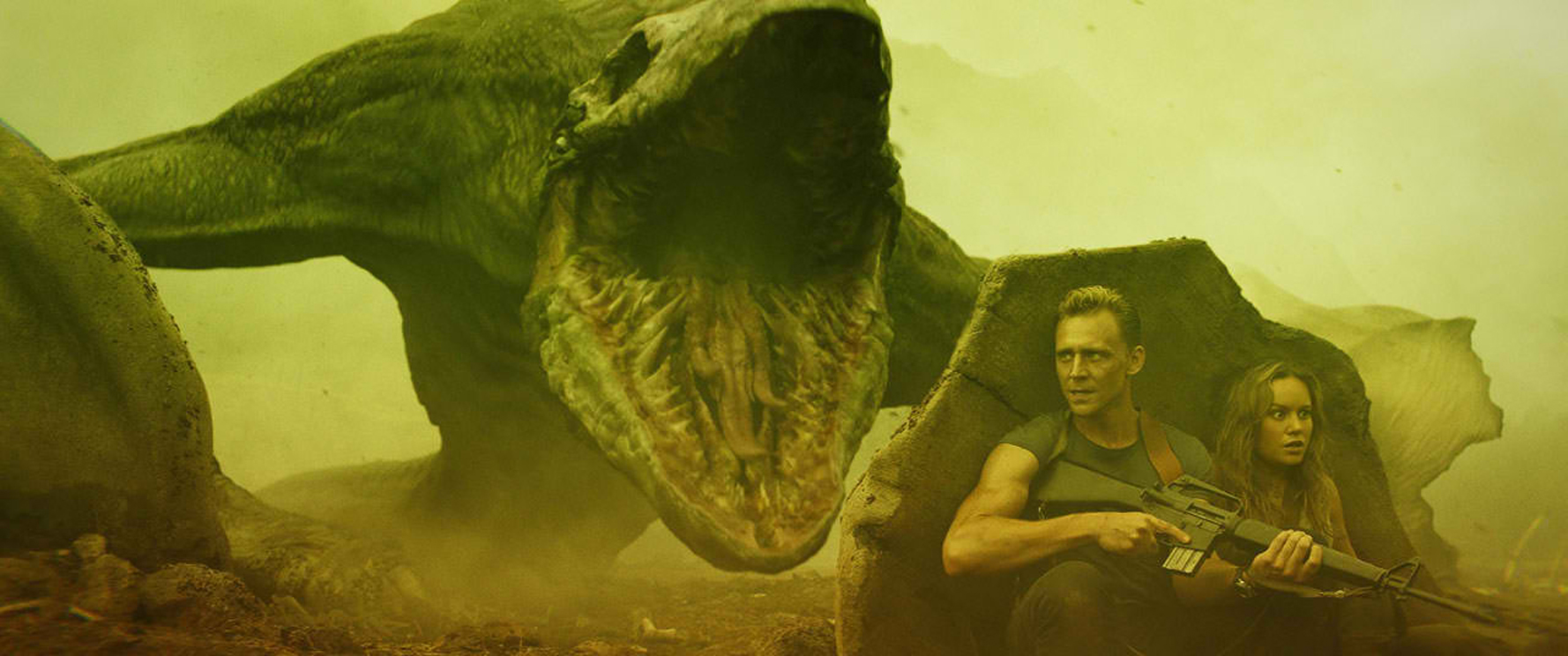
If you thought the world didn’t need another remake of King Kong, you’d be right, but that’s not about to stop Hollywood. Following 2014’s Godzilla and paving the way for 2020’s Godzilla vs. Kong prize fight of the so-called MonsterVerse, Kong: Skull Island isn’t the same story in past films featuring the giant ape. There’s no film crew, no screaming damsel in distress, no Empire State Building, so it might seem that Kong: Skull Island simply features a different (and much larger) version of the character and isn’t an actual remake. But it is, just a remake of the first half of the original King Kong tale, that being the story of ill-fated visitors to Kong’s home of giant critters. As much as the film tries to make a whole out of this half-story, it doesn’t quite work.

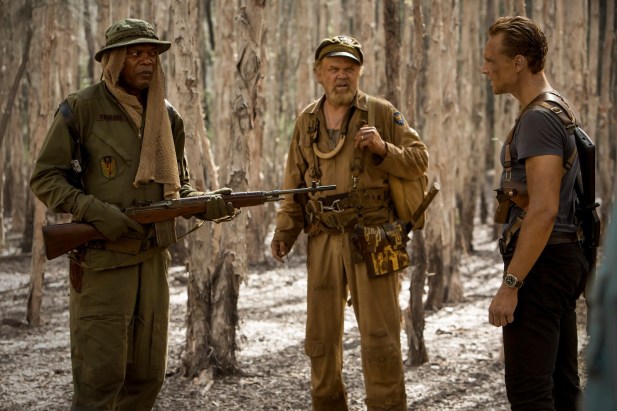
Those ill-fated visitors include a team of surveyors, a military escort fresh from Vietnam, and a few scientists from Monarch (the secret monster-studying organization from Godzilla), all led by the shady desire of Bill Randa (John Goodman) to explore the newly discovered Skull Island. There are plenty of big names here, from Goodman to Tom Hiddleston’s manly tracker to Brie Larson’s intrepid photojournalist to Samuel L. Jackson’s overly devoted army commander, boasting plenty of Jacksonian intensity. In addition, the Vietnam War-era setting warrants a great soundtrack of 1970s rock staples that make the team assembly of the first half quite enjoyable and promising. And when we actually see Kong himself, skyscraper-sized and none too happy about the unwanted guests and their explosives, it’s an action-packed debut that reminds us how frightening a giant gorilla can be.

See the source image

Yet as the film wears on, and the dangers of Skull Island make themselves known, it becomes clear that this is less of an adventure movie and more of a CGI-laden horror film. Oversized creatures take out redshirt after redshirt, often in gruesome ways, until the only source of mystery is who’s going to be on the menu next. By the time one unsuspecting fellow was carried off by lizard birds and torn apart in silhouette, my VC had had enough of the carnage and didn’t want to keep watching. It might help if the characters had some meat to them (literal or otherwise), but they’re really only there as potential beast fodder, even Hiddleston and Larson whose roles are clearly main character material yet don’t really go anywhere. It was also annoying that the military immediately makes the stupid decision in these films of “shoot the giant monster” instead of retreating, like any sensible person would in that situation.

There are bright spots. John C. Reilly livens up the cast significantly as a castaway stranded on the island since World War II, offering some good heart and humor and exposition for the island’s inhabitants, including a tribe of natives much more sympathetically depicted than in past versions. The big battles with Kong are also CGI wonders, perhaps not on par with Peter Jackson’s triple T. Rex fight but still marvelous to watch.

See the source image

Despite the relatively positive reviews for both Godzilla and Kong: Skull Island, I’m still not sold on this MonsterVerse franchise. The monsters created are well visualized with properly awesome action, but the human characters are thin as paper. It’s not a good sign when the scene played during the end credits has more human interest than the whole rest of the film. And I have other questions, like “How are Kong and Godzilla supposed to battle when Godzilla is still much bigger?” or “Will it turn out the same as the 1962 Japanese version of King Kong vs. Godzilla?” or “Will none of the surviving characters from Skull Island return, considering they will have aged between the ‘70s and the modern-day time frame of Godzilla?” Basically, Kong: Skull Island is about a bunch of people who go to an island, and a lot of them die. There has to be more than that for me to care.

Best (and most ironic) line: (Randa, as hippies in D.C. protest the war) “Mark my words. There’ll never be a more screwed up time in Washington.”


Rank: Honorable Mention


© 2017 S.G. Liput
518 Followers and Counting


Thor: Ragnarok (2017)

06 Wednesday Dec 2017

Posted by sgliput in Movies, Poetry, Reviews, Writing

≈ 2 Comments

Tags

Action, Comedy, Sci-fi, Superhero

See the source image

When terrorized by Ragnarok,
(The end of the world? What a shock!),
Mighty Thor will not shrink.
With a boom and a wink,
He’ll prevail while the rest of us gawk.
_______________________

MPAA rating: PG-13

It’s safe to say that the Thor movies are probably the least loved of the Marvel Cinematic Universe (except maybe The Incredible Hulk, but with Mark Ruffalo’s recast, that one’s barely even connected). Thor and Thor: The Dark World aren’t bad films and are still perfectly entertaining fusions of Shakespearean drama and alien hammer battles, but compared with the rest of the MCU, they’re just not that memorable, despite being the source of Marvel’s best villain thus far, Tom Hiddleston’s Loki. Hiddleston’s trickery and Chris Hemsworth’s muscular appeal helped the Thor movies not drag down their more acclaimed cousins, but it seems that Thor has finally found his hit, not with earth-threatening gravitas but tongue-in-cheek comedy, courtesy of New Zealand director Taika Waititi.

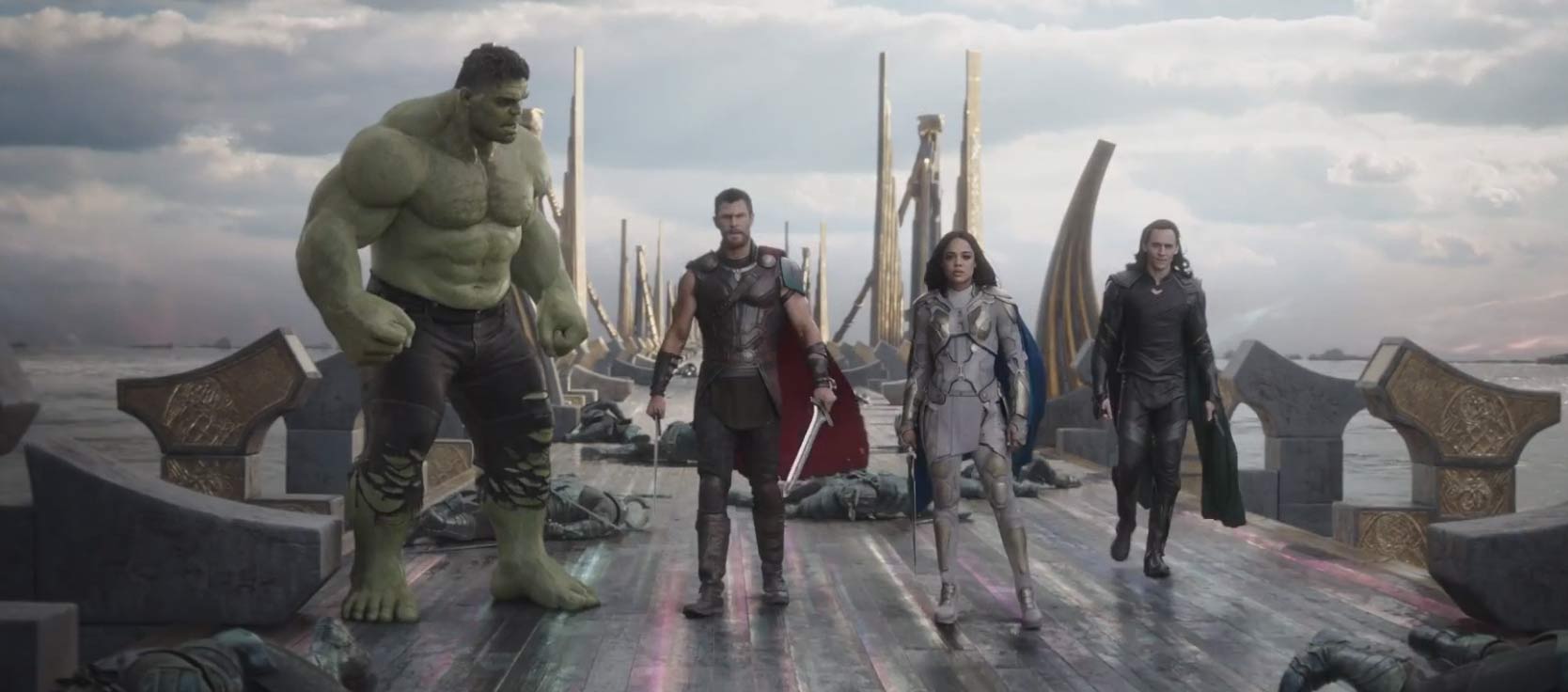
Those paying attention during Captain America: Civil War might have noticed that two of the Avengers were absent from the whole schism. So what were Thor and the Hulk up to in the meantime? Quite a lot actually. The post-credits scene of Doctor Strange hinted that Thor would be looking for his father Odin, but aside from a neat little cameo for the Sorcerer Supreme, the search for Odin isn’t a main plot point. Instead, there’s the arrival of Thor’s long-banished sister Hela (Cate Blanchett), the goddess of death, whose power overwhelms Thor and his hammer and sends him hurtling onto a distant planet of garbage and gladiators. There he encounters both the sadistic Grandmaster (ever-colorful Jeff Goldblum) and the long lost Hulk, whose two-year leave has widened his vocabulary and made the big green guy more of an actual character than merely a secret weapon, borrowing from the Planet Hulk storyline of the comics.

See the source image

While most of the buzz for Ragnarok has been positive, there is a minority who find that the lighter tone cheapens the proceedings, especially considering how dark Hela’s takeover gets. I can definitely see that; the body count is high, including characters from past Thor movies, yet only one gets even some brief token grief, while the others are sloughed off without a passing glance. This might seem callous in a film so filled with gags that it clearly doesn’t want you to dwell on anything but the entertainment. But entertaining it is.

Fans of Guardians of the Galaxy should be quite pleased with how Ragnarok emulates its quirky alien diversity, but Waititi adds his own Kiwi sense of humor, in person actually playing a soft-spoken rock-covered gladiator named Korg. He also brings along Rachel House (as the Grandmaster’s assistant) and a briefly seen Sam Neill (as an Odin actor) from his previous film Hunt for the Wilderpeople. I was also shocked to learn that Matt Damon has a cameo I totally missed. The jokes are many, often droll and sometimes at the expense of past Marvel films, stepping back from the expected superheroics to chuckle before doing them anyway. It’s a fun mix, particularly the rivalry/rapport between Thor and Loki, and although Ragnarok also follows Guardians of the Galaxy in thinking it’s funnier than it actually is, there’s enough varied humor here to please anyone, especially when the whole cast seems to have had so much fun making it.

The action, though, is where Thor: Ragnarok really ups the ante. From the big Thor vs. Hulk fight to a Guardians-ish spaceship chase, the effects are an epic thrill to behold, augmented by the presence of Hemsworth’s more cheeky Thor and likely fan favorite Valkyrie (Tessa Thompson). Karl Urban also has a nice little character arc as a would-be lackey of Hela’s, along with one of the many awesome scenes of the finale. But there’s no beating Thor’s big battle toward the end, made brilliantly epic by Led Zeppelin’s “Immigrant Song.”

See the source image

So yes, Thor: Ragnarok is far more memorable than its predecessors, attracting every conceivable synonym of “fun,” “epic,” and “awesome.” While it has its dramatic moments, the constant jokery keeps things so light that the gravity of certain situations only sinks in later. Despite the fact that Ragnarok leaves several lasting impacts on the MCU, it still feels oddly disposable, like really amusing filler meant to set the stage for next year’s Infinity War. (Can’t wait!) It may or may not go down as one of Marvel’s best, but even if it doesn’t, it’s still Thor-oughly entertaining.

Best line: (Bruce Banner, to Loki) “Last time we saw you, you were trying to kill everyone. What are you up to these days?”   (Loki) “It varies from moment to moment.”


Rank: List-Worthy


© 2017 S.G. Liput
517 Followers and Counting


Valerian and the City of a Thousand Planets (2017)

21 Tuesday Nov 2017

Posted by sgliput in Movies, Poetry, Reviews, Writing

≈ Leave a comment

Tags

Action, Sci-fi, Thriller

See the source image

How primitive we’ll likely seem
To generations yet unborn.
They’ll look at microchips and deem
Them obsolete, as we do steam.
Our present will be like a dream
Before the future’s morn.

I wish that I could see such things,
As interplanetary trips,
And alien discoverings
And cars that fly with plasma wings.
I’d rather see what that dream brings
Than some apocalypse.
__________________

MPAA rating: PG-13

It boggles my mind that people complain about no originality in Hollywood anymore, and then the fifth Transformers film makes millions while Valerian flops. Luc Besson’s French import based on a classic French comic immediately sparked my interest based on the trailer alone, and I knew I had to catch it on the big screen. Valerian and the City of a Thousand Planets is easily one of the most visually imaginative films I’ve seen, resplendent in its CGI-heavy universe that resembles Star Wars, Star Trek, and Avatar on steroids.

See the source image

It starts out with one of the rosiest visualizations of first contact ever, a brief but brilliant montage of mankind’s collaborative camaraderie expanding to include thousands of alien races. Centuries in the future, the diverse species of the galaxy will converge aboard the space metropolis of Alpha, and human government agents Valerian (Dane DeHaan) and Laureline (Cara Delevingne) are tasked with protecting it when a mysterious danger arises. That’s about as general a description I can give, because the plot is fairly simple at its core but so surrounded by frenetic action and less-than-necessary tangents that it seems more complicated than it is. Yes, it probably didn’t need a memory-eating jellyfish or a shape-shifting pole dance, but Luc Besson’s exuberance for his material is obvious and fun in this all-over-the-place approach.

Most of the criticisms aimed at Valerian focus on the casting, and I’ll admit Dane DeHaan and Cara Delevingne would not have been my first choices to play the two leads. Neither imbues their character with anything very unique, and their personalities are rather flat as a result. Yet I wouldn’t say they were bad but rather passable. There’s nothing overtly mockable in their relationship like Anakin and Padme, and their chemistry and interactions are enough to maintain our interest in everything that happens around them. While Clive Owen, Ethan Hawke, Herbie Hancock, and Rutger Hauer show up to lend some brief recognizable star power, the more interesting characters are the CGI alien creations, like the three gremlin-bird-things that wander around trading information like money-grubbing Ferengi. Rihanna as a shapeshifter offers an especially enjoyable addition to the lead duo, though I wish she had had more screen time.

See the source image

More than anything else, I enjoyed Valerian and the City of a Thousand Planets because it showed me things I’d never even imagined before:  pristine alien beaches for harvesting energy pearls, glowing butterflies you do not want to touch, extra-dimensional shopping malls located in the middle of a desert. For an independent film, the Oscar-worthy visual effects rival anything that Hollywood has put out. The action scenes were spectacularly thrilling, and I didn’t stop to care about the film’s flaws when I was watching Valerian escape from a crime boss through a multi-level alien bazaar while his arm is trapped in another dimension. It was just a fun ride, particularly an extended shot of Valerian bashing through wall after wall of Alpha’s various alien habitats.

I will gladly defend Valerian based on how much it entertained me, and I wouldn’t doubt that it will become a cult classic, not unlike Besson’s other quirky, polarizing sci-fi The Fifth Element. Nevertheless, I’m torn on how to personally rank it because the closer I get to the end of the year, the more I realize I’ll have to remove genuinely good films from my Top 365 list to make room for this year’s additions. At this point, I’m not sure that Valerian warrants that, since I must acknowledge the relative weakness of the characters and plot, including an extended glimpse of life on one alien planet that goes on for too long. Even so, it’s a film I greatly enjoyed and plan to see again soon, so perhaps it will rise further in my estimation after another awesome visit to the future.

See the source image


Best line:  (Doghan-Dagui, the three information traders) “We know how humans work. They are all so predictable.”   (Laureline) “Clearly, you have never met a woman.”


Rank:  List Runner-Up


© 2017 S.G. Liput
517 Followers and Counting


A Happy Thanksgiving to all!

The Dirty Dozen (1967)

08 Wednesday Nov 2017

Posted by sgliput in Movies, Poetry, Reviews, Writing

≈ 4 Comments

Tags

Action, Classics, War

When Nazis are doing what Nazis will do,
And you’re busy planning for D-Day’s debut,
Too busy to spare a commando or two
To send on a raid that could likely get you
Fired if it were to fail or fall through,
Who wouldn’t think, “I’ve an idea to pursue!
I’ll gather a murderous felon or two
Or twelve and I’ll line them all up in a queue
And train them to do what I want them to do.
Who cares if they misbehave out of my view
Or turn psycho, causing a hullabaloo?
It’s not my fault if something bad should ensue.
I know it’s a risk, and it’s dangerous too,
As my bosses would tell me if they only knew,
But expendability has its value.”
Who would think that? That’s right, very few.
___________________

MPAA rating: Not Rated (should be PG-13)

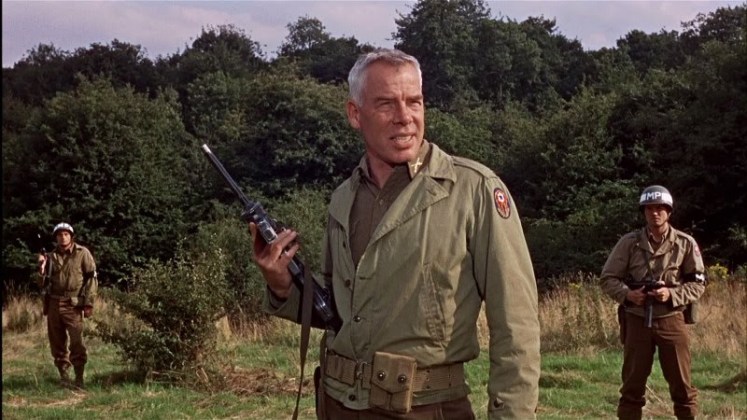
Considering I only saw it once years and years ago, I thought it was about time I reminded myself why The Dirty Dozen is so popular. After all, its memory brought Tom Hanks and Victor Garber to tears in Sleepless in Seattle. While it didn’t quite leave me choked up like them, I must admit it’s a unique classic of the war genre, full of surly machismo and a highly talented cast. And despite having practically the same basic premise, it’s way better than Suicide Squad.

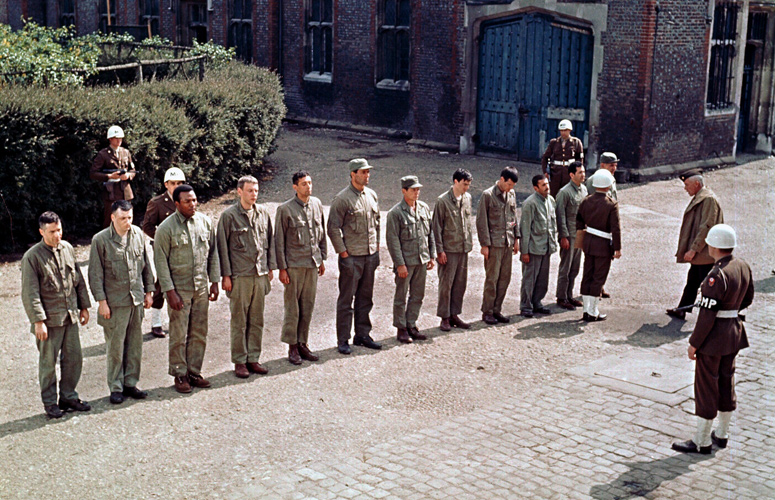
In the months leading up to D-Day, Lee Marvin’s Major Reisman is put in command of an experimental unit of twelve convicted prisoners, who are to be trained and sent on a probable suicide mission for the Allied cause.  Half of them plucked from death row, this “Dirty Dozen,” as they’re later explicitly called, is full of murderers and rebels, and despite being offered amnesty if they survive, they aren’t about to become model soldiers overnight. Thus, the no-nonsense Reisman pulls no punches in whipping them into shape and encouraging them to work together for their own (and the army’s) best interest.

The main thing I recalled from my first viewing was that I had trouble telling the men apart. Obviously, I could recognize Jim Brown as the only black member, but the others all blended together to the point that the deaths toward the end didn’t mean much to me since they were all interchangeable. While not everyone stood out this time either, I was better able to distinguish the actors I’d seen elsewhere, such as Donald Sutherland as Pinkley, Charles Bronson as Wladislaw, and John Cassavetes as Franko, plus Ernest Borgnine and George Kennedy as officers. Others stood out for their distinct personalities, such as Clint Walker’s shy Posey and Telly Savalas’s psycho Maggott. That’s still only half of the Dozen that I could pick out of a lineup from memory, but at least it’s better than my first go-round.

When I ignored trying to tell the other six apart, I was able to just enjoy the movie, which starts out slow but gets better with time. Periodic humor keeps the tone relatively light, such as Pinkley impersonating a general, and although the Dozen are labeled as bad men, there were levels to their “dirtiness.” Some like Maggott with his religious zealotry were downright crazy, but others were simply high-strung and bitter in their defiance. A few even had mitigating circumstances to their crimes that made them more sympathetic than others. This was something that Suicide Squad didn’t do well in making all the villains psychopaths, along with some of the “good guys” too. There has to be someone the audience can sympathize with, and at least a few of the men in The Dirty Dozen were worth caring about.

While the training and the war games scenes were rather fun to watch, the best part is the actual mission against the Nazis to which everything else builds. With the high body count and higher bullet count, this is war action at its best, even if I’m still not sure where and when everyone who died bit the dust. The film got a fair amount of criticism at the time for its violence, and I was a bit shocked too by the ruthlessness of killing both Nazi officers and their potentially innocent escorts, though I suppose such is war and the mission at hand. The Dirty Dozen lives up to its reputation as a “man’s movie,” but my VC enjoyed it too. Even with its large cast, it wrings plenty of excitement from the risk of its somewhat implausible but entertaining premise.

Best line: (Reisman, leaving the room after a racist comment starts a brawl) “Oh, the gentleman from the South had a question about the dining arrangements. He and his comrades are discussing place settings now.”


Rank: List Runner-Up


© 2017 S.G. Liput
517 Followers and Counting


Cartoon Comparison: Ghost in the Shell (1995, 2017)

05 Sunday Nov 2017

Posted by sgliput in Movies, Poetry, Reviews, Writing

≈ Leave a comment

Tags

Action, Animation, Anime, Cartoon Comparisons, Drama, Sci-fi, Thriller

Image result for ghost in the shell 1995

Machine and man will merge one day,
Inevitably, some would say,
And what that day will look like
It is hard to visualize:

Computers in our brains perhaps,
Robotic limbs that won’t collapse,
And access to the Net unlike
The world can now surmise.

Yet as the world drives faster still
Our cybernetic dreams to fill,
Did any on this Progress Pike
Doubt whether this is wise?
__________________

MPAA rating for 1995 version: Not Rated (should undoubtedly be R for violence and nudity)
MPAA rating for 2017 version: PG-13

Ghost in the Shell is widely considered a classic, a game-changer for anime and the cyberpunk genre, and its growing niche popularity was bound to get Hollywood’s attention sooner or later. I, however, had little desire to see it due to its prominent violence and nudity, and it was only when the live-action adaptation with Scarlett Johansson was released that I felt I had to see it for comparison’s sake. And to be quite honest, I’m not much of a fan of the original or its remake, though that doesn’t mean they weren’t worth watching, and I found different things to appreciate in both versions.
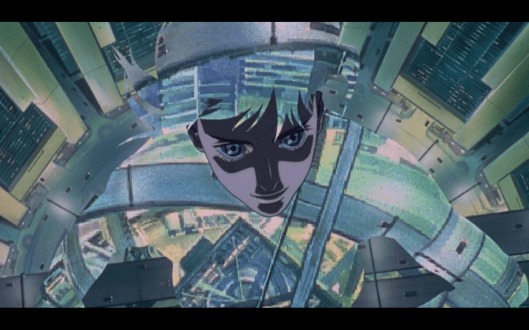
Image result for ghost in the shell 1995

The original 1995 film has plenty of ardent fans, but I’d be lying if I didn’t admit that it’s a tad overrated. I can’t deny its influence on the cyberpunk subgenre, particularly The Matrix, which borrowed its falling lines of green data and the characters’ neck interfaces to plug into the Net. After seeing it, the Wachowskis even reportedly told producer Joel Silver that they wanted to “do that for real,” though at least they had the imagination to come up with an original story rather than a straight adaptation. Ghost in the Shell was also a forerunner for other dark cyberpunk anime like Ergo Proxy and Psycho-Pass, but I guess I just don’t find such soulless, cyberized dystopias very appealing.

Yet it’s not the world it creates that falls short, since the terrifically detailed animation doesn’t disappoint, but the story itself does. After an assassination mission that establishes Section 9 as a no-nonsense branch of the future Japanese police force, we get a convoluted tale of a rogue hacker called the Puppet Master, which has more twists than substance and culminates by the end with very little resolution. The main character named Major Makoto Kusanagi, a cyborg officer who works best without clothes, delivers sober monologues about identity and technology but doesn’t really have much personality. The side characters are actually more interesting than her, like her lens-eyed partner Batou or non-cyberized member Togusa.

Image result for ghost in the shell 1995

I suppose it’s easy for Ghost in the Shell to coast on its visuals and supposed depth; it does have some thrillingly iconic scenes, like an invisible smackdown on a fleeing thug, and some worthwhile themes about the necessity for variety and growth do manage to counter the moments of ponderous introspection. I will say the nudity is gratuitous. You could argue that Kusanagi’s thermoptic camouflage is built into her skin so she has to be naked for it to work, but other Ghost in the Shell installments show that there are entire uniforms that can go invisible. Critics have delved into deep themes like posthuman femininity, but I’m convinced it’s just fan service.

The 1995 Ghost in the Shell film is the franchise’s most famous incarnation, but it’s not the best. Even if the film left me cold, I was impressed by its two-season spinoff series called Ghost in the Shell: Stand Alone Complex. It’s got some of the same hard-to-follow philosophizing and excessive violence, but the overarching stories carry more depth when developed over a season’s length, which also allows far better characterization for Kusanagi and everyone else too, like the other members of Section 9 that are barely acknowledged in the movie. After seeing the two films that summarize Stand Alone Complex (and a follow-up film called Solid State Society), I find that the 1995 film’s story is even less impressive by comparison. I can’t bash the original Ghost in the Shell too much since it does appeal to some people more than me, but I would suggest that its fans check out the series for some much better storylines. (On a side note, Stand Alone Complex might also have had some influence in the West. For fans of The Dark Knight, remember when the Joker threatens a hospital to convince random civilians to try to kill Coleman Reese? I now see that it’s suspiciously similar to a scene from SAC’s season 1, in which a super-hacker takes over the minds of random citizens to carry out an assassination attempt. Interesting….)
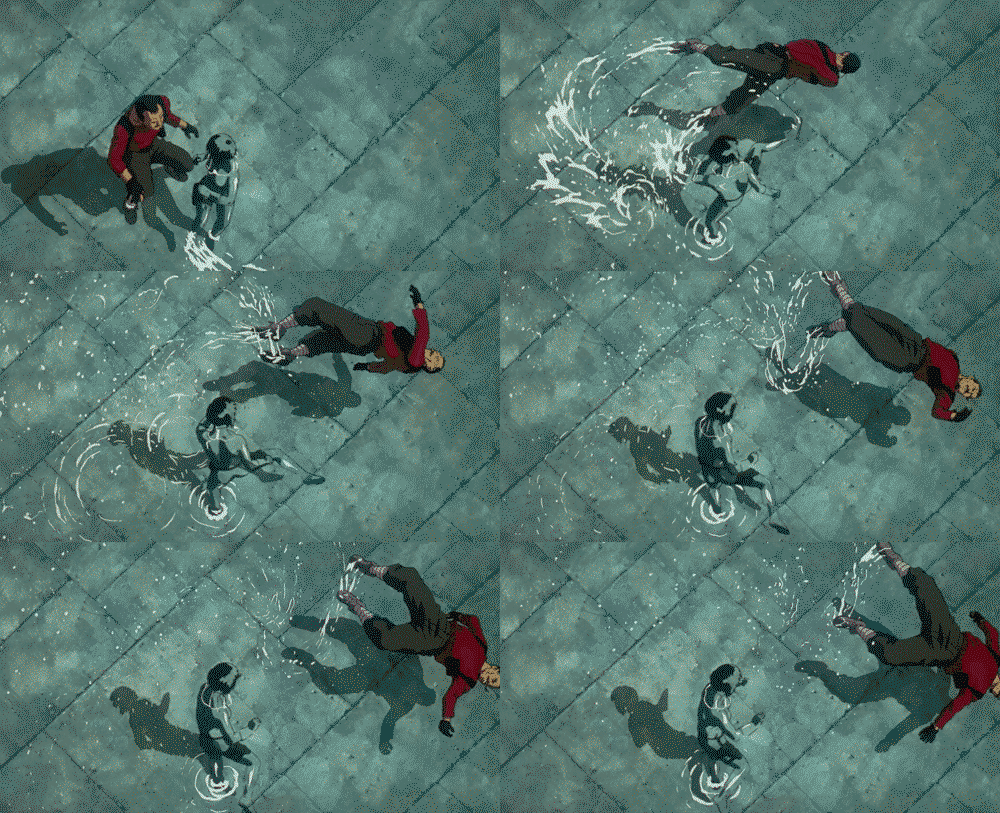
Image result for ghost in the shell 1995 beatup

Now what about America’s take on Ghost in the Shell, which didn’t do much to improve people’s poor opinions of live-action anime adaptations? It’s actually not that bad an adaptation in my opinion because I consider many of its flaws to be flaws the first film had. I, for one, don’t mind Scarlett Johansson’s casting, regardless of the inevitable whitewashing accusations, since others have pointed out that the cast is still plenty diverse and needed a bankable star. Even if her character is renamed Major Mira Killian, her status as a cyborg with only her brain remaining human makes her appearance relative and changeable, and the film even works in a way to contrast her current appearance with her original identity. I’ve seen critics complain about potentially deep themes that aren’t fleshed out enough, a lack of personality for Johansson’s character, and a generally lackluster story, but I felt that was the case for the original too.
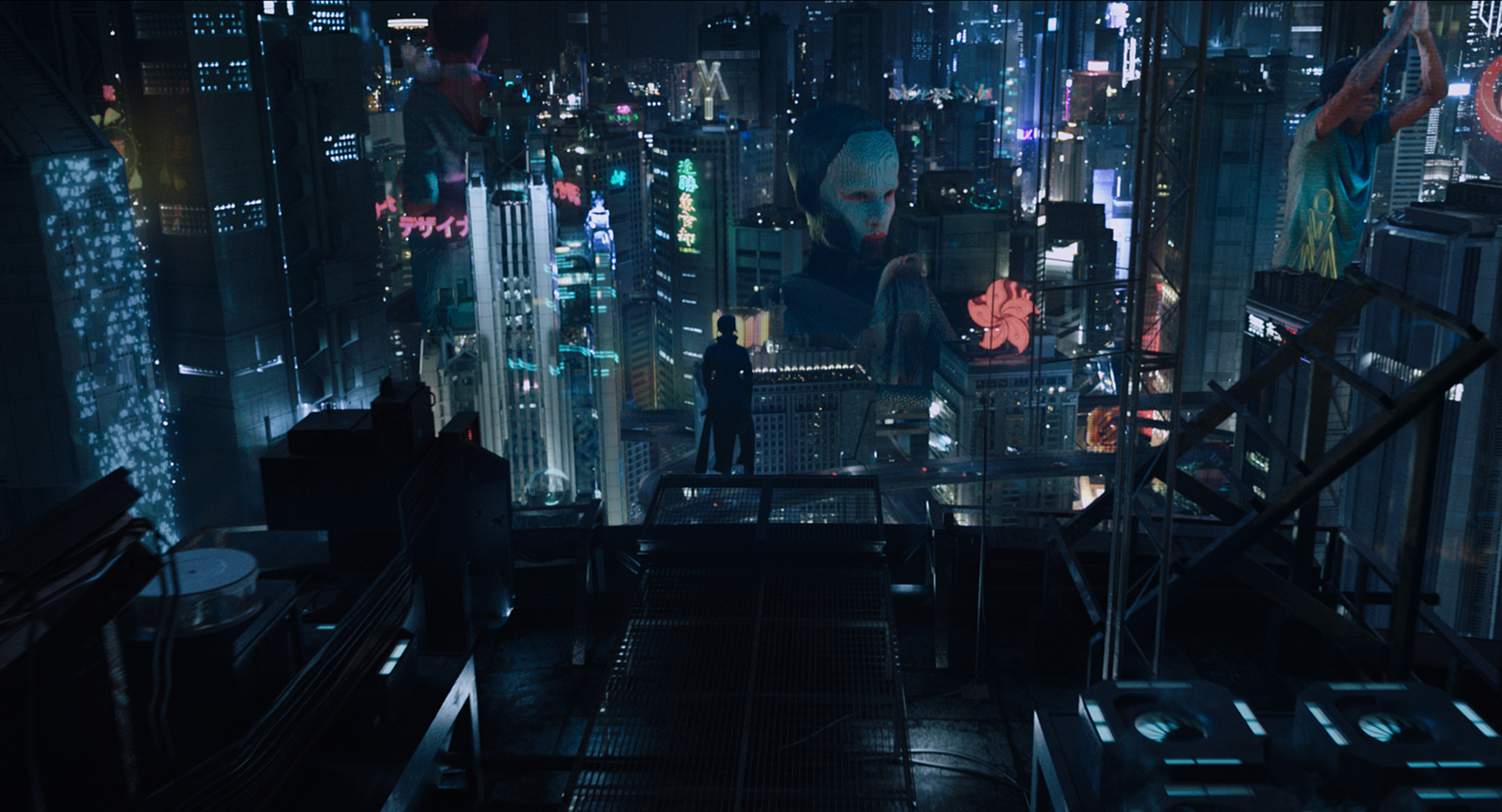
Image result for ghost in the shell 1995

The strangest thing for me was something that I haven’t seen any other reviews point out, namely that 2017’s Ghost in the Shell isn’t just a straight remake of the 1995 one, but an odd amalgamation of several Ghost in the Shell incarnations, including the Stand Alone Complex series. There are numerous scenes lifted shot for shot from the 1995 film, like the invisible beat-up, the spider tank fight, and the opening montage of creating the Major’s body, but they are all placed in a completely different context. The first action scene with the robotic geishas is straight from the first episode of SAC. There’s also a scheme to pick off Section 9’s members (like SAC’s first season about the Laughing Man), the incorporation of Major’s antagonist/counterpart Kuze (from SAC’s second season), and a secret government kidnapping plot (from the Solid State Society movie). It was seeing all these disparate elements combined with a totally new story of Major questioning her identity that felt strange to me, like I wasn’t sure which story they would try integrating next.

One aspect of remakes that Hollywood can be expected to get right more often than not is the impressive visuals, and like the anime, the world of seedy, hologram-laden skyscrapers it creates is far more intriguing than the characters in it. That’s not to say it’s a place I’d want to visit, but its visuals at least honor the original and its predecessors, like Blade Runner, even if it’s also alienating.
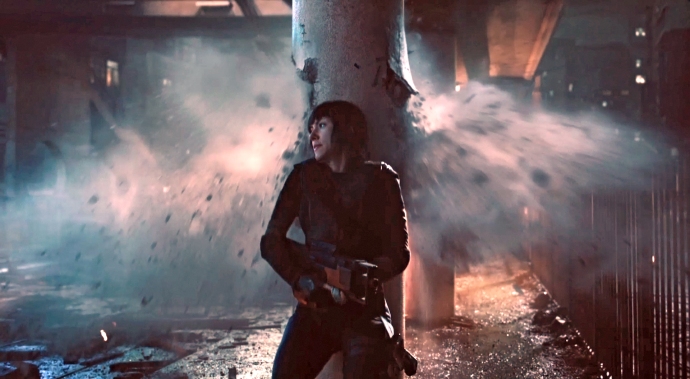
Image result for ghost in the shell 2017 batou

With its obvious nudity, I never would have thought a live-action Ghost in the Shell would receive a PG-13 rating, but that reflects the fact that the 2017 film tries to soften the harder edges of an anime that is definitely not for all tastes. Johansson’s robot body is more like a skin-color body suit, like the blue Mystique from the X-Men movies, and its intentionally manufactured appearance makes it less flagrant than the original. The same goes for the violence: the film does its best to make itself gritty and unpleasantly ruthless, but at least there aren’t any of the graphic head shots from the film and series. Even Major’s characterization is less stone-faced than her animated version (though I’ve heard every version of her is somehow different from the manga). In contrast to the emotionless ambiguity of the 1995 film’s ending, the search of Johansson’s Major for her past offers a shred of poignancy to hold onto, something I actually felt was an improvement.

Neither Ghost in the Shell is perfect or even close to perfect, in my opinion, but they have enough atmosphere and intrigue to be worth discussing. Both do have the repeated Ghost in the Shell plotline, which the TV series helped me recognize, that being “Super-hacker seems like bad guy until it turns out to be an evil government/corporate conspiracy.” I suppose the 1995 film could be seen as a philosophical sci-fi film with some action, while the remake is an action film with some philosophy. Although the 2017 version is considered a flop, it might be the best anime-to-live-action adaptation so far (I’m hesitant to see the widely panned Death Note), at least nailing the original’s distinct visual merit. With more anime adaptations on the way, including Your Name (please don’t ruin it, J.J. Abrams!), there might be hope for future efforts to do better with more appealing source material.
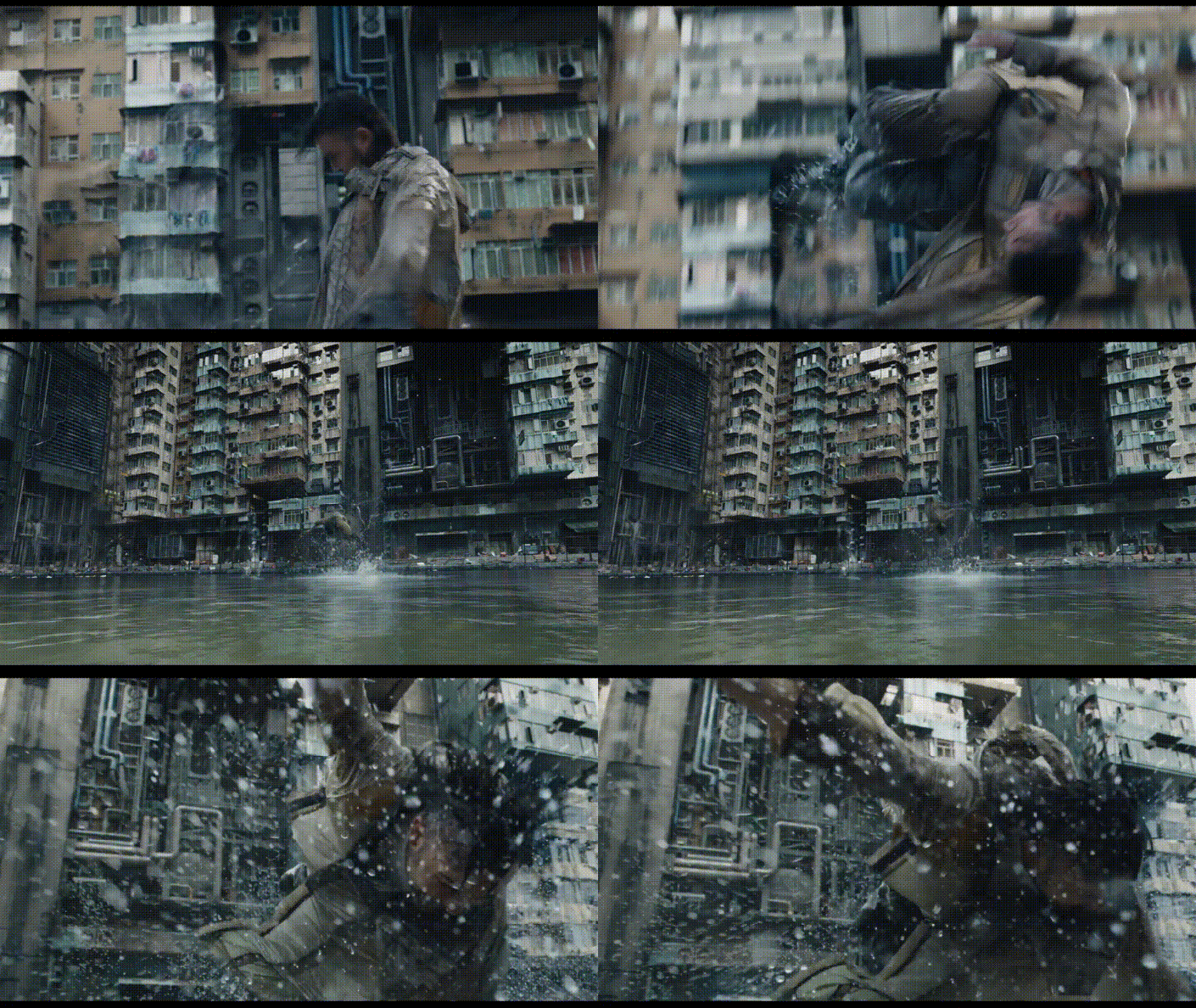
Image result for ghost in the shell 2017 water scene

Best line from 1995 film: (Kusanagi) “You talk about redefining my identity. I want a guarantee that I can still be myself.”  (Puppet Master) “There isn’t one. Why would you wish to? All things change in a dynamic environment. Your effort to remain what you are is what limits you.”

Best line from 2017 film: (Dr. Ouelet) “We cling to memories as if they define us, but they really don’t. What we do is what defines us.”


Rank for both: Honorable Mention


© 2017 S.G. Liput
517 Followers and Counting

 

Dawn of the Planet of the Apes (2014)

22 Sunday Oct 2017

Posted by sgliput in Movies, Poetry, Reviews, Writing

≈ Leave a comment

Tags

Action, Drama, Sci-fi, Thriller, War

Image result for dawn of the planet of the apes

They said no bridge could cross the divide,
Too far and different were each side,
And yet two chose
To still propose
A bridge to span the gap so wide.

They slowly worked with cautious hope
To lay foundations, tighten rope,
And earn the trust
That is a must
For silencing the misanthrope.

Naysayers had their efforts spurned,
Yet look what trust can build when earned!
Then fast as fire,
The doubters’ ire
Had lit the bridge and down it burned.
_____________________

MPAA rating: PG-13

Wow! If Rise of the Planet of the Apes was a prime reboot, Dawn of the Planet of the Apes is an exemplary sequel. It continues the storyline of its predecessor while establishing a new yet complementary scenario with far more depth than the simple “rise of the apes” concept could have had in the hands of lesser writers.

Image result for dawn of the planet of the apes

Set ten years after Rise, Dawn sees Caesar (Andy Serkis) and his band of intelligent esc-ape-ees having built their own mini-civilization, hidden in a dense redwood forest, while humanity has been decimated by the same virus that gave the apes their heightened intelligence. When a band of immune human survivors stumbles upon the apes, tensions immediately flare, especially because the humans’ energy needs won’t allow them the logical course of keeping their distance. Yet the human leader Malcolm (Jason Clarke) actually tries to reach out to Caesar and his apes and work toward mutual trust, something of which apes and humans alike disapprove, especially Caesar’s second-in-command Koba (Toby Kebbell).

The roles of both Caesar and Malcolm are very much representative of Rudyard Kipling’s poem “If—” as they try to “keep [their] head when all about [them] are losing theirs and blaming it on [them].” They both want what’s best for their respective groups, and they know that that includes peace between   them. We as level-headed viewers recognize the wisdom of their actions, and yet so many of their subordinates carry far too much baggage and resentment to trust that wisdom. Whether it be humans who automatically associate the word “ape” with the virus epidemic or surly Koba, who still hates humans for using him as a research guinea pig, they question their leader’s judgment and even his loyalties without questioning if he might be right. It’s frustrating and yet all too believable, considering humanity’s known weakness and intolerance.

Image result for dawn of the planet of the apes

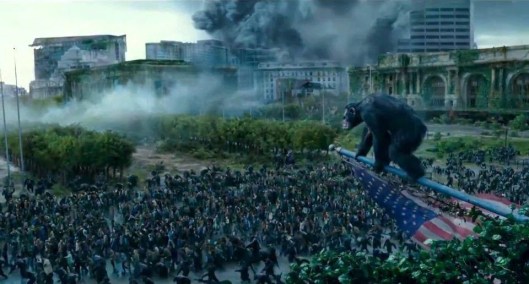
Another major theme is that the apes and humans are not as different as either side would think. That weakness and intolerance are common to both, as is the tendency to view such opponents as a group rather than individuals who don’t necessarily all believe the same thing. The act of a rogue can quickly spiral into “us versus them” violence that makes such perceptions harder to undo. What’s astounding about Dawn is how it gets these complex messages across with minimal dialogue, utilizing the apes’ broken English and hand motions to their fullest. The motion-capture CGI is also even more impressive than in Rise, wowing with the action battle scenes, as well as benefiting the story in less flashy ways, like the clearly recognizable emotions that play out on Caesar’s face, courtesy of the talented Andy Serkis.

In addition to the Oscar-nominated visuals, all the performances are outstanding, especially Clarke, Serkis, Keri Russell as Malcolm’s wife, and Gary Oldman as Malcolm’s less trusting counterpart. James Franco is sadly departed from the story, but there are affecting reminders of him and Caesar’s past. Caesar’s ape friends who do carry over from Rise don’t stand out that much, making me glad I still remembered them from having just seen the first film, but Koba’s role is greatly expanded as an antagonist, with the ending directly mirroring one of his actions in Rise. Also, as a fan of tracking shots, I must point out a scene I loved in which the camera follows Malcolm as he stumbles through a maze of hallways trying to avoid invading apes. It made me think that a tracking shot could be a running element for the series, since Rise had the scene with young Caesar swinging throughout Will’s house.

Image result for dawn of the planet of the apes

Dawn is a sober movie that views the ape versus human struggle with far more nuance and regret than any earlier installment, precisely because the film shows it didn’t have to turn out the way it did. An action blockbuster is expected to have awesome visuals, but it’s a rare and pleasant surprise when there’s this much depth too. With so much tension between various groups nowadays, the film remains as timely as ever, a potent reminder to not let the worst parts of our nature carry us to destruction.

Best line: (Caesar) “I always think… ape better than human. I see now… how much like them we are.”


Rank: List-Worthy (joining Rise)


© 2017 S.G. Liput
516 Followers and Counting


Rise of the Planet of the Apes (2011)

18 Wednesday Oct 2017

Posted by sgliput in Movies, Poetry, Reviews, Writing

≈ 2 Comments

Tags

Action, Drama, Sci-fi

Image result for rise of the planet of the apes

Dystopias and futures grim
Are but a writer’s dismal whim.

No wasteland stark
Or desert dark
Or dictatorial monarch,
No virus spread
Or walking dead
Or culture built upon bloodshed,
No overthrow
Of status quo
Could happen to the world we know.

‘Twill be too late when mankind learns
To heed dystopians’ concerns.
_____________________

MPAA rating: PG-13

I’ve been skipping the recent Planet of the Apes reboot series because I considered them just another example of Hollywood’s idea-starved habit of milking past franchises. Although I was surprised at how positive the critical reactions were, that’s why it took me so long to finally explore this reboot, and now that I’ve seen it, I’m surprised again by how good it really is. Rise of the Planet of the Apes is a sterling example of a reboot done right, taking the basic ingredients of a prior film and building on them in new and unexpected ways.

Of all the earlier Planet of the Apes installments, this film most resembles the fourth one, Conquest of the Planet of the Apes, which happens to be where the original film series took a nosedive on quality and believability, even more so than in the second film. Whereas the Caesar in Conquest (played by Roddy McDowall) was the product of a time leap from the ape future seen in the original Planet of the Apes, the Caesar in Rise (played by Andy Serkis via ever-improving motion capture) is born from a captured chimpanzee being used for experimental drug tests. When an incident causes his mother and the other test cases to be killed, baby Caesar is taken in by Will Rodman (James Franco), the head of the project, and his father (John Lithgow), whose Alzheimer’s disease spurs Will to keep working on his cure. Although raised by humans, the unusually intelligent Caesar eventually learns of his origin and the fate of others of his kind and sparks a simian revolt.

Image result for rise of the planet of the apes

As the first in the series to use CGI for an authentic appearance for the apes, Rise of the Planet of the Apes is a huge improvement over the originals on a visual level alone. The apes look astoundingly real, even if there’s still that slight CGI-ness that lets me tell they’re not, and the motion capture allows for entirely credible movements, as well as emotive facial expressions in the case of Caesar. Franco and Lithgow also deliver solid human support that adds heart to a tale of science run amok, while Daniel Oyelowo plays the typical corporate corner-cutter who’s the “real” villain. The film’s “rise” to its action climax is not only a great thrill but one that also shows early on Caesar’s moral reluctance to take any human lives.

Although Rise is clearly rewriting the history of the original Planet of the Apes series, there are plenty of callbacks to please those like my VC who are wary of any change to a cherished franchise. Iconic lines are recycled, like “It’s a madhouse” and “Take your stinking paw off me, you d*mn dirty ape.” Easter eggs are dropped, like Caesar’s mother being nicknamed Bright Eyes, as Charlton Heston’s character was in the first film, and Heston himself even has a blink-and-you’ll-miss-it cameo. There’s an added reason to the references too, particularly in how Caesar is imprisoned in a cruel ape cagehouse, implicitly suggesting that, as bad as Heston was treated, the apes were treated that way first.

I also liked the subtlety of how Caesar’s arc is analogous to Moses in the Bible. Like Moses, Caesar was rescued when the rest of his “people” were killed; he was raised by the “enslavers” until an act of violent rebellion gets him in trouble; and after a time of exile, he leads his “people” to freedom. It’s a nice subtext that allows the story to be enjoyed as both a solid sci-fi movie and a semi-allegorical narrative.

Image result for rise of the planet of the apes

Rise of the Planet of the Apes does so much right that it makes me wonder why it’s so hard for other reboots to succeed. Certainly, it has respect for the source material but also the nerve to tell its own story, including a parting hint as to how mankind’s decline will play out. It’s a very promising start for a series that, from what I understand, will only get better.

Best line: (Jacobs, Will’s boss) “I swear, you know everything about the human brain except the way it works.”


Rank:  List-Worthy


© 2017 S.G. Liput
516 Followers and Counting


No Game No Life: Zero (2017)

15 Sunday Oct 2017

Posted by sgliput in Movies, Poetry, Reviews, Writing

≈ 2 Comments

Tags

Action, Animation, Anime, Drama, Fantasy, Romance, War

Image result for no game no life zero film

Is life not a game
Where there’s no one to blame
If the rules seem unfair
And the ends are the same?

You’re tempted to quit,
Raise your hands in forfeit,
For the game doesn’t care
Where the losers will sit.

But wait! None will mind
The misfits of mankind,
For the arrogant player
Is conveniently blind.

Who heeds the has-been
When his triumphs begin?
Those who haven’t a prayer
In the game can still win.
_____________________

MPAA rating: PG-13

Although I’ve come to really enjoy anime movies over the last several years, I’d never seen an anime film in the theater. Thus, it was a special treat to see No Game No Life: Zero on the big screen, especially with it being such a visually spectacular film. After being impressed by the trailers for months before its July opening in Japan, I thought for sure I’d have to wait perhaps a year before I’d get to see an American release, so I’m grateful to Sentai Filmworks and Fathom Events for distributing the English dub so quickly.

I wouldn’t doubt that non-anime fans have no idea what No Game No Life is. It’s a series of Japanese light novels, but most in the West would know it from the anime adaptation that is surprisingly popular for having only a single twelve-episode season. It centers on the gaming prowess of eighteen-year-old Sora and his eleven-year-old stepsister Shiro, two genius-level shut-ins who are transported by the god of games Tet to a fantasy world where all conflicts are decided by wagering on games of any kind. Humanity (known as Imanity in this world) is the lowest and least powerful of all the fantasy races, so Sora and Shiro take it upon themselves to lift up the humans and conquer the world through the likes of chess, word chain, and first-person shooters. Just as WarGames fans say “Shall we play a game?”, No Game No Life fans say “Aschente,” the mutual pledge before starting a game.

Image result for no game no life zero film

The show itself is played mainly for laughs and to marvel at the Sherlock-level strategy and foresight the siblings command even when at a disadvantage, but it boasts a broader fantasy appeal too, especially with unseen backstory about a horrific war that only ended when Tet became god and made the world game-centric. The characters and situations are quite entertaining for the most part, though No Game No Life isn’t among my favorite series for one simple reason: fan service. There’s plenty of sexual harassment, near-nudity, and risqué humor, mainly from Sora, and while much of it is funny, a lot is just uncomfortable and annoying. Plus, I’m not usually a fan of the kind of anime with silly faces and exaggerated reactions (I know that’s the majority of anime), which is why I lean more toward dramatic series or movies, which are usually easier to take seriously.

That’s why I was so eager to see No Game No Life: Zero, a film centering on an extended flashback of the pre-Tet war, a subject which lends itself to much more drama and emotion, and indeed the film is a complete contrast from the humorous tone of the series. (By the way, the Zero in the title seems to be an example of the naming convention for works that are connected yet somehow separate from an established series [e.g. Fate/Zero, Steins;Gate 0, etc.].) No Game No Life is notable, and sometimes disliked, for its hypersaturated colors, boasting more bright hues than a Crayola factory, and while the movie retains the same style, it limits its palette more to complement the darker storyline. Instead of the shiny fantasy land into which Sora and Shiro are literally dropped, this war-torn world 6000 years earlier is dominated by reddened skies and skin-burning ash, leaving no doubt as to humanity’s desperation, caught in the crossfire between the more powerful magical races. Just look at the contrast between the worlds below, the first from the show, the second from the film.

Image result for no game no life disboard

Image result for no game no life zero movie

Although there’s still a lot left unseen, the film wonderfully expands our knowledge of the war, showing us why the modern-day races still hate each other. Jibril, an immortal angel-like creature called a Flugel, was one of the best characters on the show, conceited and charming at the same time, but her appearance in the film fits the description of an “angel of death,” proving that those memories of slaughter she fondly reminisces about in the show were not exaggerated. The film also intentionally echoes the series with its “new” character designs. Riku, the leader of the remaining humans, looks a lot like Sora, just as Shuvi, an Ex Machina android intent on learning the value of the human heart, looks much like Shiro. (They’re even voiced by the same voice actors in the excellent English dub that I saw.) The main design difference may be that their hair colors are reversed, but these new characters have their own personalities and griefs that set them apart from their later incarnations, and instead of a brother and sister relationship, theirs is destined for love. I will say it takes a certain amount of disconnect from the series to accept a romance between two characters who look like the siblings we know, but the film spends a good amount of time developing their relationship, even if it starts on a very awkward note.

The trailers mainly focused on the romance angle and an epic fight between Shuvi and Jibril, but I was glad to see that the movie does explain the war’s formerly vague resolution. Instead of the explicit games of the series, the game concept, along with humanity’s struggle, becomes more of a running theme as the characters engage in a literal game of “Global Thermonuclear War.” Some have complained about the pacing of the movie’s final third, but that’s where I thought it truly found its stride and consistently impressed. I loved the way victory is snatched from apparent defeat, utilizing the fact that the Ex Machina are a lot like the Borg from Star Trek, and the sad circumstances became sublimely bittersweet by the end. It spoke to how the most important people in history often remain unsung heroes, their names sometimes only remembered by God.

Image result for no game no life zero

No Game No Life: Zero was a pleasure to watch in the theater, especially because it elevated the series it was based on, focusing on the fantasy with just a taste of the original’s humor and chucking the unnecessary fan service. (There’s still some stylized nudity, but it’s more forgivable here.) The animation is particularly stunning, especially during that epic battle I mentioned, and the score beautifully enhanced the emotions of each scene, with the lovely ending theme “There Is a Reason” earning entrance into my End Credits Song Hall of Fame.  By the end, as the film tied itself directly into where the series left off, I even found myself feeling surprisingly nostalgic and fond for a show I thought I only moderately liked. Many think this film is a prelude for a potential second season, and the movie will certainly strengthen that hope. No Game No Life may be a series I wouldn’t quite recommend to everyone, but, with the right background information, this movie is. (By the way, I’ve included the first teaser trailer down below to give a taste of the awesome animation and music.)

Best line: (Riku) “Yes, humans are fools, but it takes a great fool to not let that foolishness get themselves killed.”

Rank: List Runner-Up

© 2017 S.G. Liput
516 Followers and Counting

← Older posts
Newer posts →

Recent Posts

  • Dust Bunny (2025)
  • Don’t Breathe (2016)
  • The Sheep Detectives (2026)
  • The Black Phone (2021)
  • Godzilla Minus Zero (2026)

Recent Comments

The Sheep Detectives… on Wildwood (2026)
The Sheep Detectives… on #40: Babe (1995)…
The Black Phone (202… on Halloween Kingathon – Mi…
Godzilla Minus Zero… on Godzilla Minus One (2023)
If You Were the Last… on The Martian (2015)

Archives

  • November 2026
  • September 2026
  • June 2026
  • May 2026
  • January 2026
  • December 2025
  • May 2025
  • April 2025
  • March 2025
  • February 2025
  • January 2025
  • December 2024
  • May 2024
  • April 2024
  • March 2024
  • February 2024
  • January 2024
  • December 2023
  • November 2023
  • October 2023
  • September 2023
  • July 2023
  • June 2023
  • May 2023
  • April 2023
  • March 2023
  • February 2023
  • January 2023
  • December 2022
  • November 2022
  • October 2022
  • September 2022
  • August 2022
  • July 2022
  • June 2022
  • May 2022
  • April 2022
  • March 2022
  • February 2022
  • January 2022
  • December 2021
  • November 2021
  • October 2021
  • September 2021
  • August 2021
  • July 2021
  • June 2021
  • May 2021
  • April 2021
  • March 2021
  • February 2021
  • January 2021
  • December 2020
  • November 2020
  • October 2020
  • September 2020
  • August 2020
  • July 2020
  • June 2020
  • May 2020
  • April 2020
  • March 2020
  • February 2020
  • January 2020
  • December 2019
  • November 2019
  • October 2019
  • September 2019
  • August 2019
  • July 2019
  • June 2019
  • May 2019
  • April 2019
  • March 2019
  • February 2019
  • January 2019
  • December 2018
  • November 2018
  • October 2018
  • September 2018
  • August 2018
  • July 2018
  • June 2018
  • May 2018
  • April 2018
  • March 2018
  • February 2018
  • January 2018
  • December 2017
  • November 2017
  • October 2017
  • September 2017
  • August 2017
  • July 2017
  • June 2017
  • May 2017
  • April 2017
  • March 2017
  • February 2017
  • January 2017
  • December 2016
  • November 2016
  • October 2016
  • September 2016
  • August 2016
  • July 2016
  • June 2016
  • May 2016
  • April 2016
  • March 2016
  • February 2016
  • January 2016
  • December 2015
  • November 2015
  • October 2015
  • September 2015
  • August 2015
  • July 2015
  • June 2015
  • May 2015
  • April 2015
  • March 2015
  • February 2015
  • January 2015
  • December 2014
  • November 2014
  • October 2014
  • September 2014
  • August 2014
  • July 2014
  • June 2014
  • May 2014
  • April 2014
  • March 2014
  • February 2014
  • January 2014
  • December 2013

Categories

  • Blindspot
  • Blogathon
  • Christian
  • Movies
  • Music
  • NaPoWriMo
  • Poetry
  • Reviews
  • TV
  • Writing

Meta

  • Create account
  • Log in
  • Entries feed
  • Comments feed
  • WordPress.com

Blog at WordPress.com.

  • Subscribe Subscribed
    Rhyme and Reason
    Join 799 other subscribers

    Have a WordPress.com account? Log in now.

  • Rhyme and Reason
    View site in Reader
    Manage subscriptionsSign upLog in
    Report this content
    Collapse this bar