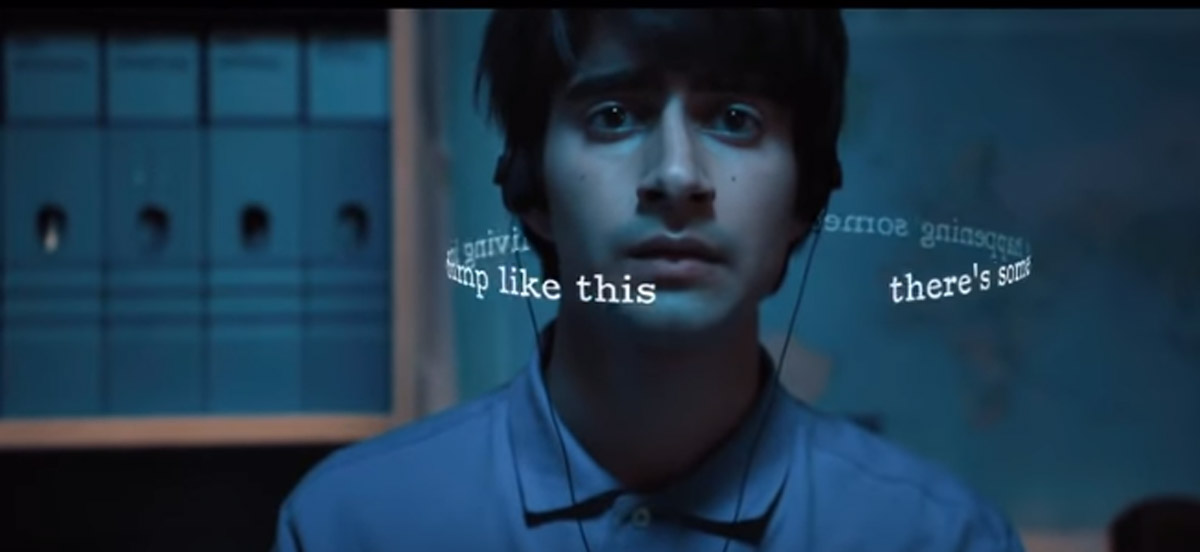
Dora and the Lost City of Gold (2019)

Tags

, , ,

See the source image

(Today’s NaPoWriMo prompt was for a non-apology, so I wrote one to the ancient cultures that have been despoiled in modern times.)

I’d like to take a moment to say sorry, if I may,
To all the ancient cultures our museums now display.
You went to all that trouble, building monoliths of stone,
Turned now to tourist traps we like to think of as our own.

Apologies to Giza and the pharaohs mummified.
It’s just that, with your pyramids, you hardly tried to hide.
When something’s that conspicuous, what person could resist?
It’s honey to the fly that is the archaeologist.

And ancient Greece, I’m sorry for the snatching of your art;
It’s just that all your masterpieces seem so a la carte.
A marble here, a marble there, no price tag to be seen,
It’s not as if you’ll miss another naked figurine.

Regrets to Rome and China, the Aztecs and Babylon;
You should have left instructions for long after you were gone.
It’s just that one philosophy applies to tomb and shrine:
When something sits there long enough, it might as well be mine.
_______________________

MPA rating: PG

Never in a million years did I think I would have something positive to say about a Dora the Explorer movie, but here we are. I remember growing up when seven-year-old bilingual Dora was at her height of popularity on Nickelodeon, and I also remember how quickly I outgrew her repetitive talking to the camera and decided she had little to offer me. How could a live-action version be worthwhile? Well, it can because Dora and the Lost City of Gold is better than it has any right to be.

See the source image

Having voiced a character in a cartoon spin-off of the original show, Isabella Moner (now Merced) of Instant Family plays the young explorer, aged up to a teenager. She lives happily with her professor parents (Michael Pena, Eva Longoria) and her CGI monkey Boots in the South American jungle, but her parents reluctantly send her to school in California, hoping their sheltered daughter will socialize and make some friends. Her overly perky naivete makes her less than popular with most students, including her cousin Diego (Jeff Wahlberg), but when she and some classmates are kidnapped back to the jungle, she proves how handy it is to have an explorer as a friend.

Moner as Dora is the heart of the film, and she is a consistent ray of sunshine, earnest without coming off as saccharine. The writers leaned into her cartoon persona’s more ridiculous traits (“Can you say ‘extreme neurotoxicity?’”), and, while not every joke lands, they found some comedy gold with her fish-out-of-water antics. And I’m not sure what to make of a sequence animated like the old show, which offers nostalgia while suggesting that the whole thing was one massive drug trip. Despite that scene and a vaguely liberal bent, it’s a largely family-friendly adventure that can appeal to a much wider age range than the original cartoon did.

See the source image

The story also has some excitement once it reaches the jungle again, with Eugenio Derbez being a slapstick hoot when he joins the jungle-bound teens. The journeys of Dora’s jungle-marooned classmates may be predictable, but I thought the story found a good balance between adolescent growth and National Treasure-style escapades. From the unexpected guest voices of Benicio del Toro and Danny Trejo to the excellent musical number at the end, the whole thing is self-aware and far more entertaining than I had expected. Can you say “franchise potential?”

Best line: (Sammy, a classmate) “There’s nothing more dangerous than a wounded animal.” (Dora) “There are a lot of things more dangerous than a wounded animal. A healthy animal, for starters.”


Rank: List Runner-Up


© 2020 S.G. Liput
679 Followers and Counting

Version Variations: The Intouchables (2011) / The Upside (2017)

Tags

, , ,

See the source image

See the source image

(Happy Easter, everybody! Today’s NaPoWriMo prompt was for a triolet, an eight-line poem with repeated lines and a very particular rhyme scheme.)

The ruts in which our lives are spent
Seem deeper than they really are.
See only walls, and we lament
The ruts in which our lives are spent,
But thinking we are always meant
To stay will hardly get us far.
The ruts in which our lives are spent
Seem deeper than they really are.
_____________________

MPA rating for The Intouchables: R (really just for a few F words in the subtitles)
MPA rating for The Upside: PG-13

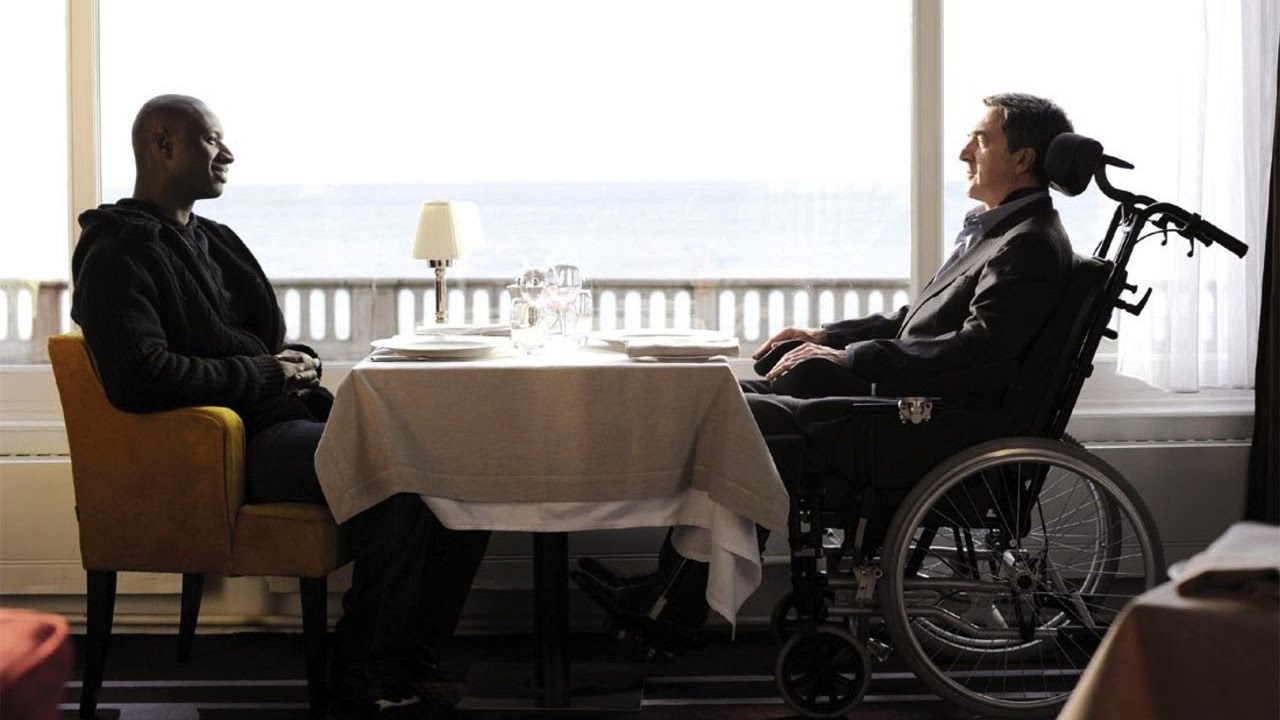
Is there some unofficial rule that says you shouldn’t watch a remake before the original? Because, if there is, I think I broke it… again. I had some curiosity about the popular French film The Intouchables, but I didn’t seek it out until I watched last year’s American version and wanted to compare them. After all, I’m far overdue for a Version Variation post. Based on the true story of Philippe di Borgo and Abdel Sellou, both films are about a poor, street-smart black man finding employment caring for a bitter quadriplegic millionaire and the feel-good friendship that grows between them.

See the source image

I’ll focus on The Upside first, since that was the first one I saw. Kevin Hart plays a deadbeat dad named Dell, who is more interested in barely fulfilling his parole requirements than actually seeking a job. Yet his initial rude interaction with Bryan Cranston’s wealthy Philip Lacasse catches the attention of the joyless businessman, and Dell is offered the job of a “life auxiliary” caretaker, with all the well-paid benefits and uncomfortable tasks that entails. Hart’s comedic experience serves him well during his character’s initial protests against catheters, but he proves himself to be an able dramatic actor as well, with Cranston being both a great foil and partner, despite being physically immobile. They’re a likable odd couple that grows in poignance up to the smile-worthy end.

And as for The Intouchables, well… it’s basically the same exact thing, but in French! With the number of remakes out there that tarnish the spirit of the original, I was surprised at how faithful The Upside was. The French characters are named Driss (Omar Sy) and Philippe (François Cluzet), but I could tell from the very first scene how similar the two films were: the protests against the more awkward forms of care, the sharing of a joint while out on the town, the creative forays into high-end painting, a stressful paragliding excursion, even a series of gags surrounding shaving Philippe’s beard and mustache.

See the source image

Yet there were still a few differences as well. Kevin Hart’s Dell is less of a jerk than the French Driss can be at times, though they still share the lack of pity that attracted their employer. The Intouchables also featured a great little scene where, after enduring Philippe’s love of classical, Driss lets loose to “Boogie Wonderland.” But the most notable difference concerns Philippe’s blind epistolary romance with a woman and Driss’s efforts to get them to meet face-to-face. The Upside features some of the exact same scenes, yet they have a different outcome, one that is perhaps more painfully realistic and leads to a far different role for the rich man’s assistant (Nicole Kidman in the American version, Audrey Fleurot in the French). For my part, I think I prefer the ending of The Intouchables, which is more lump-in-throat-worthy, aided by Ludovico Einaudi’s elegant score.

The Intouchables is clearly the more well-respected film (74% on Rotten Tomatoes versus an undeserved 39%), but The Upside is actually quite a successful remake. Some may bristle at recreating a film just so we English-speakers don’t have to read subtitles, but the filmmakers did a good job with it. Both films thrive off of the chemistry between the two leads, and all four actors are perfectly cast and do credit to the inspiring true story, though I find it odd that both Driss and Dell are black whereas Abdel Sellou was not. From the lows of depression to the highs of paragliding, The Intouchables and The Upside handle their serious subjects of class divides and disability with both pathos and humor and show that even total opposites can become lifelong friends.

See the source image

Best line from The Intouchables: (voice on the phone) “Hello?”   (Philippe) “Eleonore, it’s Philippe. I’m calling because I really wanted to hear the sound of your voice, and with that first hello, I’m fulfilled.”   (voice, apparently not Eleonore) “I’ll put her on.”

Best line from The Upside: (Dell, to Philip) “You can have any girl you want. What about this lady with all the Botox? You’re perfect for each other. You can’t move your body; she can’t move her face.”


Rank for The Intouchables: List Runner-Up
Rank for The Upside: List Runner-Up


© 2020 S.G. Liput
679 Followers and Counting

Little Women (1994)

Tags

, , ,

See the source image

(Today’s NaPoWriMo prompt was for a poem about flowers taking on certain meanings, so I decided to compare flowers with the little women of this film.)

A family of daughters is like a bouquet
Of flowers, all different, that brighten the day.

The rose offers beauty and layers of grace,
With thorns to keep those who would pluck in their place.

The daisy seems simple, but as you look nearer,
Complexity waits for the few who revere her.

The lily looks shy with its petals locked tight
But opens up wide when it knows love and light.

And baby’s breath sighs with its placeholder status
Yet binds us all close in an elegant lattice.

From practical pansy to sumptuous mum,
Each woman and bloom are just right as they come.
_____________________

MPA rating: PG

After thoroughly loving Greta Gerwig’s most recent adaptation of Louisa May Alcott’s novel, I had to check out 1994’s similarly acclaimed version from Gillian Armstrong. With such a classic story and relatable characters, it’s clearly hard to go wrong, since this also proved to be a wonderful rendition, even if it didn’t quite match its most recent sister.

The ensemble is full of stars in their prime in the ‘90s: Winona Ryder as Jo, Kirsten Dunst (and later Samantha Mathis) as Amy, Claire Danes as Beth, Trini Alvarado (of Paulie) as Meg, Susan Sarandon as Marmee, and Christian Bale as Laurie, not to mention Gabriel Byrne, Eric Stoltz, and Mary Wickes as well. Unlike Gerwig’s non-linear narrative, jumping back and forth across a four-year gap, this version plays its events in order, which is easier to follow as the March sisters grow up, finding love, heartache, and joy along the way.

See the source image

So how do the two versions compare? Over and over, I recognized scenes and interactions (which obviously means they came from the book), and I liked them here but couldn’t help preferring the more recent film’s take on them, which might have been reversed if I’d seen this version first. Much of the dialogue that I so loved in the 2019 film wasn’t the same here, a testament to Gerwig’s contribution, yet I still appreciated its simple, often humorous elegance. Individual characters were harder to decide on. Meryl Streep was certainly a more memorable Aunt March than Wickes was. Winona Ryder and Saorsie Ronan are evenly matched as Jo, considering I have a crush on both, but I thought Christian Bale made a more sympathetic Laurie than Timothée Chalamet. Likewise, Friedrich and Jo’s relationship felt slightly more natural and fleshed out here than in the remake.

I must admit one embarrassing thing. I kept being confused by certain differences I viewed as creative choices. Why did they keep giving Beth’s actions to Amy? Only halfway through did I realize I had Beth and Amy mixed up, thanks largely to the casting of the 2019 film. In that one, Florence Pugh plays both the younger and older Amy, but because she looks and is older than Eliza Scanlen as Beth, I thought Amy was the third eldest of the girls, which threw me off when 12-year-old Kirsten Dunst’s Amy was clearly the youngest in the 1994 film. It’s hard to say which is the better option, though. In this film, I thought that the replacement of Dunst with Mathis after the 4-year gap sapped some of the bond formed with Amy, so I can see why keeping the same actress might be desirable, if slightly confusing for people like me. I should really just read the novel.

See the source image

Ultimately, I loved both versions because they both bring this story to life in a brilliantly traditional way. So many 19th-century period pieces are centered in Victorian England or focus on some war or significant historical event, so it’s a rare treat to glimpse into the everyday lives of Americans from this time. I may be partial to Gerwig’s incarnation, but both films share a stellar cast and engaging wholesomeness that are equally refreshing.

Best line: (Jo, after Laurie proposes) “Neither of us can keep our temper…”
(Laurie) “I can, unless provoked.”
(Jo) “We’re both stupidly stubborn, especially you. We’d only quarrel!”
(Laurie) “I wouldn’t!”
(Jo) “You can’t even propose without quarreling.”


Rank: List-Worthy (I’ll tie it with the 2019 version)


© 2020 S.G. Liput
679 Followers and Counting

The Christ Slayer (2019)

Tags

,

See the source image

(Today’s NaPoWriMo prompt was for a hay(na)ku, a six-word variation of a haiku. Thus, I strung several hay(na)kus together to form a non-traditional sonnet.)

Crosses
Weigh heavier
With every step.

Burdens
Hang over,
Blocking the sun.

Lies
Strain hearts
Worse than disease.

Relief
Is all
That mankind craves.

Crosses grow lighter
Only in faith.
__________________

MPA rating: PG-13

Christian films are… hit-and-miss, to put it kindly, with far more misses than hits. Even the box-office hits from the Kendrick brothers are a bit too preachy to wholeheartedly recommend, even if their themes and message are laudable. Since it’s the most solemn holy day of the year, I knew I wanted to review something religious for Good Friday and decided to take a chance on a film I happened upon in Amazon Prime, one that turned out to be a very pleasant surprise.

See the source image

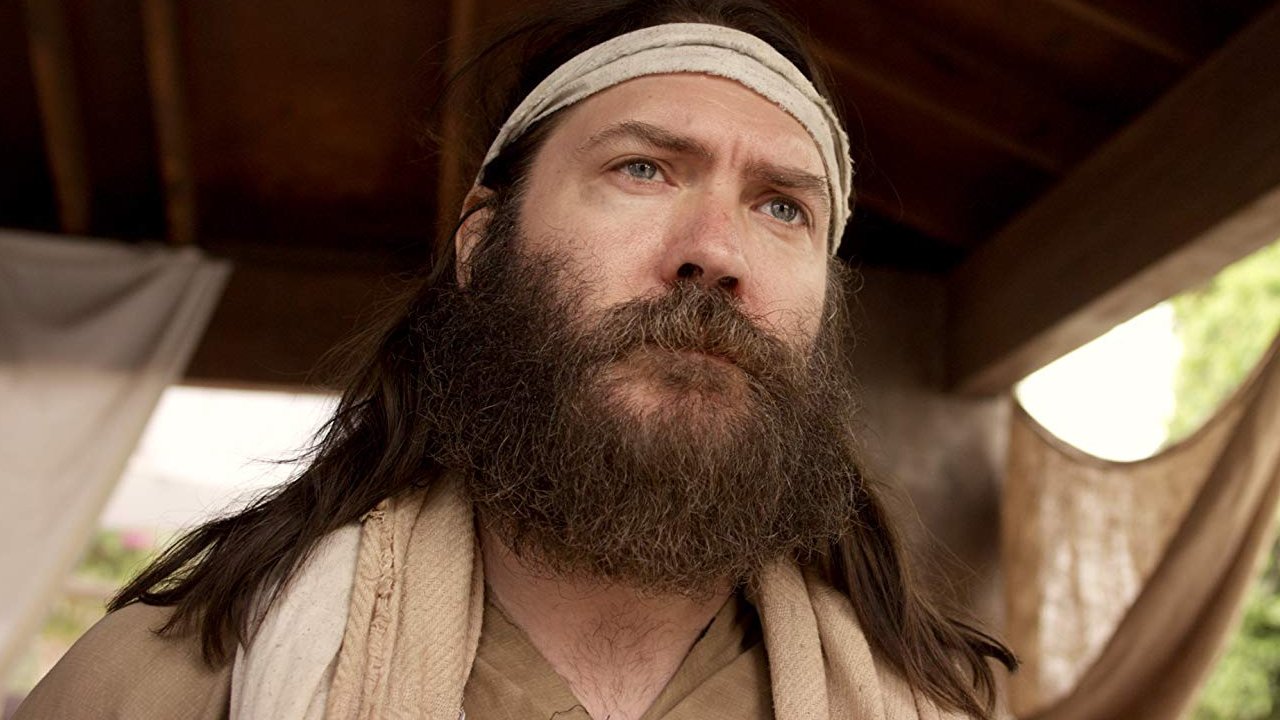
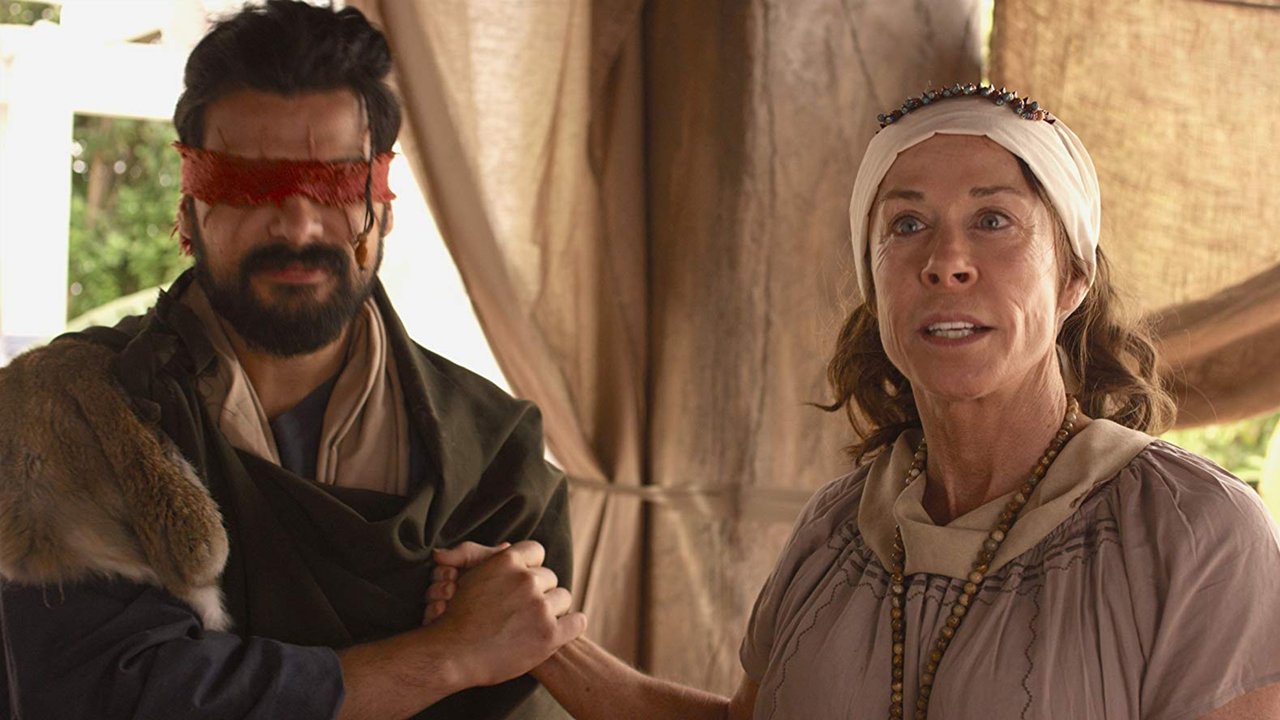
The Christ Slayer, in a unique blending of the Bible and legend, is the tale of Longinus, a blind and despondent Roman centurion who is ordered to pierce Jesus’ side at the crucifixion, earning him the same title as the film. When Jesus is reported to have been resurrected, some scoff, while others fear that he may seek vengeance on the soldier who killed him. Eventually, Longinus decides to quit his role and make the journey home, which becomes transformative when he meets a nameless traveler on the way.

The Christ Slayer can be inconsistent. At times, the camera work comes off as cheap, while at others, the dialogue is written to seem more archaic, resulting in a stilted delivery. Yet, there’s far more good than bad in this film. For one, the cinematography and score are often gorgeous, putting it a cut above the quality of other Christian films. And the acting, while rocky at the beginning, gets better with time, with DJ Perry (CEO of the film’s production company) standing out as a brilliant, soft-spoken Jesus. Likewise, Carl Weyant as Longinus and Josh Perry (who has Down’s syndrome) as his devoted servant make a surprisingly compelling pair as Longinus deals with his inner demons and guilt. Rance Howard, who died before its release, is the only recognizable name in a tiny role, but the other actors acquit themselves well.

One thing to keep in mind is that the plot of The Christ Slayer is definitely not faithful to the Bible events. For starters, Jesus was already dead before being pierced by the lance, so Longinus didn’t take his life himself, and while there are clear parallels to the road to Emmaus story, they’re somewhat abandoned in favor of the film’s own tale. Yet, even if the plot diverges more than I’d like, the film’s themes are faithful to its source, and the characters’ conversations become surprisingly profound. At one point, Satan and Gabriel, both following Jesus’ progress, share a fascinating exchange as former friends turned rivals; later, Jesus soothes Longinus’ concerns about his dead mother with warmth, empathy, and eloquent forgiveness. The whole second half is slower, contemplative, occasionally funny, and ultimately uplifting.

See the source image

I was pleased to learn that this is the third installment of a “Quest Trilogy” from production company Collective Development, Inc., and I’m now quite curious to check out its predecessors 40 Nights and Chasing the Star. Unlike many Christian films, The Christ Slayer focuses first on telling a compelling story and then weaves in its message, avoiding banal preachiness. It felt more natural than 2016’s Risen but with similarities to that film and 1953’s The Robe. It’s been a while since I discovered a faith-based film I could fully recommend, one that I would gladly watch again next year during Holy Week.

Best line: (Jesus) “Salvation is within reach of all.”  (Sabina, Longinus’ aunt) “But they must want to be saved.”


Rank: List Runner-Up


© 2020 S.G. Liput
677 Followers and Counting

Time Trap (2017)

Tags

, , ,

See the source image

(Today’s NaPoWriMo prompt was for a “concrete” poem, where the lines and words form an image that reflects the poem’s theme. That theme for me being time, I chose a fitting hourglass shape.)

Time in the moment drips by like molasses,

A thick atmosphere that encloses the masses.

The teenagers wish it would hurry on by,

While grandparents issue a sigh,

And then all at once

Time is starting

To fly

By,

And only

At long last

When time has complied

Do former teenagers see time’s other side

And wish that molasses could slow down its stride.

________________________

MPA rating: Not Rated (deserves a PG-13)

“Time-bending mystery” is a genre that I feel I am inherently destined to love. It’s not often that a film plays with the notion of time without involving out-and-out time travel, but Time Trap manages to pull it off in a fascinating way, despite its limited budget.

See the source image

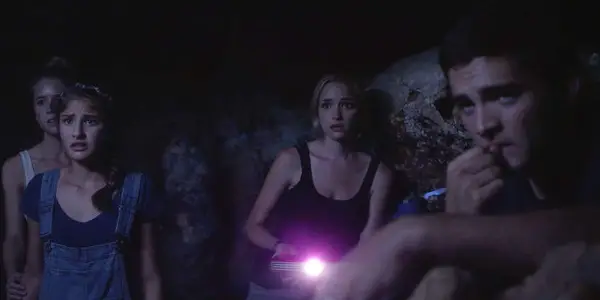
Andrew Wilson (who looks a lot like Dennis Quaid) plays Hopper, an archaeology professor investigating the disappearance of some hippies from the ‘70s, and when he doesn’t return, two of his students (Reiley McClendon, Brianne Howey) and their friends go after him into the Southwest desert. Not realizing the danger of “looking for somebody who went missing while he was looking for somebody that went missing,” the group venture into a cave system and become trapped when their ropes break. Eventually, they realize that time is passing differently inside the cave than it is on the surface and… that’s all I’m going to say.

This kind of film benefits greatly from not knowing what’s going to happen, which means stay away from the trailer. There are times when you can tell the filmmakers considered making this as a found-footage film, and I’m glad they only employed that technique occasionally. Despite some so-so acting and dialogue, the way the story plays out is rather ingenious, slowly revealing things to the audience as the characters learn them. You might pick up on what’s happening before they do, but there are further twists that take the story in unexpected directions.

See the source image

Time Trap won’t necessarily revolutionize your notion of time and space, but it’s entertaining and short, too short in fact, ending right when things take a left turn I would have liked to explore more. It’s proof that high sci-fi concepts don’t need a blockbuster budget.

Best line: (Hopper) “Well, my grandfather used to tell me the future can give you anything you want. If you wait long enough, the future will create it. Maybe through technology, or maybe just by making you not want it anymore. Either way, the answer’s in the future.”


Rank: List Runner-Up


© 2020 S.G. Liput
676 Followers and Counting

The Naked Spur (1953)

Tags

, ,

See the source image

(Today’s NaPoWriMo prompt was to seek inspiration from a line or phrase from one of the many poetry-themed Twitter bots out there. I found mine, the first line below, from @PercyBotShelley.)

I found shelter in scorn;
I found solace in slurs.
For my drug was disdain,
Just to make the world worse.

My sidearm was spite
And my comfort contempt.
No man was above it,
No woman exempt.

My past was my pain,
Carved upon a stone heart,
It solid would stay
Till my soul would depart.

Or so I once thought.
I had no cause to doubt,
Till love chanced to rain
On a life lived in drought.
_________________________

MPA rating: Passed (I’d say a PG)

With so many recent films to catch up on, it’s been too long since I reviewed an older movie. Westerns have never been my favorite genre, but I can appreciate a good one, and as a fan of Jimmy Stewart, I thought I’d check out one of his best-reviewed films. (Incidentally, he had 14 that have garnered a 100% on Rotten Tomatoes, and this is one of them.)

See the source image

Stewart plays a bounty hunter named Howard Kemp, who is seeking the wanted murderer Ben Vandergroat (Robert Ryan). Despite initial reluctance, he gains the help of a gold-crazed prospector (Millard Mitchell) and a “morally unstable” ex-soldier (Ralph Meeker), and the three are able to capture Vandergroat and his naïve accomplice Lina (Janet Leigh). Feeling they all deserve a cut of the reward money, the three impromptu lawmen begin the trek to deliver their quarry to justice in Kansas, but Vandergroat begins sowing seeds of discord in their uneasy collaboration.

More so than other westerns I’ve seen, The Naked Spur felt especially well-written, with a special focus on the psychological side of suspicion and desperation. That’s likely why it managed to snag a Best Screenplay nomination at the Oscars, a rare feat for the genre. The way the murderer manipulates his captors is well-played, and all five of the small cast give excellent performances. Stewart’s grizzled and cynical character is almost like a subversion of his past idealistic roles and proves his range as an actor.

See the source image

Unfortunately, the chemistry between Stewart and Leigh is strained by their age difference, and the ending feels too rushed. I see what the writers were trying to do, demonstrating the importance of letting go of vengeance, but in context, it felt like a dumb decision in service of some symbolism. Nevertheless, the ending aside, The Naked Spur was one of the better westerns I’ve seen and one more Jimmy Stewart movie I can check off my to-watch list.

Best line: (Ben Vandergroat) “Choosin’ a way to die – what’s the difference? Choosin’ a way to live – that’s the hard part.”


Rank: List Runner-Up


© 2020 S.G. Liput
676 Followers and Counting

American Woman (2018)

Tags

See the source image

(Today’s NaPoWriMo prompt was for a poem based on a news article. It seems like I’ve seen several headlines about missing children recently, so this film’s themes seemed to fit well.)

“She’s gone,” they told her mother.
A day had passed like any other;
The next one dawned
And moved beyond,
And she was gone for good.

“She’s missing,” said the mother,
Not one to dote or smother,
For she was sure
Her daughter pure
Could still endure and would.

“She’s gone,” they would update her,
First weeks and then years later.
The mother knew,
Kept out of view
That deadly true falsehood.

“She’s gone,” and grief grew greater.
Mom crawled into the crater.
She mourned the one
Whose race was run.
She cried and understood.
________________________

MPA rating: R (all for language)

I’m not sure why I sought out this film. Perhaps I was just looking for new releases and was curious about the lauded performances, but it’s not exactly my preferred kind of movie. Even so, American Woman proved to be a moving story, grounded by a committed performance by Sienna Miller.

See the source image

Miller plays Deb Callahan, a small-town Pennsylvania mother in her 30s living with her teenage daughter Bridget, who has a baby of her own. One night, Bridget simply doesn’t come home, leaving Deb devastated as she searches for her and raises her grandson over the next eleven years. Along the way, she gets support from her sister Katherine (Christina Hendricks) and her family and grows stronger from a series of boyfriends that prove her poor taste in men, including Aaron Paul of Breaking Bad.

Directed by Jake Scott and produced by his father Ridley Scott, this is one of those movies that feels immersively real, like you’re watching how people really live and interact. However, in Deb’s case, that reality often consists of white trash crudeness and much familial yelling, making it not always a likable world in which to immerse oneself. I liked Hendricks’ responsible sister more than the main character.

See the source image

Despite this, there are moments of genuine tenderness and growing maturity by the end, which showcases Miller’s underrated acting skills. Ultimately, the film’s story struck me like an episode of Criminal Minds from the perspective of the victim’s family. Such crime shows are more concerned with the killer and the forensics while the loss and drama are kept largely off-screen; in American Woman, the loss and drama are the focus, leaving the rest as background information. It’s a sad tale but realistic and well-acted, one I would have enjoyed more with less swearing.


Rank: Honorable Mention


© 2020 S.G. Liput
676 Followers and Counting

The Secret Life of Pets 2 (2019)

Tags

, ,

See the source image

(Today’s NaPoWriMo prompt was to write a poem from the viewpoint of a character or creature from Hieronymus Bosch’s The Garden of Earthly Delights, which is so full of bizarre imagery that he must have been high on something for the twenty years he painted it. After drawing an initial blank, I decided to write something from the viewpoint of the animals since Creation.)

I’m a pet, and you’re a pet,
But let us never once forget
That, when the world was new at birth,
We animals ruled all the earth.
The dogs and cats and tall giraffes,
The fish and lizards, foals and calfs
Held full dominion over all,
Utopia before the Fall!

And then the next day, God made man,
And nothing since has gone to plan.
________________________

MPA rating: PG

I wasn’t expecting much out of The Secret Life of Pets 2. It seems that, with any recent American animation that isn’t Disney or Pixar, it’s best to lower your expectations. Occasionally, you find a pleasant surprise like Klaus. More often, you get a cute movie that you’ll likely only ever watch again if you have kids. That’s The Secret Life of Pets 2.

See the source image

It’s not bad, just uninspired, but so was the first one too, with its mish-mash of Toy Story with pets. The obvious imitation of the Woody/Buzz conflict with dogs Max and Duke was resolved in the first film, so the second has a little more room to do its own thing with its charming cast of characters, such as little dog Max (Patton Oswalt, replacing Louis C.K. after the latter’s scandal) wanting to rediscover his fearless side during a weekend farm visit, or tough-guy bunny Snowball (Kevin Hart) trying to pass himself off as a superhero by saving a tiger.

New additions include Harrison Ford as a pleasantly grizzled farm dog and Tiffany Haddish as a Shih Tzu with attitude. As a cat lover, I especially got a kick out of Chloe’s (Lake Bell) teaching the way of the cat to Pomeranian Gidget (Jenny Slate), who is still the best thing about this franchise and gets the funniest scenes.

See the source image

It’s all cute and harmless with very little depth, but some clever comedic moments make it enjoyable and perhaps a bit better than the first film. Even when the plot tries to bring its many loose threads together at the end, it still feels like a bunch of potential TV episodes pasted into a feature film. This is clearly a franchise meant to appeal to the kids with little effort for their parents, but I can see those kids growing up with fond memories of it. Not every animated film has to break the mold, I suppose.

Best line: (Snowball) “I just freed a tiger. That’s not bragging; I’m just saying what happened. When you’re awesome, everything you say sounds like bragging.”


Rank: Honorable Mention


© 2020 S.G. Liput
676 Followers and Counting
Us (2019)

Tags

,

See the source image

(Today’s NaPoWriMo prompt was to incorporate twenty random elements into a poem, but, since using all of them would likely result in nonsense, I tried to use at least 8 or 9 in a poem from the viewpoint of a tortured reflection.)

My life is death, for I don’t live. I imitate. I mock.
A mirror image knows its cage, no need for bars or lock,
A mime condemned to emulate another round the clock.

“I’m just so happy,” says my smile, when I am forced to wear it.
My joie de vivre is copy-pasted, hollow when I bare it.
Only when my twin shows grief can I completely share it.

“Keep up! No rest!” the glass wall cries between my twin and I.
The fluid hardness of its bounds compels me to comply.
I do the simulated dance, no understudy nigh.

I am, therefore I think, but no one else can hear my thoughts.
For no one thinks that life is real for something so ersatz.
A mime depicting stories based on someone else’s plots.
______________________

MPA rating: R

After the cultural splash that Get Out made, Jordan Peele had a lot to live up to with his next foray into horror, and in light of some strange confusion surrounding his first film’s genre, he left no doubt that Us is straight-up horror. Peele is definitely an auteur, able to brilliantly craft tension and chills and blessed with gifted actors to bring his stories to life, but Us feels like a tale he didn’t think through enough.

At the beginning, we meet Adelaide (Madison Curry as a child, Lupita Nyong’o as an adult), a young girl who wanders off at a beachside carnival and comes face to face with a terrifying doppelganger in a hall of mirrors. Many years later, she’s married to Gabe (Winston Duke, Nyong’o’s Black Panther co-star), and together with daughter Zora (Shahadi Wright Joseph) and son Jason (Evan Alex), the Wilson family goes on vacation not far from that same beach that has haunted Adelaide ever since. Without warning one night, an identical family breaks into their house with bloodthirsty intentions, and the Wilsons must fight to survive against their doubles.

See the source image

Us does a lot of things really well, from the visceral panic of the home invasion to Peele’s skillful direction that keeps the adrenaline up and only shows you what he wants you to see. And like his previous film, he manages to incorporate some dark comedy, more successfully than in Get Out I thought, such as the Wilsons comparing their kill counts during a break in the action. Indeed, the first two thirds of Us are a horror masterclass, albeit a bit too bloody for my liking, but undeniably well done, even taking a rap song and turning it into a creepy segment of the score. All the actors do wonders with their dual roles, Nyong’o especially, nailing both their frightened and malevolent personas with apparent ease.

But then there’s the last third, which seeks to offer explanation where none suffices. The origins and previous lives of the doppelgangers are purposely bizarre, but their “way of life” simply makes no sense. Why are they sometimes compelled to mirror the Wilsons’ actions and other times not? Where do the rabbits come from? What is the purpose of the “Hands Across America” re-creation? I could go into a lot more spoiler-y detail, but suffice to say, the logical side of my brain was left screaming, “What the heck? This. Doesn’t. Make. Sense!” I see the intended symbolism of a grotesque mirror image of our world, as well as the overplayed theme of one person’s prospering resulting in another’s suffering, but it’s as if Peele forced the story to fit the message and no one wanted to tell him how illogical it had become.

See the source image

For a film that initially feels so well-made, it’s a shame that the plot is ultimately so half-baked. I will admit the final twist packs a surprising and disturbing punch, which was unfortunately spoiled for me by none other than Lupita Nyong’o herself on Inside the Actor’s Studio. I didn’t think Get Out was the masterpiece many people said it was, but it at least didn’t leave me bewildered with its own implausibility, as Us did. I hope Jordan Peele takes more time for his next film to flesh out the story with the same talent he brings to the scares.

Best line: (Jason) “When you point a finger at someone else, you have three pointing back at you.”


Rank: Dishonorable Mention


© 2020 S.G. Liput
676 Followers and Counting
Avatar (2009)

Tags

, , ,

See the source image

(Today’s NaPoWriMo prompt was to write something inspired by a dream’s imagery. Since I don’t remember most of my dreams, I incorporated a more general theme of dreaming that tied in with today’s movie.)

My eyelids are a diving board,
And when they close, I leap
To worlds no other human’s seen
In waking or in sleep,
Ephemeral new universes
Born of counted sheep.

I fly on wings of opal skin
And climb inverted mountaintops.
I live a life that’s not my own
And wait until my bubble pops.
I test the limits of a dream
And hope to God it never stops.
______________________

MPAA rating: PG-13

Considering Avatar was the biggest movie ever for a time, this review is probably long overdue. I suppose the reason it took so long was simply because I considered it vastly overrated. I remember making a point of watching it before I started my Top 365 list back in 2014, just to check whether it deserved placement. It didn’t make the cut. That’s not to say James Cameron’s monster hit is bad; it’s an impressive sci-fi epic with a brilliantly rendered world held back by a painfully unoriginal plot.

In 2154, mankind has reached out into space and formed a colony on the distant moon of Pandora, where their mining endeavors run into conflict with the big, blue native Na’vi. In an effort to connect with the aliens and convince them to move, scientists have created Na’vi-human hybrids called Avatars, which a human consciousness can control while their real body sleeps. Jake Sully is one such candidate, a paraplegic Marine who is only brought to Pandora because he shares DNA with his dead brother and can control his brother’s Avatar. There, he forms a bond with the fierce Neytiri and the other Na’vi and must choose between the nature-centric natives and the unsympathetic military.

See the source image

Not to be confused with the beloved Nickelodeon cartoon, the film Avatar can be summed up in various ways, but my favorites are Pocahontas with blue aliens or Dances with Wolves in space. My VC noted FernGully as another clear inspiration. The whole nature vs. industry/natives vs. military conflict has clearly been done before, and there’s nothing about the overlong plotline or the romance that makes it any better than those other two films. James Cameron’s New Age, environmental sentiments are worn on the film’s sleeve, and it’s anything but subtle. And honestly, Sam Waterston is rather bland as the main character, though I enjoyed Sigourney Weaver’s scientist and Stephen Lang’s macho villain (Lost alert for Michelle Rodriguez as well).

What Avatar does have going for it are its groundbreaking motion capture and 3D special effects, which leave no doubt why it won Oscars for Art Direction, Visual Effects, and Cinematography. The flora and fauna of Pandora are full of colorful, eye-popping wonders, and the scenes of flight after Jake tames a dragon-like creature are exhilarating as he swoops between gravity-defying midair mountains. And the epic battle scene at the end is one of the biggest, most awesome action sequences ever made. Plus, James Horner’s score adds a perfect majesty to the visuals. If only the story had the same imaginative effort as the rest….

See the source image

Avatar is a well-made sci-fi adventure that isn’t the transcendent blockbuster it tries to be, even if its box office haul says otherwise. I was glad when Avengers: Endgame passed it as the highest-grossing film of all time (not adjusted for inflation), simply because that record and Avatar’s Best Picture nomination indicates that it’s better than it is, which irks me a little. Perhaps it just doesn’t feel as innovative now as it was in 2009. Even so, I’m interested to see what the repeatedly delayed sequels will do to continue the story and how certain characters will return for another three films. Perhaps they’ll avoid clichés better than Cameron’s first film… whenever they finally come out.

Best line: (Jake, narrating) “I was a warrior who dreamed he could bring peace. Sooner or later, though, you always wake up.”


Rank: List Runner-Up


© 2020 S.G. Liput
675 Followers and Counting