• Home
  • About Me
  • The List
  • THE LIST (2016 Update)
  • THE LIST (2017 Update)
  • THE LIST (2018 Update)
  • THE LIST (2019 Update)
  • THE LIST (2020 Update)
  • THE LIST (2021 Update)
  • THE LIST (2022 Update)
  • Top Twelves and More
  • The End Credits Song Hall of Fame

Rhyme and Reason

~ Poetry Meets Film Reviews

Rhyme and Reason

Category Archives: Reviews

Crawl (2019)

03 Friday Apr 2020

Posted by sgliput in Movies, NaPoWriMo, Poetry, Reviews, Writing

≈ Leave a comment

Tags

Horror, Thriller

See the source image

(Today’s NaPoWriMo prompt was to take a list of random words and use Rhymezone.com, which I do all the time incidentally, to find rhymes and similar words to use with them, which naturally leads to some welcome alliteration.)

I crave a crunch within my keep
And crawl and creep from out the deep
And sleekly sneak and slink toward prey
To snag the snack that runs away.
The peril of my pool is plain,
But how I prowl is not in vain;
The haunted hunted hate the wait
And heed the hazard much too late.
Before the fear is fully felt,
My sudden strike of death is dealt.
The walking world has one more dead,
And I, the predator, am fed.
____________________________

MPA rating: R

I enjoy a good creature feature and got Crawl from my library, thinking it was PG-13; I was wrong. If I’d known gorehound director Alexandre Aja was behind it, I probably would not have sought it out at all, but I’m glad I gave Crawl a chance. It’s an effectively pulse-pounding thriller that does for gators what Jaws did for sharks.

See the source image

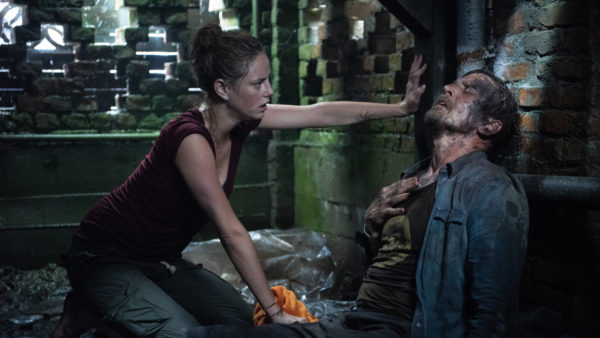
Kaya Scodelario plays Haley, a swimmer who drives into a flood zone as Hurricane Wendy bears down upon the Florida coast. She searches for her unresponsive dad (Barry Pepper) who hasn’t evacuated, and when she finds him, wounded beneath his house, the two humans and a dog are caught between the rising flood waters and a hoard of hungry alligators.

Crawl doesn’t need to be more than it is, a white-knuckle man/woman-against-nature flick with ravenous reptiles, and it succeeds. It develops the tension and the characters laudably well, providing convincing throw-away victims to up the stakes while the strained father-daughter dynamic grows stronger through the peril.

See the source image

Like nearly all horror flicks, there are moments of foolishness that smarter-than-thou audiences can shake their heads at, but I doubt I’d fare as well as the main characters do. It has a few gruesome scenes on the level of Jaws, but Crawl’s violence is surprisingly restrained overall, considering the director, and turned out to be an unrealistic but enjoyably tense watch.


Rank: List Runner-Up


© 2020 S.G. Liput
674 Followers and Counting

Nancy Drew and the Hidden Staircase (2019)

02 Thursday Apr 2020

Posted by sgliput in Movies, NaPoWriMo, Poetry, Reviews, Writing

≈ Leave a comment

Tags

Family, Mystery

See the source image

(Today’s NaPoWriMo prompt was for a poem describing a place in detail. I didn’t quite do that, but I used the theme of details to versify a mystery climax.)

The floorboards near the bookcase creaked,
And everyone’s concern was piqued
As, slow and calm, the expert sleuth
Prepared to publicize the truth.
She said, “I know who did the deed”
And eyed all three suspects to read
The guilt or panic on their faces,
Gathered near two fireplaces.

“Mr. Jones, you’re known as mean,
And as the gardener, less than clean,
But you are guiltless thanks to dirt
That’s caked upon your shoes and shirt.
The night in question, I could see
The room was spotless as could be,
And so your dirt is now defense
To soundly prove your innocence.

“And Mrs. Garber, you could well
Have been the culprit, but for smell.
Your strong perfume is hard to miss,
But as I think and reminisce,
The air was mildewy that day
And not at all like your bouquet.
So that leaves you, Miss Jefferson.”
Upon her heel, the Sherlock spun.

“You had the chance, the time, the aim,
Yet you are also not to blame.
The crime scene held a scrap of robe
Too rough and plain for your wardrobe.
Your taste is clear from how you’re clad,
(You really do look good in plaid),
And so I know you too are clean.”
The three, confused, looked round the scene.

“The culprit, though, is present still,
Too curious about my skill
To not be here tonight and see
If I could solve the mystery.”
She stepped two paces to the right
And huffed and heaved with all her might
To push the bookcase from the wall
And show the man behind it all.

He stood in shock, his pant leg torn,
For still he wore the clothes he’d worn
That fateful night, and as police
Led him away, he needed peace
And asked the sleuth, “How did you know?”
She donned a smirk and faced her foe.
“To notice things is my technique.
I heard the bookcase floorboards creak.”
____________________

MPA rating: PG

My VC has recently become enamored of mysteries and true crime stories, but the origin of that interest probably originated in her early love of the Nancy Drew books. I was curious to see what she’d think of a modern interpretation, and Nancy Drew and the Hidden Staircase, based on the second book in the series, was a fairly decent adaptation.

See the source image

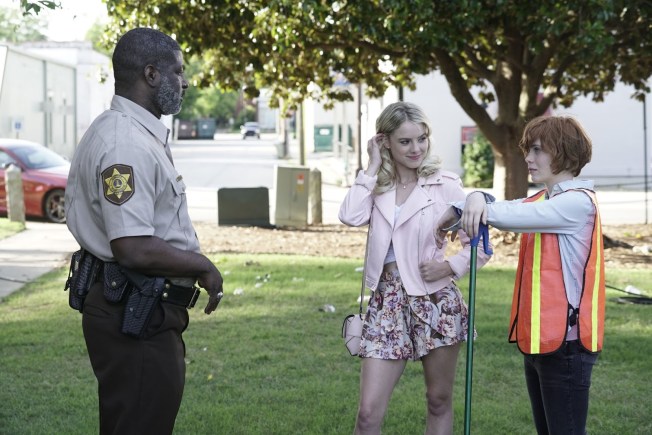
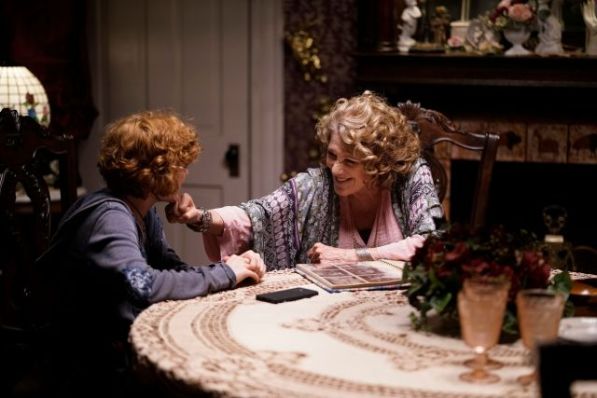
Sophia Lillis of It fame plays the titular teenage sleuth (is it all right to call her the It girl?) and gives her some likable spunk and humor as she must deal with a catty rival (Laura Slade Wiggins, who looked a little older than a teenager) and a haunted house. The production values are on the level of a Hallmark TV movie, but the mystery tries to keep you guessing, even as it’s kept at a tween-friendly level. I suppose the best part was its moral development; Nancy pulls a cruel prank on a bully early on, and it was nice to see her slowly recognize her own faults and choose to be better.

With the fond memory of reading the Nancy Drew series when she was little, my VC wasn’t particularly impressed with this film version, which she said was greatly changed from the source material, but it still felt like a more faithful attempt than the new CW series trying to be edgy like Riverdale. There are plenty of better mysteries out there, but Nancy Drew and the Hidden Staircase has a pleasant innocence to it that works well for the younger would-be sleuths.

See the source image


Rank: Honorable Mention


© 2020 S.G. Liput
671 Followers and Counting

Ride Your Wave (2019)

01 Wednesday Apr 2020

Posted by sgliput in Movies, NaPoWriMo, Poetry, Reviews, Writing

≈ 1 Comment

Tags

Animation, Anime, Drama, Fantasy, Romance, Sports

See the source image

(For Day 1 of NaPoWriMo, the prompt was for a metaphor poem comparing life to a particular action, so I took inspiration from a movie that heavily focused on a similar metaphor of surfing.)


I live upon a wooden board
That glides along the ocean swell.
So many others stood and fell,
So on my belly, safe I dwell.

My wiping out I can’t afford,
And so I hug the firm and known,
And watch the few whose comfort zone
Is so much wider than my own.

They call to me with one accord
To stand within the arching wave,
And though I fear it, still I crave
The confidence of being brave.

I close my eyes and let my board
Convey me to the tunneled tide
And find the worries, from inside,
Have dwindled down and liquefied.
_______________________

MPA rating: Not Rated (should be PG-13, for some adult themes and brief nudity)

I love that the last two years, I’ve been surprised by anime films I wasn’t expecting. Maquia: When the Promised Flower Blooms proved to be the anime of the year in 2018, and Masaaki Yuasa’s Ride Your Wave was a similar pleasant surprise, considering I’d never heard of it until a preview before Weathering with You. Star-crossed love is a common anime trope, but Ride Your Wave puts a uniquely emotional spin on it, also standing out for its characters being young adults rather than the usual highschoolers.

See the source image

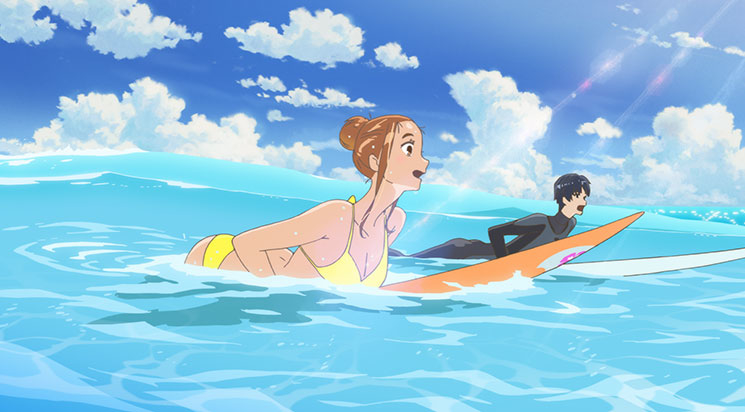
Hinako Mukaimizu has just moved into a new apartment near the ocean, allowing her to regularly partake in her favorite hobby of surfing. After a fire threatens her building, she falls in love with handsome firefighter Minato Hinageshi, and their romance is wholesomely reminiscent of the beginning of Up. And like Up, it ends in tragedy, leaving Hinako alone and unable to move on. Soon, though, she begins seeing Minato in water when she sings their favorite song, leading to hilarious misunderstandings and an unhealthy situation that clearly cannot stay the way it is.

I’ve tended to steer clear of Yuasa’s other works (like Lu Over the Wall or The Night Is Short, Walk on Girl), perhaps because his unique art style didn’t seem to appeal to me, but I must admit that I loved Ride Your Wave, and it’s made me curious to check out his past work. His hyper-fluid animation really complements the prevalence of water in the film and creates some unique angles and perspectives to ravish the eye. It’s a more cartoon-ish style than Makoto Shinkai’s photorealistic scenes, but it’s still detailed and pleasing in its own way. (It’s interesting to note the coincidence of this film and Weathering with You both coming out the same year and both featuring an emphasis on water and a notable scene with fireworks.)

See the source image

Beyond the technical, Ride Your Wave has real heart to it and does a great job developing its central couple, as well as side characters like Minato’s churlish younger sister. And that focus on likable characters is essential because there’s certainly absurdity to swallow here, such as Hinako walking around town with an inflatable porpoise filled with water (and Minato) in an effort to relive the days when Minato was still alive. The climax is wilder than that, so let’s just say it’s hard to imagine this film in anything but animation. It didn’t hit me until afterward, but the plot has many similarities to 1990’s Ghost, though with more of a rom-com sensibility than that film’s thriller elements. By the end, though, it definitely knows how to tap the emotions hard, even while retaining a sense of hope.

Since I can’t be all positive, Ride Your Wave is sometimes too on the nose with its blatant metaphor of learning to “ride the wave” of life. Plus, at only 94 minutes, the film’s relationships might feel too rushed to some, yet one could also say it presents what it needs to economically. I feel like Weathering with You is objectively a better film, yet Ride Your Wave made me feel more deeply, identifying at times with its exploration of grief. Yuasa’s blending of the poignant and the surreal is an unexpected treat for any fan of bittersweet romance.

See the source image

Best line: (Minato) “If you stay with your head underwater, you’ll never learn to ride the waves.”


Rank: List-Worthy


© 2020 S.G. Liput
670 Followers and Counting

VC Pick: The Fly (1986)

28 Saturday Mar 2020

Posted by sgliput in Movies, Poetry, Reviews, Writing

≈ Leave a comment

Tags

Horror, Sci-fi, VC Pick

See the source image

Whenever some genius succeeds in inventing a teleportation device,
Whoever created it ought to be wary and test the darn thing at least twice.
For things can go well in initial experiments; but, due to bug or pollutant,
It only takes one time for things to go wrong, and next thing you know, you’re a mutant.
_________________________

MPA rating: R (very R)

Remakes often get a bad reputation, but certain remakes are more well-known than the original. Although I haven’t seen all of it, the original version of The Fly has that famous scene of a woman screaming into the compound eyes of a fly-headed scientist. Yet I’ll bet most people think of Jeff Goldblum before anything else in the 1958 film (except maybe the high-pitched “Help me! Help me” scene). That’s probably because David Cronenberg’s version of The Fly is extremely… memorable, one of the great gross-out flicks that still carries something of a message in its extreme body horror.

See the source image

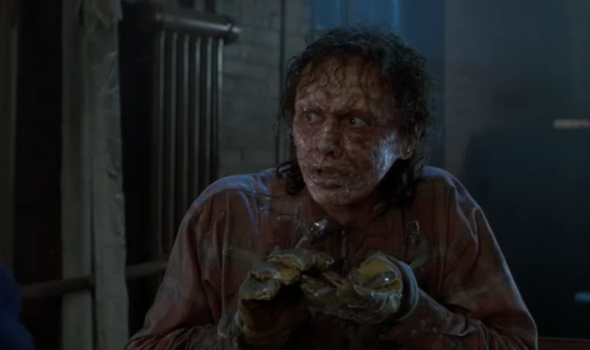
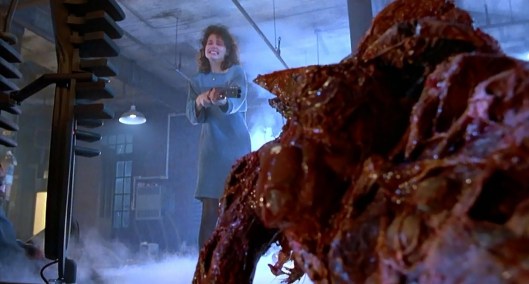
The Fly works well because of its gradual nature. Goldblum’s Seth Brundle, a scientist working out of a deserted warehouse, proudly shows attractive journalist Ronnie Quaife (Geena Davis) what he’s been working on, a pair of teleportation pods. They’re unfinished, though, and despite the horrific results of testing it on a baboon, he perseveres until he believes it safe for human testing. Spoiler alert: it’s not. Whereas the original film had an immediate head-and-arm swap between the man and the fly inside the telepod, Brundle’s transformation is gradual, taking a while for him to realize what went horribly wrong, and the results are anything but pretty.

The transmogrification of Seth Brundle is a pitiful sight, and Goldblum succeeds in exposing the character’s initial hubris and later desperation, even while being covered in more and more disfiguring makeup. Comparisons with unstoppable diseases like cancer or leprosy are unmistakable. One scene felt like a precursor to a similar scene in Prometheus that I’ve always found deeply disturbing. And then there are the final scenes, in which the visual effects and Oscar-winning makeup make the most of a gruesome finale. The ending is a bit too abrupt, not unlike An American Werewolf in London, but it has staying power, haunting the brain and keeping the heartbeat elevated even after the credits roll.See the source imageMy VC thinks this is possibly Jeff Goldblum’s best role, but I’m still surprised that she recommended this movie, considering she is far from a fan of shock horror, and neither am I. Still, The Fly felt like a higher form of it, one that’s hard to ignore. It was also a nice surprise when I was reminded that the famous line below originated in this film. If you don’t enjoy grotesque imagery, The Fly is not for you, but if you can stomach some for the sake of compelling sci-fi, it’s a classic of its genre.

Best line: (Ronnie, to a potential victim of Seth’s) “No. Be afraid. Be very afraid.”


Rank: Honorable Mention


© 2020 S.G. Liput
670 Followers and Counting


The Irishman (2019)

19 Thursday Mar 2020

Posted by sgliput in Movies, Poetry, Reviews, Writing

≈ 2 Comments

Tags

Drama, History, Netflix

See the source image

Some people rebel for as long as they can;
They buck every trend and defy every plan.
But others are quiet and willing and pleased
To do as they’re told, keep the masters appeased,
And these are the ones you must watch and beware,
The don’t-rock-the-boat-ers, who heed but don’t care,
For with the right orders behind such as they,
The renegades pale next to those who obey.
_____________________

MPAA rating: R

After over a week of delay, I’m finally getting to the last of 2019’s Best Picture nominees, which just so happens to be the last one I saw and the least good, in my opinion. I’ll freely admit that I have little love for the gangster genre or for Martin Scorsese’s films (honestly, Hugo is the only one I’ve cared to see), and The Irishman did nothing to remedy that opinion. There’s a fine film somewhere in it, but you’ll likely fall asleep before you get to it.

See the source image

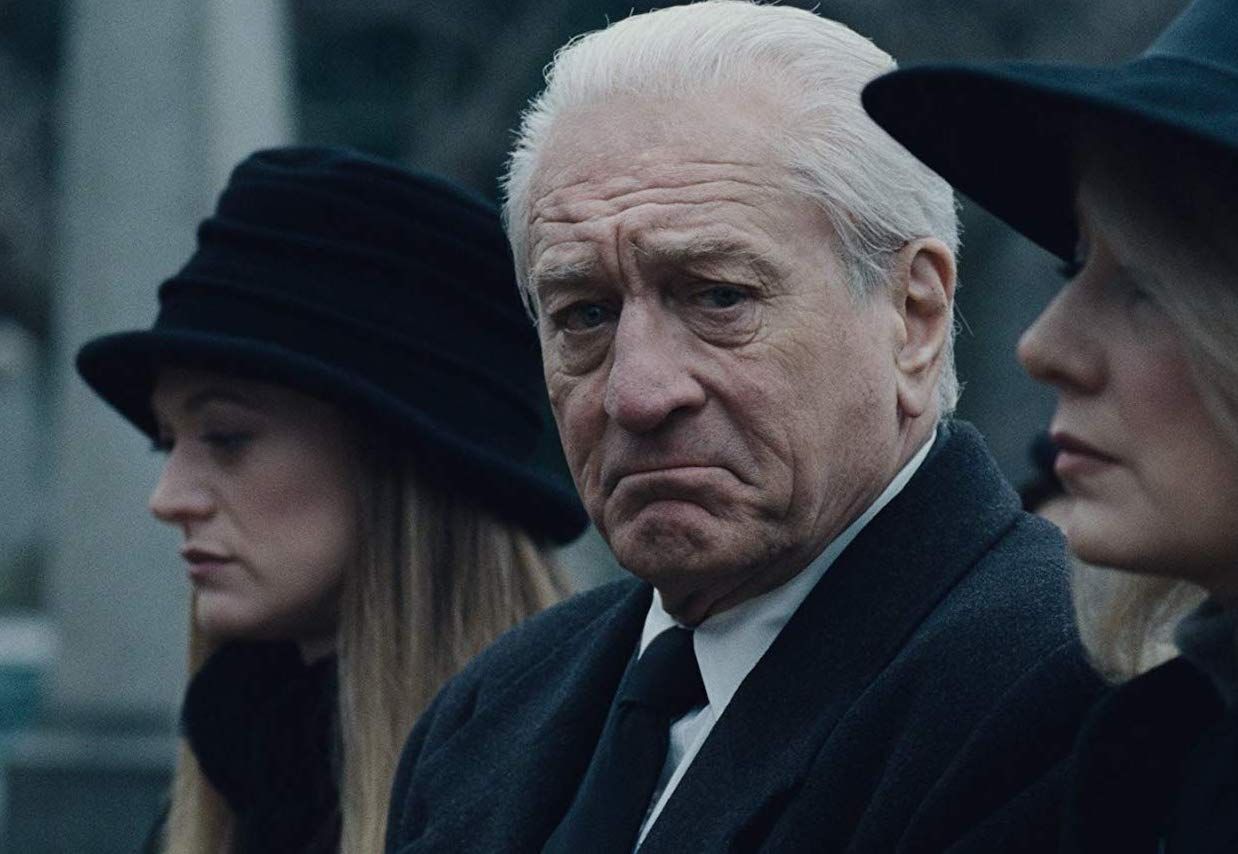
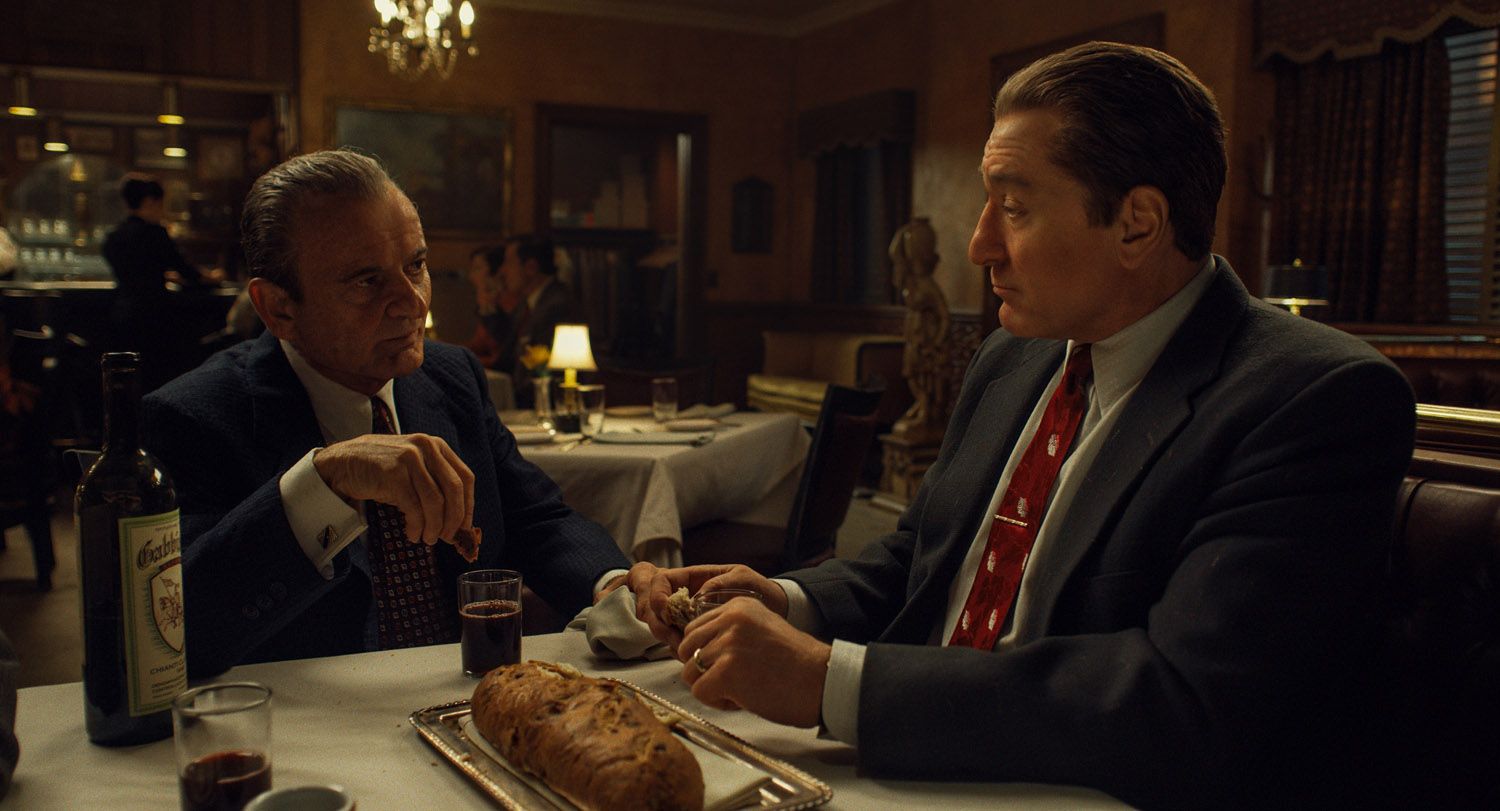
The three-and-a-half-hour plot plays out as a mob epic, spanning decades and following the life of ex-GI Frank Sheeran (Robert De Niro), an Irish meat delivery driver, who happens to meet Russell Bufalino (Joe Pesci) and from there becomes gradually introduced to the shady but profitable world of organized crime. Settling into a job of “painting houses” or murder for hire, Frank proves to be a talented hitman and eventually becomes the body guard and right-hand man of Teamster leader Jimmy Hoffa (Al Pacino). Yet, as Hoffa’s interests begin to stray from those of the mob families, Frank feels his loyalties torn and must figure out how to live with his decision.

Based on the nonfiction book I Heard You Paint Houses, The Irishman feels detailed and comprehensive in its depiction of the Philadelphia underworld and certainly believable in showing how a nobody like Frank could rise through the ranks. The Oscar-nominated effects used to de-age the three main characters are also highly convincing, an illusion broken only by the knowledge of what they actually look like right now. And of course, it certainly has star power, further aided by the presence of Ray Romano, Harvey Keitel, and Bobby Cannavale, who all fit their unscrupulous characters to a T. It’s not quite as violent as I feared from Scorsese, but it feels like he’s definitely in his comfort zone.

See the source image

Yet, for all of its seemingly lofty ambition, The Irishman, put simply, drags. Even watching on Netflix from home, you’d have to be truly fascinated by the gangster genre (or just feel obligated to get through it, in my case) to watch the whole thing in one sitting, and I can’t help but think it would have been better served as a miniseries. Just like with Peter Jackson and The Hobbit trilogy, there comes a time when a director becomes so enamored with his subject matter that he can’t bear to edit it properly. It’s a quality production from beginning to end; there’s just too much in between them.

In addition, while the acting was good overall and both Pacino and Pesci snagged Supporting Actor nominations, I can see why De Niro was not similarly honored. Beyond the oddness of an Italian actor playing an Irishman surrounded by Italians, the role of Frank Sheeran is fairly one-note until the very end, always doing what’s expected of him and letting himself be controlled by his bosses and his temper. De Niro gives a solid performance but doesn’t give Frank enough depth, just as The Irishman is a decent gangster movie but fails to distinguish itself among the rest of the genre. I liked aspects of the production, such as Frank’s narration and the labels thrown up to introduce certain characters and the usually violent ways they died, which strengthened the theme of the gangster life being ultimately hollow, but there’s little reason that I would watch The Irishman again, at least not all at once.

See the source image

Best line: (Whispers DiTullio) “To tell you the truth, I’m a little concerned.”
(Frank Sheeran, narrating) “Whenever anybody says they’re a little concerned, they’re very concerned.”
(Whispers) “As a matter of fact, I’m really more than a little concerned. “
(Frank, narrating) “And when they say they’re more than a little concerned, they’re desperate.”


Rank: Dishonorable Mention


© 2020 S.G. Liput
669 Followers and Counting


Joker (2019)

09 Monday Mar 2020

Posted by sgliput in Movies, Poetry, Reviews, Writing

≈ 1 Comment

Tags

Drama, Superhero

See the source image

The ills of this world sit upon a low shelf
Of only concerning the cares of one’s self:
My money, my job, my family and time,
My needs of the moment, my mountain to climb;
My headaches are worse and my schedule more pressing
Than all of the others who likewise are stressing.
It’s such a low shelf that we reach it with ease,
For selfishness is everyone’s expertise.
_____________________________

MPAA rating: R (for language and violence)

If it wasn’t for the cultural fervor over it and the Best Picture nomination, I probably wouldn’t have sought out Joker, certainly not in the theater. From the trailers, it looked like one of those dark, society-blaming screeds about cruelty breeding more cruelty, which isn’t the kind of movie I enjoy. Yet friends of mine praised it and urged me to watch it with an open mind, so I did. On the one hand, it was exactly what I was expecting, and on the other, it held more depth than I expected, buoyed by Joaquin Phoenix’s committed, Oscar-winning performance.

See the source image

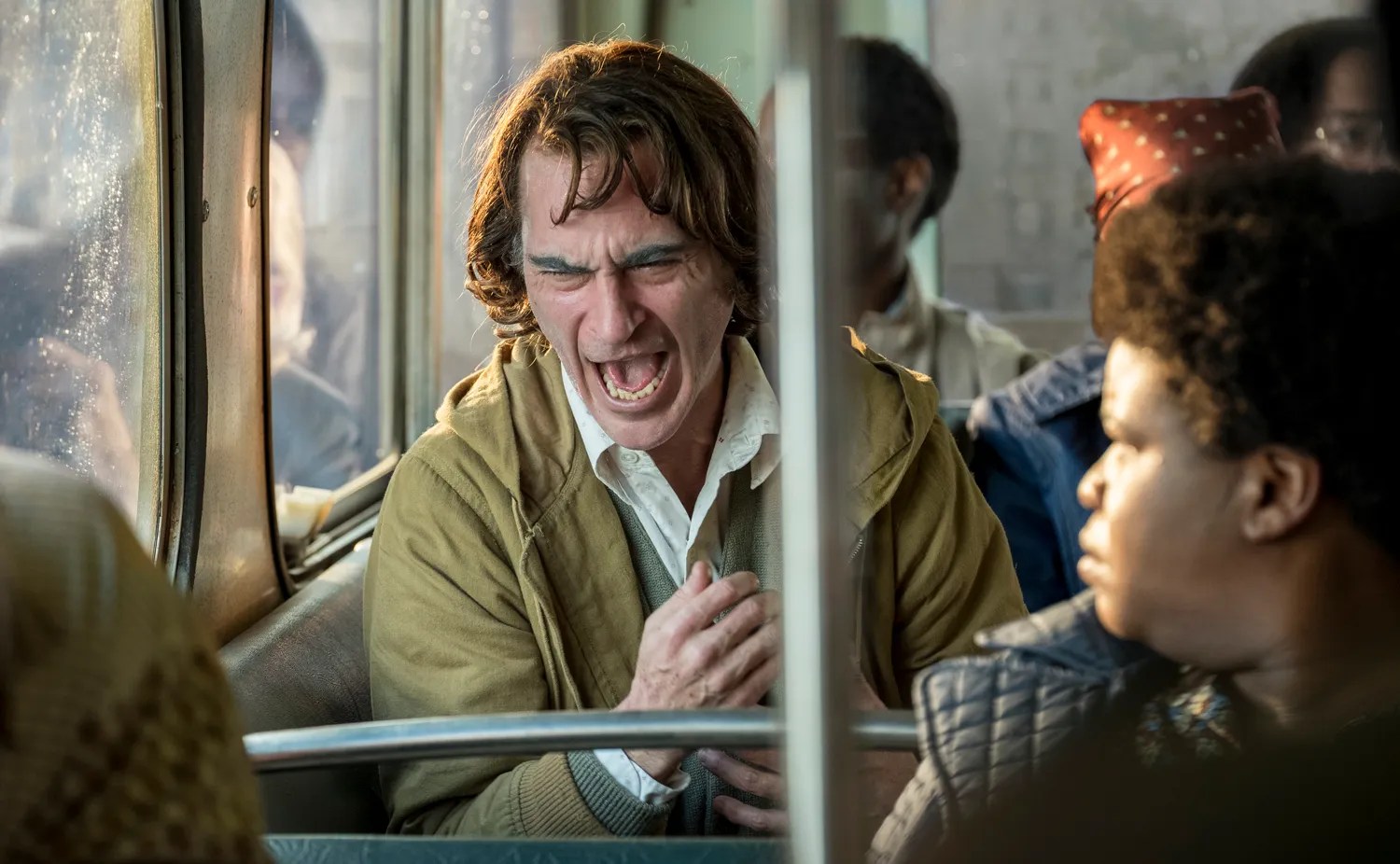
We’ve already had three big-screen versions of the Joker, two outstanding and definitive (Nicholson and Ledger) and one mostly meh (Leto), not to mention the host of animated incarnations, so it’s impressive alone that the filmmakers were able to put their own stamp on this much-rebooted character, much less win a second Oscar for the role (after Ledger’s posthumous Supporting Actor win). Set in the yellow-tinged urban decay of 1981 Gotham City, Joker forgoes superpowers or vats of acid in favor of a psychological profile of a broken man. Arthur Fleck is a socially awkward clown-for-hire and wannabe comedian, an easy target and scapegoat for unkind strangers and acquaintances, who also suffers from a condition that causes him to laugh uncontrollably at inappropriate times. His only relationship to speak of is with his aging mother (Frances Conroy), but he tries to make a connection with a caring neighbor (Zazie Beetz). When a late-night subway ride turns deadly, his fragile psyche begins a mental spiral into violence with plenty of blame to go around.

As I said, Joker was, in many ways, exactly the kind of movie I wasn’t looking forward to watching. There’s no hero to root for, no answer to the deep-seated societal flaws laid bare, and, by the end, what little hope and sympathy that graced Arthur’s life deserts him, replaced by a nihilistic anger that paints Joker as an unholy champion of class rage and rebellion. Yet at the same time, it makes its points effectively. Pitiful in every sense, Arthur was definitely mentally ill from the start, but there are multiple times where other people’s treatment of him could have gone two ways and usually takes the crueler route, only feeding the inevitability of his breakdown. If it takes a village to raise a child, it also takes one to bring them as low as Fleck does.

See the source image

There’s a reason I reviewed Joker so soon after A Beautiful Day in the Neighborhood. Despite their vast differences, it fascinates me that both sparked the same feeling within me, namely the desire to be a better person. Mr. Rogers was the epitome of human kindness and consideration, while Joker is the product of their complete absence, taken to the extreme. Together, the two films show what wonderful things can come from goodwill and forgiveness versus what terrible things can happen when they are withheld. Empathy can change perceptions and transform lives, but its power is most evident when it’s gone.

It’s interesting how Joker almost seemed to lean into similarities with maligned scenes from other superhero films, like the dancing scene from Spider-Man 3 becoming a now iconic dance down some stairs in the Bronx. (I can see the filmmakers saying, “Remember that ridiculous scene? Let’s do something like that but dark and metaphorical.”) It’s hard to see how this gritty and grounded drama could lead to the DC world of Batman and other heroes, even with a direct tie-in to Bruce Wayne’s origin story. Phoenix’s Joker, gaunt and middle-aged, is clearly not the same Joker a modern-day Batman would face, but he certainly could have inspired a more diabolical copycat in the years to come. Time will tell if they explore that possibility with any success.

See the source image

Despite its perceptive, even eloquent dive into a desperate mind, I don’t think I’ll ever feel the desire to watch Joker again, but I can admit its cultural timeliness, even if I disagree with its unsubtle class warfare themes. It’s a film to appreciate, to appraise, not to like. Between Phoenix’s Oscar-caliber theatrics and the caustic social grievance that fuels it (plus Hildur Guðnadóttir’s powerful, Oscar-winning score), Joker has cinematic quality to spare, but its moral hollowness is too disturbing to ignore.

Best line: (Arthur) “How ’bout another joke, Murray? What do you get when you cross a mentally ill loner with a society that abandons him and treats him like trash? I’ll tell you what you get! You get what you f***in’ deserve!”


Rank: Dishonorable Mention


© 2020 S.G. Liput
665 Followers and Counting


A Beautiful Day in the Neighborhood (2019)

05 Thursday Mar 2020

Posted by sgliput in Movies, Poetry, Reviews, Writing

≈ 1 Comment

Tags

Biopic, Drama, Family

See the source image

We’re told that, if one can’t be kind,
It’s best if one not speak their mind,
But in our minds, we also need
More gentleness to intercede,
That we may speak them free of shame
And help the world to do the same.
________________

MPA rating: PG

I vaguely recall watching Mr. Rogers’ Neighborhood when I was a kid. I remember the puppet king and the camera zooming in on the educational videos playing on Picture Picture. I think I even read a children’s biography of Fred Rogers for a book report. As I grew older, I thought his style was too tailor-made for kids to appeal to me anymore, yet I still viewed him as an admirable figure. My mom, however, remembers the years when he was practically a laughingstock among cynical adults, so it warms both our hearts that he’s finally getting his due, at least in the movies.

See the source image

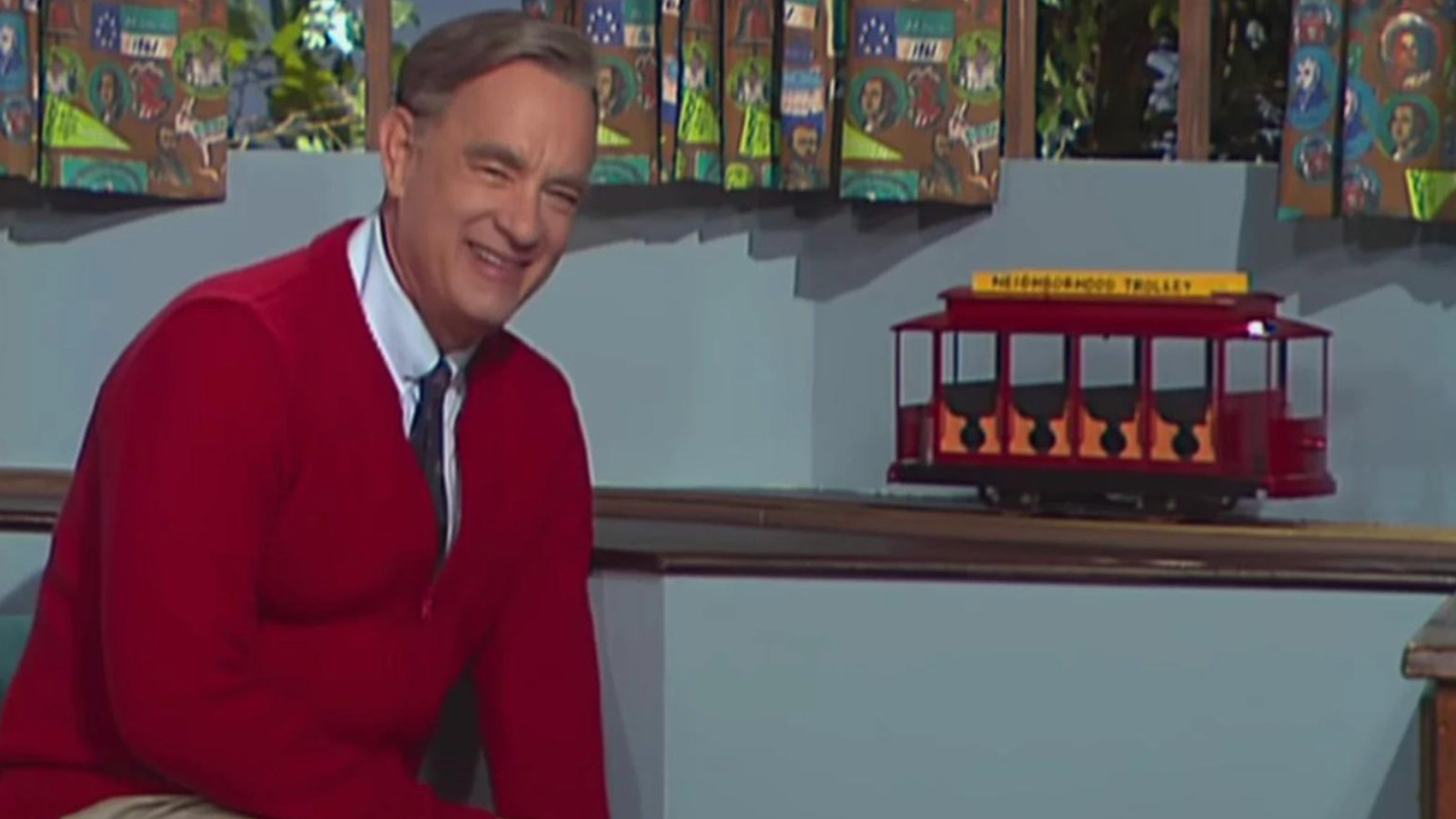
Tom Hanks has made a living playing America’s most trustworthy figures, from Walt Disney to Captain Sully. In both cases, and with Mr. Rogers here, he doesn’t entirely disappear. He still looks like Tom Hanks, yet he manages to wield the audience’s good will so well that it doesn’t matter. He can practically be two people at once. He manages to adopt Fred Rogers’ soft-spoken manner and genteel politeness so well, that it’s no wonder cynical reporter Lloyd Vogel (Matthew Rhys) finds him hard to believe when Vogel is told to profile Rogers for an article about heroes.

A Beautiful Day in the Neighborhood isn’t quite what is advertised, its greater focus being on Lloyd and his troubled relationship with his father (Chris Cooper) rather than Mr. Rogers. Well, there’s a reason Hanks was nominated for Best Supporting Actor. Yet, Lloyd’s story (loosely based on Tom Junod, who also profiled Mr. Rogers in the 1990s) is still meaningful, with Rogers acting as sort of a homespun shoulder angel for him, urging him to rediscover his priorities and even the value of silence. I was surprised at how much I identified with elements of Lloyd’s story, particularly his father’s terminal illness, and it touched me more than I was expecting. I also liked the visual style borrowed from Mr. Rogers’ show, with most outdoor scenes presented as a miniature diorama, though one dream sequence of Lloyd’s threatened to get too silly at times.

See the source image

I think the reason Mr. Rogers is so beloved now is his unsullied brand of kindness, regardless of the person or whatever they’ve done. In a world where nastiness seems to be rewarded all too often, we as a society have begun to crave what once was viewed as quaint and puerile, and he was the paragon of a gentleness we’ve largely lost. A Beautiful Day in the Neighborhood is a lovely tribute to a lovely man, not some subversive exposé but a confirmation that Rogers’ public persona was him. If it makes even one person choose kindness over the alternative, then it will have lived up to the example of Fred Rogers.

Best line: (Mr. Rogers) “There is no normal life that is free from pain.”


Rank: List Runner-Up


© 2020 S.G. Liput
665 Followers and Counting


Parasite (2019)

28 Friday Feb 2020

Posted by sgliput in Movies, Poetry, Reviews, Writing

≈ 2 Comments

Tags

Drama, Foreign, Thriller

See the source image

We take what we can when a chance is in reach.
‘Tis not a behavior we humans must teach.
We covet and crave and we grasp and we use,
And somehow find ways to ignore and excuse.

And many believe some are worse than the rest,
More prone to wrongdoing, more quick to detest,
And common it is to believe that such foes
Are less than a human, the lowest of lows.

Yet sins such as these are not tied to one class,
One race or one creed or one crowd to harass.
We humans are kindred, for better or worse,
And vice is the same in a world this diverse.
______________________

MPA rating: R (for language, violence, and sensuality)

My mind has been ruminating over Parasite ever since I saw it in the theater three weeks ago, trying to decide what exactly I think about it. After hearing people gush over this obscure Korean film that was becoming increasingly less obscure, I was surprised and curious when it managed to snag a Best Picture nomination. It was the last nominee I saw in the theater this time around, and I liked it well enough. Yet in the days that followed, my opinion of it kept edging higher, its layers of meaning and metaphor being peeled away in my head. And then, lo and behold, it went from dark horse to Best Picture winner at the Oscars, the first non-English-language film to do so!

See the source image

The Kims are a lower-class family of four struggling financially, doing what they can to make ends meet. When son Ki-woo gets an opportunity to tutor the daughter of the affluent Park family, he jumps at the chance, even though he must lie about his credentials as a university student. Soon, his self-justified fib morphs into an ongoing plot to provide his whole family with jobs in the Park household:  his sister as an art therapist, his father as a chauffeur, and his mother as the housekeeper. Their scheme goes well at first until things begin to unravel as untruths and unkindnesses pile upon each other.

I’ve been trying to pin down why Parasite is so critically beloved, at least in terms of its cinematic style. In some ways, it’s like the Korean equivalent of Jordan Peele’s Get Out, its thriller elements leavened by occasional humor and underscored by a potent social message. But I think the best and most flattering analogy is that it is a mixture of Hitchcock (exploration of human nature’s dark side, methodical direction) and Shakespeare (fits of mania, mistakes leading to disastrous consequences), both critical darlings themselves. Bong Joon-ho made history winning Best Picture, Director, and International Film at the Oscars, and, although a part of me considers it potentially a politically correct choice, I can’t deny that it’s deserving.

See the source image

With public opinion increasingly turning against the rich, Parasite feels like the right film at the right time to earn its acclaim, and the stark class divide in South Korea also makes its story work best in its Korean setting, making me hesitant about the upcoming American remake. Yet there’s a balancing act at play as well, in which neither the poor Kims nor the wealthy Parks are pigeonholed as good or bad. There are sympathy and blame to go around, deceit and a distinct lack of empathy at work in them both, as well as other characters I won’t spoil. At one point, while reveling in the Parks’ home while they are away, the Kim matriarch declares, “If I had all this, I would be kinder,” yet within minutes, she is offered a choice between harshness and mercy and chooses poorly. From themes of escalating class rage to man’s knack for long-term shortsightedness, the plot is replete with subtlety yet remains entertaining as it embodies the saying, “Oh, what a tangled web we weave, when first we practice to deceive.”

Typically, I know my own opinion of a film by the time it ends or within a day or two if it bears rumination, so it’s a rare thing when my opinion continually goes up for reasons unknown. I still consider 1917 to be a more technically impressive film that I enjoyed more (and Sam Mendes definitely should have won Best Director IMO), but, despite my mild disappointment when Parasite won Best Picture, I’m okay with its win. I’m still not a huge fan of its violent climax, but I can’t help but admire Bong Joon-ho’s cinematic craft, from the brilliant bewilderment of its central twist to the setting and composition of the Park home, which deserves a place among notable houses in film.

See the source image

Parasite is proof of the director’s memorable line from his Golden Globe acceptance speech: “Once you overcome the one-inch-tall barrier of subtitles, you will be introduced to so many more amazing films.” Even if it’s not destined to be a personal favorite of mine, this is not just a quality Korean import but a quality film, period. For me at least, Parasite attaches itself too strongly to ignore.

Best line: (Kim Ki-taek, the father, referring to the Parks) “They are rich but still nice.” (Kim Chung-sook, the mother) “They are nice because they are rich.”


Rank: List Runner-Up (though it comes closer to List-Worthy than I expected)


© 2020 S.G. Liput
662 Followers and Counting


Ford v Ferrari (2019)

22 Saturday Feb 2020

Posted by sgliput in Movies, Poetry, Reviews, Writing

≈ Leave a comment

Tags

Drama, History, Sports

See the source image

The engines start,
The motors roar;
They tear apart
Their brief rapport.
Upon their tails
And on all sides,
The cause of fails
In patience rides.
The bends are aced,
And straightaways
See dust and haste
And sing their praise.
And time slows down
While speed ticks up,
The goal no crown,
Award, or cup.
Instead, the flag,
The finish line,
The right to brag,
The chance to shine,
And here it comes
The dream ahead,
As straight now as an arrowhead,
The end of a road of adrenaline dread,
To which all the hopes of a lifetime have led,
Victory, the alpha’s zed!
___________________________________-

MPA ranking: PG-13 (for language)

I have a confession to make: I have very close to zero interest in cars and racing, which seems like it would be a prerequisite to enjoy a movie about said topics. Yet Ford v Ferrari comes closer than I’d expected in making such subjects interesting to someone like me, who never even knew Ford and Ferrari had a rivalry.

See the source image

The story focuses on the efforts of two racing legends working toward creating a Ford that can compete with Ferrari and win the 24-hour race of Le Mans. (Another name for the film in Europe is Le Mans ’66.) Matt Damon plays Carroll Shelby, the first American to win Le Mans, whose racing days are behind him but who is recruited by Ford’s Lee Iacocca (Jon Bernthal) to redesign the GT40. His first choice for a driver is Ken Miles (Christian Bale), whose volatile passion and lack of tact put him at odds with the Ford Motor Company’s executives.

Ford v Ferrari is an easy movie to like and has been called a destined favorite for many Father’s Days to come. Luckily, while racing itself is the climax, there’s a lot more going on than just racing. In particular, the engineering efforts by Shelby’s crew recall the problem-solving tone of Hidden Figures, and Shelby’s conflicts with Ford executives make a case for trusting the doers over the corporate meddlers. Then there’s the illuminating of a lesser-known slice of history regarding Ford’s attempted buyout of Ferrari, as well as the heartwarming bond between Miles and his son (Noah Jupe of A Quiet Place). All in all, it comes together quite nicely, and even non-racing fans like me had plenty to cheer for during the big race.

See the source image

I liked Ford v Ferrari more than I expected, but it’s still a film for which I don’t feel much passion. Its 2½-hour length could have benefited from editing, and the ultimate ending is more downbeat than the rest. It strikes me as a good film that probably wouldn’t have gotten a Best Picture nomination if the Academy had the old rules keeping it to five nominees, but there’s nothing wrong with that. Damon and especially Bale (getting to use his British accent) deliver excellent performances and standout scenes, especially when Shelby explains to Henry Ford II (Tracy Letts) why he should let him continue on the project after an initial failure. The plot offers dream-chasing uplift and an easygoing sense of fun that made me forget I don’t care for racing movies. That, to me, makes it the best kind of racing movie.

Best line: (Shelby) “When I was 10 years old, my Pops said, ‘Son, it’s a truly lucky man who knows what he wants to do in this world. ‘Cause that man will never work a day in his life.’”


Rank: List Runner-Up


© 2020 S.G. Liput
661 Followers and Counting


Weathering with You (2019)

16 Sunday Feb 2020

Posted by sgliput in Movies, Poetry, Reviews, Writing

≈ 3 Comments

Tags

Animation, Anime, Drama, Fantasy, Romance

See the source image

The greatest threats and greatest wonders have their source within the sky,
Tornados with their whistle cry
And rainbows ere the air is dry,
Yet next to you, the marvels there have barely even caught my eye.

The storm can crash, the thunder clap, attempting to arrest my view,
But, whether sky be black or blue,
The sun will part the clouds on cue.
The rain will never fall as hard as I have fallen now for you.
_____________________

MPAA rating: PG-13 (for peril and brief nudity)

Weathering with You was #4 on last year’s list of My Top Twelve 2019 Movies I Hope Are Good, so it killed me that I had to wait until 2020 to finally see it in the theater. Makoto Shinkai had one of the toughest directorial challenges of the year, creating a follow-up to Your Name, which is still the highest-grossing anime of all time. How could Weathering with You possibly match Shinkai’s last emotional, artful powerhouse? Well, it doesn’t quite, but, boy, does it comes closer than I would have thought possible, leaving little doubt that Shinkai is in a class of his own when it comes to anime.

See the source image

Shinkai’s films have been notable for their amazingly detailed depiction of rain, in The Garden of Words especially, and Weathering with You fits perfectly in his oeuvre as the most rain-centric film yet. Hodaka is a teenage runaway, fleeing to the bustling metropolis of Tokyo with little plan and finding himself homeless in the midst of an extended rainstorm. After finding employment with a small-time tabloid publisher, Hodaka investigates the legend of the “weather maiden” (or “sunshine girl” in the very good English dub), someone whose prayers can part the clouds and bring out the sun once more. He finds her in Hina, a girl who helped him when he was struggling, and together they turn her ability into a business, clearing the weather for events. However, Hodaka’s past and the secret behind Hina’s ability threaten them both and possibly the world as well.

As with all of Shinkai’s work, the hand-drawn visuals in Weathering with You are absolutely gorgeous, with an attention to detail that puts most other 2D animation to shame. One sequence of fireworks is awe-inspiring. Likewise, anyone who enjoyed the soundtrack of Your Name, provided by the Japanese band RADWIMPS, will be pleased at their second team-up for a Shinkai project. I’m now used to the director’s music-video-like interludes that felt a bit jarring in Your Name, and they serve to highlight the songs, which in turn complement the visuals. It’s a common conceit in anime openings for characters to be shown falling through the sky, often for no apparent reason; Weathering with You not only gives a good reason but makes the scene a brilliant climax of emotion and, backed by the song “Grand Escape,” gave me genuine goose bumps.

See the source image

Animation isn’t everything, though, right? There has to be a good story and likable characters as well, and Shinkai provides those too. Hodaka and Hina aren’t quite on the same level of star-crossed YA lovers as Taki and Mitsuha in Your Name, but they’re still a cute pair worth rooting for, while the rest of the cast are enjoyably colorful as well, from Hina’s Casanova younger brother to Hodaka’s pragmatic employer. The plot does borrow some elements from Your Name – desperate running, a climactic reunion, a sudden separation that doesn’t hit quite as hard this time, a supernatural cause based in Shintoism that isn’t explained as well as I’d like – yet it’s far from a lazy copy, more like a director in his thematic comfort zone. Shinkai has stated that the story was influenced by climate change fears, which are evident by the end even if the point being made about it isn’t exactly clear, but it’s interesting and gratifying how his characters make a case for the value of the individual over collective concerns, which he thought might be controversial.

Weathering with You’s biggest problem is that it will inevitably be compared to Your Name, and it’s true that it would probably be even more impressive than it is if it hadn’t been preceded by a record-smashing older brother. (Granted, Shinkai does lean into the comparison at times, like a wink to the fans, which made me and my fellow theater-goers giddy.) Nevertheless, I thoroughly enjoyed Weathering with You and highly recommend it, even to non-anime fans. After Your Name was spurned for a Best Animated Feature nomination at the Oscars three years ago, it’s a similar travesty that Weathering with You was also unjustly overlooked. It may be Shinkai’s third best film in my estimation, but with charming characters, stunning animation, impactful music, and a poignant story, it’s further proof of his films’ greatest strengths.

See the source image

Best line: (Hodaka, to Hina) “Who cares if we can’t see any sunshine? I want you more than any blue sky.”


Rank: List-Worthy


© 2020 S.G. Liput
660 Followers and Counting


← Older posts
Newer posts →

Recent Posts

  • We Didn’t Start 2025 (Recap)
  • NaPoWriMo 2025 Recap (Finally)
  • Sonic the Hedgehog 3 (2024)
  • It Happened One Night (1934)
  • Spellbound (2024)

Recent Comments

associatesofshellymann's avatarassociatesofshellyma… on My Top Twelve La La La So…
Kit's avatarKit Nichols on Bonnie and Clyde (1967)
lifelessons's avatarlifelessons on Look Back (2024)
Carol Jackson's avatarCarol Jackson on The Thief of Bagdad (1940…
Stephen's avatarStephen on Love Story (1970)

Archives

  • January 2026
  • December 2025
  • May 2025
  • April 2025
  • March 2025
  • February 2025
  • January 2025
  • December 2024
  • May 2024
  • April 2024
  • March 2024
  • February 2024
  • January 2024
  • December 2023
  • November 2023
  • October 2023
  • September 2023
  • July 2023
  • June 2023
  • May 2023
  • April 2023
  • March 2023
  • February 2023
  • January 2023
  • December 2022
  • November 2022
  • October 2022
  • September 2022
  • August 2022
  • July 2022
  • June 2022
  • May 2022
  • April 2022
  • March 2022
  • February 2022
  • January 2022
  • December 2021
  • November 2021
  • October 2021
  • September 2021
  • August 2021
  • July 2021
  • June 2021
  • May 2021
  • April 2021
  • March 2021
  • February 2021
  • January 2021
  • December 2020
  • November 2020
  • October 2020
  • September 2020
  • August 2020
  • July 2020
  • June 2020
  • May 2020
  • April 2020
  • March 2020
  • February 2020
  • January 2020
  • December 2019
  • November 2019
  • October 2019
  • September 2019
  • August 2019
  • July 2019
  • June 2019
  • May 2019
  • April 2019
  • March 2019
  • February 2019
  • January 2019
  • December 2018
  • November 2018
  • October 2018
  • September 2018
  • August 2018
  • July 2018
  • June 2018
  • May 2018
  • April 2018
  • March 2018
  • February 2018
  • January 2018
  • December 2017
  • November 2017
  • October 2017
  • September 2017
  • August 2017
  • July 2017
  • June 2017
  • May 2017
  • April 2017
  • March 2017
  • February 2017
  • January 2017
  • December 2016
  • November 2016
  • October 2016
  • September 2016
  • August 2016
  • July 2016
  • June 2016
  • May 2016
  • April 2016
  • March 2016
  • February 2016
  • January 2016
  • December 2015
  • November 2015
  • October 2015
  • September 2015
  • August 2015
  • July 2015
  • June 2015
  • May 2015
  • April 2015
  • March 2015
  • February 2015
  • January 2015
  • December 2014
  • November 2014
  • October 2014
  • September 2014
  • August 2014
  • July 2014
  • June 2014
  • May 2014
  • April 2014
  • March 2014
  • February 2014
  • January 2014
  • December 2013

Categories

  • Blindspot
  • Blogathon
  • Christian
  • Movies
  • Music
  • NaPoWriMo
  • Poetry
  • Reviews
  • TV
  • Writing

Meta

  • Create account
  • Log in
  • Entries feed
  • Comments feed
  • WordPress.com

Recent Posts

  • We Didn’t Start 2025 (Recap)
  • NaPoWriMo 2025 Recap (Finally)
  • Sonic the Hedgehog 3 (2024)
  • It Happened One Night (1934)
  • Spellbound (2024)

Recent Comments

associatesofshellymann's avatarassociatesofshellyma… on My Top Twelve La La La So…
Kit's avatarKit Nichols on Bonnie and Clyde (1967)
lifelessons's avatarlifelessons on Look Back (2024)
Carol Jackson's avatarCarol Jackson on The Thief of Bagdad (1940…
Stephen's avatarStephen on Love Story (1970)

Archives

  • January 2026
  • December 2025
  • May 2025
  • April 2025
  • March 2025
  • February 2025
  • January 2025
  • December 2024
  • May 2024
  • April 2024
  • March 2024
  • February 2024
  • January 2024
  • December 2023
  • November 2023
  • October 2023
  • September 2023
  • July 2023
  • June 2023
  • May 2023
  • April 2023
  • March 2023
  • February 2023
  • January 2023
  • December 2022
  • November 2022
  • October 2022
  • September 2022
  • August 2022
  • July 2022
  • June 2022
  • May 2022
  • April 2022
  • March 2022
  • February 2022
  • January 2022
  • December 2021
  • November 2021
  • October 2021
  • September 2021
  • August 2021
  • July 2021
  • June 2021
  • May 2021
  • April 2021
  • March 2021
  • February 2021
  • January 2021
  • December 2020
  • November 2020
  • October 2020
  • September 2020
  • August 2020
  • July 2020
  • June 2020
  • May 2020
  • April 2020
  • March 2020
  • February 2020
  • January 2020
  • December 2019
  • November 2019
  • October 2019
  • September 2019
  • August 2019
  • July 2019
  • June 2019
  • May 2019
  • April 2019
  • March 2019
  • February 2019
  • January 2019
  • December 2018
  • November 2018
  • October 2018
  • September 2018
  • August 2018
  • July 2018
  • June 2018
  • May 2018
  • April 2018
  • March 2018
  • February 2018
  • January 2018
  • December 2017
  • November 2017
  • October 2017
  • September 2017
  • August 2017
  • July 2017
  • June 2017
  • May 2017
  • April 2017
  • March 2017
  • February 2017
  • January 2017
  • December 2016
  • November 2016
  • October 2016
  • September 2016
  • August 2016
  • July 2016
  • June 2016
  • May 2016
  • April 2016
  • March 2016
  • February 2016
  • January 2016
  • December 2015
  • November 2015
  • October 2015
  • September 2015
  • August 2015
  • July 2015
  • June 2015
  • May 2015
  • April 2015
  • March 2015
  • February 2015
  • January 2015
  • December 2014
  • November 2014
  • October 2014
  • September 2014
  • August 2014
  • July 2014
  • June 2014
  • May 2014
  • April 2014
  • March 2014
  • February 2014
  • January 2014
  • December 2013

Categories

  • Blindspot
  • Blogathon
  • Christian
  • Movies
  • Music
  • NaPoWriMo
  • Poetry
  • Reviews
  • TV
  • Writing

Meta

  • Create account
  • Log in
  • Entries feed
  • Comments feed
  • WordPress.com

Blog at WordPress.com.

  • Subscribe Subscribed
    • Rhyme and Reason
    • Join 814 other subscribers
    • Already have a WordPress.com account? Log in now.
    • Rhyme and Reason
    • Subscribe Subscribed
    • Sign up
    • Log in
    • Report this content
    • View site in Reader
    • Manage subscriptions
    • Collapse this bar