(For Day 11 of NaPoWriMo, the prompt was to write a two-part poem as an exchange of letters, so my correspondents are the main characters of this film.)
Look, Alex, I know that we had a great time. You kept my bed warm, and you brightened my day, But that wasn’t love; it’s two folks in their prime, Partaking in something that just couldn’t stay. I do have a family, a wife – you knew that. You had to have known we would go separate ways. I’m sorry, but we can’t keep writing or chat. I wish you the best for the rest of your days.
Dear Dan, You may say that, in words or in ink, But women are able to read between lines. A “great time” is not simply gone in a blink, It lasts if you’re willing to act on the signs, To push obligations, like families and wives And substandard marriages fully aside, And see that the best thing in both of our lives Is right there before you and won’t be denied. I won’t simply shrug off the loss of our bond. I felt it, you felt it, I won’t let it go. No need to write back if you want to respond. Just look out your window to see me. I’ll know. ____________________________
MPA rating: R
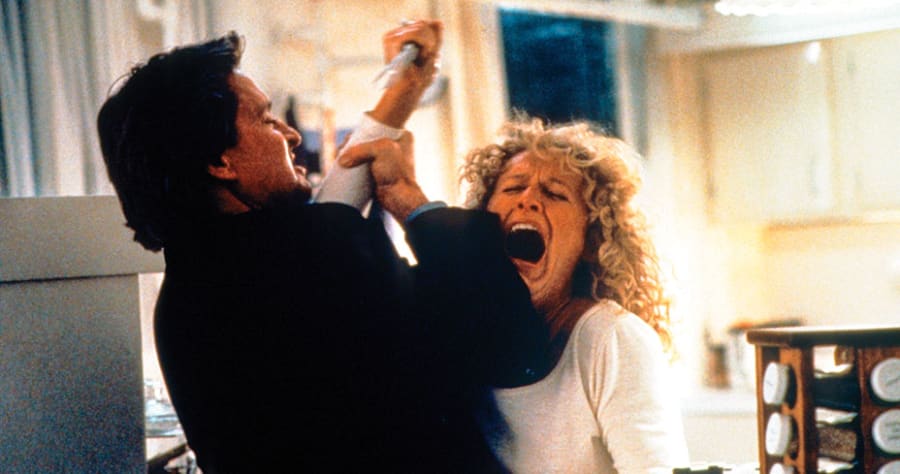
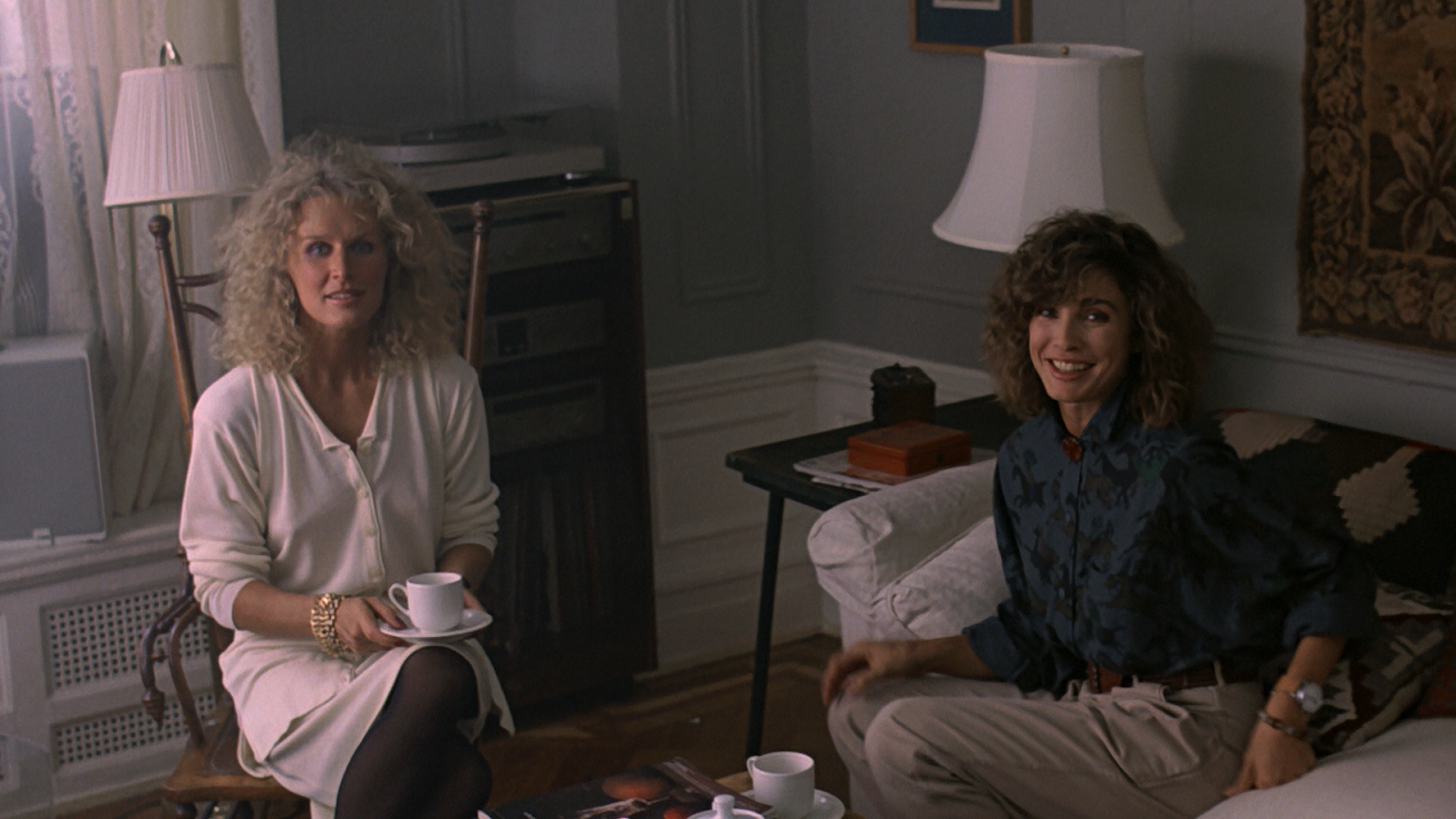
Fatal Attraction isn’t the kind of film I would expect to earn a Best Picture Oscar nomination (in addition to five others), but it’s gone down in history as the film to scare men straight, because you never know if the person you’re cheating with could be a psycho. Glenn Close’s character of Alex Forrest is iconic here, and it was fascinating to view her as the forerunner for the behavior of the many yanderes (obsessively loving, violent girls) of anime, such as showing up unexpectedly to meet their lover’s family.
Michael Douglas is suitably scummy as the philandering husband, but it’s hard not to sympathize with him and especially his wife (Anne Archer) as his tryst puts his whole family in danger. As a thriller that switches from eroticism to psychological unease, Fatal Attraction is tense and well-made, culminating in an especially memorable climax. It’s the epitome of the maxim “Hell hath no fury like a woman scorned.”
Best line: (Alex, to Dan) “Well, what am I supposed to do? You won’t answer my calls, you change your number. I mean, I’m not gonna be ignored, Dan!”
(For Day 9 of NaPoWriMo, the prompt was to write a to-do list for an unusual character, so I wrote one for Sonic himself as he hides away in a small town at the start of this movie.)
Let me review My daily to-do: I’ll watch the sun rising at 7:02. I’ll scarf down some breakfast by 7:03, Then on to a new day of being 3D. I’ll challenge myself to ping pong yet again; I do always win, but I’m bored by point ten. I’ll watch the town sheriff eat donuts and sit And wait for a car driving past the limit. I’ll watch as the Little League team has a game And hide in the shadows to cheer every name. I’ll watch the town crazy go still unbelieved As he tells of the spiky blue beast he’s perceived. I’ll watch the schoolchildren, the farmers and vets, All living their lives with no sign of regrets. I wish I could join them and just coexist. Perhaps I’ll add that to tomorrow’s new list. _________________________
MPA rating: PG
I don’t know that anyone really expected Sonic the Hedgehog to be good. Not only are video game movies rarely successful, but backlash against Sonic’s initial appearance in the first released trailer prompted a swift redesign and a three-month delay, which is rarely a good sign. Those low expectations only make the finished product an even more pleasant surprise. Sonic the Hedgehog is better, funnier, and far more likable than it has any right to be.
I played and enjoyed one Sonic Game Boy game back in my golden tween years, but I’d never say that I was as invested in the Sega franchise as, say, the fans who expressed such strong opinions about that creepy version of the character from the first trailer. Yet this film does a marvelous job at fitting in plentiful fan service that never detracts from telling an entertaining story accessible to non-fans as well. Sonic himself is something of a refugee from another dimension/planet, possessing super speedy power for which he must keep himself secret. Thus, he hides out in a small town in Montana, forming a one-sided relationship with local sheriff Tom Wachowski (James Marsden) and his wife (Tika Sumpter), but the fun-loving hedgehog eventually draws the attention of the government and mad scientist Dr. Robotnik (Jim Carrey) and must rely on Tom for help.
I’ll freely agree that Sonic’s more cartoonish design is far better than the realistic one that fed people’s nightmares, but, as top-notch as the animation is, that still seems secondary to Ben Schwartz’s outstanding vocal performance of the character, which sometimes seems like he’s trying to emulate Robin Williams as the Genie. Likewise, James Marsden’s talent for acting opposite CGI animals has apparently become a calling card of his, and he serves as a straight man to Sonic’s antics as they embark on a road trip to get the alien to safety. And then there’s Jim Carrey, who hams it up as Sonic’s iconic robot-loving nemesis. Honestly, Robotnik is amusing, but anyone else would have been just too campy; Carrey fits the insane character into the over-the-top schtick that made him a star in the ‘90s, and he really is a hoot chewing the scenery, such as during a dance sequence to The Poppy Family’s 1971 song “Where Evil Grows.”
Sonic the Hedgehog doesn’t always seem very original, such as during super-speed sequences directly recalling Quicksilver’s best moments in the X-Men prequels, yet it has an overall likability and a great sense of self-aware humor. Moments that seem hackneyed don’t always play out as expected, and the product placement is so blatant that they actually work it into the film’s jokes. It subverts the expectations for a corporate cash-grab and works just as well as a family-friendly adventure extolling friendship as it does a potential starter for a cinematic universe. Plus, it had the advantage of coming out right before the COVID pandemic hit, making it the sixth highest-grossing film of 2020 and the most successful video game film yet. Based on the numbers alone, I’d say there’s a market for films like this that can please fans and non-fans alike.
Best line: (Sonic, hidden inside a duffel bag) “How much longer? I can’t breathe in here!” (a bystander) “Do you have your child in that bag?” (Tom, nonchalantly) “No…. I mean, yes, it’s a child, but it’s not mine.”
(For Day 8 of NaPoWriMo, the prompt suggested writing a monologue from a dead person’s perspective, in the style of the Spoon River Anthology by Edgar Lee Masters. I chose Vincent van Gogh.)
I painted what I saw, which is somehow not what others saw, Though they recognized its canvas version. The colors mattered more than details, For the colors are the details in my mind, Glazed over every surface and landscape And fired in my mind’s kiln to a minor masterpiece, If only everyone could share my eye. They said I had my demons, but I had angels too, Perched on each shoulder, left and right. With my one good ear, I like to think The worse of the two had trouble being heard. But hearing is overrated while sight And hue can bewitch so splendidly. _____________________________
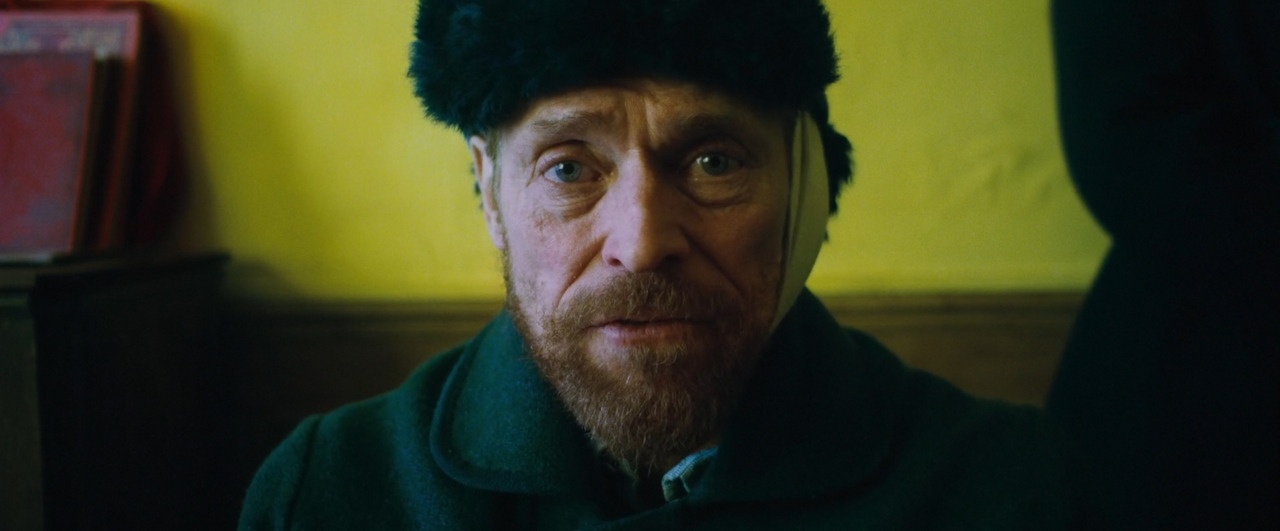
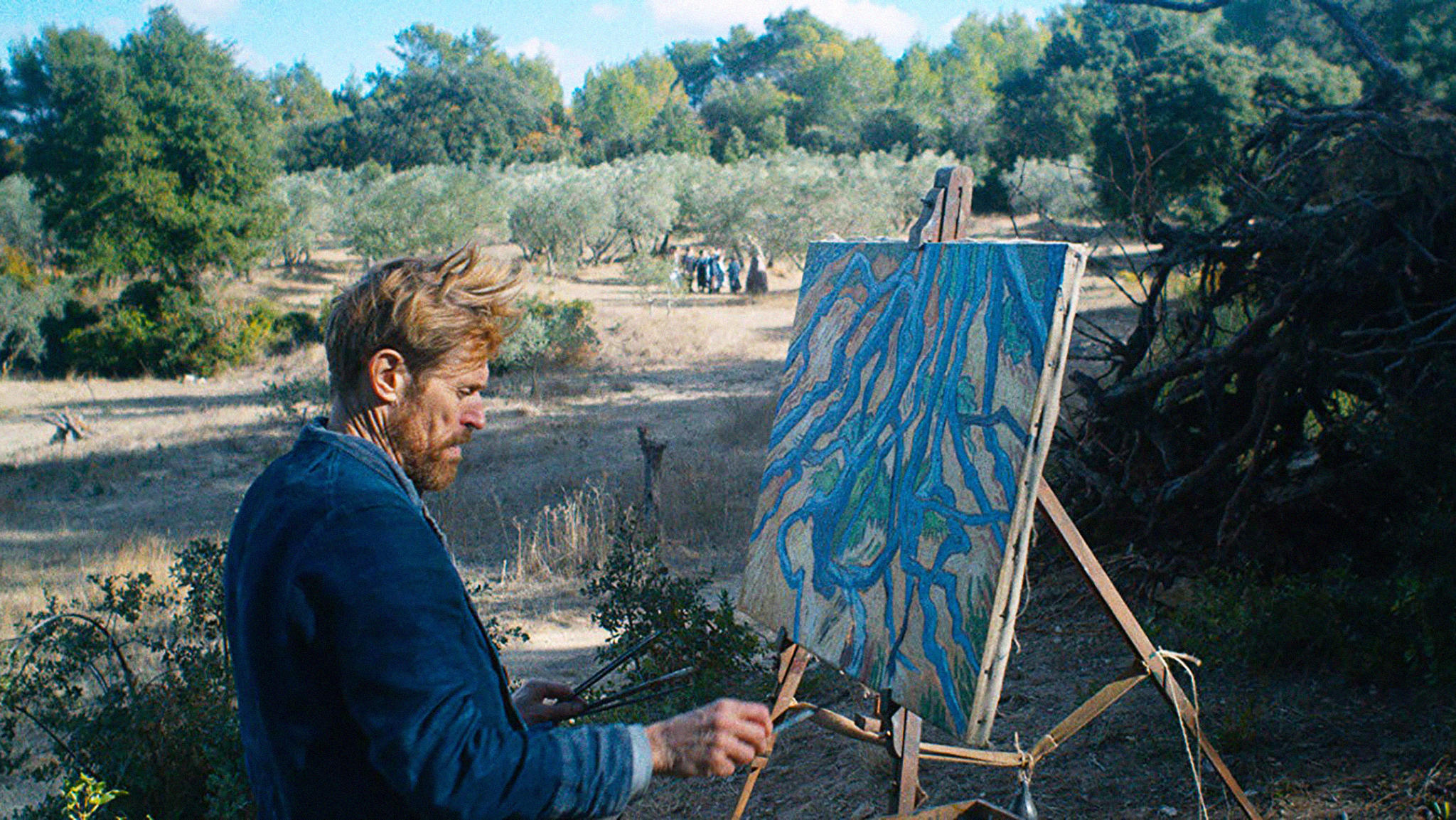
The only Oscar attention given to 2018’s At Eternity’s Gate may have been a Best Actor nod for Willem Dafoe, but his performance really is the film’s greatest strength. As misunderstood painter Vincent van Gogh, Dafoe proves to be a mercurial presence, given to bouts of obsession and anger while treasuring art above all. His relationship with fellow artist Paul Gauguin (Oscar Isaac) seems to be a friendly outlet, but the Dutchman’s apparent mental struggles only get worse in the last years of his life.
I can’t fault the acting, but director Julian Schnabel of The Diving Bell and the Butterfly makes a few jarring creative choices with his direction and editing, which highlights the otherness of van Gogh’s perceptions but also comes off as overly artsy and surreal. Still, I wasn’t familiar with many of the details of van Gogh’s life, and my subsequent research made me recognize the many references to his most famous works throughout the film, heightening my appreciation of it. At Eternity’s Gate is a contemplative showcase of Dafoe’s talent portraying a tortured genius, and its final moments are especially evocative in representing the precious but overlooked.
Best line: (van Gogh) “Maybe God made me a painter for people who aren’t born yet. It is said, ‘Life is for sowing. The harvest is not here.’”
(For Day 7 of NaPoWriMo, the prompt was a choice between two syllable-based poem forms, the shadorma or the Fib. I chose the Fib, with its syllable count based on the Fibonacci sequence of 1, 1, 2, 3, 5, and 8. Take your pick of which character the poem applies to.)
Please Have Mercy On my soul. Its owner oft sinned. Does grace or damnation await? ________________________
MPA rating: R (for language and stressful themes)
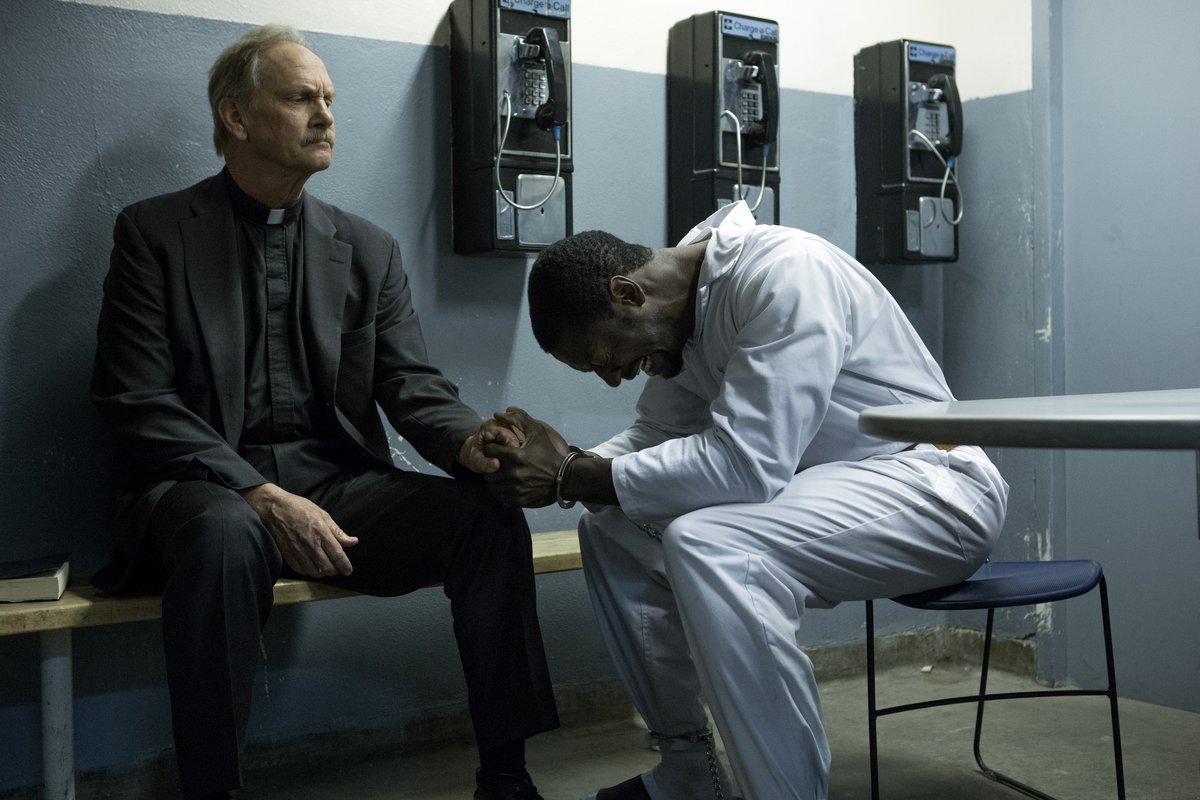
Clemency is a film with a clear message about the cruel nature of the prison system, yet it presents it subtly through the emotional responses of a warden (Alfre Woodard) and the convicted man she is to execute (Aldis Hodge). Woodard is the star here, hiding the psychological toll of her character’s work behind a stolid veil of professionalism while her marriage and soul suffer; the performance feels tailor-made for a Best Actress Oscar nomination, which sadly never came.
Likewise, Aldis Hodge is a compelling victim, convicted of murder and insistent on his innocence. His guilt is neither verified nor disproven definitively, but he is still defended by his lawyer (Richard Schiff) and comforted by a chaplain (Michael O’Neill). His humanity is the focus as the film condemns neither him nor the warden doing her job. Death and execution are very distressing subjects, whether it’s the electric chair of The Green Mile or the lethal injections used here, and Clemency gets its sad point across while offering little light amidst the darkness. A bit slow in pace, it’s a difficult watch elevated by nuanced acting.
(For Day 6 of NaPoWriMo, the prompt was to write a poem based on a line from a favorite book. So I drew some inspiration from a line in 84 Charing Cross Road, in which Helene Hanff offers to include her pen pal in her murder mystery scripts: “You want to be the murderer or the corpse?” So my poem blurs the line between villain and victim based on first impressions.)
Despite the common maxim told Of judging books and covers seen, It’s still a fact that people mold Opinions and the views they hold Before the truth can quite unfold. A first impression sets the scene, And then the slate is far from clean.
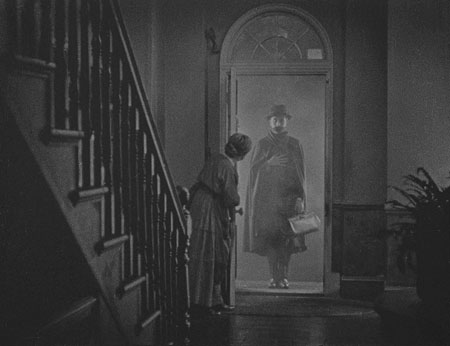
You see a man in overcoat Within the baleful mist’s embrace. His gaze is sullen and remote, And deathly rumors round him float. Before a word can leave his throat, You’re sure that murder’s in his face. And who’s to prove if that’s the case?
Assumptions lead one far astray Or prove correct our own dismay. ___________________________
MPA rating: Not Rated (PG thematically but little objectionable shown)
Here then is a silent, black-and-white classic, so no one thinks I only review recent movies. The third film made by Alfred Hitchcock and his first big success, The Lodger is a forerunner of many a murder mystery in which the arrival of a mysterious newcomer coincides with eerie happenings. In this case, the titular Lodger (Ivor Novello) arrives to the Buntings’ London home in search of a room to rent, just as the news of a serial murderer known as the Avenger has the city in a panic. He catches the eye of his landlady’s (Marie Ault) daughter Daisy (June Tripp), but her parents and policeman beau (Malcolm Keen) see only suspicious activity from the awkward stranger.
The Lodger is a film created and designed for a different time, which has to be taken into account when watching silent films from almost a century ago. I can see naïve moviegoers who had only ever read mystery books watching this movie with bated breath at the creepy atmosphere, but honestly, it’s rather underwhelming, boring even for modern viewers like me. That’s not to say it’s not worth the watch; indeed, Hitchcock’s early work still boasts some haunting imagery and inventive camerawork for the time. And Novello’s title character, pale with stage makeup and a creepy stare to rival Johnny Depp’s Tim Burton roles, is just ambiguous enough to leave you wondering who he really is. The Lodger may be dated, yes, but every genre needs its forerunners. It’s a film worth seeing and certainly preserving for historical value alone.
Best line: (The Landlady, noticing money on the mantle) “You should lock that money up, sir, it’s tempting providence.” (The Lodger) “Providence is concerned with sterner things than money, Mrs. Bunting.”
(Happy belated Easter! Yesterday was sadly my first missed day of the month, beset by end-of-term homework. Even so, I am back for Day 5 of NaPoWriMo, for which the prompt suggested writing a poem in the same shape as another and with the same first letters of each line. I chose the tranquil “Pippa’s Song” by Robert Browning and gave it a dark mirror image.)
The hour is late, And morning still far; Mute are the breezes, The crickets stock still. The hush is a weight, The wait black as tar. Gently it freezes And swallows the will. ___________________
MPA rating: PG-13
For every special-effects-laden blockbuster in the science fiction genre, there is a small-scale gem waiting to be discovered. Directed and self-financed by first-time filmmaker Andrew Patterson, The Vast of Night feels like the type of modest genre piece that Spielberg might have made in his early days. Two 1950s teenagers, the switchboard operator Fay (Sierra McCormick) and radio disc jockey Everett (Jake Horowitz), go about their jobs one night in small-town New Mexico but are intrigued by a mysterious sound picked up by their equipment, leading them to a potentially extraterrestrial source.
Even apart from the supernatural elements, there’s so much to love about the look and feel of The Vast of Night, from its tightly written script and smooth direction (including an awe-inspiring tracking shot to rival much bigger budgets) to the quaint period detail and dark atmospheric lighting. It treads carefully around the idea of aliens, its protagonists curious but skeptical along the way, as if the strangeness they encounter truly is bewildering rather than just a movie plot point. The film stumbles a bit toward the end with its unfortunate lack of closure, but the Twilight Zone-ish story is still a highly engrossing watch.
Best line: (Mabel Blanche, an alien believer) “I think at the lowest level they send people on errands and play with people’s minds. They sway people to do things and think certain ways – so that we stay in conflict, focused on ourself – so that we’re always… cleaning house, or losing weight, or dressing up for other people. I think they get inside our heads and make us do destructive things, like drink and over-eat. I’ve seen good people go bad, and smart people go mad.”
(The prompt for Day 3 of NaPoWriMo was to create a “Personal Universal Deck” of self-descriptive words, so I tried to come up with some word impressions for the characters of a lesser Ghibli film.)
Waves on the beach, Wisdom to teach, Woman and leech, Scorning my speech.
Waves on my mind, Wicked and kind, Who she maligned Is no longer blind. __________________________
MPA rating: PG-13 (for thematic material, very little objectionable)
I love so many Studio Ghibli films, but there are a few gaps I’ve been trying to fill, lesser-known works that have slipped through the cracks. Ocean Waves is one of them, an early ‘90s TV film based on a novel that was meant to give the younger animators a chance to show their stuff. It’s one of those subdued high school stories with a melodramatic love triangle that isn’t bad but can’t escape an overall dullness.
Told largely in flashback, the tale follows Taku as a high schooler who learns his friend Yutaka has a crush on a new girl named Rikako, and Taku is soon pulled into her life and drama more than he expected or wanted. My mom initially didn’t like Forrest Gump because of the way Jenny treated Forrest, and Rikako is in a similar mold. She manipulates, lies, uses people, and barely shows any remorse, yet her actions are eventually viewed with fondness. A high school reunion near the end hits some excellent nostalgic poignancy, but the main two characters aren’t exactly typical romance material, to the point that some have said the two male friends have more chemistry than the central “couple.”
Again, Ocean Waves is well-animated and not terrible, but it’s low-tier Ghibli with very little personality of its own and many tropes that have been done much better elsewhere. In fact, my favorite Ghibli film Whisper of the Heart has a lot of the same ingredients (high school love triangle, boy and girl who dislike each other at first) and yet has so much more character and passion to it. Perhaps Ocean Waves was just the warm-up.
(For Day 2 of NaPoWriMo, the prompt was to reflect on a life-changing choice, so I considered the life-and-death stand of a German martyr.)
I simply stayed silent, Not hateful nor loud. I kept my mouth closed When they wanted compliance. To not join the violent, Not follow the crowd, To leave them opposed Was inherent defiance.
I wonder about, If I’d merely caved, How easier life Would have treated this fool. But then I have doubt: I might have been saved From present-day strife, But not God’s higher rule. ________________________
MPA rating: PG-13
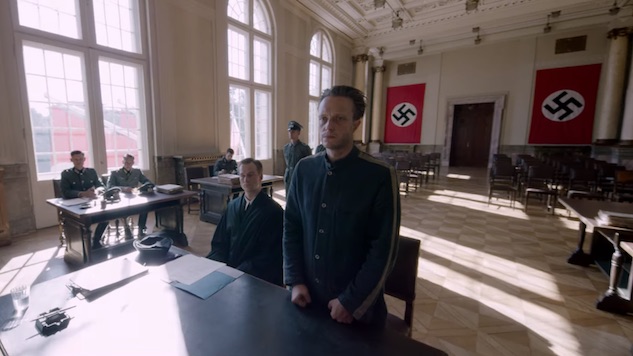
On this Good Friday, a film about martyrdom seemed apropos. I’ll admit that I’ve never seen a Terrence Malick film (potential future Blindspot picks), so there is nothing to which I can compare A Hidden Life from the same director. Yet it most reminded me of Sophie Scholl: The Final Days, since both are moving portraits of faith in the face of evil and social pressure. However, whereas Sophie Scholl was actively opposing the Nazis, the subject of A Hidden Life simply refused to yield to their demands, proving to be a timely hero in this age where even mild disagreement can spark undue censure.
Franz Jägerstätter (August Diehl), declared a Blessed by the Catholic Church in 2007, is a poor farmer in the mountains of Austria, faced with a choice when Hitler annexes his country in the Anschluss. Required to take an oath of allegiance to the Fuhrer, Jägerstätter balks, despite overwhelming pressure from his village and even his church to comply. His quiet steadfastness as he nears the inevitable end recalls the passion of Christ as he and his wife (Valerie Pachner) question the morality of a stand that none but God would remember, or so they thought.
Malick’s celebrated visual artistry elevates the poignant story even more with absolutely gorgeous cinematography that takes full advantage of the alpine setting. Almost every shot could be framed on my wall as a piece of art, which makes it criminal that the film didn’t get a single Oscar nomination. While I loved so much about the film, its epic length is sadly a big detriment, the pace slow and methodical across nearly three hours. It’s a spiritually rich, contemplative film that heightens its emotions as it progresses, but I was quite ready for it to be over when the credits rolled. A Hidden Life is a superb masterpiece of the human conscience; it just could have benefited from a little more editing.
Best line: (Franz’s father-in-law) “Better to suffer injustice than to do it.”
(The prompt for Day 1 of NaPoWriMo was to write something perspective-challenging based on a surreal jazz music video. I thought that the jazz and a change of perspective would apply well to Pixar’s latest film.)
Would the world appear different behind different eyes? Before or behind them – which matters the most? How much of his life can a man criticize Before it’s reduced by his deep-rooted roast?
I’d hate to have nothing to show for my time, My effort, my busyness spent every day. If mountain views aren’t at the end of the climb, Why struggle and strive to reach only half-way?
If I could fulfill all the hopes I once dreamed, If I could be him or be her or do that, Perhaps the time wasted could still be redeemed, A medal to earn in life’s mortal combat.
How foolish, however, to think that my worth Depends on a goal that can move as I near it! How mindless to plan upon riches on earth, No thought for what nurtures my soul and your spirit.
The climb can be tedious staring ahead, A rock wall in front and a far distant peak, But spare a glance round at the background instead And find where you never considered to seek. _____________________________
MPA rating: PG
Thanks to a certain virus and the advent of Disney+, I was thankfully able to watch Pixar’s latest film from the comfort of my couch right at the tail end of 2020, though I would have gladly gone to a theater for it if one had been open. With Pixar’s diminishing creative trend over the last decade, I wasn’t sure where Soul would land among their undeniable classics and good-not-great outings, but I was thrilled to join the general consensus in deeming it the former.
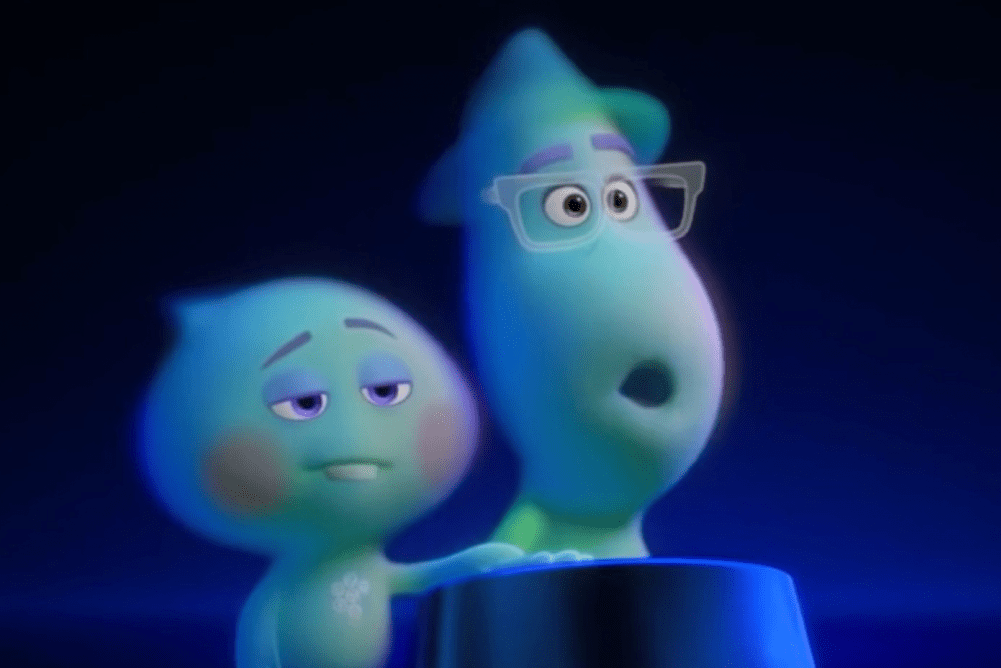
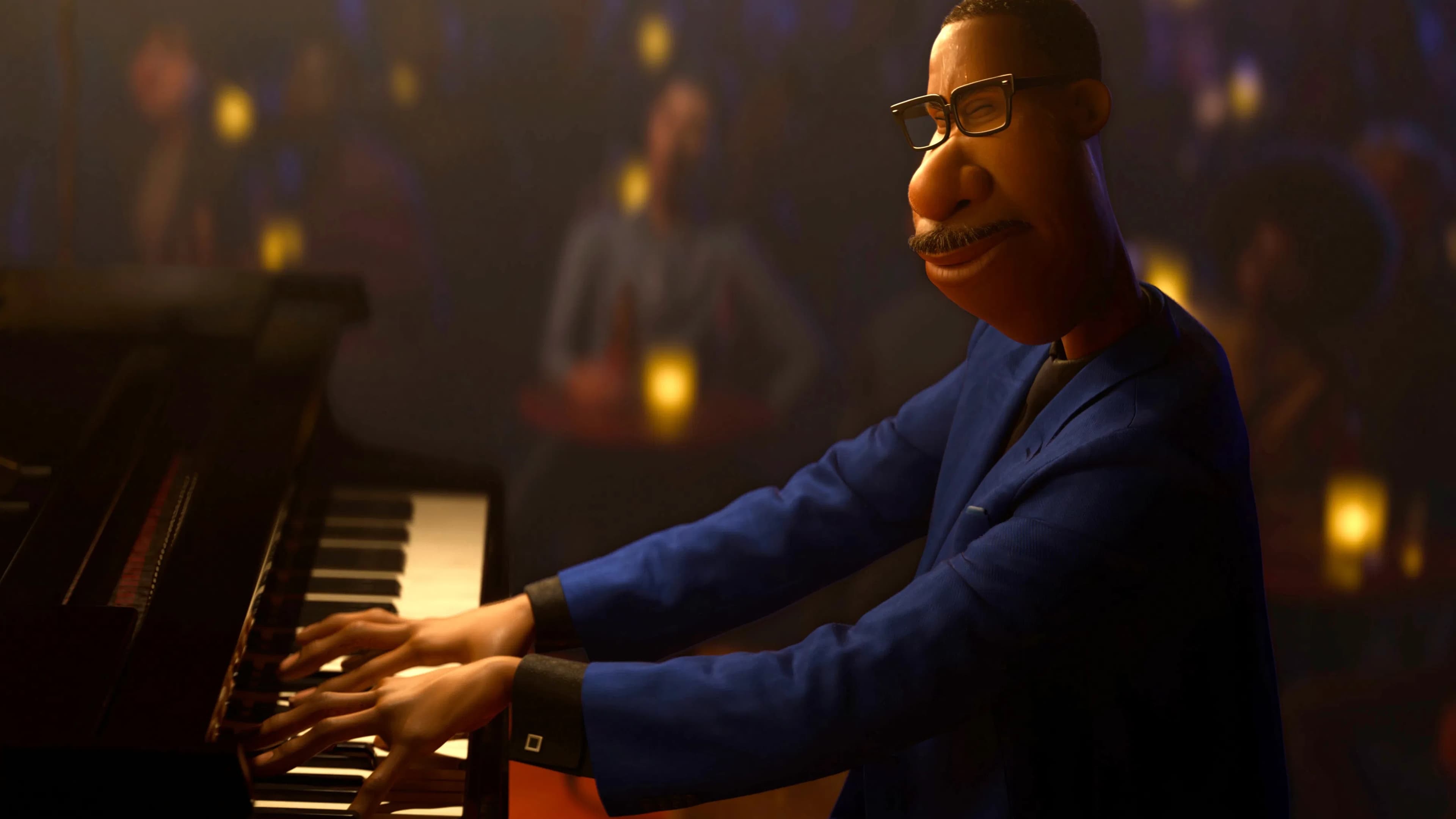
The first Pixar film with an African-American protagonist, Soul follows pianist and middle school music teacher Joe Gardner (Jamie Foxx) as he manages to earn the jazz gig of his dreams and then promptly die, which isn’t a spoiler strangely enough. Appearing as a blue blob on his way to the Great Beyond, he escapes into an in-between realm where unborn souls are prepared before going to earth. He is paired with an uncooperative soul called 22 (Tina Fey), with whom he questions the meaning of his life and existence.
That last bit may sound overly heavy for a “kids movie,” and indeed Soul doesn’t seem designed for kids, with its middle-aged main character and existential questions of life and death. Director Pete Docter has explored weighty concepts before in Upand Inside Out, but other elements of those films seem clearly geared for a young audience. More than any other Pixar film, Soul seems especially mature, not in content, but in theme, while still retaining a likable sense of humor, and I personally love and admire animated films that can pull off such a tonal balance successfully.
The plot itself stays unpredictable and throws in some thought-provoking concepts without much time to consider all their implications, later utilizing them in surprising ways, much like Inside Out did. The animation is yet more evidence of how Pixar is leaps and bounds ahead of its CGI competition, full of textured backgrounds, hyper-realistic lighting, and amazing fluidity, such as the shifting forms of the charming Picassoesque entities named Jerry in the “Great Before.” And then there’s the music, both snappy instrumental jazz and a gorgeous score by Trent Reznor and Atticus Ross, which is almost a character in itself as Joe’s creative passion.
I can’t say Soul is perfect, since it does have some unaddressed plot holes and oddly stops short of explicitly affirming Joe’s job as a teacher, which I think would have been a nice touch similar to Mr. Holland’s Opus. Nevertheless, Pixar excels in its dramatic gut punches, and Soul absolutely delivers those moments, from relatable reconciliations to noble sacrifice, and succeeds in conveying a life-affirming message that doesn’t come off as trite or recycled. Since it hasn’t happened for a Pixar film in a decade, I was really hoping that Soul would snag a Best Picture nomination, but alas, that didn’t happen (though it was nominated for Best Animated Feature, Score, and Sound). While I would have liked perhaps a more religious view of the afterlife, Soul remains general and accessible enough in its spirituality to appeal to all audiences, and its message of valuing life’s little moments ultimately meant a lot to me.
Best line: (musician Dorothea Williams, to Joe) “I heard this story about a fish. He swims up to this older fish and says, ‘I’m trying to find this thing they call the ocean.’ ‘The ocean?’ says the older fish. ‘That’s what you’re in right now.’ ‘This?’ says the young fish. ‘This is water. What I want is the ocean.’”
Can it be that time of year again? April already? National/Global Poetry Writing Month has once more rolled around, and I always look forward to this especially creative month when I think my best work comes to the fore. Unfortunately, I have a dilemma. As evidenced by my sparse posting over the last few months, my schoolwork and work work have kept me from writing and blogging as much as I used to, so my traditional poem and review a day will likely be unrealistic.
Nevertheless, I will endeavor to keep up as much as I can. My best bet will probably be to keep my accompanying movie reviews extra short, so don’t be surprised if they seem truncated. I still hope to have 30 new poems by the end of the month, and I look forward to the daily prompts and others’ submissions as well. Happy NaPoWriMo/GloPoWriMo 2021!





/cdn.vox-cdn.com/uploads/chorus_image/image/63869945/A_Hidden_Life_1.0.jpg)