• Home
  • About Me
  • The List
  • THE LIST (2016 Update)
  • THE LIST (2017 Update)
  • THE LIST (2018 Update)
  • THE LIST (2019 Update)
  • THE LIST (2020 Update)
  • THE LIST (2021 Update)
  • THE LIST (2022 Update)
  • Top Twelves and More
  • The End Credits Song Hall of Fame

Rhyme and Reason

~ Poetry Meets Film Reviews

Rhyme and Reason

Category Archives: Blindspot

2019 Blindspot Pick #9: Vertigo (1958)

13 Sunday Oct 2019

Posted by sgliput in Blindspot, Movies, Poetry, Reviews, Writing

≈ Leave a comment

Tags

Classics, Drama, Hitchcock, Mystery, Romance, Thriller

See the source image

The birds in flight
May love their height
And laugh at bounded, grounded man,
But gravity
Can guarantee
That staying low’s a better plan.

Some love the thrill,
The view, the will
To see a limit and defy,
Yet none deny
That when you’re high,
It’s so much easier to die.
_____________________

MPAA rating: PG

Vertigo has to be the most critically lauded among my Blindspots this year, and I was quite curious to see whether it would match its reputation, since so many Hitchcock movies have fallen short, for me at least. Vertigo lands somewhere in the middle, confirming my opinion that Hitchcock mostly excelled in creating tension in individual scenes rather than whole movies.
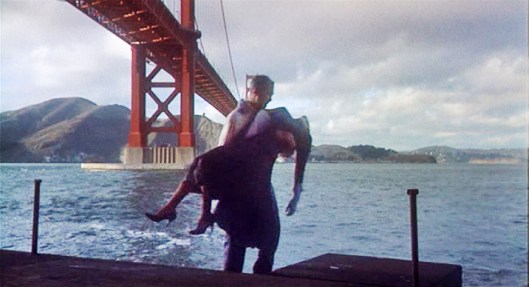
See the source image

The fourth and last collaboration between Hitchcock and star Jimmy Stewart, Vertigo is a tale of obsession that toys with the possibility of the supernatural. Stewart plays John “Scottie” Ferguson, a cop who retired after a deadly experience with heights but is commissioned by wealthy friend Gavin Elster (Tom Helmore) to investigate Elster’s wife Madeleine (Kim Novak) and her sudden strange behavior. As he learns more about her connection to a suicidal ancestor and develops a relationship with her, he encounters secrets and mysteries that shake him to his core.

As a fan of film, I can say that I am definitively glad to have finally seen this classic of cinema, an oversight that represents exactly what this Blindspot series is meant to solve. Yet it doesn’t hold the same fascination for me that it apparently does for so many. Perhaps it’s because the film’s intrigue was such a rollercoaster. It starts out interesting enough with Stewart as his ever-likable self, but the story really drags during his investigation, which consists of far too much of him wordlessly following Madeleine by car. Maybe it’s just me, but the picture below doesn’t do much for me in the way of tension.

See the source image

Then comes a famous scene in a bell tower, which is indeed one of Hitchcock’s best for buildup and shock value. Not too much longer, and the reveal of the mystery left my brain working overtime, surprised at the unanticipated twist and giving me a new appreciation for the storyline. Yet what follows becomes a somewhat uncomfortable exercise in obsessive grief (including a weirdly unnecessary psychedelic dream), played out through what would be a deeply unhealthy relationship if not for the audience’s knowledge of its psychological underpinnings. How it ends, while effective, is also anything but satisfying, so abrupt that it made me recall how much I despise the final scenes in North by Northwest and An American Werewolf in London. I know Hitchcock knew how to end a movie, but I wouldn’t know it based on this one.

I certainly can’t fault the actors. Stewart is always good, always, and Kim Novak might be one of my favorites of Hitchcock’s blonde leading ladies. Barbara Bel Geddes is also great as Scottie’s casual friend/former crush, who is short-changed by the ending’s lack of closure. I also liked a cameo by Ellen Corby, who also appeared with Stewart briefly in It’s a Wonderful Life (“Could I have $17.50?”) Likewise, Bernard Herrmann’s hypnotic score is an outstanding accompaniment, and, like the score of Psycho, adds so much to the film’s atmosphere.

See the source image

All in all, Vertigo is the second best one-word Hitchcock film that ends with an O, as well as the second best Hitchcock film that begins with an injured Jimmy Stewart. Sorry if that doesn’t sound like high praise, though I do appreciate its cinematic contribution of that vertigo effect above. I can see why film enthusiasts like it and why its filming locations around San Francisco have become iconic, and I have half a mind to see it again just to pick up on the hints to the twist that I might have missed the first time. Yet, considering it’s been ranked both 1st and 9th on lists of the best films ever made, I feel like its reputation is somewhat overblown. Psycho is still Hitchcock’s masterpiece as far as I’m concerned.

Best line: (Madeleine) “Only one is a wanderer; two together are always going somewhere. ”

Rank: Honorable Mention

© 2019 S.G. Liput
649 Followers and Counting

2019 Blindspot Pick #8: How Green Was My Valley (1941)

30 Monday Sep 2019

Posted by sgliput in Blindspot, Movies, Poetry, Reviews, Writing

≈ Leave a comment

Tags

Classics, Drama

See the source image

How green was my valley
So many years back!
No paychecks to tally,
No perils to track,
When people seemed good
And the future seemed bright,
Before my childhood
Had receded from sight.

How green was my valley,
How grand the coal mine,
How buoyant my sally
Beneath the sun’s shine!
Now I view the same scene,
As every man does,
Wishing it were as green
As I know it once was.
___________________

MPAA rating:  G

Time again for one of my Blindspots, this time going back to the Best Picture of 1941, which I chose in all honesty because Alex Trebek has said several times on Jeopardy! that it’s his favorite film. Based off a popular book at the time, How Green Was My Valley has never been on my radar for some reason, despite its status as an all-time classic and the fact that it beat Citizen Kane for Best Picture that year. And despite a somewhat excessive length, it’s a moving opus that deserves its accolades.

See the source image

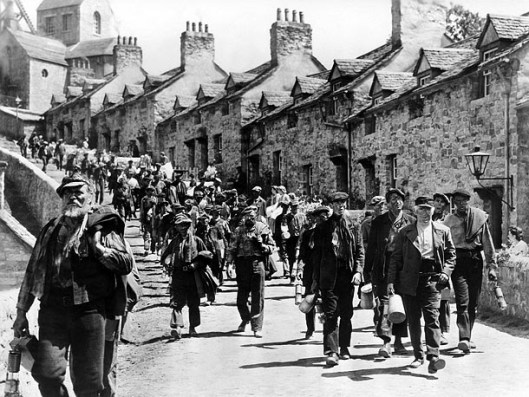
What How Green Was My Valley most reminded me of was The Waltons, the classic ‘70s show about a Depression-era family in Virginia. Just as The Waltons had periodic narration detailing the poetic remembrances of Earl Hamner, Jr., the narrator of this film (voiced by Irving Pichel) fondly recalls his large family and town life in a 19th-century Welsh mining village. That narrator is Huw Morgan (played by a very young Roddy McDowall), who as a child watches the changes in his town: the labor strike when the miners rebel against lowered wages, much to the chagrin of his traditional father Gwilym (Donald Crisp); the romantic yearnings of his sister Angharad (Maureen O’Hara) and the new preacher (Walter Pidgeon); the dangers of mining accidents and the unforgiving elements; the religious hymns sung as the miners return home; and the indelible memories and scars all these events leave.

While melodramatic at times and honest about the unsatisfying turns life can take, How Green Was My Valley has an undeniable sweetness to it, both from the familial love among the Morgans and the frequent camaraderie of the townspeople. Individual vignettes stand out, such as a local boxer flippantly defending Huw against a cruel schoolteacher or the village rallying at the recovery of one of their sick members. Of course, there is also small-minded meanness to contend with, suitably denounced by a brilliant speech by Pidgeon’s Mr. Gruffudd, but what remains beyond the heartache are the sweet moments, made bittersweet by the film’s end.

See the source image

I’m glad to check this film off of my Blindspot list, another classic I probably should have seen long ago. While John Ford’s composition and the cinematography (both Oscar-winning) is stunning, my VC and I agreed that we really wished it had been shot in color (you know, so we could see how green was the valley), especially a scene with a daffodil field, but shooting in black-and-white was a logistical sacrifice since World War II prevented actually shooting in Wales. California works as a colorless substitute, though, and it certainly feels authentic otherwise; oddly enough, the village itself reminded me of the one in Hayao Miyazaki’s Laputa: Castle in the Sky, which isn’t too surprising since the animators based its architecture off of a Welsh mining town. While I think I appreciate Citizen Kane a touch more, How Green Was My Valley deserved its win too.  I’ve heard that, whereas Citizen Kane represented the head, this film represented the cinematic heart of that year. I like that comparison and might have been persuaded to vote the same way back in 1941; classic is classic, after all.

Best line: (Mr. Gruffudd, pre-dating the similar sentiment of Spider-Man’s Uncle Ben) “But remember, with strength goes responsibility, to others and to yourselves. For you cannot conquer injustice with more injustice, only with justice and the help of God.”


Rank:  List Runner-Up


© 2019 S.G. Liput
648 Followers and Counting


2019 Blindspot Pick #7: Royal Space Force: The Wings of Honneamise (1987)

28 Wednesday Aug 2019

Posted by sgliput in Blindspot, Movies, Poetry, Reviews, Writing

≈ 1 Comment

Tags

Animation, Anime, Drama, Sci-fi

See the source image

The depths of space have tempted man
For years while holding him at bay
Through distance, death, and lack of breath,
Insisting that we humans stay.

But mankind rarely takes a hint,
For us, a challenge is a lure,
Inviting us to sojourn thus
And learn how far we can endure.
___________________

MPAA rating: Unrated (an attempted rape scene probably would make it R, but otherwise, it’s an easy PG-13)

Unless you’re a diehard anime fan, you probably read the title of this movie and said, “What the heck is that?” Well, now that I’ve seen most of the mainstream films anime has to offer, I’m now seeking out the obscure, and I was surprised at the glowing reviews this unknown film has gotten since its 1987 release, growing into an apparent classic of the medium with 100% on Rotten Tomatoes. (Imagine my surprise when Netflix didn’t have it, but my local library did.) Royal Space Force is a hard film to categorize, but it’s undoubtedly well-made with unexpected thematic depth.

Imagine an anime mixture of The Right Stuff and Contact, and you’ve got Royal Space Force, the title referring to the poorly organized space program of the fictional country of Honnêamise. (Hun-ee-a-meece? Honey-mice? I don’t know how it’s pronounced since I don’t recall the name ever being spoken.) While no one takes the program seriously with its poor management and frequent failures, a slacker recruit named Shirotsugh Lhadatt finds a new passion and ambition for the project after a run-in with a young female evangelist named Riquinni. Despite the innate dangers of this unprecedented venture, including hostilities from a rival nation, Lhadatt literally shoots for the stars in a quest for peace and meaning.

See the source image

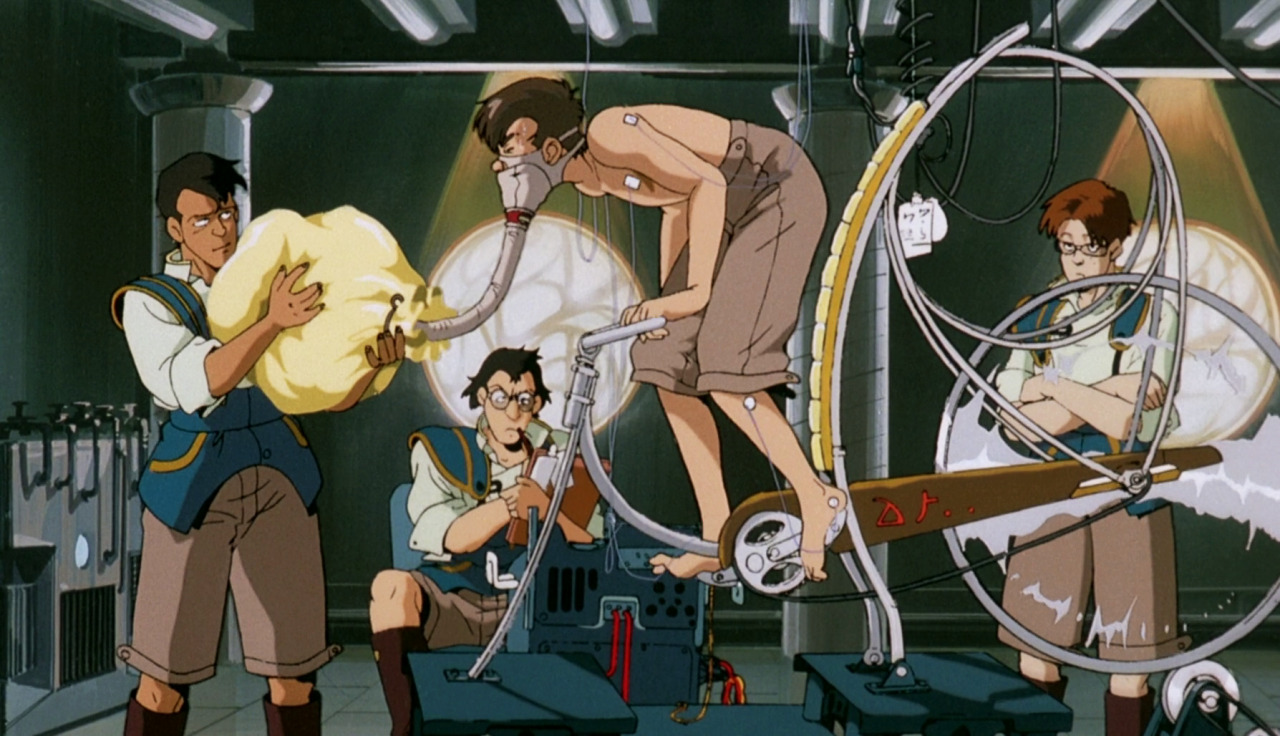
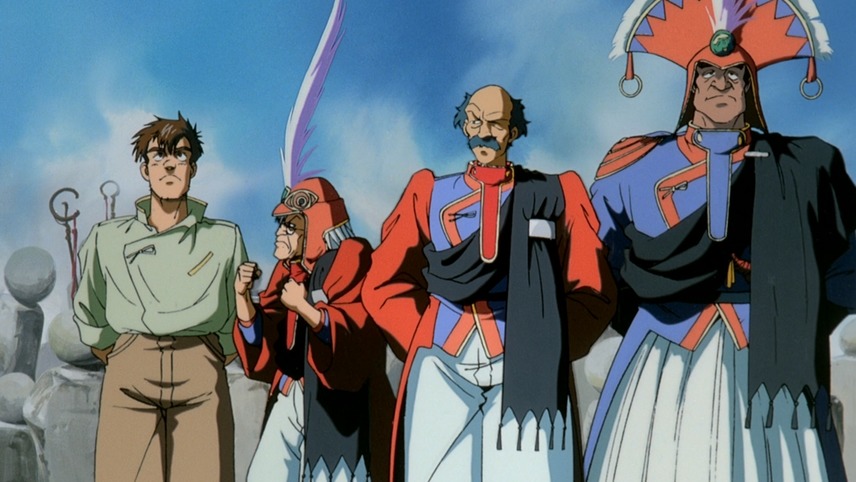
Beyond the plot or characters, what makes Royal Space Force really unique is its comprehensive world-building. It’s not quite straight fantasy or science fiction: there are a couple futuristic machines and some unique animals, but otherwise there aren’t many fantastical elements to the setting. It’s just different, a vision of what our world might have looked like during the Space Race if history had taken a different route. Windows slide downwards; plane propellers spin on the tail of the plane; currency is made up of small needle-shaped pins instead of coins. The architecture of the cities is ornate yet believable, often a mish-mash of cultural styles that create something new. I would watch it again just to appreciate the imagination on display, the fashioning of an alter-earth with creativity sadly lacking in so many other animated films.

As someone with direct family ties to the space program, I was also intrigued at how this film would approach its version. The filmmakers went to NASA to study space flight, and their efforts at authenticity mix surprisingly well with the otherworldly setting. The training contraptions for preparing Lhadatt for his mission are more slapdash and home-made than NASA’s, but their crudeness highlights how big of a scientific leap space travel is for this world, as it was for our own. And by the time the launch day comes amid self-doubt and international turmoil, the event has a similar gravitas and grandeur as the real thing.

See the source image

Another unique aspect of this film was the role of religion. Riquinni’s faith is clearly a fictional one based off a couple stories mentioned, but her discussions of God and nightly dispersal of tracts are clearly an analog to Evangelical Christianity. And unlike Contact, which annoyed me by pitting faith and science against each other as if they were antithetical, Royal Space Force depicts faith as a positive influence, encouraging Lhadatt to believe he is part of something bigger than himself and push toward a brighter future. There have been plenty of anime with Christian elements and themes, but this movie climaxes with a sincere and moving prayer that is one of the most explicit declarations of faith I’ve seen in animation.

While it’s a significant achievement in the medium, Royal Space Force does suffer somewhat from a deliberate pace and not quite enough resolution by the end. It’s not boring and has a few thrilling sections, but you shouldn’t expect constant humor or action from its grounded drama. The biggest problem is a scene of attempted rape that saps a lot of the sympathy for Lhadatt, even if he seems repentant later, and also serves no other purpose than to put the film into “mature” territory. The scene was cut in its video release, and it would have been better if the initial editors had done the same.

See the source image

Now at least, I can check off another Blindspot from my list, an anime film that has held my curiosity for some time now. I think anyone interested in the development of space travel and speculative fiction would find much to appreciate, and fans of animation even more so, since this feature was the first project of Studio Gainax, which went on to the fame of producing series like Neon Genesis Evangelion and Gurren Lagann. Royal Space Force: The Wings of Honnêamise may have an ungainly name, but it deserves its low-key classic status, making me wonder if the sequel that’s been rumored for years will ever get off the ground.

Best line: (Riquinni, reading from her holy book) “And you shall find that prayer is the greatest of all things, and it is also the smallest. You’ll find nothing more noble than prayer, nothing more humble.”

Rank: List Runner-Up

© 2019 S.G. Liput
645 Followers and Counting


2019 Blindspot Pick #6: Amadeus (1984)

31 Wednesday Jul 2019

Posted by sgliput in Blindspot, Movies, Poetry, Reviews, Writing

≈ Leave a comment

Tags

Biopic, Drama, History, Musical

See the source image

How must it be to be a genius,
Masterpieces to be mined
In the mind,
Unrefined,
And so gradually defined
In an act of new creation
Not unlike how God designed?

Oh, to birth such instant classics,
Such a rare, eternal prize!
Oh, what highs
In human eyes,
We crave as we mythologize,
And what despair we suffer when
Our limits cut us down to size.

Comparisons are no avail
If we’re defined by how we fail.
______________________

MPAA rating: PG for the original, R for the Director’s Cut, due to brief language and nudity

For me, Amadeus is the perfect candidate for a Blindspot pick. I’ve been putting it off for far too long, even getting it from the library a while ago and letting it sit around until I had to return it. On top of that, I kept being reminded of it; the recent anime Steins;Gate 0 had an AI called Amadeus and explicitly referenced the rivalry between Mozart and Salieri, and I also just rediscovered the classic ‘80s tune “Rock Me Amadeus” by Falco, inspired by this film. I even got a recent Final Jeopardy question wrong because I didn’t realize Amadeus was based on a play, making it perfect for MovieRob’s Genre Grandeur this month as well. Thus, at long last, it seemed only right to watch the Best Picture of 1984, since I was clearly being pointed toward it.

See the source image

Winner of eight Oscars, Amadeus is a powerhouse for both acting and music. For his role of Salieri, F. Murray Abraham deservingly won the Oscar for Best Actor, ironically defeating Tom Hulce as his unwitting rival Mozart. Salieri is a tortured soul, deranged and aged far past his prime when the film opens in 1823, and tells a priest of how his classical musical career was overshadowed by the flippant but undeniable talent of Wolfgang Amadeus Mozart. Hulce portrays Mozart as a frivolous man-child, a “creature” as Salieri refers to him, whose high-pitched laugh grows increasingly annoying, yet the elder composer recognizes Mozart’s gift and blames God for leaving Salieri so comparatively untalented. Both performances are brilliantly nuanced, especially by the tragic end, but the Academy chose right that year.

Yet the music is just as much a character as the dueling composers. As Salieri points out early on, everyone recognizes Mozart’s best work, and his best work is put on full display, with even extended stage performances from opera like The Magic Flute and Don Giovanni. (I watched Milos Forman’s Director’s Cut.) Lovers of classical music will revel in the score, but even non-fans will likely appreciate watching the inception of masterpieces that have stood the test of time.

While I recognize the film as a magnum opus for everyone involved, there’s something that bugs me and keeps it from ranking among my favorites. It may seem shallow or unsympathetic, but as I watched Salieri spiral into a tortured wretch of envy, cursing God for giving Mozart the talent he craved for himself, I just wanted to slap him and say “Get over it!” It’s drama, and I know such unbridled jealousy does happen, but I hate when people compare themselves to others because no matter how good you are at anything, there will always be someone better. Salieri had a high-profile position, money, and respect, and instead of viewing Mozart as a colleague, however vulgar he may have been, he made him the source of an inferiority complex, ultimately contributing to his ruin, for which Salieri received nothing but guilt. He may have blamed God, but the fault was his own. It’s a marvelously complicated portrayal of destructive envy that nonetheless frustrated me almost as much as Mozart’s laugh.

See the source image

Looking back, 1984 was undoubtedly one of the big movie years in history, and it says a lot that Amadeus was able to sweep the Oscars that year, winning Best Picture, Actor, Director, Adapted Screenplay, Art Direction, Costume Design, Makeup, and Sound. Impeccably mounted in its 18th/19th-century setting, it’s an overly long but outstanding period piece conveying a historic rivalry that, while fictionalized, still resonates.

Best line: (Salieri) “All I wanted was to sing to God. He gave me that longing… and then made me mute. Why? Tell me that. If He didn’t want me to praise Him with music, why implant the desire, like a lust in my body, and then deny me the talent?”


Rank:  List Runner-Up


© 2019 S.G. Liput
642 Followers and Counting
 

2019 Blindspot Pick #5: Best in Show (2000)

10 Monday Jun 2019

Posted by sgliput in Blindspot, Movies, Poetry, Reviews, Writing

≈ Leave a comment

Tags

Comedy

See the source image

Behold, the yearly dog parade,
A purebred canine cavalcade,
Where dogs and humans side by side
Will strut their stuff with puppy pride.

Akitas, corgis, Komondors,
So many march upon all fours,
From toys that bring to mind a rat
To mastiffs who could eat a cat.

There goes the Rottweiler and hound,
Content to prance around and round.
And there’s the Yorkshire terrier
Who broke the cuteness barrier.

There’s Marmaduke and Lassie here,
And dear Old Yeller (sheds a tear),
And Hachi, Benji, Beethoven,
With Scooby Doo and Rin Tin Tin.
(I’d say their breeds, but for the young,
Their screen names just roll off the tongue.)

There goes a walking mop on paws,
And poodles barbered…well, because,
And pugs and shar peis that are set
With ugly charm I don’t quite get.

And by each furry quadrupedal
Rival vying for a medal
Walk the humans with concern,
Who reap rewards their pooches earn.
_____________________

MPAA rating:  PG-13

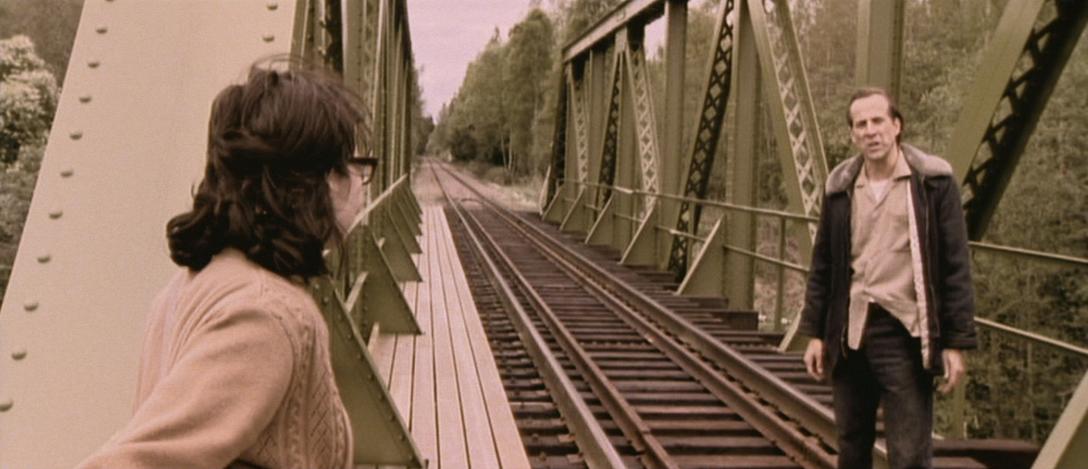
I can’t recall exactly what prompted me to add Best in Show to my list of Blindspots this year, but I’d gotten the general impression that it was a great classic comedy that I’d somehow missed out on until now. Directed and co-written by Christopher Guest, clearly inspired by his time starring in This Is Spinal Tap, this mockumentary about the weird world of dog shows isn’t quite worthy of the blue ribbon I was expecting.

See the source image

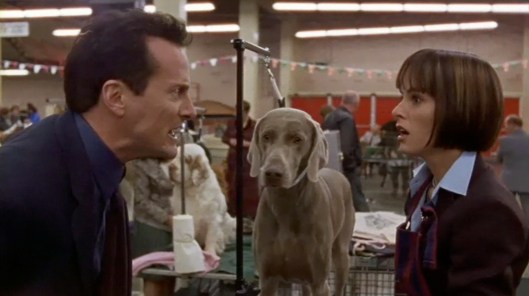
These mockumentary films seem to me an acquired taste, so dependent on improv and awkwardness, and with this film and This Is Spinal Tap being the only two I’ve seen, I don’t think I’ve acquired it yet. My family watches the National Dog Show every Thanksgiving, so I was interested in seeing a comedy built around the backstage drama of quirky competitors. And quirky they are, including an obsessively competitive couple (Parker Posey and Michael Hitchcock), a suburban schmoe (Eugene Levy) and his formerly promiscuous wife (Catherine O’Hara), a pair of gay Shih Tzu lovers (Michael McKean and John Michael Higgins), a backwoods fisherman (Guest), and a trophy wife (Jennifer Coolidge) and her stressed trainer (Jane Lynch).

Through their interactions and direct interviews, we see all of their insecurities, secrets, checkered pasts, and eccentricities firsthand, and while there’s no denying the talent of the cast, the material never rises above mere amusement. Some of the shenanigans, such as Posey and Hitchcock’s fanaticism over their dog’s toy, are actually more sad than funny, and Fred Willard’s role as the dog show’s absent-minded commentator struggles so hard to be constantly funny that he’s sort of annoying instead. (Interestingly, John Michael Higgins would go on to play a similar but IMO funnier announcer in the Pitch Perfect films.)

See the source image

Yet, even if it could use more belly laughs, Best in Show was still amusing, and, based on my own dog preferences, I was pleased with the eventual winner of the competition. Plus, I did enjoy the large and recognizable cast, which also included Ed Begley, Jr. and Bob Balaban. Best in Show might not have been as funny as I’d hoped, but it did reaffirm something about myself: I’m much more of a cat person.

Best line: (Sherri Ann Cabot, about her decrepit rich husband) “We have so much in common; we both love soup and snow peas, we love the outdoors, and talking and not talking. We could not talk or talk forever and still find things to not talk about.”


Rank: Honorable Mention


© 2019 S.G. Liput
634 Followers and Counting


2019 Blindspot Pick #4: The Longest Day (1962)

06 Thursday Jun 2019

Posted by sgliput in Blindspot, Movies, Poetry, Reviews, Writing

≈ 4 Comments

Tags

Action, Classics, Drama, History, War


See the source image

“Damn the torpedoes.” “Remember the Maine!”
“Remember the Alamo!” was the refrain
Of the boys and the men
Who fought time and again,
Who offered their country their blood and their pain.

And on June the sixth of 1944,
Such men charged the beaches of Normandy’s shore.
They leaped from the sky
Knowing well they could die,
And waded through carnage that had been their corps.

The weather unfriendly, the Germans less so,
The struggle brought many a foe and friend low.
The Allies that day
Put their grit on display,
And paid a debt we who are living still owe.
_____________________

MPAA rating: G (should be at least PG)

About two years ago, I reviewed Saving Private Ryan, one of that year’s Blindspots, so it seemed only fitting to review another Blindspot pick about D-Day on June 6, the day the world was saved by the Allied forces. The Longest Day may be an older film, but its re-creation of the struggle on the beaches of Normandy is more expansive than Spielberg’s and well worthy of being ranked among the great war movies of all time.

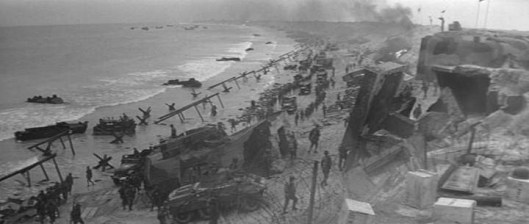
While Saving Private Ryan had a focused plot with developed characters, The Longest Day is much more concerned with the broader history of the D-Day landings: the cautious planning, the German belief that no invasion would come that June, the watching of weather reports, the confusion of battle, and the plethora of individual stories, most of which have a basis in truth. At nearly three hours long, it might have been called The Longest Movie, yet it’s rarely boring. It may take two thirds of its runtime to reach the point that Saving Private Ryan begins, but it offers much more insight into the strategy and planning that went into the assault and the various efforts of the Americans, British, French, paratroopers, and French civilians, as well as the German side, all presented realistically with dialogue in their native tongue.

See the source image

Saving Private Ryan may be known for its battle scenes, but The Longest Day is no slouch either, depicting the invasion on an impressively epic scale. After the ships hit the beaches, there are a number of jaw-dropping aerial tracking shots that offer an incredible view of the battlefield, and without CGI, I can only imagine the work that went into creating such carefully orchestrated scenes. The fact that many of the cast and crew actually saw action on D-Day and contributed their first-hand accounts, along with many of those who are actually depicted in the film, only adds to the authenticity of the production, something no film in the future could hope to match.

The one thing The Longest Day doesn’t have is clearly defined characters, despite a cast jam-packed with stars of the day. It may have won deserving Oscars for its cinematography and special effects, but there’s a reason it didn’t get any acting nominations, simply because there’s not enough for any one actor to do.  John Wayne, Henry Fonda, and Robert Mitchum are probably the biggest stars, but you’ll likely recognize the names or faces of Red Buttons, Jeffrey Hunter, Roddy McDowall, Rod Steiger, Richard Burton, Sean Connery, and Peter Lawford, to name only a few. With such a who’s who of talent, it was just a tad disappointing that we spend so little time with any of them, sometimes only a single scene, and don’t always find out what became of them. Yet this is a film about the events rather than the people (the name and rank labels are more for context than for actually keeping track of the characters), and there’s nothing wrong with that, especially with so many triumphant, sad, or ironic episodes throughout that are worth telling but don’t necessarily warrant a movie of their own.

See the source image

My own grandfather was among the men who stormed the beaches of Normandy, and films like Saving Private Ryan and The Longest Day really help me as a detached viewer to appreciate the sacrifices of what was truly the Greatest Generation. As for which film is better, I’m torn. Saving Private Ryan held much more visceral emotion but largely through extreme violence I usually steer clear of; for normal viewing, I think I prefer The Longest Day’s presentation of bloodless action that still denotes the grand and hellish reality of war. Both have their place, one raw and poignant, the other detailed and comprehensive, and I’m grateful to have finally seen both through this Blindspot series. One ship commander tells his men, “You remember it. Remember every bit of it, ’cause we are on the eve of a day that people are going to talk about long after we are dead and gone.” Thanks in part to films like this, he’s absolutely right.

Best line: (said by both an American and a German, an insightful contrast) “Sometimes I wonder which side God is on.”


Rank: List-Worthy (tied with Saving Private Ryan)


© 2019 S.G. Liput
633 Followers and Counting
 

2019 Blindspot Pick #3: Dancer in the Dark (2000)

09 Tuesday Apr 2019

Posted by sgliput in Blindspot, Movies, NaPoWriMo, Poetry, Reviews, Writing

≈ Leave a comment

Tags

Drama, Musical

(Today’s NaPoWriMo prompt was for a list poem, so, based on this film, I wrote a list of things that make my heart ache. Try singing it to the tune of “My Favorite Things,” which was used in the movie.)

See the source image

Signs that the world is a heinous taskmaster,
Questions with answers unfair to the asker,
Innocence tainted by lack of concern:
These are the lessons it pains me to learn.

Optimists dashed and brought low for their dreaming,
Bitterness tinged by a sweetness redeeming,
Love too naïve to be wary of hate,
Promises broken or kept far too late,

When the dog dies,
When the tale ends,
When I need to grieve,
My broken heart summons the tears as it mends,
For they never truly leave.
_____________________

MPAA rating: R (more for intensity, what’s shown is closer to PG-13)

Due to his reputation for controversy, I’ve never been eager to watch the films of Lars von Trier. Yet I’ve been long curious about Dancer in the Dark, and my Blindspot series seemed like a prime chance to find out how a musical could also be considered among the most depressing movies of all time. I have a finicky regard for unapologetic downers. I love Grave of the Fireflies and The Elephant Man dearly, yet I can’t stand something like Seize the Day or The Hours. It depends on the film and the person whether it has the desired effect, and Dancer in the Dark hit me harder than I was expecting.

«dancer in the dark» HD Wallpapers

I only knew of Icelandic singer Bjork for her strange style of singing, but she proves to be perfect for the role of a Czech immigrant mother struggling to provide her son with a better life. Having settled in Washington State in the 1960s, Selma Jezkova works hard in a factory with her friend Kathy (Catherine Deneuve), rents a trailer from a kind couple (David Morse, Cara Seymour), practices for a small stage production of The Sound of Music, and is slowly going blind. She’s been saving up for an operation so that her son need not bear the same affliction, which begins to impede her daily life.

Throughout the first half, the film gives every reason to love these characters, everyone sympathetic and helpful to Selma, including a would-be suitor she rebuffs (Peter Stormare). I could relate to Selma’s love of musicals and admired her commitment to her son, even if her stubbornness got in the way sometimes. Then, by believable but heartbreaking measures, one character’s selfishness and self-loathing become destructive and ruin everything that Selma has built.

Dancer in the Dark - Is Dancer in the Dark on Netflix - FlixList

Dancer in the Dark is not the kind of film I would expect to like, choppily edited and shot with a grainy, hand-held camera in a style that is apparently part of a semi-genre/movement called Dogme 95, which von Trier helped to establish. It’s an odd mixture when this style focused on realism suddenly shifts into the magical realism of Selma’s daydreams, musical segments where the sounds she hears become rhythmic as the colors brighten and friends and bystanders break into choreography.

It’s not shot like a typical musical, nor are the songs instantly catchy like something from Broadway. Bjork’s singing is even distracting at times, making the lyrics hard to understand. Yet it’s more about the feelings the songs create, and they strike deep. One revels in Selma’s love of musicals, even as it betrays her. After a horrific event, one song plays out the way Selma surely wishes it could go under better circumstances. Again, it’s a strange juxtaposition, but it works, in a way I can only compare to how humor was mixed with tragedy in Life Is Beautiful.

See the source image

The leadup to the tragic climax is probably strung out too much, but Dancer in the Dark left me haunted as few films do, and while some critics have dismissed it as shameless melodrama, it earns its heartbreak in my book. While it’s not a perfect comparison, since Selma actually commits a crime, the way the world turns on her brought to my mind the trial and suffering of Christ, a parallel strengthened by Selma’s line about her son’s operation, that it would be known “that he was paid for.”

With strong supporting work from Deneuve, Morse, and Siobhan Fallon (even a cameo from Joel Grey), Dancer in the Dark proved to be an acting powerhouse thanks to Bjork herself, who staggeringly was passed over for an Oscar nomination despite winning Best Actress at Cannes. She and the film itself may be an acquired taste and a bitter one at that, but their power is undeniable.

Best line:  (Bill Houston) “I love the movies. I just love the musicals.”
(Selma) “But isn’t it annoying when they do the last song in the films?”
(Bill) “Why?”
(Selma) “Because you just know when it goes really big… and the camera goes like out of the roof… and you just know it’s going to end. I hate that. I would leave just after the next to last song… and the film would just go on forever.”

Rank: List-Worthy

© 2019 S.G. Liput
621 Followers and Counting

2019 Blindspot Pick #2: Selma (2014)

03 Sunday Mar 2019

Posted by sgliput in Blindspot, Movies, Poetry, Reviews, Writing

≈ Leave a comment

Tags

Drama, History

See the source image

Down the street, there marched a throng,
Arm in arm to right the wrong
Of rights unequal for so long.

Their very presence was a cause
Of hate for some, for some applause,
But hate had hold upon the laws.

These laws to justice were opposed,
And so they marched and re-exposed
The rights the Founders first proposed.

Change is born from word and deed,
From marching feet and wounds that bleed,
And truth we may not want but need.
____________________________

MPAA rating: PG-13 (for street violence and language)

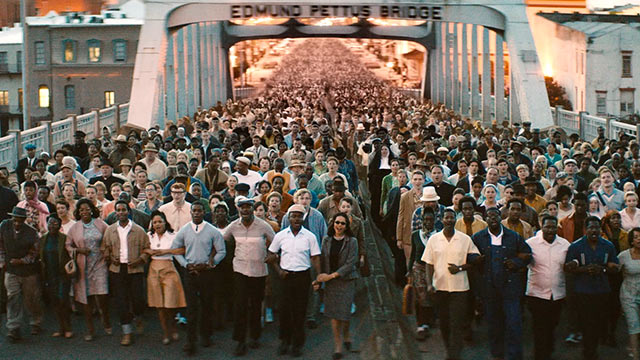
I had wanted to review Selma in February in honor of Black History Month, but as usual this year, I’m a little late. At least now I’m on track with the whole one-Blindspot-per-month schedule. As I expected when I chose it as a Blindspot, Selma turned out to be an ideal choice for Black History Month, covering an important period of the civil rights movement and offering a compelling portrayal of the man behind so much of it, Dr. Martin Luther King, Jr.

See the source image

David Oyelowo plays Dr. King, and I’m still shocked that he wasn’t even nominated for a Best Actor Oscar that year. It’s a career-defining performance that reminded me of Gary Oldman’s turn as Winston Churchill in Darkest Hour, in that it presented a great man and what made him great while depicting his low moments and acknowledging his imperfections. Oyelowo especially excels in the reenactments of King’s impassioned and eloquent speeches, and the supporting cast is equally stellar, from Carmen Ejogo as his long-suffering wife to Tom Wilkinson as a grudgingly helpful President Johnson. The whole ensemble contributes to an engagingly personal history lesson, from established actors like Tim Roth and Oprah to then-newcomers who have become more well-known in the years since, such as Lakeith Stanfield and Tessa Thompson.

My VC thought Selma had the slight feel of a TV movie, and some critics have nitpicked its historical accuracy, but more often than not, Selma felt to me like watching real, immediate history, which is the best compliment that can be offered to a historical drama. It presents uncomfortable truths tastefully, such as the doubts surrounding King’s potential adultery, and shows the horrors of hate and prejudice in ways that are powerful but not graphic. While King certainly preaches, the film doesn’t too much, letting its story develop its themes, such as non-violence; for example, King’s assertions that their efforts need to be noticed by white America are fulfilled when the Selma march is joined by white religious leaders and supporters from across the country, lending greater numbers and prominence to the event.

See the source image

I don’t know why it took so long for me to watch Selma, but I’m glad I did, even if I’m left annoyed that it didn’t get more Oscar love that year. (It did win Best Original Song for “Glory,” which ironically was the one thing I didn’t care for, not being a fan of rap.) The only criticism I have is that it might be hard to keep track of all the characters if you’re unfamiliar with the history. Nevertheless, this feels like an essential film for not just black history but American history. With its laudable lead performance and rousing conclusion, Selma deserves to be ranked among the greatest historical films.

Best line: (Dr. King) “Our lives are not fully lived if we’re not willing to die for those we love, for what we believe.”


Rank: List-Worthy


© 2019 S.G. Liput
608 Followers and Counting


2019 Blindspot Pick #1: Monty Python and the Holy Grail (1974)

27 Wednesday Feb 2019

Posted by sgliput in Blindspot, Movies, Poetry, Reviews, Writing

≈ Leave a comment

Tags

Classics, Comedy


See the source image

King Arthur and his band of knights
Were questing for the Holy Grail.
(We only know the big highlights
Or else ‘twould be a boring tale.)

Their names in legend often show,
Like Galahad and Lancelot,
Though some had names we’ll never know
Because they liked to dance a lot.

They fought with dragons, rabbits, lust,
And knights called green ere green was cool.
So yes, they quested, as discussed,
Don’t read it; watch the film, you fool!
_____________________

MPAA rating: PG (should definitely be PG-13)

Well, I’ve gotten 2019 off to a slow start as far as this blog. I’m already behind on my Blindspots, but it’s time to get started.

See the source image

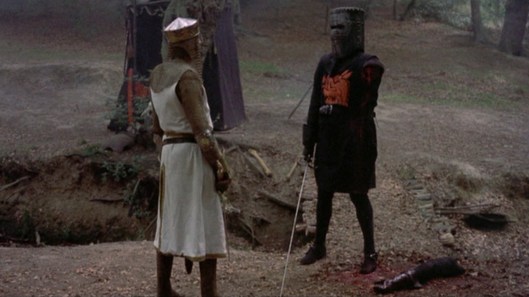
So why did I select Monty Python and the Holy Grail as a Blindspot pick this year? I thought it was about time that I see the source of lines like “It’s only a flesh wound,” which has creeped into the everyday speech of even those of us who haven’t seen this classic comedy. Honestly, there are so many well-known scenes from this irreverent British farce that I just wanted to see whatever connected them. (Note that the Killer Rabbit of Caerbannog made it onto my Top Twelve Rabbits in Movies even before I’d watched the full movie.) Plus, I came to realize, although I’ve seen the likes of John Cleese and Michael Palin, I’ve never seen the whole Monty Python troupe together as they are in their first film, each of them playing multiple varied roles.

While I was a little disappointed that there wasn’t much connective tissue between the individual memorable scenes apart from King Arthur’s quest for the Grail, there were plenty of chuckles to go around. Sometimes it was random meta moments like escaping from an animated creature because the animator keeled over or even more random gags that became funnier with repetition. Some of the jokes do go on too long, losing their humor in the process, but even this weakness often becomes another chance for the film to poke fun at itself. (“Get on with it!”) I also got to recognize moments that have been borrowed in other media, like the way the Knights’ Trojan Rabbit is heard being constructed in the woods.

See the source image

The hilarity wasn’t constant, but Monty Python and the Holy Grail certainly made me laugh with its rye British absurdity, even right from the start with the opening credits about moose and llamas. (It reminded me of the equally hilarious end credits of a weird little film called Roller Town. Seriously, why don’t more movies use their credits as part of the jokes?) The ending was a bit of a letdown, abrupt in a way that reminded me of An American Werewolf in London, but I can see why Holy Grail has become such a lauded and influential comedy, even if it’s not among my personal favorites. I did like those French insults, though, and will be looking for chances to use them myself. 😉

Best line:  (French soldier/heckler) “I don’t want to talk to you no more, you empty-headed animal food trough wiper! I fart in your general direction! Your mother was a hamster, and your father smelt of elderberries!”


Rank: List Runner-Up


© 2019 S.G. Liput
607 Followers and Counting


My 2019 Blindspot Picks

05 Tuesday Feb 2019

Posted by sgliput in Blindspot, Movies

≈ 4 Comments

Tags

Lists

Now that last year’s Blindspots have been wrapped up with a bow, it’s time to begin anew in the new year. (I was really hoping to post this a month ago, but better late than never.) I’ve really enjoyed this Blindspot series the last two years, finally exposing myself to some movies I’ve been meaning to see for far too long. I’m already behind for 2019, but once I catch up, I do hope I can keep to one per month and find some new favorites along the way. Thus, below are my 2019 Blindspot Picks:


Amadeus (1984)

See the source image


Best in Show
(2000)

See the source image


Dancer in the Dark (2000)

See the source image


How Green Was My Valley (1941)

See the source image


The Longest Day
(1962)

See the source image


Monty Python and the Holy Grail (1974)

See the source image


Mr. Nobody (2009)

See the source image


Royal Space Force: The Wings of Honneamise (1987)

See the source image


Run Lola Run (1998)

See the source image


Selma (2014)

See the source image


Twenty Bucks (1992)

See the source image


Vertigo (1958)

See the source image

← Older posts
Newer posts →

Recent Posts

  • We Didn’t Start 2025 (Recap)
  • NaPoWriMo 2025 Recap (Finally)
  • Sonic the Hedgehog 3 (2024)
  • It Happened One Night (1934)
  • Spellbound (2024)

Recent Comments

associatesofshellymann's avatarassociatesofshellyma… on My Top Twelve La La La So…
Kit's avatarKit Nichols on Bonnie and Clyde (1967)
lifelessons's avatarlifelessons on Look Back (2024)
Carol Jackson's avatarCarol Jackson on The Thief of Bagdad (1940…
Stephen's avatarStephen on Love Story (1970)

Archives

  • January 2026
  • December 2025
  • May 2025
  • April 2025
  • March 2025
  • February 2025
  • January 2025
  • December 2024
  • May 2024
  • April 2024
  • March 2024
  • February 2024
  • January 2024
  • December 2023
  • November 2023
  • October 2023
  • September 2023
  • July 2023
  • June 2023
  • May 2023
  • April 2023
  • March 2023
  • February 2023
  • January 2023
  • December 2022
  • November 2022
  • October 2022
  • September 2022
  • August 2022
  • July 2022
  • June 2022
  • May 2022
  • April 2022
  • March 2022
  • February 2022
  • January 2022
  • December 2021
  • November 2021
  • October 2021
  • September 2021
  • August 2021
  • July 2021
  • June 2021
  • May 2021
  • April 2021
  • March 2021
  • February 2021
  • January 2021
  • December 2020
  • November 2020
  • October 2020
  • September 2020
  • August 2020
  • July 2020
  • June 2020
  • May 2020
  • April 2020
  • March 2020
  • February 2020
  • January 2020
  • December 2019
  • November 2019
  • October 2019
  • September 2019
  • August 2019
  • July 2019
  • June 2019
  • May 2019
  • April 2019
  • March 2019
  • February 2019
  • January 2019
  • December 2018
  • November 2018
  • October 2018
  • September 2018
  • August 2018
  • July 2018
  • June 2018
  • May 2018
  • April 2018
  • March 2018
  • February 2018
  • January 2018
  • December 2017
  • November 2017
  • October 2017
  • September 2017
  • August 2017
  • July 2017
  • June 2017
  • May 2017
  • April 2017
  • March 2017
  • February 2017
  • January 2017
  • December 2016
  • November 2016
  • October 2016
  • September 2016
  • August 2016
  • July 2016
  • June 2016
  • May 2016
  • April 2016
  • March 2016
  • February 2016
  • January 2016
  • December 2015
  • November 2015
  • October 2015
  • September 2015
  • August 2015
  • July 2015
  • June 2015
  • May 2015
  • April 2015
  • March 2015
  • February 2015
  • January 2015
  • December 2014
  • November 2014
  • October 2014
  • September 2014
  • August 2014
  • July 2014
  • June 2014
  • May 2014
  • April 2014
  • March 2014
  • February 2014
  • January 2014
  • December 2013

Categories

  • Blindspot
  • Blogathon
  • Christian
  • Movies
  • Music
  • NaPoWriMo
  • Poetry
  • Reviews
  • TV
  • Writing

Meta

  • Create account
  • Log in
  • Entries feed
  • Comments feed
  • WordPress.com

Recent Posts

  • We Didn’t Start 2025 (Recap)
  • NaPoWriMo 2025 Recap (Finally)
  • Sonic the Hedgehog 3 (2024)
  • It Happened One Night (1934)
  • Spellbound (2024)

Recent Comments

associatesofshellymann's avatarassociatesofshellyma… on My Top Twelve La La La So…
Kit's avatarKit Nichols on Bonnie and Clyde (1967)
lifelessons's avatarlifelessons on Look Back (2024)
Carol Jackson's avatarCarol Jackson on The Thief of Bagdad (1940…
Stephen's avatarStephen on Love Story (1970)

Archives

  • January 2026
  • December 2025
  • May 2025
  • April 2025
  • March 2025
  • February 2025
  • January 2025
  • December 2024
  • May 2024
  • April 2024
  • March 2024
  • February 2024
  • January 2024
  • December 2023
  • November 2023
  • October 2023
  • September 2023
  • July 2023
  • June 2023
  • May 2023
  • April 2023
  • March 2023
  • February 2023
  • January 2023
  • December 2022
  • November 2022
  • October 2022
  • September 2022
  • August 2022
  • July 2022
  • June 2022
  • May 2022
  • April 2022
  • March 2022
  • February 2022
  • January 2022
  • December 2021
  • November 2021
  • October 2021
  • September 2021
  • August 2021
  • July 2021
  • June 2021
  • May 2021
  • April 2021
  • March 2021
  • February 2021
  • January 2021
  • December 2020
  • November 2020
  • October 2020
  • September 2020
  • August 2020
  • July 2020
  • June 2020
  • May 2020
  • April 2020
  • March 2020
  • February 2020
  • January 2020
  • December 2019
  • November 2019
  • October 2019
  • September 2019
  • August 2019
  • July 2019
  • June 2019
  • May 2019
  • April 2019
  • March 2019
  • February 2019
  • January 2019
  • December 2018
  • November 2018
  • October 2018
  • September 2018
  • August 2018
  • July 2018
  • June 2018
  • May 2018
  • April 2018
  • March 2018
  • February 2018
  • January 2018
  • December 2017
  • November 2017
  • October 2017
  • September 2017
  • August 2017
  • July 2017
  • June 2017
  • May 2017
  • April 2017
  • March 2017
  • February 2017
  • January 2017
  • December 2016
  • November 2016
  • October 2016
  • September 2016
  • August 2016
  • July 2016
  • June 2016
  • May 2016
  • April 2016
  • March 2016
  • February 2016
  • January 2016
  • December 2015
  • November 2015
  • October 2015
  • September 2015
  • August 2015
  • July 2015
  • June 2015
  • May 2015
  • April 2015
  • March 2015
  • February 2015
  • January 2015
  • December 2014
  • November 2014
  • October 2014
  • September 2014
  • August 2014
  • July 2014
  • June 2014
  • May 2014
  • April 2014
  • March 2014
  • February 2014
  • January 2014
  • December 2013

Categories

  • Blindspot
  • Blogathon
  • Christian
  • Movies
  • Music
  • NaPoWriMo
  • Poetry
  • Reviews
  • TV
  • Writing

Meta

  • Create account
  • Log in
  • Entries feed
  • Comments feed
  • WordPress.com

Blog at WordPress.com.

Is this your new site? Log in to activate admin features and dismiss this message
Log In
  • Subscribe Subscribed
    • Rhyme and Reason
    • Join 814 other subscribers
    • Already have a WordPress.com account? Log in now.
    • Rhyme and Reason
    • Subscribe Subscribed
    • Sign up
    • Log in
    • Report this content
    • View site in Reader
    • Manage subscriptions
    • Collapse this bar