• Home
  • About Me
  • The List
  • THE LIST (2016 Update)
  • THE LIST (2017 Update)
  • THE LIST (2018 Update)
  • THE LIST (2019 Update)
  • THE LIST (2020 Update)
  • THE LIST (2021 Update)
  • THE LIST (2022 Update)
  • Top Twelves and More
  • The End Credits Song Hall of Fame

Rhyme and Reason

~ Poetry Meets Film Reviews

Rhyme and Reason

Category Archives: Blindspot

2020 Blindspot Pick #6: Moulin Rouge! (2001)

27 Sunday Dec 2020

Posted by sgliput in Blindspot, Movies, Poetry, Reviews, Writing

≈ Leave a comment

Tags

Comedy, Drama, Musical, Romance

See the source image

They say not to judge a book by its cover:
A frontispiece hater could turn to a lover,
If only you got to the end.

You may still despise it a few chapters in,
But stopping too early is almost a sin,
For still you do not know the end.

You may get halfway and still loathe it intensely,
And yet sticking with it could pay off immensely,
If only you got to the end.

Not much more to go, but you’re tempted to quit?
That’s something that nobody wants to admit,
For still you do not know the end.

You finished! I see, and your hatred’s the same?
I thought you would like it, so that is a shame,
At least, though, you now know the end.
________________________

MPA rating:  PG-13 (for much sexual innuendo)

Oh, Baz Luhrmann, I don’t know what to make of you. I take pride in enjoying musicals, and I fully expected to like Moulin Rouge! if only for its status as a jukebox musical. I knew it incorporated more modern songs into its 1900 Parisian setting, so I was prepared for the requisite anachronisms. But my gosh, I haven’t watched a film that was this bipolar in tone since, well, Strictly Ballroom, also by Luhrmann.

See the source image

I remember Strictly Ballroom as a wholly unique experience. It started out as an obnoxious mockumentary that I was certain I disliked after the first few minutes, but then it just kept getting better, from the romance to the dancing, until it actually won me over by the end. Moulin Rouge! attempts to do the same thing but not nearly as well. The story follows the tragic love story of young poet Christian (Ewan McGregor), who is hastily initiated into a troupe of Bohemian artists and introduced to the lovely Satine (Nicole Kidman), starlet of the Moulin Rouge cabaret and desire of a jealous duke (Richard Roxburgh). That short plot description sounds normal enough, but the in-your-face style is utterly insufferable for the first thirty minutes, with rushed character introductions, sudden tone shifts, cartoonish sound effects, lowbrow humor, choppy editing, and hard-to-decipher dialogue during the musical numbers. My VC decided to stop watching entirely, and I considered it too, though my Blindspot obligation made me stick with it. I read that Luhrmann was trying to channel the tonal rollercoaster of a Bollywood film he had seen, but all his extravagance does is make it difficult to take anything seriously.

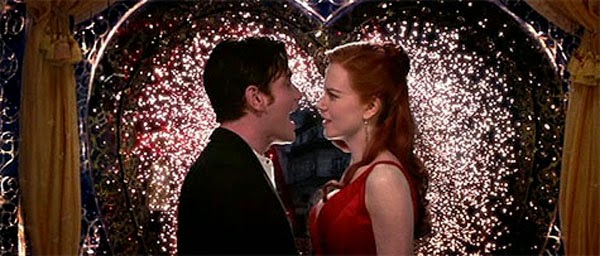
And then, slowly but surely, the romance element grows more intense and more serious, managing to achieve the intended epic tragedy of the star-crossed lovers. Despite partaking in a few of the puerile scenes that made me wonder how this movie snagged eight Oscar nominations, McGregor and Kidman are the film’s greatest strength, sporting palpable chemistry and decent musical chops. Their bravura medley of love-themed songs was the first clue that Moulin Rouge! might have more to offer than the beginning indicated.

Yet even if the core romance works well, so much else does not. The musical numbers and the choice of who sings them are a mixed bag and brought to mind the why-not(?) silliness of Mamma Mia! Just as I didn’t really need to hear Julie Walters sing “Take a Chance on Me,” I could have happily gone through life without hearing Jim Broadbent croon “Like a Virgin.” I admired the sheer number of recognizable songs used, but how they were deployed was often cringe-inducing. And even if the tone gets more serious over time, the film still indulges in occasional sound effects that undermine the pathos.

See the source image

Moulin Rouge! is a case where its substance is upstaged by its distracting style. Strictly Ballroom managed to even out its tone and become a serious feel-good romance, and I suppose that’s easier than transitioning from surreal comedy to heartbreaking tragedy. I am aware that some people are able to look past Moulin Rouge’s faults and enjoy its over-the-top stylings, such as the Oscar-winning art direction and costumes, and I’m glad they can. I’ll acknowledge it’s original and took a risk, but this is one style I can affirm is not for me.

Best line: (several characters, quoting the song “Nature Boy”) “The greatest thing you’ll ever learn is just to love and be loved in return.”

Rank:  Semi-Dishonorable Mention (a rarely used ranking to reflect my mixed feelings)

© 2020 S.G. Liput
708 Followers and Counting

2020 Blindspot Pick #5: Fargo (1996)

01 Tuesday Dec 2020

Posted by sgliput in Blindspot, Movies, Poetry, Reviews, Writing

≈ Leave a comment

Tags

Drama, Thriller

See the source image

Now sit right on down on a carpet or quilt
And lend me an ear for a minute.
I’ve got here a story of greed and of guilt,
And there’s death and dishonesty in it.

You may have heard tell of some murders up north
Around Brainerd not far from the border.
It started with three deaths (or was there a fourth?);
Regardless, it shocked the reporter.

It didn’t take long for the local police
To kick off the investigation,
And boy, what a puzzle! They gathered each piece
With no lack of luck and frustration.

Turns out the two culprits behind it were wicked,
But there was a right normal guy
Who stuck his nose right where you don’t want to stick it
And hired those two on the sly.

It came down to money to finance the lie
That set off the kidnapping fraud,
Which led to the murder when things went awry,
For even the best plans are flawed.

It’s hard to imagine some schmo you might know
Doing something to cause homicide.
It just goes to show how lies snowball and grow,
And you don’t know what folks have to hide.
________________________

MPA rating:  R

Back now to the ol’ Blindspot list, which I’ll unfortunately be hard-pressed to finish before the end of the year. Perhaps this opinion is just based on ignorance, but 1996 has always struck me as a weak year for cinema with few must-see award-worthy films. Yet Fargo has some ardent fans, even spawning a spin-off TV series nearly twenty years later, so I felt impelled to see what the fuss was about. The Coen brothers are an acquired taste, but their uniquely dark humor distinguishes this tale of fraud and murder from what could have been pedestrian.

See the source image

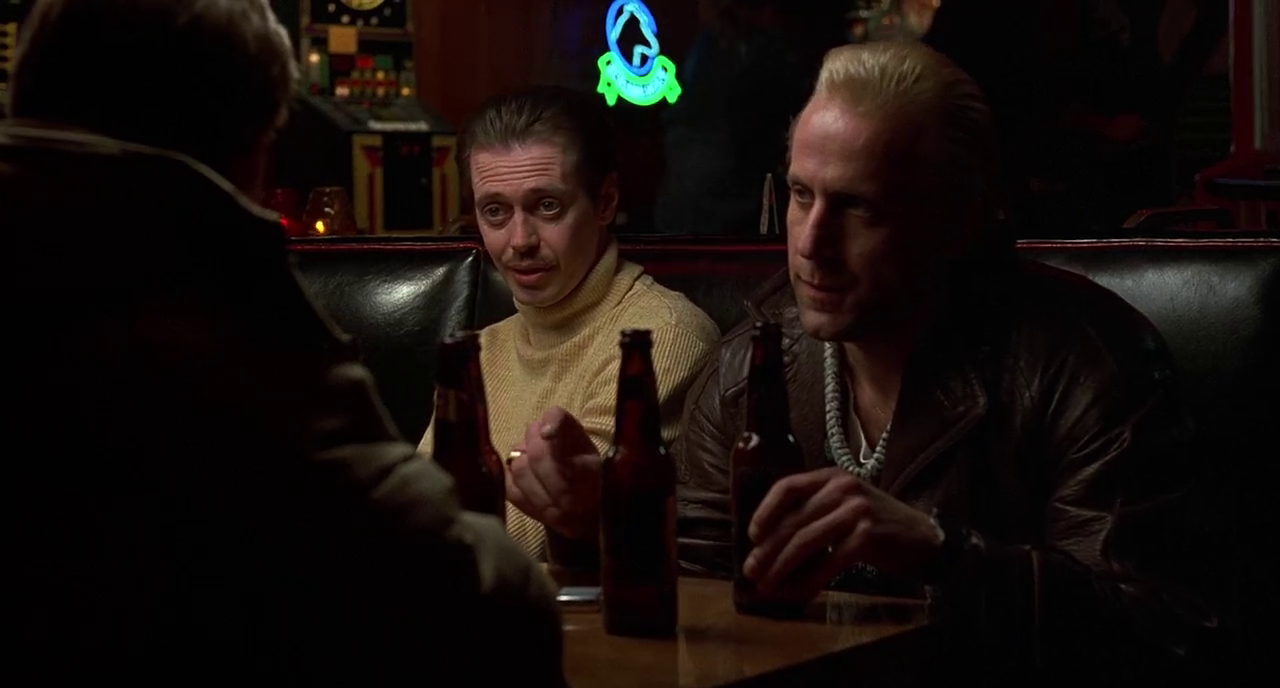
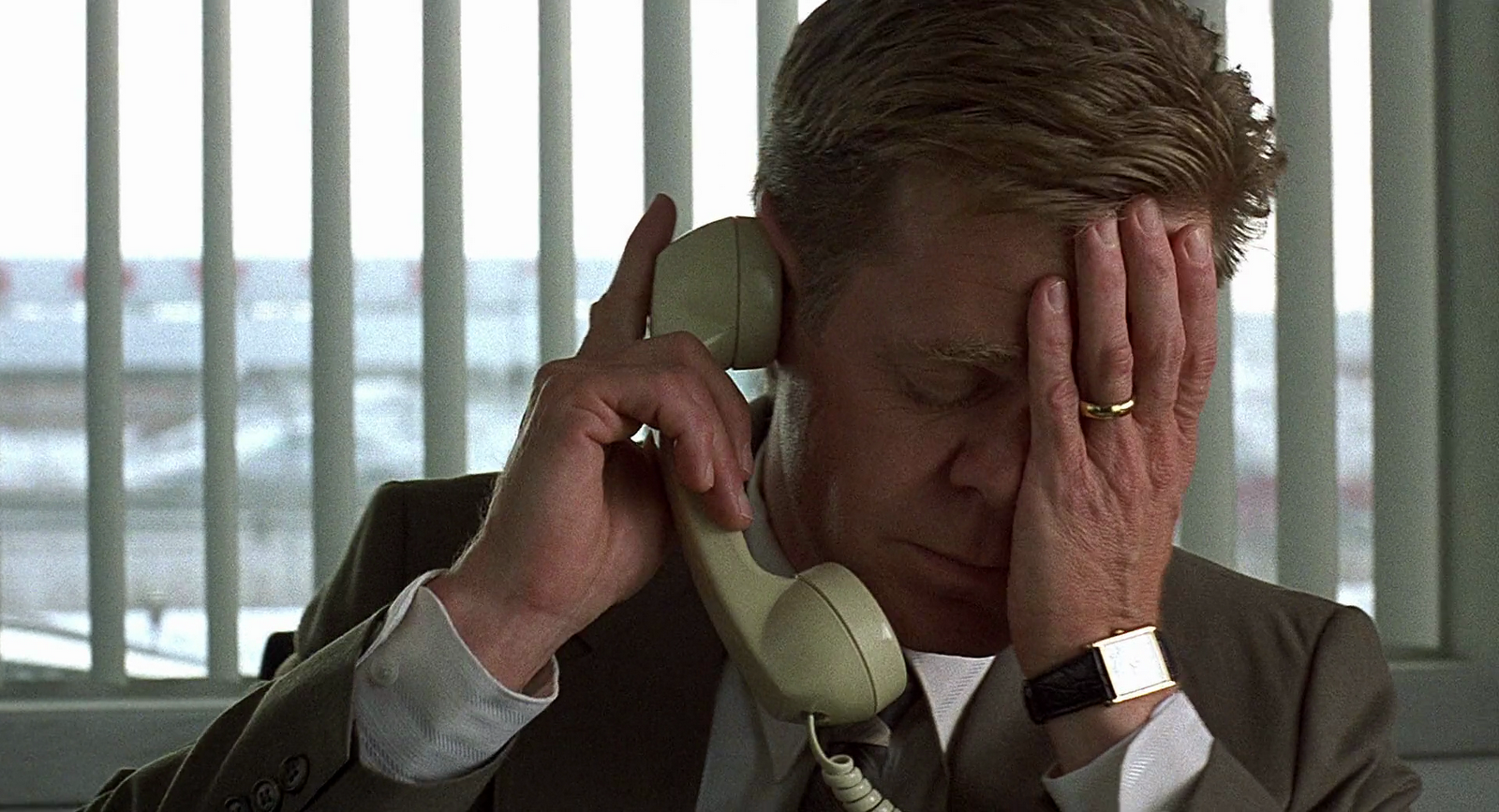
All I knew about Fargo going in was the famous Midwestern accents (“Don’tcha know”) and that scene of Frances McDormand standing next to a car wreck in the snow. I was sort of expecting a mystery and was surprised then to see the crime start from the very beginning, with Jerry Lundegaard (William H. Macy) meeting two mercenaries (Steve Buscemi, Peter Stormare) in a dive bar in Fargo, North Dakota, to arrange for the fake kidnapping of his wife, with the expected ransom set to pay off all involved. It took longer than expected for McDormand’s Marge Gunderson to arrive on the scene, following the clues that the naïve Jerry and ruthless hitmen leave in their wake. Watching everything unfold was like observing one of those true crime stories in action, knowing whodunnit but awaiting the culprits to meet their comeuppance as they dig their graves deeper.

In a way, my opinion of Fargo is an odd mix of appreciation and overhype. It’s not a film that I automatically love or would want to immediately include in the National Film Registry (which it was only ten years after its release), yet I’ll admit there’s something intriguing about the way the story plays out. For example, I hate profanity as a rule and rarely think it adds anything to a movie, but in Fargo’s case, there’s a clear contrast in how only the hitmen and their ilk cuss while Marge and the other law-abiding Minnesotans are content with “for Pete’s sake” and “aw, jeez” and a surfeit of “yah”s. Jerry’s thin veneer of good-natured smarminess is gradually peeled back as he realizes how deep in over his head he is, even as the folksy mannerisms of him and Marge give the proceedings a wry sense of humor.

See the source image

Despite her late introduction, McDormand is certainly the star and deserved her Best Actress Oscar, imbuing her pregnant policewoman with all the levelheaded practicality needed to ground the film and provide the audience someone to root for. The Coens’ Oscar-winning screenplay also stands out, though there were several unresolved tangents that could have been better explained, such as the lack of explanation for Jerry’s need for money or the inclusion of an old classmate of Marge’s who adds nothing to the main story. Plus, isn’t it odd that the film is called Fargo when only the very first scene actually happens in North Dakota? My VC and I were dreading the “wood chipper scene” we’d heard about, thinking it would be overly gruesome, but it honestly could have been worse. (Maybe I’ve just been desensitized by Criminal Minds.) I’m slowly working my way through the Coens’ eccentric filmography, so I’m glad to add Fargo to my watched list. It uses small-town quirk to its advantage to make a shocking murder story into something more distinctive, an exemplar of the saying “Oh, what a tangled web we weave when first we practice to deceive.”

Best line: (Marge, kneeling at the crime scene) “Oh, I just think I’m gonna barf…” [standing up again after a moment] “Well, that passed. Now I’m hungry again.”

Rank:  List Runner-Up

© 2020 S.G. Liput
703 Followers and Counting!

2020 Blindspot Pick #4: Pom Poko (1994)

05 Monday Oct 2020

Posted by sgliput in Blindspot, Movies, Poetry, Reviews, Writing

≈ 1 Comment

Tags

Animation, Anime, Comedy, Drama, Fantasy

See the source image

Nature weeps “Farewell”
As mankind bids it “Hello.”
Neither understands.
_____________________

Some may look at the fact that I’m only reviewing #4 of my list of 12 Blindspots for the year in October as a sign of being way behind and perhaps despair because of it. I prefer to think, “Wow, I’ll have such a great sprint of good movies around the holidays!” Either way, I’m finally returning to my Blindspot series with Studio Ghibli’s Pom Poko.

See the source image

I’m very fond of the majority of the studio’s work, including the heartrending Grave of the Fireflies from the same director, but Pom Poko has never gotten much of a spotlight. Even in montages of various Ghibli movies, Pom Poko is pretty much relegated to one notable scene: a comical battle between two warring tribes of tanuki (Japanese raccoon dogs), which happens to be one of the very first scenes in the film. The rest of the movie was a mystery to me, so I was quite curious to see the rest of the story. Now that I have, I can see why it’s counted among the B-list of Ghibli classics, with the studio’s trademark charm and weirdness being overextended by length and repetition.

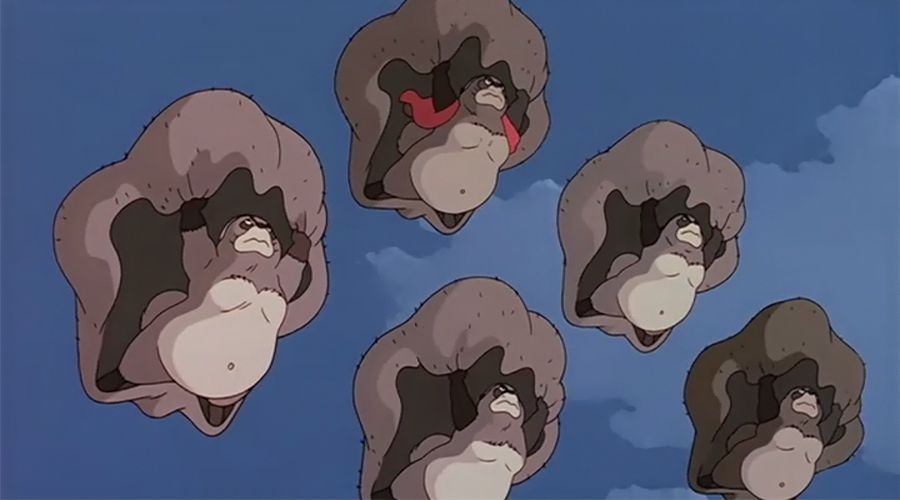
From the humorous battle scene on, the film often plays like a mythological nature documentary, explaining the many eccentricities of tanuki pulled straight from Japanese legend: their mischievous antics, shapeshifting abilities, penchant for parties, belly drumming, and…um, their prominent testicles. Yeah, more than anything else, that last point is probably why Pom Poko never hit it off in America. Folk tales tell of the many uses tanuki have for their shapeshifting male parts, and the movie runs with that (the English dub using the euphemistic “raccoon pouch”) as they’re shown expanding their “pouches” into parachutes and weapons. Just writing this feels bizarre, but hey, myths can be weird, especially considering raccoon dogs are a real species.

See the source image

As with many other Ghibli films, the story is an environmentalist fable, detailing the loss of the tanuki’s forest habitat as man and technology encroach further and further. (I find it interesting that the comic strip Over the Hedge debuted just a year after this film with a similar basic premise.) Much of the movie is spent with the creatures attempting to fight back, leading to some highly entertaining sections where they use their supernatural abilities to scare the unsuspecting humans away. However, from the moment they realize mankind’s threat to the point of no return, there are far too many scenes of the leaders debating their strategy, weighing their options, and trying the same things repeatedly. At nearly two hours, I felt like the film could have easily shed a half hour with little loss.

Director Isao Takahata, Miyazaki’s compatriot in heading the studio’s early releases, won my heart with Grave of the Fireflies, but nothing quite compares with that tragic masterpiece. Pom Poko is at least a visual treat, and the character animation swings wildly in depicting the tanuki as realistic animals, anthropomorphic bipeds, or cartoony caricatures, depending on the mood of the scene. The English dub (which Americanizes the tanuki as just “raccoons”) also boasts a talented voice cast, including Jonathan Taylor Thomas, Clancy Brown, Maurice LaMarche, Tress MacNeille, and J.K. Simmons.

See the source image

Aside from Spirited Away, Pom Poko might be the Ghibli film most wedded to Japanese culture; one extended scene has a master tanuki conjuring a horde of illusory yokai (Japanese spirits) to scare the humans, referencing stories that are no doubt far more familiar to Japanese audiences than Western ones. Plus, despite its cartoonish aspects, its themes and a few story elements are geared for somewhat older audiences compared to the more kid-friendly Ghibli options. Pom Poko is weird, overlong, creative, frequently delightful, wacky, and even bittersweet by the ending. It’s not likely to become a favorite, but I’m glad to have seen another entry from a legendary studio.

Best line: (Narrator, with a line you’ll never find in any other film) “They used their balls as weapons in a brave kamikaze attack.”

Rank:  Honorable Mention

© 2020 S.G. Liput
701 Followers and Counting!

2020 Blindspot Pick #3: Annie Hall (1977)

15 Monday Jun 2020

Posted by sgliput in Blindspot, Movies, Poetry, Reviews, Writing

≈ Leave a comment

Tags

Comedy, Drama, Romance

See the source image

Love is hard to pin down –
What it is, where it’s from,
Why it makes you a clown
Or remarkably dumb,
Why it strokes you one minute with gentle caress
And pounds you the next with a cold callousness,
Why it fills you with joy at a memory made
That turns bittersweet as the joyful times fade,
Why it brings you to tears
At the thought of a laugh,
Why the grain is so worth
The abundance of chaff.
No, I can’t explain it, doubt anyone could.
You’ll know when you feel it, the bad and the good.
________________________

MPA rating: PG (should be PG-13 nowadays)

Have you ever watched a movie that you can appreciate for everything it does well but still just not connect with it? That was my reaction to Annie Hall. This Best Picture-winning rom com is among Woody Allen’s most iconic films, and I can see why. From innovative storytelling to an insightful script, it deserved acclaim, but I can only offer it so much.

Allen himself plays Alvy Singer, a neurotic Jewish comedian, who after a couple failed marriages, falls for the offbeat beauty Annie Hall (Diane Keaton), with whom he shares a rollercoaster of a romance. The longer I watched Annie Hall, the more a thought continued to grow in my mind: “This is just like (500) Days of Summer!” Sure, Alvy has little in common with Joseph Gordon-Levitt’s character in that much later film, but there were so many parallels: the non-linear storyline, the quirky girlfriend, the occasional use of split-screen, the digressions with unconventional styles (an animated sidebar here vs the musical number in the other), the ultimate depression as a once happy romance peters out. The 2009 film is practically a remake, though not exactly, sort of how I felt about the plot similarities between Hidden and A Quiet Place.

See the source image

Annie Hall has so many creative choices that just feel unique and revolutionary even, such as Alvy repeatedly breaking the fourth wall, the visual representation of how a lover feels distant, characters’ inner thoughts being shown as subtitles to contrast with what they’re saying, or his discussions with random people on the street as if they were parts of his subconscious. And then there were the plethora of cameos, from Paul Simon and Carol Kane in larger roles to Christopher Walken used for a one-off gag, not to mention certain stars who had yet to become famous, like Jeff Goldblum, John Glover, and Sigourney Weaver.

And yet, for all those strengths that I enjoyed, I was left feeling oddly cold. For the film being considered the 4th greatest comedy by AFI, I recall a chuckle here and there but no big laughs; it was full of lines where I didn’t laugh but instead thought, “That’s humorous,” which doesn’t seem like what a comedy should do. Perhaps it was the presence of Woody Allen himself. His overly neurotic Alvy, obsessed with death and Jewish discrimination, is quite a character, but I couldn’t stand to be around someone like him in real life. Plus, there’s the mental baggage of the real-life Allen and the scandalous allegations surrounding him. My VC says he makes her skin crawl and didn’t enjoy the film because of him; the only film with him she rather liked was The Curse of the Jade Scorpion, in which he’s constantly disparaged.

See the source image

So, I guess I can count Annie Hall with so many other classics that just didn’t quite live up to expectations, right alongside the likes of The Third Man and The Philadelphia Story. I can appreciate it for its groundbreaking eccentricities, but when I consider that it won Best Picture over Star Wars, I just have to shake my head. Considering all the things I liked in Annie Hall, I just thought I would like the whole package more.

Best line: (Alvy Singer’s Therapist) “How often do you sleep together?”
(Annie Hall’s Therapist) “Do you have sex often?”
(Alvy, lamenting) “Hardly ever. Maybe three times a week.”
(Annie, annoyed) “Constantly. I’d say three times a week.”


Rank: Honorable Mention


© 2020 S.G. Liput
692 Followers and Counting


2020 Blindspot Pick #2: Double Indemnity (1944)

01 Monday Jun 2020

Posted by sgliput in Blindspot, Movies, Poetry, Reviews, Writing

≈ 1 Comment

Tags

Classics, Drama, Romance, Thriller

See the source image

A murderer for money never thinks that he or she
Will be found out like all the rest who murdered foolishly.
“Those others never thought it through; they never planned it out;
They just weren’t careful to remove the slightest shred of doubt.
They acted on an impulse, failed to hide the fatal flaw,
But we would know exactly how to circumvent the law.
We’re smarter, right? More clever, right? When one of us commits,
No justice could contend in this, the coldest war of wits.”

Deep down within the killer’s mind, unconsciously or not,
They soothe themselves with thoughts like these to justify their plot.
And always they delude themselves, for justice, soon or late,
Will find out every criminal and lead them to their fate.
________________________

Rating: Passed/Approved (an easy PG)

Darn, I did not expect to post only one review in the whole month of May, but college is as college does. Nevertheless, I’m back to continue my long-delayed Blindspot series. (Now I’m only four behind this year!) I’ve heard of Double Indemnity for years, noticing its high placement on lists by AFI and other film organizations, yet I never really knew what the name even meant, not being versed in insurance terminology. As it turns out, I’ve seen versions of this plot plenty of times on true crime shows, but this influential film noir treatment brought it to a national audience way back in 1944.

See the source image

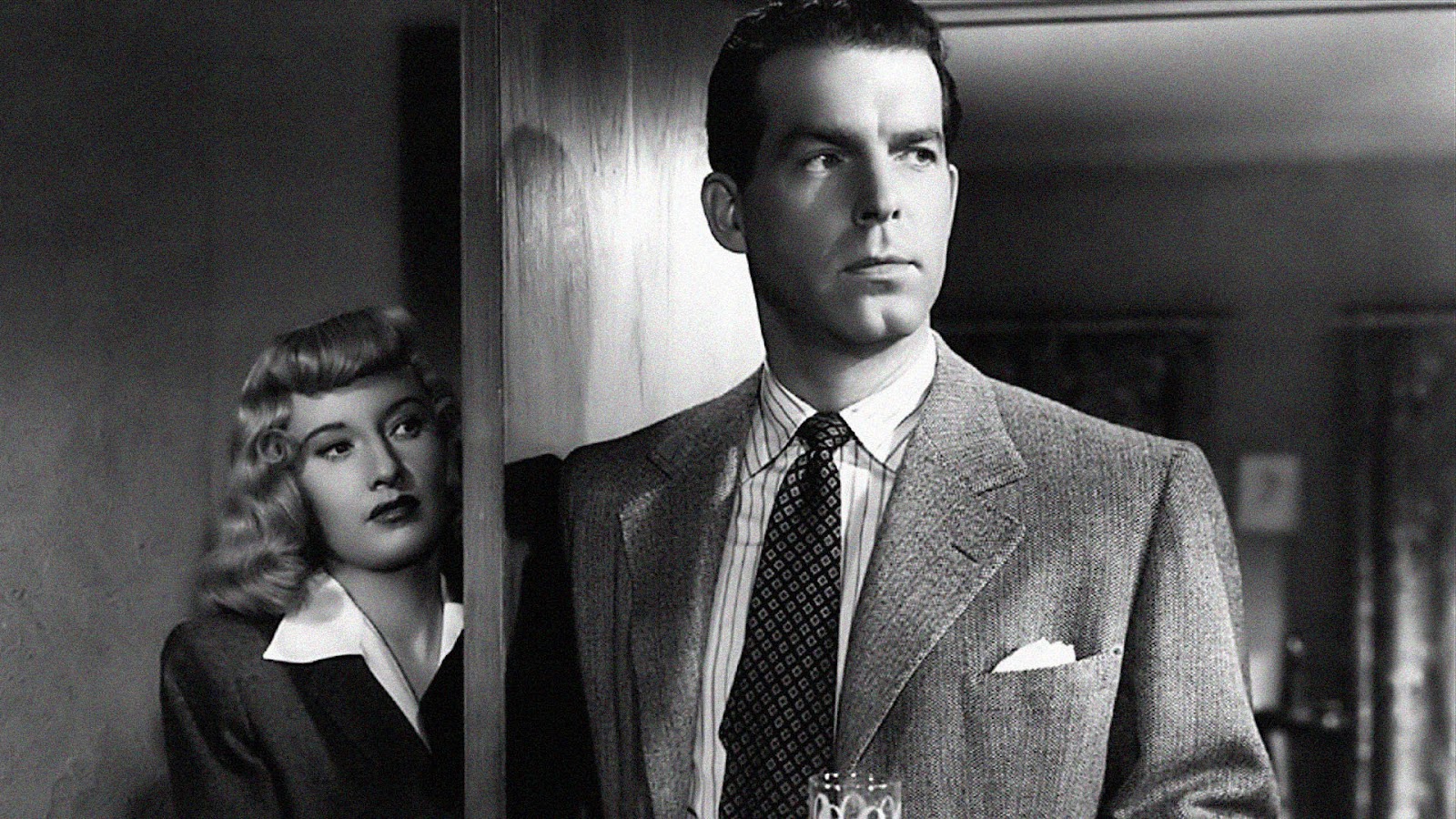
Based on a James M. Cain novella, the script for Double Indemnity was the result of a tenuous collaboration between director Billy Wilder and famed detective novelist Raymond Chandler. As such, it utilizes a clever tool for narration; right from the beginning, insurance salesman Walter Neff (Fred McMurray) admits into a dictaphone his role in the death of a man named Dietrichson, beginning an extended flashback of his plot. After meeting the man’s alluring wife Phyllis Dietrichson (Barbara Stanwyck), Neff allows her to talk him into a murder conspiracy to get rid of her distant husband and collect on some ill-gotten life insurance, with Neff using his insurance experience to sweeten the pot with a double indemnity clause (which doubles the payment in the case of certain unlikely causes of death, such as a train accident). Yet, their “perfect crime” slowly unravels as Neff’s boss (Edward G. Robinson) becomes more and more suspicious during the investigation.

I haven’t seen many films of the film noir genre, but Double Indemnity certainly fits the bill with its shadowy angles and conspiratorial tension and indeed predates the widespread use of the term by a couple years. Plus, Barbara Stanwyck is a quintessential femme fatale figure, manipulating McMurray’s everyman character into taking charge of the plot she initiates. The film was apparently controversial for its portrayal of murder, which is tame by today’s standards, but the characters’ growing anxiety after the deed is done translates well to the audience. As Neff is forced to “assist” Robinson’s skeptical insurance man in following a trail that leads back to him, I happened to think of other similar plots that must have taken some inspiration from this one, such as 1987’s No Way Out.

See the source image

Double Indemnity is a Grade-A film noir, but I can’t say it’s a new favorite since film noir is far from my favorite genre. Neff and Stanwyck do a fine job as the conspirators, but their cynically flowery dialogue, sometimes clever, is also sometimes a bit much, carrying on metaphors in ways people just don’t talk, though that’s mainly at the beginning. Robinson, though, is in top form here, stealing his scenes with a vocal panache that can’t be taught. I don’t always have to love a film to recognize it as a classic, and Double Indemnity is, another cinematic testament to the lesson “crime does not pay.”

Best line: (Neff) “Do I laugh now, or wait till it gets funny?”


Rank: List Runner-Up


© 2020 S.G. Liput
689 Followers and Counting

2020 Blindspot Pick #1: What a Way to Go! (1964)

20 Monday Apr 2020

Posted by sgliput in Blindspot, Movies, NaPoWriMo, Poetry, Reviews, Writing

≈ Leave a comment

Tags

Classics, Comedy, Musical, Romance

See the source image

(Today’s NaPoWriMo prompt was to write about a homemade gift, so I merged one I’ve given myself with the set-up of a classic ‘60s film.)

I asked a rich woman what she valued most
Of all the excess she possessed.
She told me of gems from the Ivory Coast,
But they were not what she loved best.

Her multiple husbands had filled her accounts
And heaped her with riches obscene.
But Fabergé eggs and saffron by the ounce
No longer enticed such a queen.

The canvas and carvings of classical pros,
Which every museum would covet,
Served only to gild both the lily and rose,
For only one thing made her love it.

A small piece of paper with “I Heart You” on it
From when her first love was dirt poor.
It quite overshadowed a jewel or a sonnet,
For less with nostalgia is more.
__________________________

MPA rating: Approved (due to some steamy romantic scenes, I’d say it straddles the line between PG and PG-13)

It’s a shameful embarrassment that it’s taken four months for me to finally review the first of my Blindspot picks. Life and work and a certain virus have just delayed my access to actually watching any of the twelve movies I selected at the beginning of the year, but here at last I have begun my catch-up. Before I chose my picks, my mom told me that 1964’s What a Way to Go was one of my late dad’s favorite movies, which surprised me because I never saw it with him or heard him talk about it. But he introduced it to her, and now she’s done the same for me.

See the source image

Black comedies are a difficult balance of two contrasting genres, so what would such a balance look like in the comparative innocence of a 1964 film? What a Way to Go! is the answer. Shirley MacLaine plays a young widow trying to get rid of her vast amounts of wealth, her inheritance from multiple dead husbands, and after a psychiatrist (Bob Cummings) thinks she’s crazy, she recounts the varied tales of how she accidentally led her lovers to both wild success and early graves.

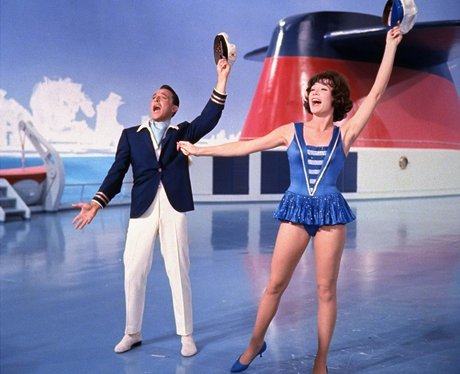
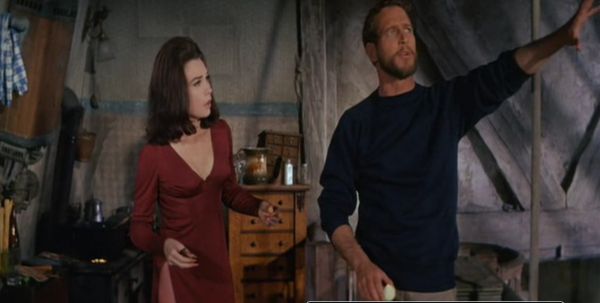
The best thing about What a Way to Go! is its cast: Dean Martin as a snooty playboy, Dick Van Dyke as an everyman-turned-busybody, Robert Mitchum as a suave millionaire, Gene Kelly as a talented performer, and Paul Newman (as I’ve never seen him before) playing a gruff expatriate. Some of the roles are tailor-made for the actor, such as Gene Kelly’s presence allowing for a song-and-dance number, while others seem designed to make them play against type. It seemed odd seeing Shirley MacLaine so young and attractive when I’ve mainly seen her as a grumpy older lady in Terms of Endearment or Steel Magnolias, but she does a great job as the unluckily lucky widow, even holding her own alongside Gene Kelly when dancing.See the source imageMost of the goings-on are fairly silly, with the husbands’ unusual (non-graphic) deaths earning more laughs than grief, including a gag that’s crept up elsewhere about trying to milk a male cow. I especially liked how each marriage is compared with a different film genre, launching into a series of vignettes recalling silent comedies, foreign art films, musicals, or posh dramas with ridiculously extravagant costumes from the great Edith Head. All in all, What a Way to Go! was a delightful bit of lightweight absurdity, finding hilarity in repeated tragedy and managing to land a happy ending. It certainly looked like everyone involved had fun making it, as I did watching it.

Best lines: (announcer) “Tonight, in ‘Flaming Lips,’ Pinky Benson proved that a comedy can run five and a half hours. Earlier today, Pinky told us his next film will run seven and a half hours.”

and

(Larry Flint/Paul Newman) “Money corrupts. Art erupts.”


Rank: List Runner-Up


© 2020 S.G. Liput
680 Followers and Counting


My 2020 Blindspot Picks

12 Sunday Jan 2020

Posted by sgliput in Blindspot, Movies

≈ 1 Comment

Tags

Lists

Another year, another Blindspot series! Once again, I tried to find a balance between movies that I’ve been meaning to see and a mixture of years, genres, and critical acclaim. Comedies are the most represented genre, but there’s also a musical, a film noir, an anime, a foreign zombie film, and a heavy sci-fi. I can’t wait to see what I think of these films as I watch and review one a month, but here’s hoping 2020’s Blindspots will be the best group yet!

And, in alphabetical order, the movies are:

Annie Hall (1977)

See the source image

Double Indemnity (1944)

See the source image

Fargo (1996)

See the source image

The Grand Budapest Hotel (2013)

See the source image

Heathers (1988)

See the source image

Make Way for Tomorrow (1937)

See the source image

Moulin Rouge! (2001)

See the source image

One Cut of the Dead (2017)

See the source image

Pom Poko (1994)

See the source image

Primer (2004)

See the source image

Short Cuts (1993)

See the source image

What a Way to Go (1964)

See the source image

What do you think of this selection? Is anyone else tackling their own Blindspot series? Feel free to let me know in the comments!

2019 Blindspot Pick #12: Twenty Bucks (1993)

27 Friday Dec 2019

Posted by sgliput in Blindspot, Movies, Poetry, Reviews, Writing

≈ 1 Comment

Tags

Drama, Meet 'em and Move on

See the source image

The money that rolls from the printers of mints
Is not unlike people who leave fingerprints.
Each purchase takes part in a life barely known;
Each bill changing hands is a seed that is sown,
And what will grow from it, for good or for ill,
Depends on the spender, as always it will.
_____________________

MPAA rating: R (for language and an extended scene of nudity)

Despite repeatedly falling behind on my Blindspot list this year, I am officially caught up and finishing right on time! I don’t know how Twenty Bucks ended up being the last movie to watch, since I’ve had a curiosity about it for some time. As many of you might know, I’m quite partial to what I call Meet-‘Em-And-Move-On films, where we follow one person as others float in and out of their life (think Forrest Gump and Mr. Holland’s Opus). Twenty Bucks is exactly that kind of movie I so enjoy, with the difference of following an object, a $20 bill that is passed around through various people’s stories.

See the source image

There is no one main plot, but certain individuals matter more than others based on time spent with them and whether they pop up again later, including Brendan Fraser as an engaged man with poor judgment, Elizabeth Shue as an aspiring writer, Linda Hunt as a homeless lady desperate for a lotto ticket, and Christopher Lloyd and Steve Buscemi as a pair of small-time convenience store crooks. There’s a fun sense of chance, irony, and serendipity as the bill changes hands and incurs increasing damage from the surprisingly large and recognizable ensemble, which also includes Gladys Knight, William H. Macy, Matt Frewer, and David Schwimmer, all of whom do well with their limited screen time, especially Lloyd as a cool and professional criminal.

I must admit that, when it was over, I wasn’t instantly in love with Twenty Bucks. The circuitous plot and some characters’ strange decisions kept me appreciating the film at a distance, which wasn’t helped by an explicit and far too long nude scene. Given a couple days’ retrospect, though, my regard for the film has grown. At times, it wasn’t always clear how the stories would intersect or how the $20 bill would connect them, but that only served to hold my interest, and some of the connections weren’t made clear to me until the credits rolled. My natural appreciation for the genre has strengthened my fondness for this particular entry, and I liked how each story served as an example of what money could mean to different people: something to ruin relationships, something to threaten or kill for, something to pass on to your children, something to pin all your hopes and dreams on, and so forth.

See the source image

As described in a behind-the-scenes featurette I saw, the screenplay for Twenty Bucks apparently originated from writer Leslie Bohem’s father, who penned a version of it back in 1935, and this film was an effort to resurrect this kind of follow-the-object movie that had been popular back then. (I’ll have to check out some of those ‘30s films that I’d never heard about before.) It does make me wonder what this movie might have looked like if it were filmed at that time, minus the objectionable elements, but Twenty Bucks still proved to be a largely enjoyable incarnation of my favorite sub-genre and a good cap-off to this year’s Blindspot selections. It doesn’t match The Red Violin, which is still my favorite follow-the-object film I’ve seen, but it makes me wish more such movies would be made.


Rank: List Runner-Up


© 2019 S.G. Liput
656 Followers and Counting


2019 Blindspot Pick #11: Run Lola Run (1998)

01 Sunday Dec 2019

Posted by sgliput in Blindspot, Movies, Poetry, Reviews, Writing

≈ Leave a comment

Tags

Drama, Thriller

See the source image

(Best sung to “Lola” by The Kinks)

I’m not the world’s most observant guy,
So I lost a lot of money, and I’m gonna die,
But for Lola, Lo-lo-lo-lo-lola.

She ran across town to fix my mistake,
Since I dropped about a hundred thousand, give or take,
Lots o’ moolah, moo-moo-moo-moo-moolah.

Only twenty minutes left to recover it,
So we might have had a better chance surviving spit
With ebola, bo-bo-bo-bo-bola.

Luckily for me, she can run really fast,
And possibly replay what happened in the past,
That’s my Lola, Lo-lo-lo-lo-lola.

And if I get to live to see another dawn,
I’ll let her handle all the money from now on,
Good ol’ Lola, Lo-lo-lo-lo-lola!
_______________________

MPAA rating: R (mainly for language in the subtitles, other content is more PG-13)

I didn’t realize when I chose both Mr. Nobody and Run Lola Run as Blindspots this year that they would end up having so much thematic similarity. And they’re both German, the former an English-language co-production while this film is actually in German. Both have to do with how people’s choices can result in vastly different outcomes, which are presented in an impartial, what-if manner. Yet, whereas Mr. Nobody explored huge, cosmic potential across a lifetime, Run Lola Run deals with a crucial twenty-minute window in the lives of red-haired Lola and her boyfriend.

See the source image

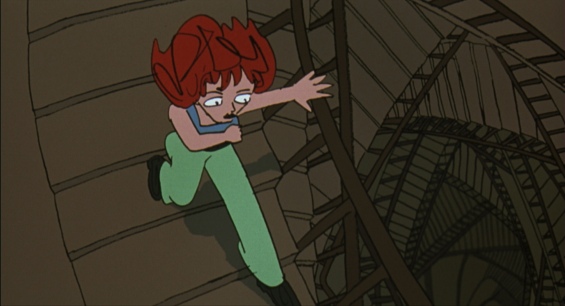
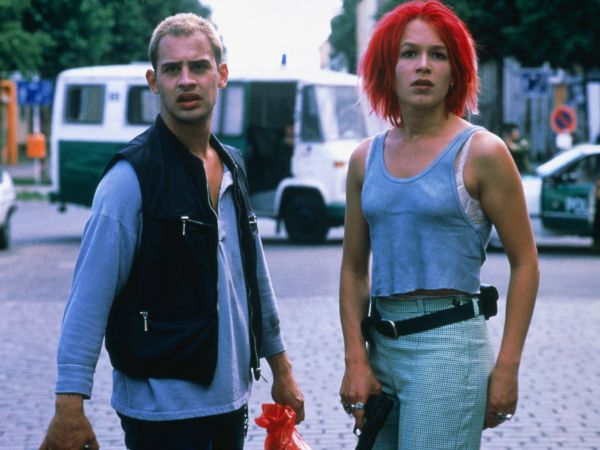
At the most basic level, the events of Run Lola Run (or Lola Rennt in German) are fairly straightforward: Boyfriend Manni (Moritz Bleibtreu) loses 100,000 marks earned from a drug deal and is a goner if he and Lola (Franka Potente) can’t deliver the money within twenty minutes. Yet, as evidenced from the imaginatively animated opening credits sequence, this isn’t your ordinary thriller. While Lola’s running is a constant across each of the three timelines presented, the events play out with vast differences, sometimes based on something as small as distracting a driver at just the right moment. Whether it’s robbing a store or begging Lola’s banker father (Herbert Knaup) for the money, their efforts rarely work out as planned, but it’s as if fate is driving the story at times, allowing the interaction of side characters to determine how everything will play out.

I usually love this kind of butterfly-effect conceit, and I enjoyed Run Lola Run for that aspect, but it felt like something was missing for me. It might be that I didn’t really have a reason to care about the characters except for their desperate circumstances. The plot’s divergences don’t really explain themselves either; each time events start over, there’s some existential pillow talk between Lola and Manni that lets things momentarily slow down, and then it all begins again. In addition, Lola frequently passes people, and a series of still images shows either their past or future. That’s the thing, though; I didn’t know for sure, and it wasn’t clear what changed for that person between the timelines to get such different outcomes.

See the source image

Such complaints are probably no big deal for people who like to ponder a film’s deeper meaning, but Run Lola Run works better as an inventive thriller than a philosophical treatise and would have benefited from more clarity, like why Lola kept breaking glass with her screams. The finer points aside, though, this film was still a fun ride, and, with its riffing on fate vs. individual choice, I can see why director Tom Tykwer was drawn to co-direct Cloud Atlas fourteen years later. The later film had far more to say and a wider scope to say it, but Run Lola Run felt like an indie step toward bigger things.

Best line: (unseen narrator at the beginning) “Man… probably the most mysterious species on our planet. A mystery of unanswered questions. Who are we? Where do we come from? Where are we going? How do we know what we think we know? Why do we believe anything at all? Countless questions in search of an answer… an answer that will give rise to a new question… and the next answer will give rise to the next question and so on. But, in the end, isn’t it always the same question? And always the same answer?”

(I still don’t know the question, but, as we all know, the answer is 42… of course.)


Rank: List Runner-Up


© 2019 S.G. Liput
654 Followers and Counting


2019 Blindspot Pick #10: Mr. Nobody (2009)

17 Sunday Nov 2019

Posted by sgliput in Blindspot, Movies, Poetry, Reviews, Writing

≈ 2 Comments

Tags

Drama, Romance, Sci-fi

See the source image

This poem is a couplet, a two-liner rhyme,
For readers and poets who haven’t much time.

Or rather it could have been, if I’d decided,
But maybe I’ll make it a villanelle instead.
Which bears repetition by which it is guided.

You ask who would make such a change? Answer: I did.
So this is a villanelle now, as you’ve read,
Or rather it could have been, if I’d decided.

Let’s not be verbose.
A haiku might be better
To save syllables.

But then again, a sonnet I’d allow.
For fourteen lines in length would be provided
If only I would end this poem right now.

So what kind of poem was this one?
All four that I’ve named, or else none?
You can only decide
Once you’ve finished and tried
Looking backward when all’s said and done.
________________________

MPAA rating: R (mostly for sensuality and 2 F-words, seemed closer to a PG-13)

Well, this movie was a trip. I’ve been curious about Mr. Nobody for a while now, based on what I’d read about its unusual nonlinear story, and I can confirm it’s certainly unique. On one level, it’s a mind-bending, provocative tale of the potential directions life can take, which is exactly the kind of story I love, but it also is a bit too abstract for its own good.

See the source image

The title character is Nemo Nobody (Jared Leto), a man born in 1975 who ends up living till 2094 as the oldest and last mortal in a world that has achieved quasi-immortality through science. Plagued by memory loss, he is interviewed on his deathbed by a tattooed psychiatrist (Allan Corduner) and a journalist (Daniel Mays), both of whom are perplexed by the unusually disparate histories he recounts, lives that split at major crossroads in his life, particularly a train station when he had to choose which divorcing parent to stay with at the age of nine.

To call Mr. Nobody peculiar is an understatement; it’s a full-blown experimental film. It’s amazing to me that such a film was made at all, and even more amazing that it was made three years before Cloud Atlas, which is the closest film I can compare it to in terms of cosmic ambition and madcap editing. Due to Nemo’s ability to see possible futures, it swings back and forth between Nemo’s potential lives: the three women he could marry, the jobs he could have taken, the mistakes and accidents he endures or avoids. Also interspersed are more fantastical detours, such as a future journey to Mars that doubles as a story written by a teenage Nemo and a surreal argyle-themed dream world that may or may not be part of Nemo’s subconscious.

See the source image

Sometimes, these various storylines seem designed to confuse: The beginning shows bits and pieces of all the timelines in quick succession, like a sneak peek that leads to moments of revelation but is bewildering in the moment. In other cases, it gives a particular story more time to develop emotions, such as a romance between a teenage Nemo (Toby Regbo) and his stepsister Anna (Juno Temple; Diane Kruger as an adult) or the mental illness of one of Nemo’s other wives (Sarah Polley). Most of these timelines end in tragedy, yet others retain a sense of hope that one of Nemo’s decisions could lead to happiness.

At a certain point, the journalist interviewing the 118-year-old Nemo asks what the truth is, since not all of these lives could have happened, and Mr. Nobody’s answer extols the endlessness of possibility without providing a real answer. In that vein, one of Nemo’s professions is as the host of a TV science show, which allows him to ask big cosmic what-if questions that some might consider deep but ultimately boil down to “No one knows,” to the point that they’re almost meaningless, which may excite philosophers but can be frustrating to viewers who desire concrete answers. Plus, there’s uncertainty about whether some timelines are “real” at all, like the Mars mission that doesn’t always seem like something Nemo made up. Likewise, the ending is a strange mix of long-awaited satisfaction, pseudo-science that I at least didn’t fully understand, and a sweet conclusion undercut by a lack of context.

See the source image

So, while Mr. Nobody frustrated me more, I suppose my final opinion is the same as for Cloud Atlas: a magnificent mess that individual viewers must decide whether it’s a masterpiece or a trainwreck. It certainly never fails to enchant visually, particularly several sequences that depict the butterfly effect (reminding me of similar scenes in Ink and The Curious Case of Benjamin Button), and the special effects, cinematography, and Pierre Van Dormael’s score are exceptional. At times, it seems to borrow individual motifs from the likes of Forrest Gump, When Harry Met Sally…, and Harold and Maude, yet all of the ingredients come together to form something wholly distinctive and idiosyncratic, for good or ill. It’s a film like no other, featuring Jared Leto’s best performance I’ve seen and individual scenes I loved, and, though its complexity and length will not be for everyone, it’s an experiment worth experiencing.

Best line: (Nemo Nobody) “At my age the candles cost more than the cake. I’m not afraid of dying. I’m afraid I haven’t been alive enough. It should be written on every school room blackboard: Life is a playground… or nothing.”


Rank: List Runner-Up


© 2019 S.G. Liput
652 Followers and Counting


← Older posts
Newer posts →

Recent Posts

  • We Didn’t Start 2025 (Recap)
  • NaPoWriMo 2025 Recap (Finally)
  • Sonic the Hedgehog 3 (2024)
  • It Happened One Night (1934)
  • Spellbound (2024)

Recent Comments

associatesofshellymann's avatarassociatesofshellyma… on My Top Twelve La La La So…
Kit's avatarKit Nichols on Bonnie and Clyde (1967)
lifelessons's avatarlifelessons on Look Back (2024)
Carol Jackson's avatarCarol Jackson on The Thief of Bagdad (1940…
Stephen's avatarStephen on Love Story (1970)

Archives

  • January 2026
  • December 2025
  • May 2025
  • April 2025
  • March 2025
  • February 2025
  • January 2025
  • December 2024
  • May 2024
  • April 2024
  • March 2024
  • February 2024
  • January 2024
  • December 2023
  • November 2023
  • October 2023
  • September 2023
  • July 2023
  • June 2023
  • May 2023
  • April 2023
  • March 2023
  • February 2023
  • January 2023
  • December 2022
  • November 2022
  • October 2022
  • September 2022
  • August 2022
  • July 2022
  • June 2022
  • May 2022
  • April 2022
  • March 2022
  • February 2022
  • January 2022
  • December 2021
  • November 2021
  • October 2021
  • September 2021
  • August 2021
  • July 2021
  • June 2021
  • May 2021
  • April 2021
  • March 2021
  • February 2021
  • January 2021
  • December 2020
  • November 2020
  • October 2020
  • September 2020
  • August 2020
  • July 2020
  • June 2020
  • May 2020
  • April 2020
  • March 2020
  • February 2020
  • January 2020
  • December 2019
  • November 2019
  • October 2019
  • September 2019
  • August 2019
  • July 2019
  • June 2019
  • May 2019
  • April 2019
  • March 2019
  • February 2019
  • January 2019
  • December 2018
  • November 2018
  • October 2018
  • September 2018
  • August 2018
  • July 2018
  • June 2018
  • May 2018
  • April 2018
  • March 2018
  • February 2018
  • January 2018
  • December 2017
  • November 2017
  • October 2017
  • September 2017
  • August 2017
  • July 2017
  • June 2017
  • May 2017
  • April 2017
  • March 2017
  • February 2017
  • January 2017
  • December 2016
  • November 2016
  • October 2016
  • September 2016
  • August 2016
  • July 2016
  • June 2016
  • May 2016
  • April 2016
  • March 2016
  • February 2016
  • January 2016
  • December 2015
  • November 2015
  • October 2015
  • September 2015
  • August 2015
  • July 2015
  • June 2015
  • May 2015
  • April 2015
  • March 2015
  • February 2015
  • January 2015
  • December 2014
  • November 2014
  • October 2014
  • September 2014
  • August 2014
  • July 2014
  • June 2014
  • May 2014
  • April 2014
  • March 2014
  • February 2014
  • January 2014
  • December 2013

Categories

  • Blindspot
  • Blogathon
  • Christian
  • Movies
  • Music
  • NaPoWriMo
  • Poetry
  • Reviews
  • TV
  • Writing

Meta

  • Create account
  • Log in
  • Entries feed
  • Comments feed
  • WordPress.com

Recent Posts

  • We Didn’t Start 2025 (Recap)
  • NaPoWriMo 2025 Recap (Finally)
  • Sonic the Hedgehog 3 (2024)
  • It Happened One Night (1934)
  • Spellbound (2024)

Recent Comments

associatesofshellymann's avatarassociatesofshellyma… on My Top Twelve La La La So…
Kit's avatarKit Nichols on Bonnie and Clyde (1967)
lifelessons's avatarlifelessons on Look Back (2024)
Carol Jackson's avatarCarol Jackson on The Thief of Bagdad (1940…
Stephen's avatarStephen on Love Story (1970)

Archives

  • January 2026
  • December 2025
  • May 2025
  • April 2025
  • March 2025
  • February 2025
  • January 2025
  • December 2024
  • May 2024
  • April 2024
  • March 2024
  • February 2024
  • January 2024
  • December 2023
  • November 2023
  • October 2023
  • September 2023
  • July 2023
  • June 2023
  • May 2023
  • April 2023
  • March 2023
  • February 2023
  • January 2023
  • December 2022
  • November 2022
  • October 2022
  • September 2022
  • August 2022
  • July 2022
  • June 2022
  • May 2022
  • April 2022
  • March 2022
  • February 2022
  • January 2022
  • December 2021
  • November 2021
  • October 2021
  • September 2021
  • August 2021
  • July 2021
  • June 2021
  • May 2021
  • April 2021
  • March 2021
  • February 2021
  • January 2021
  • December 2020
  • November 2020
  • October 2020
  • September 2020
  • August 2020
  • July 2020
  • June 2020
  • May 2020
  • April 2020
  • March 2020
  • February 2020
  • January 2020
  • December 2019
  • November 2019
  • October 2019
  • September 2019
  • August 2019
  • July 2019
  • June 2019
  • May 2019
  • April 2019
  • March 2019
  • February 2019
  • January 2019
  • December 2018
  • November 2018
  • October 2018
  • September 2018
  • August 2018
  • July 2018
  • June 2018
  • May 2018
  • April 2018
  • March 2018
  • February 2018
  • January 2018
  • December 2017
  • November 2017
  • October 2017
  • September 2017
  • August 2017
  • July 2017
  • June 2017
  • May 2017
  • April 2017
  • March 2017
  • February 2017
  • January 2017
  • December 2016
  • November 2016
  • October 2016
  • September 2016
  • August 2016
  • July 2016
  • June 2016
  • May 2016
  • April 2016
  • March 2016
  • February 2016
  • January 2016
  • December 2015
  • November 2015
  • October 2015
  • September 2015
  • August 2015
  • July 2015
  • June 2015
  • May 2015
  • April 2015
  • March 2015
  • February 2015
  • January 2015
  • December 2014
  • November 2014
  • October 2014
  • September 2014
  • August 2014
  • July 2014
  • June 2014
  • May 2014
  • April 2014
  • March 2014
  • February 2014
  • January 2014
  • December 2013

Categories

  • Blindspot
  • Blogathon
  • Christian
  • Movies
  • Music
  • NaPoWriMo
  • Poetry
  • Reviews
  • TV
  • Writing

Meta

  • Create account
  • Log in
  • Entries feed
  • Comments feed
  • WordPress.com

Blog at WordPress.com.

Is this your new site? Log in to activate admin features and dismiss this message
Log In
  • Subscribe Subscribed
    • Rhyme and Reason
    • Join 814 other subscribers
    • Already have a WordPress.com account? Log in now.
    • Rhyme and Reason
    • Subscribe Subscribed
    • Sign up
    • Log in
    • Report this content
    • View site in Reader
    • Manage subscriptions
    • Collapse this bar