• Home
  • About Me
  • The List
  • THE LIST (2016 Update)
  • THE LIST (2017 Update)
  • THE LIST (2018 Update)
  • THE LIST (2019 Update)
  • THE LIST (2020 Update)
  • THE LIST (2021 Update)
  • THE LIST (2022 Update)
  • Top Twelves and More
  • The End Credits Song Hall of Fame

Rhyme and Reason

~ Poetry Meets Film Reviews

Rhyme and Reason

Tag Archives: Romance

2019 Blindspot Pick #9: Vertigo (1958)

13 Sunday Oct 2019

Posted by sgliput in Blindspot, Movies, Poetry, Reviews, Writing

≈ Leave a comment

Tags

Classics, Drama, Hitchcock, Mystery, Romance, Thriller

See the source image

The birds in flight
May love their height
And laugh at bounded, grounded man,
But gravity
Can guarantee
That staying low’s a better plan.

Some love the thrill,
The view, the will
To see a limit and defy,
Yet none deny
That when you’re high,
It’s so much easier to die.
_____________________

MPAA rating: PG

Vertigo has to be the most critically lauded among my Blindspots this year, and I was quite curious to see whether it would match its reputation, since so many Hitchcock movies have fallen short, for me at least. Vertigo lands somewhere in the middle, confirming my opinion that Hitchcock mostly excelled in creating tension in individual scenes rather than whole movies.
See the source image

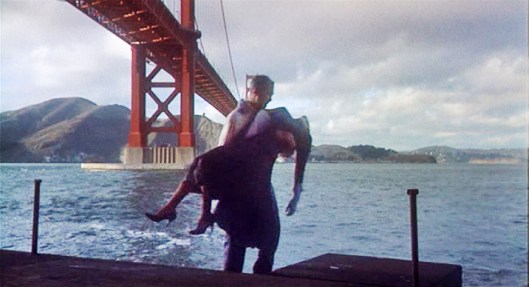
The fourth and last collaboration between Hitchcock and star Jimmy Stewart, Vertigo is a tale of obsession that toys with the possibility of the supernatural. Stewart plays John “Scottie” Ferguson, a cop who retired after a deadly experience with heights but is commissioned by wealthy friend Gavin Elster (Tom Helmore) to investigate Elster’s wife Madeleine (Kim Novak) and her sudden strange behavior. As he learns more about her connection to a suicidal ancestor and develops a relationship with her, he encounters secrets and mysteries that shake him to his core.

As a fan of film, I can say that I am definitively glad to have finally seen this classic of cinema, an oversight that represents exactly what this Blindspot series is meant to solve. Yet it doesn’t hold the same fascination for me that it apparently does for so many. Perhaps it’s because the film’s intrigue was such a rollercoaster. It starts out interesting enough with Stewart as his ever-likable self, but the story really drags during his investigation, which consists of far too much of him wordlessly following Madeleine by car. Maybe it’s just me, but the picture below doesn’t do much for me in the way of tension.

See the source image

Then comes a famous scene in a bell tower, which is indeed one of Hitchcock’s best for buildup and shock value. Not too much longer, and the reveal of the mystery left my brain working overtime, surprised at the unanticipated twist and giving me a new appreciation for the storyline. Yet what follows becomes a somewhat uncomfortable exercise in obsessive grief (including a weirdly unnecessary psychedelic dream), played out through what would be a deeply unhealthy relationship if not for the audience’s knowledge of its psychological underpinnings. How it ends, while effective, is also anything but satisfying, so abrupt that it made me recall how much I despise the final scenes in North by Northwest and An American Werewolf in London. I know Hitchcock knew how to end a movie, but I wouldn’t know it based on this one.

I certainly can’t fault the actors. Stewart is always good, always, and Kim Novak might be one of my favorites of Hitchcock’s blonde leading ladies. Barbara Bel Geddes is also great as Scottie’s casual friend/former crush, who is short-changed by the ending’s lack of closure. I also liked a cameo by Ellen Corby, who also appeared with Stewart briefly in It’s a Wonderful Life (“Could I have $17.50?”) Likewise, Bernard Herrmann’s hypnotic score is an outstanding accompaniment, and, like the score of Psycho, adds so much to the film’s atmosphere.

See the source image

All in all, Vertigo is the second best one-word Hitchcock film that ends with an O, as well as the second best Hitchcock film that begins with an injured Jimmy Stewart. Sorry if that doesn’t sound like high praise, though I do appreciate its cinematic contribution of that vertigo effect above. I can see why film enthusiasts like it and why its filming locations around San Francisco have become iconic, and I have half a mind to see it again just to pick up on the hints to the twist that I might have missed the first time. Yet, considering it’s been ranked both 1st and 9th on lists of the best films ever made, I feel like its reputation is somewhat overblown. Psycho is still Hitchcock’s masterpiece as far as I’m concerned.

Best line: (Madeleine) “Only one is a wanderer; two together are always going somewhere. ”

Rank: Honorable Mention

© 2019 S.G. Liput
649 Followers and Counting
Version Variations: Goodbye, Mr. Chips (1939, 1969)

16 Monday Sep 2019

Posted by sgliput in Movies, Poetry, Reviews, Writing

≈ Leave a comment

Tags

Classics, Drama, Meet 'em and Move on, Musical, Romance, Version Variations

See the source imageSee the source image

A young boy’s mind is a fallow field
With unknown promise yet to yield,
And every word their minds import
Of criticism or support,
Of firm reproof or merely sport,
Contributes to the man revealed
At last when boyhood is cut short.

To nobly tend this field with care,
Since parents can’t be always there,
Requires a person resolute,
Profuse with passion, temper mute,
With love of learning absolute.
Such people tasting praise is rare,
But they produce the finest fruit.
_____________________

MPAA rating of 1939 version:  Not Rated (should be G)
MPAA rating of 1969 version:  G

Those who’ve seen my Top 365 movie list might know that I love Mr. Holland’s Opus.  I’ve just always been drawn to the story of an unassuming teacher finding worth in the service of his students.  I’ve always vaguely known that 1939’s Goodbye, Mr. Chips, based on a 1934 novella, was the original version of such a story, but I’d never gotten around to seeing it. When I then learned it had been remade as a musical in 1969, I figured it would be a prime chance to compare the two in one of my overdue Version Variation posts.

See the source image

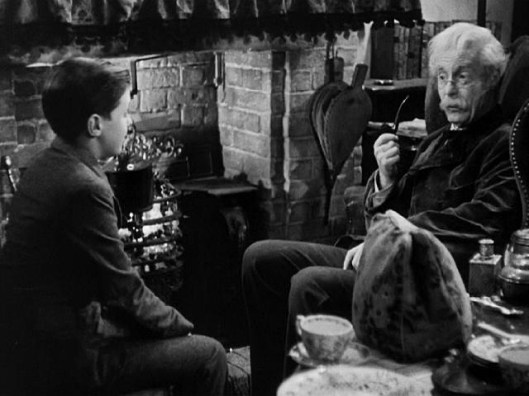
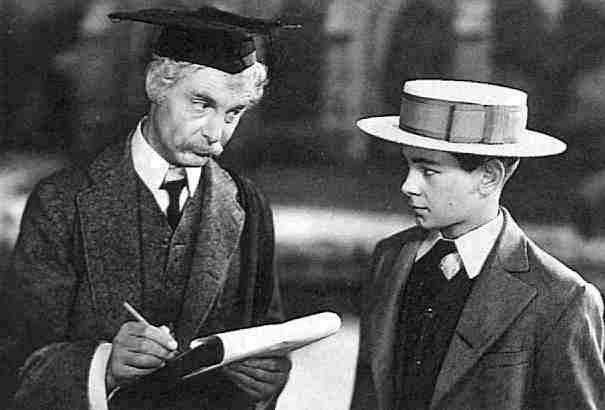
The first Goodbye, Mr. Chips is known as one of the members of the great movie year of 1939, managing to win Robert Donat the Best Actor Oscar over some stiff competition, including Clark Gable in Gone with the Wind. Having seen the winning performance, I can now see why Donat edged out the rest, letting his range of sometimes inscrutable emotions play out with great subtlety as he ages from a fresh-faced new Latin teacher in 1870 to a celebrated educator in 1933, weighed down with all the joys and sorrows of a lifetime. (My VC enjoyed the film a lot, but as a huge Rhett Butler fan, her loyalties still lie with Gable.) Like Mr. Holland, the respect Mr. Chipping ends up with is hard-won, but much of it stems from his marriage to the lovely Kathy Ellis (Greer Garson), whom he meets on a European holiday. I would have loved for Garson’s role to have been longer, but, even with limited screen time, her warm presence successfully brings the prosaic Chipping out of his shell, improving his reputation at the school.

In many ways, Goodbye, Mr. Chips is exactly the kind of movie I like, a film spanning decades wherein one character meets various people and experiences alongside the ebb and flow of time, fostering a sense of fond nostalgia. I particularly liked his run-ins with successive generations of the Colley family, showing how static his life at school is while his students go on to have lives of their own. Mr. Holland’s Opus had some similarities, but whereas that film allowed time for characters to be eventually remembered, the turnaround in Goodbye, Mr. Chips is sometimes too fast, introducing a character only for us to learn what happened to them years later in a few minutes’ time. Ultimately, Goodbye, Mr. Chips is well-deserving of its classic status, and while there’s no danger of it supplanting my preference for Mr. Holland’s Opus, it was wonderful seeing a forerunner of a story I’ve come to love.

See the source image

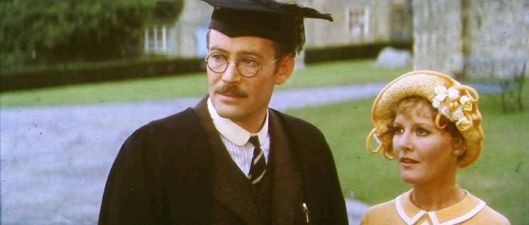
And then there’s the 1969 remake with Peter O’Toole and Petula Clark, which fits into the not-so-modern sentiment that remakes hardly ever match the original. There’s nothing wrong with making it a musical, allowing the songs to mainly serve as interior monologues, but the songs are largely forgettable, except for a couple clever lyrics, and O’Toole just isn’t much of a singer, trying out the Rex Harrison method of talk-singing but less successfully.

See the source image

The plot has the same basic elements: Chipping is a somewhat unpopular Latin teacher at a boys’ school who meets and marries a girl named Katherine (Clark) and eventually becomes a mainstay of the institution. There are still the lines of boys sounding off their attendance and a very similar ending, but the filmmakers made significant plot changes elsewhere. For one, the time period is moved up, no longer starting in the 1800s but in the 1920s with Chipping already an established teacher; thus, the war he experiences is World War II rather than World War I.

The worst change, though, is that Katherine is no longer a cycling suffragette Chips meets on a mountain but a music hall singer with an unsavory past, and their formerly brief courtship takes up the entire first half of the film, which also features an intermission to pad out its greater length. There’s pushback against their marriage where there was none before, along with Roaring ’20s parties and O’Toole’s wife-at-the-time Siân Phillips as an annoying socialite. I know I said that I wished Chipping’s wife was in the original more, but I was referring to Greer Garson’s version; the writers of the remake essentially rewrote her whole character, and while Petula Clark was great in the role, it was such a weirdly unnecessary change from the original.

Even so, the latter half (or really third) of the film is much more similar to the first film and is better for it. O’Toole and Clark do well with their roles (O’Toole even got an Oscar nomination and won a Golden Globe), although O’Toole’s Chipping is slightly more stiff and crotchety, even in scenes supposed to be romantic. The film overall was solid enough, but, as with so many remakes, it just doesn’t compare with the original.

See the source image

I guess films about long-suffering teachers who touch the lives of their students just naturally appeal to me, and Goodbye, Mr. Chips, whatever the incarnation, fits that mold. The original is clearly the better of the two, though, and certainly the one I’d recommend first. While the scene wasn’t in the 1939 movie, I couldn’t help but recall Mr. Holland’s Opus when the second film’s Kathy organizes a school musical with the students, which made me wonder how much either version of Goodbye, Mr. Chips really inspired the 1995 film. They’re so different in setting and character, and yet so similar in theme, particularly in their final heartwarming sentiments (see below). I suppose that’s what speaks to me most of all.

Best line (from 1939 film but something similar in both): (Mr. “Chips”) “I thought I heard you saying it was a pity… pity I never had any children. But you’re wrong. I have… thousands of them, thousands of them… and all boys.”


Rank of 1939 version:  List Runner-Up

Rank of 1969 version:  Honorable Mention


© 2019 S.G. Liput
646 Followers and Counting
 

Puzzle (2018)

08 Thursday Aug 2019

Posted by sgliput in Movies, Poetry, Reviews, Writing

≈ Leave a comment

Tags

Drama, Romance

See the source image

Gather the pieces and put them together,
Grouped by the borders, the colors, the shapes,
Every last piece is reliant on whether
You’ll strive to the end or accept sour grapes.

People and puzzles begin as mere pieces
And wait for the day they at last are complete.
The one who assembles, refusing to cease, is
The one satisfied at the end of the feat.
____________________

MPAA rating:  R (solely for intermittent profanity)

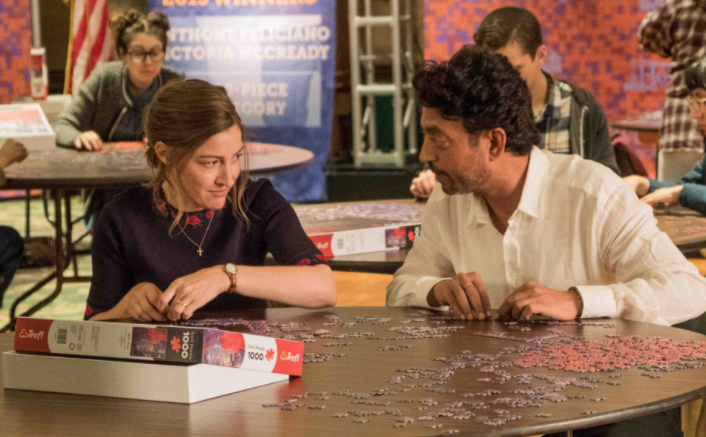
I don’t recall which post it was, but I remember saying at some point that there would inevitably be a movie for every conceivable contest out there, and sure enough, here’s one featuring a national jigsaw puzzle tournament. As someone who used to love puzzles and put together 1000-piece pictures with the best of them, I had special interest in this movie’s subject, and it turned out to be a quietly likable little film.

Kelly Macdonald (known to me as the voice of Merida in Brave, though she effortlessly sheds her Scottish accent here) plays a soft-spoken Catholic housewife named Agnes. We get an excellent, largely wordless view of her character and life as she hosts her own birthday party, preparing the cake and cleaning up herself, all with patience and an occasional sigh. Yet when she opens one of her gifts and assembles the jigsaw puzzle inside, she discovers a latent talent that is all her own, leading her to step out from the shadow of her family life and start training with the wealthy and misanthropic Robert (Irrfan Khan), a professional puzzler in need of a partner for an upcoming puzzle contest.

See the source image

Puzzle’s greatest strength is its characterization. As I said, it sets up Agnes’s situation with a brilliant lack of exposition, showing rather than telling, and her demure, self-effacing nature is a sharp contrast to the eccentricities of her puzzle partner. Agnes’s husband Louie (David Denman) is also a complex figure. At times, he seems like an inconsiderate boor, expecting her to always have dinner ready and balking at any change to their normal lives, but it’s simply what he, as well as Agnes up to that point, had always known. And plenty of other scenes make it clear that he loves Agnes and is willing to change for her, just not always in the most tactful of ways. It would have been so easy to slap these characters onscreen without the nuance, but I enjoyed the character depth delivered by talented actors.

Nevertheless, I was somewhat disappointed by the direction of Agnes’ self-awakening, specifically (spoiler alert) that her relationship with Robert inevitably evolved into an affair. While I appreciated her eventual decision, I’ve always felt the same way about stories where someone turns back only after a sexual fling. Films like Witness, Ida, and this one are well-made and relatable, but it feels like the ultimate decision toward orthodoxy loses some of its power after they’ve already transgressed. On top of that, the ending here is a little too open-ended for me. Like I Am Legend, this is another case where I prefer the alternate ending to the actual one, or even better, some combination of the two.

See the source image

Puzzle came close to being a favorite, but it fell just a little short. The characters were empathetic and well-written, and I certainly loved the puzzle subject matter and its message of why puzzles themselves are so appealing. I also liked its rare positive portrayal of Agnes’ Catholic faith, though I wish they could have delved further into how that faith was affected by her new sense of self. It’s an engaging indie that just might awaken (or re-awaken) the desire to assemble a puzzle of your own.

Best line: (Robert, to Agnes, whom he calls Mata) “Life’s just random. Everything’s random. My success, you here now. There’s nothing we can do to control anything. But when you complete a puzzle, when you finish it, you know that you have made all the right choices. No matter how many wrong pieces you tried to fit into a wrong place, but at the very end, everything makes one perfect picture. What other pursuits can give you that kind of perfection? Faith? Ambition? Wealth? Love? No. Not even love can do that, Mata. Not completely.”


Rank:  List Runner-Up


© 2019 S.G. Liput
643 Followers and Counting


Cartoon Comparisons: Alita: Battle Angel (2019) / Gunnm (1993)

29 Monday Apr 2019

Posted by sgliput in Movies, NaPoWriMo, Poetry, Reviews, Writing

≈ Leave a comment

Tags

Action, Animation, Anime, Cartoon Comparisons, Drama, Romance, Sci-fi, Thriller

(Today’s NaPoWriMo prompt was for a poem that meditates on a strong emotion, like disillusionment with the world at large.)

See the source image

See the source image

The world is not the friendly place we once had promised to ourselves
When youthful optimism held some sway within our hearts.
We like to think that’s still the case, and yet the more a person delves,
The more this human-born machine reveals its sordid parts.

It’s tragedy that truly wakes our minds to darkness come to light,
That shows how cruel the world can be, with men its messengers.
We’re ignorant of risk and stakes, and enter honestly the fight,
Too late to learn the world was not designed for amateurs.
___________________

MPAA rating: PG-13 (comes close to R with the violence)

I’ve been looking forward to Alita: Battle Angel for well over a year, ever since I heard James Cameron was planning on bringing the long-running manga Battle Angel Alita (a.k.a. Gunnm) to Hollywood. This movie fascinates me not only for its visually awesome cyberpunk future, but also because it owes its existence to one man’s passion project, bringing an extremely niche franchise to a far wider audience than it otherwise would have enjoyed. It makes me wish something similar would happen with Steins;Gate or Cowboy Bebop.

Adaptations between manga/anime and live-action have historically been more miss than hit, but Alita is finally the hit that fans have been waiting for, faithful to its origins in the best way. I, for one, have not read the manga that so enthralled James Cameron, but I have watched the 1993 OVA (Original Video Animation), which is basically like a direct-to-video anime. At only 55 minutes long, it was an imaginative if brutal sci-fi that I definitely recognized had plenty of potential for the big screen. And now that it has, I’m thrilled that such potential was not wasted.

See the source image

The manga/anime/film tells the story of the cyborg Alita (Rosa Salazar), a girl whose head is discovered in a trash heap by cybernetics expert Dr. Ido (Christoph Waltz). Finding her human brain still active, he rebuilds her body and introduces the amnesiac girl to the cutthroat world of Iron City, a sprawling dystopia patrolled by cyborg bounty hunters and festering in the shadow of the floating city known as Zalem. Trying to regain her memories, Alita becomes a Hunter Warrior herself as she falls in love with young Hugo (Keean Johnson) and navigates the plotting of Ido’s rival Dr. Chiren (Jennifer Connolly), the villainous Vector (Mahershala Ali), and his killer henchmen.

As it is, Alita might bring to mind several other films, such as Elysium with its floating city of higher class exploitation or the cyberpunk aesthetic of Ghost in the Shell, but I can’t help but feel that, if Alita had come out twenty years ago, it would be blowing people’s minds left and right. Yet the manga predates most of what it seems to borrow from, though the sport of Motorball definitely seems inspired by Rollerball.

See the source image

I’m glad, though, that Cameron wasn’t able to make Alita when he first wanted to back in 2003 because the visuals wouldn’t have been this good. Alita: Battle Angel is a sci-fi action treat, with visual effects that have a good shot at an Oscar next year. Alita herself is stunningly realized, with Rosa Salazar providing a strong motion capture performance, augmented by the effects team with those anime-sized eyes that aren’t as hard to get used to as you might think. There are a few hiccups in the animation early on that threaten to be distracting, but by the time Alita starts kicking criminal butt, she’s seamlessly a part of this world.

The live-action Ghost in the Shell was distracting for me because it was a mish-mash of various plot points from the anime film and series; Alita, on the other hand, might be the most faithful adaptation I’ve come across. Nearly everything in the anime is also in the movie, sometimes even shot for shot (like Chiren squishing a bug while telling Ido she’ll claw her way back to Zalem), though the movie’s greater length allows it to expand on many plot elements, such that watching the anime is like a highlight reel of the film. Considering how anime adaptations have flopped so hard over the years, the film’s faithfulness to its source material is laudable and likely credited to the efforts of Cameron himself as a fan of the manga. Interestingly, I understand that some differences from the manga were actually borrowed from the anime; one villainous character is killed in both versions but apparently survives much longer in the manga.

See the source imageSee the source image

That’s not to say there aren’t other differences; the source of Alita’s name and body is given more emotional weight in the film, and Ido’s former relationship with Chiren is explicitly romantic where it wasn’t before. And the film throws in entire sections that I can only assume are drawn from the manga since they weren’t in the anime, like the deadly sport of Motorball and the glimpses of Alita’s forgotten past. For me, these additions only added to the epic dystopian world-building that I so admire.

One thing I was concerned about the adaptation was just how violent it would end up being, and I was relieved that it earned a PG-13 rating and the wider audience that that entails. Don’t get me wrong; Alita: Battle Angel definitely pushes the boundary for a PG-13 film with multiple heads and limbs sent flying, but the anime is certainly more violent and bloody. The movie may have its brutal moments, but I was glad it was largely bloodless, leaving out the anime’s brief nudity and leaving some cruel moments mercifully offscreen.

See the source image

While Alita was a pleasure to watch on the big screen, I find myself struggling with how to rank it. I’m still not a fan of the mostly bitter ending common to both the anime and film, but I’m excited for whatever may come in the (hopefully forthcoming) sequel, which is uncharted territory for me. My ranking could easily change with time, but I’ll err on the side of caution and make it a List Runner-Up. Nevertheless, for the most part, Alita: Battle Angel was pure effects-heavy coolness and as good as I’d hoped it would be, proving that Hollywood can make good films based on manga/anime. Perhaps it simply takes someone like James Cameron to steer them in the right direction.

Best line: (Alita) “I do not stand by in the presence of evil!”


Rank: List Runner-Up


© 2019 S.G. Liput
628 Followers and Counting


Smokey and the Bandit (1977)

25 Thursday Apr 2019

Posted by sgliput in Movies, NaPoWriMo, Poetry, Reviews, Writing

≈ 1 Comment

Tags

Action, Comedy, Romance

(Today’s NaPoWriMo prompt was for a poem about a season, senses, and a rhetorical question, so I tackled the thrill of a summer drive.)

See the source image

How far would you drive in the summer?
How far would the summer drive you?
Every mile, every town,
Every window rolled down
Would herald the motored newcomer,
Before he then passed out of view.

You’re old enough not to be reckless,
But young enough not to pay heed.
So let the wind howl,
Let the slower folk scowl
While you hug the road’s skin like a necklace
And dazzle them all with your speed.

No Internet vies for your vision,
No buzz in your pocket distracts.
The only machine
That you currently preen
Is the engine defined by precision,
The one that leaves all in your tracks.

The smell of the asphalt is heady,
The heat of the sun is your charge,
The wind’s jaunty taste
Bids your wild side make haste.
The world may or may not be ready.
There’s a foolhardy driver at large!
_____________________

MPAA rating: PG (should definitely be PG-13 by today’s standards, for language)

In the wake of Burt Reynolds’ death, it seemed only right to check out the film that really solidified his popularity and brilliantly utilized his natural charisma. Smokey and the Bandit is lightweight and undemanding, but I doubt it could be any more entertaining.

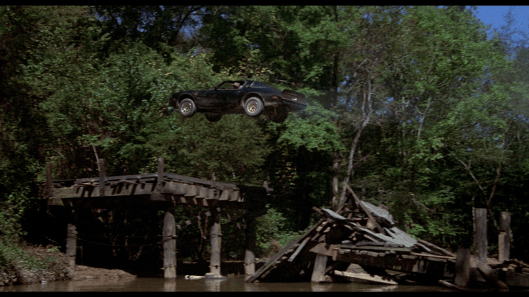
As the titular “Bandit,” Reynolds is a mustachioed force to be reckoned with, cruising along Southern highways and backways in a now iconic Pontiac Trans Am. His Bo Darville accepts the offer of two deep-pocketed Texans (Pat McCormick and Paul Williams) to ferry a truckload of illegal Coors beer from Texarkana to Atlanta in 28 hours. Helped along by his friend “Snowman” (Jerry Reed, who also sings the awesome theme song “East Bound and Down”), Bandit takes on a passenger in a runaway bride (Sally Field) and makes an instant enemy out of tenacious, belligerent Sheriff Buford T. Justice, aka “Smokey” (Jackie Gleason in rare form).

See the source image

Smokey and the Bandit is undoubtedly a product of its time, released at the height of the CB radio craze, and it seems bizarre to me that Coors would be illegal east of Texas even decades after Prohibition. It apparently wasn’t sold in the East due to its lack of preservatives, but I’ve read that the illegality comes more from the amount (400 cases) being shipped illegally over state lines, rather than the brand. I remember my mom mentioning what a big deal it was when Coors was finally available on the east coast, only to discover she thought it tasted terrible.

Even so, the beer fuels the chase of the film, as Bandit uses every rubber-burning trick in his arsenal to elude the cops and keep Snowman off their radar. The film might have benefited from a better method of keeping track of the deadline, since there are moments when the tension of the time limit doesn’t seem all that important, yet it’s still a blast. Gleason, in particular, is a hoot as the quintessential exasperated lawman, made more memorable by his dimwitted son/deputy, a repeatedly mutilated car, and a colorful vocabulary.

See the source image

Smokey and the Bandit is largely unrealistic, and its script is an engaging mix of the clever and lowbrow, but it vrooms along under the sheer likability of Reynolds and Field. While I feel like it owes its classic status more to age/nostalgia than to anything else, it’s a truly fun and easily watchable summer blockbuster that only the ‘70s could have produced.

Best lines: (Big Enos) “You see, son, old legends never die. They just lose weight.”
and
(Sheriff Justice) “What we’re dealing with here is a complete lack of respect for the law.”


Rank: List Runner-Up


© 2019 S.G. Liput
627 Followers and Counting


Chicken with Plums (2011)

18 Thursday Apr 2019

Posted by sgliput in Movies, NaPoWriMo, Poetry, Reviews, Writing

≈ 4 Comments

Tags

Drama, Fantasy, Foreign, Romance

(Today’s NaPoWriMo prompt was for a mournful elegy about the physical rather than the abstract. Thus, I focused on the everyday grief that doesn’t always make itself visible.)

See the source image

I grieve every day but don’t show it.
None see it, of course, but I do.
No moistened eyelashes,
No sackcloth and ashes,
It’s deeper and yet no less true.

I grieve in the taste of the chicken
That never tastes quite like it did
When Mother would heighten
My senses and brighten
My day with the lift of a lid.

I grieve at the sound of the classics,
The ones that my father proclaimed
Were better by far
Than the modern songs are,
To which I agreed or was shamed.

I grieve at the touch of an afghan,
Hand-knitted with love in each thread.
Its knots and defects
Made the knitter perplexed,
But now they are precious instead.

I grieve where the world in its hurry
Has left things of value behind.
Don’t doubt I’m sincere
If I don’t shed a tear;
They moisten my heart and my mind.
___________________

MPAA rating: PG-13

It was three years ago this very month that I reviewed Marjane Satrapi’s animated drama Persepolis as part of NaPoWriMo. That film was such a refreshingly unique experience that I knew I had to check out her next film, which, like Persepolis, was also based off her own graphic novel. Chicken with Plums may not be animated, but its similarity of style is equally praiseworthy, just on a far less consistent level than its predecessor.

See the source image

Told in French and set in 1950s Iran, Chicken with Plums is the story of a man who decides to die. After his critical wife (Maria de Medeiros) smashes his beloved violin, the famed concert pianist Nasser-Ali (Mathieu Amalric) loses his will to live, lying in bed awaiting death and dreaming of the past and future. The narrative is far from linear, interspersed with subjective thoughts of how his children will grow up, memories of his success, and bizarre fantasies (hugging a giant pair of breasts, for example). It’s a weird mix as the tone swings wildly from obnoxious slapstick to pensive reminiscences, and not all of it works.

However, what does work is outstanding, at least on a visual level. The settings and overall aesthetic have the dated, magical aura of yesteryear, with a carefully crafted artistry that I could compare to that of Wes Anderson if he had half the idiosyncrasies. Satrapi’s vision of 1950s Iran oddly has the look and feel of Europe, reminding us how western-leaning the nation was before the Revolution, as detailed in Persepolis. And the acting is certainly on point, with Amalric of The Diving Bell and the Butterfly fame once more proving his thespian skill.

See the source image

I wasn’t quite sure what to make of Chicken with Plums up until the ending, where the story takes a sublimely bittersweet turn that is crushing in its emotional resonance. It’s a rare and beautiful melancholy replete with the story’s themes of music, heartache, and loss; it may not quite fit with many parts of the film but still ended it on a high note of poignancy.

Best line:  (Nasser-Ali’s music teacher, speaking of his initial music) “Sounds come out. But it is empty. It is barren. It is nothing. Life is a breath; life is a sigh. It is this sigh that you must seize.”


Rank: Honorable Mention


© 2019 S.G. Liput
626 Followers and Counting


I Am Dragon (2015)

17 Wednesday Apr 2019

Posted by sgliput in Movies, NaPoWriMo, Poetry, Reviews, Writing

≈ Leave a comment

Tags

Drama, Fantasy, Foreign, Romance

(Today’s NaPoWriMo prompt was to present “a scene from an unusual point of view.” Thus, I took the fairy tale terror of a dragon carrying off a young maiden and provided the dragon’s angle.)

See the source image

I am the dragon, the lizard of lore,
So hated and feared by mankind.
From the sky do I hunt,
And I take what I want
From the men who wince under my roar.
From the day that I hatched,
I’ve had power unmatched,
A monster by nature designed.

Now in my talons, I carry a girl,
Flown higher than humans would dare.
I made my attack
With the thought of a snack
And escaped with my prize in a whirl.
Her kin now must mourn,
For their cold-blooded thorn
Has taken her back to his lair.

Gladly, I’d deem her my prey to devour,
As dragons by nature must do,
And yet in her face
Is a vestige, a trace
Of a feeling confronting my power.
No man is my match,
But this woman I catch
Offers something I cannot subdue.
_______________________

MPAA rating: Not Rated (could be PG, maybe more PG-13)

It’s rare that a film feels like a fairy tale, not just a Hollywood version of one but an original fairy tale with its roots firmly planted in romance and the fantasy culture of a nation. In the case of I Am Dragon (or He’s a Dragon), that nation is Russia. Based on the Russian novel The Ritual, the result is a film that tows the line between epic and sappy but is beautifully mounted and appealingly dignified compared with what I imagine a Hollywood version might look like.

See the source image

A prologue explains how a dragon once terrorized a medieval village, carrying away the innocent maidens offered to him as sacrifices until the day a hero slew the beast. Fast forward then to the arranged wedding of free-spirited Princess Miroslava (Maria Poezzhaeva), or Mira, who is none too thrilled with her appointed husband. In a case of unwise history-rebranding, someone thought it would be a good idea to use the old dragon-summoning song during the ceremony, and everyone is shocked when the dragon reappears to carry Mira away. Mira soon awakens on the dragon’s remote island lair, where a handsome young man she names Arman (Matvey Lykov) proves to be a charming but conflicted host.

I won’t say any “spoilers” outright, but as you can probably surmise from my description, this is like a Russian version of Beauty and the Beast, with some very clear echoes to the Disney version of events. However, with a dragon taking the place of the Beast and an almost Game of Thrones-style aesthetic, it’s a successful variation of the familiar tale, which is also leagues better than Disney’s cringe-worthy live-action version.

See the source image

As for the romance, there’s certainly chemistry between Mira and Arman, the former headstrong and adventurous, the latter self-loathing and in need of love. The island setting, though, along with Arman’s perpetually shirtless self does make the romantic scenes feel like something out of a Harlequin novel, albeit one with surprisingly grand production values, atmospheric music, and impressive CGI. (I even included the above image from this film in the top right picture of my fantasy banner.)

It really depends on your capacity for potentially mawkish love stories, but for me, I Am Dragon had enough high fantasy to outweigh the few corny moments, and the romance was still engaging and carried weight while thankfully keeping things PG for the most part. I’m glad to have stumbled upon this admirable fantasy, which makes me think that little-known Russian cinema can hold its own against Hollywood’s more publicized output.


Rank: List Runner-Up


© 2019 S.G. Liput
626 Followers and Counting

 

Bel Canto (2018)

03 Wednesday Apr 2019

Posted by sgliput in Movies, NaPoWriMo, Poetry, Reviews, Writing

≈ Leave a comment

Tags

Drama, Romance

See the source image

(Today’s NaPoWriMo prompt was for a poem about something that takes time, like falling in love, for example. It’s also fittingly paired with a movie that felt longer than it was.)


Love at first sight is a storybook rarity,
Meant to give real life a sorry disparity.
No, love occurs with much more regularity
Born out of patience, frustrations, and time.

Waiting is always considered austerity,
Wading through troubles with fresh solidarity,
Yet it is waiting that tests our sincerity
After the passion grows ashen with time.

Love is not love only born from prosperity,
Tested then bested by irregularity.
Months and then years offer startling clarity;
They are the mountain true romance will climb.
_______________________

MPAA rating: Not Rated (should be PG-13)

Based on an Ann Patchett novel, Bel Canto flew under the radar last year with very little fanfare, making me think perhaps it was a diamond in the rough worth discovering. After watching it, I’d say it’s more of a nice piece of quartz that could have been shinier. Featuring a plot of revolutionary turmoil and classical music, Bel Canto just doesn’t foster enough interest to sustain its plot, even with strong performances from Julianne Moore and Ken Watanabe.

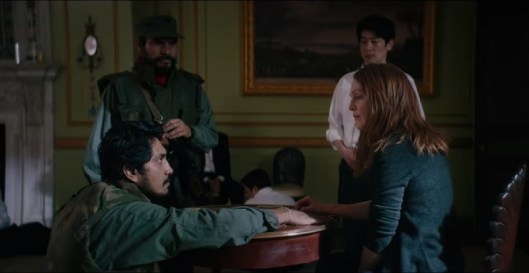
Moore plays an opera singer and Watanabe a Japanese businessman, who are both guests in a South American official’s mansion, only to become hostages when the entire complex is locked down by armed insurgents. The fear and terror of the situation gradually give way to a false sense of security as the weeks drag on, as the hostages begin to bond with their captors and unlikely romances are sparked.

See the source image

Bel Canto has some honestly powerful moments, such as a meaningful opera performance Moore’s character is compelled to give from a balcony. Likewise, the film’s climax is classically tragic in its inevitability, but, in dramatizing the protracted build-up due to the stubbornness of the rebels’ demands, the film just gets unfortunately dull.

Nevertheless, the message of peace and humanity between enemies has echoes of the much more powerful film Joyeux Noel, and there are quality performances here. It just takes a little patience to enjoy them.


Rank: Honorable Mention


© 2019 S.G. Liput
618 Followers and Counting


Crazy Rich Asians (2018)

14 Thursday Mar 2019

Posted by sgliput in Movies, Poetry, Reviews, Writing

≈ Leave a comment

Tags

Comedy, Romance

See the source image

When money’s no object,
There’s no need for greed.
You know there’s enough
To go round guaranteed.

Go buy a skyscraper
With price tag untold;
Go drink the best wines
From a glass of pure gold.

Go build a palazzo
With fountains and streams
That flow through the house
Bearing all of your dreams.

You think you’d find better,
More sane things to do,
But if I were that rich,
I might go nuts too.
______________________

MPAA rating: PG-13

The romantic comedy hasn’t gotten much love since the 1990s, has it? After the heyday of Nora Ephron, it’s languished in clichés (just look at the recent parody Isn’t It Romantic?), and even the good ones (Elizabethtown, Music and Lyrics) have rarely enjoyed both critical and commercial success. In 2017, The Big Sick seemed to buck that trend, but Crazy Rich Asians really breathed new life into the clichés and broke some barriers along the way, though it may be too soon to say it’s revived the genre in a lasting way.

Constance Wu plays NYU professor Rachel Chu, whose boyfriend Nick (Henry Golding) invites her to a hometown friend’s wedding back in Singapore, where she soon finds out that she’s dating the most coveted bachelor in the country and heir to a huge fortune. While that would normally be a dream come true, she is faced with the hurdles of both jealous rivals and Nick’s judgmental mother Eleanor (Michelle Yeoh), along with a host of extended family members to navigate.

See the source image

The core plot of Crazy Rich Asians isn’t all that revolutionary, but it features plenty of opulent visuals and good humor delivered by its all-Asian cast, making up for Hollywood’s limited Asian representation with one huge and lavish ethnic crowd-pleaser. At the same time, it weaves in some unique and subtle themes, particularly involving Yeoh in disapproving mother mode; you don’t often see examples of cultural prejudice, which is apparently more prevalent outside the U.S., where everything has become about race lately. Nick’s mother and Rachel are both ethnically Chinese, but Rachel’s American upbringing makes her selfish and unworthy in Eleanor’s eyes, a conflict that is beautifully resolved with some excellent acting between Wu and Yeoh.

While Crazy Rich Asians has many merits and many advocates to praise them, it does falter at times. Despite the best efforts of Ken Jeong and Awkwafina, there aren’t enough laughs for the comedy side of things, and the splendor of the wealthy Singaporeans sometimes went annoyingly over-the-top, which was probably the point considering the film’s title. Back when I reviewed The Philadelphia Story, I had to disagree with Jimmy Stewart’s line “The prettiest sight in this fine pretty world is the privileged class enjoying its privileges.” The same holds true here. The lifestyles of the rich and famous can become insufferable with excess, and Crazy Rich Asians features that same irritating materialism, including the strangest wedding ceremony I think I’ve ever seen, at least as far as set design (though the film does incorporate other positive elements, such as Eleanor’s Christian faith).

See the source image

Negatives aside, Crazy Rich Asians manages to live up to its name and to the more favorable side of its genre. As a fan of good romantic comedies, I’m glad that it was so wildly successful and hope that other unique and well-made rom coms will follow in its wake.

Best line: (Wye Mun Goh, Rachel’s friend’s father, speaking to his son at the dinner table) “Uh, you haven’t finished your nuggets yet, sweetie. Okay, there’s a lotta children starving in America. Right? I mean, take a look at her.” [Points at Rachel]


Rank: List Runner-Up


© 2019 S.G. Liput
608 Followers and Counting
 

Love Actually (2003)

23 Sunday Dec 2018

Posted by sgliput in Movies, Poetry, Reviews, Writing

≈ Leave a comment

Tags

Christmas, Comedy, Drama, Romance


See the source image

Love can strike like lightning
Or love can burn like embers,
And what the world at large forgets
The heart in love remembers.

Love’s not as easy as it looks
In film or paperback,
And yet it must be worth the fail
And worth the coming back.

Some fake ideal that isn’t real
Could not move hearts and minds
As love has done for everyone
Who waits and seeks and finds.
______________________

MPAA rating: R (for unnecessary language and nudity, better as a PG-13 if you catch it cut on TV)

It’s about time I got around to seeing this movie. I love a good Christmas movie or a good rom com, so I was bound to enjoy Love Actually, considering its devoted fanbase who consider it a modern classic. It’s hard to believe that it’s fifteen years old now, but it’s a definite charmer with a most impressive ensemble and a sprawling plot that’s like a mixture of Cloud Atlas and a Hallmark movie.

See the source image

Where to begin on the cast? It’s amazing how many respected British thespians pop up throughout, each with their own little story of romantic love woven among the others. Liam Neeson plays a grieving widower trying to help his son Sam (an adorable Thomas Sangster) with first love, and the boy goes to school with the kids of a husband and wife played by Alan Rickman and Emma Thompson, whose marriage might be in danger, while Thompson is brother to the new love-struck British prime minister (Hugh Grant). Those are only three of the subplots mixed into this melting pot of holiday tales; also present are Colin Firth, Keira Knightley, Chiwetel Ejiofor, Rowan Atkinson, Andrew Lincoln of The Walking Dead (I didn’t even know he had a British accent), Billy Bob Thornton, Martin Freeman, Martine McCutcheon, Laura Linney, Rodrigo Santoro (Lost alert!), and Bill Nighy as an aging and unashamedly vulgar rock star trying to peddle his latest cash grab of a single.

I love these kinds of interrelated stories, which is why I’m so partial to even divisive plots like Lost and Cloud Atlas. Sure, they’re often messy and take time to unravel, but it’s in the unraveling and the connections that we get a glimpse into the interconnectedness of everyday life, which is among my favorite themes. Director Richard Curtis sells it all with good humor, holiday spirit, and shameless romanticism, though not every story has an idealistic ending. Confessions of love abound, and it’s a cold heart that won’t find multiple scenes worth smiling at.

See the source image

Even so, it is a tad tiresome having to juggle all the storylines, which flit back and forth without warning and could have used a more critical hand at the editing table. Some further editing might also have removed the entirely unnecessary R-rated content featuring some porn stars (Martin Freeman and Joanna Page). I thankfully saw the film on cut TV, and while I would have liked to have seen Freeman, the removal of the nude scenes took absolutely nothing from the film. Plus, while others may love him, I found Bill Nighy’s rock bum more irritating than funny.

The most fascinating thing about Love Actually for me is, naturally, the connections, not in the film but among the cast. I chuckled at seeing Rickman as Thompson’s husband, since he ended up as her brother-in-law in Sense and Sensibility, where Hugh Grant was her love interest rather than her brother. Likewise, Keira Knightley co-starred with Bill Nighy in the first two Pirates of the Caribbean sequels, though they have no scenes together here, and it was unexpected to see Elizabeth Swann marrying Mordo from Doctor Strange. The best connection, though, (and one not everyone may be aware of) was when I realized that the crush of Sangster’s young Sam was played by Olivia Olson. Luckily, I know their names from the cartoon Phineas and Ferb, where Sangster’s Ferb happens to have a long-standing crush on Dr. Doofenschmirtz’s daughter, who is voiced by Olson. It may matter little, but it was a likely intentional Easter egg I never realized was there when I used to watch that show.

See the source image

I should also mention Red Nose Day Actually, the anniversary/sequel that came out last year as a fundraising short for Curtis’s Red Nose Day charity event. Even if I didn’t have to wait fourteen years between them like everyone else did, it was a delight catching up many of the characters, and I applaud so many of the stars for returning to take part, though sadly the late Alan Rickman could not and Emma Thompson abstained out of respect for his memory. It also managed to create some happy endings out of the dangling threads from the original, so it’s quite a treat for fans, one of which I now consider myself.  Not every character is as likable as I wish, but I can certainly see why Love Actually has gathered such a following, and I gladly will add it to my holiday watch list from now on, at least when it’s cut on TV.

Best line:  (Aurelia’s sister to people nearby) “Father is about to sell Aurelia as a slave to this Englishman.”


Rank: List Runner-Up


© 2018 S.G. Liput
600 Followers and Counting!


← Older posts
Newer posts →

Recent Posts

  • We Didn’t Start 2025 (Recap)
  • NaPoWriMo 2025 Recap (Finally)
  • Sonic the Hedgehog 3 (2024)
  • It Happened One Night (1934)
  • Spellbound (2024)

Recent Comments

associatesofshellymann's avatarassociatesofshellyma… on My Top Twelve La La La So…
Kit's avatarKit Nichols on Bonnie and Clyde (1967)
lifelessons's avatarlifelessons on Look Back (2024)
Carol Jackson's avatarCarol Jackson on The Thief of Bagdad (1940…
Stephen's avatarStephen on Love Story (1970)

Archives

  • January 2026
  • December 2025
  • May 2025
  • April 2025
  • March 2025
  • February 2025
  • January 2025
  • December 2024
  • May 2024
  • April 2024
  • March 2024
  • February 2024
  • January 2024
  • December 2023
  • November 2023
  • October 2023
  • September 2023
  • July 2023
  • June 2023
  • May 2023
  • April 2023
  • March 2023
  • February 2023
  • January 2023
  • December 2022
  • November 2022
  • October 2022
  • September 2022
  • August 2022
  • July 2022
  • June 2022
  • May 2022
  • April 2022
  • March 2022
  • February 2022
  • January 2022
  • December 2021
  • November 2021
  • October 2021
  • September 2021
  • August 2021
  • July 2021
  • June 2021
  • May 2021
  • April 2021
  • March 2021
  • February 2021
  • January 2021
  • December 2020
  • November 2020
  • October 2020
  • September 2020
  • August 2020
  • July 2020
  • June 2020
  • May 2020
  • April 2020
  • March 2020
  • February 2020
  • January 2020
  • December 2019
  • November 2019
  • October 2019
  • September 2019
  • August 2019
  • July 2019
  • June 2019
  • May 2019
  • April 2019
  • March 2019
  • February 2019
  • January 2019
  • December 2018
  • November 2018
  • October 2018
  • September 2018
  • August 2018
  • July 2018
  • June 2018
  • May 2018
  • April 2018
  • March 2018
  • February 2018
  • January 2018
  • December 2017
  • November 2017
  • October 2017
  • September 2017
  • August 2017
  • July 2017
  • June 2017
  • May 2017
  • April 2017
  • March 2017
  • February 2017
  • January 2017
  • December 2016
  • November 2016
  • October 2016
  • September 2016
  • August 2016
  • July 2016
  • June 2016
  • May 2016
  • April 2016
  • March 2016
  • February 2016
  • January 2016
  • December 2015
  • November 2015
  • October 2015
  • September 2015
  • August 2015
  • July 2015
  • June 2015
  • May 2015
  • April 2015
  • March 2015
  • February 2015
  • January 2015
  • December 2014
  • November 2014
  • October 2014
  • September 2014
  • August 2014
  • July 2014
  • June 2014
  • May 2014
  • April 2014
  • March 2014
  • February 2014
  • January 2014
  • December 2013

Categories

  • Blindspot
  • Blogathon
  • Christian
  • Movies
  • Music
  • NaPoWriMo
  • Poetry
  • Reviews
  • TV
  • Writing

Meta

  • Create account
  • Log in
  • Entries feed
  • Comments feed
  • WordPress.com

Recent Posts

  • We Didn’t Start 2025 (Recap)
  • NaPoWriMo 2025 Recap (Finally)
  • Sonic the Hedgehog 3 (2024)
  • It Happened One Night (1934)
  • Spellbound (2024)

Recent Comments

associatesofshellymann's avatarassociatesofshellyma… on My Top Twelve La La La So…
Kit's avatarKit Nichols on Bonnie and Clyde (1967)
lifelessons's avatarlifelessons on Look Back (2024)
Carol Jackson's avatarCarol Jackson on The Thief of Bagdad (1940…
Stephen's avatarStephen on Love Story (1970)

Archives

  • January 2026
  • December 2025
  • May 2025
  • April 2025
  • March 2025
  • February 2025
  • January 2025
  • December 2024
  • May 2024
  • April 2024
  • March 2024
  • February 2024
  • January 2024
  • December 2023
  • November 2023
  • October 2023
  • September 2023
  • July 2023
  • June 2023
  • May 2023
  • April 2023
  • March 2023
  • February 2023
  • January 2023
  • December 2022
  • November 2022
  • October 2022
  • September 2022
  • August 2022
  • July 2022
  • June 2022
  • May 2022
  • April 2022
  • March 2022
  • February 2022
  • January 2022
  • December 2021
  • November 2021
  • October 2021
  • September 2021
  • August 2021
  • July 2021
  • June 2021
  • May 2021
  • April 2021
  • March 2021
  • February 2021
  • January 2021
  • December 2020
  • November 2020
  • October 2020
  • September 2020
  • August 2020
  • July 2020
  • June 2020
  • May 2020
  • April 2020
  • March 2020
  • February 2020
  • January 2020
  • December 2019
  • November 2019
  • October 2019
  • September 2019
  • August 2019
  • July 2019
  • June 2019
  • May 2019
  • April 2019
  • March 2019
  • February 2019
  • January 2019
  • December 2018
  • November 2018
  • October 2018
  • September 2018
  • August 2018
  • July 2018
  • June 2018
  • May 2018
  • April 2018
  • March 2018
  • February 2018
  • January 2018
  • December 2017
  • November 2017
  • October 2017
  • September 2017
  • August 2017
  • July 2017
  • June 2017
  • May 2017
  • April 2017
  • March 2017
  • February 2017
  • January 2017
  • December 2016
  • November 2016
  • October 2016
  • September 2016
  • August 2016
  • July 2016
  • June 2016
  • May 2016
  • April 2016
  • March 2016
  • February 2016
  • January 2016
  • December 2015
  • November 2015
  • October 2015
  • September 2015
  • August 2015
  • July 2015
  • June 2015
  • May 2015
  • April 2015
  • March 2015
  • February 2015
  • January 2015
  • December 2014
  • November 2014
  • October 2014
  • September 2014
  • August 2014
  • July 2014
  • June 2014
  • May 2014
  • April 2014
  • March 2014
  • February 2014
  • January 2014
  • December 2013

Categories

  • Blindspot
  • Blogathon
  • Christian
  • Movies
  • Music
  • NaPoWriMo
  • Poetry
  • Reviews
  • TV
  • Writing

Meta

  • Create account
  • Log in
  • Entries feed
  • Comments feed
  • WordPress.com

Blog at WordPress.com.

Is this your new site? Log in to activate admin features and dismiss this message
Log In
  • Subscribe Subscribed
    • Rhyme and Reason
    • Join 814 other subscribers
    • Already have a WordPress.com account? Log in now.
    • Rhyme and Reason
    • Subscribe Subscribed
    • Sign up
    • Log in
    • Report this content
    • View site in Reader
    • Manage subscriptions
    • Collapse this bar